

Biodiversity Heritage Library - Program news and collection highlights from BHL
  • Home
  • News
  • Featured Books
    • All Featured Books
    • Book of the Month Series
    • BHL at 20
  • User Stories
  • Campaigns
    • Fossil Stories
    • Garden Stories
    • Monsters Are Real
    • Page Frights
    • Her Natural History
    • Earth Optimism 2020
  • Tech Blog
  • Visit BHL
Home
News
Featured Books
    All Featured Books
    Book of the Month Series
    BHL at 20
User Stories
Campaigns
    Fossil Stories
    Garden Stories
    Monsters Are Real
    Page Frights
    Her Natural History
    Earth Optimism 2020
Tech Blog
Visit BHL
  • Home
  • News
  • Featured Books
    • All Featured Books
    • Book of the Month Series
    • BHL at 20
  • User Stories
  • Campaigns
    • Fossil Stories
    • Garden Stories
    • Monsters Are Real
    • Page Frights
    • Her Natural History
    • Earth Optimism 2020
  • Tech Blog
  • Visit BHL
Biodiversity Heritage Library - Program news and collection highlights from BHL
Blog Reel

Happy Birthday to John Torrey!

It’s hard to imagine how the wild, western terrain of the United States looked just 200 years ago—try to replace the suburban communities, bright lights, interconnected highways, and towering buildings with the uninhibited growth of native plants in considerable number and variety occupying undeveloped and spacious lands. The pioneers that ventured beyond the Mississippi into this vast unknown were exalted as executors of manifest destiny, responsible for territorial expansion of the fledgling county. But for John Torrey, he saw this point in history not as an opportunity to advance American boundaries, but as the precise moment to advance scientific progress.
View Full Size Image
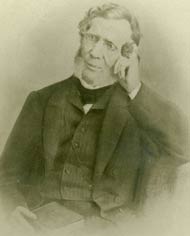
A portrait of the birthday boy, John Torrey.
From the New York Botanical Garden’s
John Torrey Papers collection.

Torrey was a different kind of pioneer, not an explorer, preferring instead the excitement of discoveries made under the microscope, to which he dedicated his life and his passions. So, this week we take a break from the regular Book of the Week posts to recognize Torrey on his 217th birthday for the significant contributions he made to botany, chemistry, and our understanding of North American flora.

Torrey was born August 15, 1796, in New York City to an established New England family, Captain William Torrey and Margaret Nichols. As a young man, Torrey showed great curiosity and interest in many subjects, but especially mechanics, thinking he might become a machinist. But when his father was appointed as Fiscal Agent of the State Prison in Greenwich, Torrey had a chance encounter with prisoner, and botanist in his own right, Amos Eaton. Eaton provided rudimentary instruction to Torrey, but, most significantly, awakened a zeal for the subject that remained with him throughout his life.

At first Torrey sought to cultivate this passion primarily as a leisure activity and pursued a medical degree, graduating and starting a moderately successful practice. But during his studies, Torrey made time to cofound the Lyceum of Natural History, now the New York Academy of Science; began documenting the plants in his vicinity; and published his first tome, “A Catalogue of Plants Growing Spontaneously Within Thirty Miles of the City of New York.”

His numerous correspondences with prominent scientists of the day can be viewed in the BHL and reflect the reach he had in contemporary academia, including contributions to the Smithsonian Institution, the American Philosophical Society, the New York Botanical Gardens, and the National Academy of Sciences at Washington, D.C.

Torrey was drawn to botany, but definitely not to fieldwork. He enjoyed the comforts of home and “considered it a great hardship to be sent after dark in the country.” So Torrey stayed in New York during Stephen Long’s exploration of the Rocky Mountains. And he also didn’t join John Frémont’s expedition to the same range. But that didn’t stop him from using the data and samples collected during Long and Frémont’s travels to name and describe thousands of new species and varieties of plants.
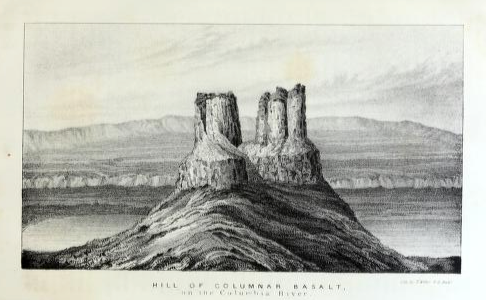
 
View Full Size Image
Torrey preferred his bed to landscapes like this one at the Hill of Columnar Basalt, 
illustrated during the 1842 Frémont expedition. 
 

Some of the most notable works he authored include “Flora of the Northern and Middle Sections of the United States,” his extensive two-volume “Flora of the State of New York,” and the joint piece he wrote with Asa Gray “Flora of North America,” which was considered one of the most authoritative works on North American plants up to that time.
Torrey was known as a professor, botanist, chemist, and mineralogist and remembered for identifying, describing, and classifying much of what inhabited the rugged frontier. He was a pioneer for the American scientific community with the fundamental contributions he made to botanical knowledge and institutions. The last line in Torrey’s obituary by friend, co-author, and protégée Asa Gray perfectly encapsulates this lasting legacy:
“Thirty or forty years ago, a new and remarkable evergreen tree was discovered in our own Southern States, which it was at once determined should bear Dr. Torrey’s name. More recently a congener was found in the noble forests of California. Another species had already been recognized in Japan, and lately a fourth in the mountains of Northern China. All four of them have been introduced and are greatly prized as ornamental trees in Europe. So that, all round the world, Torreya taxifolia, Torreya Californica, Torreya nucifera, and Torreya grandis—as well as his own important contributions to botany, of which they are a memorial—should keep our associate’s memory as green as their own perpetual verdure.”
Couldn’t say it better than that. Happy birthday, John Torrey!


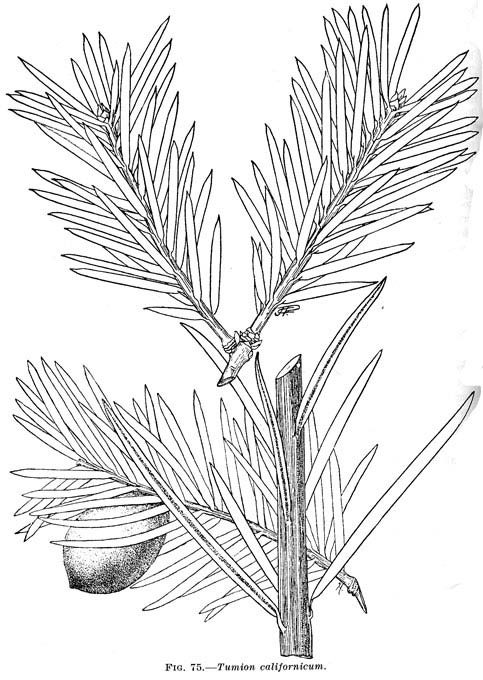
View Full Size Image
Torreya Californica, one of the legacy trees named in honor of Torrey, 
from trees.stanford.edu.

References:

  •  John Torrey. (2013). In Encyclopædia Britannica. Retrieved from http://www.britannica.com/EBchecked/topic/600140/John-Torrey
  • Polunin, Nicholas. (1944). John Torrey: American Botanist. Nature, 154(3905), p. 294-295.
  • Gray, Asa. (1873, April). Memoir or John Torrey 1797-1873. Speech read before the National Academy.

 

August 15, 2013by scstanley

Help Support BHL

BHL's existence depends on the financial support of its patrons. Help us keep this free resource alive!

search

About BHL

The Biodiversity Heritage Library (BHL) is the world’s largest open access digital library for biodiversity literature and archives. BHL operates as a worldwide consortium of natural history, botanical, research, and national libraries working together to digitize the natural history literature held in their collections and make it freely available for open access as part of a global “biodiversity community.”

Join Our Mailing List

Sign up to receive the latest news, content highlights, and promotions.

Subscribe Now

Subscribe to Blog via Email

Enter your email address to subscribe to this blog and receive notifications of new posts by email.

Join 319 other subscribers

Subscribe to Blog Via RSS

Subscribe to the blog RSS feed to stay up-to-date on all the latest BHL posts.

Access RSS Feed

Inspiring Discovery through Free Access to Biodiversity Knowledge.

The Biodiversity Heritage Library makes it easier than ever for you to access the information you need to study and explore life on Earth…for free, anytime, anywhere.


64+ Million Pages of
Biodiversity Literature Online.

EXPLORE

Tools and Services
to Transform Research.

EXPLORE

300,000+
Illustrations on Flickr.

EXPLORE

ABOUT | HARMFUL CONTENT | PRIVACY | SITE MAP | TERMS OF USE