

 |
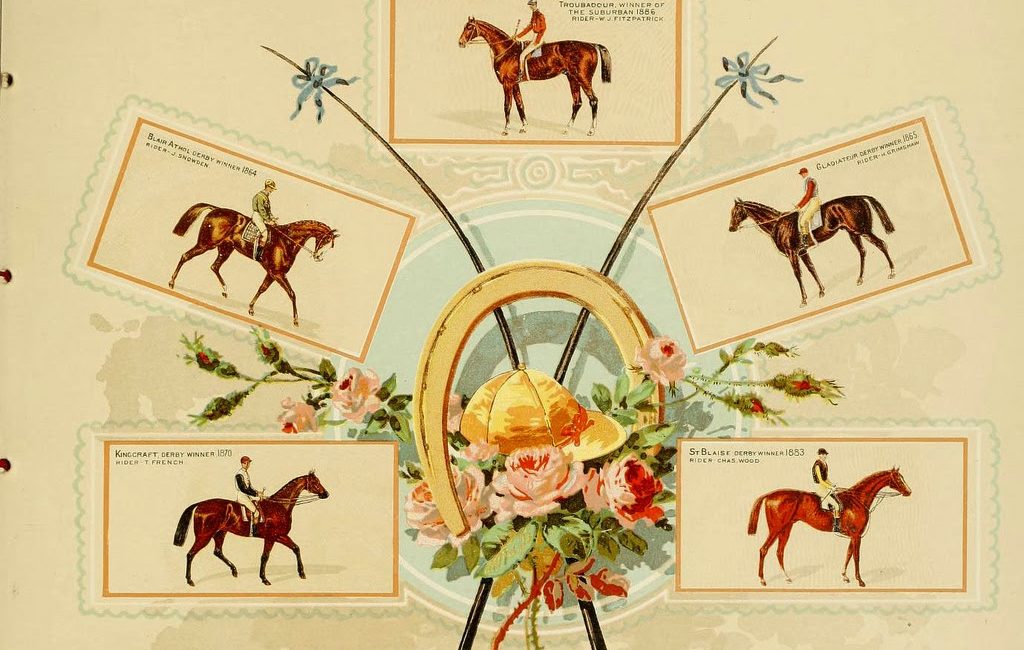
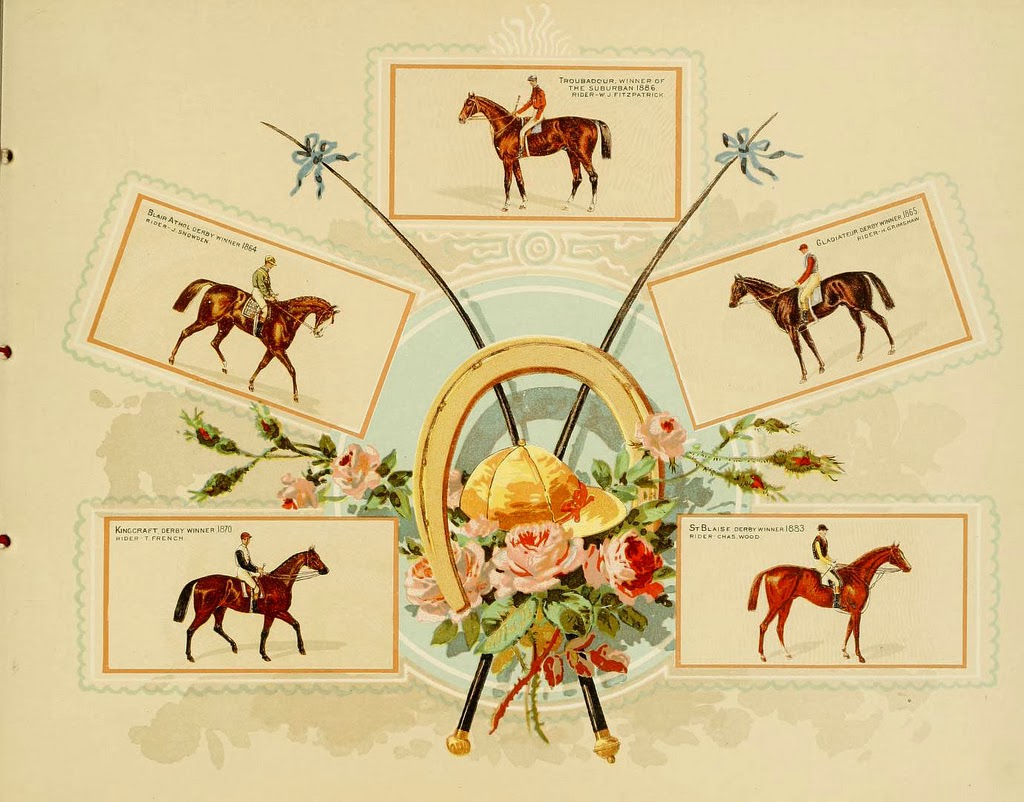
| Album of celebrated American and English running horses. New York: Kinney Bros. [1888?] biodiversitylibrary.org/page/24788565 |
From agriculture to transportation to war, Equus caballus has held a prominent and highly respected position in cultures across the world for thousands of years. With the Lunar New Year celebrations underway for the next several days, we’re ushering in the year of the horse with some highlights on horse biodiversity from the literature in BHL!
- You’ve heard of Clydesdales and Thoroughbreds, but what is it that defines these breeds? According to Agriculture: Animal Husbandry (1901) by William P. Brooks, Clydesdales are bred as draft horses, with broad, stocky frames that make them well-suited to pulling heavy loads. The Thoroughbred, on the other hand, is bred for speed and has a more slender form with powerful lungs. Learn more about the many different breeds of domesticated horses: http://www.biodiversitylibrary.org/page/30230823#page/85/mode/1up.
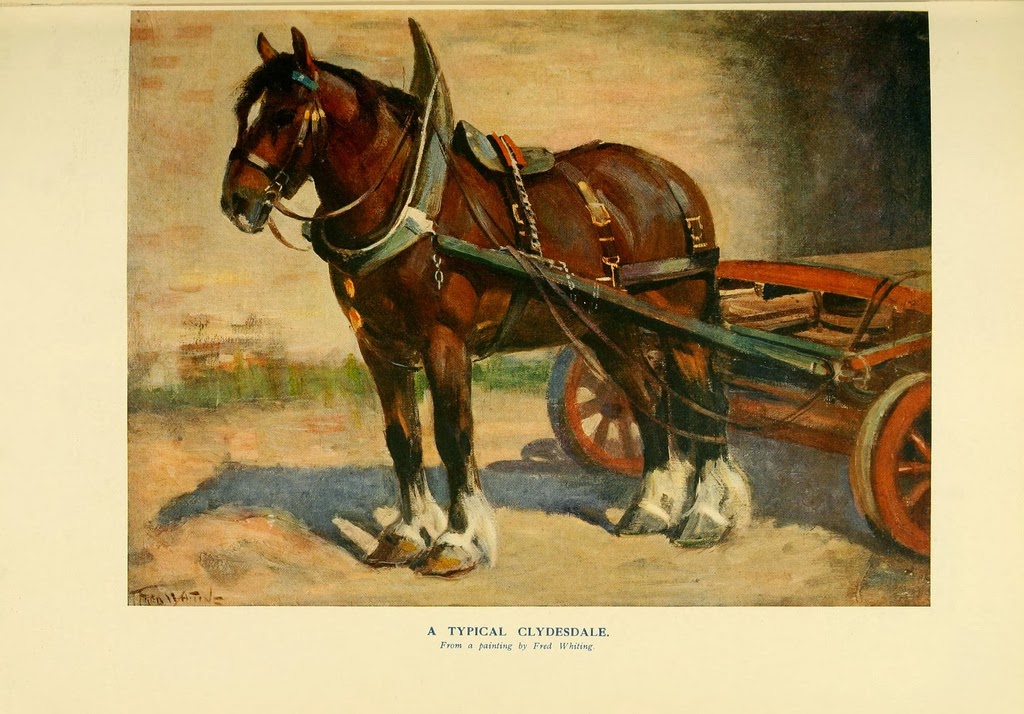 |
| The new book of the horse. London: Cassell and Co., 1911. biodiversitylibrary.org/page/254311803 |
- So you’ve always wanted to learn to ride a horse but weren’t sure where to start? For some turn- of-the-century tips on trotting, walking, and galloping, look no further than the 1881 treatise How to Ride and School a Horse by Edward L. Anderson. As a bonus, Anderson has also included some tips on horse gymnastics!
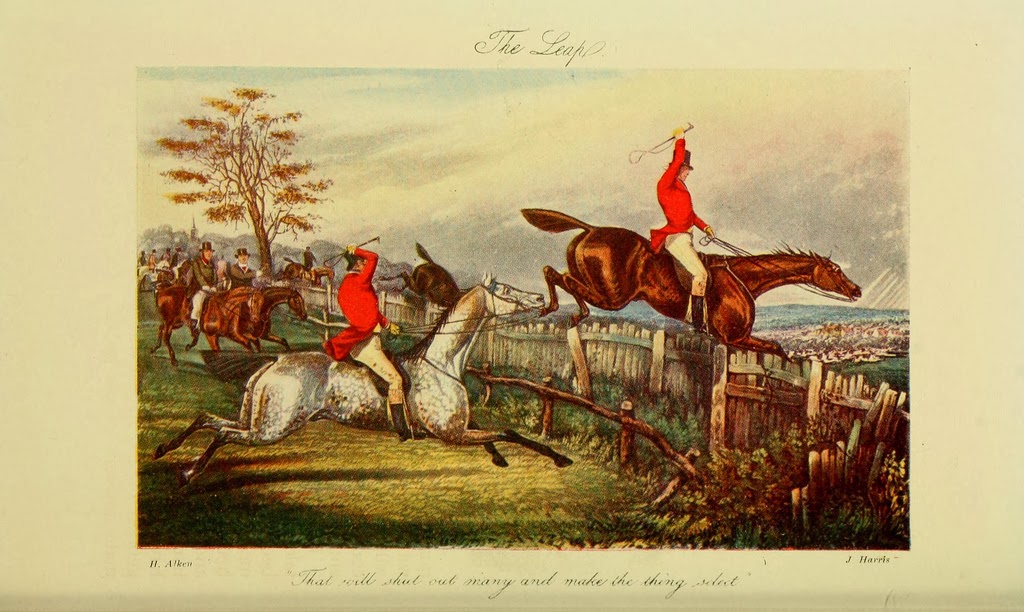 |
| The analysis of the hunting field. London: Methuen, 1904. biodiversitylibrary.org/page/20389207 |
- Which modern horse can’t be ridden? Considered the last truly wild horse, Equus przewalskii Poliakov, 1881, more commonly known as Przewalskii’s horse, is the only extant horse to never be tamed. Nearly extinct by the late twentieth century, it has been reintroduced into the wild in places like China and Mongolia and its status has been updated to endangered. Populations have seen some increases but threats such as disease, habitat destruction, and climate change remain. BHL and our partners at EOL work hard to provide open access to information about species, including habitat and behavior, so that informed conservation decisions can be made, especially for those that been threatened or endangered. Learn more about Przewalskii’s horse in BHL: http://www.biodiversitylibrary.org/name/Equus_przewalskii.
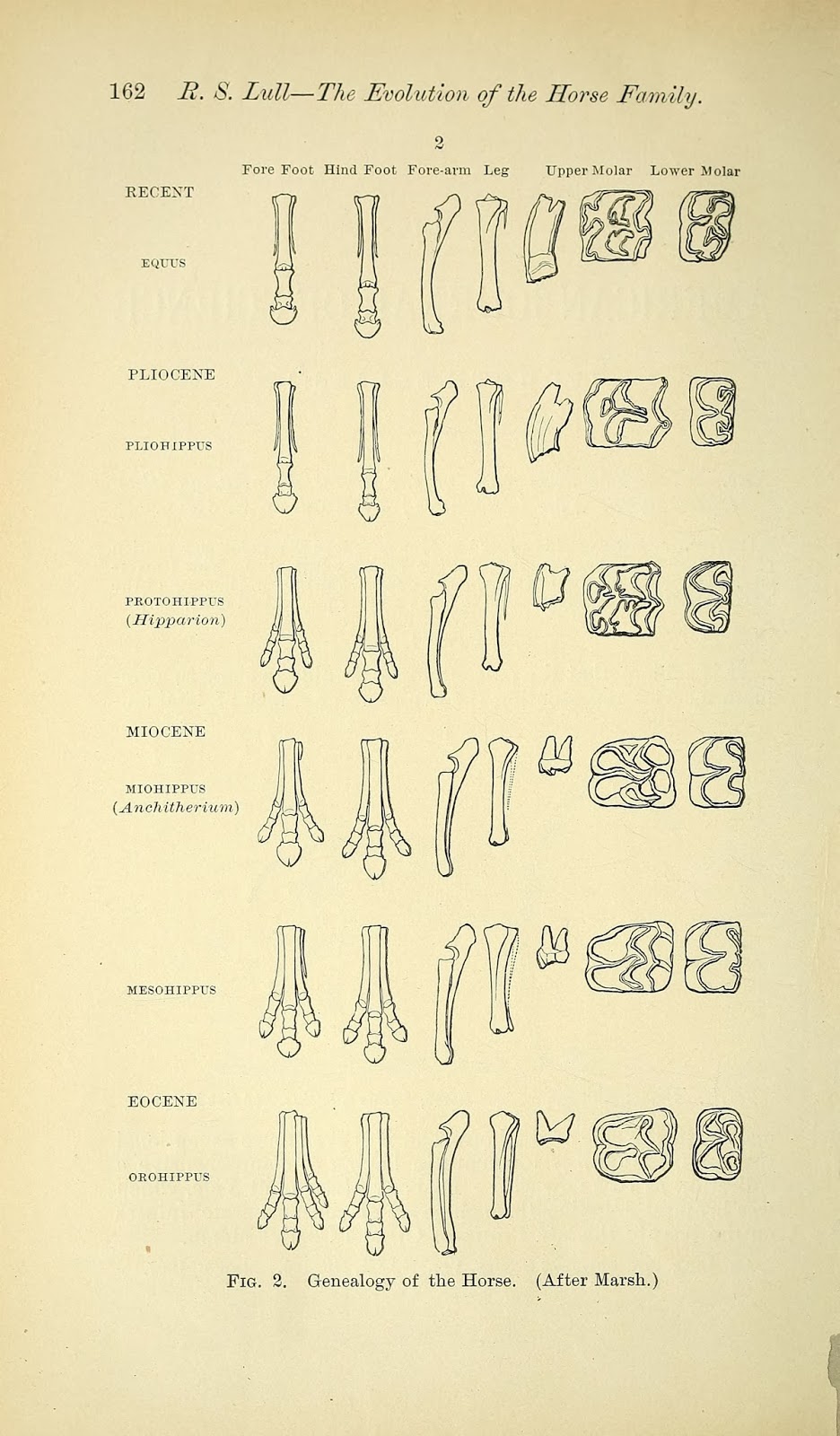 |
| The Evolution of the Horse Family, as illustrated in the Yale Collections. American Journal of Science, 1907. biodiversitylibrary.org/page/40226990 |
- How do modern horses differ from their earlier counter-parts? Many of you may already know that pre-historic horses were generally smaller than modern horses but you may be surprised to learn that one of the key differences was the number of toes. That’s right, toes. While the modern horse has one-toed hooves, many pre-historic horses had three or more toes as shown in the illustration to the right. Find out about how these changes may have benefitted horses as they evolved and discover other changes as described in Richard S. Lull’s 1907 article The Evolution of the Horse Family, as illustrated in the Yale Collections in the American journal of science.
Horses are documented in over 400 pages of open access literature in BHL, with a significant portion focusing on the modern Equus caballus: http://www.biodiversitylibrary.org/name/Equus%20caballus.
BHL relies on donations from individuals to support scanning of the biodiversity literature held in some of the world’s most renowned natural history and botanical libraries. The examples below highlight the ways your donation can make a meaningful and lasting impact:
$25 – Creates Flickr sets of our images which are popular with educators and artists
$50 – Promotes biodiversity education through social media, such as our blog
$100 – Scans 1,000 pages to be made available for free and open access
$250 – Helps us support marketing interns who circulate biodiversity content worldwide
$500 – Improves existing methodology and helps develop new tools for biodiversity research
Help make the year of the horse a lucky and prosperous year for BHL and our users by making a donation to support our continued growth! https://donate.sil.si.edu/v/DonateBHL.asp
