 |
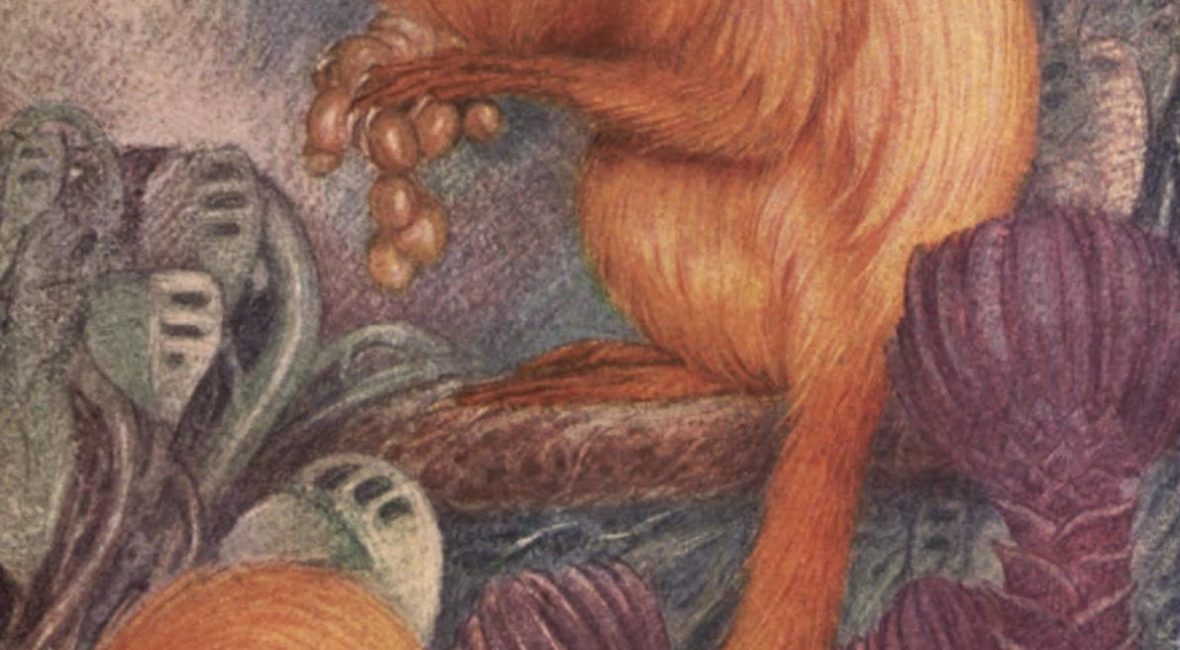
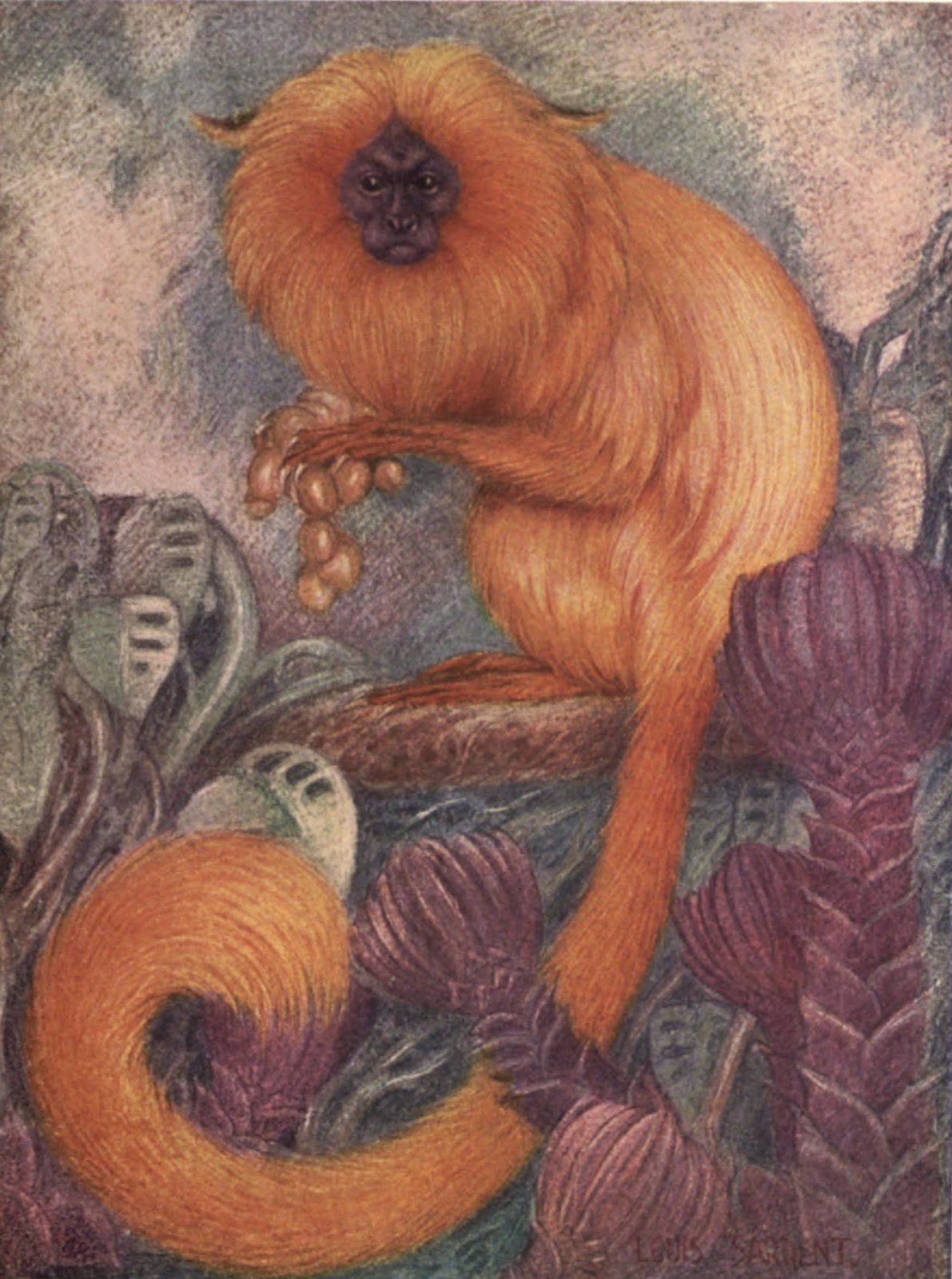
| The Golden Lion Tamarin. Illustrated by Louis Sargent. From: Finn, Frank. The Wild Beasts of the World. (v. 1, 1909). http://biodiversitylibrary.org/page/19058592 |
A small, endangered primate, the Golden Lion Tamarin (GLT) (also known as the Golden or Lion Marmoset) gets its name from the trademark, vivid orange “mane” surrounding its face. Don’t let the “lion” part fool you, however. The tamarin averages only 10.3 inches in length and 1.37 lbs.
In the marvelous book The Wild Beasts of the World (v.1, 1909), Frank Finn, an English ornithologist, writes that the GLT is not much larger than the English squirrel, with “paws” quite unlike “ordinary” monkeys. The accompanying illustration, by Louis Sargent, is a breathtaking representation of this adorable New World Monkey.
Interestingly, Finn records that “the present species is one of the most widely-ranging of the Marmosets, being found from the Isthmus of Panama to South-eastern Brazil and New Granada.” Much has changed since the early 1900s. Today, GLTs have extremely limited distribution, confined solely to Brazil, and occupying only 2-5% of their original habitat. In the 1970s, as few as 200 GLTs remained on Earth. Thanks to conservation efforts, led largely by Dr. Devra Kleiman, who passed away in 2010, their wild population is now closer to 3,200.
The Field Book Project* has cataloged a number of Kleiman’s fieldbooks, many focusing on her research with the GLT. Sonoe Nakasone, who cataloged the books and published a blog post about them, noted that Kleiman’s notes were quite different from those of many other researchers she had cataloged in the past, as:
Kleiman didn’t really “collect specimens”. Rather, her notes document animal behavior, activities, diet, as well as external factors affecting the livelihood of tamarins. Kleiman and her team did collect blood, skin, and fur samples, and they did capture tamarins to breed in captivity before reintroducing them into the wild, yet the fundamental purpose and method of research was distinct from traditional natural history field work.
 |
| Devra Kleiman and colleague conducting playback study. From the Field Book Project. |
Kleiman’s fieldbooks also document a number of her research techniques. She employed three common protocols:
Scans, focals, and playbacks. Scans and focals are systematic observations. Scans focus on all member of a group of animals; focals focus on an individual animal. Both adhere to specific lengths of time and seek specific information about behavior and activities. Playbacks involved projecting recordings of various animal vocalizations in the field. During these experiments, animal responses, if any, were documented and differences between male and female responses noted.
Nakasone also highlights some of the challenges Kleiman faced during her conservation initiatives:
On October 25, 1991, Kleiman remembers a particularly difficult visit to a corporation: “the veep [VP] we meet is very obnoxious—suggesting that people are burned out [with] ecology (mentions a t-shirt entitled “I don’t give a s— about the GLT)”. On March 16, 1990, Kleiman notes the effects of economic instability in Brazil on the project: “they are freezing all interest-bearing overnight accounts […]. Cecilia [Kleiman’s colleague] had $6000 WWF grant in an overnight account. It increased by $1000 interest, but now she can’t touch it.”
Yet despite these and other obstacles like deforestation, poaching, and political instability, Kleiman coordinated the Golden Lion Tamarin Conservation Program for almost 30 years and “was successful at shedding light on the issue of golden lion tamarins and helping to increase the GLT population by 800%.” As Nakaone notes:
Kleiman’s field books are a refreshing and exhilarating alternative to many of her predecessor’s field books because she was a pioneer in the burgeoning field of conservation biology. Her notes reflect not only the advancement of human knowledge, but also the application of that knowledge to ensure the livelihood of species struggling for survival.
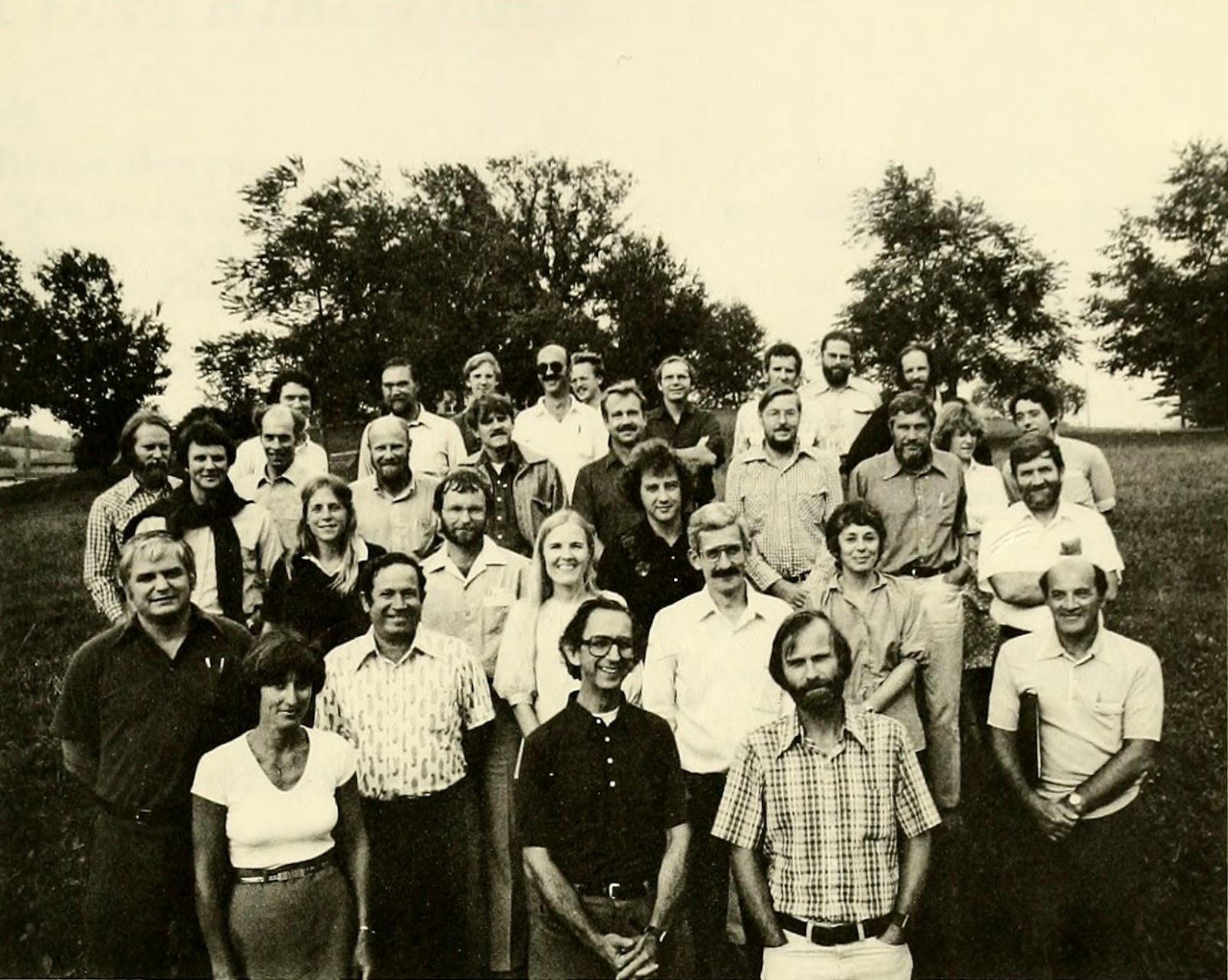 |
| “Participants in the Front Royal Conference on Mammalian Behavior, 16-19 August 1980.” Kleiman 2nd row, 2nd from right. |
Learn more about Kleiman’s contributions to conservation and biodiversity sciences from the Smithsonian Archives. Explore the GLT in The Wild Beasts of the World, and learn more about the species in EOL. Read Sonoe Nakasone’s full blog post and explore Kleiman’s fieldbooks, cataloged by the Field Book Project.
* The Field Book Project is an initiative to increase accessibility to field book content that documents natural history. Through ongoing partnerships within and beyond the Smithsonian, the project is making field books easier to find and available in a digital format for current research, as well as inspiring new ways of utilizing these rich information sources.