

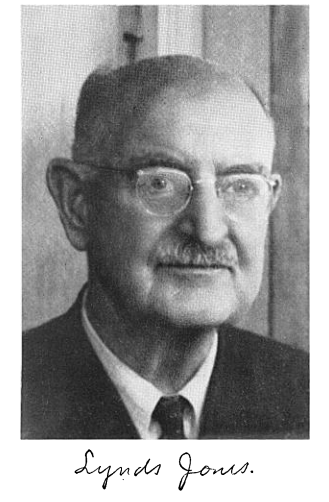
I’m sure it’s just a coincidence, an accident of the calendar, which after all leaves us only 365 days to choose from. But this year’s National Bird Day just happens to fall on the 150th anniversary of the birth of a founding figure in North American birding: Lynds Jones.
Who?
 |
The span of communicative memory—events and ideas and traditions passed live from one person to the next—is fixed at 80 or 100 years, the equivalent of three human generations. Few and ever fewer of us were there to witness the publication of the first Peterson guide or the passage of the Migratory Bird Treaty Act, but the culture of American birdwatching in 2015 still “remembers” those events and the people involved in them. Anything or anyone much older, though, is not memory but history.
Lynds Jones, alas, is history. But on this significant birthday, we should make an effort to remember this 150-year-old, too, as the founder of many of what we think of as characteristic activities in American birding.
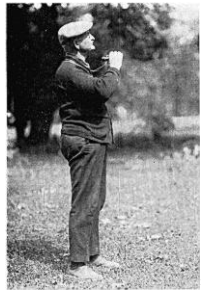 |
| Lynds Jones. |
Jones was an academic ornithologist—his was the first ornithology course ever offered at an American university, beginning at Oberlin in 1895—but it is in recreational birdwatching where his influence is still most deeply felt, if nowadays only rarely recognized.
Today ends the 2014-2015 season of the Christmas Bird Count. A highlight of many birders’ holiday season, this CBC was officially the 115th since Frank Chapman organized the first tally in December 1900. Noble as Chapman’s initiative was, and as invaluable as it has proved over the years, the idea wasn’t entirely his. Three years before the first count, on December 28, 1897, Lynds Jones and his best birding buddy and frequent co-author, William Leon Dawson, conducted what was a Christmas Count in all but name. The day was “just sharp enough to give zest to out-door life without discomfort,” and Jones and Dawson’s census detected 74 individuals of 11 species within a circle centered on downtown Oberlin. Jones noted that the little party was undeterred by “such little things as high picket and wire fences, thorny hedge-rows, inquisitive house-keepers, and threatened incarceration as lunatics”—plus ça change….
Counting—listing—would be the defining activity in Jones’s birding for the rest of his life. He required of his ornithology students at Oberlin that they keep a daily bird list in
a quadrille-ruled note-book dated at the top, with a line for weather, one for start and return, one for locality…. In the squares, on a level with the name of each species, and under the date, abbreviations are entered indicating where the species was seen… about how many seen, whether singing or silent….
And the professor was right there with them, keeping obsessive track. In 1898, Jones and Dawson took 87 birding trips from Oberlin. They reported in the Wilson Bulletin—Jones was the journal’s editor—that those excursions had recorded no fewer than 175 bird species for the year in Lorain County, Ohio. The year’s tally included twelve noteworthy rarities, among them a first county record of the Bewick’s Wren; Jones added four species to his county list, Dawson seven.
It’s all very familiar, isn’t it? So, too, are the justifications Jones offers for what must have seemed even then an otherwise rather pointless endeavor: the year’s “horizon,” as he and Dawson termed their efforts, had been occasion for the observers to improve their health by spending more time outdoors, and the team had “aroused public sentiment in favor of the birds.”
Not everyone had the leisure to conduct a big year, but almost any birder could get away for a “daily bird horizon.” In several of the years just before and after 1900, Jones was running a big day almost every month, reporting excitedly on new record tallies in the pages of the Wilson Bulletin. His account of a March effort strikes all of the same rhetorical notes that remain obligatory in writing about such activities even now:
The birds were everywhere…. At the end of the third mile there were 23 species recorded in my book, equaling the best previous record…. Had the weather been more favorable, it seems reasonable to suppose that the list for the day would have been even larger…. In the vicinity of the lake many of the species literally swarmed…. The list does not include ten species that were beyond question in the county on March 12. In spite of that this record is a phenomenal one in every way and will not soon be broken.
Not until the next year, at least.
Jones was an enthusiastic “patch birder,” happiest, it seems, birding in his own Ohio county. In the summer of 1900, though, he and Dawson made a 7000-mile trip west to the Pacific and back; Jones kept the lists, obsessively, tallying every species seen from the train window and in the field. The Wilson Bulletin began to look like an eBird report avant la lettre as Jones listed the 309 species recorded on the journey, “181 of them being new to the writer’s life list.”
It was a sign of the growing gulf between scientific ornithology and birdwatching that Jones and Dawson’s “Reconnoissance” attracted swift and withering criticism. The Condor reviewer admitted in the abstract that keeping lists “when speeding through the country on a railway flyer” could be useful, but Jones’s lists from various localities were “worthless.” Jones’s only defense was that “it was not intended that the results have any general scientific value,” a fateful admission if ever there was one. Nonetheless, he continued to publish censuses and horizons, his own and others’, in the pages of the Wilson Bulletin.
By 1916, however, the enthusiasm for publishing species lists appears to have peaked. Jones’s solicitation of reports went largely unanswered, and in the following year, Waldron DeWitt Miller and Charles H. Rogers published a truly serious criticism of big days on the Jonesian plan:
The value of [a] census… lies more in the accuracy of the count of individual birds … than in the total number of species noted.
Jones came around to the same view in an editorial note published in the Wilson Bulletin in 1924:
Time was when a mere enumeration of the birds that were to be found in some political division could be looked upon as a contribution to our knowledge of the science of Ornithology. For a large part of North America that is no longer true…. Your Editor… does not believe that mere enumeration of the species warrants the cost of publication.
Jones retired as Editor at the end of the year.
The Wilson Bulletin—now the Wilson Journal of Ornithology—would go on to become one of the preeminent scientific publications in the world. And it would largely leave American birdwatching behind. As ornithology became increasingly technical, birding grew ever more recreational, taking for its model the censuses, the horizons, and the frantic—and usually meaningless—record-keeping pioneered by Lynds Jones, the most influential birder most of us have never heard of.
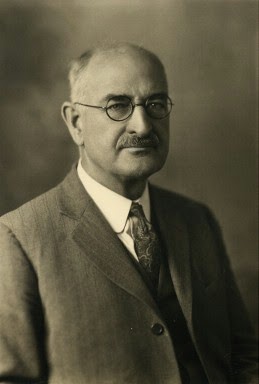 |
| Lynds Jones. |
