

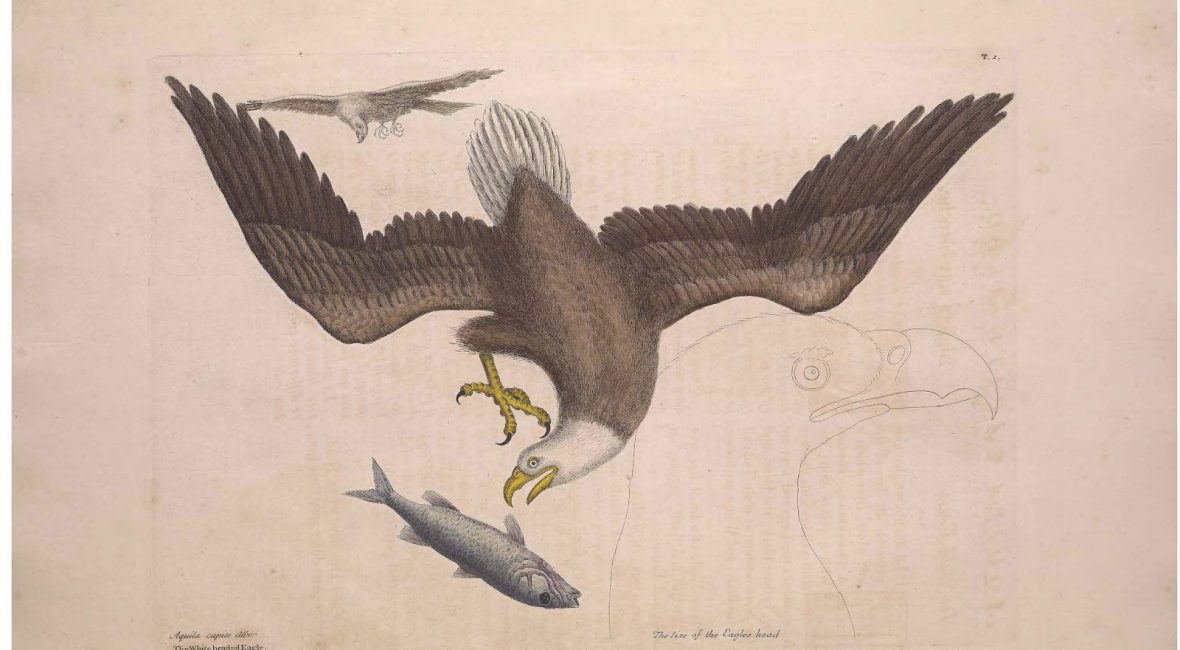
“Is the bald eagle really bald?”
This was the question that a recent history of science undergraduate class at Harvard University had to answer with the help of BHL. Specifically, students were required to locate Mark Catesby’s 1731 plate of the bald eagle in BHL and use the accompanying text to determine the accuracy of the bird’s moniker.
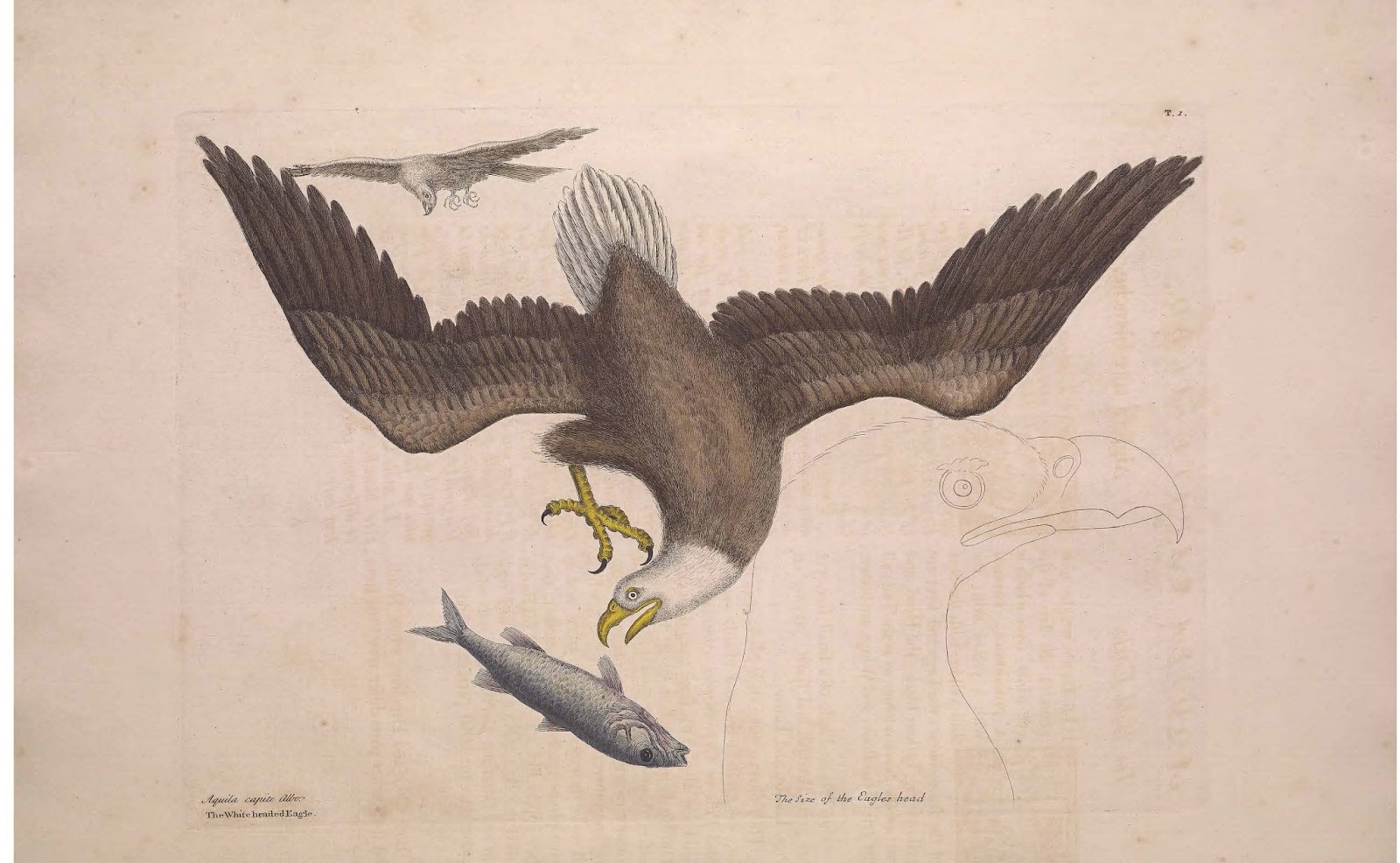 |
| The White-Headed Eagle. Catesby, Mark. The Natural History of Carolina, Florida and the Bahama Islands. vol. 1, 1731. pl. 1. http://biodiversitylibrary.org/page/40753120. Digitized by Smithsonian Libraries. |
Mary Sears, Head of Public Services at the Ernst Mayr Library of the Museum of Comparative Zoology at Harvard University, instructed the class on how to use BHL to satisfy the assignment. Instructing students on the use of BHL is something Mary has done for some time now.
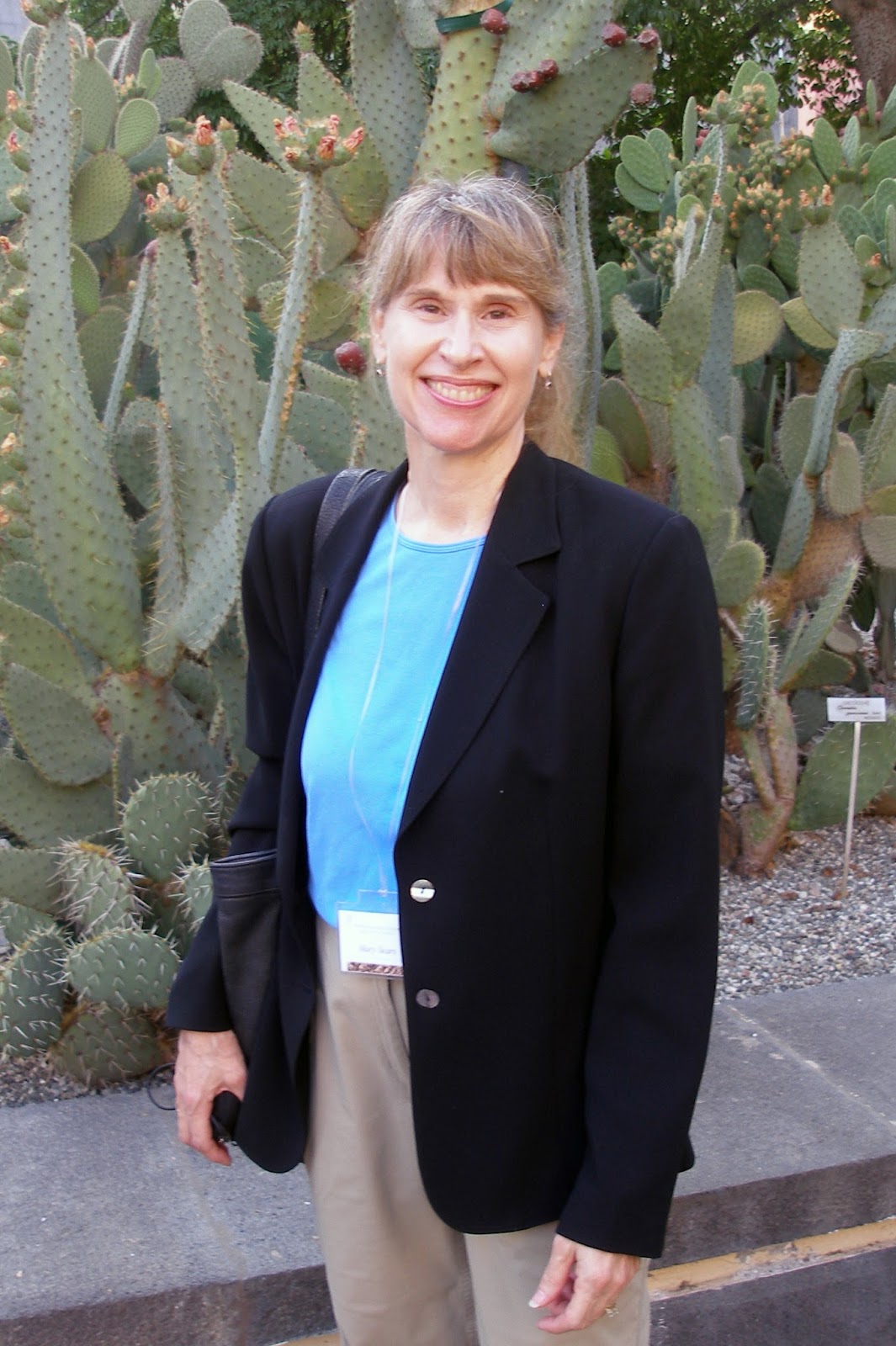 |
| Mary Sears. |
“We present the BHL to groups of students, when their class visits the library, and also use BHL as a reference tool when students are working on individual projects,” explains Mary. “Typically, a class visit involves an exhibit of historical volumes in Special Collections, and a tour and orientation on electronic resources. Faculty and students receive a bibliography of their Special Collections exhibit, with links to those works that are in BHL. The quality, immediacy and scope of the BHL make it an important tool when working with individual students, who are usually working on short-term projects. I regularly direct students to BHL who need taxonomic and anatomical works (and walk them through how to use it). Especially for students who are not science majors, the BHL is a dependable central source of scholarly articles and books in zoology and natural history. Our print journals and older monographs do not circulate, so the BHL’s high quality scans fill the students’ needs for accessible sources. Warren’s monograph on Mastodon giganteus (image below) is a great example. I have the volume downloaded at the reference desk and send it to a student at least once a year. They can see the original in Special Collections during library hours but use the BHL version from anywhere, 24/7.”
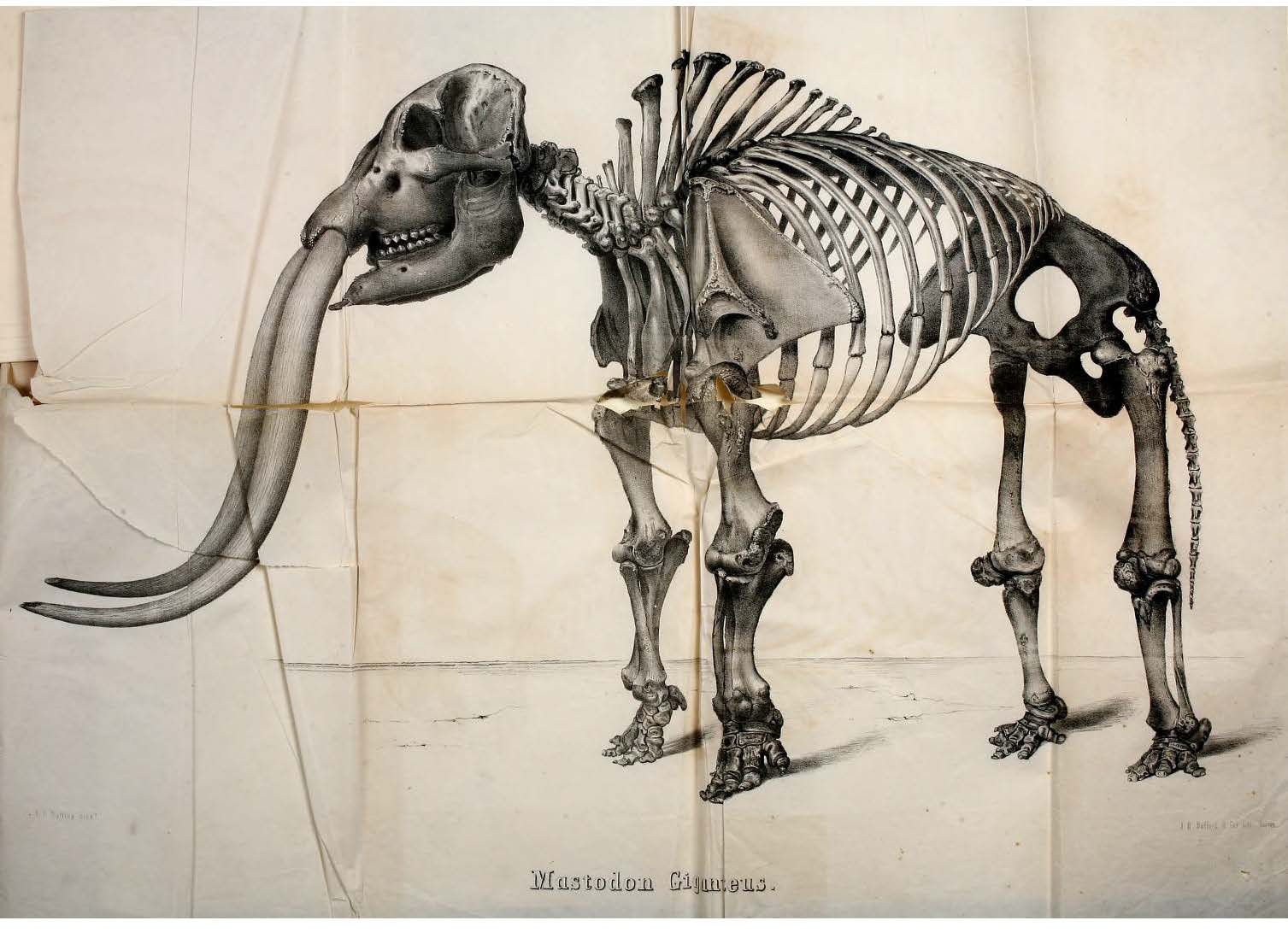 |
| Skeleton of Mastodon giganteus. Warren, John C. The Mastodon Giganteus of North America. 1852. pl. XXVII. http://biodiversitylibrary.org/page/40681510. Digitized by Smithsonian Libraries. |
Mary has been at the MCZ Ernst Mayr Library for twenty-five years. Her specialty is reference and research, but she also collaborates on circulation and other areas where the library intersects with the public. She is most active in the subject areas of marine biology, bryozoology, and scientific biography.
As the Ernst Mayr Library is a founding Member of the Biodiversity Heritage Library, Mary has been aware of BHL’s existence since its launch in 2006. It has had an increasingly significant impact on her work over the past ten years.
“I have a very high opinion of BHL,” affirms Mary. “It has impacted my work by making natural history journals and books easier to find and use. I am very fortunate to be in a library that contributes to the BHL: we have a solid collection of 19th century journals and many pre-1850 titles. As the repository has grown, I have experienced the shift from wondering whether a classic text will be in BHL to assuming that it will be. Now that so many important titles are there, I almost always use BHL scans instead of consulting a print volume in our Special Collections. Before BHL, I regularly went to Special Collections to confirm citations, make copies, etc. Being able to do those ordinary tasks remotely saves a lot of wear and tear on the collection. For works we do not own, I can have immediate access through the BHL to volumes that would have taken weeks and delicate negotiations (or microfilm!) [to obtain access to] twenty years ago.”
Mary’s favorite feature of BHL is the quality of the scans. As she describes, BHL’s scan quality, “especially the plates, more especially the foldout plates, is vastly better than other online repositories.” She also appreciates that downloading content from BHL “keeps getting better and easier.” Thinking about future improvements, Mary hopes to see the runs of journal titles in BHL be extended to include more recent volumes. “It is difficult to negotiate copyrights, but it is a big win to have a whole run of a journal in the BHL,” explains Mary.
Mary’s favorite title in BHL demonstrates the value of having full journal runs in BHL.
“The Bulletin of the Museum of Comparative Zoology (1863-current) is the primary publication of my institution and covers a vast array of zoological topics over a 150 year time span,” says Mary. “I get a lot of questions about the works published by the MCZ and authors/historical figures associated with the Museum. Having the Bulletin available through BHL makes works easier to find, download and send, as well as taking pressure off of our print volumes.”
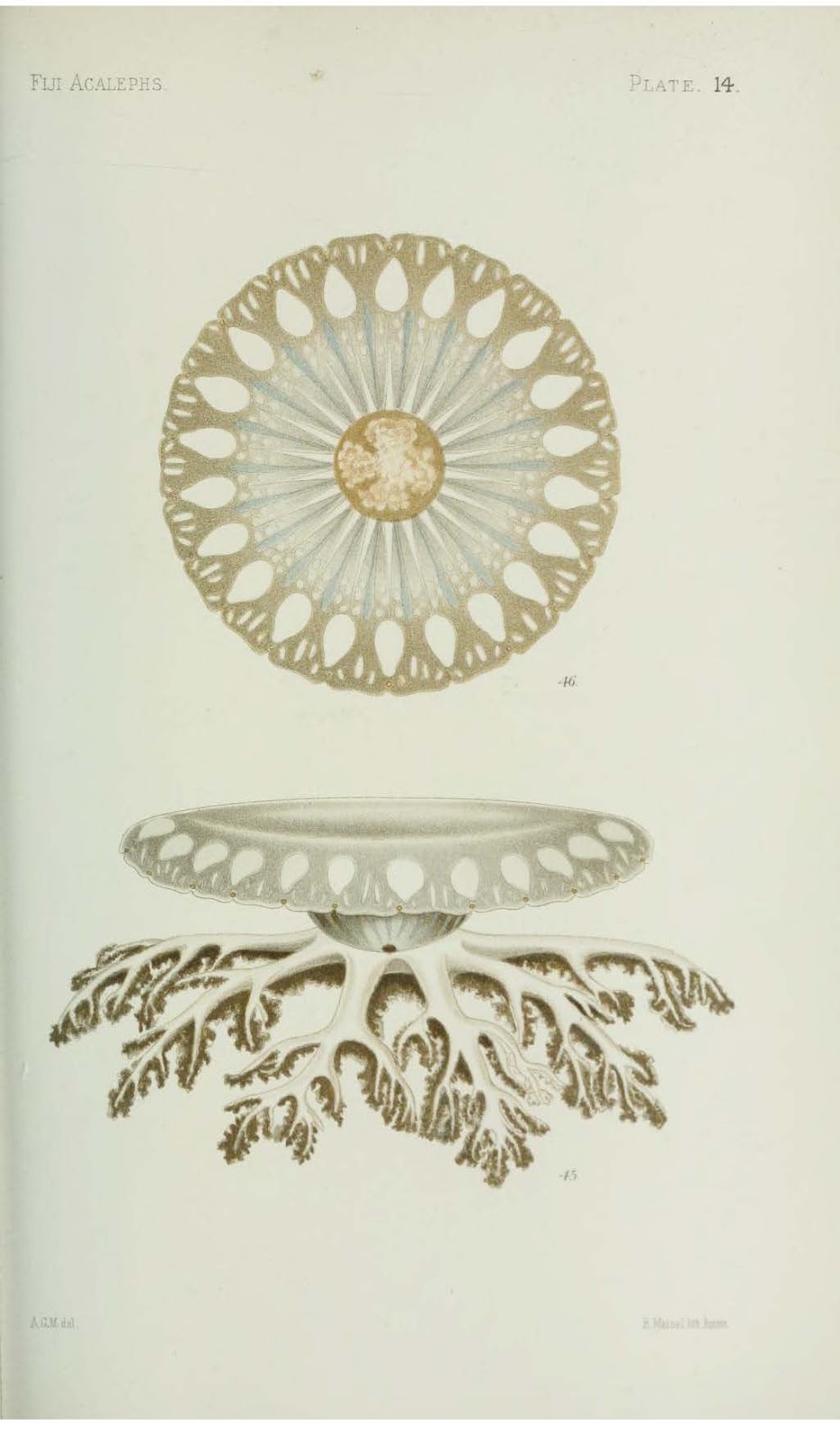 |
| New species Cassiopeia ndrosia. Agassiz, A. and A.G. Mayer. Acalephs from the Fiji Islands. Bulletin of the Museum of Comparative Zoology, vol. 32 (9), 1899. pl. 14. http://biodiversitylibrary.org/page/30426482. Digitized by the Gerstein – University of Toronto. |
BHL has an active permissions program, which is working to secure licenses for more and more in-copyright titles. Recent work by the Institute of Museum and Library Services-funded Expanding Access to Biodiversity Literature project has resulted in a significant boost to the number of permissions agreements that BHL has secured over the past few months. See our recent blog post to explore the most recent in-copyright titles for which we’ve secured permission and to learn more about EABL.
So, is the bald eagle really bald? Nope, as you should be able to tell from Catesby’s illustration. According to the National Park Service, “The term ‘bald’ comes from the word ‘piebald,’ meaning markings that are two colors, usually black and white.” As Catesby writes, “This bird is called the Bald Eagle, both in Virginia and Carolina, though his head is as much feather’d as the other parts of his body.”
BHL to the rescue for students, librarians, scientists, and readers everywhere!
_____________________
This post may contain the personal opinions of BHL users or affiliated staff and does not necessarily represent the official Biodiversity Heritage Library (BHL) position on these matters.
