Biodiversity Heritage Library - Program news and collection highlights from BHL
  • Home
  • News
  • Featured Books
    • All Featured Books
    • Book of the Month Series
    • BHL at 20
  • User Stories
  • Campaigns
    • Fossil Stories
    • Garden Stories
    • Monsters Are Real
    • Page Frights
    • Her Natural History
    • Earth Optimism 2020
  • Tech Blog
  • Visit BHL
Home
News
Featured Books
    All Featured Books
    Book of the Month Series
    BHL at 20
User Stories
Campaigns
    Fossil Stories
    Garden Stories
    Monsters Are Real
    Page Frights
    Her Natural History
    Earth Optimism 2020
Tech Blog
Visit BHL
  • Home
  • News
  • Featured Books
    • All Featured Books
    • Book of the Month Series
    • BHL at 20
  • User Stories
  • Campaigns
    • Fossil Stories
    • Garden Stories
    • Monsters Are Real
    • Page Frights
    • Her Natural History
    • Earth Optimism 2020
  • Tech Blog
  • Visit BHL
Biodiversity Heritage Library - Program news and collection highlights from BHL
BHL News, Blog Reel

Announcing the New Valentine’s Day Collection in the BHL Store

View Full Size Image

Get your valentine the perfect card or gift with the new Valentine’s Day Collection in the BHL Store!

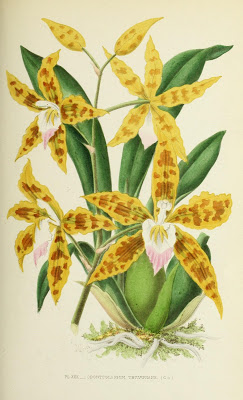
The collection includes products featuring vintage botanical art from the Biodiversity Heritage Library.

Shop the BHL Valentine’s Day Collection today!

The product art comes from Annales de la Société royale d’agriculture et de botanique de Gand, T.3 (1847), which was digitized in BHL by Harvard University Botany Libraries.

Not only are these products perfect for Valentine’s Day, but (just like with all of the products in the BHL store), 100% of the proceeds will be used to help us digitize more books for BHL. Researchers around the world rely on the information contained in books and archival materials to study and conserve biodiversity. Learn more about how BHL helps save biodiversity and how your purchase can have a lasting, positive impact on our planet.

View Full Size Image
You’ll find this badge in our store and on our marketing materials. It means that your purchase will help support research around the world. SHOP TODAY and help save biodiversity!

Visit the BHL Valentine’s Day Collection today to do some shopping that’s good for the planet.

January 30, 2017by ulib-libraryjobs
Blog Reel, Featured Books

Orchidelirium: The Orchid Craze Takes Printed Form

View Full Size Image
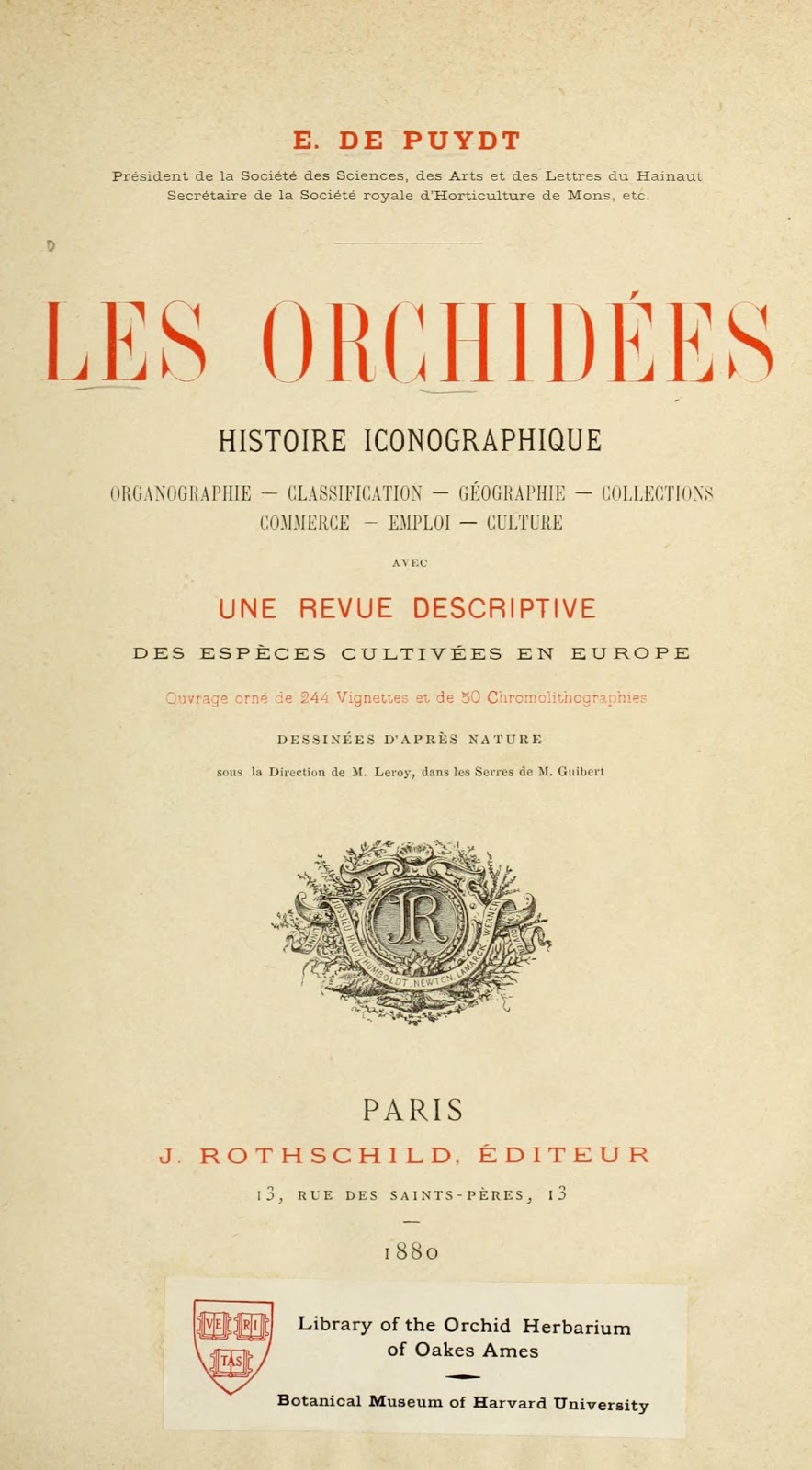
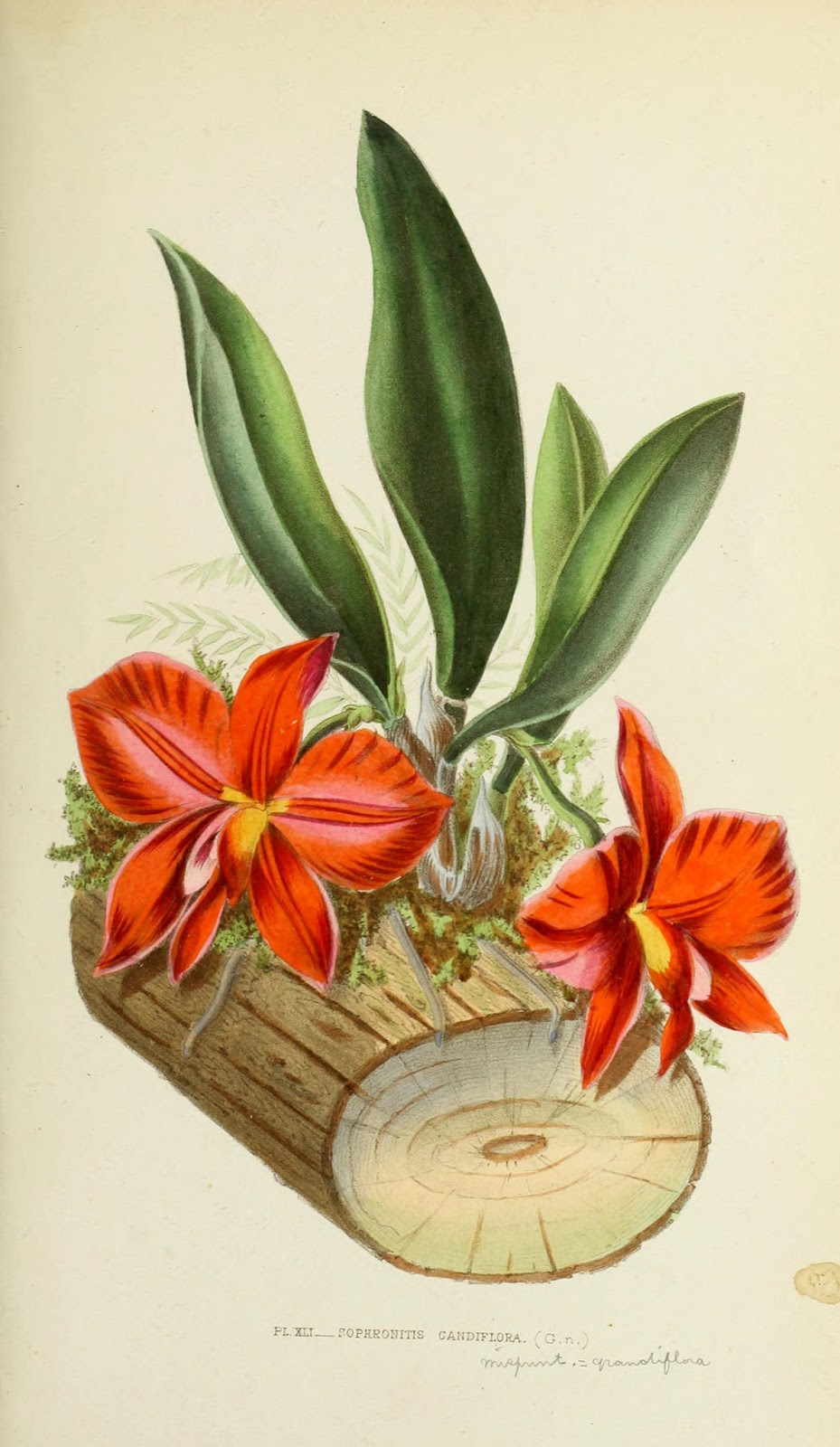
Puydt, Émile de. Les orchidées, histoire iconographique, organographie, classification, géographie, collections, commerce, emploi, culture, avec une revue descriptive des espèces cultivées en Europe. 1880. Digitized by Harvard University Botany Libraries. http://biodiversitylibrary.org/page/43644141.

Walk into most any nursery or florist and you will see beautiful orchids of many colors and sizes, with “easy care” instructions attached right to the pot enabling even the brownest thumb success. Want to shake the winter doldrums? Attend an orchid show or meeting – there are over 500 local groups affiliated with the American Orchid Society alone. Orchids are as diverse as they are beautiful, with over 27,000 accepted species living in nearly every corner of the globe.

View Full Size Image
Puydt, Émile de. Les orchidées, histoire iconographique, organographie, classification, géographie, collections, commerce, emploi, culture, avec une revue descriptive des espèces cultivées en Europe. 1880. Digitized by Harvard University Botany Libraries. http://biodiversitylibrary.org/page/43644221.

We are not alone in our fascination with orchids. In the nineteenth century, Europe was gripped by what has been named “Orchidelirium.”  The collection of orchids from around the world was booming as the industrial revolution continued to change the economy and reach of Europe. Amateur and professional botanists were frantically developing methods to cultivate these exotic plants under glass.

Capitalizing on the orchid trend, a Belgian botanist named Émile de Puydt published a treatise on orchids in French in 1880, entitled Les orchidées, histoire iconographique, organographie, classification, géographie, collections, commerce, emploi, culture, avec une revue descriptive des espèces cultivées en Europe [Orchids, iconographic history, organography, classification, geography, collections, trade, employment, culture, with a descriptive review of the species cultivated in Europe (tr.)].

View Full Size Image
Puydt, Émile de. Les orchidées, histoire iconographique, organographie, classification, géographie, collections, commerce, emploi, culture, avec une revue descriptive des espèces cultivées en Europe. 1880. Digitized by Harvard University Botany Libraries. http://www.biodiversitylibrary.org/page/43643931.

Les orchidées was published on the tails of another French orchid book directed towards amateurs, entitled L’Orchidophile: traité théorique et pratique sur la culture des Orchidées [The Orchid, theoretical and practical treatise on growing orchids (tr.)] by François du Buysson. Both works contained detailed information regarding orchid culture. However, L’Orchidophile is a hefty book of over 500 pages, with dense text, equipment line drawings, and tables but not a single drawing of these magnificent plants. It appealed to the serious orchid cultivator, but lacked a “wow” factor to make it appeal to a more general French-speaking audience.

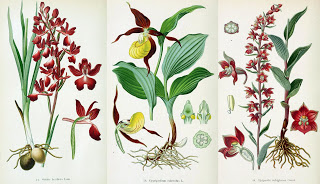
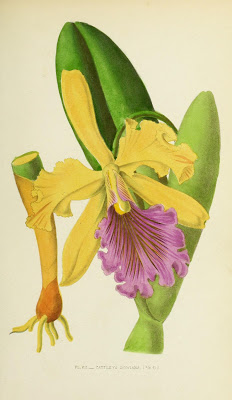
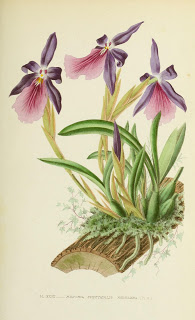
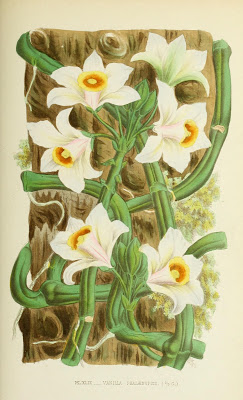
De Puydt’s book changed that. The more scholarly sections of Les orchidées are less than half the length of those in L’Orchidophile, yet they are filled with 237 black and white drawings of orchids, exotic locales, and greenhouses bursting with plants. The final section of Les orchidées contains fifty full-page chromolithographs (by M. Leroy and M. Guibert, of whom little is known) of cultured orchids accompanied by elegant descriptions of each species. De Puydt put his writing talents to great use, describing the orchid species as “beautiful (belle),” “magnificent (magnifique),” “pretty (jolie),” and “very splendid (plus slendide).” The book received awards from the Société d’Acclimatation de Paris and the Société centrale d’Horticulture de Paris.

View Full Size Image
Puydt, Émile de. Les orchidées, histoire iconographique, organographie, classification, géographie, collections, commerce, emploi, culture, avec une revue descriptive des espèces cultivées en Europe. 1880. Digitized by Harvard University Botany Libraries. http://biodiversitylibrary.org/page/43644233.

Following de Puydt’s book, another Belgian botanist specializing in orchids, Jean Jules Linden, began publication of Lindenia: iconograhie des orchidées in 1885. With lavish illustrations and short 1-2 page hints to growers, the work was quickly translated into English and published to reach an even more general audience of orchid-lovers. Linden highlighted orchids available through his business L’Horticulture Internationale as well as commonly cultivated species and new discoveries.

A modern review of Les orchidées, published in 1973, notes that the descriptions of the orchids in this work lack sufficient scientific and cultural details to be a good resource for modern growers. The review author also criticized the limitations of the drawings and considers the value of the book to be primarily for book collectors. While Les orchidées may not be as detailed as L’Orchidophile or as colorful as Lindenia, it is a well written and beautiful historical overview during the time of “Orchidelirium.”

View Full Size Image
Puydt, Émile de. Les orchidées, histoire iconographique, organographie, classification, géographie, collections, commerce, emploi, culture, avec une revue descriptive des espèces cultivées en Europe. 1880. Digitized by Harvard University Botany Libraries. http://biodiversitylibrary.org/page/43644277.

Paul Émile de Puydt (1810-1891) was born and died in Mons, a small city in western Belgium where his father served for four years as governor of Hainaut province. De Puydt founded the horticulture society of Mons and published many articles in scientific journals and newspapers on horticulture.

De Puydt did not confine his interests to botany. He was a writer, novelist, playwright, and political theorist. He coined the term “panarchy” or competitive government, where people choose the government in which they want to be a citizen. Different forms of government compete for citizens in an open market and more than one form of government can exist in the same locale. In modern times, the term panarchy also refers to a conceptual framework to understand stability and change of complex systems.

View Full Size Image
Puydt, Émile de. Les orchidées, histoire iconographique, organographie, classification, géographie, collections, commerce, emploi, culture, avec une revue descriptive des espèces cultivées en Europe. 1880. Digitized by Harvard University Botany Libraries. http://biodiversitylibrary.org/page/43644309.

Resources

  • De Puydt, Émile. Les orchidées, histoire iconographique, organographie, classification, géographie, collections, commerce, emploi, culture, avec une revue descriptive des espèces cultivées en Europe. http://dx.doi.org/10.5962/bhl.title.77404
  • du Buysson, François. L’Orchidophile: traité théorique et pratique sur la culture des Orchidées. http://dx.doi.org/10.5962/bhl.title.15493
  • Linden, Jean Jules. Lindenia: iconograhie des orchidées. http://dx.doi.org/10.5962/bhl.title.64391

Bibliography

  • American Orchid Society. http://www.aos.org/about-us/affiliated-societies.aspx. Accessed 1/11/2017.
  • Comte de Kerchove de Denterghem (1891). “P.E. de Puydt.” Revue d’lhorticultre belge et etrangere. Vol. 17, 147-151.
  •  De Puydt, Paul Emile. Wikipedia. https://en.wikipedia.org/wiki/Paul_%C3%89mile_de_Puydt. Accessed 1/11/2017.
  • Duveen, Denis I. (1973). “Les Orchidees: Histoire Iconographique by E. de Puydt.” Bulletin of the American Orchid Society. Vol. 42, No. 7, pgs. 627-629.
  • Linden, Lucien (1881). “Paul Émile de Puydt.” L’Illustration horticole. v. 28, pg. 105-107.
  • Orchidaceae. Encyclopedia of Life. http://www.eol.org/pages/8156/overview. Accessed 1/11/2017.
  • Sustainable Scale Project. http://www.sustainablescale.org/ConceptualFramework/UnderstandingScale/MeasuringScale/Panarchy.aspx. Accessed 1/11/2017.
  • Zhou, Li (2015). “Orchidelirium, an Obsession with Orchids, Has Lasted for Centuries.” Smithsonian Magazine. http://www.smithsonianmag.com/smithsonian-institution/orchidelirium-obsession-orchids-lasted-centuries-180954060/#kro3ZxCy1rSpeL5J.99. Accessed 1/13/2017.
January 26, 2017by ulib-libraryjobs
BHL News, Blog Reel

2016: A Banner Year for In-Copyright Content Added to BHL

The last quarter of 2016 continued the year’s steady growth in new permissions for in-copyright titles: 46 in October, November, and December, bringing the year-end total to 154! Major drivers of this growth were the Expanding Access to Biodiversity Literature project, staff at BHL participating institutions, and the worldwide BHL user community, which regularly identifies material and recommends it for digitization.

View Full Size Image
BHL licenses content under a Creative Commons
Attribution Non-commercial Share-alike 4.0 license

Below is the list of new titles for which BHL received permission in the fourth quarter of 2016. Note that many of the titles are not yet available in BHL because they are still being digitized or uploaded; check the recent additions page to see if a link has been added for a specific work or peruse In-Copyright Titles on the Permissions page.

American Arachnological Society

  1. Journal of Arachnology

Iowa Ornithologists’ Union

  1. Iowa Bird Life

Glasgow Natural History Society

  1. The Glasgow Naturalist

Instituto de Ciências Biológicas – Universidade Federal de Minas Gerais

  1. Oreades

Virginia Museum of Natural History

  1. Guidebooks
  2. Insects of Virginia
  3. Jeffersoniana
  4. Myriapodologica
  5. Special Publications: Checklist of the Millipeds of Middle and North America
  6. Memoirs

The Berwickshire Naturalists’ Club

  1. The History of the Berwickshire Naturalists’ Club

Carnegie Museum of Natural History

  1. Annals of the Carnegie Museum
  2. Bulletin of the Carnegie Museum of Natural History
  3. Special PublicationsMemoirs of Carnegie Museum

Western Australian Museum

  1. Records of the Western Australian Museum

South Africa Institute for Aquatic Biodiversity (SAIAB)

  1. Smithiana Bulletin
  2. Smithiana Special Publication
  3. Fishes of the Southern Ocean
  4. Otolith Atlas of Southern African Marine Fishes
  5. Biology and Ecology of Fishes in Southern African Estuaries
  6. Revision of the Indo-Pacific Dottyback Fish Subfamily Pseudochromineae

American Fern Society

  1. Pteridologia

Gulf Coast Research Laboratory

  1. Gulf Research Reports
  2. Gulf and Caribbean Research

Yorkshire Naturalists’ Union Birds Section

  1. Ornithological Report
  2. Bird Report

Cary Institute of Ecosystem Studies

  1. Newsletter of the Cary Arboretum
  2. IES Newsletter
  3. Occasional Publications of the Cary Institute of Ecosystem Studies
  4. EcoFocus

American Malacological Society

  1. American Malacological Bulletin
  2. Bulletin (American Malacological Union)Annual Reports
  3. Annual Meeting / News Bulletin & Annual Report
  4. Perspectives in Malacology
  5. Proceedings of the 2nd International Corbicula Symposium
  6. Entrainment of Larval Oysters

American Association of Zoo Keepers

  1. Animal Keepers’ Forum

Wyoming Native Plant Society

  1. The Castilleja

Kentucky Society of Natural History

  1. Annals of Kentucky Natural History
  2. Kentucky Naturalist News

Colorado Native Plant Society

  1. Colorado Native Plant Society Newsletter
  2. Aquilegia

Biodiversity Journal

  1. Biodiversity Journal

Geological Institute of Russian Academy of Sciences

  1. Voprosy mikropaleontologii (Questions of micropaleontology)

Thank you to the many individuals and institutions that have so generously given permission for these titles. If you have content you would like to see in BHL, or content you want digitized, please get in touch with the Expanding Access project by emailing Community Manager Patrick Randall at [email protected].

As always, don’t forget to follow BHL on Facebook, Twitter (@BioDivLibrary), Instagram, and Tumblr!

January 24, 2017by eomeara
BHL News, Blog Reel

BHL Adds University of Toronto Libraries as a New Member

View Full Size Image

The Biodiversity Heritage Library is pleased to welcome the University of Toronto Libraries (UTL) as a new Member. UTL is the first Canadian library to join the Biodiversity Heritage Library as a Member.

The University of Toronto Libraries system is the largest academic library in Canada. Ranked fourth among North American peer institutions by the Association of Research Libraries, the UTL system is particularly strong in the sciences and includes 10 dedicated science libraries. Among these is the Gerstein Science Information Centre, Canada’s largest standalone science and health library. Additionally, the Thomas Fisher Rare Book Library holds rich collections on the history of science and medicine, including an exhaustive collection of original works by Charles Darwin.

“The University of Toronto Libraries is thrilled to become a Member of the Biodiversity Heritage Library,” asserts Neil Romanosky, UTL’s Associate Chief Librarian for Science Research and Information and Director of the Gerstein Science Information Centre. “Given the rapid rate of extinction of species across the globe, we see membership in BHL as an important opportunity to support the search for knowledge by preserving our wealth of historic biodiversity materials and sharing them more widely.”

View Full Size Image
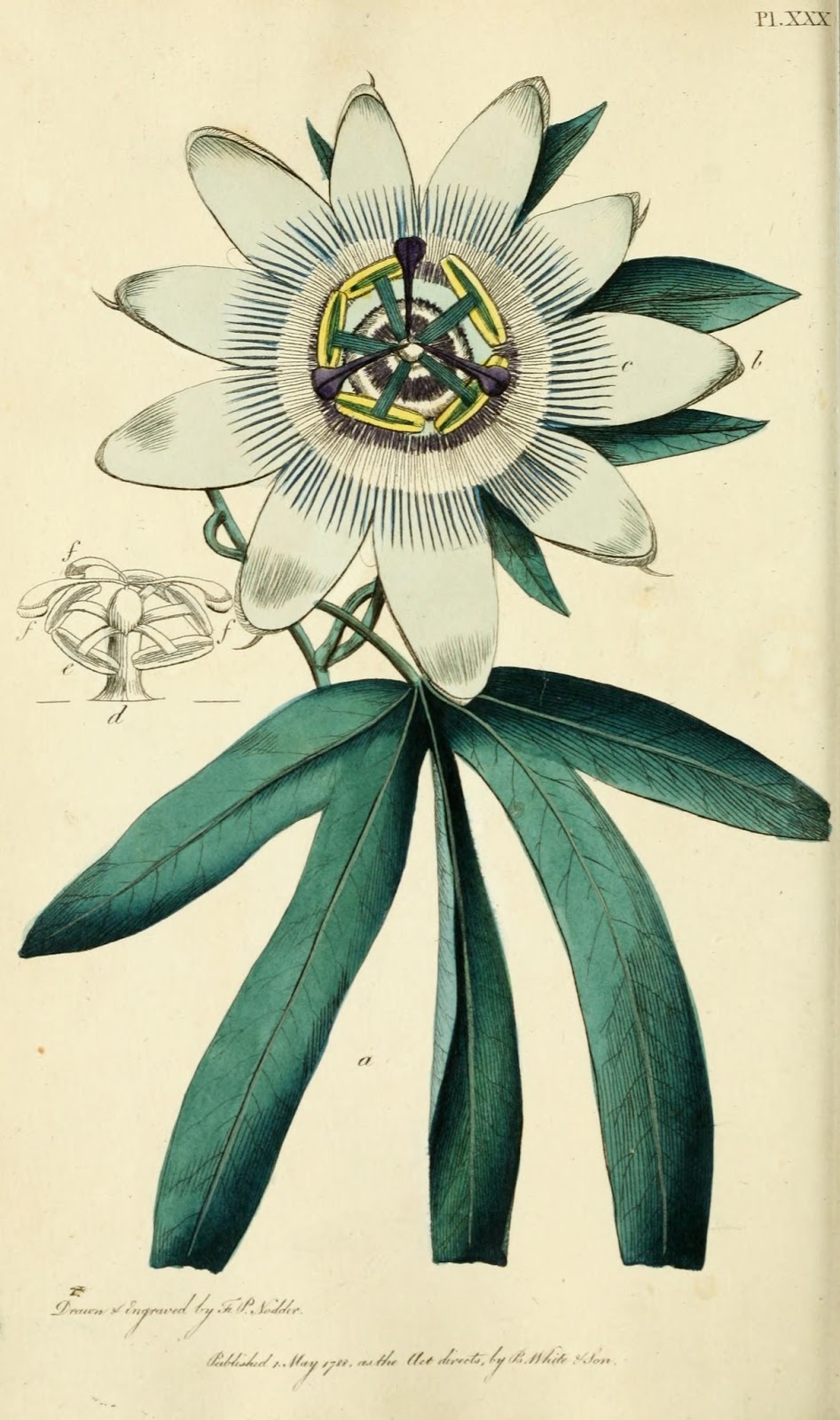
Martyn, Thomas. Thirty-eight plates, with explanations; intended to illustrate Linnaeus’s System of vegetables, and particularly adapted to the Letters on the elements of botany [by J.J. Rousseau] By Thomas Martyn. (1799). Art by Frederick Polydore Nodder. http://www.biodiversitylibrary.org/page/32193301. Digitized by University of Toronto Libraries from the Thomas Fisher Rare Book Library.

As a BHL Member, the University of Toronto Libraries will enhance BHL’s collection by contributing rare and unique material from its holdings of over 12 million print volumes. As the host of an Internet Archive (IA) scanning center, the Libraries has already digitized a large portion of its collection. Over 3.3 million pages of natural history literature from UTL are currently available in BHL.

“The University of Toronto Libraries and BHL share a commitment to open access and the promotion of digital scholarship through global partnerships and the development of innovative tools and technology,” affirms BHL Program Director Martin R. Kalfatovic. “We look forward to the expertise and leadership that UTL will bring to the BHL consortium as we work together to build our online collection, enhance our services, and empower researchers around the world through free access to biodiversity knowledge.”

The BHL consortium now consists of 18 Members and 15 Affiliates.

January 23, 2017by Grace Costantino
Blog Reel, Featured Books

The New York Zoological Society

This is part of a series of monthly posts related to the IMLS-funded Expanding Access to Biodiversity Literature (EABL) grant. The project, which solicits new content through 2017, is aimed at enhancing BHL’s collection by digitizing valuable and unique material from natural-history related organizations in the U.S. that are outside the BHL consortium. Learn more, and find past blogs, at the EABL wiki.

View Full Size Image
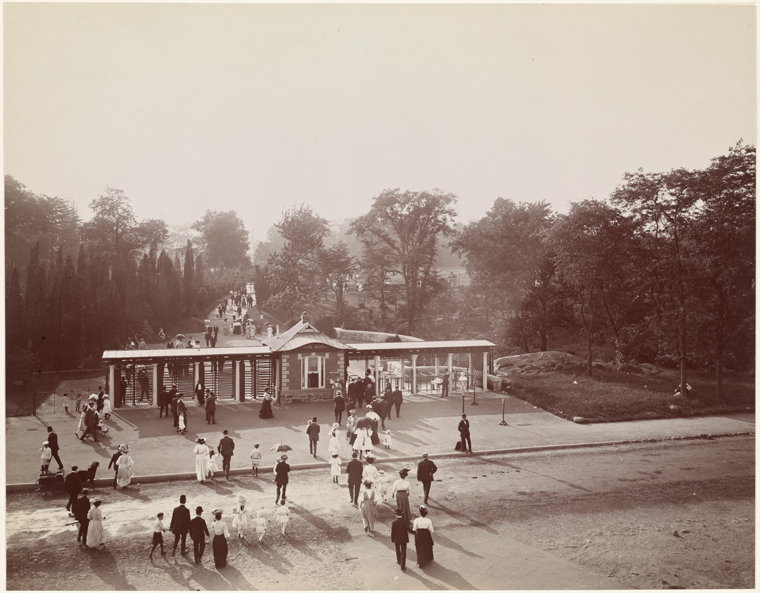
Boston Rd. entrance, Bronx Zoo, 1911
(courtesy New York Public Library)

The New York Zoological Society (NYZS) was chartered in 1895. Its founders were Andrew H. Green, planner of some of New York City’s most important cultural institutions; Henry Fairfield Osborn, professor and curator at the American Museum of Natural History; and Madison Grant, a lawyer and conservationist. The latter two were members of the Boone and Crockett Club, a group of hunters and conservationists founded by fellow New York naturalist Theodore Roosevelt. From the start, this influential coalition dedicated itself to the three “objects of the society,” outlined in the first Annual Report of 1897:

  1. The establishment of a free zoological park containing collections of North American and exotic animals, for the benefit and enjoyment of the general public, the zoologist, the sportsman and every lover of nature.
  2. The systematic encouragement of interest in animal life, or zoology, amongst all classes of the people, and the promotion of zoological science in general.
  3. Co-operation with other organizations in the preservation of the native animals of North America, and encouragement of the growing sentiment against their wanton destruction.

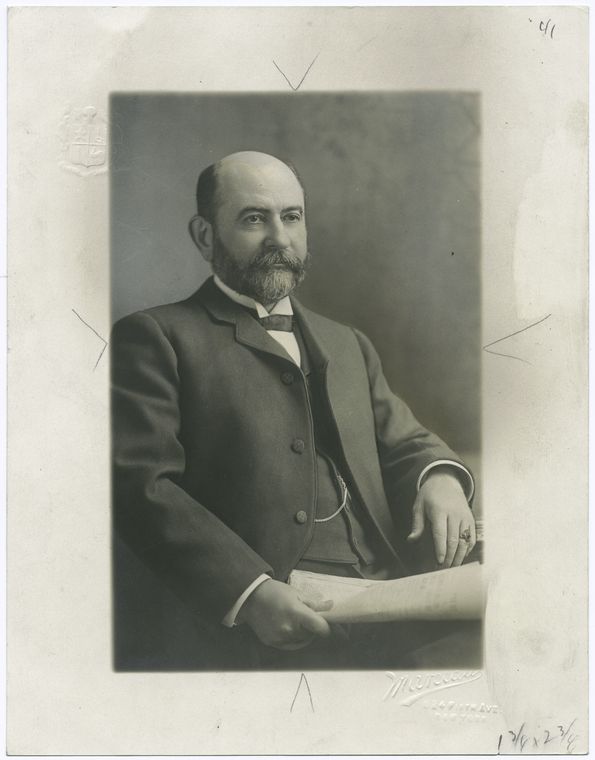
The first goal was realized in 1899 with the opening of the Bronx Zoo, originally called the New York Zoological Park. William Hornaday, the founder of the National Zoo, selected the site, chose curators and staff, and became its first director.

View Full Size Image
William T. Hornaday
(courtesy New York Public Library)
In 1902, New York City gave the NYZS control of the New York Aquarium, located at the time in Battery Park, Manhattan (and since 1957 in Coney Island, Brooklyn). By 1993, when the NYZS changed its name to the Wildlife Conservation Society (WCS), the city had handed over the reins of three other wildlife parks: the Central Park Zoo, the Queens Zoo, and the Prospect Park Zoo.

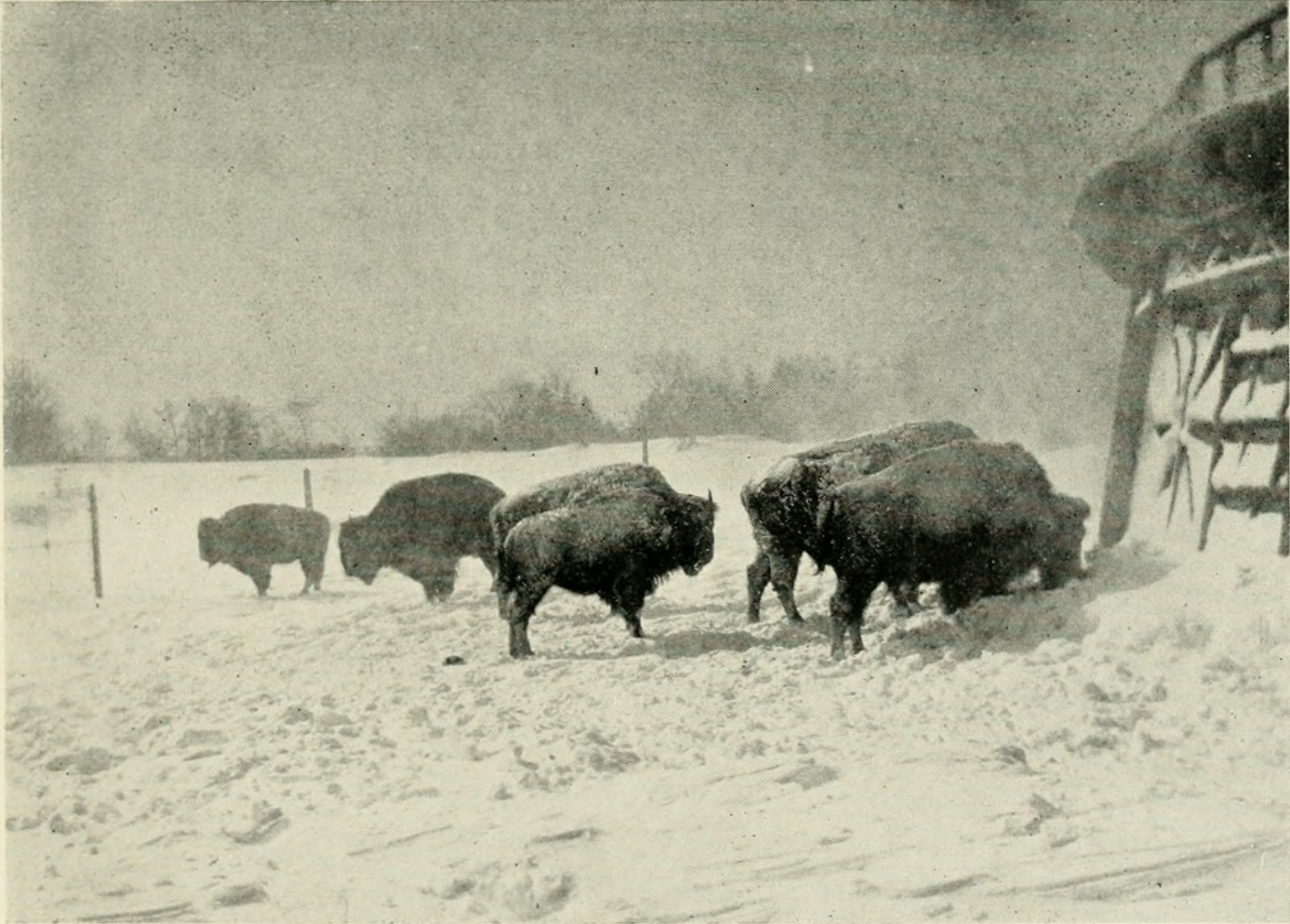
Just as it had wasted no time in opening a “free zoological park,” the NYZS set about accomplishing its second and third goals in short order. On the conservation front, Hornaday was particularly concerned about the state of America’s large mammals, decimated by unchecked hunting. He acquired seven American buffalo (bison) for the Bronx Zoo in 1899; these were used several years later to help reestablish western U.S. populations teetering on the brink of extinction.

View Full Size Image
“Winter on the Buffalo Range,” from
Fourth Annual Report of the New York Zoological Society, 1900, p.50

Also in 1899, Hornaday hired William C. Beebe as curator of ornithology. Beebe traveled the world doing field research for the Zoo, but his interest was not confined to birds; in 1922 he founded a Department of Tropical Research, and in 1934—on behalf of that department—he descended in a bathysphere to observe the deep sea in the waters off Bermuda. Later on, he turned his attention to insects and reptiles. Much of his research is presented in Zoologica, the scientific journal that NYZS published from 1907 to 1973.

View Full Size Image
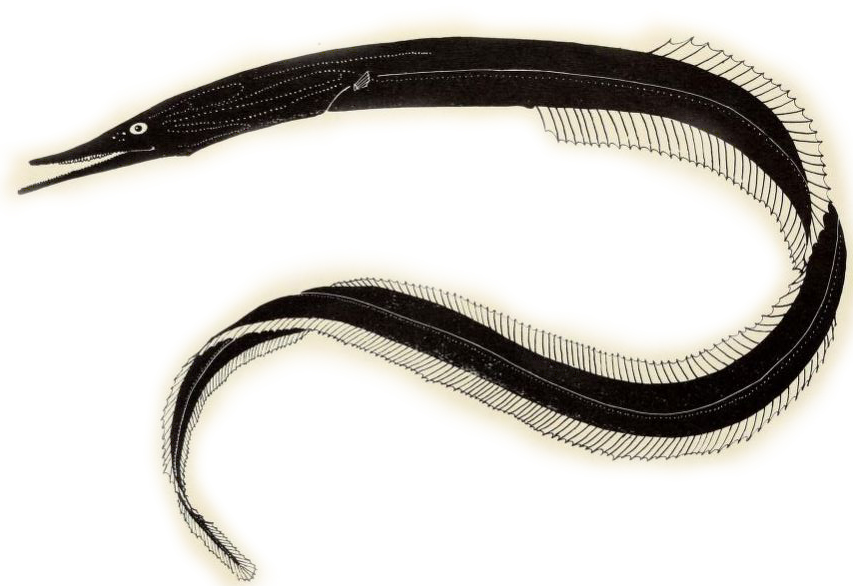
Black sawtoothed eel, Serrivomer brevidentatus,
from Zoologica v.20, no.3, 1936, p.94

In 1940, Henry Fairfield Osborn Jr, son of the NYZS founding member of the same name, was appointed director. Over the next 22 years, he worked to expand the conservation work of the NYZS, establishing programs in Africa and Southeast Asia. William Conway, who took over as director of the zoo in 1962 and president of the NYZS in 1992, used the zoo to breed endangered species. Today, as the Wildlife Conservation Society, the organization is at work in hundreds of conservation programs around the world and continues to attract visitors to its wildlife parks in New York City.

BHL and the EABL team are grateful to the WCS for granting permission to digitize the complete run of Zoologica, a journal of tremendous scientific importance. Zoologica has been digitized by Smithsonian Libraries and the Ernst Mayr Library of the Museum of Comparative Zoology at Harvard University. It is now indexed by article and, together with the other NYZS publications in BHL, chronicles the history and research of one of the world’s most important conservation organizations.

Reference

“History.” WCS Library & Archives. Accessed January 18, 2017.         http://ielc.libguides.com/wcs/archives_history

January 19, 2017by [email protected]
BHL News, Blog Reel

Be Like a BHL Librarian and Edit Wikipedia for #1Lib1Ref

You too can be like a librarian … a Biodiversity Heritage Library librarian! The Biodiversity Heritage Library wants people to use its resources, and Wikipedia is encouraging librarian-minded folk to add citations to articles via their #1Lib1Ref campaign (15 January – 3 February 2017). Talk about a perfect match. You can help by adding citations from BHL to Wikipedia.

Don’t worry if you haven’t edited Wikipedia before. What follows is an easy “How to” guide to adding a citation from works held in BHL to a Wikipedia article.

Create a Wikipedia Account

Your first step is to create a Wikipedia account. Although you can edit Wikipedia without an account, if you create one, you can use Wikipedia’s fabulously easy “Visual Editor” tool. This comes with a feature which allows for ease of citation of references. Click here to see how to create an account and how to enable the Visual Editor tool.

Find an Article

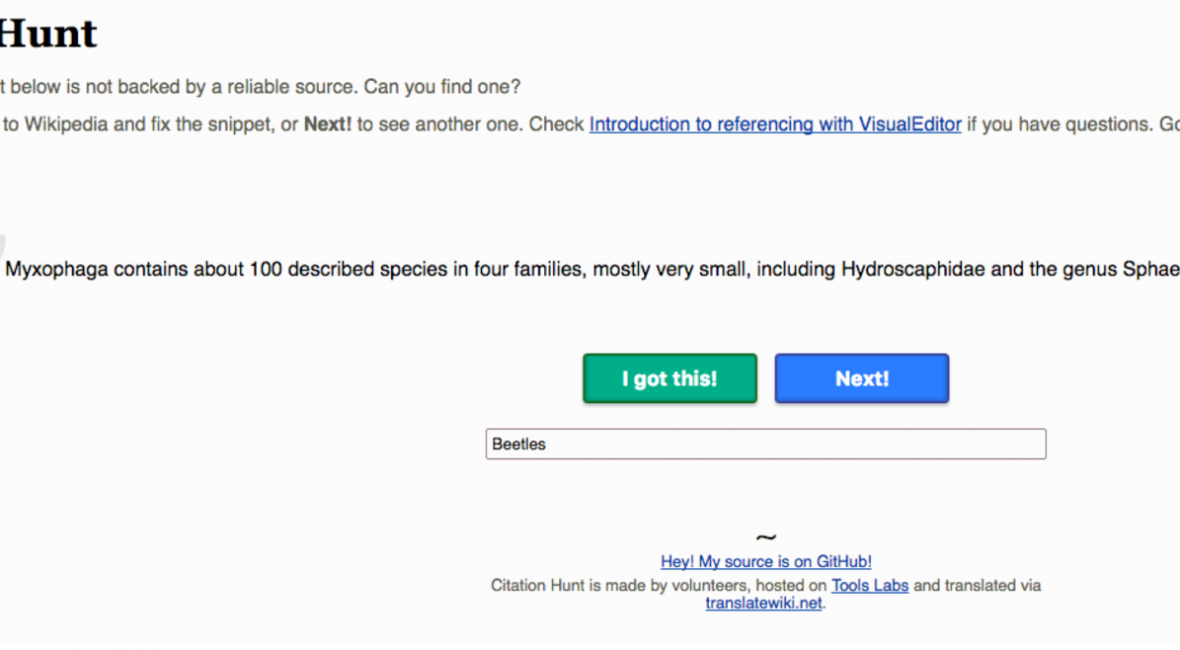
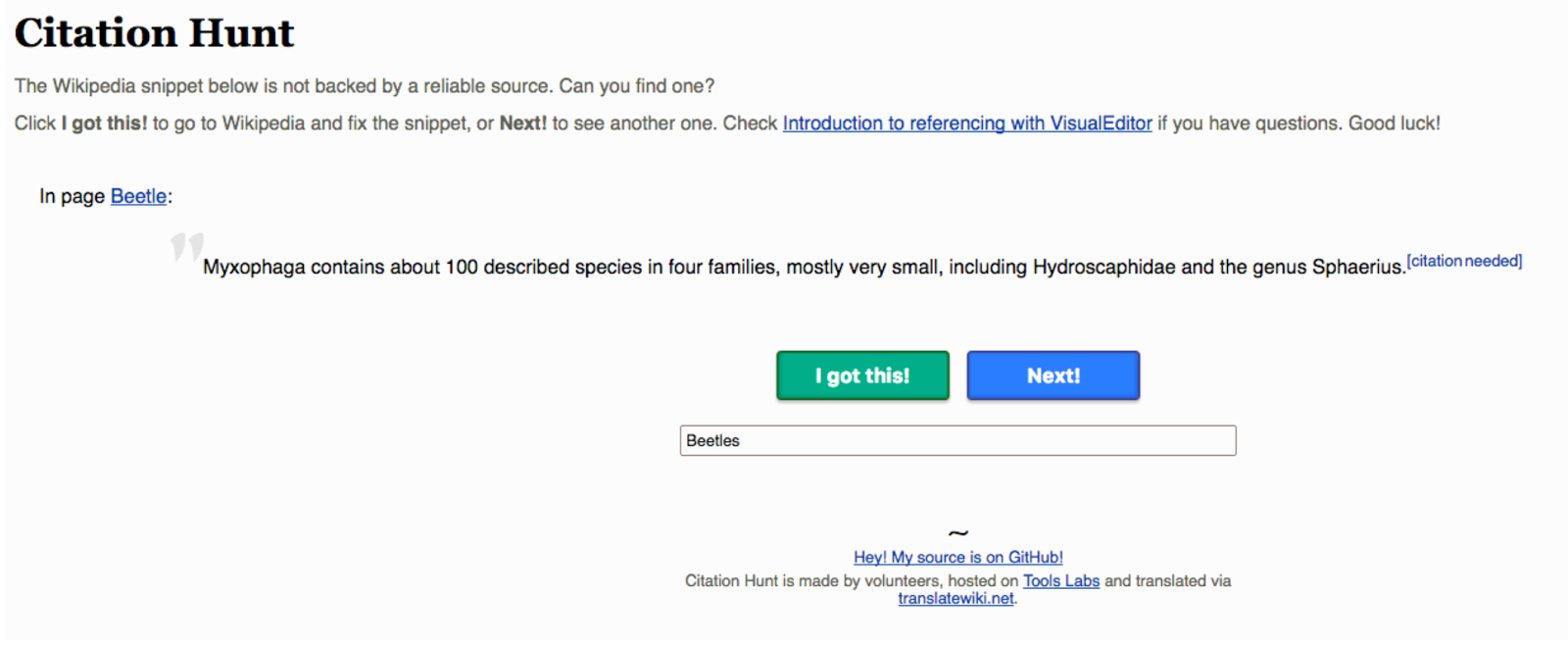
Your second step is to find an article that needs to be improved with added citations. One way is to use the Wikimedia Citation Hunt tool. When using this tool, I narrow my search to articles which need the Biodiversity Heritage Library resources. I do this by filling in the “What makes you tick” box with a search term. In the example below, I’ve added “Beetles” to find beetle articles that need citations, but there are many other terms you could use. For example, try “mosses”, “Fish of Canada”, “lizards” or any subject you are interested in.

View Full Size Image

In the above case, to find the needed citation I would put “Myxophaga” (a suborder of Coleoptera or beetles) in the search box on the BHL website and see if I could find any article, journal or book in BHL supporting the statement in the Wikipedia article to which I want to add a citation.

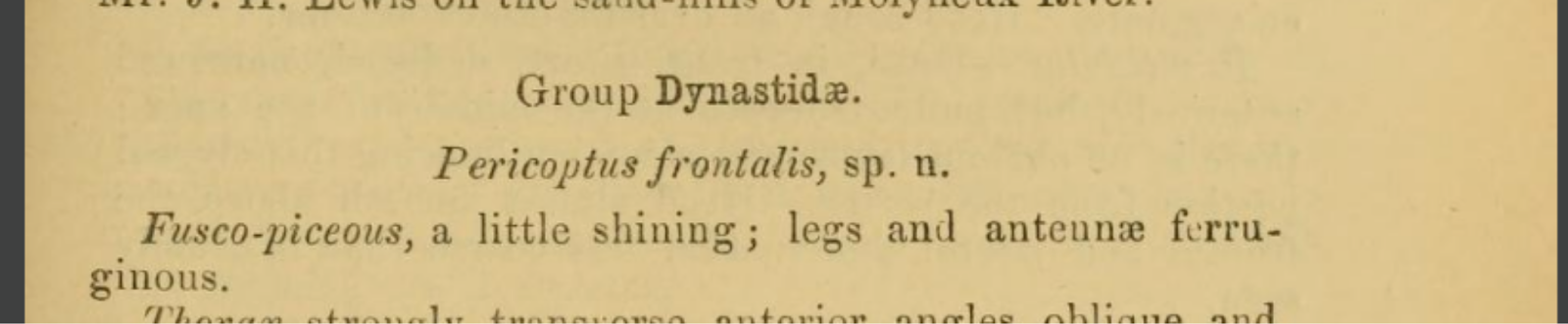
You can also work from the other end and find an article in BHL that you can then cite in Wikipedia. So for example I found this article which first describes the Pericoptus frontalis beetle. This is an article that can and should be cited in the Pericoptus frontalis beetle Wikipedia page.

View Full Size Image

Citing Reference in Wikipedia

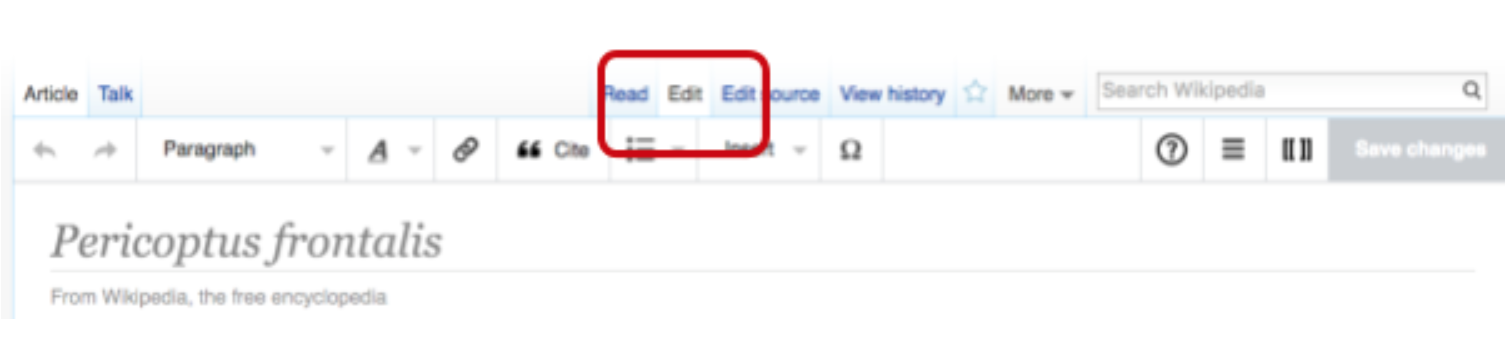
So you’ve logged in to Wikipedia, enabled the Visual Editor tool, and found the article in BHL you want to cite. Now go to the page you want to edit and click on the “Edit” tab so that the Visual Editor edit bar appears.

View Full Size Image

Place your cursor in the Wikipedia article where you wish to add the citation and then press “cite” on the edit bar.

View Full Size Image

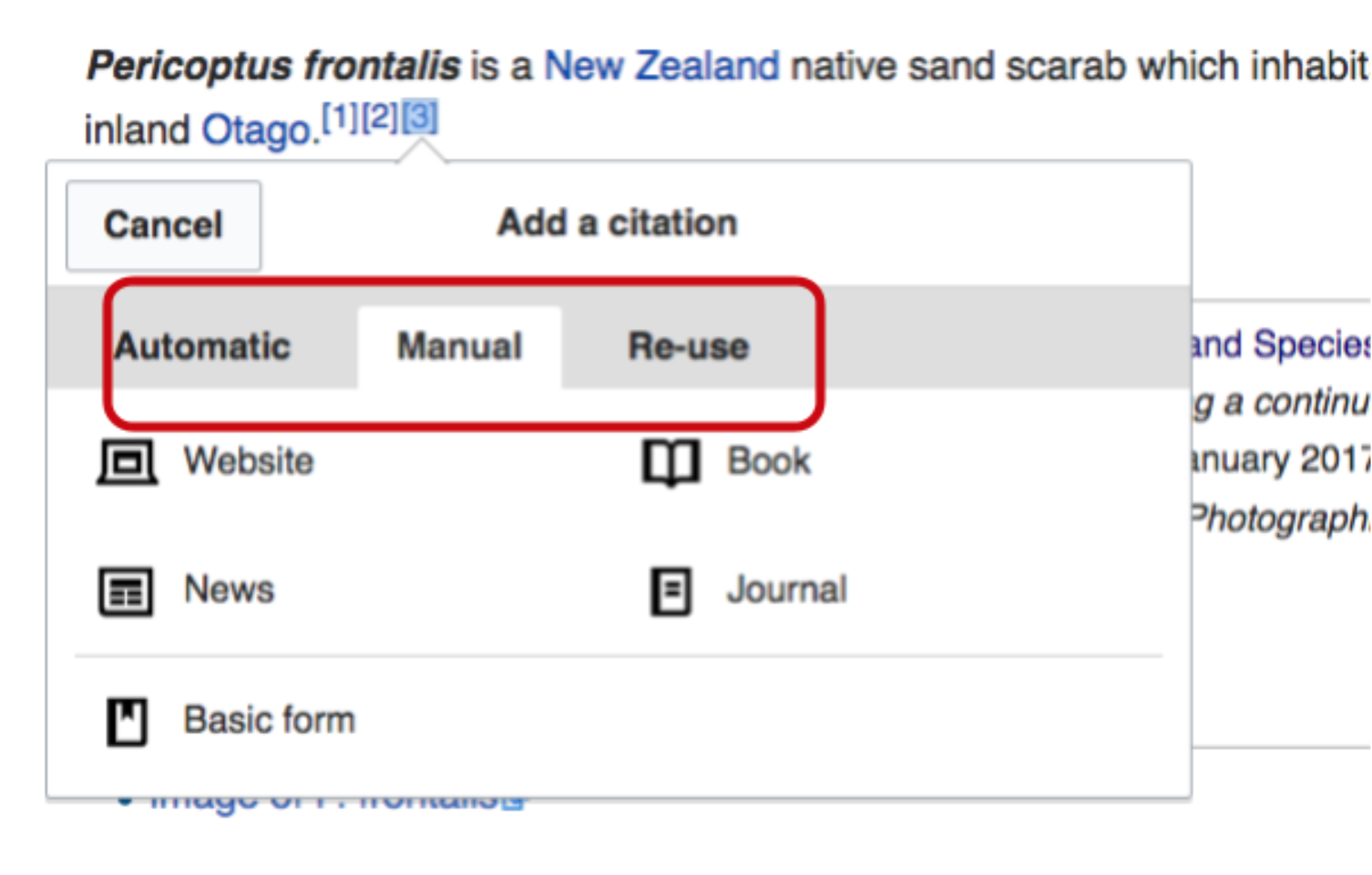
The “add a citation” box should then appear.

View Full Size Image

You then have a choice of either using the “Automatic”, “Manual” or “Reuse” citation method. If you have the URL, DOI or PMID of the article, you can use the “Automatic” citation tool to generate a citation. Alternatively, use the “Manual” citation, which will give you different options to choose from depending on where you obtained your citation. The image above shows you the manual citation options.

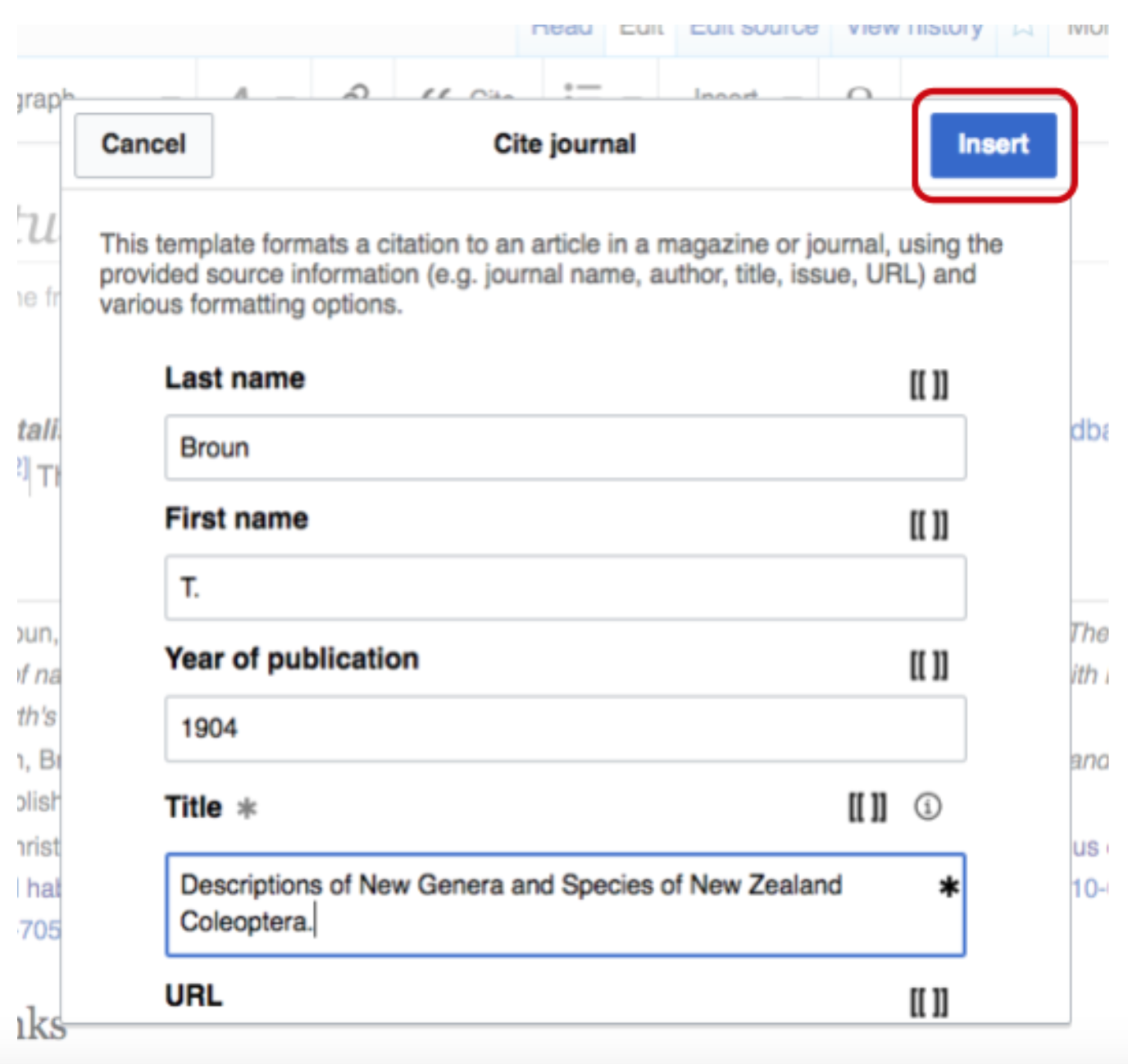
In this case, I’m citing an article in a journal rather than a book or a newspaper article, so I would choose the “Journal” option. Clicking on “Journal” brings up a template. Fill in all the information you can in the appropriate boxes and then press “Insert” on the top right of the box. Make sure you provide the stable URL link in BHL (learn more).

View Full Size Image

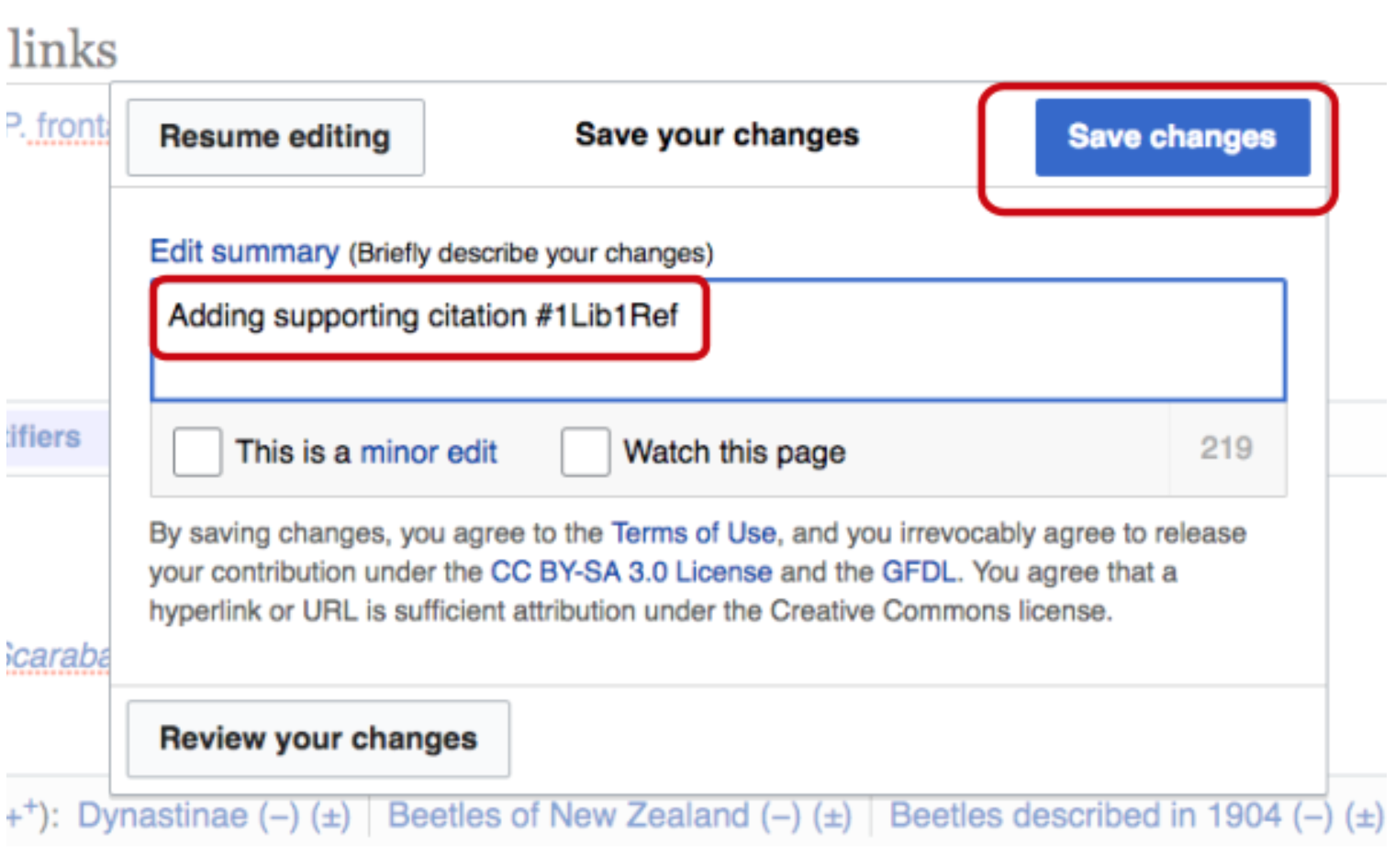
Pressing “insert” brings up a “Save your changes” box asking you to briefly describe the changes you’ve made to the article. Make sure you add the hashtag #1Lib1Ref to your edit summary as this will add your edit to the campaign total.

View Full Size Image

You then press the “Save changes” button and with that you have added a citation to Wikipedia!

For further Information on the Wikipedia #1Lib1Ref campaign, click here.

Follow #ILib1Ref on social media, 15 January – 3 February 2017 to learn more about the campaign and see how adding citations to Wikipedia can improve the resource for everyone!

If you have questions or get stuck, see this page to learn more about the various outlets you can use to find help and information. You can also tweet BHL at @BioDivLibrary or Siobhan at @SiobhanLeachman.

January 17, 2017by ulib-libraryjobs
Blog Reel, User Stories

Catesby in the Classroom: Students Explore the Intersection of Art and Science

Portrait version of the Biodiversity Heritage Library logo.

In the early eighteenth century, English naturalist Mark Catesby set foot in a New World. After spending the better part of ten years, spread across two separate trips, exploring and documenting North America’s rich biodiversity, he would eventually publish his research and original artworks as the first fully illustrated book on the flora and fauna of North America.

View Full Size Image
Catesby, Mark. The Natural History of Carolina, Florida, and the Bahama Islands. v. 1, ed. 1. pl. 19. Digitized by Smithsonian Libraries. http://www.biodiversitylibrary.org/page/40753174.

Published over eighteen years between 1729-1747, The Natural History of Carolina, Florida, and the Bahama Islands contains 220 plates based mostly upon Catesby’s own watercolors, which he worked up based on sketches he made in the field.

The success of Catesby’s work was based largely on his emphasis on personal observation and use of art to convey a visual record of his research.

Over 250 years later, students in South Carolina are following Catesby’s example.

As part of a collaboration with the Catesby Commemorative Trust, Dr. Tracey Hunter-Doniger used illustrations from The Natural History of Carolina, Florida, and the Bahama Islands as the foundation for lesson plans designed to help students learn more about the importance of observation and the relationship between art and science.

“Before photography, scientists used drawings to record what they saw. Scientists also had to be artists. These lessons are an opportunity for students to see how art and science are connected while also understanding the importance of Catesby’s work and his role in natural history,” emphasizes Tracey.

View Full Size Image
Dr. Tracey Hunter-Doniger. Image Credit: College of Charleston website http://teachered.cofc.edu/faculty-staff-listing/hunter-doniger-tracey.php.

A fifteen year K-8 visual art education veteran, Tracey has spent the last five years at the College of Charleston as an Assistant Professor of Creativity and Creative Arts in Education. In the fall of 2016, Tracey teamed up with her friend Erin Russell, the art teacher at Memminger Elementary School in Charleston, SC, to implement a trial run of her lesson plans in the 1st, 3rd, and 5th grade art classes at Memminger.

All three classes were challenged to use their powers of observation to record what they saw, just as Catesby had done centuries before. Students were given copies of Catesby’s illustrations, which Tracey downloaded and printed from the Biodiversity Heritage Library. The first edition copy of Catesby’s masterpiece in BHL, digitized from the Joseph F. Cullman Rare Book Library at Smithsonian Libraries, is one of the few known perfect copies of this edition in existence.

“Having access to this resource through BHL is a treasure,” praises Tracey. “Being able to show the students the prints of the original artworks and use them to explain that these represent what Catesby saw and what he wanted to convey speaks volumes to the students.”

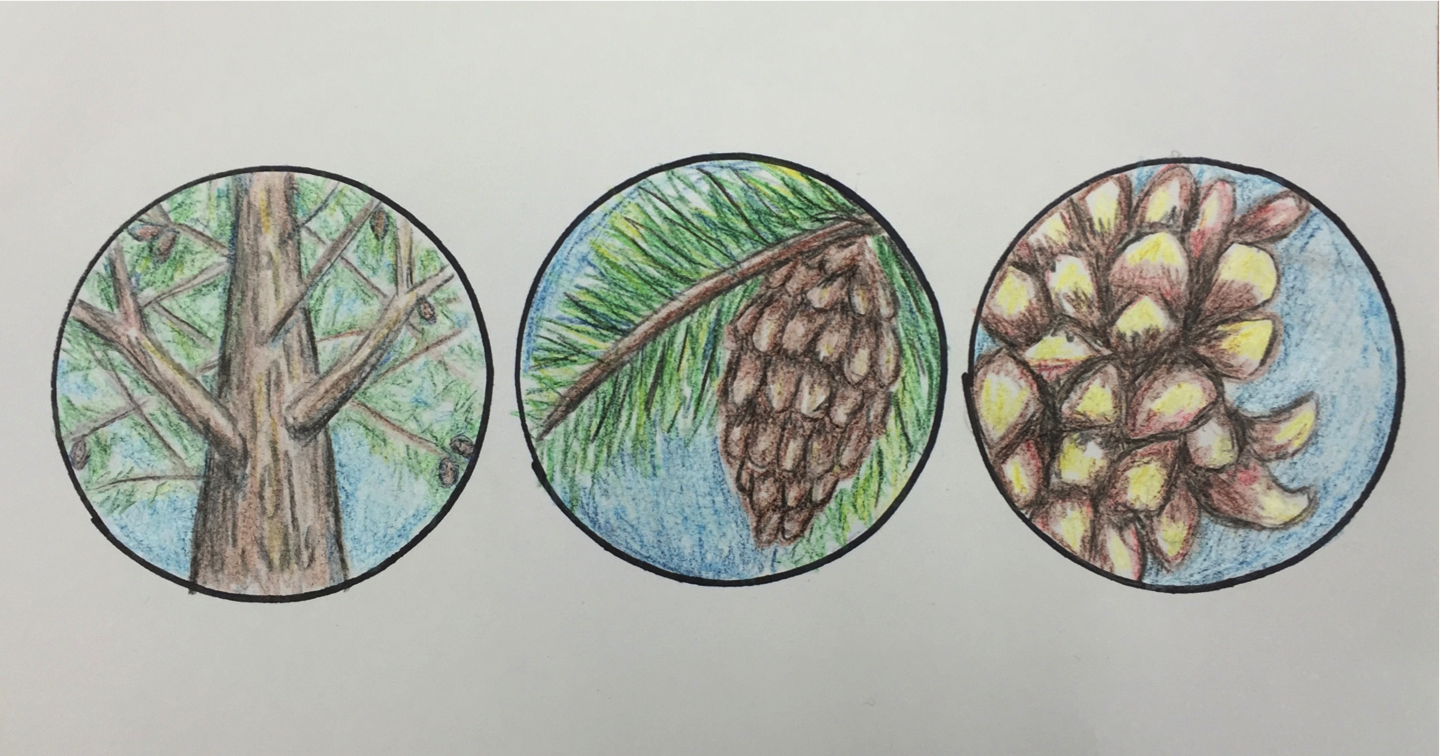
The first grade students were instructed to use the illustrations as a reference to draw their own copy of the specimens. The third and fifth graders were asked to flex their observational skills even further by not only copying the illustration as they saw it, but also homing in on a specific section of the image and creating a more detailed depiction of that area, as though they were looking at it through the lens of a microscope.
View Full Size Image
Example of the 3rd and 5th grade Catesby lesson, whereby students “zoom” in on details in the specimen being observed. Example by Dr. Tracey Hunter-Doniger.

While the trial runs of each class were limited to one, 45-minute session, Tracey believes that the lessons helped the students understand how art can be a scientific tool. For future iterations, she hopes to run the classes as three-week lessons where students start by observing and copying Catesby’s art in the classroom and then extend their learning to the outdoors by taking nature walks and drawing in the field, as Catesby did. She would also love the students to have the opportunity to explore Catesby’s publication in full through the BHL website.

“Access is key,” stresses Tracey. “In an ideal scenario, we would go into the website, we would do research, and then we would practice the skills we learn by going into the field. We would ‘do’ as Catesby did. We would ‘be’ Catesby in the field.”

The lessons that Tracey created are just two of several that are being developed as part of a collaboration with the Catesby Commemorative Trust and the College of Charleston. For example, a science lesson, written by William Veal, Cyndi Hall, and Rodney Moore, uses Catesby’s art to help students assess how adaptations contribute to a species’ ability to survive in a given environment. Lesson activities include drawing a bird inspired by a Catesby illustration, noting characteristics (such as beak shape), and performing experiments to see how various adaptations might help that species survive.

The lessons plans resulting from this collaboration are being made available to teachers in South Carolina through the LearningWhy site created by South Carolina ETV. The plans are also available to teachers across the country through PBS LearningMedia.

View Full Size Image
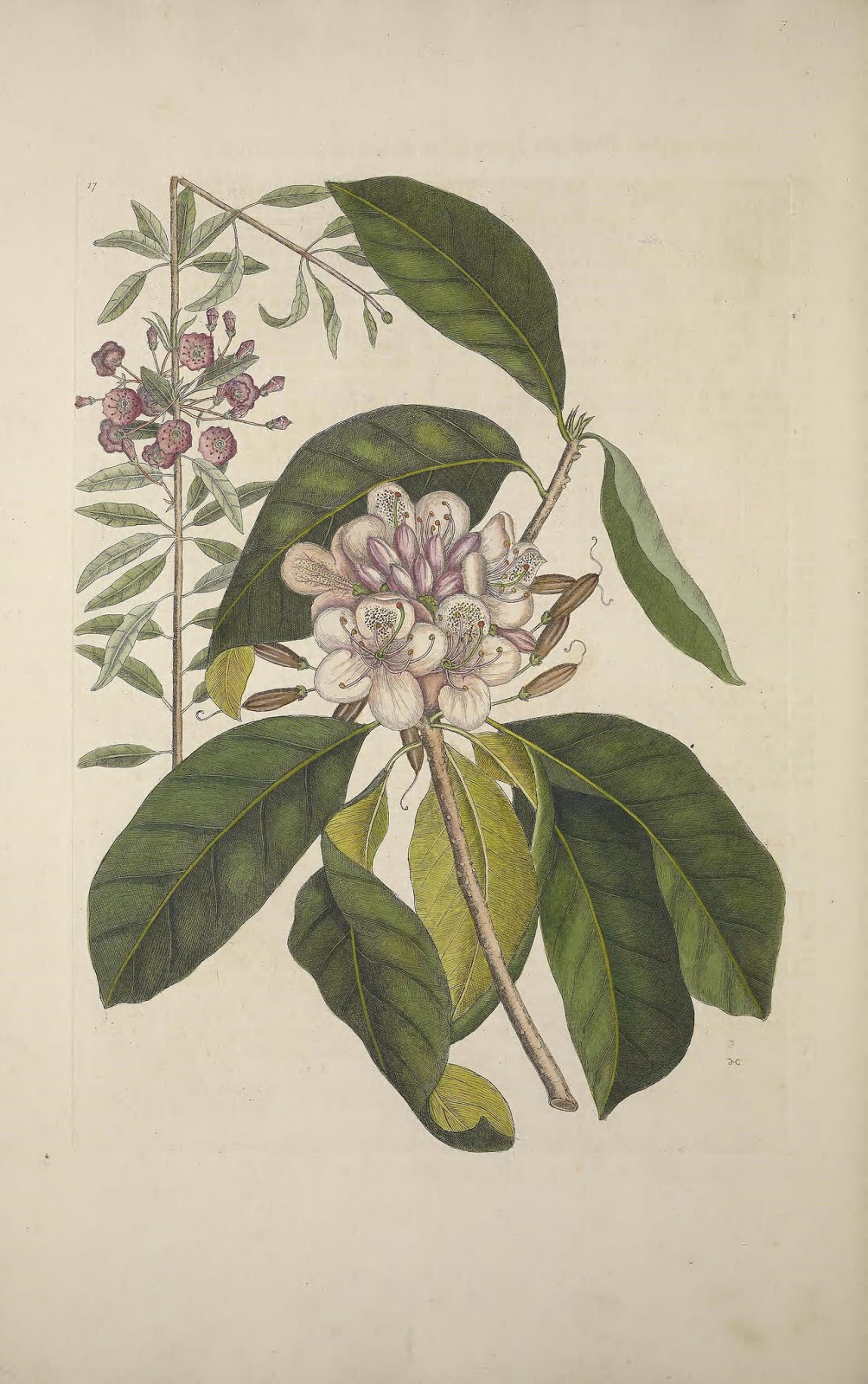
Catesby, Mark. The Natural History of Carolina, Florida, and the Bahama Islands. v. 2, ed. 1, pl. 17. Digitized by Smithsonian Libraries. http://www.biodiversitylibrary.org/page/40680449.

From Tracey’s perspective, the use of Catesby’s material in these lesson plans is a powerful way to integrate primary source material that is not only historically significant but also highly relevant to the area where she and her students live.

“Living in an area that’s so rich in history, it’s very impactful to be able to show the students how Catesby’s story fits into that history,” says Tracey. “The art is the visual side of that narrative. It helps explain who Catesby was, what he did, and why he was important. If you’re telling the Catesby story, the art is a critical part of that story.”

Thanks to the Biodiversity Heritage Library and Smithsonian Libraries, students in South Carolina and others around the world can freely and easily access Catesby’s work and countless other natural history treasures, no matter where their classroom journeys take them.

______________________________________

This post may contain the personal opinions of BHL users or affiliated staff and does not necessarily represent the official Biodiversity Heritage Library (BHL) position on these matters.

January 12, 2017by michelle.underhill
Page 1 of 212»

Help Support BHL

BHL's existence depends on the financial support of its patrons. Help us keep this free resource alive!

search

About BHL

The Biodiversity Heritage Library (BHL) is the world’s largest open access digital library for biodiversity literature and archives. BHL operates as a worldwide consortium of natural history, botanical, research, and national libraries working together to digitize the natural history literature held in their collections and make it freely available for open access as part of a global “biodiversity community.”

Join Our Mailing List

Sign up to receive the latest news, content highlights, and promotions.

Subscribe Now

Subscribe to Blog via Email

Enter your email address to subscribe to this blog and receive notifications of new posts by email.

Join 319 other subscribers

Subscribe to Blog Via RSS

Subscribe to the blog RSS feed to stay up-to-date on all the latest BHL posts.

Access RSS Feed

Inspiring Discovery through Free Access to Biodiversity Knowledge.

The Biodiversity Heritage Library makes it easier than ever for you to access the information you need to study and explore life on Earth…for free, anytime, anywhere.


64+ Million Pages of
Biodiversity Literature Online.

EXPLORE

Tools and Services
to Transform Research.

EXPLORE

300,000+
Illustrations on Flickr.

EXPLORE

ABOUT | HARMFUL CONTENT | PRIVACY | SITE MAP | TERMS OF USE