 |
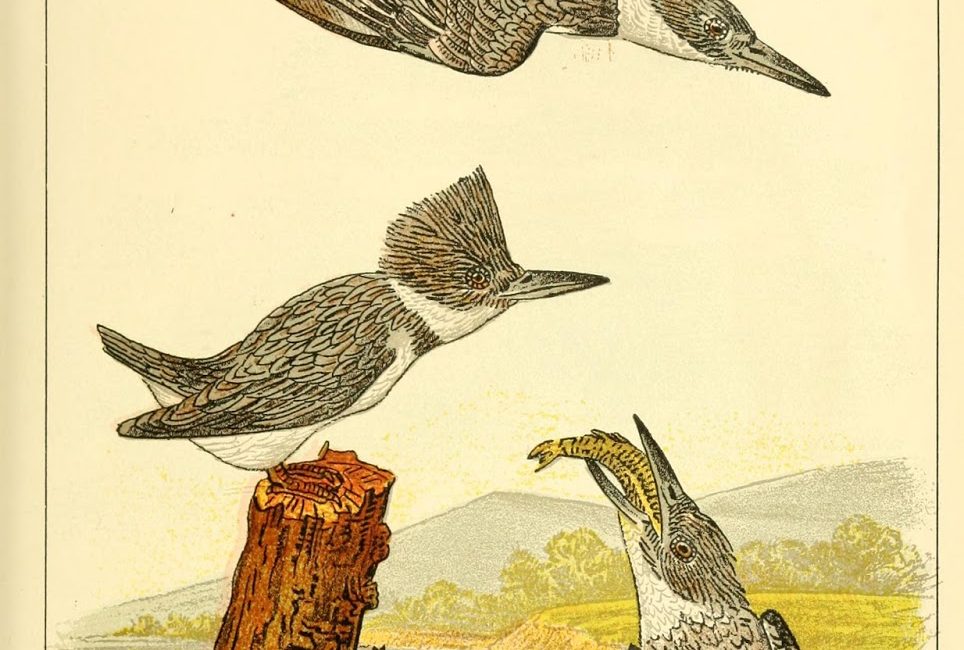
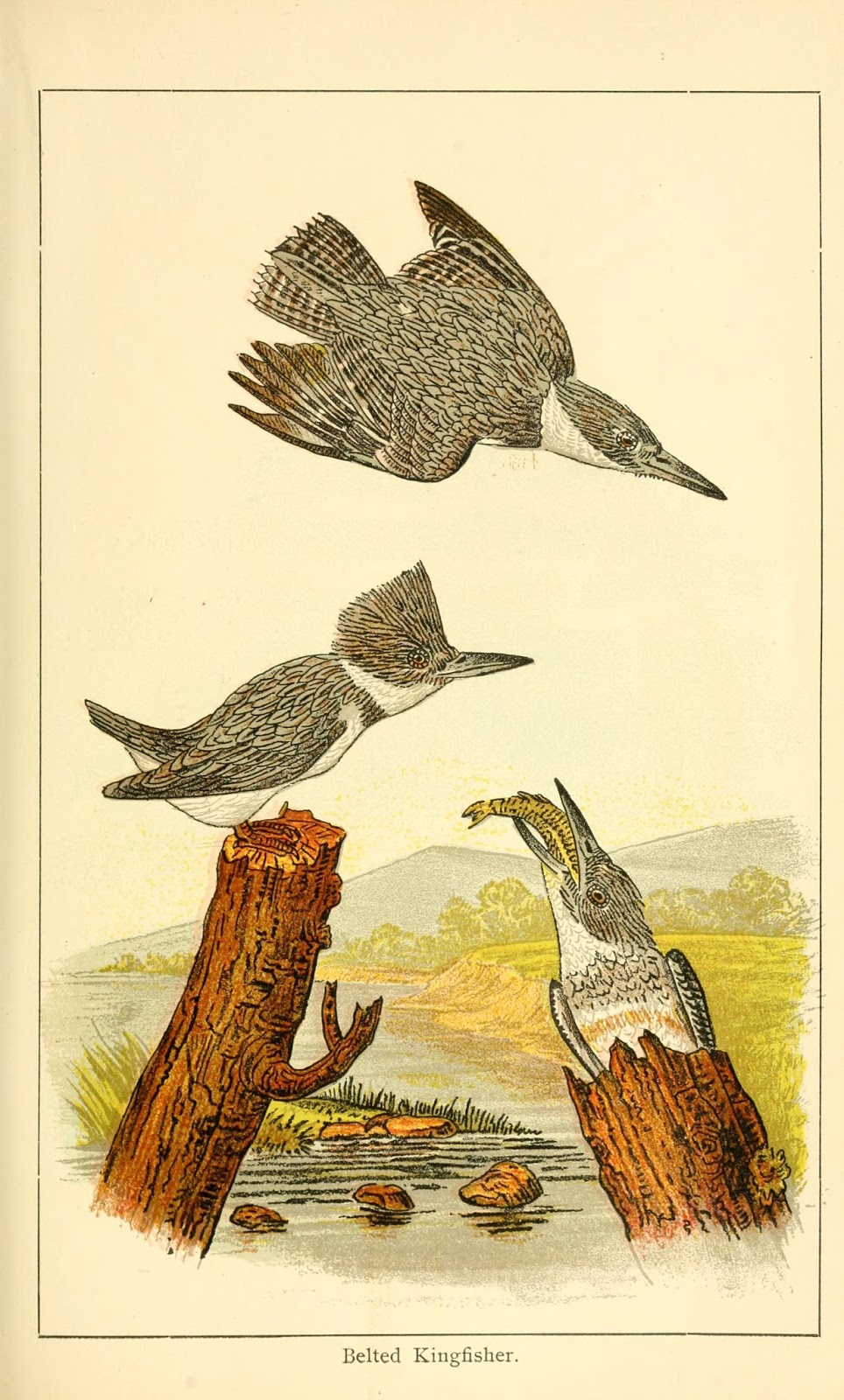
| Belted Kingfisher. Warren, Benjamin Harry. Some Birds and Mammals which Destroy Fish and Game. Clarence M. Busch, state printer of Pennsylvania, 1897. Digitized by The Library of Congress. http://www.biodiversitylibrary.org/page/29736925. Illustration reproduced from Audubon’s Birds of America. |
In the wake of the Quakers’ immigration to North America, a taste for the study of nature came “quietly” into being among descendants from the “tolerant” zones, notably the Commonwealth of Pennsylvania.
In the biographical notes from a 1919 introduction to the ornithology of Chester County, Pennsylvania, the active local ornithologists were concentrated in neighborhoods “settled largely by the English, Welsh, Scotch-Irish and German members of the Society of Friends, commonly called ‘Quakers’.” Publications in that period say the study of the natural sciences seemed “peculiarly agreeable.” Among these naturalists is Dr. Benjamin Harry Warren, the author of our featured book – Some Birds and Mammals which Destroy Fish and Game.
A West Chester native born in 1858, Warren was a productive ornithologists whose work was widely cited by ornithology monographs and papers during that period. During his youth, Warren had experienced an already bourgeoning field of Ornithology in Chester County. Since the late eighteenth century, some incipient ornithologists of the area had started searching for materials and accumulating specimens, with the help of taxidermists.
West Chester became home to the Chester County Cabinet of Science as early as the 1820s, and only about a decade later, the ornithological department acquired “the first nearly complete collection of local birds in the county”. There was, however, no catalogue of this collection; and the first county bird list was published much later in the 1860s. “If the second quarter of the nineteenth century failed of being the golden period of ornithology in Chester County,” the author of Chester Ornithology wittily remarked in the biographical notes, “it was due to Quaker modesty”.
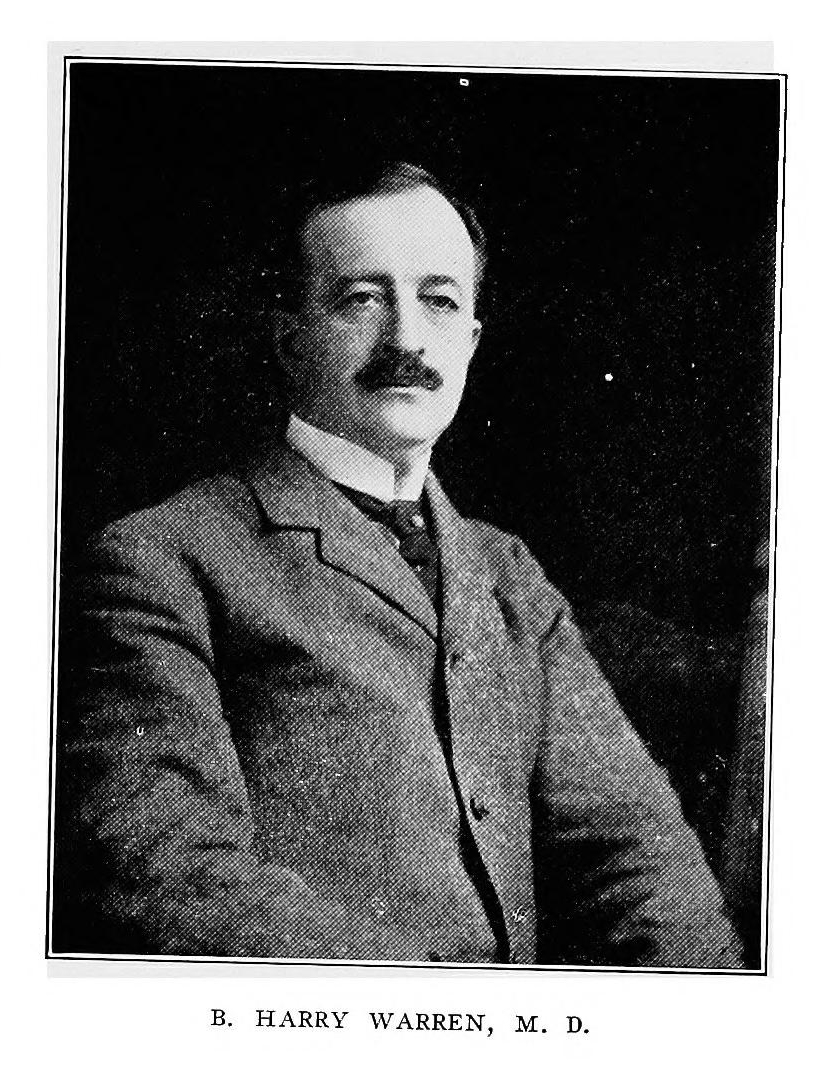 |
| Portrait of Benjamin Harry Warren. The Ornithology of Chester County, Pennsylvania. RG Badger, 1919. Digitized by Cornell University Library. http://www.biodiversitylibrary.org/page/37769995. |
Before commissioned by the Department of Agriculture to investigate “the damage done by the fish-destroying birds and mammals”, Warren was already a professional “birder.” He published a list of 218 bird species in 1879-1880, and worked continuously to update the repository. Though his contemporary Witmer Stone – who served as president of the American Ornithologists’ Union (AOU), editor of the AOU’s periodical The Auk, and was also a botanist– may be a better-known ornithologist, Warren’s Report on the Birds of Pennsylvania was considered one of the first major works on Pennsylvania ornithology.
During Warren’s time, “birders” actively collected bird specimens – rather different from the aesthetics of the “non-collecting” birding preferred by modern ornithologists after the turn of the century. For his Report on the Birds of Pennsylvania, Warren, a medical doctor, dissected and examined over four thousand bird stomachs. In Some Birds and Mammals which Destroy Fish and Game, as the main research was to dissect the animal’s diet and evaluate if the species is piscivorous (fish-eating), post-mortem viscera examination was again the main approach.
To evaluate the extent to which birds and mammals damage the local fish populations, Warren spent three years collecting data from reliable sources. For this project, the Department of Agriculture reached out to the public by distributing circular notes asking for personal experiences related to the fish-damaging behavior of wild animals. Thus, Warren included in the report a number of correspondences with local farmers, fishermen and naturalists, in addition to his own study.
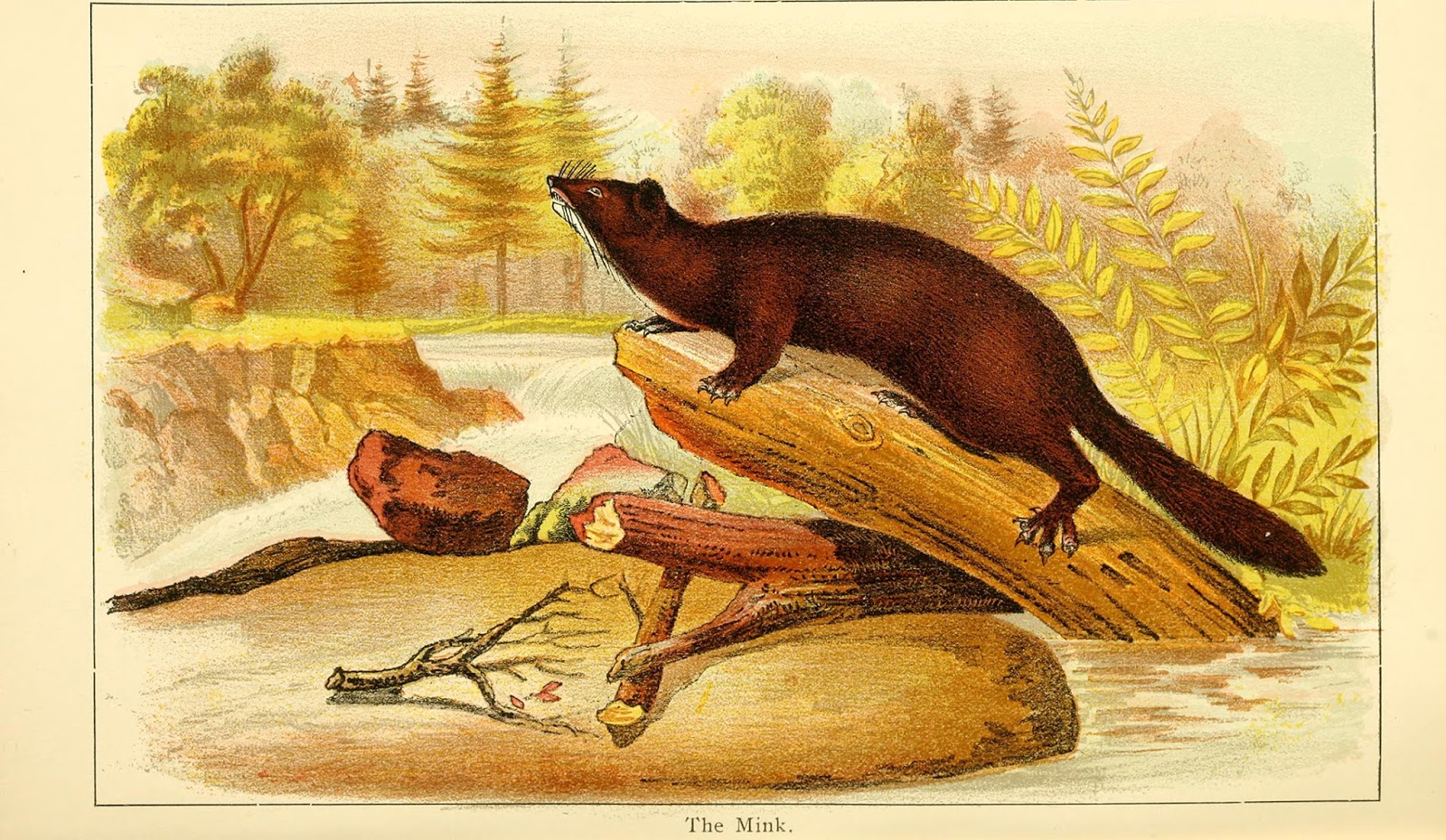 |
| The Mink. Warren, Benjamin Harry. Some Birds and Mammals which Destroy Fish and Game. Clarence M. Busch, state printer of Pennsylvania, 1897. Digitized by The Library of Congress. http://www.biodiversitylibrary.org/page/29736933. |
Warren concluded, from diet analyses and population survey, that birds and mammals overall played an insignificant role in fish decline. The real threat to local fish loss was illegal fishing. A long-standing misunderstanding, as it turned out, could only be effectively corrected by scientific evidence.
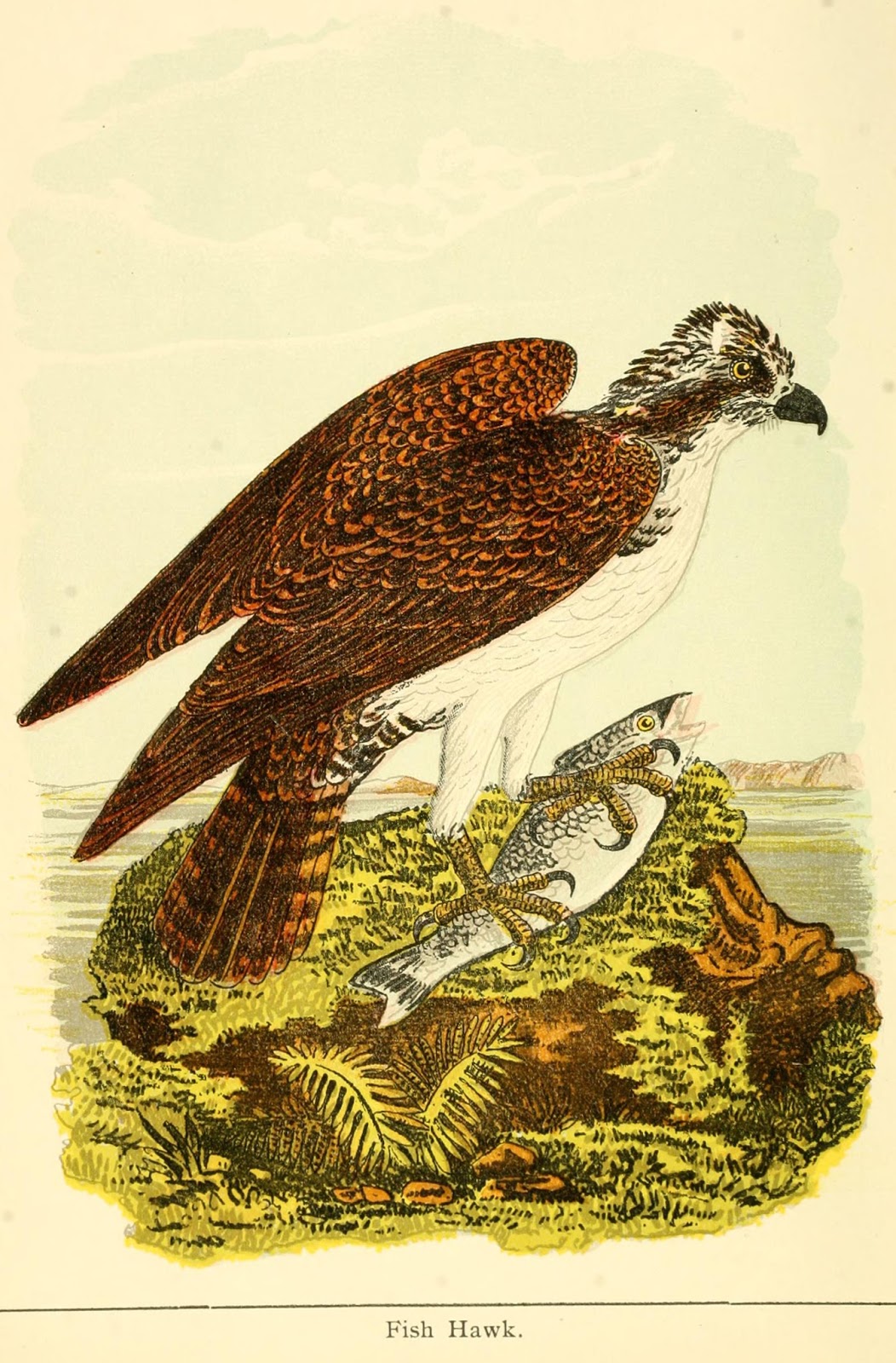 |
| Fish Hawk. Warren, Benjamin Harry. Some Birds and Mammals which Destroy Fish and Game. Clarence M. Busch, state printer of Pennsylvania, 1897. Digitized by The Library of Congress. http://www.biodiversitylibrary.org/page/29736918. |
The initiative of this research appears anthropocentric, but through careful investigation, valuable information on morphology, diet and behavior of the local wildlife was gathered. Warren not only presented in detail the characters of each species with carefully drawn colored-illustrations (which were reproduced from other sources, including Audubon’s Birds of America), but also weaved vivid “behavioral dramas” into his artful account of species interactions. The excerpt below shows a gripping story exemplifying antagonism between two raptors:
“…Perched on some tall summit, in view of the ocean, or of some water-course, he (the Bald Eagle) watches every motion of the Fish Hawk while on wing. When the latter rises from the water, with a fish in its grasp, forth rushes the eagle in pursuit. He mounts above the Fish Hawk, and threatens it by actions well understood, when the latter, fearing perhaps that its life is in danger, drops its prey. In an instant the eagle, accurately estimating the rapid descent of the fish, closes his wings, follows it with the swiftness of thought, and the next moment grasps it.”
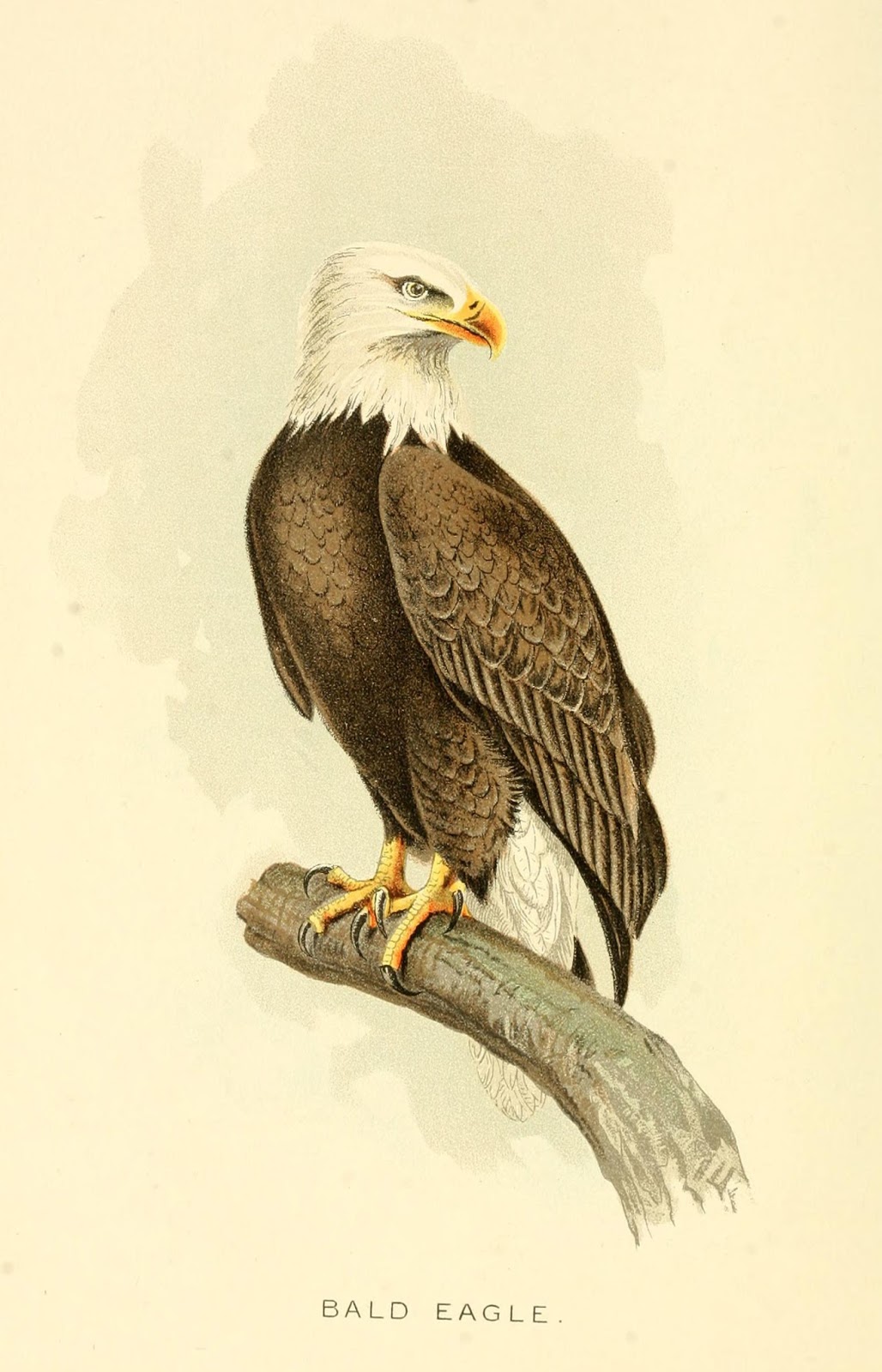 |
| Bald Eagle. Warren, Benjamin Harry. Some Birds and Mammals which Destroy Fish and Game. Clarence M. Busch, state printer of Pennsylvania, 1897. Digitized by The Library of Congress. http://www.biodiversitylibrary.org/page/29736916. |
In addition, readers could find bits of cultural elements sprinkled through the book – charming bird-lores and superstitions, such as the Tartars’ belief that touching a woman with a kingfisher’s feather would make her fall in love with them.
These cultural myths, beautiful yet unrealistic, remind us of the hidden theme of the book: the relationship between man and nature. Works like Warren’s Some Birds and Mammals which Destroy Fish and Game demonstrate the ardent and indefatigable efforts of early naturalists to capture these relationships and expand our knowledge of the natural world.
References
- Warren, Benjamin Harry. Some Birds and Mammals which Destroy Fish and Game. Clarence M. Busch, state printer of Pennsylvania, 1897.
- Warren, Benjamin Harry. Report on the Birds of Pennsylvania: With Special Reference to the Food Habits, Based on Over Four Thousand Stomach Examinations. EK Meyers, State Printer, 1890.
- Burns, Franklin Lorenzo. The Ornithology of Chester County, Pennsylvania. RG Badger, 1919.