

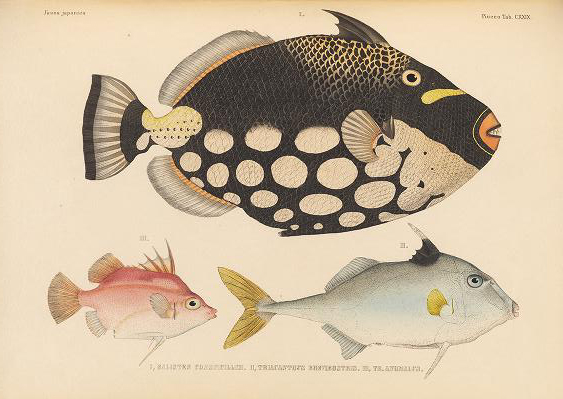
 |
| Siebold, Philipp Franz von. Fauna japonica. v.[2] Pisces. ([1842]-1850). Digitized by Harvard University, Museum of Comparative Zoology, Ernst Mayr Library. |
Fauna japonica, sive, Descriptio animalium, quae in itinere per Japoniam … (Leiden, 1833-1850) is a set of five volumes based on natural-history collections made in Japan by German physician and botanist Philipp Franz von Siebold and his assistant and successor Heinrich Burger, with drawings by the Japanese artist Kawahara Keiga. It is the first monographic series written in a European language (French) on the zoology of Japan, and it introduced Japanese fauna to the West on a large scale. The volumes of Fauna Japonica, contributed by the Ernst Mayr Library of the Museum of Comparative Zoology, Harvard University, can be viewed on BHL.
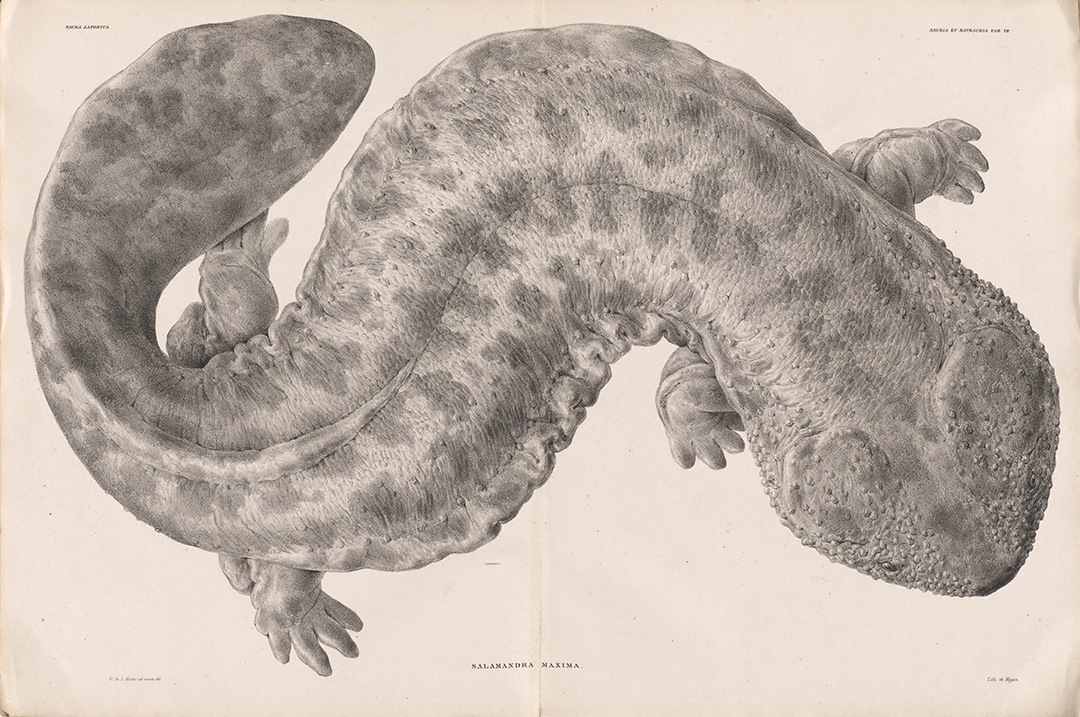 |
| Siebold, Philipp Franz von. Fauna japonica. v. [3]. Reptilia. (1838). Digitized by Harvard University, Museum of Comparative Zoology, Ernst Mayr Library. http://s.si.edu/2sQxneR. |
Von Siebold (1796-1866) arrived in Japan in 1823 as resident doctor of the Dutch trading post on Deshima island, Nagasaki. He was eager to learn about natural history in far-flung countries at a time when natural history knowledge was progressing in Europe. In addition to medical work, Von Siebold, who had a strong interest in zoology, and Burger along with their Japanese colleagues collected and purchased natural history specimens and ethnological objects during excursions in the Nagasaki area. Von Siebold was also allowed to travel beyond Nagasaki with Dutch embassy officials. Patients whom von Siebold and Burger treated and residents whom they met assisted with the massive collecting project. Von Siebold established a private school where he taught medicine and natural history and the students became collectors as well.
Von Siebold was was given several detailed maps of Japan for his explorations by the court astronomer, Takahashi Kageyasu. When the Japanese government discovered the maps, they accused von Siebold of spying and treason, expelling him from the country. His then 2 year old daughter, Kusumoto Ine, went on to become the first licensed female Japanese physician of Western medicine.
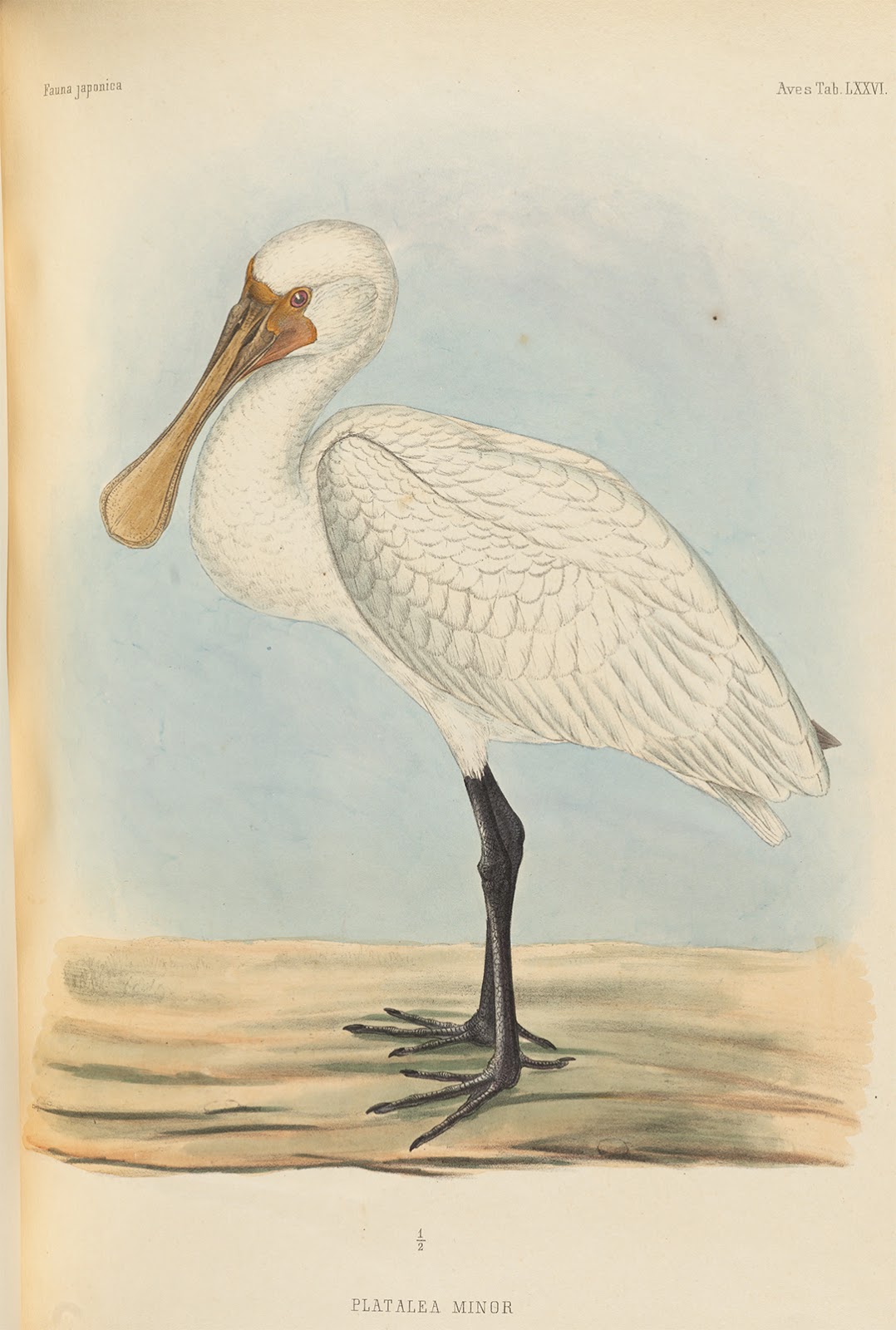 |
| Siebold, Philipp Franz von. Fauna japonica. v. [4.] Aves. ([1844]-1850). Digitized by Harvard University, Museum of Comparative Zoology, Ernst Mayr Library. http://s.si.edu/2rCBqb4. |
After enduring these legal difficulties, von Siebold was able to return to the Netherlands in 1829. His vast natural-history collections preceded him to Batavia onboard ships while he was detained. The Dutch contingent that received the collections was actually a bit relieved that von Siebold was not present when the specimens arrived, as they feared that he might disperse them to institutions beyond the Netherlands.
Safely home, von Siebold commissioned Leiden Museum director C. J. Temminck to write Fauna japonica’s mammal volume. Temminck and his museum colleague Hermann Schlegel compiled the bird, reptile, and fish volumes; and Leiden Museum invertebrates curator Wilhelm de Haan wrote the Crustacea volume. The series was originally published in separate fascicles, edited by von Siebold. An unfinished, unpublished echinoderm manuscript for Fauna japonica by J. A. Herklots is now in the archives of the Leiden Museum.
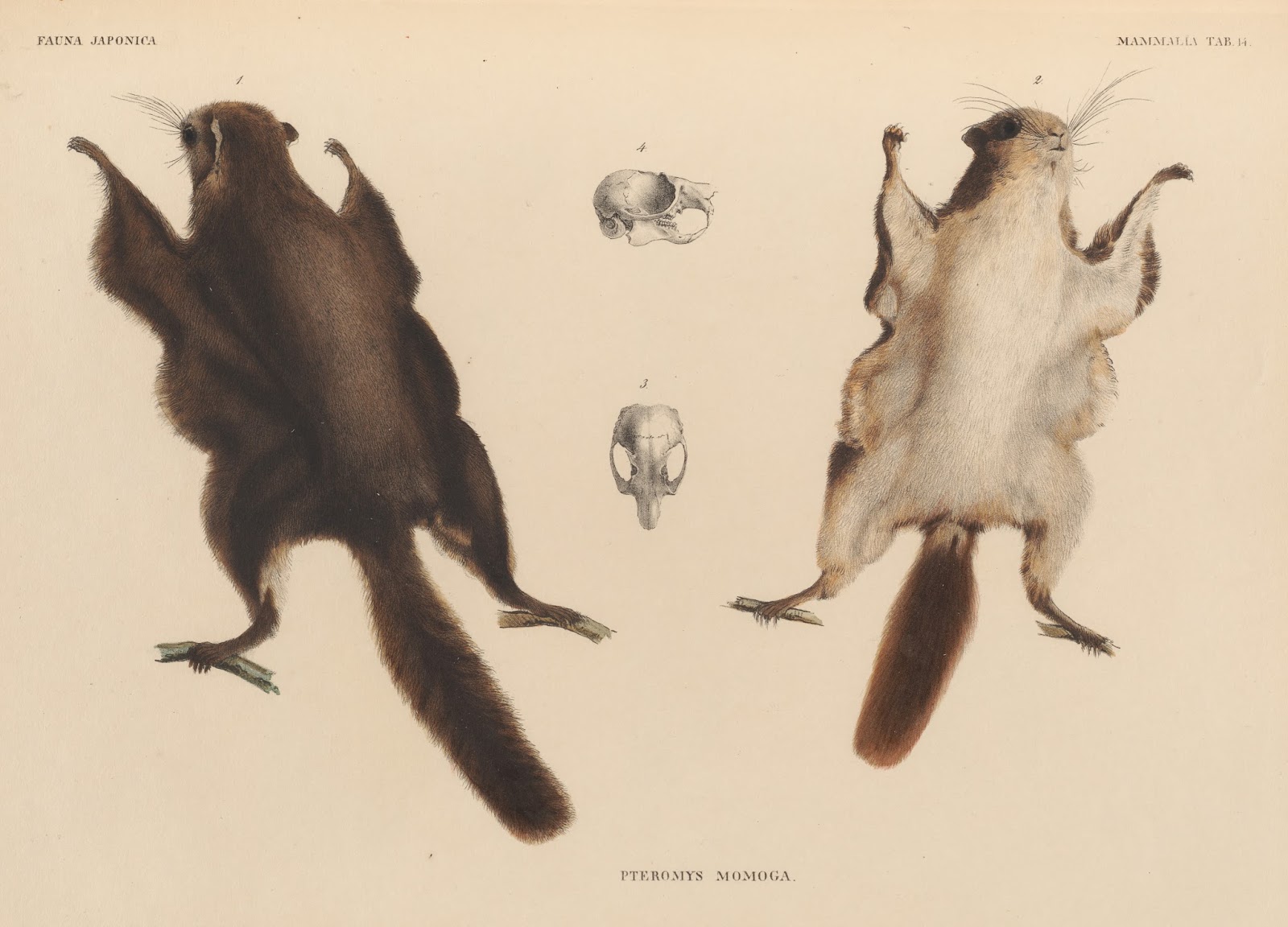 |
| Siebold, Philipp Franz von. Fauna japonica. v. [5]. Mammalia. ([1842-1845]). Digitized by Harvard University, Museum of Comparative Zoology, Ernst Mayr Library. http://s.si.edu/2rCnPR3. |
Initially, von Siebold published Fauna japonica partly with his own funds and partly with a grant from the Dutch government. By 1833, the Amsterdam publisher J. Muller became partners with von Siebold in the venture. Until 1840, the plates were lithographed at von Siebold’s own lithographic plant, as indicated by “Lith. d. Nippon,” and later were done at other firms until the Leiden printer A. Arnz took over publication of Fauna japonica’s text and plates entirely.
Because the original volumes of Fauna japonica were issued in a limited (unknown) number, they became so difficult and expensive to obtain that a facsimile edition in four volumes was published in Japan in 1934 in an edition of 350 copies — now that edition has become very difficult to obtain as well. The University of Kyoto has also digitized the volumes of Fauna Japonica.
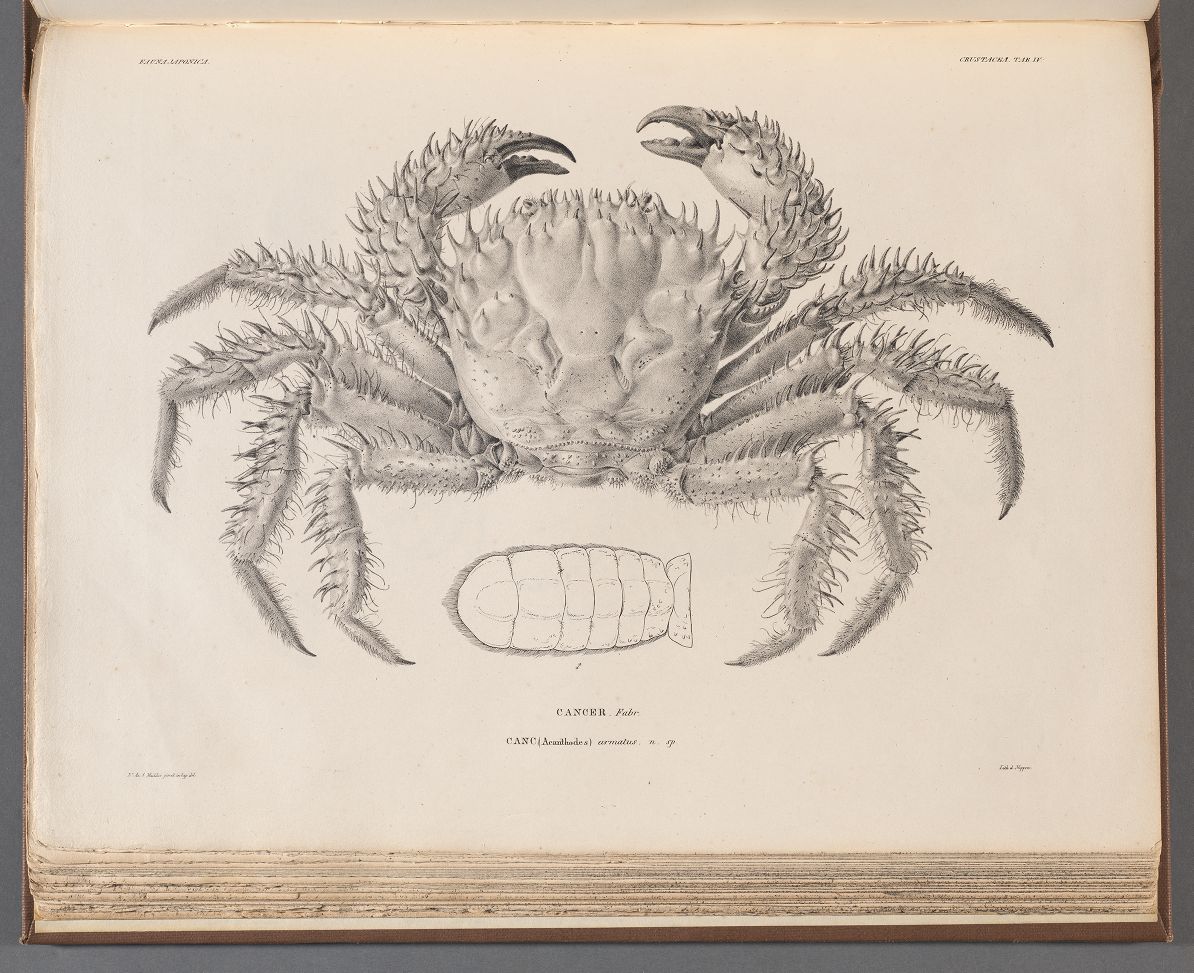 |
| Siebold, Philipp Franz von. Fauna japonica. v. [1]. Introductions and Crustacea. (1833-1850). Digitized by Harvard University, Museum of Comparative Zoology, Ernst Mayr Library. http://s.si.edu/2rRDwYL. |
References:
L. B. Holthuis and T. Sakai. Ph. F. von Siebold and Fauna japonica: a history of early Japanese zoology. Tokyo: Academic Press of Japan, 1970.
L. B. Holthus. “On the dates of publication of W. De Haan’s volume on the Crustacea of P. F. von Siebold’s Fauna japonica,” The Journal of the Society for the Bibliography of Natural History, vol. 3, pt. 1, 1953.
Ueno, Masuzo. “The Western Influence on Natural History in Japan.” Monumenta Nipponica 19, no. 3/4 (1964): 315-39. doi:10.2307/2383175.
