

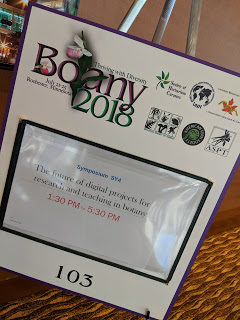

BHL Program Director Martin Kalfatovic was invited to participate in a symposium, hosted by JSTOR Global Plants, at Botany 2018 in Rochester, MN entitled The Future of Digital Projects for Research & Teaching in Botany.
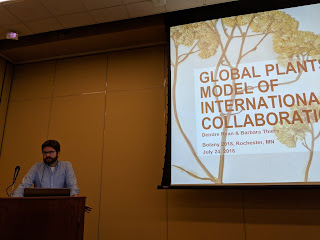
Jason Przybylski, Senior Licensing Editor / JSTOR. Symposium panelist.
The symposium addressed questions such as: what existing digital projects in botany have been successful and how did they become so; what areas of need should future projects explore; how do we define success for digital projects; how do digital projects directed at students differ from those aimed at the researcher; how can we use digital projects to reach new students and interested lay people; and how are new digital projects funded and supported for the long term.
The panel included speakers from a range of backgrounds — including both academics and librarians, as well as people working for organizations developing these digital initiatives—creating a conversation that brought together multiple viewpoints. Panelists included:
- Jason Przybylski, Senior Licensing Editor / JSTOR
- Deirdre Ryan, Director, Primary Sources & JSTOR Forum
- Barbara Thiers, Director of Science, New York Botanical Garden
- Martin Kalfatovic, Associate Director, Smithsonian Libraries and Program Director, The Biodiversity Heritage Library
- Elspeth Haston, Deputy Herbarium Curator, Royal Botanic Garden Edinburgh
- Adrian S. Wisnicki, Assistant Professor and Center for Digital Research in the Humanities Faculty Fellow, University of Nebraska-Lincoln & Director, Livingstone Online
- Hilary Callahan, Ann Whitney Olin Professor of Biology, Barnard College
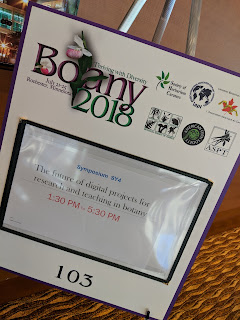 Symposium Abstract
Botany was early to recognize the potential impacts on the field of digitization and digital projects, from scanning herbarium specimens so scholars from around the world could easily access them to recovering lost archives to developing access to copious amounts of data on plant life and biodiversity more broadly. As digitization of physical materials has become more widespread and digital capabilities have increased, the expectations for digital projects in botany have similarly advanced. It is no longer enough to simply scan an item and make it available as a PDF on a website. Researchers and students now are looking for innovative digital projects that use the digital medium to present objects in new ways or bring together materials in ways that weren’t possible in an analog environment, all of which allows for new avenues to pursue in research and teaching. This symposium will bring together presenters working on digital projects in botany to examine the current state of the field and its future directions. The panel will include speakers from a range of backgrounds – including both academics and librarians, as well as people working for organizations developing these digital initiatives – creating a conversation that will bring together multiple viewpoints. The symposium will address questions such as: what existing projects have been successful and how did they become so; what areas of need should future projects explore; how do we define success for digital projects; how do digital projects directed at students differ from those aimed at the researcher; how can we use digital projects to reach new students and interested lay people; and how are new digital projects funded and supported for the long term. By the end of the symposium, we will aim to have identified trends in the field and areas that need further development, hopefully providing the necessary grounding for future digital developments.
The BHL presentation, “The Biodiversity Heritage Library: Empowering Discovery through Free Access to Biodiversity Knowledge” is available online.

From the abstract: The Biodiversity Heritage Library (BHL) has no bricks, no mortar, but rather stands as a vast online collection of biodiversity knowledge compiled from the collections of natural history and botanical libraries the world over. These collections–comprised of scientific journals, books, and archival collections–provide information critical to the study of life on our planet. Replete with species descriptions and occurrence data, ecosystem profiles, behavioral observations, and climatic records, these collections inform current research and provide historical information on species abundance, habitat alteration, and human exploration. In many cases, these publications are only physically available in one or two locations throughout the world.
Funding for the symposium was provided by the Botanical Society of America.
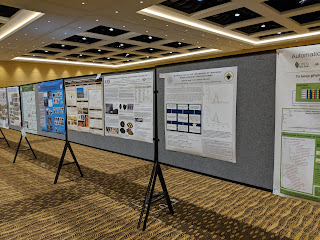
From the poster sessions:


Some flora and fauna:

Vanessa atalanta (Red Admiral)

Basidiomycota
