Biodiversity Heritage Library - Program news and collection highlights from BHL
  • Home
  • News
  • Featured Books
    • All Featured Books
    • Book of the Month Series
    • BHL at 20
  • User Stories
  • Campaigns
    • Fossil Stories
    • Garden Stories
    • Monsters Are Real
    • Page Frights
    • Her Natural History
    • Earth Optimism 2020
  • Tech Blog
  • Visit BHL
Home
News
Featured Books
    All Featured Books
    Book of the Month Series
    BHL at 20
User Stories
Campaigns
    Fossil Stories
    Garden Stories
    Monsters Are Real
    Page Frights
    Her Natural History
    Earth Optimism 2020
Tech Blog
Visit BHL
  • Home
  • News
  • Featured Books
    • All Featured Books
    • Book of the Month Series
    • BHL at 20
  • User Stories
  • Campaigns
    • Fossil Stories
    • Garden Stories
    • Monsters Are Real
    • Page Frights
    • Her Natural History
    • Earth Optimism 2020
  • Tech Blog
  • Visit BHL
Biodiversity Heritage Library - Program news and collection highlights from BHL
Blog Reel, Featured Books

The Orchidaceous Plants of Franz Bauer and John Lindley

Two of the most important early contributors to our understanding of orchids were the artist Franz Bauer (1758-1840) and the English botanist and gardener John Lindley (1799-1865), who was to become known as the “father of modern orchidology”. The publication of the Illustrations of Orchidaceous Plants [from sketches prepared between 1792 and 1832] between 1830 and 1838 combined Bauer’s great skill and Lindley’s knowledge and industriousness to produce an invaluable artistic and scientific work. The Natural History Museum, London (NHM) has recently uploaded their copy of this volume to sit alongside the Missouri Botanical Gardens’ own volume.
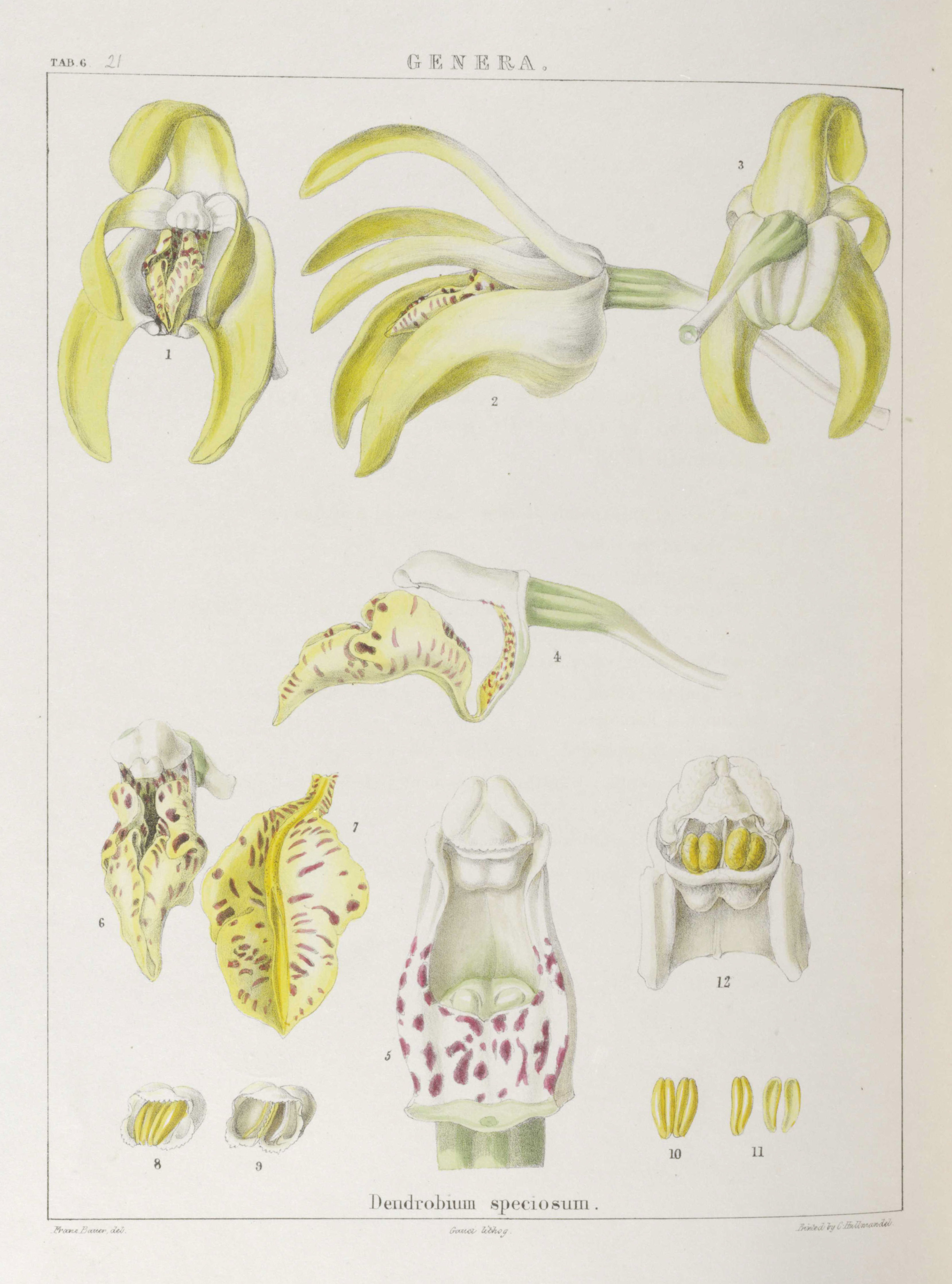
108.jpg

Plate 21. “The parts of fructification of Dendrobium speciosum from a sketch by Mr. Bauer in 1793”. Bauer, Franz Andreas and Lindley, John. Illustrations of Orchidaceous plants. 1830-1838. Contributed in BHL from Natural History Museum, London.

Lindley and Bauer were likely to have met in London under the patronage of Sir Joseph Banks (1743-1820). Bauer had settled in Kew by 1790 as their first artist in residence and was profiting from the technological developments in Kew’s heating of its glasshouses. The change from hot dry air and flue systems to heating by hot water circulating through cast-iron pipes enabled a better control of humidity, a prerequisite for the successful growing of tropical orchids. The following influx in orchidaceous species provided Bauer with a plethora of material to dissect and examine under a microscope and his skill in depicting scientifically accurate and aesthetically pleasing work flourished.

Lindley, on the other hand, was an assistant to Robert Brown (1773-1858) in Banks’s library and herbarium until Banks’s death in 1820. Although his life-long fascination was with orchids, he initially studied roses leading him to publish the volume A botanical history of roses, which he illustrated himself. In 1822, he was appointed by the Royal Horticultural Society as assistant secretary where he supervised their plant collections, and in 1829 he was appointed Professor of Botany at the University College, London, developing a reputation as a leading figure in orchidology and an excellent teacher. His recognition of several major groups of orchids according to the type of pollen and its arrangement on the column is still the basis of orchid classification today.

It was during this period that Lindley set about publishing Bauer’s many drawings of orchids studied under a microscope, of which Bauer had started these drawing in 1792 and continued beyond the first publication of the volume in 1832. Lindley provided the text on the organisation of Orchidaceae in his prefatory remarks, detailing many of the characteristics of orchids he had observed over his lifetime and referencing the various writings available to him at the time.

He states in his preface that “it has been found indispensable to represent Mr Bauer’s drawings by means of lithography instead of engraving on copper” and as such the final published volume contains thirty-five lithographed folio plates. Lindley was conscious of the changes he was making to Bauer’s drawings and goes on to state that he hopes “…that the defects of some of the plates as works of art will not be prejudicial to them as illustrations of science”. The plates are either un-coloured or hand-coloured with the individual components on each plate numbered with an index of what is depicted following each plate. Lindley lithographed several of Bauer’s drawings with the remaining being lithographed by Maxim Gauci (1774-1854).

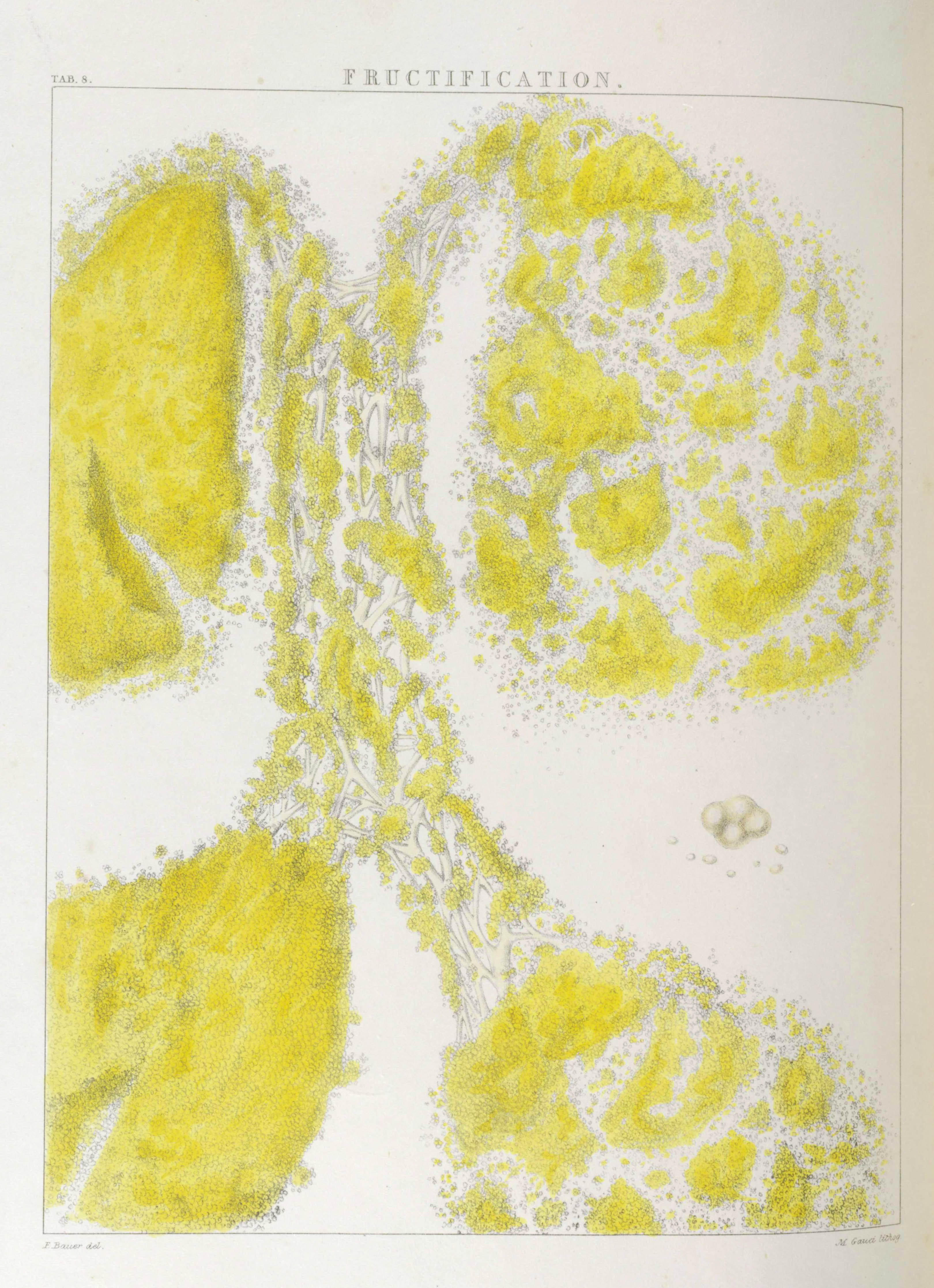
The plates are based on Bauer’s drawings and illustrate various characteristics of the orchid plants, from floral structure to seeds and pollen. The plate below shows the single anther of a Bletia flower at a magnification of 100 times and a few pollen grains at a magnification of 400 times. Bauer ultimately sketched thousands of pollen grain at various magnifications, but in this example, he was able to soak the pollinia in water and thus discover the elastic tissue that connects the pollen grains together.
56.jpg

Plate 8. “A view of the pollen-masses of Bletia verecunda dissolved in water; from a sketch by Mr. Bauer in 1801”. Bauer, Franz Andreas and Lindley, John. Illustrations of Orchidaceous plants. 1830-1838. Contributed in BHL from Natural History Museum, London.

The volume recently uploaded to BHL via the Natural History Museum contains a manuscript dedication by Mr Meyer, Bauer’s friend and executor, to Franz Bauer, attached to the front flyleaf. This letter reads:

“In memory of Francis Bauer Esq.re, FRS & FLS, & c. Botanical Painter to His Majesty George 3rd. And Resident Draughtsman for fifty years to the Royal Botanic Garden at Kew, where he devoted himself to the advancement of natural science under the magnificent patronage of Sir Joseph Banks, Bart. the President of the Royal Society. In the delineation of plants he united the accuracy of the profound naturalist with the skill of the accomplished artist to a degree which has been only equaled by his brother Ferdinand and in microscopical drawing he was altogether unrivaled. In this branch of his most useful labours, the world will ever contemplate with admiration his elaborate illustrations of animal and vegetable structures, especially those which are preserved in the British Museum, and in the University of Göttingen. He was born 4th of October 1758 at Feldsperg in Austria, and came to England from Vienna with the Baron Joseph Jacquin in 1788. He settled at Kew in 1790, where he continued to live in the enjoyment of an exalted reputation, and in the affection and respect of all to whom his generous character, his unassuming manner, and his deep religious feelings were known until 11 December 1840 when he died at the age of 82. While the works of Francis Bauer are his imperishable monument friendship inscribes this record on his honored tomb. [From Mr Bauer’s friend and executor Mr Meyer, 38 Sackville Street, Piccadilly, February 26 1846, at Stanhope Cottage. Wm. Clift (Mr Meyer, Mrs Haverfield’s, Kew Green. March 3, 1846)”

Further reading:

Stewart, Joyce and Stearn, William T. (1993) The orchid paints of Franz Bauer, The Herbert Press

Cooper, Paul M. (2015) The Bauer brothers, Natural History Museum, London
December 19, 2018by Joel Richard
Blog Reel, User Stories

A Book’s Eight Year Journey to the Biodiversity Heritage Library: Fulfilling a Researcher’s Digitization Request and Advancing Science

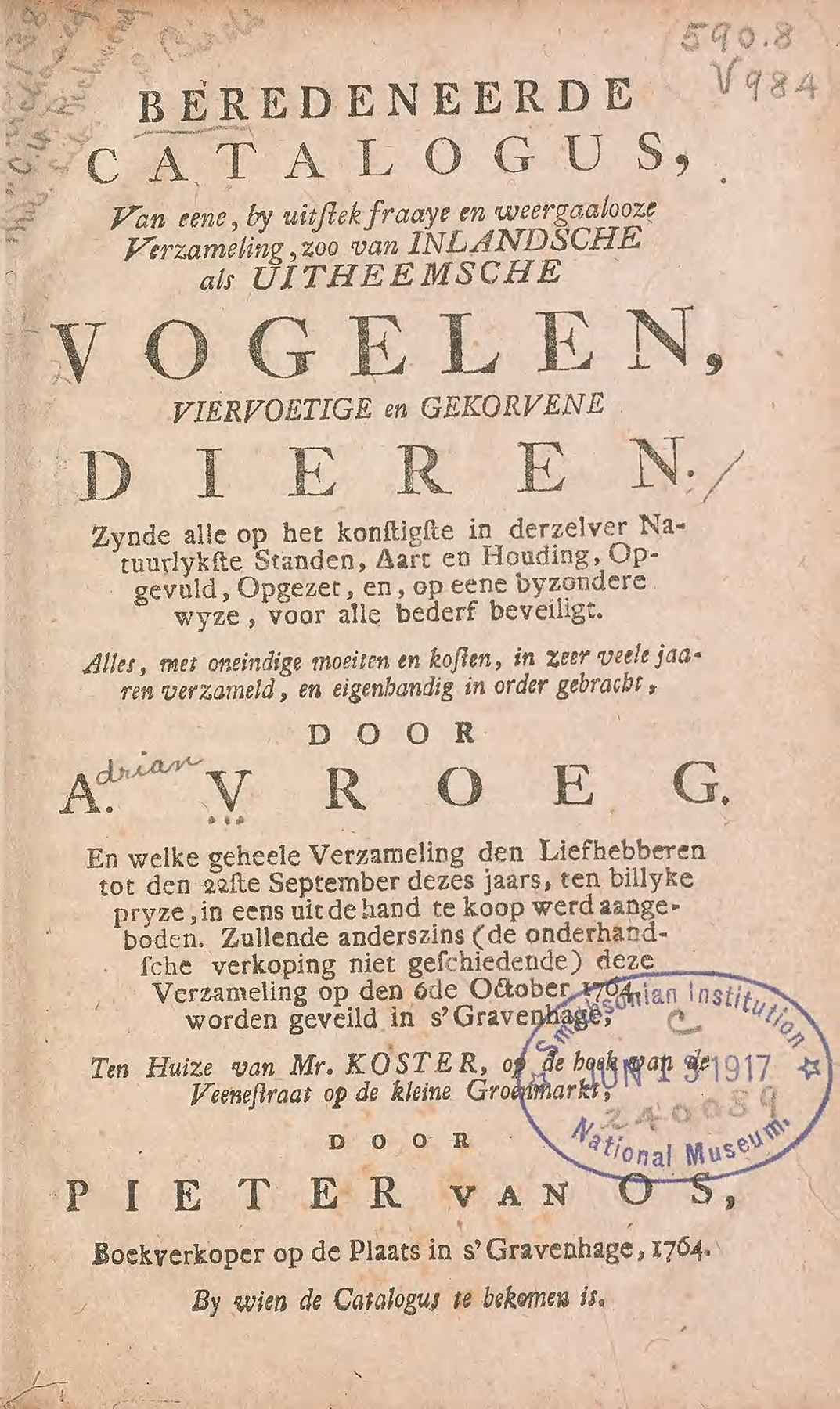
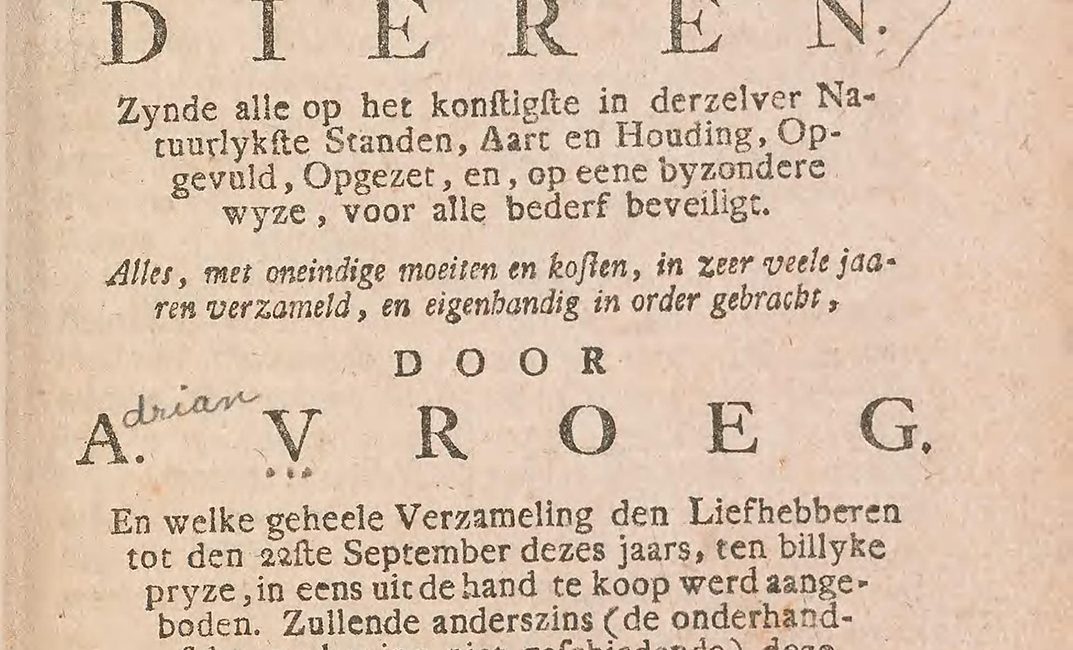
Title page Beredeneerde catalogus van eene, by uitstek fraaye en weergaalooze verzameling, zoo van inlandsche als uitheemsche vogelen, viervoetige en gekorvene dieren.

Title page. Vroeg, Adrian. Beredeneerde catalogus van eene, by uitstek fraaye en weergaalooze verzameling, zoo van inlandsche als uitheemsche vogelen, viervoetige en gekorvene dieren. 1764. Contributed in BHL from Smithsonian Libraries.

As an early work in the history of Linnaean taxonomy, Beredeneerde catalogus van eene, by uitstek fraaye en weergaalooze verzameling, zoo van inlandsche als uitheemsche vogelen, viervoetige en gekorvene dieren (i.e. Vroeg’s Catalogue, 1764) by Adrian Vroeg is the source of dozens of new species of birds [1]. Published just six years after the 10th edition of Linnaeus’ Systema Naturae — considered the starting point of zoological nomenclature — the work is extremely rare, with only a handful of copies known to exist worldwide.

Because of the work’s age and rarity, first-hand access to the title has been difficult, and many researchers have had to rely on secondary sources for Vroeg’s names, which may have introduced errors or even overlooked the priority of a name established by Vroeg.

“It is absolutely rare that the scientific community gets access to such an early work in which new names were established after 1758,” explains Dr. Francisco Welter-Schultes of the Zoological Institute of Göttingen University in Germany. “Imagine being able to finally view an original spelling of a name that might not have been verified for more than 100 years. Generations of scientists never reliably saw the correct spellings of these names.”

Dr. Francisco Welter-Schultes

Dr. Francisco Welter-Schultes of the Zoological Institute of Göttingen University in Germany.

Between 2008-2011, during his time on the BHL Europe project, Welter-Schultes served as the Lead of the Project Group for AnimalBase, which “was originally established to link the early literature with the names of the animals described therein” [2]. The database provides original and corrected spellings of names, type localities, citations for the original descriptions, and, where, possible, links to digitized copies of these descriptions in the literature — many from the Biodiversity Heritage Library.

A major reference for the Project Group’s work was Sherborn’s Index Animalium (1902), “a compendium of zoological taxonomic species nomenclature from 1758 to 1850” [3]. Where possible, the Project Group compared the Index with the original works to verify the accuracy of the names and make any necessary corrections. If it was not possible to consult the original work, the Group had to rely on Sherborn’s Index.

The question, of course, is whether Sherborn himself was able to verify every name against the original source or whether he, too, had to rely on secondary sources in some instances.

“I knew immediately after realizing the date of Vroeg’s publication that new names which were cited in secondary sources like Sherborn’s Index Animalium were not very reliably cited,” explains Welter-Schultes. “If a work is that rare, then the likelihood is greater that Sherborn may never have seen the original. Did Sherborn just copy errors from other lists, and we just copied Sherborn’s forwarded errors to AnimalBase?”

In the hopes of being able to verify the names published by Vroeg in 1764, Welter-Schultes submitted a scan request to the Biodiversity Heritage Library for Vroeg’s Catalogue in 2010. At the time of the request, no BHL partner library appeared to hold the title. So, the request remained in the queue in the chance that, with the addition of new partners in the future or the growth of existing partners’ collections, it might be possible to digitize the work at a later date.

A few years later, whilst reviewing outstanding requests in the queue, Smithsonian Libraries staff discovered that its Joseph F. Cullman 3rd Library of Natural History had since cataloged the item after it was transferred from the Libraries’ general collections. The Smithsonian Libraries is not only the sole BHL partner to hold this work, but the Libraries’ copy is also one of only a few known copies worldwide, with the others being in Denmark (2), the Netherlands (2), and Germany (1) [4].

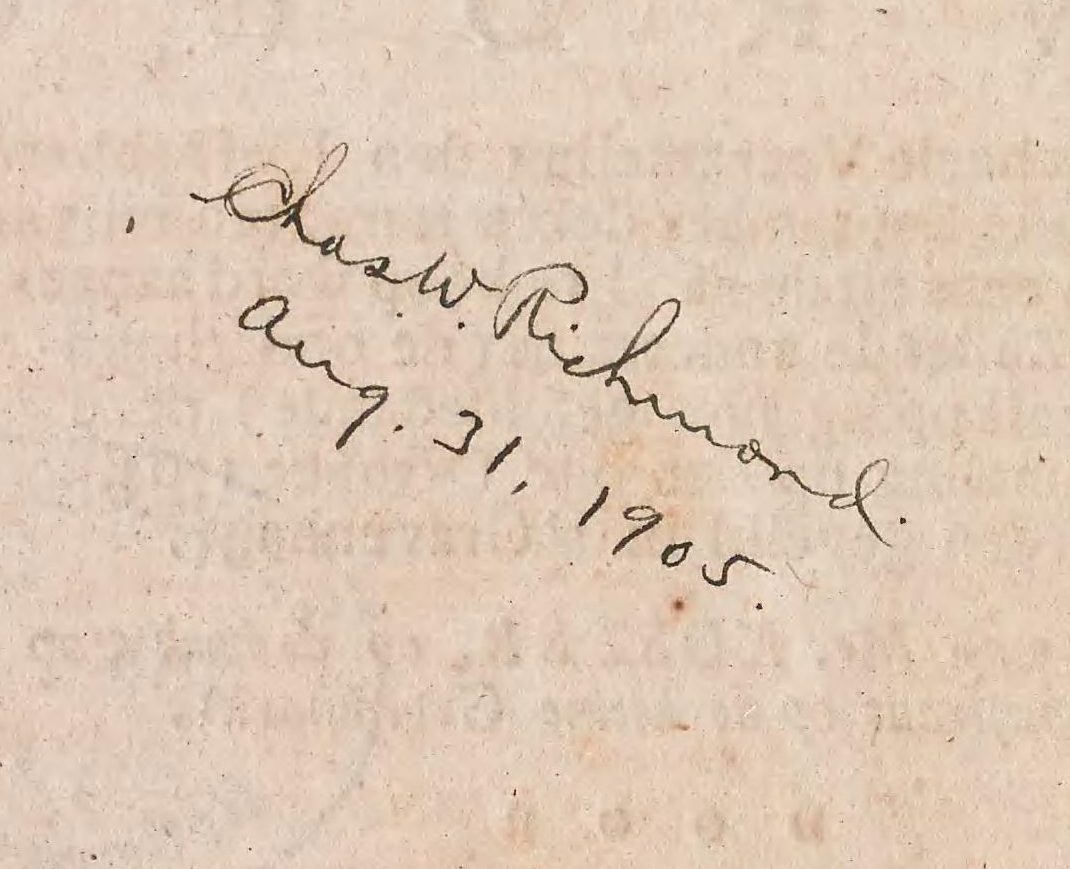
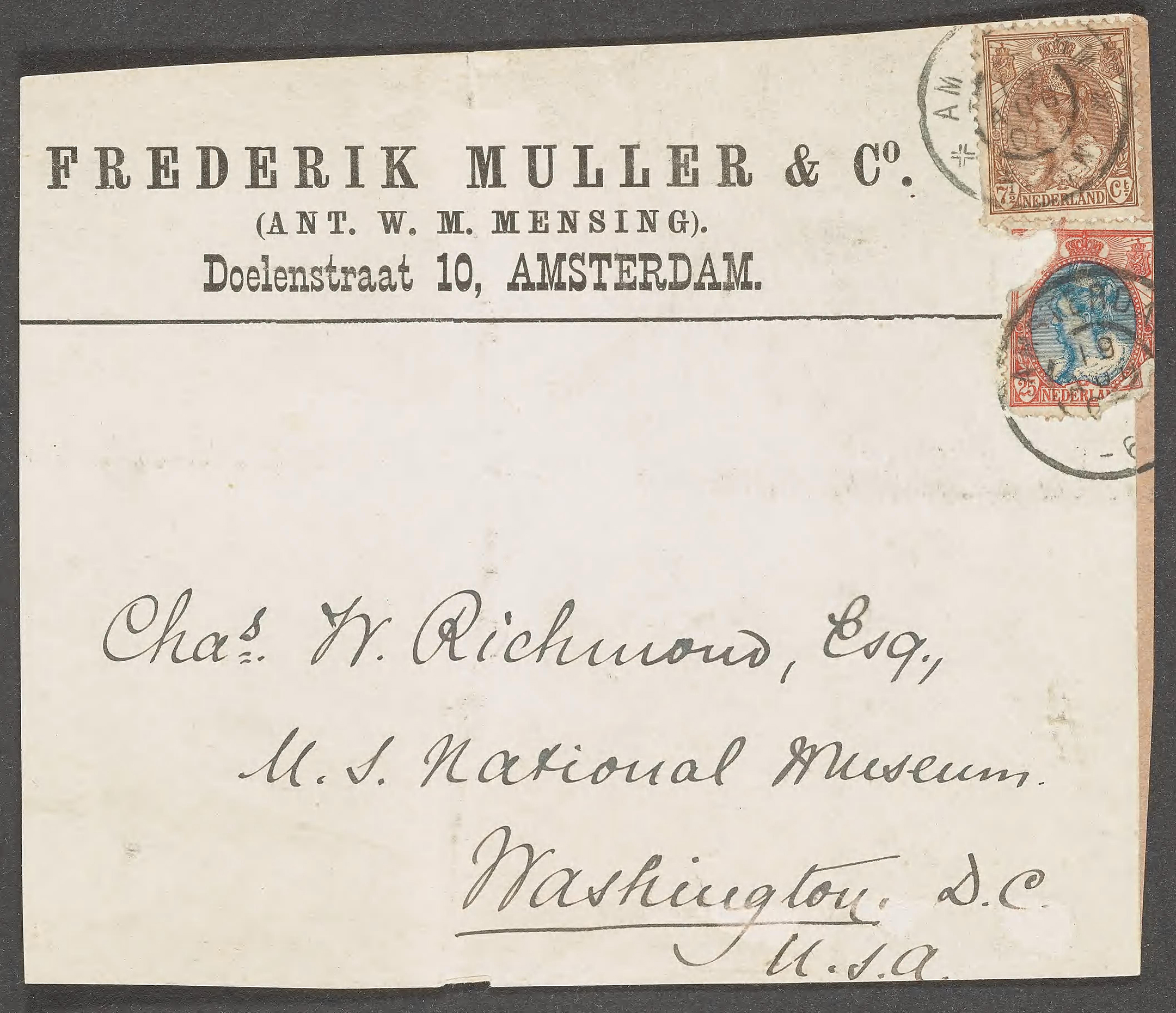
The catalog record provides insight into the interesting provenance of the Smithsonian Libraries’ copy of this very rare book, which was previously owned (and donated) by Charles Wallace Richmond, a Smithsonian ornithologist and bibliographer who served as Assistant Curator, Associate Curator, and Curator in the Division of Birds of the United States National Museum (USNM) (now the Smithsonian National Museum of Natural History) between 1894 and his death in 1932 [5]. Richmond’s signature can be seen on the verso of the title page, dated Aug. 31, 1905, and a book dealer’s mailing label to Richmond from Frederik Muller & Co. of Amsterdam is bound into the volume.

Richmond’s signature on the verso of the title page of the Smithsonian Libraries’ copy of Vroeg’s Catalogue.

Richmond’s signature on the verso of the title page of the Smithsonian Libraries’ copy of Vroeg’s Catalogue.

Book dealer’s mailing label to Richmond from Frederik Muller & Co. of Amsterdam in the Smithsonian Libraries’ copy of Vroeg’s Catalogue.

Book dealer’s mailing label to Richmond from Frederik Muller & Co. of Amsterdam in the Smithsonian Libraries’ copy of Vroeg’s Catalogue.

An avid book collector, Richmond’s personal library consisted of over 200 publications and auction catalogs in German, Italian, French, Spanish, Latin, and English on various natural history topics — many quite rare as Richmond specifically sought out obscure books, particularly those with new species names. Richmond donated the contents of his library to several institutions, including not only the Smithsonian but also the Academy of Natural Sciences of Philadelphia, the Library of Congress, and the California Academy of Sciences — all of which are BHL partner institutions [6]. His donation of taxonomic books to the Smithsonian became the foundation of the Bird Library at the National Museum of Natural History [7].

Unfortunately, the Smithsonian’s copy of Vroeg’s Catalogue was in need of conservation before it could be scanned. The item was added to the Smithsonian Libraries’ preservation queue, and once the necessary treatments were completed, it was added to the Libraries’ queue for folio digitization.

Finally, in 2018 — eight years after the initial request, Vroeg’s Catalogue was digitized by the Smithsonian Libraries’ digitization team and made freely available online through the Biodiversity Heritage Library.

Several Smithsonian Libraries staff members were involved in completing this book’s journey from shelf to screen, including Digital Library staff Jacqueline Chapman, Adriana Marroquin, and Stefaan Hurts; Special Collections staff Leslie Overstreet, Daria Wingreen-Mason, and Alexandra Newman; Cataloging staff Julia Blakely; Preservation staff Katie Wagner; and BHL Secretariat staff Bianca Crowley and Grace Costantino. We extend our thanks to all involved for making this extremely rare book freely available to the world.

And because this work is now easily accessible to researchers, it can be used to empower global research, such as that of Welter-Schultes. His response to Jacqueline Chapman’s email notification that the work had been digitized was swift: “This was really very, very useful. I immediately spent two hours exploring this interesting work.”

With the digital copy of the Smithsonian Libraries’ Catalogue, Welter-Schultes was able to uncover taxonomic errors that had persisted for at least a century and improve the accuracy of the names data available through AnimalBase.

“It was easy for me to verify our data set of names, and in fact it turned out that Sherborn must have relied on a third source,” explains Welter-Schultes. “There were so many inaccuracies in the spellings of the names that we must assume that Sherborn, who in his work (published in 1902) had a very low average error rate, did very probably not extract those names from an original copy of the 1764 work.”

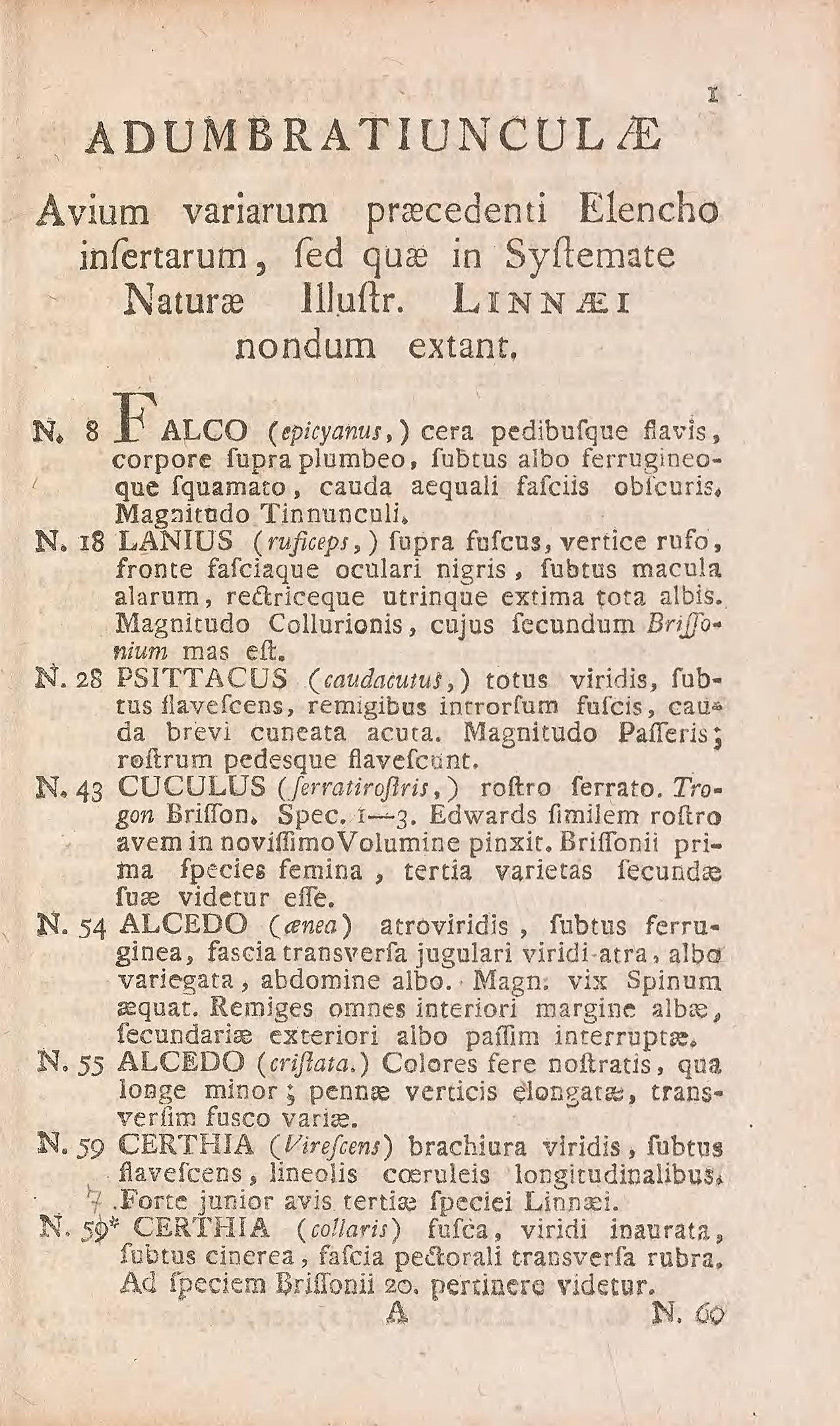
New bird species introduced in Vroeg’s Catalogue. Vroeg, Adrian. Beredeneerde catalogus van eene, by uitstek fraaye en weergaalooze verzameling, zoo van inlandsche als uitheemsche vogelen, viervoetige en gekorvene dieren. 1764. Contributed in BHL from Smithsonian Libraries.

New bird species introduced in Vroeg’s Catalogue. Vroeg, Adrian. Beredeneerde catalogus van eene, by uitstek fraaye en weergaalooze verzameling, zoo van inlandsche als uitheemsche vogelen, viervoetige en gekorvene dieren. 1764. Contributed in BHL from Smithsonian Libraries.

Knowing that their work is so valued and impactful is also very encouraging for the staff who dedicate so much time and energy to addressing the needs of BHL’s user community.

“It is rare that we hear from users that the items we digitize in response to these older requests are so immediately relevant and impactful on current research,” shares Chapman. “And it is so fulfilling!”

Thanks to the efforts of the staff at Smithsonian Libraries and other BHL partners around the world, researchers can now easily access original species descriptions and other rare literature that underpins the work of taxonomists today.

“Today, thousands of names in online data resources are equipped with links to their original descriptions in BHL,” lauds Welter-Schultes. “What we did 10 years ago with AnimalBase was pioneering work — many others followed and did the same. Today, providing a link to a BHL source is something absolutely usual and taxonomists can probably not imagine life anymore without BHL.”

We are grateful to Dr. Welter-Schultes for sharing this example of how BHL is impacting real research today. We also extend our sincere thanks to all of our partners for making BHL the essential resource that it is today. The dedication and diligence of the staff at our partner libraries to support the scientific and research community — whether that involves more straightforward digitization projects or complex, multi-year undertakings —  ensures that the Biodiversity Heritage Library will continue to empower global research for decades to come.

References

[1] AnimalBase. 2018. “Taxa described as new in Vroeg 1764.” Accessed on 29 November 2018. http://www.animalbase.uni-goettingen.de/zooweb/servlet/AnimalBase/list/taxa?from_reference=1908.

[2] AnimalBase. 2018. “About.” Accessed on 29 November 2018. http://www.animalbase.org/.

[3] Smithsonian Libraries. 2018. “About this Project: Index Animalium.” Accessed on 29 November 2018. http://www.sil.si.edu/DigitalCollections/indexanimalium/about/.

[4] Leslie Overstreet, email message to author, 24 September 2018.

[5] Stone, Witmer. 1933. “In Memoriam: Charles Wallace Richmond.” The Auk, 50(1): 1-22.

[6] Smithsonian Institution Archives. 2011. “Record Unit 7382,  Richmond, Charles Wallace, 1868-1932, Charles Wallace Richmond Library Catalog and Lists, 1906-1908 and undated.” Collections, 19 August. Accessed on 29 November 2018. https://siarchives.si.edu/collections/siris_arc_217538.

[7] Smithsonian National Museum of Natural History. 2018. “Charles W. Richmond (1868-1932).” Department of Vertebrate Zoology: Division of Birds. Accessed on 29 November 2018. http://vertebrates.si.edu/birds/Hall_of_fame/CharlesRichmond.html.

December 13, 2018by michelle.underhill
Blog Reel, Featured Books

Labillardière and the Botany of the Levant

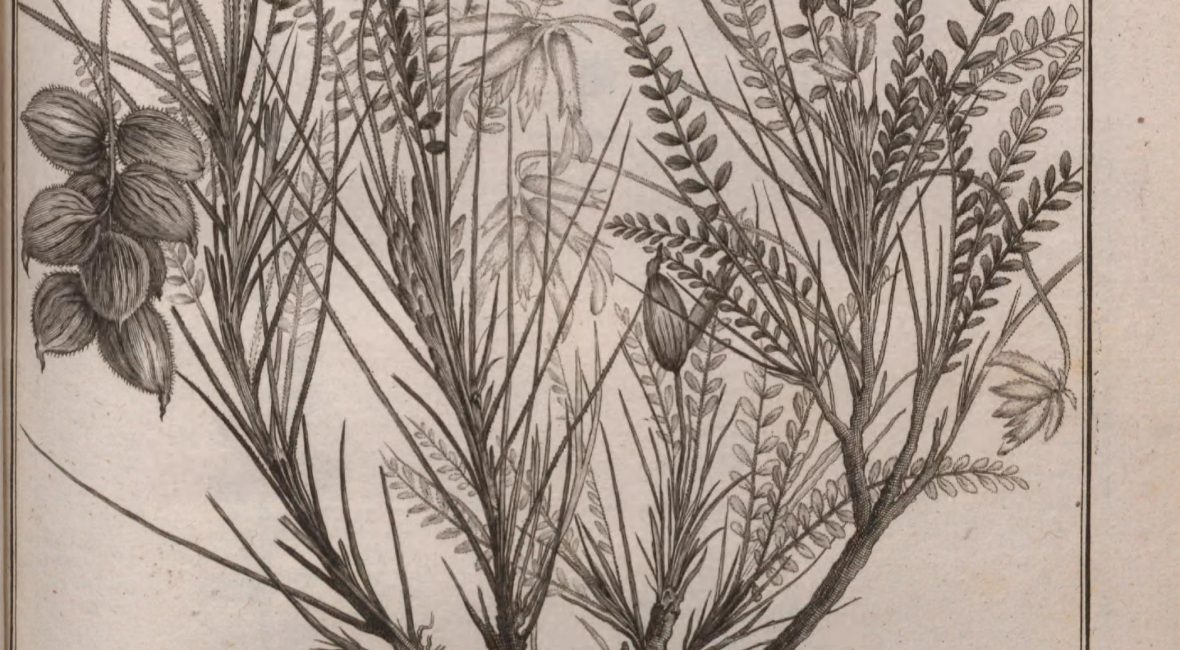
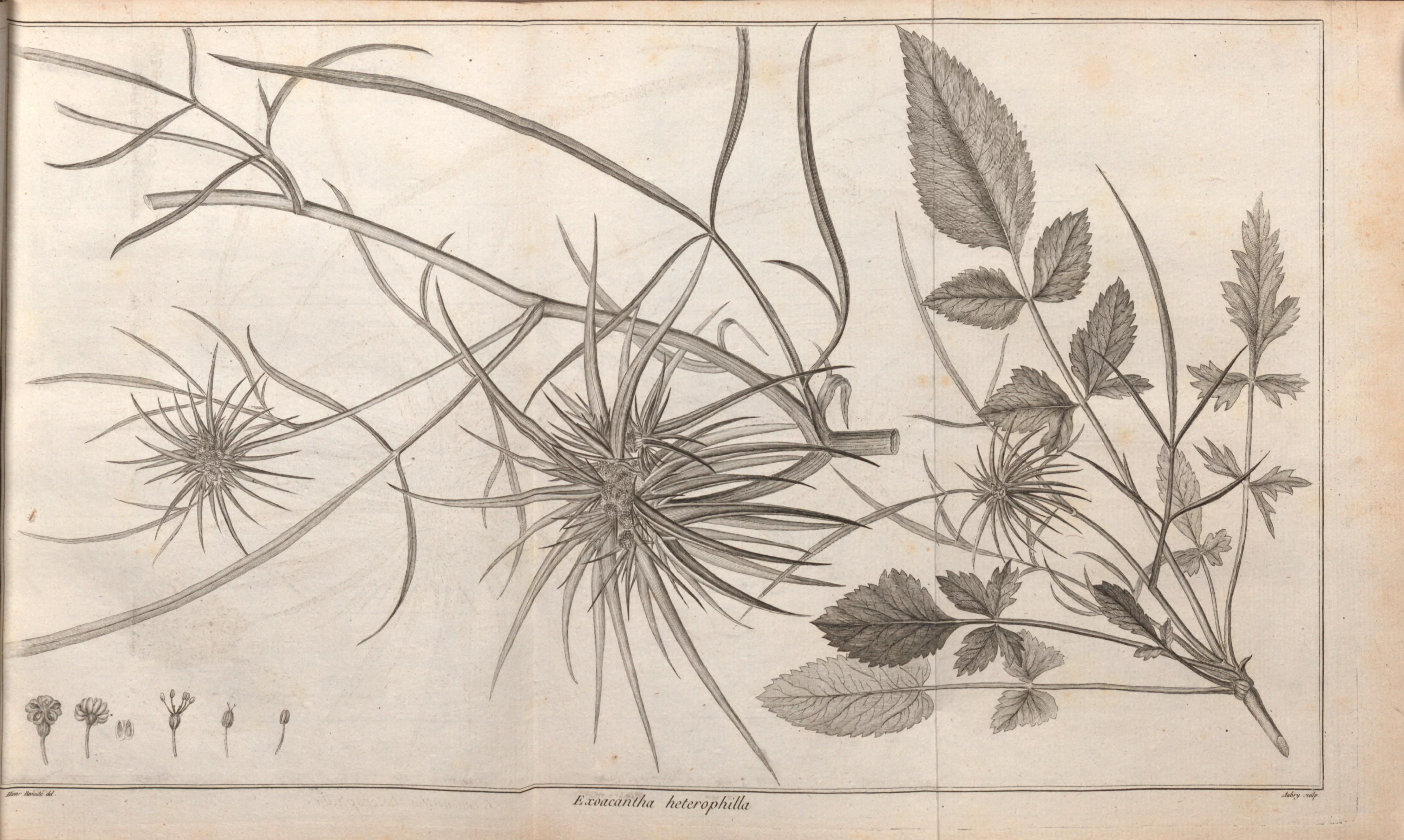
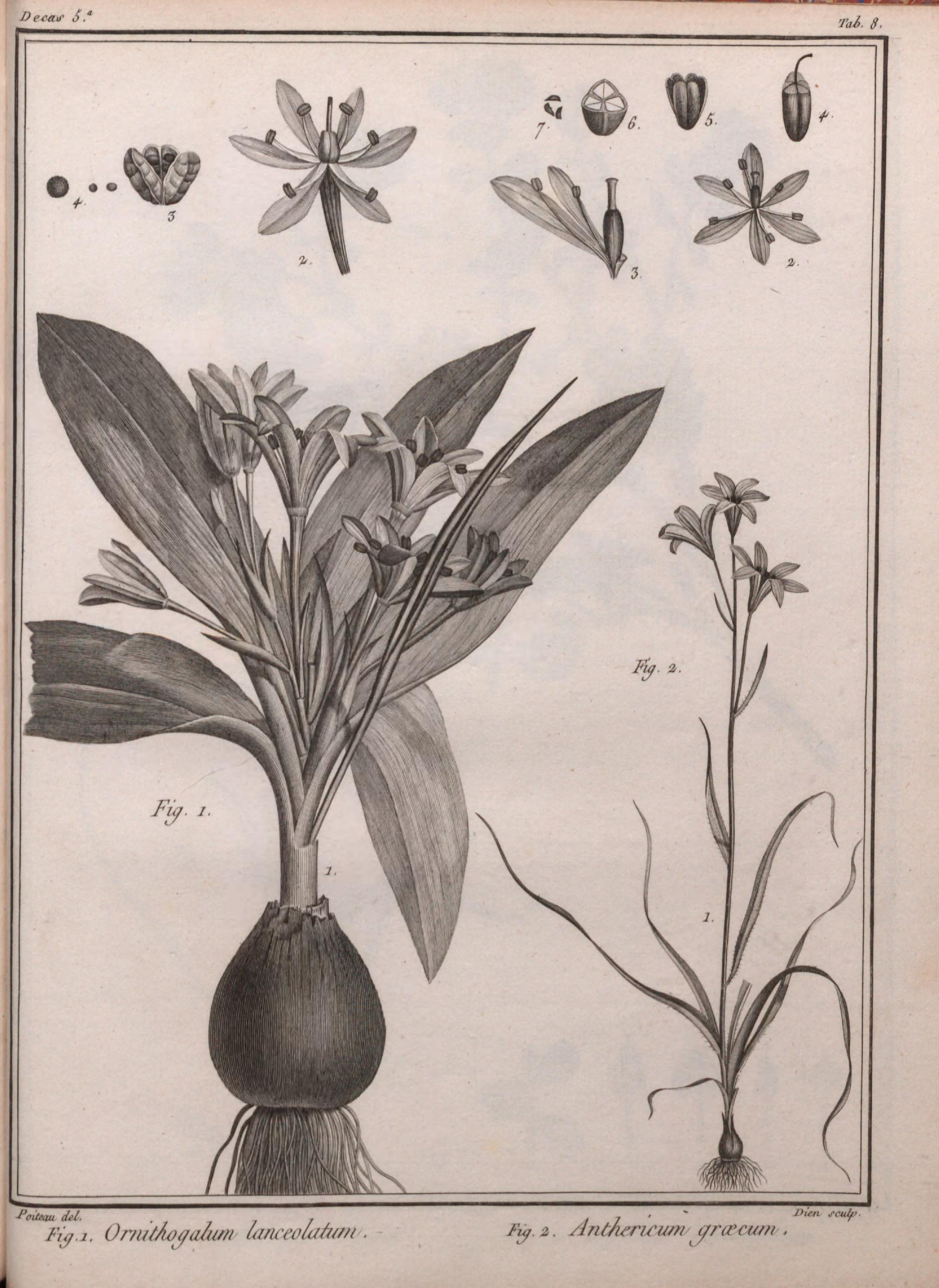
Labillardiere, Jacques Julien Houtton de. Icones plantarum Syriæ rariorum. Decas Primas. 1791. Engraving after Henri-Joseph Redouté. Contributed in the Biodiversity Heritage Library from Royal Botanic Gardens Kew, Library, Art & Archives.

At the end of the 18th century, French naturalist Jacques-Julien Houtou de Labillardière spent two years exploring and collecting plants in the Levant. The expedition ultimately resulted in the publication of a beautifully-illustrated work on the botany of the region, Icones plantarum Syriæ rariorum (“Rare Syrian Plant Images”).

Born in Alençon, a commune in Normandy, France, in 1755, Labillardière studied medicine in Montpellier, receiving his doctorate in Paris, before turning his interests to natural history (Allorge 2006, 306). Embarking at Marseilles in 1787, Labillardière was originally destined for southern Turkey until, upon arriving in Cyprus, he learned that the plague was desolating Antioch (now Antakya) and regions north of Aleppo, so he elected to visit the Holy Land, Lebanon and Damascus instead. His travels ultimately took him as far north as Mons Cassius near the Turkish-Syrian border (Rix 2012, 67). After nearly two years, he returned to France, stopping at Cyprus, Corsica, and Sardinia along the way.

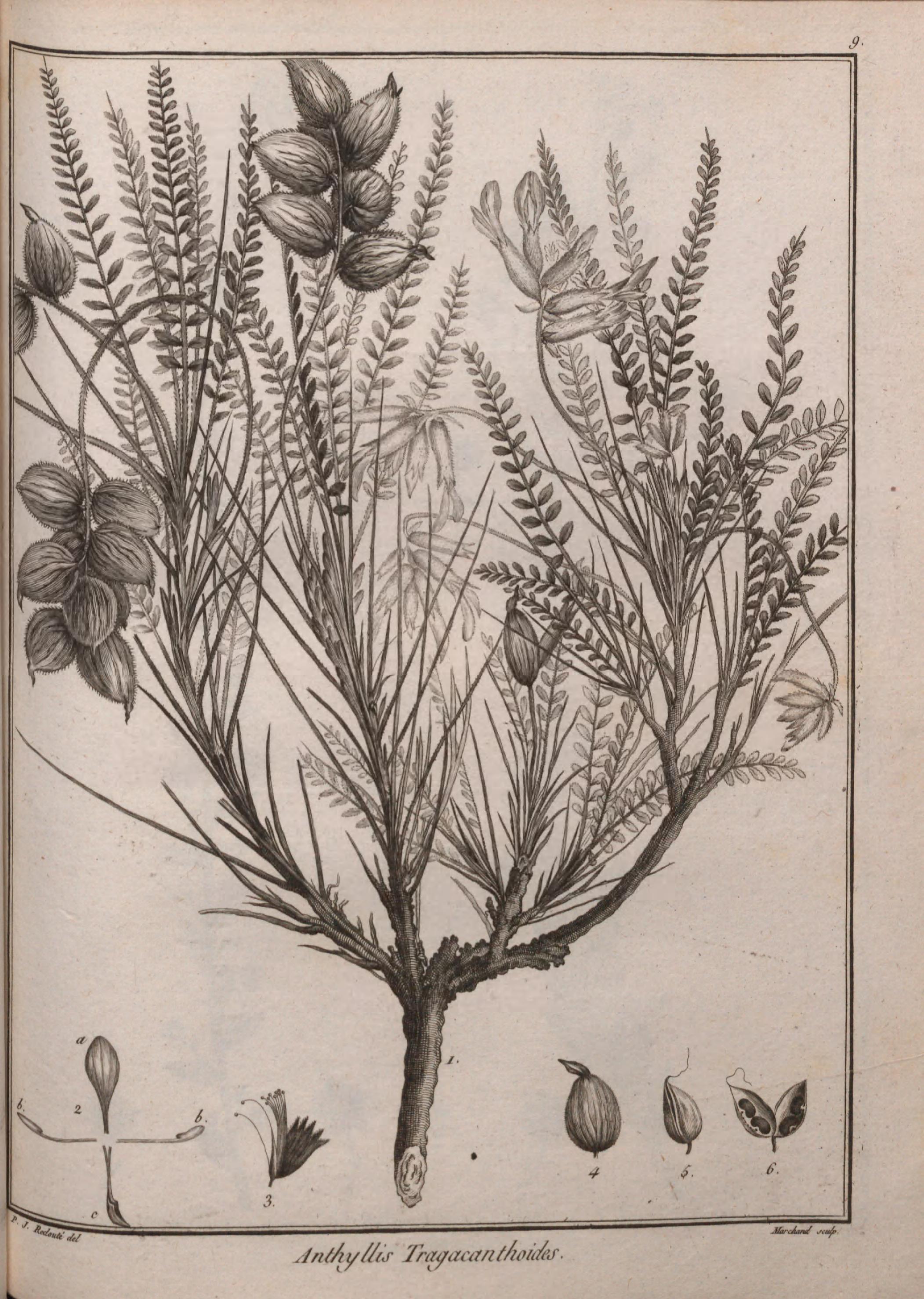
Labillardiere, Jacques Julien Houtton de. Icones plantarum Syriæ rariorum. Decas Second. 1791. Engraving after Pierre-Joseph Redouté. Contributed in the Biodiversity Heritage Library from Royal Botanic Gardens Kew, Library, Art & Archives.

Labillardière arrived back in France in 1789 with a collection of nearly 1,000 dried plants and many living specimens. The living plants were given to André Thouin, head gardener of the King’s Garden, while the dried collections were purchased by Le Monnier, the King’s doctor. Labillardière then set out to publish the results of his expedition (Allorge 2006, 306).

Icones Plantarum Syriae Rariorum was published in five parts between 1791-1812. Thanks to the Royal Botanic Gardens Kew, Library, Art & Archives, you can explore the entire work for free in the Biodiversity Heritage Library.

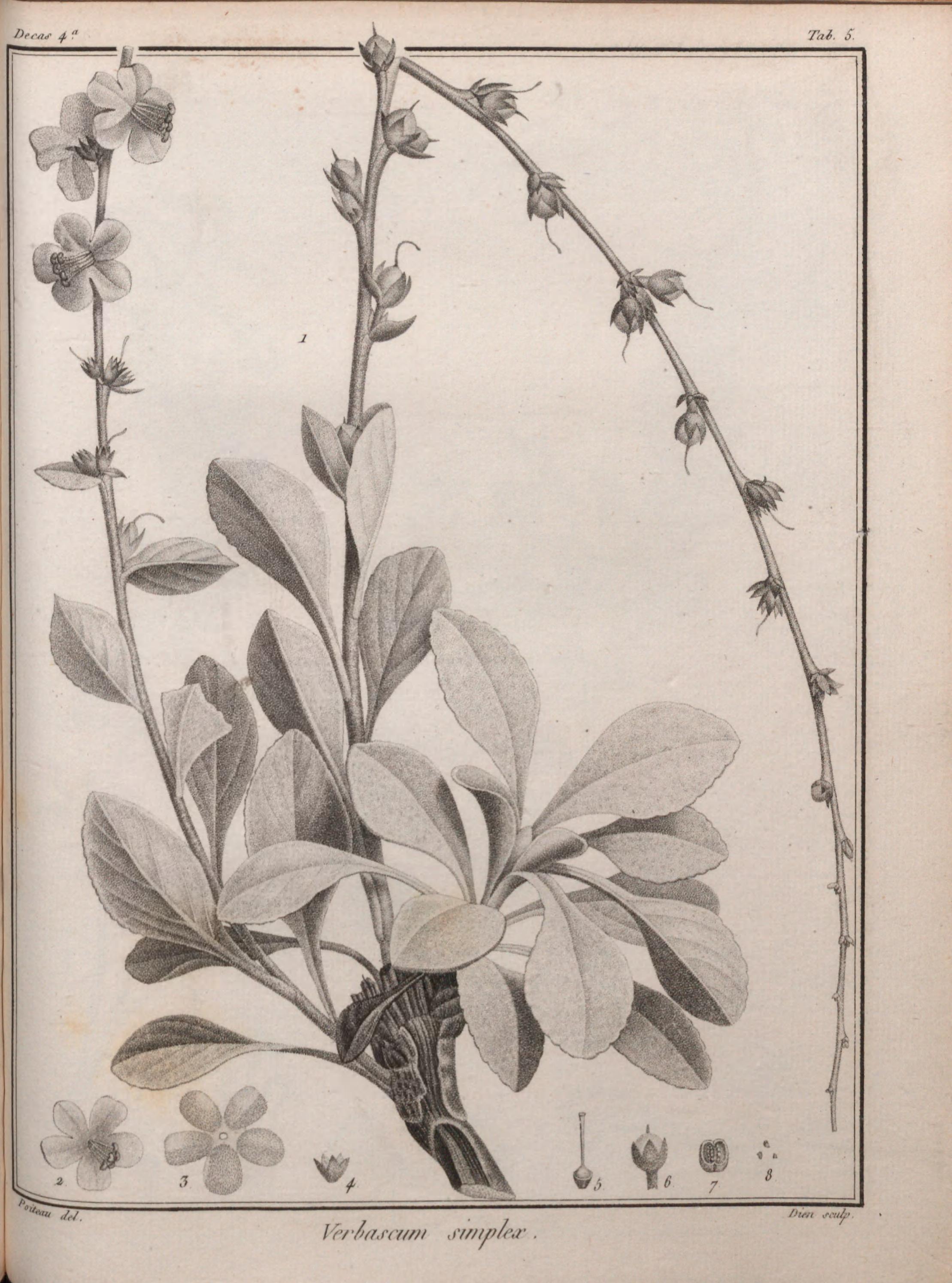
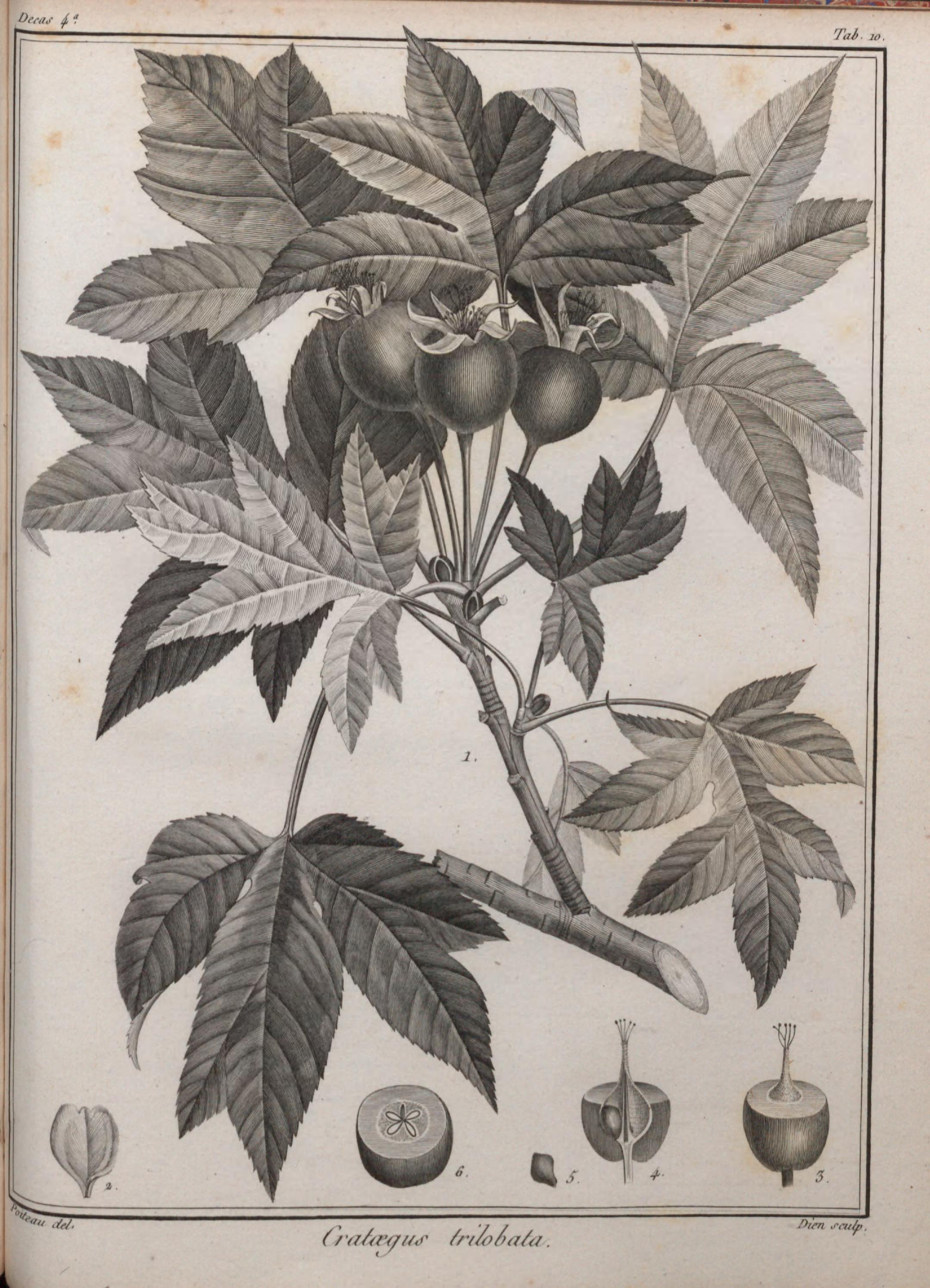
Labillardiere, Jacques Julien Houtton de. Icones plantarum Syriæ rariorum. Decas Quatra. 1812. Engraving after Pierre-Antoine Poiteau. Contributed in the Biodiversity Heritage Library from Royal Botanic Gardens Kew, Library, Art & Archives.

“Decas Primas” of Icones Plantarum Syriae Rariorum, issued in 1791, included 22 pages and 10 engraved plates after artwork by the Redouté brothers, Pierre-Joseph and Henri-Joseph. Nicknamed “the Raphael of flowers,” Pierre-Joseph is possibly the most celebrated flower painter in the entire history of botanical art. He published over 2,100 plates depicting over 1,800 species – many of which had never before been illustrated for publication – throughout his career (Tyrrell 2018). Born to a family of Belgian painters, both of Pierre-Joseph’s brothers, Henri-Joseph and Antoine-Ferdinand, also, unsurprisingly, became painters.

After the “Decas Second” was issued in 1791, featuring 18 pages of text and another 10 plates again by the Redouté brothers, Icones Plantarum Syriae Rariorum experienced a hiatus in publication of nearly two decades as Labillardière embarked on an expedition under Rear Admiral Bruni d’Entrecasteaux in search of the ships La Boussole and L’Astrolabe, which had disappeared several years earlier after leaving Botany Bay, Australia. The voyage provided Labillardière with the opportunity to collect additional botanical specimens in Australia and Tasmania (Allorge 2006, 306).

Labillardiere, Jacques Julien Houtton de. Icones plantarum Syriæ rariorum. Decas Quinta et Ultima. 1812. Engraving after Pierre-Antoine Poiteau. Contributed in the Biodiversity Heritage Library from Royal Botanic Gardens Kew, Library, Art & Archives.

Having returned to France in 1796, and after being elected to the French Academy in 1800, Labillardière continued classifying the plants from his Levant expedition. “Decas Tertia” of Icones Plantarum Syriae Rariorum, containing 16 pages and 10 plates, appeared in 1809, followed by “Decas Quatra” and “Decas Quinta et Ultima”, both in 1812 and also consisting of 16 pages and 10 plates each. The plates in the final three parts were engraved after drawings by Pierre-Antoine Poiteau and Pierre Jean François Turpin (ibid., 307).

Labillardiere, Jacques Julien Houtton de. Icones plantarum Syriæ rariorum. Decas Quatra. 1812. Engraving after Pierre-Antoine Poiteau. Contributed in the Biodiversity Heritage Library from Royal Botanic Gardens Kew, Library, Art & Archives.

Published over a 21 year period in five parts and 50 plates, complete copies of Labillardière’s Icones Plantarum Syriae Rariorum are rare. We are grateful to Kew Gardens for digitizing their copy and ensuring that everyone, everywhere can enjoy this rare treasure through the Biodiversity Heritage Library.

References

Allorge, Lucile. 2006. “French Naturalists in the Levant During the Ottoman Empire.” Medicographia, 28, no. 3: 301-309.

Rix, Martyn. 2012. The Golden Age of Botanical Art. Chicago and London: The University of Chicago Press.

Tyrrell, Katherine. 2018. “About Pierre-Joseph Redouté.” Botanical Art and Artists. Accessed on September 20, 2018. https://www.botanicalartandartists.com/about-pierre-joseph-redoute.html.

December 6, 2018by michelle.underhill

Help Support BHL

BHL's existence depends on the financial support of its patrons. Help us keep this free resource alive!

search

About BHL

The Biodiversity Heritage Library (BHL) is the world’s largest open access digital library for biodiversity literature and archives. BHL operates as a worldwide consortium of natural history, botanical, research, and national libraries working together to digitize the natural history literature held in their collections and make it freely available for open access as part of a global “biodiversity community.”

Join Our Mailing List

Sign up to receive the latest news, content highlights, and promotions.

Subscribe Now

Subscribe to Blog via Email

Enter your email address to subscribe to this blog and receive notifications of new posts by email.

Join 319 other subscribers

Subscribe to Blog Via RSS

Subscribe to the blog RSS feed to stay up-to-date on all the latest BHL posts.

Access RSS Feed

Inspiring Discovery through Free Access to Biodiversity Knowledge.

The Biodiversity Heritage Library makes it easier than ever for you to access the information you need to study and explore life on Earth…for free, anytime, anywhere.


64+ Million Pages of
Biodiversity Literature Online.

EXPLORE

Tools and Services
to Transform Research.

EXPLORE

300,000+
Illustrations on Flickr.

EXPLORE

ABOUT | HARMFUL CONTENT | PRIVACY | SITE MAP | TERMS OF USE