

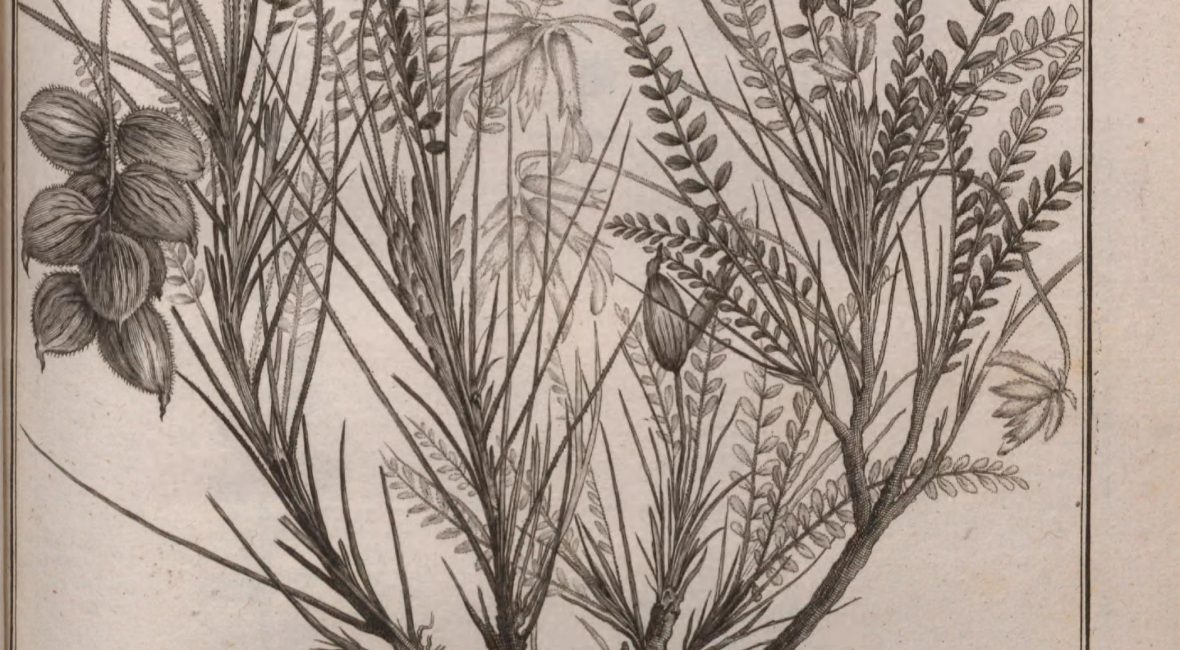
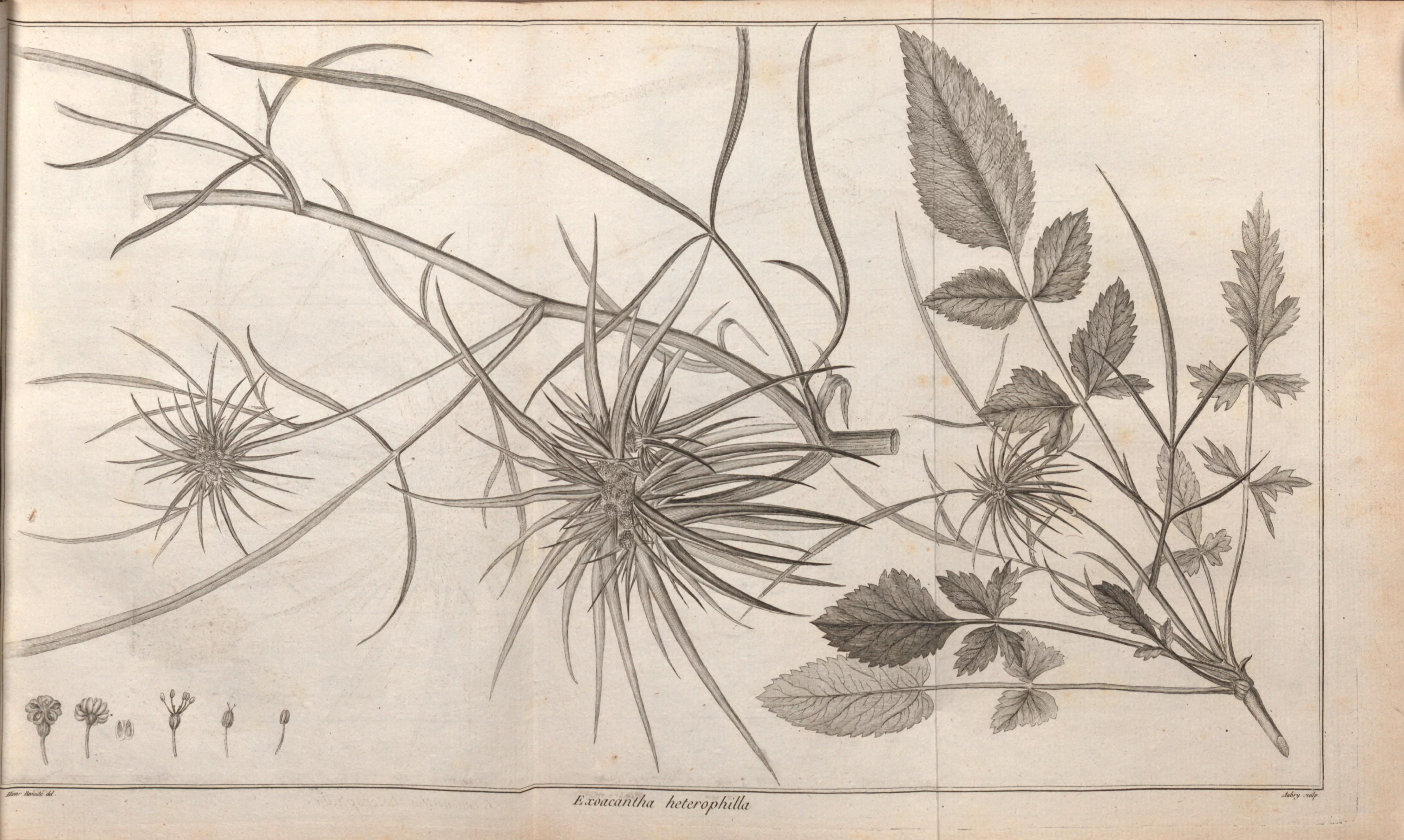
Labillardiere, Jacques Julien Houtton de. Icones plantarum Syriæ rariorum. Decas Primas. 1791. Engraving after Henri-Joseph Redouté. Contributed in the Biodiversity Heritage Library from Royal Botanic Gardens Kew, Library, Art & Archives.
At the end of the 18th century, French naturalist Jacques-Julien Houtou de Labillardière spent two years exploring and collecting plants in the Levant. The expedition ultimately resulted in the publication of a beautifully-illustrated work on the botany of the region, Icones plantarum Syriæ rariorum (“Rare Syrian Plant Images”).
Born in Alençon, a commune in Normandy, France, in 1755, Labillardière studied medicine in Montpellier, receiving his doctorate in Paris, before turning his interests to natural history (Allorge 2006, 306). Embarking at Marseilles in 1787, Labillardière was originally destined for southern Turkey until, upon arriving in Cyprus, he learned that the plague was desolating Antioch (now Antakya) and regions north of Aleppo, so he elected to visit the Holy Land, Lebanon and Damascus instead. His travels ultimately took him as far north as Mons Cassius near the Turkish-Syrian border (Rix 2012, 67). After nearly two years, he returned to France, stopping at Cyprus, Corsica, and Sardinia along the way.
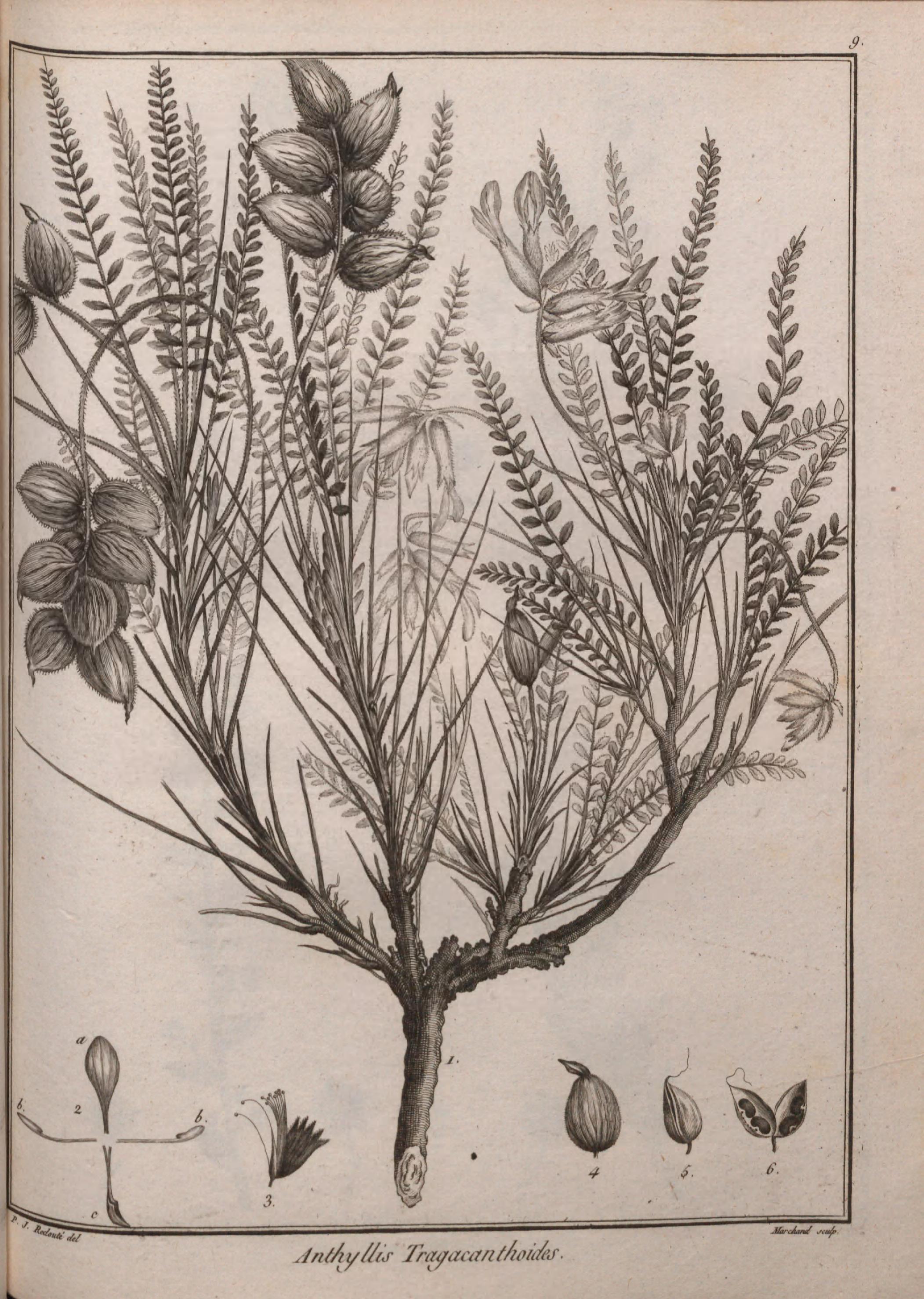
Labillardiere, Jacques Julien Houtton de. Icones plantarum Syriæ rariorum. Decas Second. 1791. Engraving after Pierre-Joseph Redouté. Contributed in the Biodiversity Heritage Library from Royal Botanic Gardens Kew, Library, Art & Archives.
Labillardière arrived back in France in 1789 with a collection of nearly 1,000 dried plants and many living specimens. The living plants were given to André Thouin, head gardener of the King’s Garden, while the dried collections were purchased by Le Monnier, the King’s doctor. Labillardière then set out to publish the results of his expedition (Allorge 2006, 306).
Icones Plantarum Syriae Rariorum was published in five parts between 1791-1812. Thanks to the Royal Botanic Gardens Kew, Library, Art & Archives, you can explore the entire work for free in the Biodiversity Heritage Library.
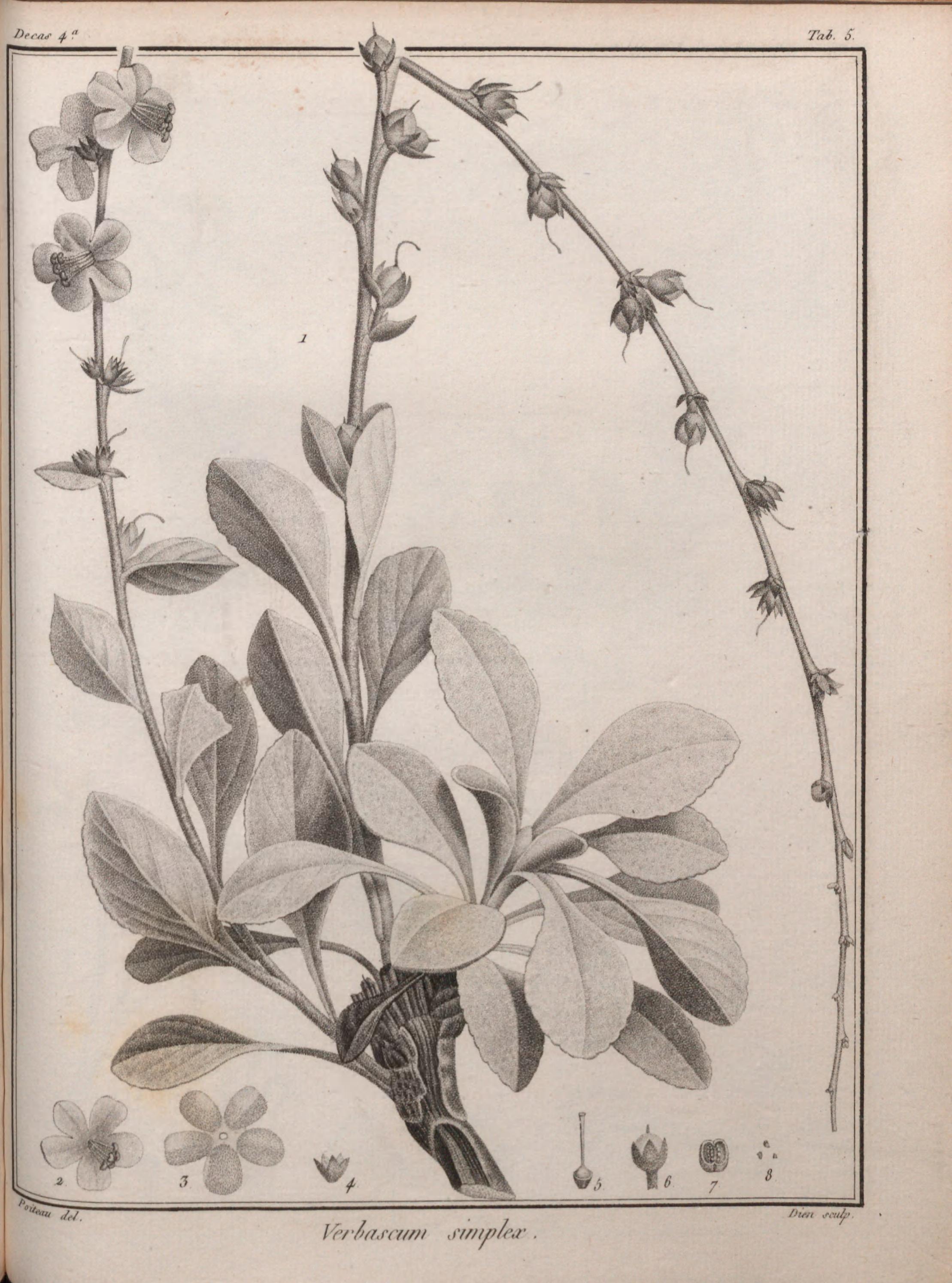
Labillardiere, Jacques Julien Houtton de. Icones plantarum Syriæ rariorum. Decas Quatra. 1812. Engraving after Pierre-Antoine Poiteau. Contributed in the Biodiversity Heritage Library from Royal Botanic Gardens Kew, Library, Art & Archives.
“Decas Primas” of Icones Plantarum Syriae Rariorum, issued in 1791, included 22 pages and 10 engraved plates after artwork by the Redouté brothers, Pierre-Joseph and Henri-Joseph. Nicknamed “the Raphael of flowers,” Pierre-Joseph is possibly the most celebrated flower painter in the entire history of botanical art. He published over 2,100 plates depicting over 1,800 species – many of which had never before been illustrated for publication – throughout his career (Tyrrell 2018). Born to a family of Belgian painters, both of Pierre-Joseph’s brothers, Henri-Joseph and Antoine-Ferdinand, also, unsurprisingly, became painters.
After the “Decas Second” was issued in 1791, featuring 18 pages of text and another 10 plates again by the Redouté brothers, Icones Plantarum Syriae Rariorum experienced a hiatus in publication of nearly two decades as Labillardière embarked on an expedition under Rear Admiral Bruni d’Entrecasteaux in search of the ships La Boussole and L’Astrolabe, which had disappeared several years earlier after leaving Botany Bay, Australia. The voyage provided Labillardière with the opportunity to collect additional botanical specimens in Australia and Tasmania (Allorge 2006, 306).
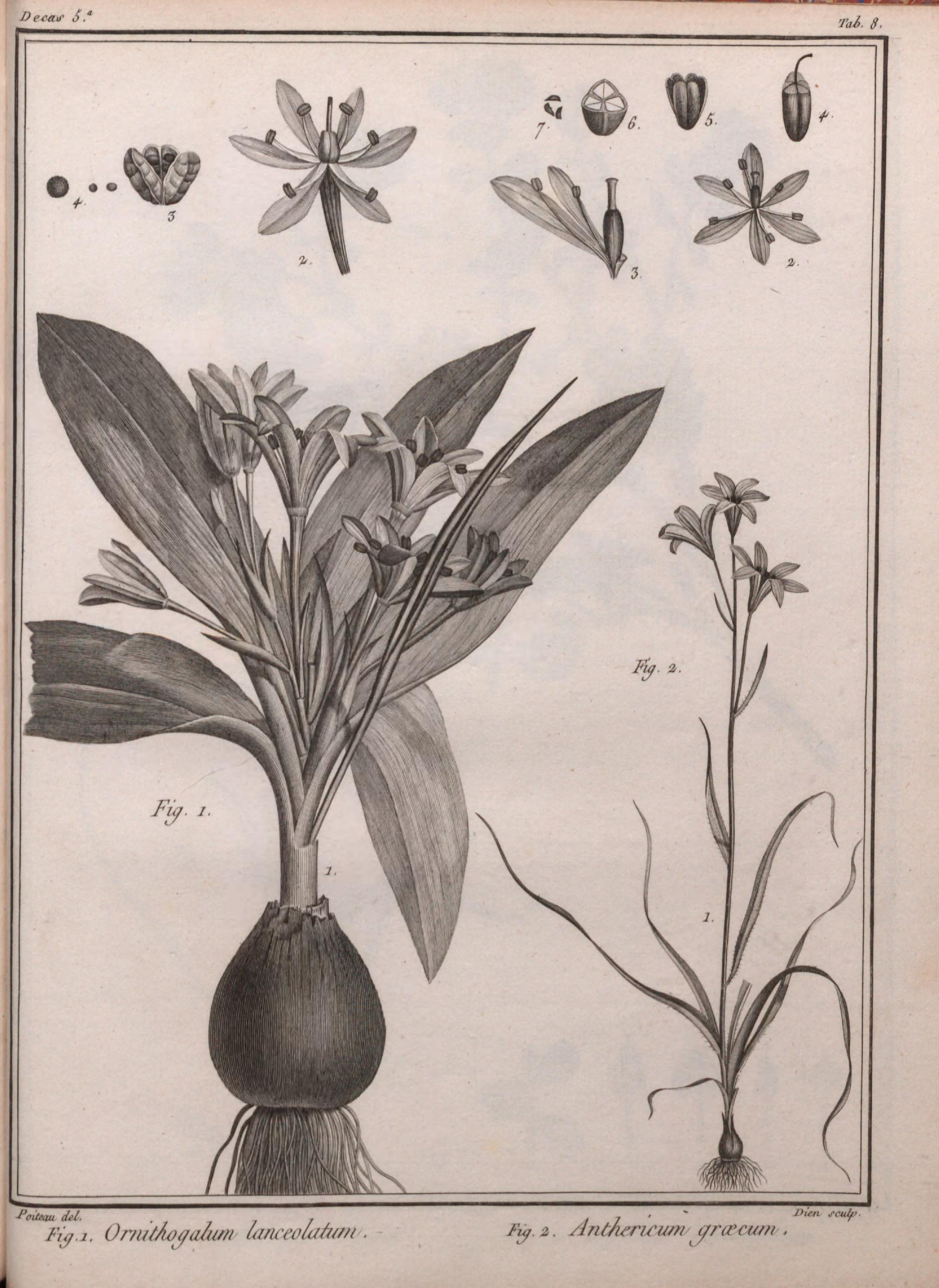
Labillardiere, Jacques Julien Houtton de. Icones plantarum Syriæ rariorum. Decas Quinta et Ultima. 1812. Engraving after Pierre-Antoine Poiteau. Contributed in the Biodiversity Heritage Library from Royal Botanic Gardens Kew, Library, Art & Archives.
Having returned to France in 1796, and after being elected to the French Academy in 1800, Labillardière continued classifying the plants from his Levant expedition. “Decas Tertia” of Icones Plantarum Syriae Rariorum, containing 16 pages and 10 plates, appeared in 1809, followed by “Decas Quatra” and “Decas Quinta et Ultima”, both in 1812 and also consisting of 16 pages and 10 plates each. The plates in the final three parts were engraved after drawings by Pierre-Antoine Poiteau and Pierre Jean François Turpin (ibid., 307).
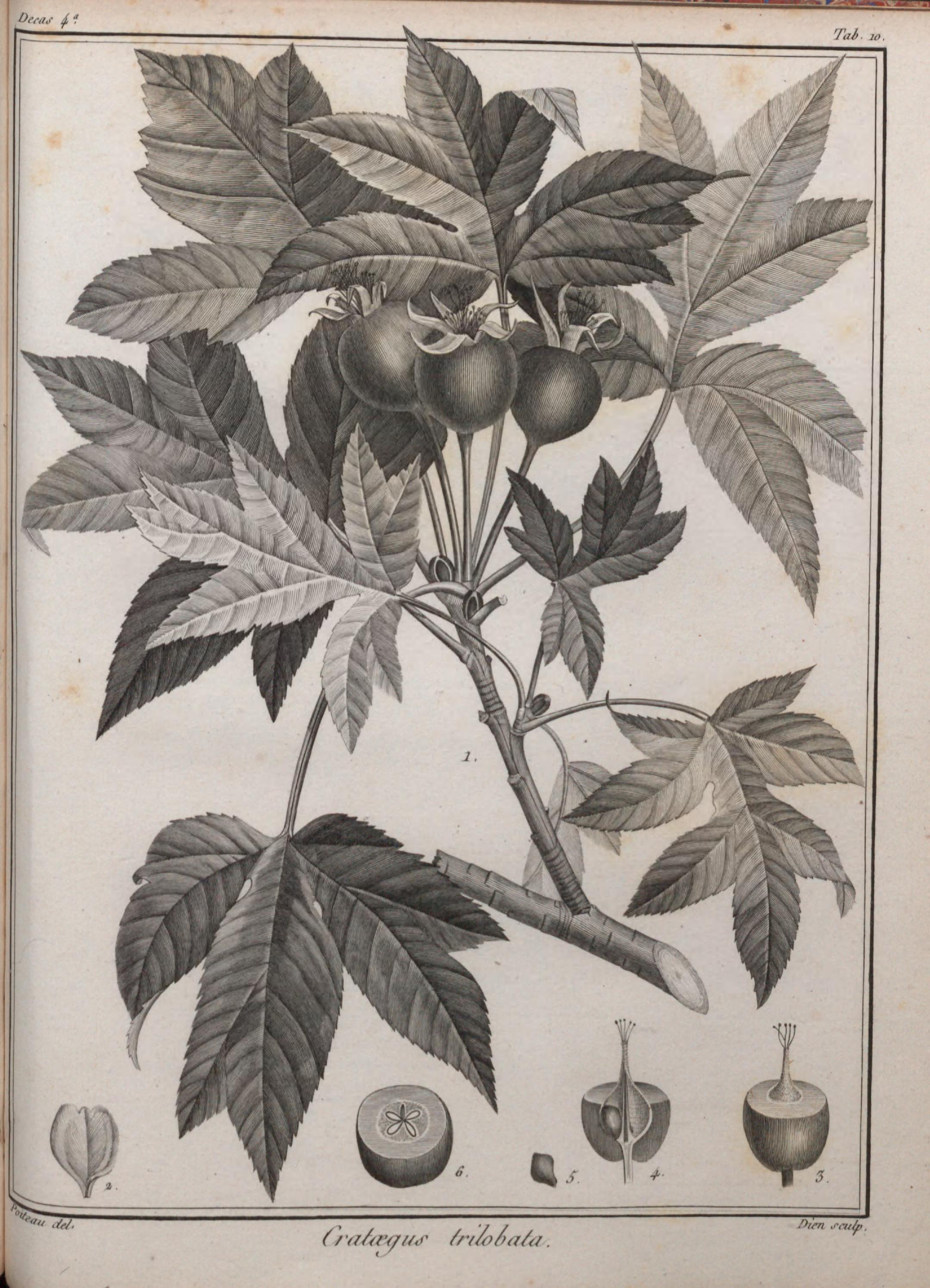
Labillardiere, Jacques Julien Houtton de. Icones plantarum Syriæ rariorum. Decas Quatra. 1812. Engraving after Pierre-Antoine Poiteau. Contributed in the Biodiversity Heritage Library from Royal Botanic Gardens Kew, Library, Art & Archives.
Published over a 21 year period in five parts and 50 plates, complete copies of Labillardière’s Icones Plantarum Syriae Rariorum are rare. We are grateful to Kew Gardens for digitizing their copy and ensuring that everyone, everywhere can enjoy this rare treasure through the Biodiversity Heritage Library.
References
Allorge, Lucile. 2006. “French Naturalists in the Levant During the Ottoman Empire.” Medicographia, 28, no. 3: 301-309.
Rix, Martyn. 2012. The Golden Age of Botanical Art. Chicago and London: The University of Chicago Press.
Tyrrell, Katherine. 2018. “About Pierre-Joseph Redouté.” Botanical Art and Artists. Accessed on September 20, 2018. https://www.botanicalartandartists.com/about-pierre-joseph-redoute.html.
