

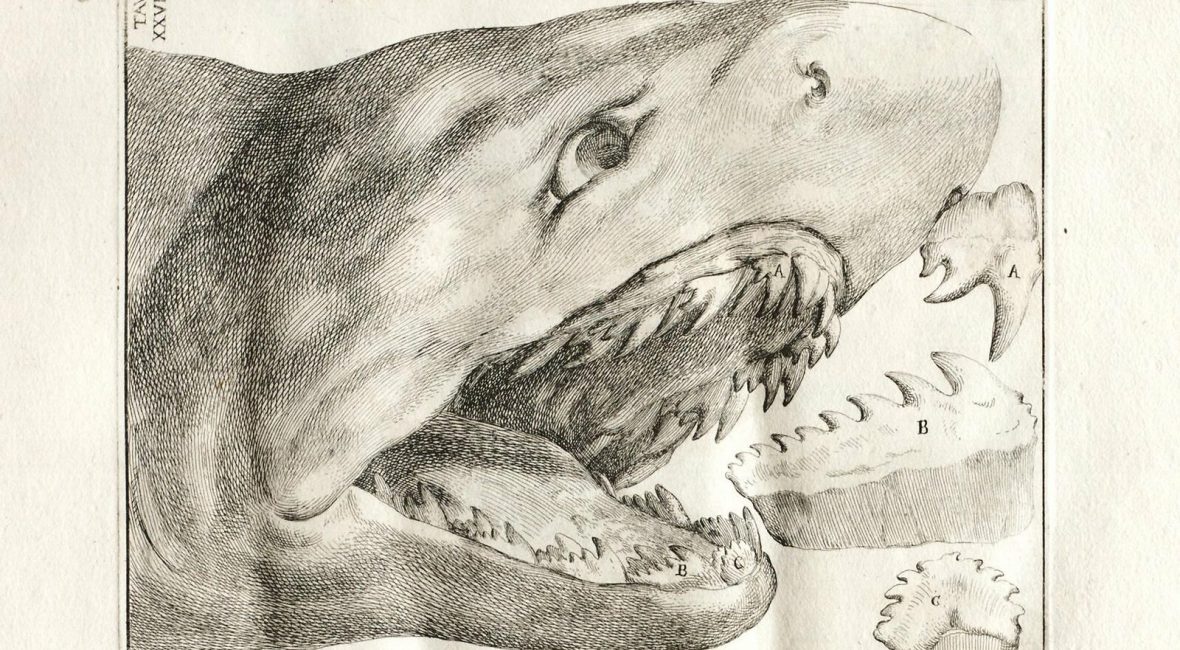
Each year, audiences around the world are gripped with “shark mania”. Since its premier in 1988, the annual Shark Week celebrations have resulted in countless hours of programming devoted to all things sharks.
During Shark Week 2017, Vox posted a story with a video explaining why you don’t see Great White Sharks in aquariums. At the end (beginning 5:17), video co-creator Joss Fong highlighted the Biodiversity Heritage Library (BHL) as a “great resource” for historic literature on biodiversity — and gave a shout-out to BHL’s Flickr collection: “Sharks, Skates & Rays!”. The collection includes illustrations dating back to the sixteenth and seventeenth centuries.
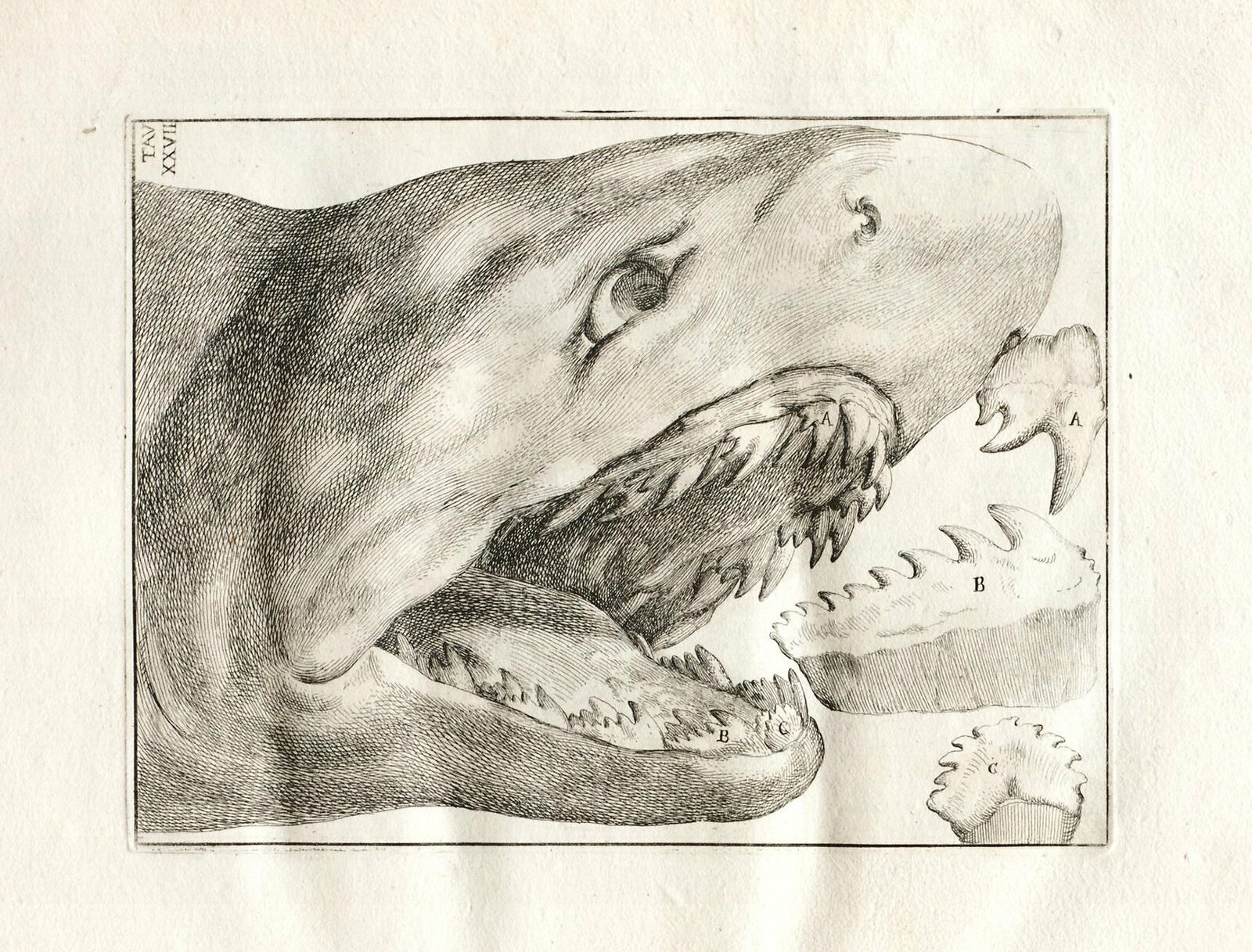
Illustration from the Sharks, Skates & Rays! Flickr collection. Scilla, Agostino. De corporibus marinis lapidescentibus quæ defossa reperiuntur. 1752. Contributed in BHL from the United States Geological Survey Libraries Program.
Danielle Alesi, a PhD candidate at the University of Nebraska-Lincoln (UNL), stumbled upon the video one night last summer while taking a break from studying for her comprehensive exams. She was introduced to BHL for the first time.
That serendipitous discovery had a profound impact on her research, which focuses on early modern European and Atlantic world history with an interest in animal studies.
“I was overcome by excitement, realizing that much of the research I required for my dissertation was digitized on the site,” recalls Alesi. “The moment still stands out as one of my ‘breakthrough’ moments early in the dissertation writing process.”
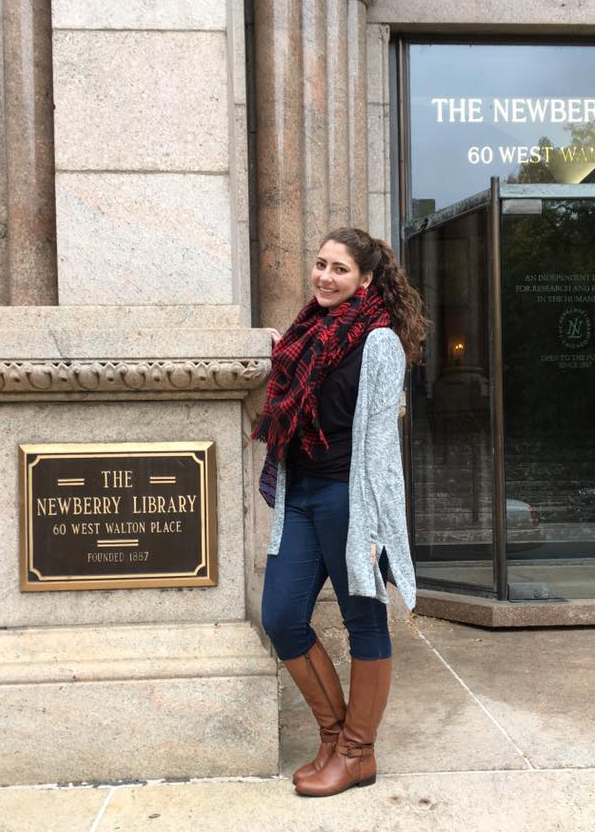
Danielle Alesi, PhD candidate at the University of Nebraska-Lincoln (UNL).
Alesi is currently entering the fourth year of her PhD program at UNL. Her dissertation explores the interactions of sixteenth- and seventeenth-century European travelers with the people and animals of the Americas. BHL has been a valuable source of information on these encounters.
“BHL is an amazing resource that scholars from many fields are lucky to have available to us,” praises Alesi. “It allows me to access many of the travel narratives and early accounts of animals native to the Americas that I am using in my research. Since I am located in Nebraska and generally have a full teaching schedule, this is an excellent resource that allows me to see many of my sources without having to travel to a library that holds them.”
Alesi generally uses BHL weekly, downloading PDFs of these early narratives to print and translate as needed. The availability of multiple editions of titles in BHL is particularly useful, allowing Alesi to compare changes to the texts over time.
“I love that I can search for authors or texts, see multiple editions, and download a full scan of a book that includes paratexts and marginalia, which is better than other digital library services,” lauds Alesi. “BHL allows me to do much of my research at home without having to travel to various libraries throughout the country or the world.”
Currently, Alesi’s favorite book in BHL is Gonzalo Fernandez de Oviedo’s La Historia General Y Natural De Las Indias (1535, complete work published posthumously 1851–55). Within it, Spanish captain Oviedo provides a wealth of valuable descriptions of the animals and natural environments that he encountered on his travels.
“Oviedo spends much of his narrative describing the new animals and trying to compare them to, or reconcile them with, animals Europeans would already recognize,” explains Alesi. “This text also influenced many of the writers in Europe that wanted to publish on the ‘New World’ but had not gone there themselves.”
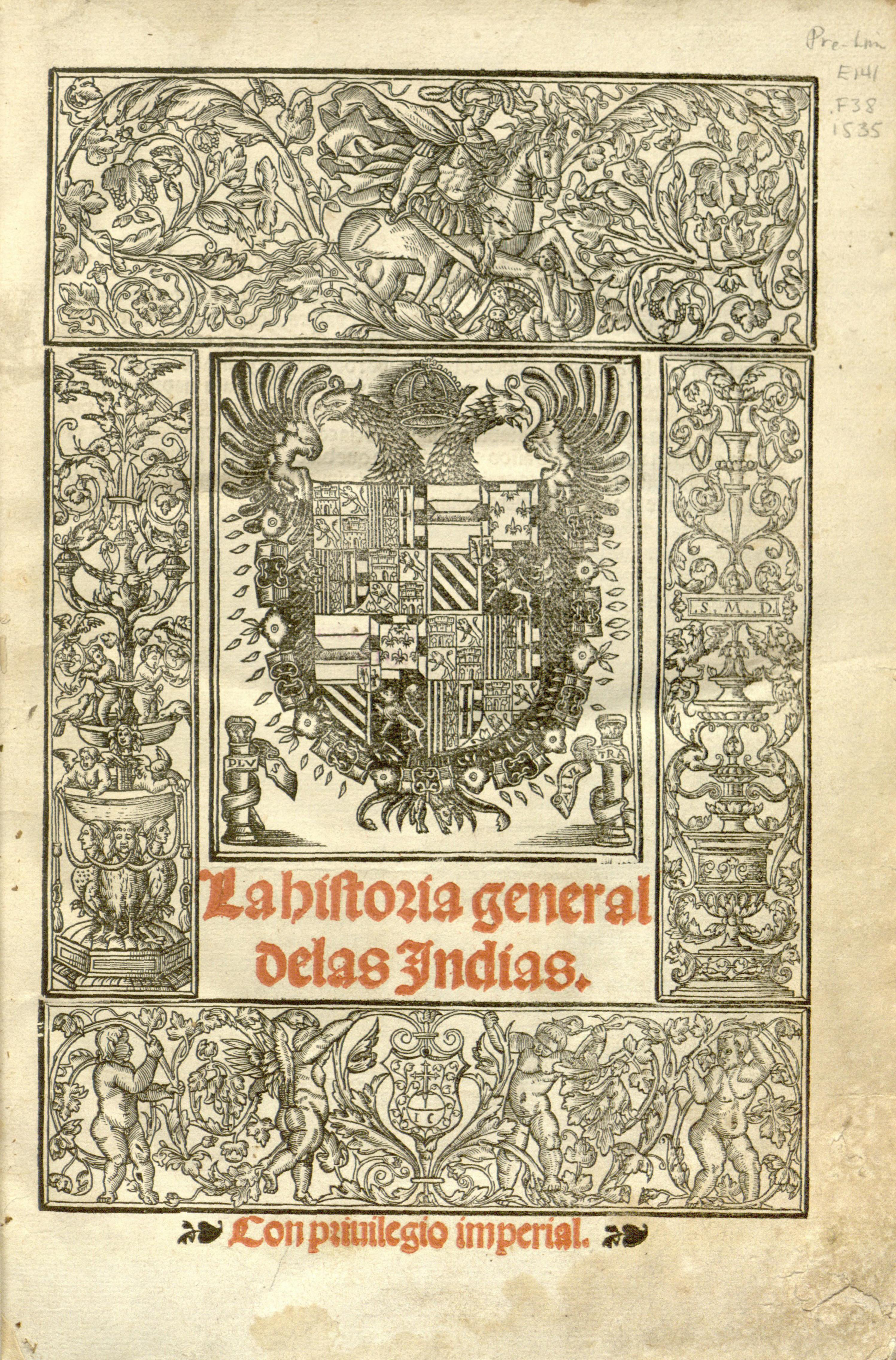
Title page of 1535 edition. Fernández de Oviedo y Valdés, Gonzalo. Historia general de las Indias. Contributed in BHL from Missouri Botanical Garden, Peter H. Raven Library.
Whether it be sixteenth century travel narratives by Spanish explorers or early depictions of “sea dogs” (i.e. sharks), BHL is a treasure trove of historic (and modern!) biodiversity literature for a wide array of researchers, from scientists to historians, educators, archivists, and beyond.
Of course, the real moral of this story is, don’t be afraid to take a break for sharks. You never know where it might lead you.
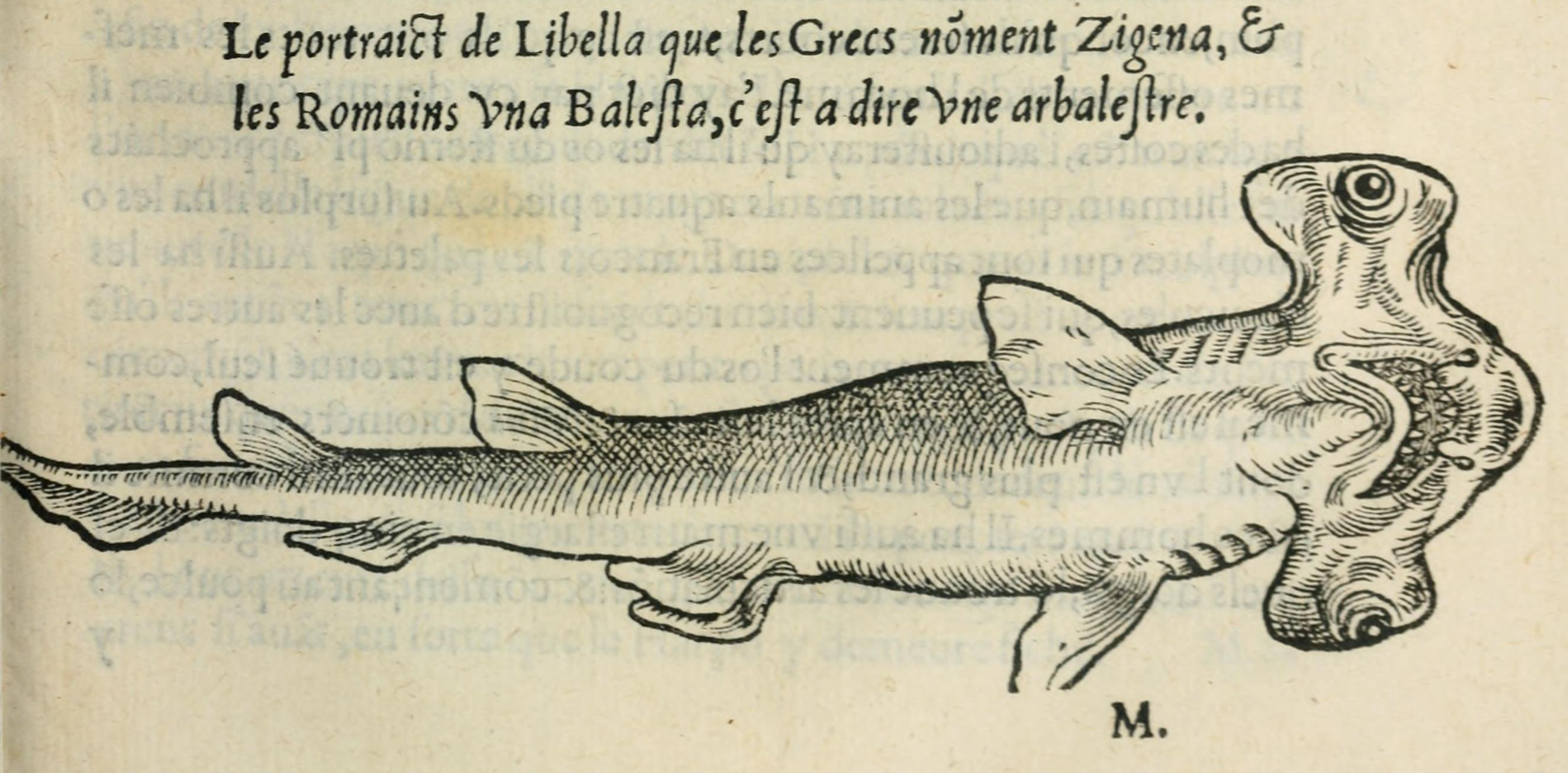
Hammerhead shark. Belon, Pierre. L’histoire naturelle des estranges poissons marins. 1551. Contributed in BHL from University of Toronto – Thomas Fisher Rare Book Library.
