

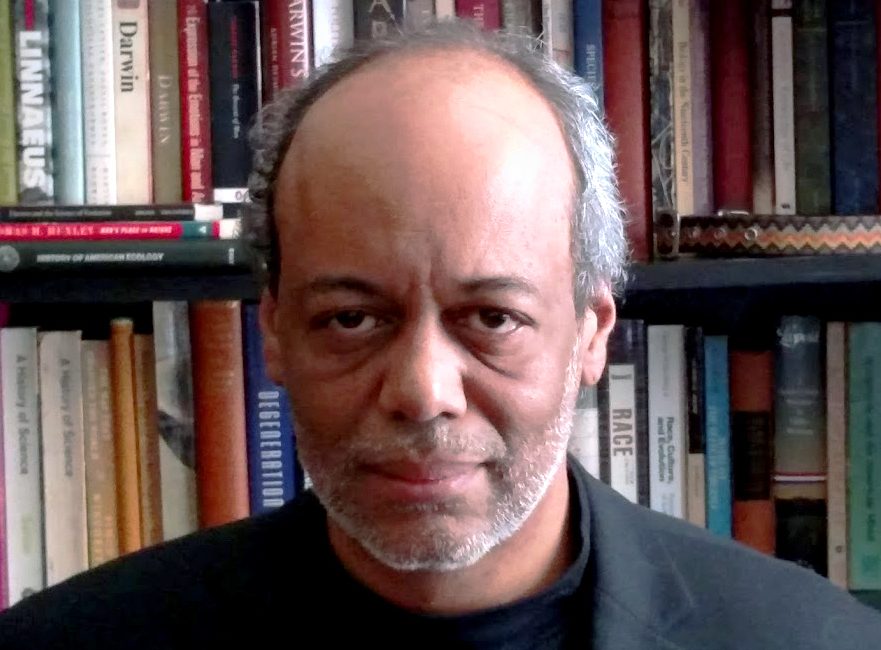
Title page. On the Origin of Species by Charles Darwin. Contributed in BHL from Harvard University Botany Libraries.
Charles Darwin is a household name. One of the most famous naturalists to ever live, he is known around the world for his publication On the Origin of Species and contributions to evolutionary theory.
The work of contemporary scientists informed the development of Darwin’s evolutionary concepts. By applying, and sometimes countering, the theories of others, he constructed one of our most important scientific foundations. He documented this intellectual progression in the margins of the books in his library. This historically significant collection is available online in the Biodiversity Heritage Library.
Charles Darwin’s Library is a digital edition and virtual reconstruction of the surviving books owned by Charles Darwin. Produced as a collaboration between BHL, Cambridge University Library, the Library & Archives of the Natural History Museum in London, and the Darwin Manuscripts Project, the collection draws on original copies and surrogates from other libraries and includes over 500 of the 1,480 books in Darwin’s library. Notably, these books are complemented with fully-indexed transcriptions of Darwin’s annotations.
Charles Darwin’s Library is particularly meaningful to Dr. B. Ricardo Brown, Professor of Social Science and Cultural Studies at the Pratt Institute. Brown has devoted years of research to Darwin and the impact of his evolutionary theories on debates around monogenetic vs. polygenetic human origins. Brown’s 2010 book, Until Darwin: Science, Human Variety and the Origin of Race, explores the complex web of factors that influenced these debates from the 17th-19th centuries and the impact of the publication of On the Origin of Species on this scientific discourse.
Brown spent nearly 10 years researching this book. Today, BHL’s open access collections offer researchers considerable time-savings.
“I am sure that if I had the kind of access to texts that BHL now provides researchers, I could have reduced the research time for Until Darwin in half,” muses Brown.
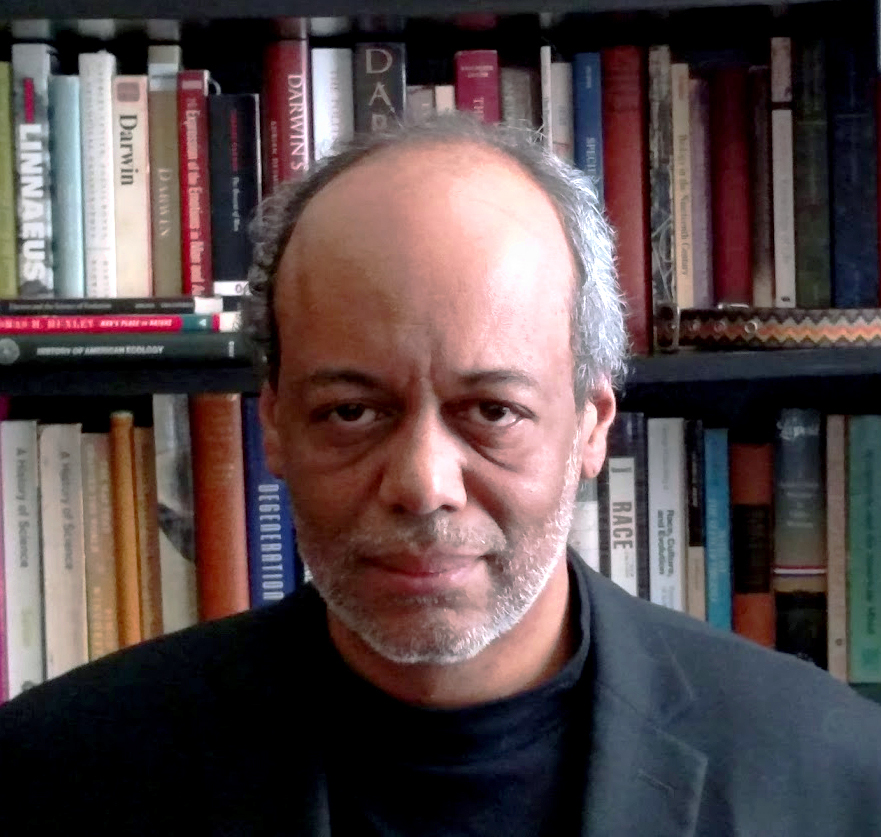
Dr. B. Ricardo Brown, Professor of Social Science and Cultural Studies at the Pratt Institute. Photo Courtesy of B. Ricardo Brown.
With academic backgrounds in environmental studies, sociology, and critical theory, Brown’s research explores the history of science, investigating the relationship between society and nature and the “genealogies of systems of knowledge” through which we make sense of these relationships. His current project looks at sociology and ecology as “sciences of life” whose formation was made possible by the dissolution — marked by Darwin’s Origin — of political economy and natural history.
“Without BHL, such a project would be much more limited, if not impossible,” affirms Brown. “The Library’s impact has been immense.”
Brown refers to BHL at least several times a week. A great benefit of the Library is that it has facilitated unexpected discoveries that expand the scope of relevant literature for his research projects.
“BHL makes it possible to browse through the library and (virtually) pick-up an unfamiliar work or author and discover something that is relevant or just interesting — which you might not have come across without BHL,” explains Brown. “There is much to be said for the pleasures of simply exploring the archive.”
Beyond serving as a vast archive of texts, artifacts, and scientific ideologies, BHL also facilitates Brown’s interest in ecology and environmental studies by allowing him to compare his own field observations to those of past naturalists.
“I found that it is quite useful to do some field observations and hikes when immersed in the study of Darwin and the Natural History of his time,” says Brown. “One gets a better insight into Darwin’s methodology, which depended on his own observations and those of trusted naturalists and correspondents.”
Take, for example, Darwin’s observations on slave-making ants.
“Darwin constantly tacks back and forth between his own observations and those of the recognized authority on the slave-making ‘instinct’ in ants, Pierre Huber,” explains Brown. “This series of observations led Darwin to conclude that the ‘instinct for slavery’, in ants as well as human societies, was in no way ‘miraculous’ or evidence of a fixed or natural hierarchy.”
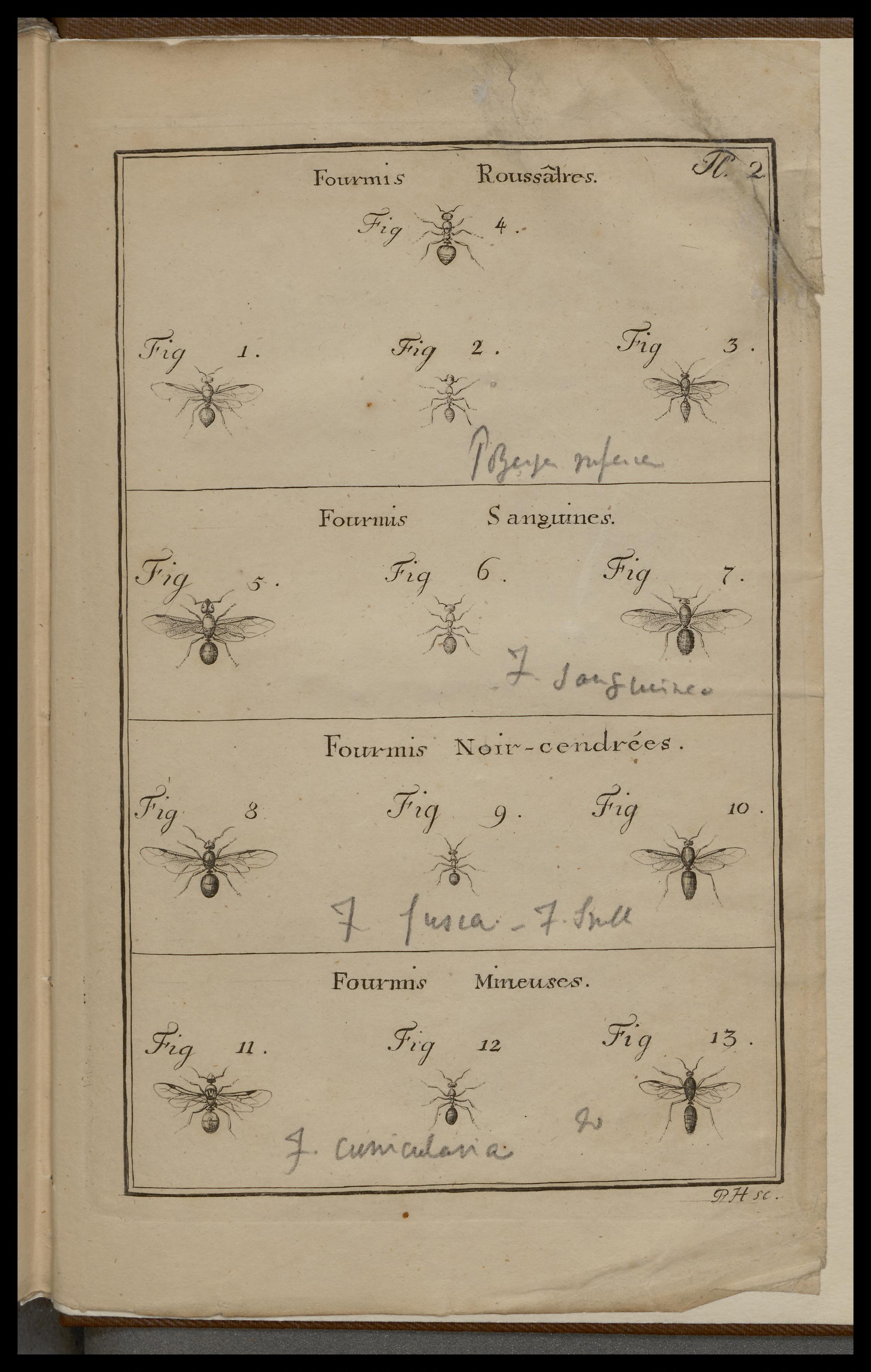
Plate 2. Recherches sur les moeurs des fourmis indigènes by Pierre Huber. Part of the Charles Darwin’s Library collection. Contributed in BHL from Cambridge University Library.
Brown also finds BHL to be a useful educational resource for his courses.
“BHL provides a means for students in my courses to access and download PDFs of texts that only a few years ago would have been known to them only through secondhand descriptions, summaries….or long lectures,” affirms Brown. “ As Pratt is primarily a school of art, design, and architecture, students appreciate the aesthetic skills of early naturalists that they experience through BHL’s high resolution images. Works such as Cuvier’s Tableau élémentaire de l’histoire naturelle des animaux or Haeckel’s Kunstformen der Natur provide a wonderful avenue for understanding the social relations of art, aesthetics, and science.“
With much of his research focused on the investigation of science and society’s influence on each other, he’d love to see BHL incorporate functionality allowing readers to explore the social and cultural contexts of the texts in the Library.
“By its inclusion in the collection, each text potentially takes on a certain legitimacy,” considers Brown. “This means that texts such as Morton’s Crania Americana or Pouchet’s The Plurality of the Human Race might, despite or perhaps even because of their age, be misread as somehow giving voice to views that remain contested. And because much of the history of science is the history of errors, this issue takes on a particular importance when authoritarian movements are constantly seeking to co-opt a wide variety of knowledges — for example, Classical and Medieval Studies, Darwinism, Ecology and Environmental Studies — to the service of supremacy.”
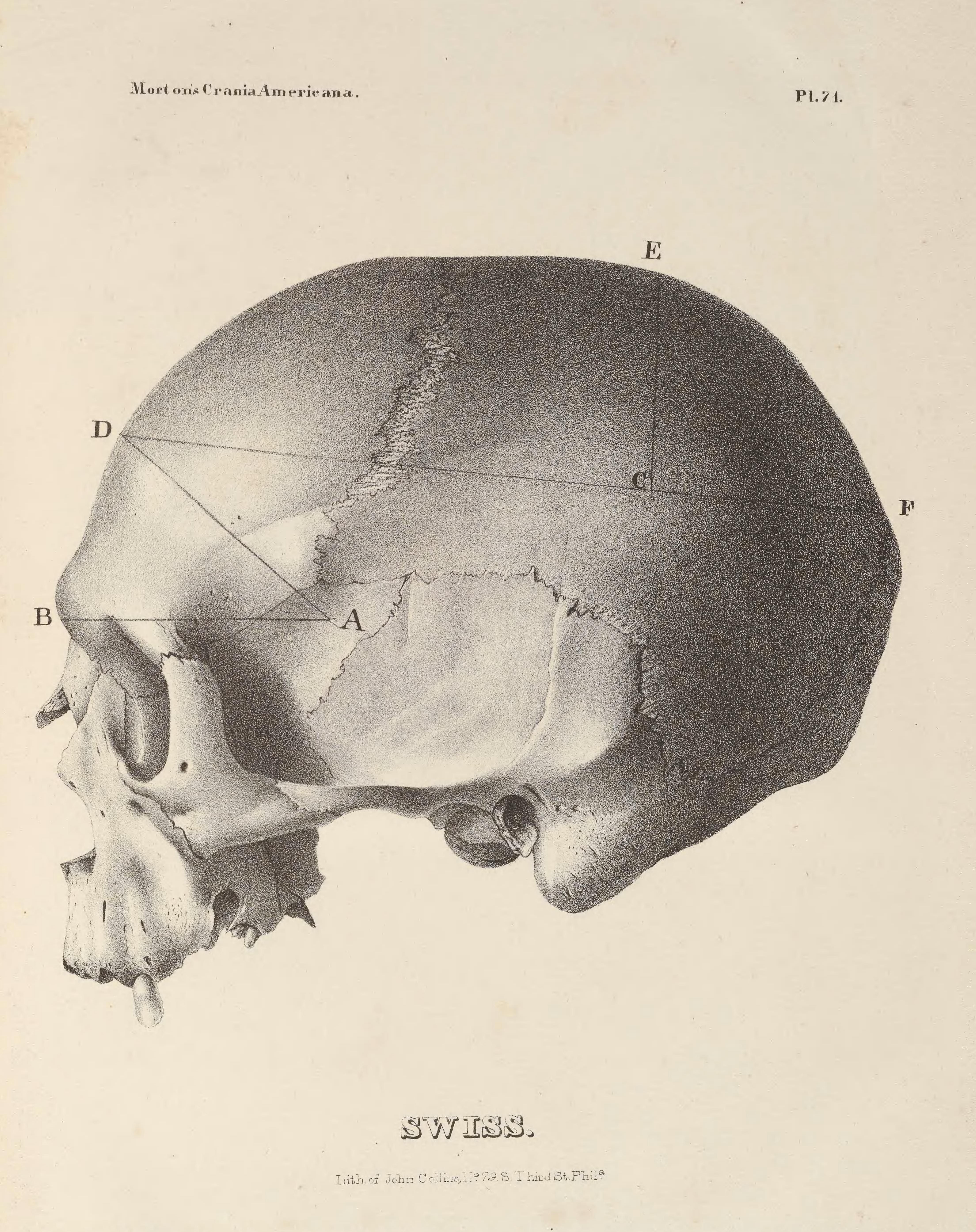
Pl. 71. Crania americana by Samuel George Morton. Contributed in BHL from Smithsonian Libraries.
As we explore opportunities to link our content with other resources, collections, and databases in future iterations of BHL, including through linked data applications, strategies to provide this context will hopefully become increasingly feasible.
While many aspects of BHL’s collections and services have been important to Brown’s research, his favorite feature of the Library is that it is free and open to the public.
“BHL makes the history of science available to everyone,” praises Brown. “It would seem to have significant potential to enrich citizen science projects, as well as public discourse on climate change, extinction, the authority of science, the domination of Nature, and much more.”
We’re proud to know that, by making our collections globally accessible to anyone with an Internet connection, BHL is helping to advance a wide range of research and inspire discovery of the natural world.
