Biodiversity Heritage Library - Program news and collection highlights from BHL
  • Home
  • News
  • Featured Books
    • All Featured Books
    • Book of the Month Series
    • BHL at 20
  • User Stories
  • Campaigns
    • Fossil Stories
    • Garden Stories
    • Monsters Are Real
    • Page Frights
    • Her Natural History
    • Earth Optimism 2020
  • Tech Blog
  • Visit BHL
Home
News
Featured Books
    All Featured Books
    Book of the Month Series
    BHL at 20
User Stories
Campaigns
    Fossil Stories
    Garden Stories
    Monsters Are Real
    Page Frights
    Her Natural History
    Earth Optimism 2020
Tech Blog
Visit BHL
  • Home
  • News
  • Featured Books
    • All Featured Books
    • Book of the Month Series
    • BHL at 20
  • User Stories
  • Campaigns
    • Fossil Stories
    • Garden Stories
    • Monsters Are Real
    • Page Frights
    • Her Natural History
    • Earth Optimism 2020
  • Tech Blog
  • Visit BHL
Biodiversity Heritage Library - Program news and collection highlights from BHL
Blog Reel

Digging into the Smithsonian Libraries’ Vertebrate Paleontology Collection

This blog post is part of a series from Smithsonian Libraries highlighting Unearthed, a new collection of paleobiology literature in the Biodiversity Heritage Library curated by Smithsonian Libraries in celebration of the opening of the National Museum of Natural History’s David H. Koch Hall of Fossils – Deep Time exhibit. Follow the series throughout 2019 as Smithsonian scientists and librarians discuss the collection, identify their favorite books within it, and explain the importance of paleobiology literature in research today.

I’m Bonnie Felts, and I am a library technician for Smithsonian Libraries at the Natural History Museum. What most people don’t realize about our museum is that we have a total of 11 separate library locations, and I work with five of the collections. I am primarily responsible for the Vertebrate Paleontology library, which requires fielding reference questions, purchasing materials pertinent to the collection, and the overall care of the materials. Although in numbers, the library is relatively small compared to other libraries in our building, it is one of the most comprehensive Vertebrate Paleontology literature collections in the world.
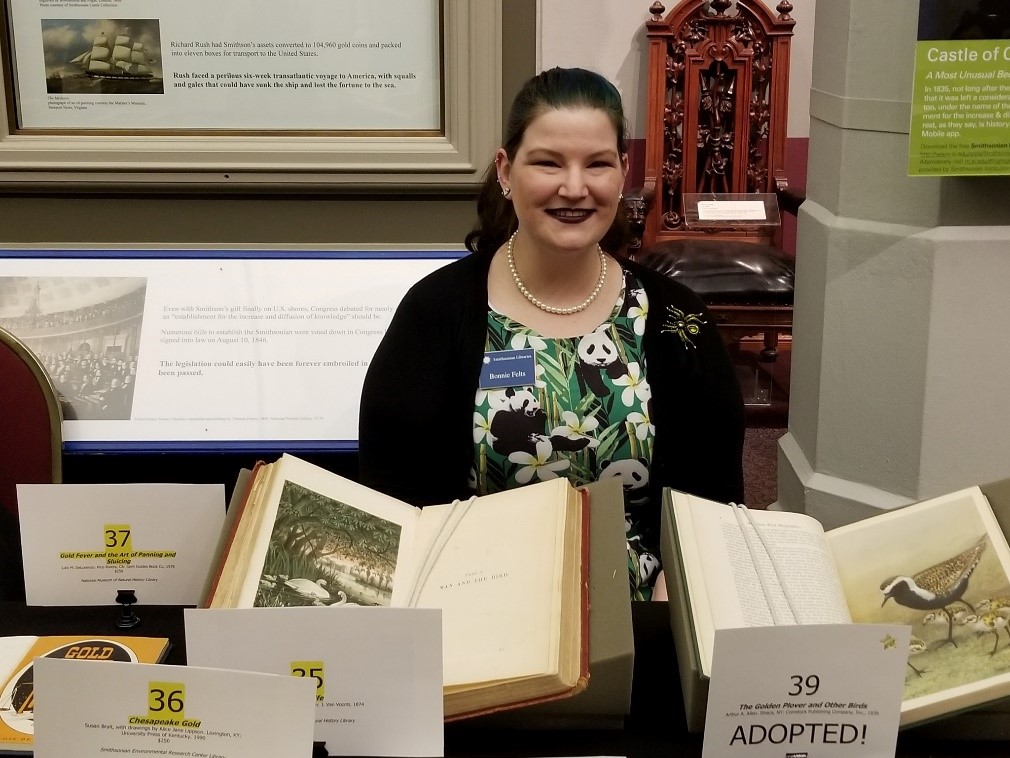
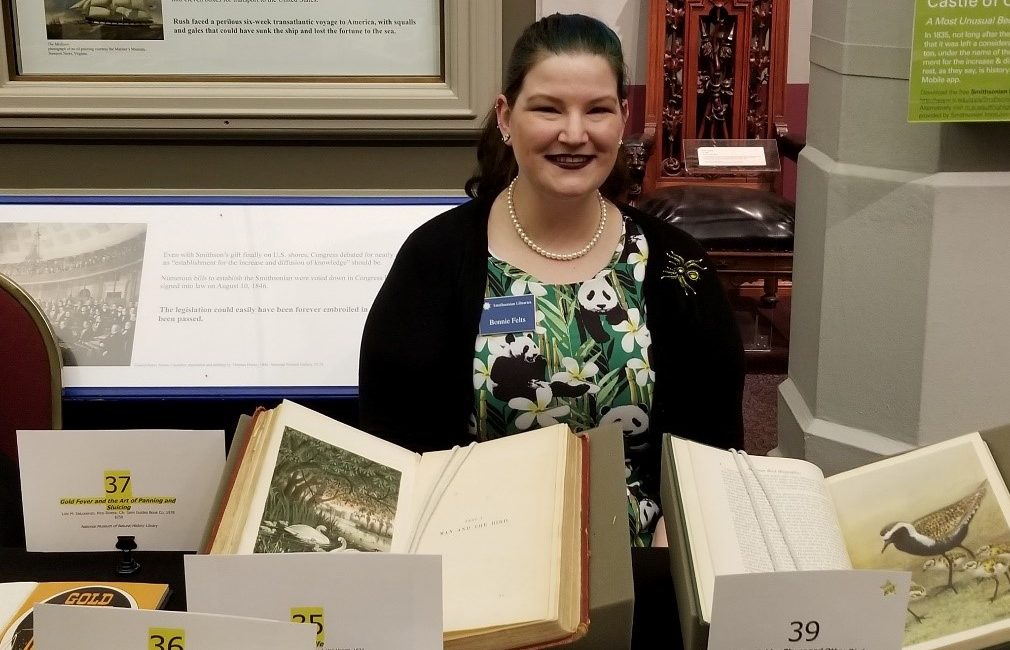
woman standing in front of a display of natural history books

Bonnie Felts at the 2018 Adopt a Book event with Natural History books.

Vertebrate Paleontology concentrates on the biological history of animals with backbones that have been fossilized. The first thing people would think of when studying Vertebrate Paleontology would be dinosaurs! Yes, there are many publications about dinosaurs in our library, but we also have information about fossilized fish, mammals, birds, reptiles, and even humans. The scope of the collection includes systematic paleontology and paleozoology of chordates and vertebrates of the Paleozoic, Mesozoic, Tertiary, and Quaternary periods, as well as physical geography and stratigraphy.  Although much of the collection is very science based, we have also included books targeted towards non-scientists to assist the education programs supported by the Natural History Museum. We also select paleoart books, which give us a visual depiction using scientific evidence of what prehistoric life was like when fossilized remains were alive.

With the opening of the National Museum of Natural History’s David H. Koch Hall of Fossils – Deep Time exhibit this past June, the Smithsonian Libraries thought it would be ideal to also showcase the library collections that support the scientists in their research that are available online through the Biodiversity Heritage Library. This is the greatest perk of having BHL available as a resource for our researchers, but it’s a free service available worldwide to anyone with an internet connection!

The Biodiversity Heritage Library (BHL) is an open access, multi-library collaboration that is headquartered at the Smithsonian Libraries. Although BHL covers a myriad of subjects in biodiversity, it did not originally include much literature in Paleobiology. As BHL continues to grow and expand its collection, so does the need to expand its subject areas. How did we get the animals we have today? What was their climate like thousands or even millions of years ago? The information that modern scientists are looking at today may have been rooted in what happened years before the existence of man or during the early years of humanity. It makes sense to include information about extinct animals and plants when looking at biodiversity.

Some of the many interesting books that the Smithsonian Libraries holds in the Vertebrate library that are also available on the Biodiversity Heritage Library are part of a series called Die Säugetiere des Schweizerischen Eocaens: Critischer Catalog der Materialien (in English “The Mammals of the Swiss Eocene: Critical Catalog of the Materials”). These books were written by the late 19th/early 20th century Swiss vertebrate paleontologist Hans Georg Stehlin (1870-1941), who spent his career at the Natural History Museum in Basal. Stehlin is credited for creating the term “Grande Coupure,” translating literally to “great break,” which refers to a major extinction event when the Eocene epoch ended and the Oligocene epoch began around 33.9 million years ago. This extinction event coincided with a cooler climate that led to drastic changes in terrestrial flora and fauna in Eurasia, namely the extinction of many European vertebrates and the movement of Asiatic taxa to Europe.

The books contain descriptions of fossilized bones and teeth from many European museum and university collections that Stehlin had studied. They were also published in the series Abhandlungen der schweizerischen paläontologischen Gesellschaft (Treatises of the Swiss paleontological society). The images contained within the volumes depict the teeth and bones of a wide range of Eocene mammals. This major study remains a classic reference for students of the evolutionary history of mammals.
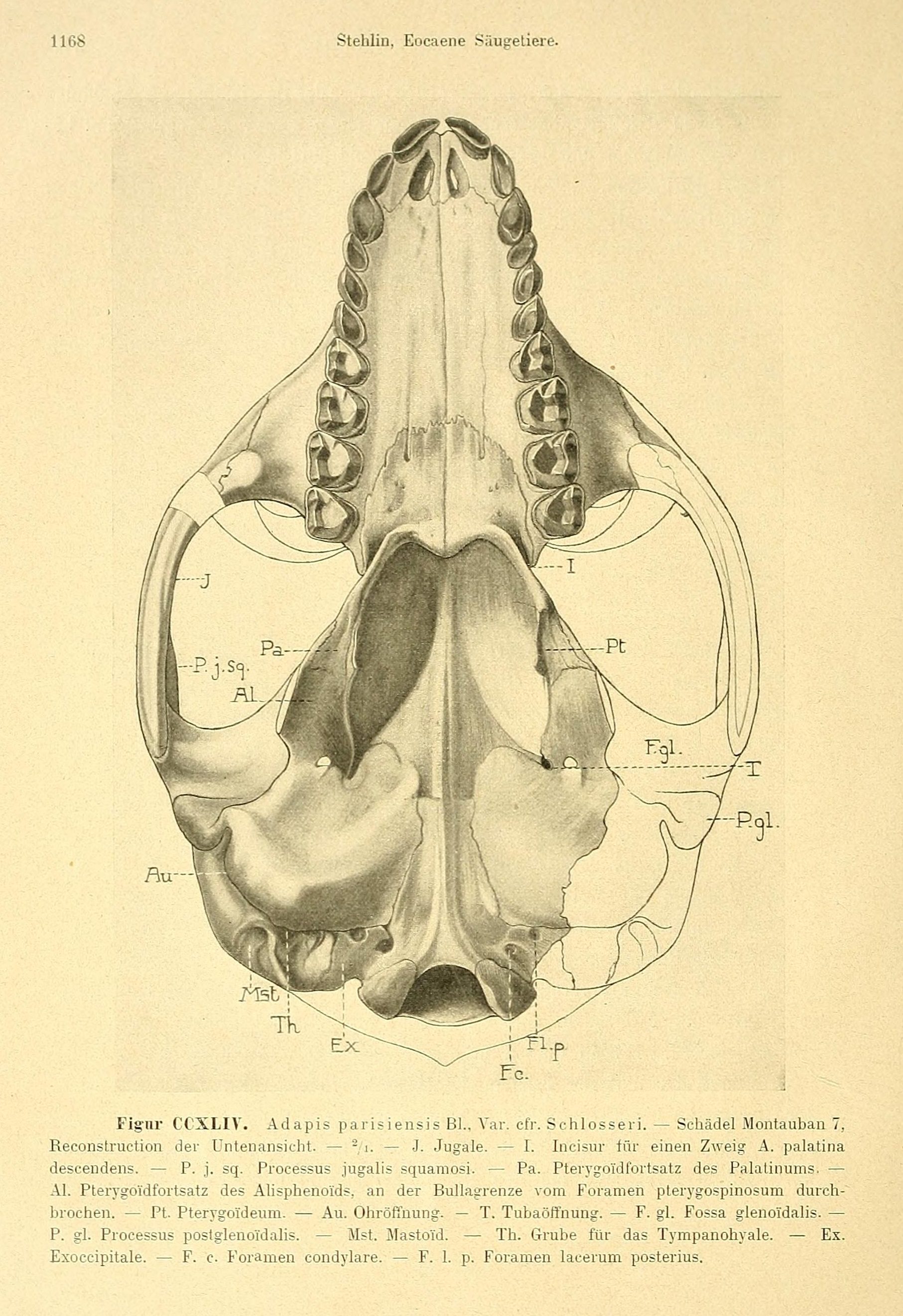
Illustration of a fossil skull

Plate from volume 37 (Tome 7, Hlft. 1, 1912) of Die Säugetiere des Schweizerischen Eocaens: Critischer Catalog der Materialien by Hans Georg Stehlin. Contributed in BHL from Smithsonian Libraries.
October 31, 2019by Joel Richard
Blog Reel, Featured Books

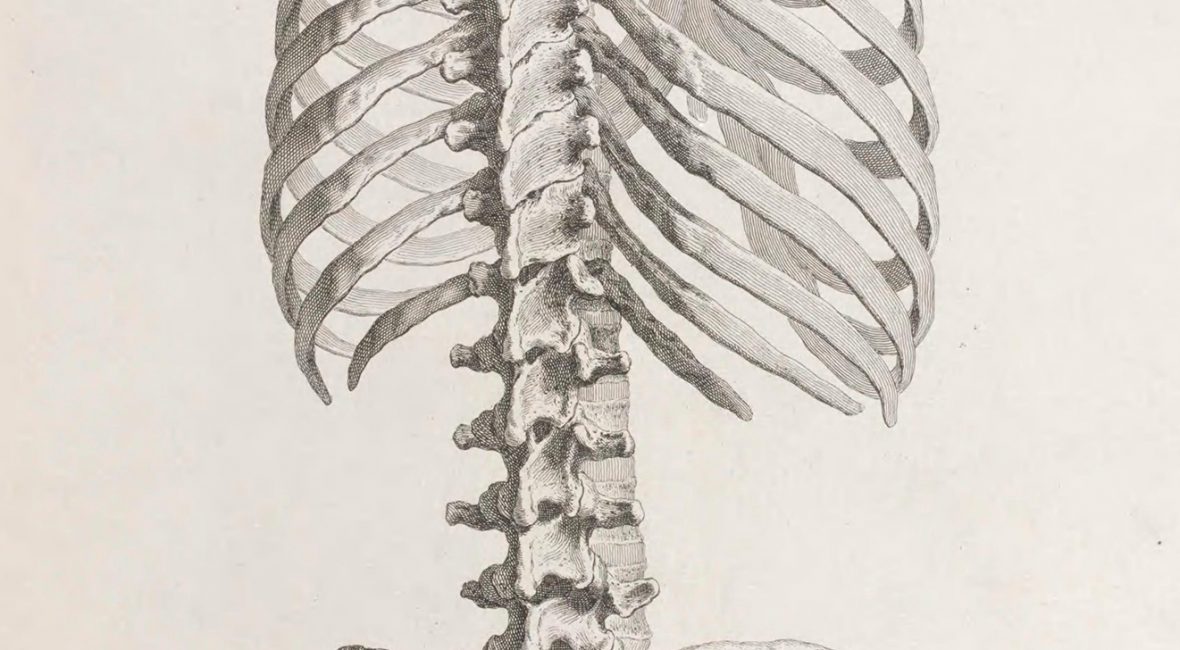
Skeletons in the Stacks: Cheselden’s Spine-Tingling Osteological Atlas

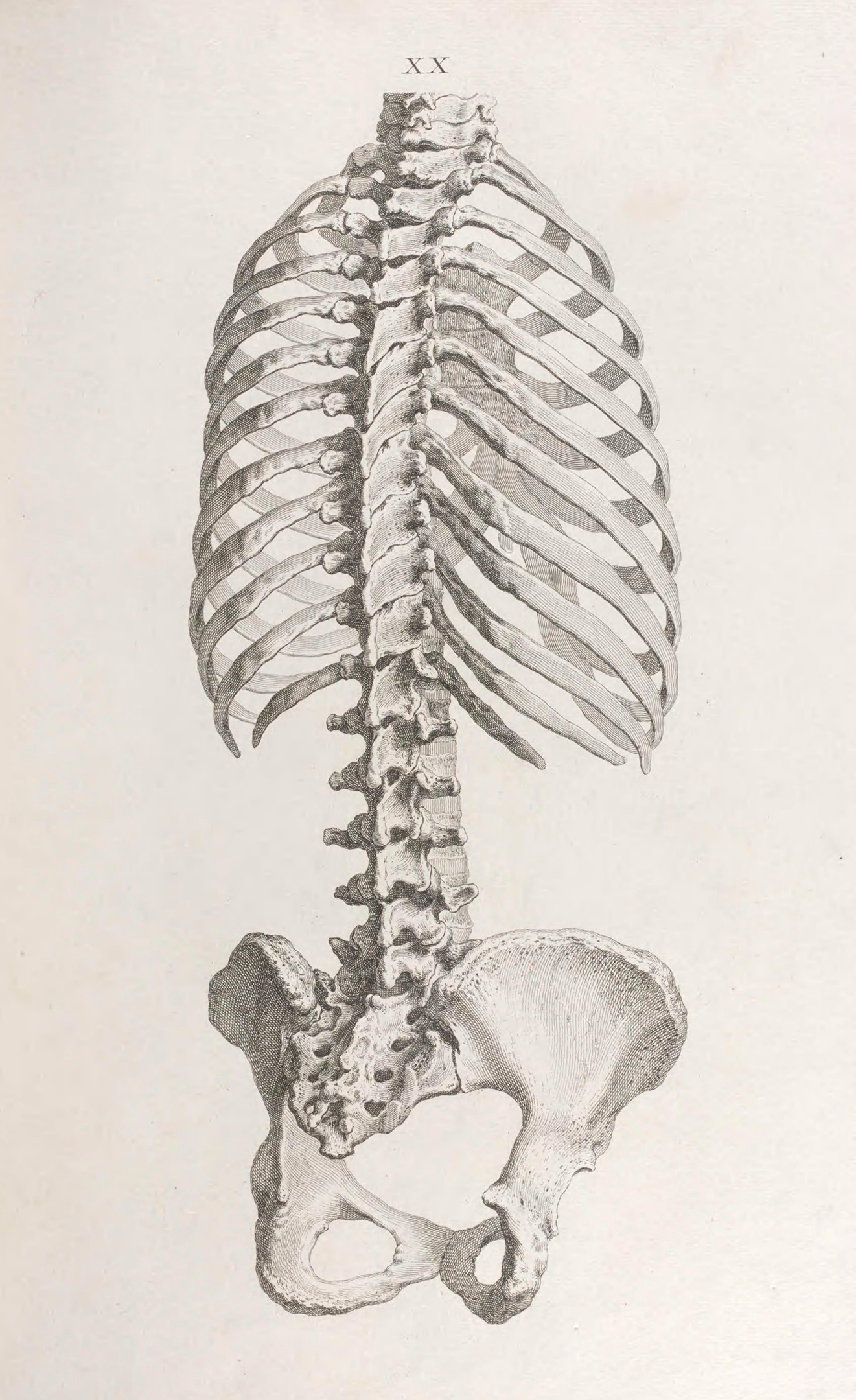
skeleton of the human torso

Plate XX. Cheselden, William. Osteographia. 1733. Contributed in BHL from the Library and Archives of the Natural History Museum, London.

Halloween is just around the corner, and the skeletons have come out of the closet. From front yards reimagined as graveyards to bone-chilling retail displays and party backdrops rattling with more than a few spare ribs, bones are on display to awaken the Halloween spirit and set a ghoulish mood to the delight of trick-or-treaters everywhere.

The modern-day Halloween is derived from the ancient Celtic festival of Samhain. With the Celtic new year celebrated on November 1, October 31 marked the end of summer and the harvest and the beginning of the cold, dark winter. Samhain, celebrated the evening of October 31, was believed to be a time when the boundary between the worlds of life and death were blurred, allowing the ghosts of the dead to return (History.com 2019).

Over time, Halloween has evolved into the costume-wearing, trick-or-treating holiday that it is today, but the season’s association with death has remained, evidenced by the proliferation of ghosts and skeletons intertwined with modern-day celebrations.

Embracing the Halloween season’s bony obsession, this month’s book of the month is one devoted to the skeleton — Osteographia (1733), which has been described as “one of the most important and beautiful books in the British anatomical tradition” (Neher 2010, 517). This work is freely available in BHL thanks to the Library and Archives of the Natural History Museum in London.

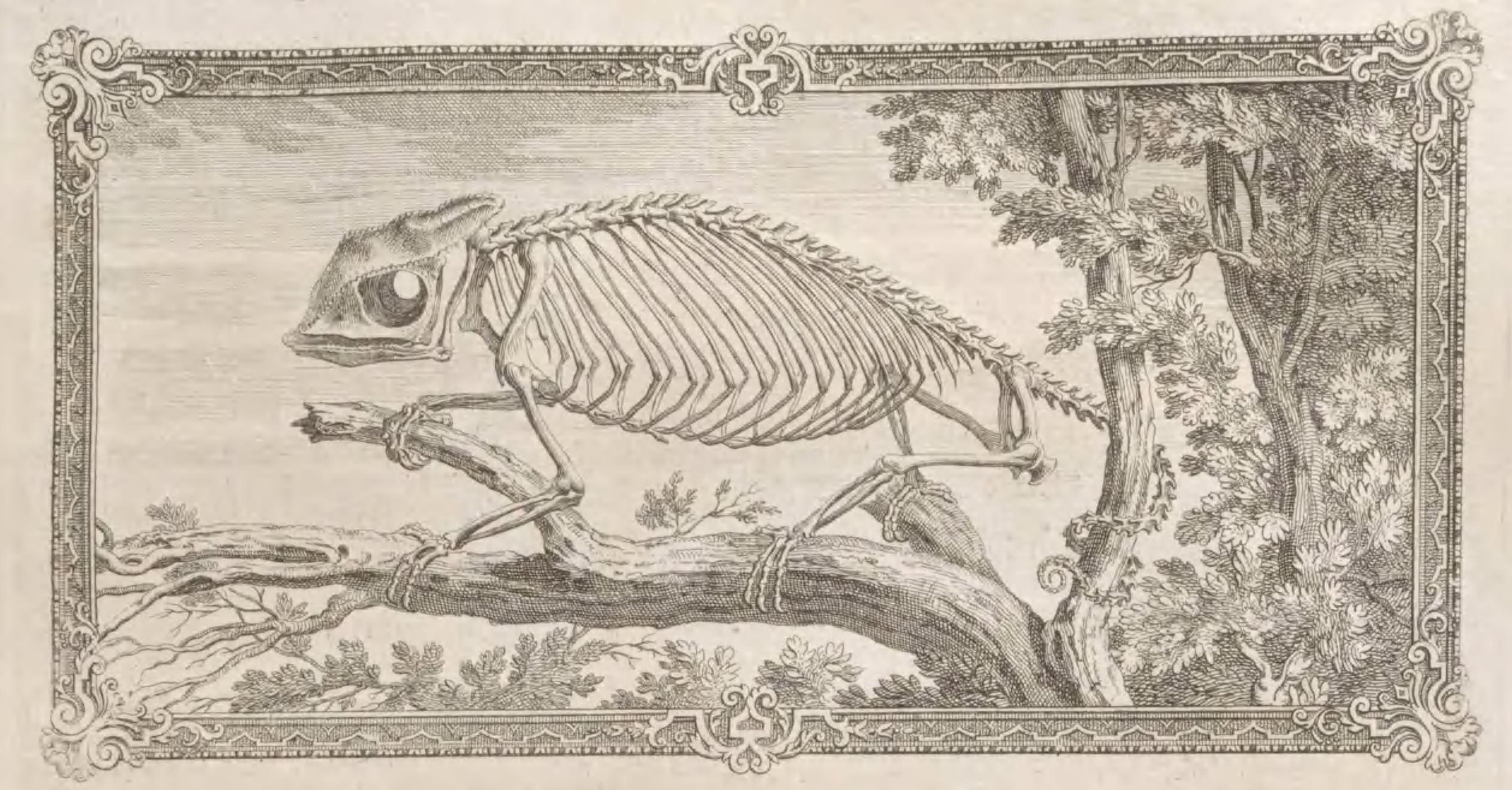
skeleton of a chameleon

Head-piece engraving for Chapter VI. Cheselden, William. Osteographia. 1733. Contributed in BHL from the Library and Archives of the Natural History Museum, London.

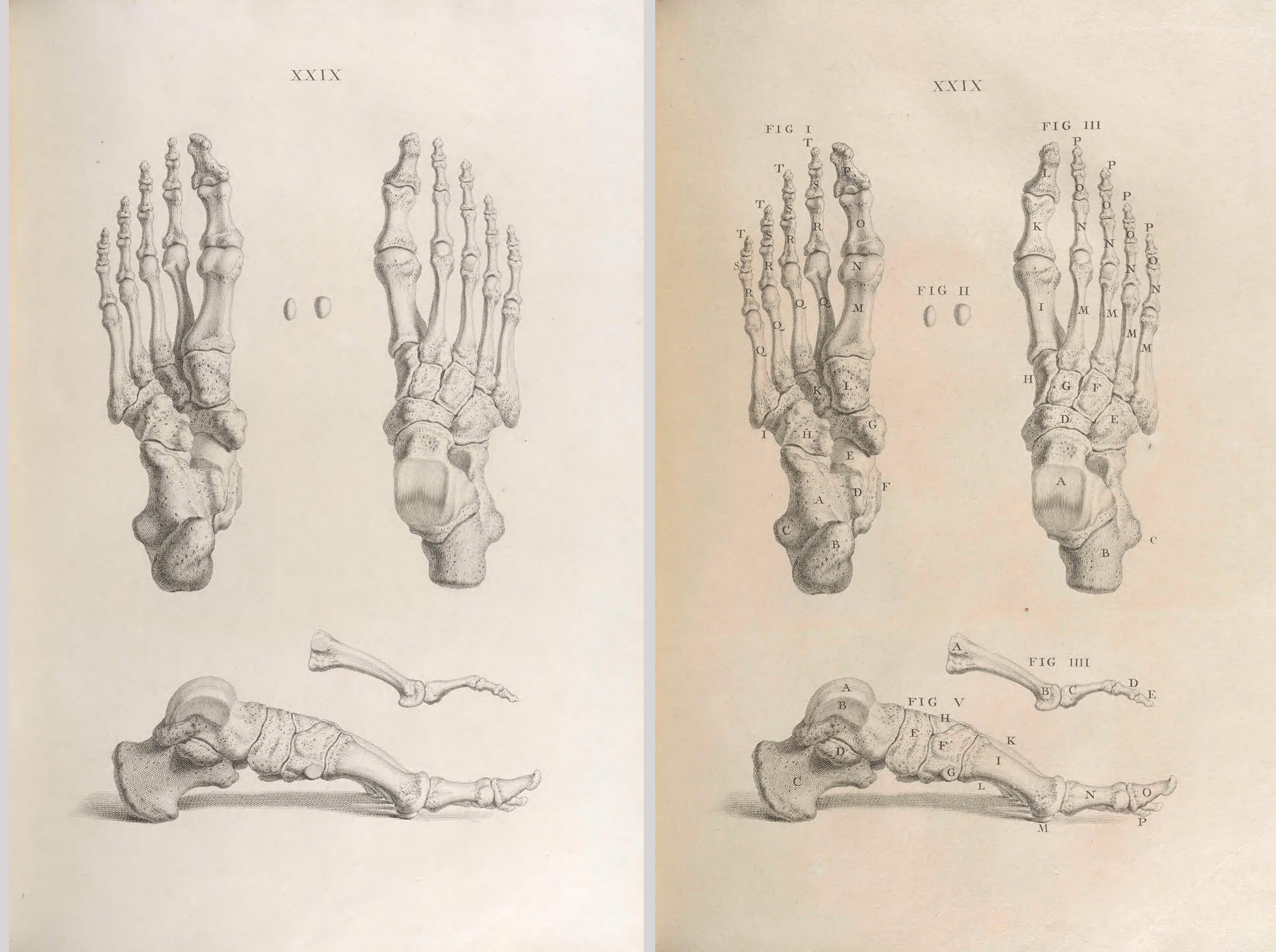
William Cheselden created his Osteographia with two goals in mind: to offer both the best osteological atlas and the most accurate study of the human skeleton yet produced. The book’s 56 massive plates, measuring 21 inches long and 15 inches wide, offer natural-size depictions of the separate human bones. Complete copies include two sets of plates — one set lettered with text on the verso providing descriptions of the figures, and one unlettered and blank on the verso “to shew them in their full Perfection”. Each chapter is also adorned with head and tail-piece engravings depicting various animal skeletons (Russell 1954, 38).

skeletons of human feet

Plate XXIX, comparison of unlettered (left) and lettered (right) plates. Complete copies include full sets of both lettered and unlettered plates. Cheselden, William. Osteographia. 1733. Contributed in BHL from the Library and Archives of the Natural History Museum, London.

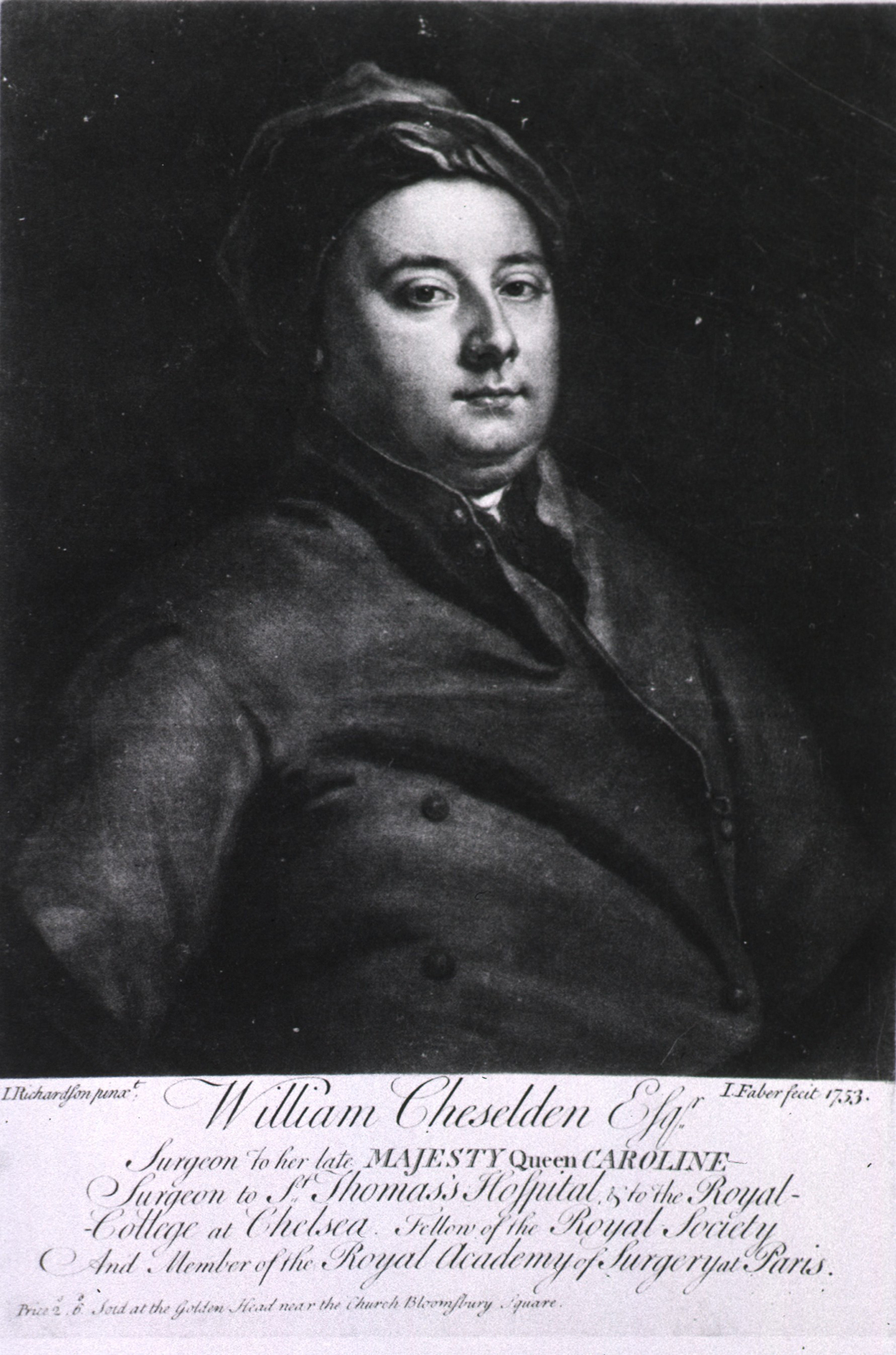
Cheselden spent years engaged in the production of Osteographia. A British surgeon and teacher of anatomy and surgery, Cheselden (1688-1752) is well-known for his Anatomy of the Human Body (1713), which was used as an anatomy textbook for nearly a century. Well-respected during his time, Cheselden was one of the principal surgeons at St. Thomas’ Hospital and was appointed the surgeon to Queen Caroline in 1727 (Tikkanen 2019).

black and white portrait of a human in a coat and hat

Portrait of William Cheselden. Engraving by J. Faber after J. Richardson. 1753. Source: U.S. National Library of Medicine.

Cheselden was also a clever marketer who used the popularity of his anatomical textbook to advertise his forthcoming osteological atlas. Within the Preface to the 1726 edition of his Anatomy, Cheselden wrote that he was “much engaged” in the production of an Osteology that would provide life-size plates of the human bones. He went so far as to include an example of some of the engravings from his atlas (specifically, the maxilla and mandible figured on Plate IX of Osteographia).

Published in 1733, Cheselden limited the English edition of Osteographia to 300 copies, plus an additional 100 prints of the plates intended for a foreign edition in either Latin or French (which was never produced) (Russell 1954, 44). Following these printings, the plates were destroyed so that “the price of the book may never sink in the possession of the subscribers” (Cheselden 1733, [3]).

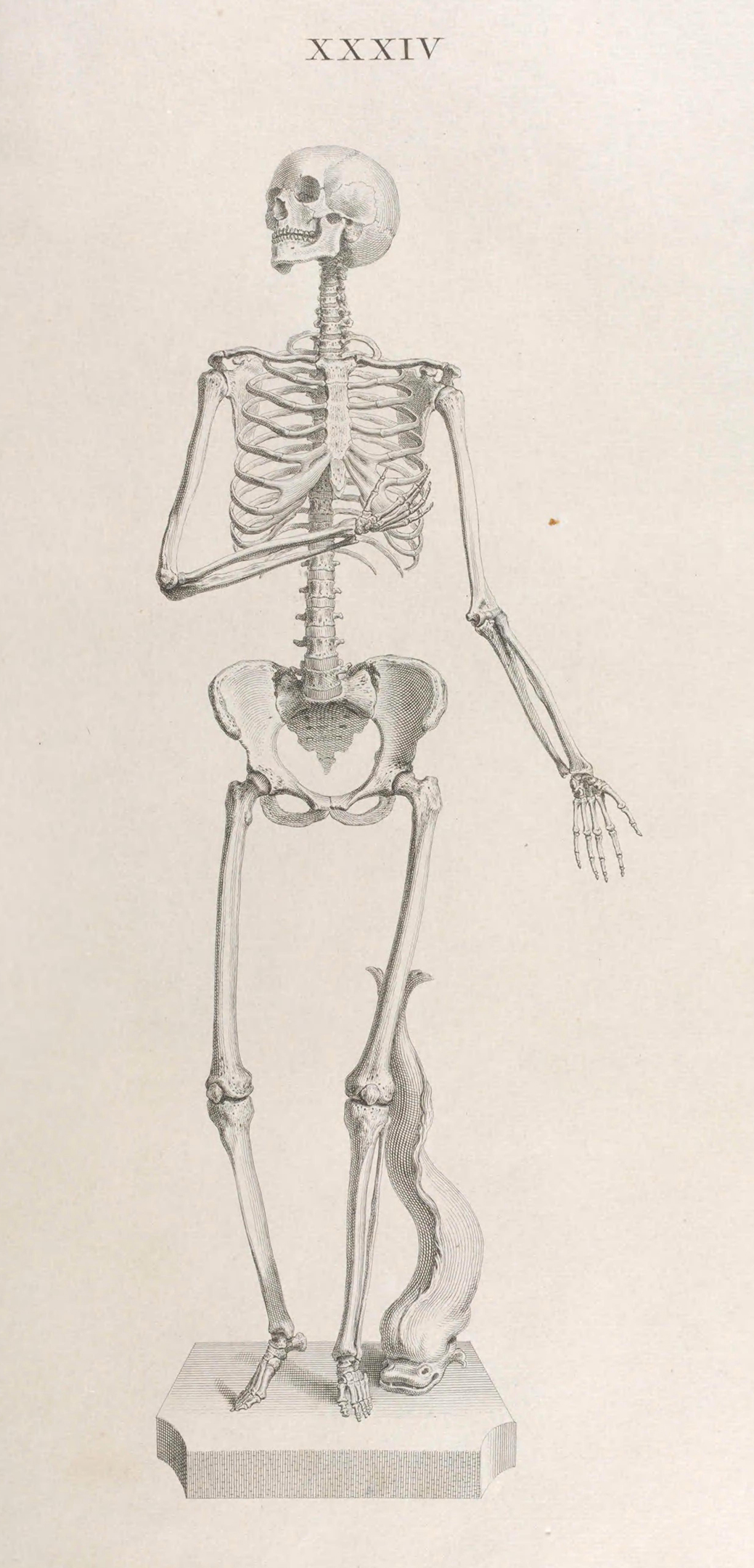
human skeleton

Plate XXXIV. Cheselden, William. Osteographia. 1733. Contributed in BHL from the Library and Archives of the Natural History Museum, London.

Cheselden’s commitment to providing the best available osteological atlas went well beyond a desire to produce an aesthetically-pleasing publication. He wanted the plates in Osteographia to serve as “working objects” for osteological studies — illustrated specimens that could be taken by the scientific community as representative. To accomplish this, accuracy of illustration was paramount (Neher 2010, 519).

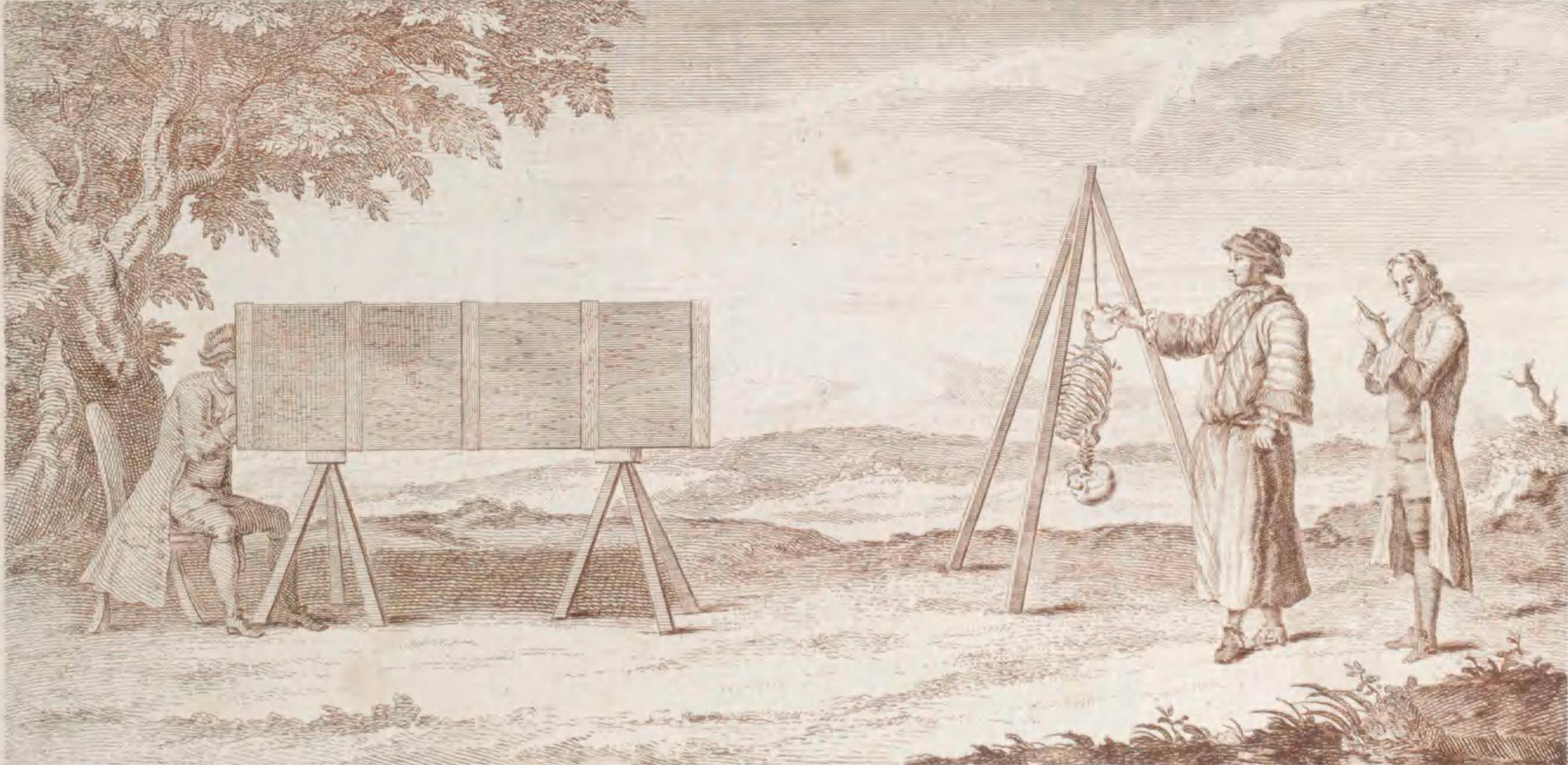
To realize this ambition, Cheselden and his artists employed a camera obscura to create the initial drawings. A camera obscura is an instrument consisting of a darkened box with a convex lens or aperture that is used to project the image of an external object onto an internal screen. Cheselden is believed to be the first to use such a device for medical imagery, and the particular camera obscura used was of Cheselden’s own invention (Neher 2010, 522).

three humans using a camera obscura to illustrate a skeleton

Camera obscura figured in the vignette on the title page. Cheselden, William. Osteographia. 1733. Contributed in BHL from the Library and Archives of the Natural History Museum, London.

The camera obscura is prominently featured in the vignette on the title page of Osteographia. The two standing figures in the vignette are Cheselden’s students, John Belchier and Samuel Sharpe. The identity of the seated figure inside the camera obscura is unknown but may represent one of the artists (Neher 2010, 522).

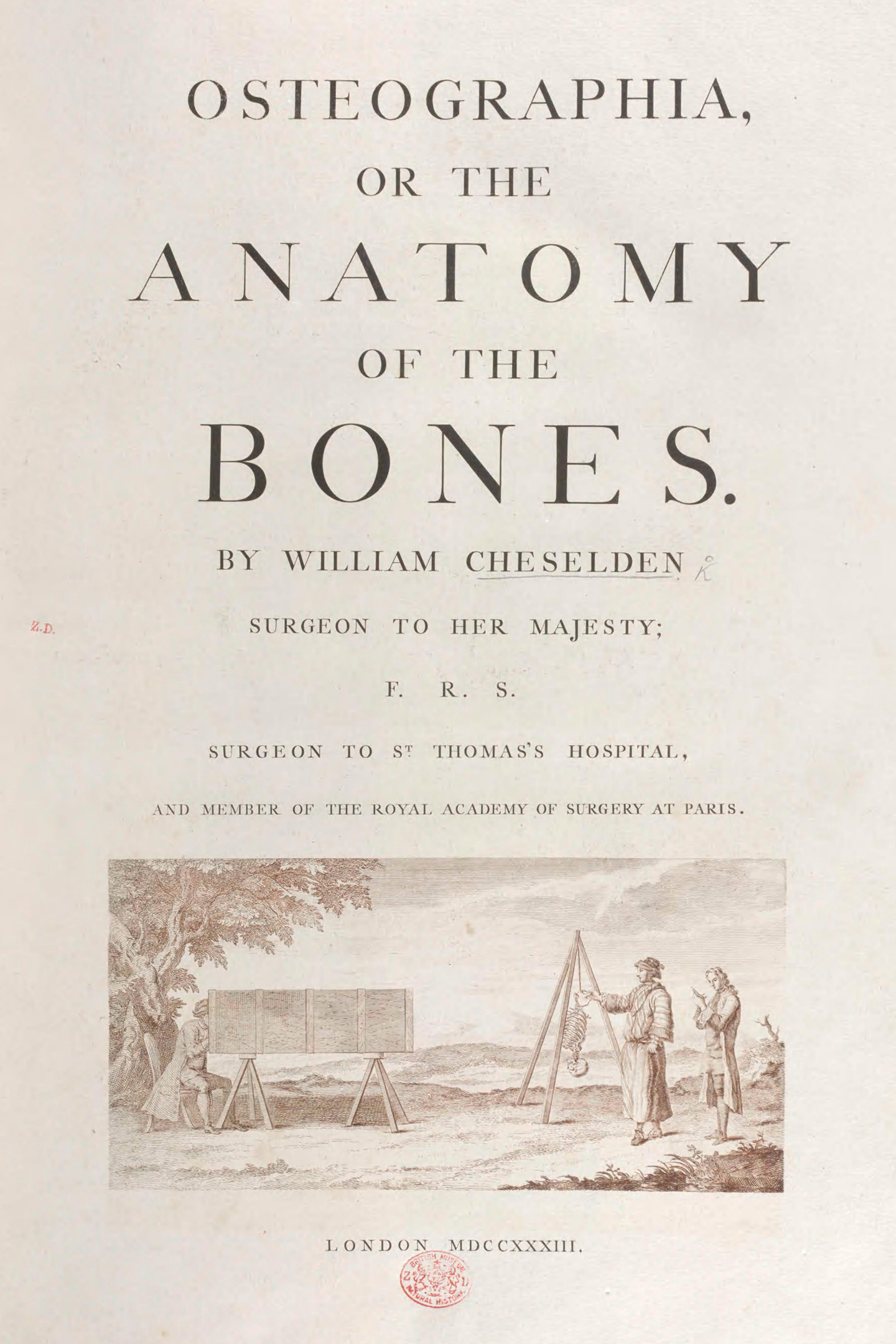
By displaying the camera obscura so conspicuously on the title page, Cheselden was emphasizing the legitimacy and accuracy of the illustrations within Osteographia. The reader was to understand that the plates were created from actual projections of the skeletons depicted. Cheselden further listed his qualifications on the title page, including his association with the Queen and membership in several prestigious institutions, as further evidence of the credibility of the work (Neher 2010, 519).

title page of Osteographia

Title page. Cheselden, William. Osteographia. 1733. Contributed in BHL from the Library and Archives of the Natural History Museum, London.

While Cheselden provided direction for the production of each image, intervening when necessary to provide corrections and alterations, the actual artists for Osteographia were Gerard van der Gucht (1695/6-1776) and Jacob Schijnvoet (1685-1733). Based on the drawings created by means of the camera obscura, the final plates were produced through a combination of etching and line engraving. Engraving, in which lines are cut into a metal plate with a burin, was used to produce smooth, dark exterior lines for each bone. Etching, in which an acid wash is used to etch an image drawn into a wax coating on a metal plate, was used for the other parts of the image (Neher 2010, 518).

Many varied issues of Osteographia exist today, as detailed by K.F. Russell in an article within Bulletin of the History of Medicine (vol. 28, no. 1, 1954). While the work was first officially published in 1733, there is a unique, 1728 trial issue in the Hunterian Library at the University of Glasgow which features 56 unlettered plates but no text or letterpress.

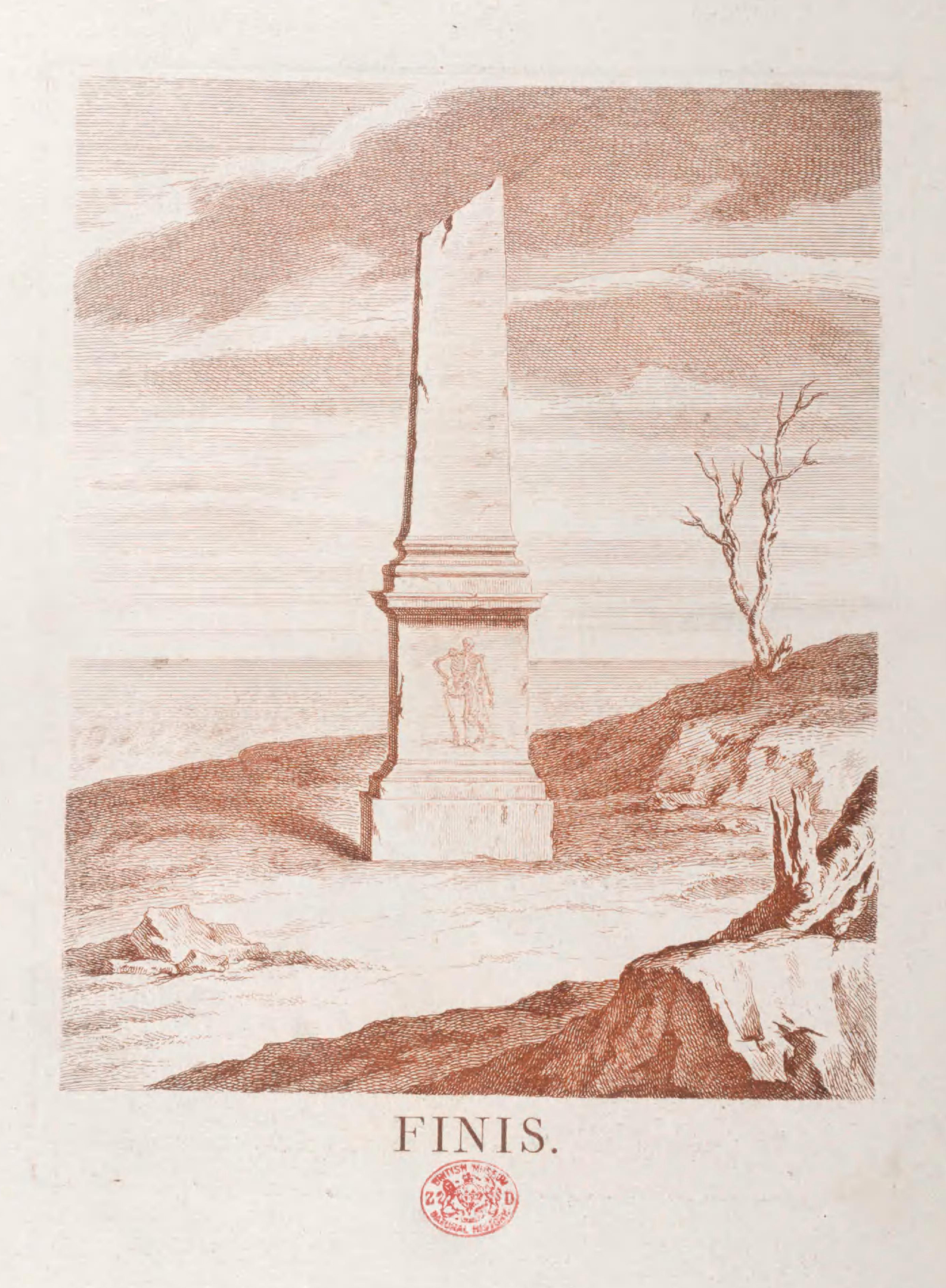
In addition to the “typical” 1733 issue, there is also a variant of the 1733 issue in which the title vignette and illustration of a broken column on the final page are printed in red. Additionally, this version presents the engraving of the Royal Arms on the verso of the title page, rather than on a separate page as in the “typical” 1733 issue. Russell postulates that this variant may represent a trial issue printed earlier than the “typical” 1733 issue. The copy of this work available in BHL from the Natural History Museum in London is this 1733 variant issue.

broken column with finis written below it

The broken column at the end of this copy is printed in red. This indicates that this copy is a 1733 variant issue. Cheselden, William. Osteographia. 1733. Contributed in BHL from the Library and Archives of the Natural History Museum, London.

Finally, there are several undated versions of the work which likely represent later editions made from sets of the unlettered plates broken up from the original whole and sold as separate, undated volumes in an effort to recoup some of the costs of publication.

Unfortunately, Cheselden did have need to recoup costs from the production of Osteographia. While widely praised, the work was not a commercial success. Of the 300 English copies printed, only 97 were sold by subscription. Of the remaining 203 copies, Cheselden disbound 83 of them, offering sets of the frontispieces and head pieces at 10 shillings each and sets of the 56 plates — which he advertised as “proper ornaments for a surgery” — for 30 shillings each (Russell 1954, 38-44).

Though it may not have been a commercial success, Osteographia was and is still celebrated for its beautiful and accurate illustrations, representing an important contribution to the history of medicine.

So make no bones about it — for those seeking a good skeleton or two this Halloween, Osteographia delivers in spine-tingling spades.

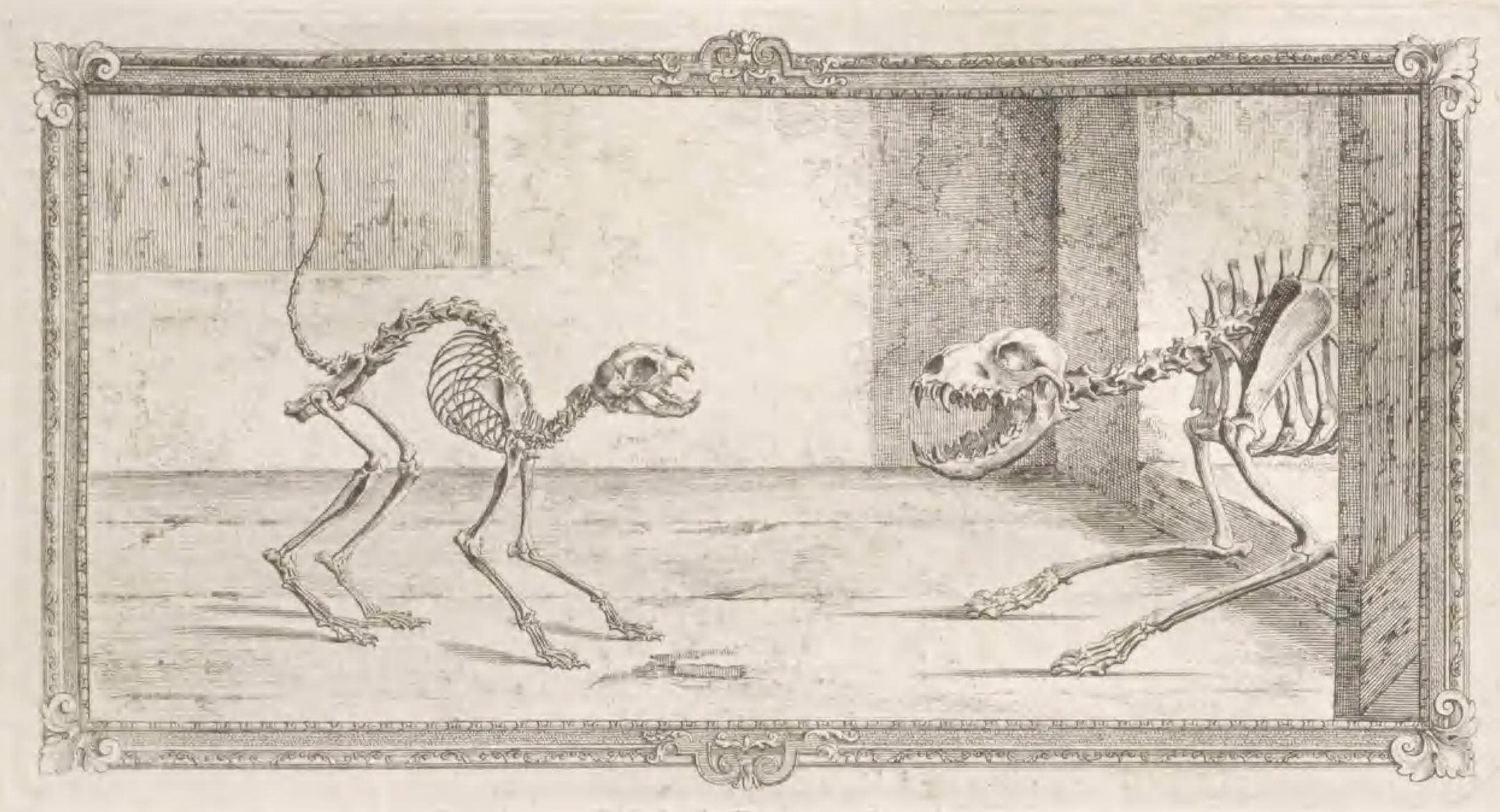
skeletons of a cat and a dog confronting each other

Head-piece engraving for Chapter II. Cheselden, William. Osteographia. 1733. Contributed in BHL from the Library and Archives of the Natural History Museum, London.

References

Cheselden, William. 1733. Osteographia. London: W Boyer.

History.com Editors. 2019. “Halloween 2019.” History.com. September 13. Accessed on October 1, 2019. https://www.history.com/topics/halloween/history-of-halloween.

Neher, Allister. 2010. “The Truth about Our Bones: William Cheselden’s Osteographia.” Medical History 54: 517-528.

Russell, K.F. 1954. “The Osteographia of William Cheselden.” Bulletin of the History of Medicine 28(1): 32-49.

Tikkanen, Amy. 2019. “William Cheselden.” Encyclopedia Britannica. April 6. Accessed on September 30, 2019. https://www.britannica.com/biography/William-Cheselden.

October 24, 2019by michelle.underhill
Blog Reel, Featured Books

Origins of Australian Ornithology : The Evolution of Australia’s Bird Reference Books

Welcome to Bird Week!

It is bird week from the 21st -27th of October. During this week, we would like to share with you some of the wonderful rare reference books on Australian birds and the stories behind them. These books have been digitised by the Biodiversity Heritage Library and are freely available in open access. The scientific reference works showcased this week include books from 1781 through to 1931. Ornithologists used these books to describe new species found within Australia and added to the growing number of previously undescribed birds during this time.

mathews_Final.jpg

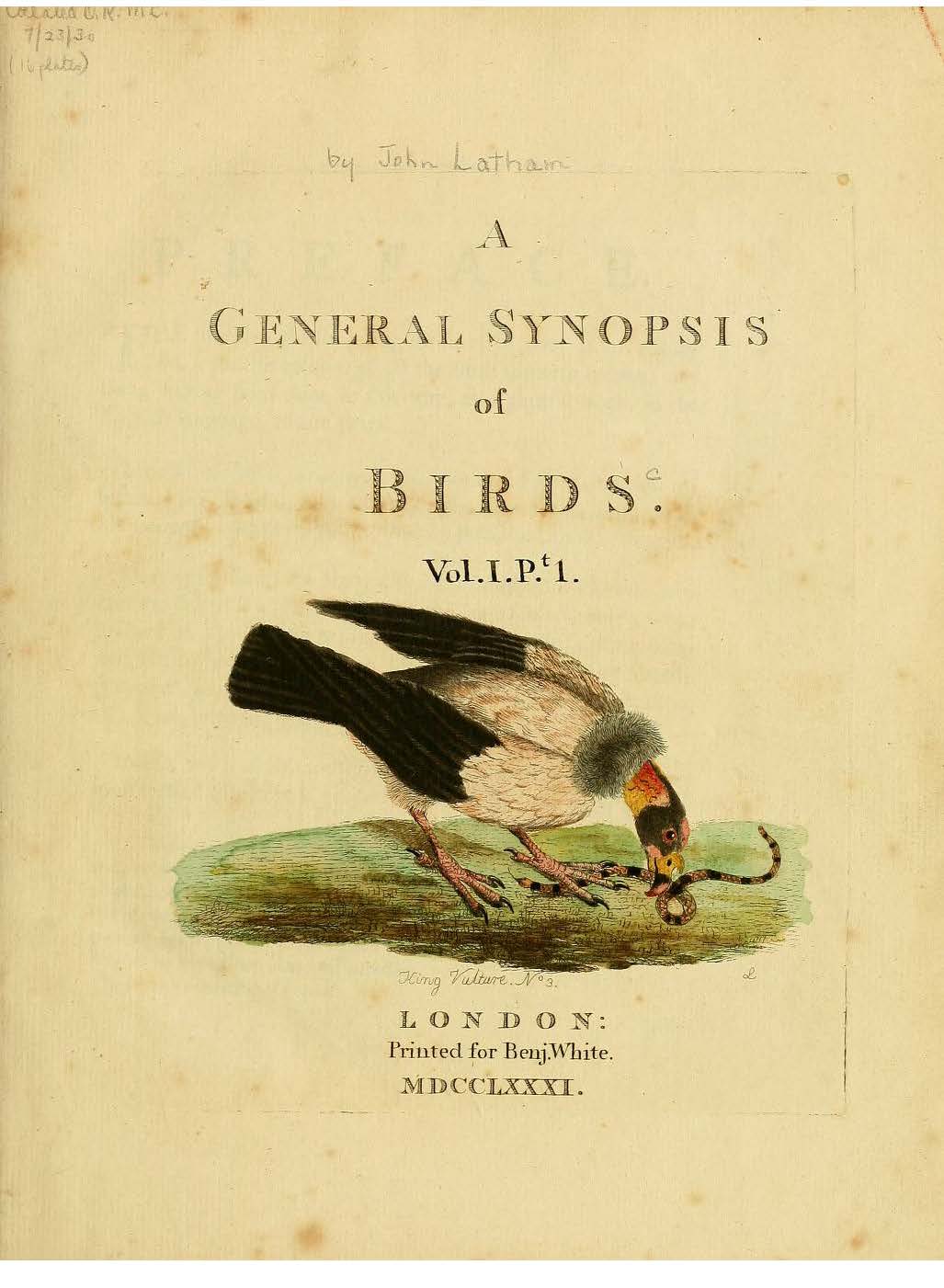
Title page. Latham, John. A General Synopsis of Birds. (1781-1785). Digitised in BHL by Smithsonian Libraries.
A General Synopsis of Birds consists of three volumes each with two parts, published from 1781 to 1785, with supplements in 1787 and 1801. Latham worked from descriptions by explorer William Dampier and Sir Joseph Banks, who sailed on the first voyage to Australia as the naturalist aboard Captain James Cook’s Endeavour from 1768 -1771. All volumes have been digitised by Smithsonian Libraries and can be viewed in BHL.

Eggs.jpg

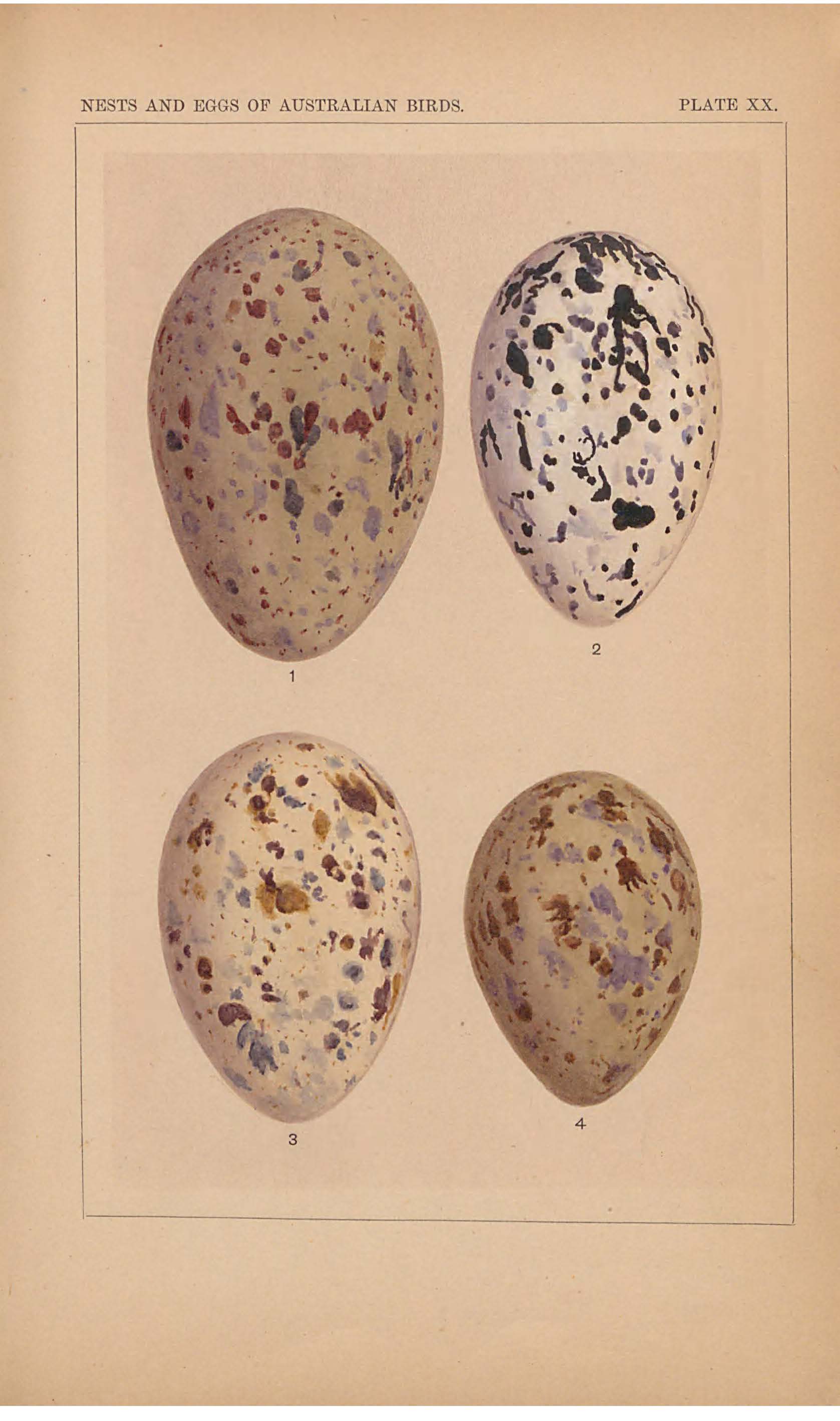
Plate XX. North, Alfred John. Descriptive Catalogue of the Nests and Eggs of Birds found in Australia and Tasmania. (1889). Digitised in BHL by Museums Victoria.

A Descriptive Catalogue of the Nests and Eggs of Birds found in Australia and Tasmania (1889) was published by Alfred John North, who described a number of birds for the first time. This publication contains a detailed description of the eggs of each species that were accessible to North, supplemented with descriptions of such other distinct varieties as occasionally occur. The history of the details of the eggs is often described as unknown, with a few exceptions taken from Gould’s Handbook to the Birds of Australia. The full book is available on BHL thanks to Museums Victoria.

blog BHL Lewin.jpg

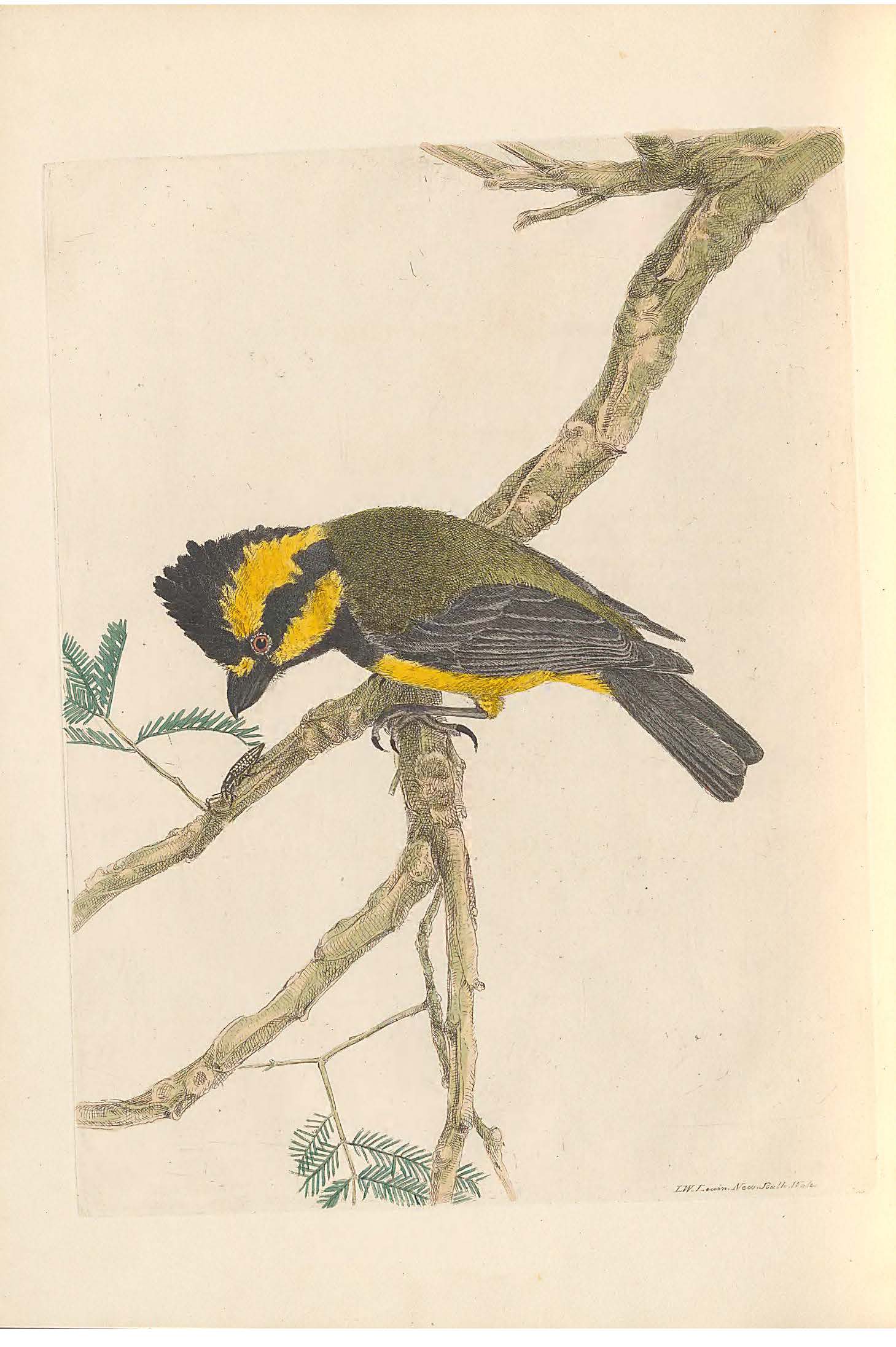
Plate XXIII. Lewin, John. A Natural History of the Birds of New South Wales. 3rd edition (1822). Digitised in the BHL by Museums Victoria.

John Lewin relocated to Australia from England in 1800, keen to visit the colony of New South Wales. His first book on birds, Birds of New Holland, was published in London in 1808. Unfortunately, as the books were shipped back to Australia from London for distribution, they were lost, possibly at sea. Only six copies are known to exist. Lewin decided to begin a second edition. However, his copper illustration plates were still in England, hence he needed to start again from scratch. The second edition was renamed The Birds of New South Wales with their Natural History and was published in 1813. It is recognised as the first illustrated book published in Australia. The third and fourth editions, published under the title A Natural History of the Birds of New South Wales, were published in 1822 and 1838 respectively and have been digitized in BHL by Museums Victoria.

bird heads

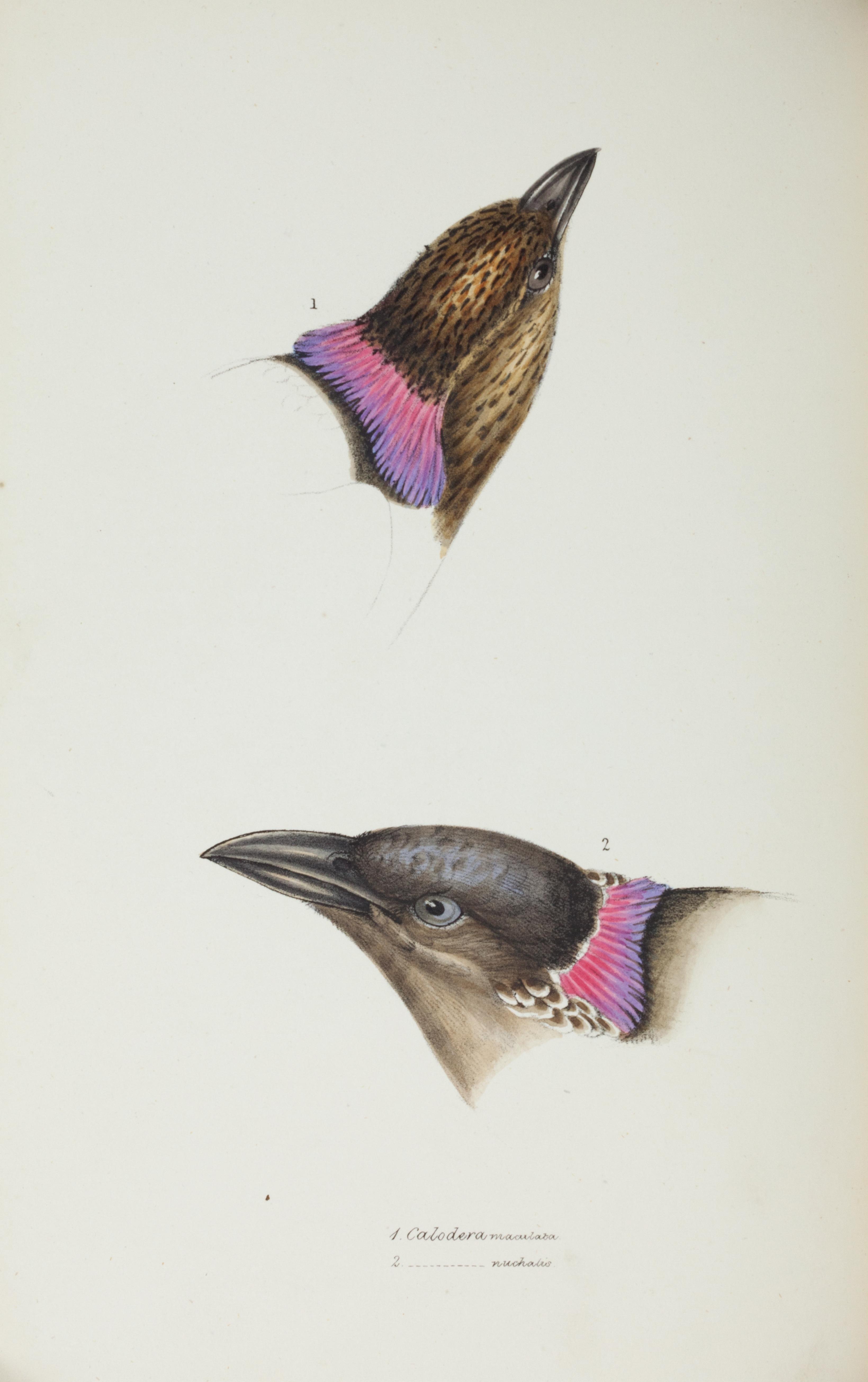
[Plate VI]. Gould, John. A Synopsis of the Birds of Australia, and the Adjacent Islands. (1837-38). Art by Elizabeth Gould. Digitised in the BHL by Museums Victoria.

Acclaimed ornithologist Gould received bird specimens in London from his brothers-in-law in Australia, which he used to publish his Synopsis of the Birds of Australia (1837-38). The illustrations are predominantly of bird heads, all hand-painted by Gould’s wife, Elizabeth. Only basic descriptions of Australian birds were used, as Gould intended to publish this work in order to get to Australia to research and illustrate birds in the wild with his wife. Gould noted that on his return from Australia, these pages would be removed and further knowledge of Australian species and their habitats would be recorded.

Gould_book.jpg

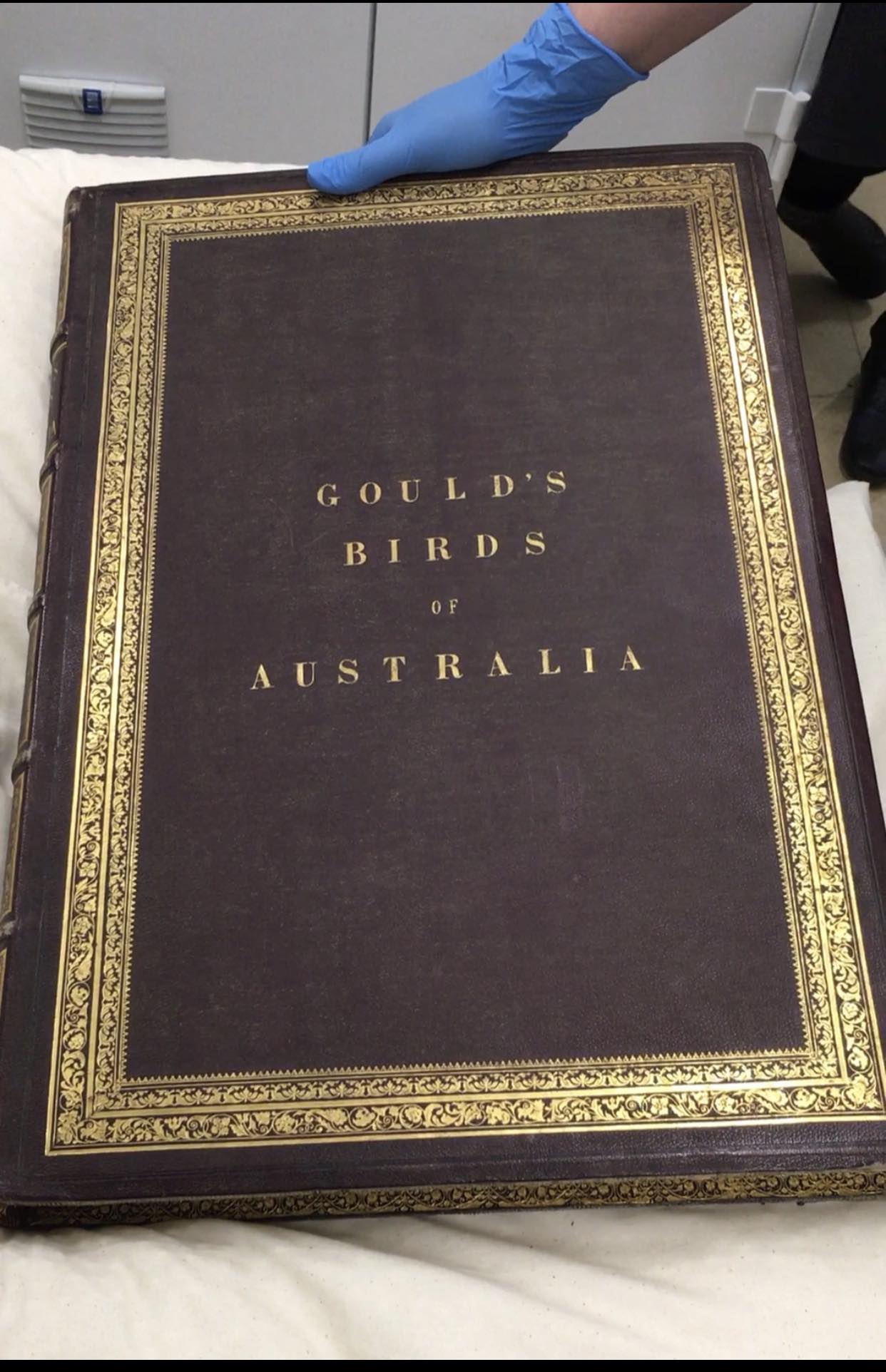
Photograph of the cover of one of the volumes of Gould’s Birds of Australia, from the library collections of the Melbourne Museum of Museums Victoria. The Birds of Australia (1840-1848) has also been digitised in BHL by Smithsonian Libraries

In a letter dated 15th February 1839, while in Australia, Elizabeth Gould wrote “[John] has already done more in obtaining nests and eggs, making skeletons of the various forms of birds, etc., and in getting information of their habits, than has been hitherto done, and will, I hope, be enabled to produce an interesting work on our return.”

On arrival back to England, John Gould published The Birds of Australia between 1840 and 1848. The book encompasses 600 species of birds, of which 200 were first described by Gould. Elizabeth produced 84 of the illustration plates for The Birds of Australia, but sadly, she died in 1841, before the book was completed and only one year after the Goulds’ return from Australia. The remainder of the plates were primarily created by painter Henry Constantine Richter, which were made after sketches by Elizabeth. While in Australia, Elizabeth also created many botanical illustrations and wrote that these helped to “render the work on ‘Birds of Australia’ more interesting…I trust we shall be enabled to make our contemplated work of sufficient interest to ensure it a good sale.”

A good sale it was. The Birds of Australia was bound in seven volumes, costing subscribers £115 — the equivalent to around 18K AUD or 12K USD in today’s money. But the significant contribution this book made to the science of ornithology far exceeds its monetary value.

What_bird.jpg

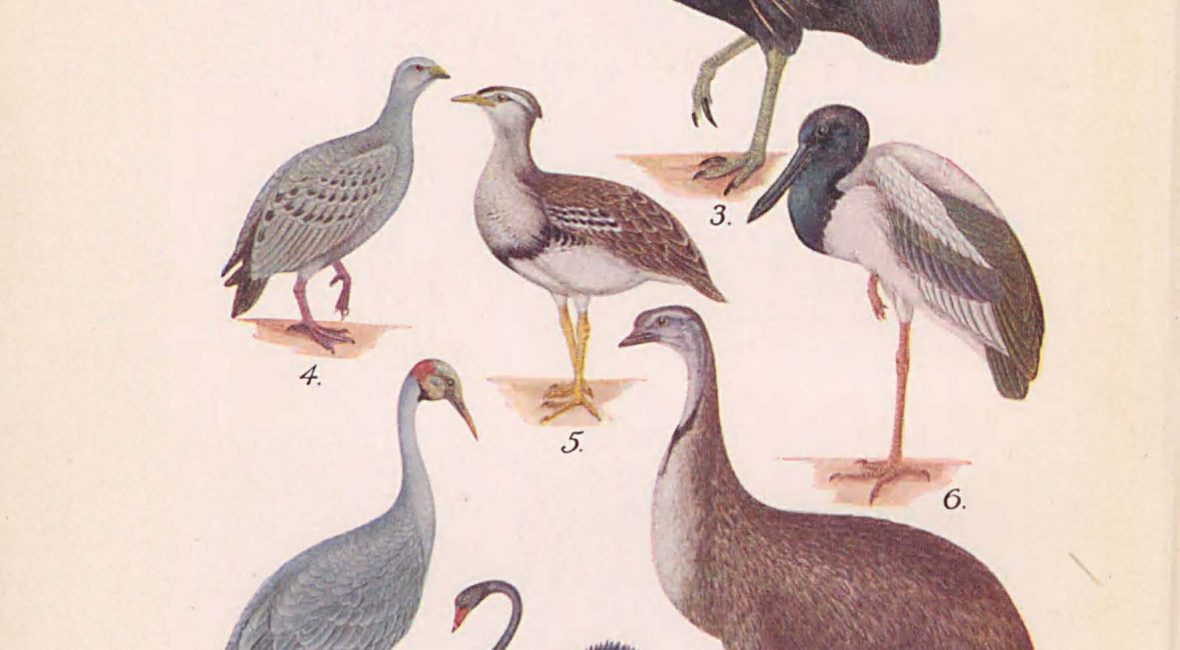
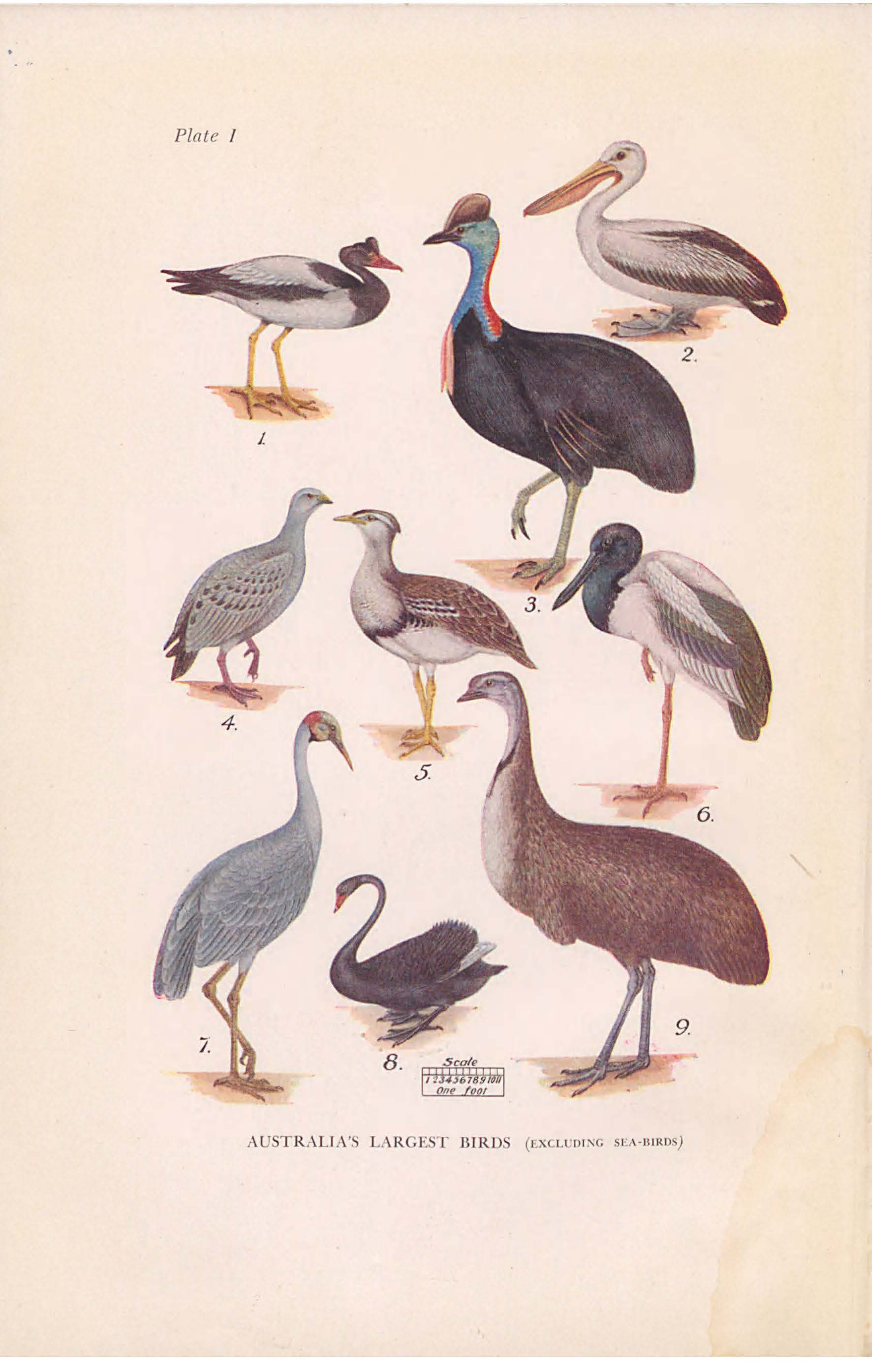
Plate I. Cayley, W, Neville. What Bird is that? (1931). Digitised in BHL by Museums Victoria.

What Bird is that? A Guide to the Birds of Australia (1931) was the first comprehensive field guide that was intended as a bird identification book in Australia. During the early 20th century, there was a growing interest in amateur ornithology, and Cayley had hoped that his book would encourage nature lovers to extend their knowledge and appreciation of Australian birdlife. In addition to being an ornithologist, Cayley was also a prolific artist and produced the 36 plates contained in the book. Subsequent editions were published up until the 1990s and it became a classic ornithological work in Australia.

October 21, 2019by Joel Richard
Blog Reel, Featured Books, User Stories

Exploring Prehistoric Sloths: From Thomas Jefferson to Sloth Poop

This blog post is part of a series from Smithsonian Libraries highlighting Unearthed, a new collection of paleobiology literature in the Biodiversity Heritage Library curated by Smithsonian Libraries in celebration of the opening of the National Museum of Natural History’s David H. Koch Hall of Fossils – Deep Time exhibit. Follow the series throughout 2019 as Smithsonian scientists and librarians discuss the collection, identify their favorite books within it, and explain the importance of paleobiology literature in research today.

I study sloths, and as popular as they have become on the internet, the thing most people do not realize is that we are living in a world majorly deprived of most types of sloth. Today there are only two types of sloths: two-fingered (genus Choloepus) and three-fingered (genus Bradypus). (You may have heard them referred to a two-toed and three-toed, but they both have three digits on their hind limb, so the difference is on the forelimb, in other words, their hand, hence: fingers.) There are only a few species of each kind of sloth and they all live in the trees of tropical rainforests in Central and South America.

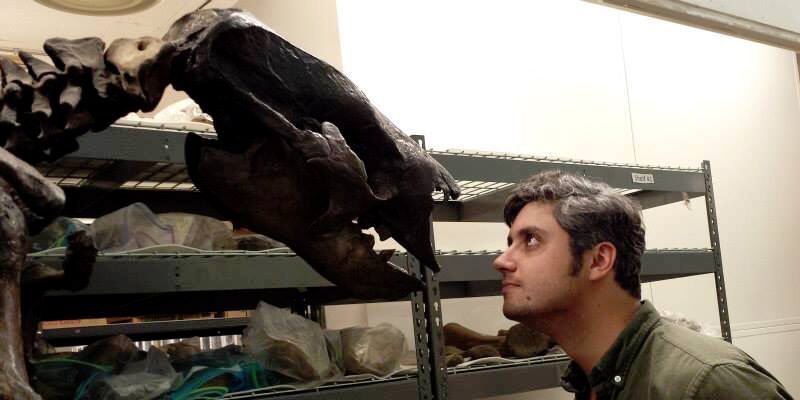
But back in prehistoric times, there were many types of sloths: more than 80 genera across five different families. They lived as far north as the Yukon Territory and Alaska, as far south as Patagonia, and stretched from coast to coast in the United States and even colonized islands throughout the Caribbean. The smallest of these fossil sloths were still bigger than any sloth alive today, and the biggest extinct sloths were the size of modern elephants (but could probably walk around on two legs like an awkward bear). All this means there is a lot to learn about the sloths that are no longer with us.

Man staring at a fossil of a giant sloth

Ryan Haupt and giant sloth fossil photo taken by Emily Thorpe in the collections of the Denver Museum of Nature and Science.

The earliest scientific description of a fossil sloth was written by then Vice President Thomas Jefferson, based on some bones found in a cave in what was then Virginia, now West Virginia, by some men mining saltpeter (potassium nitrate), which crystalizes out of deposits of bat guano and was an important economic resource as a major chemical component of gunpowder. The bones were given to the land owner, who knew that Thomas Jefferson had an interest in Natural History, and so he had them sent to Monticello.

Jefferson presented his findings at the American Philosophical Society in Philadelphia in 1797, which was then published in writing in 1799.[1] Jefferson interpreted the animal as something similar to a large lion, though in reality probably closer in size to a large bear, and named the animal Megalonyx, which means “great claw”, because, like living sloths, ground sloths also had impressive claws.

In addition to thinking this animal was some great hunter, Jefferson did not like the idea that this animal was extinct (remember, this is still half a century before the publication of Darwin’s The Origin of Species [2]). After working through some of the logic of his argument, Jefferson concludes, “If this animal then has once existed, it is probable on this general view of the movements of nature that he still exists…” According to a possibly apocryphal tale, when Jefferson was preparing Lewis and Clark for their journey to the interior of the continent, he showed them the massive claws of Megalonyx and warned them to stay vigilant should the beast still be stalking the forests of the then still “untamed” parts of Western Virginia, Ohio, and beyond.

Even 100 years after Thomas Jefferson’s first description, there were questions as to whether or not relatives of Megalonyx still existed in the far reaches of South America [3], owing in part to some amazingly-preserved mummified sloths that look “recent” compared to many fossils, with bits of skin and fur still clinging to desiccated bone. As far as we can tell, we sadly live in a world bereft of ground sloths, but in some ways, we are still trying to answer some of the earliest questions Jefferson and others had about their no longer observable lifestyles.

For example, there is a fossil site in South America that has several different types of ground sloths and seemingly no predators to eat them, leading to a question of how so many large herbivores avoided scouring the plant life bare. One paleontologist has proposed that the elephant-sized Megatherium, one of the largest ground sloths ever to evolve, may have scavenged or even hunted the smaller animals in their range, harkening back to Jefferson’s lion-esque Megalonyx. While this seems implausible, it is an idea and one that we can try to test, which is where my research comes in.

Illustration of a skeleton of a giant ground sloth

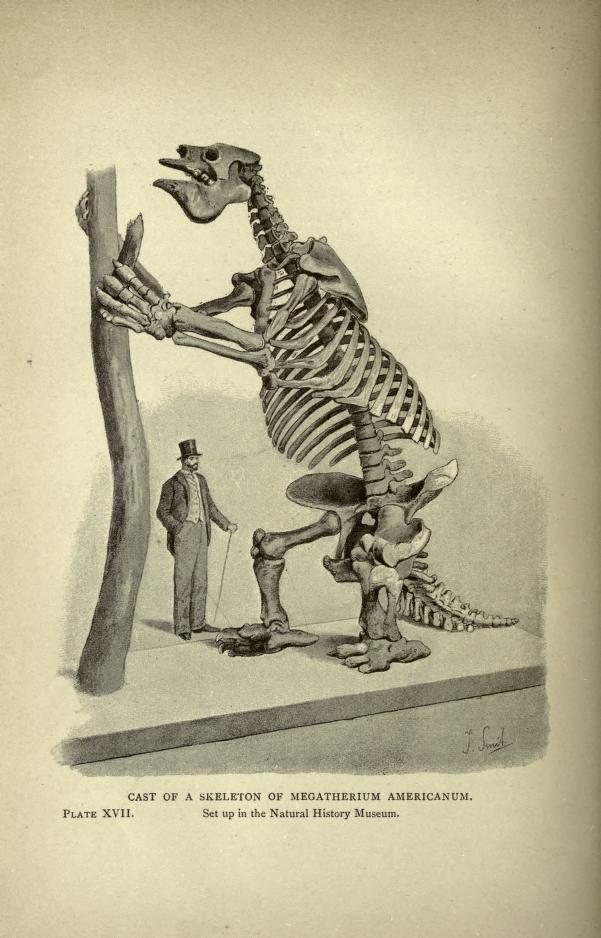
Plate depicting Megatherium americanum fossilized skeleton from Extinct monsters : a popular account of some of the larger forms of ancient animal life, by H.N. Hutchinson. Contributed in BHL from the Ernst Mayr Library of the Museum of Comparative Zoology, Harvard University.

One focus of my research is what ground sloths ate. Paleontologists use a lot of different techniques to determine diet in animals we cannot directly observe anymore, such as the type of teeth the animal had and the other types of fossils found in the same area (including fossil poop if we can find any!). We also use less obvious methods like the microscopic scratches seen on the chewing surfaces of teeth, or even the actual atoms in the fossils themselves (because those atoms ultimately come from the atoms of food, so you really are what you eat).

Sloth teeth are softer than normal mammal teeth, and grow continuously throughout their entire lives, which makes them better suited to the persistent chewing of leafy browse or grasses than the tearing of flesh and crunching of bone. Two species of ground sloth have been found in caves associated with fossil feces (sometimes called coprolites), and when taken apart or analyzed chemically, the feces only shows evidence of poorly digested plants. And when we look at the ratios of different isotopes trapped in bone, teeth, and even the poop, we see evidence of a mix of plants in the diet, but little evidence of animal protein being eaten.

One avenue of my research is testing some of these fossil findings against modern sloths, to make sure that our interpretations of these data are correct. Two-fingered sloths are often given a little bit of dog food in captivity, whereas three-fingered sloths are not, so I have actually been able to chemically test the isotopes of a slightly omnivorous sloth against a pure herbivore to see how that compares to the fossils!

So, from these lines of evidence we can conclude that ground sloths were herbivores much like modern sloths, and while there is much more research to be done, it is incredibly helpful to be able to look back to the earliest days of paleontology through the Smithsonian Libraries’ collections and see how the thinking about sloths has changed drastically even as we still work to answer some of the earliest questions about these magnificent, lazy, internet-famous beasts.

References

[1] Jefferson, Thomas. 1799. “A Memoir on the Discovery of Certain Bones of a Quadruped of the Clawed Kind in the Western Part of Virginia.” Transactions of the American Philosophical Society, v. 4.

[2] Darwin, Charles. 1859. On the Origin of Species. London: John Murray.

[3] Ameghino, Florentino. 1898. “An Existing Ground-Sloth in Patagonia.” Natural Science, v. 13.

October 16, 2019by Joel Richard
Blog Reel, Featured Books

Our Experience Digitising a Rare Book for the Biodiversity Heritage Library

illustration of blue and green birds

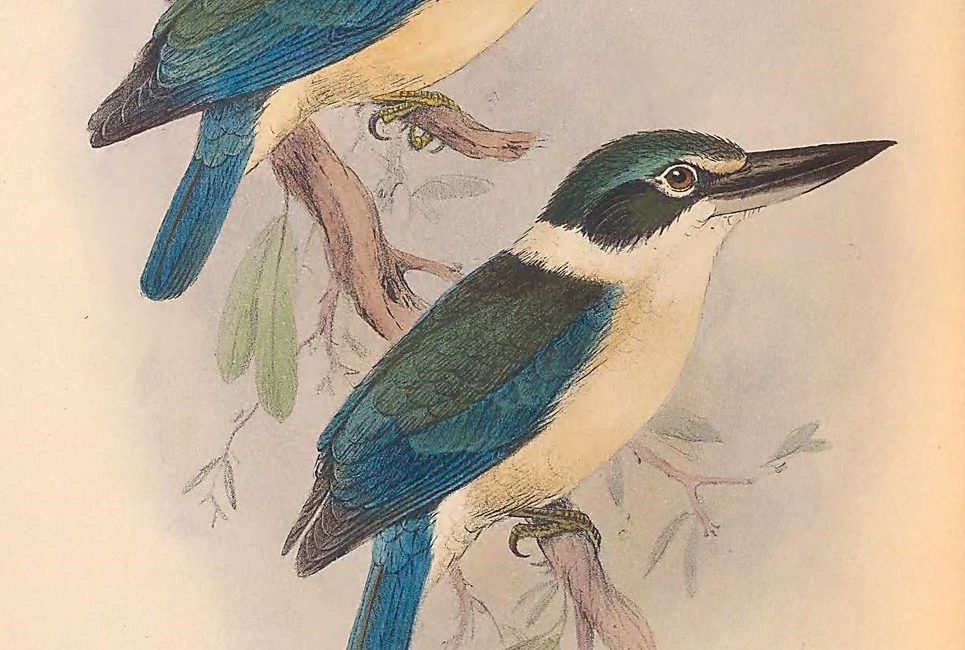
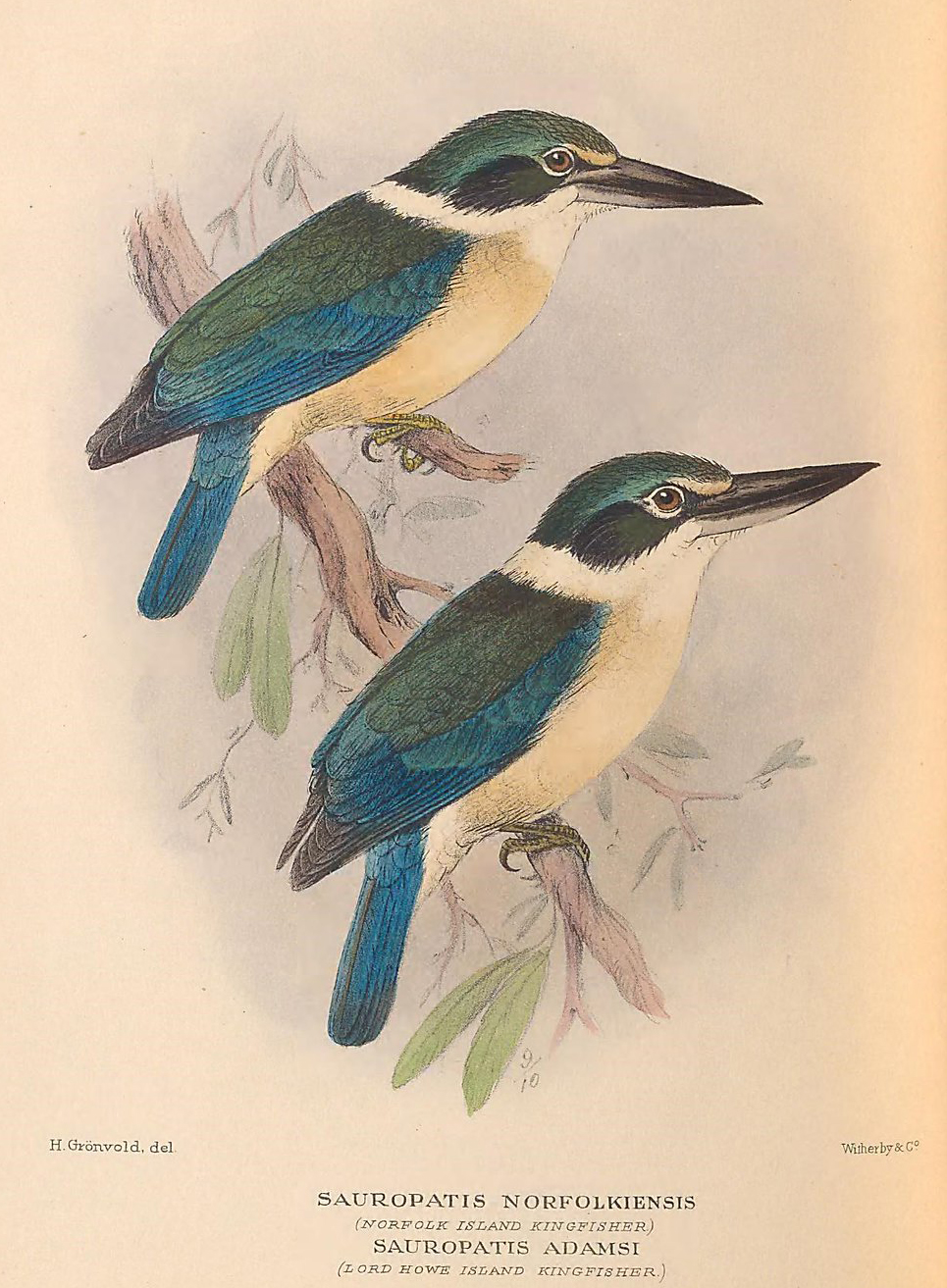
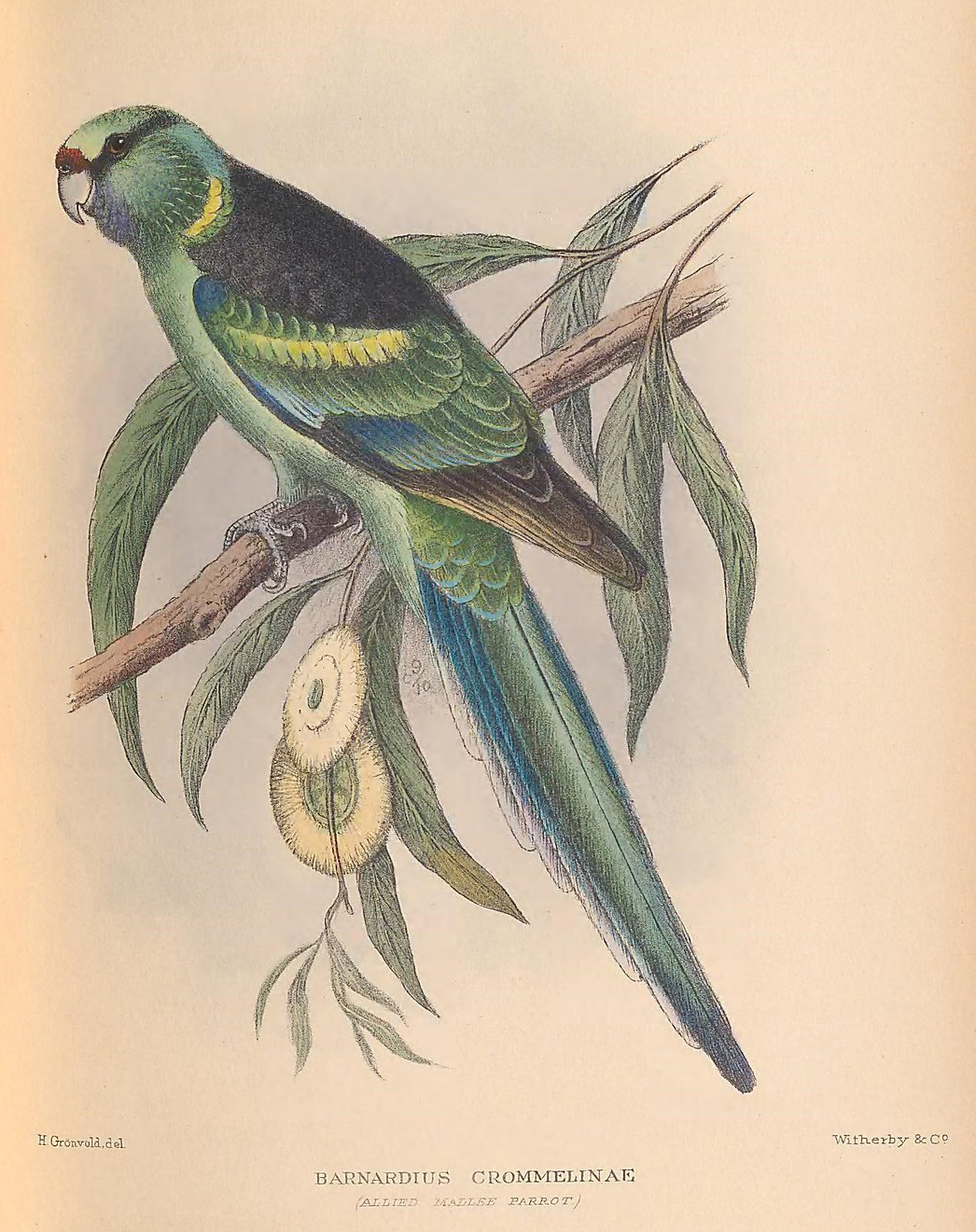
Plate 18. Mathews, Gregory M. (Gregory Macalister). The birds of Norfolk & Lord Howe Islands and the Australasian South Polar quadrant. 1928. Art by Henrik Grönvold. Contributed in BHL from Museums Victoria.

Recently, we spent three weeks on student placement at Museums Victoria Library and were fortunate enough to be involved with the digitisation of the beautiful title The birds of Norfolk & Lord Howe Islands and the Australasian South Polar quadrant by Gregory M. Mathews. It was an eye-opening experience, making us aware of the patience and attention to detail that is a necessity for book digitisation.

In order to get suitably high resolution scans, a Zeutschel OS 16000 scanner is primarily used for Biodiversity Heritage Library (BHL) digitisations at Museums Victoria. The Australian branch of the project, BHL Australia, digitises the collections of 25 organisations across the country. It is hosted by Museums Victoria and funded by the Atlas of Living Australia.

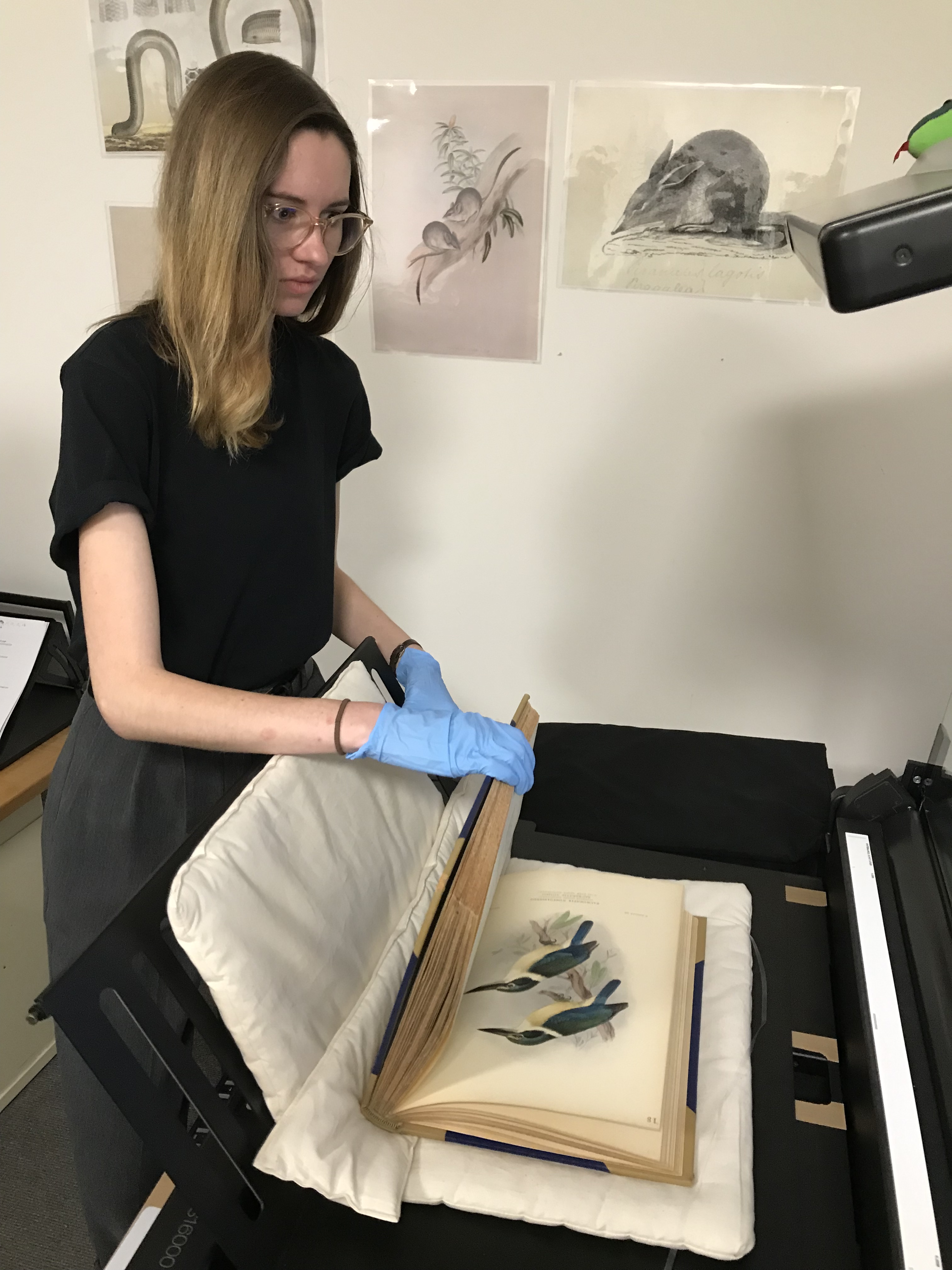
As this title was rare, it was essential to handle it gently, and to protect the spine from excessive pressure. To ensure minimal impact, we wore gloves when in contact with the book, and scanned one page at a time. We scanned all right-hand pages first, before turning the book around and repeating the process for the left-hand pages. The glass pane normally used to pin pages down on ordinary books can’t be used on rare books, so getting pages to lie flat was a challenge in itself! This digitisation project has given us a chance to see a lot of this beautiful title, with its multitude of breathtaking illustrations.

Marina Hunt scanning The birds of Norfolk & Lord Howe Island for the Biodiversity Heritage Library.

Both of us are currently working towards the Master of Information Management qualification at RMIT University. Being involved with the BHL project has been invaluable to our understanding of the challenges and importance of digitisation. As digital technology continues to develop and evolve, digitisation provides exceptional opportunities for further access and research. As such, digitisation is likely to play a significant role in our careers in information management into the future, and we are highly grateful to have had the opportunity to be involved in such a project.

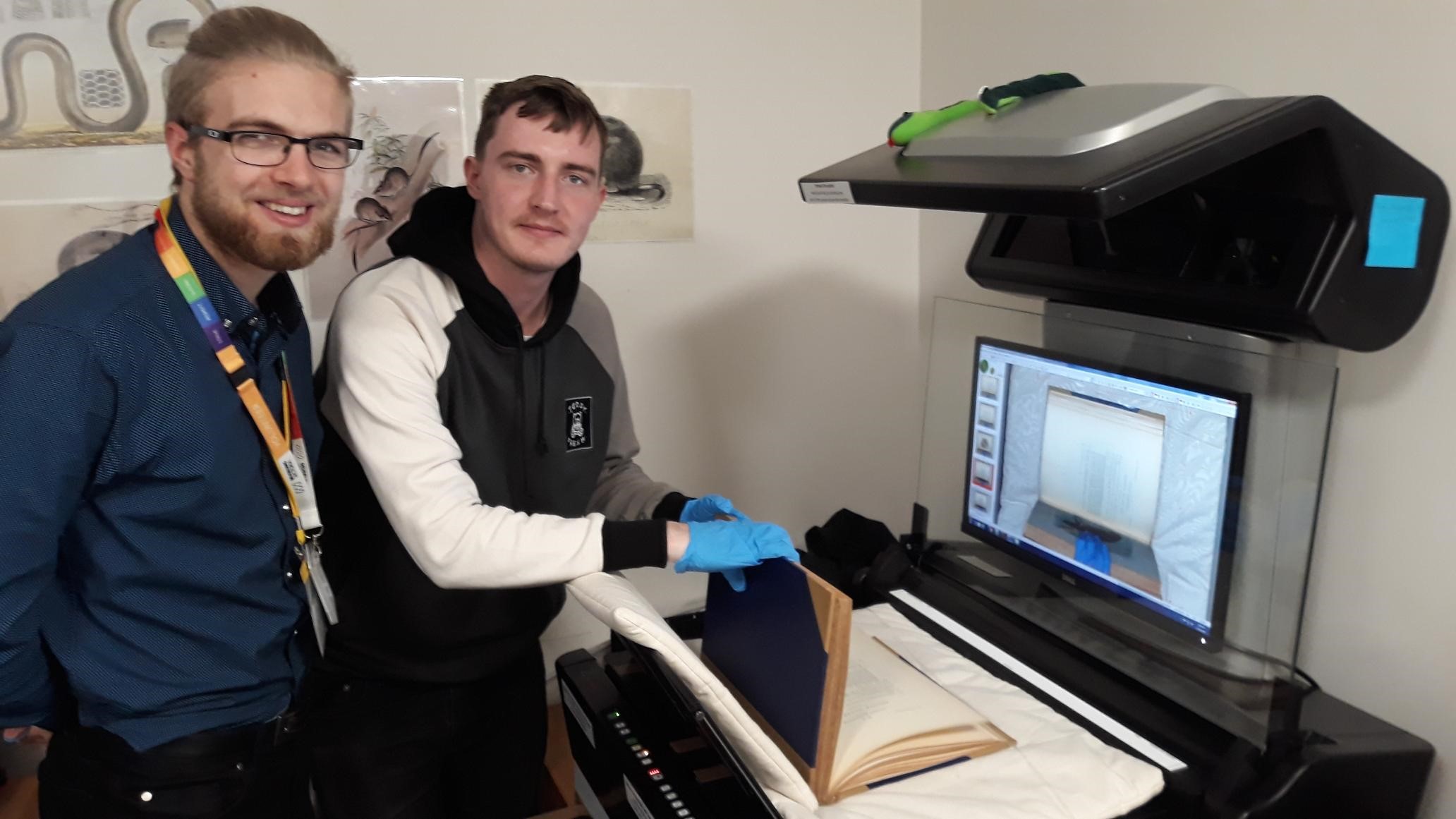
Brendan with Chris Healey, Technical Support Officer BHL.jpg

Brendan Bachman with BHL-AU’s Technical Support Officer Chris Healey.

The birds of Norfolk & Lord Howe Islands and the Australasian South Polar quadrant is a remarkable guide to the birds of some of Australia’s more outlying territories, specifically Norfolk and Lord Howe Islands and areas of the Antarctic. Published in 1928, the title contains detailed description and distribution information for a number of species, as well as beautiful illustrations of each bird. Many of the species covered in the book were extinct when the book was published, while others became extinct in the decades afterwards. This adds to the unique nature of this title. Only 225 copies of this work were produced, and around 57 are currently held in library collections worldwide.

illustration of green bird

Plate 43. Mathews, Gregory M. (Gregory Macalister). The birds of Norfolk & Lord Howe Islands and the Australasian South Polar quadrant. 1928. Art by Henrik Grönvold. Contributed in BHL from Museums Victoria.

The book was written by noted ornithologist Gregory Macalister Mathews. Born in 1876, Mathews grew up in Australia before moving to England, where his interest in birds became an obsession. Over his life Mathews contributed to a significant number of ornithological works, but none drew more attention than his Birds of Australia (which is also available on the BHL website, the final volumes of which were digitised by the BHL Australia project at Museums Victoria). During the creation of Birds of Australia, he regularly worked 16 hour days, and through the course of this work he acquired 30,000 skins and around 5,000 books.

Despite dedicating much of his life to their study, Mathews “was not really interested in the living bird”, and was “essentially a bibliophile” (Kloot, 1986). Mathews stressed that The birds of Norfolk & Lord Howe Islands was not a supplement to his far more famous Birds of Australia, but he did believe that the birds discussed should be considered part of any list of Australian birds. Certainly, it follows the same format, has the same publisher and should be considered a related work.

illustration of penguins

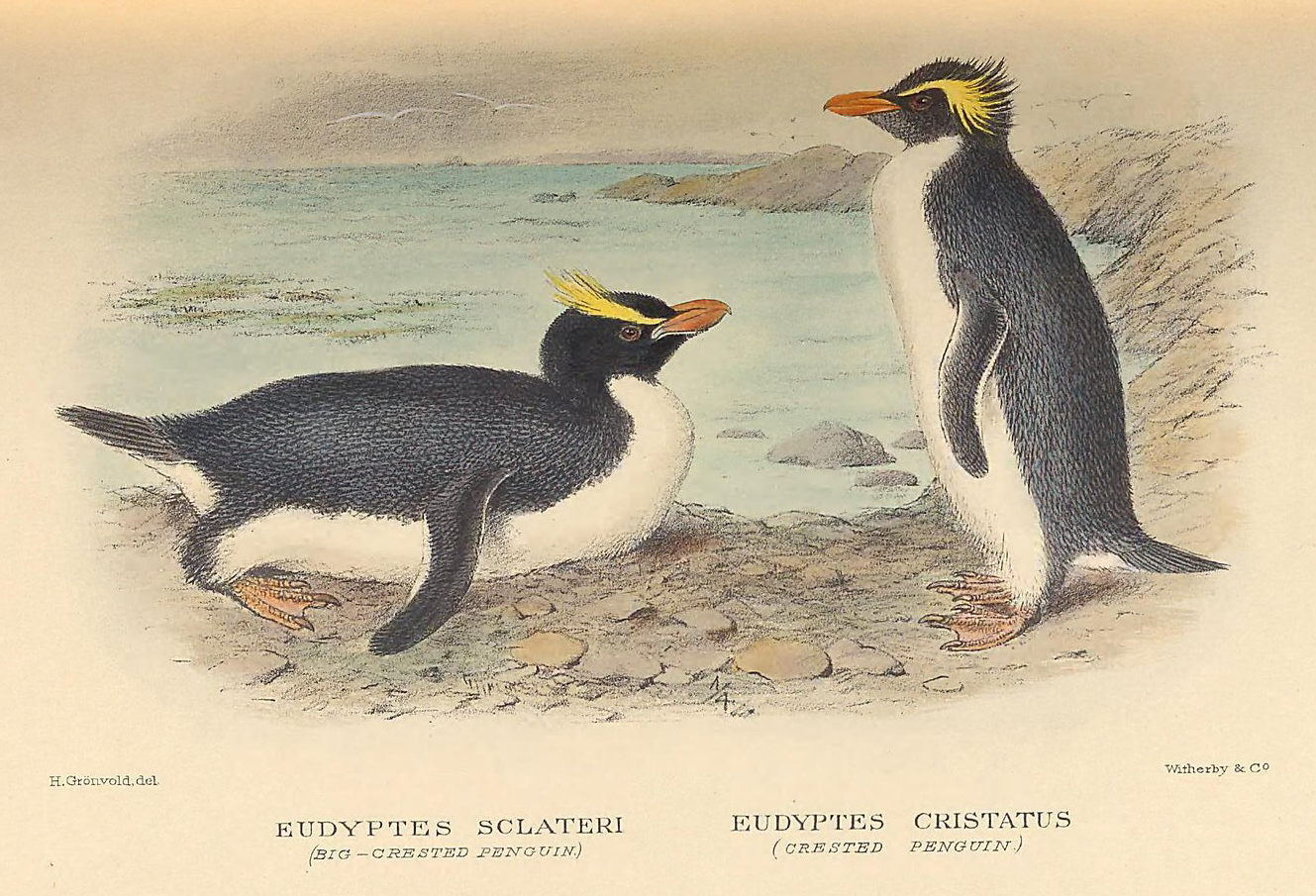
Plate 32. Mathews, Gregory M. (Gregory Macalister). The birds of Norfolk & Lord Howe Islands and the Australasian South Polar quadrant. 1928. Art by Henrik Grönvold. Contributed in BHL from Museums Victoria.

The birds of Norfolk & Lord Howe Islands includes 45 hand-coloured lithographs and monochrome plates, with this work being one of the last publications worldwide to include hand-coloured plates (Pasquier & Farrand 1991). These were the work of two illustrators — Henrik Grönvold and Frederick William Frohawk.

Grönvold was a well-known Danish naturalist and lithographer who predominately illustrated birds and their eggs. Born in 1858, he worked on a wide range of ornithological works, including Birds of Africa and The British Warblers, and he created a remarkable 600 plates for Mathew’s Birds of Australia.

Frederick William Frohawk was born in 1861 and had an interest in illustration and natural history from an early age, catching a rare pale clouded yellow butterfly at the age of seven. Despite losing virtually all sight in one eye during his school years, he went on to become a noted illustrator of butterflies and birds. Among his notable works is The complete book of British butterflies, which he both wrote and illustrated.

References

Kloot, T 1986, ‘Mathews, Gregory Macalister (1876–1949)’, Australian Dictionary of Biography, http://adb.anu.edu.au/biography/mathews-gregory-macalister-7517

Pasquier, R. F., & Farrand, J., Jr 1991, Masterpieces of Bird Art: 700 Years of Ornithological Illustration. Abbeville Press. pp. 180–181.

October 10, 2019by Joel Richard
Blog Reel, Featured Books, User Stories

Provenance and Library Stamps at Museums Victoria and on BHL

On the BHL blog, we often focus on the extensive biodiversity information made available through BHL and the innovative ways scientists are using the vast quantities of historical biodiversity data in BHL to conduct contemporary research. BHL is also useful for a range of non-scientific research, however, and is used by researchers in the arts and humanities as well as the sciences. Artists draw on the illustrations for inspiration, while humanities scholars use the digitised collections for historical research.

For librarians and book historians, BHL contains a wealth of provenance information, as well as the material to conduct comparative research. As a librarian in charge of a rare book collection specialising in natural history, I often use BHL to check if our copy of an item is complete, bound in the usual manner, or coloured in the same way as other copies.

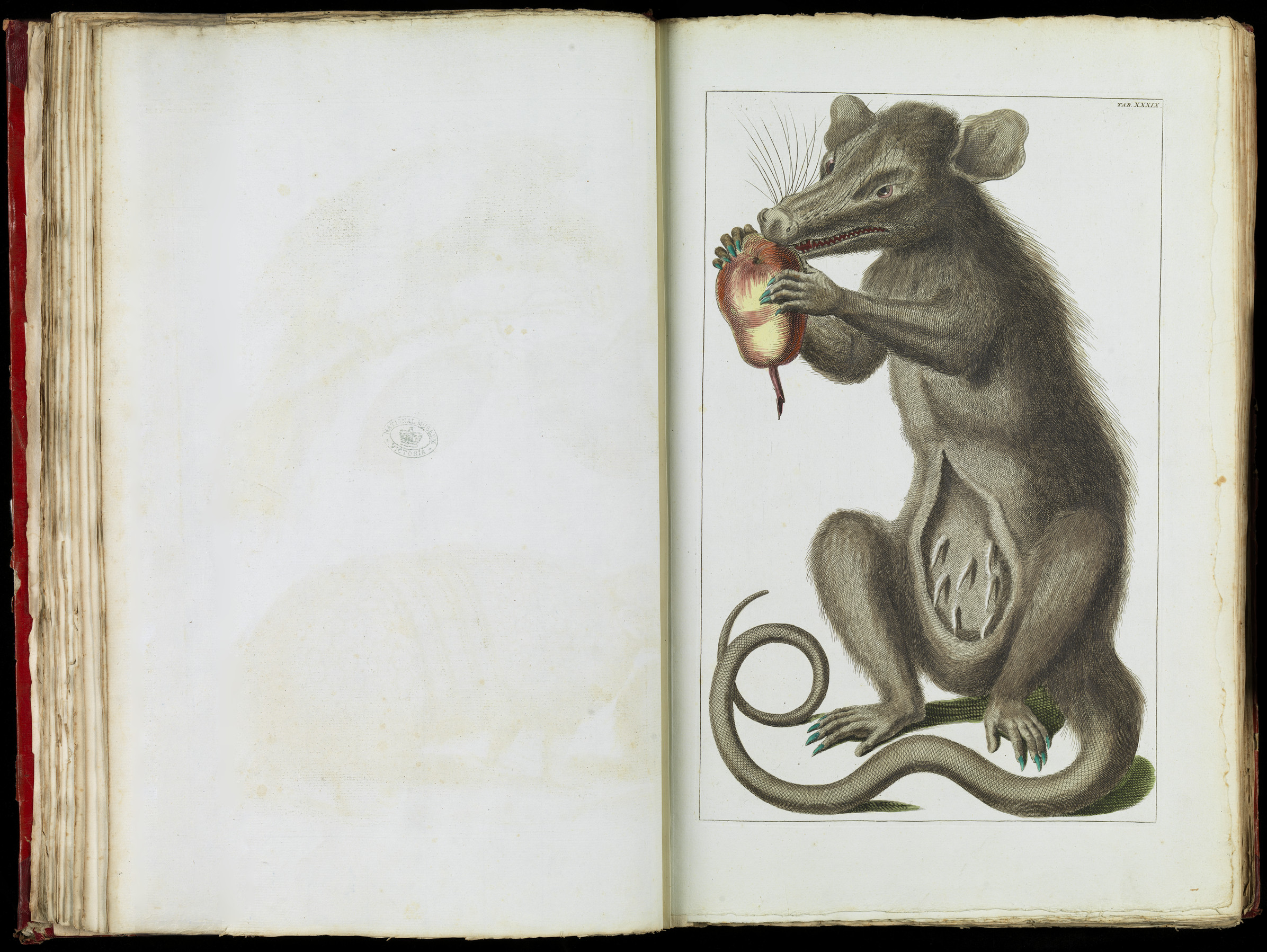
A good example of this is Museums Victoria’s copy of Albertus Seba’s Locupletissimi rerum naturalium thesauri accurata descriptio (commonly referred to in English as his Thesaurus). Museums Victoria holds the only copies of Seba’s Thesaurus in Australian libraries; however, using the Biodiversity Heritage Library I have been able to compare our copy with copies around the world in libraries that I would be unlikely to visit. I have been able to identify that our copy is bound differently to the norm, with plates and text in separate volumes — presumably at the request of a previous owner. I was also able to deduce that the unusual teal nails on the opossum are intentional — we had thought it a quirk of hand-colouring! However, all coloured copies on BHL show the opossum sporting a teal mani pedi (fig. 1).

000080372c-39.jpg

Fig. 1. Tab XXXIX. Seba, Albertus. Locupletissimi rerum naturalium thesauri accurata descriptio. Plates to Volumes 1 & 2. 1734-1765. Digitized in BHL by Museums Victoria.

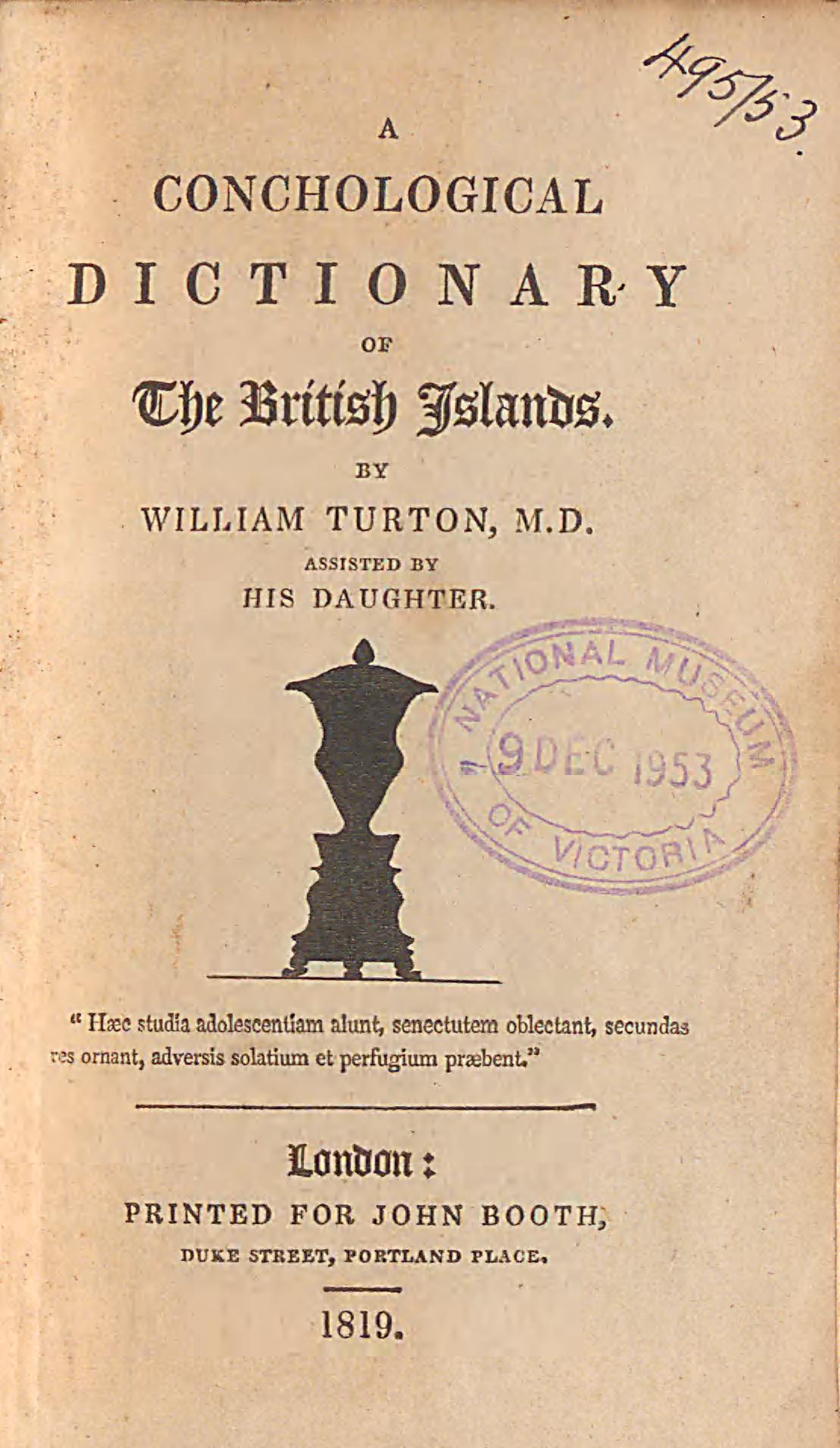
Lately, I have used our digitised items in conjunction with our Rare Book Collection to look at provenance and acquisition information in our collection. This was inspired by a fantastic course in “Provenance in Books” as part of London Rare Book School last year. Our instructor, David Pearson, took us through various aspects of provenance information in books, including bookplates, bindings, inscriptions, and annotations. Working in an institutional library, one of the things I was most interested in was different forms of library acquisition and provenance information. David told us of a project at the British Library to develop a research guide detailing the different stamps used across the institution’s history to assist in identifying when items had been acquired. I set out to develop something similar for our institution, and here is a sample of the work I have done so far, focusing primarily on one of our predecessor institutions, the National Museum of Victoria.

The National Museum of Victoria was established in the 1850s, and the library collection has been developed since its foundation. Accessioning practices have changed over the 160-plus year history of the library. The most consistent practice appears to have been to mark or apply stamps to the title page, or first few flyleaves, of a book. The stamps that appear on these pages are therefore usually the most reliable for dating an acquisition or to assist in narrowing a date range for archival research.

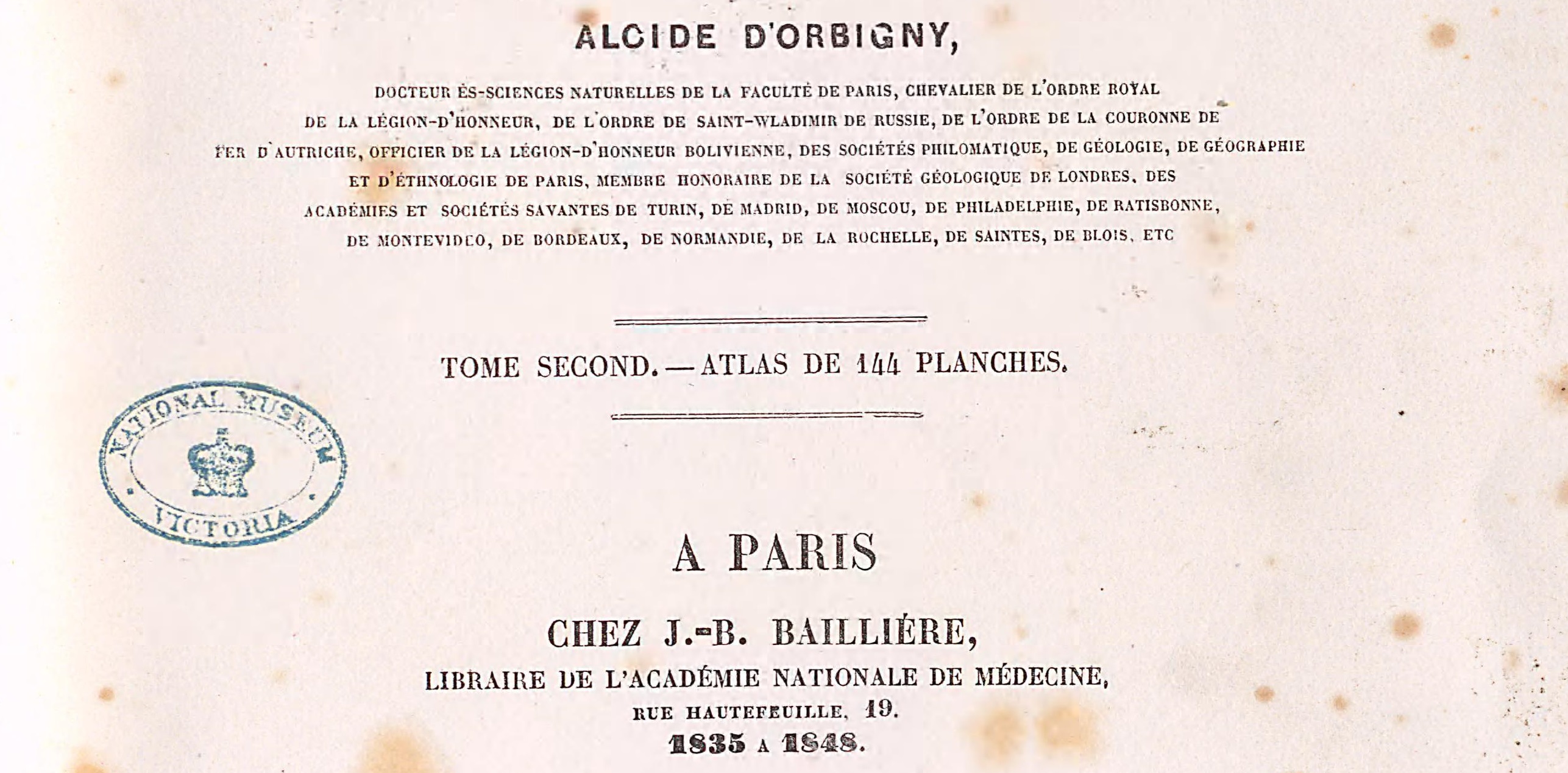
The information available in each library book varies. A book may include all or none of the following: accession number, date of acquisition, library stamp, inscription or bookplate of a previous owner. Books purchased between 1854 and the end of the nineteenth century are the least likely to carry acquisition information; many only bear a stamp, as shown below (fig. 2).
D'orbigny tp stamp.jpg

Fig. 2. Title page of Museums Victoria’s copy of Histoire naturelle : generale et particuliere des cephalopodes acetabuliferes vivants et fossils by Ferussac and d’Orbigny (Volume 2. 1835-1848) with National Museum Victoria stamp.

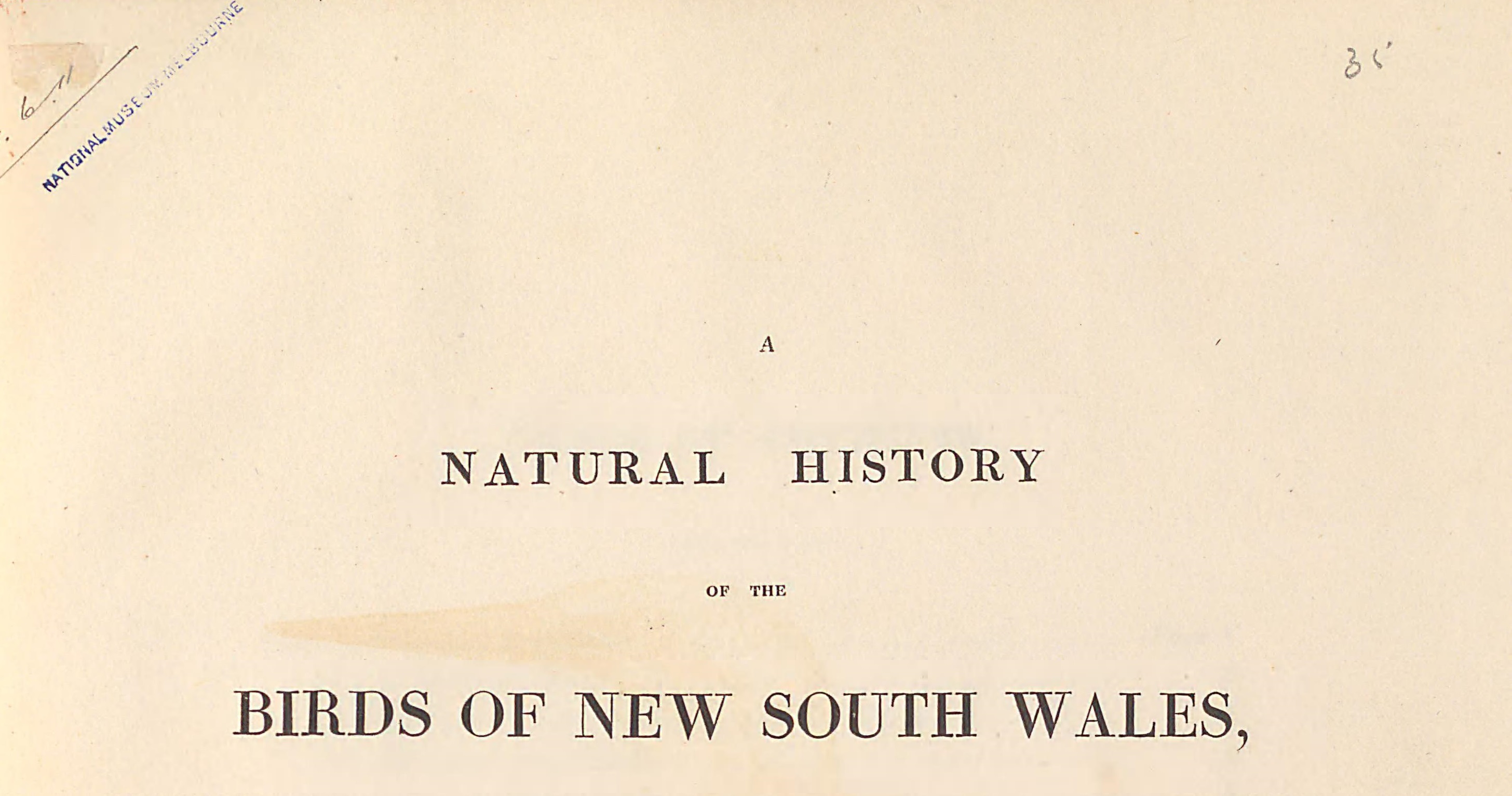
The practice from around 1900 seems to have been to write the accession date on the top left corner of the title page or the abbreviations ‘Entd.’ Or ‘E’ (fig. 3).

lewin tp stamp.jpg

Fig. 3. Title page of Museums Victoria’s copy of A natural history of the birds of New South Wales (3rd ed. 1822) by John Lewin. Unfortunately, Museums Victoria doesn’t hold a first edition of this work, however we have digitised the 3rd (1822) and 4th editions (1838) for everyone to enjoy!

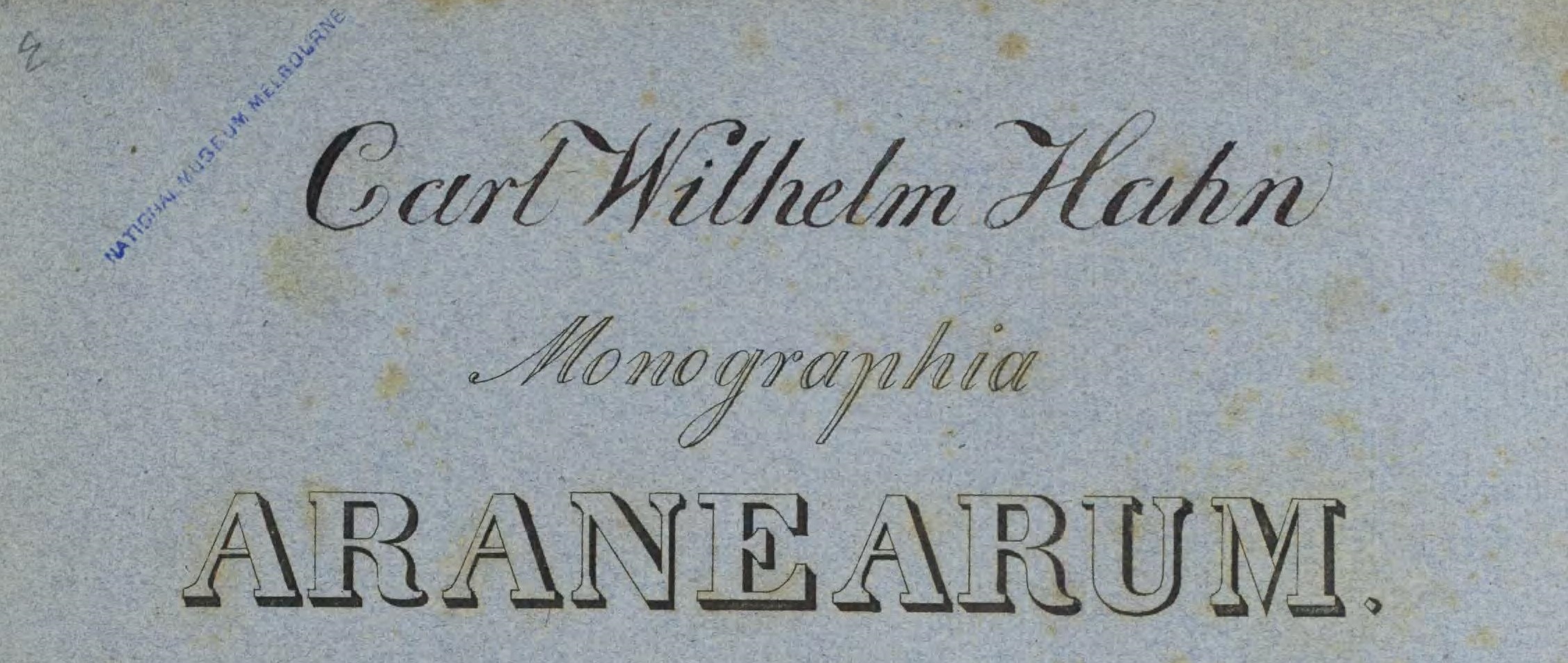
The National Museum Melbourne stamp appears to have been used from around 1900 to 1930 (fig. 4).

Hahn tp stamp.jpg

Fig. 4. Title page of Museums Victoria’s copy of Monographia Aranearum (or Monographie der Spinnen in German) (1820-1836) by Carl Wilhelm Hahn with National Museum Melbourne stamp. This title is very rare, with only 13 complete copies recorded in Peter Sacher’s census in 1988.[1]

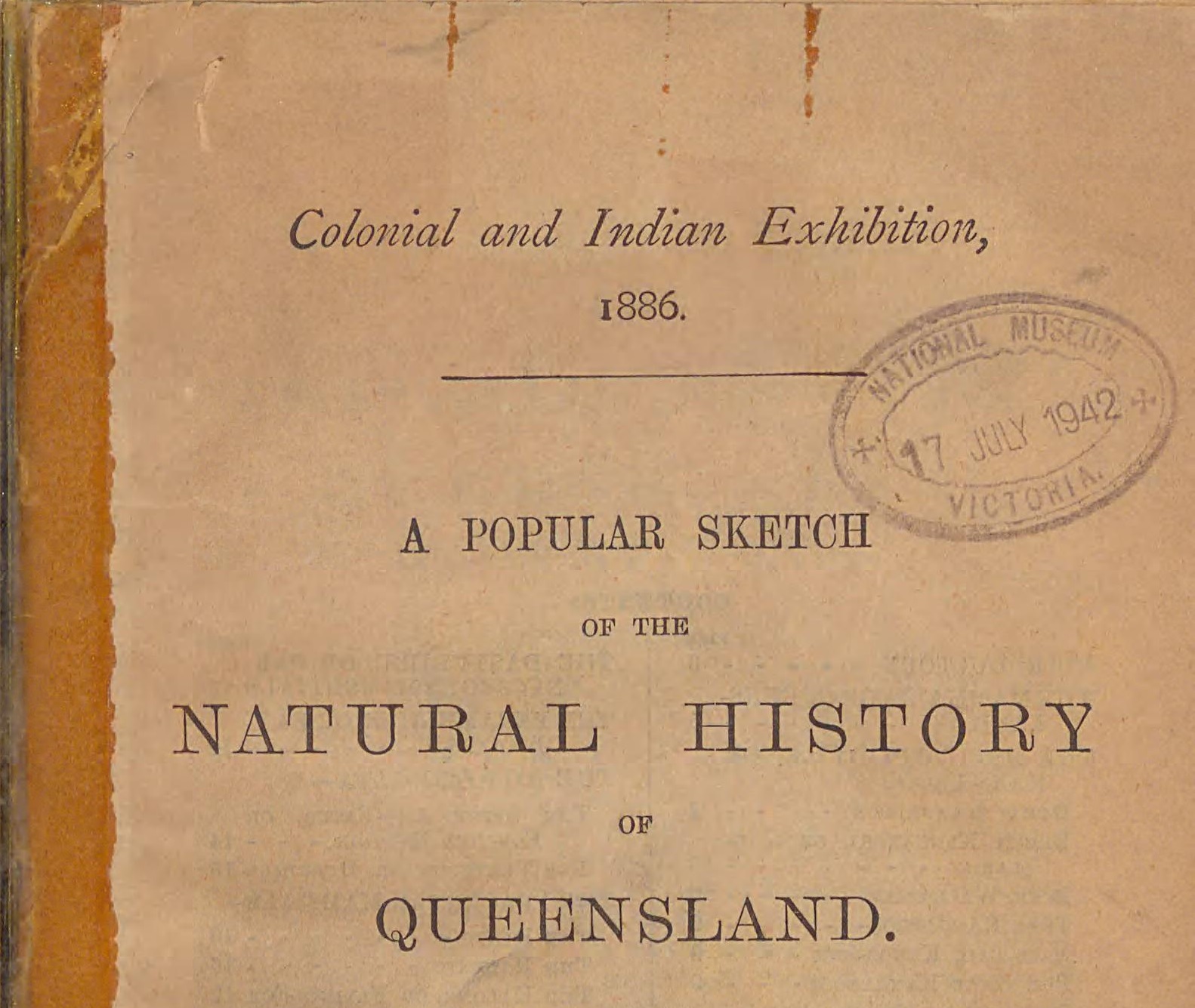
From the 1930s to late 1970s, dated stamps such as the examples below were in use, making purchases in this period very easy to date (figs. 5 & 6).

Fletcher tp stamp.jpg

Fig. 5. Museums Victoria’s copy of A popular sketch of the natural history of Queensland (1886) by Price Fletcher with dated stamp. With a specific date available, this acquisition would be easy to trace in our archives.

Turton tp.jpg

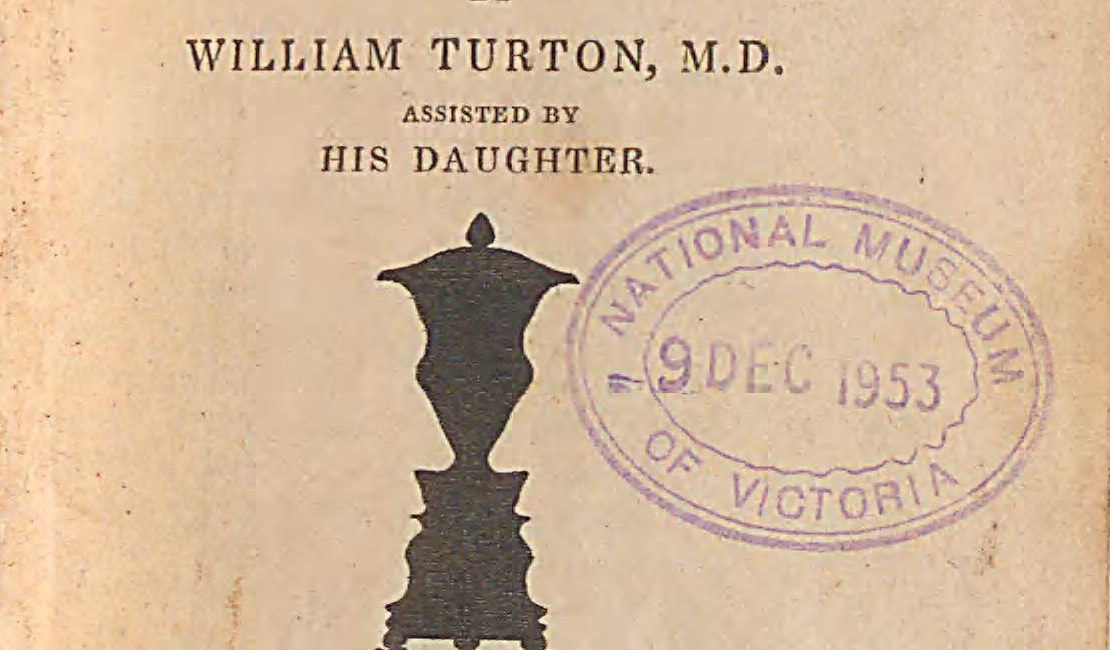
Fig. 6. Title page of Museums Victoria’s copy of William Turton’s A conchological dictionary of the British Islands (1819) with dated stamp. The acquisition number in the top right-hand corner makes this title even easier than the last example to trace in our archives. Keep looking through this item and you will spy some lovely additional illustrations added in the margins by a former owner.

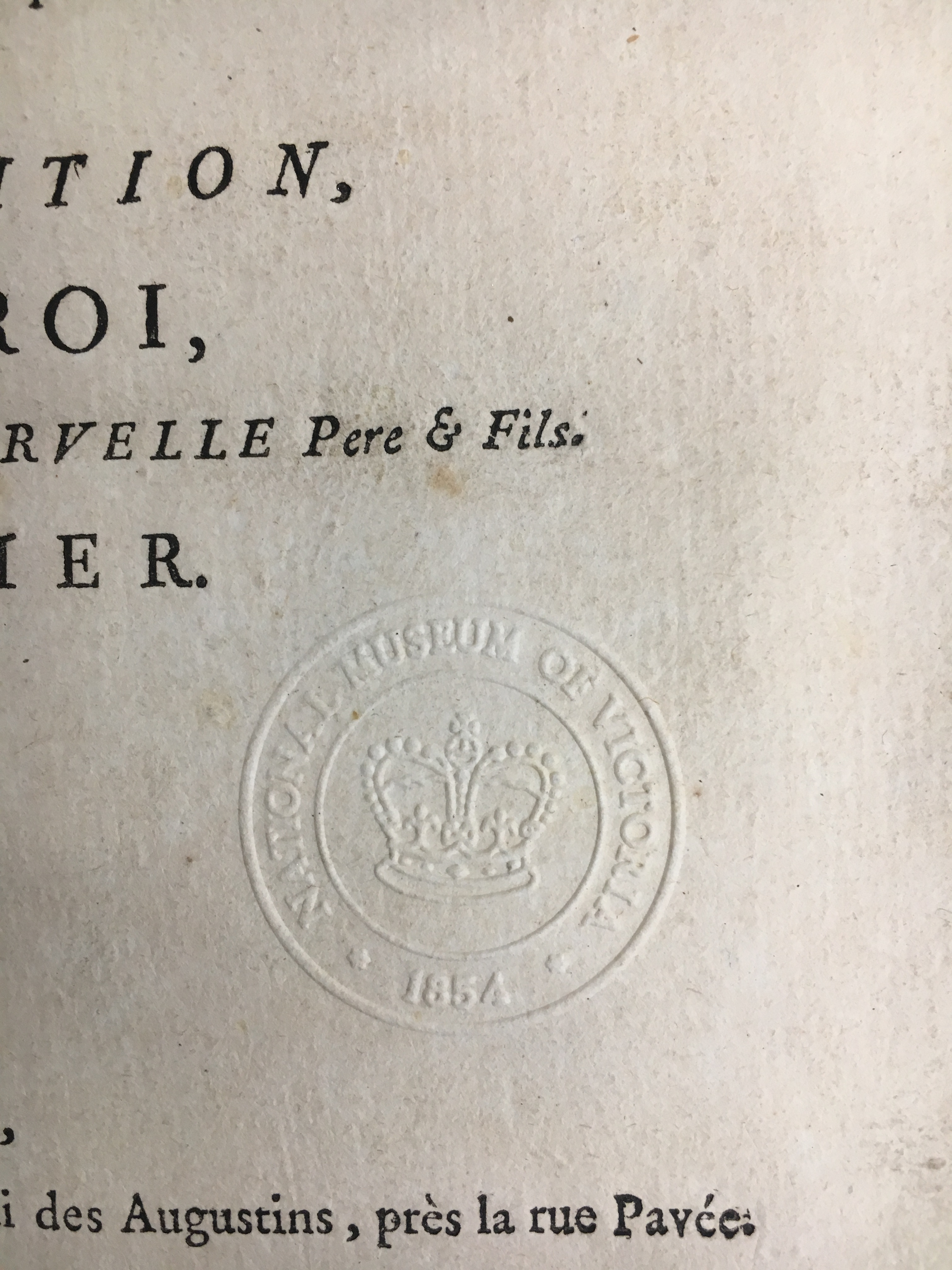
While dated stamps continued to be used after the 1970s, a blind stamp was used for items that were being directly entered into the Rare Book Collection between the late 1970s and early 2000s (fig. 7).

Example of a blind stamp from Museums Victoria

Fig. 7. This blind stamp would have been considered less intrusive, while still clearly indicating ownership.

This is representative of a shift in library practice towards the designation and separate management of rare book collections. By the late 1970s, the Museums Victoria Library was housing its rare books separately from the general collection.

recent stamp crop.jpg

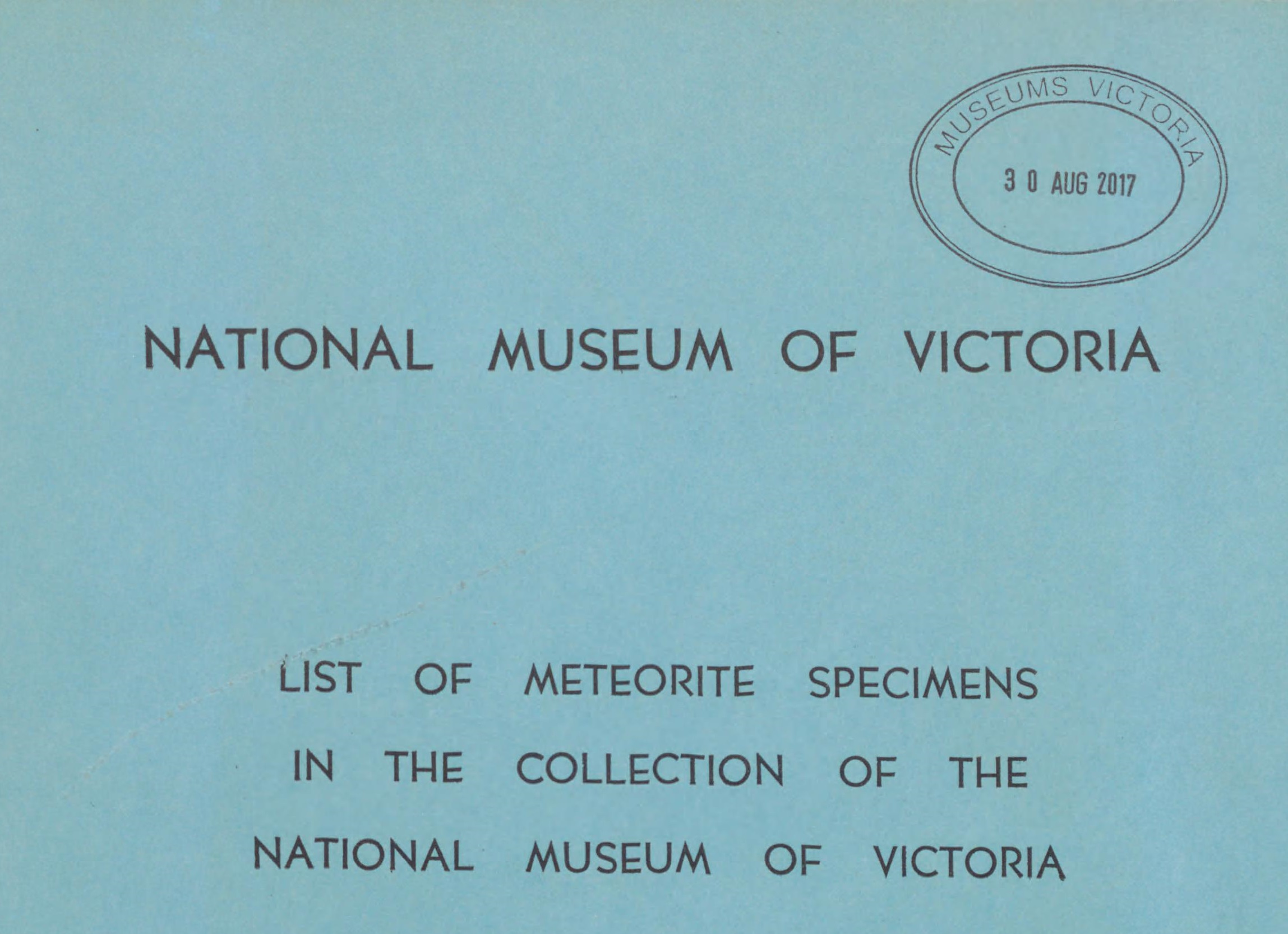
Fig. 8. A recent example of a dated stamp from 2017. National Museum of Victoria. List of meteorite specimens in the collection of the National Museum of Victoria, September 1972. 1972. Digitized in BHL by Museums Victoria.

Archival research is usually needed to confirm the date of acquisition. Items frequently bear multiple stamps, which may have been applied after accessioning. It appears that stamps were applied to the verso of plates retrospectively, while items may also have been routinely stamped if they were rebound.

While the stamps can be a bit confusing at times, having a general understating of them can help refine a date range for archival research. It also allows me to give a quick answer to a question often asked by tour groups — how long has this item been in your collection?

References

[1] Sacher, Peter 1988 ‘Commentary’ in Hahn, Carl Wilhelm, Monographie der spinnen (1820-1836), Leipzig, Zentralantiquariat der DDR.

Further Reading

Guide to researching provenance of books now in the British Library

Northcote Library – Stamps & Stickers

Daley, Jason. Bonn Library Recovers More Than 600 Books Looted After World War II, Smithsonian Magazine. April 15, 2019.

McGrane, Sally. What became of the Jewish books? New Yorker. February 28, 2014.

October 3, 2019by Joel Richard

Help Support BHL

BHL's existence depends on the financial support of its patrons. Help us keep this free resource alive!

search

About BHL

The Biodiversity Heritage Library (BHL) is the world’s largest open access digital library for biodiversity literature and archives. BHL operates as a worldwide consortium of natural history, botanical, research, and national libraries working together to digitize the natural history literature held in their collections and make it freely available for open access as part of a global “biodiversity community.”

Join Our Mailing List

Sign up to receive the latest news, content highlights, and promotions.

Subscribe Now

Subscribe to Blog via Email

Enter your email address to subscribe to this blog and receive notifications of new posts by email.

Join 319 other subscribers

Subscribe to Blog Via RSS

Subscribe to the blog RSS feed to stay up-to-date on all the latest BHL posts.

Access RSS Feed

Inspiring Discovery through Free Access to Biodiversity Knowledge.

The Biodiversity Heritage Library makes it easier than ever for you to access the information you need to study and explore life on Earth…for free, anytime, anywhere.


64+ Million Pages of
Biodiversity Literature Online.

EXPLORE

Tools and Services
to Transform Research.

EXPLORE

300,000+
Illustrations on Flickr.

EXPLORE

ABOUT | HARMFUL CONTENT | PRIVACY | SITE MAP | TERMS OF USE