Biodiversity Heritage Library - Program news and collection highlights from BHL
  • Home
  • News
  • Featured Books
    • All Featured Books
    • Book of the Month Series
    • BHL at 20
  • User Stories
  • Campaigns
    • Fossil Stories
    • Garden Stories
    • Monsters Are Real
    • Page Frights
    • Her Natural History
    • Earth Optimism 2020
  • Tech Blog
  • Visit BHL
Home
News
Featured Books
    All Featured Books
    Book of the Month Series
    BHL at 20
User Stories
Campaigns
    Fossil Stories
    Garden Stories
    Monsters Are Real
    Page Frights
    Her Natural History
    Earth Optimism 2020
Tech Blog
Visit BHL
  • Home
  • News
  • Featured Books
    • All Featured Books
    • Book of the Month Series
    • BHL at 20
  • User Stories
  • Campaigns
    • Fossil Stories
    • Garden Stories
    • Monsters Are Real
    • Page Frights
    • Her Natural History
    • Earth Optimism 2020
  • Tech Blog
  • Visit BHL
Biodiversity Heritage Library - Program news and collection highlights from BHL
Blog Reel, Campaigns, Earth Optimism 2020

Sustainable Forestry Science: Wilhelm Philip Daniel Schlich

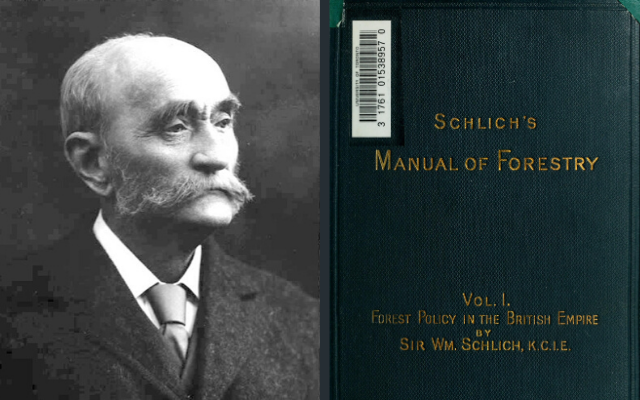
black and white photo of a man in a suit and tie next to cover of a book that reads manual of forestry

April 2020 marks the 50th anniversary of Earth Day. Organizations around the world have commemorated the occasion by participating in the global Earth Optimism movement — an initiative spearheaded by the Smithsonian to “turn the conservation conversation from doom and gloom to optimism and opportunity”.

Throughout 2020, the Biodiversity Heritage Library (BHL) and our partners are joining the movement by sharing conservation success stories from and made possible by the BHL collection. Follow our blog for conservation stories — past and present — and visit our website for more information and to explore our Earth Optimism book collection.

———————
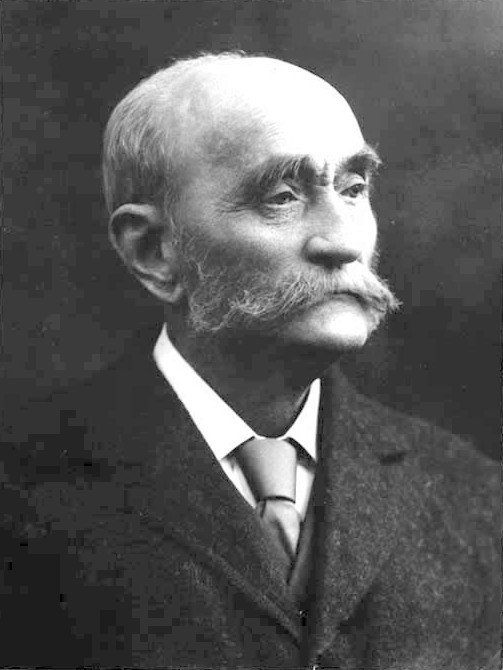
black and white photo of a man in a suit and tie

Wilhelm Schlich. Photo:Public domain Public Domain. Wikimedia Commons.

Wilhelm Philip Daniel Schlich (also known as William Schlich) was born on 28 February 1840 to a German pastor’s family. In 1859, he decided to study forestry, having previously studied mechanical engineering and mathematics. The change may have been inspired by Gustav Heyer, who taught forestry at the University of Giessen and under whom Schlich studied. After graduating in 1862, Schlich joined the Hesse forestry service, but unfortunately in 1866, he lost his employment due to territorial shifts after Prussia’s brief war against Austria.

At the same time, Dr. Dietrich Brandis, Inspector General of Forestry in the central government of British Raj, was looking for foresters to establish a technically competent forest administration service in India. Brandis is today considered the founder of tropical forestry.

India and Sustainable Forestry

Schlich followed Brandis to India, where he was employed at the focal points of the subcontinent’s forestry development: In 1867, he came to Burma as Special Assistant Conservator of Forests (ACF), where he was promoted to Deputy Conservator (DCF) after only six months. Schlich drew up personnel and economic plans and designed the further development possibilities for greater economic efficiency and higher profits. In 1870, he was transferred to the contrasting semi-desert climate of Sindh (Pakistan), where his success depended on the blessings of a regulated forestry industry for the population and the government revenue that the province would continue to receive.

His success led to his promotion in 1872 to the Conservator of Forests of Bengal. There he aroused the interest of the provincial governor Sir Richard Temple, who from then on strongly supported forestry. In 1873, the preparations for the founding of a forestry training centre in India were drafted, which led to the establishment of the Forest Ranger School in Dehradun in 1878—where Schlich himself headed the forestry department.

Schlich was also involved in the revision of the Forest Act of 1878, which divided the Indian forests into three groups: I. reserved forest (completely government controlled and protected), II. protected forest (partly government controlled) and III. village forests (controlled by abutting community). The majority of Indian forests were assigned to the first category and controlled first by the colonial government and then by the Government of India following Indian independence.
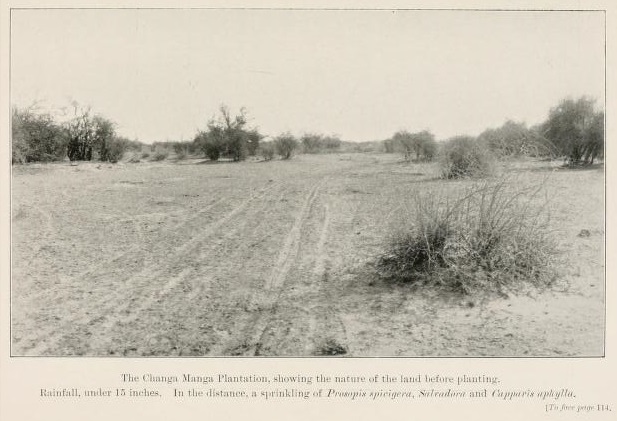
schlichsmanualof00schl_0141.jpg

The Changa Manga Plantation. Before aforrestation. Source: Schlich, Wilhelm. Schlich’s Manual of Forestry v. 1 (1906), ed. 3. Contributed in BHL from NCSU Libraries via Internet Archive.
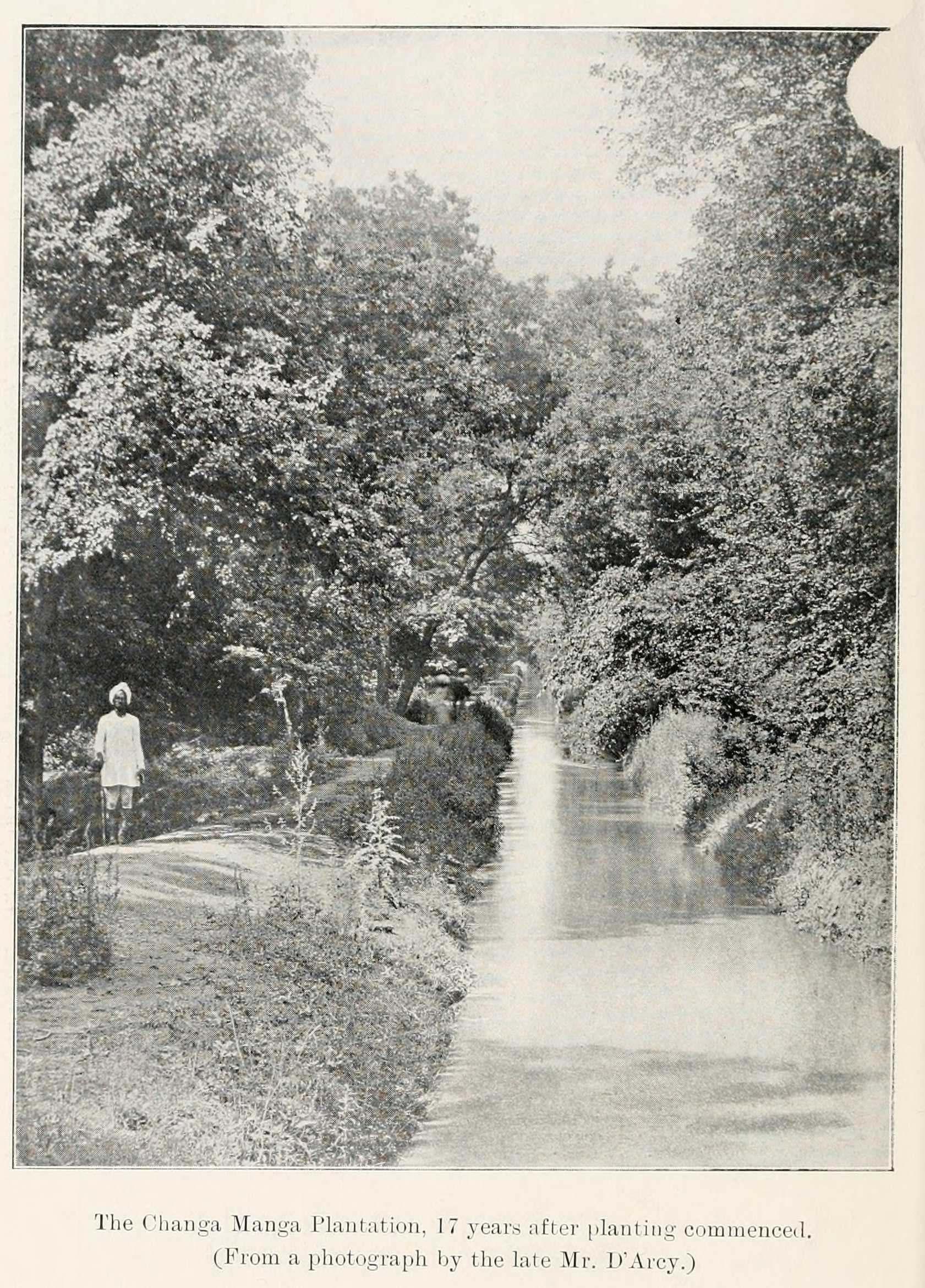
black and white photo of a forest and stream

The Changa Manga Plantation. Seventeen years after planting. Source: Schlich, Wilhelm. Schlich’s Manual of Forestry v. 1 (1906), ed. 3. Contributed in BHL from NCSU Libraries via Internet Archive.

During this time, Schlich held landmark lectures at the Indian Forest Conference in Allahabad. He not only referred to the economic aspects of forestry, but also emphasized that forests “… increase the artistic beauty of a country, may, under certain conditions, increase its healthiness, and at any rate have a beneficial effect upon the human mind” (Schlich’s Manual of Forestry, 22).

Another result of this conference was the founding of the first forestry journal in the English-speaking world—the Indian Forester—with Schlich as its editor (until 1879).

In 1880, Schlich was assigned Conservator of Forests of Punjab, and by the end of 1881, he was appointed to the central government as Officiating Inspector General of Forests.

“It is not too much to say that the development of economic forestry in the British Empire generally has come through India. It is that country which has set the example. There can be no doubt that the development of systematic economic forest management in British India is something to be proud of” (Schlich’s Manual of Forestry, 118).

Great Britain & the Acknowledgement of Forestry as a Science

In 1885, Schlich left India for an appointment as Professor of Forestry at the Royal Indian Engineering College at Cooper’s Hill and was thus under the direct influence of the junior staff of the higher forestry service in India. Now he began to pursue his second major goal: The recognition of forestry studies as a scientific discipline at an English university.

In his lessons, Schlich always emphasized the importance of preserving the productive power of the soil as a silvicultural objective and thus created an understanding of sustainable forestry among his approximately 200 students, who passed this on to their later positions in science and administration.
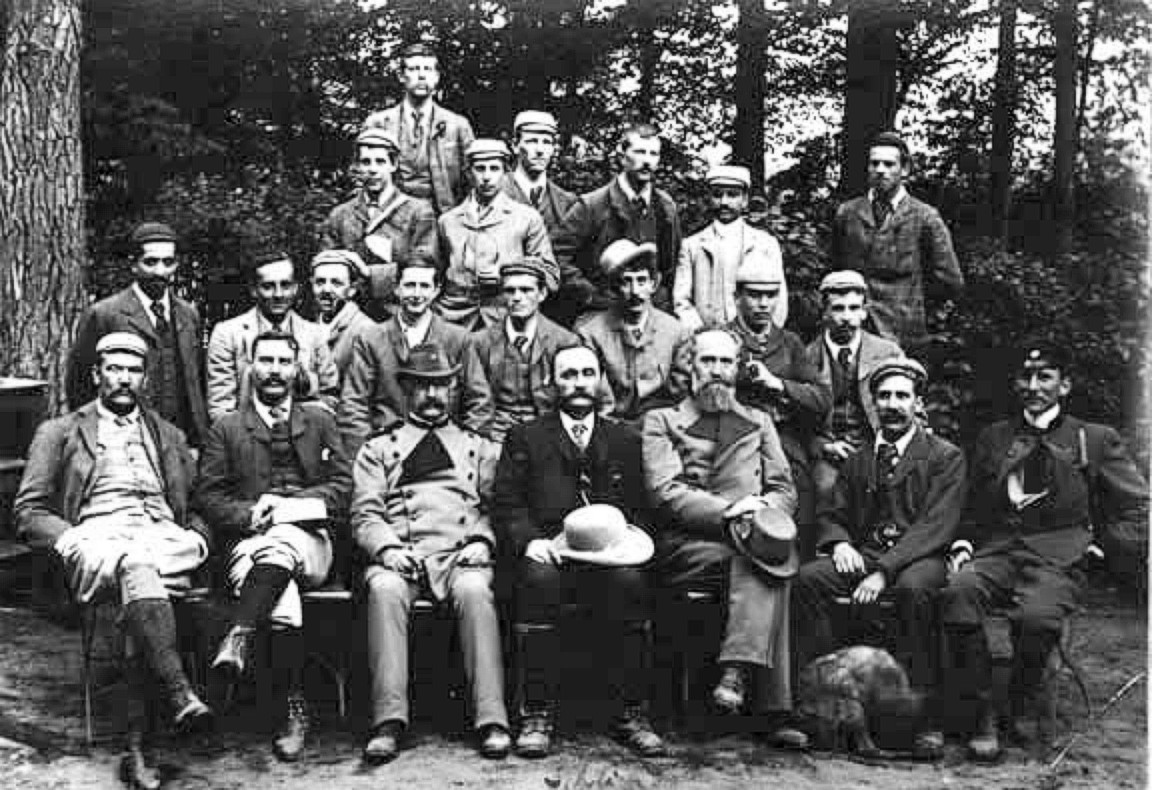
Sir_William_Schlich07.jpg

Wilhelm Schlich (center, first row with pale hat on his lap) with Oxford students during a tour to saxony in 1892. Photo: Public domain Public Domain, Wikimedia Commons.

The Manual of Forestry
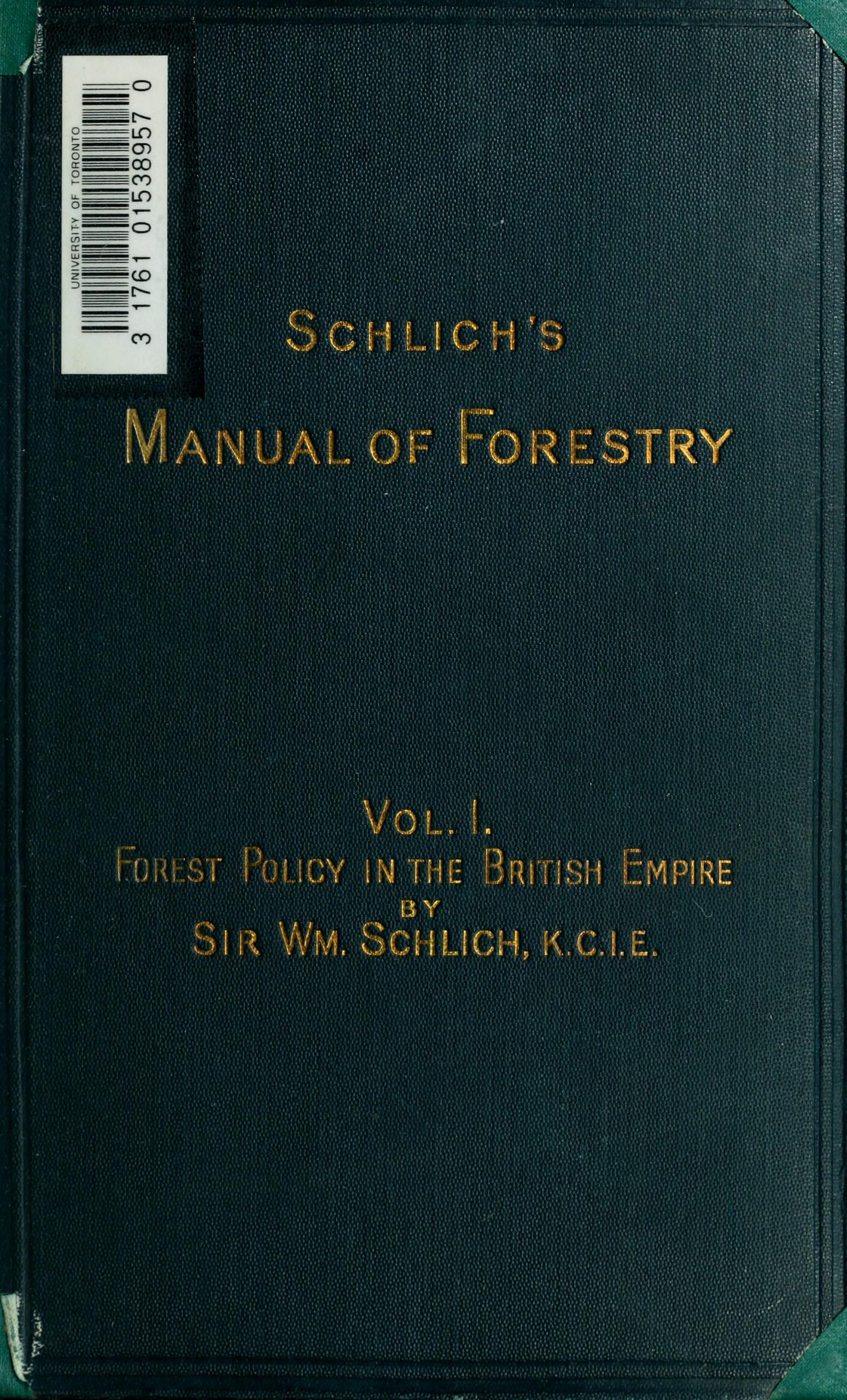
book cover in green with manual of forestry written on it

Cover. Schlich, Wilhelm. Schlich’s Manual of Forestry v. 1 (1922), ed. 4. Contributed in BHL from University of Toronto – Robarts Library.

During his teaching activities, Schlich produced the 5-volume Manual of Forestry (first published between 1889–96) in which he concentrated his knowledge and designed it as a textbook for his students.

  1. Forest Policy in the British Empire
  2. Formation and Tending of Woods or Practical Sylviculture
  3. Forest Management
  4. Forest Protection (by W. R. Fisher, BA.) , English Adaption of „Der Forstschutz“ von Richard Heß
  5. Forest Utilization (by W. R. Fisher, BA.) , English Adaption of „Die Forstbenutzung“ von Karl Gayer

In this work, Schlich takes a holistic view of forestry work and addresses the climatological, pedological and plant-physiological factors that have an impact. Schlich’s principles pay attention to the balance of forest treatment without neglecting economic efficiency. The manual introduces the teaching of sustainable forest use in forestry studies and has become a standard textbook in the USA, among other countries.

In 1911, the University of Oxford offered Schlich a lectureship as professor of forestry. However, the lectureship was neither secured by a permanent chair nor by financial means, and forestry studies was by no means considered equal to the other scientific studies at that time. However, Schlich stuck to his goal, and when the lecture halls reopened in 1919 after WWI, students flocked to his lectures. The professorship was established by Oxford University as a permanent chair and financially secured. At the end of the year, Schlich ended his university teaching and ceded the chair to R. S. Troup.

Although retired, Schlich dedicated himself to the conservation of the forests in England and became involved in the Royal English Arboricultural to further develop the newly awakened interest in forestry. He remarked, however, that the societies and commissions talked too much and took too little actions.

Schlich died on 28 September 1925 in Oxford.

In recognition of his life’s work, Schlich became, in some cases posthumously, an honorary member of various forestry interest groups. In his honour, the Society of American Foresters awards the Sir William Schlich Memorial Medal, which was presented among others to Franklin D. Roosevelt, then President of the USA, for his services to forest conservation in the USA by founding and promoting the Civilian Conservation Corps.

Sources and Literature

Titles by Sir Wilhelm Schlich in the Biodiversity Heritage Library: https://www.biodiversitylibrary.org/creator/13760

Knopf, H. E. (1992). Forstliche Leitbilder: Leben und Werk von Philipp Engel von Klipstein, Richard Alexander Hess, Sir William Schlich. Göttingen: Vereinigung d. Freunde d. Fachbereichs Forstwirtschaft. http://www.worldcat.org/oclc/46119866.
July 30, 2020by Joel Richard
Blog Reel, User Stories

Museum Studies…At Home: BHL Empowers Distance Learning for Students at NYU

papers bound in blue ribbon

The Campus is Closed: Shifting to Distance Learning

On 9 March 2020, New York University announced that it was taking classes remote, and less than two weeks later the entire campus, including our beloved Bobst Library, shut down. While I was relieved that the university was taking the pandemic seriously and acting quickly to flatten the curve, the shut-down posed serious challenges not just to teaching but to research for both me and my students.

My grad-level class, “Science, Art & Invisible Objects in Natural History Museums,” examined how natural history and anatomical collections, from the private Wunderkammern of the early modern period to the AMNH’s award-winning Hall of Biodiversity, have consistently struggled with the politics and poetics of representing objects without names, immaterial materials, and objects that, in fact, never really existed at all. Using things like gravid wombs, cosmic nebulae, rotting flora, spirits, and dinosaurs as our starting points, graduate students from NYU’s Program in Museum Studies and other departments traced the ways in which practitioners have worked to communicate, preserve, make visible, and display elusive objects of wonder and meaning across the arts and sciences.

For the class’s final assignments, students could choose to explore the history of one object—from any time period or field—through a “traditional” research paper or through a “creative” project (you can follow #unessay on Twitter for examples of projects from other schools, departments, and classes). Both options required the use of primary sources, and without access to our library, let alone museum or archival collections, I worried about whether we would need to rethink the scope of the class entirely.

Over the course of my research on 18th and 19th century natural history, I have relied on traveling to archives, often taking as many photos of sources as possible to make the most of limited time and funding. To really sit with a source, to read it line-by-line and return back to it over the course of days or weeks, requires an enormous amount of scholarly privilege—privilege that was taken away from almost everyone, suddenly and unexpectedly, when the pandemic hit.

The Biodiversity Heritage Library (BHL) has not only given me the luxury of sitting with sources, but it has opened up new research possibilities: quickly consulting books housed in collections hundreds of miles away, running full-text searches that have brought new sources into my purview, even downloading PDFs and images to work with offline or in building lectures (a real boon to anyone working remotely with unstable WiFi connections). All of these possibilities, I decided, could be leveraged to help students access primary sources at home and, indeed, to encourage new and creative ways of working with those sources outside of the boundaries of archives.

In remote one-on-one meetings with students, I laid out options of how to access sources through BHL, speaking practically about how some research plans might change using digital methodologies. All of the students, including those working on physical sciences like astronomy, also used digital sources available through our university library to round out their research.

One student leaned into these new limitations, reframing her project to ask about questions of failure is scientific representations—what might a set of images look like, she asked, if we saw all of the discarded attempts made in the process of creating the beautiful objects historians study today? Many students looked to BHL’s collections to help them explore specific themes—from the history of botany to insights from Charles Darwin’s writings and strategies for educating museum visitors about extinction.

Student Projects: Theme — History of Botany

Using BHL sources, two students worked on the history of botany, sharing sources with one another and even mailing plants to each other through the USPS.

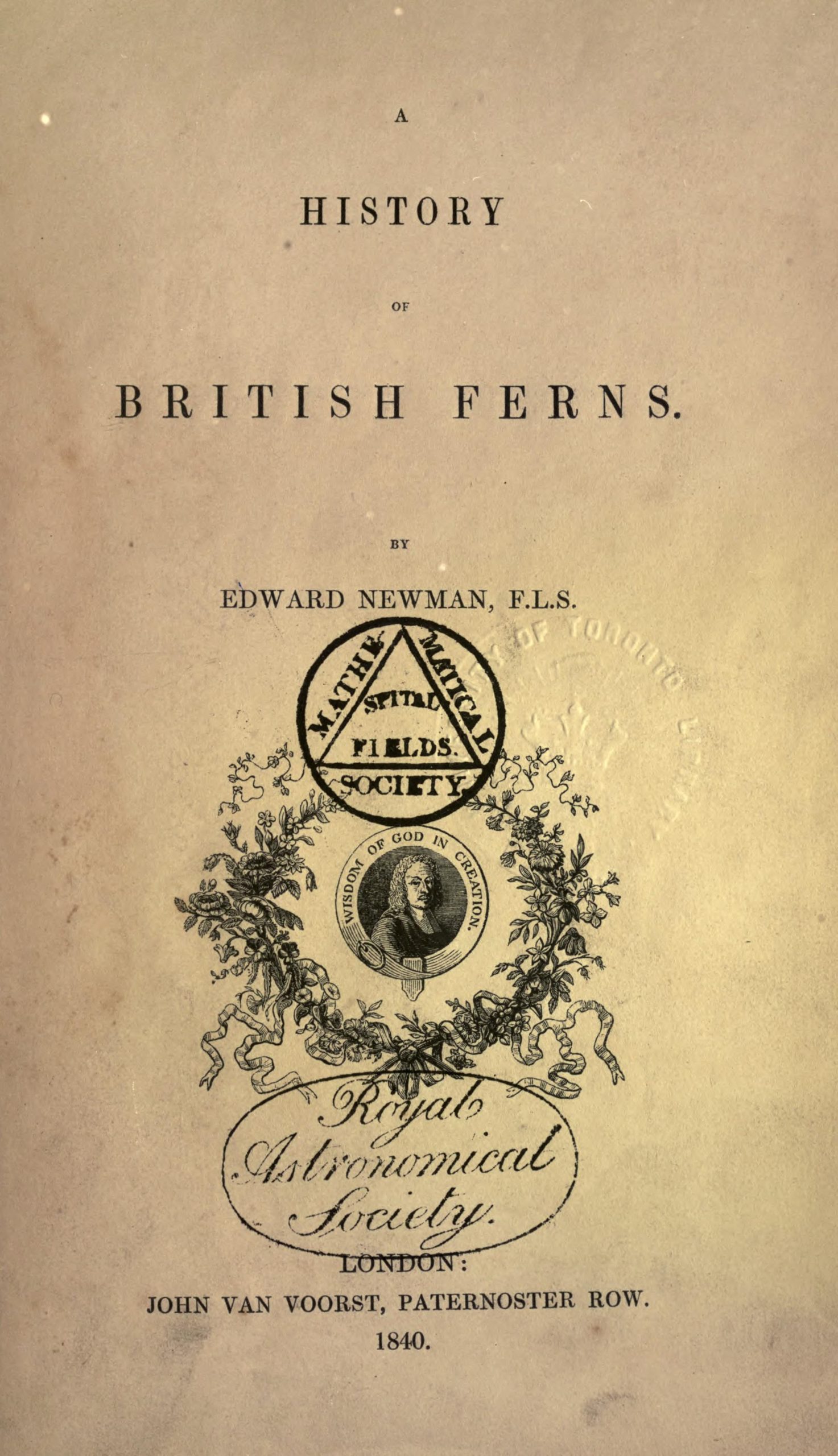
Jelane Da Silva wrote about Pteridomania, the fern-collecting craze that swept through Britain and the U.S. in the mid-19th century. “When I advance-searched the word “fern” between the years 1837 and 1901,” Jelane notes, “the BHL cumulated countless results.” Of those, Jelane focused on Nona Bellairs’ 1865 Hardy Ferns, which “called for ‘Fern Laws’ to be set in place, imminent of the trails of damage that Pteridomania was going to leave behind”, and Edward Newman’s 1840 British Ferns, one of many books that “encouraged the overcollection of ferns and enriched the desire for what was ‘in’—the fad, the fern—but not necessarily the desire to be a naturalist.”

title page of british ferns

Title Page, A History of British Ferns (1840), by Edward Newman. Reference for: Jelane Da Silva, “Just Ferns,” Research Paper, 2020. Da Silva writes: “To make describing and identifying Nature’s objects easier for all, plants and animals were classifiable by a “sexual system” that separated natural bodies based on their apparent physical features… On the basis of sight, humans were given the opportunities to classify Nature’s objects and introduce them to their historicity. This cultural history tempts nonconformity of sympathies and antipathies. The ways in which Nature’s objects have been systemized, historicized, and theorized by humans has obscured and spoiled the potential power for humankind to access the deeply rooted values and hear the intrinsic voices of Nature and Nature’s objects… Historically, in the case of Pteridomania, this was a burden upon the fern’s livelihood, inner ontological beings and further removed humanity from the natural world.”

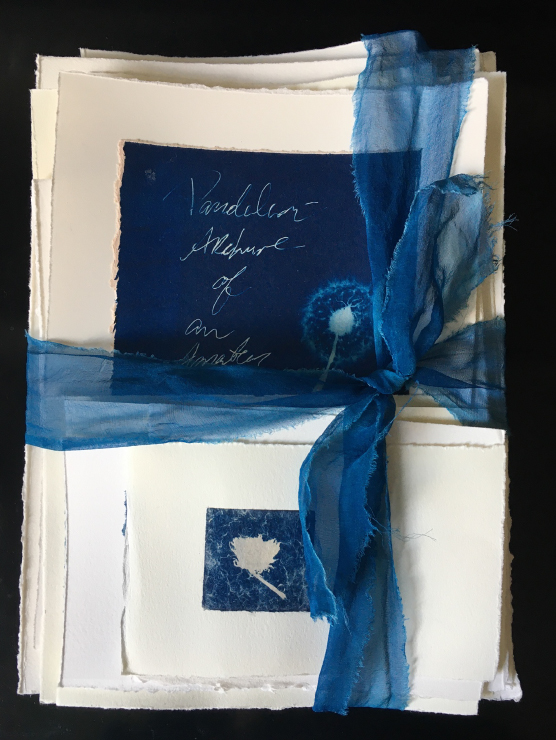
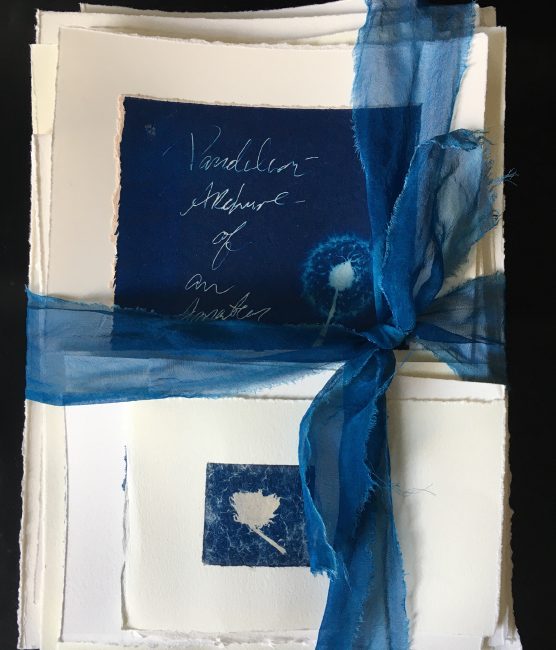
Adriana Ciocci produced a series of cyanotypes, à la Anna Atkins, in “recording and archiving a common plant, the dandelion, to emphasize the uniqueness of each specimen at different stages of preservation and decay.” Adriana relied on Joseph Dalton Hooker’s Botany of the Antarctic Voyage, among other BHL sources, to “study how plants were illustrated two-dimensionally during the 19th century” while looking for “depictions of dandelions at various stages of development.” Embracing the art of imperfection, her frustrations with limited access to the materials she had planned to work with became part of the project itself.

papers bound in blue ribbon

Adriana Ciocci (Experimental Humanities), “Dandelion: Archive of an Amateur,” cyanotypes, 2020. Ciocci writes: “In my creative project, through a series of unforeseen hurdles of acquiring dandelion specimens, learning the process of cyanotyping, and lack of access to resources I became focused on recording failures that would otherwise become archival silences. By preserving imperfect specimens using a process which distorts perception through shifting shadows, I created unpredictable yet archivally stable prints. My aim is to prove trials and failures are worthy of recording since they are an inevitable part of scientific and artistic practices.”

Student Projects: Theme — Insights from Darwin’s Writings

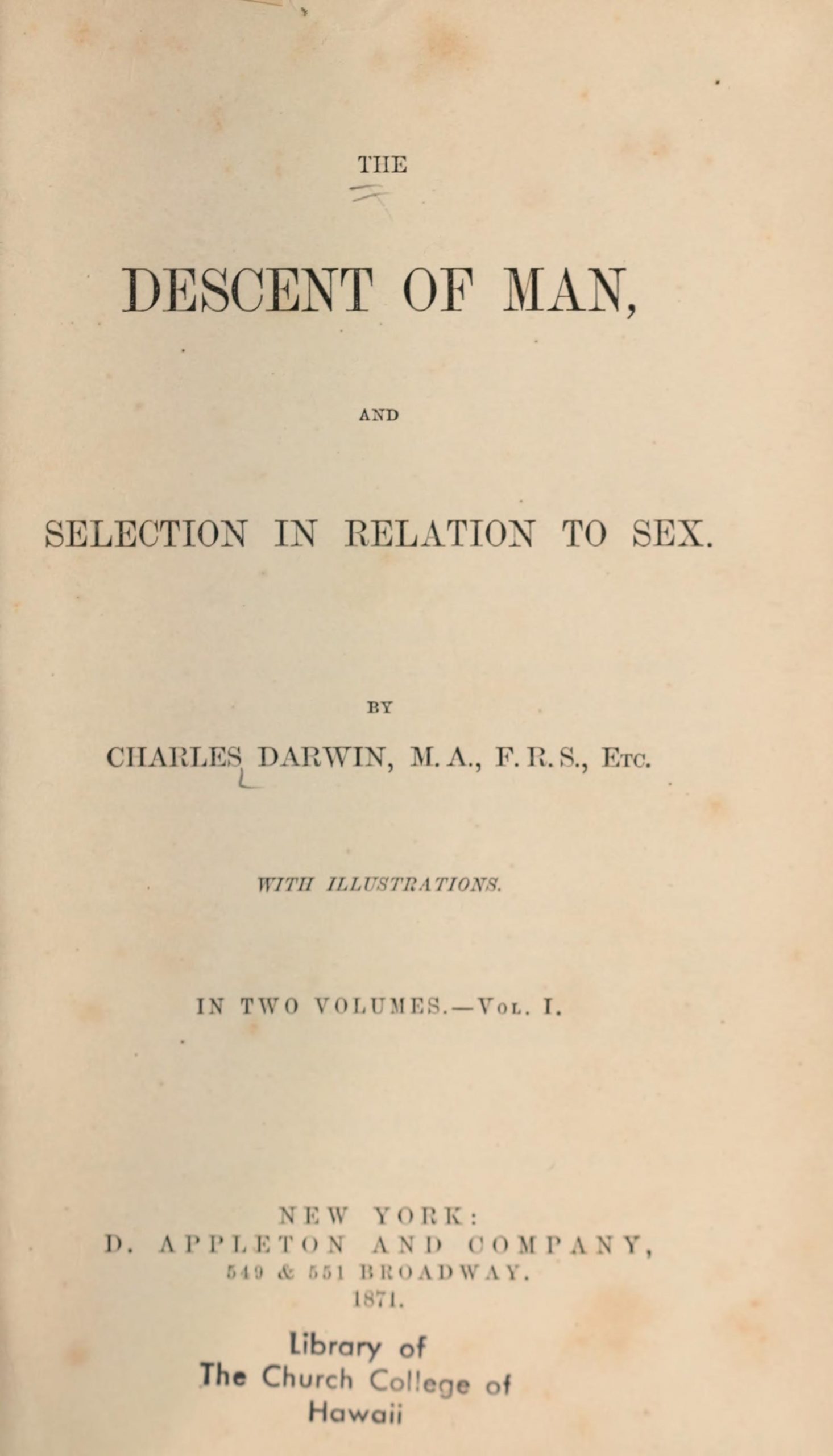
Charles Darwin’s works appeared in several projects. Yukie Zheng mined his 1871 Descent of Man and 1872 Investigation of the Emotions in Man and Animals to investigate the role that photography played in evolutionary constructions of race, pulling out physiognomic threads in his writing.

title page of the descent of man

Title Page, The Descent of Man (1871), by Charles Darwin. Reference for: Yukie Zheng (Visual Arts Administration), “Changes in Immutability,” Research Paper, 2020. Zheng writes: “In the late nineteenth century, Darwin published the Origins of the Species (1859) and the Descent of Man (1871)… Even though Darwin wrote this book in a rational and scientific way to build his theory, the public may use Darwin’s theory to construct the racial differences to justify their certain behaviors… This article will focus on the general group of people of color when talking about the Darwinism and social Darwinism, but with major emphasis on the black people. It undoubtedly helps the public to build the conception of race. The social oppression that we often see in the history of nineteenth century originates from both the cultural differences and scientific beliefs.”

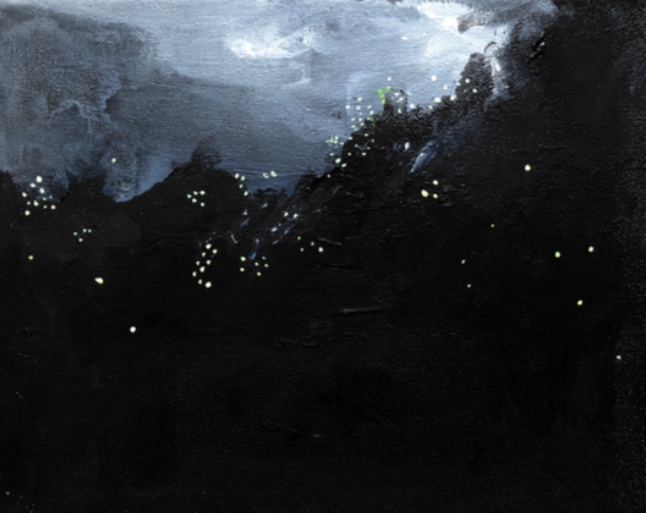
Tomas Uriburu turned to Darwin’s expedition aboard the H.M.S. Beagle to explore the long and poetic history of bioluminescence alongside theoretical issues of darkness and precarity and ways forward amidst uncertainty. Encountering bioluminescent marine life off the coast of South America, Darwin wrote that “as far as the eye reached, the crest of every wave was bright, and the sky above the horizon, from the reflected glare of this livid flames, was not so utterly obscure as over the vault of heavens” (167). Weaving Darwin’s words together with those of earlier naturalists—Erasmus Darwin, Alexander von Humboldt, and John Bowring, as well as the 20th century specialist Edmund Newton Harvey, Tomas created an illustrated history of the magical phenomenon for which “darkness is a necessary condition.”

night sky painting

Tomas Uriburu, “The Future is Dark,” creative research paper with painted illustrations, 2020. Uriburu writes: “In this paper, I won’t focus on the lights that make things appear as whole but on the vulnerable, enigmatic, mysterious, undetermined, dim, and fragile lights that activate certain types of curiosities. I am not interested in tracing the lights that make life predictable or understandable. Instead, I am interested in looking for lights that make life uncertain and incomplete.”

Student Projects: Theme —Extinction and Museum Education

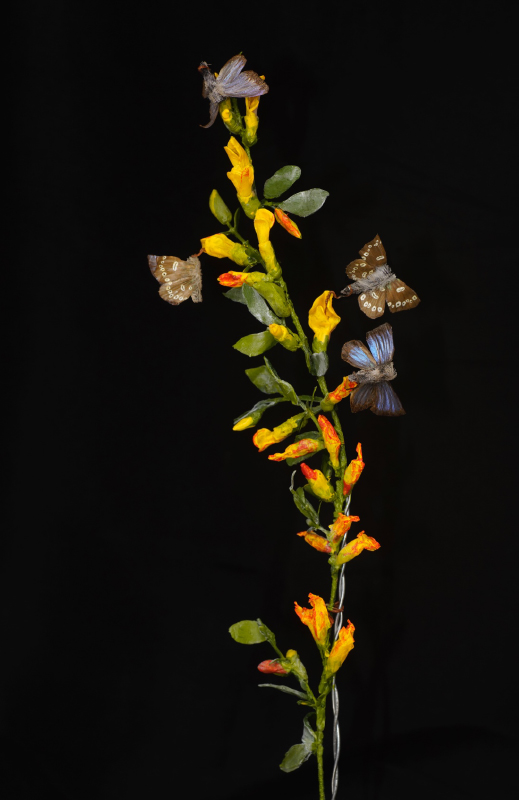
In modeling the extinct butterfly species Glaucopsyche xerces (the Xerces blue) and the deerwood flora native to coastal dunes of San Francisco, Rachel Leckman was inspired by the BHL blogpost “Breathing Life into a Museum Exhibit about Extinction.” Using materials like goldbeater skin, compressed pastels, compressed iridescent watercolor, synthetic hair, and lace, Rachel presented a case for lifelike models as a way of educating museum visitors about the species that we have lost to climate change and habitat destruction, relying on recent sources like UNEP’s “Environment on the Edge” but also historic sources about searching for lost animals like the Explorations and Field-Work of the Smithsonian Institution in 1937-1938.

model of butterflies on a plant

Rachel Leckman, “Xerces Blue Model,” goldbeater skin, compressed pastels, compressed iridescent watercolor, sculpey, lace and synthetic hair, 2020. Leckman writes: “For my final project I created models of Xerces Blue butterflies (Glaucopsyche xerces) accompanied by a model of a Deerwood (Lotus scoparius) branch. This species of butterfly was native to the coastal dunes of San Francisco and went extinct around 1941-1943. For my model I recreated this small iridescent butterfly using goldbeater skin, compressed pastels, compressed iridescent watercolor, sculpey, lace, and synthetic hair. The branch the butterflies are feeding and laying eggs on is made out of sculpey and acrylic paint. This type of model, with a more complete and narrative imitation of the natural habitat, could be used in museums as an educational facsimile of the past to make examples of human caused extinction better known.”

Planning for a Future of Distance Learning

Much has changed since March, and it seems that new information about when—and whether—institutions will reopen changes week by week. It’s unclear, at this point, whether NYU will go back to in-person classes in September and whether graduate students starting on their theses will have access to primary sources back on campus or at New York’s museums and cultural heritage sites. Much research will be done using digital sources in the meantime.

On my end, I’m using the success of working with digital sources as a model for how I’ll enter next semester—for how I’ll frame assignments, advise early-stage thesis research, and continue to conduct my own work, having canceled research trips for the foreseeable future. Our subject specialist librarian has been instrumental in helping us navigate new ways of working with digital sources, and it’s clear that some of these methodologies are, thankfully, here to stay.

Reinterrogating who has access to primary sources all the time—not just during periods of crisis—seems key, and I hope that resources like the Biodiversity Heritage Library will be there to connect scholars at any stage with the rich sources and new research methodologies that promise a stronger and more inclusive historical field writ large.

July 28, 2020by michelle.underhill
Blog Reel, Campaigns, Earth Optimism 2020

Beyond Walden: What Henry David Thoreau Teaches Us About Nature and Connection

April 2020 marks the 50th anniversary of Earth Day. Organizations around the world have commemorated the occasion by participating in the global Earth Optimism movement — an initiative spearheaded by the Smithsonian to “turn the conservation conversation from doom and gloom to optimism and opportunity”.

Throughout 2020, the Biodiversity Heritage Library (BHL) and our partners are joining the movement by sharing conservation success stories from and made possible by the BHL collection. Follow our blog for conservation stories — past and present — and visit our website for more information and to explore our Earth Optimism book collection.

———————

Thoreau the writer.  Thoreau the philosopher.  Thoreau the naturalist.  Thoreau the citizen.

The myriad of Henry David Thoreau’s titles demonstrates the fusion of interests that propelled his path toward becoming one of the key naturalist figures in history. Classic works like Walden and Civil Disobedience brought Thoreau literary renown as he proclaimed the philosophies of Transcendentalism and environmentalism. As a naturalist, his records of field specimens amassed in journals both while living at Walden Pond and long after. Though praised for his place in the American literary canon, he also made significant contributions to the scientific community. His field notes and data are now helping scientists learn more about species’ resilience, the effects of climate change, and the historical landscape of New England.

Thoreau’s identities are interdependent. Without his grace with words, little attention might be devoted to his findings and philosophies. If he had not had a passion for nature and study, he might never have gone to Walden Pond in the first place. Yet, it is not simply living and surviving at Walden Pond that makes Thoreau a great naturalist. His immersion in nature throughout New England and the relationships he formed with members of the Penobscot Nation in Maine sculpted his understanding and passion for the ecosystem.

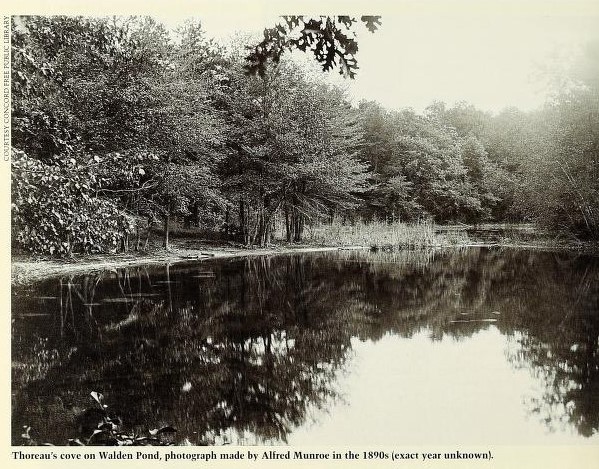
cove (3).jpg

A cove at Walden Pond where Thoreau lived 1845-1847. Miller-Rushing, Abraham J., and Richard B. Primack. “The Impact of Climate Change on the Flora of Thoreau’s Concord.” Arnoldia 66, no. 3. 2009.  Contributed in BHL by Smithsonian Libraries with permission from The Arnold Arboretum of Harvard University. CC-BY-NC-SA.

Blending art and science

Thoreau lived alone at Walden Pond outside the town of Concord, Massachusetts from 1845-1847. He practiced self-reliance by building shelter, farming, fishing and spending long hours in observation of his surroundings. Thoreau proves himself dedicated to his task of environmental study at all times, even during social hours with friends like writer Ralph Waldo Emerson. Thanks to Emerson’s Biographical Sketch of Thoreau, we learn that when the two went walking:

“… [Thoreau] carried an old music-book to press plants; in his pocket, his diary and pencil, a spy-glass for birds, microscope, jack-knife, and twine. He wore a straw hat, stout shoes, strong gray trousers to brave shrub-oaks and smilax, and to climb a tree for a hawk’s or a squirrel’s nest. He waded into the pool for the water-plants, and his strong legs were no insignificant part of his armor.” (Biographical Sketch of Thoreau, 20)

Thoreau’s book Notes on New England Birds goes on to showcase the very data he collected on such walks (maybe even with Emerson in tow!). His trademark lyricism is reflected in his field notes, such as this observation of a red-winged blackbird’s nest:

“What Champollion can translate the hieroglyphics on these eggs? It is always writing of the same character, though much diversified. While the bird picks up the material and lays the egg, who determines the style of the marking? When you approach, away dashes the dark mother, betraying her nest, and then chatters her anxiety from a neighboring bush…” (Notes on New England Birds, 251)

While the text maintains his melodious tone, it actually serves as critical data for the first records of animals in the area. For each of the birds, Thoreau records incremented updates over many years, illustrating changes in behaviors and migration. His notes reveal much more than a studious rigor, illuminating the true joy he experienced as a participant in nature. Thoreau takes an anthropomorphic approach to his notes on the birds, personifying each creature as an individual entity representative of its greater species:

“The loon comes in the fall to sail and bathe in the pond, making the woods ring with its wild laughter in the early morning…” (Notes on New England Birds, 3)

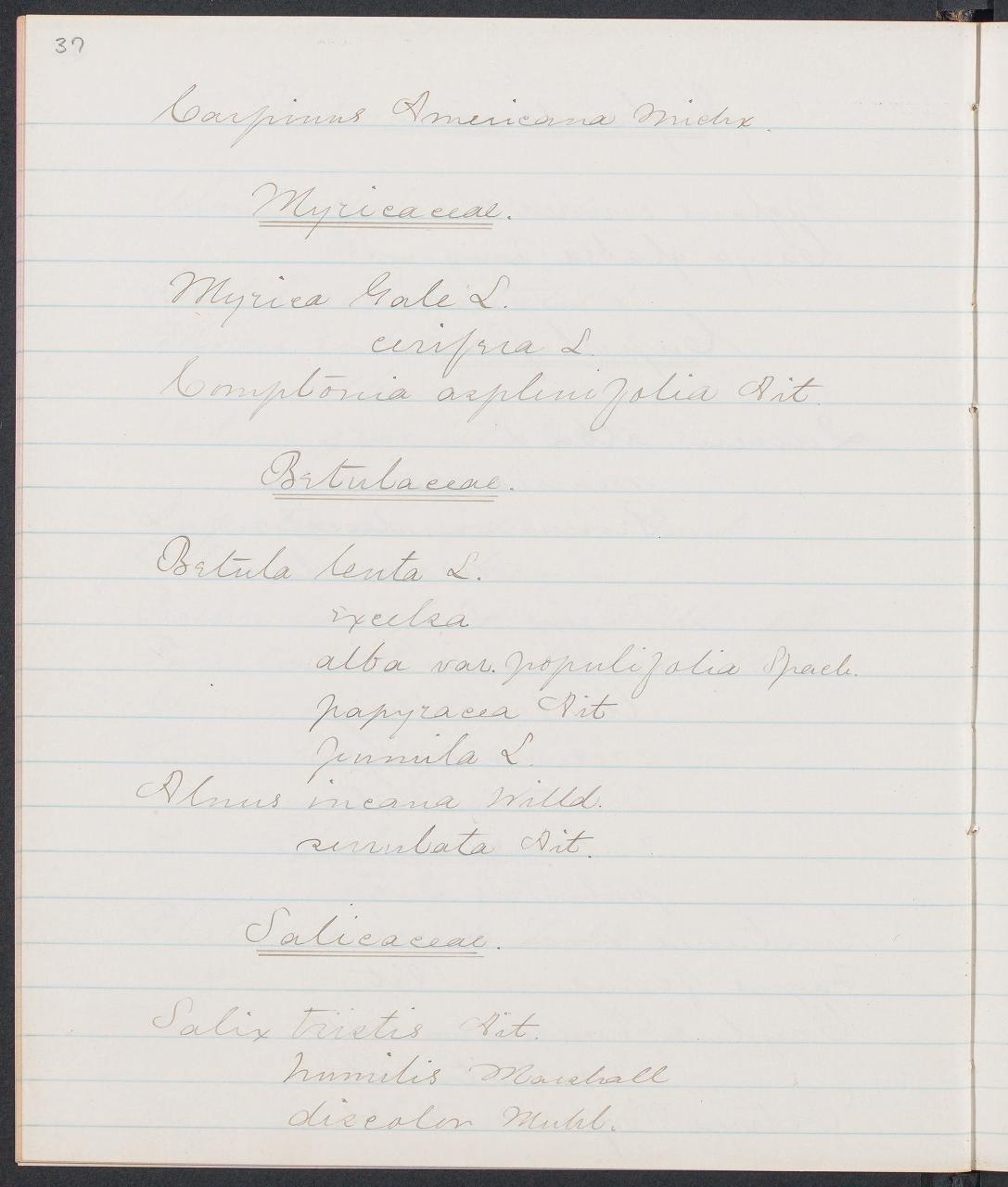
In Catalogue of Herbarium of Henry D. Thoreau, we see a less aesthetic side to his data collection. These handwritten notes on specimens from Thoreau’s herbarium show methodical organization and notes on each plant — Latin names and all. According to the Thoreau Society, he studied botany when he was at the Concord Academy and went on to collect about 900 plant specimens to dry and add to his herbarium. Through these two data sets, we see Thoreau’s scholastic pendulum swing between the art and science, emphasizing the multifaceted nature of his purpose.

Catalogue Herbarium.jpg

A page of Thoreau’s handwritten notes from the catalogue of his herbarium. Thoreau, Henry David. Catalogue of the Herbarium of Henry D. Thoreau, Bequeathed to Boston Society of Natural History. Contributed in BHL by Harvard University Botany Libraries.

Data that lives on

While Thoreau’s herculean efforts set precedents for the fields of biology and botany, his data itself remains relevant to current research. Works by other authors exemplify his contributions to modern science, such as the 1974 publication by Richard Jefferson Eaton entitled A Flora of Concord. This book documents the plants and ferns that grew naturally in Concord from Thoreau’s time to present day. Without Thoreau’s data on flora and animals, scientists would not have access to such an extensive look at species’ respective survivals and declines over time.

The detail of Thoreau’s field journals has provided scientists with evidence that allow them to evaluate changes in animal and plant behavior over a wide span of time. “The Impact of Climate Change on the Flora of Thoreau’s Concord“, by Abraham J. Miller-Rushing and Richard B. Primack, boasts that Concord flora is “one of the best-documented floras in the country,” in thanks to the initial work of Thoreau along with another local, Alfred Hosmer. Since 1830, the floras have been inventoried five times, serving as an immense case study of the effects of a changing habitat, climate, topography, and other factors on native plants.

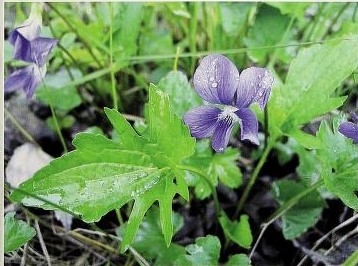
flora concord.jpg

Britton’s violet (Viola brittoniana) is one of many wildflowers native to Concord. Miller-Rushing, Abraham J., and Richard B. Primack. “The Impact of Climate Change on the Flora of Thoreau’s Concord.” Arnoldia 66, no. 3. 2009.  Contributed in BHL by Smithsonian Libraries with permission from The Arnold Arboretum of Harvard University. CC-BY-NC-SA.

The painstaking work that Thoreau endured is emphasized by his commitment to tracking plants even through the brutal New England winters. Miller-Rushing and Primack note: “From 1852 to 1858, he hiked around Concord and made regular observations of the first flowering times of over 500 different species of plants in an effort to create a calendar of the natural events in Concord.” Thoreau and Hosmer documented plant occurrences as well as flowering and fruiting times, which have sensitive biological responses to alterations in climate. Their catalogs are allowing scientists to examine how and why certain species respond differently to changes in environment and compare the findings in Concord with those in other parts of the world. Such evidence provides a case study into the effects of climate change and loss of natural habitat on organisms’ behavior and survival.

The Penobscot Nation and Thoreau

Other books by Thoreau include information on the topography of New England infused with introspective narratives, such as Cape Cod and The Maine Woods. The Maine Woods documents Thoreau’s time spent with people of the Penobscot Nation, now one of Maine’s tribal governments. His time in Maine marks a formative period in his growth not only as a scientist but as a champion of the environment.

According to the Penobscot Nation’s Cultural & Historic Preservation Department, Thoreau did not always have a sincere respect for Native American culture. He was interested in Native Americans, but thought they were on the decline, as did most of society at the time. Starting in 1846, Thoreau made three trips to Maine and became increasingly well-acquainted with the Penobscot Nation. While canoeing with tribe members Joseph Attean (sometimes spelled Aitteon) (1829-1870) and Joseph Polis (1809-1884) as guides, Thoreau came to know Native American people as individuals and teachers, rather than as a fascination he had held since youth.

Attean, the last hereditary and first elected Chief of the Penobscot Nation, guided Thoreau on his second trip through Maine. Attean helped him develop more respect for the significance of Penobscot culture, though Thoreau still held on to lingering prejudices and stereotypes about Native Americans. Polis worked as the guide on his final trip. A Penobscot leader and representative for the tribe in official state and federal business, Polis expanded Thoreau’s worldview while bestowing on him an invaluable education on the land. Thoreau’s appreciation for the Penobscot Nation seemed to solidify thanks to his time with Polis. Thoreau describes a conversation while canoeing with Polis, writing:

“I told him that in this voyage I would tell him all I knew, and he should tell me all he knew, to which he readily agreed.” (The Maine Woods, 172)

We cannot fully embrace Thoreau’s contribution to science without honoring the guidance that Attean and Polis provided both in his scientific and spiritual journey. Thoreau’s maturation is evident in The Maine Woods and integral to our understanding of his impact on environmentalism. Thoreau’s relationships with Attean and Polis advanced his knowledge of Maine’s landscape and his intimacy with nature. He acknowledges their tribe’s expertise and connection to the land, saying:

“Nature must have made a thousand revelations to them which are still secrets to us.” (The Maine Woods, 185)

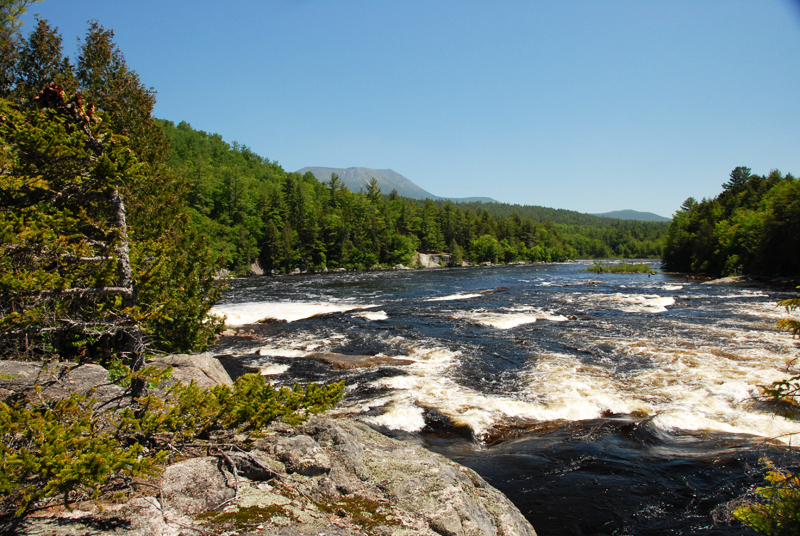
Penobscot river.jpg

The Penobscot River in Maine. Maine Office of Tourism. “Penobscot River.”

While Walden may be Thoreau’s most famous work, The Maine Woods is the culmination of his identities at their prime. We see Thoreau’s ability to relate not only with nature, but with other people and cultures. For a man who chose to live in the woods for two years, Thoreau seemed to maintain a desire to engage with those around him throughout his life. His relationships with people like Emerson, Attean, and Polis take Thoreau out of the context of his achievements and reveal a person who sought genuine connection with people and the environment.

Thoreau’s scientific contributions and the ways in which they helped him grow in cultural awareness illustrate the importance of environmental research. The more Thoreau learned about his ecosystem, the more he fell in love with it and could show others how to develop a similar appreciation. The environment is still benefiting from Thoreau’s work today, as his data helps to advance research and his reflections motivate people to care for the earth as he did. A literary and scientific reading of Thoreau’s collection allows us to discover not only the effort behind his achievements, but the impetus for his life’s work.

References and Further Reading

Eaton, Richard Jefferson. A Flora of Concord. Series Publication: Museum of Comparative Zoology 4. Cambridge: Museum of Comparative Zoology: Harvard University, 1974.

Kucich, John J. “Lost in the Maine Woods: Henry David Thoreau, Joseph Nicolar, and the Penobscot World.” The Concord Saunterer 19/20 (2011): 22-52. Accessed July 9, 2020. www.jstor.org/stable/23395210.

Miller-Rushing, Abraham J., and Richard B. Primack. “The Impact of Climate Change on the Flora of Thoreau’s Concord.” Arnoldia 66, no. 3 (2009): 2–9.

Penobscot Cultural and Historic Preservation. “Historic Preservation.” Accessed February 8, 2020. http://www.penobscotculture.com/.

Schneider, Richard J. “Life and Legacy: Thoreau’s Life.” The Thoreau Society. Accessed February 8, 2020. http://thoreausociety.org/life-legacy.

Thoreau, Henry David. Catalogue of the Herbarium of Henry D. Thoreau, Bequeathed to Boston Society of Natural History, n.d.

Thoreau, Henry David. Notes on New England Birds. Edited by Francis H. Allen. Boston: Houghton, Mifflin and Company, 1910.

Thoreau, Henry David. The Maine Woods. Edited by Sophia E. Thoreau and William Ellery Channing. Boston: Ticknor and Fields, 1864.

Thoreau, Henry David, and Ralph Waldo Emerson. The Succession of Forest Trees, and Wild Apples, with a Biographical Sketch of Thoreau. The Riverside Literature Series 27. Boston: Houghton, Mifflin and Company, 1887.

July 23, 2020by Joel Richard
BHL News, Blog Reel, Tech Updates

BHL Improves the Speed and Accuracy of its Taxonomic Name Finding Services with gnfinder

New and improved BHL name finding services

BHL has deployed a new taxonomic name finding tool to improve the speed and accuracy of identifying names throughout its 58+ million pages.

BHL is now using Global Names Architecture’s (GNA) gnfinder tool to locate taxonomic names in the BHL corpus. Prior to this deployment, BHL’s name finding services were based on an index of scientific names created by GNA developers six years ago by parsing every page in BHL one by one. This took 45 days to accomplish, and the cost of repeating this process made updating or improving the index infeasible.

The gnfinder tool uses fast, scalable programming languages to significantly reduce computational time. Using Open Source applications in Go and Scala, the tool detects candidate scientific names and compares them to millions of scientific name-strings aggregated by GNA for verification. The new process decreases the time needed for name detection and name verification from 35 days to 5 hours and from 7 days to 12 hours, respectively. As a result, the entire BHL corpus can now be indexed in less than a day, compared to the 45 days needed for the previous index. Additionally, by significantly reducing computational time, implementing iterative improvements to the index is now achievable.

The accuracy of the names identified has also been improved with this deployment. By eliminating questionable results and false positives from the previous index, gnfinder produces a more accurate index of names in BHL. More than 34 million unique names — representing more than 239 million total instances of taxonomic name strings — were identified across the BHL corpus as of 21 July 2020. Of these, approximately 11.7 million are “Verified Names”, meaning they are unique names that have been resolved against a name authority (NameBank, Catalogue of Life, etc).

The gnfinder tool was developed by Dmitry Mozzherin and Alexander Myltsev as part of GNA project work at the University of Illinois at Urbana-Champaign. Mozzherin shared more about the process of developing this tool at the Biodiversity Next conference in Leiden, The Netherlands in 2019. Learn more in the presentation slides.

You can learn more about how the BHL implementation of the gnfinder tool works in our FAQ.

We would like to thank our colleagues at Global Names Architecture — especially Dmitry Mozzherin, Alexander Myltsev, and David Patterson — for their work to develop these tools. Thanks also to Joel Richard (BHL Technical Coordinator and Head of Web Services and IT at Smithsonian Libraries) and Mike Lichtenberg (BHL Lead Developer) for their work to deploy gnfinder on the BHL website.

If you have questions about gnfinder or would like to provide feedback or suggestions, please contact Global Names Architecture via the Global Names BHL project on GitHub.

Global Names development on BHL indexing is supported by National Science Foundation grants #1356347 and #1645959 as well as the Species File Group at the University of Illinois.

July 21, 2020by michelle.underhill
Blog Reel, Campaigns, Earth Optimism 2020

Landscape Democracy: The Life and Career of Frederick Law Olmsted (1822-1903)

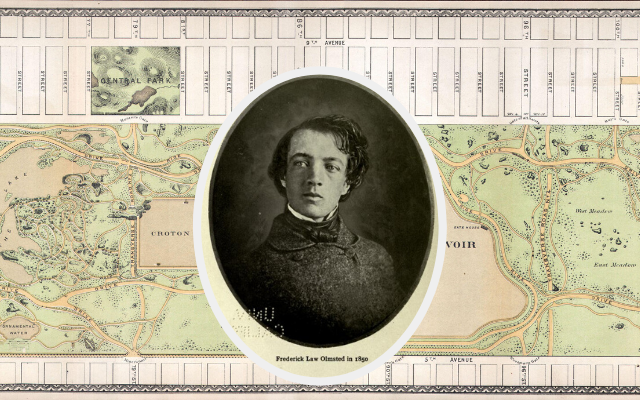
black and white photo of a young man overtop a map of Central Park

April 2020 marks the 50th anniversary of Earth Day. Organizations around the world have commemorated the occasion by participating in the global Earth Optimism movement — an initiative spearheaded by the Smithsonian to “turn the conservation conversation from doom and gloom to optimism and opportunity”.

Throughout 2020, the Biodiversity Heritage Library (BHL) and our partners are joining the movement by sharing conservation success stories from and made possible by the BHL collection. Follow our blog for conservation stories — past and present — and visit our website for more information and to explore our Earth Optimism book collection.

———————

“Nature, nevertheless, is the great teacher to which the artist who would hope to imitate her, however crudely, must ever turn for instruction and for inspiration.”

-Frederick Law Olmsted, Editorial: “Foreign Plants and American Scenery” in Garden and Forest 1 (1888)

Considered the father of American landscape architecture, Frederick Law Olmsted co-designed many of the most well-known urban parks and landscapes in the United States in partnership with Calvert Vaux (Wikipedia). As Adam Gopnik wrote in The New Yorker, “Was there a patch of grass in nineteenth-century America that he didn’t design? Stanford, Prospect Park, and the Biltmore Estate, in North Carolina; the space around the United States Capitol and preservation plans for Niagara Falls and Yosemite.” In addition to his impressive accomplishments in landscape architecture, including seventeen large urban parks across the United States — most notably Central Park, he was also a journalist, abolitionist, gentleman farmer, and conservationist (Ranney, 3).

Olmsted’s genius was perfectly matched to the age in which he lived: “Olmsted lived from 1822 to 1903, a life which spanned the transformation of America from an agricultural nation of ten million people to an industrial one of seventy-five million. At a time when the frontier was closing and Americans were moving to the cities, Olmsted believed that nature had a controlling effect on man’s behavior. So he undertook in the course of a long career to save nature or recreate it for new industrial conditions” (Ranney, 3).

Born in Hartford, Connecticut to a dry goods merchant, Olmsted attended Yale University for one semester before acquiring a farm on Staten Island, which he eventually referred to as Tosomock; the author Witold Rybczynski speculates, “I have been unable to identify the source of Tosomock. Perhaps it is a combination of ‘toss’ and ‘amok,’ which would mean ‘flinging oneself headlong,’ a good characterization of Olmsted’s frame of mind” (Rybczynski, 77).

black and white portrait of a young man with short dark hair

Olmsted, Frederick Law. Forty Years of Landscape Architecture; being the Professional Papers of Frederick Law Olmsted, Senior. 1922-28. Contributed in BHL from the University of California Libraries.

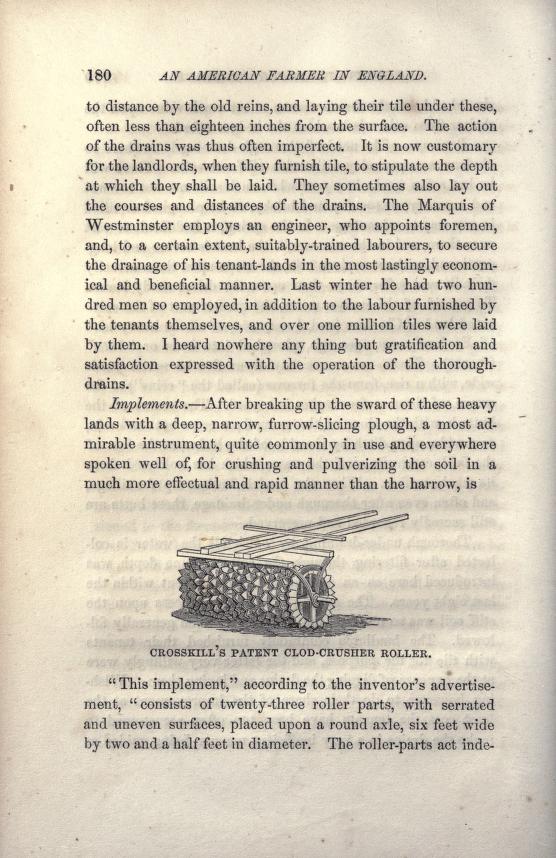
In 1850, at the age of twenty-eight, Olmsted traveled to England and wrote a book about farming methods there entitled Walks and Talks of an American Farmer in England (Gopnik). In a letter to his father asking for permission to accompany his brothers on the trip, which would last months, he is both concerned with appearances — he’d been “accused of irresponsiblity” and instability in the past — as well as leaving the farm untended that long. In a lengthy, impassioned letter “that would be almost comical were it not also touching,” he confesses, “I exceedingly fear my dangerous liability to enthusiasm, and I mean to guard against it with my mind in the future” (Rybczynski, 84).  Ultimately, this tour of England’s parks shaped Olmsted’s vision of landscape design (Foderaro).

black and white sketch of a farm implement

Farm implement from Frederick Law Olmsted’s Walks and Talks of an American Farmer in England. 1852. Contributed in BHL from the University of California Libraries.

Olmsted’s ideals and principles regarding nature and its benefits for the human condition were similarly applied in his plans for public lands, and he has been called “an early and important activist in the conservation movement” (Wikipedia). By the time he was tasked with creating Yosemite and the Mariposa Grove: A Preliminary Report, 1865 for the U.S. Government, Olmsted, at age 43, had moved through four distinct periods of his professional career, all of which held in common, “His personal quest for fulfillment…characterized by immersion in some endeavor to which he devoted himself completely so long as he deemed it to be in the best interest of the nation” (Fein, 15).

As Victoria Post Ranney writes in the introduction to Olmsted’s report, “Olmsted saw the Yosemite region when it was new to all but Native Americans…and his description of its landscape gives us a standard by which to gauge its health today” (xx). The United States Government granted the State of California the Yosemite Valley and the Mariposa Big Tree Grove on 30 June 1864, stipulating, “’the State shall accept this grant upon the expressed condition that the premises shall be held for public use, resort, and recreation, and shall be inalienable for all time.’ The valley and grove were to be administered by the governor through a group of commissioners appointed by him, and Olmsted acted as first President of the Commission” (Fein, 39).

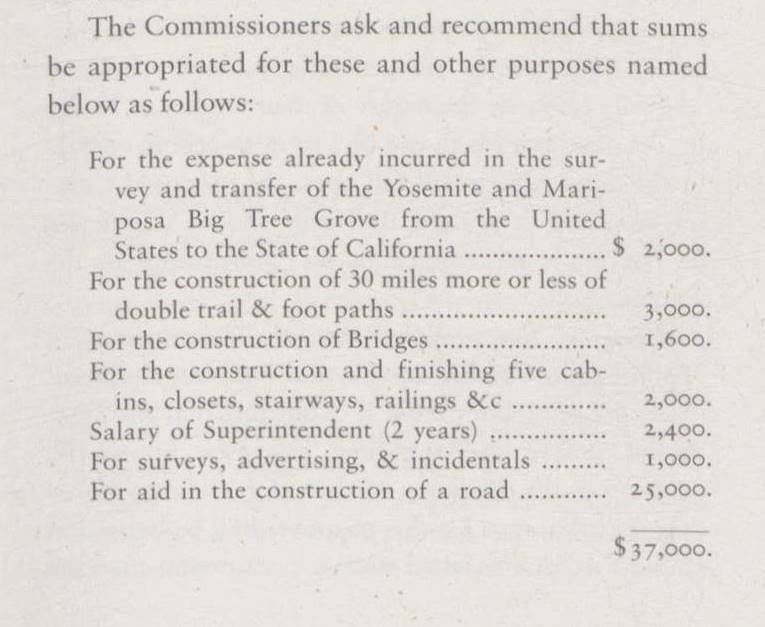
Though his report of 1865 was adopted by the commission, due to costs identified by Olmsted, it wouldn’t be until 1890 that Yosemite became a national park. (Yellowstone National Park, established in 1872, was the very first.) Olmsted’s report was suppressed, never to be submitted to the legislature (Ranney, xix).

text outlining costs for Yosemite Park

Costs to establish Yosemite National Park prepared by Olmsted as part of his preliminary report. “Yosemite and the Mariposa Grove: A Preliminary Report, 1865.”

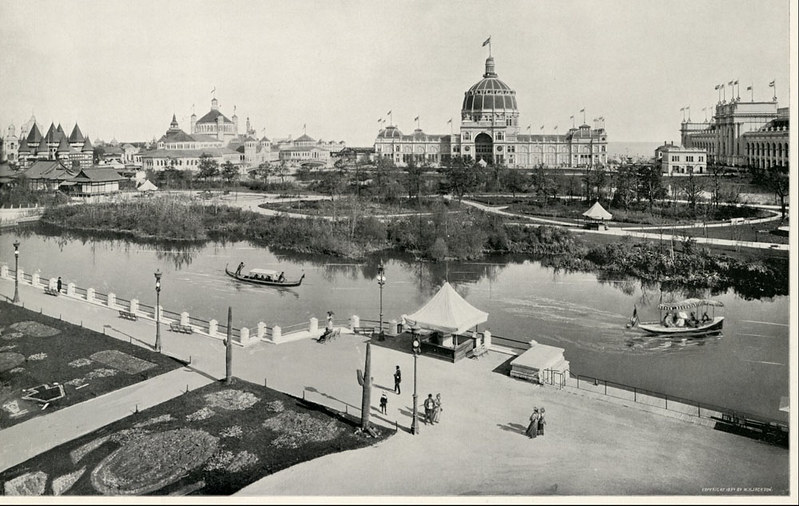
In the intervening years between his report and Yosemite’s official establishment as a national park, Olmsted moved on to many other projects, including his collaboration with Daniel Burnham to adapt his initial design for the South Park Commission site — now known as Jackson Park, Washington Park and the Midway Plaisance — for the 1893 World’s Columbian Exposition in Chicago, Illinois.

black and white photo of a city park

Government Building and Wooded Island. Large photographic print from The White City (As It Was), photographs by William Henry Jackson. World’s Columbian Exposition 1893. Digital Identifier: GN90799d_JWH_019w. World’s Columbian Exposition Collection at The Field Museum.

As the Chicago Architecture Foundation features on its website, “Now, Olmsted’s vision is the talk of the town again, as discussions continue regarding the design and construction of the new Obama Presidential Center in Jackson Park. Michael Van Valkenburgh, who is leading the project’s landscape architecture, says he believes the center will provide an opportunity to bring the park into the 21st century, while restoring some of Olmsted’s plans.”

Whether a national park, city boulevard, or planned community, Frederick Law Olmsted was a visionary whose plans continue to expand, inform, and delight for the enjoyment of one and all.

References

Chicago Architecture Foundation. “Frederick Law Olmsted.” Accessed March 9, 2020. http://www.architecture.org/learn/resources/architecture-dictionary/entry/frederick-law-olmsted/

Fein, Albert. Frederick Law Olmsted and the American Environmental Tradition.

Foderaro, Lisa. “The Parks that Made the Man Who Made Central Park.” New York Times, October 30, 2019. https://www.nytimes.com/2019/10/30/travel/footsteps-frederick-law-olmsted-parks.html

Gopnik, Adam. “The Hero of Central Park.” The New Yorker, March 24, 1997. https://www.newyorker.com/magazine/1997/03/31/olmsteds-trip

Olmsted, Frederick Law. 1888. “Editorial: Foreign Plants and American Scenery” Arnoldia v. 60 (2000): 22-24.

Olmsted, Frederick Law; introduction by Victoria Post Ranney. 1995. “Yosemite and the Mariposa Grove: A Preliminary Report, 1865.” Yosemite National Park, California, Association: Yosemite Association.

Ranney, Victoria Post. 1998. Olmsted in Chicago. Chicago: Field Museum.

Runte, Alfred. 2010. National Parks: The American Experience. Lanham, Maryland : Taylor Trade Publishing.

Rybczynksi, Witold. 2013. A Clearing in the Distance: Frederick Law Olmsted and America in the 19th Century. New York: Scribner.

Wikipedia. 2020. “Frederick Law Olmsted.” Accessed March 9, 2020. https://en.wikipedia.org/wiki/Frederick_Law_Olmsted

July 16, 2020by Joel Richard
Blog Reel, Campaigns, Earth Optimism 2020, User Stories

Looking Back to Move Forward: How Insights From Historic Literature Can Strengthen Conservation Strategies Today

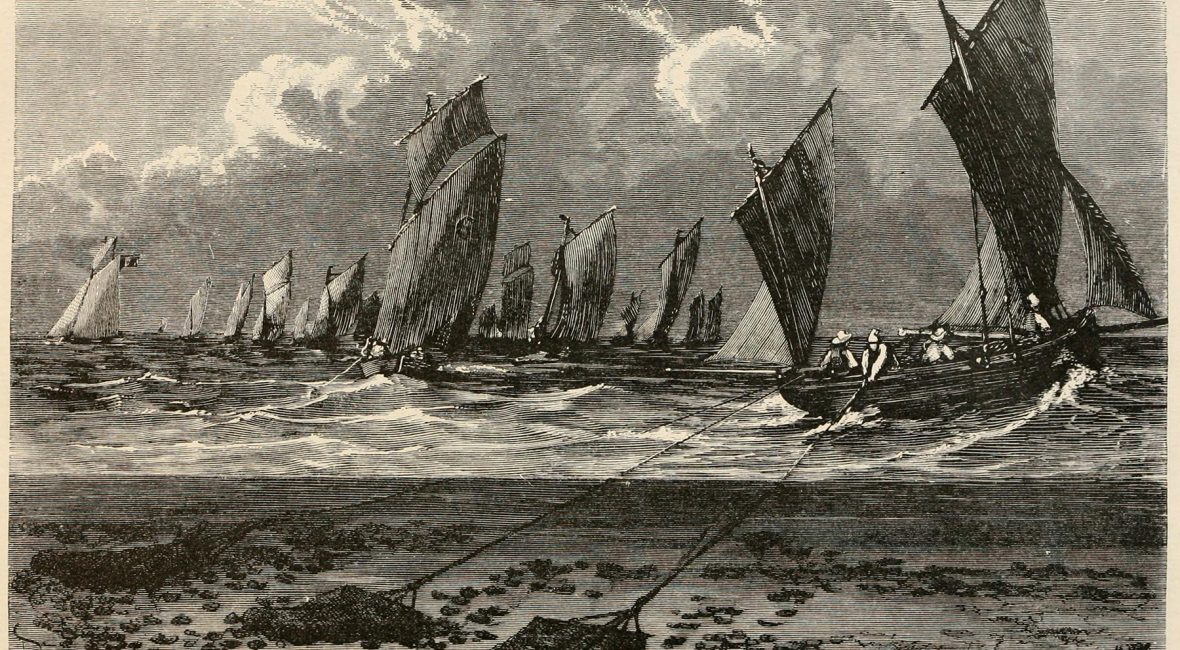
black and white illustration of ships at sea dredging for oysters

April 2020 marks the 50th anniversary of Earth Day. Organizations around the world have commemorated the occasion by participating in the global Earth Optimism movement — an initiative spearheaded by the Smithsonian to “turn the conservation conversation from doom and gloom to optimism and opportunity”.

Throughout 2020, the Biodiversity Heritage Library (BHL) and our partners are joining the movement by sharing conservation success stories from and made possible by the BHL collection. Follow our blog for conservation stories — past and present — and visit our website for more information and to explore our Earth Optimism book collection.

———————

The world is changed.

I feel it in the water.

I feel it in the earth.

I smell it in the air.

Much that once was is lost, for none now live who remember it.

— Galadriel in Peter Jackson’s Fellowship of the Rings


three people standing in the snow with a brick building in the back

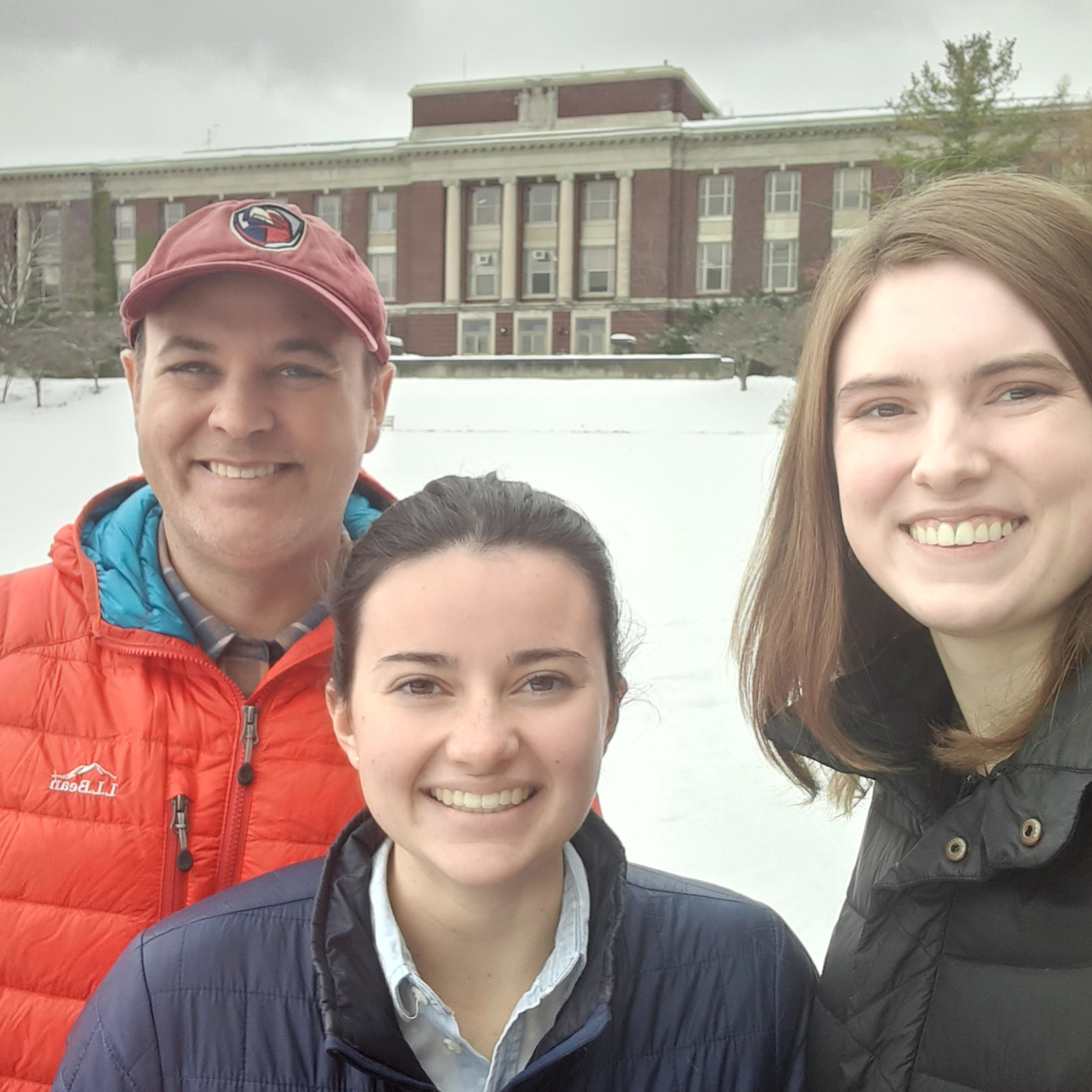
Members of The Drew Lab at the State University of New York College of Environmental Science and Forestry (L to R): Dr. Joshua Drew (assistant professor of vertebrate conservation biology at the State University of New York College of Environmental Science and Forestry) with his students Megan Hazlett and Kate Henderson.

That we live in a changing world should come as no surprise, yet how we measure that change can greatly impact our ability to respond to it. I am a scientist who works in the field of historical ecology — that is the use of non-traditional records to try and understand what ecosystems looked like in the past. My students Kate Henderson and Megan Hazlett and I are based out of the State University of New York College of Environmental Science and Forestry, where we look at how the state’s waters and shores have changed in order to better craft conservation goals. While we work on a variety of ecosystems, they are united by our need to understand where we come from in order to help direct where we are going.

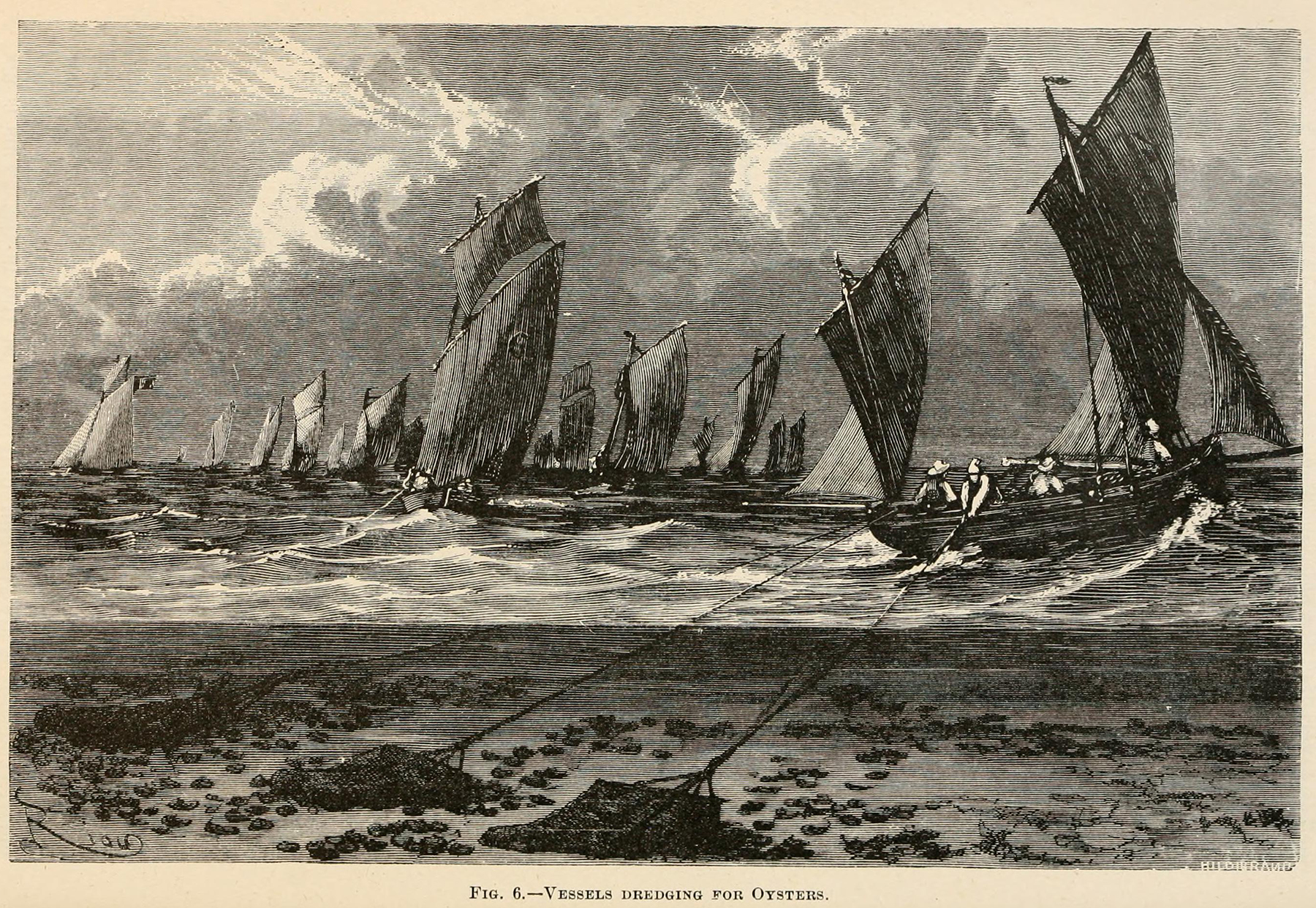
One such example of how the past can influence the future can be found with oysters in New York City. Through accessing resources in BHL like Lockwood’s 1874 “The Natural History of the Oyster“, we get a glimpse into what oyster fishing was like in the twin cities of New York and Brooklyn (then, an independent municipality). Lockwood’s accounts seem inconceivable by today’s standards; he recounts that oysters were common in Great South Bay and even in the East River. His report regales us with how the annual value of oysters sold in New York City would be over 89 million dollars in 2019 dollars, and that the industry employed around 10,000 individuals.

black and white illustration of ships at sea dredging for oysters

“Vessels dredging for oysters”. Lockwood, Samuel. “The Natural History of the Oyster.” The Popular science monthly, v. 6 (1874-1875). Contributed in BHL from MBLWHOI Library.

Oysters were the foundation, literally and figuratively, of New York’s expansion, with the cheap food feeding its expanding population and shells forming the fill upon which lower Manhattan expanded. However, this bounty was not to last forever. In fact, one could argue that the burgeoning population that the oysters fueled helped lead to their downfall. By the 1920s, incidences of Typhoid and other diseases found in oysters growing in polluted water led the city to close its oyster beds — in effect ending a gustatory bounty that had lasted for thousands of years.

Today, many oyster restoration projects in New York focus on reestablishing these oysters beds — not for food (yet), but rather as key components to climate change resiliency. There has been a renaissance in thinking about oysters in New York, largely facilitated by the Billion Oyster Project and others. Their goal, shared by many other New Yorkers, is to bring oysters back to New York City and restore New Yorkers’ connections to this largely forgotten aspect of our heritage. Perhaps by better understanding the extent of the oyster beds and the close connections New Yorkers in the past had with the humble invertebrate, ambitious projects like the Billion Oyster Project will strike a chord with stakeholders, and we can think of these resiliency programs as avenues to restore what was once a key feature of, and a source of pride for, New York City.

A key idea that we can take from our study of historical ecology is that the past can help us to understand the future. Another example of how we can apply this is by combining museum collections, historic field notes and observations, and old records to study how fish populations have changed in Central New York. By understanding how the ecosystems have changed — how fish populations and community compositions have shifted and which factors were responsible for these shifts — we are better able to determine conservation priorities and predict the effects of future changes.

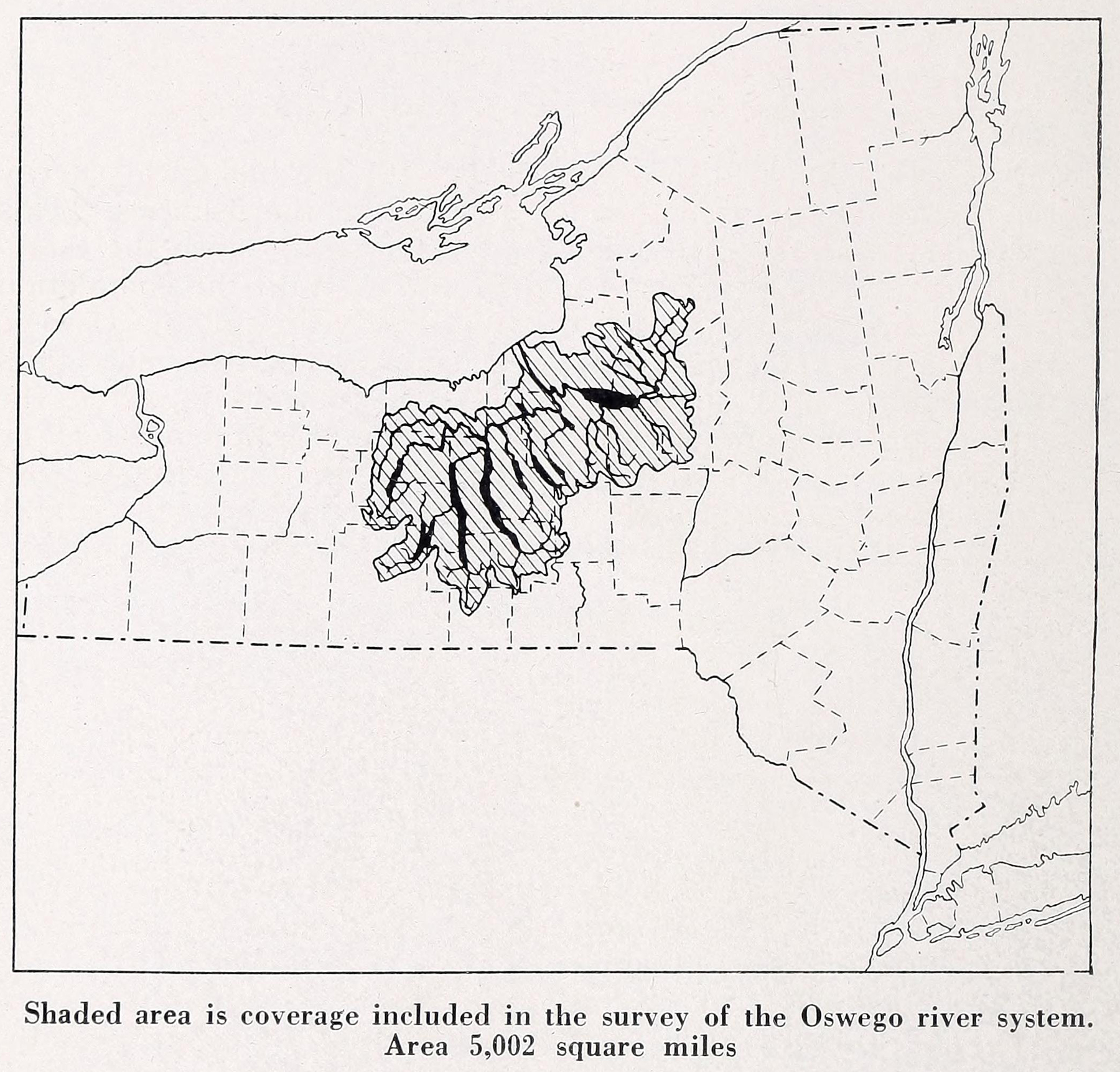
line drawing map of New York State with certain areas highlighted

Map showing areas included in surveys of the Oswego river system in New York during the summer of 1927. New York (State) Conservation Department. A biological survey of the Oswego River system. Supplemental to Seventeenth annual report, 1927. (1928). Contributed in BHL from University of Connecticut Libraries.

Within the Oswego River watershed, which encompasses the Fingerlakes region and Oneida Lake, detailed, state-wide surveys have been occurring since the 1920s. Environmental factors such as land use; local, state, and national management decisions and policy initiatives; invasive species; and climate have changed over the century since these surveys began, so by comparing the historic data to modern data we can examine how those changes may have correlated to changes in fish assemblages. This information can give us insight into how to create future adaptive management strategies for conservation and restoration areas in the face of new anthropogenic stressors.

Historic data are important for many studies, but the data are not always easy to find. Physical documents can be lost over time, and issues with cataloging can lead to misplaced data. Even sources of data saved in online repositories can be subject to link rot. In other cases, although data are preserved, they end up split up and spread out over a variety of collections and managers, causing researchers to miss “pieces of the puzzle.” Data repositories managed by organizations such as the Biodiversity Heritage Library, the New York State Museum, and the New York State Department of Environmental Conservation can improve the organization and classification of historic data.

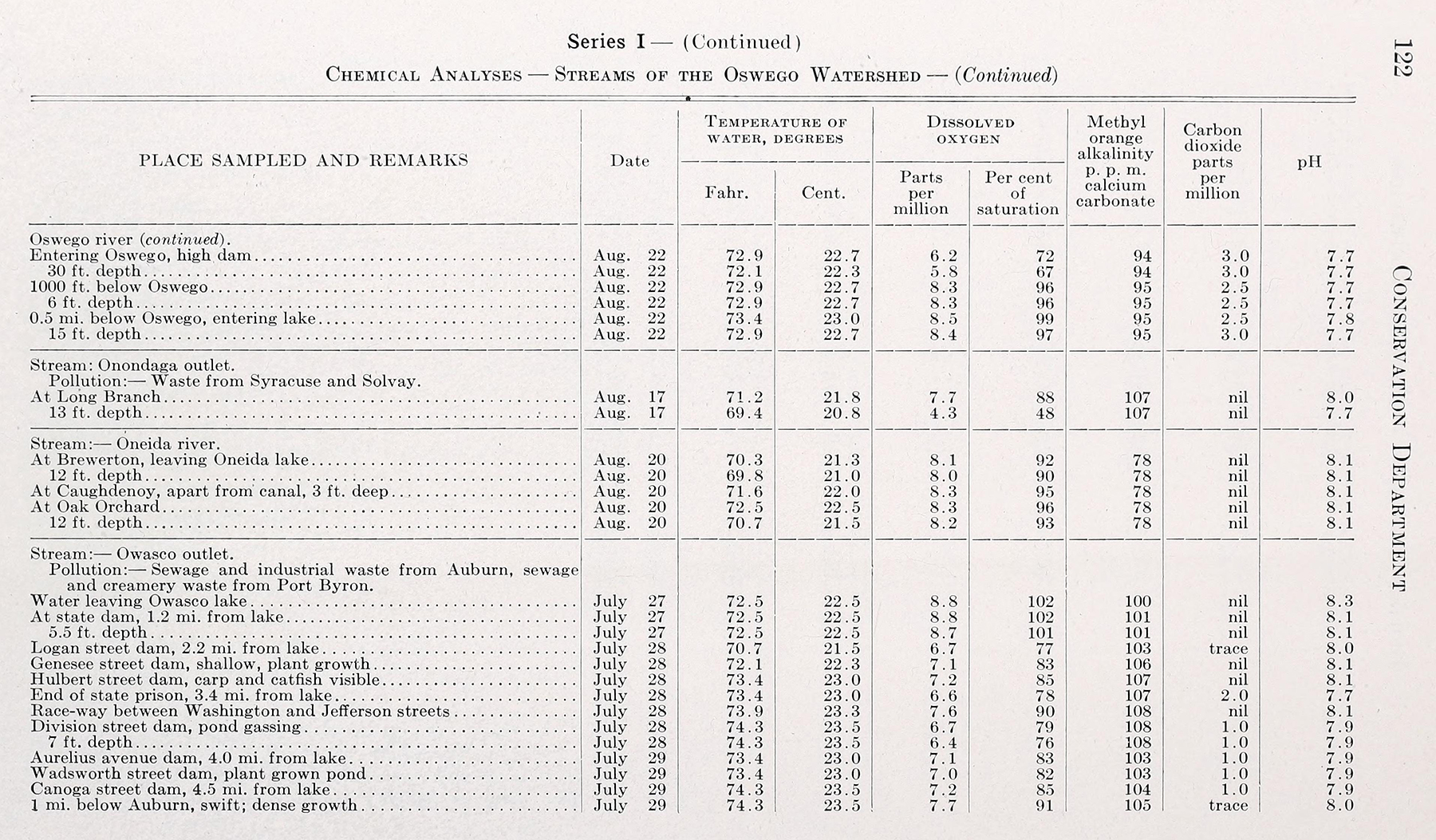
table with various text and numerical data

Table showing chemical analyses of various streams of the Oswego watershed from surveys during the summer of 1927. New York (State) Conservation Department. A biological survey of the Oswego River system. Supplemental to Seventeenth annual report, 1927. (1928). Contributed in BHL from University of Connecticut Libraries.

The work in our lab highlights how the past can contribute to a vibrant future and that stable, authoritative and trust-worthy repositories of these documents — such as BHL — can continue to inspire the public, support researchers, and empower communities to think deeply about their past. The real advantage of BHL is keeping our ecological memory intact and not allowing us to collectively forget how beautiful, wild, and diverse ecosystems of the past were. If we succumb to this collective amnesia, we risk setting our conservation bar too low and allowing the dulling of our natural environments to continue without even recognizing our losses.

July 9, 2020by michelle.underhill
Blog Reel, User Stories

Tasting Platypus Milk: Linking Specimens and Stories

illustrations of the platypus

Zoological knowledge typically comes from one of two primary sources: the living and the dead — observations of animals going about their business in their habitats; and the study of preserved specimens. We rarely get the whole picture of an animal’s natural history without both, and each feed into how species are portrayed to those that have never seen them.

Getting echidnas wrong

A1.2 7_Tachyglossus_aculeatus.JPG

Taxidermy short-beaked echidna (Tachyglossus aculeatus) from the University Museum of Zoology, Cambridge. Note the backwards-pointing hind feet. Specimen A1. 2/7. Photo Credit: University of Cambridge

Consider the echidna, for example. Examining echidna specimens in museums helps us to understand their evolutionary relationships and enables us to come up with some reasonable suggestions for how they live their lives. The impenetrable coat of thick spines is clearly for defense against predators and guessing at an ant-eating lifestyle doesn’t require too much imagination when you think about what its narrow toothless snout and stout, digging claws might be for. However, we wouldn’t be able to confirm exactly how these things are put to use without seeing them alive.

As someone with one foot in the world of Australian mammal ecology (the living) and another in natural history museums (the dead), one thing that really interests me is the cross-over: how do the dead represent the living? Museums are sites of communication — they provide windows onto the natural world for people to engage with animals they may never see alive. This has made the topic of how animals are depicted — in writings, illustrations and museums — a real focus for me.

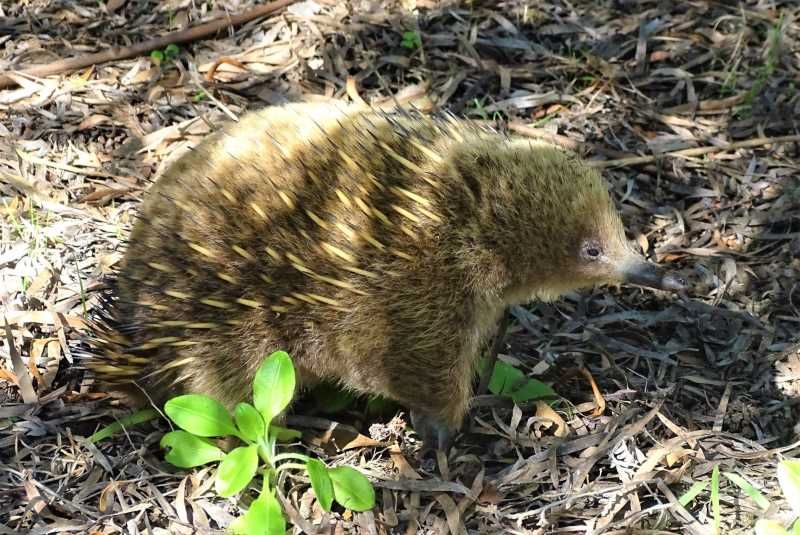
Bruny Island 8 (16) Ashby.JPG

A live (undoctored) echidna, in Tasmania. Photo Credit: Jack Ashby.

While museum specimens are in one sense a primary source, they are also modified by people in order to make them presentable to the public. Taxidermy is intended to make visitors forget the animal is dead, and to achieve that a flat animal skin has to be rebuilt into the shape of a living animal. The trouble is that throughout history, the person doing the taxidermy — particularly for specimens that had travelled to Europe from Australia — had often never seen the living animal. This means that their poses are often incorrect.

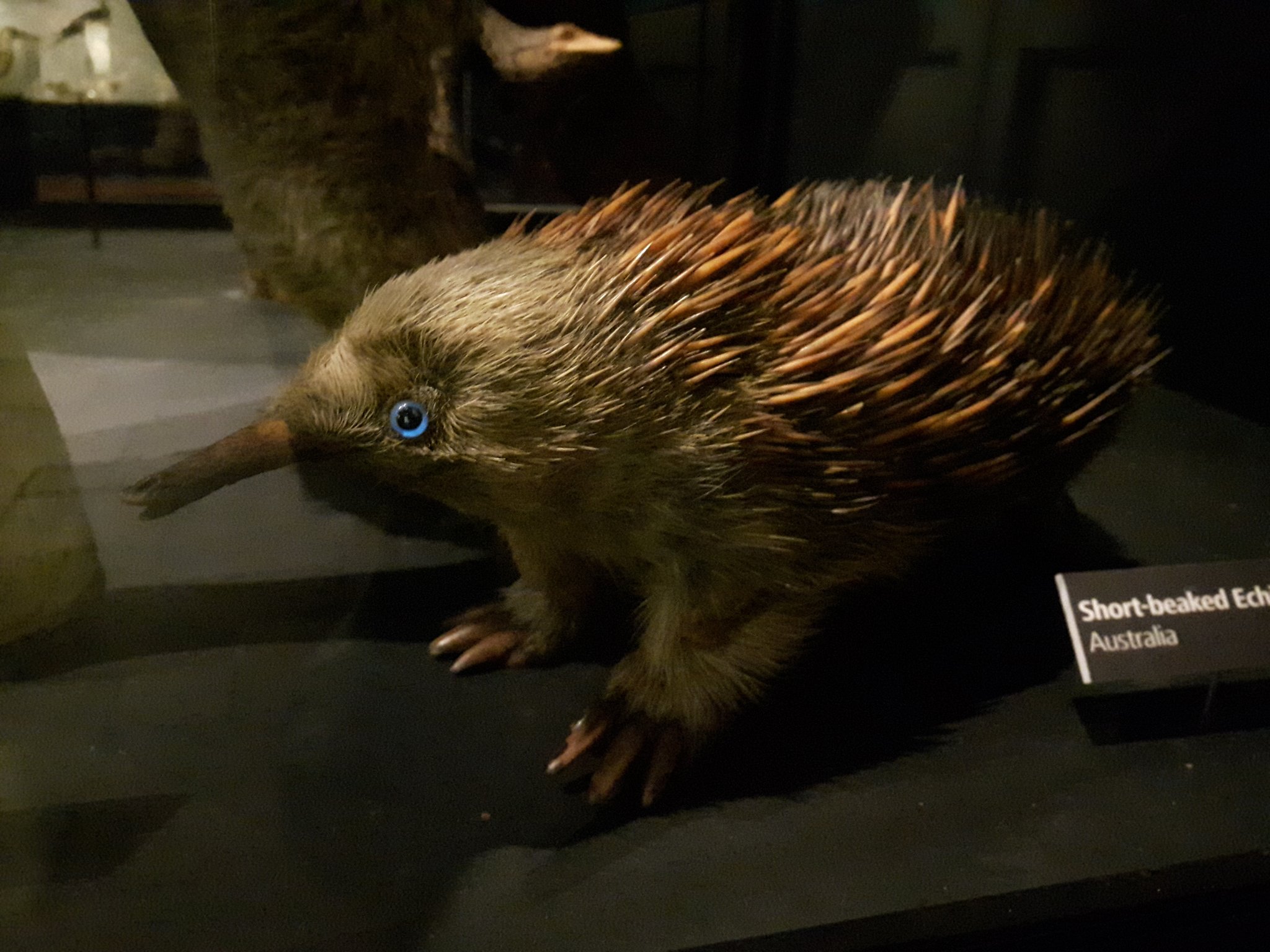
In the case of the echidna, it is extremely common for the back feet to point in the wrong direction — in life they should point backwards (enabling echidnas to scratch in between their spines and dig vertically downwards to bury themselves in defense), but taxidermists often didn’t know that, so twisted their feet around. I’ve come across tens of wrong-footed echidnas, and I know the reason why, but I was flummoxed a few years ago when I encountered an echidna with blue eyes at the Manchester Museum. Where did that error come from?

Manchester.jpg

Why does this taxidermy echidna at Manchester Museum have blue eyes? Photo Credit: Jack Ashby.

That mystery echidna popped back into my mind recently when re-reading the original species description on the Biodiversity Heritage Library, and I think I know the answer.

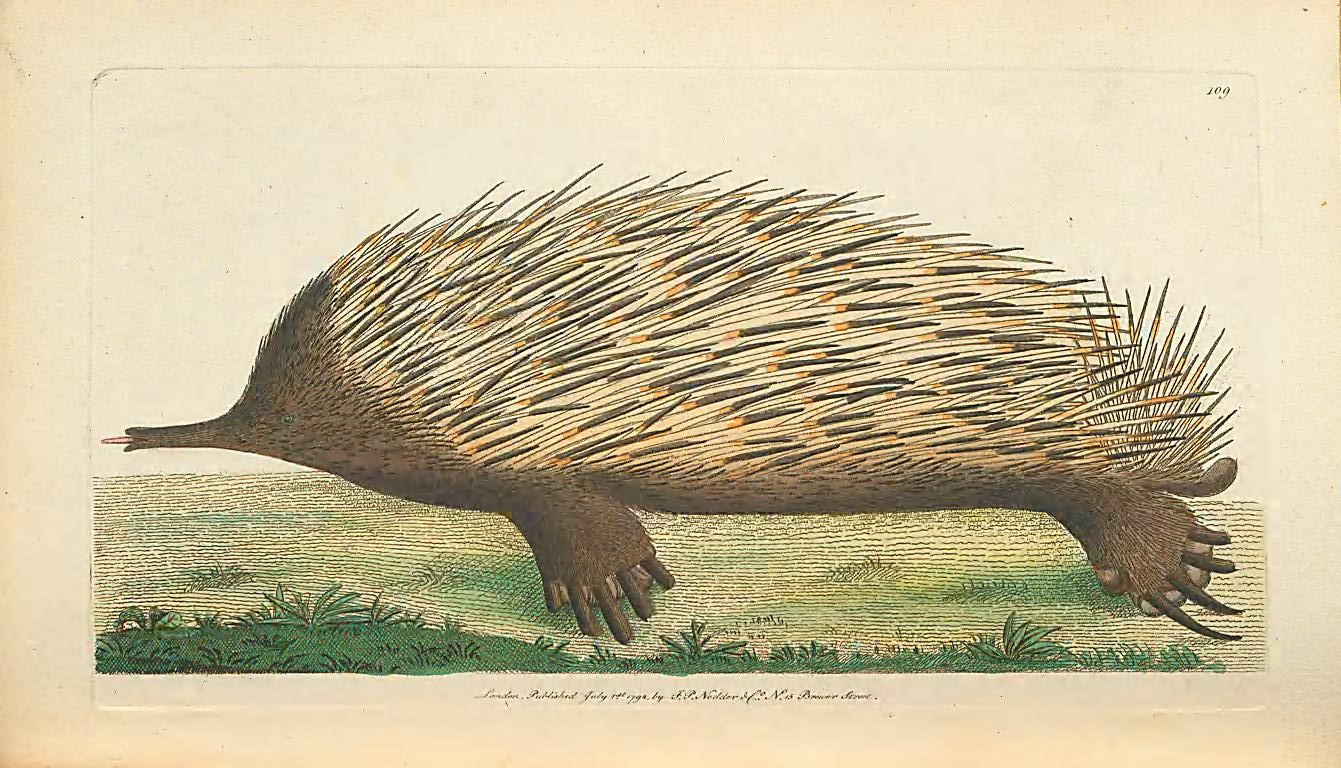
In 1792 George Shaw (who would also publish the first scientific description of the platypus seven year later) included “The Porcupine Ant-Eater” in The Naturalist’s Miscellany. Amongst an otherwise perfectly reasonable description of the species (which he considered to provide a link between actual porcupines in the genus Hystrix and actual ant-eaters in the genus Myrmecophaga), Shaw includes this line:

“The snout is long and tubular, and perfectly resembles in structure that of the Myrmecophaga jubata, or great ant-eater; having only a very small opening or rictus at the tip, from whence is protruded a long lumbriciform [worm-like] tongue, as in the ant-eaters. The nostrils are small, and seated near the extremity of the snout. The eyes are very small, and black, with a pale-blue iris.”

naturalistsmisc3shaw_0253.jpg

Plate 109. Shaw, George. The naturalist’s miscellany. Volume iii. 1792. Contributed in BHL by Museums Victoria.

Curiously, the illustration that accompanies the text (above) — which is assumed to be based on a painting by Sydney-based collector John White — has correctly coloured black eyes. The question then becomes why Shaw thought echidnas had blue eyes — could it be that the eyes of Shaw’s specimen (sent by Joseph Banks) had been discoloured by the preservative? In any case, it seems likely that the echidna in Manchester was modified to fit Shaw’s original description.

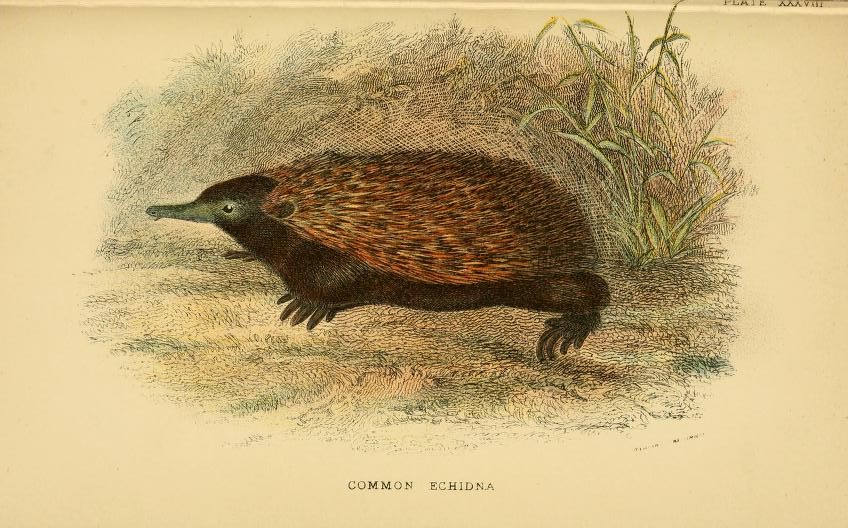
Elsewhere on BHL, we can find examples of illustrations of echidnas that were clearly based on doctored dead specimens, rather than observations of living ones, as their feet incorrectly point forwards and the animals appear flattened. Artists were basing their depictions on “primary sources” in museum collections, but unfortunately those specimens weren’t accurate.

handbooktomarsup00lydekk_0339.jpg

Plate XXXVIII, an echidna with forward-facing feet. Lydekker, Richard, A hand-book to the marsupialia and monotremata. 1896. Contributed in BHL from Smithsonian Libraries.

Tasting platypus milk

I am currently writing a new book on the echidnas’ relative, the platypus. I’ve been utterly reliant on the incredible collection of works on BHL to tell the story of the importance of platypus representations on the history of taxonomy. The introduction of the species to scientific circles in Europe sparked a decades-long debate over where it fitted on the tree of life and what characteristics mammals could possess. One of the many arguments in contention was whether or not they are mammals, another was whether or not they lays eggs. We now know they are, and they do.

A defining feature of mammals is that they feed their young with milk, so those who argued that platypuses are mammals were searching for evidence of milk-producing mammary glands even though platypuses lack nipples. Richard Owen was among those who was attempting to prove their milkiness.

The battle is played out in the documents available on BHL, and to my absolute delight, it led me to this line in one of Owen’s papers on platypus anatomy. Owen had squeezed what he thought was the mammary gland of a preserved platypus and watched the holes where the glands opened onto the skin:

“[T]here escaped from these orifices minute drops of a yellowish oil, which afforded neither perceptible taste nor smell, except such as was derived from the preserving liquor”.

Owen was so dedicated to his argument that he tasted the milk from a platypus that had been dead for many months, or even years.

Without a resource like BHL, putting together the pieces of the platypus puzzle across 220 years, and the changing way that specimens and field-observations have been used to inform representations of the animal over time, would be extremely difficult.

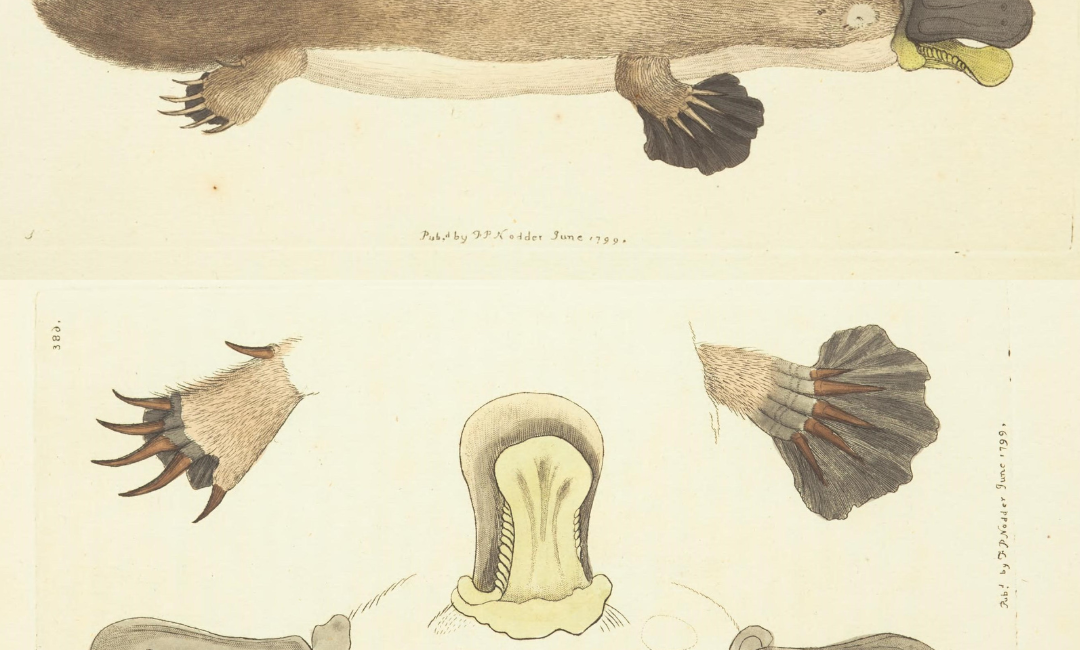
illustrations of the platypus

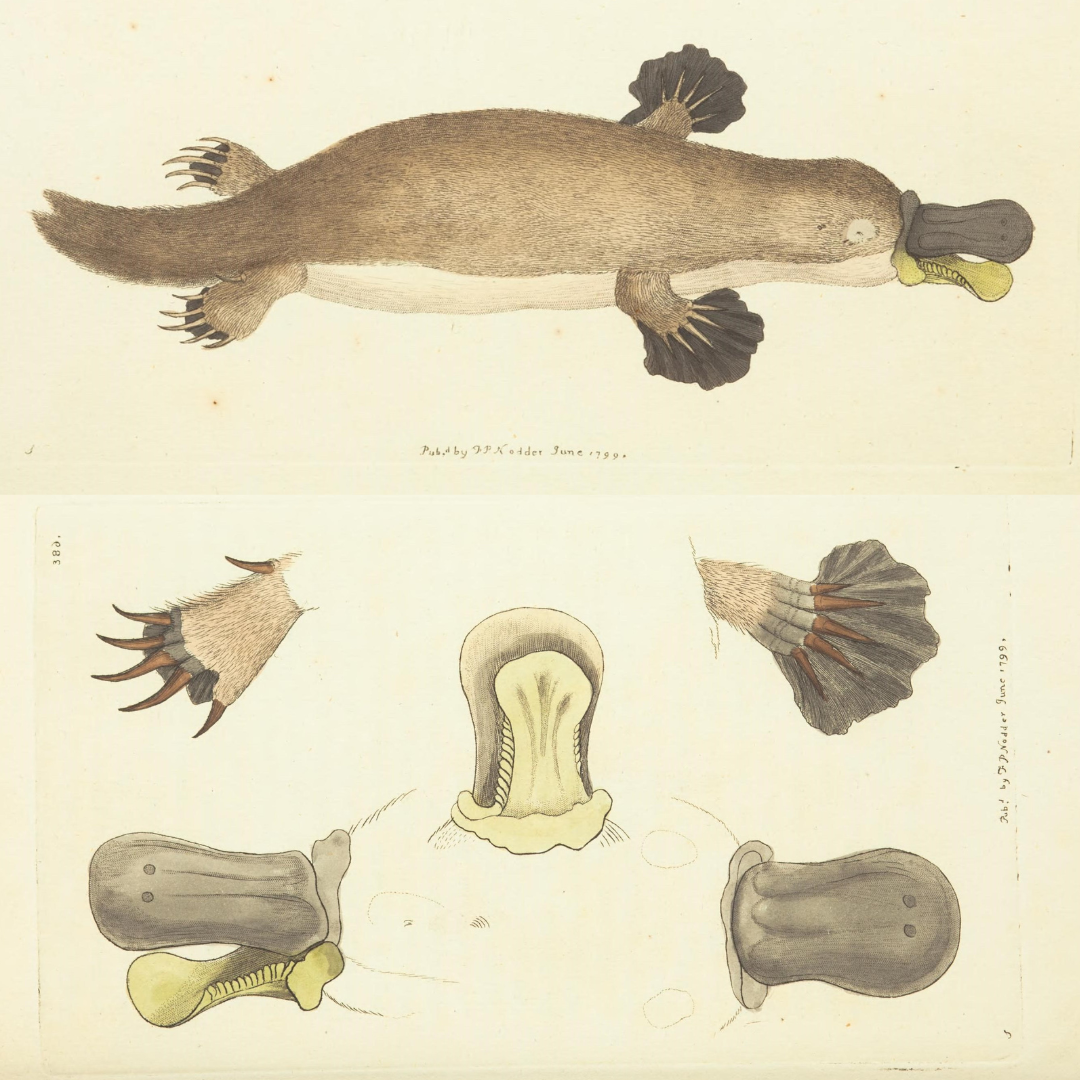
George Shaw, who provided the first scientific description and published illustration of the platypus (Ornithorhynchus anatinus) in 1799 within The Naturalist’s Miscellany, wrote: “… it naturally excites the idea of some deceptive preparation by artificial means …”. Shaw, George. The naturalist’s miscellany. v. 10 (1799). Contributed in BHL from Museums Victoria. DOI: https://doi.org/10.5962/p.304567.

July 7, 2020by Joel Richard

Help Support BHL

BHL's existence depends on the financial support of its patrons. Help us keep this free resource alive!

search

About BHL

The Biodiversity Heritage Library (BHL) is the world’s largest open access digital library for biodiversity literature and archives. BHL operates as a worldwide consortium of natural history, botanical, research, and national libraries working together to digitize the natural history literature held in their collections and make it freely available for open access as part of a global “biodiversity community.”

Join Our Mailing List

Sign up to receive the latest news, content highlights, and promotions.

Subscribe Now

Subscribe to Blog via Email

Enter your email address to subscribe to this blog and receive notifications of new posts by email.

Join 319 other subscribers

Subscribe to Blog Via RSS

Subscribe to the blog RSS feed to stay up-to-date on all the latest BHL posts.

Access RSS Feed

Inspiring Discovery through Free Access to Biodiversity Knowledge.

The Biodiversity Heritage Library makes it easier than ever for you to access the information you need to study and explore life on Earth…for free, anytime, anywhere.


64+ Million Pages of
Biodiversity Literature Online.

EXPLORE

Tools and Services
to Transform Research.

EXPLORE

300,000+
Illustrations on Flickr.

EXPLORE

ABOUT | HARMFUL CONTENT | PRIVACY | SITE MAP | TERMS OF USE