Biodiversity Heritage Library - Program news and collection highlights from BHL
  • Home
  • News
  • Featured Books
    • All Featured Books
    • Book of the Month Series
    • BHL at 20
  • User Stories
  • Campaigns
    • Fossil Stories
    • Garden Stories
    • Monsters Are Real
    • Page Frights
    • Her Natural History
    • Earth Optimism 2020
  • Tech Blog
  • Visit BHL
Home
News
Featured Books
    All Featured Books
    Book of the Month Series
    BHL at 20
User Stories
Campaigns
    Fossil Stories
    Garden Stories
    Monsters Are Real
    Page Frights
    Her Natural History
    Earth Optimism 2020
Tech Blog
Visit BHL
  • Home
  • News
  • Featured Books
    • All Featured Books
    • Book of the Month Series
    • BHL at 20
  • User Stories
  • Campaigns
    • Fossil Stories
    • Garden Stories
    • Monsters Are Real
    • Page Frights
    • Her Natural History
    • Earth Optimism 2020
  • Tech Blog
  • Visit BHL
Biodiversity Heritage Library - Program news and collection highlights from BHL
BHL News, Blog Reel

BHL Quarterly Newsletter (November 2020) Now Available!

Screenshot of the November quarterly newsletter

Screenshot of the November quarterly newsletter

Our latest quarterly newsletter is now available! From our BHL symposium at the virtual TDWG 2020 conference to the most recent additions to our Earth Optimism series, don’t miss the latest news from the BHL community.

View our November 2020 Quarterly Newsletter.

Be sure to subscribe to our mailing list to keep up to date with all the latest BHL news.

November 23, 2020by michelle.underhill
Blog Reel, Featured Books

Frances Sargent Osgood and the Language of Flowers: A 19th Century Literary Genre of Floriography and Floral Poetry

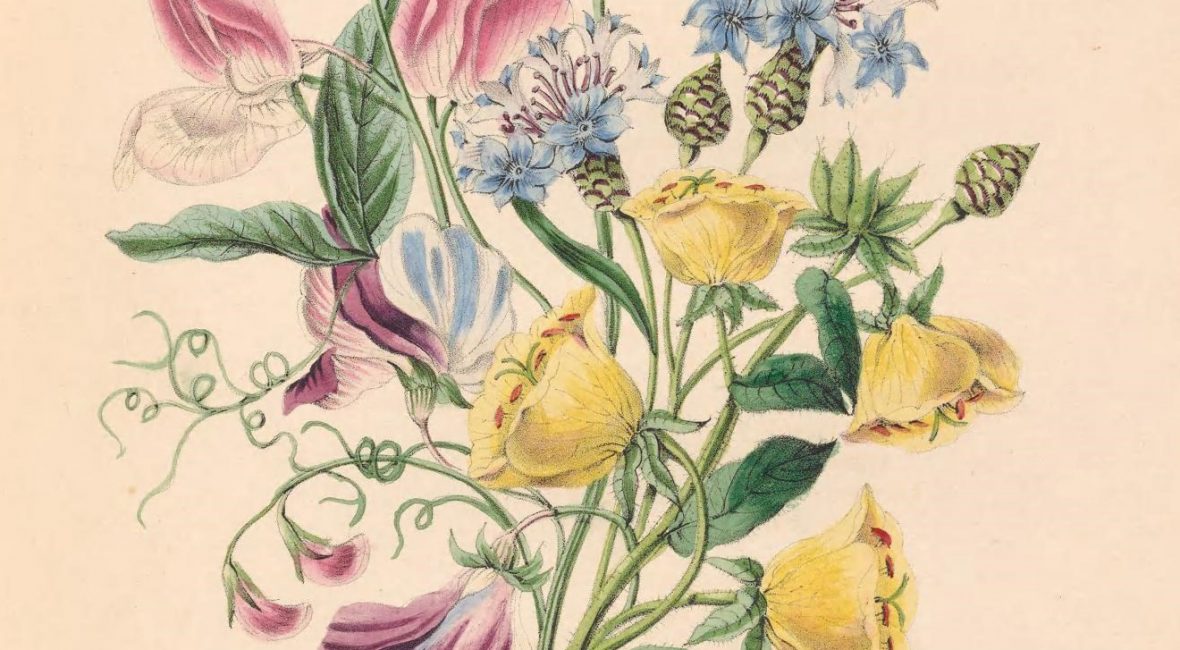
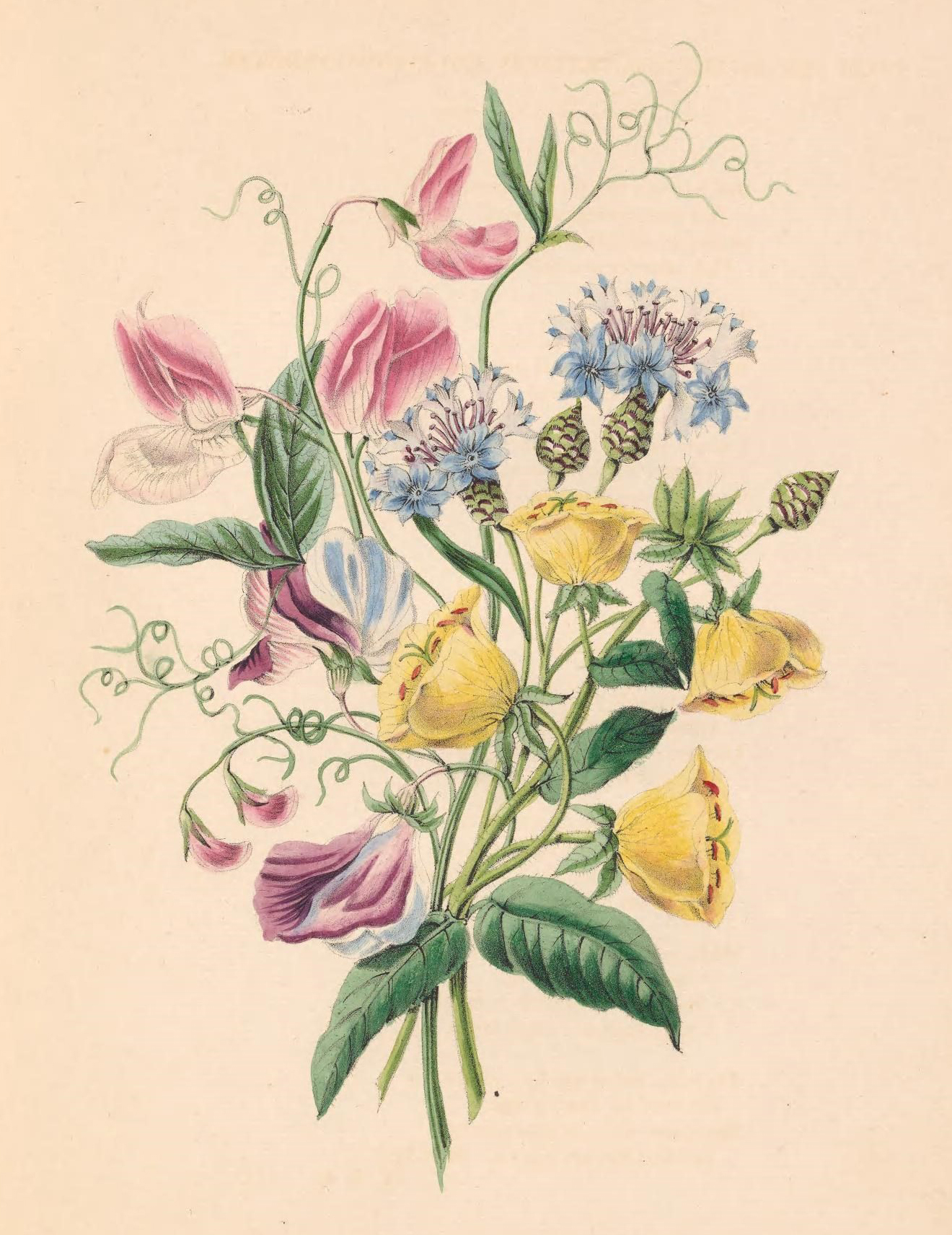
Sweet Pea, Bluebottle Centaury, and Evening Primrose.
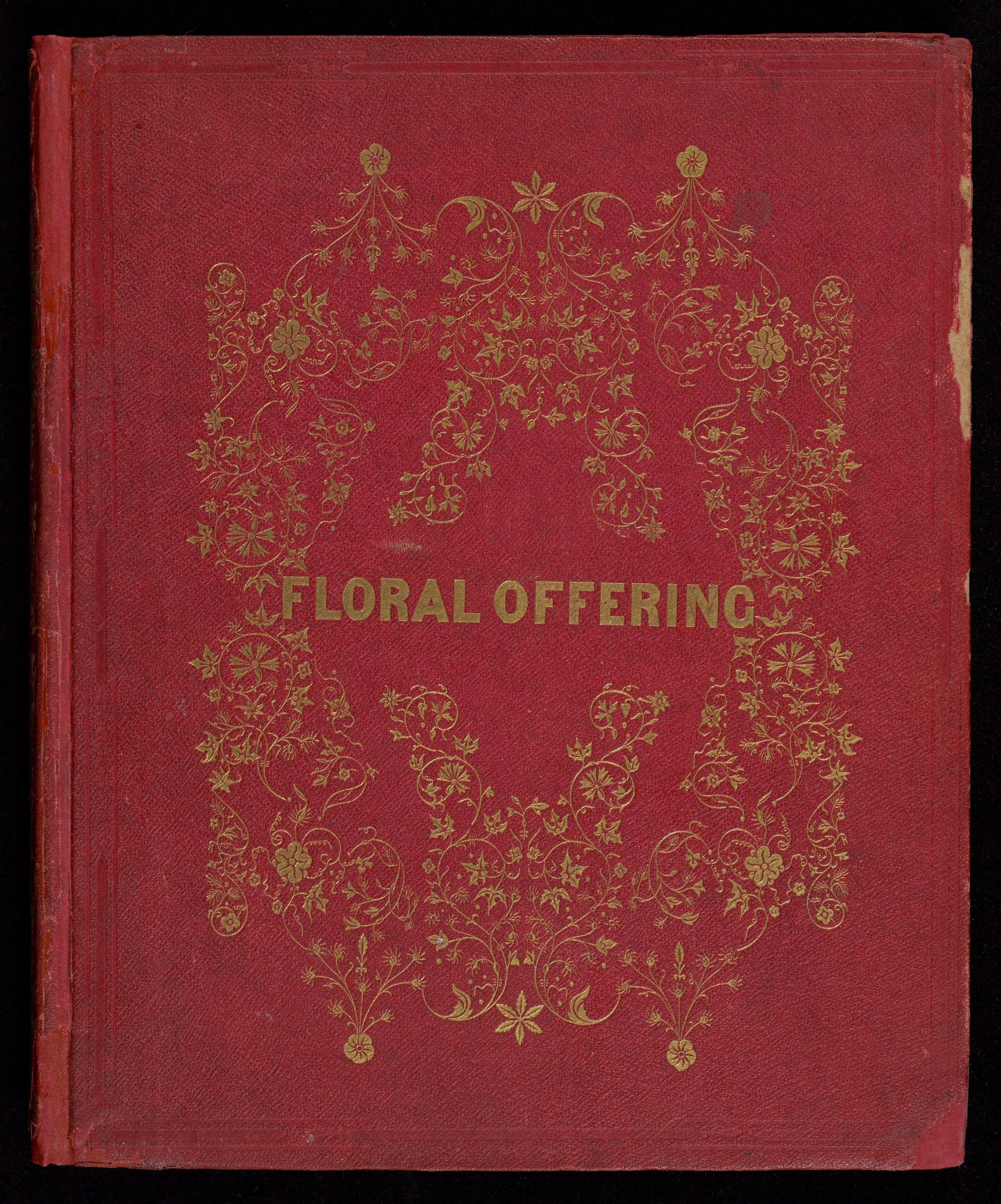
Cover of the book "The Floral Offering"

Cover. Osgood, Frances Sargent (editor). The Floral Offering, A Token of Friendship (1847). Contributed in BHL from Chicago Botanic Garden, Lenhardt Library. Digitization sponsored by the National Endowment for the Humanities (NEH).

The Language of Flowers genre is at the intersection of botany, horticulture, natural history, art, poetry, and women’s studies. This popular literary trend in the 19th century presented the world of botany through dictionaries of flowers and associated meanings, floral poetry, and prose, offering a sentimental view of natural history. A properly arranged bouquet was said to convey a “secret message” for the recipient. The “social media” of its day, this Victorian fad led to many editions of works published, with multiple titles by successful authors.

Frances Sargent Osgood edited two works in this genre: Poetry of Flowers and Flowers of Poetry and The Floral Offering.

Her description of floriography from her introductory poem in the Floral Offering follows:

INTRODUCTORY.

THY EMBLEM FLOWER.

Round every flower there gleams a glory

Bequeathed by antique song or story;

To each, old legends give a name

And its peculiar charm proclaims;

O’er smiling lawn – through shaded grove,

Our dreaming poets pensive rove,

And strive to read their language rare,

And learn the lesson latent there-

Then ‘mid them all, so fair to see,

What flower shall thy fit emblem be?

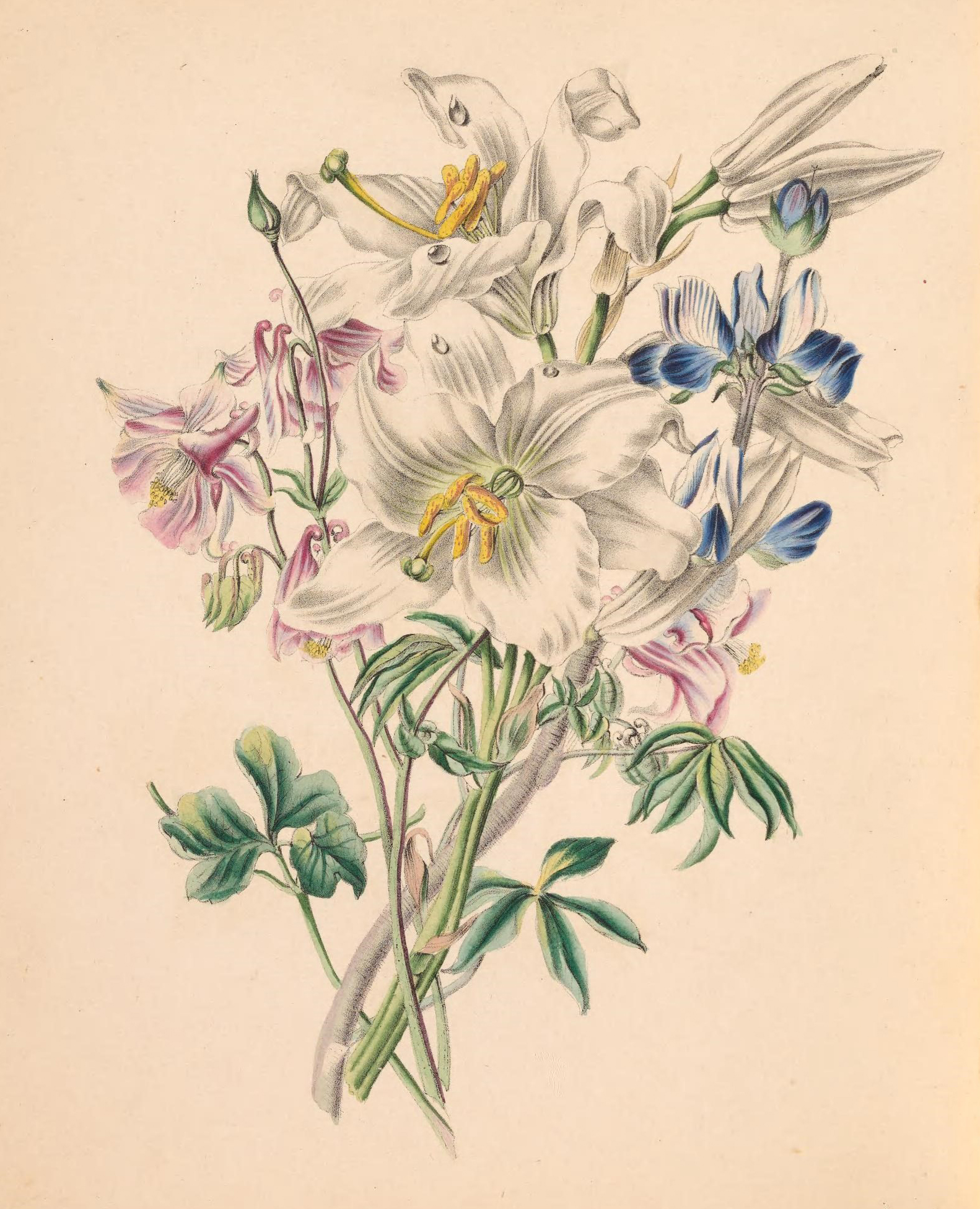
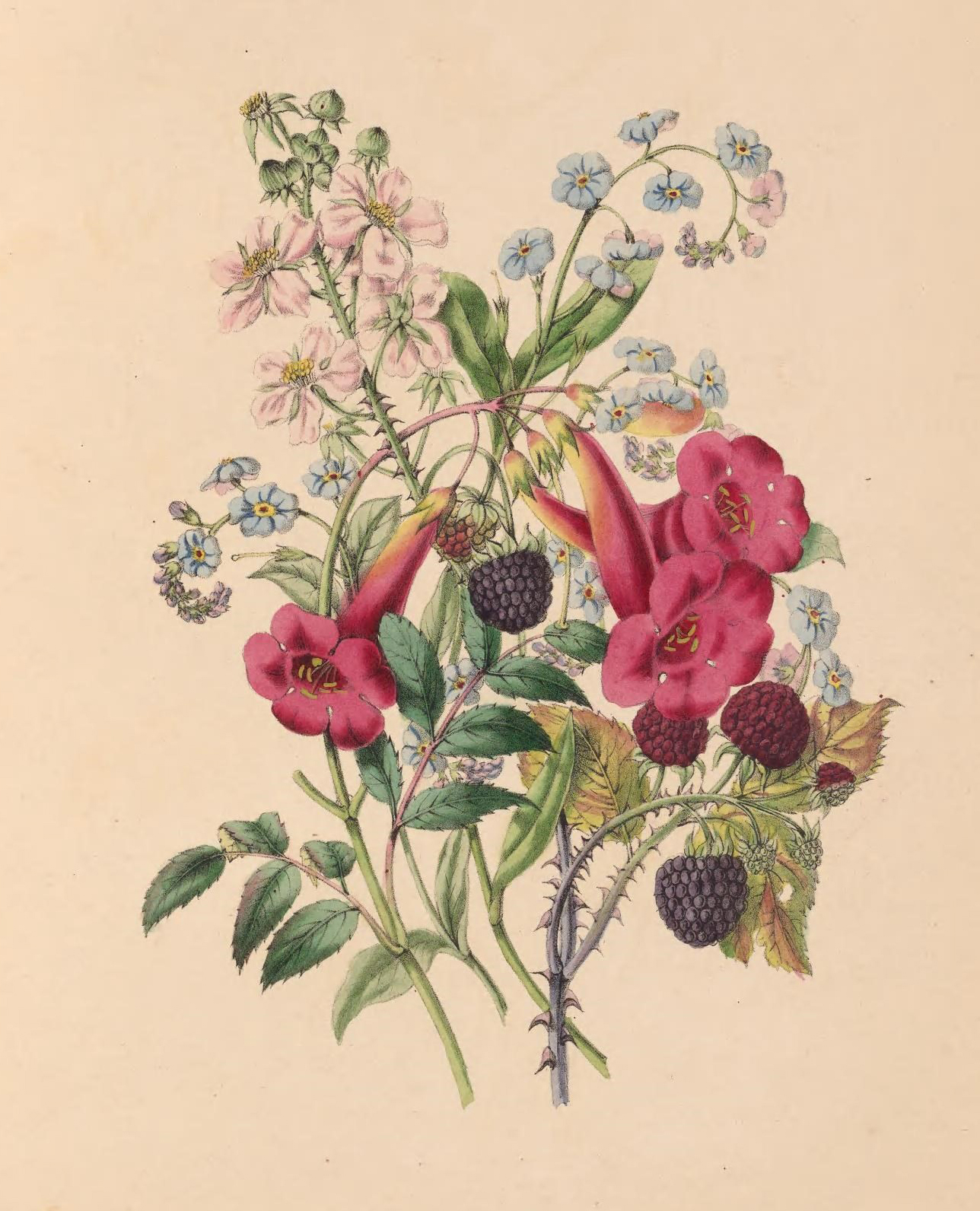
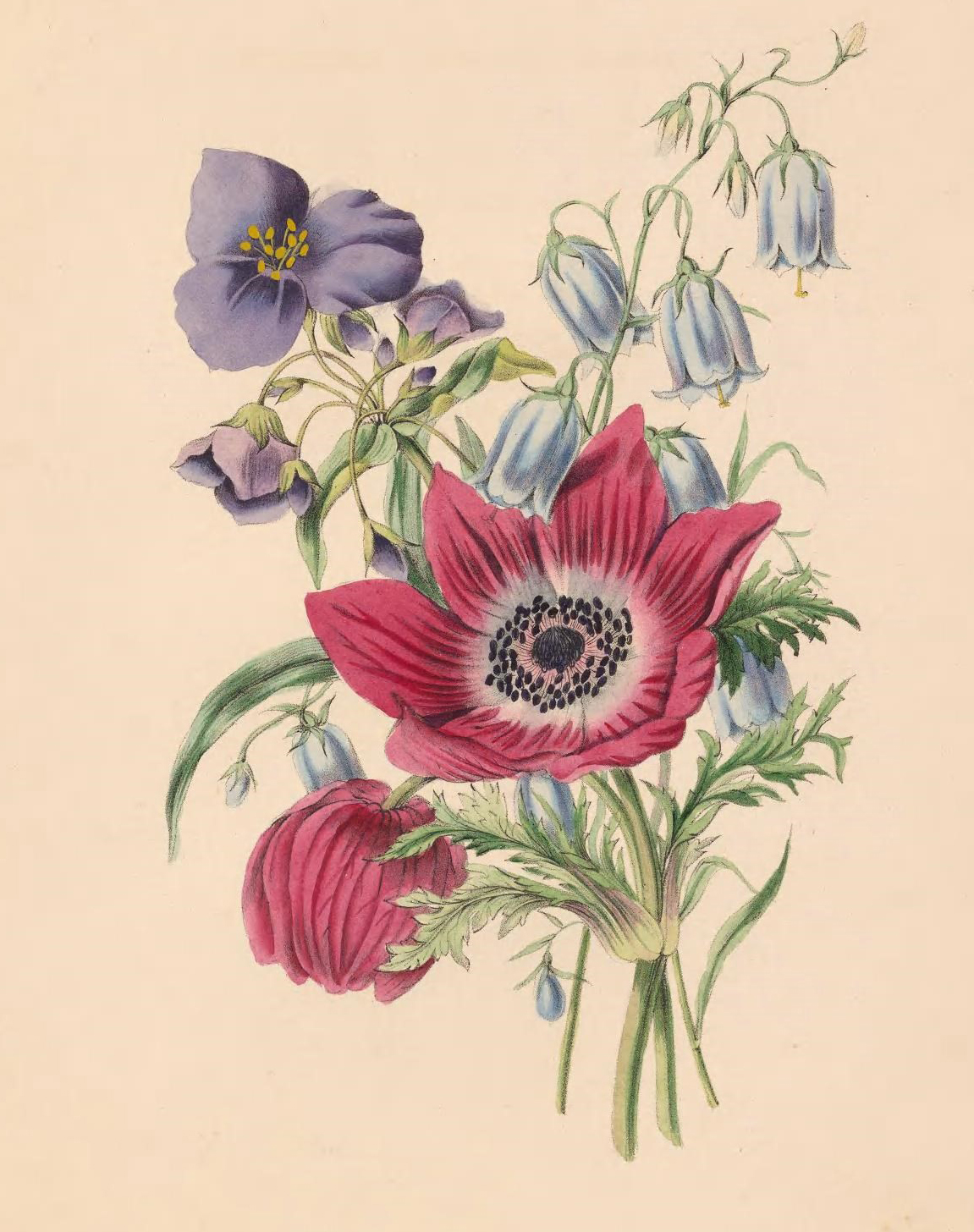
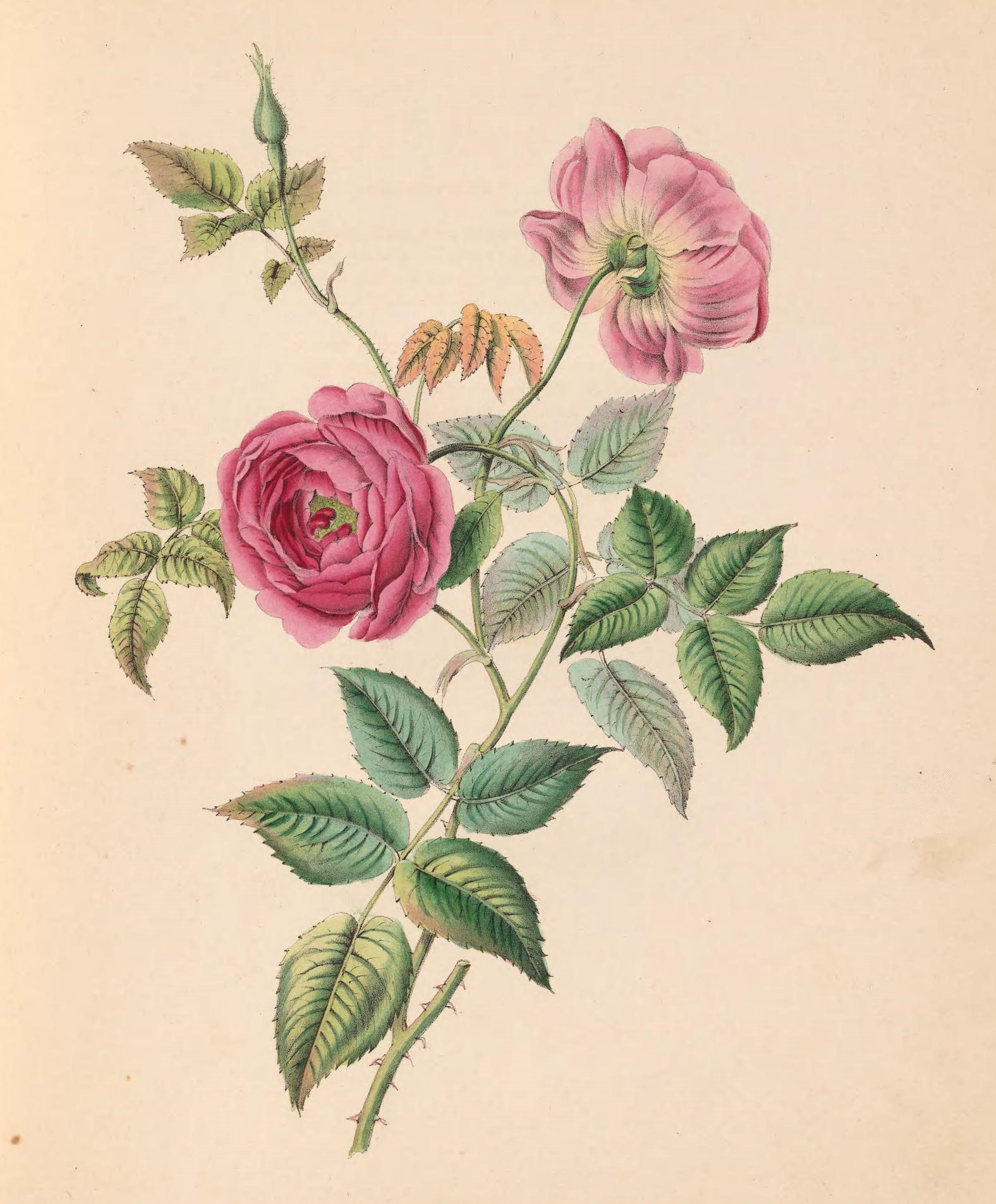
The Floral Offering, a Token of Friendship was edited by Frances S. Osgood and illustrated by J. Ackerman “with ten beautiful bouquets of flowers, elegantly colored after nature.” The work was published in Philadelphia, PA by Carey and Hart publishers in 1847. It contains poems by Osgood and others, plates with flowers assembled in bouquets, and a floral dictionary at the back containing her definitions of flowers. For example, basil means “I hate you” and olive means “peace be with you.” Osgood uses these definitions to ascribe secret messages. The list of illustrations for the plates provides the “secret message” that each illustrated arrangement is meant to convey.

Columbine, White Lily and Lupine.

Columbine, White Lily and Lupine. Secret message: It was a dream of folly, from which I woke to weep. Osgood, Frances Sargent (editor). The Floral Offering, A Token of Friendship (1847). Art by J. Ackerman. Contributed in BHL from Chicago Botanic Garden, Lenhardt Library. Digitization sponsored by the National Endowment for the Humanities (NEH).

Frances Sargent Osgood (1811 – 1850) was one of the most influential American women poets of her time. She was born in Boston to a family of poets together with her brother, sister, and step-sister. Early on, her parents recognized her talent and encouraged her pursuits. Her first poem was published when she was a young teenager. She was a prolific writer and published numerous works in magazines for women and children and also authored and edited several books.

Osgood married a painter, Samuel Stillman Osgood, in 1835. He had previously studied at the Royal Academy, and they moved back to London where he had a successful career painting portraits. During the four years that they lived abroad, Osgood remained active in her craft and in 1839 published a compilation of all her work in a volume entitled Wreath of Wild Flowers from New England. With the unexpected death of her father, the Osgoods returned to the States, first to her family home in Boston and then settling in New York in 1840. While in New York, Osgood published two volumes in the language of flowers genre in 1841 and 1847.

Trumpet.-flower, Forget-Me-Not, and Raspberry.

Trumpet.-flower, Forget-Me-Not, and Raspberry. Secret message: Farewell, be true to thyself, yet sometimes think of me. Osgood, Frances Sargent (editor). The Floral Offering, A Token of Friendship (1847). Art by J. Ackerman. Contributed in BHL from Chicago Botanic Garden, Lenhardt Library. Digitization sponsored by the National Endowment for the Humanities (NEH).

Osgood was very well known during her life-time, such that her biography appears in The American Female Poets; with Biographical and Critical Notices (1848), by Caroline May, and in The Female Poets of America (1849), edited by Rufus Griswold. Her notoriety and embracement of the language of flowers genre may have influenced and encouraged other women to write in the field of horticulture, botany, and natural history.

An interesting side note to her time in New York is Osgood’s association with Edgar Allen Poe. He published her poems and thought highly of her work. Their friendship is rumored to have developed into a love affair.

Anemone, Harebell, and Spiderwort.

Anemone, Harebell, and Spiderwort. Secret message: Thou art false, and I resign myself to my fate. Osgood, Frances Sargent (editor). The Floral Offering, A Token of Friendship (1847). Art by J. Ackerman. Contributed in BHL from Chicago Botanic Garden, Lenhardt Library. Digitization sponsored by the National Endowment for the Humanities (NEH).

Frances Sargent Osgood died from tuberculosis in 1850 at 38 years old. She was buried in Mount Auburn Cemetery near Boston with her daughter that preceded her in death. Her other two daughters died just after her in 1851.

The Memorial (1851) by “Friends of the Late Mrs. Osgood” and edited by Mary E. Hewitt was a tribute to her life. Its 346 pages contain numerous pieces by different authors; it is truly an acknowledgement of her importance to her family, friends, and literary colleagues.

Two roses.

The Rose. Secret message: Beauty and love. Osgood, Frances Sargent (editor). The Floral Offering, A Token of Friendship (1847). Art by J. Ackerman. Contributed in BHL from Chicago Botanic Garden, Lenhardt Library. Digitization sponsored by the National Endowment for the Humanities (NEH).

The Lenhardt Library of the Chicago Botanic Garden is digitizing 62 rare and unique language of flowers volumes published in the 19th century as part of a grant from the National Endowment for the Humanities (NEH) awarded to the Chicago Horticultural Society. Over three-years, the volumes are being conserved and digitized by expert staff at the Northeast Document Conservation Center. The Floral Offering is from the second set of volumes. You can explore volumes from sets one and two as well as other titles in the Language of Flowers collection in BHL. Learn more about other language of flowers volumes digitized as part of this grant in this past blog post.

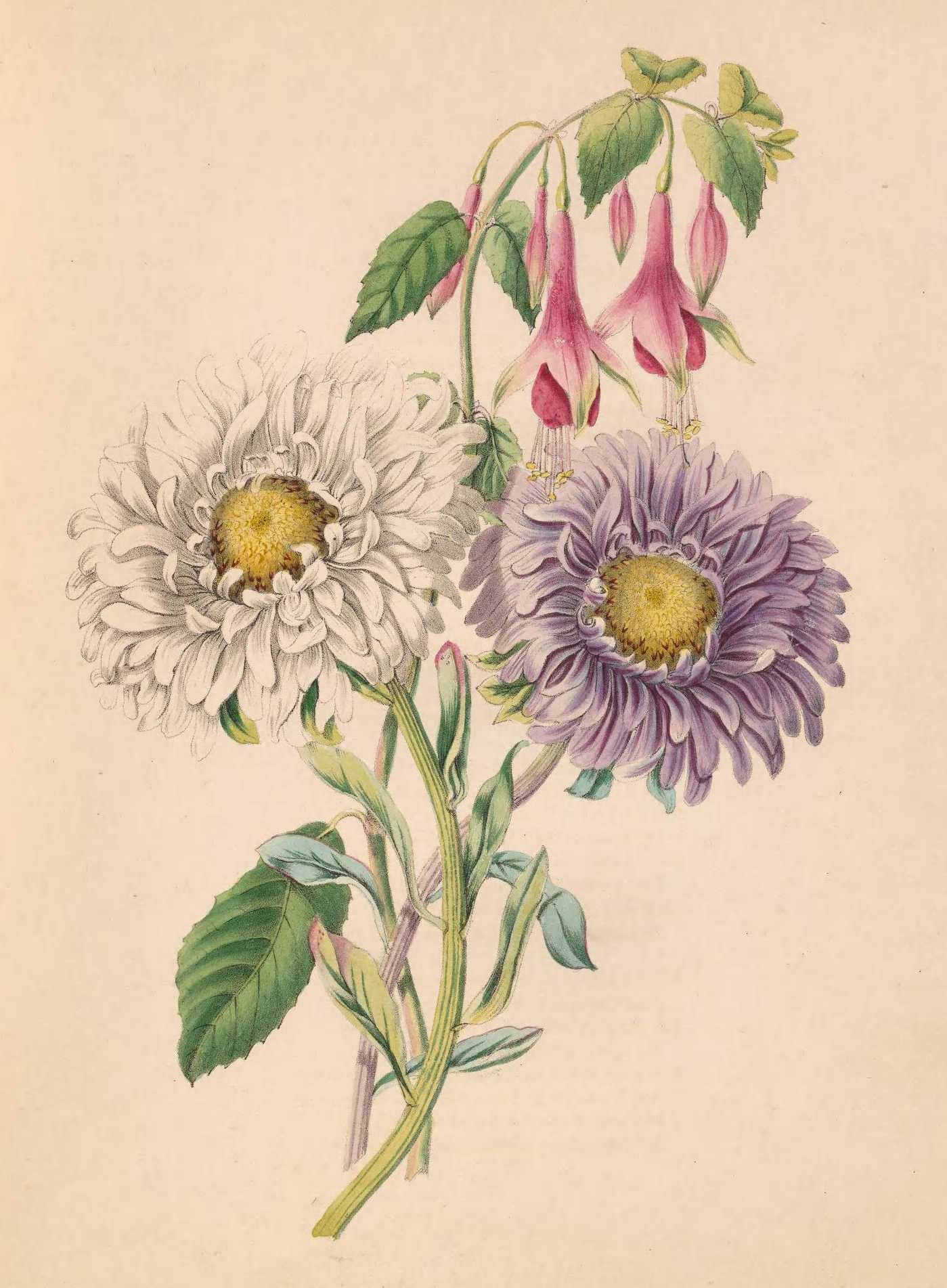
China-Aster and Fuchsia.

China-Aster and Fuchsia. Secret message: Caprice is a woman’s privilege. Osgood, Frances Sargent (editor). The Floral Offering, A Token of Friendship (1847). Art by J. Ackerman. Contributed in BHL from Chicago Botanic Garden, Lenhardt Library. Digitization sponsored by the National Endowment for the Humanities (NEH).

Sweet Pea, Bluebottle Centaury, and Evening Primrose.

Sweet Pea, Bluebottle Centaury, and Evening Primrose. Secret message: Goodbye! Our love was too lovely to last. Osgood, Frances Sargent (editor). The Floral Offering, A Token of Friendship (1847). Art by J. Ackerman. Contributed in BHL from Chicago Botanic Garden, Lenhardt Library. Digitization sponsored by the National Endowment for the Humanities (NEH).

References

Griswold, Rufus W. The Female Poets of America. Philadelphia: Carey and Hart, 1849. Internet resource.

Hewitt, Mary E. M, and Frances S. Osgood. The Memorial. New York: G.P. Putnam, 1851. Internet resource.

May, Caroline. The American Female Poets: With Biographical and Critical Notices. Philadelphia: Lindsay & Blakiston, 1848. Internet resource.

November 19, 2020by michelle.underhill
Blog Reel, Campaigns, Earth Optimism 2020, User Stories

The Case of the Florida Nutmeg: Empowering Research on Endangered Plants

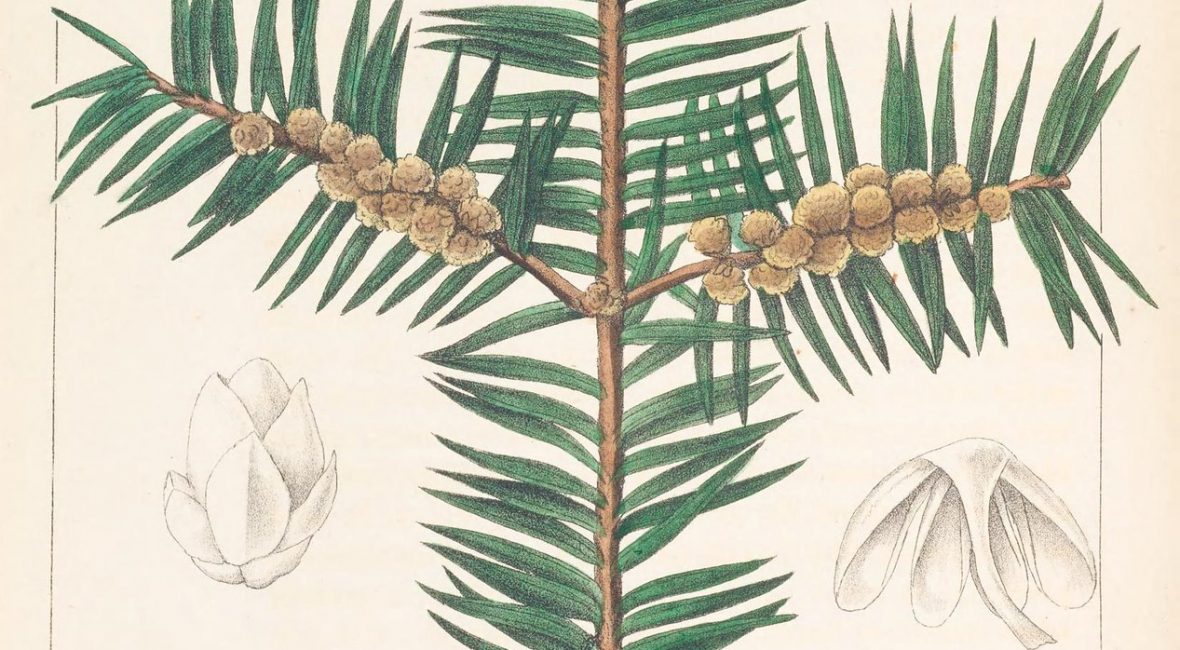
Colored drawing of a conifer tree branch with cones.

April 2020 marks the 50th anniversary of Earth Day. Organizations around the world have commemorated the occasion by participating in the global Earth Optimism movement — an initiative spearheaded by the Smithsonian to “turn the conservation conversation from doom and gloom to optimism and opportunity”.

Throughout 2020, the Biodiversity Heritage Library (BHL) and our partners are joining the movement by sharing conservation success stories from and made possible by the BHL collection. Follow our blog for conservation stories — past and present — and visit our website for more information and to explore our Earth Optimism book collection.

———————
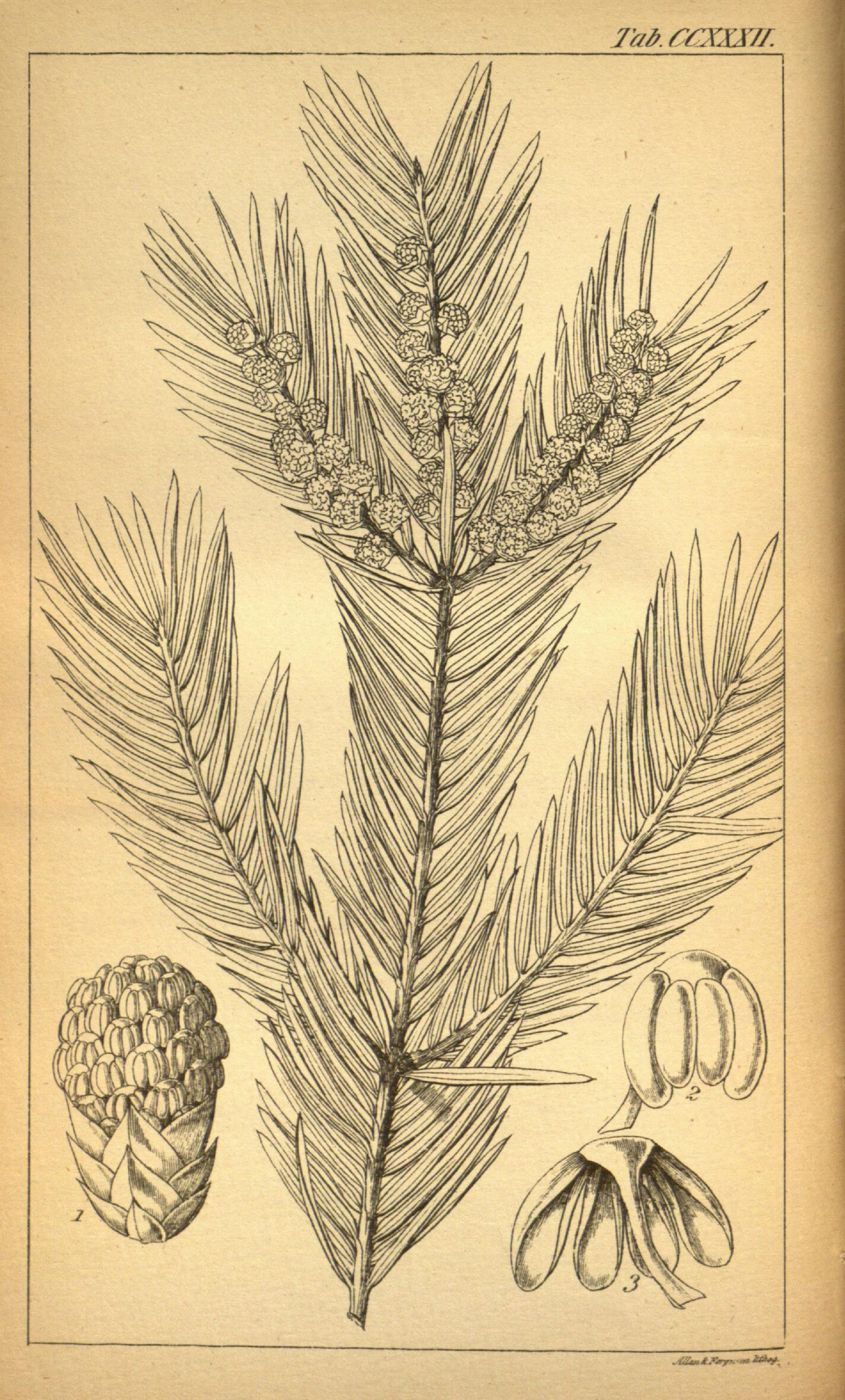
Black and white line drawing of a conifer tree branch with cones.

Florida nutmeg, Torreya taxifolia (male). This illustration, along with that of the female tree, represents the first published illustration of this species. Plate 232. Hooker’s Icones plantarum, vol. 3 (1840). Contributed in BHL from the Missouri Botanical Garden, Peter H. Raven Library.

On 5 June 1834, avid amateur botanist Hardy Bryan Croom wrote a letter to botanist John Torrey describing a gymnosperm tree in northern Florida that he was struggling to identify. In this letter, he postulated—with some degree of confidence—that the tree was Taxus baccata, the common yew, and he hoped to acquire some specimens to send to Torrey for investigation.

Torrey was one of the most important 19th century botanists in America. He corresponded with hundreds of scientists in North America and Europe, many of whom sent him specimens from their various explorations for study and identification. As such a well-respected expert and advisor on botanical science, it comes as no surprise that Croom sought Torrey’s expertise regarding this mysterious Florida tree.

The next year, in a letter dated 18 November 1835, Croom wrote again to Torrey, stating:

“The letter which I wrote last summer has had the effect to procure me some perfect fruit of that remarkable Taxoid tree at Aspalaga. The result surprises me. It is an ovate one celled nut entirely enclosed in fleshy covering! as large as a pigeon’s egg! Calix imbricated; thus agreeing neither with Taxus nor with Podocarpus. Besides, the tree, I think, is dioecious, but of this I am not yet certain. What will you do with it? Will it make a new genus?”

The following year, Croom again wrote to Torrey in a letter dated 18 May 1836 that he had determined that the tree represented a new genus. He proposed the genus name Torreya and provided a description and habitat details for “this fine tree,” for which he remarked:

“It is so abundant about Aspalaga (especially on Flat Creek) as to have been sawed into plank and lumber. It is an elegant tree with dark green foliage.”

With this letter, Croom provided the first recorded description of the habitat and abundance of the Florida nutmeg, Torreya taxifolia.

Sadly, Croom and his family drowned in a shipwreck in the Atlantic Ocean near Cape Hatteras on 8 October 1837. As such, Torrey arranged that the new genus and species were formally named and described by botanist George Arnott Walker-Arnott in 1838.

While Croom characterized Torreya taxifolia as abundant in 1836, today the species is critically endangered. With a distribution restricted to the limestone ravines and bluffs along the Apalachicola River in northern Florida and southern Georgia, fewer than a thousand individual trees persist in their native habitat. The most significant threat to the species is continued reproductive failure resulting from fungal pathogens—a threat which is continuing but not well-understood [1].

Torreya taxifolia is one of the species highlighted in a recent study to be published in the Memoirs of the Torrey Botanical Society. Authors Dr. Brian M. Boom (Curator Emeritus and former Vice President for Conservation Strategy and Bassett Maguire Curator of Botany at The New York Botanical Garden) and Susan Fraser (Recently-retired Thomas J. Hubbard Vice President and Director of the LuEsther T. Mertz Library) review John Torrey’s botanical legacy, drawing heavily on Torrey’s extensive correspondence, most of which, along with drawings, books, and artifacts from Torrey’s collections, can be found in the holdings of the LuEsther T. Mertz Library of The New York Botanical Garden (NYBG) [2].

In 2016, NYBG embarked on a project to digitize and transcribe Torrey’s correspondence and make both freely available through the Biodiversity Heritage Library (BHL). To date, more than 9,500 pages of correspondence—including those from Croom regarding Torreya taxifolia—are available in BHL, and over 7,000 of those pages have been transcribed.

The Torrey correspondence available through BHL was an invaluable resource during Boom and Fraser’s research for their study, which highlights several rare, restricted-range, or threatened plant species for which Torrey was directly involved in the scientific discovery and description phases. This was especially true with regards to Torreya taxifolia.

“BHL was instrumental in researching the circumstances surrounding the discovery and naming of this species, particularly through access to the correspondence of Hardy Bryan Croom and John Torrey between 1834-1837,” asserts Boom.

Caucasian male in a white button up shirt with a green tie. He smiles at the camera and wears glasses.

Dr. Brian M. Boom, Curator Emeritus and former Vice President for Conservation Strategy and Bassett Maguire Curator of Botany at The New York Botanical Garden. Photo Credit: The New York Botanical Garden.

Boom has been studying plant conservation, systematics, and ethnobotany for 40 years. His conservation work focuses on rare, restricted-range and threatened plant species in the American tropics and North Temperate areas, or, alternatively, on invasive species that pose threats to native flora in these regions. An important aspect of his research is aimed at understanding these species from the circumstances surrounding their discovery in the field and description and publication as a new species, through to subsequent documentation of their occurrence in the landscape, and with regards to the threats they are under, in the case of rare plants, or the threats they cause, in the case of invasives.

“Plant species with restricted geographic ranges, or that are rare or threatened, are of conservation concern because it could take relatively little perturbation to cause populations of such species to become further restricted, fragmented, or to become extinct,” states Boom.

Understanding the history of a species’ scientific discovery and subsequent changes in its population and distribution over time require access to historical data. As Boom articulates, BHL’s collections are rich in such data and thus play a vital role in research on threatened species.

“Conservation-related research benefits greatly from BHL in terms of providing access to some of the classic and most iconic images of plant species and to the early texts and archival materials, especially correspondence, pertaining to the focal species,” affirms Boom.
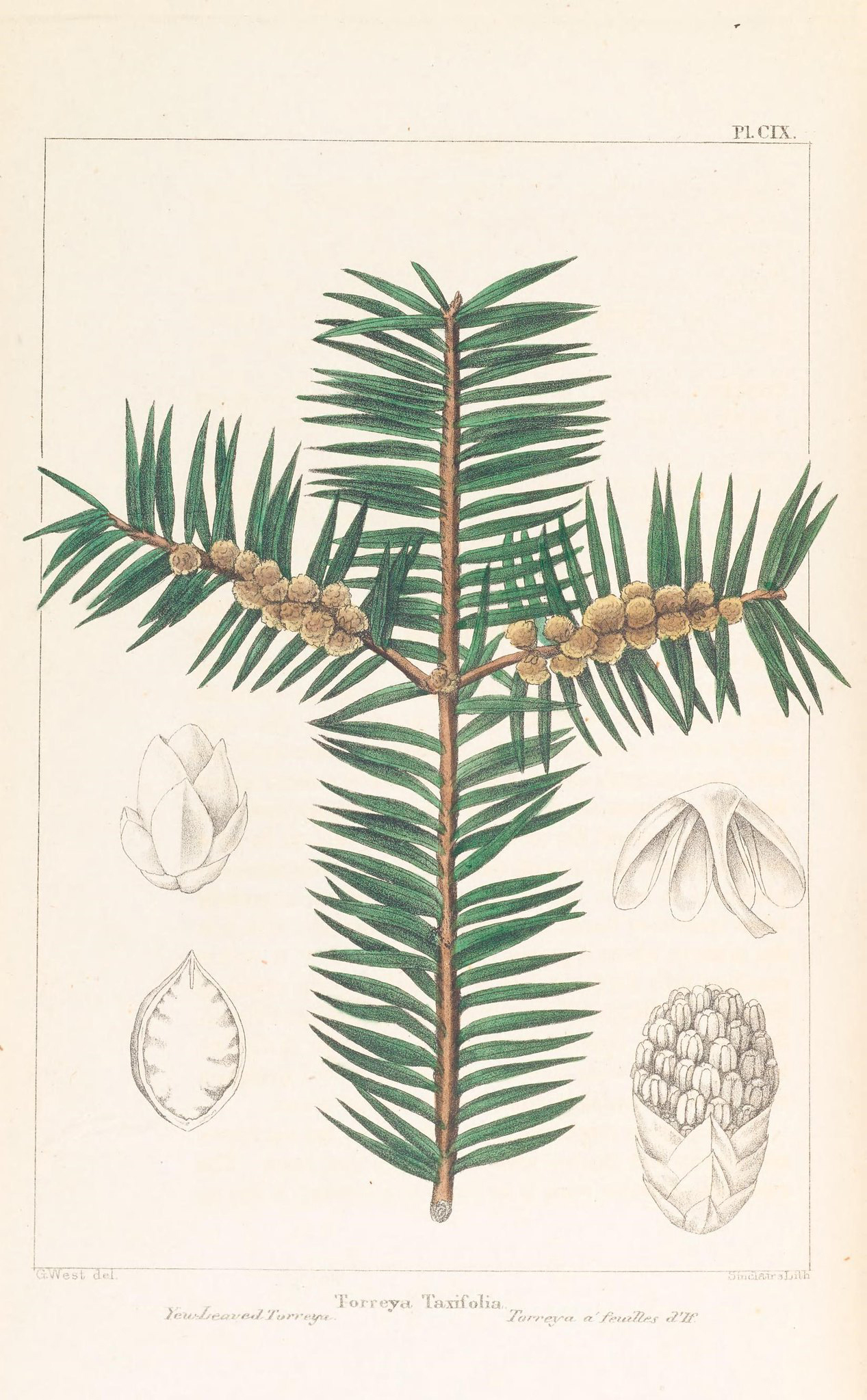
Colored drawing of a conifer tree branch with cones.

Torreya taxifolia. Plate 109. The North American Sylva, vol. 6 (1849). Art drawn by G. West. Contributed in BHL from New York Botanical Garden, LuEsther T. Mertz Library.

Beyond the published literature, correspondence and field notes are especially valuable as they may contain information that is not included in the published literature or on the herbarium labels of the specimens collected. For example, in the case of Torreya taxifolia, the type specimen is in the herbarium of the Royal Botanic Gardens, Kew. While there is no collector indicated on the actual specimen, John Torrey is listed as the collector in the Kew specimen database. However, Boom stresses that he knows of no record of Torrey visiting Florida before he made a five-week trip to the state in 1872, during which he did not observe Torreya taxifolia in its natural habitat, although in March of that year he did collect a cultivated specimen of this species in a garden near Tallahassee that he believed had been planted there by Croom (NY Barcode 9506).

“It seems very likely that the holotype was in fact collected by Hardy Bryan Croom, and that Torrey passed a specimen that Croom had sent to him on to Scottish botanist George Arnott Walker-Arnott, who described the new species in 1838,” explains Boom.

As further evidence for this hypothesis, the holotype specimen (K Barcode K000287662) contains a pencil notation, written in Croom’s handwriting, stating: “New genus of Coniferae allied to Taxus. To be described in the next number of the Lyceum of Natural History.”

Torreya taxifolia is a testament to the important role that BHL’s open access collections play in research on endangered species. The historical conservation and systematics research conducted for this species was made possible by reviewing the John Torrey correspondence that is available in BHL and enhanced with crowdsourced transcriptions generated via From the Page. BHL also provided access to the first known published illustrations of Torreya taxifolia, which appeared in Hooker’s Icones plantarum.
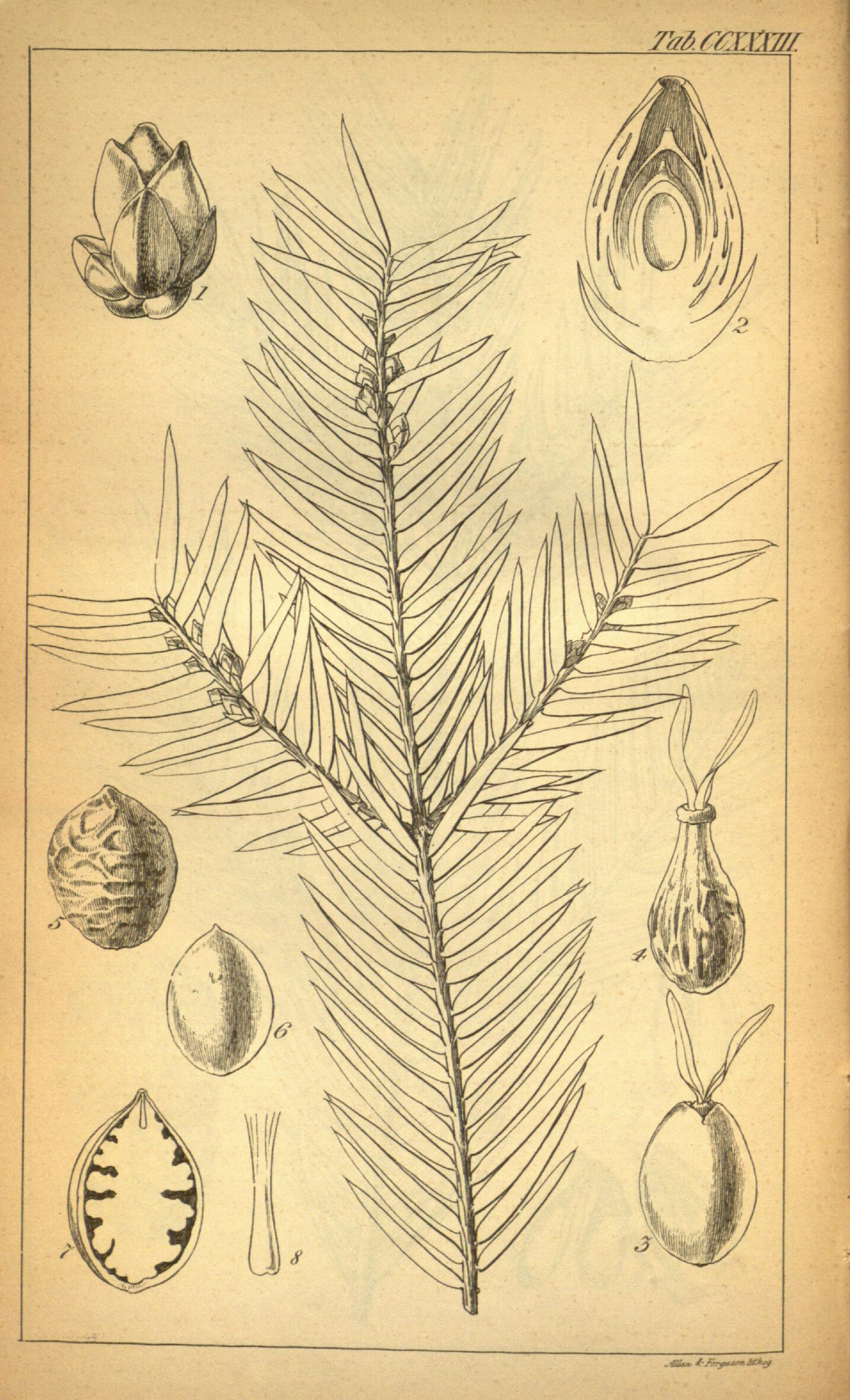
Black and white line drawing of a conifer tree branch with cones.

Florida nutmeg, Torreya taxifolia (female). This illustration, along with that of the male tree, represent the first published illustrations of this species. Plate 233. Hooker’s Icones plantarum, vol. 3 (1840). Contributed in BHL from the Missouri Botanical Garden, Peter H. Raven Library.

By providing open access to essential literature and archives, BHL is empowering the work of conservationists around the world. Easy and immediate online access to these materials allows scientists to conduct their research more quickly and efficiently—which is ever-more important as biodiversity faces unprecedented threats today, with at least one million species threatened with extinction [3].

“The BHL resources are the only or most readily available ones for accessing certain older titles and certainly for images of plants and correspondence of botanists involved with the discovery and description of new species and of their habitat,” asserts Boom. “Such literature is important for conservation work because the historical materials often contain first-hand commentary about the collection and discovery of threatened species, including information about their population size at the place of discovery and of the habitat in which the species occurred at the time.”

By providing conservationists with the information they need to help save biodiversity, the Biodiversity Heritage Library is improving our ability to respond to today’s biodiversity crisis. As such, free and open access to biodiversity knowledge is a reason to be an Earth Optimist.

References

[1] Spector, T., Determann, R. & Gardner, M. 2011. Torreya taxifolia. The IUCN Red List of Threatened Species 2011: e.T30968A9585489. Accessed on 4 February 2020. https://dx.doi.org/10.2305/IUCN.UK.2011-2.RLTS.T30968A9585489.en.

[2] The New York Botanical Garden. 2019. John Torrey: American Botanist. NYBG.org. Accessed on 4 February 2020. https://www.nybg.org/john-torrey-american-botanist/?_ga=2.197485295.1948631947.1568819719-1112387120.1548794658.

[3] Intergovernmental Science-Policy Platform on Biodiversity and Ecosystem Services. (2019). Nature’s Dangerous Decline ‘Unprecedented’; Species Extinction Rates ‘Accelerating’. Available at https://www.ipbes.net/news/Media-Release-Global-Assessment.

November 12, 2020by michelle.underhill

Help Support BHL

BHL's existence depends on the financial support of its patrons. Help us keep this free resource alive!

search

About BHL

The Biodiversity Heritage Library (BHL) is the world’s largest open access digital library for biodiversity literature and archives. BHL operates as a worldwide consortium of natural history, botanical, research, and national libraries working together to digitize the natural history literature held in their collections and make it freely available for open access as part of a global “biodiversity community.”

Join Our Mailing List

Sign up to receive the latest news, content highlights, and promotions.

Subscribe Now

Subscribe to Blog via Email

Enter your email address to subscribe to this blog and receive notifications of new posts by email.

Join 319 other subscribers

Subscribe to Blog Via RSS

Subscribe to the blog RSS feed to stay up-to-date on all the latest BHL posts.

Access RSS Feed

Inspiring Discovery through Free Access to Biodiversity Knowledge.

The Biodiversity Heritage Library makes it easier than ever for you to access the information you need to study and explore life on Earth…for free, anytime, anywhere.


64+ Million Pages of
Biodiversity Literature Online.

EXPLORE

Tools and Services
to Transform Research.

EXPLORE

300,000+
Illustrations on Flickr.

EXPLORE

ABOUT | HARMFUL CONTENT | PRIVACY | SITE MAP | TERMS OF USE