

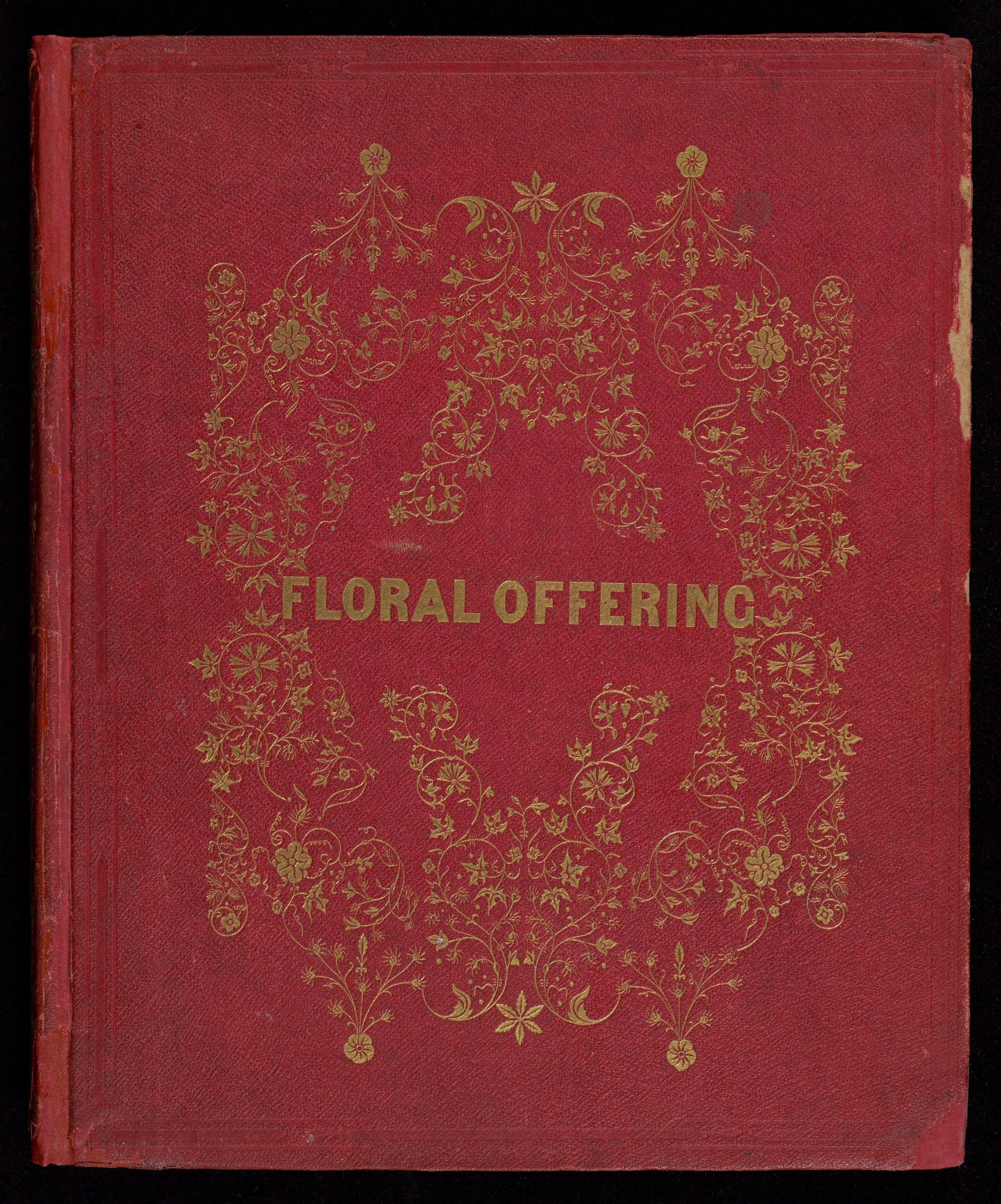
Cover. Osgood, Frances Sargent (editor). The Floral Offering, A Token of Friendship (1847). Contributed in BHL from Chicago Botanic Garden, Lenhardt Library. Digitization sponsored by the National Endowment for the Humanities (NEH).
The Language of Flowers genre is at the intersection of botany, horticulture, natural history, art, poetry, and women’s studies. This popular literary trend in the 19th century presented the world of botany through dictionaries of flowers and associated meanings, floral poetry, and prose, offering a sentimental view of natural history. A properly arranged bouquet was said to convey a “secret message” for the recipient. The “social media” of its day, this Victorian fad led to many editions of works published, with multiple titles by successful authors.
Frances Sargent Osgood edited two works in this genre: Poetry of Flowers and Flowers of Poetry and The Floral Offering.
Her description of floriography from her introductory poem in the Floral Offering follows:
INTRODUCTORY.
THY EMBLEM FLOWER.
Round every flower there gleams a glory
Bequeathed by antique song or story;
To each, old legends give a name
And its peculiar charm proclaims;
O’er smiling lawn – through shaded grove,
Our dreaming poets pensive rove,
And strive to read their language rare,
And learn the lesson latent there-
Then ‘mid them all, so fair to see,
What flower shall thy fit emblem be?
The Floral Offering, a Token of Friendship was edited by Frances S. Osgood and illustrated by J. Ackerman “with ten beautiful bouquets of flowers, elegantly colored after nature.” The work was published in Philadelphia, PA by Carey and Hart publishers in 1847. It contains poems by Osgood and others, plates with flowers assembled in bouquets, and a floral dictionary at the back containing her definitions of flowers. For example, basil means “I hate you” and olive means “peace be with you.” Osgood uses these definitions to ascribe secret messages. The list of illustrations for the plates provides the “secret message” that each illustrated arrangement is meant to convey.
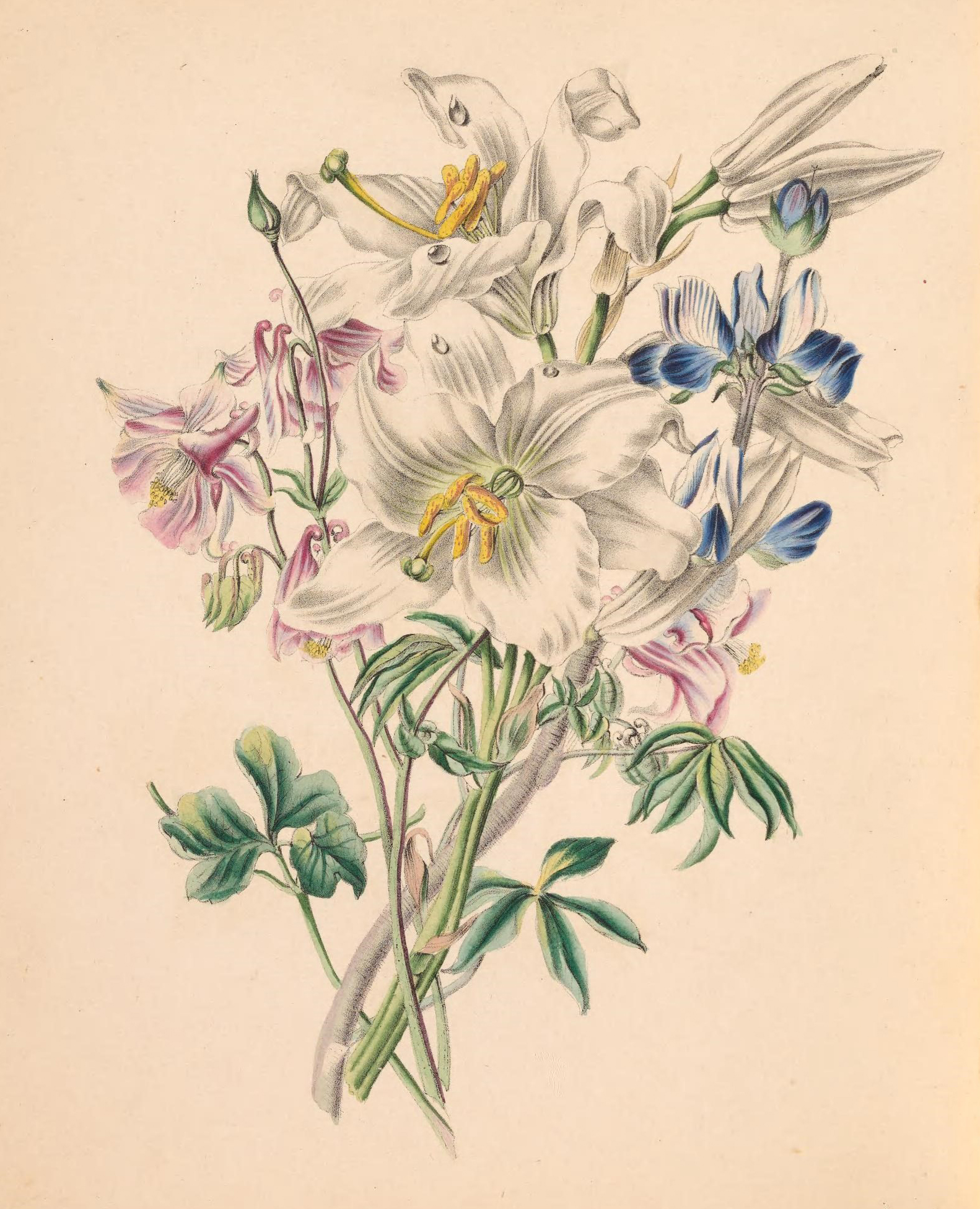
Columbine, White Lily and Lupine. Secret message: It was a dream of folly, from which I woke to weep. Osgood, Frances Sargent (editor). The Floral Offering, A Token of Friendship (1847). Art by J. Ackerman. Contributed in BHL from Chicago Botanic Garden, Lenhardt Library. Digitization sponsored by the National Endowment for the Humanities (NEH).
Frances Sargent Osgood (1811 – 1850) was one of the most influential American women poets of her time. She was born in Boston to a family of poets together with her brother, sister, and step-sister. Early on, her parents recognized her talent and encouraged her pursuits. Her first poem was published when she was a young teenager. She was a prolific writer and published numerous works in magazines for women and children and also authored and edited several books.
Osgood married a painter, Samuel Stillman Osgood, in 1835. He had previously studied at the Royal Academy, and they moved back to London where he had a successful career painting portraits. During the four years that they lived abroad, Osgood remained active in her craft and in 1839 published a compilation of all her work in a volume entitled Wreath of Wild Flowers from New England. With the unexpected death of her father, the Osgoods returned to the States, first to her family home in Boston and then settling in New York in 1840. While in New York, Osgood published two volumes in the language of flowers genre in 1841 and 1847.
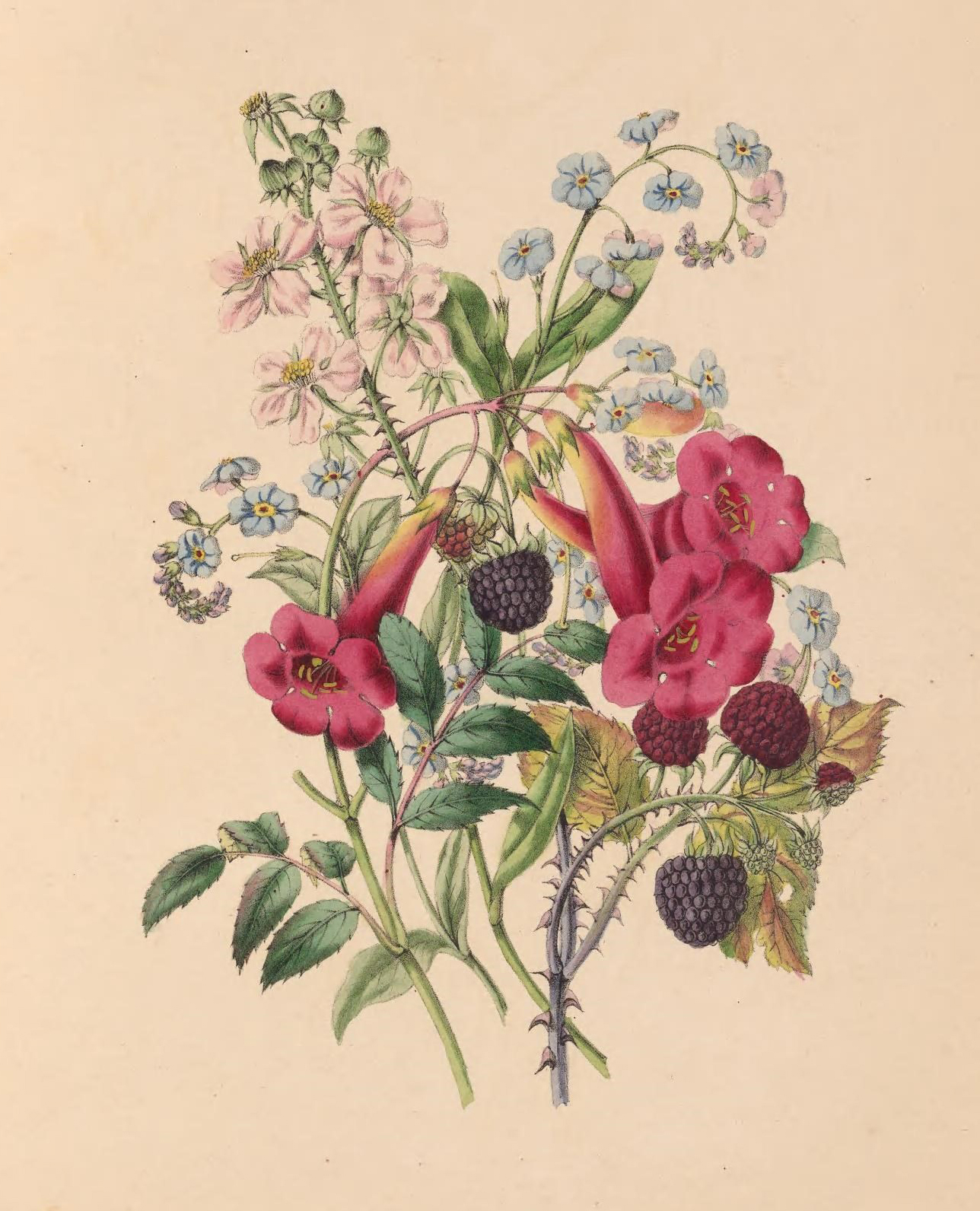
Trumpet.-flower, Forget-Me-Not, and Raspberry. Secret message: Farewell, be true to thyself, yet sometimes think of me. Osgood, Frances Sargent (editor). The Floral Offering, A Token of Friendship (1847). Art by J. Ackerman. Contributed in BHL from Chicago Botanic Garden, Lenhardt Library. Digitization sponsored by the National Endowment for the Humanities (NEH).
Osgood was very well known during her life-time, such that her biography appears in The American Female Poets; with Biographical and Critical Notices (1848), by Caroline May, and in The Female Poets of America (1849), edited by Rufus Griswold. Her notoriety and embracement of the language of flowers genre may have influenced and encouraged other women to write in the field of horticulture, botany, and natural history.
An interesting side note to her time in New York is Osgood’s association with Edgar Allen Poe. He published her poems and thought highly of her work. Their friendship is rumored to have developed into a love affair.
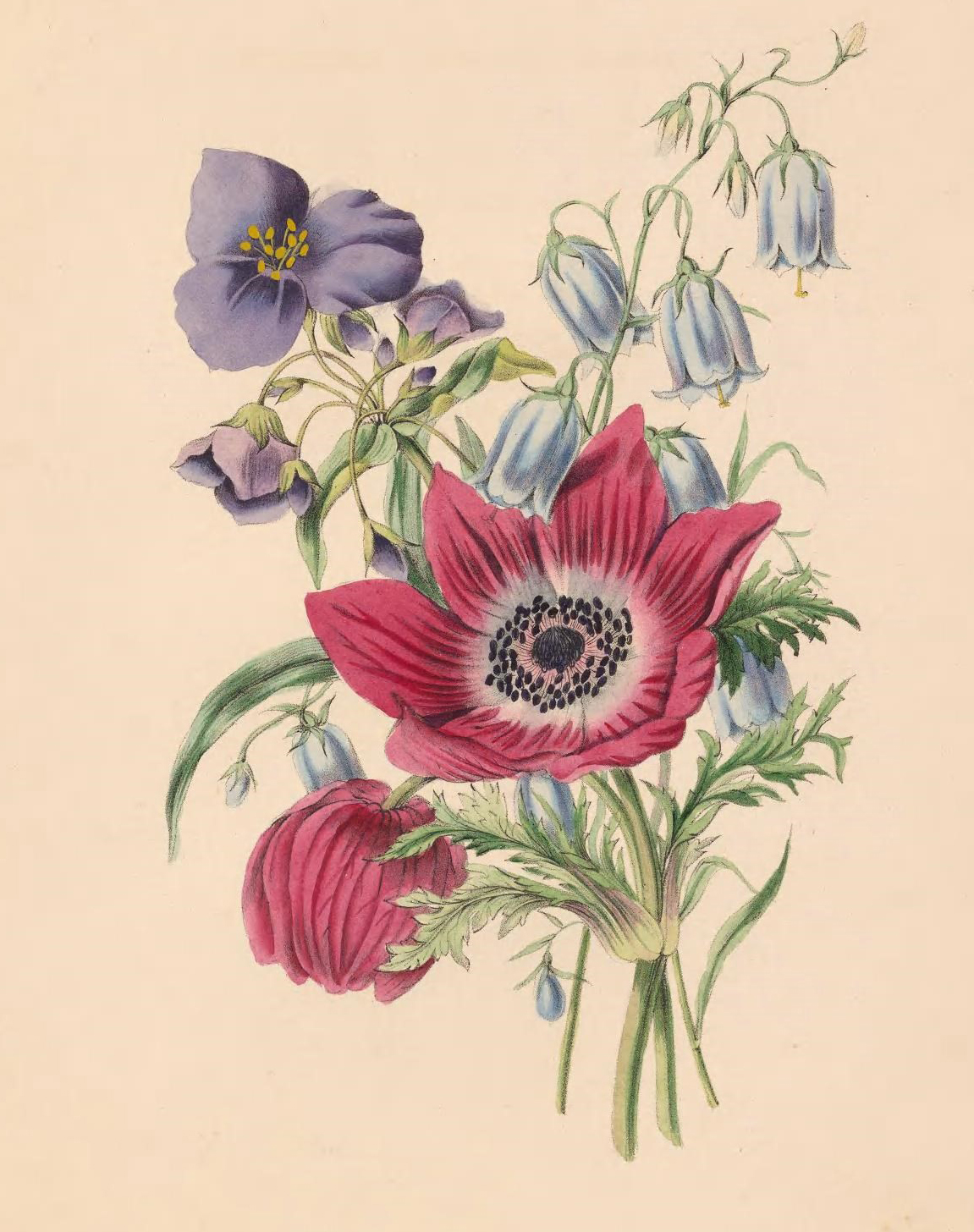
Anemone, Harebell, and Spiderwort. Secret message: Thou art false, and I resign myself to my fate. Osgood, Frances Sargent (editor). The Floral Offering, A Token of Friendship (1847). Art by J. Ackerman. Contributed in BHL from Chicago Botanic Garden, Lenhardt Library. Digitization sponsored by the National Endowment for the Humanities (NEH).
Frances Sargent Osgood died from tuberculosis in 1850 at 38 years old. She was buried in Mount Auburn Cemetery near Boston with her daughter that preceded her in death. Her other two daughters died just after her in 1851.
The Memorial (1851) by “Friends of the Late Mrs. Osgood” and edited by Mary E. Hewitt was a tribute to her life. Its 346 pages contain numerous pieces by different authors; it is truly an acknowledgement of her importance to her family, friends, and literary colleagues.
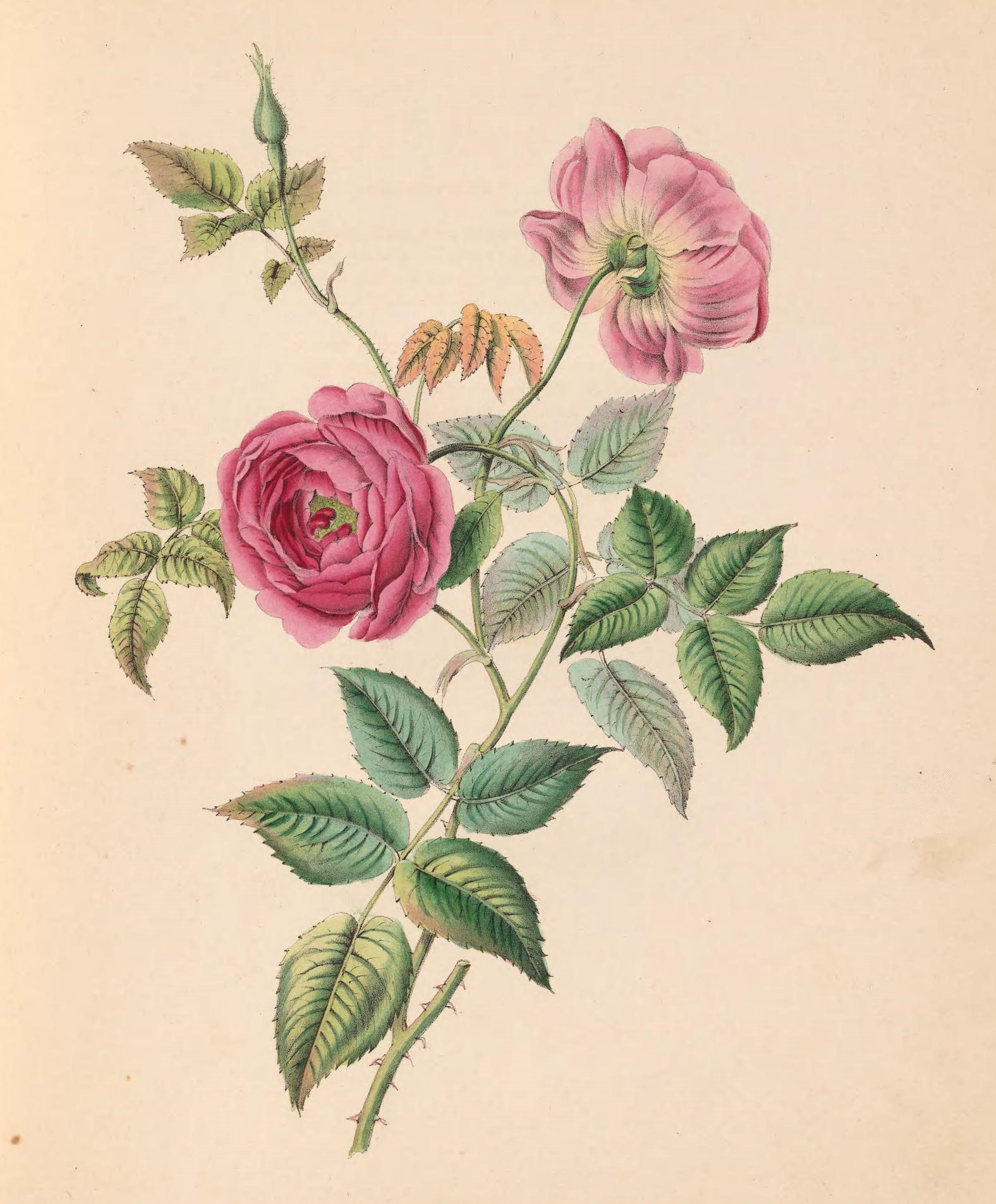
The Rose. Secret message: Beauty and love. Osgood, Frances Sargent (editor). The Floral Offering, A Token of Friendship (1847). Art by J. Ackerman. Contributed in BHL from Chicago Botanic Garden, Lenhardt Library. Digitization sponsored by the National Endowment for the Humanities (NEH).
The Lenhardt Library of the Chicago Botanic Garden is digitizing 62 rare and unique language of flowers volumes published in the 19th century as part of a grant from the National Endowment for the Humanities (NEH) awarded to the Chicago Horticultural Society. Over three-years, the volumes are being conserved and digitized by expert staff at the Northeast Document Conservation Center. The Floral Offering is from the second set of volumes. You can explore volumes from sets one and two as well as other titles in the Language of Flowers collection in BHL. Learn more about other language of flowers volumes digitized as part of this grant in this past blog post.
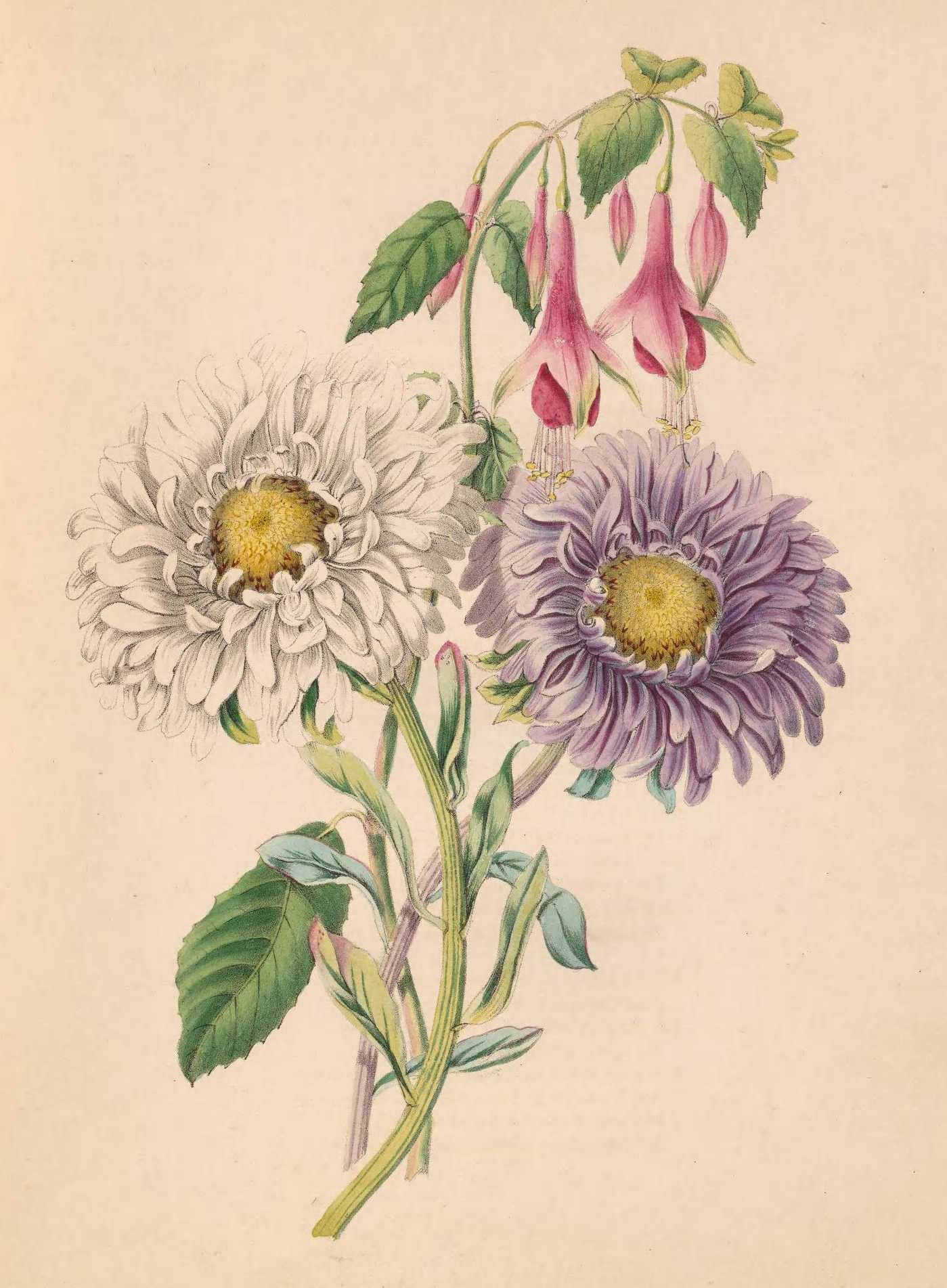
China-Aster and Fuchsia. Secret message: Caprice is a woman’s privilege. Osgood, Frances Sargent (editor). The Floral Offering, A Token of Friendship (1847). Art by J. Ackerman. Contributed in BHL from Chicago Botanic Garden, Lenhardt Library. Digitization sponsored by the National Endowment for the Humanities (NEH).
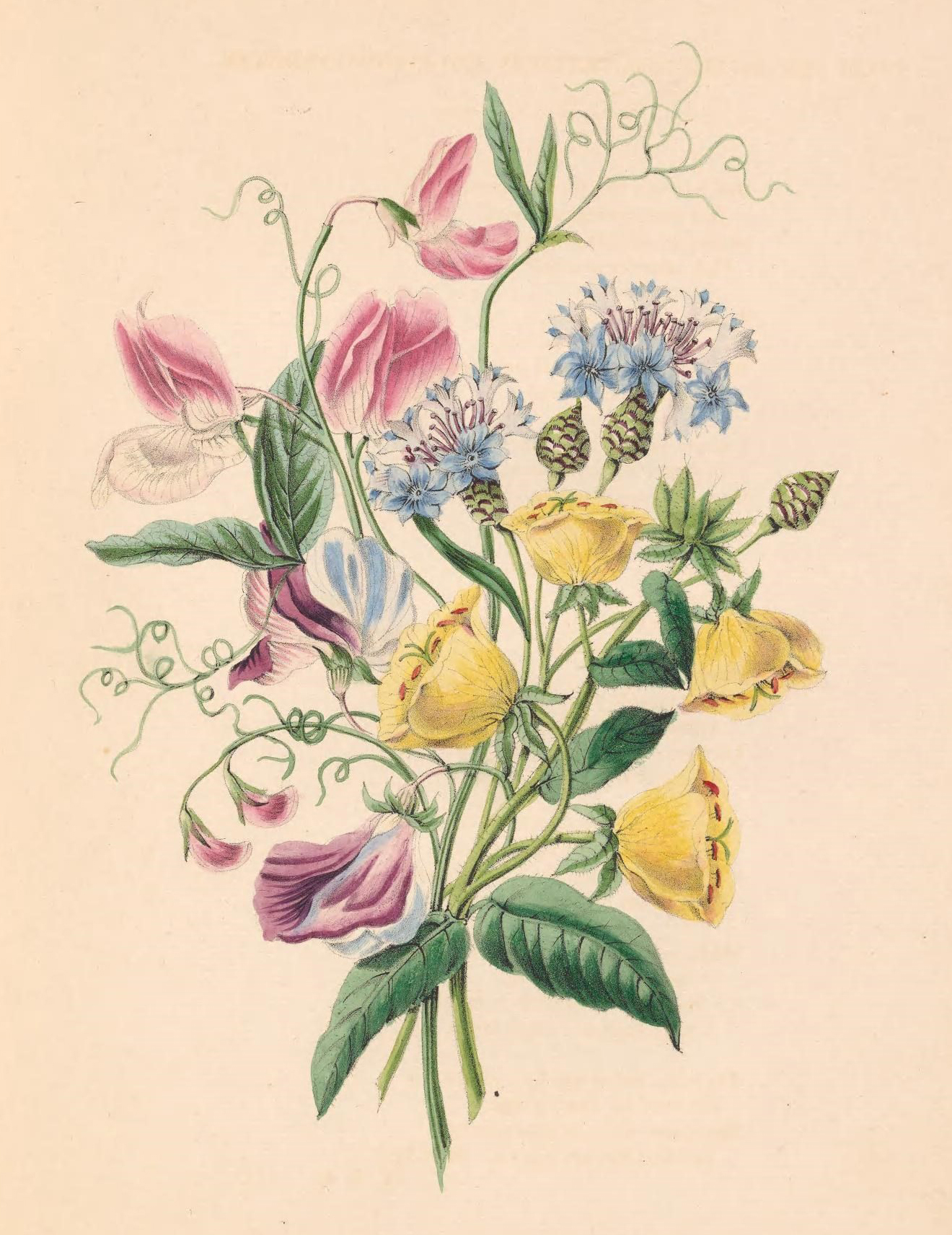
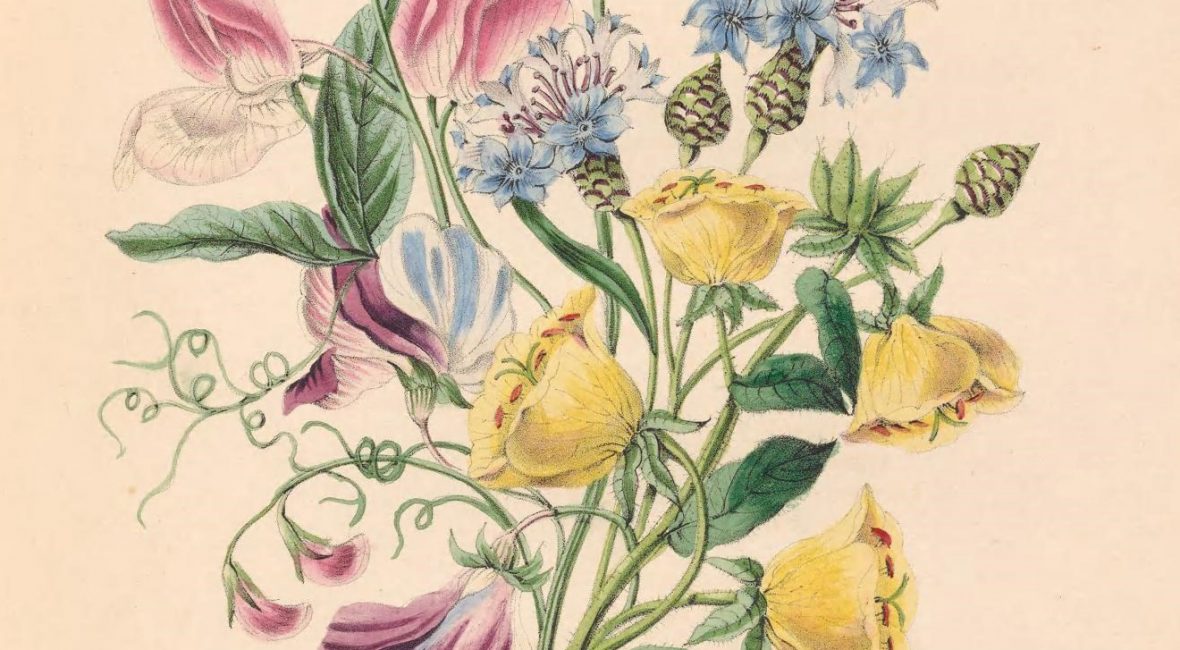
Sweet Pea, Bluebottle Centaury, and Evening Primrose. Secret message: Goodbye! Our love was too lovely to last. Osgood, Frances Sargent (editor). The Floral Offering, A Token of Friendship (1847). Art by J. Ackerman. Contributed in BHL from Chicago Botanic Garden, Lenhardt Library. Digitization sponsored by the National Endowment for the Humanities (NEH).
References
Griswold, Rufus W. The Female Poets of America. Philadelphia: Carey and Hart, 1849. Internet resource.
Hewitt, Mary E. M, and Frances S. Osgood. The Memorial. New York: G.P. Putnam, 1851. Internet resource.
May, Caroline. The American Female Poets: With Biographical and Critical Notices. Philadelphia: Lindsay & Blakiston, 1848. Internet resource.
