Biodiversity Heritage Library - Program news and collection highlights from BHL
  • Home
  • News
  • Featured Books
    • All Featured Books
    • Book of the Month Series
    • BHL at 20
  • User Stories
  • Campaigns
    • Fossil Stories
    • Garden Stories
    • Monsters Are Real
    • Page Frights
    • Her Natural History
    • Earth Optimism 2020
  • Tech Blog
  • Visit BHL
Home
News
Featured Books
    All Featured Books
    Book of the Month Series
    BHL at 20
User Stories
Campaigns
    Fossil Stories
    Garden Stories
    Monsters Are Real
    Page Frights
    Her Natural History
    Earth Optimism 2020
Tech Blog
Visit BHL
  • Home
  • News
  • Featured Books
    • All Featured Books
    • Book of the Month Series
    • BHL at 20
  • User Stories
  • Campaigns
    • Fossil Stories
    • Garden Stories
    • Monsters Are Real
    • Page Frights
    • Her Natural History
    • Earth Optimism 2020
  • Tech Blog
  • Visit BHL
Biodiversity Heritage Library - Program news and collection highlights from BHL
Blog Reel, Featured Books

The Last Heath Hen, and Other News From the Collecting Net In Woods Hole

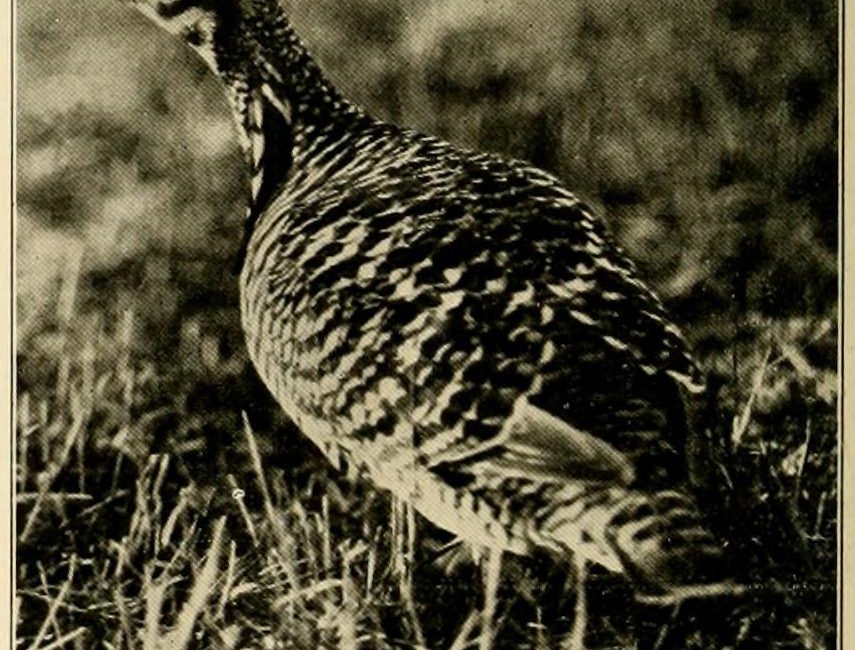
black and white photo of a bird, the heath hen

“On Martha’s Vineyard Island just across the Sound from the Marine Biological Laboratory is the home of the lone survivor of the Heath Hen. The death of this individual will also mean the death of its race, and then another bird will have taken its place among the endless array of extinct forms. The numbers of Heath Hen have been closely followed by ornithologists and since 1908 a detailed census has been taken of the birds each year. For the first time in the history of ornithology a species has been studied and photographed in its normal environment down to the very last individual.”

-Professor Alfred O. Gross, Bowdoin College, as written in The Collecting Net: Volume 5, Number 3, 12 July 1930.

black and white photo of a bird, the heath hen

“The Last Heath Hen.” Gross, Alfred O. The Collecting Net. v.5, no.33 (1930). Contributed in BHL from MBLWHOI Library. In copyright. Digitized with the permission of the rights holder. CC BY-NC-SA.

We came across a unique article, “The Last Heath Hen,” in the Biodiversity Heritage Library recently. The article from The Collecting Net newspaper is a beautifully-crafted account from 1930 of the then-last stand and near extinction of the last animal of the ground-feeding Heath Hen species (Tympanuchus cupido cupido), a member of the grouse family and subspecies of the Prairie Chicken. This species once ranged from Maine to the Carolinas in American colonial times and before but was all but extinct on the US mainland by 1870, except for it holding its own in the scrub brush, open fields, and low pine forests of Martha’s Vineyard, Massachusetts.
Historical Spotlight: Martha’s Vineyard

Martha’s Vineyard is an island about twice as long and a bit wider than the island of Manhattan, four miles across the Vineyard Sound body of water from the village of Woods Hole in the town of Falmouth on the Cape Cod peninsula.. The Aquinnah Wampanoag Tribe had lived on the Island of Martha’s Vineyard for close to 10,000 years when the island was “discovered” by English explorer Bartholomew Gosnold and named after his deceased daughter Martha in 1602.  Woods Hole (also a land of the Wampanoag Nation), “discovered” by Gosnold in 1602, is a village which in the 19th Century was a whaling port and maritime industrial center, and in the 20th Century became home to six world renowned scientific research institutions, the second oldest of which in 1888 was founded as the Marine Biological Laboratory (MBL), which published The Collecting Net.

The Collecting Net article, “The Last Heath Hen,” was written by the ornithologist Dr. Alfred Otto Gross, an MBL summer research scientist and Professor of Zoology at Bowdoin College in Maine. This story is a simple account of the prelude to the end of this species, as extinction officially occurred two years later in 1932. The Commonwealth of Massachusetts and a coalition of conservation organizations made real efforts to save the heath hen—efforts which ultimately failed, as sadly in the end disease, predators, and a forest fire in its breeding ground sealed the fate of this species. Dr. Gross writes that it was decided by conservation organizations, with respect to the last individual of this species, to allow it to live its last years in peace without interference from the government or hunters. Thus, this sensitive account by Dr. Gross, based upon his own research.

According to this undated appreciation of Dr. Gross in the Bowdoin College Daily Sun:

“Although he enjoyed teaching, Gross was a devoted researcher who contributed prolifically to the study of ornithology; he was the author of 265 scientific articles and books and was recognized as a Fellow of the American Ornithologists’ Union in 1930.”

The science history of the oldest private biological laboratory in the United States, the Marine Biological Laboratory (MBL), is well documented through thousands of publications, as well as in The Collecting Net. The venerable in-house journal of the Marine Biological Laboratory, the Biological Bulletin, has been continuously published, first by MBL and now by the University of Chicago Press, since 1890. The Archives of the MBL holds the papers of scientists, photographs, films, and the administrative records of 133 years of transformative biological science, not to mention over 15,000 rare books going back to the 1500’s, many of which are freely accessible through the BHL. While the science is well documented, getting to know the social history of this year-round (once only during the summer) seaside science mecca is assisted by examining The Collecting Net weekly newspaper, a scrappy summertime tabloid which was published by the social MBL Club from 1926-1953.

Front page of "The Collecting Net"

Front page, The Collecting Net, v.3, no.1 (1928). Contributed in BHL from MBLWHOI Library. In copyright. Digitized with the permission of the rights holder. CC BY-NC-SA.

The Collecting Net joined the science and the social going on during busy MBL summers, used advertising revenues for a scholarship fund for MBL students, and was edited by a team initially led by Ware Cattell, who later became editor of the journal Science. When the newspaper hit its weekly publishing deadline, it was loaded on a boat and motored across Buzzards Bay to New Bedford where it was typeset, printed, and returned to Woods Hole. While the more recent issues (1950’s) present official-looking administrative accounts of lectures and research, the first years of The Collecting Net offered an exciting and often humorous glimpse into the arts and sciences and lives of the people who spent their summers working at the Marine Biological Laboratory—from ferry and train schedules to Boston, New York, Martha’s Vineyard and Nantucket; to a comprehensive directory of all the employees and scientists at MBL every summer; to summer choral and drama auditions and performances; and many, many advertisements (see below an assortment of these).

"bug hunters!"

Scientists in Woods Hole are still known as “bug hunters”! Advertisement from Morrison’s Market in The Collecting Net, v.1 (1926). Contributed in BHL from MBLWHOI Library. In copyright. Digitized with the permission of the rights holder. CC BY-NC-SA.

screenshot of text from a book with the "note to the editor"

A vital “Letter to the Editor”. The Collecting Net, v.5, no.33 (1930). Contributed in BHL from MBLWHOI Library. In copyright. Digitized with the permission of the rights holder. CC BY-NC-SA.

Screenshot of text, advertisement for "The University Players"

The most well known University Players were Henry Fonda and James Stewart. The University Platers Guild advertisement. The Collecting Net, v.5, no.33 (1930). Contributed in BHL from MBLWHOI Library. In copyright. Digitized with the permission of the rights holder. CC BY-NC-SA.

Screenshot of text, "Living Marine Forms" advertisement

Live marine specimens were locally collected and packed for the Woods Hole departing train for all points, USA. General Biological Supply House advertisement. The Collecting Net, v.5, no.33 (1930). Contributed in BHL from MBLWHOI Library. In copyright. Digitized with the permission of the rights holder. CC BY-NC-SA.

The Collecting Net masthead was “an independent publication devoted to the activities of biologists at the laboratories in Woods Hole.” One thing which The Collecting Net offered relative to the science taking place in Woods Hole during the summers was something which has always been quite important in science literature, and that is the opportunity to rapidly publish findings and new ideas. This, The Collecting Net provided, as in Dr. Ernest E. Just’s “Methods for experimental embryology…,” below, which was published so it could be used by students at MBL the next day! Dr. Alfred O. Gross’ account of the final days of the heath hen was published so the readers of the work could respond to it immediately.

One thing missing though, relative to all the current science of those times, was that The Collecting Net, when published, was not indexed for later discovery. For this reason, almost a century after the first issue was published in 1926, through the Biodiversity Heritage Library it is possible to search the full text content of the articles published within, thereby giving that science new exposure, freely accessible in Woods Hole or anywhere in the world.

Screenshot of text, an article by E.E. Just.

Ernest E. Just, an MBL scientist, was known for his experimentation technique. He was the first African American scientist in the United States to receive a PhD in Zoology, from the University of Chicago. “Methods for Experimental Embryology with Special Reference to Marine Invertebrates.” The Collecting Net, v.3 (1928). Contributed in BHL from MBLWHOI Library. In copyright. Digitized with the permission of the rights holder. CC BY-NC-SA.

April 29, 2021by Joel Richard
Blog Reel, Featured Books

Earth Day 2021: Exploring Earth’s Biodiversity through Books

background of yellow, white and red flowers with text "Happy Earth Day 2021"

Since its inaugural event on 22 April 1970, Earth Day has grown into an international annual celebration of the Earth and a movement to raise awareness about and support for environmental protection. This year’s theme, Restore Our Earth, emphasizes that, “As the world returns to normal, we can’t go back to business-as-usual.” As we face widespread climate change and unprecedented biodiversity declines—with one million species threatened with extinction—immediate, online access to essential literature is ever-more important, allowing scientists to conduct research more quickly and efficiently and improving our ability to respond to these crises. For fifteen years, the Biodiversity Heritage Library (BHL) has worked as a global consortium to provide this vital access, empower research, and make a real difference in our ability to improve the health of our planet for every species that calls it home.

This year, several of our global partners have selected a few titles from the BHL collection to commemorate Earth Day. From exploring Asia’s vast and unique biodiversity to inspiring conservation through a popular publication on birds, providing practical methods for conducting surveys and using the data to support conservation practices, and marveling at the extraordinary biodiversity of past ages, these titles highlight the richness of our planet’s biodiversity and remind us of the importance of protecting the wonderful, wild, and beautiful life on Earth.

Asian Biodiversity: An Essential Contributor to Our Beautiful Earth

By Zheping Xu, Xuejuan Chen, and Tian Jiang (National Science Library, Chinese Academy of Sciences)

Biodiversity is essentially everywhere, ubiquitous on Earth’s surface and in every drop of its bodies of water [1]. Biodiversity conservation makes great contributions to the restoration of the earth.

As a continent with the largest area and the most population, Asia holds vast biodiversity, from the equatorial region to the Arctic area, and from the coast of the western Pacific to the borders of Europe and Africa. Here, we introduce several books that review Asian biodiversity, from mammals and insects to some distinctive species from the continent.

Mammals of Eastern Asia (1947) is the first general work on mammals of eastern Asia [2]. The book’s carefully prepared chapters and fine original pen sketches are interesting, useful and invaluable to the amateur as well as the professional zoologist regarding the habitats, relationships, life histories and idiosyncrasies of the widely diversified faunas.

Map of Eastern Asia and pen sketches of some mammals.

Map of Eastern Asia and pen sketches of some mammals. Source: Tate, G. H. H. (George Henry Hamilton). Mammals of Eastern Asia. 1947. Contributed in BHL from MBLWHOI Library.

Cerambycidae of Northern Asia (1988) describes the morphology, geographic distribution, and biology of cerambycid beetles in Northern Asia of four sub­families (Prioninae, Disteniinae, Lepturinae, and Aseminae), comprising 124 species. Many cerambycid species are invasive pests of environmental concern, causing severe damage to forests and crops. Long-term field investigations were conducted on the composition and biology of cerambycids in different parts of northern Asia. Tens of thousands of larvae, pupae, and adult insects were raised in the laboratory for experiments. Keys to taxa of the family Cerambycidae based on different developmental stages are presented in this work for the first time. This book provides important information for informing broad theoretical principles and in resolving practical problems of pest infestation in forests.

Cerambycidaes: adult insects with their larvas and pupas.

Cerambycidaes: adult insects with their larvas and pupas. Source: Cherepanov, A. I. (Aleksei Ignatevich). Cerambycidae of Northern Asia. 1988. Contributed in BHL from Smithsonian Libraries and Archives. CC-BY-NC-SA.

Asia is home to endemic and highly distinctive focal species. Tracking tigers (Published in 1998) gives a comprehensive overview of the wild status of the Tiger, Asian Elephant, Gaur and Banteng in Indochina. On this basis, it recommends future survey and management needs, and provides background discussion on issues to be addressed by national action plans. The Philippines’ fauna is characterized by large numbers of endemic and highly distinctive species. During the 1980s, the extent of rain-forest habitat destruction became apparent and underscored the need for extensive and detailed documentation of biological diversity to guide development and conservation for the benefit of both wildlife and the human population of the Philippines. The Mammals and birds of Camiguin Island, Philippines, a distinctive center of biodiversity (published in 2006) presents studies of Camiguin Island, a small island province in the Philippines and an ideal natural laboratory in which to investigate many aspects of the evolution and conservation of biological diversity.

photo of a tiger and illustration of green and red birds and brown rodents

Left: The tiger in Indochina. Source: Duckworth, William and S. Hedges. Tracking tigers. 1998. Contributed in BHL from Smithsonian Libraries and Archives. CC-BY-NC. Right: “Two species of mammals and one species of bird live only on Camiguin Island: Apomys sp. ([…] center left), Bullimus gamay ([…] lower right), and Loriculus sp. ([…] upper center). The distinctive volcanic peaks of Camiguin form the background.” Source: Heaney, Lawrence R. The Mammals and birds of Camiguin Island, Philippines, a distinctive center of biodiversity. 2006. Contributed in BHL from University Library, University of Illinois Urbana Champaign. CC-BY-NC-SA.

Biological species in Asia are important components of Earth’s biodiversity. Biodiversity is closely related to human well-being, but human activities caused rapid changes in biodiversity over the past decades. To restore our Earth, we must identify and assess drivers of biodiversity loss, including habitat change, climate change, invasive alien species, overexploitation, and pollution [1].

[1] Duraiappah, A. K., Naeem, S., Agardy, T., Ash, N. J., Cooper, H. D., Diaz, S., Faith, D. P., Mace, G., McNeely, J. A., Mooney, H. A., Oteng-Yeboah, A. A., Pereira, H. M., Polasky, S., Prip, C., Reid, W. V., Samper, C., Schei, P. J., Scholes, R., Schutyser, F., & Van Jaarsveld, A. (2005). Ecosystems and human well-being: biodiversity synthesis; a report of the Millennium Ecosystem Assessment. World Resources Institute. http://www.millenniumassessment.org/documents/document.354.aspx.pdf.

[2] -S., T. Mammals of Eastern Asia. Nature 161, 188 (1948). https://doi.org/10.1038/161188e0.

Our Southern Birds and Emma Bell Miles: Inspiring Appreciation for and Protection of Birds

By Tomoko Y. Steen, Ph.D. and Alison Kelly, MLIS (Science, Technology & Business Division, Library of Congress)

Illustrated book cover featuring two birds and title "Our Southern Birds"

Cover. Miles, Emma Bell. Our Southern Birds. Copyright 1919. Contributed in BHL from Library of Congress.

Emma Bell Miles (1879-1919) was a talented artist, writer and naturalist whose writings reflect her love of the Tennessee mountains where she spent most of her life. In Our Southern Birds, copyrighted in 1919, she recorded her detailed observations and knowledge of the birds of Appalachia, an area that had received little attention in the popular publications on birds until that time. Through this and her other works capturing the essence of natural life in the Southern mountains, Emma Bell Miles drew attention to the importance of preserving biodiversity and habitat.

colored illustration of a bird, fox sparrow, brown with blue head and cream belly sitting on branch with green leaves

Fox sparrow. Miles, Emma Bell. Our Southern Birds. Copyright 1919. Art by Miles. Contributed in BHL from Library of Congress.

In the introduction to this, her last book, she stated:

…while the scientific study of birds is beyond most of us, yet an intimate understanding of them and their ways is within reach of everyone, and may enrich life with a new depth of interest… Go out alone in early morning, keep the sun at your back, be careful to do nothing that will startle these timid creatures, and see what you will see.

Our Southern Birds includes many beautiful illustrations by Miles, who, as a young woman, left her home in the mountains to study art in St. Louis. Plagued by homesickness for the mountains, she returned to Appalachia after two years and married a mountaineer. Their marriage was a difficult one, marked by poverty and illness, and she was often the sole supporter of the family by selling her writings, art and poetry.

Written for all levels of readers, this engaging book will appeal to anyone with an interest in birds. Part of the genius of Emma Bell Miles’ work is that she succeeds in presenting not only a careful description of over 100 birds and their habitats, but captures the individual personalities and demeanor of any given species through words and pictures. Her desire to recruit readers to active birdwatching is shown in the inclusion of blank pages for recording observations.

black and white illustration of a bird, chuckwill's widow, hiding within foliage

Chuckwill’s widow. Miles, Emma Bell. Our Southern Birds. Copyright 1919. Art by Miles. Contributed in BHL from Library of Congress.

“Shadows from the Past,” the final chapter of the book, mentions several species that are extinct or close to extinction. “Let the disappearance of these winged lives from their one-time haunts lead us to set a higher value on those that remain,” she writes. In poetic language she goes on to describe the tragic extinction of the passenger pigeon, concluding with an appeal that we can learn from the past: “…it is not too late to learn from the mistakes of our fathers, and though we have lost some valuable species, we may yet save others that are following these to extinction”.

In celebration of Earth Day we want to shine a light on Emma Bell Miles, whose skills in observing and recording the natural world around her will inspire readers to appreciate and preserve biodiversity in their own special place on Earth.

Environmental Evaluations Using Birds and Their Habitats

By Samantha Lindgren (University Library, University of Illinois Urbana-Champaign)

A blue and white bird sitting on a birdhouse roof with a background of trees.

A female Belted Kingfisher. Courtesy of Tyler Ingram, CC BY-NC-ND.

In their 1976 book, Environmental Evaluations Using Birds and Their Habitats, Jean and Richard Graber offer practical methods for surveying birds in Illinois with the purpose of curating data for environmental impact statements. Published as one of the Illinois Natural History Survey’s Biological Notes, the book details the data they have collected from these methods, including bird populations and habitat acreage. Throughout the book are also tables, graphs, and images supporting their methods and findings. While the book was published 45 years ago, it came at a time when concerns for environmental protection was just beginning to affect change, and it remains relevant in its advocacy for environmental conservation and restoration.

Earth Day 2021’s theme is Restore Our Earth. This theme resounds throughout the book in details of habitat surveying and restoration. As the authors posit, Illinois is a large state with diverse habitats and niches, some of which are difficult to redevelop once they are threatened. The authors discuss seven categories of gross habitats found throughout the state: forest, shrub, marsh, residential, grassland, small-grain fields, and row-crop fields. Some of these habitat types are more specific to regions of Illinois than others—such as natural marshes occurring most frequently in northeastern Illinois—however each mention comes with information on habitat replacement cost (the time required for restoration of a habitat or community), acreage data, and associated flora and fauna. Alongside this information, the authors also describe their experimental surveying methods. Through these factors, the authors garner concern for habitat conservation and restoration.

black and white aerial photo

“Fig. 8 – Aerial photograph showing a portion of the experimental impact area used to test the method presented in this paper.” Graber, Jean W. and Richard R. Environmental evaluations using birds and their habitats. 1976. Contributed in BHL from University Library, University of Illinois Urbana Champaign. CC BY-NC.

The methods discussed for collecting data on bird populations garner this concern as well. As the authors state, “…in the conservation of species we must be concerned for the welfare of all the populations that comprise the species” (11). In the context of this book, this means assigning a fair value to birds when applying an avifaunal index during surveying. However, this sentiment can be applied to Earth Day 2021 as well; in the restoration of our Earth, we must be concerned with the welfare of all aspects of Earth. Moreover, the authors supplement discussions of how and why to collect data on bird populations by speaking in-depth about the derivation of their models, and using them in practice. In this way, the authors are not only advocating for conservation and restoration, they are also providing tangible means to implement conservation and restoration practices.

Environmental Evaluations Using Birds and Their Habitats is a great representation of how to turn concern for Earth’s restoration into meaningful action, and should serve as an example that all levels of skills and fields of interest can be utilized to help Restore Our Earth.

Description of the Skeleton of an Extinct Gigantic Sloth

By Cat O’Carroll (Natural History Museum Library & Archives, London)

Side-view of the skeleton of the Mylodon robustus

Plate One. Side-view of the Mylodon robustus. Owen, Richard. Description of the skeleton of an extinct gigantic Sloth, Mylodon robustus, Owen, with observations on … Megatherioid quadrupeds in general. 1842. Contributed in BHL from the Natural History Museum Library & Archives.

In the year 1841, a discovery by M.Pedro de Angelis in Argentina unearthed the skeletal remains of a long extinct species……

Following on from the theme of Earth Day 2021 to Restore Our Earth, and raising issues of climate change, I’ve reflected on a title which highlighted a once extraordinary species which used to roam the earth, Description of the skeleton of an extinct gigantic Sloth, Mylodon robustus, Owen, with observations on … Megatherioid quadrupeds in general by Richard Owen (1842).

Owen, once curator at the Hunterian Museum, Royal College of Surgeons, was later in his career put in charge of the British Museum (Natural History) collections. As a result, he campaigned that a new building was needed to house the ever-expanding collections, which later built in 1881, became the Natural History Museum (NHM) in London as we know it today.

After exhuming the finds of the Mylodon robustus, it was then purchased by the Royal College of Surgeons and shipped over to London. In November 1841, it arrived in many pieces and fragile, in need of much restoring. Fossils discovered by Charles Darwin indicated several species of large quadrupeds had become extinct in South America. Owen compares descriptions of fossil remains of the Mammalia, which were collected by Charles Darwin during the voyage of the Beagle and accounted in The zoology of the voyage of H.M.S. Beagle … during the years 1832-1836.

Side-view of the skull of the Mylodon robustus, natural size

Plate Two. Side-view of the skull of the Mylodon robustus, natural size. Owen, Richard. Description of the skeleton of an extinct gigantic Sloth, Mylodon robustus, Owen, with observations on … Megatherioid quadrupeds in general. 1842. Contributed in BHL from the Natural History Museum Library & Archives.

Megatherium (so named and described by Cuvier, 1795), discovered in the 18th century, was shipped to the Museo Nacional de Ciencias in Madrid. However, if you happen to walk down Fossil Way at the Natural History Museum today, you cannot miss the full Megatherium skeleton cast which stands on display. In terms of scale, Owen compares some of the bones of the Mylodon to that of Megatherium and a full-sized elephant.

Comparison of certain bone size between Mylodon, Megatherium and an Indian Elephant

Comparison of certain bone size between Mylodon, Megatherium and an Indian Elephant, page 176. Owen, Richard. Description of the skeleton of an extinct gigantic Sloth, Mylodon robustus, Owen, with observations on … Megatherioid quadrupeds in general. 1842. Contributed in BHL from the Natural History Museum Library & Archives.

The Life of Richard Owen (1894), by his Grandson Rev. Richard Owen, summarizes how Owen was puzzled by the habits of these extinct creatures: “Their teeth showed, by their simple structure, that they lived on vegetable food, and probably on the leaves or tender twigs of trees”. It was hard to see how, like sloths today, they could possibly adapt to climbing trees given their sheer size and weight. Owen conjectured that they may have pulled the branches down from the trees instead of climbing them. Mylodon was also furnished with a “long tongue like a giraffe’s, which would help it to reach its leafy food”.

Upper, or anconal surface of the bones of the left fore-foot

Plate Fifteen. Upper, or anconal surface of the bones of the left fore-foot. Owen, Richard. Description of the skeleton of an extinct gigantic Sloth, Mylodon robustus, Owen, with observations on … Megatherioid quadrupeds in general. 1842. Contributed in BHL from the Natural History Museum Library & Archives.

The NHM Library & Archives holds a large collection of natural history drawings and original artworks amongst its collections. In November of 2019, the Images of Nature Gallery saw the installation of George Johann Scharf’s (1786-1860) watercolour drawing of a Megatherium on full display. Completed in 1842, this one drawing comprises of fourteen sheets approximately 2463 x 5745 mm which Scharf completed for Owen. A MEGA task in itself!

George Johann Scharf (1786-1860) Watercolour drawing of a Megatherium. N.p., 1842.

George Johann Scharf (1786-1860). Watercolour drawing of a Megatherium. N.p., 1842. Print. From the Library and Archives, Natural History Museum, London.

April 22, 2021by michelle.underhill
Blog Reel, Featured Books

The Garden: A Place to Learn and Experiment

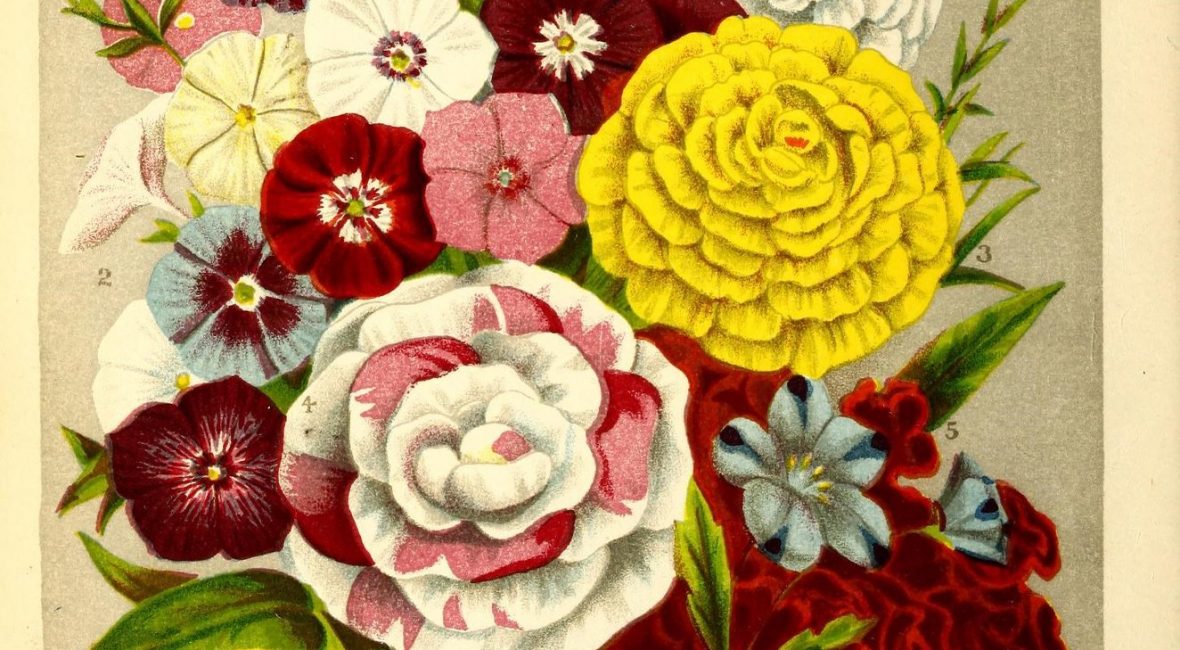
illustration of a colorful bouquet of flowers

This post originally published on the Smithsonian Libraries and Archives’ blog, Unbound.

A garden is a place to rest, relax, rejuvenate. It also provides an opportunity to learn about nature. Staff at Smithsonian Libraries and Archives are also learning and developing new skills. Some of these new skills are related to digitization and accessibility of biodiversity literature.

During these months of telework, I am assisting the Digital Library and Digitization Department to enhance page-level and image-level access to previously digitized books for the Biodiversity Heritage Library (BHL). This involves improving page-level metadata for items in BHL, uploading full-page illustrations to the BHL Flickr, and tagging the images in Flickr with species’ common and scientific names. These digitized books include a variety of content: plants, birds, mammals, reptiles, crustaceans, insects, and so much more. In the course of this work, I have the opportunity to view lovely illustrations. Recently a horticultural catalog caught my attention. The item is titled Vick’s Flower and Vegetable Garden (1878) by James Vick.

title page

James Vick, Rochester, NY. Vick’s Flower and Vegetable Garden (1878), title page. Available online in the Biodiversity Heritage Library.

James Vick was born in England and arrived in New York City at a young age. There, he learned the printer’s trade. He later moved to Rochester, New York. In Rochester, he set type for several newspapers and went on to serve as writer, editor, owner, or publisher of various publications. In 1862, he issued the first Floral Guide and Catalogue. Due to his past experience in the printer and journalist fields, he created a personal style offering gardening advice, anecdotes, correspondence, a complaint section, a children’s section, and color prints. James Vick also began a seed store which later became a well-known seed-display garden. After his death, the company continued into the 20th Century until it was sold to Burpee Seed Co.

Flowers including Perennials: Aquilegia, Perennial Pea, Digitalis (Fox Glove), Double Pink, Perennial Larkspur, Campanula (Canterbury Bell), Sweet William, Picotee, and Pentstemon

James Vick, Rochester, NY. Vick’s Flower and Vegetable Garden (1878), page preceding page 99, Perennials including (1) Aquilegia, (2) Perennial Pea, (3) Digitalis (Fox Glove), (4) Double Pink, (5) Perennial Larkspur, (6) Campanula (Canterbury Bell), (7) Sweet William, (8) Picotee, (9) Pentstemon. Available online in the Biodiversity Heritage Library.

This particular item, Vick’s Flower and Vegetable Garden (1878) by James Vick, is filled with gardening advice, botanical descriptions, and many illustrations. It seems to speak directly to the reader with a conversational tone and focus on learning. As it states on page 5,

“The study of Agriculture and Horticulture has engaged the attention of the wisest from the earliest ages, and yet what wonderful discoveries and improvements have we witnessed in our own day; and we are still learners.”

Flowers including Tender Bulbs: Tritoma uvaria, Gladioli, Tuberose, Dahlia, and Tigridia

James Vick, Rochester, NY. Vick’s Flower and Vegetable Garden (1878), page preceding page 109, Tender Bulbs including (1) Tritoma uvaria, (2) Gladioli, (3) Tuberose, (4) Dahlia, (5) Tigridia. Available online in the Biodiversity Heritage Library.

The catalog includes practical suggestions for selecting seeds, preparing soil, and planting gardens. On the subject of garden design, it suggests keeping the future in mind. When planting trees, it emphasizes the awareness of knowing the size, form, and habits of the full-grown tree as opposed to only thinking of its small size when planted. For those with little outdoor space, there are ideas for creating balcony gardens and window boxes.

Entrance Court and Balcony Garden

James Vick, Rochester, NY. Vick’s Flower and Vegetable Garden (1878), page 20, Entrance Court and Balcony Garden. Available online in the Biodiversity Heritage Library.

Another section focuses on floral decorations, such as incorporating greenery and flowers into decorations. This might include covering letters with greenery to form welcoming words for a guest, adorning a table with a floral centerpiece, decorating a room with garlands, or creating bouquets and button-hole flowers.

Let’s take a closer look at one of these floral decorations, forming and covering letters with greenery and flowers. Perhaps, someone wanted to welcome a guest by displaying a “Welcome” sign or, as in the example below, decorate the words, “Peace on Earth.” As the catalog explains, the first step was to determine the height of all letters. Then, the width of each letter was determined proportional to its height. For example, if six inches was chosen for the height of all upper-case letters, the proportional width for “P” would be four inches, “E” three and a half inches, “A” four and a half inches, and so on, as detailed in the explanation shown in the image below. Once the letters were outlined on heavy straw board, each letter was cut out and dark thread was used to fasten small branches of evergreens or dry moss to the letters. Finally as a finishing touch, berries or everlasting flowers were added to brighten the decoration, as detailed below.

Forming letters to make floral decorations

James Vick, Rochester, NY. Vick’s Flower and Vegetable Garden (1878), page 31, Forming Letters for Floral Decorations. Available online in the Biodiversity Heritage Library.

Another floral decoration is the button-hole flower or bouquet. The button-hole flower was simply that, a single flower with a “pretty, sweet-scented leaf” positioned behind it. Thread or string was used to attach the two together (below, bottom right), and then it was inserted into the bouquet holder which was already filled with water. To fasten the button-hole flower to clothing or hair, a pin was attached to the bouquet holder.

On the other hand, the button-hole bouquet was composed of “a few very fine flowers” (below, bottom left). Once the flowers were nicely arranged, the stems were covered with damp moss or cotton and then tinfoil. The button-hole bouquet was inserted into the bouquet holder or attached directly to clothing with a pin.

English Holly, Winter Berry (Ilex verticillata), Button-hole Bouquet, and Button-hole Flower

James Vick, Rochester, NY. Vick’s Flower and Vegetable Garden (1878), page 36, English Holly, Winter Berry (Ilex verticillata), Button-hole Bouquet, and Button-hole Flower. Available online in the Biodiversity Heritage Library.

Almost every page of Vick’s Flower and Vegetable Garden (1878) includes an illustration. With its conversational style and focus on learning, it encourages readers to try their hand at something new. This might be designing their own garden, planting a small garden in a window box, placing vases or ornamentation around the garden, or creating a floral decoration for a party. For reference purposes, it includes a handy “Botanical Glossary” and guide to “Pronouncing Vocabulary of Botanical Names.”

Towards the end, there are many pages illustrating and describing specific plants. A page focusing on “Classification and Names of Flowers” assists with understanding the divisions of plants as described in this catalog. These divisions include Annuals, Perennials, Greenhouse, Bulbs and Plants, and Holland Bulbs. There is also a section devoted to Vegetables. Detailed information for specific plants includes such things as descriptions, origin, and tips for planting. Every so often, the reader might stumble across a full-page illustration, like the Annuals shown below. Perhaps an illustration such as this might have inspired a bouquet or floral decoration to brighten a room for a holiday or special occasion.

Flowers including Annuals: Ten-Weeks Stock, Phlox drummondii, Double Portulaca, Balsam, Nemophila, Japan Cockscomb, Pansy, and Striped Petunia.

James Vick, Rochester, NY. Vick’s Flower and Vegetable Garden (1878), page preceding page 55, Annuals including (1) Ten-Weeks Stock, (2) Phlox drummondii, (3) Double Portulaca, (4) Balsam, (5) Nemophila, (6) Japan Cockscomb, (7) Pansy, (8) Striped Petunia. Available online in the Biodiversity Heritage Library.

Vick’s Flower and Vegetable Garden (1878) by James Vick is located in the Joseph F. Cullman 3rd Library of Natural History. A digitized version is available on the Biodiversity Heritage Library (BHL) and a Flickr album of its full-page illustrations is available on the BHL Flickr. For more information about James Vick, take a look at this BHL Blog post.

Other seed catalogs by James Vick’s Sons are located in a horticultural collection within the Trade Literature Collection at the National Museum of American History Library. For more information on one of these catalogs, take a look at this post about Vick’s Garden and Floral Guide (1898) by James Vick’s Sons.

Reference

“Vick, James.” Biographies of American Seedsmen & Nurserymen, compiled by Marca L. Woodhams, Librarian, Horticulture Branch Library, Smithsonian Institution Libraries, December 1999. Accessed January 8, 2021. https://www.sil.si.edu/SILPublications/seeds/bios.html#Vick,%20James

April 15, 2021by michelle.underhill
BHL News, Blog Reel

Language of Flowers Virtual Symposium on 30 April 2021

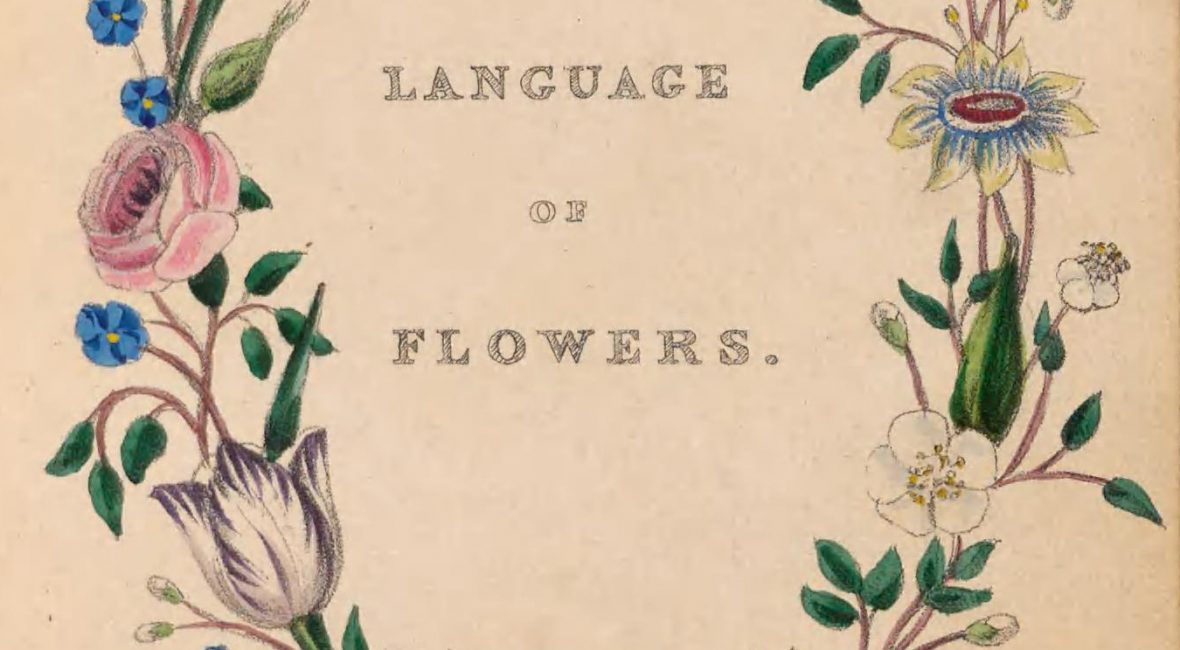
Book title page with title" The Language of Flowers" encircled in a wreath of flowers.

Title page. The language of flowers, with illustrative poetry. (1841). Contributed in BHL from Chicago Botanic Garden, Lenhardt Library. Digitization sponsored by the National Endowment for the Humanities (NEH).

On 30 April 2021, join the Chicago Botanic Garden’s Lenhardt Library and the Caxton Club for a free, virtual symposium celebrating the Language of Flowers—a popular literary trend in the 19th century that presented the world of botany through dictionaries of flowers and associated meanings, floral poetry and prose, offering a sentimental view of natural history.

Language of Flowers Virtual Symposium
When? Friday, 30 April 2021, 10am-2pm CT
Where? Online (via Zoom webinar)

Learn more and register for the event.

The Chicago Botanic Garden’s Lenhardt Library, a BHL Affiliate, presents this symposium in collaboration with the Caxton Club as the capstone event for a grant awarded by the National Endowment for the Humanities to conserve and digitize language of flower genre editions. Over the three-year grant period, 62 rare and unique language of flowers volumes published in the 19th century are being conserved and digitized by expert staff at the Northeast Document Conservation Center, with the volumes being made available in the Biodiversity Heritage Library (BHL).

You can explore volumes digitized as part of this grant as well as other titles from the genre in the Language of Flowers collection in BHL.

April 8, 2021by michelle.underhill
Blog Reel, User Stories

Hidden Biodiversity: Exploring Neotropical Fungus Weevils With the Help of BHL

Leer en español

Photo of a lush tropical rainforest.

A view of the Panamanian tropical rainforest in Colón Province. Photo by Samanta Orellana.

In the last decades of the 19th century, a monumental publication on the biodiversity of Mexico and Central America began publication—Biologia Centrali-Americana. Published in 215 parts from 1879 to 1915 by the editors Frederick DuCane Godman and Osbert Salvin, the work describes over 50,000 species and is illustrated with over 1,600 lithographic plates depicting over 18,000 species. Remarkable for its time, the title is still vitally important for the study of Neotropical biodiversity today, as it contained virtually all known information at the time about Mexican and Central American flora and fauna.

Biologia Centrali-Americana is a particularly important resource for entomologist Samanta Orellana, a PhD student in evolutionary biology at the Dr. Nico Franz Lab of Arizona State University (ASU) and a research assistant in the ASU Biocollections of the Biodiversity Knowledge Integration Center. Orellana began studying insects and working with entomological collections more than a decade ago, during her undergraduate studies in her home country of Guatemala.

“For many insect groups in Guatemala and the rest of Central America, Biologia Centrali-Americana still represents the only source of information available for the region,” states Orellana.

A person with dark hair in a red vest and gray shirt standing in front of collection specimen drawers.

Samanta Orellana in the Arizona State University Biocollections. Photo by Kevin Cortés.

Biologia Centrali-Americana is also meaningful to Orellana because it led her to the Biodiversity Heritage Library (BHL). In 2010, whilst identifying Guatemalan insects as part of her undergraduate studies, Orellana started using the “Electronic Biologia Centrali-Americana,” available from the Smithsonian Libraries and Archives, which directed her to BHL. She hasn’t stopped using BHL since.

“BHL is simply wonderful,” lauds Orellana. “I think it is an amazing tool for entomologists all around the world, especially for those of us who work or have worked in collections in developing countries, usually without access to specialized libraries or journals, but with a lot of material to identify.”

A variety of weevils illustrated on a page.

One of the plates of Central American anthribids, included in the chapter written by Karl Jordan in the Biologia Centrali-Americana (Insecta. Coleoptera. v.4, pt.6, 1895-1907). Contributed in BHL from Smithsonian Libraries and Archives.

Orellana specializes in the family Anthribidae (Coleoptera), commonly known as fungus weevils. Her research on these insects began during her studies at the Universidad de Panamá, where she completed an M.Sc. in entomology, and continues through her PhD work, with her dissertation focused on the family’s diversity and evolution. As part of this research, Orellana recently published a catalogue of the Anthribidae species from Panama.

BHL’s collections have been instrumental in enabling Orellana to pursue her work on the family.

“BHL was essential to complete my first published work on Anthribidae, a catalogue of the species from Panama,” shares Orellana. “This group of weevils has been poorly studied in the Neotropics, so identifying specimens is always challenging due to the lack of taxonomic keys. I had to rely mostly on original descriptions available through BHL to identify the specimens I examined, both in Panamanian and American collections. The catalogue ended up with 44 new records for the country, most of them identified thanks to the literature available in BHL.”

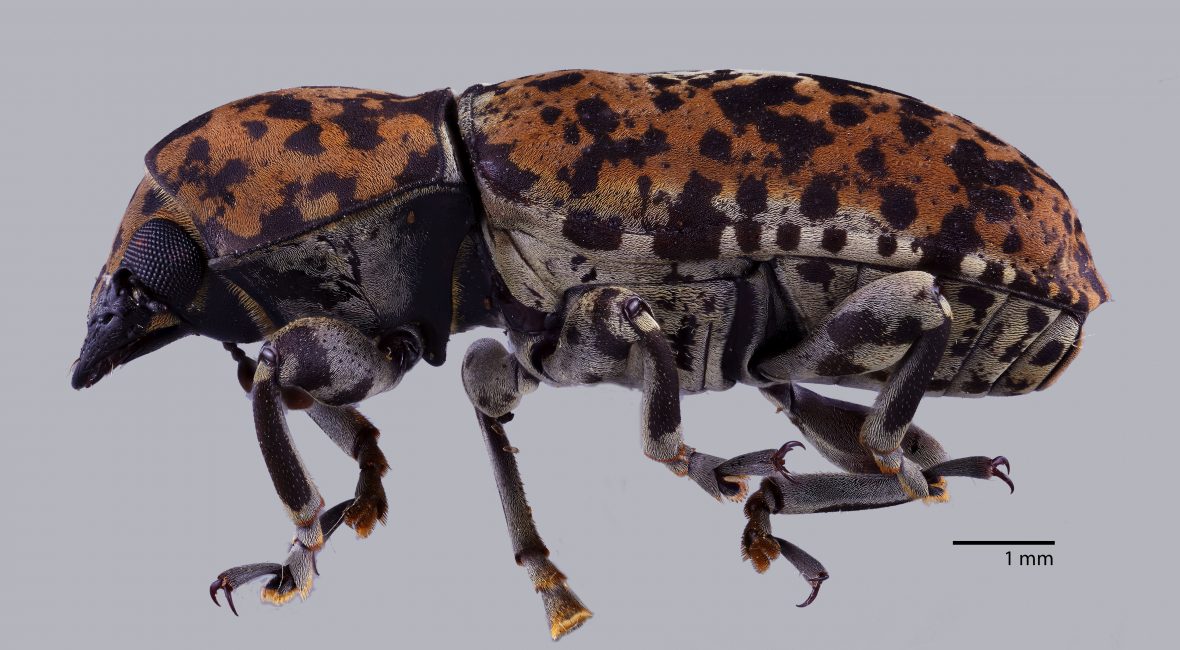
A weevil with orange body and black spots.

Eugonus robustus Jordan, 1904 (Coleoptera: Anthribidae), from Panama. Photo by Samanta Orellana.

BHL has now become a core part of Orellana’s research process. She uses the Library at least several times a week, reading content online or downloading material via BHL’s custom PDF generator to build her own local collection of Anthribidae literature. Her favorite feature is BHL’s full text search service, which allows her to easily find scientific names or specific localities within sources.

“I use BHL all the time,” affirms Orellana. “I continue using it for my PhD studies to identify collection specimens, as taxonomy is an important component of my research with this group of weevils. I also maintain a website in Spanish about insects of Guatemala and constantly consult BHL to obtain and share information about the diversity of this group in my country.”

When asked what improvements she would like to see in BHL, Orellana replies, “This is a difficult question, because I love BHL so much. There is nothing I can think of that I would change. I can always find what I am looking for with the features already included on the website.”

Orellana’s experience testifies to the importance of open access for scientific research, whether you are a researcher working with limited resources or even if you have the benefit of a large, institutional library. For researchers everywhere, BHL’s collections offer free, easy access to centuries of scientific literature and sources that may otherwise have been inaccessible.

“Even now that I am working at a larger collection, and I have access to specialized literature, there are older works that can only be obtained through BHL,” confirms Orellana.

We are proud to know that BHL is empowering biodiversity research globally. As we face unprecedented biodiversity declines—with more than a million species threatened with extinction—immediate, online access to essential literature is ever-more important, allowing scientists to conduct research more quickly and efficiently and improving our ability to respond to today’s biodiversity crisis. We look forward to continuing to work with our global community of partners to ensure that researchers like Samanta Orellana have the resources they need to study and conserve biodiversity, from the smallest weevil to the largest sequoia and everything in between.

———————

Biodiversidad Oculta: Explorando los Gorgojos Neotropicales con la ayuda de BHL

Foto de una exuberante selva tropical.

Una vista del bosque tropical de Panamá en la Provincia de Colón. Fotografía por Samanta Orellana.

En las últimas décadas del siglo XIX, una publicación monumental acerca de la biodiversidad de México y Centroamérica inició su difusión –la Biología Centrali-Americana. Publicada en 215 partes de 1879 a 1915, por los editores Frederick DuCane Godman y Osbert Salvin, el trabajo describe más de 50,000 especies y está ilustrada con más de 1,600 láminas litográficas que contienen más de 18,000 especies. Muy notoria en su tiempo, la obra aún es sumamente importante para el estudio de la biodiversidad neotropical en la actualidad, ya que contiene prácticamente toda la información conocida, hasta el momento, acerca de la flora y fauna de México y Centroamérica.

La Biologia Centrali-Americana es un recurso particularmente importante para la entomóloga Samanta Orellana, estudiante de Doctorado en Biología Evolutiva, en el laboratorio del Dr. Nico Franz, en Arizona State University (ASU) y asistente de investigación en las Colecciones Biológicas del Centro de Integración para el Conocimiento de la Biodiversidad en ASU. Orellana empezó a estudiar insectos y a trabajar en colecciones entomológicas hace más de una década, durante sus estudios de pregrado en su país natal, Guatemala.

“Para muchos grupos de insectos de Guatemala y el resto de Centroamérica, la Biología Centrali-Americana aún representa la única fuente de información disponible en la región”, asegura Orellana.

Una persona de cabello oscuro con un chaleco rojo y una camisa gris de pie frente a los cajones de muestras de la colección.

Samanta Orellana en las Colecciones Biológicas de Arizona State University. Fotografía por Kevin Cortés.

La Biologia Centrali-Americana también es importante para Orellana, ya que la llevó a descubrirBiodiversity Heritage Library (BHL), que en español podría denominarse como “Biblioteca del Patrimonio de Biodiversidad”. En 2010, mientras identificaba insectos de Guatemala, como parte de sus estudios de pregrado, Orellana empezó a utilizar la versión electrónica de la Biología Centrali-Americana,disponible en el sitio de las Bibliotecas y Archivos del Instituto Smithsonian, lo cual la dirigió hacia BHL, y no ha dejado de usarla desde entonces.

“BHL es simplemente maravillosa”, asegura Orellana. “Pienso que es una herramienta increíble para los entomólogos alrededor del mundo, especialmente para aquellos que trabajamos en colecciones de países en vías de desarrollo, usualmente sin acceso a bibliotecas o revistas especializadas, pero con mucho material por identificar”.

Una variedad de gorgojos ilustrados en una página.

Una de las láminas de antríbidos de Centroamérica, incluidas en el capítulo escrito por Karl Jordan en la Biología Centrali-Americana (Insecta. Coleoptera. v.4, pt.6, 1895-1907). Compartido en BHL por las Bibliotecas y Archivos del Instituto Smithsonian.

Orellana se especializa en la familia Anthribidae (Coleoptera), comúnmente conocidos como “gorgojos de los hongos”. Sus investigaciones con estos insectos iniciaron durante sus estudios en la Universidad de Panamá, donde completó su maestría en entomología, y continúan durante su doctorado, con su tesis enfocada en la diversidad y evolución de la familia. Como parte de su investigación, Orellana recientemente publicó un catálogo de las especies de Anthribidae de Panamá.

Las colecciones de literatura de BHL han sido indispensables para permitir que Orellana trabaje con esta familia.

“BHL fue esencial para completar mi primer trabajo publicado acerca de Anthribidae, un catálogo de especies de Panamá”, comparte Orellana. “Este grupo de gorgojos ha sido pobremente estudiado en la región Neotropical, por lo que identificar las especies siempre es un reto debido a la falta de claves taxonómicas. Yo tuve que basarme mayormente en descripciones originales, disponibles en BHL, para identificar las especies que estudié, tanto en colecciones panameñas como norteamericanas. El catálogo finalizó 44 nuevos registros para el país, muchos de los cuales fue posible identificar gracias a la literatura disponible en BHL.”

Gorgojo de cuerpo anaranjado y manchas negras.

Eugonus robustus Jordan, 1904 (Coleoptera: Anthribidae), de Panamá. Fotografía por Samanta Orellana.

BHL se ha vuelto una parte esencial en el proceso de investigación de Orellana, ya que utiliza este recurso al menos varias veces por semana, leyendo el contenido en línea o descargando material, por medio del generador de archivos PDF de BHL, para construir su propia colección de literatura de Anthribidae. Su característica favorita de BHL es el servicio de búsqueda de texto, que le permite encontrar nombres científicos y localidades de una manera fácil dentro de los archivos disponibles.

“Uso BHL todo el tiempo”, afirma Orellana. “Durante mis estudios de doctorado, uso BHL constantemente para identificar especímenes de colecciones, ya que la taxonomía es un componente importante de mi investigación con este grupo de gorgojos. Como una actividad adicional, administro un sitio web enfocado en insectos de Guatemala, y consulto BHL constantemente para obtener y compartir información acerca de la diversidad de este grupo en mi país.”

Al consultarle acerca de las mejoras que le gustaría ver en BHL, Orellana responde, “Esta es una pregunta difícil, porque BHL me gusta demasiado. No puedo pensar en nada que me gustaría cambiar. Siempre puedo encontrar lo que estoy buscando con las características ya incluidas en el sitio web”.

Las experiencias de Orellana son un testimonio de la importancia de libre acceso a las investigaciones científicas, así sea para científicos trabajando con recursos limitados, o para aquellos que cuentan con acceso a bibliotecas institucionales. Para investigadores de todas partes, la colección de BHL ofrece acceso gratuito y fácil, a siglos de literatura y recursos científicos que, de otra manera, serían inaccesibles.

“Aún ahora, que me encuentro trabajando en una colección grande y tengo acceso a literatura especializada, existen trabajos muy antiguos a los que puedo acceder únicamente a través de BHL,” confirma Orellana.

Estamos orgullosos de saber que BHL empodera la investigación de biodiversidad a nivel global. Mientras nos enfrentamos a la desaparición sin precedentes de la biodiversidad —con más de un millón de especies amenazadas con la extinción— el acceso inmediato a literatura en línea es más importante que nunca, permitiendo que los científicos conduzcan sus investigaciones de una manera más rápida y eficiente, mejorando la habilidad de responder a la crisis de biodiversidad actual. Esperamos continuar trabajando con nuestra comunidad de socios para asegurar que los investigadores como Samanta Orellana tengan a la mano los recursos que necesitan para estudiar y conservar la biodiversidad, desde el gorgojo más pequeño a la secoya más grande.

April 6, 2021by michelle.underhill

Help Support BHL

BHL's existence depends on the financial support of its patrons. Help us keep this free resource alive!

search

About BHL

The Biodiversity Heritage Library (BHL) is the world’s largest open access digital library for biodiversity literature and archives. BHL operates as a worldwide consortium of natural history, botanical, research, and national libraries working together to digitize the natural history literature held in their collections and make it freely available for open access as part of a global “biodiversity community.”

Join Our Mailing List

Sign up to receive the latest news, content highlights, and promotions.

Subscribe Now

Subscribe to Blog via Email

Enter your email address to subscribe to this blog and receive notifications of new posts by email.

Join 319 other subscribers

Subscribe to Blog Via RSS

Subscribe to the blog RSS feed to stay up-to-date on all the latest BHL posts.

Access RSS Feed

Inspiring Discovery through Free Access to Biodiversity Knowledge.

The Biodiversity Heritage Library makes it easier than ever for you to access the information you need to study and explore life on Earth…for free, anytime, anywhere.


64+ Million Pages of
Biodiversity Literature Online.

EXPLORE

Tools and Services
to Transform Research.

EXPLORE

300,000+
Illustrations on Flickr.

EXPLORE

ABOUT | HARMFUL CONTENT | PRIVACY | SITE MAP | TERMS OF USE