Three hundred and seventy-four years ago on 2 April 1647, a remarkable woman was born: the artist and naturalist Maria Sibylla Merian. In the 17th and 18th century world of male-dominated science, Merian had to fight for her place in the natural sciences. Against all odds, she became a trailblazer, especially in developmental biology.
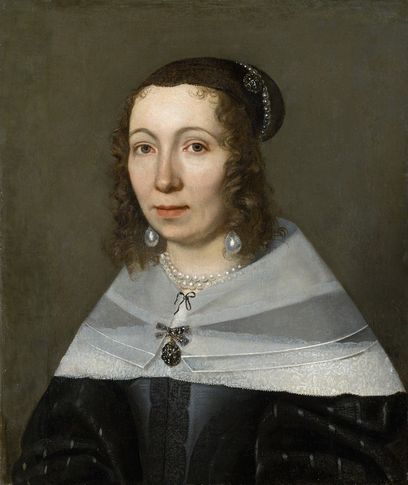
Portrait of Maria Sybilla Merian by Jacob Marrell, 1679. From the collection of: Kunstmuseum Basel.
Merian’s legacy was recently explored during a 4-week student-project at the library of the Museum für Naturkunde (MfN) in Berlin. The project was part of a master’s program for the University of Applied Science in Leipzig to enlarge the student’s experience in the historical holding field and give a glimpse into the planning and conducting of a project. The aim of the project itself was and is the digitization of two different editions of Merian’s work, Metamorphosis insectorum Surinamensium, as well as a restorative and provenance research summary about the volumes. Both editions show Merian’s talent in painting and observing insects and plants.
Merian’s fascination with flowers and painting had its origin with her stepfather Jacob Marrel, a known flower painter of the time, who took her under his wing. Despite her mother’s wish, who considered painting too “masculine,” Merian learned how to draw and engrave from Marrel and by the age of eleven, she was able to engrave on copper independently (Kutschera 2017: 28). At the age of twelve, she developed a heightened interest in exploring the nature around her and was especially fascinated by the metamorphosis of silk worms. Merian conducted her own studies, feeding the silkworm larvae and observing their transformation. Thus, her collection of different caterpillar species started to grow.
In 1665, shortly after her 18th birthday, Merian married Johann Andreas Graff (1636-1701)—a marriage that ended in divorce nearly 30 years later in 1692. Merian published her first work, the flower book Neues Blumenbuch, in 1675. It contained examples for the students of her painting and embroidery classes. She did not lose her interest in the metamorphosis of species, however, and published her first book about caterpillars in 1679 under the name Der Raupen Wunderbare Verwandelung und Sonderbare Blumennahrung (engl. “The Wondrous Transformation of Caterpillars and their Remarkable Diet of Flowers”). The “Anderer Theil” (engl. “Other volume”) followed in 1683.
In 1685, Merian moved with her two young daughters to a community of Labadists in Friesland. There, the exotic butterflies from Suriname in the collection of the castle Waltastate served as a template for new paintings and sparked her interest towards this exotic country. It was also the place she observed and recorded the metamorphosis of the frog in 1686 for the very first time, 13 years before Antonie van Leeuwenhoek documented it in a letter to the Royal Society (Nagendra 2016: 122). However, the small family did not stay in Friesland for long and moved to Amsterdam in 1690. With the help of other naturalists and the caterpillars they brought with them, the three women established themselves as artists.
Through the connections Merian made in Holland, she met travellers that came back from the Dutch colony Suriname with collections full of colourful insects. Although these were pretty to look at, the collections lacked the information about the insects’ developments.
“In Holland, I saw with wonderment the beautiful creatures brought back from the East and West Indies, especially when I had the honour to be able to see the splendid collection belonging to […] Dr Nicolaas Witsen […] and many others, in which I found these and countless other insects, but without their origins and subsequent development, in other words, how they develop from caterpillars into chrysalises and so on. All this stimulated me to undertake a long and costly journey to Suriname […] in order to pursue my investigations further.” (Merian & O’Brien-Twohig 2012: 2)
Merian’s decision to travel to Suriname, a country known for the death of many travelers due to tropical diseases at the time, as a divorced 52-year-old woman was quite scandalous. On top of that, Merian managed to finance herself independently by selling her paintings beforehand.
In 1699, Merian and her youngest daughter Dorothea Maria boarded a ship to Suriname. They arrived in Paramaribo and quickly learned that the Dutch colonists were not interested in helping them in their mission to locate and study the foreign insects. Instead, Merian relied on the assistance and knowledge of the Indigenous and African people enslaved on the Dutch sugar plantations.
Over the next two years, Merian and her daughter spent time exploring the jungle, canoeing rivers and painting every plant and insect they could find. Everything that they collected, from the information to the first artworks, went into Merian’s journal. Unfortunately, the pair returned home in 1701, earlier than expected, when Merian became ill, possibly with malaria. As a result, her stay on a plantation near the riverside of Paramaribo was cut short by three years.
Merian presented the results from her trip in the Metamorphosis insectorum surinamensium, first published in 1705. In it, 60 plates show the variety of the vibrant colours of the rainforest, each accompanied with information about their practical use, medical remedies, or general studies about the development of the insects and plants. A lot of her knowledge about the usage came from the enslaved people of the Suriname plantations. It is unclear whether Merian herself bought the enslaved people with whom she worked or if they were a gift when she first arrived (Davis 1996: 210).
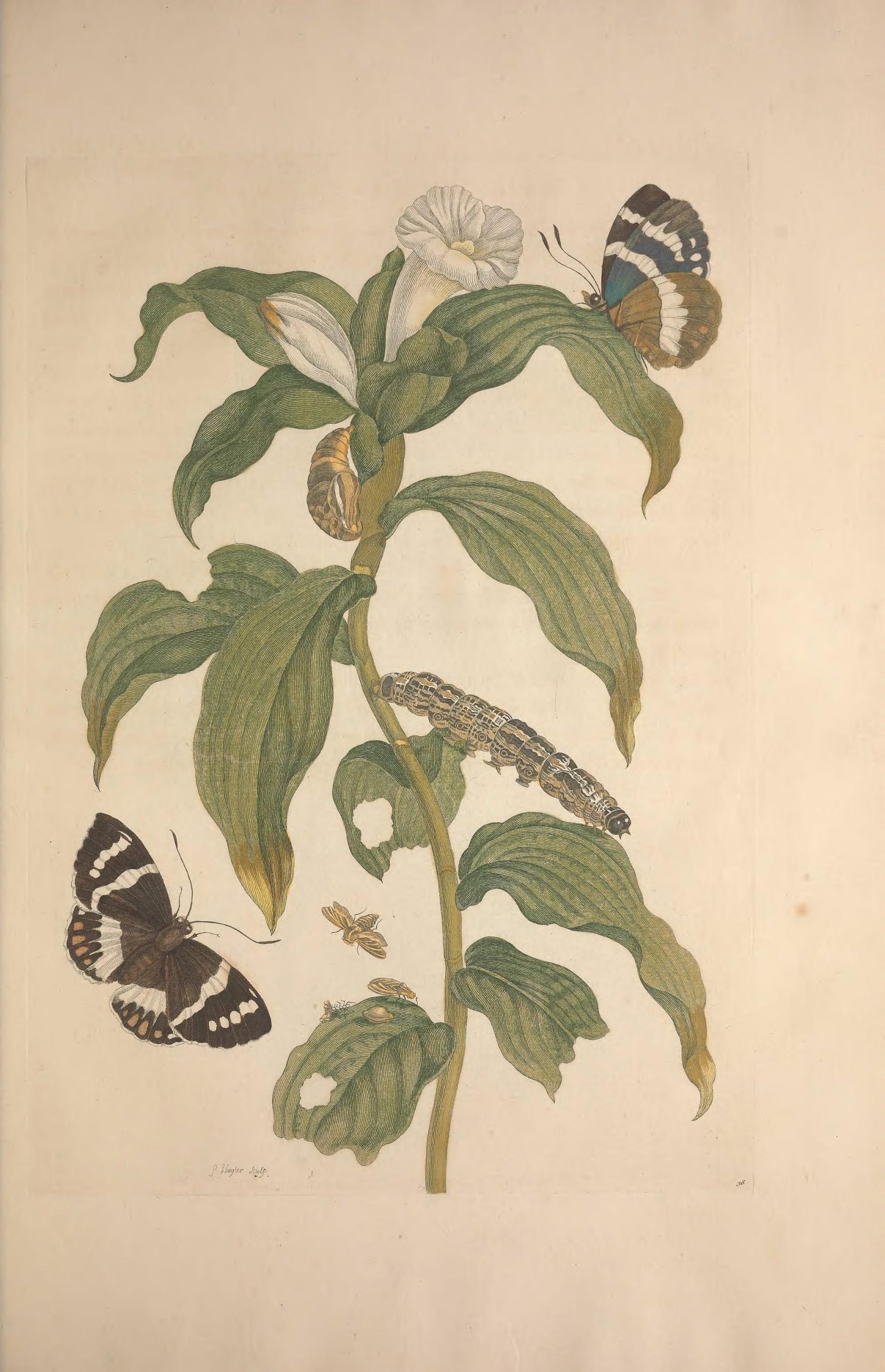
Merian herself wrote on plate 36 about the plant Costus arabicus:
“I had my Indian dig [Costus arabicus] up by the root and carry it home and plant it in my garden” as well as that “because the forest is so densely grown with thistles and thorns, I had to send my slaves ahead of me with axes to hack out an opening for me.”
Therefore, while she writes about the help she received from enslaved people, unlike many other explorers and naturalists of her time, she still did not credit them by names (Baumhammer & Kennedy 2017: 213). In her publication, they remain an anonymous source of information.
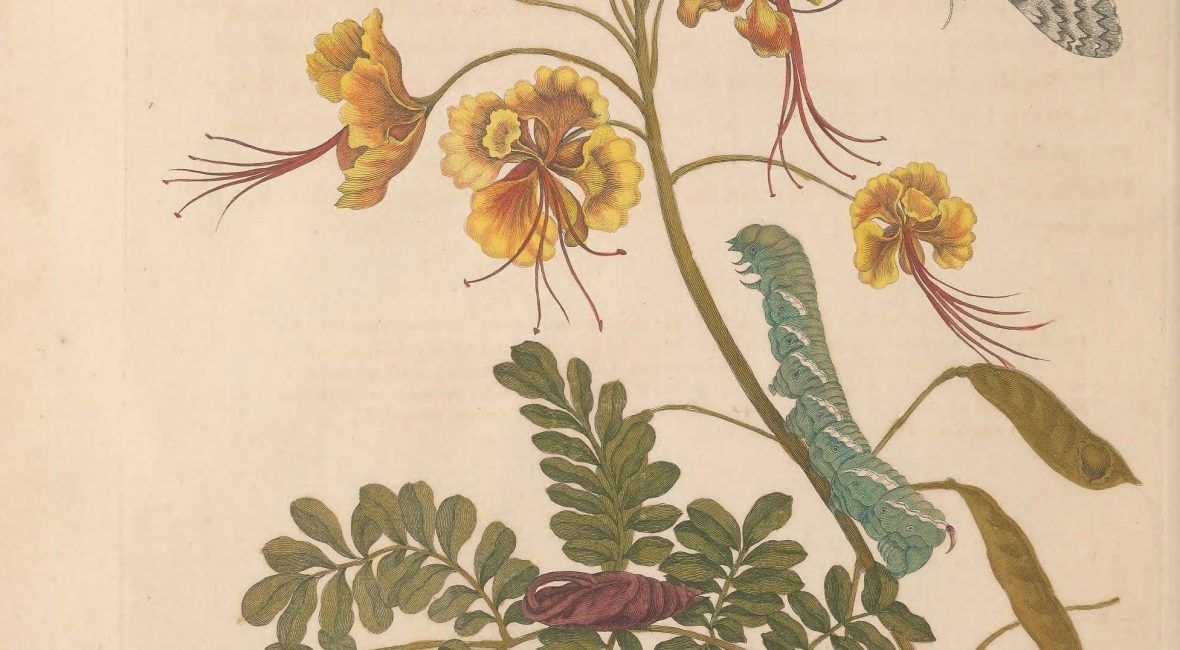
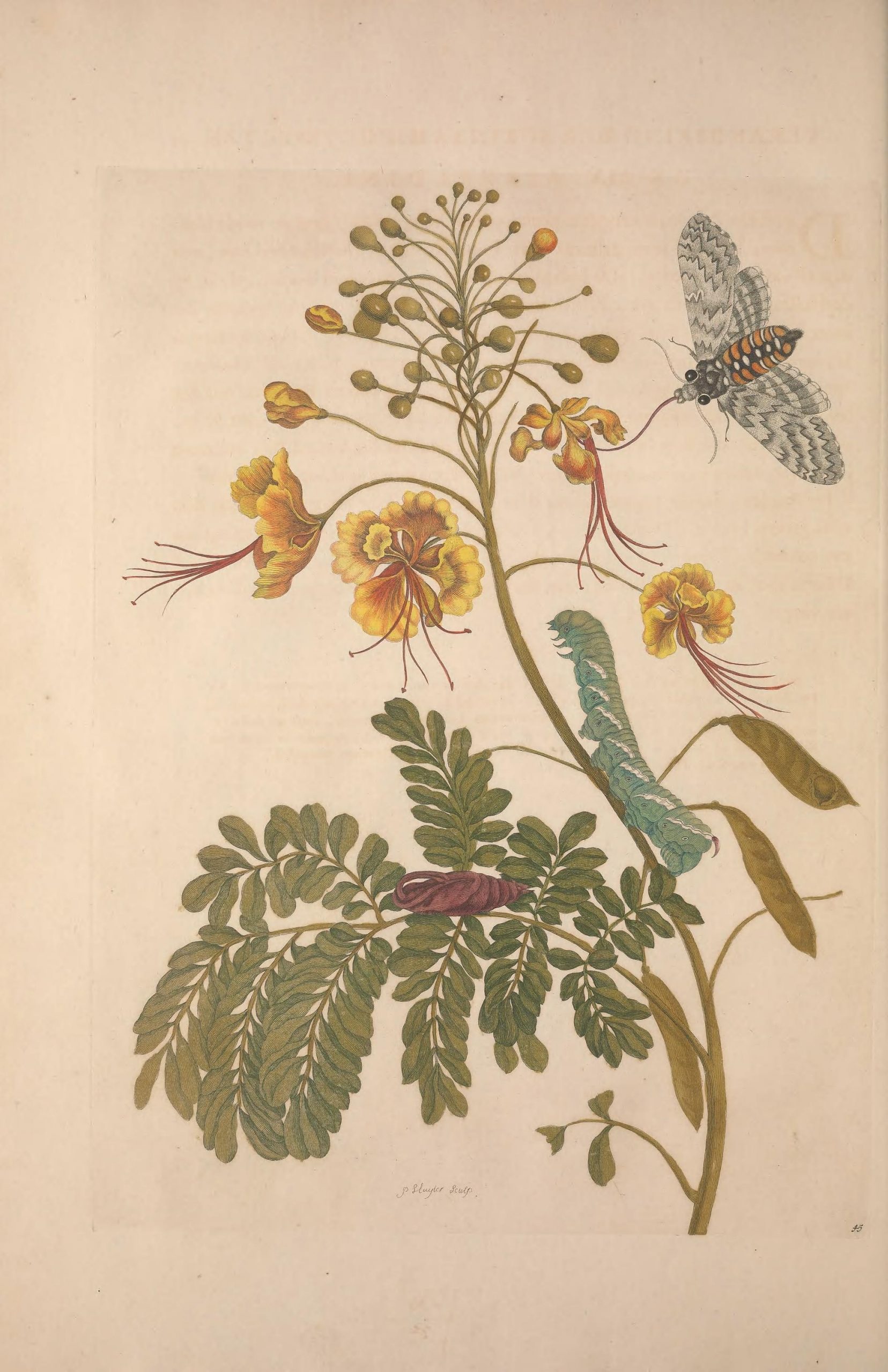
In a later part of the book, there is a hard breach between the beautiful painting of the Peacock flower and Merian’s description of the usage of said flower. She writes that enslaved women told her about the horrible treatment from the Dutch and their use of the seeds to cause abortions and save their children from the same enslaved fate.
The focus of Merian’s criticism was mainly on the Dutch farming practices and not on the brutal treatment of the enslaved people. She could not understand how the Dutch ignored the richness and diversity of the flora around them and only planted sugar. Lizabeth Paravisini-Gebert suggests that Merian was interested only in sharing scientific findings from her time in Suriname. “Full of groundbreaking information to communicate to a world avid for scientific knowledge, she was not gifted with a facile pen for anything other than scientific fact” (Paravisini-Gebert 2012: 12). While this might explain her lack of a more pronounced criticism of slavery, it does not condemn the fact that she took an enslaved woman with her back to Amsterdam as indicated by the passenger list for the sailing back home. This woman was most likely the person Merian referenced as “my Indian” from the text about Costus arabicus (Davis 1996: 212; Polcha 2019).
There is no mention in the sources about Merian’s behaviour towards the enslaved people on whom she relied, but Merian did participate in the racial hierarchies of trans-national colonialism. While she may have broken gender rules and created brilliant works of art, Merian ultimately profited from the suffering of others.
Merian’s reliance on and usage of the information and help she received from enslaved people must not be ignored, as it opens the discussion about how slavery affected her work and how she benefited from it. Merian would likely not have had access to most of the plants and insects described in her book without the help from enslaved African and Indigenous people, especially since the Dutch colonists did not support her studies. Would there have been a Metamorphosis without Merian using and exploiting the established oppression?
Ultimately, Metamorphosis did not sell as well as previously hoped and Merian lived in modesty. Her plans to publish translations of the book could not succeed due to the expense. She died poor on 13 January 1717, probably the same day Czar Peter the Great bought her remaining paintings (Nagrenda 2016: 118; Kutschera 2017: 30; Pieters & Winthagen 1999: 6).
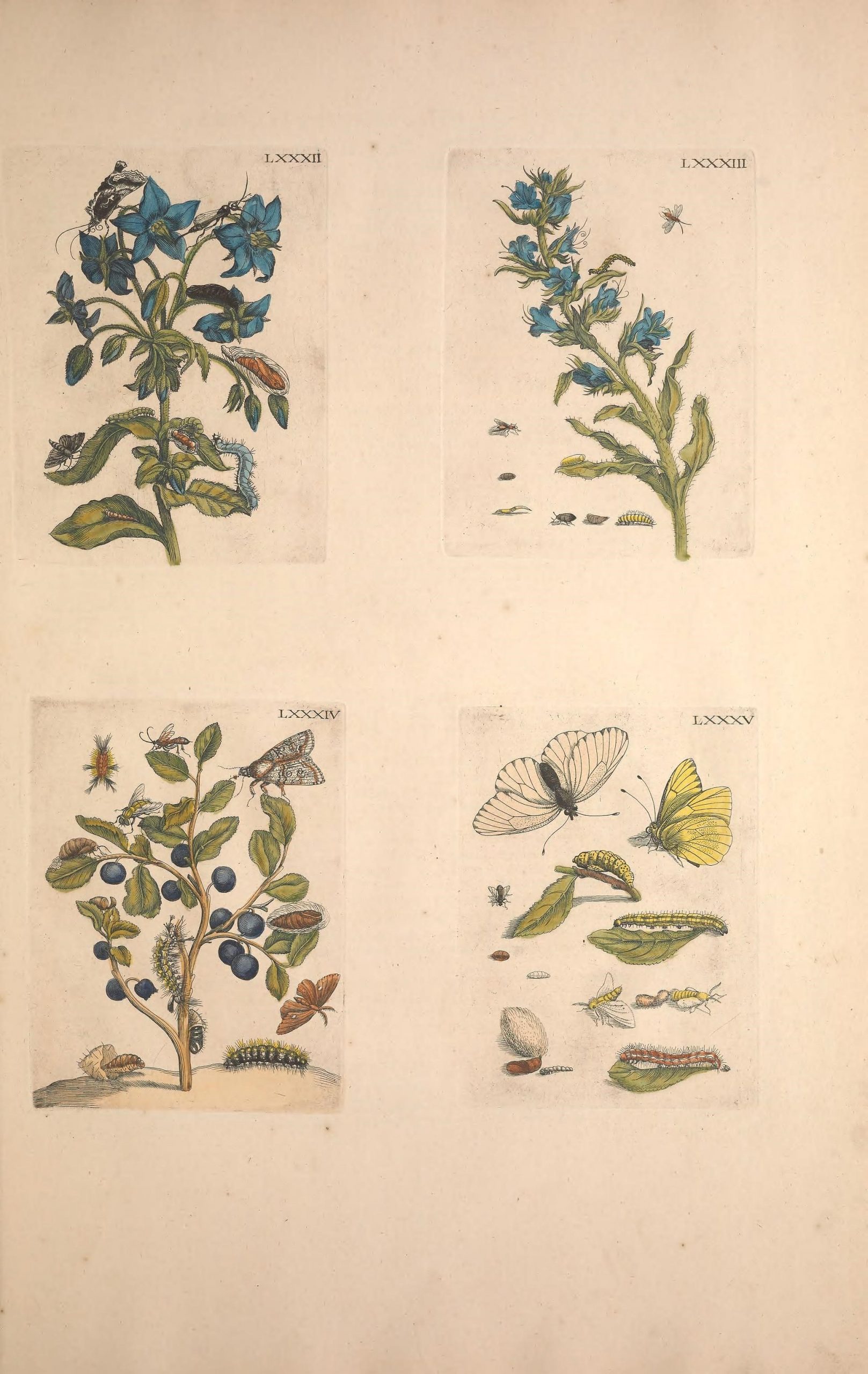
The beforehand mentioned project at the Museum für Naturkunde in Berlin revolved around the Dissertation sur la generation et les transformations des insectes de Surinam (published in 1726) and the three volumes of Histoire générale des insectes de Surinam et de toute l’Europe (published in 1771). These editions used the copper plates from the original Metamorphosis print. Although they lack the vivid colours of their original counterpart, the black and white engravings still show the broad diversity of the Suriname (and European) insects and plants. Currently the library awaits the arrival of a new book scanner to digitize these four books, as they were too large for the scanner currently in use. They should be available in BHL by the end of the year (2021).
The Dissertation contains twelve more plates, two of which Merian did not make herself. These two plates and their explanation were full of errors. Due to this and wrongly coloured plates in later editions, Merian was harshly criticized despite showing and explaining nearly everything right in her own coloured and published edition (Pieters & Winthagen 1999: 10; Nagrenda 2016: 121). However, “the many racist, sexist, plain nasty (and ignorant) 19th century critiques of her work in Surinam only serve to highlight the remarkable and path-breaking nature of her work in the 17th century” (Nagendra 2016: 121).
The three volumes of Histoire générale des insectes de Surinam et de toute l’Europe furthermore included the European insects as well, using original drawings from Merian, too. The Museum’s copies were a donation by the Gesellschaft naturforschender Freunde zu Berlin (G.n.F., engl. “Berlin Society of Friends of Natural Science”) when they closed their library in 1907. It is unknown who bought them for the G.n.F. but they were acquired between 1793 and 1828. Handwritten annotations show that the same person used the books. Furthermore, the copy at the Museum shows one of the incorrect plates is upside down, which ironically highlights the errors.
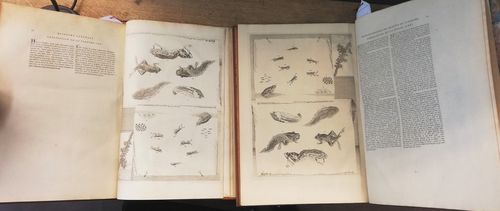
Comparison of the incorrect copy of Histoire générale des insectes de Surinam et de toute l’Europe in the collection of the Museum für Naturkunde in Berlin. Photo Credit: Antonia Trojok.
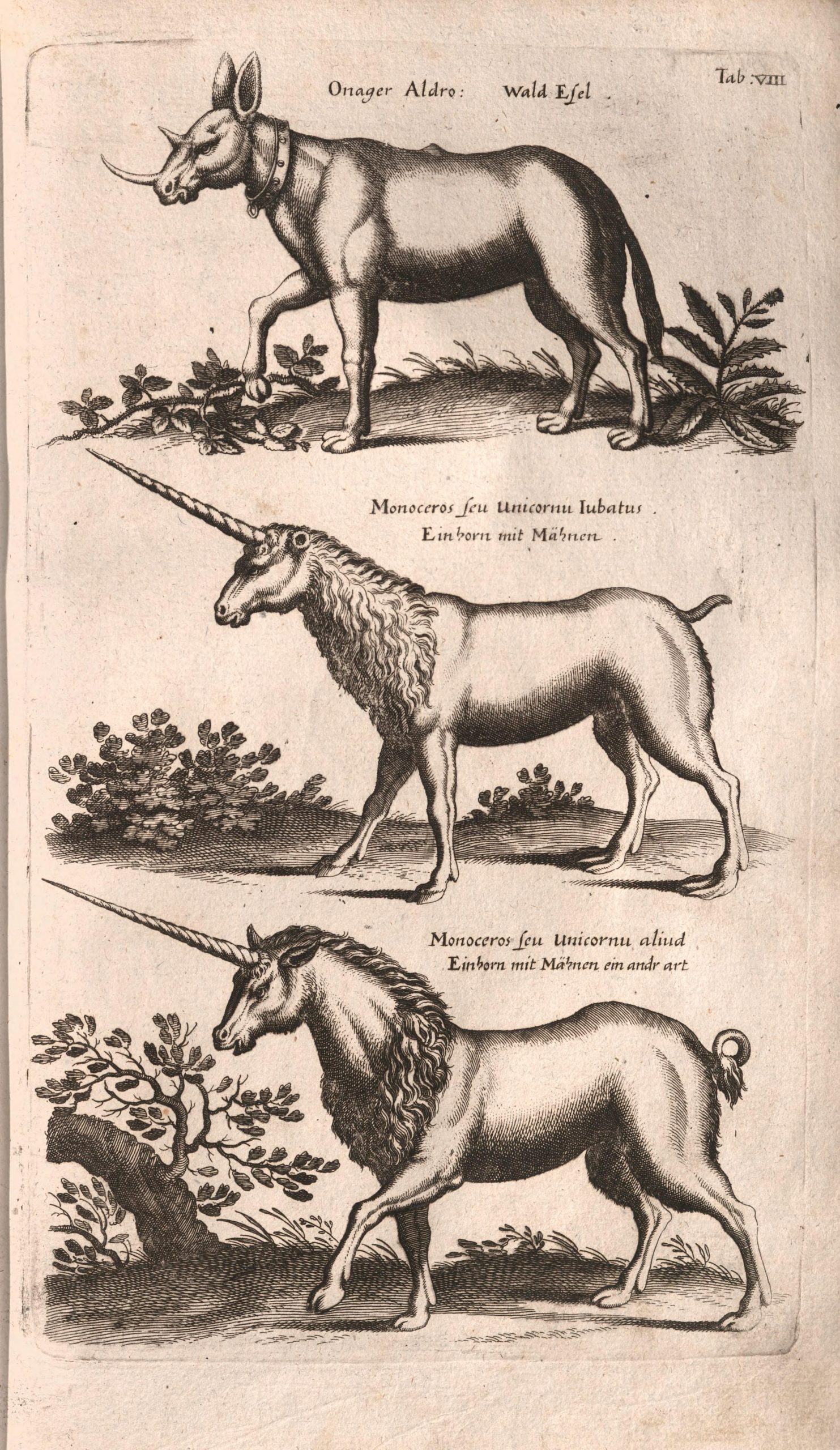
Alongside these four books, another was found and digitized from the MfN collection: a German edition of a volume from Historiae naturalis by John Johnston, for which Maria Sibylla Merian’s older half-brothers, Matthäus and Caspar Merian, made the copper plates. You can find their names engraved on two plates in the books. The siblings learned alongside each other during their childhood as Jacob Marrel’s students. This title testifies to the artistic talent that ran in the family, given the detail included even for those animals of purely fantastical origins.
In conclusion, the editions in the Museum für Naturkunde and many other instances show that Maria Sibylla Merian’s legacy for natural science still lives on. Merian was also the first European to do a voyage for a solely scientific purpose (Valiant 1993: 470) and recorded the life cycle of a frog. The Father of Taxonomy, Carl Linnaeus, as well as many more scientists cited her work throughout the years. However, we cannot highlight her legacy without also confronting her use of enslaved labour and acknowledging and respecting the impact that enslaved and Indigenous people in Suriname had on her work. Without them, Merian probably would not have shown the diversity of the rainforest for the first time.
With Merian’s legacy digitized, even more researchers and nature lovers can now enjoy her work in the future. Hopefully, these digitized copies will also inspire continued research into the extent and impact of the enslaved African and Indigenous people who contributed to this ground-breaking work.
You can read the first edition (in Dutch) of Metamorphosis insectorum surinamensium (1705)—freely available in BHL thanks to Smithsonian Libraries and Archives. Or check out Merian’s drawings from the first edition on the BHL Flickr page.
References
Davis, Natalie Zemon. 1996. Drei Frauenleben – Glikl – Marie de l’Incarnation – Maria Sibylla Merian. Berlin, Wagenbach.
Baumgarten, Megan & Kennedy Claire. 2017. Merian and the Pineapple: Visual Representation of the Seneses, in: Hacke, D. & Musselwhite, P. (eds.), Empire of the senses: Sensory practices of colonialism in early America, Boston, Brill, 190–222. http://dx.doi.org/10.1163/9789004340640.
Kutschera, Ulrich. 2017. Maria Sibylla Merian (1647-1717) – Pionieren der Entwicklungsbiologie und Ökologie, Biologie in unserer Zeit 47(1), 28–36. http://dx.doi.org/10.1002/biuz.201710610
Nagendra, Harini. 2016. Maria Sibylla Merian (1647–1717), Resonance 21(2), 115–124. http://dx.doi.org/10.1007/s12045-016-0305-9
Merian, Maria Sibylla & O’Brien-Twohig, Sarah. 2012. from Metamorphosis insectorum Surinamensium (Or, Transformations of Surinamese Insects ), Review: Literature and Arts of the Americas 45(1), 21–28. http://dx.doi.org/10.1080/08905762.2012.670451
Pieters, Florence. & Winthagen, Diny. 1999. Maria Sibylla Merian, naturalist and artist (1647-1717): A commemoration on the occasion of the 350th anniversary of her birth, Archives of natural history 26(1), 1–18. http://dx.doi.org/10.3366/anh.1999.26.1.1
Polcha, Elizabeth. 2019. Breeding Insects and Reproducing white Supremacy in Maria Sibylla Merian’s Ecology of Dispossession. https://www.ladyscience.com/breeding-insects-and-reproducing-white-supremacy/no57
Valiant, Sharon. 1993. Maria Sibylla Merian: Recovering an Eighteenth-Century Legend, Eighteenth-Century Studies 26(3), 467–479. https://doi.org/10.2307/2739414