
Biodiversity Heritage Library - Program news and collection highlights from BHL
  • Home
  • News
  • Featured Books
    • All Featured Books
    • Book of the Month Series
    • BHL at 20
  • User Stories
  • Campaigns
    • Fossil Stories
    • Garden Stories
    • Monsters Are Real
    • Page Frights
    • Her Natural History
    • Earth Optimism 2020
  • Tech Blog
  • Visit BHL
Home
News
Featured Books
    All Featured Books
    Book of the Month Series
    BHL at 20
User Stories
Campaigns
    Fossil Stories
    Garden Stories
    Monsters Are Real
    Page Frights
    Her Natural History
    Earth Optimism 2020
Tech Blog
Visit BHL
  • Home
  • News
  • Featured Books
    • All Featured Books
    • Book of the Month Series
    • BHL at 20
  • User Stories
  • Campaigns
    • Fossil Stories
    • Garden Stories
    • Monsters Are Real
    • Page Frights
    • Her Natural History
    • Earth Optimism 2020
  • Tech Blog
  • Visit BHL
Biodiversity Heritage Library - Program news and collection highlights from BHL
BHL News, Blog Reel

Farewell from BHL Program Director Martin R. Kalfatovic

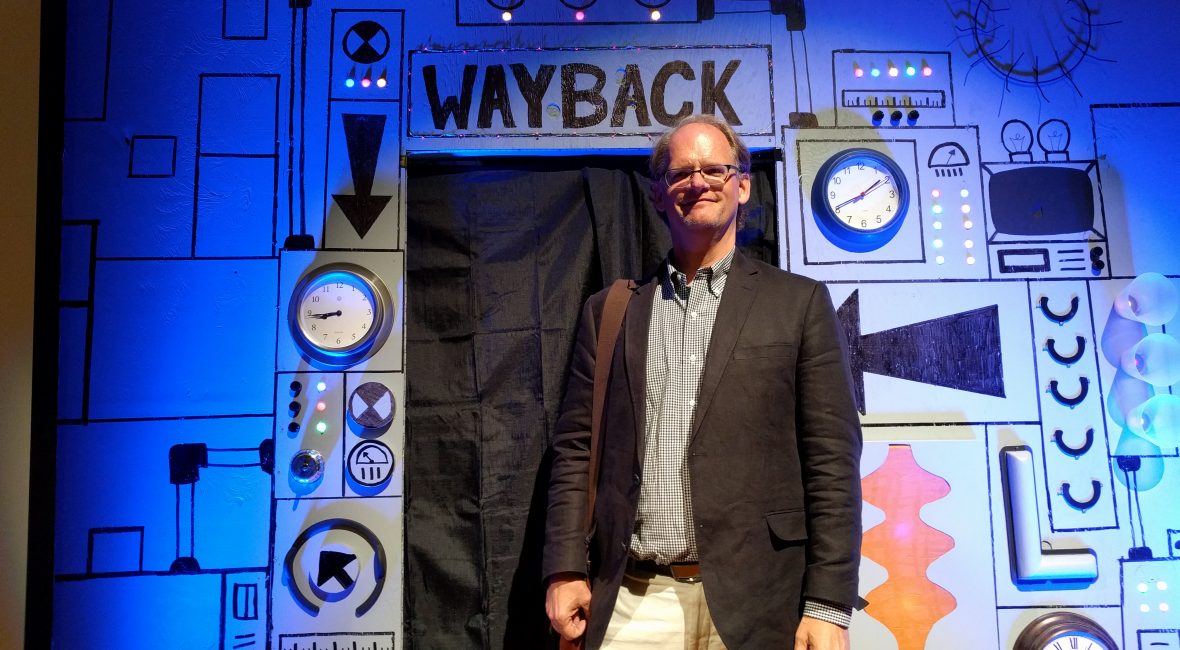
A man with glasses, wearing khaki pants and blazer, stands in front of a cardboard machine labeled "Wayback"

Martin R. Kalfatovic at the Internet Archive Library Leaders Forum (2017). Photographer Unknown

It’s time to say farewell to my official time with the Biodiversity Heritage Library! As I outlined in my presentation at the 2024 BHL Annual Meeting, when I took over as BHL Program Director in April 2012, I had a firm and successful organization to lead. And all that success rests on the shoulders of the countless staff in BHL partner organizations around the world.

I began my professional career at the Smithsonian and succumbed to the temptation to feel that such a large institution, so rich (relatively speaking) in resources, would be able to easily contain multitudes. But, in 2004/2005 when I began work on two science projects (the Biological Centrali Americana and the U.S. Exploring Expedition — both now mostly in BHL!), the publications from both these naturalist projects were scattered around the world. No one institution or library could create a full digital version alone.

Working with the core group of BHL partners – Tom Garnett (Smithsonian), Chris Freeland and Doug Holland (Missouri Botanical Garden), Graham Higley (Natural History Museum, London), Tom Moritz (AMNH), and, of course Cathy Norton (MBLWHOI Library), Constance Rinaldo (MCZ/Harvard), and Nancy Gwinn (Smithsonian) – the initial 10 (soon 12) BHL partnership formed.
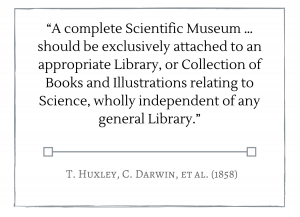
A complete Scientific Museum … should be exclusively attached to an appropriate Library, or Collection of Books and Illustrations relating to Science, wholly independent of any general Library.” -- T. Huxley, C. Darwin, et al. (1858)

This idea of a global collaboration in service to science, to biodiversity, to sustainability on our only planet, has been the motivating force in my time with BHL. And also for many of you. This collaboration will continue as BHL is bigger than any one person, as we’ve learned with the past successful transitions of partner representatives, Secretariat staff, and Program Directors.

William Faulkner’s Nobel prize speech often comes to my mind:

I decline to accept the end of man. It is easy enough to say that man is immortal simply because he will endure: that when the last dingdong of doom has clanged and faded from the last worthless rock hanging tideless in the last red and dying evening, that even then there will still be one more sound: that of his puny inexhaustible voice, still talking. I refuse to accept this. I believe that man will not merely endure: he will prevail.

— William Faulkner’s speech at the Nobel Banquet at the City Hall in Stockholm, December 10, 1950

Faulkner was addressing a clear existential threat at that time, global nuclear war. As we now know, the seeds of two more quiet crises, those of climate change and biodiversity loss, we already long planted. BHL is a key resource in finding solutions to these crises and as many have said, “if BHL didn’t exist, it would have to be built again.”

It’s because of all of you, and the others no longer with BHL that I believe that BHL will, as Faulkner noted, not only endure, but also prevail.
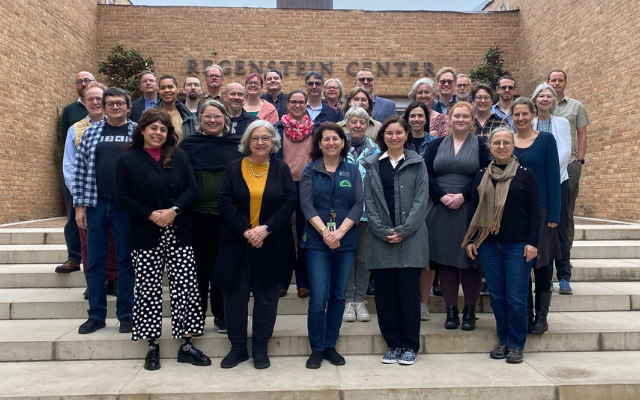
A group of people pose for a picture on the steps in front of the Regenstein Center

BHL Partners at the 2024 BHL Annual Meeting in Chicago, IL.


For a look back at some of the amazing work of this global consortium in the past year, view the 2023 BHL Annual Report.

June 28, 2024by

Help Support BHL

BHL's existence depends on the financial support of its patrons. Help us keep this free resource alive!

search

About BHL

The Biodiversity Heritage Library (BHL) is the world’s largest open access digital library for biodiversity literature and archives. BHL operates as a worldwide consortium of natural history, botanical, research, and national libraries working together to digitize the natural history literature held in their collections and make it freely available for open access as part of a global “biodiversity community.”

Join Our Mailing List

Sign up to receive the latest news, content highlights, and promotions.

Subscribe Now

Subscribe to Blog via Email

Enter your email address to subscribe to this blog and receive notifications of new posts by email.

Join 319 other subscribers

Subscribe to Blog Via RSS

Subscribe to the blog RSS feed to stay up-to-date on all the latest BHL posts.

Access RSS Feed

Inspiring Discovery through Free Access to Biodiversity Knowledge.

The Biodiversity Heritage Library makes it easier than ever for you to access the information you need to study and explore life on Earth…for free, anytime, anywhere.


64+ Million Pages of
Biodiversity Literature Online.

EXPLORE

Tools and Services
to Transform Research.

EXPLORE

300,000+
Illustrations on Flickr.

EXPLORE

ABOUT | HARMFUL CONTENT | PRIVACY | SITE MAP | TERMS OF USE