

Celebrating 20 Years of BHL: Introducing Our Anniversary Blog Series
In 2026, the Biodiversity Heritage Library (BHL) is celebrating twenty extraordinary years of global collaboration, discovery, and open biodiversity knowledge.
For two decades, BHL has united libraries, museums, herbaria, and research institutions worldwide to make biodiversity literature freely accessible to anyone, anywhere. What began as a collaborative digitisation initiative is now the world’s largest online library of biodiversity literature and an essential foundation for research, conservation, and data integration.
To mark this milestone, we are launching a special anniversary blog series – BHL at 20: Treasures from the Biodiversity Heritage Library – highlighting remarkable works from across BHL’s collection. These treasures will include rare and historic volumes, medieval manuscripts, richly illustrated monographs, handwritten field diaries, scientific notebooks, specimen registers, society newsletters, and modern journals. Together, they will reveal the depth, diversity, and enduring relevance of our biodiversity knowledge across time.
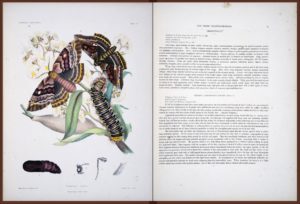
Australian lepidoptera and their transformations, drawn from the life (1864), illustrated by Harriet Scott and Helena Scott, contributed to BHL by the Australian Museum: https://www.biodiversitylibrary.org/page/35774497
Each featured work has been chosen by members of BHL’s contributing organisations: the librarians, archivists, curators, and researchers who know these materials best. Their selections showcase items that hold particular meaning within their collections: works of scientific or historical importance, publications associated with notable authors or illustrators, volumes with fascinating provenance, or materials that carry a special significance for the institutions and people who steward them. Among them is BHL’s newest “oldest” book, a manuscript that pushes the chronological boundaries of BHL’s collection back by centuries. This extraordinary manuscript will be revealed in its own spotlight post later in the series — one of many stories still to come.
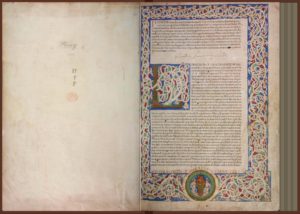
Naturalis Historia (1469), compiled by Pliny the Elder. Until very recently this was the oldest book in BHL, contributed to BHL by Natural History Museum, London: https://www.biodiversitylibrary.org/page/52290882
Each story will be told by a member of the BHL community: the experts who know these materials intimately and understand their scientific, historical, and cultural significance. Their posts will illuminate not only the publications themselves, but also the stewardship, scholarship, and care that brought them into the open and into BHL.
As BHL enters its third decade, newly independent and globally governed, this anniversary series celebrates both the literature and the community behind it. The works preserved in BHL continue to connect names, specimens, observations, people, and places across time, informing modern science and conservation around the world.
“BHL was founded as a global consortium because our founding members knew that no single institution could build it alone. Collaboration and coordination have always been at the heart of BHL’s success. Highlighting the treasures within BHL’s vast collection is a wonderful way to honor the past 20 years of shared effort and achievement.”
— Colleen Funkhouser, BHL Managing Director
We invite you to follow along throughout the year as we share treasures from our global collection and celebrate twenty years of democratizing biodiversity knowledge to all.
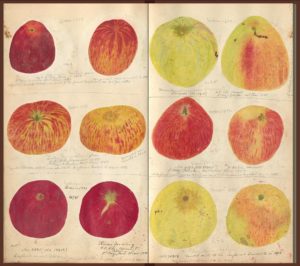
Industrial and Technological Museum economic botany fruit and vegetable specimen register (c.1870-1890), contributed to BHL by Museums Victoria Archives: https://www.biodiversitylibrary.org/page/62264001
As we celebrate twenty years of open biodiversity knowledge, we’re also looking ahead.
Thanks to our global community, BHL has entered its new chapter strong, independent, and growing. With your support, we can ensure that this work continues, expanding access, strengthening infrastructure, and connecting biodiversity knowledge for decades to come.
Discover more from Biodiversity Heritage Library
Subscribe to get the latest posts sent to your email.

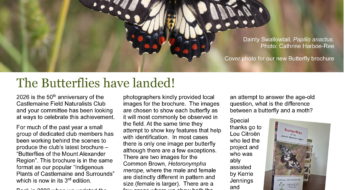
Thanks BHL for the fantastic service you provide.