
Biodiversity Heritage Library - Program news and collection highlights from BHL
  • Home
  • News
  • Featured Books
    • All Featured Books
    • Book of the Month Series
    • BHL at 20
  • User Stories
  • Campaigns
    • Fossil Stories
    • Garden Stories
    • Monsters Are Real
    • Page Frights
    • Her Natural History
    • Earth Optimism 2020
  • Tech Blog
  • Visit BHL
Home
News
Featured Books
    All Featured Books
    Book of the Month Series
    BHL at 20
User Stories
Campaigns
    Fossil Stories
    Garden Stories
    Monsters Are Real
    Page Frights
    Her Natural History
    Earth Optimism 2020
Tech Blog
Visit BHL
  • Home
  • News
  • Featured Books
    • All Featured Books
    • Book of the Month Series
    • BHL at 20
  • User Stories
  • Campaigns
    • Fossil Stories
    • Garden Stories
    • Monsters Are Real
    • Page Frights
    • Her Natural History
    • Earth Optimism 2020
  • Tech Blog
  • Visit BHL
Biodiversity Heritage Library - Program news and collection highlights from BHL
Blog Reel, User Stories

The Life of a Field Biologist and Practical Biodiversity Informatician: Cam Webb

View Full Size Image

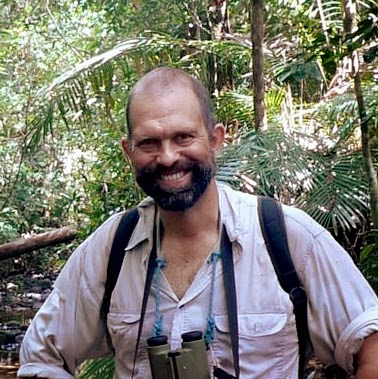
As part of our regular BHL & Our Users series, Connie Rinaldo (MCZ Librarian and BHL Executive Committee Member) recently caught up with Cam Webb, a Senior Research Scientist at the Arnold Arboretum of Harvard University.  We were very pleased to hear about how he has been exploring BHL and what he discovered. Enjoy!

1.  What is your area of interest?

I study the trees and forests of SE Asia, from ecological, floristic and biogeographic angles. I also enjoy ‘practical informatics’: mashing up biodiversity data from a variety of sources.

2.  How long have you been in your field of study?
Broadly defined… about 25 years.

3.  When did you first discover BHL?

I think pretty much when you first opened.
View Full Size Image4.  What is your opinion of BHL and how has it impacted your research?

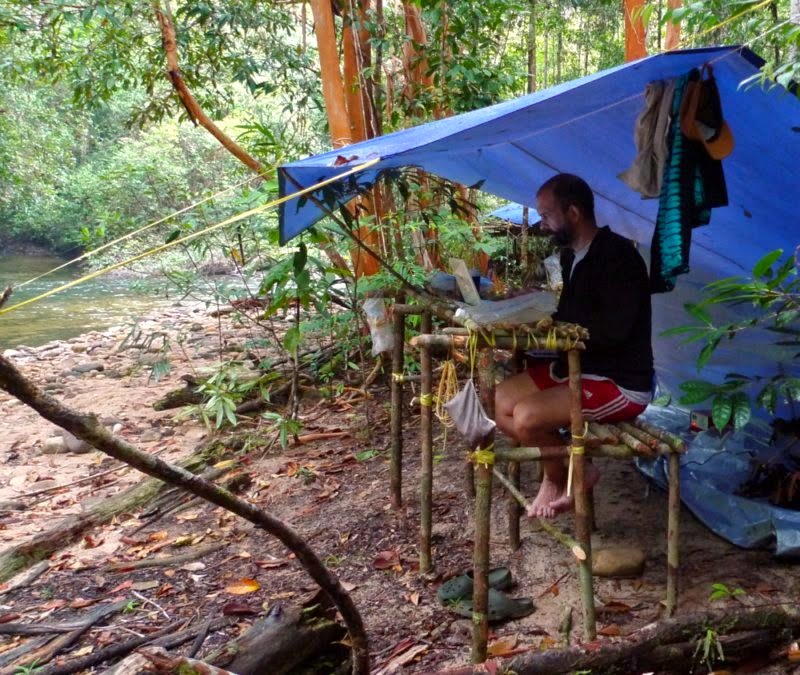
BHL is a vital tool for me.  I live in West Kalimantan, Indonesia and so have no local physical access to botanical libraries. The nearest one is on Java, at the Indonesian National Herbarium (Herb. Bogoriense); it has a surprisingly good range of older publications, but I don’t get there as often as I’d like.  But with BHL, in a few seconds (or longer… depending on bandwidth here!), I have access to many of the original (and sometimes only) descriptions for the plant taxa out here.

5.  How often do you use BHL?

I use BHL a couple of times a month on average, sometimes more frequently.

6.  How do you usually use BHL?  

Almost always I’m looking for species descriptions, ecological details, and particularly images.

7. What are your favorite features and services on BHL?

So, I have to admit, as I was answering these questions, I started digging into the API options (Application Programming Interface) you offer, that I hadn’t really looked at before, and was blown away as to how many ways you offer to query your database and view the publication pages. One of the main challenges I have for using BHL, given the limited  bandwidth available here in Kalimantan, is the multiple webpage loadings required to get from submitting a taxonomic name to being able to check if a page will be worth reading, partially because the default page viewer loads a fairly high-resolution page image in the popup. So I hacked together a simple script (http://xmalesia.info/doc/bhl_pages.html) that takes a taxonomic name, calls your API, and returns a single page with embedded thumbnails of matching pages in BHL. This way, I can quickly identify which pages might be worth looking more carefully at.  So now I have to say that my favorite service on BHL is the API!  Thanks!

8.  What would you like BHL to focus on developing next?

For myself, I’d have to say that continuing to expand the coverage of the core document set would still be the highest priority.  There are a number of key references for Indonesia (many of them in Dutch)
that I have not found yet in BHL.

9. If you had to choose one title or item that has impacted your research or something that you love in BHL, what would it be?

It is having Flora Malesiana scanned and available online!

Thank you, Cam, for sharing your work and how you use the Biodiversity Heritage Library!

June 3, 2014by brooksm
BHL News, Blog Reel

BHL Nominated for a Zedler Award for Free and Open Knowledge

BHL is honored to learn that we’ve been nominated for a Zedler Award by Wikimedia Deutschland.  This award acknowledges contributions of individuals, groups or projects who have made contributions to free and open knowledge.  Wikimedia Deutschland is a non-profit organization working to promote free knowledge through the collection, development and distribution of free content.

BHL has been nominated in the External Projects category along with other impressive nominees, including Humanitarian Open Street Map Team (http://www.europeana1914-1918.eu/de), the Free Music Sampler of the German Musikpiraten (http://musik.klarmachen-zum-aendern.de/artikel/viva_la_freevolucci%C3%B3n_-_der_free_music_sampler_2013_lieferbar-2527),
Europeana 1914-1918 (http://www.europeana1914-1918.eu/de) and Microsoft/the British Library for their project “One million images on Flickr Commons” (http://britishlibrary.typepad.co.uk/digital-scholarship/2013/12/a-million-first-steps.html).

Awards will be announced May 24 at 19.00h at the Westhafen-Pier in Frankfurt am Main.

Learn more about the Zedler Award: https://de.wikipedia.org/wiki/Wikipedia:Zedler-Preis
Learn more about Wikimedia Deutschland: http://wikimedia.de/wiki/Hauptseite

View Full Size Image
May 6, 2014by brooksm
BHL News, Blog Reel

Ringing in the New Year with thanks!

Portrait version of the Biodiversity Heritage Library logo.

In the US, we set aside time to reflect and give thanks in November as part of the Thanksgiving holiday.  It is now the start of a new year–and only the first month, not the eleventh–yet BHL already has a lot for which to give thanks!

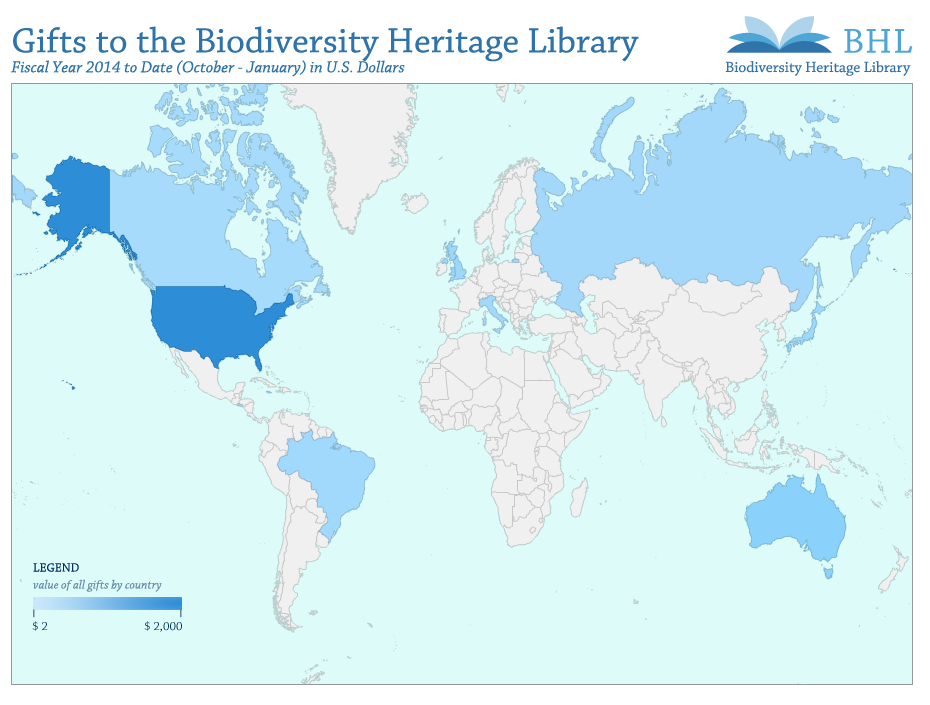
Since the start of the fiscal year 2014 (October 1), donors from across the world have contributed $2,434.12 to support BHL’s continuing mission.  As a digital library consortium comprised of 13 US and 2 UK institutions, it’s encouraging to see the generosity of donors with $1,794 coming in from those countries alone ($1,681.36 and $112.76 respectively).

View Full Size Image

The Biodiversity Heritage Library provides free global access to more than 42 million pages of digitized biodiversity literature and we are so pleased to see the global response of generous support for continuing these efforts.  Donors from Australia, Brazil, Canada, El Salvador, Italy, Jamaica, Japan, and Russia have each made generous contributions totaling $640.

Historical collections of biodiversity literature are exceptionally valuable for taxonomists and others studying the diversity of life on our planet, yet this wealth of knowledge is available only to those few who can gain direct access to significant library collections. Literature about the biota existing in developing countries is often not available within their own borders.  Free global access to digital literature repatriates information about the earth’s species to all parts of the world. Because of BHL’s success in digitizing a significant mass of biodiversity literature, the study of living organisms has become more efficient.  Scientists around the world are using BHL to identify and classify species, facilitate further scientific research, and support conservation efforts to prevent extinctions.

BHL is so thankful and encouraged by the generosity of all of our donors!  These donations help pay for the cost of digitizing additional literature, improving data curation, and continuing technical development for the BHL program. The examples below highlight the ways your donation can make a meaningful and lasting impact:

$25 – Creates Flickr sets of our images which are popular with educators and artists

$50 – Promotes biodiversity education through social media, such as our blog

$100 – Scans 1,000 pages to be made available for free and open access

$250 – Helps us host marketing interns who circulate biodiversity content worldwide

$500 – Improves existing methodology and helps develop new tools for biodiversity research

We hope you’ll consider making a contribution of your own to help BHL continue providing open access to biodiversity literature!   Donate: https://donate.sil.si.edu/v/DonateBHL.asp 

January 27, 2014by brooksm
Blog Reel, Featured Books

Ursus maritimus: A Shining Star in the North Pole

As part of BHL’s Winter Appeal, we’ll be highlighting some of the amazing species that are especially well-adapted to cold, wintery climes as well as those that often come to mind as we celebrate the winter holidays.  Each post will include images, facts and sometimes even stories drawn from the pages of the open access literature in BHL.  The ongoing growth of BHL is supported in part by our dedicated patrons whose gifts we depend on for the the digitization of additional literature, technical development of the program, and improvement of data curation.  We hope you’ll consider donating this holiday season!

Ursus maritimus

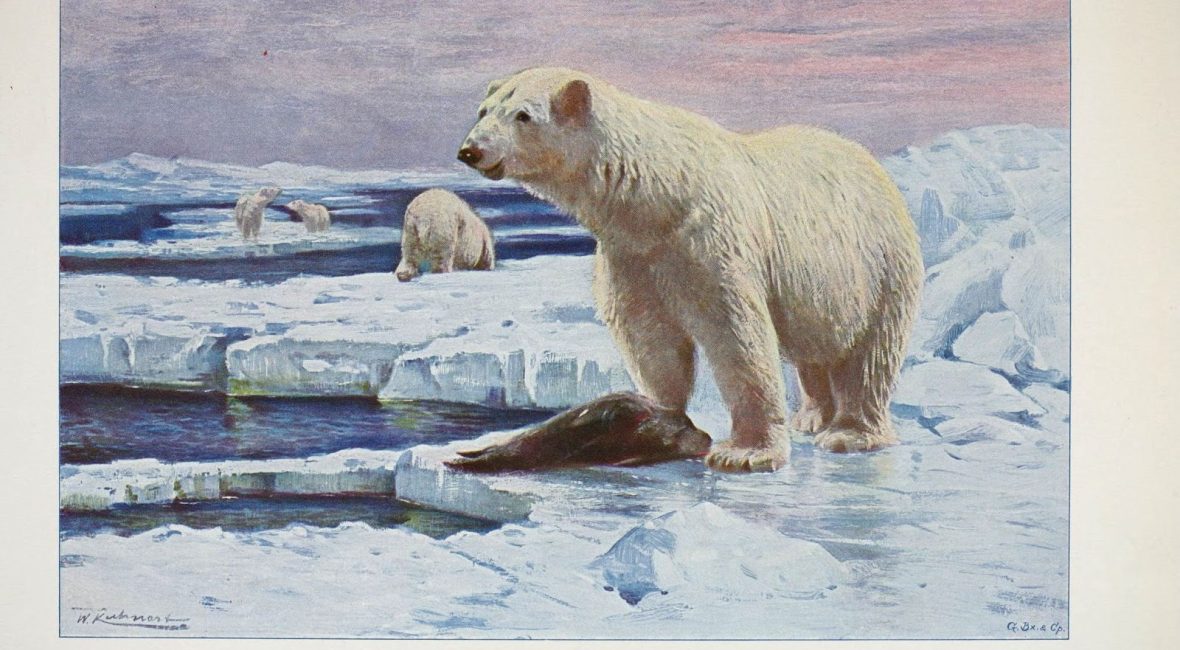
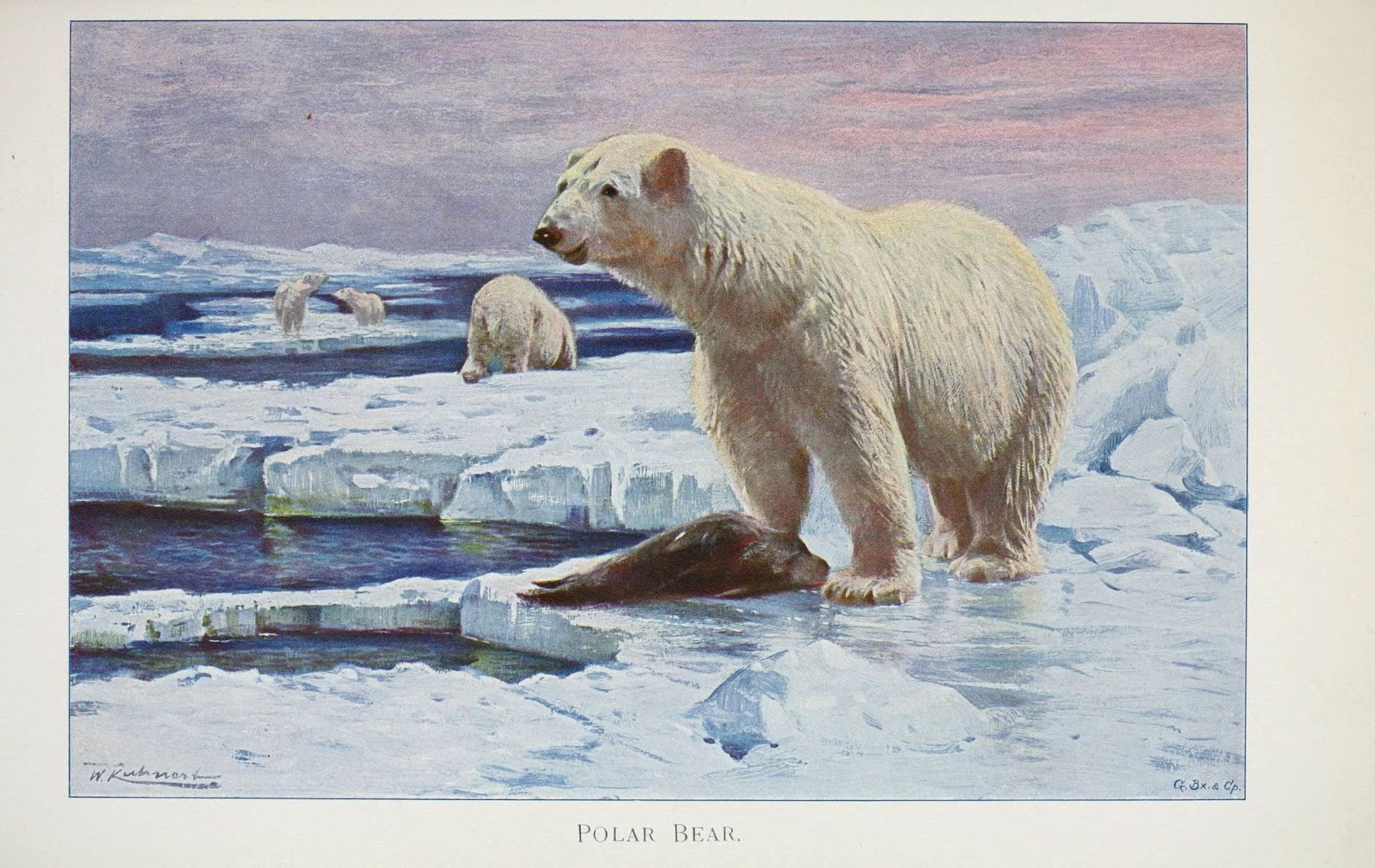
Imagine being out in a quiet, cold landscape with almost nothing around for miles except for the ice and sea.  In this vast expanse of calm and quiet, you might either wander across the ice in search of a meal or even dive down into the freezing cold waters.  Either way, you would remain quite comfortably warm.  Thus is one of the advantages possessed by Ursus maritimus for surviving in this challenging environment.  A thick coat of fur and insulating layer of fat provide warmth and the distinctive white coloring of the coat serves as excellent camouflage when stalking prey.  A long neck and relatively narrow skull for the species provides the aptly-named “sea bear” with a streamlined figure excellent for swimming.

View Full Size Image
Wild Life of the World, v.2.  London, F. Warne and Co., 1916.

http://biodiversitylibrary.org/page/21738961#page/329/mode/1up

Commonly known as the polar bear, Ursus maritimus actually only occurs in one of the poles–the North Pole.  The vast, ice-covered ocean known as the Arctic actually has etymological roots in the ancient Greek word, ἄρκτος, meaning bear.  Antarctic, therefore implying “no bears.”

View Full Size Image
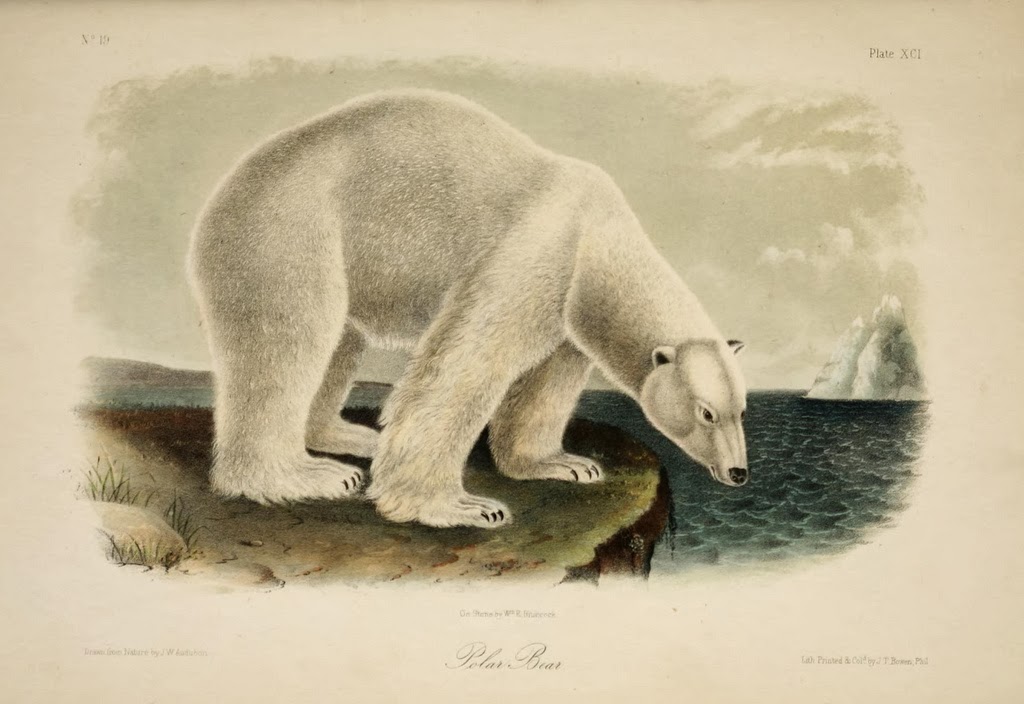
The Quadrupeds of North America.  New York, V.G. Audubon, 1851-54.

http://biodiversitylibrary.org/page/34896849#page/369/mode/1up

When we consider the growing concerns about the effects of climate change on places like the Arctic, polar bears are one of the iconic species that immediately come to mind for many of us.  How might they fare over the next decades?  Despite all of their physical advantages and their placement as an apex predator, polar bear populations have seen recent declines and are already considered a vulnerable species by the IUCN.  Some of the biggest threats facing polar bears are the melting ice cap, hunting, and human development in the area, including oil spills and other negative impacts on the environs.

Yet even before climate change was a prominent topic in science and the news, polar bears held a special place in the public’s imagination.  Tales of exaggerated ferocity were plenty.  One especially eyebrow-raising account tells of the polar bear’s invariable habit of charging at any man encountered.  While today we know that polar bears have been known to attack humans they are just, if not more likely, to avoid such encounters, yet this story goes on to insist that not only do they inevitably charge, they can just as inevitably be tricked into grabbing weapons and committing suicide with them.  Polar bears were undoubtedly less studied and therefore not as well understood in 1861, yet even so the author seems barely able to contain his bemusement at the extraordinary claims of this “eye witness.”  Today, hunting bans now help to protect this magnificent species.  Groups like BHL and our partners EOL work hard to make sure that scientists and others have access to important information about the species, its habitat and behavior so informed conservation decisions can be made.

The polar bear is documented in over 1,200 pages of open access literature made available through the Biodiversity Heritage Library.  BHL relies on donations from individuals to support scanning of the biodiversity literature held in some of the world’s most renowned natural history and botanical libraries.  To learn more about how your donation supports the continued growth of BHL, please visit http://archive.constantcontact.com/fs181/1103622715135/archive/1115465985290.html.  We hope you’ll consider making a contribution today!

December 16, 2013by brooksm
BHL News, Blog Reel

BHL Highlighted As A Case Study For Sustainability

View Full Size ImageWe’re pleased to announce that the Biodiversity Heritage Library is profiled in Searching for Sustainability: Strategies from Eight Digitized Special Collections, a major study funded by the Institute for Museum and Library Services and conducted by Ithaka S+R in partnership with the Association of Research Libraries.  The study shares good practices for teams planning for and managing digitized resources, some of which are drawn from the experiences of those responsible for BHL’s collections.

As shown in the case study, BHL’s sustainability relies heavily on a committed partnership, global participation, and user centered design.  To learn more about each of these, and about BHL as a sustainability model in general, visit the BHL Case Study directly at:

Biodiversity Heritage Library Case Study

Biodiversity Heritage Library

November 22, 2013by brooksm
BHL News, Blog Reel

BHL at the Eighth Meeting of European Bird Curators

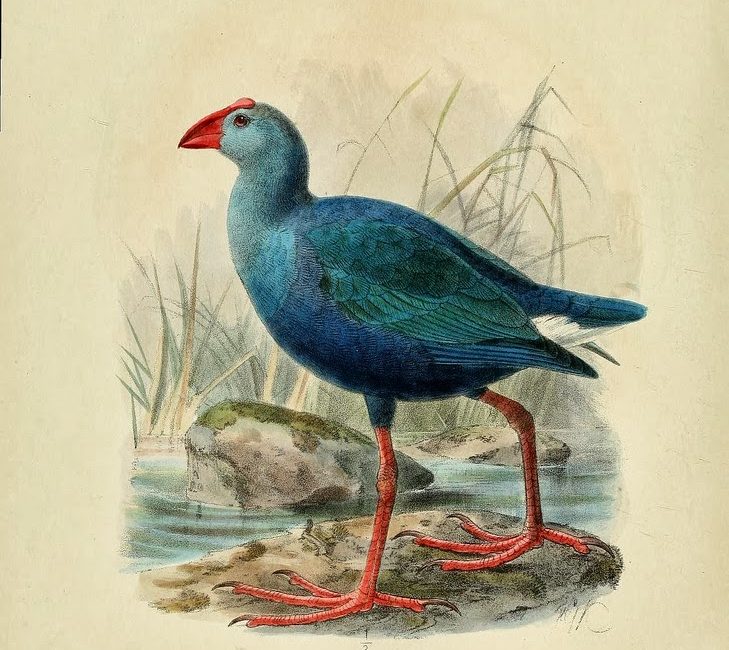
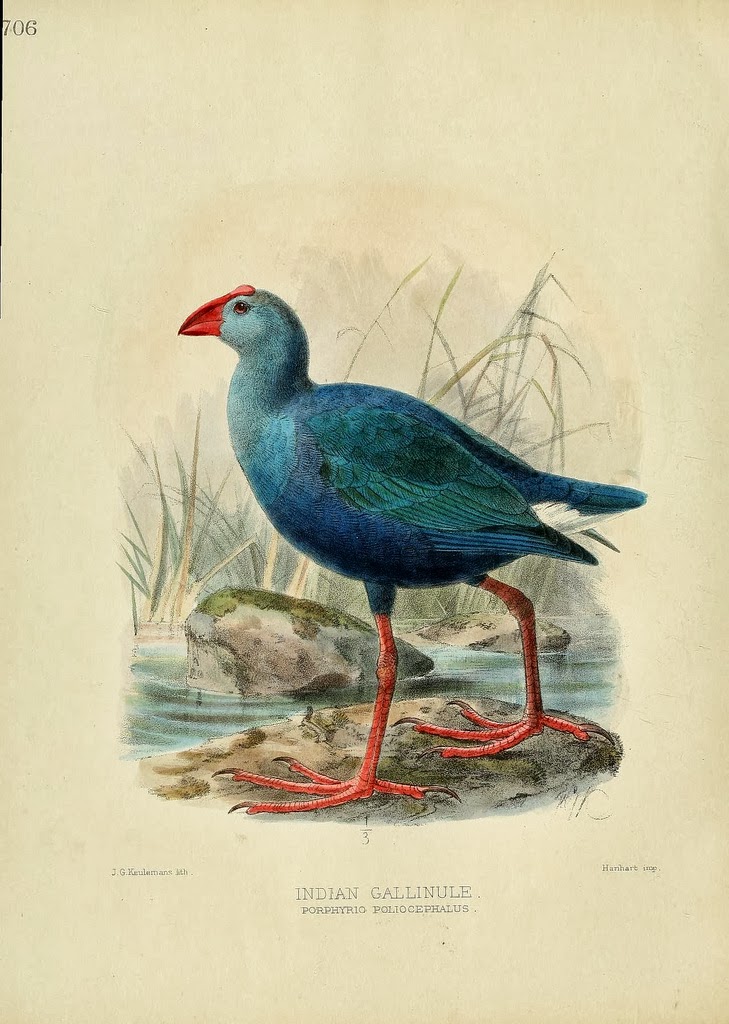
BHL recently participated in the 8th Meeting of European Bird Curators, held in Prague, October 3-5, 2013.

View Full Size Image
Porphyrio poliocephalus.
From: A history of the birds of Europe.
London: Published by the Author, 1871-1881.
biodiversitylibrary.org/page/38625561

Alison Harding, of the Natural History Museum in London, delivered a presentation entitled “BHL: The Vast Library of Life.”  The presentation provided an overview of the Biodiversity Heritage Library and showcased the tools and resources which BHL offers as a free, open access project.

Many attendees were already familiar with BHL and were very complimentary about the ongoing progress of the BHL consortium. Overall, BHL’s participation in the conference was a wonderful experience, providing opportunities to interact directly with some of our users and to gather feedback and answer their questions.

October 22, 2013by brooksm
Blog Reel, Featured Books

Revealing and Contextualizing the treasures of the Biodiversity Heritage Library – the Art of Life and Engelmann Correspondence projects

Presentation link:  http://t.co/hQD2UnGMRX

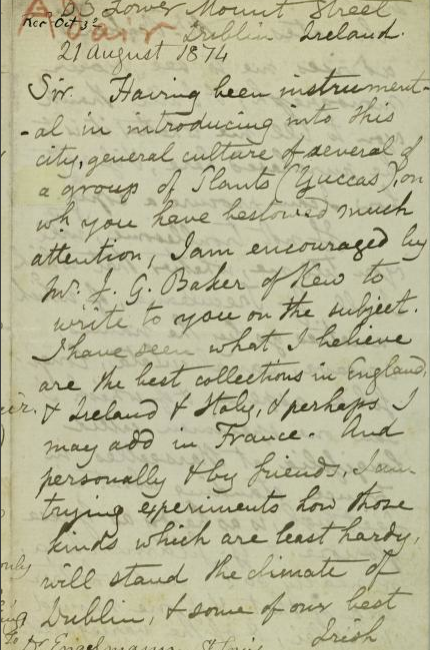
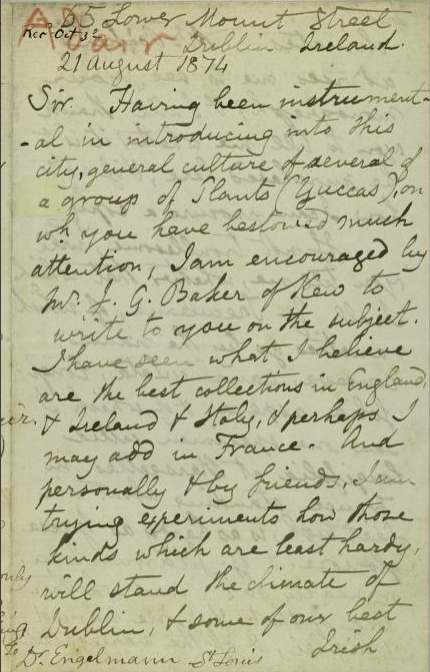
Two BHL-related projects were recently presented during the Digital History and Philosophy of Science (Digital HPS) meeting held at Indiana University, Bloomington, September 6-7.  Trish Rose-Sandler, from the Missouri Botanical Garden’s Center for Biodiversity Informatics, spoke about the Art of Life project.  Daron Dierkes, from the Missouri Botanical Garden’s Peter H. Raven Library, spoke about the George Engelmann Correspondence Project.

View Full Size Image
Correspondence: Adair (John) and Engelmann (George), 1874 http://biodiversitylibrary.org/item/132585#page/1/mode/1up

The Art of Life is a project to identify and describe the rich natural history illustrations hidden within the pages of BHL literature.  The George Engelmann Correspondence project is a project to digitize and make available in BHL letters sent to 19th century botanist, George Engelmann by his colleagues in the United States and Europe.  Both projects are providing new content types to the BHL portal.  They help to contextualize BHL’s published literature and expand its audiences.

Attendees at Digital HPS included researchers, technologists, and librarians who work on digital projects and build scholarly tools to help study, datamine, visualize, and improve access to content in the history and philosophy of science.  While many in the audience were aware of the BHL, they did not know about the expansion of content types beyond the published literature.  This was a great opportunity to expose BHL content to new audiences and build relationships across the humanities and science communities.

The Art of Life project is funded through a 2012 grant from the National Endowment for the Humanities.  Digitization of Engelmann’s correspondence is supported by the Institute of Museum and Library Services under the provisions of the Library Services and Technology Act as administered by the Missouri State Library, a division of the Office of the Secretary of State.

October 1, 2013by brooksm
Page 2 of 3«123»

Help Support BHL

BHL's existence depends on the financial support of its patrons. Help us keep this free resource alive!

search

About BHL

The Biodiversity Heritage Library (BHL) is the world’s largest open access digital library for biodiversity literature and archives. BHL operates as a worldwide consortium of natural history, botanical, research, and national libraries working together to digitize the natural history literature held in their collections and make it freely available for open access as part of a global “biodiversity community.”

Join Our Mailing List

Sign up to receive the latest news, content highlights, and promotions.

Subscribe Now

Subscribe to Blog via Email

Enter your email address to subscribe to this blog and receive notifications of new posts by email.

Join 319 other subscribers

Subscribe to Blog Via RSS

Subscribe to the blog RSS feed to stay up-to-date on all the latest BHL posts.

Access RSS Feed

Inspiring Discovery through Free Access to Biodiversity Knowledge.

The Biodiversity Heritage Library makes it easier than ever for you to access the information you need to study and explore life on Earth…for free, anytime, anywhere.


64+ Million Pages of
Biodiversity Literature Online.

EXPLORE

Tools and Services
to Transform Research.

EXPLORE

300,000+
Illustrations on Flickr.

EXPLORE

ABOUT | HARMFUL CONTENT | PRIVACY | SITE MAP | TERMS OF USE