Biodiversity Heritage Library - Program news and collection highlights from BHL
  • Home
  • News
  • Featured Books
    • All Featured Books
    • Book of the Month Series
    • BHL at 20
  • User Stories
  • Campaigns
    • Fossil Stories
    • Garden Stories
    • Monsters Are Real
    • Page Frights
    • Her Natural History
    • Earth Optimism 2020
  • Tech Blog
  • Visit BHL
Home
News
Featured Books
    All Featured Books
    Book of the Month Series
    BHL at 20
User Stories
Campaigns
    Fossil Stories
    Garden Stories
    Monsters Are Real
    Page Frights
    Her Natural History
    Earth Optimism 2020
Tech Blog
Visit BHL
  • Home
  • News
  • Featured Books
    • All Featured Books
    • Book of the Month Series
    • BHL at 20
  • User Stories
  • Campaigns
    • Fossil Stories
    • Garden Stories
    • Monsters Are Real
    • Page Frights
    • Her Natural History
    • Earth Optimism 2020
  • Tech Blog
  • Visit BHL
Biodiversity Heritage Library - Program news and collection highlights from BHL
Blog Reel, Featured Books

National Fossil Day : Eurypterus remipes

Do you know your state flower or bird? What about your state fossil? It is okay if you know the first two and not the third. Many don’t know their state fossil. There’s no better time to discover it than today — National Fossil Day.

View Full Size Image
Eurypterus could swim as fast as 9.8 to 13 feet per second, which is slightly faster than a sea otter or sea turtle.

The state of New York has a pretty amazing fossil. It’s Eurypterus remipes also known as the giant sea scorpion. They existed over 400 million years ago and thrived in warm, shallow marine environments in the Middle and Late Paleozoic. This extinct relative of the modern king crab was adopted as the State fossil in 1984. The species designation “remipes” is from Latin meaning “oar” and “foot. What I find especially intriguing about them is that they are one of the first animal groups to venture from sea to land. 
 
View Full Size Image
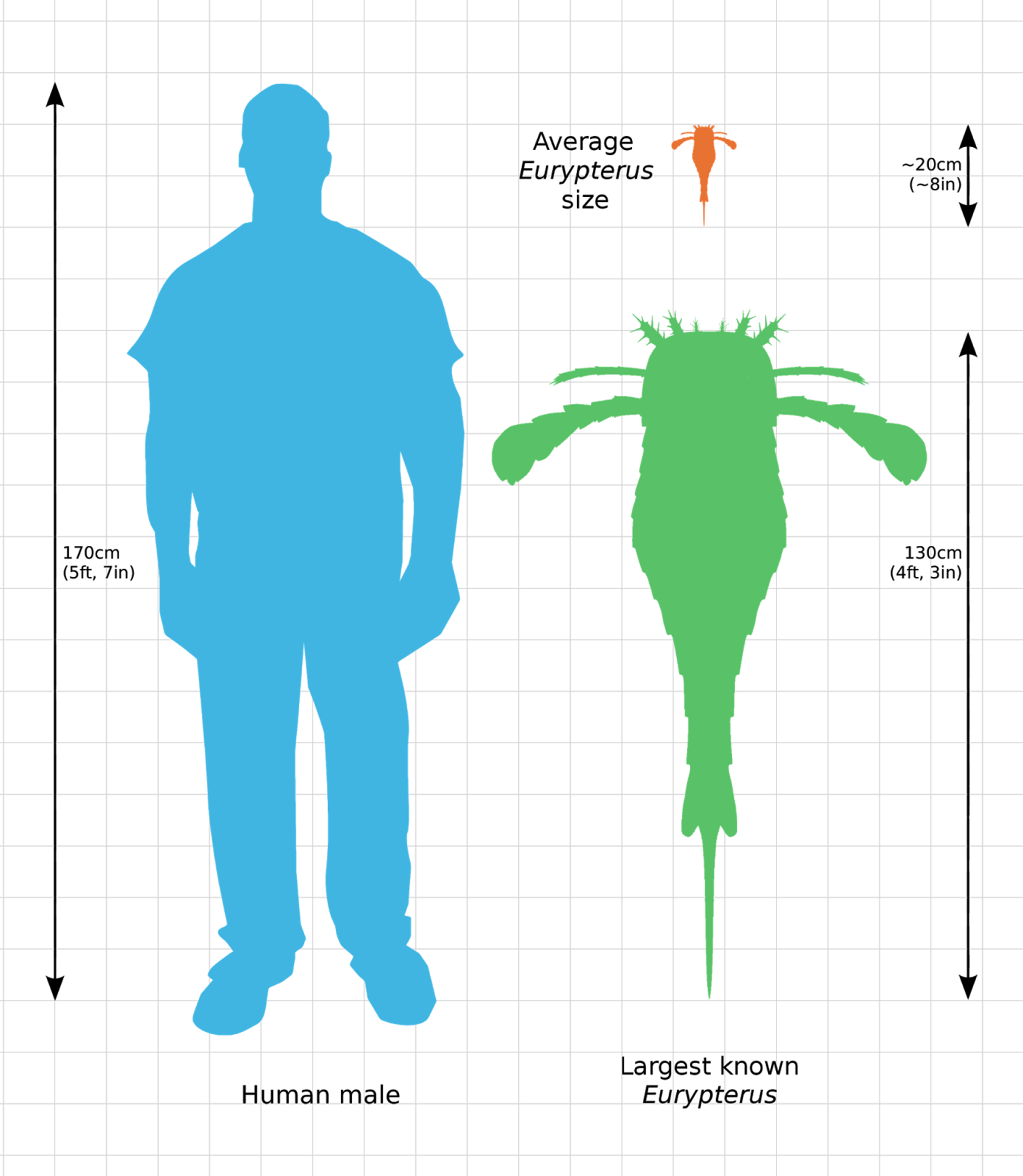
This is a comparison of an average adult human male 5.6 ft with the average Eurypterus remipes length 7.9 inches and the largest known Eurypterus remipes fossil 4 feet 3 inches. Image from Wikipedia.
 
Eurypterus are the most commonly found genus fossil of eurypterids because during the Silurian period when the second super continent was being formed, they rapidly colonized Euramerica. This invasive species became the dominant eurypterid. Eurypterus was both a predator and hunter. While it is not entirely known what they dined on, sources speculate that they had a healthy diet of trilobites, cephalopods, and worms. 
The largest  Eurypterus remipes fossil ever found was 4 foot 3 inches long that is more than half of the height of a average human man which is 5 foot 6 inches. You can see the specimen on display at the Paleontological Research Institution in Ithaca, New York. 
Rev. H. N. Hutchinson writes about giant species that no longer exist in Extinct monsters and creatures of other days : a popular account of some of the larger forms of ancient animal life.  J. Smit, Alice B. Woodward, J. Green, Charles Knight, and others bring them to life through detailed illustrations. In this book, you can also learn about sea lizard, fish lizards, giant sloths, mastodons, great sea serpents, and the dragons of old time … dinosaurs.
Hutchinson’s excitement can be felt through his writing as he describes these long gone species. Here Hutchinson talks about the sea scorpion species, “What curious animals they must have been, using the same limbs for walking, holding their prey, and eating!”
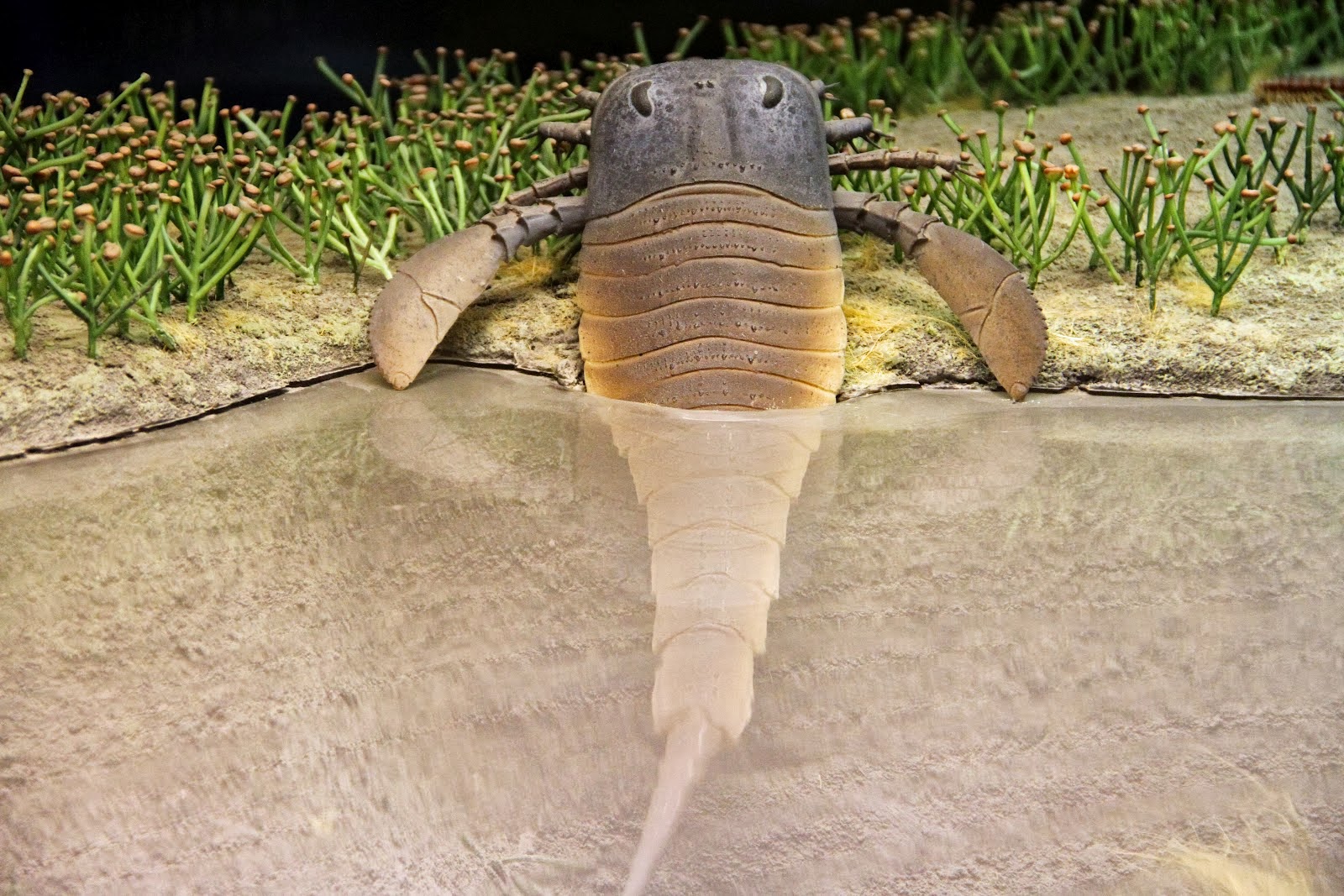


View Full Size Image
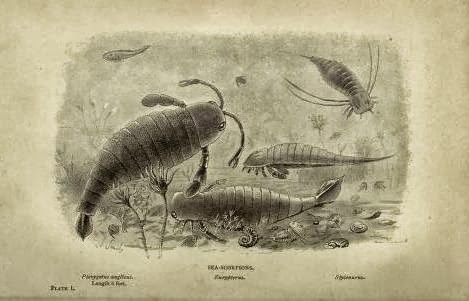
Adult Eurypterus migrated en masse to shore areas in order to mate, lay eggs, and molt. Image from Smithsonian Institution’s National Museum of Natural History.
 
Check out the beautiful illustrations from the book here.
Also, learn all about fossils at the National Museum of Natural History’s FossiLab here.

References:

Knight, PhD.,  Graham. (n.d.). The story of one man’s plight to make fossils swim.  Retrieved from http://gknight.tripod.com/
Merck, Jr., John W. (31 October 2007). Eurypterids, arachnids, and the arthropod invasion of the land. University of Maryland. Retrieve from http://www.geol.umd.edu/~jmerck/bsci392/lecture25/lecture25.html
Share, Dr. Jack. (31 May 2012). The Eurypterid “Eurypterus remipes” is the Official Fossil of the State of New York: Part I – Evolution, Phylogeny, Morphology and Tectonics. Retrieved from http://written-in-stone-seen-through-my-lens.blogspot.com/2012/05/eurypterus-remipes-official-fossil-of.html
Share, Dr. Jack. (29 June 2012). The Eurypterid “Eurypterus remipes” is the Official Fossil of the State of New York: Part III – The R.A. Langheinrich Museum of Paleontology in Eastern Central New York. Retrieved from http://written-in-stone-seen-through-my-lens.blogspot.com/2012/06/eurypterid-eurypterus-remipes-is_29.html
Unknown. (n.d.). Eurypterus remipes NPL4415. Texas Natural Science Center: Non-vertebrate Paleontology, The University of Texas. Retrieved from http://www.utexas.edu/tmm/npl/exhibits/eurypterus.html


Unknown. (27 April 2009). New York State Fossil – Eurypterus Remipes. New York State Library. Retrieved from http://www.nysl.nysed.gov/emblems/fossil.htm
October 16, 2013by lgarvey
Blog Reel

Happy Butterfly and Hummingbird Day!

View Full Size Image
Butterflies are in the Papilionoidea superfamily.

Who hasn’t seen the majestic beauty of a butterfly bouncing through the air or hummingbirds hovering near a feeder? If you haven’t you are surely missing out. Whether you have or haven’t seen them, take the opportunity to learn more about them today on National Butterfly and Hummingbird Day. Spread awareness and observe them in nature or at a zoo.

While I can’t be certain if the holiday existed back in the 1800s, even then people knew butterflies and hummingbirds were special. This enthusiasm resulted in books with beautiful illustrations. One of the more popular ones is John Gould’s A Monograph of the Trochilidæ, or Family of Humming Birds, which you can read more about here.

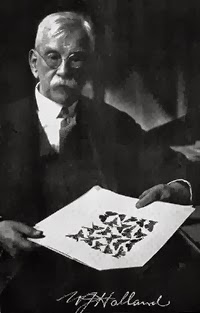
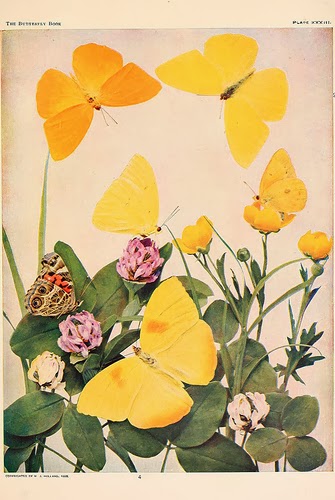
Did you know there are about 24,000 species of butterflies and representations of butterflies have been found in Egyptian frescoes at Thebes, which are 3,500 years old? Butterflies are fascinating creatures. If you want to learn more about them check out  The butterfly book; a popular guide to a knowledge of the butterflies of North America by William Jacob Holland. While he was still Chancellor of the University of Pittsburgh and Director of the Carnegie Museums of Pittsburgh, Holland’s book was published in 1898. This accomplished zoologist and paleontologist was a forward thinker that helped popularize butterflies and moths in the early 20th century.

View Full Size Image
A photograph of Holland from the Carnegie Museum of Natural History Museum.

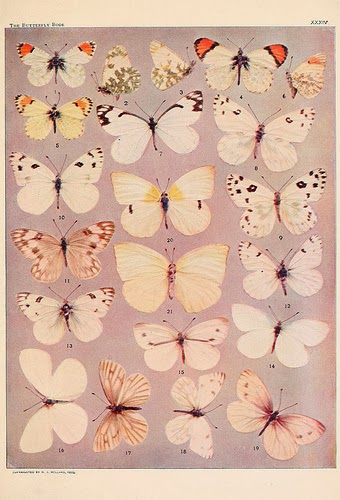
Featuring 48 plates of color photography, this book presents many of the butterfly species in the United States. Written with a youthful and amateur collector in mind, the book presents these delicate creatures in a positive light. A goal of Holland’s was to change the perception of butterflies. He quotes Henry Walter Bates’ The Naturalist on the River Amazons in the introduction which summarizes his goal, “The study of butterflies, — creatures selected as the types of airiness and frivolity, — instead of being despised, will someday be valued as one of the most important branches of biological science.”

View Full Size Image
Antarctica is the only continent on which no Lepidoptera have been found.

Many of the reproduced photographs of butterflies are from Holland’s own collection. Exceeding 250,000 specimens, he donated his private collection to the Carnegie Museum where the collection has grown and been used at unprecedented levels since access was granted to it in 1985. Holland’s collection continues to serve science, conservation, and education to this day.

Check out images from the The Butterfly Book here.

October 3, 2013by lgarvey

Help Support BHL

BHL's existence depends on the financial support of its patrons. Help us keep this free resource alive!

search

About BHL

The Biodiversity Heritage Library (BHL) is the world’s largest open access digital library for biodiversity literature and archives. BHL operates as a worldwide consortium of natural history, botanical, research, and national libraries working together to digitize the natural history literature held in their collections and make it freely available for open access as part of a global “biodiversity community.”

Join Our Mailing List

Sign up to receive the latest news, content highlights, and promotions.

Subscribe Now

Subscribe to Blog via Email

Enter your email address to subscribe to this blog and receive notifications of new posts by email.

Join 319 other subscribers

Subscribe to Blog Via RSS

Subscribe to the blog RSS feed to stay up-to-date on all the latest BHL posts.

Access RSS Feed

Inspiring Discovery through Free Access to Biodiversity Knowledge.

The Biodiversity Heritage Library makes it easier than ever for you to access the information you need to study and explore life on Earth…for free, anytime, anywhere.


64+ Million Pages of
Biodiversity Literature Online.

EXPLORE

Tools and Services
to Transform Research.

EXPLORE

300,000+
Illustrations on Flickr.

EXPLORE

ABOUT | HARMFUL CONTENT | PRIVACY | SITE MAP | TERMS OF USE