Biodiversity Heritage Library - Program news and collection highlights from BHL
  • Home
  • News
  • Featured Books
    • All Featured Books
    • Book of the Month Series
    • BHL at 20
  • User Stories
  • Campaigns
    • Fossil Stories
    • Garden Stories
    • Monsters Are Real
    • Page Frights
    • Her Natural History
    • Earth Optimism 2020
  • Tech Blog
  • Visit BHL
Home
News
Featured Books
    All Featured Books
    Book of the Month Series
    BHL at 20
User Stories
Campaigns
    Fossil Stories
    Garden Stories
    Monsters Are Real
    Page Frights
    Her Natural History
    Earth Optimism 2020
Tech Blog
Visit BHL
  • Home
  • News
  • Featured Books
    • All Featured Books
    • Book of the Month Series
    • BHL at 20
  • User Stories
  • Campaigns
    • Fossil Stories
    • Garden Stories
    • Monsters Are Real
    • Page Frights
    • Her Natural History
    • Earth Optimism 2020
  • Tech Blog
  • Visit BHL
Biodiversity Heritage Library - Program news and collection highlights from BHL
Blog Reel, Featured Books

The Prickly Meanings of the Pineapple

Illustration of a pineapple

The pineapple, indigenous to South America and domesticated and harvested there for centuries, was a late comer to Europe. The fruit followed in its cultivation behind the tomato, corn, potato, and other New World imports. Delicious but challenging and expensive to nurture in chilly climes and irresistible to artists and travelers for its curious structure, the pineapple came to represent many things. For Europeans, it was first a symbol of exoticism, power, and wealth, but it was also an emblem of colonialism, weighted with connections to plantation slavery.

Originating from the region around the Paraná and Paraguay Rivers (present-day Brazil, Paraguay, and Argentina), the pineapple was an important economic plant in the development of Indigenous civilizations in the Americas. The Tupi-Guarani and Carib peoples called the fruit, a staple crop, nanas (“excellent fruit”) and several varieties were grown. As well as food, the pineapple was a source of medicine, fermented to become alcohol, its fibers made into robes and bow strings and thread for cloth.
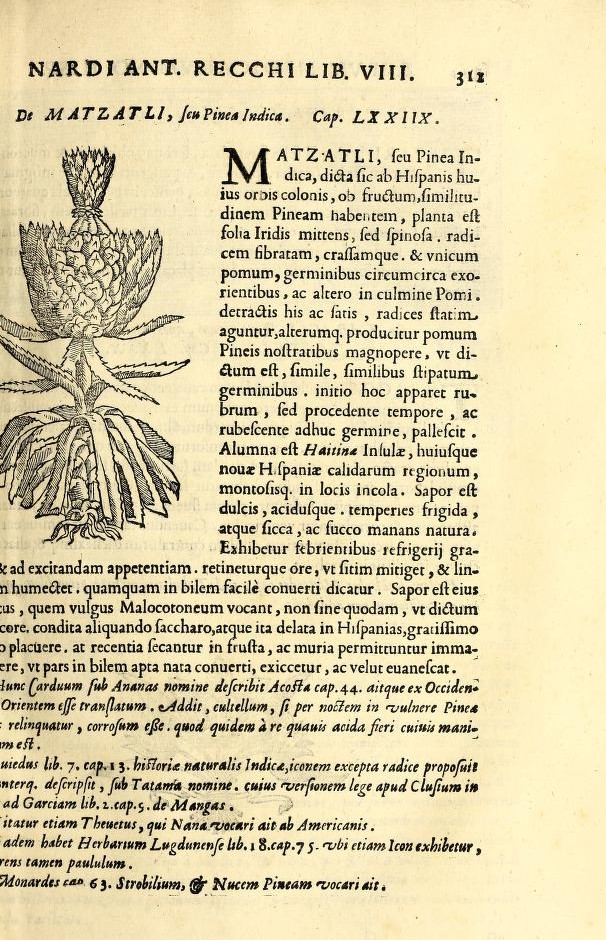
page of a book with text and woodcut of a pineapple

The Aztec word for pineapple is matzatli as seen here is Francisco Hernández’s, Nova Plantarum, Animalium et Mineralium Mexicanorum Historia (1651). The Mayans also cultivated the plant. Volume contributed in BHL from the John Carter Brown Library.

From South America, the cultivated pineapple spread to Central America, Mexico, and the Caribbean. Christopher Columbus encountered the pineapple (Ananas comosus, of the extensive bromeliad family) in the West Indies on the island he named Guadeloupe in November 1493.

Columbus may have brought one back successfully to Spain, although pineapples tended to rot on the long return voyages across the Atlantic. He called it piña de Indes (“little pine of the Indians”) for its resemblance to the pinecone and declared it “the most delicious fruit in the world.” For the Spanish-Italian historian Pietro Martire d’Anghiera, not unreasonably, the pineapple resembled the artichoke. This author of De Orbe Novo (On the New World, 1530) found it “not unworthy of a king’s table.” The early European explorers and colonizers were enamored with it, often praising the pineapple in their chronicles of their voyages. The first identified published illustration of the pineapple is in the historian Oviedo’s Historia General de las Indias of 1535, where it is again connected with royalty as “the prince of all fruits.”
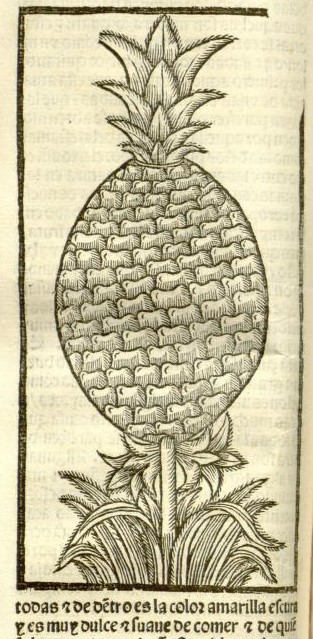
woodcut of a pineapple

Gonzalo Fernández de Oviedo y Valdés‘ Historia General de las Indias, folio lxxvi (verso) woodcut illustration (Seville, 1535). The author was a keen chronicler of what was new from the New World to Europe. Volume contributed in BHL from the Missouri Botanical Garden, Peter H. Raven Library.

The pineapple became a treasured possession in Europe, but it was of practical use for sailors in tropical regions, who were vulnerable to developing scurvy from a lack of vitamin C during long voyages. They observed the healthful effects of eating pineapple, even though the connection between the devastating disease and diet deficiencies was not yet scientifically understood. The Portuguese introduced the fruit (that they called abaxaci) to their colonies in Africa, India, and perhaps other parts of Asia in the mid-sixteenth century. For Tamil-speaking peoples, pineapples were known as annachi pazham.

It was much later that the intriguing tropical fruit was able to be grown in cold climates with the development, at huge costs, of glass houses and their reliable heating systems to warm the air and soil continuously. The fruit needed a controlled environment, run by complex mechanisms and skilled care, to thrive in Europe. Pineapples, thus, became a class or status symbol, a luxury available only to royalty and aristocrats. The fruit appeared as a centerpiece on lavish tables, not to be eaten but admired, and was sometimes even rented for an evening.

The pineapple was also a symbol of colonialism, one of the trophies brought back from conquered territories.

The pineapple can be said to first appear in England by way of the printed title page of John Parkinson’s Paradisi in sole paradisus terrestris (Park-in-Sun’s Terrestrial Paradise) of 1629. In its representation of the Garden of Eden, the fruit takes prime spot in between the valuable and wildly fashionable tulips. This may be a symbol of temptation for Adam, as there was also an erotic, seductive association in contrast to the staid, old apple. The pineapple was the fruit of the new Eden, the New World. In his Theatrum Botanicum of 1640, the botanist Parkinson provided a description:

“Scaly like an Artichoke at the first view, but more like to a cone of the Pine tree, which we call a pineapple for the forme … being so sweete in smell … tasting … as if Wine, Rosewater and Sugar were mixed together.”
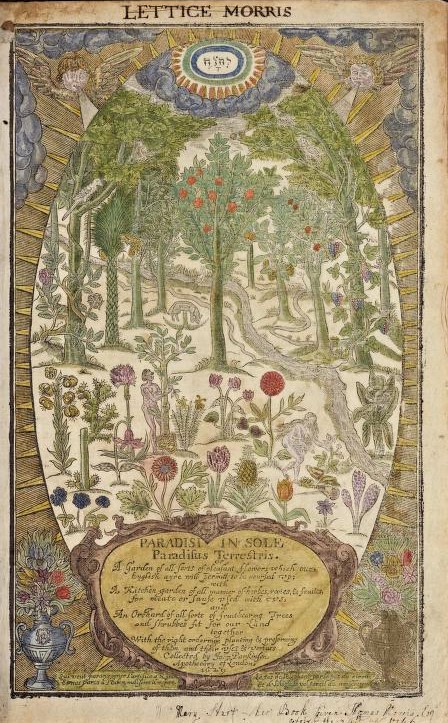
illustrated garden of eden scene

Paradisi in sole paradisus terrestris, or, A garden of all sorts of pleasant flowers (London, 1629). Volume contributed in BHL from the Research Library, The Getty Research Institute.

Richard Ligon, part-owner of a sugar plantation run with enslaved labor, in his A True & Exact History of the Island of Barbadoes (1657), was fascinated with the pineapple he found there:

“When this fruit is grown to a likeness, you shall perceive it by the smell, which is far beyond the smell of our choicest fruits of Europe, as the taste is beyond theirs.”

The kitchen gardens of Caribbean plantations grew pineapples to supply the white households. Ligon tried to import plants back to England, but they did not survive the voyage. Since Columbus, Jamaica had been a possession of Spain, but the British Navy seized the island in 1655. Hans Sloan in his Voyage to the Islands of Madera, Barbados, Nieves, S. Christophers and Jamaica (1707-1725) reported:

“The Fruit is planted and us’d by way of desert (having a very fine flavor and tast[e]) all over the hot West-Indies, either raw or, when not yet ripe, candied, and is accounted the most delicious Fruit these places, or the World affords … The slices are soaked in Canary [a sweet wine] to take the sharpness which commonly otherwise inflames the Throat, and then they are eaten.”
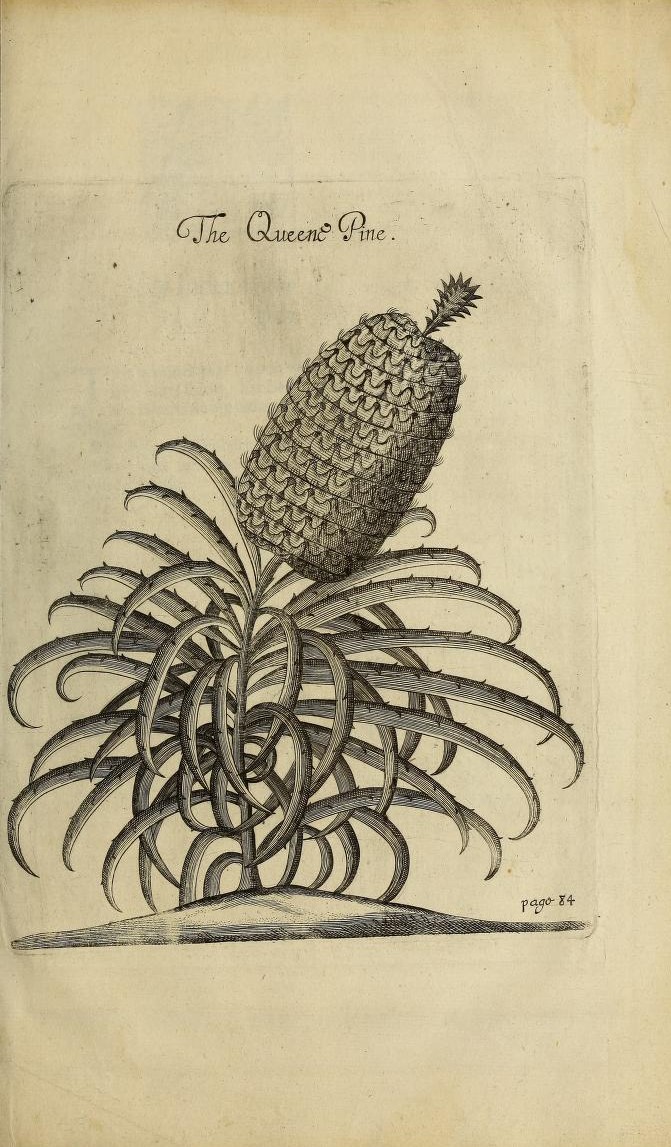
woodcut of a pineapple

A True & Exact History of the Island of Barbadoes, by Richard Ligon (London, 1657). Volume contributed in BHL from the John Carter Brown Library.

In the 1680s, Pieter de la Court, with the help of his gardener, Willem de Vink, attempted to cultivate the tropical plant at an estate near Leiden, and this effort is sometimes credited with being the first for growing one in Europe. But it was the remarkable woman, botanist, collector, and patron Agneta Block who achieved the first success with fruiting the pineapple from a slip. This took place in 1687 in a hothouse at her country house, Vijverhof, located between Amsterdam and Utrecht.

The pineapple can be viewed as an early example of a global commodity. And of slavery with the unfathomable number of enslaved Africans brought to the New World. The Dutch had started exporting the fruit to the Netherlands and Surinam, their colony in Guianas. A ship’s captain first managed to transport the plant to the botanical gardens of Amsterdam and Leiden in 1680. Surinam became wealthy in trading humans and was marked by its brutal plantations. Cash crops grown in the Americas for trade—sugar cane, tobacco, coffee, rice, for example—relied on enslaved labor as well as local expertise. In two successive plates of Metamorphosis insectorum Surinamensium, the famed naturalist and artist Maria Sibylla Merian gave prominence to the fruit. She had sailed to Dutch Surinam in 1699 to study tropical insects. There, for two years, she relied on enslaved African and Indigenous peoples as guides, household help, and sources for botanical information.
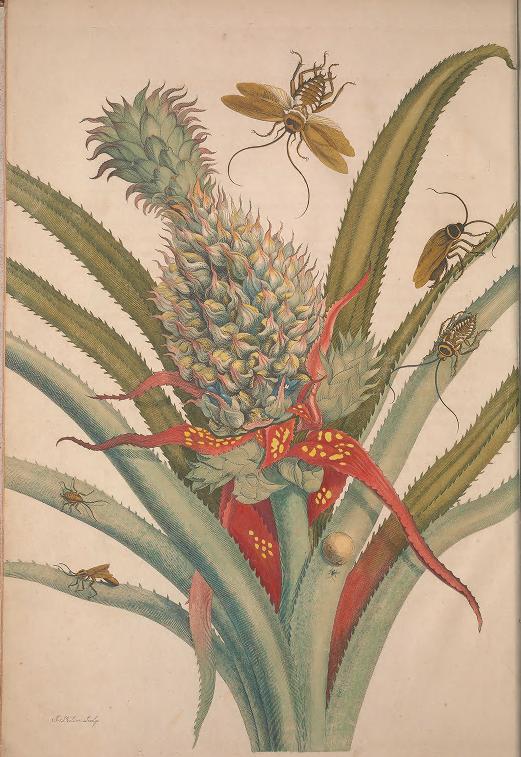
illustration of a pineapple with cockroaches

“Pineapple with Cockroaches,” the first plate in Metamorphosis insectorum Surinamensium by Maria Sibylla Merian (Amsterdam, 1705). In the author’s portrayal of insects of Suriname. Volume contributed in BHL from Smithsonian Libraries and Archives.
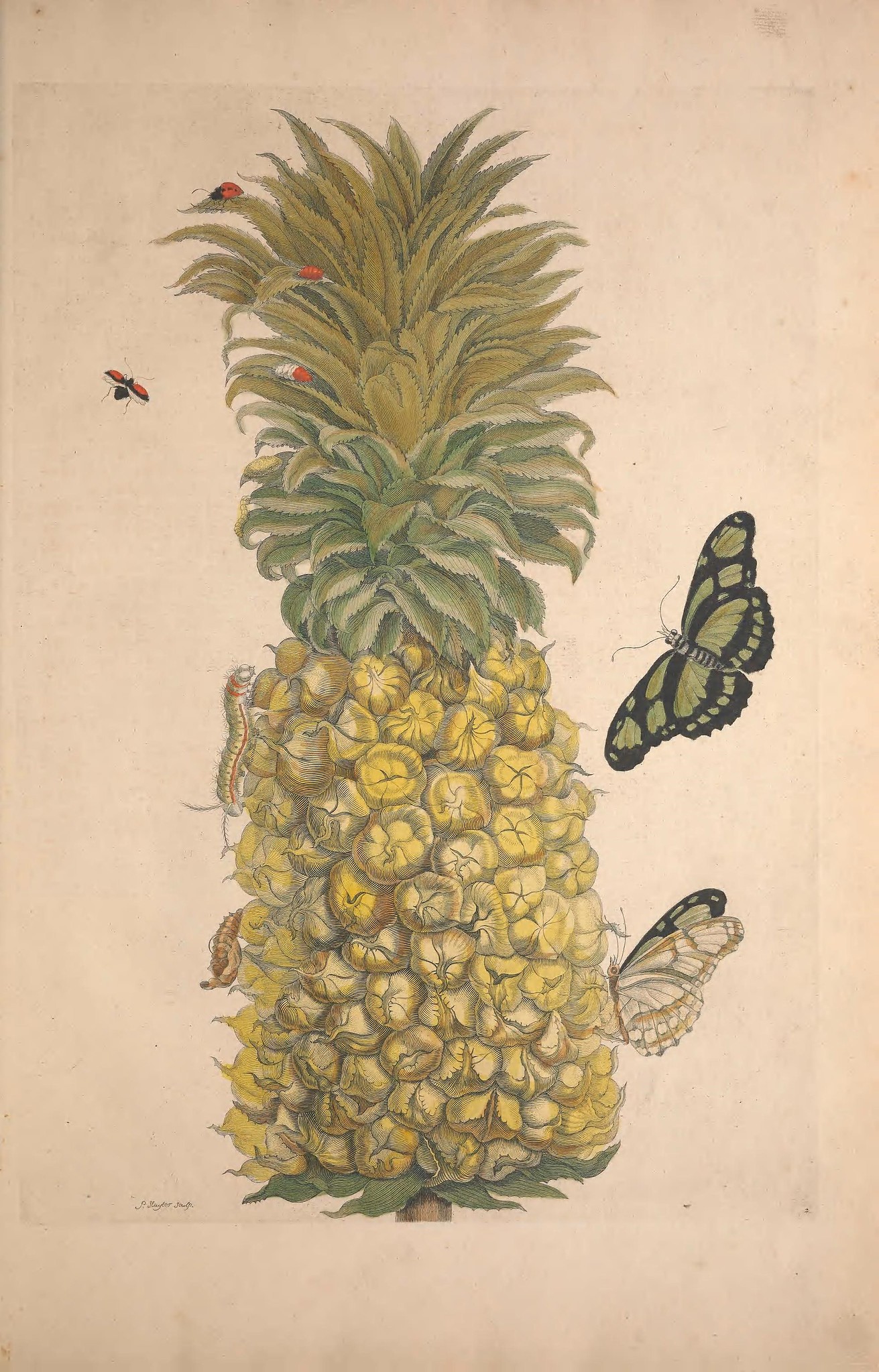
illustration of a pineapple with butterflies

“Ripe Pineapple with Dido Longwing Butterfly” in Metamorphosis insectorum Surinamensium. Maria Sibylla Merian described Ananas comosus as producing “the most outstanding of all edible fruits.”Volume contributed in BHL from Smithsonian Libraries and Archives.

It was in a German book solely devoted to citrus fruits that the pineapple was illustrated in a manner reflecting its exalted position as symbol of social status and refined collecting. Johann Christoph Volkamer’s Nürnbergische Hesperides (The Garden of Hesperides at Nuremberg) contains wonderfully inspired, dreamlike images from the author’s garden ‘Gostenhof’ and its orangeries. Untethered, fruits float above various etched scenes of elaborate gardens of the Alps and Italy, country landscapes, villas, and seaports. There are five uncolored, double-size plates of pineapple, the “Queen of Fruits,” elements of which show the artist’s debt to Merian and her scientific observations (one almost a mirrored image). However, the Nürnbergische Hesperides is very much of the world of the merchant Volkamer, one of the few of the time who had the means and interests to both nurture exotic fruits and undertake such an opulent publication, a more lasting testament to the aristocrat’s cultivation and refinement.
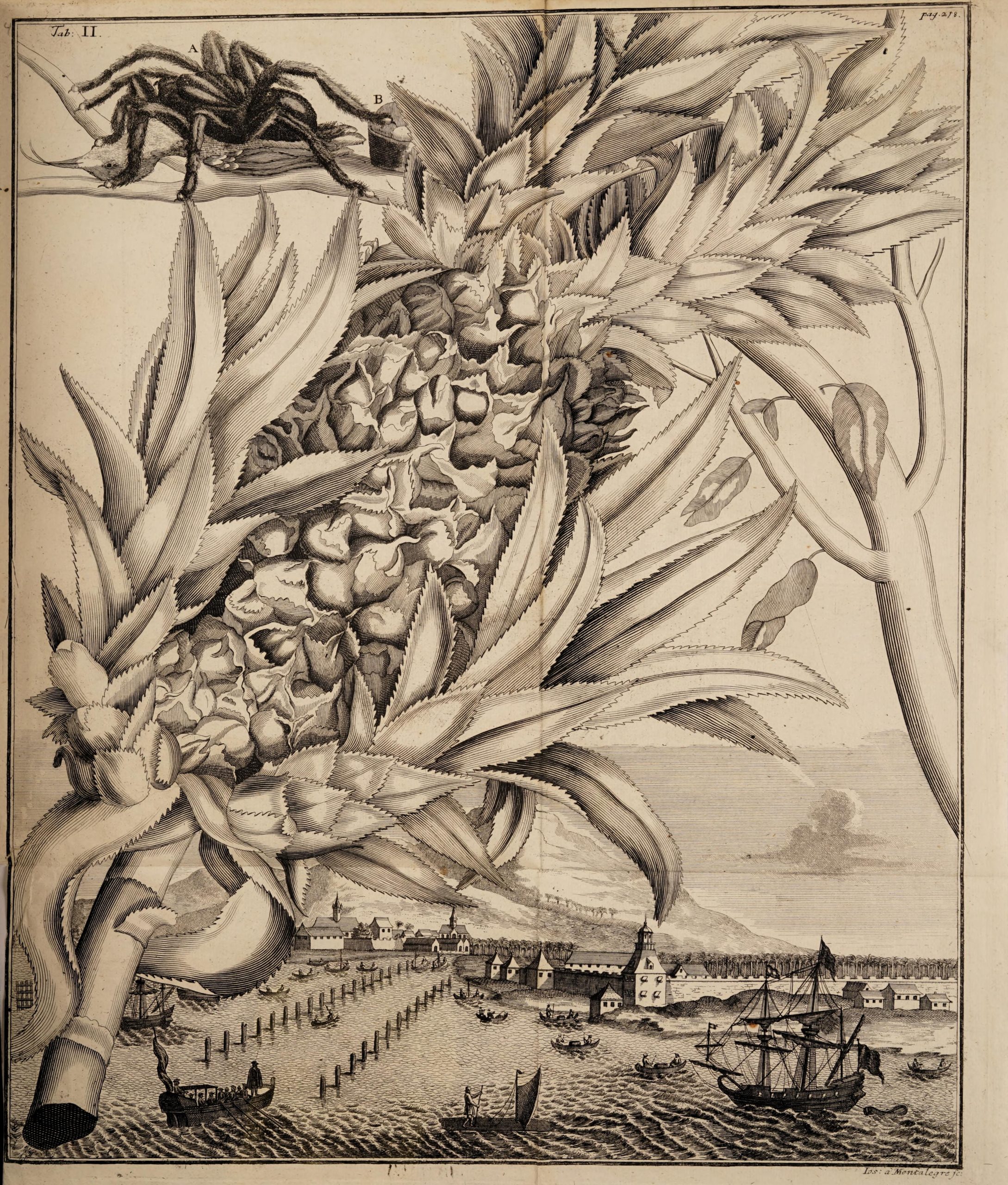
woodcut illustration of a pineapple with a spider

The pineapple plates of Nürnbergische Hesperides (1708-1714) appear in the second volume, Continuation, here with a hairy spider, a reference to Metamorphosis insectorum Surinamensium. Volume contributed in BHL from the Wellcome Library.
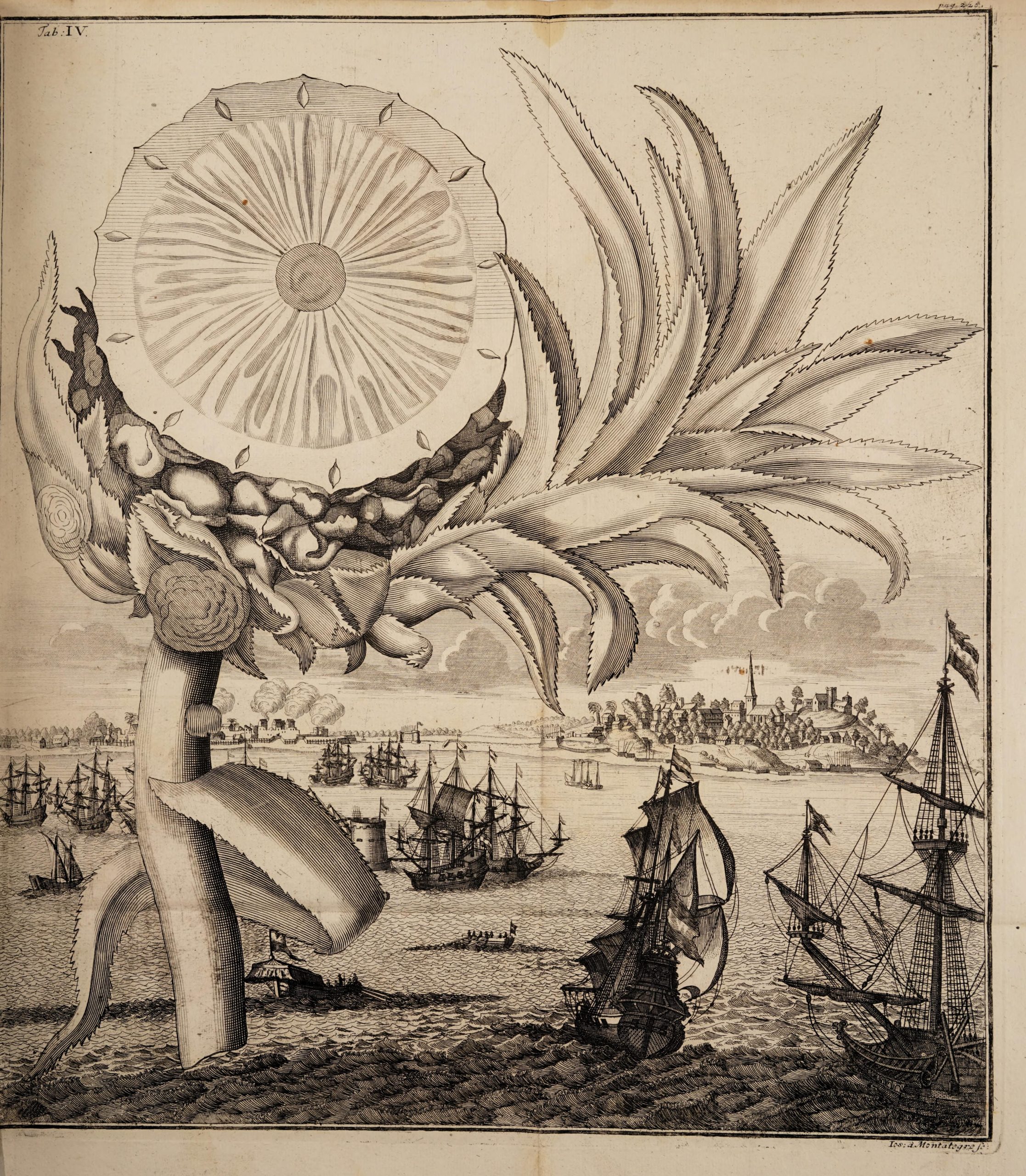
woodcut illustration of a sliced pineapple hovering above ships

One of the imaginative pineapple plates from Nürnbergische Hesperides (volume two of 1714) above a bustling port scene with tall ships, suggesting its importation from foreign lands. Volume contributed in BHL from the Wellcome Library.

The pineapple became fashionable in England after the arrival in 1688 of the Dutch King, William III and Queen Mary, daughter of James II, who were keen horticulturalists and, not incidentally, accompanied by skilled gardeners from the Netherlands. Pineapples were soon grown at Hampton Court. The hothouses in Great Britain became known as pineries. With its distinctive form, the cult of the pineapple extended to architecture and art. Carved representations sit atop the towers of St. Paul’s Cathedral in London and other prominent buildings, perhaps an adaptation or reference to the pinecones used on ancient Roman buildings.

Most famously, John Murray, the fourth Earl of Dunmore in Scotland, had a stone-carved pineapple sitting atop his folly or summerhouse perhaps around 1761. The reason for that massive construction is unknown (although certainly boastful), as is the architect. The fruit had been grown in Scotland since 1732. The hapless, diplomatically inept Dunmore was the last Colonial Governor of Virginia and in that colony’s capital, Williamsburg, the pineapple had also become fashionable and a common motif in decorative arts. It was there that Dunmore incurred the wrath of George Washington in 1775 by proposing to arm his own 56 enslaved people as well to grant freedom to Black Loyalists.

During the 18th century, the pineapple was established as a symbol of hospitality, with its prickly, tufted shape incorporated in gateposts, door entryways and finials and in silverware and ceramics. The motif continues, prevalent in Christmas decorations in Williamsburg today. But with pride of place on the lavish dining tables of enslavers in North America, the pineapple continued its association with slavery. George Washington, who first encountered the pineapple at the plantations of Barbados, had them imported from the West Indies, a port in the triangular trade of enslaved Africans.
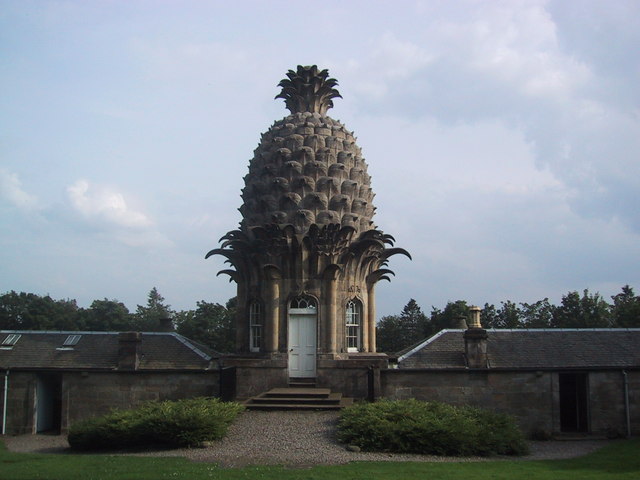
pineapple building

The 37-foot-high Dunmore Pineapple, the north front, showing the entrance (photograph by Keith Salvesen from geograph.org.uk, via Wikimedia Commons).

With technological developments in growing and preserving throughout the wealthy 18th century, the tropical fruit, once an expensive novelty, became a more common commodity in Europe. Helping to make the pineapple more accessible by describing cultivation methods in Great Britain were the writings of Richard Bradley, Philip Miller and William Speechly. The Reverend William Smith in A Natural History of Nevis and the Rest of the English Leeward Charibee Islands in America (1745) declared:

“Ananas, or Pine-Apples, are so common at Chelsea and other fine Gardens here in England, that they need no description, and I shall refer you to Laurence Miller, Sir Hans Sloane, and other books that treat of Gardening.”

Returning to the thought of the pineapple as a symbol of globalization, the Spanish had brought the pineapple to Hawaii sometime by the late 18th to early 19th century. The first commercial crop enterprise was established there in 1886 and others soon followed, often settling on land stolen from the Hawaiian people. A plantation system was developed, exploiting workers, both Indigenous and imported. With cheap labor and new canning technology, Hawaii quickly became the dominant market for pineapples in the world. With extensive advertising, the fruit evolved into a cliche of the Islands. But the big agricultural companies began moving their operations out of Hawaii to Asia and Central America for cheaper land, transportation, and labor in the 1970s. The pineapple’s reign as an economically important and popular fruit throughout the world was firmly in place.

The vast literature of accounts of the pineapple by travelers, explorers, plant enthusiasts, those in the plant and nursery trade, and gardeners— so taken with the distinctive plant— can be found and further studied in the Biodiversity Heritage Library. The pineapple’s distribution throughout the world is told in so many works, reflecting a range of histories— botanical, horticultural, historical, cultural, economic, architectural, and art— in a single tropical fruit. There is much for plant scholars, scientists, historians, artists, and others to discover in the digitized works, tracing the biodiversity and meaning of the pineapple. It still evokes a balmy, tropical paradise and the wondrous beauty of the natural world. As the 17th-century Dutch businessman Pieter de la Court declared, “One can never be tire’d with looking at it.”
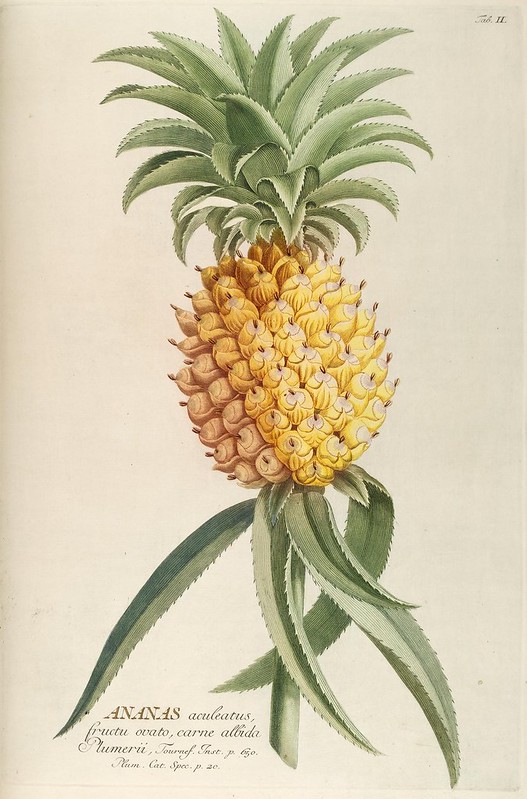
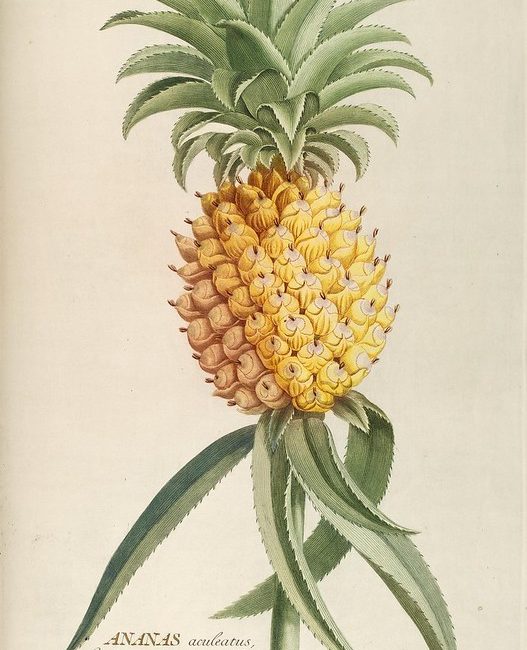
Illustration of a pineapple

Hand-colored engraving by Johann Jacob Haid after Georg Dionysius Ehret. Plantae Selectae Quarum Imagines ad Exemplaria Naturalia Londini, in Hortis Curiosorum Nutrita. (Nuremberg, 1750-1773). Volume contributed in BHL from the Missouri Botanical Garden, Peter H. Raven Library.

Further Reading

For more in-depth information of the pineapple, a few of the works in the Smithsonian Libraries and Archives’ collections:

The pineapple: botany, production and uses, edited by D.P. Bartholomew, R.E. Paull, and K.G. Rohrbach. c. 2003 (link)

Pineapple culture: a history of the tropical and temperate zones, by Gary Y. Okihiro, c. 2009 (link)

Fifty plants that changed the course of history, by Bill Laws. 2010 (link)

Pineapple: a global history, by Kaori O’Connor. 2013 (link)

For further reading on the history of pineapple production: Jesse Rhodes, “It’s Pineapple Season, But Does Your Fruit come from Hawaii?” Smithsonian Magazine (link)
January 28, 2021by mckenzie.87
Blog Reel, Campaigns, Her Natural History

Her “Diversion”: The Gardening and Botanical Pursuits of Mary Somerset, Duchess of Beaufort

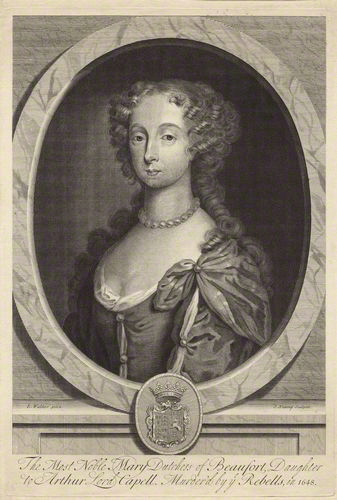
Portrait engraving of the Duchess of Beaufort by Joseph Nutting, after Robert Walker, circa 1690-1722 (image from the National Portrait Gallery, London, via Wikimedia Commons)

Prominent botanist and cataloger of gardens, William Sherard (1659-1728), was hired by an aristocrat to tutor her grandson in botany for “hee loving my diversion so well.” This was Mary Somerset, the first Duchess of Beaufort (1630-1715), an accomplished gardener and botanist in her own right. She sought solace in “natural learning” and tending plants, some cultivated in what she referred to as her “infirmary.” As detailed in landscape historian and conservator Mark Laird’s splendid A Natural History of English Gardening (2015), her gardening activities were a refuge from bouts of depression. She remarked in a letter of her cataloging: “When I get into storys of plants I know not how to get out.”  Laird’s chapter on Mary Somerset, and other recent scholarly investigations, examine her work and help elevate her role in the history of science. Rather than simply a diversion from melancholia, she was dedicated in her studies, blossoming late in her life.

The English noblewoman was born Mary Capel and is also known by the name from her first marriage, Mary Seymour, Lady Beauchamp. She gave birth to nine children and oversaw, with an exacting eye, two estates—Badminton House in Gloucestershire and Beaufort House in London with their famous gardens. Mary Somerset began intensely collecting and cultivating plants in the 1680s. In widowhood, beginning in 1700, it became even more of a consuming passion. Somerset’s specimens, both exotic and domestic, were featured in her and other important gardens.

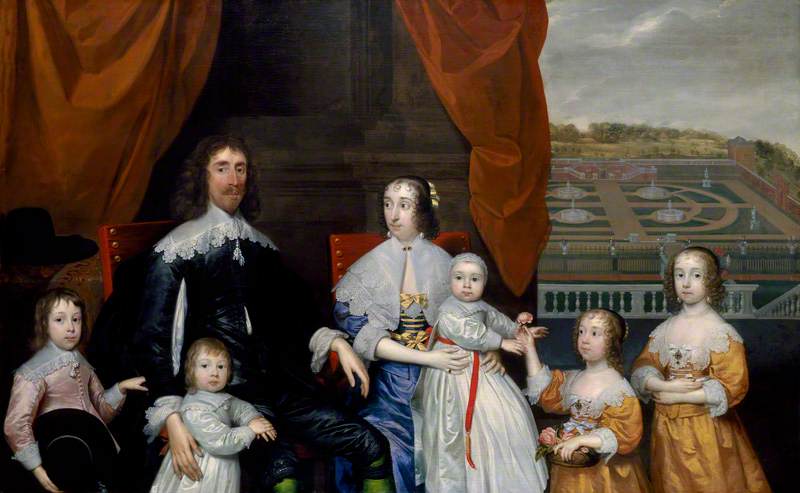
The Capel (also Capell) Family by Cornelius Johnson, circa 1640 (photo: National Portrait Gallery, London; http://www.artuk.org/artworks/the-capel-family-156922). Mary Capell, later the Duchess of Beaufort, is to the far right of this affectionate portrayal. The background landscape provides a glimpse of the family’s Italianate gardens of Hadham Hall in Hertfordshire, where Mary Capel grew up.

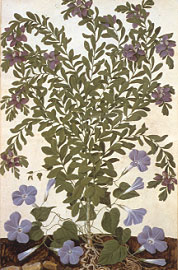
Everhard Kick, Polygala Blue Convolvulvus, Badminton florilegium (image from Wikimedia Commons)

The herbarium Mary Somerset compiled to record her efforts grew to twelve volumes containing her dried plant specimens. She bequeathed this significant work to a great friend, the family physician and neighbor in Chelsea, Sir Hans Sloane (1660-1753), who in turn donated it to the British Museum. The work now is in the Botany Library of the Natural History Museum in London. Another manuscript of her flora is preserved in the paintings of Everhard Kick (also known as Everard Kickius), a Dutch artist, and Daniel Frankcom. They composed a two-volume florilegium (1703-5) in sixty-eight folios of her prized exotics and occasional favored native plants. This catalog remains at Badminton House. These were private undertakings, a record of her individual mind and accomplishments. Apart from these bound works and manuscript collections of letters and records, there are other sources to trace this remarkable woman’s pursuits and how she was viewed by contemporaries.

In the early modern period, plant collecting relied on an informal scientific network—a circle of botanists, nurserymen, gardeners, apothecaries, physicians, and explorers—for information. Although excluded from the culture of the coffeehouse and other intellectual clubs and the Royal Society, Mary Somerset was an active participant in the exchange of botanical knowledge. She was not just a patron but an influential gardener whose analyses of plants were taken seriously by many contemporary scientists who were her correspondents and mutual suppliers of seeds, including John Ray, Jacob Bobart, Samuel Doody, Robert Southwell, George London, and Richard Bradley. Preserved correspondence reveal her contributions, as do mentions of her in important publications of the time.

Explorer, physician, collector, and long-serving President of the Royal Society, Hans Sloane, in his Preface to the first volume of A Voyage to the Islands Madera, Barbados, Nieves, S. Christohers and Jamaica (1707) acknowledges the value of Somerset’s active role in his colonial plant trade. He wrote:

“The Plants themselves have been likewise brought over, planted, and throve very well at Moyra, in Ireland, by the Direction of Sir Arthur Rawdon; as also by the Order of the Right Reverend Dr. Henry Compton, Bishop of London, at Fulham; at Chelsea by Mr. Doudy; and Enfield by the Reverend Dr. Robert Uvedale; and in the Botanic Gardens of Amsterdam, Leyden, Leipsick, Upsal, &c. but especially at Badminton in Gloucester-Shire, where they are not only rais’d some few handfuls high, but come to Perfection, flower and produce their ripe Fruits, even to my Admiration; and that, by the Direction of her Grace the Duchess of Beaufort, who at her leisure Hours, from her more serious Affairs, has taken pleasure to command the raising of Plants in her Garden.”

Mary Somerset received seeds from all over the world, including the Cape of Good Hope, Sri Lanka, Japan, and the West Indies, and tended them with great care. She was one of the early adopters of the late 17th-century innovation, the “tropical stove” or hothouse, to propagate plants. At a time when women, if employed in aristocratic gardens at all, tended to be low-paid weeders, the converted greenhouse at Badminton was presided over by a female assistant, known only as Mary or Martha.

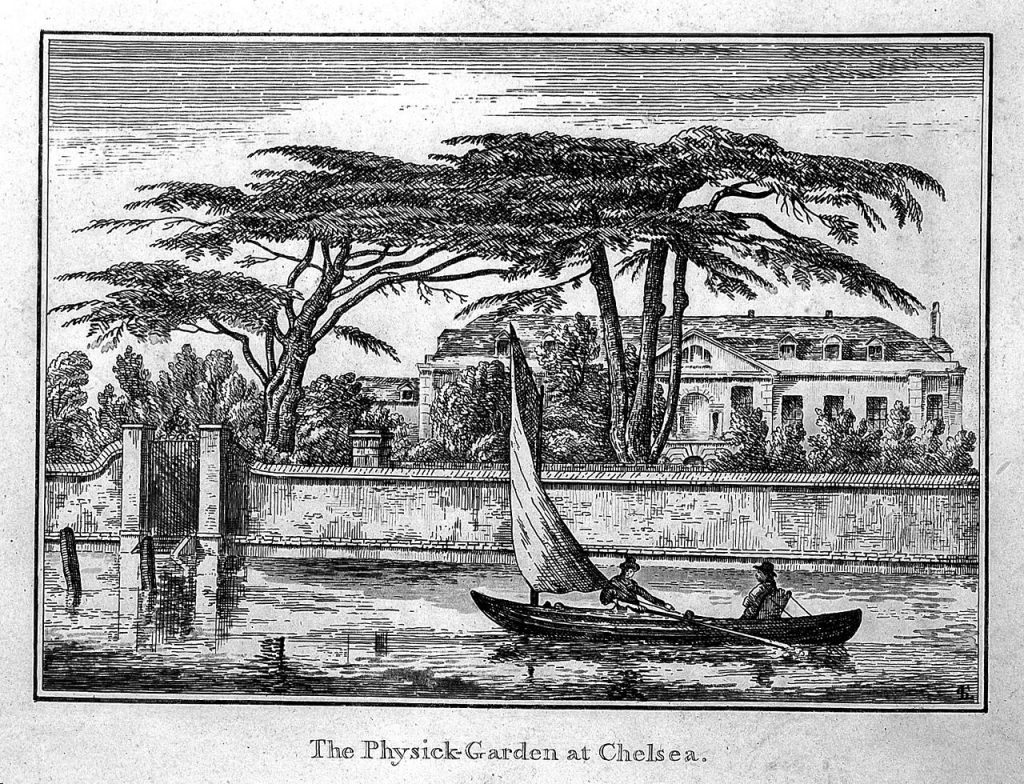
Beaufort House in London had greenhouses as well as expansive gardens. This home of Mary Somerset, and that of Sloane, were nearby to the Chelsea Physic Garden, founded for the promotion of medicinal botany in 1673 by the Society of Apothecaries. There was a mutual trading of specimens and seeds with the four-acre physic garden.

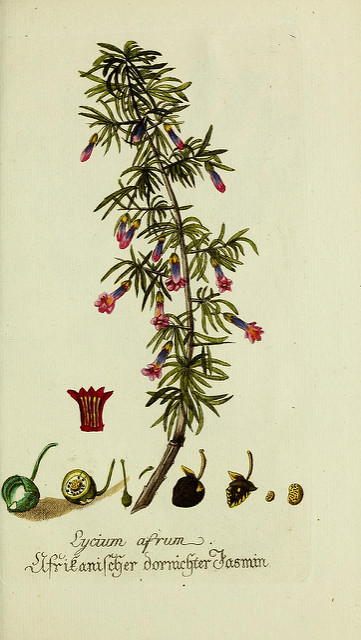
Lycium afrum, one of the plants nurtured in Gloucestershire and Chelsea that Mary Somerset is credited with introducing. Illustration from: Plantarum indigenarum et exoticarum icones ad vivum coloratae. Jarhg. 3 (1790). Contributed in BHL from Harvard University Botany Libraries.

Among the plants nurtured in Gloucestershire and Chelsea that Mary Somerset is credited with introducing were Globe amaranth (native to Asia; in William Townsend Aiton, volume 2, Hortus Kewensis), Comptonia asplenifolia (native to North America; in Encyclopaedia Londinensis 1810), Canarina campanula, Pinus strobus L. (White pine, native to North America), Lycium afrum, and Iva frutescens (John Claudius Loudon, Arboretum et Fruticetum Britannicum, 1838; Philip Miller, The Gardener’s and Botanist’s Dictionary, 1807; and Hortus Collinsonianus, 1843). But she also grew florists’ flowers, such as carnations, nasturtiums, tulips, and auriculas as well as evergreens and oranges, most often in dedicated sections of her vast gardens, and, of course, to adorn her great homes.

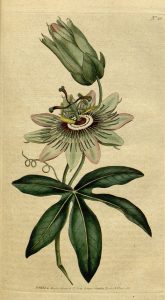
Passiflora caerula. The blue passion flower is another cultivar of the Duchess of Beaufort (see Loudon’s Arboretum et Fruticetum Britannicum).

William Sherard helped instruct Mary Somerset in taxonomic methods of documenting her plants. The botanist had studied with Joseph Pitton de Tournefort in Paris and Paul Hermann in Leiden and helped edit a revision of Caspar Bauhin’s Pinax Theatri Botanici. The requests from numerous scientists and botanical authorities for the tending of seeds at both Badminton and her London gardens was not simply to provide the necessary environment for nurturing specimens, but for her ability to cultivate these exotics and to compare them with native plants, providing details on what thrived and what did not. That is, her observations, descriptions and opinions were respected and sought.

Another correspondent of Somerset’s was botanist James Petiver (1663 or 1664-1718). He wrote a series for the Royal Society’s Philosophical Transactions (1711-14), “Account of Rare Plants Lately Observed in Several Curious Gardens about London and particularly the Company of Apothecaries’ Physic Garden at Chelsea.” Included in this description is Somerset’s neighboring garden in London. Nothing remains of that estate except perhaps some of her specimens that may have ended up in the Physic Garden. Beaufort House at Cheyne Walk was purchased in 1737 by Sloane. After being left vacant for twenty years, he had the home and gardens demolished in 1740.

Philip Miller (1691-1771), who had a distinguished career at the Chelsea Physic Garden, in the Catalogus Plantarum of 1730 notes Somerset’s contributions. The gardener records names of some of the “many learned and curious persons, nobility and gentry” who sought to transform “our former poorly furnish’d gardens.” Included was:

“Her Grace the Dutchess of Beaufort did also collect a numerous quantity of rare Plants into those famous Gardens of Badmington, where she preserved and maintained them with great Care in wonderful Beauty for many years; but as this Collection consisted chiefly of our most tender Exotick Plants, so we shall have Occasion to mention that Noble Person when we come to treat those Plants in another Place.”

Engraving of the Chelsea Physic Garden, from the Surrey Bank (from Wellcome Images (no. L0003897) via Wikimedia Commons)

It is notable that Mary Somerset, in contrast to many of her fellow botanists, was not just interested in dried specimens and their identification but thoroughly engaged in horticulture—cultivating plants to thrive and creating gardens that were famous in their time. As Stephen Switzer noted in his 1718 Ichnographia Rustica, or, The Nobleman, Gentleman, and Gardener’s Recreation, “how much of her time she virtuously and busily employed in the garden.”

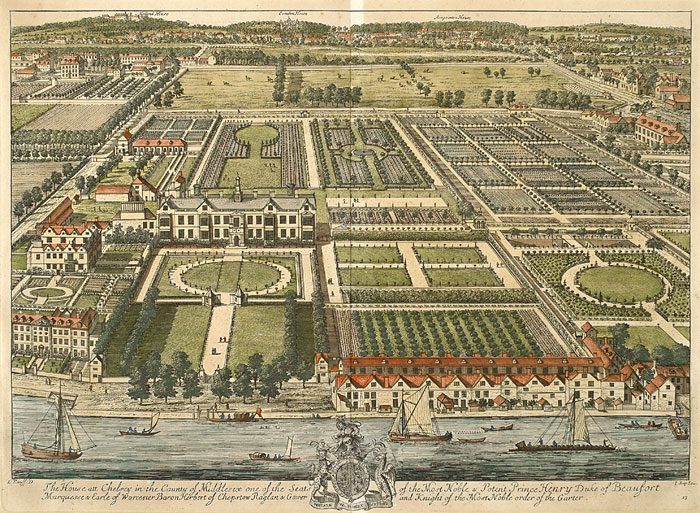
Colored engraving of Beaufort House, occupying part of the former estate of Sir Thomas More, in Chelsea, 1708, by Johannes Kip. From Britannia Illustrata (image from the Museum of London) the bird eye’s view shows the surrounding gardens, orchards and greenhouses.

A more complete survey of printed acknowledgements and identifications of plants which Mary Somerset helped introduce will expand the portrait of a complex woman who sought relief from depression in gardening and horticultural and botanical studies. There is the challenging task of pinpointing more of her plants by comparing the portrayals in the Sloane herbarium and the Badminton florilegium with representations in publications in the pre-Linnaean era. As the Biodiversity Heritage Library makes more of this literature, including landscape history, available online, the ability to explore Somerset’s participation and influence is greatly aided.

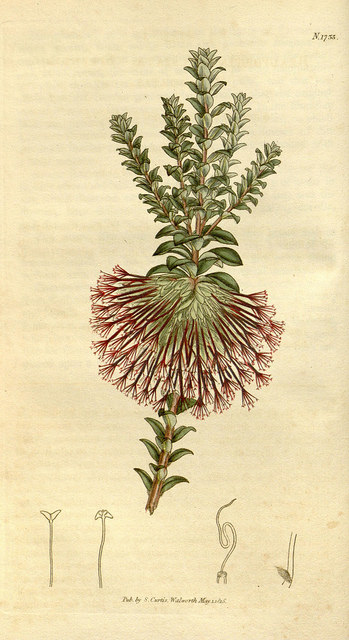
Beaufortia decussata. The genus Beaufortia was named for Mary Somerset, Duchess of Beaufort. Illustration from: Curtis’s Botanical Magazine. v. 42 (1815). Contributed in BHL from the Peter H. Raven Library of the Missouri Botanical Garden.

References

Chambers, Douglas. “‘Storys of Plant'”: The Assembling of Mary Capel Somerset’s Botanical Collection at Badminton,” in Journal of the History of Collections, volume 9, 1997, pages 49-60.

Davies, Julie. “Botanizing at Badminton House: The Botanical Pursuits of Mary Somerset, First Duchess of Beaufort,” in Domesticity in the Making of Modern Science; editor, Donald L. Opitz (2016).

Duthie, Ruth. “The Planting Plans of Some Seventeenth-Century Flower Gardens,” in Garden History, volume 18, no. 2 (Autumn 1990), pages 77-102.

Laird, Mark. A natural history of English gardening, 1650-1800. New Haven: Yale University Press, 2015.

Munroe, Jennifer. “’My Innocent Diverson of Gardening’: Mary Somerset’s Plants,” Renaissance Studies, volume 25, number 1, February 2011, pages 211-123.

March 12, 2019by mckenzie.87
Blog Reel, Featured Books

An Imaginative World Found in a Shell Book

This post originally appeared on the Smithsonian Libraries blog and has been republished at the permission of the author, Julia Blakely.

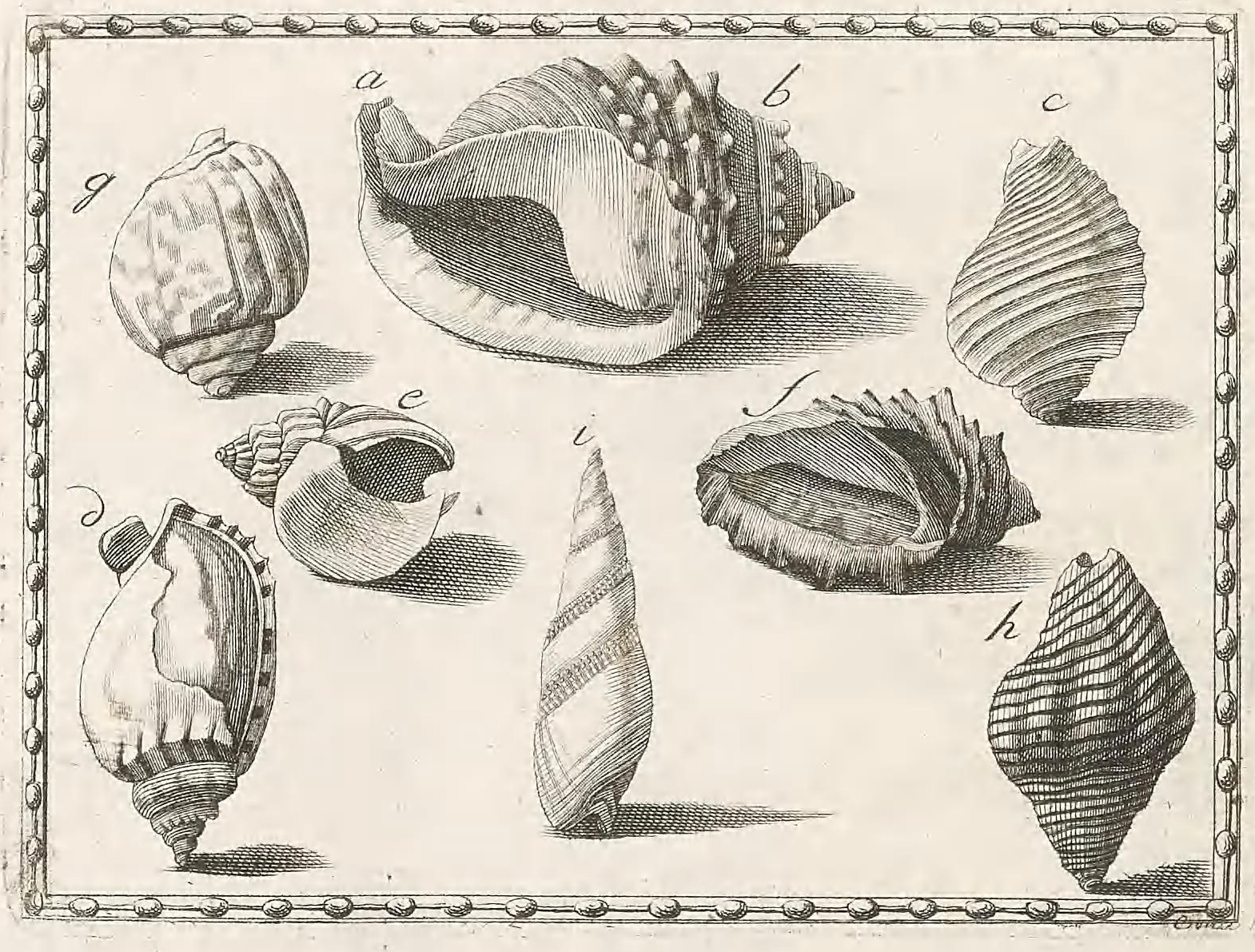
illustration of shells

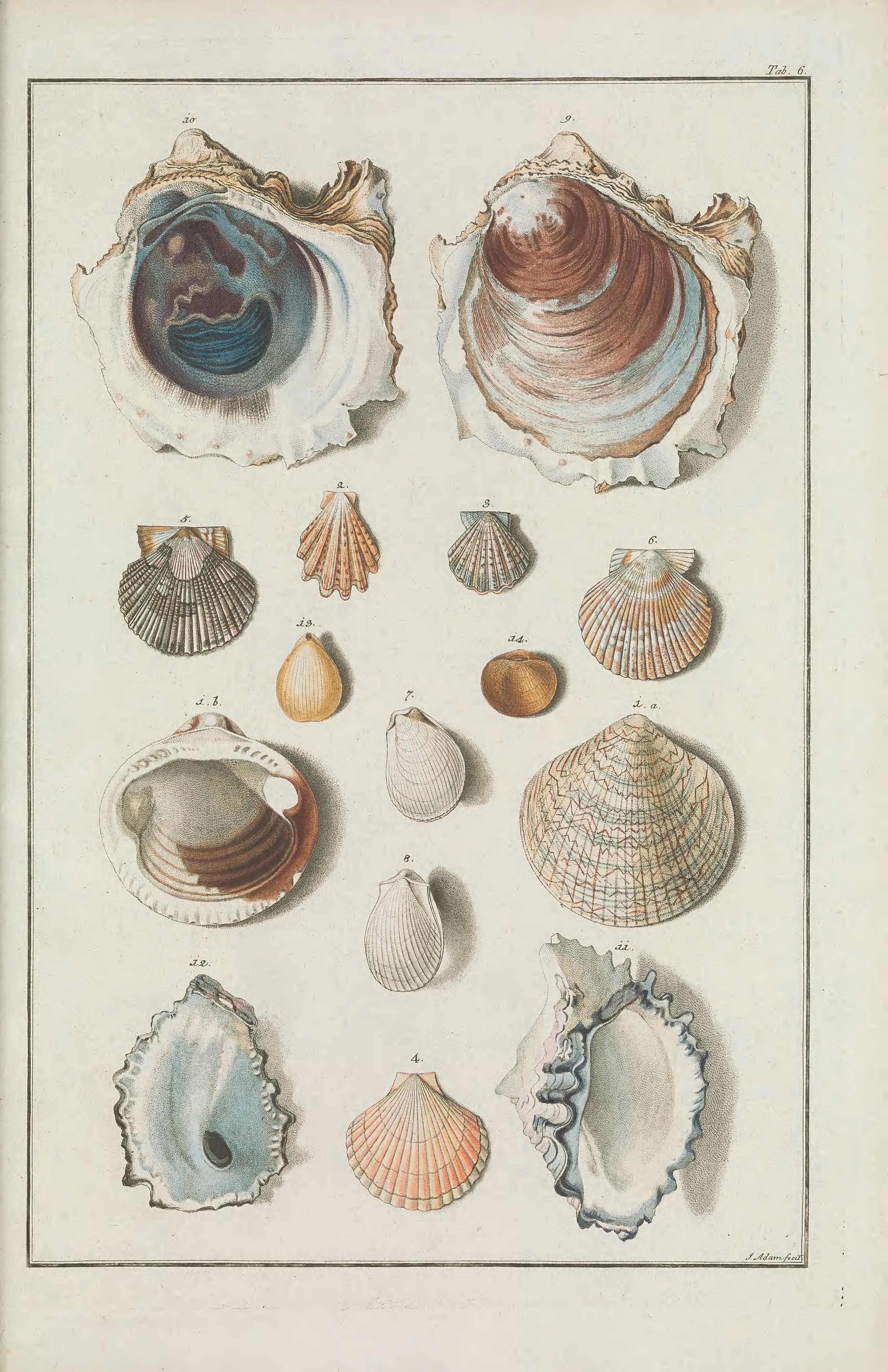
Tab. 6. Born, Ignaz, Edler von. Testacea Musei Caesarei Vindobonensis. 1780. Contributed in BHL from Smithsonian Libraries.

As a commemoration of the Imperial collection of shells in Vienna, the printed folio of Testacea Musei Caesarei Vindobonensis of 1780, is splendid. The eighteen engraved plates, carefully colored by hand, render individual specimens in the Habsburgs’ K.K. Hof-naturalien-Cabinet as if pieces of jewelry, casting shadows on a plain background of the thick, hand-made paper. Dedicated to the Empress of Austria, Maria Theresa (1717-1780), this production was also a work of science, as the task of arranging the shells in the Cabinet and describing them for publication was given to one of the leading scientists of the day, Ignaz Edler von Born (1742-1791).

mermaid illustration

Illustration. Born, Ignaz, Edler von. Testacea Musei Caesarei Vindobonensis. 1780. Contributed in BHL from Smithsonian Libraries.

Born, commissioned by Maria Theresa to arrange the entire royal natural history collections, was principally a mineralogist and metallurgist. But he had a great interest in shells and identified several new species. Systematists in malacology (the study of mollusks, including shells) still examine the originals, now in the Natural History Museum, Vienna (Naturhistorisches Museum), originally built to house the overflowing collections of the Habsburgs. The text of Born’s descriptions are also still used. It was first published in a much smaller format in 1778, in both Latin and German, with one plate as the only illustration. G.C. Kronenberg’s “Born’s strombs (Mollusca: Gastropoda),” a recent article that appeared in Annalen des Naturhistorischen Museums in Wien (2007), is one instance of scholarly work citing Born’s analysis.

illustration of shells

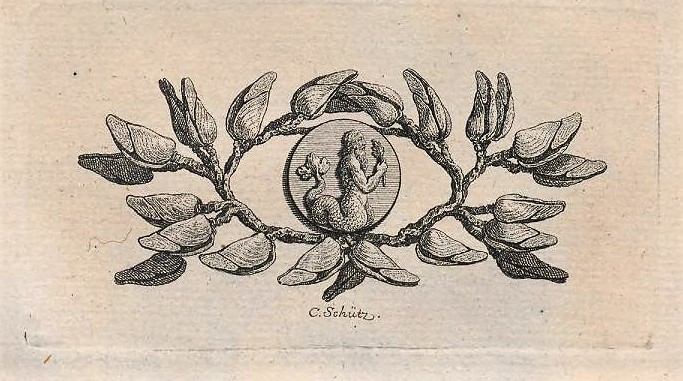
Vignette. Born, Ignaz, Edler von. Testacea Musei Caesarei Vindobonensis. 1780. Contributed in BHL from Smithsonian Libraries.

Also attesting to the importance of Testacea Musei Caesarei Vindobonensis in scientific research, two copies of the folio second edition were once in the Division of Mollusks in the Smithsonian’s National Museum of Natural History, which holds the world’s largest shell collection (link). The books now reside in the Museum’s Joseph F. Cullman 3rd Library of Natural History. Alas, also indicating their scholarly worth, both volumes were rebound for practicality in sturdy library buckram, their original bindings lost (an earlier practice, happily no longer followed).

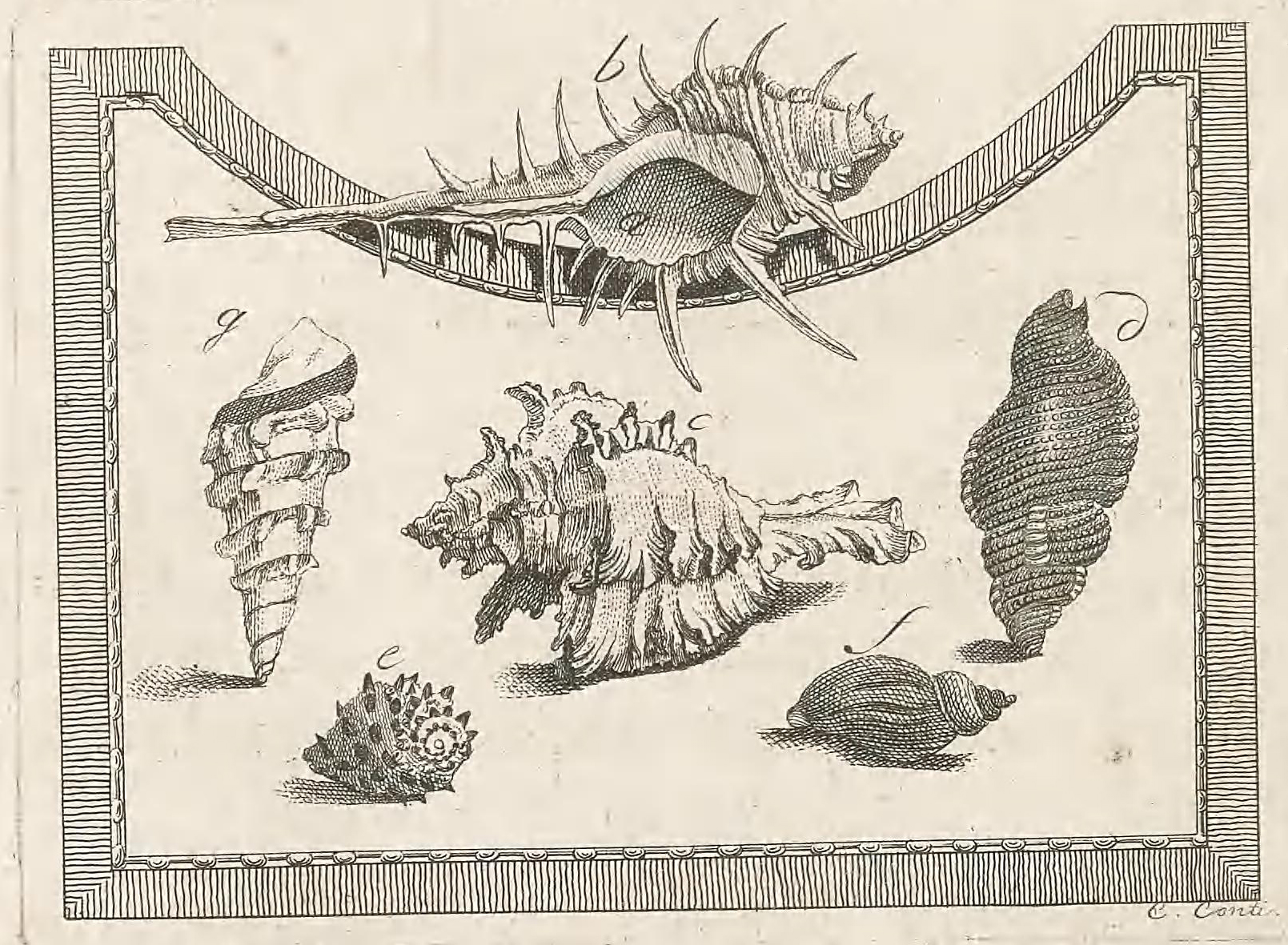
The second half of the 18th century was a period when books were produced addressing the lack of illustrations in the enormously influential tenth edition of Carl Linnaeus’ Systema Naturae. In this two-volume work of 1758-1759, the Swedish author (now known more often by his modern name form, Linné) introduced binominal nomenclature for animals, but providing visual representations for publication was time-consuming and quite expensive. The Habsburg commission of Testacea Musei Caesarei Vindobonensis, employing the binominal system and current with Linnaean names and descriptions, filled the gap with essential information. The plates were designed by the artist Franz Fuxeder (1725-1797) and engraved by Karl Schütz (1745-1800) and J. Adam. The vignettes are sometimes signed by “Conti,” Schütz, or Johann Ernst Mansfeld (1739-1796).

Illustration of shells

Vignette. Born, Ignaz, Edler von. Testacea Musei Caesarei Vindobonensis. 1780. Contributed in BHL from Smithsonian Libraries.

Apart from the separately printed plates of carefully displayed shells, there are forty-eight small scenes or portraits interspersed in the text, all of them an absorbing delight of this sumptuous work on conchology. Given the royal funding, individually created vignettes, alluding to the subject at hand, were created. This was a significant expense in the hand-press period. Unlike woodcuts that could go through the printing press with the standing type, intaglio plates had to be separately printed after, but carefully registered with, the pages of text. The scenes portray shells in land- and seascape settings or within elaborate frames with lettered identifications matched up to their descriptions, serving the purpose of a visual footnote.

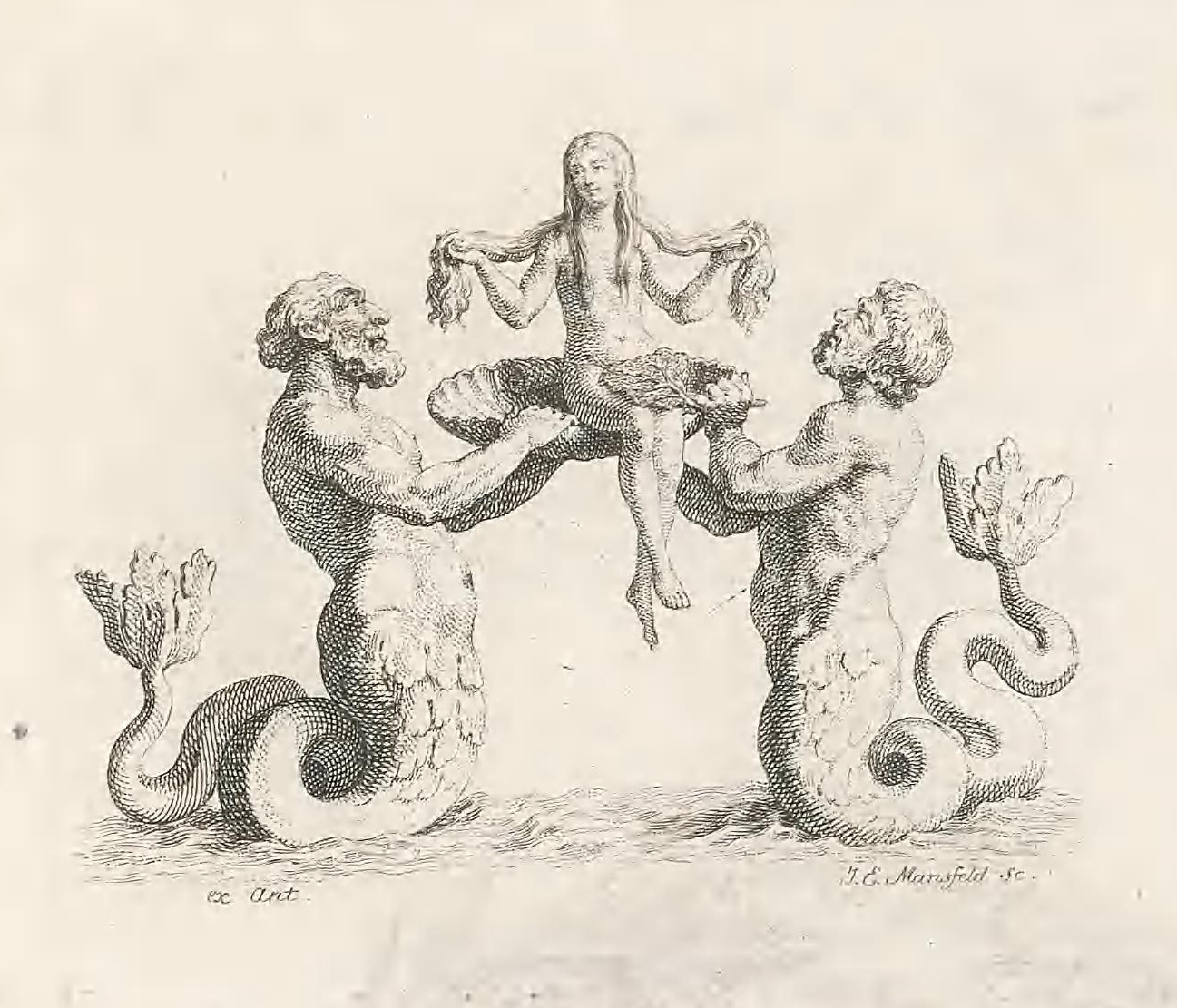
illustration of Venus and Mermen

Venus and Mermen. Born, Ignaz, Edler von. Testacea Musei Caesarei Vindobonensis. 1780. Contributed in BHL from Smithsonian Libraries.

The images are a world of their own. One imagines the artists having fun with their knowledge and creativity. There are representations of cavorting mythological creations; mermen and mermaids make appearances. Two of the sea creatures play the supporting roles in an interesting interpretation of Venus on the Half-Shell, hoisting her aloft. Rather than her flowing hair or hand, a piece of seaweed provides the element of modesty for the nude goddess.

Illustration of woman on throne being handed a shell

Publisher’s device. Born, Ignaz, Edler von. Testacea Musei Caesarei Vindobonensis. 1780. Contributed in BHL from Smithsonian Libraries.

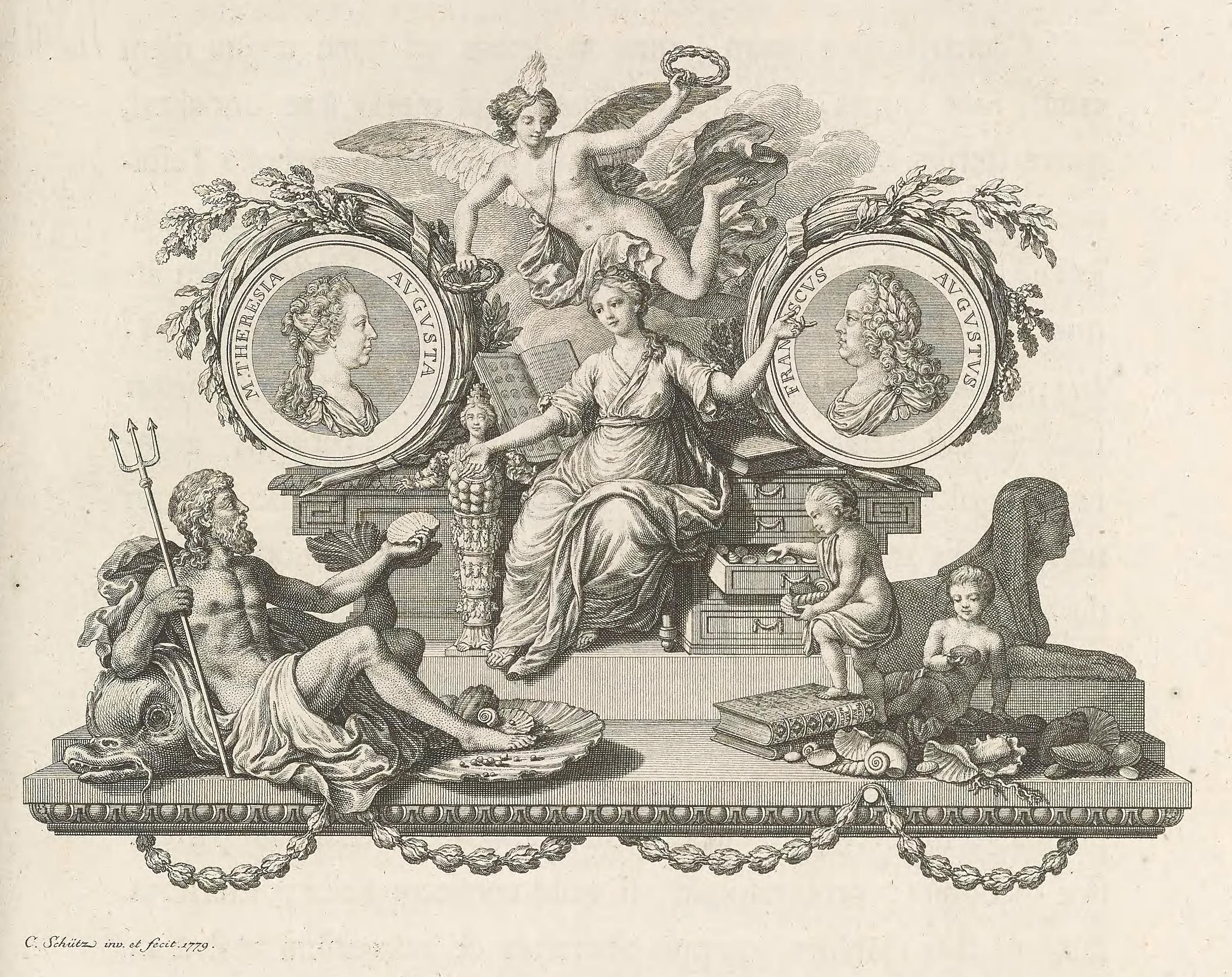
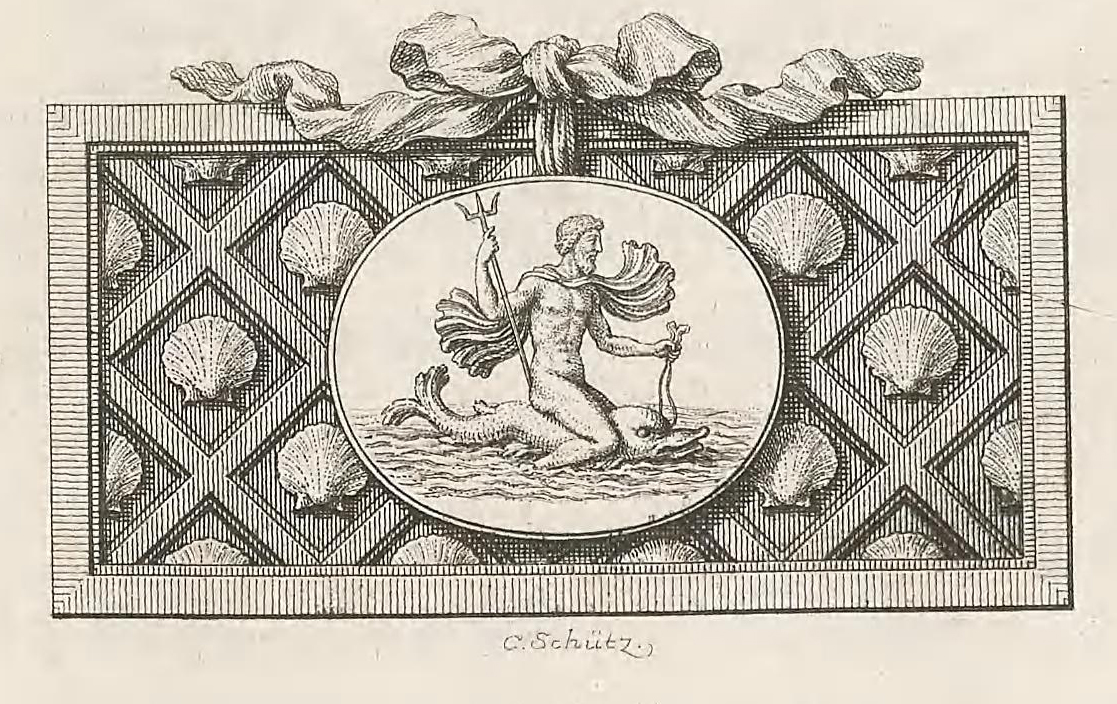
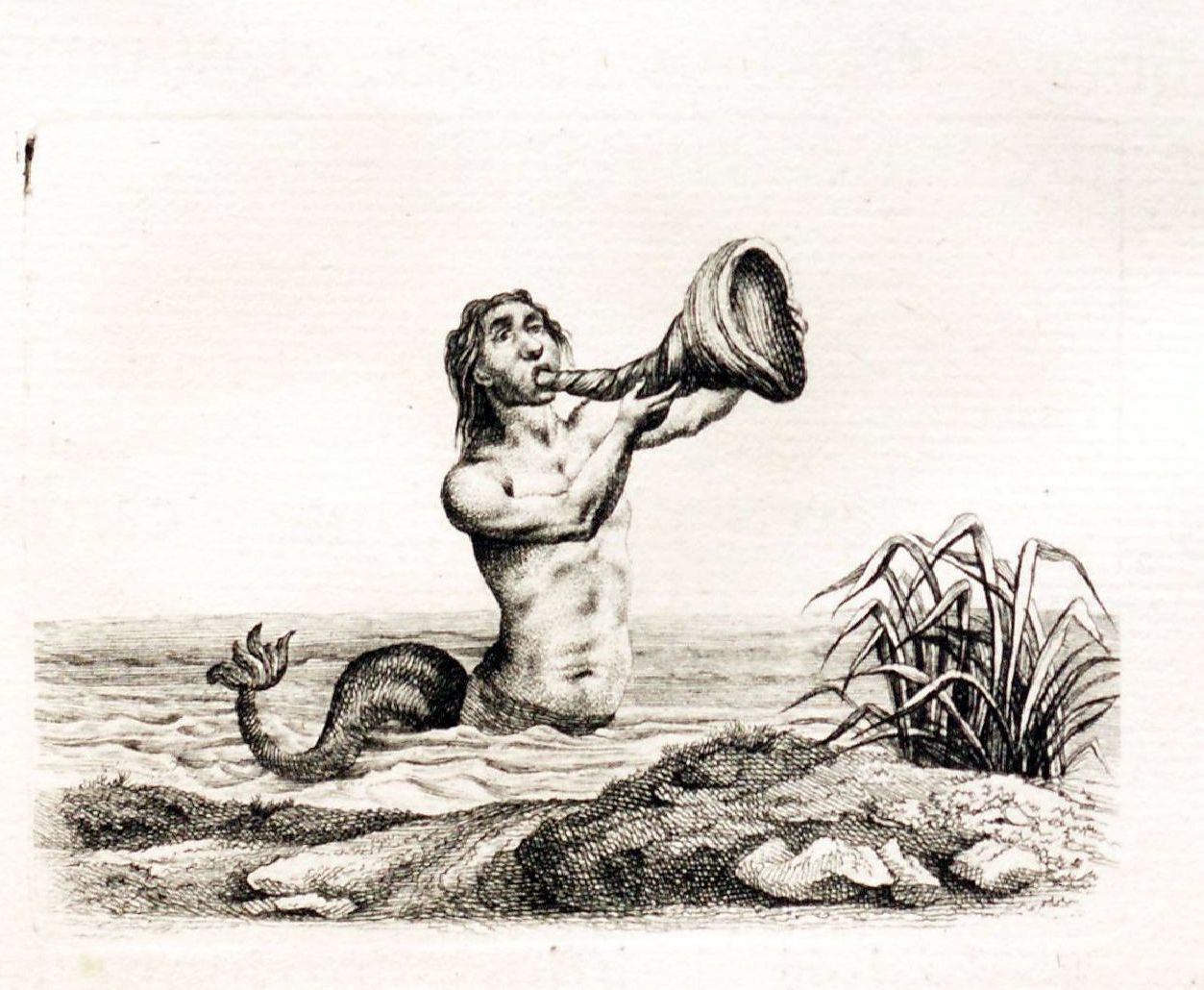
The engraved publisher’s device on the title page is an allegorical vignette, with the god Hermes (Mercury in Roman mythology) presenting a volume to Athena (Minerva), goddess of wisdom, identified by the sacred (if startled) owl peeking over her shoulder. A putto hefts a book among a stack of other folios. The publisher, whose initials appear in a medallion festooned by a laurel adorning a carved platform, was Johann Paul Krauss (1701-1776), whose firm continued in business after his death. Following the dedication page is a more elaborate piece, with Poseidon sitting on an annoyed-looking porpoise (who served as the god’s messenger), presenting a shell to a female figure (representing the Empress?), who sits enthroned between a caryatid made up of shells and a cabinet of drawers from which puttis play with shells. Behind is an open book, with a plate of shells resembling this title. Visual homages to the Habsburg rulers, current and past, are made in here and throughout the work. Poseidon appears again in one small vignette, this time cruising along on a fierce-looking porpoise. His son, Triton (looking a little rough around the edges) emerges from the waves blowing a conch shell. He was known as the Trumpeter of the Sea.

poseidon

Poseidon rides the waves. Born, Ignaz, Edler von. Testacea Musei Caesarei Vindobonensis. 1780. Contributed in BHL from Smithsonian Libraries.

illustration of triton

Illustration of Triton. Born, Ignaz, Edler von. Testacea Musei Caesarei Vindobonensis. 1780. Contributed in BHL from Smithsonian Libraries.

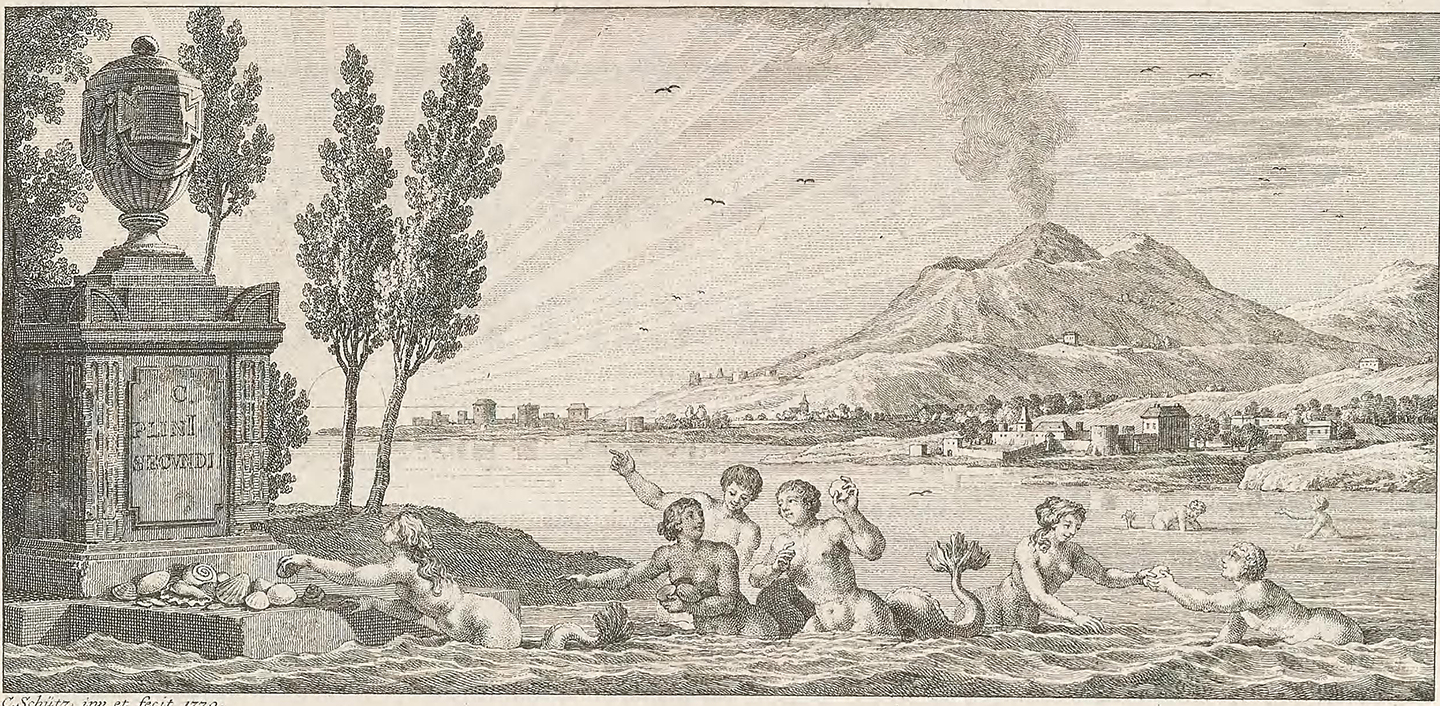
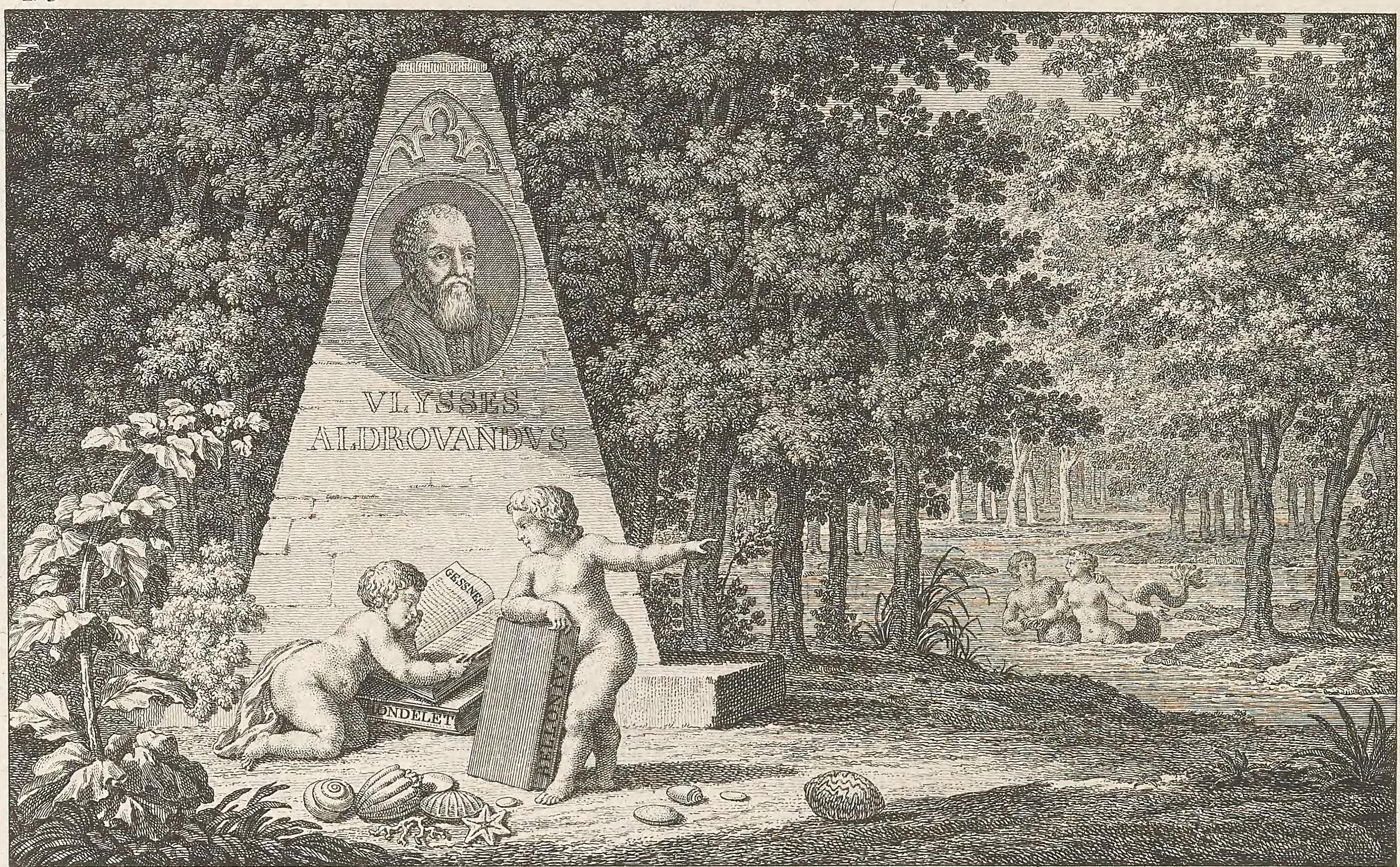
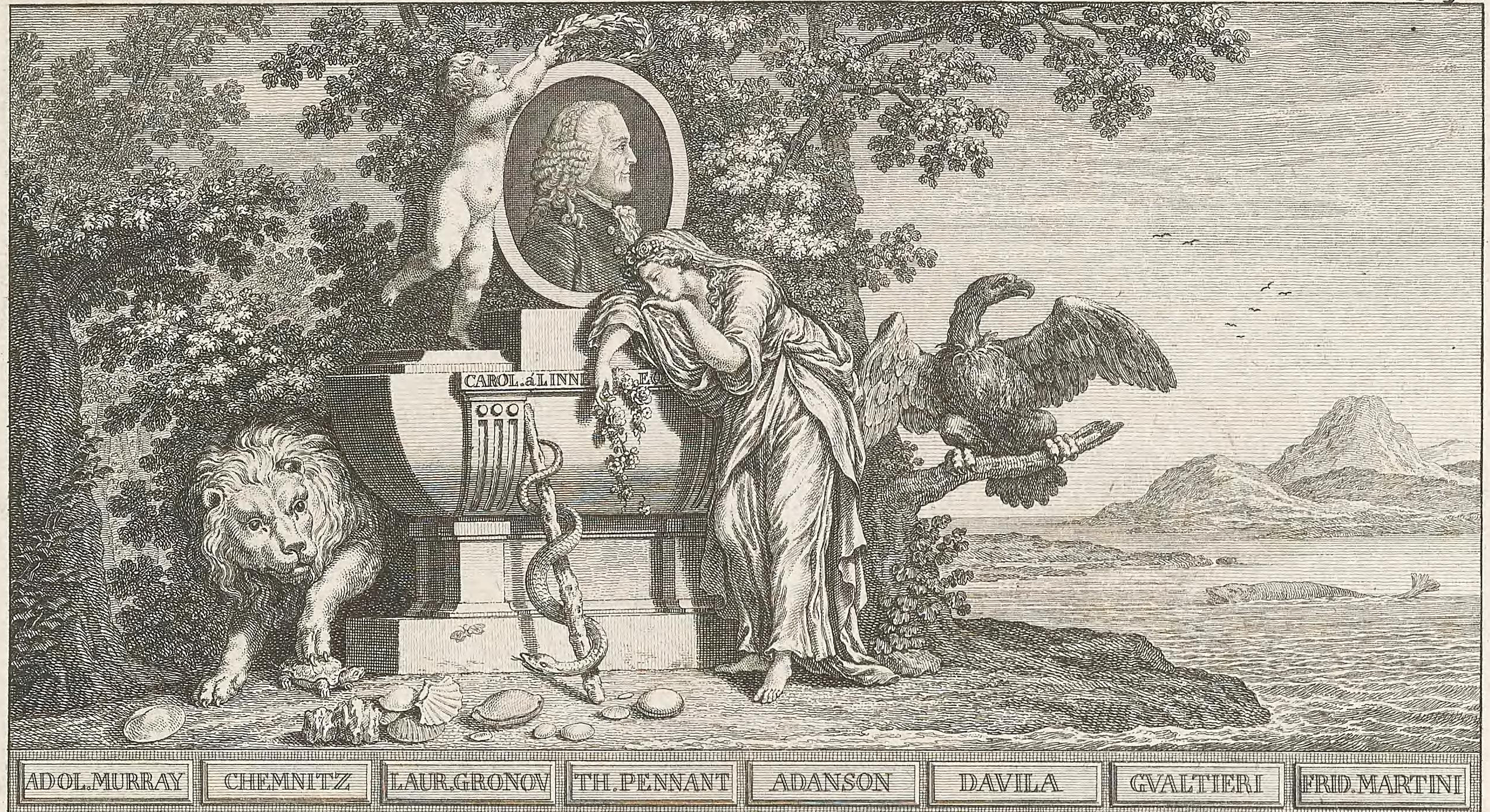
The book also honors the greats in natural history, conveyed in engraved scenes at the beginning of sections of text. The first, in a chapter of Testacea multivalvia, celebrates Pliny, author of the encyclopedic Naturalis Historia. Mermaids and mermen join the tribute to the author, laying seashells at a tomb that bears his name. In the background is the Bay of Naples, with a puffing Mount Vesuvius in the background (Pliny died in AD79 while attempting rescues by ship of those caught by the eruption of the volcano). The second order, Testacea bivalvia, opens with an homage to Ulisse Aldrovandi (1522-1605?), the author of the first important work on shells, De Reliquis Animalibus of 1606. The last, for the third order, Testacea univalvia, is devoted to Linnaeus. There are a few shells scattered about the landscape; guarding the naturalist’s tomb are an eagle and a lion, whose paw rests on an unfortunate turtle. A whale breaches in the background.

Testacea multivalvia section of text, dedicated to Pliny

Testacea multivalvia section of text, dedicated to Pliny. Born, Ignaz, Edler von. Testacea Musei Caesarei Vindobonensis. 1780. Contributed in BHL from Smithsonian Libraries.

Aldrovandi memorial

Aldrovandi memorial. Born, Ignaz, Edler von. Testacea Musei Caesarei Vindobonensis. 1780. Contributed in BHL from Smithsonian Libraries.

Linnaeus’ tribute

Linnaeus’ tribute. Born, Ignaz, Edler von. Testacea Musei Caesarei Vindobonensis. 1780. Contributed in BHL from Smithsonian Libraries.

It is curious that there hasn’t been more published on the literature of shell books. There are legions of fine, detailed bibliographies in several natural history subject areas—birds, botany and horticulture, voyages of exploration, works of Charles Darwin—but little devoted to conchology. S. Peter Dance’s Shell Collecting: an Illustrated History(London, 1966) and a rare book dealer’s catalog by Antiquariaat Junk of the Netherlands, are two of the few resources.

This lack of scholarly studies in conchology publishing is remarkable, given that shells have been collected since the dawn of humankind, either for utilitarian purposes or for their beauty. In the Age of Discovery, European voyagers found an eager market for specimens collected in the South Seas. That the Empress of Austria commanded a publication on shells is an expression and record of her interest in Imperial trade and expansion to far-flung locales as well as a contribution to the science of natural history.

illustration of shells

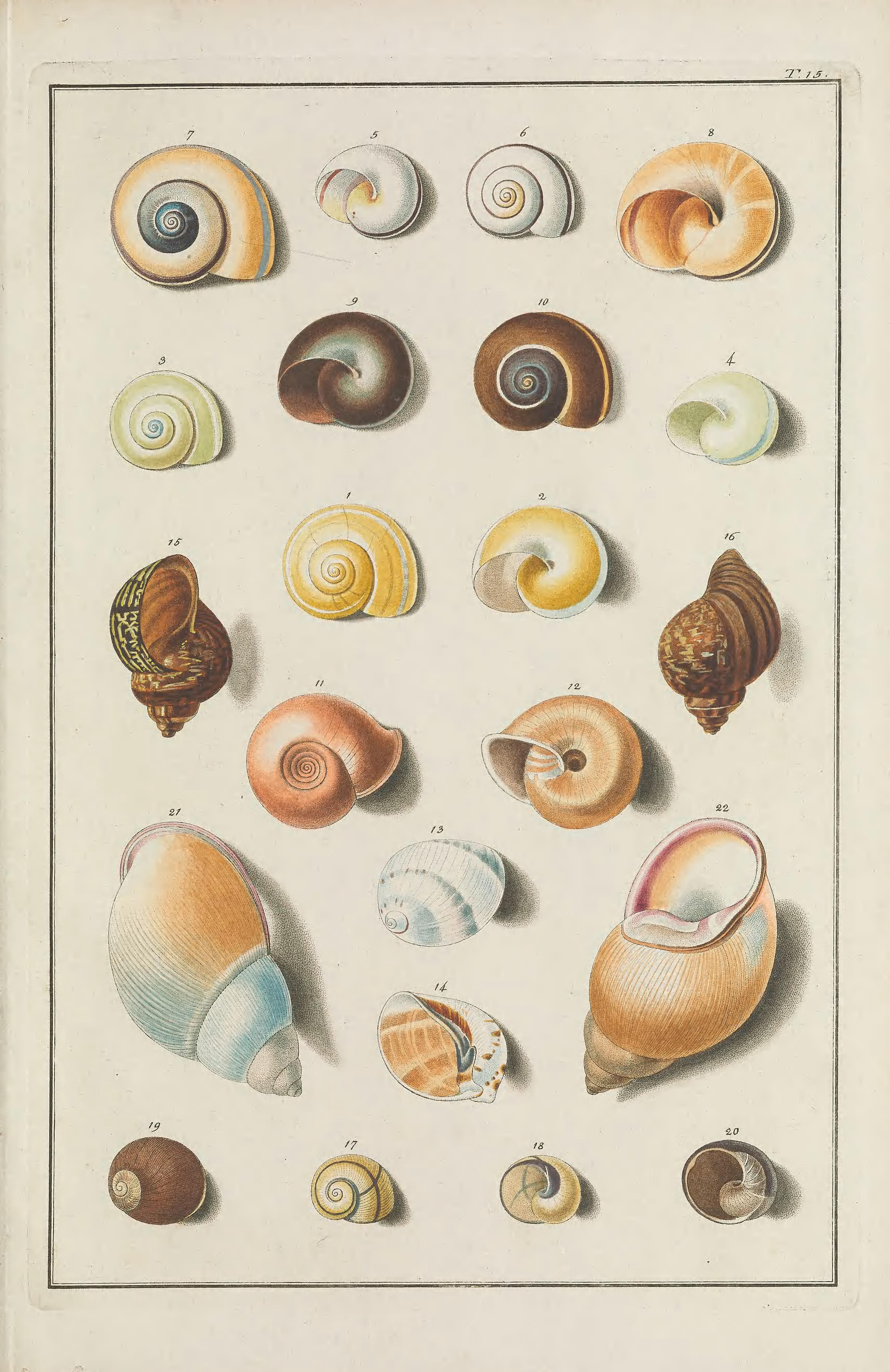
Tab. 15. Born, Ignaz, Edler von. Testacea Musei Caesarei Vindobonensis. 1780. Contributed in BHL from Smithsonian Libraries.

Past Smithsonian curators, Isaac Lea (1792-1886), conchologist and geologist, and William Healey Dall (1845-1927), a renowned malacology paleontologist, were avid book collectors. The Cullman Library holds many books from their former collections and would be an excellent place to start compiling a bibliography. Dall’s copies of Filippo Buonanni’s Recreatio Mentis, et Oculi (Rome, 1684) and Thomas Martyn’s The Universal Conchologist (London, 1784) would be highlights; Born’s Testacea Musei Caesarei Vindobonensis another, once owned both by Lea and Dall. Many of these titles have already been digitized by the Biodiversity Heritage Library, available for exploring the imaginative worlds found in books on shells.

illustration of shells

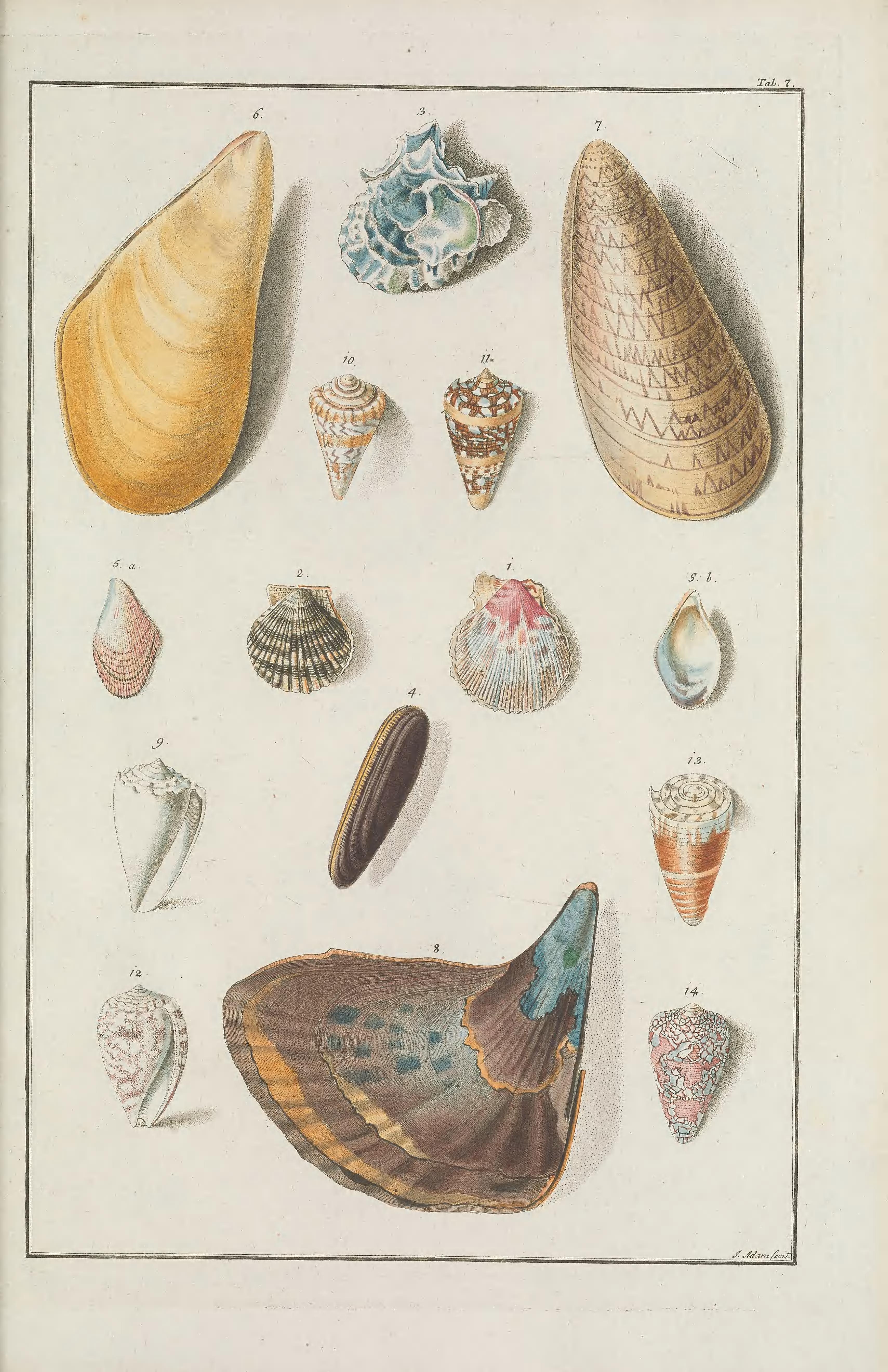
Tab. 7. Born, Ignaz, Edler von. Testacea Musei Caesarei Vindobonensis. 1780. Contributed in BHL from Smithsonian Libraries.

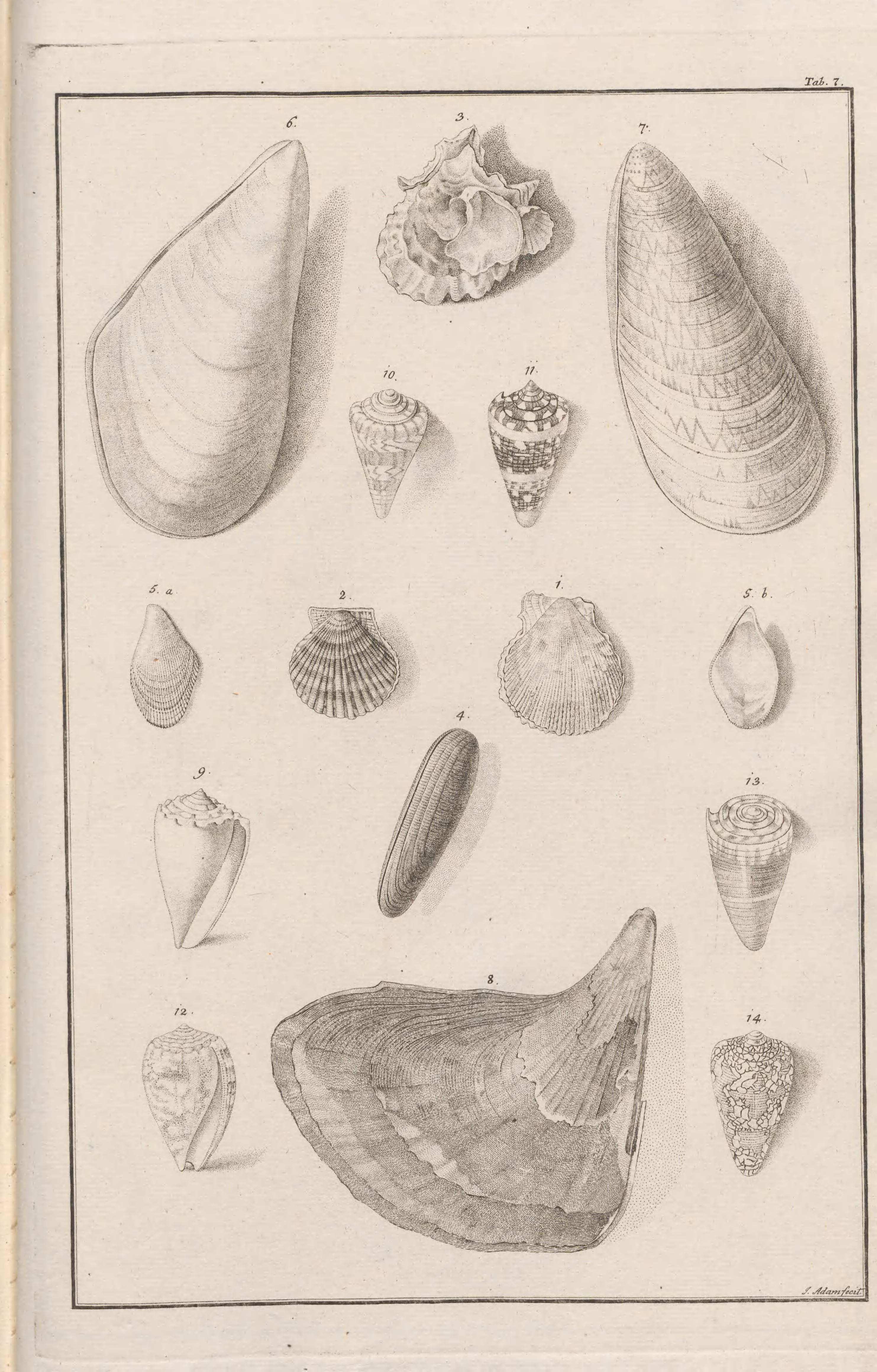
All images in this post are from the Cullman’s copy of Testacea Musei Caesarei Vindobonensis, which has been scanned for the Biodiversity Heritage Library. For comparison, below you can see a copy of the above illustration (Tab.7) from the copy held by Naturalis Biodiversity Center, also digitized in BHL, which has, unusually, uncolored plates.

illustration of shells

Tab. 7 (uncolored). Born, Ignaz, Edler von. Testacea Musei Caesarei Vindobonensis. 1780. Contributed in BHL from Naturalis Biodiversity Center.

October 18, 2018by mckenzie.87
Blog Reel, Featured Books

Myrtle: The Provenance and Meaning of a Plant

Provenance can be defined as the chain of ownership of any type of object from its creation to the present day. The Smithsonian’s Material Culture Forum recently held a lively session of presentations and discussions on this topic, with speakers from across the Institution: the National Zoo; Natural History Museum scientists and researchers in anthropology and paleobiology; archivists of World War II-era material; and curators from the National Museum of American History, the National Air & Space Museum, and the National Museum of African American History and Culture. There were many other subject specialists (such as a horticulturist) who could have participated, given time and world enough, as ownership history is a crucial matter and a commonality in the work of Smithsonian staff. Issues and questions about the history of a collection, transfer of possession, and unlawful appropriation can be applied to a living object (for example, the golden lion tamarin) as well as works of art or rare books.

The provenance of a botanical specimen was recently presented to a world-wide audience, even if they did not quite realize it. One detail of the Royal wedding of Prince Harry and Meghan Markle had commentators confidently offering up the history of the sprig of myrtle used in the bride’s bouquet. This was commonly reported to be from the plant nurtured from the flower used in the marriage ceremony of Queen Victoria and Prince Albert. Every bride in Royal nuptials after Victoria carried on the ritual. If not quite true, it made for a nice, simplified story line.

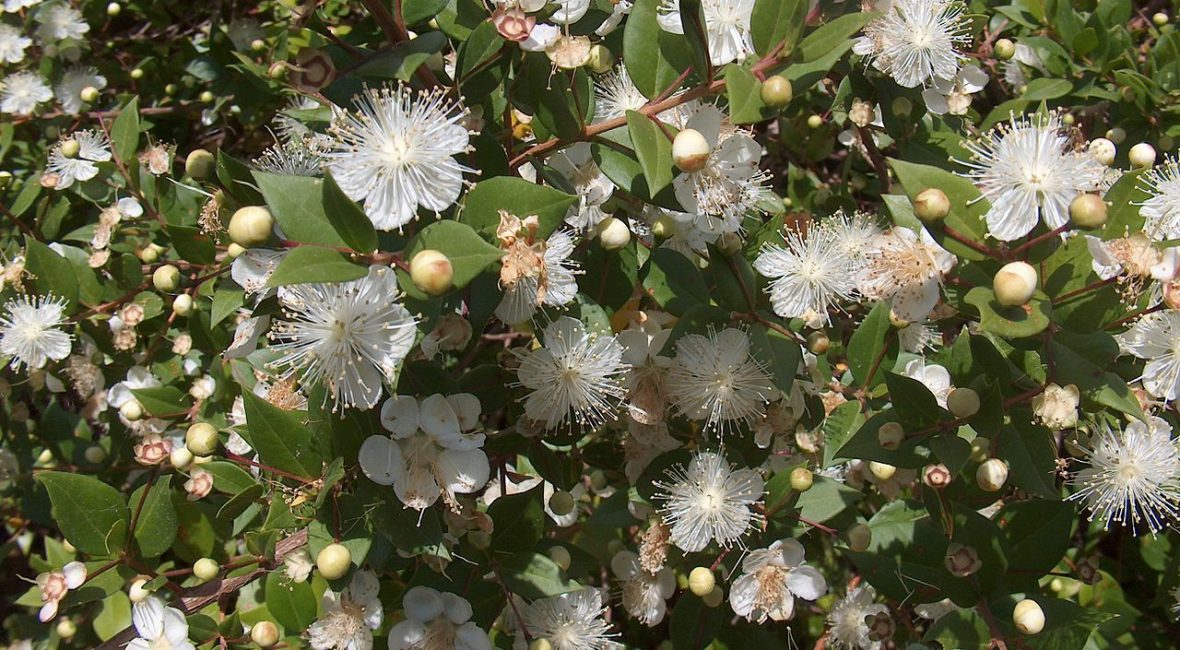
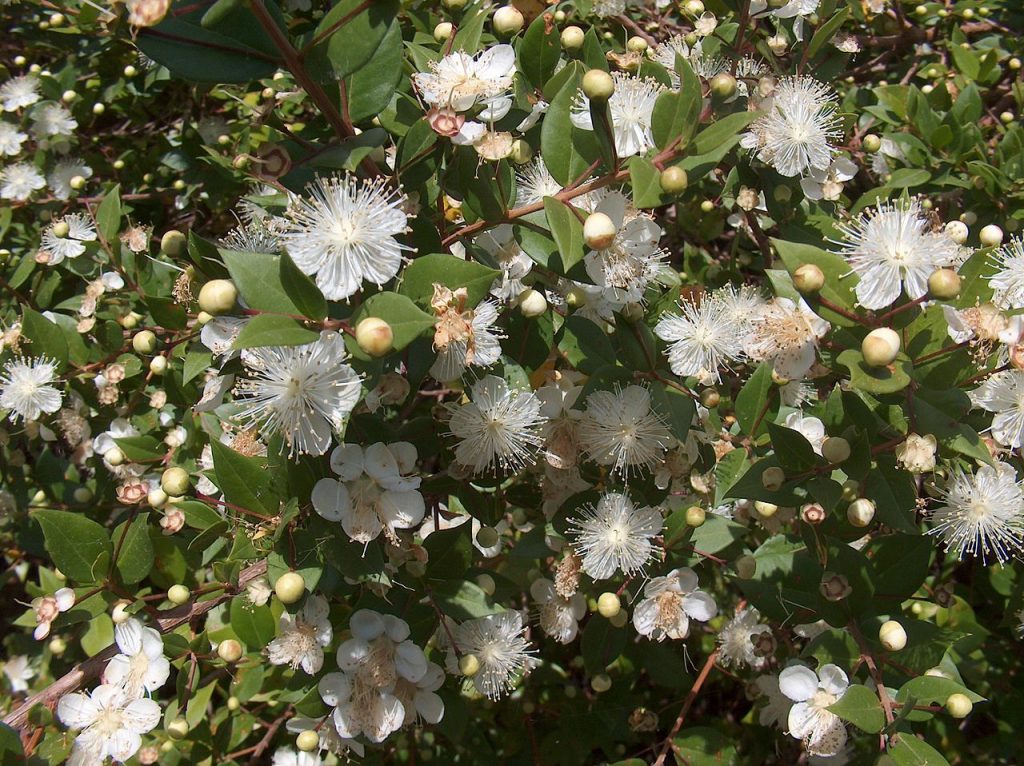
Myrtle growing in Sardinia, Villacidro (photo supplied from Wikimedia Commons)

The tidbit no doubt had some wondering just what myrtle is. In this present age, it is not a common wedding flower nor used much for culinary or medicinal purposes. Some may know myrtle as potted topiary, from its many references in poetry, or as the name of a character in literature—The Great Gatsby or Harry Potter, for instance.

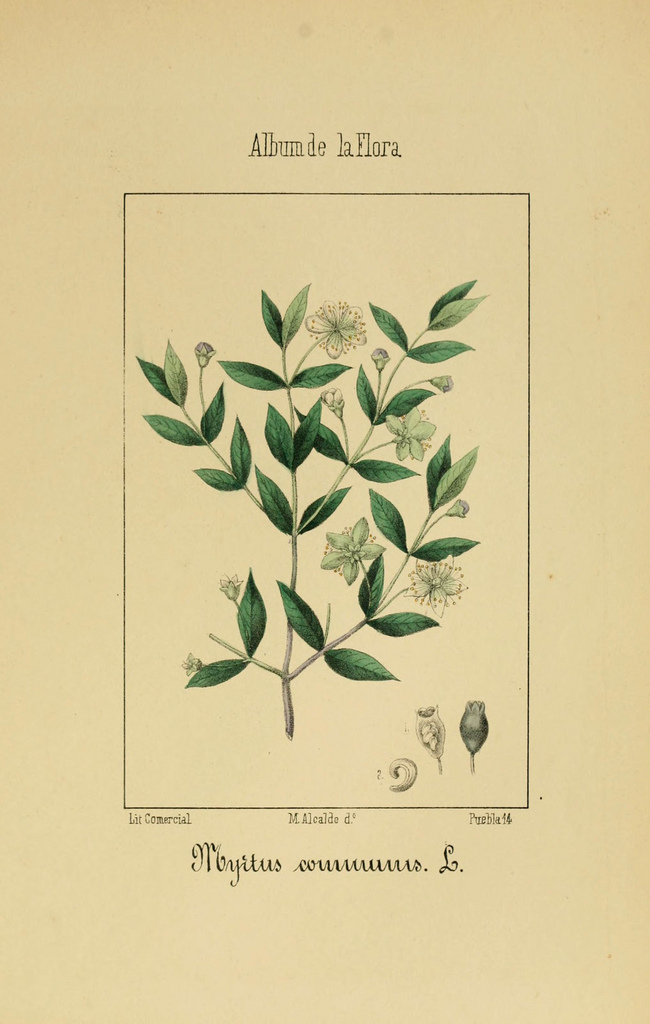
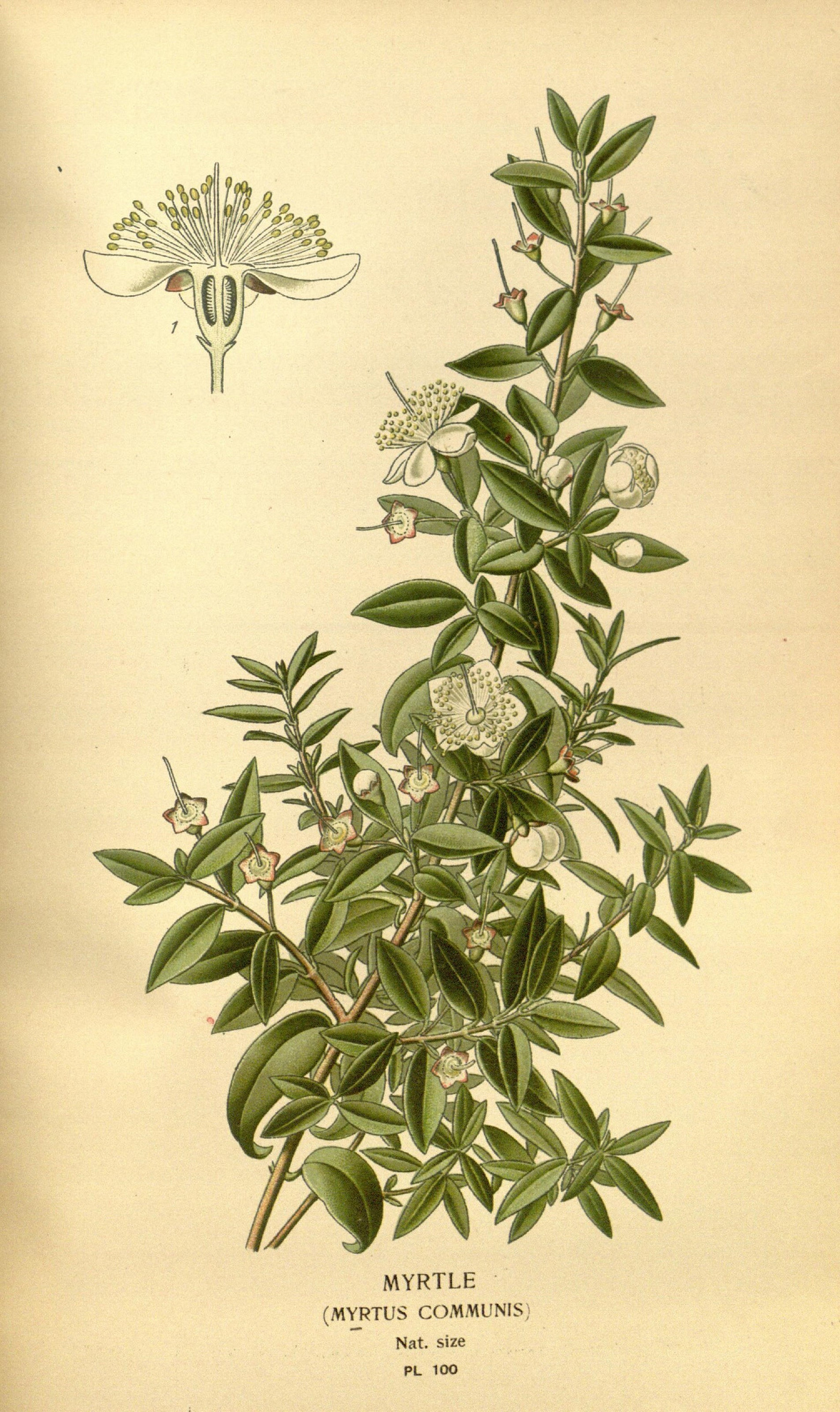
Myrtus communis (true myrtle), of the family Myrtaceae, is a fragrant, evergreen shrub with small, glossy green leaves and white, star-shaped flowers with long stamens, and, after their blooming, purple-black berries. It is native to Mediterranean Europe, North Africa, the Middle East, and Turkey. In these temperate climates it is sometimes clipped as a hedge. As a container plant of topiary, it is often trimmed to look like a fuzzy bowling ball balancing on top of a long stem or a pyramid, and is brought inside in cooler weather.

Myrtus communis (true myrtle). Album de la Flora Médico-Farmacéutica é Industrial, Indígena y Exótica (Madrid, 1862-1864), New York Botanical Garden, LuEsther T. Mertz Library copy

Queen Victoria and Prince Albert of Saxe-Coburg and Gotha were married in 1840. The only flowers adorning her during the ceremony were orange blossoms. In 1843, Princess Augusta of Cambridge (cousin to Victoria), in her wedding to Prince Frederick, Grand Duke of Mecklenburgh-Strelitz, was decorated all over with myrtle: on her dress, train, head-dress, and bouquet. The Court Circular for this ceremony reported that myrtle was “the emblematic flower of Germany.” And a nosegay of myrtle was presented to the Queen in 1845 in Gotha, Germany by her husband’s grandmother. The British Royal tradition of brides carrying myrtle was firmly established when the Queen’s eldest daughter (also named Victoria) married in 1858. The Princess Royal was decked out with so many flounces of myrtle and orange blossoms on her gown that she appeared to be a tiered wedding cake. Queen Victoria commanded that every bride of the Royal family should have myrtle planted at her Osborne House to commemorate each wedding.

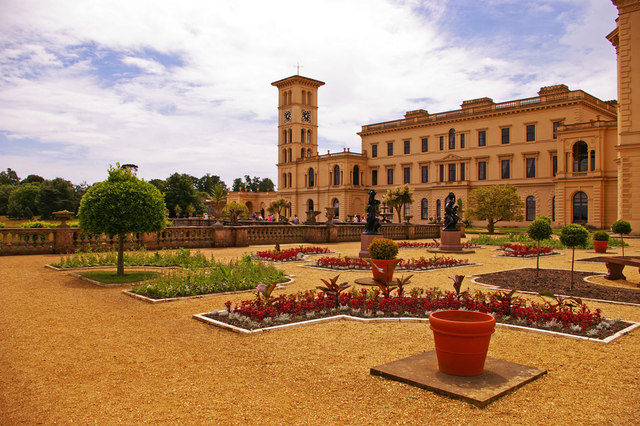
Osborne House (photo source geograph.org.uk Wikimedia Commons)

Myrtle thrived at Osborne House, Victoria and Albert’s beloved country retreat on the Isle of Wight. Long abandoned as a Royal residence (Victoria’s many offspring were not so enamored by the place) and subsequently used as a nursing home and naval college, the home and its 170-year old gardens have been recently restored by English Heritage. There is myrtle growing there today, from descendants of Victoria’s planting.

Myrtle roots easily, and there are probably others of prominent lineage growing in many of the Royal gardens, greenhouses, and orangeries. Apparently, the sprigs in the most recent Royal bouquet either came from the myrtle planted for Queen Elizabeth II in 1947 or the “original” at Osborne House. The myrtle in Camilla Parker Bowles’s wedding bouquet came from Cornwall (Charles, Prince of Wales, is the Duke of Cornwall and Camilla is now Duchess).

What was not as frequently reported about the tradition of the wedding bouquet in the lead-up to the Royal wedding in May, was the ancient history and symbolism of myrtle. Queen Victoria was well-versed in the language of flowers; the interest in floriography was at its peak in England during her reign. Blooms of various flowers were arranged in bouquets, nosegays, and tussie-mussies, a way of conveying a message, sometimes discreetly if need be. Queen Victoria’s presentation to her daughter, the Princess Royal, and, later, to her several other daughters, daughters-in-law, and granddaughters on their wedding days was not incidental. Victoria was both continuing and transforming the long traditions associated with myrtle.

There are many references to myrtle in ancient mythology and the Bible. The Greeks and Romans knew the plant as Myrtos and Myrtus and it was closely associated with the goddesses Demeter and Aphrodite. Venus is described by Ovid as emerging from the sea on her half-shell holding a sprig of myrtle. The wonderfully scented plant was considered an aphrodisiac, known to appear in wedding crowns for either the bride or the groom. In the Greco-Roman world, myrtle in laurels or crowns were sometimes presented to poets and woven into garlands of honor for athletic prizes, and was also worn to sacrifices and banquets. As opposed to laurel wreaths, myrtle signified victory from a bloodless battle. Myrtle wreaths made of gold have been excavated around the ancient world, particularly in Macedonia. Neat of appearance and amendable to clipping, myrtle was a common feature of gardens.

illustration of myrtle (Myrtus communis)

Myrtle (Myrtus communis). Favourite flowers of garden and greenhouse. (v. 2, 1897). Missouri Botanical Garden copy.

The ancient plant had a great ceremonial role in other civilizations. In Judaism, myrtle is known as Hadassah, as one of four sacred plants in the Feast of the Tabernacles, or, Sukkat, in 445 B.C. The Targum Sheni to Esther (2.7) states that “she was called Hadassah (Myrtle) because the righteous are compared to myrtle … As the myrtle spreads fragrance in the world, so did she spread good works.” Myrtle represents the community, thought of as a symbol of peace and of Eden and of marriage. In Christianity, losing its Greco-Roman association with female sexuality, myrtle came to be an emblematic symbol of the purity of the Virgin Mary.

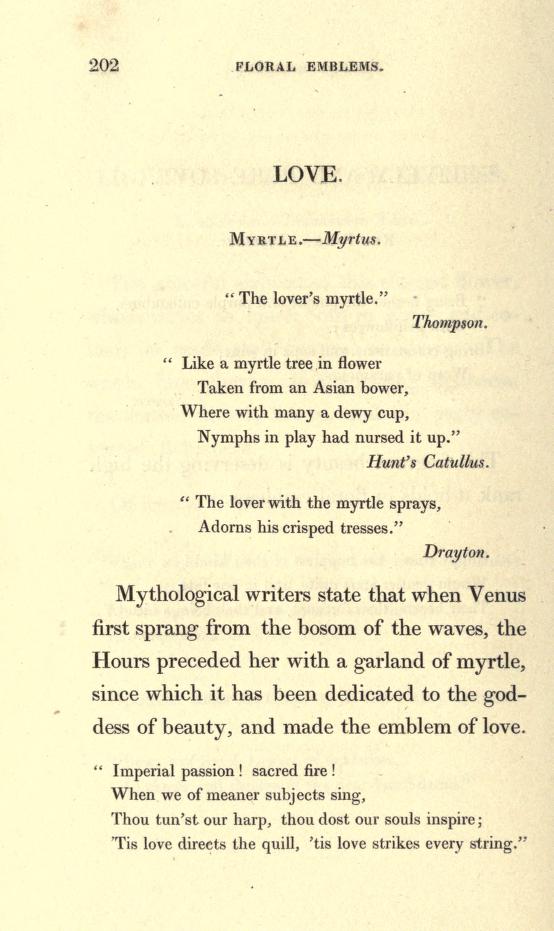
As an ornament for brides, this tradition eventually made its way to Germany, an old custom that Queen Victoria adopted as her own. Publications of her era or earlier, such as Henry Philips’ Floral Emblems (1825), Charlotte de La Tour and Frederic Shoberl’s The Language of Flowers, with Illustrative Poetry (1839), Flora Symbolica, or, the Language and Sentiment of Flowers (1866), and Richard Folkard’s Plant Lore, Legends, and Lyrics (1884), well describe the significance of myrtle. The plant has many, layered meanings—youth, virginity (before marriage), fertility, innocence, immortality, fidelity—but, above all, love.

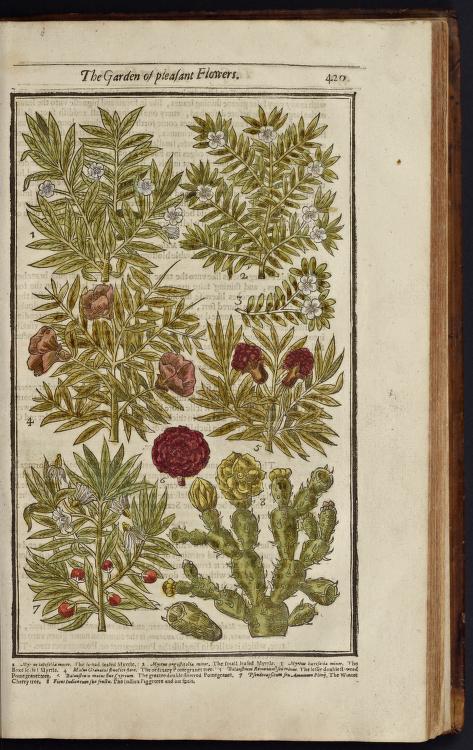
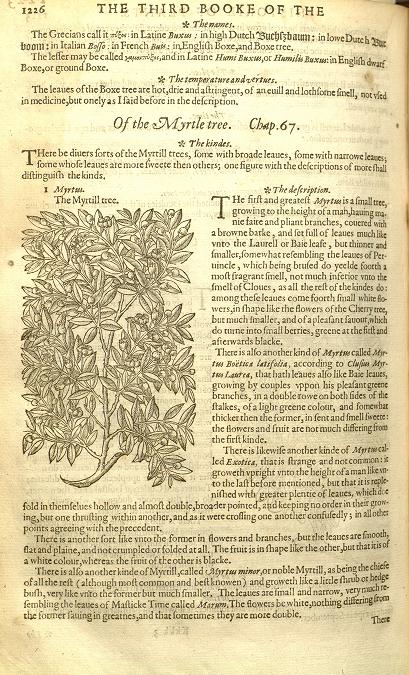
Queen Victoria did not introduce the myrtle plant to England from her visit to Germany. Tradition has Sir Walter Raleigh bringing it back from Spain in 1585, but it may well have been imported earlier. The Islamic gardens of the Iberian Peninsula featured myrtle since the Middle Ages. Unlike the Isle of Wight myrtle, the Alhambra and its Generalife Palace in Granada, Spain still have specimens that are hundreds of years old. John Gerard in his herbal of 1597 identifies six varieties grown in southern England. In the 17th and 18th centuries myrtle was a fashionable potted plant of the aristocracy, brought into the orangery when not adorning a garden. John Parkinson, in his Paradisi in Sole Paradisus Terrestris, or, A Garden of All Sorts of Pleasant Flowers wrote of “mirtle”: “Wee nourse [nourish] them with great care for the beautifull aspect, sweete sent and raritie, as delights and ornaments for a garden of pleasure, wherein nothing should be wanting that art, care and cost might produce and preserve.”

Illustration with myrtle (at top) form Parkinson’s Paradisi in Sole from the copy in the Library of the Getty Research Institute

Myrtle has thrived on a sheltered terrace of Osborne House on the Isle of Wight in the English Channel, overlooking the Solent, a seaside view that reminded Prince Albert of the Bay of Naples. Here, he was free to prove his gardening, architectural design, and landscaping abilities by supervising the building of an Italian-style palazzo and its grounds. On 17 September 1846 Victoria wrote in her journal, “… Albert supervised the transplanting of all the … myrtles … which is a tremendous job; one myrtle required 15 men to move it!” The home was their own creation and a retreat from the stiffness and oppressiveness of the court.

Victoria’s family spent July and August on the Isle of Wight when the myrtle was in bloom. The sprigs planted from successive bridal bouquets signal a continuity that many find reassuring, as attested by news reports to this day. A separate structure at Osborne House, Swiss Cottage, provided the Royal children an area where they were encouraged to learn gardening. For her granddaughter’s wedding, 18 February 1878, Victoria recorded that she “Walked … to the Swiss Cottage & planted a myrtle bush in honour of the day … grown from a sprig of myrtle in Vicky’s wedding bouquet, 20 years ago, of which I have sent a piece for Charlotte’s wedding nosegay.”

Queen Victoria was to see many more plantings of myrtle. She died at Osborne House on 22 January 1901. The provenance and significance of myrtle continues on into the 21st century, at least for British Royalty, as we saw with the bouquet that Meghan Markle carried.

John Gerard, The Herball, or, Generall Historie of Plantes (1597), from the scanned copy in the Missouri Botanical Garden, Peter H. Raven Library


Notes

Page from Henry Philips’ Floral Emblems (1825). Page from copy of the University of California Libraries

For more on bouquets and the language of flowers (link); from Smithsonian Gardens.

Connors, Catherine. “Scents and Sensibility in Plautus’ Casina,” The Classical Quarterly, volume 47, number 1 (1997), pages 305-309.

Lachs, Samuel T. “Hadassah that is Esther,” Journal for the Study of Judaism in the Persian, Hellenistic, and Roman Period, volume 10, number 2 (1979), pages 219-220.

Nelson, E. Charles. “Victorian Royal Wedding Flowers: Orange, Myrtle, and the Apotheosis of White Heather,” Garden History, volume 37, number 2 (Winter 2009), pages 231-236. The author thoroughly examined Court Circulars in The Times for mentions of wedding flowers, dispelling many, persistent myths.

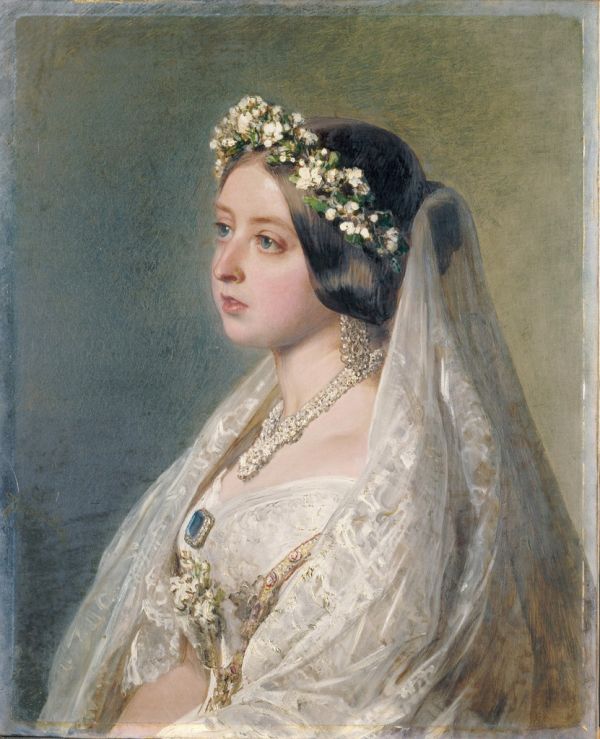
Queen Victoria, in her wedding dress, veil and what appears to be a tiara of myrtle. This charming painting by Franz Xaver Winterhalter, in the Royal Collections, was an anniversary gift to Prince Albert, seven years into their marriage.


June 14, 2018by mckenzie.87
Blog Reel, Campaigns, Featured Books, Garden Stories

“’Tis A Gift To Be Simple” But to Have a Splendid Garden Buy Shaker Seeds

View Full Size Image
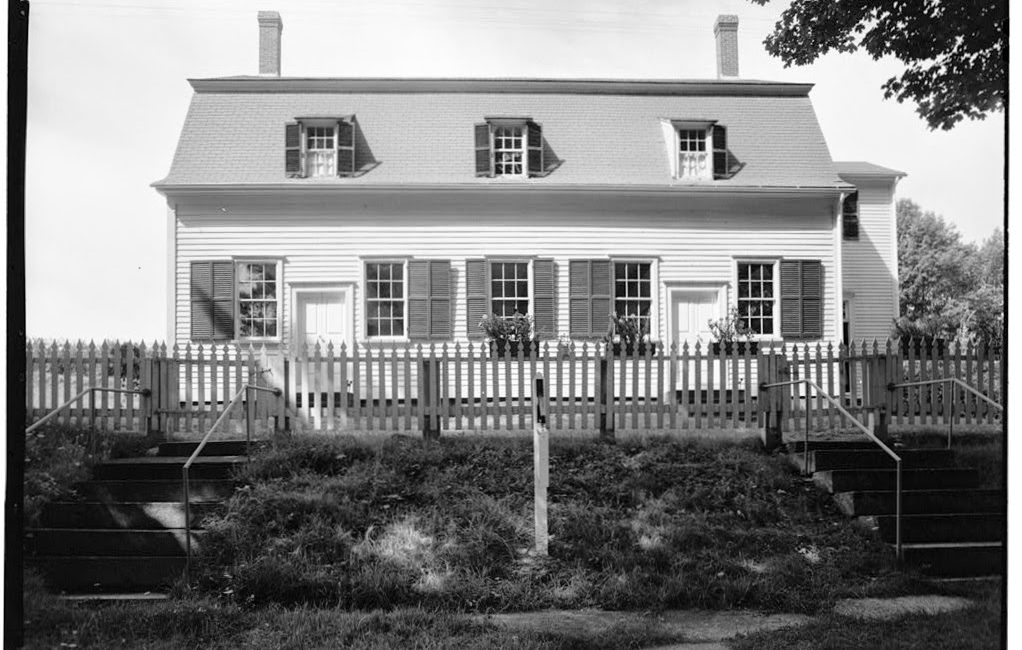
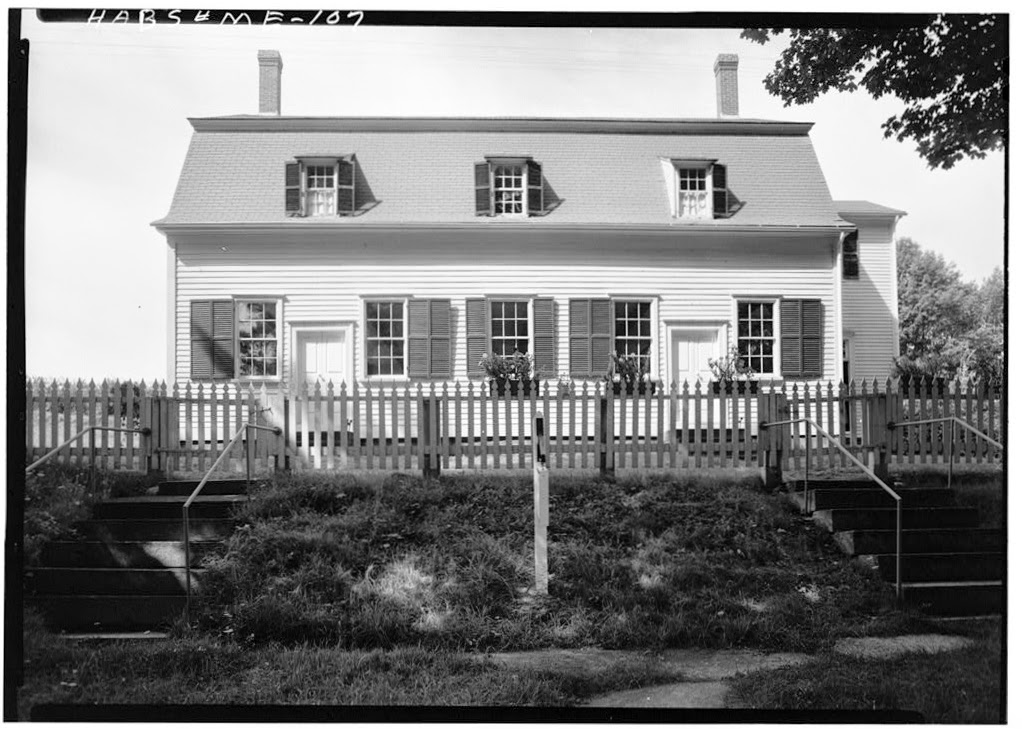
Sabbathday Lake Shaker Community Meetinghouse  (photo by Gerda Peterich for the Historic American Buildings Survey, Library of Congress Prints and Photographs Division; HAB SME,3-SAB,1—1)

The United Society of Believers in Christ’s Second Appearing, a religious sect commonly referred to as the Shakers, was founded in 18th-century England from a branch of the Quakers. Along with other newly formed devotional groups, they soon immigrated to colonial America. There they established as their economic foundation a variety of cottage industries that thrived throughout the 19th and into the early 20th centuries. Now known mostly for wonderfully simple architecture, austere but beautifully designed furniture and such functional objects as nesting oval boxes and baskets, members of the Shaker communities also once had booming garden and seed businesses. Their labor-intensive methods of working inevitably came to be overwhelmed by competition from industrial manufacturing as well as the problem of ever-shrinking membership, celibacy being one of their central tenets.

View Full Size Image
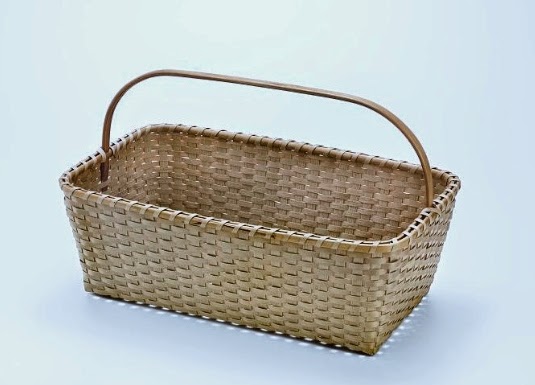
Shaker Carrier (by Sharon Dugan; Smithsonian American Art Museum, Gift of Martha G. Ware and Steven R. Cole; no. 2011.47.11)
The first fully organized Shaker community was New Lebanon in New York; by 1789, two years after its formation, the members cultivated seeds as a cash crop. This was the second earliest “company” to sell seeds in America. David Landreth & Son of Philadelphia was the first, in 1784, and that business traded back and forth with the Shakers. Another early dealer was Grant Thorburn in Philadelphia who wrote about the difficulty of obtaining seeds of good quality.
Other Shaker settlements, or “families,” soon followed in the seed-production business, including Watervvliet, New York; Hancock, Massachusetts; Enfield, Connecticut; Canterbury, New Hampshire; Alfred, Maine; and South Union, Kentucky, among several others. All were known for the excellence of their products and integrity of their business dealings. Devotion to God was expressed through their work ethic, hand labor and craftsmanship. The selling of goods was meant to raise funds only for needs the Shakers could not supply for themselves.

It is uncertain whether the Shakers were the first to put their seed products in small paper envelopes or packets, but they were the first to popularize their use. The Shaker Brothers printed millions of them on their presses, while the Sisters performed the labor of cutting, folding and pasting the papers. While believing in partnership in work and equality of the sexes, occupations tended to fall along traditional gender lines. The Brothers tilled the fields while the Sisters picked, sorted and packaged the seeds and herbs.

View Full Size Image
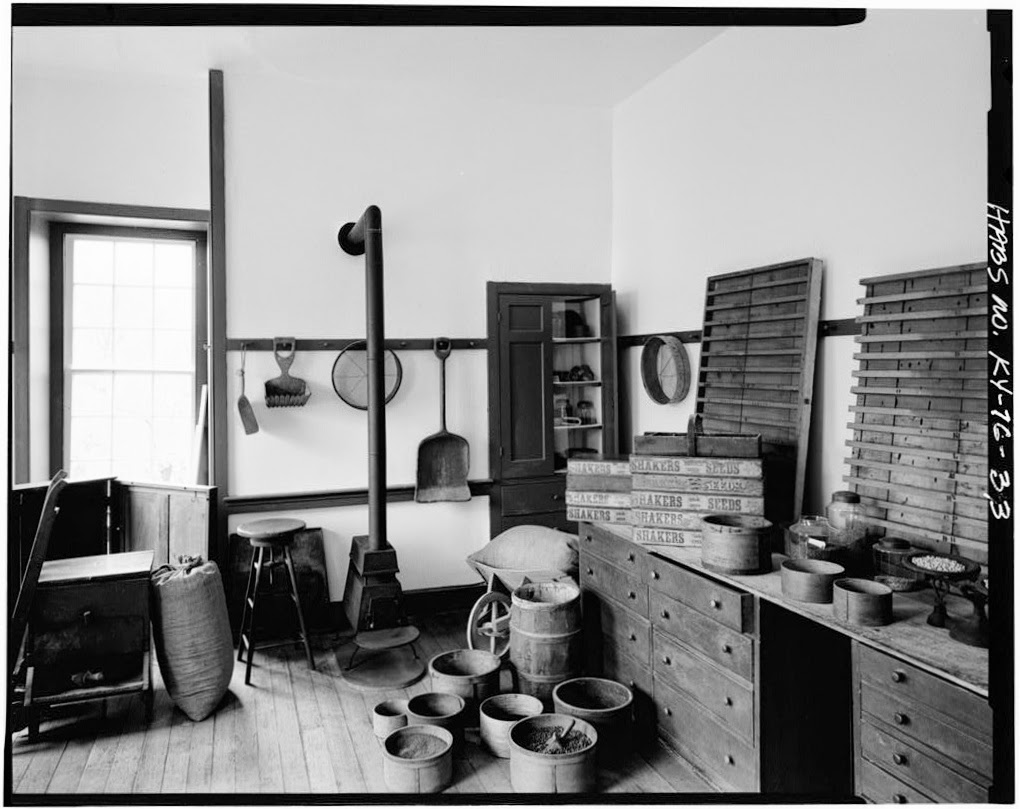
Seed Room, Shakertown, Kentucky (LC Prints & Photographs Division; HABS,84-SHAKT,2-33)

The Shakers were also early adopters of incorporating gardening manuals in their catalogs. Charles Crossman wrote ones in 1835 and 1836 for Mount Lebanon, Pittsfield and Watervilet, directing the wholesaler or the individual purchaser how best to plant the offered seeds. Instructions for storing and cooking bounties from the gardens were also sometimes given. Vegetables dominated the products but herbs and flowers as well as grass also appear in the lists. Crossman later left the Shakers and established his own company in Rochester, New York, which was just beginning to become the thriving horticultural center in the country.

View Full Size Image
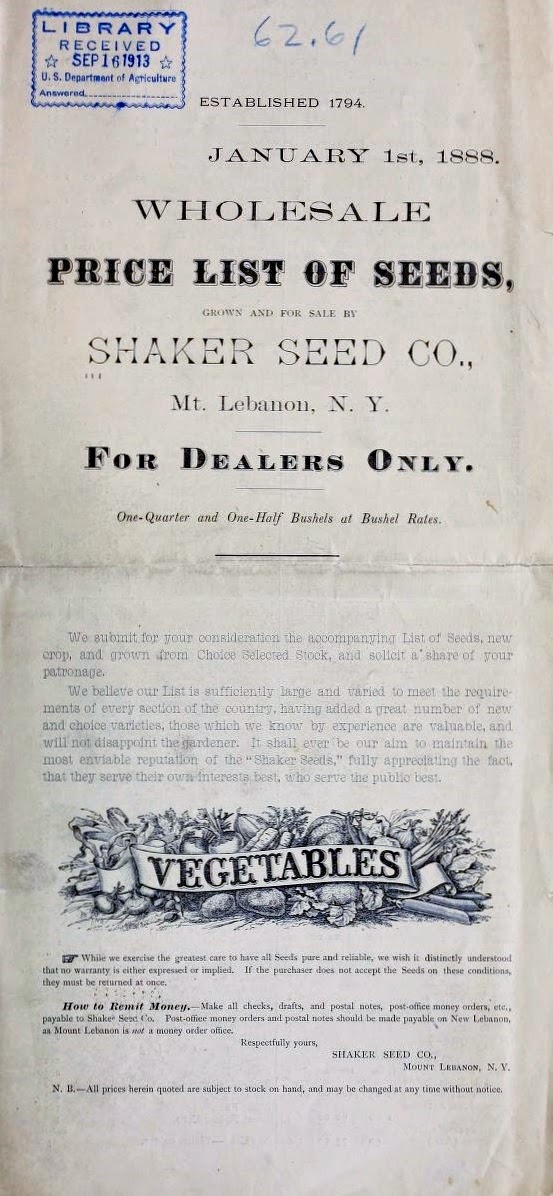
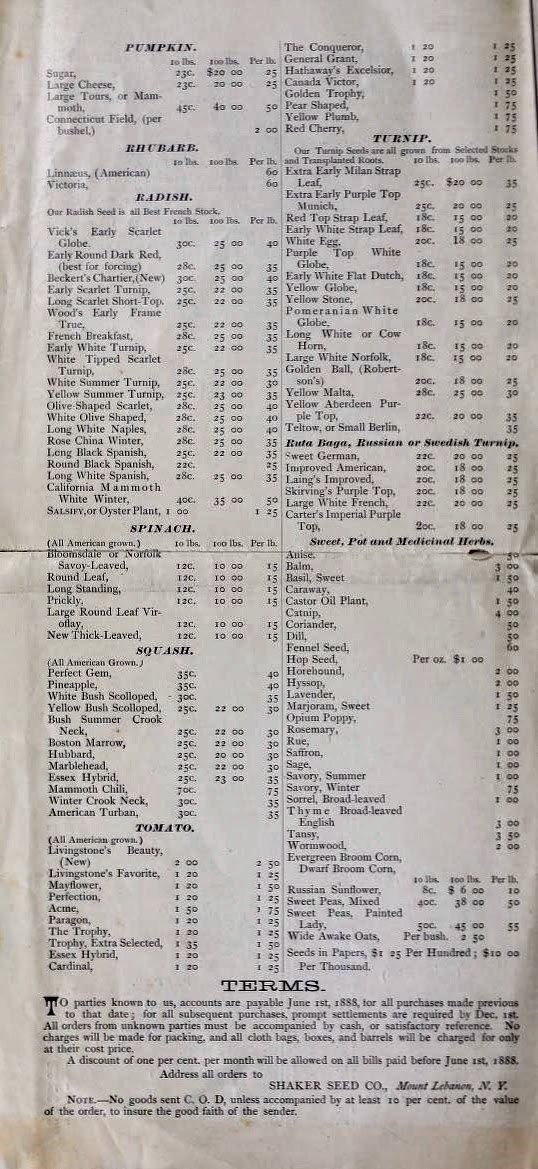
Wholesale price list of seeds by the Shaker Seed Company. New Lebanon, New York, 1888 (Henry G. Gilbert Nursery and Seed Trade Catalog Collection, National Agriculture Library; image from the Biodiversity Heritage Library)

As the Shaker seed business in the United States grew from 1840, printing firms outside of the communities were employed to keep up with demand. Correspondingly, advertisements and the design of the packets, begun first plain with simple chunky block type, were transformed to include the use of color papers and borders and eventually vivid chromolithography.

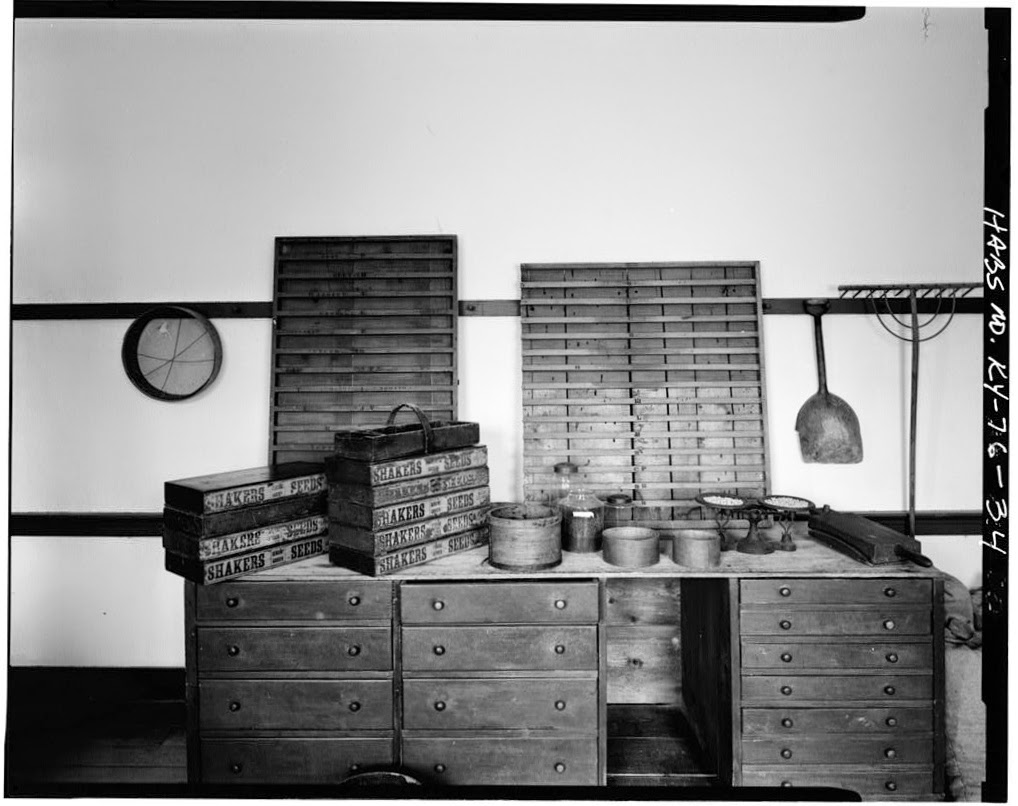
Following the Civil War, increased competition resulted in the Shakers’ using the word “genuine” in their advertising, as products from the communities were considered to be of the highest quality, their best selling point. They also used various and effective marketing techniques, including seed boxes meant to be displayed on the counters of country stores. The containers had compartments for assorted Shaker vegetable and flower seed packages, with a hinged lid to be propped open to display a broadside detailing the contents within, and a chromolithographic image of a bountiful harvest, promising the purchaser a similar reward.

View Full Size Image
Seed Room with display containers, Shaker Centre Family Dwelling House, Shakertown, Mercer County, Kentucky (Library of Congress Prints and Photographs Division; HABS KY,84-SHAKT,2—34)

Other surviving ephemera record the once-thriving industry of seed, herbal, food, and medicinal products from the Shakers. Along with seed catalogs and the packets, mailing tags and envelopes, broadsides, receipts, invoices, billheads, and labels, give testament to their industry. Product labels include currant, grape, wild cherry, and blackberry wines. Far from being abstinent (except in the matter of sex), the Shakers made at least fourteen varieties of wine as well as distilled spirits. The religious group in their various communities was also at the forefront of selling medicinal herbs in the United States.

View Full Size Image
Shaker Digestive Cordial (A.J. White, New York, New York; National Museum of American History, no. 246707)

The changing world and market forces caused the Shaker seed industry to gradually peter out at the beginning of the 20th century. Increasing industrialization, growth of urban centers with ease of shipping and mailing to formally isolated villages, and overwhelming production from big companies, particularly in Philadelphia and Rochester, eliminated the communities’ wagon and sleigh seed routes for trading. With their firm spiritual beliefs and practices, the Shakers were not very competitive against aggressive business tactics.

View Full Size Image
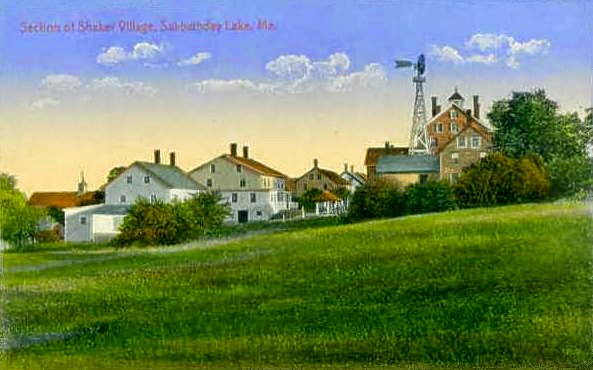
Postcard of the Shaker Village of Sabbathday Lake, Maine (ca. 1920; Wikimedia Commons)

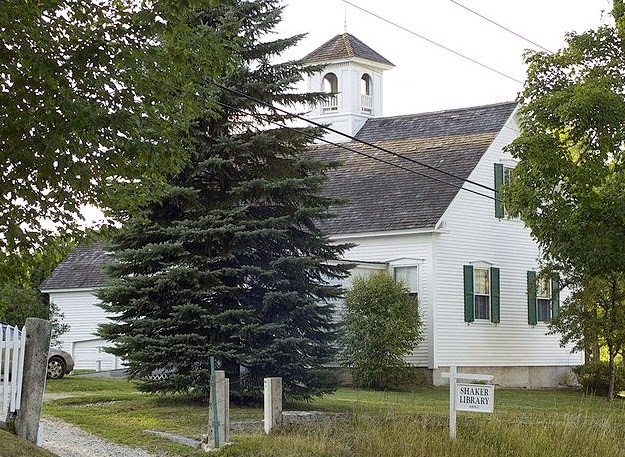
At their peak in the mid-19th century there were about 6,000 “Shaking Quakers” so named because of their ecstatic behavior during worship services. Today, Sabbathday Lake Shaker Community, founded in 1783 in Maine, is the sole active survivor of the religion. A tree farm, an apple orchard and vegetable gardens are maintained, and hand-set printing is still practiced. The library there holds ephemera such as account records, recipes, catalogs and 1,380 labels printed by Shakers for their own products. They are living testament to the Shakers’ influence on the American seed and nursery industry and their permanent place in horticultural history—the early development of the new business, innovative techniques in marketing and education as well as the propagation and introduction of new varieties. The Sabbathday Shakers still sell herbs, and their catalog is online.

View Full Size Image
The Library of Sabbathday Village in New Gloucester, Maine (Wikimedia Commons, August 2010)
View Full Size Image
Wholesale price list of seeds by the Shaker Seed Company, Mount Lebanon, New York, 1888 (Henry G. Gilbert Nursery and Seed Trade Catalog Collection, National Agriculture Library)

More Garden Stories Fun

  • Follow our blog and #BHLinbloom on Twitter and Facebook (or go directly to BHL’s Twitter and Facebook) this week as we explore the fascinating world of gardening, from its history to plant factoids and practical gardening tips.

  • Browse over 14,000 seed and nursery catalogs in our collection.
  • Browse over 2,500 seed and nursery catalog images in our Flickr collection.
  • Explore select seed catalog art, and stunning bookmarks and postcards developed by Cornell Library, on Pinterest.
  • See historic gardening come to life on the Smithsonian Libraries’ Tumblr.
  • Purchase your very own Garden Stories T-Shirt through T-Fund. All proceeds will go to help us digitize more pages for BHL. Our goal is to sell enough shirts to digitized 5,000 pages. Can you help us get there?
  • Help us improve access to seed and nursery catalogs by transcribing some today as part of our the Institute of Museum and Library Services (IMLS)-funded Purposeful Gaming project!
  • Find great online gardening resources, tips, and help on the BHL Gardening Resources Page.
March 27, 2015by mckenzie.87
Blog Reel, Campaigns, Featured Books, Garden Stories

Revolutionizing the Garden Industry with Art: Part One

The Seed Industry Blossoms in America

Seventeenth and eighteenth-century America had established nurseries—George Fenwick’s in Connecticut in the 1640s, John Bartram’s in Philadelphia (approximately 1729) and Robert Prince’s on Long Island (1737)—that traded plants to and from Europe. The owners were accomplished botanists and plant collectors. They and their successors played a great role in horticulture and floriculture introductions and trends during the colonial period and even during the War of Independence, choosing, making available and distributing specimens and seeds for cultivation.
View Full Size Image
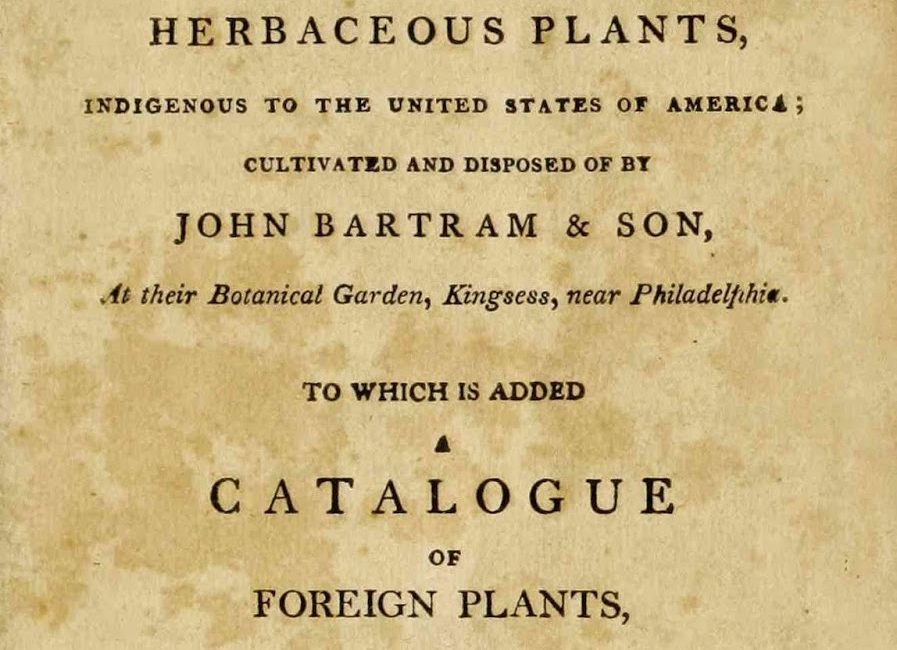
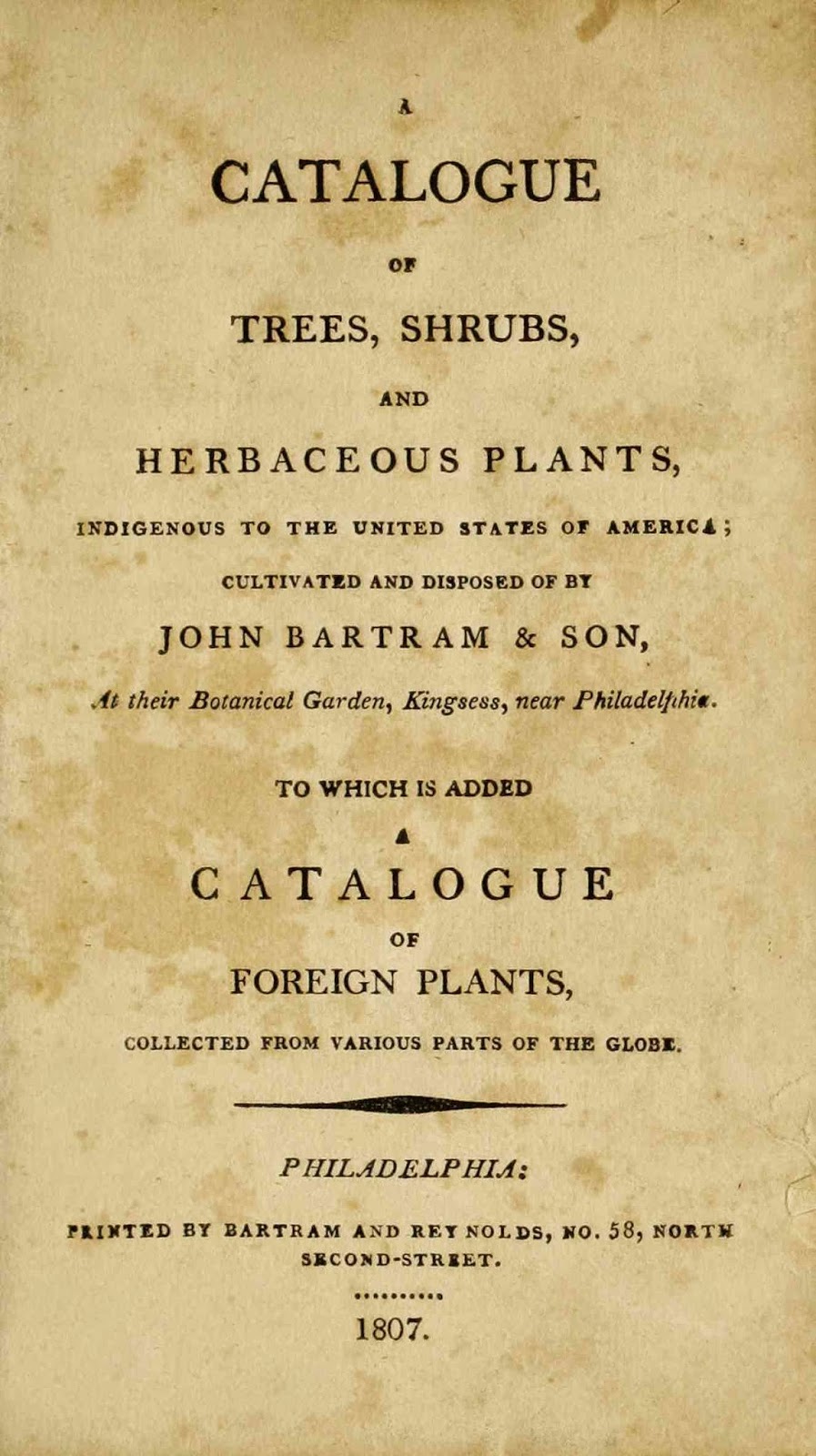
John Bartram and Son. A catalogue of trees, shrubs and herbaceous plants, indigenous to the United States of America. 1807. http://biodiversitylibrary.org/page/44008602.

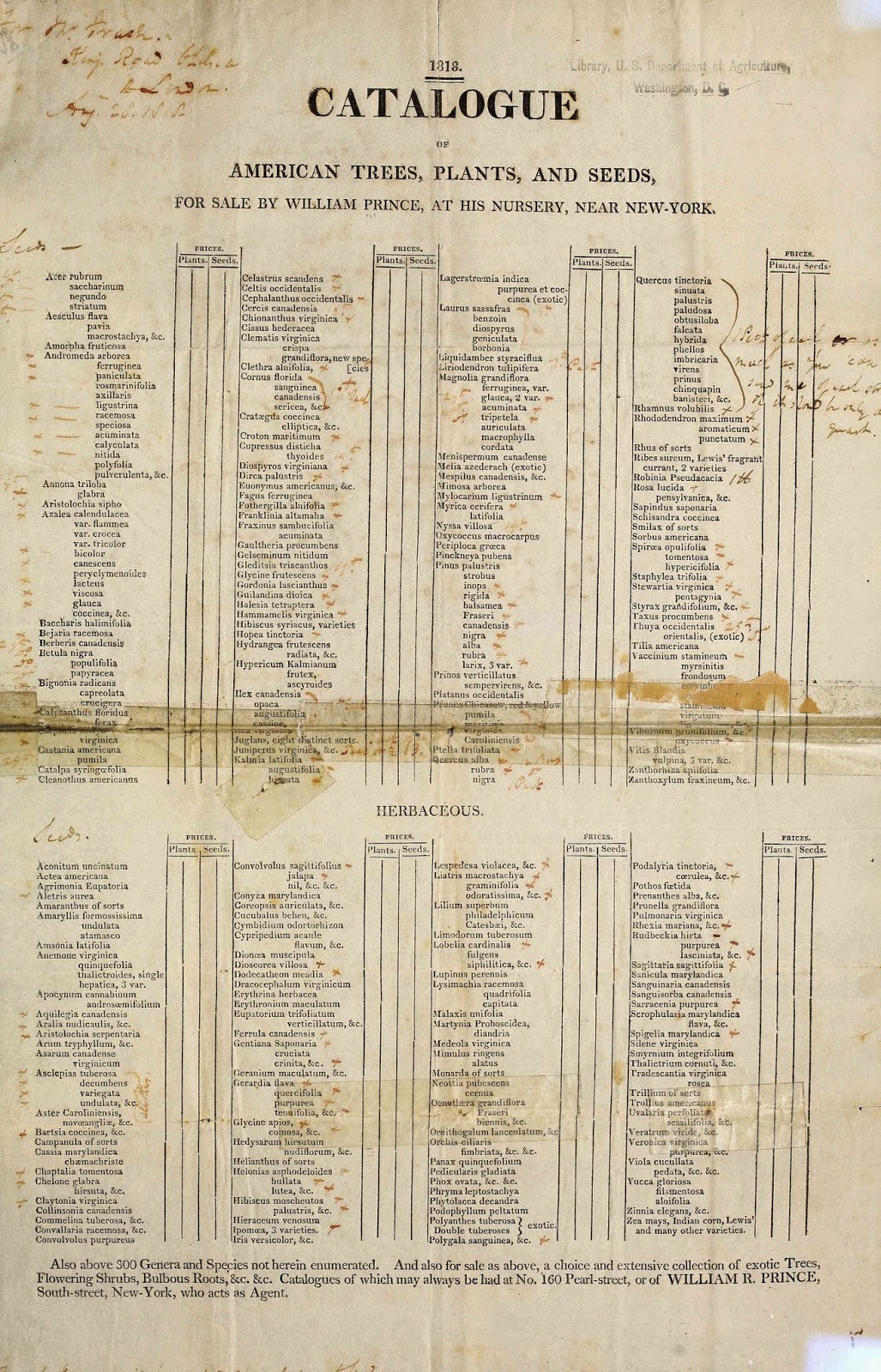
George Washington ordered from Bartram’s 1784 catalog American Trees, Shrubs and Herbacious Plants for his gardens at Mount Vernon. Prince’s Nursery at Flushing Landing was spared by the British in the midst of battles of the Revolutionary War, and President Washington visited in 1790. The early nursery catalogs usually lacked illustrations and prices, indicating a knowledgeable clientele able to afford the wares.

View Full Size Image
Catalogue of American trees, plants, and seeds, for sale by William Prince, at his nursery, near New-York. 1818. http://biodiversitylibrary.org/page/42745739.

During the nineteenth century in America gardens for pleasure, influenced by various botanical, industrial and cultural forces, became accessible to a wider audience, not just the wealthy. Gardening increasingly was not only a means for providing food and medicine but a way to enrich one’s life, to enjoy nature and contribute to the public good. Along with the creation of urban parks as the country became more industrialized, commercial nurseries also proliferated. There was a growing middle-class market for their goods of fruit-trees, shrubs, vegetables, flowers, and seeds. And where there were nursery stocks, there were illustrated advertisements to entice purchasers.

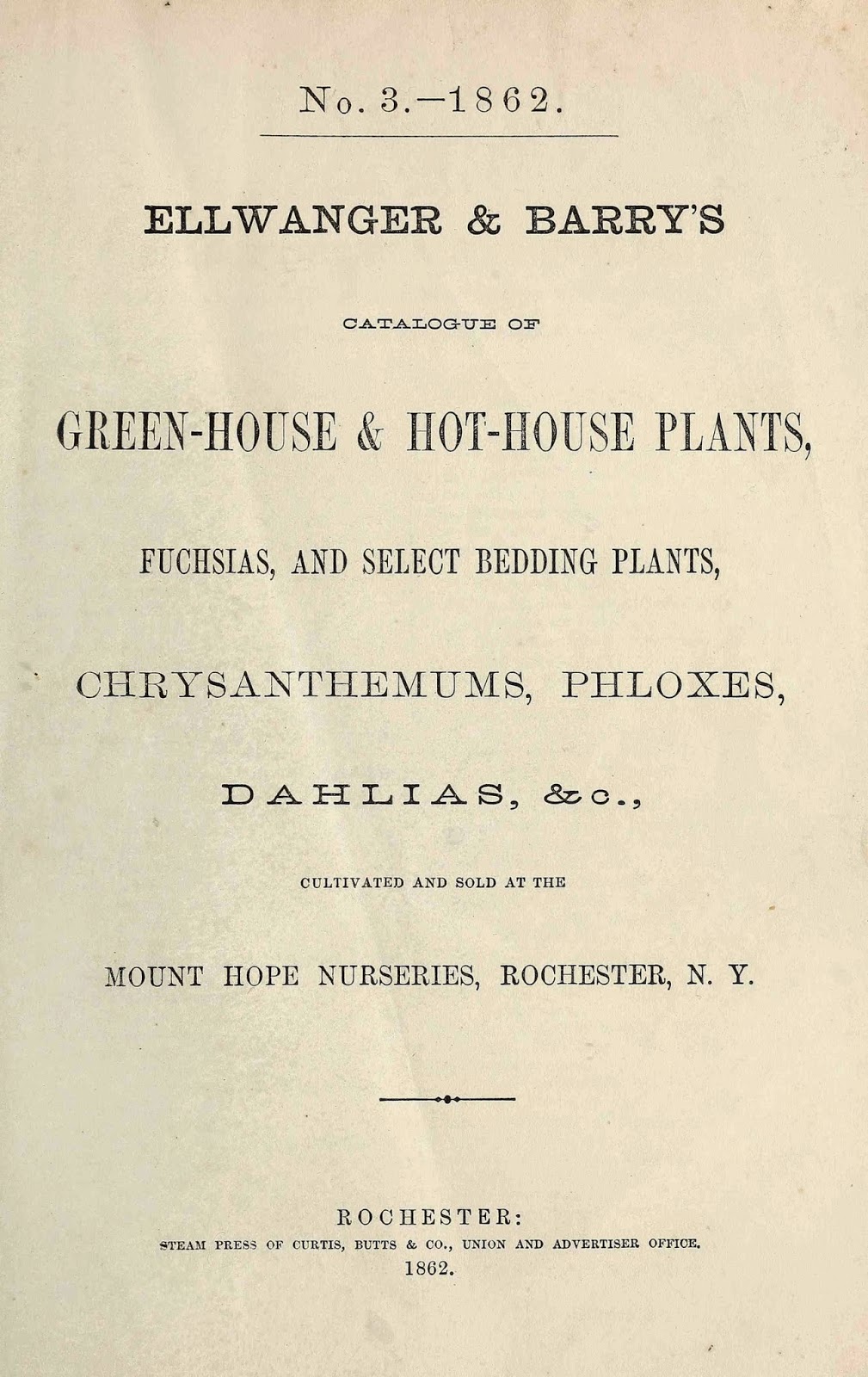
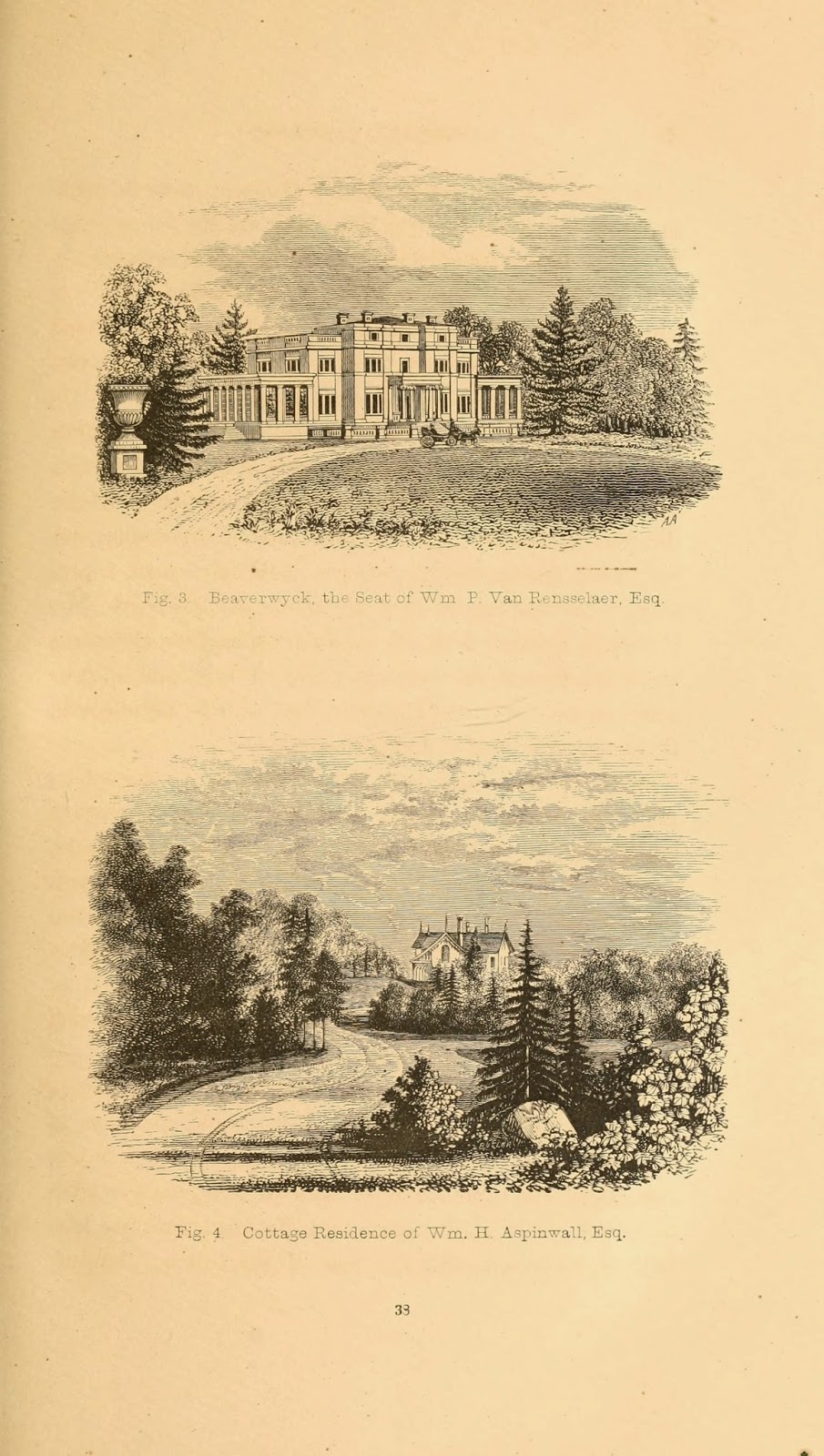
This was the time when Rochester, New York, became known as “The Flower City.” The temperate climate of Lake Ontario, the rich Genesee Valley (particularly for fruit trees) and the ease of transport, abetted with the creation of the Erie Canal in 1825 and the proliferation of railroads, all contributed to the region becoming an entrepreneurial center for horticulture. First, in 1830 William A. Reynolds and Michael Bateham, started their Rochester Seed Store. The nursery part of that business soon evolved into the Ellwanger and Barry Nursery Company. The two immigrants, George Ellwanger and Patrick Barry, issued the first catalog of the Mount Hope Botanic and Pomological Gardens in 1843. By 1871 they were the largest horticultural firm in the country with over 650 acres. Stock was shipped across the country and to Europe, Asia and Australia.

View Full Size Image
Ellwanger and Barry’s catalogue of green-house and; hot-house plants, fuchsias, and select bedding plants, chrysanthemums, dahlias. 1862. http://biodiversitylibrary.org/page/42744851.

The nursery man Patrick Barry’s horticultural treatises and inclusion of information in his own gardening catalogs helped educate his middle-class clientele in how to design and plant their own home landscapes. Barry’s writings led to involvement with the serial publications, the Genesee Farmer from 1844 and, following the early death of the enormously influential Andrew Jackson Downing, The Horticulturist in 1853. Barry also published The Fruit Garden in 1851 and for the American Pomological Society, he wrote in 1862 A Catalogue of Fruits (1868 revised edition in BHL).

View Full Size Image
Downing, A. J. A treatise on the theory and practice of landscape gardening (1844). http://biodiversitylibrary.org/page/16492842.

Art Transforms the Seed Industry

Concurrently, before mid-century, illustrations—lithographs, engravings, woodcuts—were beginning to be put to use in nursery and seed catalogs. These printing techniques could not fully meet the demand of the rapidly expanding business as coloring by hand was time-consuming and expensive.

View Full Size Image
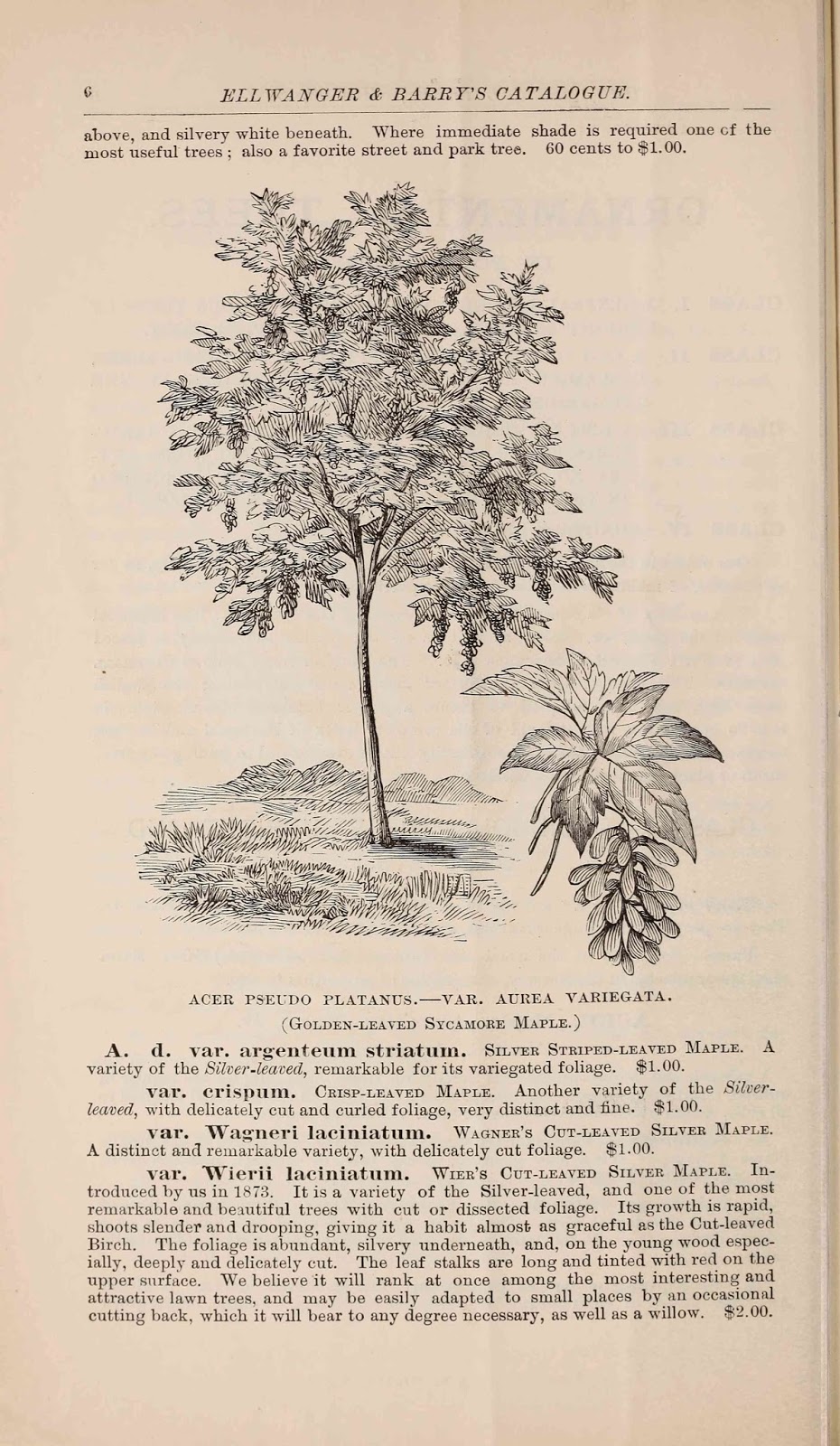
Ellwanger and Barry. Descriptive catalogue of ornamental trees, shrubs, roses, flowering plants. 1875. http://biodiversitylibrary.org/page/42767492.

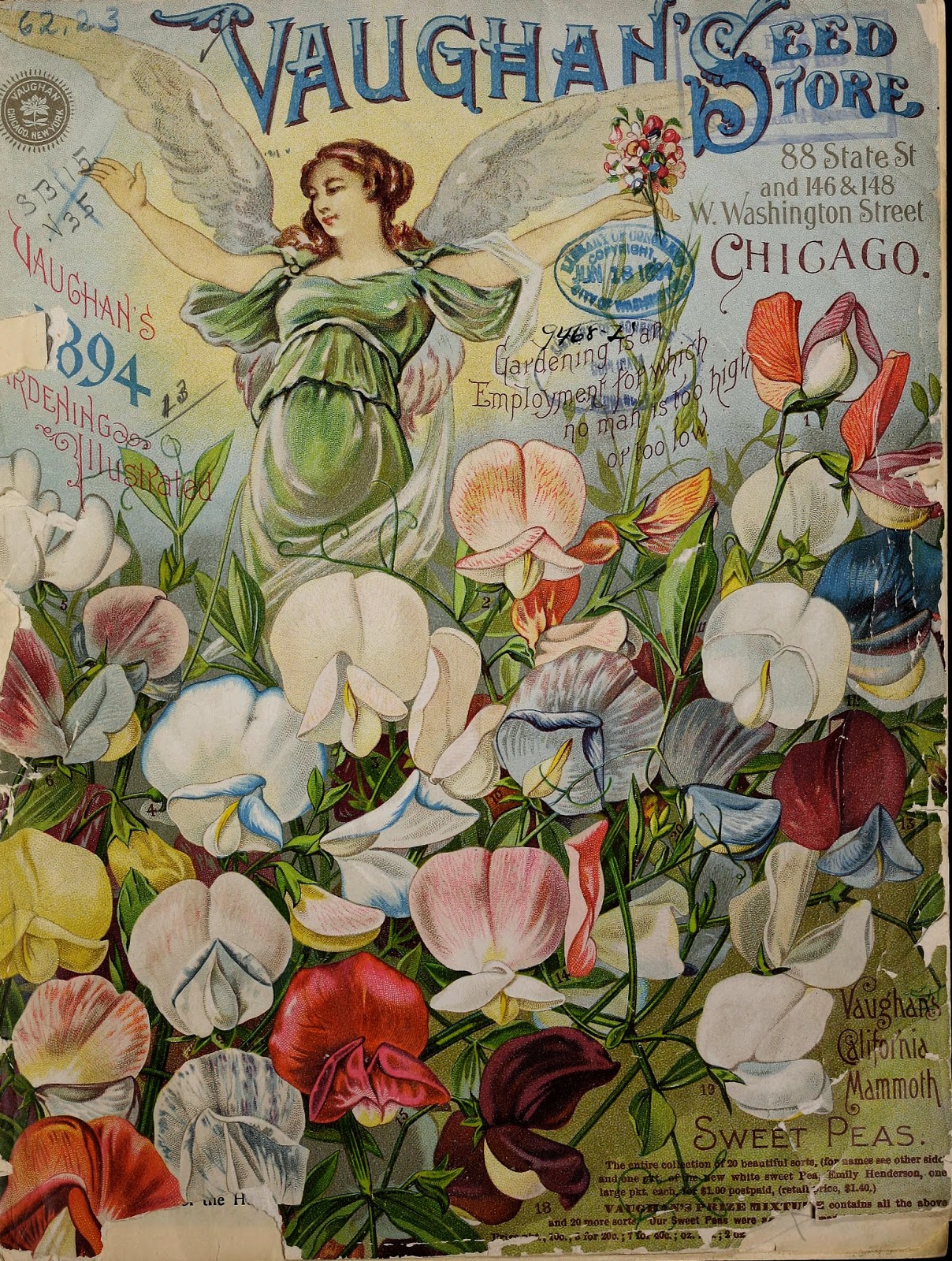
Chromolithography, also known as color lithography, was patented in 1837 by Franco-German lithographer Gottfried Engelmann. The process involves planographic or flat-surface printing on stones where the image is drawn with greasy ink or crayon in several different colors (the idea being that oil and water do not mix). This provides for eye-catching, vibrant and imaginative images produced by the thousands. Earlier methods of color reproduction had proved inadequate. Thus chromolithography became dominant in the second half of the nineteenth century for inexpensive decorative prints and for ephemera, such as postcards, cigar boxes, posters, and calendars.

View Full Size Image
Example of chromolithograph seed catalog cover. Vaughan’s 1894 gardening illustrated. http://biodiversitylibrary.org/page/44441215.

The printmaking technique of chromolithography for advertisements, particularly with the advances in steam-driven production, was quickly put to great effect in the nursery industry in Rochester, where the greater number of firms were located. As a result, “the Flower City” became the center of horticultural publishing along with the garden firms. The first company solely devoted to chromolithography in Rochester was established in 1871. Production was not just for the widely distributed catalogs but also for seed packets and labels for boxes and trade cards and, eventually, horticultural periodicals. In addition, unique sample books for salesmen, composed of varying images of fruits and flowers, could be assembled for the trade, advertising the inventory of a business. One leading firm was Dellon Dewey. An example of one of the surviving works for agents of the company is in the Smithsonian Libraries’ Cullman Library (SB361 .D519 1872). While not many of these pieces of ephemera in the nursery trade still exist, the University of Delaware Libraries has nearly one hundred.

View Full Size Image
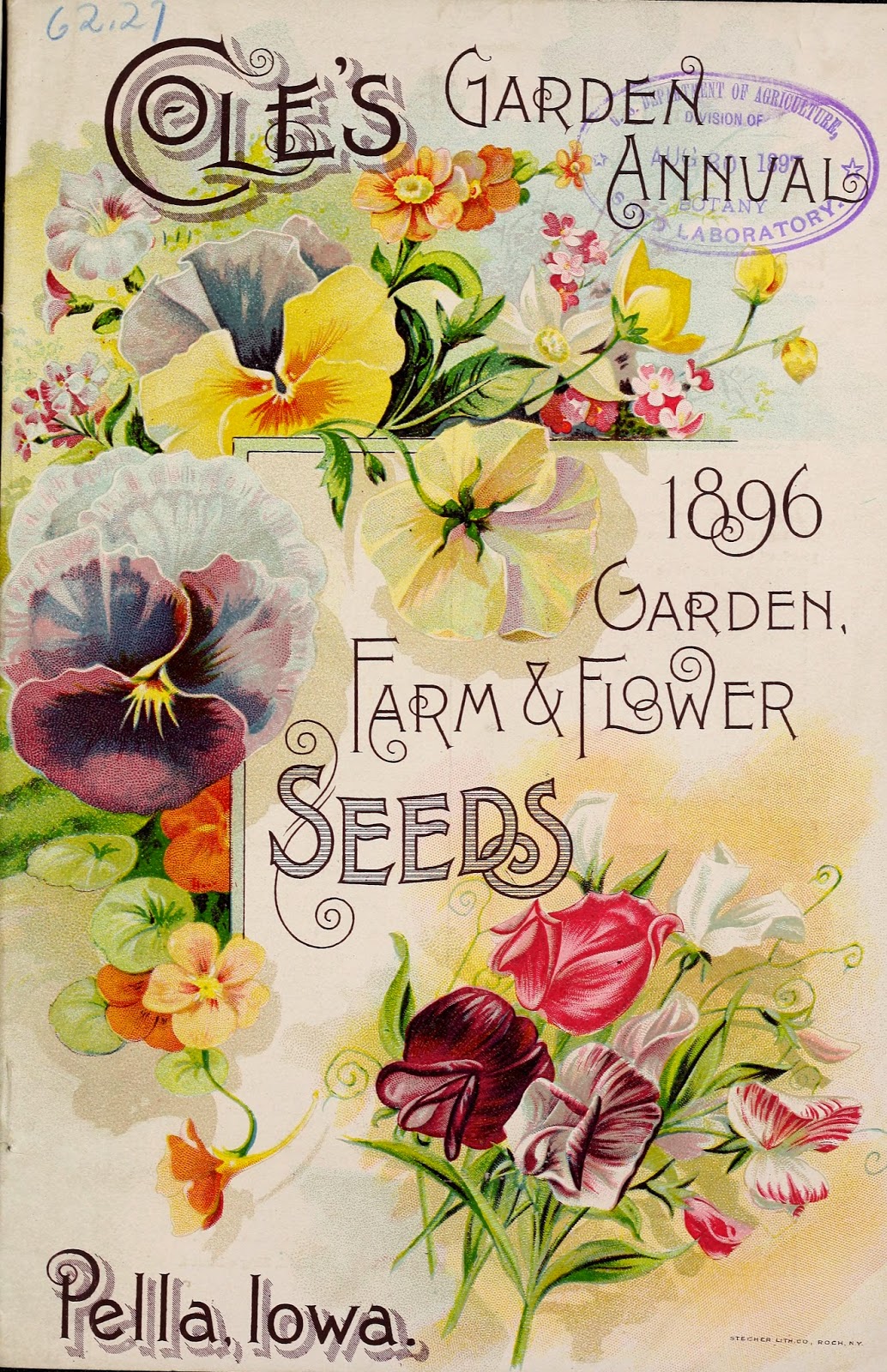
Example of chromolithograph seed cover. Cole’s Garden Annual. 1896. http://biodiversitylibrary.org/page/43194611.

Reimagining the Seed Catalog: James Vick

James Vick (1818-1882) is a figure that unites all these trends—Rochester as a horticultural center both for the selling of plants as well as printing and publishing, the use of beautiful and informative illustrations as to aid the gardening business, and landscape design education. He was another immigrant, from Portsmouth, England. After learning the printing trade in New York City, he settled in Rochester in 1837 to work for several newspapers. An intense interest in horticulture, excellent editorial skills and an innovative mind perfectly suited the Genesee Farmer and The Horticulturist (1853 to 1854). He then started his own business in 1860: the Vick Seed Company.

View Full Size Image
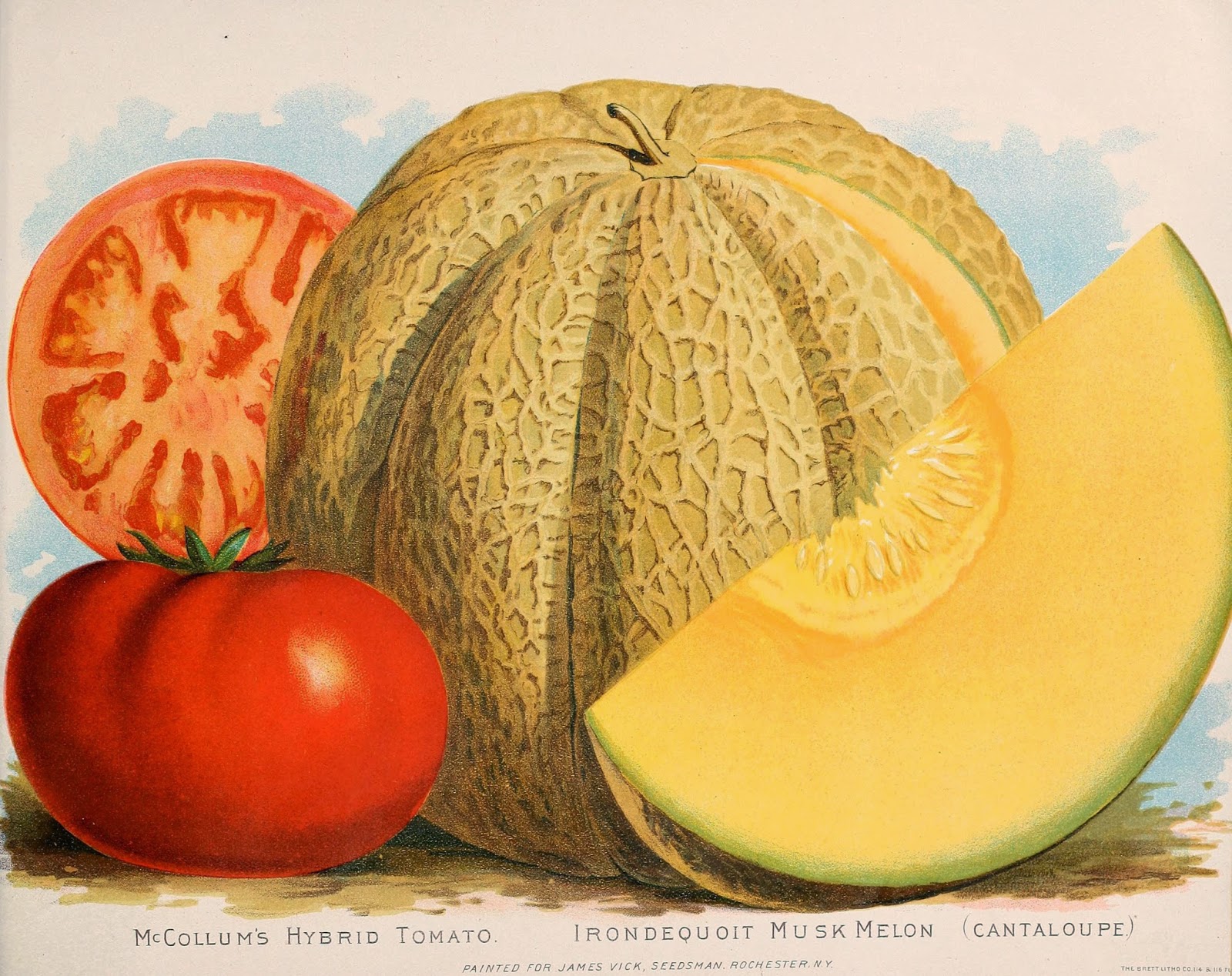
Vick’s Floral Guide, 1889. McCollum’s Hybrid Tomato, Irondequoit Musk Melon chromolithograph. http://biodiversitylibrary.org/page/44438925.

Andrew Jackson Downing’s English landscape aesthetic, laid out in the author’s A Treatise on the Theory and Practice of Landscape Gardening (1841) and Cottage Residences (1842), particularly influenced the seedman’s essays for his several annual catalogs and magazine, Vick’s Illustrated Monthly (the title varies). Vick promoted Downing’s favored picturesque style of undulating expanses of lawn, groupings of trees and shrubs, and flower in borders and beds, along curving paths. He advertised widely seeds for all these components in other publications and newspapers while integrating his own printing shop and bindery and mailing operation, with this 100-acre nursery and retail store. His sons took over the business following Vick’s death but eventually sold it to the Burpee Seed Company.

View Full Size Image
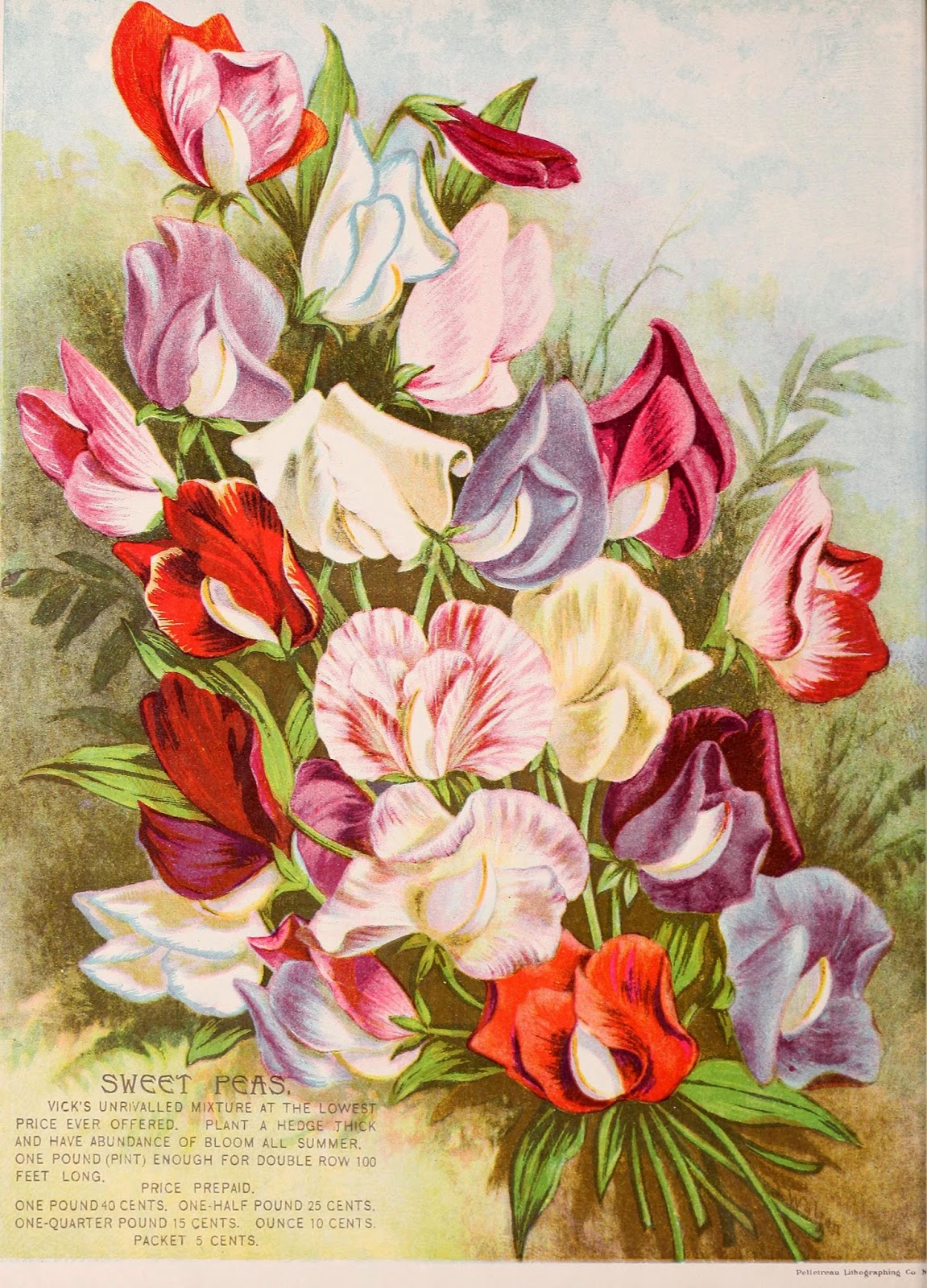
Vick’s Floral Guide, 1895. Sweet Peas chromolithograph. http://biodiversitylibrary.org/page/44442935.

As an added incentive, mail order customers of Vick’s company were sent free chromolithographic prints to display in their homes.The suitable-for-framing art and the covers of Vick’s catalogs were mostly devoted to floriculture with bold, colorful images to lure customers in the dead of winter to dream of planting and then order for planting in the spring and summer. Planning, particularly for something new and exotic, is at least half the fun.

Survivors of this ephemeral form of publication—seed and nursery trade catalogs—are valuable not only for their pictures (documenting different techniques of illustrating processes) but as research sources on introduction of plants into the trade as well as trends in horticultural fashion. Catalogs can also be used to trace the propagation history of specific plants, seed cleaning, packing and shipping methods, and prices. Or, rather than research, the illustrations can provide in this day inspiration or simple enjoyment of their aesthetic.

View Full Size Image
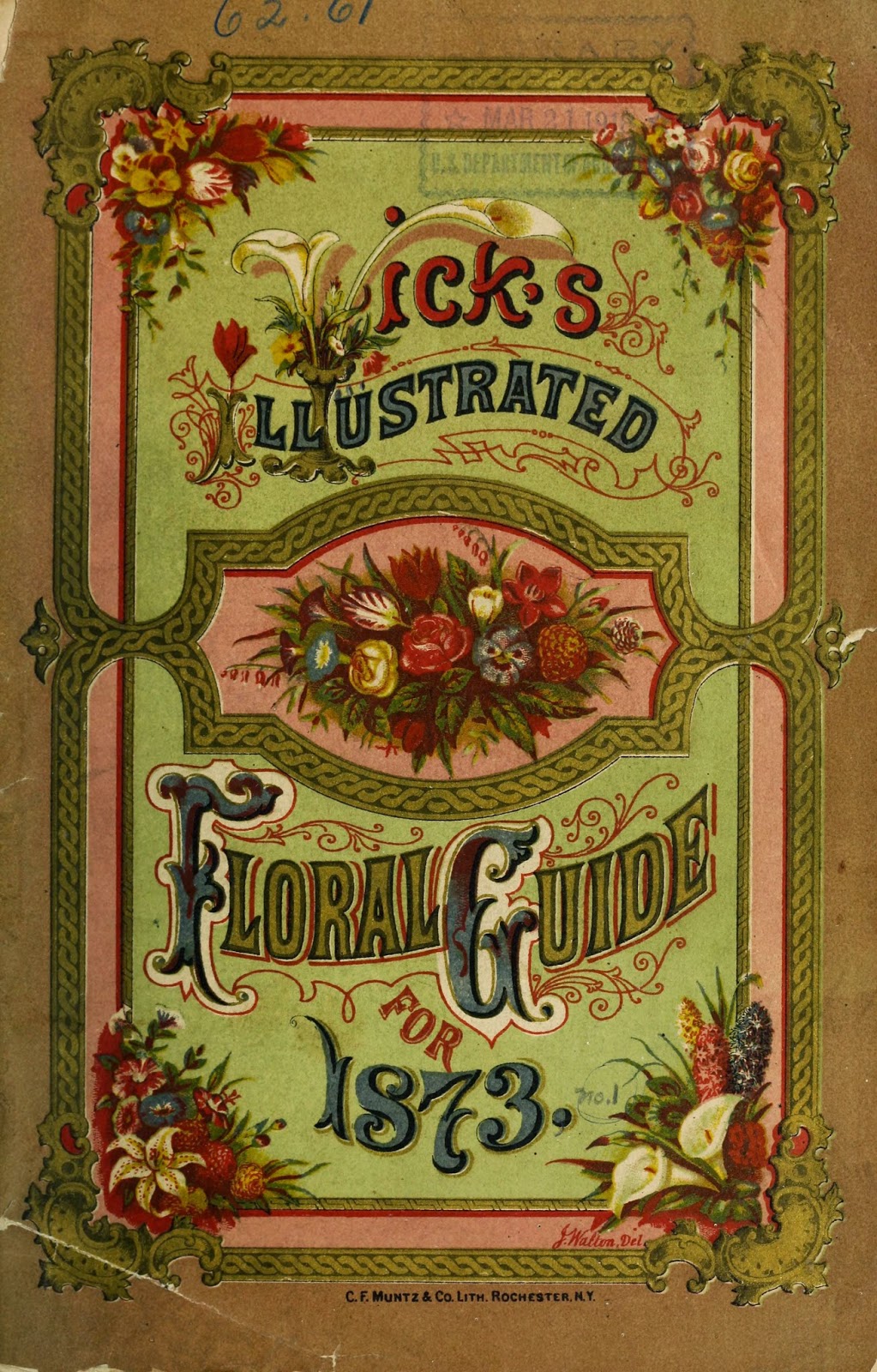
Chromolithograph cover. Vick’s Illustrated Floral Guide for 1873. http://biodiversitylibrary.org/page/44383969.

Stay Tuned for Part Two of our “Revolutionizing the Garden Industry with Art” blog post to see how photography influenced the seed catalog.

More Garden Stories Fun

  • Follow our blog and #BHLinbloom on Twitter and Facebook (or go directly to BHL’s Twitter and Facebook) this week as we explore the fascinating world of gardening, from its history to plant factoids and practical gardening tips.
  • Browse over 14,000 seed and nursery catalogs in our collection.
  • Browse over 2,500 seed and nursery catalog images in our Flickr collection.
  • Explore select seed catalog art, and stunning bookmarks and postcards developed by Cornell Library, on Pinterest.
  • See historic gardening come to life on the Smithsonian Libraries’ Tumblr.
  • Purchase your very own Garden Stories T-Shirt through T-Fund. All proceeds will go to help us digitize more pages for BHL. Our goal is to sell enough shirts to digitized 5,000 pages. Can you help us get there?
  • Help us improve access to seed and nursery catalogs by transcribing some today as part of our the Institute of Museum and Library Services (IMLS)-funded Purposeful Gaming project!
  • Find great online gardening resources, tips, and help on the BHL Gardening Resources Page.


For further reading: 

  • American Antiquarian Society online exhibition. “Big Business: Vick’s.” http://www.americanantiquarian.org/Exhibitions/Food/vicks.html/
  • Craib, Emma. “James Vick – Marketing the Garden Dream.” http://horticultural-history.blogspot.com/2014_04_06_archive.html
  • Mickey, Thomas J. “Selling the English Garden: The Nineteenth Century American Seed Merchant James Vick.” Conference on Historical Analysis and Research in Marketing, 2009, p. 186-196.
  • Twyman, Michael. A History of Chromolithography: Printed Colour for All. London: British Library, 2013. Nursery Industry in Rochester: https://www.lib.rochester.edu/index.cfm?page=2409
March 26, 2015by mckenzie.87

Help Support BHL

BHL's existence depends on the financial support of its patrons. Help us keep this free resource alive!

search

About BHL

The Biodiversity Heritage Library (BHL) is the world’s largest open access digital library for biodiversity literature and archives. BHL operates as a worldwide consortium of natural history, botanical, research, and national libraries working together to digitize the natural history literature held in their collections and make it freely available for open access as part of a global “biodiversity community.”

Join Our Mailing List

Sign up to receive the latest news, content highlights, and promotions.

Subscribe Now

Subscribe to Blog via Email

Enter your email address to subscribe to this blog and receive notifications of new posts by email.

Join 319 other subscribers

Subscribe to Blog Via RSS

Subscribe to the blog RSS feed to stay up-to-date on all the latest BHL posts.

Access RSS Feed

Inspiring Discovery through Free Access to Biodiversity Knowledge.

The Biodiversity Heritage Library makes it easier than ever for you to access the information you need to study and explore life on Earth…for free, anytime, anywhere.


64+ Million Pages of
Biodiversity Literature Online.

EXPLORE

Tools and Services
to Transform Research.

EXPLORE

300,000+
Illustrations on Flickr.

EXPLORE

ABOUT | HARMFUL CONTENT | PRIVACY | SITE MAP | TERMS OF USE