Biodiversity Heritage Library - Program news and collection highlights from BHL
  • Home
  • News
  • Featured Books
    • All Featured Books
    • Book of the Month Series
    • BHL at 20
  • User Stories
  • Campaigns
    • Fossil Stories
    • Garden Stories
    • Monsters Are Real
    • Page Frights
    • Her Natural History
    • Earth Optimism 2020
  • Tech Blog
  • Visit BHL
Home
News
Featured Books
    All Featured Books
    Book of the Month Series
    BHL at 20
User Stories
Campaigns
    Fossil Stories
    Garden Stories
    Monsters Are Real
    Page Frights
    Her Natural History
    Earth Optimism 2020
Tech Blog
Visit BHL
  • Home
  • News
  • Featured Books
    • All Featured Books
    • Book of the Month Series
    • BHL at 20
  • User Stories
  • Campaigns
    • Fossil Stories
    • Garden Stories
    • Monsters Are Real
    • Page Frights
    • Her Natural History
    • Earth Optimism 2020
  • Tech Blog
  • Visit BHL
Biodiversity Heritage Library - Program news and collection highlights from BHL

All posts by michelle.underhill

Blog Reel, User Stories

Historic Literature Meets Modern Research: Discovering Octocorals in the Deep Sea of the Northeast Atlantic Ocean

Read the full blog post

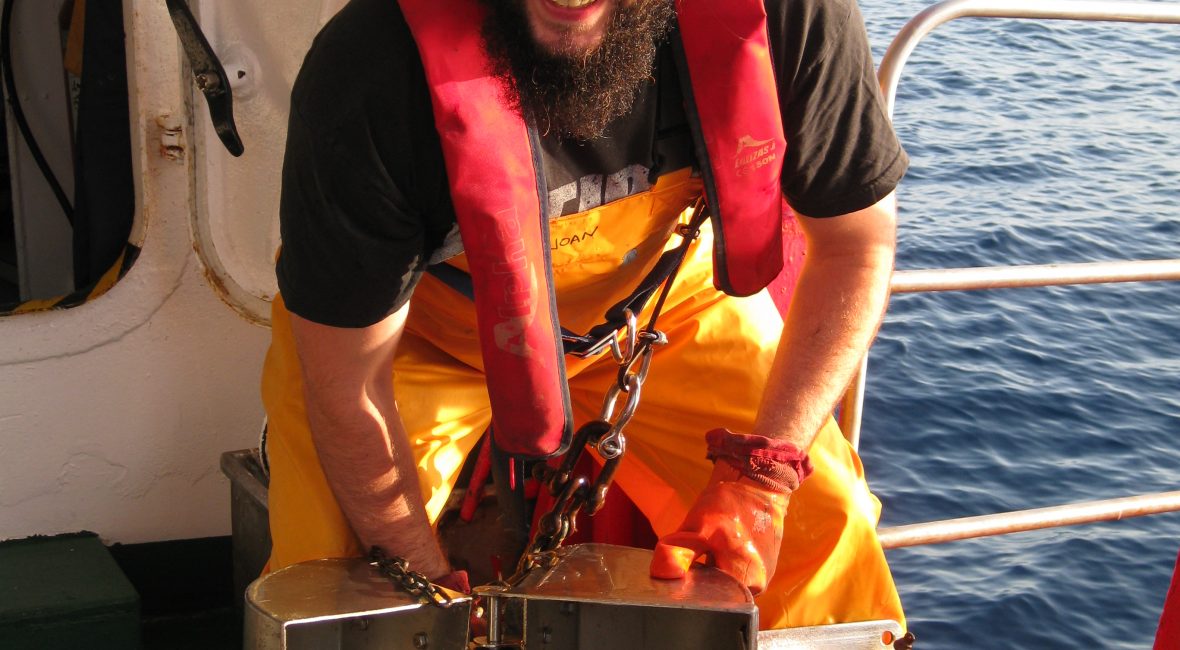
Íris Sampaio, a Ph.D. candidate in the Department of Oceanography and Fisheries at the University of the Azores & Senckenberg am Meer, Germany, has been studying octocoral taxonomy and ecology for eleven years. Résultats des campagnes has had a significant impact on Sampaio’s research, providing her with data on octocoral species collected in the Azores. Thanks to the Biodiversity Heritage Library, she now has easy access to the title’s public domain volumes.

Continue reading
August 16, 2018byGrace Costantino
Blog Reel, Featured Books

An Illustrated Natural History of German Frogs: Rösel’s Historia Naturalis Ranarum Nostratium

Read the full blog post

Historia naturalis ranarum nostratium has been described as one of the most beautiful works devoted to frogs and amphibians.

The work of German artist and naturalist Johann Rösel von Rosenhof, Historia naturalis ranarum nostratium describes the natural history of all then-known frogs and toads indigenous to the Nuremberg region in Germany. The title is noteworthy first for the extensive, accurate information in the text, printed in two columns in both German and Latin.

The work is equally (if not more) renowned for its illustrations. The twenty-four folio, hand-colored copper engravings portray habitats, anatomy, reproductive behavior, and larval development stages in intricate detail.

Continue reading
August 2, 2018byGrace Costantino
Blog Reel, Featured Books

Bateman’s Orchidaceae: Exploring One of the Rarest – and Largest – Orchid Books

Read the full blog post

“The Librarian’s Nightmare.”

Such is the name given to a delightful and quirky vignette found within a very rare, and very special, orchid book: James Bateman’s The Orchidaceae of Mexico and Guatemala ([1837]-1843).

This vignette, the work of caricaturist George Cruikshank, depicts a group of men struggling to lift an enormous book using a pulley system while a harried taskmaster with a megaphone attempts to direct their work and demons dance about with impish glee on the sidelines.

The vignette’s caption, translated from the Greek, reads “a big book is a big evil”.

The scene is a humorous commentary on the massive size of Bateman’s orchid book. At about 30” x 22” and weighing in at over 38 lbs, it is the “largest botanical book ever produced with lithographic plates”.

Continue reading
July 19, 2018byGrace Costantino
Blog Reel, User Stories

Uncovering Cryptic Species and More with the Biodiversity Heritage Library

Read the full blog post

Using molecular species delimitation methods, Dr. Fernando Á. Fernández-Álvarez, a post-doc at Institut de Ciències del Mar (CSIC) in Barcelona, and his colleagues[1] found that what is currently described as Ommastrephes bartramii actually represents four different species. After examining previous descriptions in the literature, three synonymized names have been proposed for resurrection accordingly. This research comprises one of four chapters in Fernández-Álvarez’s Ph.D. thesis, and the manuscript is currently under preparation for submission to a journal.

The Biodiversity Heritage Library proved to be a vital resource for these research, allowing Fernández-Álvarez to easily locate literature about relevant synonymized names, many of which were published in the 19th century.
Continue reading
July 12, 2018byGrace Costantino
BHL News, Blog Reel

The Biodiversity Heritage Library Adds Lloyd Library & Museum as a New Affiliate

Read the full blog post

The Biodiversity Heritage Library is pleased to welcome the Lloyd Library & Museum as its newest Affiliate.

Founded in the 1870s, the Lloyd Library & Museum’s origins trace back to a collection of reference materials acquired by the brothers John Uri Lloyd (1849-1936) and Curtis Gates Lloyd (1859-1926), both trained pharmacists of the botanical medicine era. The Library, which continues to build its collection thanks to an endowment established by Curtis Lloyd, holds approximately 150,000 volumes on a range of topics, including botany, mycology, herbal medicine, gardening, and horticulture.

Continue reading
July 5, 2018byGrace Costantino
Blog Reel, User Stories

For the Love of Cider: Phenotyping Apples with Modern Techniques and Historic Texts

Read the full blog post

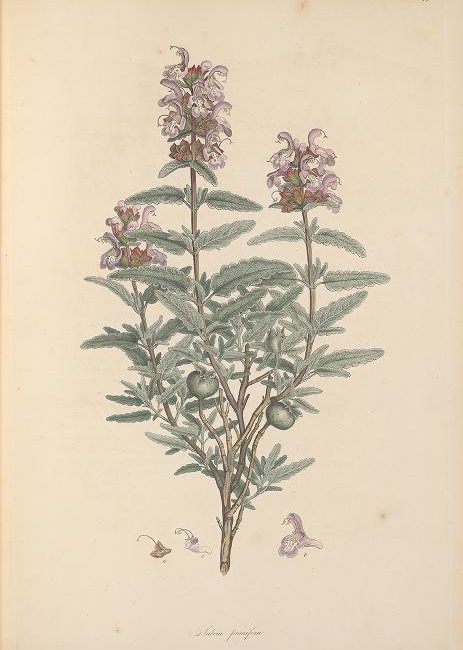
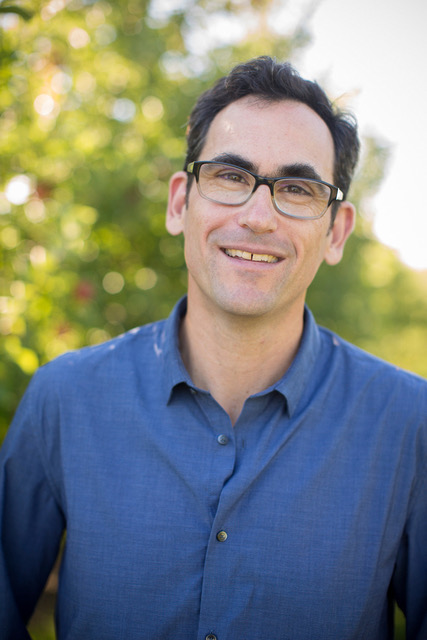
Dr. Gregory Peck, an Assistant Professor in the Horticulture Section of the School of Integrative Plant Science at Cornell University, has been assessing a large number of apple genotypes for their potential use in hard cider production. Through this work, he has discovered inconsistencies between many U.S. varieties and their original counterparts. He recently teamed up with Dr. Gayle Volk at the United States Department of Agriculture to uncover the truth behind these enigmatic cultivars.

“We employed DNA fingerprinting tools to confirm our suspicions that these were misnamed cultivars,” explains Peck. “But now we’re left with a mystery. What are the misidentified cultivars?”

As it turns out, it’s a mystery that the Biodiversity Heritage Library can help solve.

Continue reading
June 5, 2018byGrace Costantino
BHL News, Blog Reel

The Biodiversity Heritage Library Adds Museum für Naturkunde Berlin as a New Member

Read the full blog post

The Biodiversity Heritage Library is pleased to welcome the Museum für Naturkunde Berlin (MfN) as a new Member. MfN is the first German museum to join the Biodiversity Heritage Library as a Member.

Continue reading
May 29, 2018byGrace Costantino
Page 16 of 47« First...10«15161718»203040...Last »

Help Support BHL

BHL’s existence depends on the financial support of its patrons. Help us keep this free resource alive!

Donate Now

search

About BHL

The Biodiversity Heritage Library (BHL) is the world’s largest open access digital library for biodiversity literature and archives. BHL operates as a worldwide consortium of natural history, botanical, research, and national libraries working together to digitize the natural history literature held in their collections and make it freely available for open access as part of a global “biodiversity community.”

Follow BHL

  • Bluesky logo
  • Facebook logo
  • Flickr logo
  • Twitter logo

Join Our Mailing List

Sign up to receive the latest news, content highlights, and promotions.

Subscribe Now

Subscribe to Blog Via RSS

Subscribe to the blog RSS feed to stay up-to-date on all the latest BHL posts.

Access RSS Feed

Inspiring Discovery through Free Access to Biodiversity Knowledge.

The Biodiversity Heritage Library makes it easier than ever for you to access the information you need to study and explore life on Earth…for free, anytime, anywhere.

63+ Million Pages of
Biodiversity Literature Online.

EXPLORE

Tools and Services
to Transform Research.

EXPLORE

300,000+
Illustrations on Flickr.

EXPLORE


ABOUT | BLOG AUTHORS | HARMFUL CONTENT | PRIVACY | SITE MAP | TERMS OF USE

Download Adobe Acrobat Reader