Biodiversity Heritage Library - Program news and collection highlights from BHL
  • Home
  • News
  • Featured Books
    • All Featured Books
    • Book of the Month Series
    • BHL at 20
  • User Stories
  • Campaigns
    • Fossil Stories
    • Garden Stories
    • Monsters Are Real
    • Page Frights
    • Her Natural History
    • Earth Optimism 2020
  • Tech Blog
  • Visit BHL
Home
News
Featured Books
    All Featured Books
    Book of the Month Series
    BHL at 20
User Stories
Campaigns
    Fossil Stories
    Garden Stories
    Monsters Are Real
    Page Frights
    Her Natural History
    Earth Optimism 2020
Tech Blog
Visit BHL
  • Home
  • News
  • Featured Books
    • All Featured Books
    • Book of the Month Series
    • BHL at 20
  • User Stories
  • Campaigns
    • Fossil Stories
    • Garden Stories
    • Monsters Are Real
    • Page Frights
    • Her Natural History
    • Earth Optimism 2020
  • Tech Blog
  • Visit BHL
Biodiversity Heritage Library - Program news and collection highlights from BHL
Blog Reel, Featured Books

The Pennsylvania Horticultural Society

The Pennsylvania Horticultural Society (PHS) is a nonprofit organization based in Philadelphia, Pennsylvania, that offers a variety of gardening programs and activities to its members as well as the surrounding city and state. Its annual Philadelphia Flower Show is the largest and longest-running event of its kind, attracting florists, gardeners, and landscape designers from all over the world. The PHS has also produced many publications over the years, some of which are now available in BHL through the IMLS grant Expanding Access to Biodiversity Literature (EABL).

History of the PHS

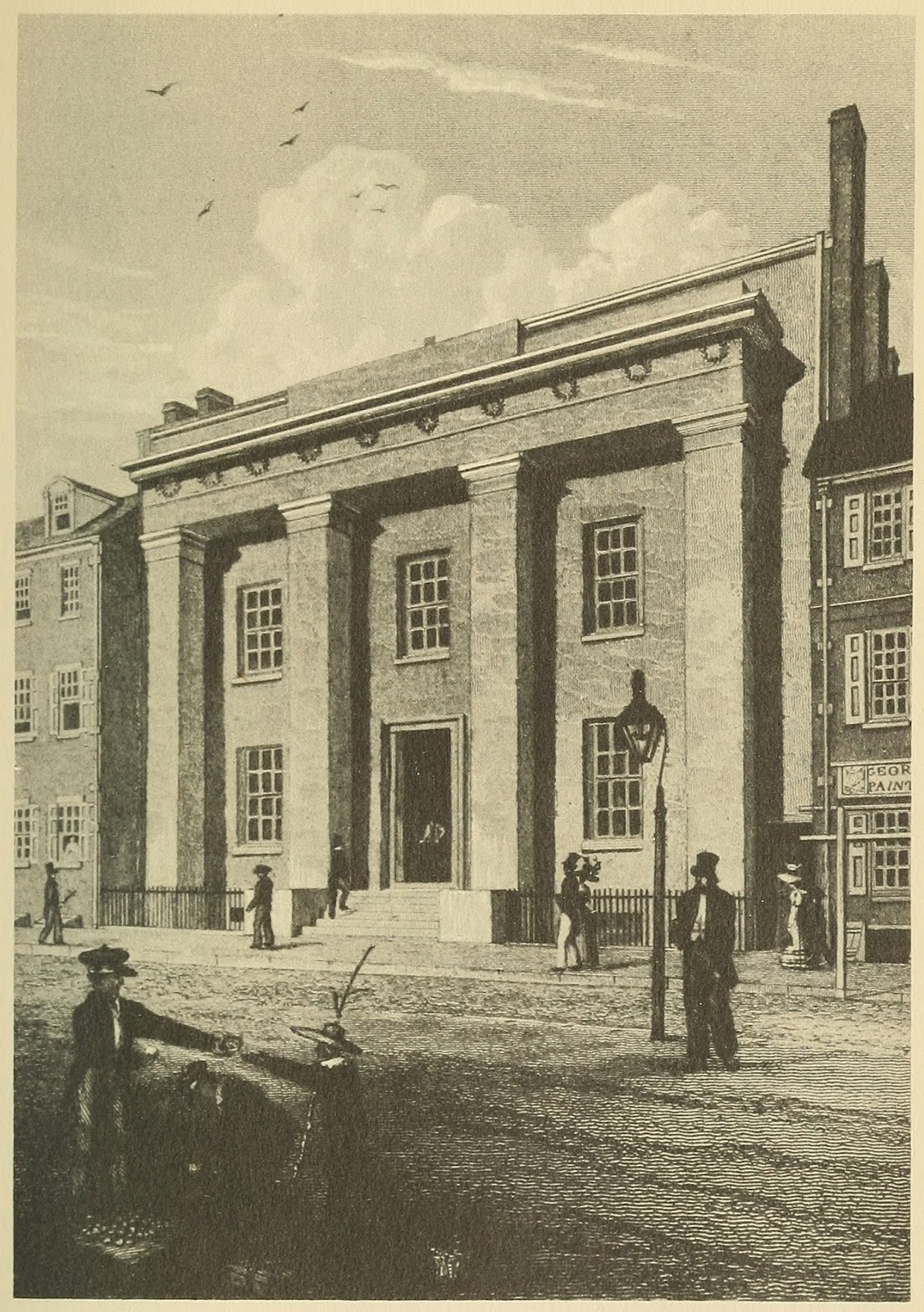
Founded in 1827 with 80 members, the PHS provided a forum for serious growers interested in horticulture and its various applications, commercial and academic. At monthly meetings, members exhibited rare or unusual plants, discussed innovations in horticulture, tasted wine, and distributed among themselves cuttings and grafts of plants from all over the U.S. The PHS began a small library in 1828, and the following year held its first annual Philadelphia Flower Show.
View Full Size Image
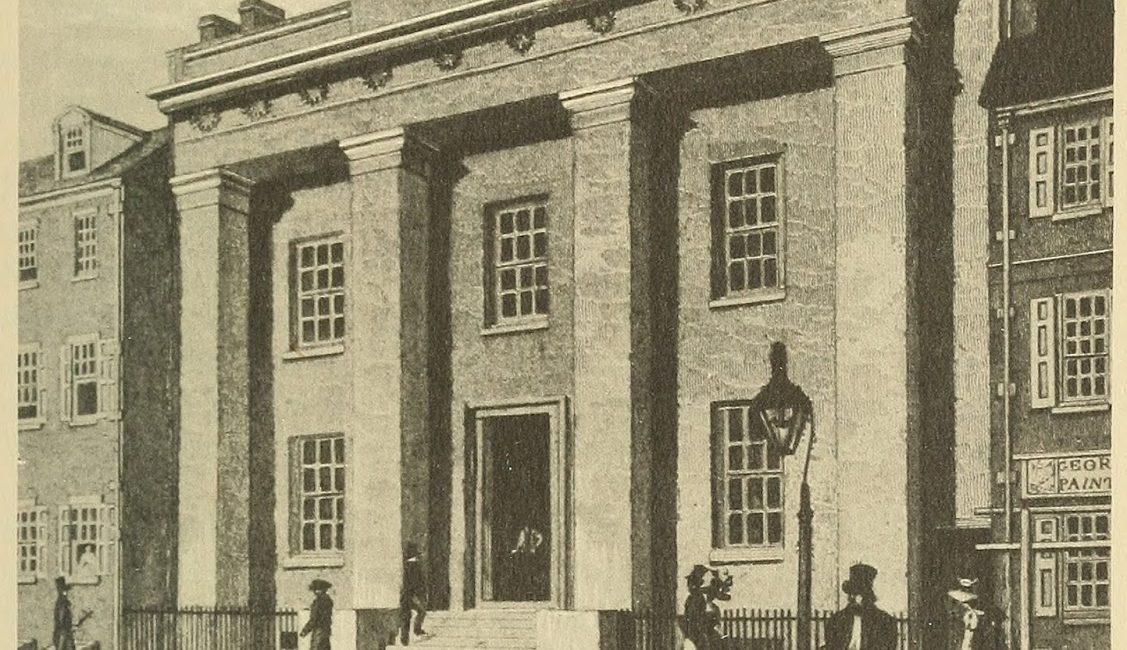
The Franklin Institute on South Seventh Street, site of the PHS’s first meeting (from James Boyd’s A History of the Pennsylvania Horticultural Society 1827-1927)
Over the next several decades, many prominent seedsmen–some of them PHS members–exhibited at the Philadelphia Flower Show, including Henry Dreer, Robert Buist, Josiah Coates, and David Landreth. These men owned successful nurseries, and many of their catalogs can be found in BHL’s Seed & Nursery Catalogs collection.
By 1842, the PHS library contained 450 volumes. It was expanded, and a librarian hired at a salary of $50 per year. By 1850, the library had doubled in size, becoming one of the largest horticultural collections in the country. In 1854, it narrowly avoided destruction in a fire that claimed the Philadelphia Museum.
Around this time, the PHS began making recommendation to the Philadelphia City Council on which trees to eliminate and which to cultivate in public parks. This marked the beginning of PHS’s longstanding efforts to bring gardening to urban spaces, efforts which continued in the decade preceding the Civil War, despite a decline in the Society’s membership and finances.
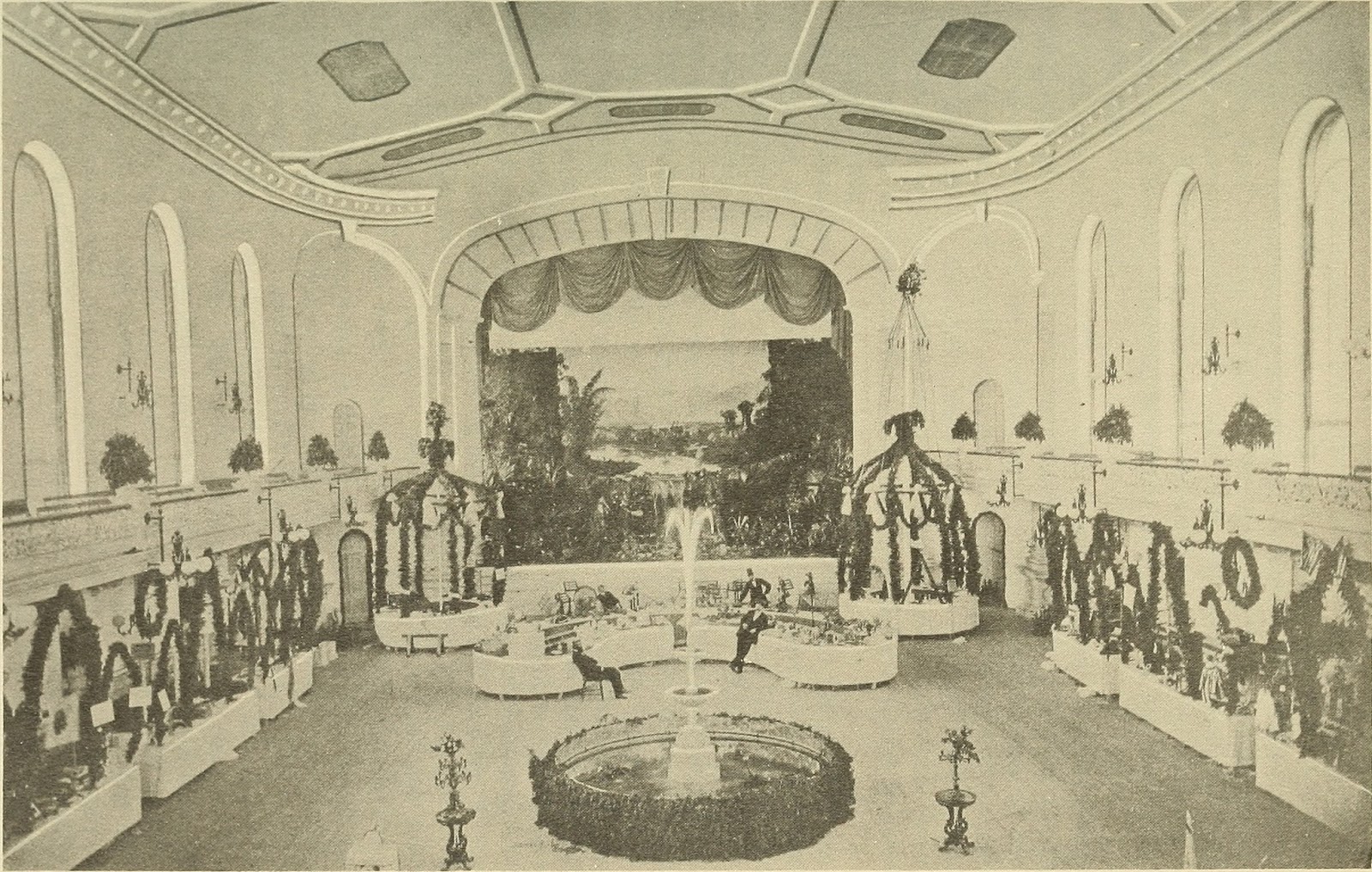
While its finances were still precarious after the Civil War, the PHS enjoyed increased membership, and in 1867 built its first Horticultural Hall. The more famous Horticultural Hall was built in Fairmount Park for the Centennial Exposition of 1876; PHS members actively contributed to the planning and execution of the Centennial, and the event afforded its members the opportunity to display their fruits and flowers. After the Centennial, PHS held its annual flower show in the new hall. The original hall was damaged in a fire in early 1881 and rebuilt later that year; it was completely destroyed by a second fire in 1893. A third hall was built in 1896, which was sold in 1917 in a time of financial hardship.
View Full Size Image
Interior of the first Horticultural Hall (from James Boyd’s A History of the Pennsylvania Horticultural Society 1827-1927)

The 20th century saw the PHS shift to a predominantly amateur membership, which continued to grow with each passing decade. During World War 2, its members were involved in the movement to plant “victory gardens” which could sustain families during a time of scarcity. Writing in the 1945 Yearbook of the Pennsylvania Horticultural Society, the Report of the President for the previous year asserted:

I feel we should all take pride in the condition of the Society, especially in the face of the changing economic conditions that have been brought about by the war. A planned economy, with all of its regimentation, has been forced upon us for the duration of the Second World War, and the end is not yet. Our important duty has been to keep alive human interest in the work of our Creator as we find it in plant life, which is the very sustenance of our existence. Horticulture, in truth, is refined from agriculture to fit the home and becomes the basis of its economy, from which our community and national economy and life are but mammoth developments.

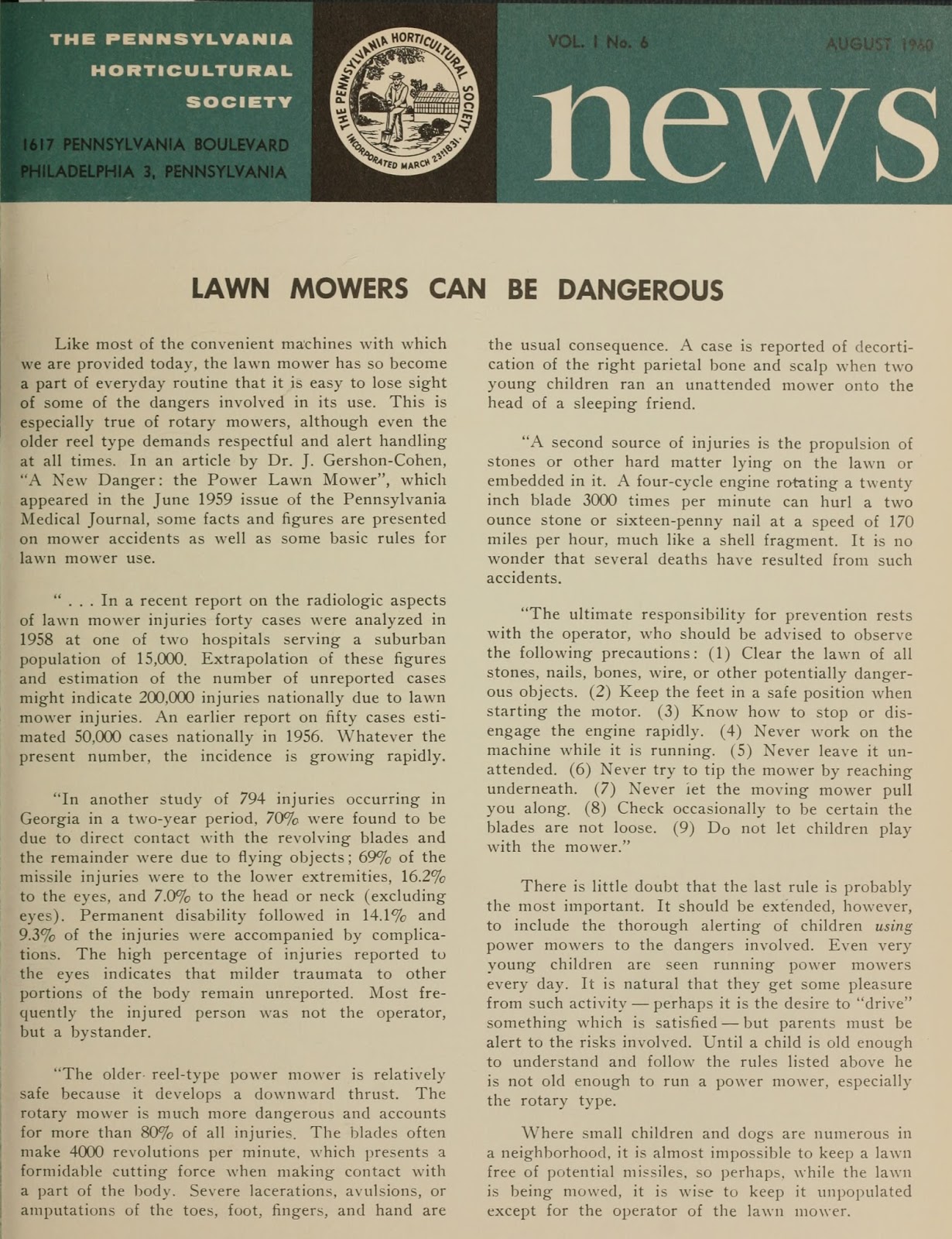
By the second half of the 20th century, the amateur-oriented activities of the PHS were clearly reflected in its publications, such as a members’ newsletter that offered gardening tips, brief articles, and book recommendations. Meanwhile, the Philadelphia Flower Show continued to grow in size and prominence.

View Full Size Image
“Lawn Mowers Can Be Dangerous” from the PHS News, v.1 no.6 (1960)

The PHS Today

Currently, the PHS boasts a membership of 27,000. The Philadelphia Flower Show continues to be a major event every year, and in keeping with its early activities, the PHS remains heavily involved in creating civic landscapes, improving public parks, and planting community gardens in Philadelphia.

View Full Size Image
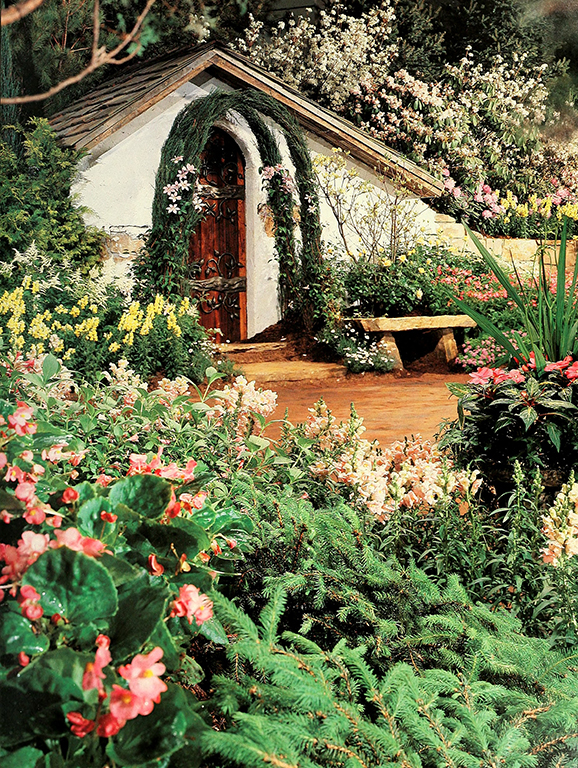
An exhibit at the 1997 Philadelphia Flower Show
The PHS McLean Library contains 15,000 volumes and is working to digitize many historic, public domain horticultural works as well as PHS publications. It has given BHL permission to add many of these to its own collection (where they will appear soon!), including:
  • Yearbook of the Pennsylvania Horticultural Society (1925-1998)
  • PHS News (v.1-38, 1960-1997)
  • Philadelphia Spring Flower Show (1966-1997) [title varies]
  • Pennsylvania Gardens (v.1-4 (1937)
  • From Seed to Flower: Philadelphia 1681-1876 (1976)
  • Bulletin of the Pennsylvania Horticultural Society (v.1, nos.1-2 (1923))
  • The Green Scene (v.1-42, 1972-2014)
  • A History of the Pennsylvania Horticultural Society, 1827-1927 (1929)
  • America’s Garden Legacy: A Taste for Pleasure (1978)

Janet Evans, Associate Director of the McLean Library, says, “We made a commitment…to contribute to digitization of horticultural material. I think it’s particularly important in horticulture, because so many of the older serials have never been well indexed, and yet they contain information that is of value to researchers today – historians, biographers, academics in the humanities as well as horticulturists.”

We are grateful to the PHS for their commitment to open access and their efforts to promote horticulture in Pennsylvania and across the world!

July 21, 2016by Patrick Randall
BHL News, Blog Reel

April showers bring…new in-copyright content to BHL!

Portrait version of the Biodiversity Heritage Library logo.

April, May, and June were busy months for processing license agreements and adding new in-copyright titles: 35 in all, bringing our total to 56 for the first half of 2016! Many licensors outside the BHL Consortium gave permission for their content, which adds contemporary scholarship to the collection already rich in legacy literature.

View Full Size Image
https://creativecommons.org/licenses/by-nc-sa/4.0/

Below is the full list of in-copyright titles added between April 1st and June 30th, 2016. We thank the individuals and organizations who so generously gave BHL permission to make them available under a Creative Commons Attribution-NonCommercial-ShareAlike 4.0 (CC BY-NC-SA 4.0) license:

  1. Ohio Coleopterist Society
    1. Ohio Beetles Bulletin (2009–)
  2. Wim Vader and fellow editors
    1. Amphipod Newsletter (1972–)
  3. Maryland Ornithological Society
    1. Field List of the Birds of Maryland (3rd. Ed.)
    2. Maryland Birdlife (1945–)
    3. The Yellowthroat (1980–)
  4. Mantis Study Group
    1. Mantis Study Group Newsletter (1996-2007)
  5. Phasmid Study Group
    1. Phasmid Studies (1992–)
  6. Mary Bamas Pomeroy
    1. Favorite Wildflowers of the West Coast
  7. New York Entomological Society
    1. Bulletin of the Brooklyn Entomological Society (1923-1965)
    2. Entomologica Americana (1926-1975)
    3. Journal of the New York Entomological Society (1923-1999)
  8. Western Carolina Botanical Club
    1. Shortia (1979–)
  9. Southern California Botanists
    1. A Flora of the Santa Rosa Plateau, Southern California 
    2. Crossosoma (1975–)
    3. Endangered Plant Communities of Southern California
    4. Flora and Ecology of the Santa Monica Mountains (1st and 2nd Eds.)
    5. Leaflets (1992–)
    6. SCB News (1973-1991)
  10. Arkansas Native Plant Society
    1. Claytonia (1981–)
  11. Pacific Seabird Group
    1. Pacific Seabird Group Bulletin (1974-1993)
    2. Pacific Seabirds (1994–)
  12. Arnold Arboretum at Harvard University
    1. Bulletin of Popular Information (1911-1939)
    2. Arnoldia (1940–)
  13. Wildlife Conservation Society
    1. Zoologica (1907-1973)
  14.  Micropalaeontological Society
    1. A Stereo-Atlas of Ostracod Shells (1973-1999)
  15. Delaware Native Plant Society
    1. The Turk’s Cap (1998–)
  16. Tennessee Ornithological Society
    1. The Migrant (1930–)
    2. The Tennessee Warbler (2000–)
  17. Wilson Ornithological Society
    1. The Wilson Bulletin (1894-2005)
    2. The Wilson Journal of Ornithology (2006–)
  18. Queensland Museum
    1. Memoirs of the Queensland Museum (1912–)
  19. Royal Botanic Gardens Victoria
    1. Muelleria: An Australian Journal of Botany (1995–)
  20. Illinois Ornithological Society
    1. Meadowlark (1992–)
  21. Northern California Botanists
    1. Botanical Leaflets (2007–)

As in the previous quarter, most of the new titles are the result of the Expanding Access to Biodiversity Literature (EABL) project. EABL solicits print and digital materials from content providers across the United States, including small organizations with unique publications that reflect their niche research areas.

If you would like more information about how copyright information is displayed in BHL and how in-copyright content may be used, see the Licensing and Copyright page on the BHL wiki; for information about how to contribute in-copyright content and the complete list of in-copyright titles that BHL has secured permission for to date, see the Permissions page.

As always, check the blog and follow BHL on Facebook and Twitter (@BioDivLibrary) for updates on new content!

July 19, 2016by Patrick Randall
Blog Reel, Featured Books

The Roosevelt Wild Life Station

This is the first in a monthly series of posts highlighting contributions to the Expanding Access to Biodiversity Literature (EABL) project, which aims to enhance BHL’s collections with content from natural history libraries, societies, and other institutions across the United States.

The Roosevelt Wild Life Station (RWLS) is a research center within the SUNY College of Environmental Science and Forestry (ESF) in Syracuse, New York. Its mission is “to deliver the science and trained professionals to preserve our wildlife heritage and save imperiled species worldwide.” In the first half of the 20th century, the RWLS produced two publications—the Roosevelt Wild Life Bulletin and the Roosevelt Wild Life Annals—which are now available in BHL.

View Full Size Image
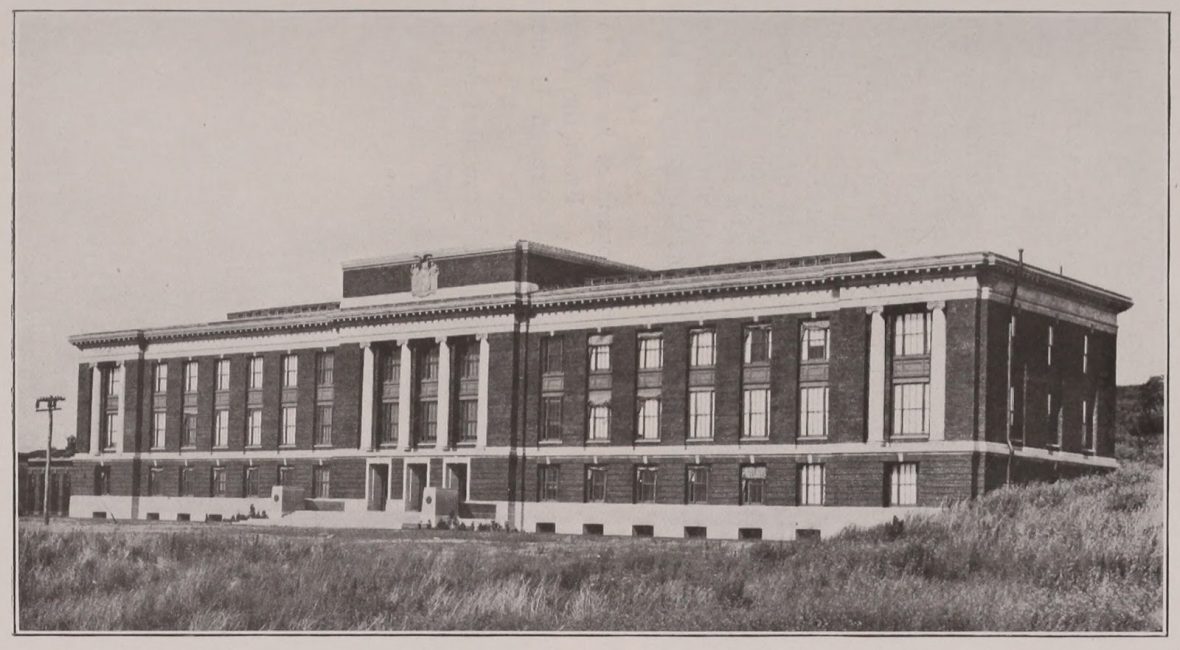
“The New York State College of Forestry, Syracuse, containing the offices and laboratories of the Roosevelt Wild Life Forest Experiment Station,” from Roosevelt Wild Life Bulletin, v.1 no.1 (1921).

Founding of the RWLS

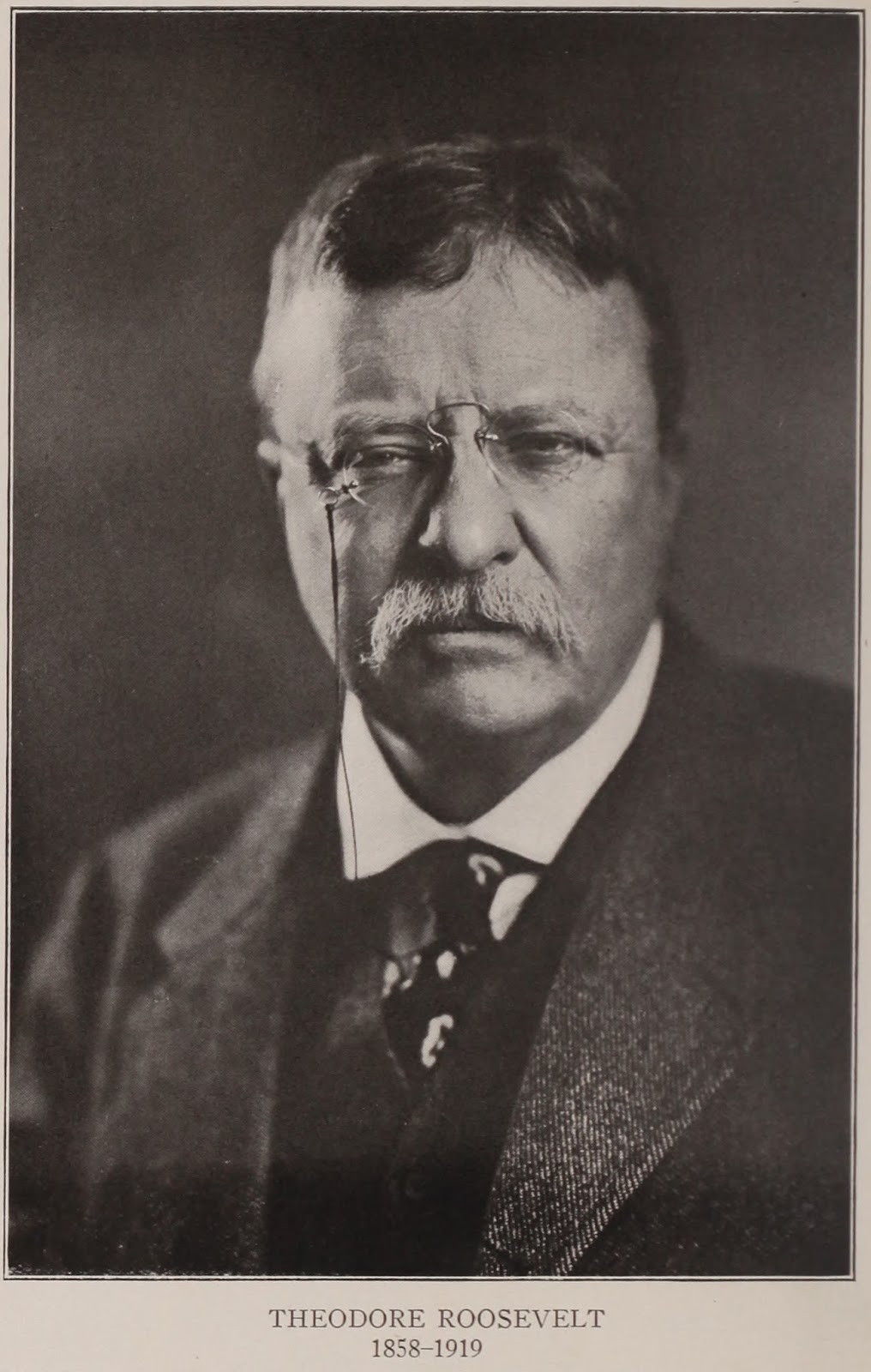
In December of 1916 Charles Christopher Adams, a zoologist at the New York State College of Forestry at Syracuse University, approached Theodore Roosevelt to discuss the need for systematic study of big game and other mammals in the forests of North America. Dr. Adams believed that a lack of understanding of these animals was a problem not only for scientists, but also for industry—particularly forestry—and the economy in general. Roosevelt agreed that research in this area should be undertaken and asked Dr. Adams to devise a plan, which he outlined the following year. Despite Roosevelt’s enthusiastic approval, the work was delayed—first by the onset of World War I, and then by Roosevelt’s death on January 9, 1919.

Dr. Adams, undeterred by these events, saw a new opportunity to carry on the vision he had shared with Roosevelt, and convinced the state legislature of New York to establish the Roosevelt Wild Life Forest Experiment Station as a memorial to the former President. The Station was signed into law on May 10, 1919, as part of the New York State College of Forestry. The legislation stated that the RWLS would conduct “investigations, experiments, and research in relation to the habits, life histories, methods of propagation and management of fish, birds, game and food and fur-bearing animals and forest wild life.” Dr. Adams was the Station’s first director.

View Full Size Image
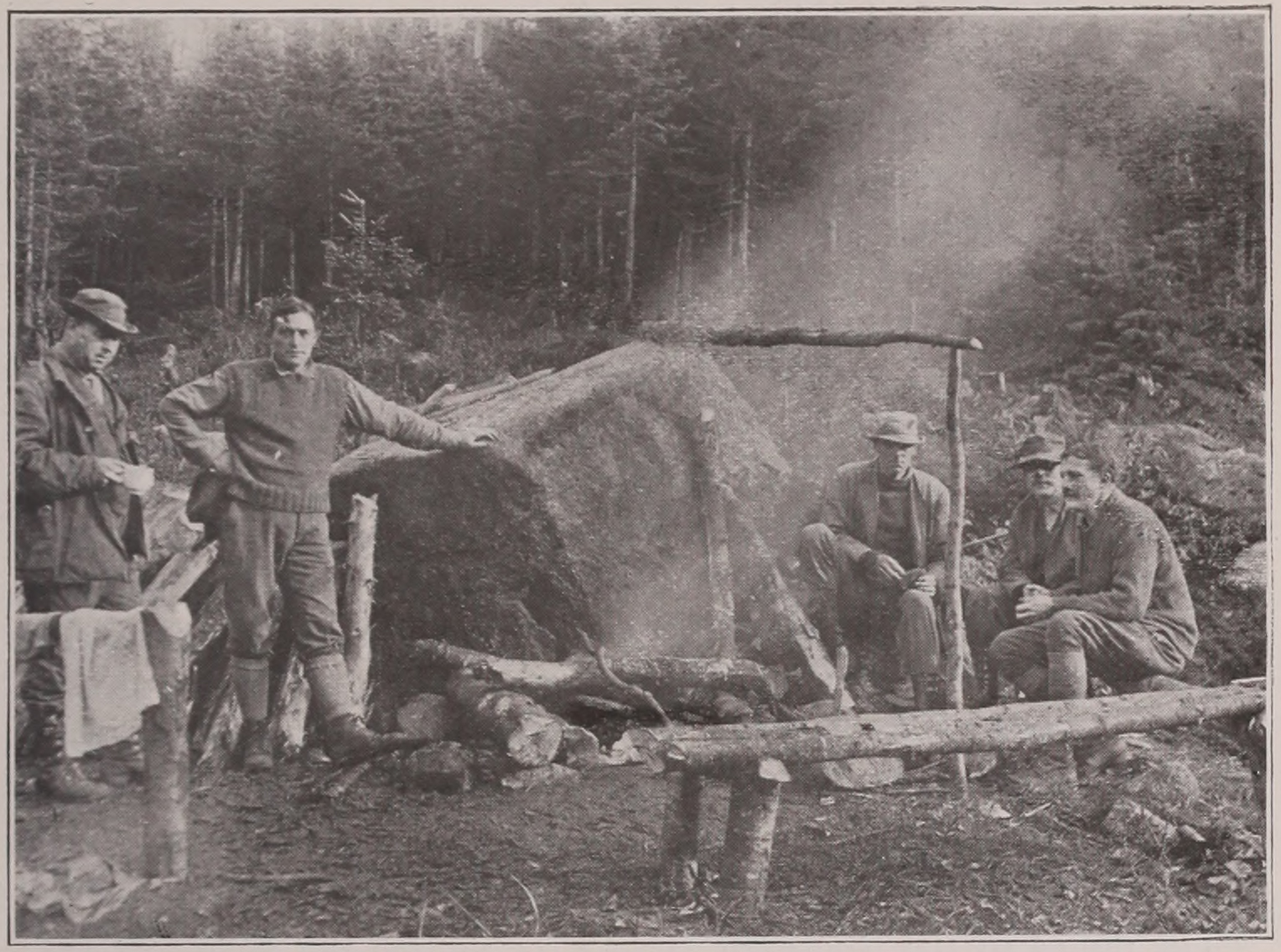
“The field party of the Roosevelt Wild Life Station at camp on Mount Marcy, working in cooperation with other scientists,” from Roosevelt Wild Life Bulletin, v.1 no.1 (1921).

Writing in Science in June, 1919, Dr. Adams proclaimed:

“Never before in America, and for that matter, possibly, never before in the world, has there been a forest biological station devoted primarily or exclusively to the study of every phase of forest wild life. The establishment of such a station at the New York State College of Forestry, at Syracuse University, is thus an event of considerable general interest and importance, not only to those interested in the conservation of wild life, to foresters, and to zoologists in general, and particularly to field naturalists, but in addition to many others who are interested in the ecology of fish, birds, game, fur-bearing animals, and other kinds of forest wild life. This station, named in honor of the man … thus becomes a very appropriate memorial to Theodore Roosevelt.”

An editorial in the August, 1919 issue of Forest and Stream speculated that “The work that such an experiment station may do is almost limitless and its possibilities are as yet quite beyond the range of our imagination.”

The conservationist George Bird Grinnell was equally laudatory; in the foreword to the first issue of the Roosevelt Wild Life Bulletin (1921), he wrote, “No one more than Theodore Roosevelt appreciated the value of the work done and to be done by the field-naturalist. No one more than he would welcome those services to science that may be accomplished by the Experiment Station that bears his name.”

View Full Size Image
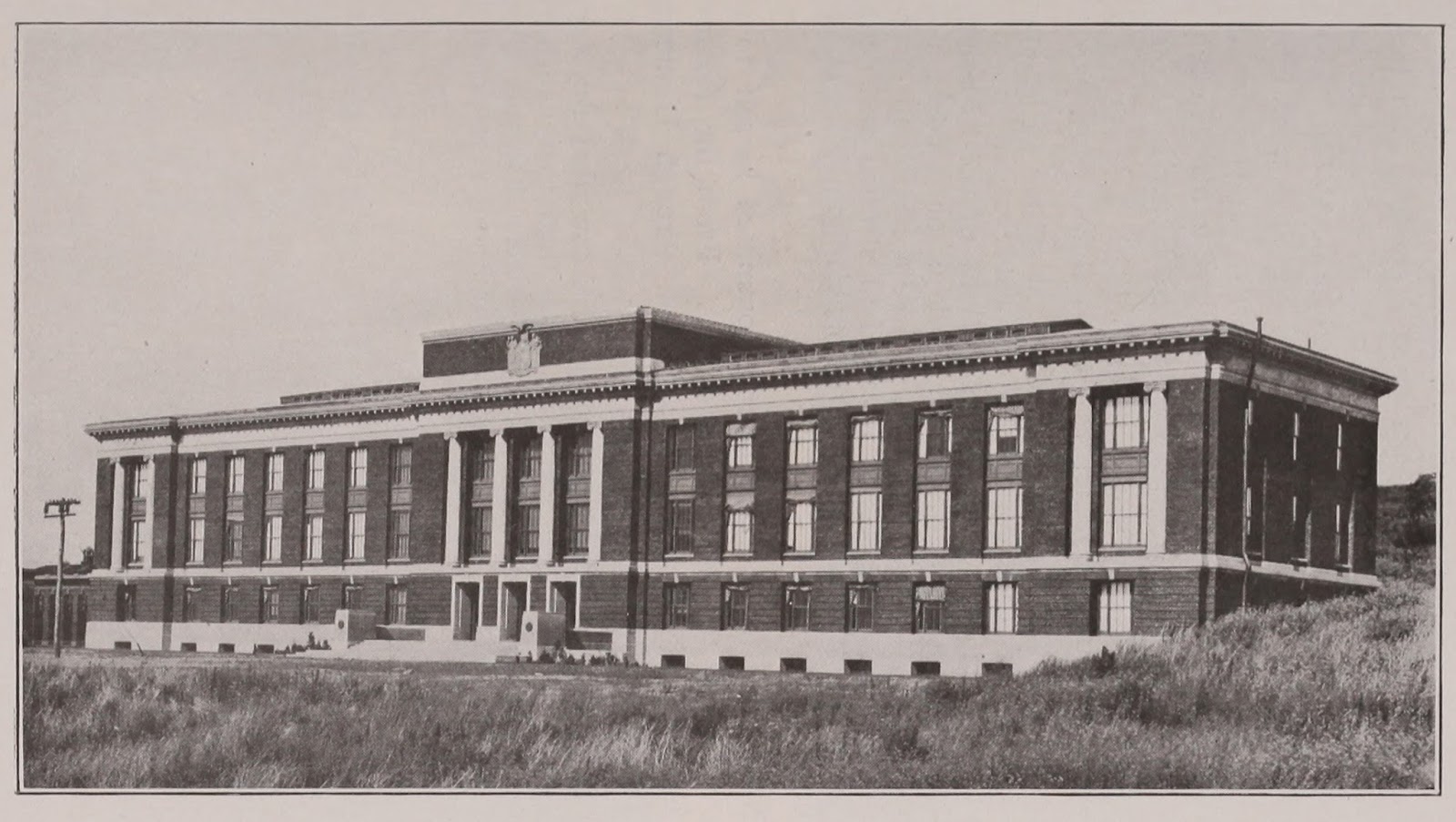
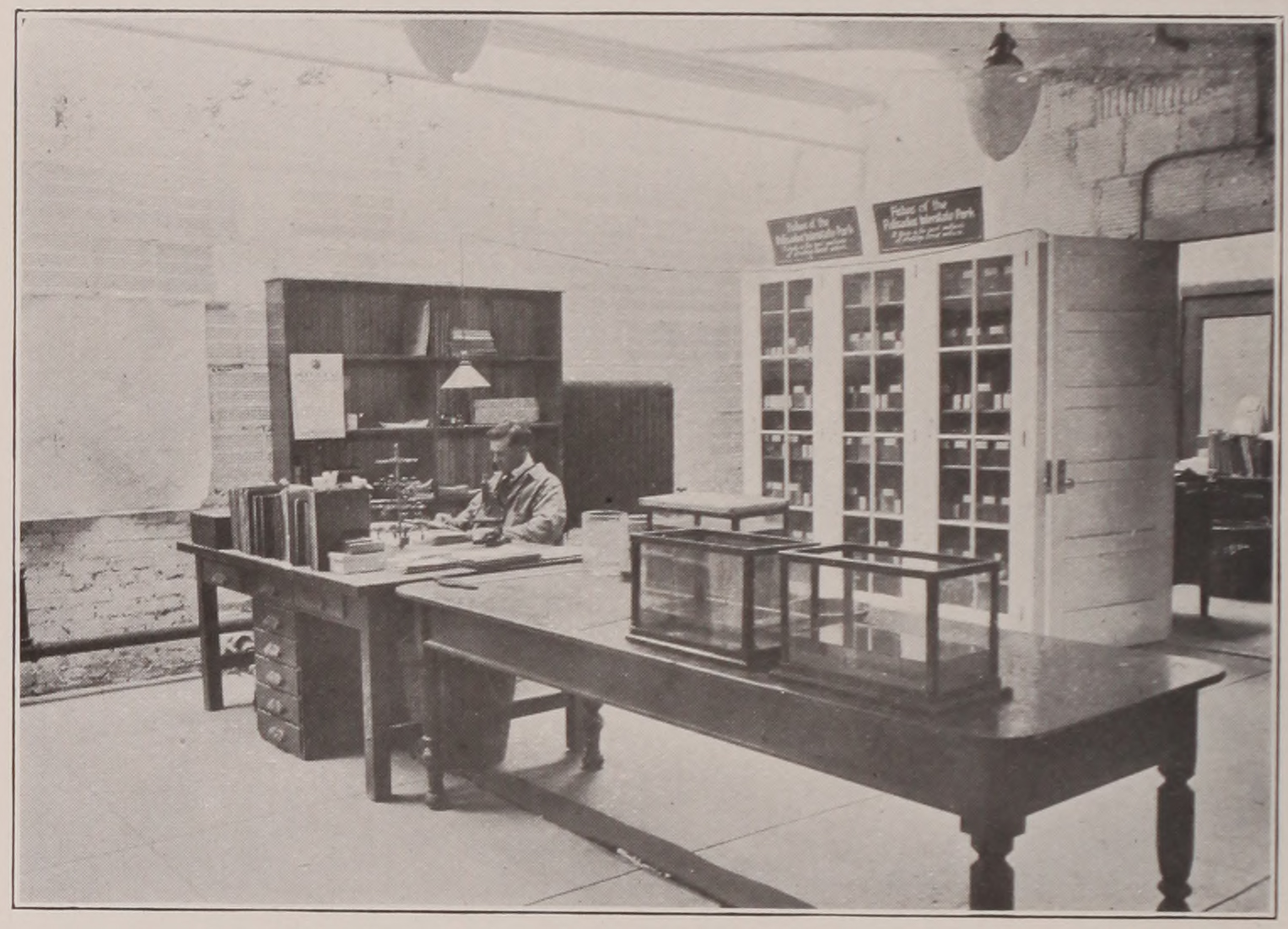
“The fish laboratory of the Roosevelt Wild Life Station,” from Roosevelt Wild Life Bulletin, v.1 no.1 (1921).

Publications of the RWLS

Under Dr. Adams’s tenure as director, the RWLS began publishing the Roosevelt Wild Life Bulletin in 1921, which ran until 1950. The Bulletin contains general and “popular interest” pieces related to forest ecology. Many of these articles describe the geography and wildlife of the forests immediately surrounding the RWLS, as well as the Adirondacks and other regions of upstate New York. Several others detail field research conducted at Camp Roosevelt, Yellowstone National Park, where Professor Alvin Whitney, of the New York State College of Forestry, ran a boys’ summer camp in the early 1920s.
View Full Size ImageView Full Size Image

View Full Size Image
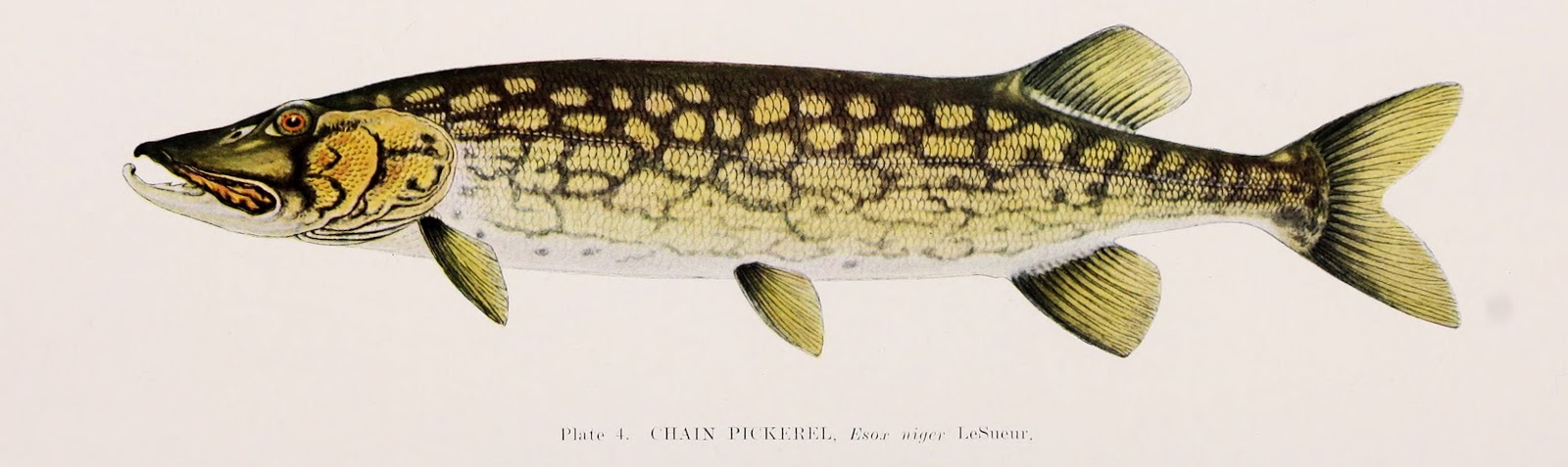
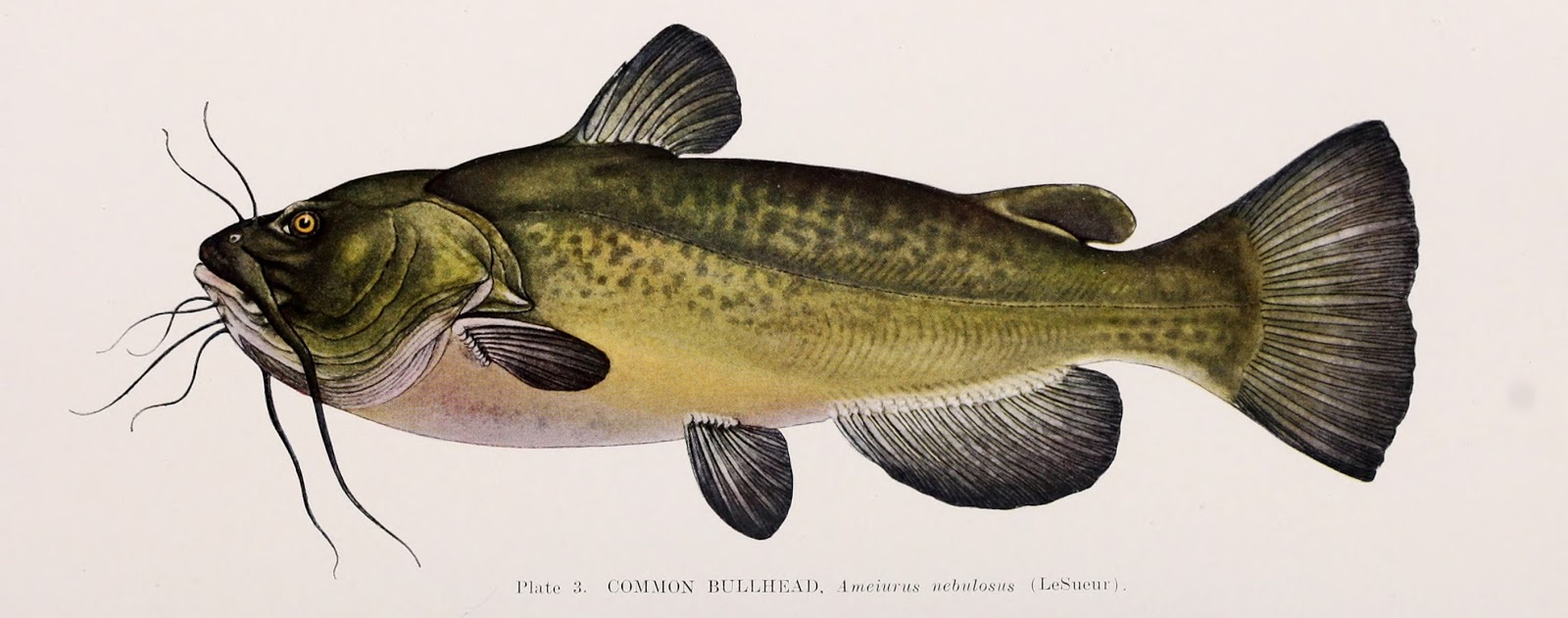
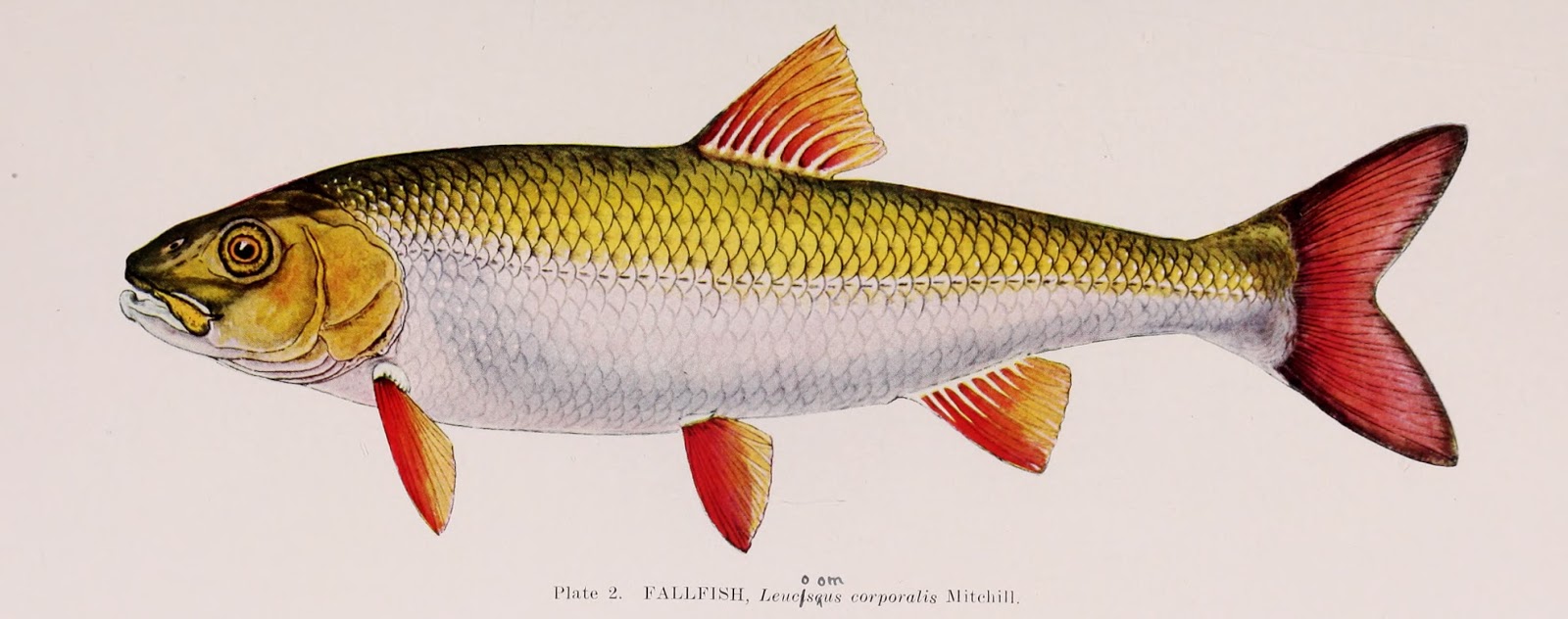
Color plates from Roosevelt Wild Life Annals, v.1 no.3-4 (1926)

Typically, each issue of the Bulletin is organized around a single topic or group of related topics: parasites in freshwater fishes, a county-level wildlife and forest survey, and the management of ruffed grouse, among others. These articles, which treated wildlife as natural resources, would surely have interested naturalists, foresters, and hunters alike. In fact, within a few years of the RWLS’s founding, people from as far away as India began to request research on subjects as esoteric as muskrat farming.

View Full Size Image
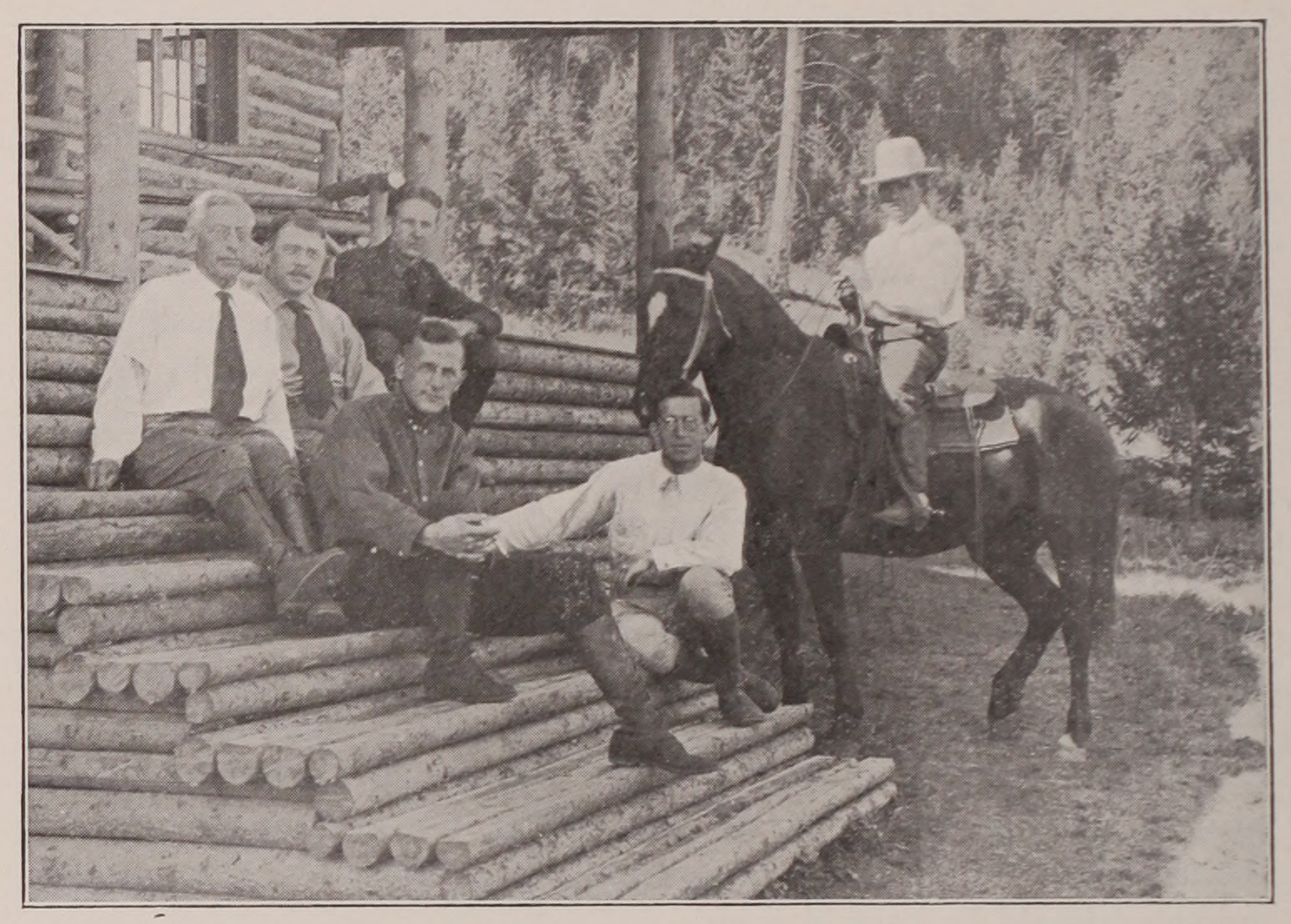
“Field party of the Roosevelt Wild Life Station in Yellowstone Park, summer of 1921,” in Roosevelt Wild Life Bulletin, v.1 no.1 (1921).

In 1926, the RWLS began a second publication, the Roosevelt Wild Life Annals, which ran for 10 years. Whereas the Bulletin was intended for a broad audience, the Annals contain technical papers that would have been of interest to professional naturalists, particularly zoologists and botanists. Like the Bulletin, each issue is typically devoted to a single topic: the red squirrel, trout streams in Yellowstone National Park, the bank swallow, and others.

The RWLS Today

View Full Size Image
From Roosevelt Wild Life Bulletin, v.1 no.1 (1921)

Following the publication of the last Bulletin in 1950, the RWLS entered a period of inactivity that lasted until 1999, when it was reactivated through a combination of private and state funding. Governor George Pataki and Theodore Roosevelt IV presided over the rededication. The RWLS began to support student internships at ESF’s Adirondack Ecological Center, and in 2014 the NYS Department of Environmental Conservation provided $3.4 million in funding for wildlife research and management.

Today, the RWLS focuses on the northeastern U.S. and southeastern Canada in the context of truly global issues: habitat loss and climate change. In addition to providing hands-on experience to students of wildlife science, its priorities are “protection of imperiled keystone and strongly valued species vulnerable to the impacts of rapidly changing landscapes and climate; and habitat management issues, such as maintaining effective habitat in private-land mosaics, protecting and expanding core habitat areas, and securing habitat connectivity.” In these efforts, the RWLS carries on the vision shared by Dr. Adams and Theodore Roosevelt a hundred years ago.

Reference

Adams, C. C. (1919). The Roosevelt Wild-Life Forest Experiment Station. Science, n.s. 49(1275), 533-534.

Frair, J., & Gibbs, J. P. (2011, Spring). The Roosevelt Wild Life Station: Revitalizing a forgotten conservation legacy. Fair Chase, 30-34.

National Park Service. Roosevelt Lodge, 1920. Retrieved from https://www.nps.gov/yell/learn/historyculture/rooseveltlodge.htm

SUNY College of Environmental Science and Forestry. History of the Roosevelt Wild Life Station [PDF document]. Retrieved from http://www.esf.edu/rwls/timeline.pdf

May 26, 2016by Patrick Randall
BHL News, Blog Reel

Expanding Access Training Workshop

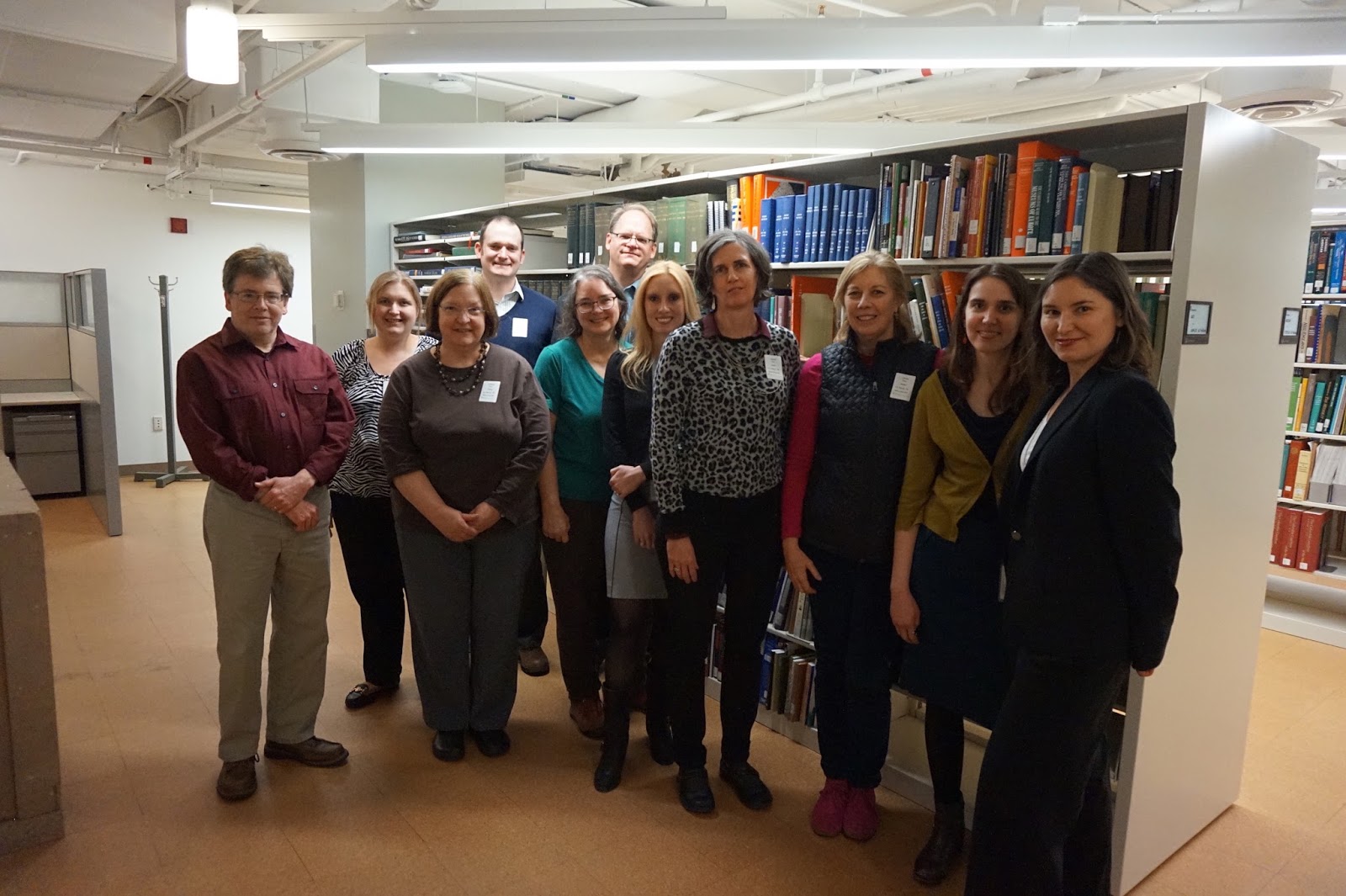
On February 4-5, 2016, Smithsonian Libraries hosted staff from the New York Botanical Garden, the Museum of Comparative Zoology (Harvard University), and the Missouri Botanical Garden as part of a training workshop for the New York Botanical Garden’s IMLS-funded grant, Expanding Access to Biodiversity Literature.

View Full Size Image

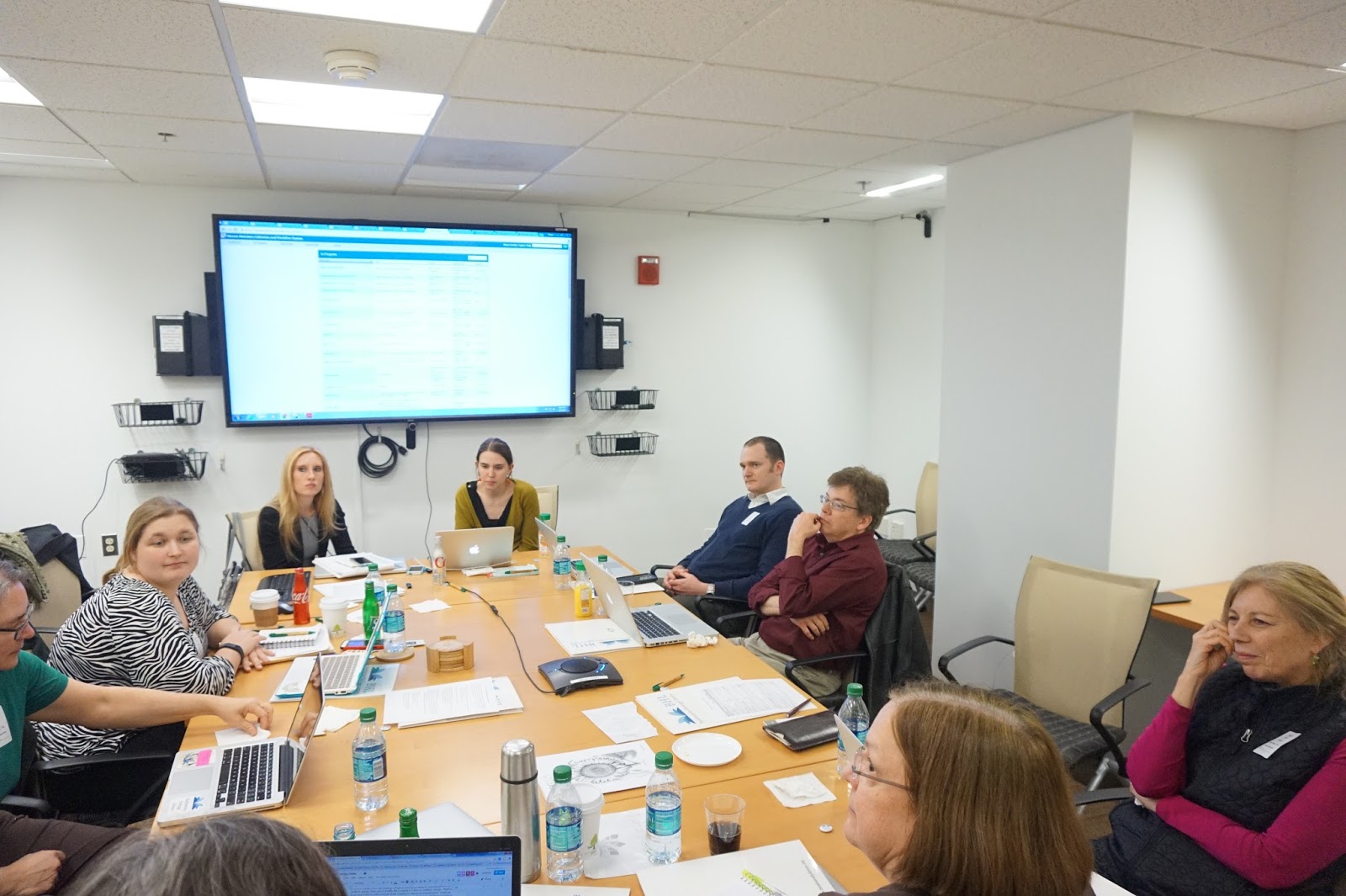
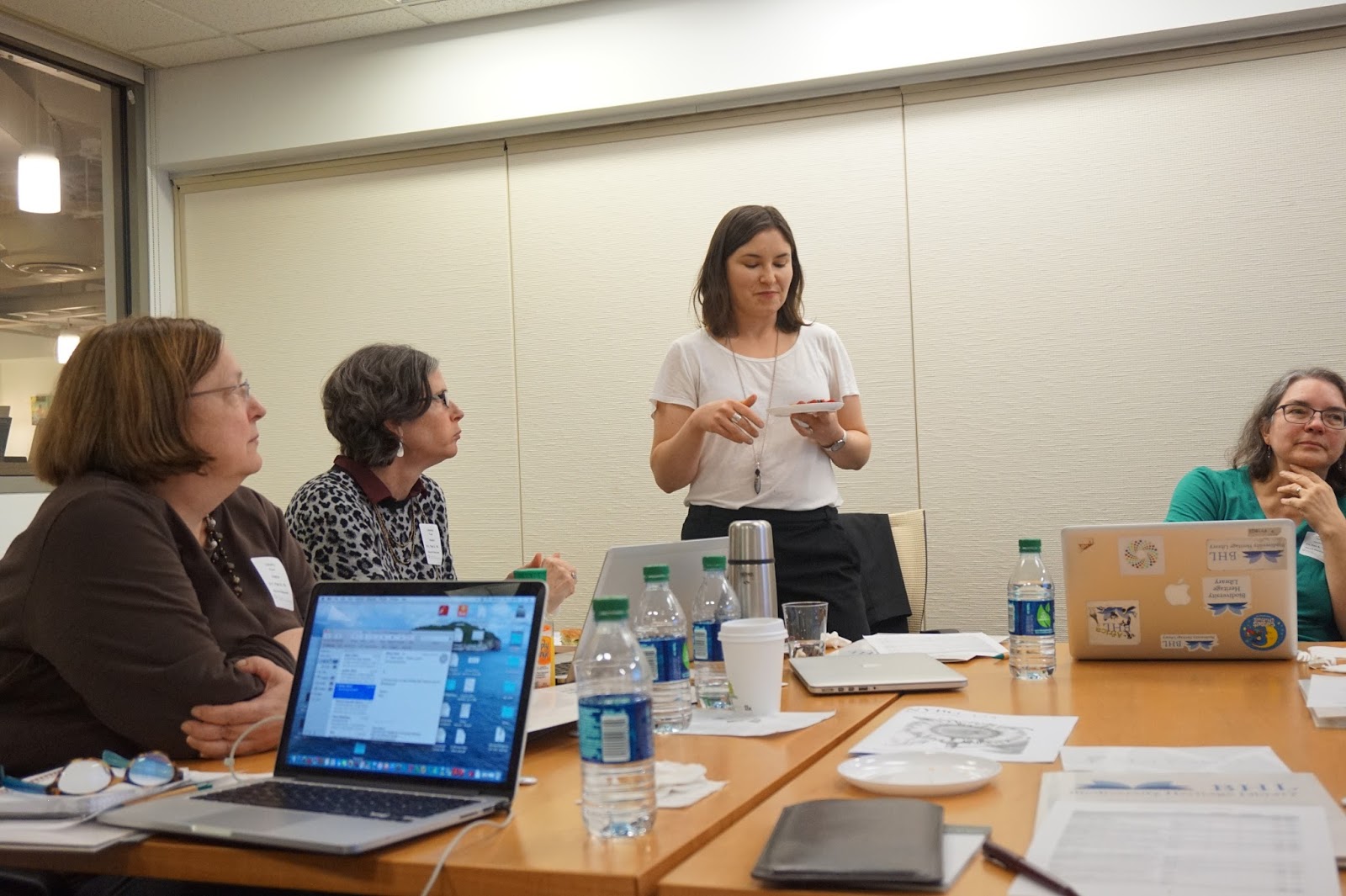
The BHL Secretariat staff (Carolyn Sheffield, BHL Program Manager; Bianca Crowley, BHL Collections Manager; Grace Costantino, BHL Communications and Outreach Manager; and BHL Program Director, Martin Kalfatovic) conducted the two day workshop based on previous workshops for BHL Africa and BHL Mexico. The workshop provided an intense overview of the methodologies for partnering with institutions not currently participating in the BHL in order to add new content to BHL and the Digital Public Library of America (DPLA).

Participating staff included:

New York Botanical Garden, LuEsther T. Mertz Library

  • Susan Fraser (Director of the NYBG LuEsther T. Mertz Library, Project Director)
  • Susan Lynch (Systems Librarian, Data Manager)
  • Mariah Lewis (Metadata Specialist – and former Smithsonian Libraries’ intern)

View Full Size Image

Ernst Mayr Library, Museum of Comparative Zoology, Harvard University

  • Constance Rinaldo (Librarian of the Ernst Mayr Library of the MCZ/Harvard University)
  • Joe deVeer (Project Manager and Museum Liaison for the Ernst Mayr Library of the MCZ/Harvard University)
  • Patrick Randall (Community Manager)

View Full Size Image

Missouri Botanical Garden, Center for Biodiversity Informatics

  • Trish Rose-Sandler (Digital Projects Coordinator, Center for Biodiversity Informatics, Missouri Botanical Garden and Data Analyst for BHL)

View Full Size Image

Thanks to the staff from the Smithsonian Libraries’ Natural History Library for hosting the event in their training room.

If you would like to learn more about Expanding Access to Biodiversity Literature, please visit the project’s wiki page.

February 16, 2016by Patrick Randall
BHL News, Blog Reel

BHL Data Dash – Dec 7th – 9th 2015

Portrait version of the Biodiversity Heritage Library logo.

The Purposeful Gaming project has now ended and BHL is no longer utilizing outputs from the games created as part of this project: Smorball and Beanstalk. However, both games will remain live for your continued enjoyment. Learn more.

The Biodiversity Heritage Library is hosting a 48-hour data correction event on December 7-9 2015. We’re enlisting the help of you, the BHL community, to help us complete 10,000 pages from BHL’s OCR output that we can then use as a training set to apply to the remaining BHL corpus.

Here’s how it will work:

On Monday December 7th we will begin the start of the sprint at 9am eastern standard time.  You can help us meet our Data Dash goal of 10,000 pages by playing Beanstalk and typing as many words as you can within the 48 hour timeframe.

View Full Size Image

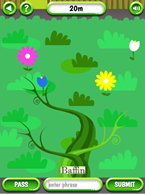
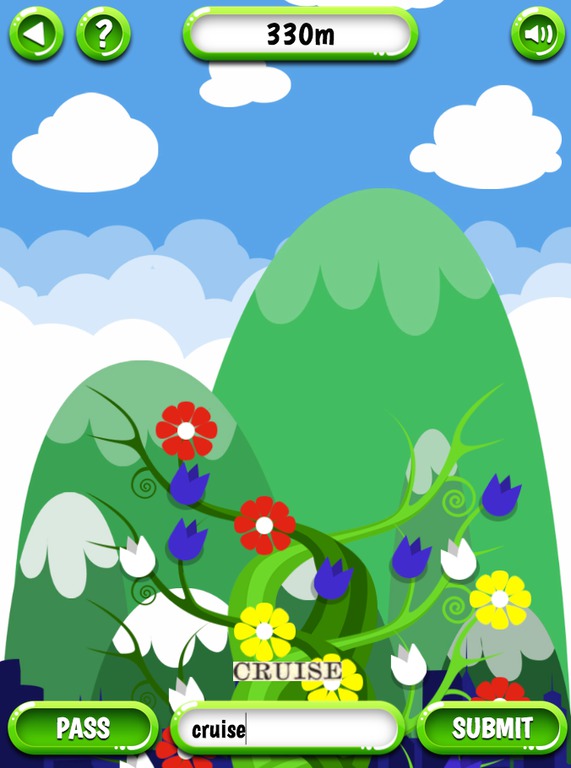
Beanstalk, designed by the award winning design lab Tiltfactor based at Dartmouth, is a quick and easy browser game that asks players to type the word they are shown on the screen. These corrected words are then re-ingested into BHL resulting in new and improved OCR. The more words that players type correctly, the faster the beanstalk grows, and the more contributions are made to BHL.

View Full Size Image

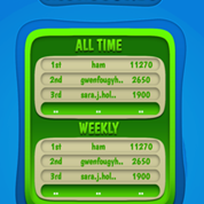
We will update players on how well they are helping us reach the goal by giving updates throughout the event via BHL social media. To make it more fun we encourage players to register before playing the game so that their scores can be tallied against other players during the event. (Please note:  we will be resetting the leaderboards for the duration of this event but afterwards will restore the scores. i.e. current players will not lose their cumulative scores.)

Get to the top of the “Weekly” leaderboard by correctly transcribing the most words, and declare yourself the victor of vines!

View Full Size Image

View Full Size Image

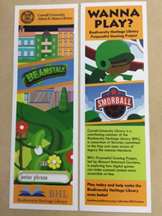
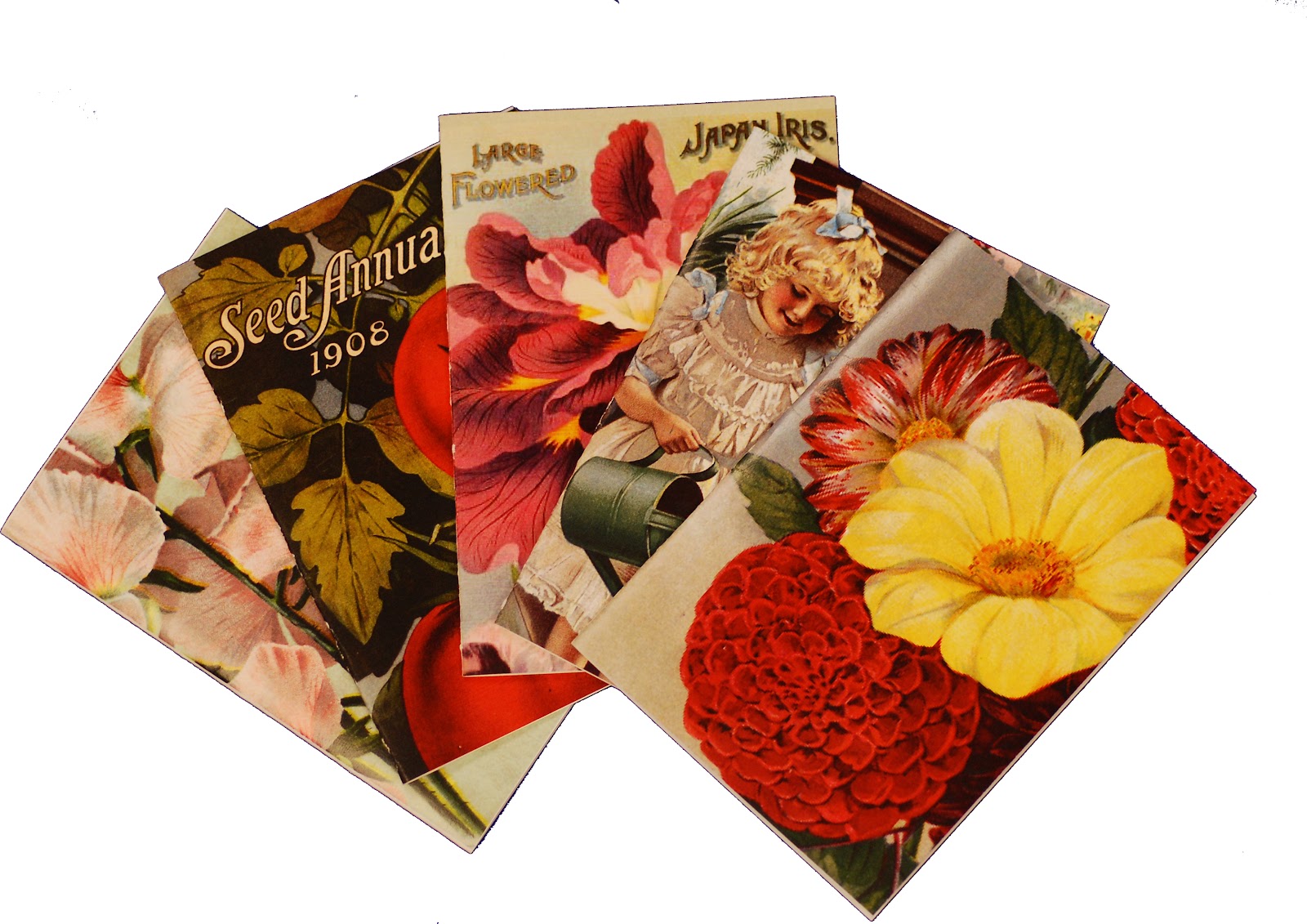
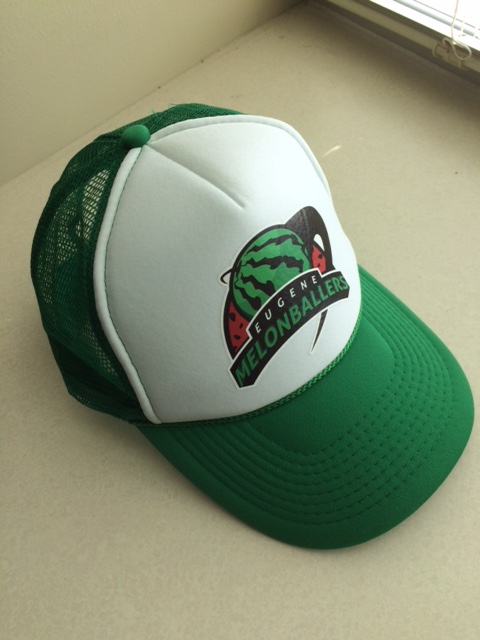
Besides seeing your name on the weekly leaderboard, the top 3 players that remain at the end of the dash on Wed Dec 9th 9am EST will receive their choice of BHL swag – which include a selection of notecards featuring beautiful illustrations from BHL books; bookmarks about both of BHL’s games (Beanstalk and Smorball), and Smorball trucker hats featuring the beloved home team the Eugene Mellonballers.

View Full Size Image

View Full Size Image

View Full Size Image

While BHL swag is oh so sweet, we know the primary motivating factor for the BHL community will be improving biodiversity research and with every word you type you will be doing just that!

Why now?

The IMLS-funded project, Purposeful gaming and BHL, is coming to a close at the end of this year.  While the games will continue to be available online beyond 2015, the project’s objectives – to demonstrate whether or not digital games are a successful tool for analyzing and improving digital outputs from OCR – need to be met which includes collection of a substantial number of text corrections via gaming.

So please won’t you help us to dash to the finish line to meet the number of data corrections needed to help improve the discoverability of historic biodiversity literature?

Play a Game. Grow a Beanstalk. Save a Book.

December 3, 2015by Patrick Randall
BHL News, Blog Reel

Smorball and Beanstalk Are Live!

The Purposeful Gaming project has now ended and BHL is no longer utilizing outputs from the games created as part of this project: Smorball and Beanstalk. However, both games will remain live for your continued enjoyment. Learn more.

The Biodiversity Heritage Library is excited to announce the release of two new games by Tiltfactor that will improve access to BHL collections and open a new frontier for crowdsourcing and citizen science.

Smorball and Beanstalk were designed as part of the Purposeful Gaming Project, which explores how digital games can make scanned content more accessible and searchable for cultural institutions. Based at the Missouri Botanical Garden in St. Louis, Missouri, “Purposeful Gaming” was established in 2013 through an Institute of Museum and Library Services (IMLS) grant and includes partners at Harvard University, Cornell University, and the New York Botanical Garden.

Purposeful Gaming: What It’s All About

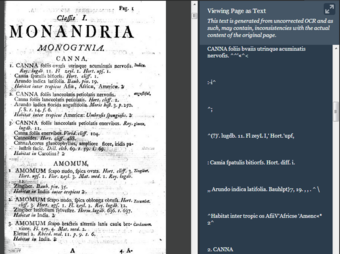
Libraries and museums across the world have scanned millions of pages of books and journals in order to increase access and enable online discoverability. When digitized, these pages are merely image files, which are unsearchable and virtually unusable. Optical character recognition software (OCR) is a method for converting page images to machine encoded text so they can be searched. Unfortunately, historic literature, like that found in the Biodiversity Heritage Library, has proven to be particularly problematic for OCR because of its tendency to have varying fonts, typesetting, and layouts that make it difficult to accurately render.

This is where the games come in.

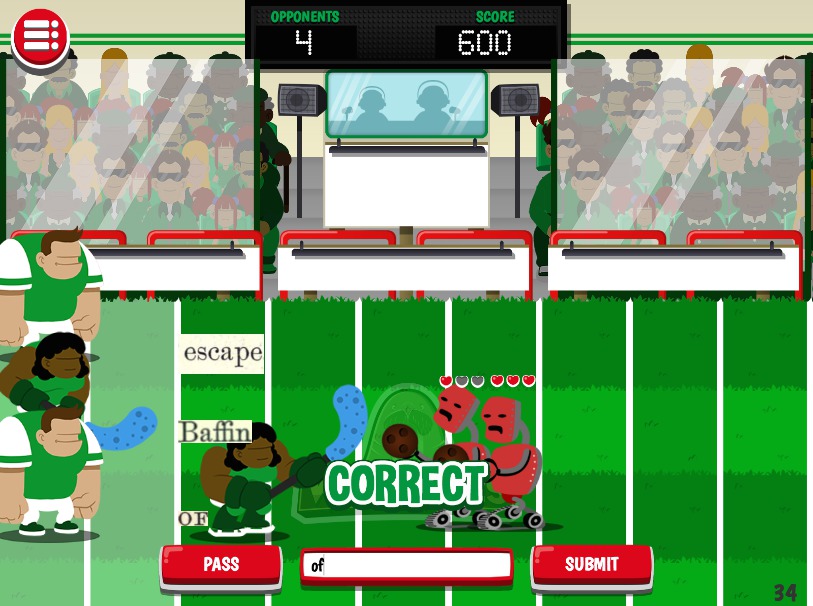
Smorball and Beanstalk, both quick and easy browser games, present players with phrases from scanned pages in BHL. After much verification, the words players type are sent to the libraries that store the corresponding pages, allowing those pages to be searched and data mined and ultimately making historic literature more usable for institutions, scholars, educators, and the public.

Why Use Games?

View Full Size Image
Sample of bad OCR output

While transcription tasks of the sort usually crowdsourced to the public can be interesting and engaging, they are often time-consuming and exacting. Games provide a fun, interactive, piecemeal method of accomplishing those same tasks.

“Cultural heritage institutions are increasingly benefiting from human computation approaches that have been used in revolutionary ways by scientific researchers. Engaging citizens to work together as decoders of our heritage is a natural progression, as preserving these records directly benefits the public,” says Dr. Mary Flanagan, founder and director of Tiltfactor. “Integrating the task of transcription with the engagement of computer games gives an extra layer of incentive to motivate the public to contribute.”

Why This Approach Is Groundbreaking

While many institutions have harnessed the power of crowdsourcing, “Purposeful Gaming” represents a new avenue of collaboration that promises wider appeal and endless possibilities for engaging citizen scientists in new, creative ways.

“The games provide a fun and engaging way for volunteers to help us with a task that we don’t have the staff to do ourselves,” explains Trish Rose-Sandler, Principal Investigator for “Purposeful Gaming.” “BHL benefits by having improved discoverability of its books and journals on plant and animal life. More importantly, benefits from the results of the project would extend to the broader digital library community. Any institution managing large text collections can learn from novel and more cost-effective approaches to generating searchable texts.”

What’s the Difference between the Two Games? Where Can I Play them?

Players of the more challenging Smorball game are asked to type the words they see as quickly and accurately as possible to help coach their team, the Eugene Melonballers, to victory to win the coveted Dalahäst Trophy in the fictional sport of Smorball.  Each word typed correctly defeats an opposing smorbot and brings the Melonballers closer to the championships.

View Full Size Image

Players of the more relaxed Beanstalk game must type the words presented to them correctly in order to grow their beanstalk from a tiny tendril to a massive cloudscraper. The more words they type correctly, the faster the beanstalk grows. Players who accurately transcribe the most words will ascend to the top of the leaderboard as a result of their valuable contributions.

View Full Size Image

If you want to learn about the material that was used for the Purposeful Gaming Project, check out the writings of William Brewster and BHL’s Seed and Nursery Catalog Collection.

Now, in the name of science, go play Smorball and Beanstalk. And have fun!

June 9, 2015by Patrick Randall
Blog Reel, Featured Books

A Bridge to the Past: The Writings of William Brewster

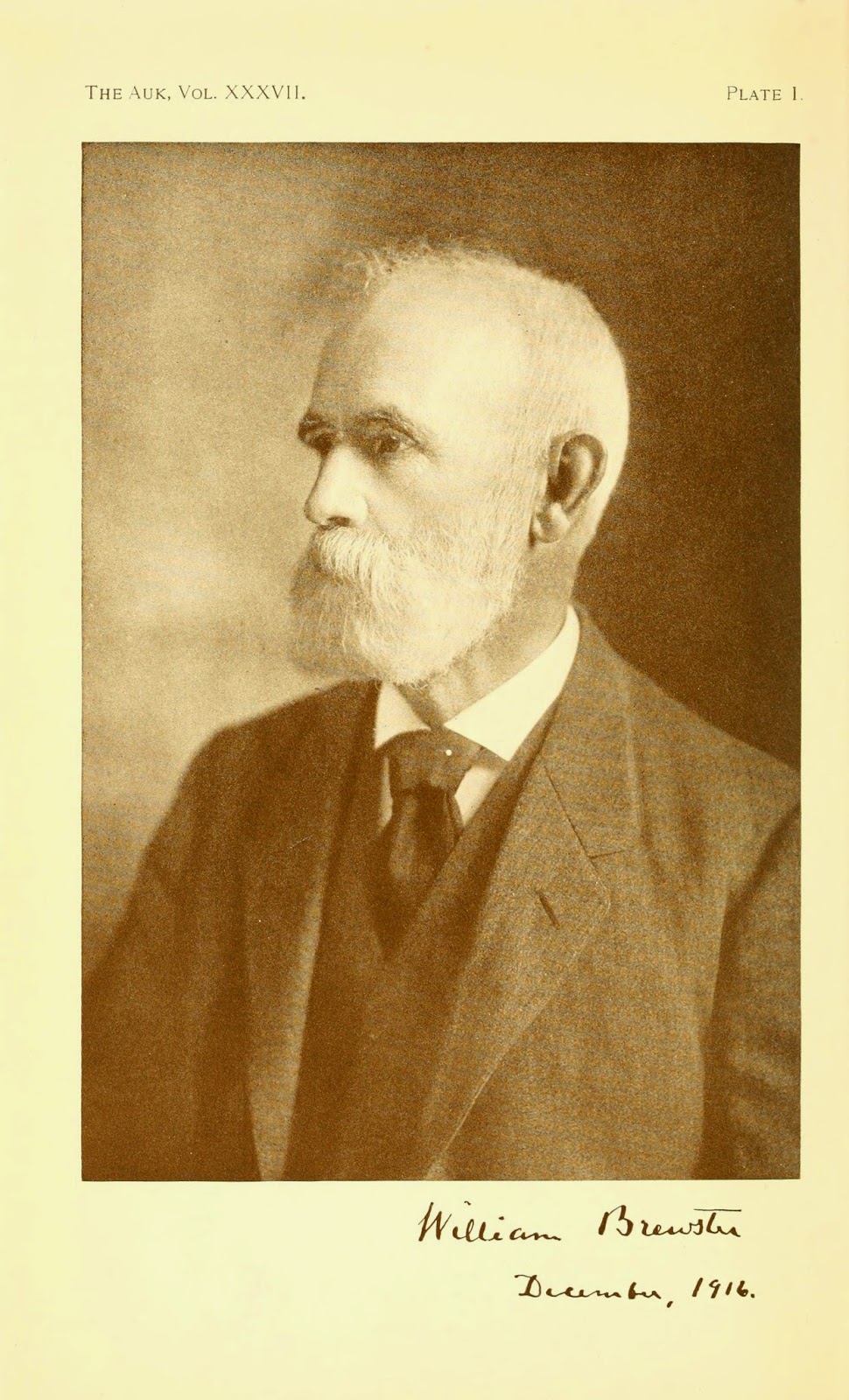
William Brewster was a self-educated ornithologist who lived in Cambridge, Massachusetts. From the mid-1800s until his death in 1919, he amassed a tremendous specimen collection and became one of the foremost experts on birds in the northeastern United States. In 1906, the Nuttall Ornithological Club published The Birds of the Cambridge Region of Massachusetts, Brewster’s exhaustive work on the avian fauna of his own backyard. While the book is a valuable historical resource, it is Brewster’s journals and diaries—spanning over 50 years of his life—that contain the goldmine of his recorded observations. Last year, the Ernst Mayr Library of the Museum of Comparative Zoology at Harvard University made these journals and diaries available on BHL.

View Full Size Image
Portrait of William Brewster. The Auk. v. 37 (1920). http://biodiversitylibrary.org/page/15938473

Increasingly, researchers and conservationists rely on collections of data points to understand species’ habits, population decline, and migration patterns. One such collection is eBird, a website created by the Cornell Lab of Ornithology and the National Audubon Society. eBird harnesses the contributions of bird-watchers around the world to create interactive maps that display individual observations as data points. These data points are integrated into systems such as the Global Biodiversity Information Facility (GBIF), where they paint a rich picture of global environmental health that transcends individual, component snapshots of information.

Since eBird launched in 2002, it has captured millions of bird observations. Prior to the World Wide Web, however—and especially prior to the advent of bird-watching as a common recreational activity around 1900—the record is more spotty. This makes the existing historical data, such as William Brewster’s carefully recorded observations, all the more valuable.

View Full Size Image
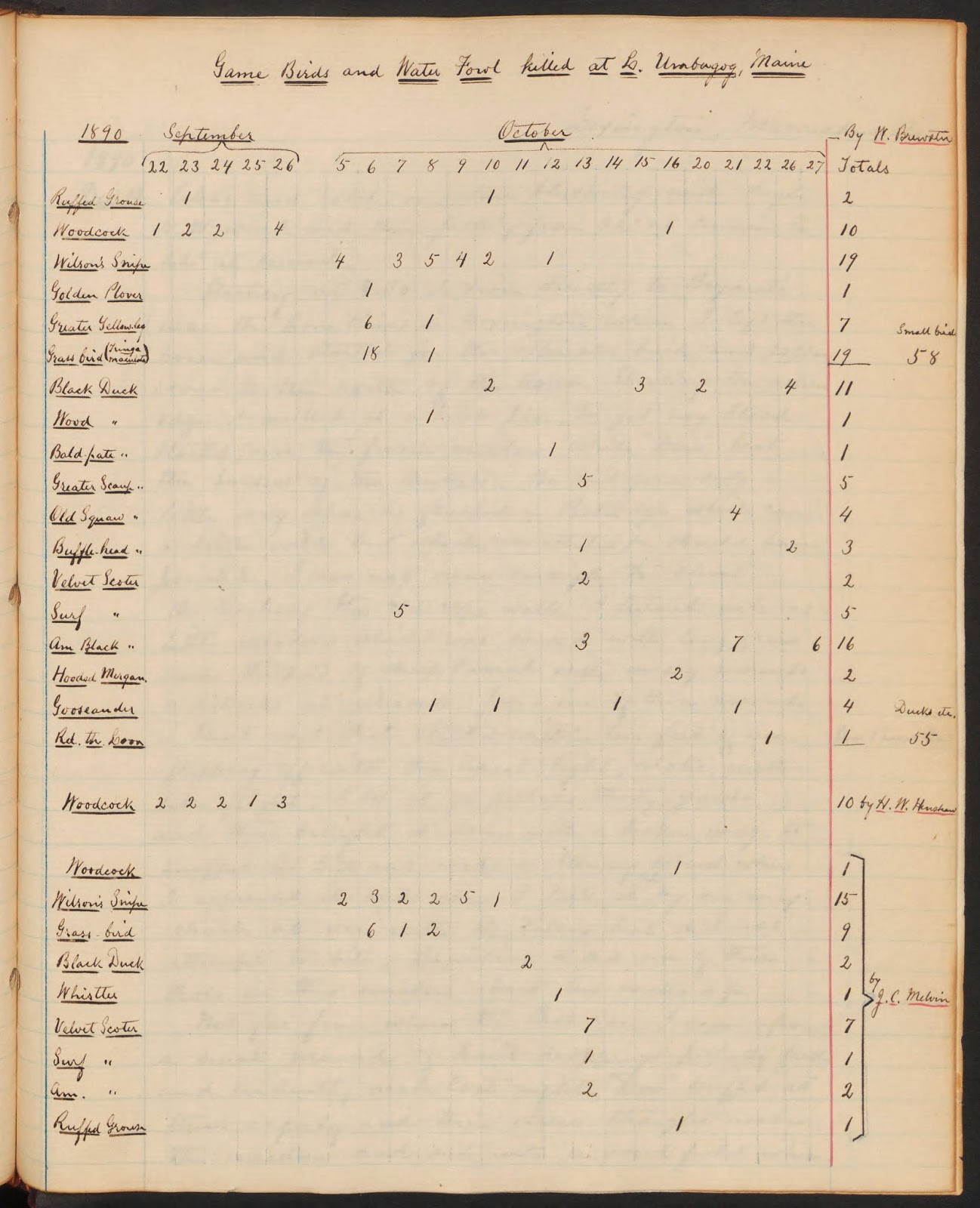
A bird list from Brewster’s 1890 journal.


Brewster saw the effects of urbanization and development on the Cambridge of his boyhood; more than the changed landscape, he lamented the loss of birds. In Birds of the Cambridge Region, he wrote of the Mt. Auburn area:
Knolls and ridges have been levelled, swamps and meadows drained or filled, and woods, groves, thickets and orchards swept away, to make place for settlements of houses…Most of the native birds have disappeared…So complete has been the transformation, that it is only by appealing to the imagination…that one can hope to reconstruct even the more prominent features of the landscape as it was twenty or thirty years ago.


In addition to the effects of development, Brewster witnessed the explosion of non-native House (English) Sparrows, the effects of 0ver-hunting, and the cost of human attitudes and ignorance. Brewster listed the Great Horned Owl as an “occasional or accidental” visitor to Cambridge and the Cooper’s Hawk as “expunged or doubtful”; at the time, people believed that these birds were a serious threat to domestic fowl, and they killed them at every opportunity. Wild Turkeys were totally extirpated from the region during Brewster’s lifetime.


View Full Size Image
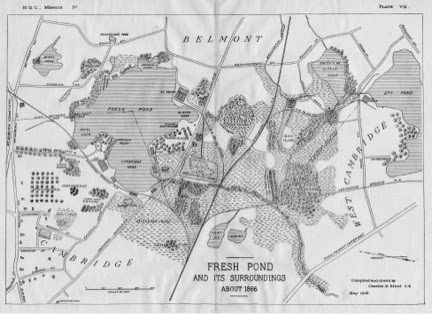
Map of Fresh Pond c.1866, from The Birds of the Cambridge Region of Massachusetts. Image provided by Charles Sullivan, Cambridge Historical Society.

Fresh Pond, one of Brewster’s favorite birding spots, is a case study in the harmful effects of human engineering. Before Fresh Pond was made a public park in 1884, hunters decimated the migratory duck populations that had once been abundant. The establishment of the park allowed the ducks to return, but at the cost of marsh birds: the vegetation at the water’s edge was cut down for a perimeter path, and some of the pond’s coves were filled in. With their habitat gone, several Rail species that Brewster commonly encountered around the pond disappeared. According to eBird, they’ve rarely been seen since. Even as the duck population rebounded, the city charged policemen with shooting their guns to scare them off, afraid that they would pollute the municipal water supply.

View Full Size Image
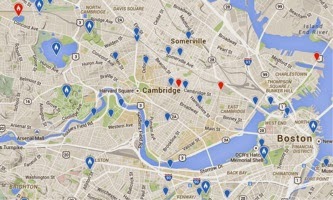
eBird Cooper’s Hawk sightings in the Cambridge region for 2014.

House Sparrows may be here to stay, but not all the damage has been permanent. Cambridge is working to restore Fresh Pond as a sanctuary for local wildlife. Cooper’s Hawks are now spotted regularly in the city. And Great Horned Owls and Wild Turkeys reside in Mt. Auburn Cemetery, where Brewster is buried. As we continue to make progress, the historical information provided by Brewster and others serves as a guide to conservation, filling in critical gaps in the stories of hundreds of bird species.

Making Brewster’s writings available on BHL is an important step, but the work doesn’t end there. In order for his journals and diaries to be truly useful, they need to be converted to searchable text files. Ordinarily, a computer would do this using Optical Character Recognition (OCR), but because the technology has trouble reading cursive handwriting, transcriptions must be typed out one page at a time. Thanks to a grant from the Institute for Museum and Library Services (IMLS), volunteers and project partners at the Ernst Mayr Library are doing just that. Read about BHL’s involvement in the Purposeful Gaming grant, and if you want to help, try your hand at transcribing Brewster’s diaries and journals. By making these writings accessible, we can reach into the past to find information that will help us plot a course for the future.

January 27, 2015by Patrick Randall
Page 3 of 4«1234»

Help Support BHL

BHL's existence depends on the financial support of its patrons. Help us keep this free resource alive!

search

About BHL

The Biodiversity Heritage Library (BHL) is the world’s largest open access digital library for biodiversity literature and archives. BHL operates as a worldwide consortium of natural history, botanical, research, and national libraries working together to digitize the natural history literature held in their collections and make it freely available for open access as part of a global “biodiversity community.”

Follow BHL

  • Bluesky logo
  • Instagram logo
  • Facebook logo
  • Flickr logo
  • Twitter logo

Join Our Mailing List

Sign up to receive the latest news, content highlights, and promotions.

Subscribe Now

Subscribe to Blog via Email

Enter your email address to subscribe to this blog and receive notifications of new posts by email.

Join 319 other subscribers

Subscribe to Blog Via RSS

Subscribe to the blog RSS feed to stay up-to-date on all the latest BHL posts.

Access RSS Feed


64+ Million Pages of
Biodiversity Literature Online.

EXPLORE

Tools and Services
to Transform Research.

EXPLORE

300,000+
Illustrations on Flickr.

EXPLORE

ABOUT | HARMFUL CONTENT | PRIVACY | SITE MAP | TERMS OF USE