Biodiversity Heritage Library - Program news and collection highlights from BHL
  • Home
  • News
  • Featured Books
    • All Featured Books
    • Book of the Month Series
    • BHL at 20
  • User Stories
  • Campaigns
    • Fossil Stories
    • Garden Stories
    • Monsters Are Real
    • Page Frights
    • Her Natural History
    • Earth Optimism 2020
  • Tech Blog
  • Visit BHL
Home
News
Featured Books
    All Featured Books
    Book of the Month Series
    BHL at 20
User Stories
Campaigns
    Fossil Stories
    Garden Stories
    Monsters Are Real
    Page Frights
    Her Natural History
    Earth Optimism 2020
Tech Blog
Visit BHL
  • Home
  • News
  • Featured Books
    • All Featured Books
    • Book of the Month Series
    • BHL at 20
  • User Stories
  • Campaigns
    • Fossil Stories
    • Garden Stories
    • Monsters Are Real
    • Page Frights
    • Her Natural History
    • Earth Optimism 2020
  • Tech Blog
  • Visit BHL
Biodiversity Heritage Library - Program news and collection highlights from BHL
BHL News, Blog Reel

BHL Workshop for NDSR Team

Portrait version of the Biodiversity Heritage Library logo.

On February 1 – 3, the 2017 National Digital Stewardship Residency (NDSR) BHL cohort convened in Washington, DC for an intensive two-day BHL Workshop followed by tours of local library and museum collections. As part of the Institute for Museum and Library Serves (IMLS)-funded Foundations to Actions grant, five residents will each be working with BHL mentors over the next 12 months to identify ways to improve our workflows and website and to enhance the user experience. This highly competitive program provides opportunities for recent graduates to contribute in meaningful ways to the research, planning and development of new approaches for digital preservation and access.

The BHL Workshop provided an opportunity for the five NDSR BHL residents to establish a common, foundational working knowledge of the Biodiversity Heritage Library’s operations. Dr. Nancy E. Gwinn, the Director of the Smithsonian Libraries, kicked off the workshop with a warm welcome and introduction to guest speaker, George Coulbourne. Mr. Coulbourne is the Chief of Internship and Fellowship Programs at the Library of Congress and counts the National Digital Stewardship Residency (NDSR) amongst his chief responsibilities. He provided a history of the program and an overview of future directions. Over the course of the two days, workshop sessions covered collection management practices, workflows and collaborative tools. Discussion topics focused on BHL’s larger vision for a next generation digital library.
View Full Size Image
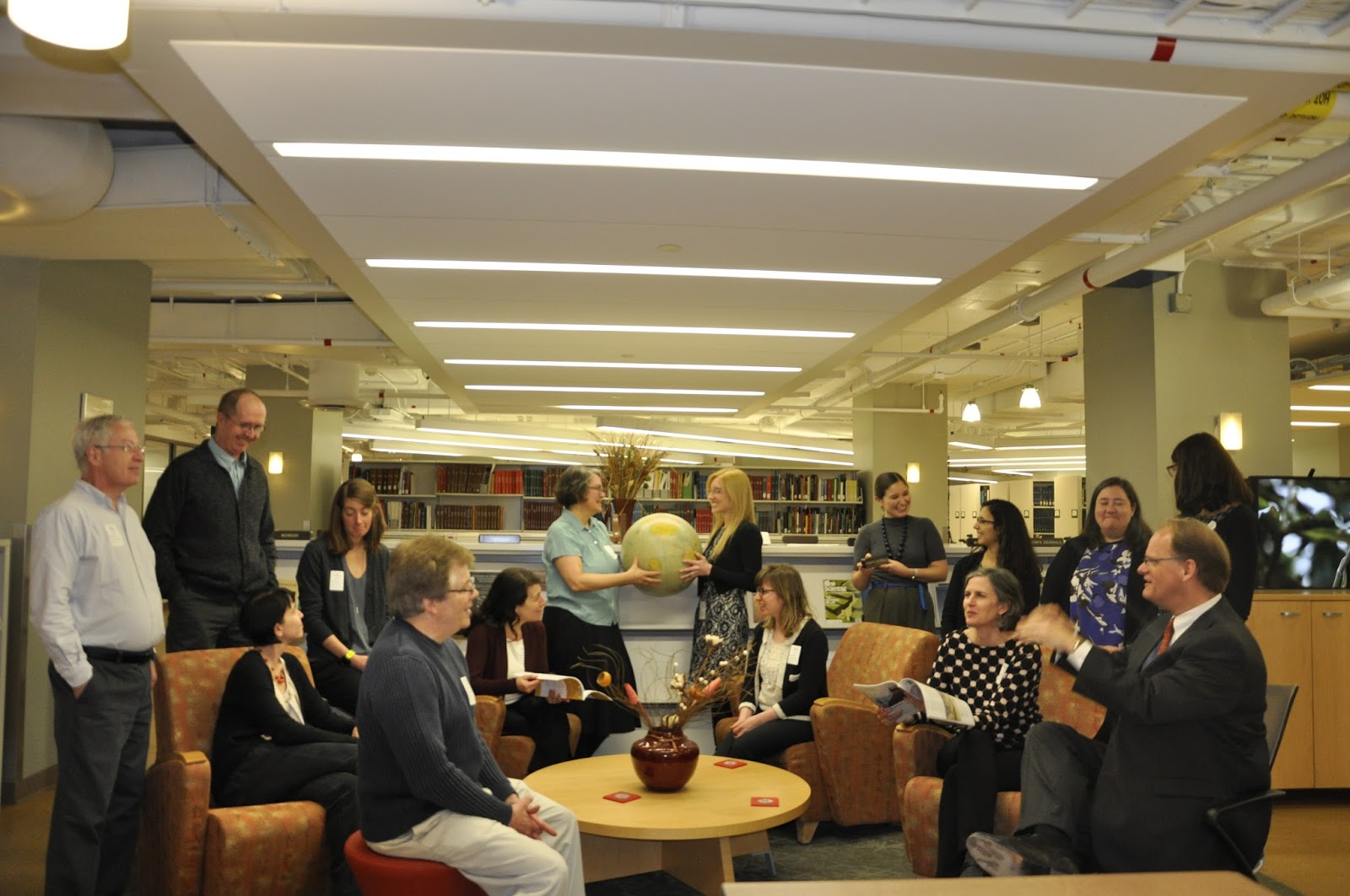
NDSR Mentors, Residents and BHL Secretariat

We were also pleased to offer a networking event the evening of February 1 that brought together current and past NDSR residents and mentors working on other projects in the region, as well as key stakeholders including representatives from IMLS, Library of Congress, and University of Maryland, among others. All told, approximately 35 librarians, archivists and information professionals gathered at the Smithsonian to participate in the evening.

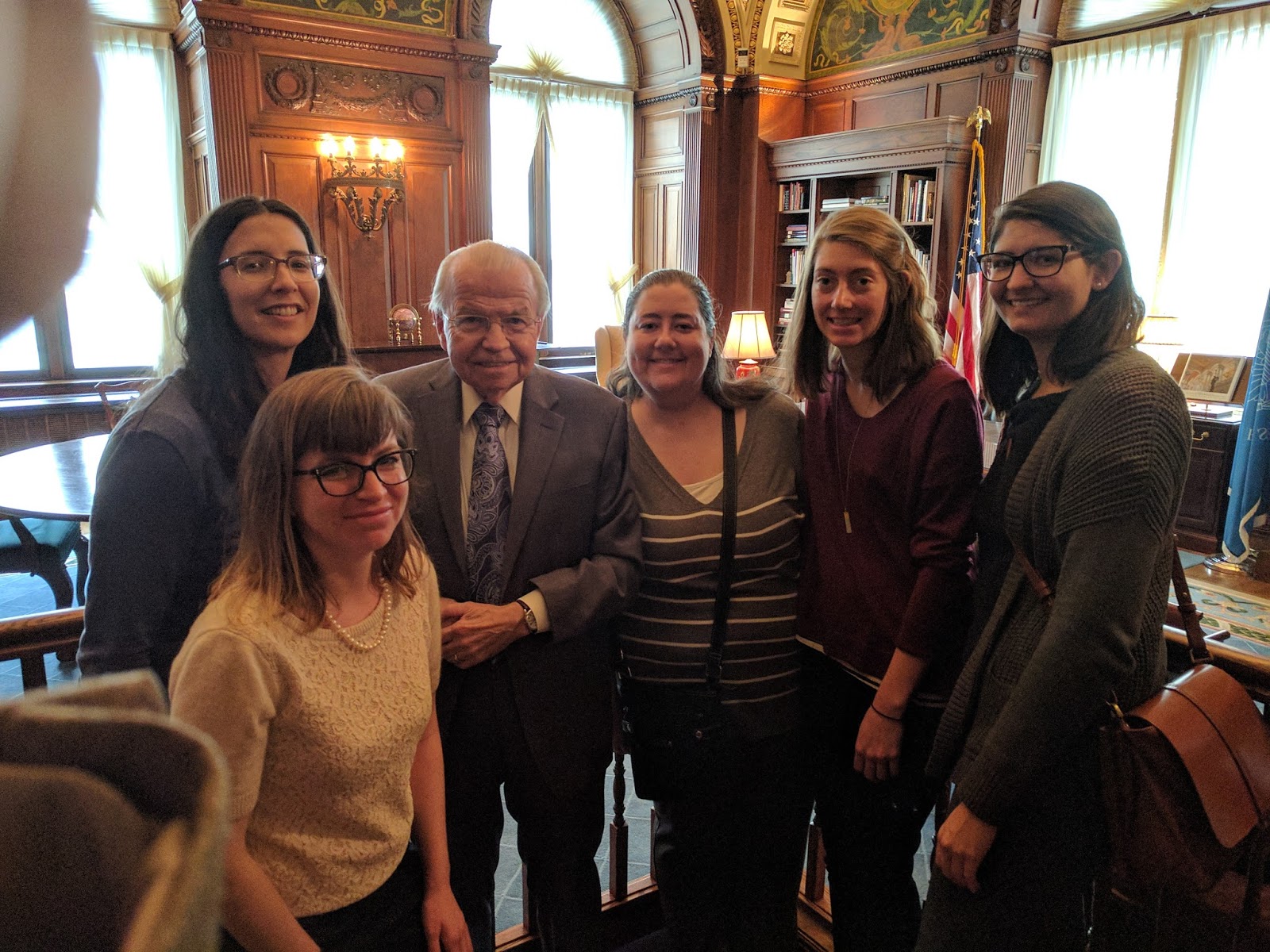
A variety of tours were also organized for the residents and were reflective of the collaborative nature of both BHL and the NDSR program. On February 1, Leslie Overstreet (Curator of Natural-History Rare Books) provided a tour of the Smithsonian Libraries’ Joseph F. Cullman 3rd Library of Natural History. The group was also treated to a tour of one of the Smithsonian Libraries’ digitization facilities at the National Museum of Natural History, where Jacqueline E. Chapman (Digital Collections Librarian) and Daniel Euphrat (Digital Imaging Technician) discussed digital workflows, policies, and procedures with the residents and showed them how books are prepared and digitized for inclusion in digital library portals like BHL.

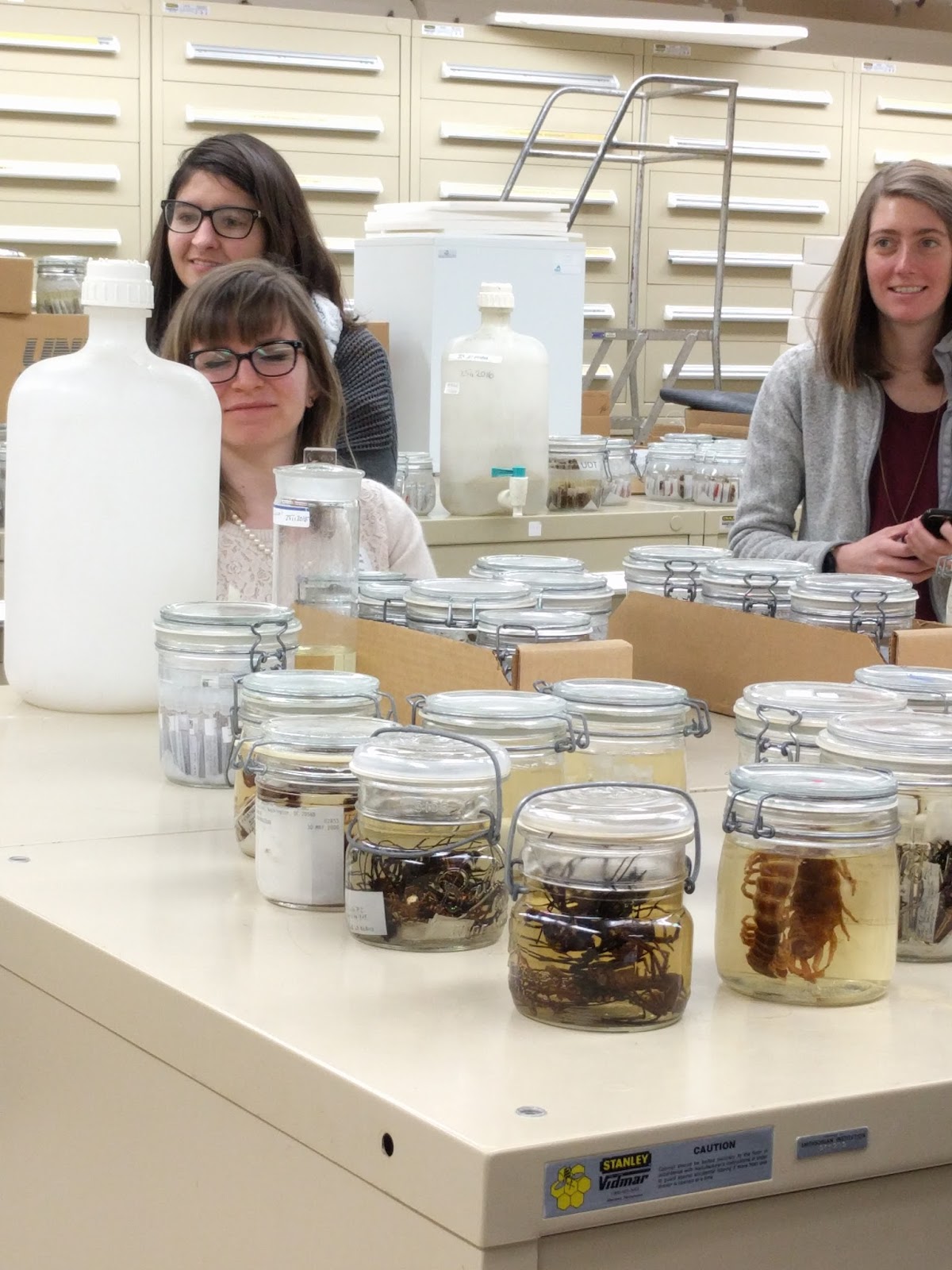
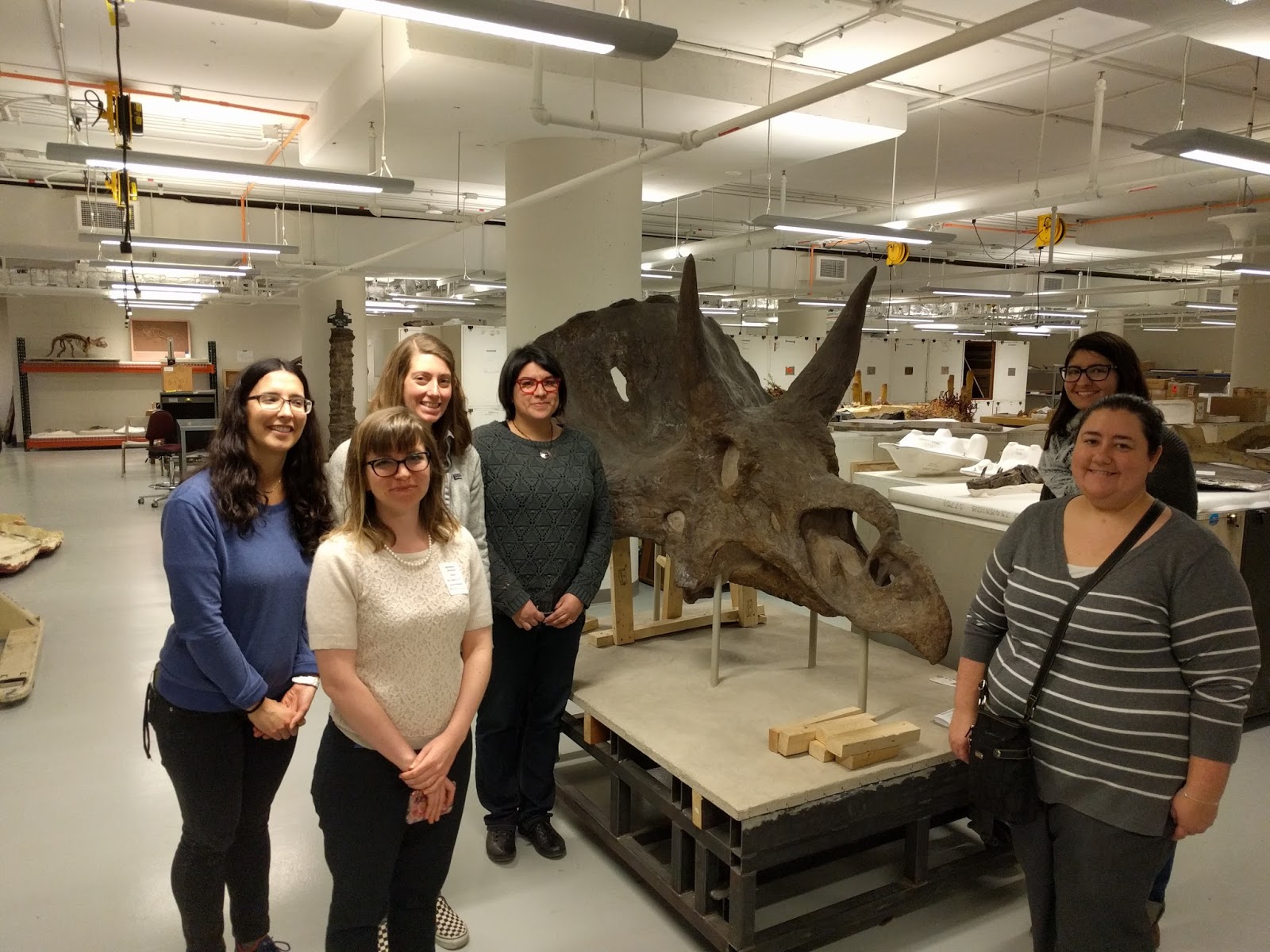
On February 3, a tour of the Library of Congress, led by John Y. Cole (Historian of the Library of Congress), was followed by two behind-the-scenes tours at the Smithsonian National Museum of Natural History (NMNH).  Floyd Shockley (Acting Collections Manager, Department of Entomology, NMNH) shared collections highlights from the Department of Entomology and Kathy Hollis (Collections Manager, Department of Paleobiology, NMNH) showcased collections from the Department of Paleobiology.
View Full Size Image
Residents at Library of Congress Tour (in the Librarian’s Ceremonial Office)
From left to right
Ariadne Rehbein (Missouri Botanical Garden resident), Alicia Esquivel (Chicago Botanic Garden resident), John Y. Cole (Historian of the Library of Congress), Pam McClanahan (Smithsonian resident), Katie Mika (Harvard resident), Marissa Kings (Natural History Museum, LA County)
View Full Size Image
Residents attending tour of the Department of Entomology,
Smithsonian National Museum of Natural History
View Full Size Image
Residents attending tour of the Department of Paleobiology,
Smithsonian National Museum of Natural History (with Hatcher, the Triceratops)

We’re thrilled to host the NDSR BHL cohort and look forward to the new perspectives and contributions they’ll make over the course of the year. You can learn more about each of the residents and the project page.

February 21, 2017by sayeedmd
BHL News, Blog Reel

Expanding Access at ALA Midwinter

Portrait version of the Biodiversity Heritage Library logo.

View Full Size Image

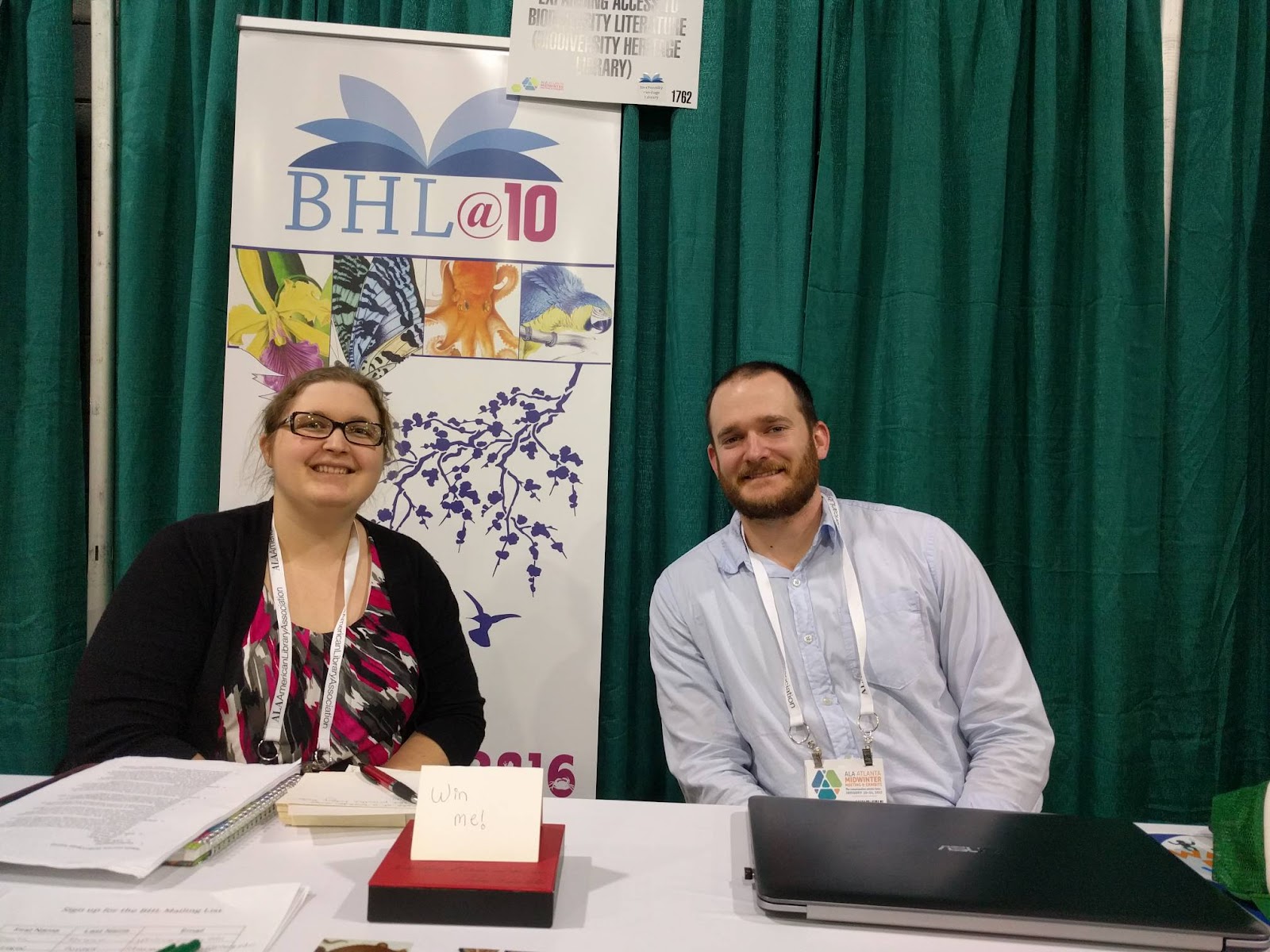
Last month, two Expanding Access to Biodiversity Literature (EABL) team members attended ALA Midwinter as exhibitors. The conference was held in downtown Atlanta, Georgia from January 20th until the 23rd, minutes away from where the Atlanta Falcons won entry into Super Bowl LI. Patrick Randall and Mariah Lewis were among other first-time exhibitors and spread the word about the IMLS National Leadership Grant Project. The weekend was full of fantastic conversations with librarians from a number of different institutions. Not only were new possible EABL contributors reached, it was also a great chance for those who were unfamiliar with BHL to check it out.

View Full Size Image

During the weekend, Mariah attended a discussion group for Digital Special Collections. The session focused on a number of projects being done by multiple different institutions, including projects on early American cookbooks, using Omeka for student exhibits at the University of Florida, interactive touch tables in archives, finding ways to get professors to interact more closely with collections of primary source material, and a project that didn’t intend on being digital.  The presentation led to a discussion of the tools used in digital projects and how to be knowledgeable about their operation while keeping up with the constant updates and changes.

On Tuesday, January 24th, Expanding Access hosted a training session at the Cherokee Garden Library, one of the institutions participating in Expanding Access.

View Full Size Image

The Cherokee Garden Library is located at the Atlanta History Center in Atlanta, Georgia. Founded in 1975 by Anne Coppedge Carr, the library was born out of the the Cherokee Garden Club. The collection now holds 32,000 objects—from books and manuscripts to landscape drawings and photographs. Covering topics from garden history to horticulture and plant ecology, the collection emphasizes the southeastern United States and provides a window into the journey of botany and horticulture throughout history.  In 2005, the Cherokee Garden merged with the Kenan Research Center, also at the Atlanta History Center.  The Expanding Access team is honored to help continue Carr’s philosophy of allowing use and access of the treasures within the collection.

BHL Program Director Martin Kalfatovic was gracious enough to give a thorough introduction to BHL that drew local wildlife also interested in BHL to the conference room window — though the inclusion of our avian friend on the project is still under review.  Under the supervision of the curious cardinal, the training session focused on content selection and curation and allowed staff at the library to get hands-on experience with BHL’s curation tool.

View Full Size Image
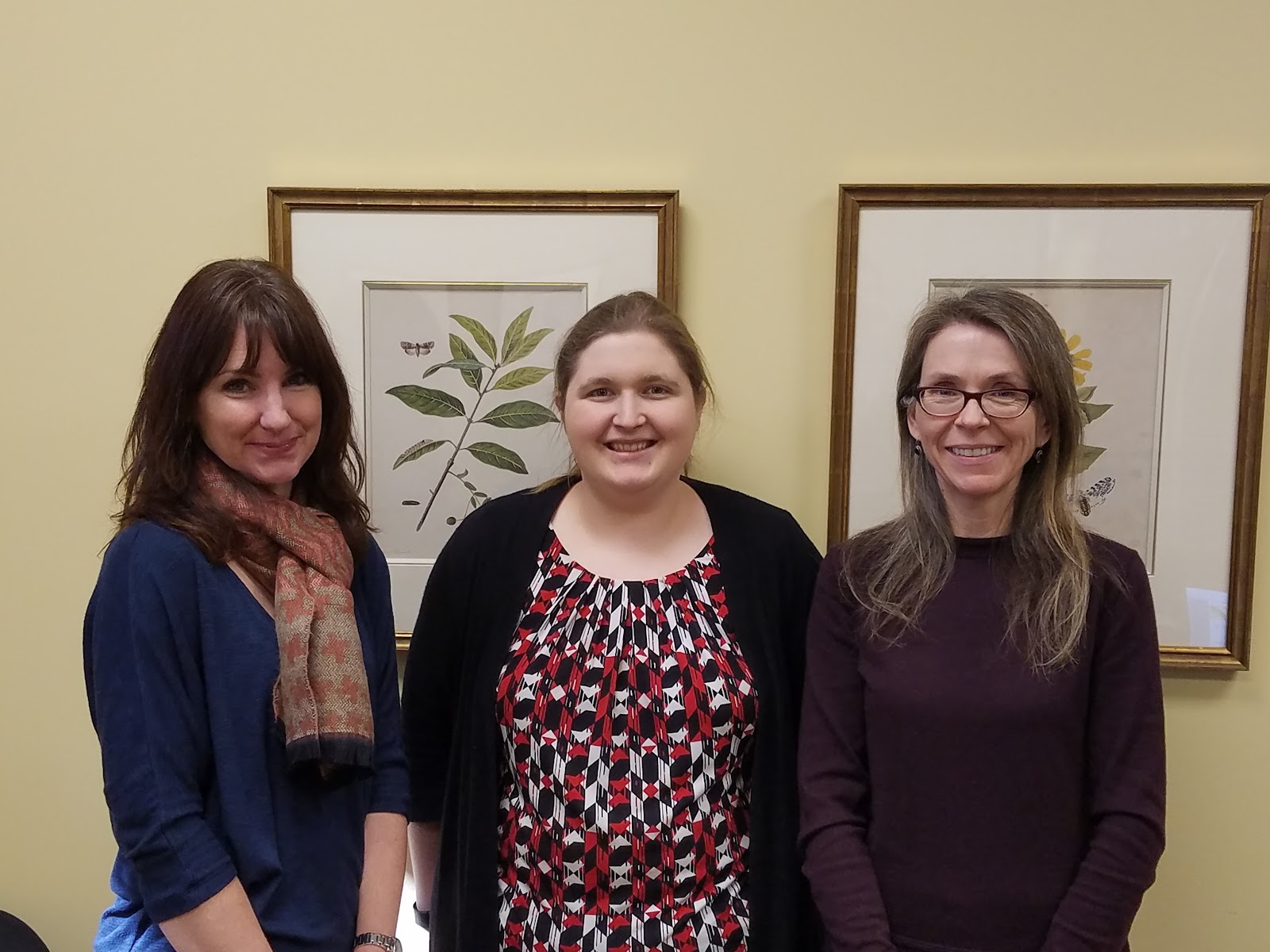
Left to right: Staci Catron, Library Director; Mariah Lewis; Jennie Oldfield, Cataloger & Archivist

While the Atlanta History Center may seem like an unlikely place for biodiversity content to be held, EABL is very excited to include the wide variety of biodiversity-related materials held within this inspirational institution.  Stay tuned for more information on the wonderful contributions from the Cherokee Garden Library, Kenan Research Center at the Atlanta History Center!

Reference

“About the Cherokee Garden Library.” Atlanta History Center. Accessed February 10, 2017. http://www.atlantahistorycenter.com/assets/documents/about_the_cherokee_garden_library_founding_leadership-2.pdf.

February 16, 2017by aneeser
BHL News, Blog Reel

‘What’s in a Name?’ Launched at Harvard Museum of Natural History

Why are names important in science? What is the difference between scientific names (also known as Latin names or taxonomic names) and common names? Why do some species have multiple names? The grant project team for What’s in a Name, supported by the Institute of Museum and Library Services (IMLS), set out to find answers and develop exhibits and other ways for anyone to explore this phenomenon. With millions of different species to identify and understand, the process of naming organisms helps scientists organize and understand the tree of life. The physical and virtual results of this exploration creatively demonstrate how scientists identify and name species, how names relate to scientific research and the progression of knowledge, and how museum specimen collections play a crucial role in the process of naming.

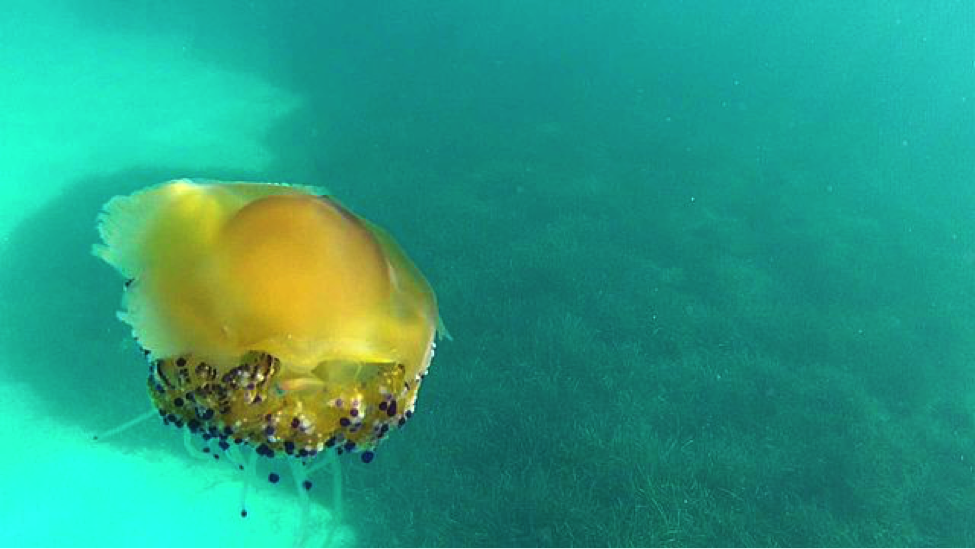
Why would something be called “Fried Egg jelly fish”, and also be known as Phacellophora camtschatica?

View Full Size Image
Image of the Fried Egg Jelly courtesy of gpapadop79 – Own work, CC BY-SA4.0, https://commons.wikimedia.org/w/index.php?curid=45347541.

Scientific names take the form of “Genus species”. Scientific names serve to distinctively identify an organism and also to show evolutionary relationships. The genus links the organism to its evolutionary relatives while the species name demonstrates its uniqueness (not unlike the family and first name convention of many people in North America). Organisms also have common names. Common names can be confusing—for instance a “Robin” in the United States is a completely different bird than a “Robin” in Europe, but if the scientific name is used, confusion can be reduced via the name unique to the organism.

The system of binomial nomenclature is used to assign species with their two-part Latin names. Carl von Linné (1707 – 1778) established a system of tiered taxonomic classification, which assigned species formal names, in the 18th century. His classification is outlined in his book, Systema Naturae. His purpose was to reduce confusion from the proliferation of common names by supplying a unique name to each organism that also displayed potential relationships with other organisms. The names were formulated from Latin words. Linné even Latinized his own name and is now best known by that name: Carolus Linnaeus.

View Full Size Image
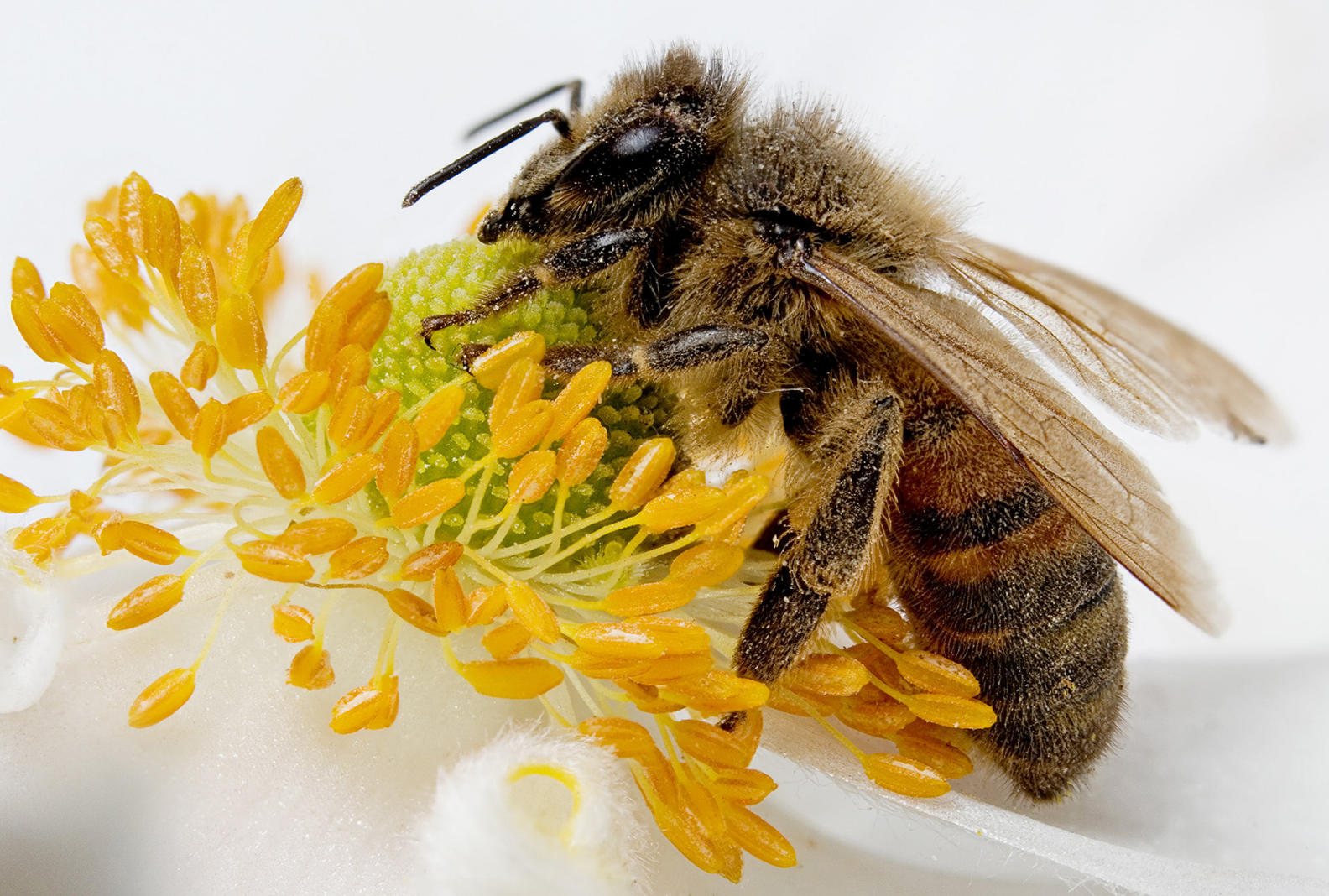
From the What’s In a Name PDF, page 32: “Carl Linnaeus gave the European Honeybee its name, Apis mellifera, which is Latin for “honey-bearing bee.” By some accounts, Linnaeus later became dissatisfied with the name he bestowed and argued to change it from Apis mellifera, to Apis mellifica, or “honey-making bee.” His mistake, he argued, was that bees make honey within the hive; they do not bear it from the flower. His argument was presumably unsuccessful as the bee still bears the erroneous name.” Image: A European Honeybee, Apis mellifera, visiting a flower that is dusting it with pollen. (JJ Harrison, CC BY-SA 3.0).

Species may be discovered by scientists poring over specimens in a museum or someone exploring an area rich in biodiversity. It is not necessary to be a scientist to name a new species but scientific names must conform to rules laid out by the International Code of Zoological Nomenclature and the International Code for Nomenclature for algae, fungi and plants. Names can reflect a characteristic of a species (Peromyscus leucopus-white-footed mouse) or can be named after a person or location (Mandelia microcornata-a nudibranch named for Nelson Mandela). Sometimes, scientists display a sense of humor when naming: Agra phobia and Agra vation are the scientific names of South American beetles. A hungry entomologist (Neal Evenhuis) named a series of flies (genus) Pieza and most notably, a species Pieza pi.

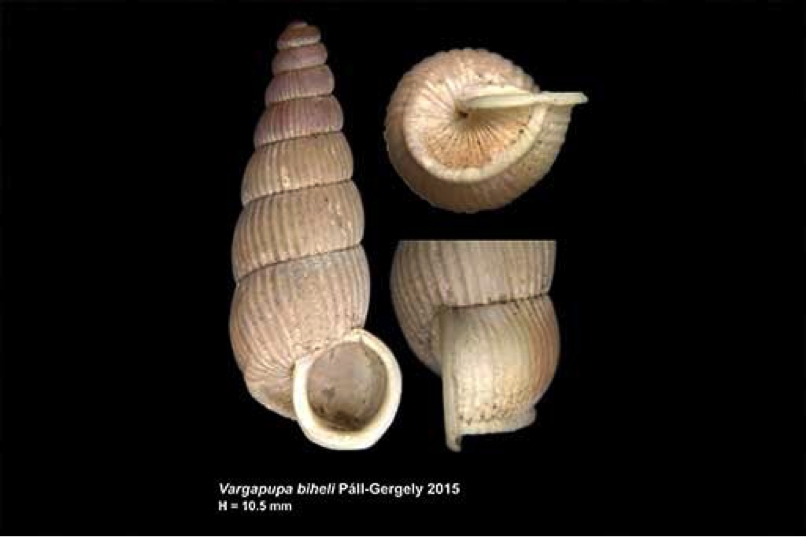
The results from the work of What’s in a Name? include four interactive exhibit stations at the Harvard Museum of Natural History on Honeybees, the extinct Dimetrodon, Jellies and Poison Ivy. There are also free online resources, including a website and a 60-page free e-book. The online resources include eight more species stories that feature images and references from the Biodiversity Heritage Library (BHL) and include familiar organisms like the dodo and sugar maple, as well as our favorite, the snail Vargapupa biheli named after BHL!

View Full Size Image
Vargapupa biheli. Image courtesy Dr. Barna Páll-Gergely.

Featured in the exhibit display on Dimetrodon, Stephanie Pierce, Assistant Professor of Vertebrate Paleontology, Harvard University, describes research being done right now on specimens of the fossil species Dimetrodon milleri, in the Museum of Comparative Zoology collection:

The What’s in a Name? project is a partnership between Harvard Museums of Science and Culture (HMSC), the Encyclopedia of Life (EOL), and the BHL, as represented by the Ernst Mayr Library of the Museum of Comparative Zoology at Harvard University. This project was made possible by IMLS.

For more information about scientific names and naming, check out the following sources

  • Bright, M. 2012. The Frog with Self-cleaning Feet: And Other Extraordinary Tales From the Animal World. Biteback Publishing. 304 pages.
  • Evenhuis, N. L.2002. Pieza, a new genus of microbombyliids from the New World (Diptera: Mythicomyiidae). Zootaxa 36(1). DOI: http://dx.doi.org/10.11646/zootaxa.36.1.1
  • Freeland, C. 2008. On Name Finding in the BHL. BHL Blog, March. https://goo.gl/wJIOWC
  • Greenstein, B. 2016. How’s your fern and bird coverage, BHL? BHL Blog, August.
  • Harvard Museums of Science and Culture. 2017, “What’s in a Name?.” http://whatsinaname.hmnh.harvard.edu/files/imls/files/_whatsinaname_.pdf
  • Judd, W. 2014.Weirdest species names. Australian Geographic. March 2014. https://goo.gl/UQ3xMA
  •  Zielinski, S. 2009. The World’s Strangest Scientific Names. Smithsonian Magazine. https://goo.gl/D3aMbb
February 14, 2017by ulib-libraryjobs
BHL News, Blog Reel

Announcing the New Valentine’s Day Collection in the BHL Store

View Full Size Image

Get your valentine the perfect card or gift with the new Valentine’s Day Collection in the BHL Store!

The collection includes products featuring vintage botanical art from the Biodiversity Heritage Library.

Shop the BHL Valentine’s Day Collection today!

The product art comes from Annales de la Société royale d’agriculture et de botanique de Gand, T.3 (1847), which was digitized in BHL by Harvard University Botany Libraries.

Not only are these products perfect for Valentine’s Day, but (just like with all of the products in the BHL store), 100% of the proceeds will be used to help us digitize more books for BHL. Researchers around the world rely on the information contained in books and archival materials to study and conserve biodiversity. Learn more about how BHL helps save biodiversity and how your purchase can have a lasting, positive impact on our planet.

View Full Size Image
You’ll find this badge in our store and on our marketing materials. It means that your purchase will help support research around the world. SHOP TODAY and help save biodiversity!

Visit the BHL Valentine’s Day Collection today to do some shopping that’s good for the planet.

January 30, 2017by ulib-libraryjobs
BHL News, Blog Reel

2016: A Banner Year for In-Copyright Content Added to BHL

The last quarter of 2016 continued the year’s steady growth in new permissions for in-copyright titles: 46 in October, November, and December, bringing the year-end total to 154! Major drivers of this growth were the Expanding Access to Biodiversity Literature project, staff at BHL participating institutions, and the worldwide BHL user community, which regularly identifies material and recommends it for digitization.

View Full Size Image
BHL licenses content under a Creative Commons
Attribution Non-commercial Share-alike 4.0 license

Below is the list of new titles for which BHL received permission in the fourth quarter of 2016. Note that many of the titles are not yet available in BHL because they are still being digitized or uploaded; check the recent additions page to see if a link has been added for a specific work or peruse In-Copyright Titles on the Permissions page.

American Arachnological Society

  1. Journal of Arachnology

Iowa Ornithologists’ Union

  1. Iowa Bird Life

Glasgow Natural History Society

  1. The Glasgow Naturalist

Instituto de Ciências Biológicas – Universidade Federal de Minas Gerais

  1. Oreades

Virginia Museum of Natural History

  1. Guidebooks
  2. Insects of Virginia
  3. Jeffersoniana
  4. Myriapodologica
  5. Special Publications: Checklist of the Millipeds of Middle and North America
  6. Memoirs

The Berwickshire Naturalists’ Club

  1. The History of the Berwickshire Naturalists’ Club

Carnegie Museum of Natural History

  1. Annals of the Carnegie Museum
  2. Bulletin of the Carnegie Museum of Natural History
  3. Special PublicationsMemoirs of Carnegie Museum

Western Australian Museum

  1. Records of the Western Australian Museum

South Africa Institute for Aquatic Biodiversity (SAIAB)

  1. Smithiana Bulletin
  2. Smithiana Special Publication
  3. Fishes of the Southern Ocean
  4. Otolith Atlas of Southern African Marine Fishes
  5. Biology and Ecology of Fishes in Southern African Estuaries
  6. Revision of the Indo-Pacific Dottyback Fish Subfamily Pseudochromineae

American Fern Society

  1. Pteridologia

Gulf Coast Research Laboratory

  1. Gulf Research Reports
  2. Gulf and Caribbean Research

Yorkshire Naturalists’ Union Birds Section

  1. Ornithological Report
  2. Bird Report

Cary Institute of Ecosystem Studies

  1. Newsletter of the Cary Arboretum
  2. IES Newsletter
  3. Occasional Publications of the Cary Institute of Ecosystem Studies
  4. EcoFocus

American Malacological Society

  1. American Malacological Bulletin
  2. Bulletin (American Malacological Union)Annual Reports
  3. Annual Meeting / News Bulletin & Annual Report
  4. Perspectives in Malacology
  5. Proceedings of the 2nd International Corbicula Symposium
  6. Entrainment of Larval Oysters

American Association of Zoo Keepers

  1. Animal Keepers’ Forum

Wyoming Native Plant Society

  1. The Castilleja

Kentucky Society of Natural History

  1. Annals of Kentucky Natural History
  2. Kentucky Naturalist News

Colorado Native Plant Society

  1. Colorado Native Plant Society Newsletter
  2. Aquilegia

Biodiversity Journal

  1. Biodiversity Journal

Geological Institute of Russian Academy of Sciences

  1. Voprosy mikropaleontologii (Questions of micropaleontology)

Thank you to the many individuals and institutions that have so generously given permission for these titles. If you have content you would like to see in BHL, or content you want digitized, please get in touch with the Expanding Access project by emailing Community Manager Patrick Randall at [email protected].

As always, don’t forget to follow BHL on Facebook, Twitter (@BioDivLibrary), Instagram, and Tumblr!

January 24, 2017by eomeara
BHL News, Blog Reel

BHL Adds University of Toronto Libraries as a New Member

View Full Size Image

The Biodiversity Heritage Library is pleased to welcome the University of Toronto Libraries (UTL) as a new Member. UTL is the first Canadian library to join the Biodiversity Heritage Library as a Member.

The University of Toronto Libraries system is the largest academic library in Canada. Ranked fourth among North American peer institutions by the Association of Research Libraries, the UTL system is particularly strong in the sciences and includes 10 dedicated science libraries. Among these is the Gerstein Science Information Centre, Canada’s largest standalone science and health library. Additionally, the Thomas Fisher Rare Book Library holds rich collections on the history of science and medicine, including an exhaustive collection of original works by Charles Darwin.

“The University of Toronto Libraries is thrilled to become a Member of the Biodiversity Heritage Library,” asserts Neil Romanosky, UTL’s Associate Chief Librarian for Science Research and Information and Director of the Gerstein Science Information Centre. “Given the rapid rate of extinction of species across the globe, we see membership in BHL as an important opportunity to support the search for knowledge by preserving our wealth of historic biodiversity materials and sharing them more widely.”

View Full Size Image
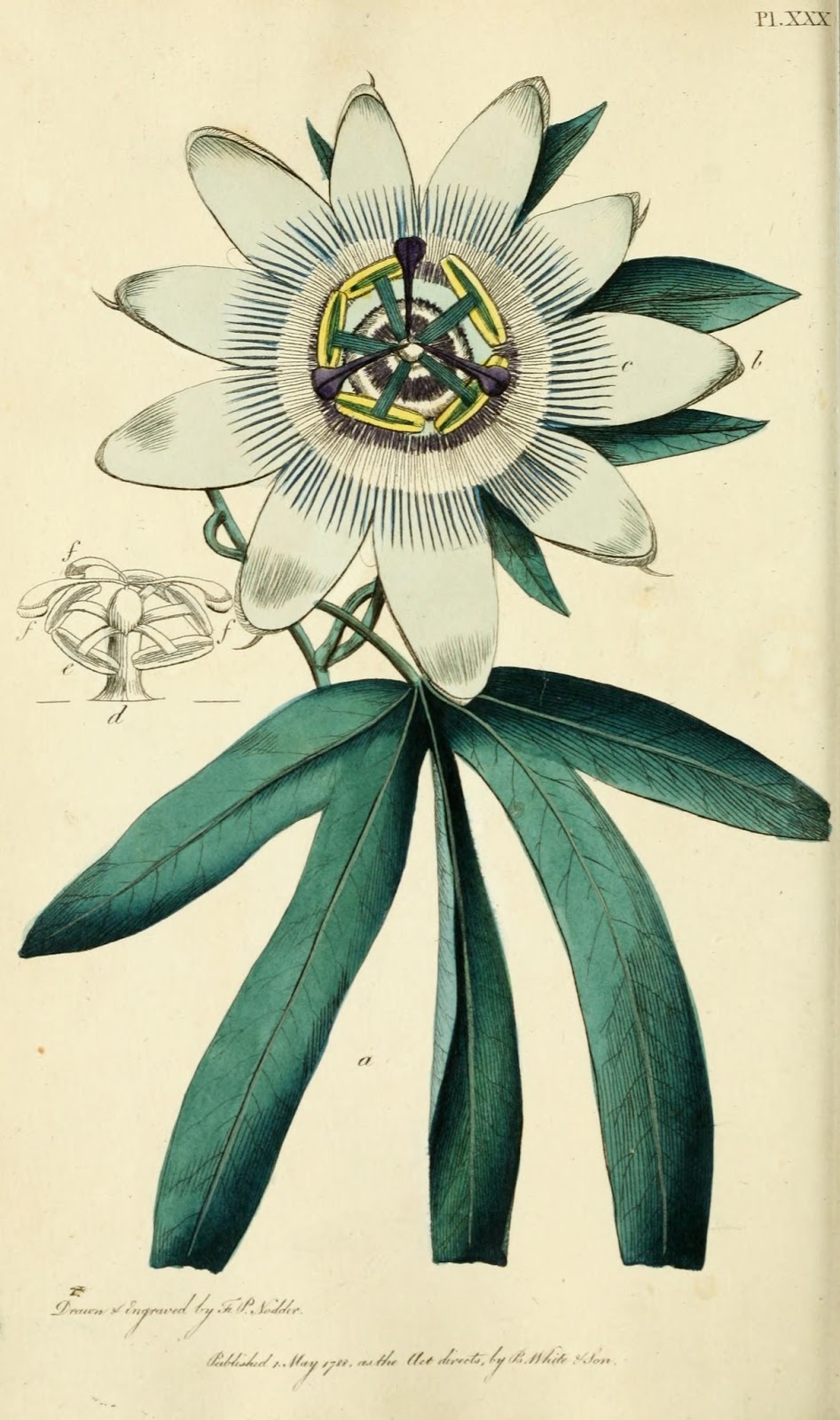
Martyn, Thomas. Thirty-eight plates, with explanations; intended to illustrate Linnaeus’s System of vegetables, and particularly adapted to the Letters on the elements of botany [by J.J. Rousseau] By Thomas Martyn. (1799). Art by Frederick Polydore Nodder. http://www.biodiversitylibrary.org/page/32193301. Digitized by University of Toronto Libraries from the Thomas Fisher Rare Book Library.

As a BHL Member, the University of Toronto Libraries will enhance BHL’s collection by contributing rare and unique material from its holdings of over 12 million print volumes. As the host of an Internet Archive (IA) scanning center, the Libraries has already digitized a large portion of its collection. Over 3.3 million pages of natural history literature from UTL are currently available in BHL.

“The University of Toronto Libraries and BHL share a commitment to open access and the promotion of digital scholarship through global partnerships and the development of innovative tools and technology,” affirms BHL Program Director Martin R. Kalfatovic. “We look forward to the expertise and leadership that UTL will bring to the BHL consortium as we work together to build our online collection, enhance our services, and empower researchers around the world through free access to biodiversity knowledge.”

The BHL consortium now consists of 18 Members and 15 Affiliates.

January 23, 2017by Grace Costantino
BHL News, Blog Reel

Be Like a BHL Librarian and Edit Wikipedia for #1Lib1Ref

You too can be like a librarian … a Biodiversity Heritage Library librarian! The Biodiversity Heritage Library wants people to use its resources, and Wikipedia is encouraging librarian-minded folk to add citations to articles via their #1Lib1Ref campaign (15 January – 3 February 2017). Talk about a perfect match. You can help by adding citations from BHL to Wikipedia.

Don’t worry if you haven’t edited Wikipedia before. What follows is an easy “How to” guide to adding a citation from works held in BHL to a Wikipedia article.

Create a Wikipedia Account

Your first step is to create a Wikipedia account. Although you can edit Wikipedia without an account, if you create one, you can use Wikipedia’s fabulously easy “Visual Editor” tool. This comes with a feature which allows for ease of citation of references. Click here to see how to create an account and how to enable the Visual Editor tool.

Find an Article

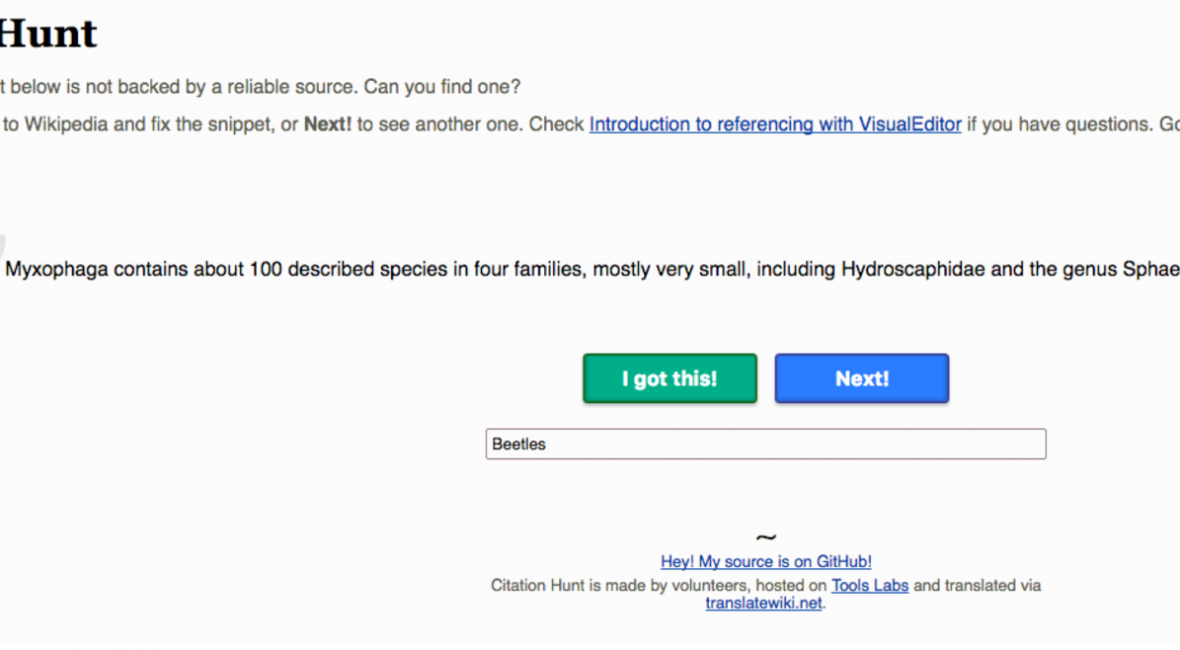
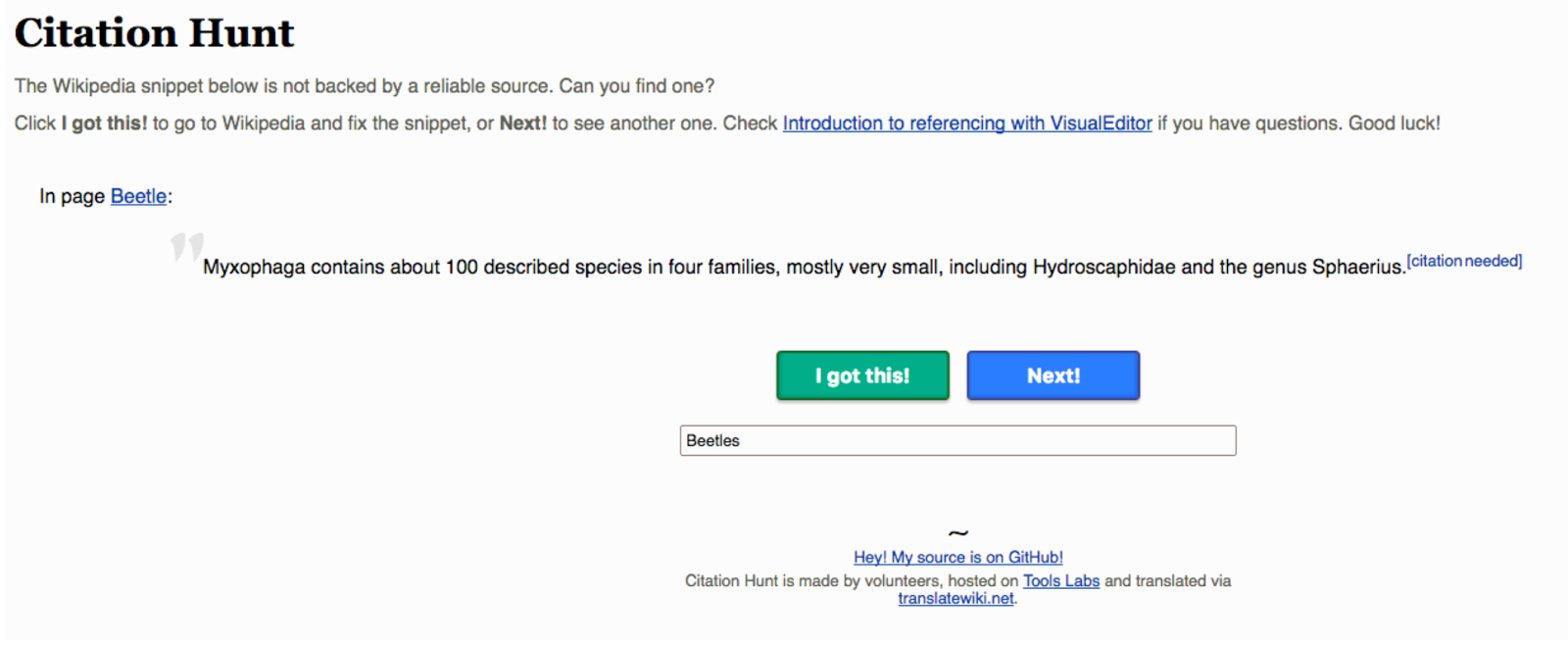
Your second step is to find an article that needs to be improved with added citations. One way is to use the Wikimedia Citation Hunt tool. When using this tool, I narrow my search to articles which need the Biodiversity Heritage Library resources. I do this by filling in the “What makes you tick” box with a search term. In the example below, I’ve added “Beetles” to find beetle articles that need citations, but there are many other terms you could use. For example, try “mosses”, “Fish of Canada”, “lizards” or any subject you are interested in.

View Full Size Image

In the above case, to find the needed citation I would put “Myxophaga” (a suborder of Coleoptera or beetles) in the search box on the BHL website and see if I could find any article, journal or book in BHL supporting the statement in the Wikipedia article to which I want to add a citation.

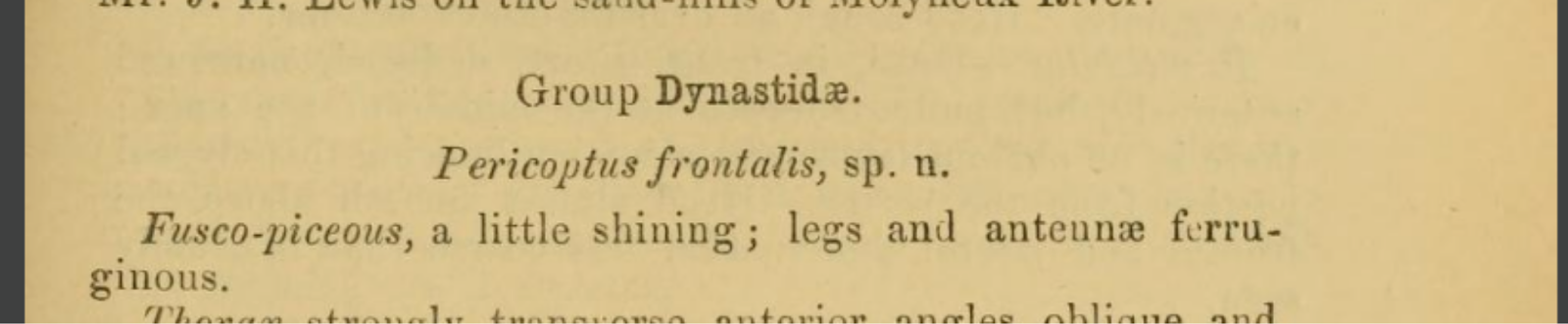
You can also work from the other end and find an article in BHL that you can then cite in Wikipedia. So for example I found this article which first describes the Pericoptus frontalis beetle. This is an article that can and should be cited in the Pericoptus frontalis beetle Wikipedia page.

View Full Size Image

Citing Reference in Wikipedia

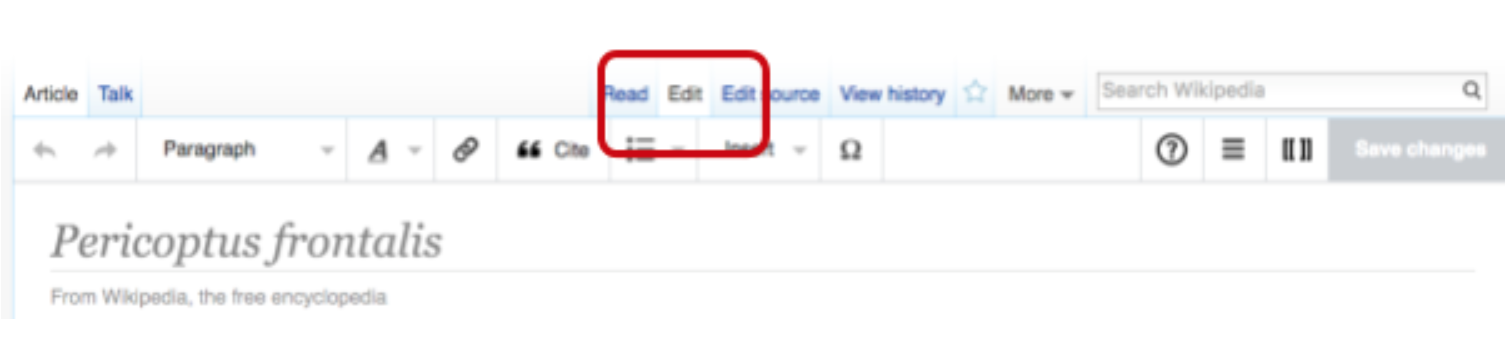
So you’ve logged in to Wikipedia, enabled the Visual Editor tool, and found the article in BHL you want to cite. Now go to the page you want to edit and click on the “Edit” tab so that the Visual Editor edit bar appears.

View Full Size Image

Place your cursor in the Wikipedia article where you wish to add the citation and then press “cite” on the edit bar.

View Full Size Image

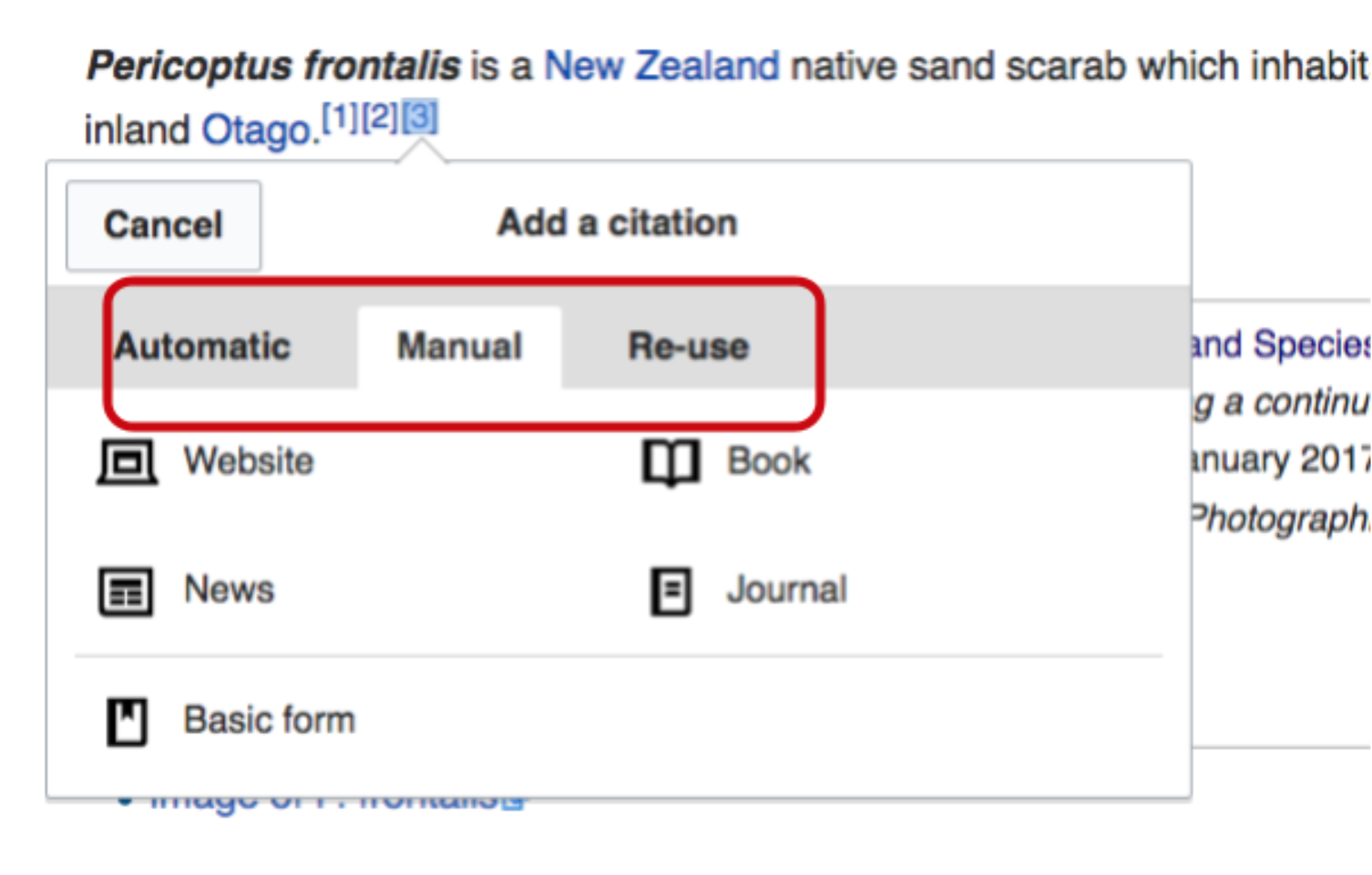
The “add a citation” box should then appear.

View Full Size Image

You then have a choice of either using the “Automatic”, “Manual” or “Reuse” citation method. If you have the URL, DOI or PMID of the article, you can use the “Automatic” citation tool to generate a citation. Alternatively, use the “Manual” citation, which will give you different options to choose from depending on where you obtained your citation. The image above shows you the manual citation options.

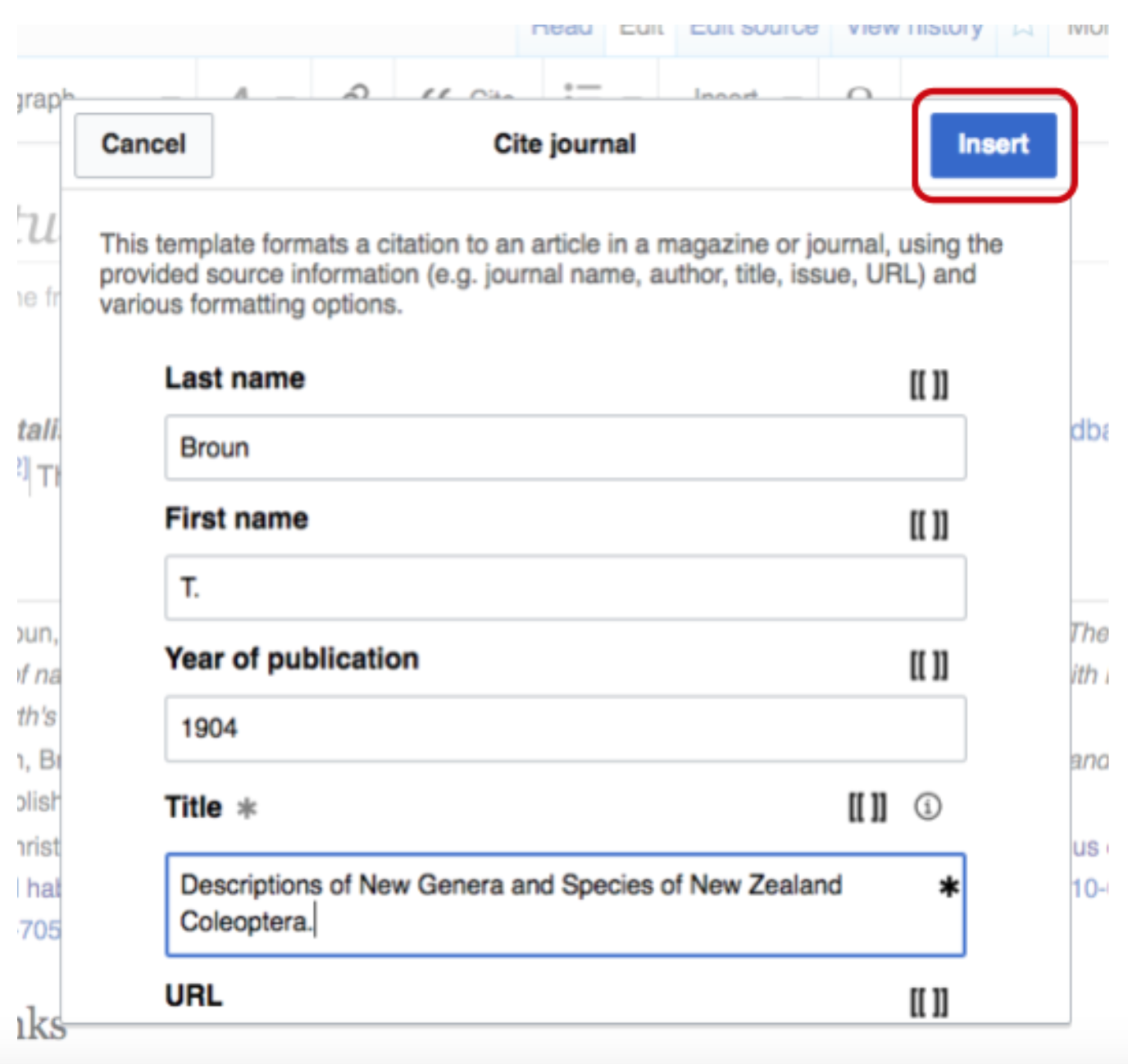
In this case, I’m citing an article in a journal rather than a book or a newspaper article, so I would choose the “Journal” option. Clicking on “Journal” brings up a template. Fill in all the information you can in the appropriate boxes and then press “Insert” on the top right of the box. Make sure you provide the stable URL link in BHL (learn more).

View Full Size Image

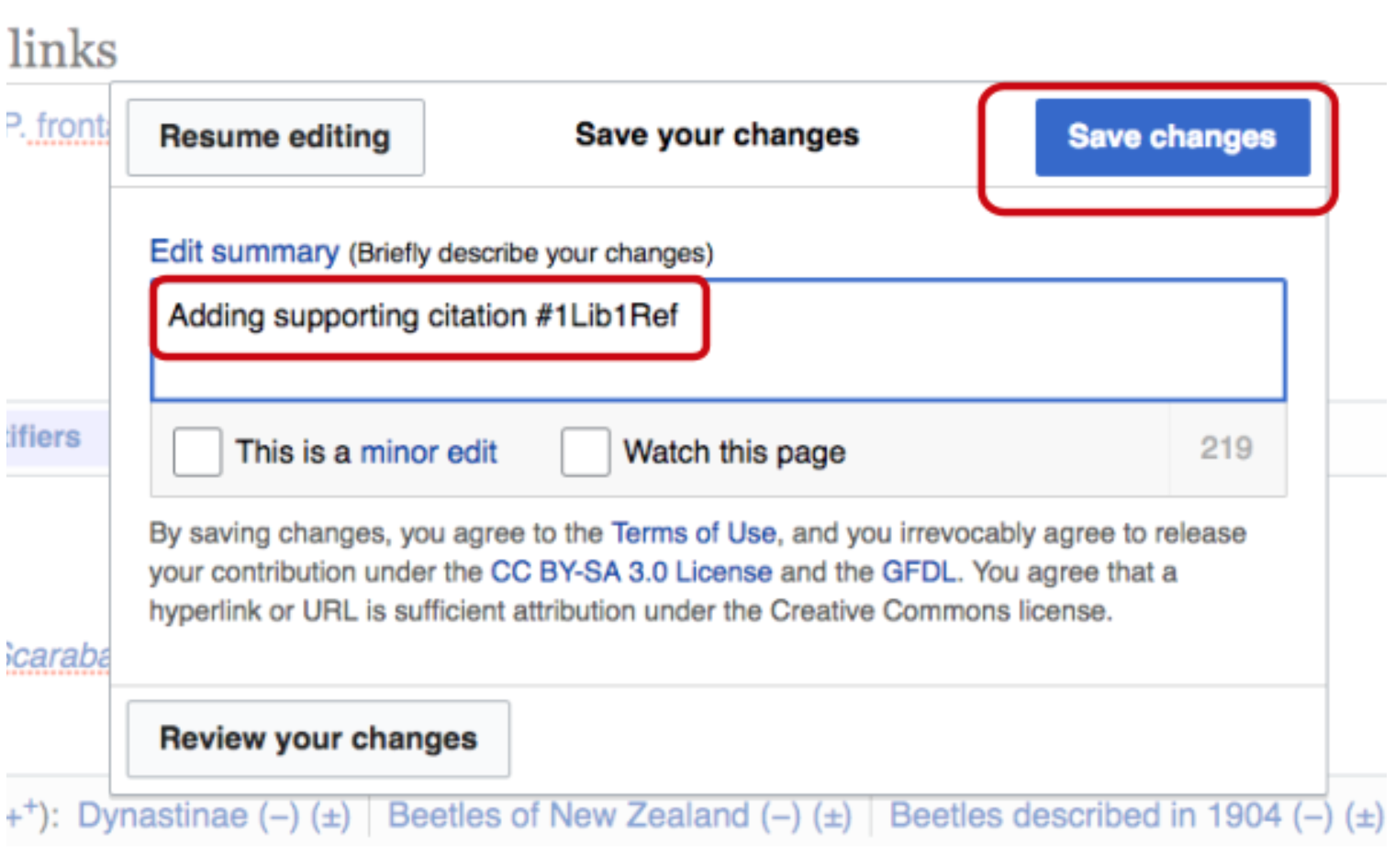
Pressing “insert” brings up a “Save your changes” box asking you to briefly describe the changes you’ve made to the article. Make sure you add the hashtag #1Lib1Ref to your edit summary as this will add your edit to the campaign total.

View Full Size Image

You then press the “Save changes” button and with that you have added a citation to Wikipedia!

For further Information on the Wikipedia #1Lib1Ref campaign, click here.

Follow #ILib1Ref on social media, 15 January – 3 February 2017 to learn more about the campaign and see how adding citations to Wikipedia can improve the resource for everyone!

If you have questions or get stuck, see this page to learn more about the various outlets you can use to find help and information. You can also tweet BHL at @BioDivLibrary or Siobhan at @SiobhanLeachman.

January 17, 2017by ulib-libraryjobs
Page 26 of 78« First...1020«25262728»304050...Last »

Help Support BHL

BHL's existence depends on the financial support of its patrons. Help us keep this free resource alive!

search

About BHL

The Biodiversity Heritage Library (BHL) is the world’s largest open access digital library for biodiversity literature and archives. BHL operates as a worldwide consortium of natural history, botanical, research, and national libraries working together to digitize the natural history literature held in their collections and make it freely available for open access as part of a global “biodiversity community.”

Join Our Mailing List

Sign up to receive the latest news, content highlights, and promotions.

Subscribe Now

Subscribe to Blog via Email

Enter your email address to subscribe to this blog and receive notifications of new posts by email.

Join 319 other subscribers

Subscribe to Blog Via RSS

Subscribe to the blog RSS feed to stay up-to-date on all the latest BHL posts.

Access RSS Feed

Inspiring Discovery through Free Access to Biodiversity Knowledge.

The Biodiversity Heritage Library makes it easier than ever for you to access the information you need to study and explore life on Earth…for free, anytime, anywhere.


64+ Million Pages of
Biodiversity Literature Online.

EXPLORE

Tools and Services
to Transform Research.

EXPLORE

300,000+
Illustrations on Flickr.

EXPLORE

ABOUT | HARMFUL CONTENT | PRIVACY | SITE MAP | TERMS OF USE