Biodiversity Heritage Library - Program news and collection highlights from BHL
  • Home
  • News
  • Featured Books
    • All Featured Books
    • Book of the Month Series
    • BHL at 20
  • User Stories
  • Campaigns
    • Fossil Stories
    • Garden Stories
    • Monsters Are Real
    • Page Frights
    • Her Natural History
    • Earth Optimism 2020
  • Tech Blog
  • Visit BHL
Home
News
Featured Books
    All Featured Books
    Book of the Month Series
    BHL at 20
User Stories
Campaigns
    Fossil Stories
    Garden Stories
    Monsters Are Real
    Page Frights
    Her Natural History
    Earth Optimism 2020
Tech Blog
Visit BHL
  • Home
  • News
  • Featured Books
    • All Featured Books
    • Book of the Month Series
    • BHL at 20
  • User Stories
  • Campaigns
    • Fossil Stories
    • Garden Stories
    • Monsters Are Real
    • Page Frights
    • Her Natural History
    • Earth Optimism 2020
  • Tech Blog
  • Visit BHL
Biodiversity Heritage Library - Program news and collection highlights from BHL
Blog Reel, Featured Books

Renard’s Book of Fantastical Fish

View Full Size Image
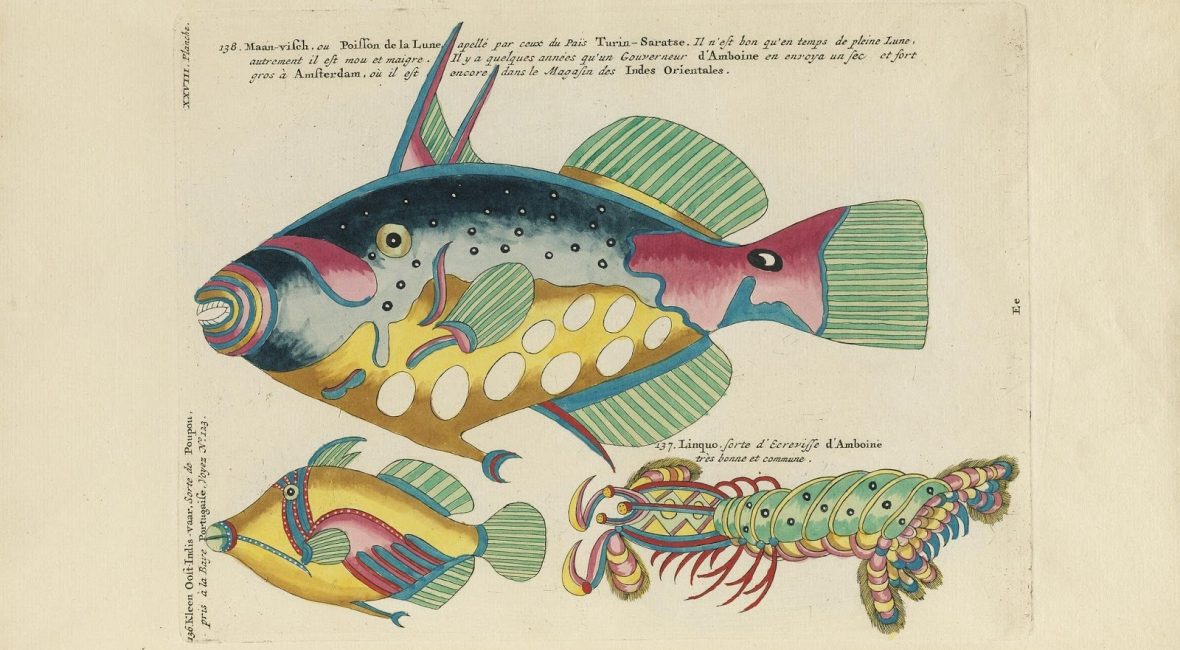
Renard, Louis. Poissons, ecrevisses et crabes. 1754. Digitized by the Ernst Mayr Library, Museum of Comparative Zoology, Harvard University. http://biodiversitylibrary.org/page/50095135.

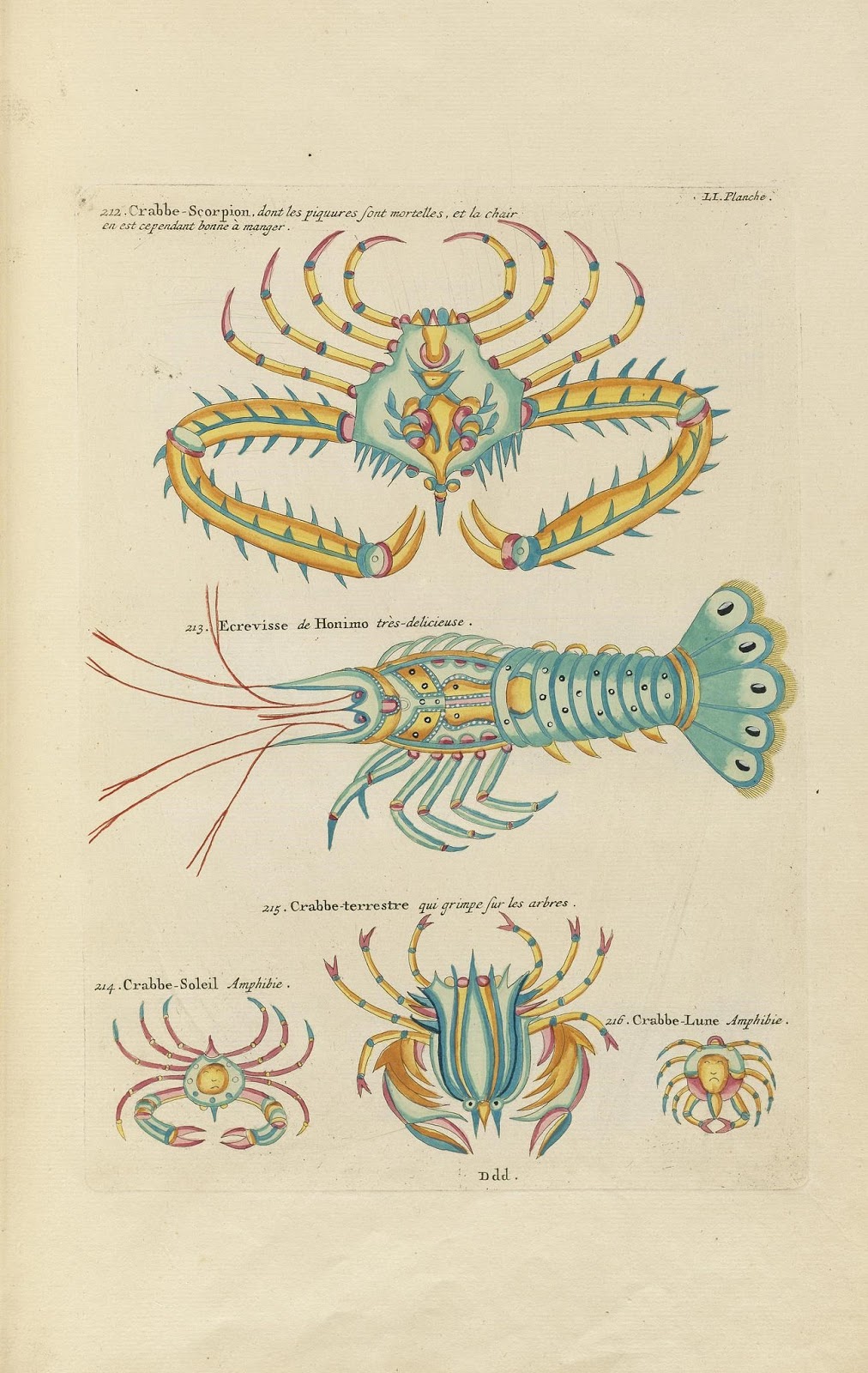
You may not recognize all (or even many) of the East Indian marine species portrayed in the first known book on fish to be published in color. Don’t worry. It’s not a lack of ichthyological proficiency on your part. Rather, it’s because all of the species depicted in Louis Renard’s Poissons, ecrevisses et crabes received some level of artistic embellishment – and approximately 9% are completely fantastical.

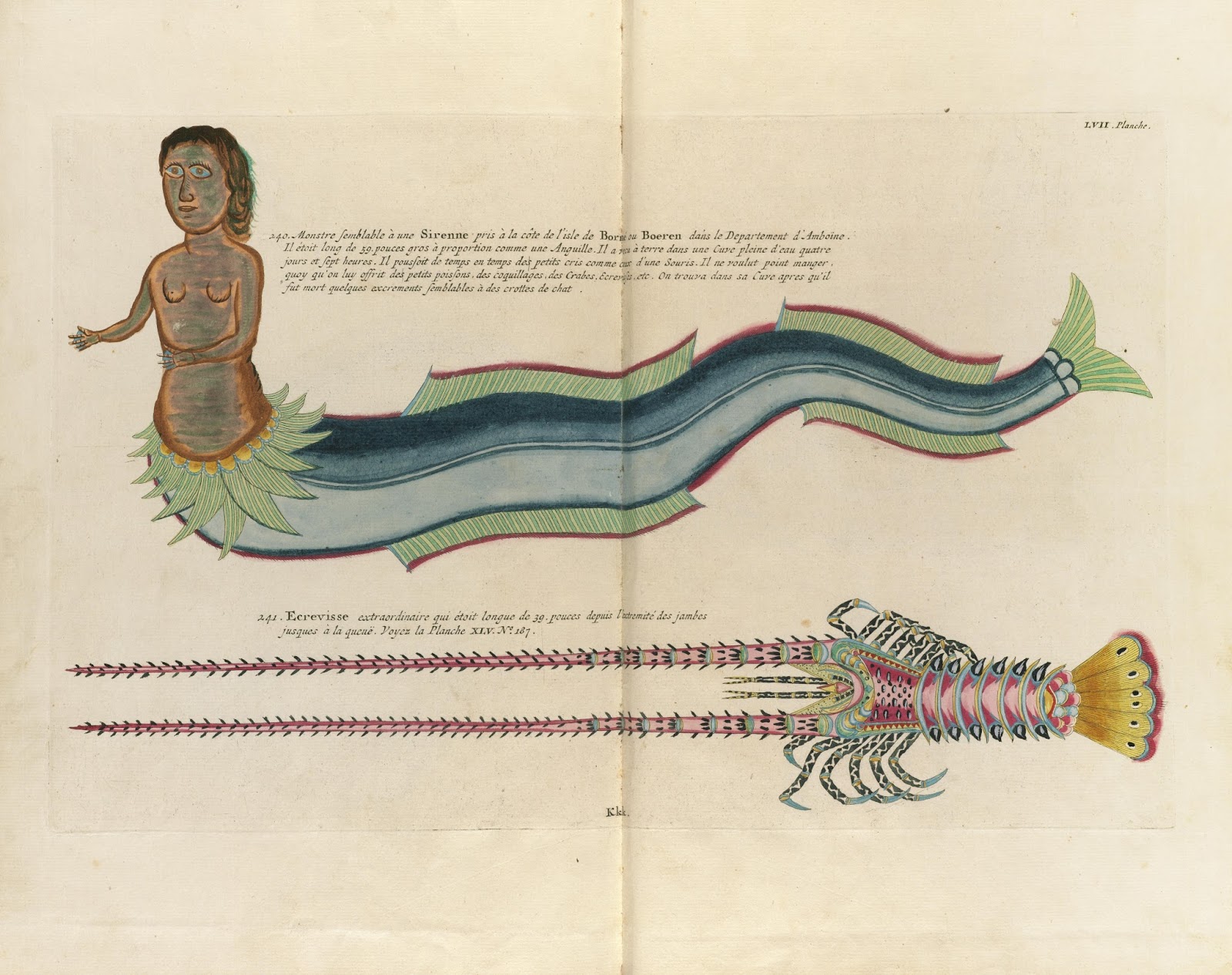
If that’s not strange enough, the work is produced by a man who identified himself as a “secret agent on behalf of the British Crown” and contains a portrait of a mermaid.
View Full Size Image
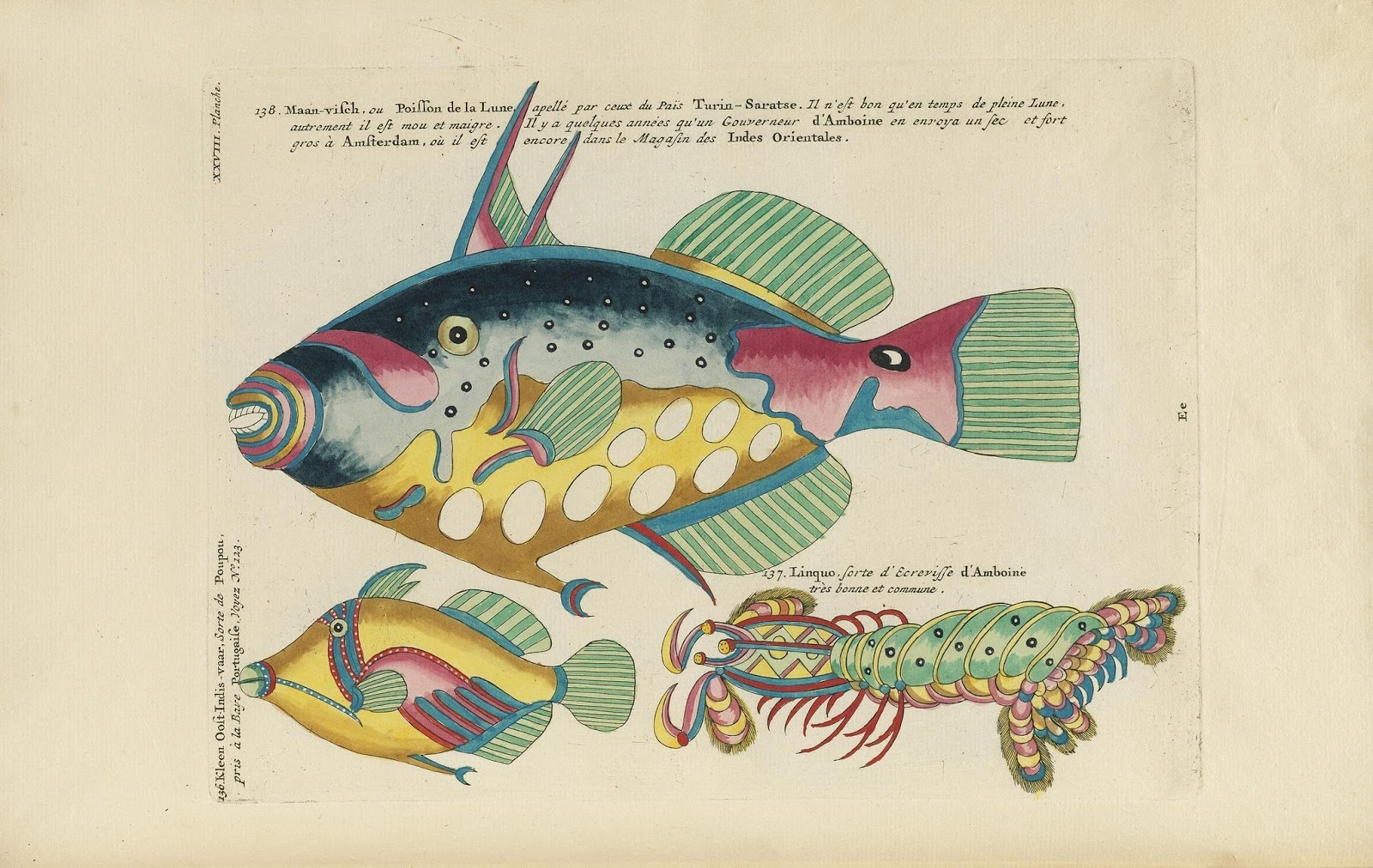
Renard, Louis. Poissons, ecrevisses et crabes. 1754. Digitized by the Ernst Mayr Library, Museum of Comparative Zoology, Harvard University. http://biodiversitylibrary.org/page/50095087.

These facts might lead you to conclude that Poissons, ecrevisses et crabes, de diverses couleurs et figures extraordinaires, que l’on trouve autour des isles Moluques et sur les côtes des terres Australes has little scientific value. But in that assumption, you’d be wrong.

Besides being the first published book in color about fish, in a 2012 article published in Natural Histories, Mai Reitmeyer, Research Services Librarian at the American Museum of Natural History, writes that this work is “an important part of the scientific literature of the eighteenth century, the new Age of Enlightenment” (Reitmeyer, 33).

According to Theodore W. Pietsch, an ichthyologist who conducted an examination of the title in the late twentieth century and whom Reitmeyer quotes in her article, Renard’s publication “gives us an intriguing glimpse of what science was like in the late seventeenth and early eighteenth centuries” and thus “to cast the work off as being without scientific merit is to greatly underestimate its value” (Reitmeyer, 34). What’s more, since the waters surrounding Ambon Island in Indonesia, where many of the depicted species were found, is now a heavily polluted ecosystem, it’s likely that the biodiversity in the area has changed since Renard’s publication. Thus, the fauna depicted in Poissons, ecrevisses et crabes, around 90% of which, according to Pietsch, can be identified down to the species, genus, or family level, can offer an important historical perspective on marine diversity in the region (Barley, 2010).
View Full Size Image
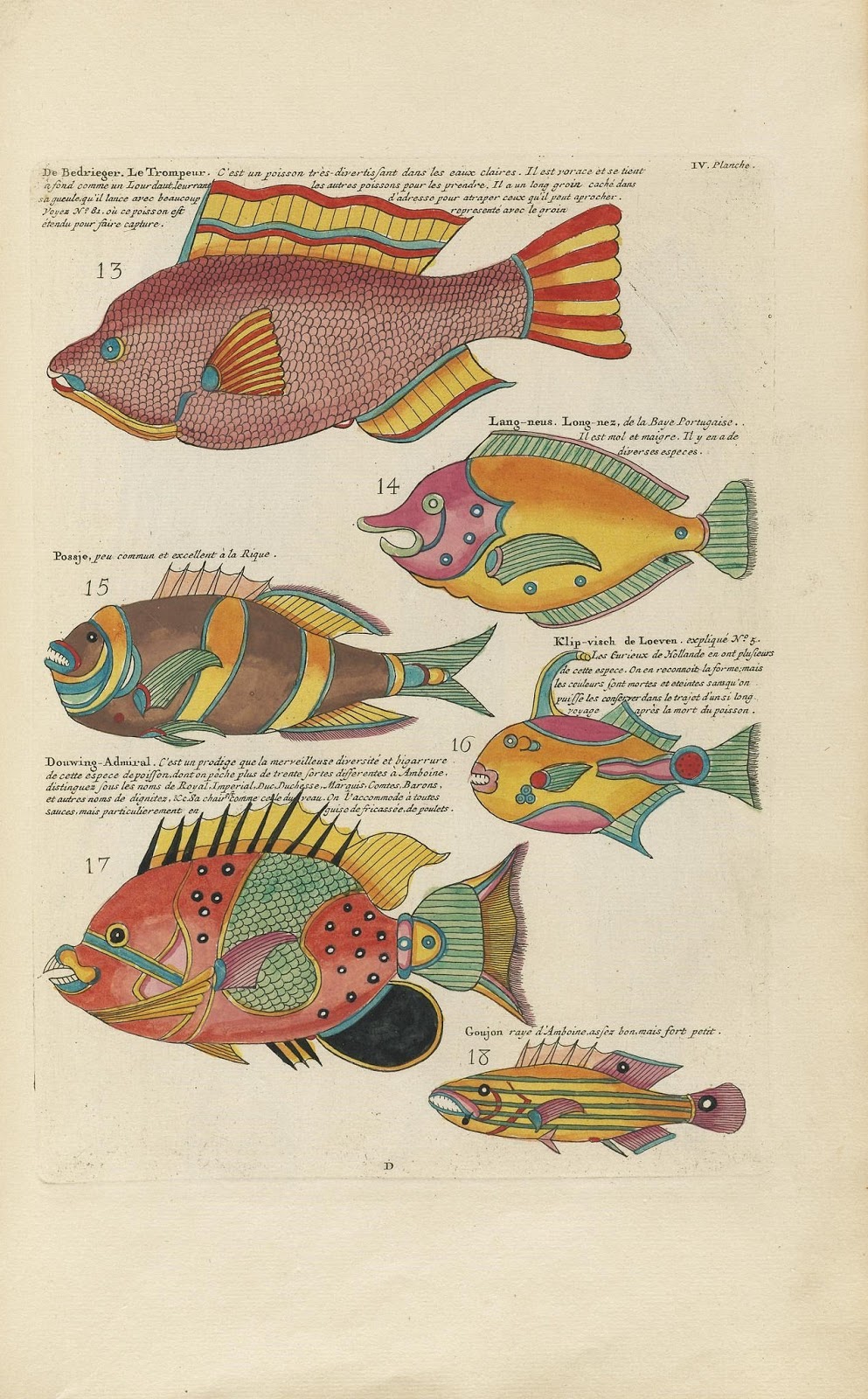
Renard, Louis. Poissons, ecrevisses et crabes. 1754. Digitized by the Ernst Mayr Library, Museum of Comparative Zoology, Harvard University. http://biodiversitylibrary.org/page/50095031.

As Reitmeyer recounts in her article, Renard was born in France sometime around 1678 but, to escape religious persecution, immigrated to the Netherlands with his family around the turn of the century and eventually became a citizen of Amsterdam. Encouraged by his father-in-law, Renard became a book dealer and publisher and, in 1718 or 1719, produced the first volume of the first edition of his most famous work, Poissons, ecrevisses et crabes, the full title of which translates to “Fishes, crayfishes and crabs, of diverse colors and extraordinary forms, which are found around the islands of the Moluccan and on the coasts of southern lands.”

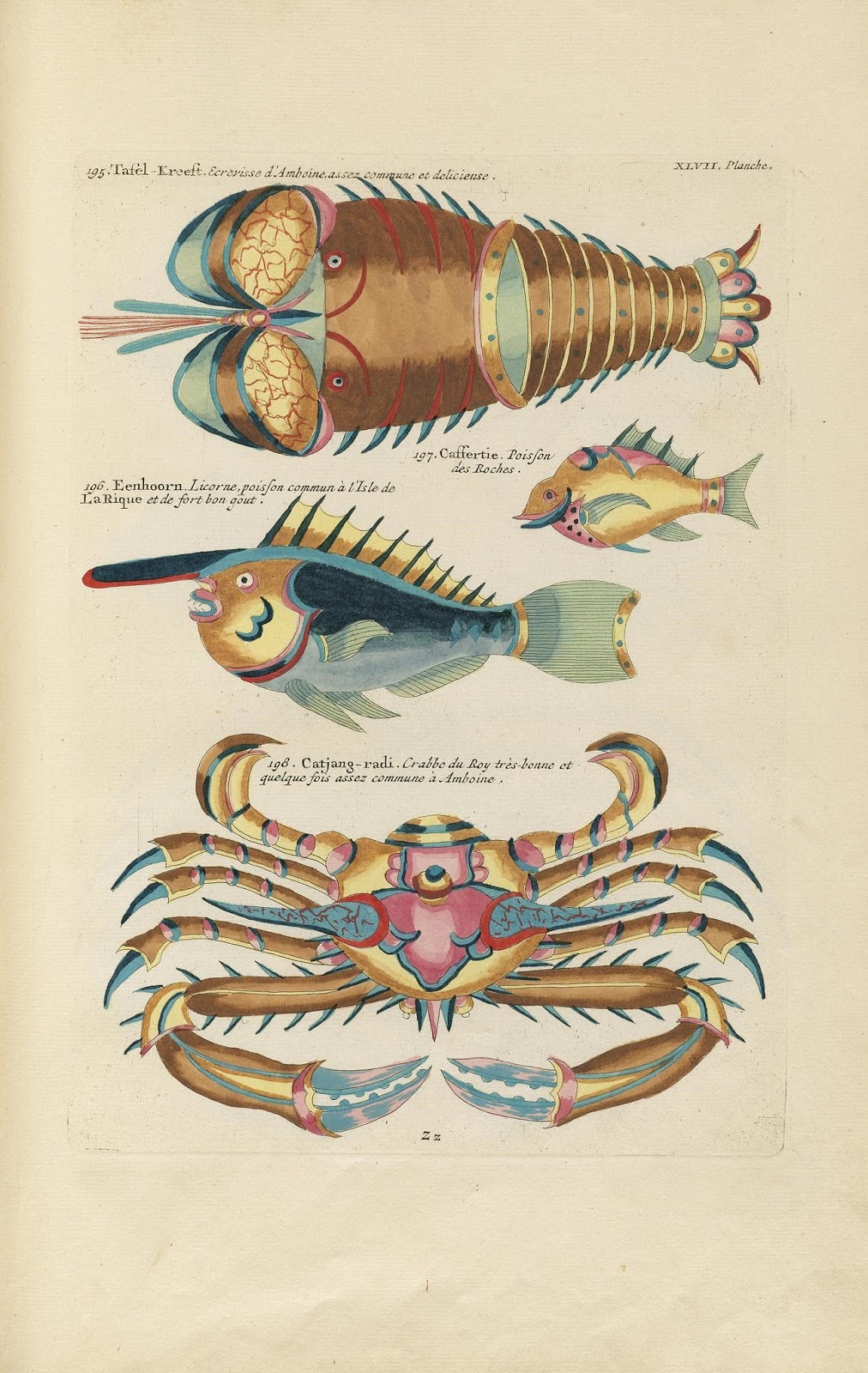
While the work may depict over 450 fish and crustacean species from the East Indies, Renard published the work without ever leaving the Netherlands. Instead, he copied drawings by other artists to create the 100 plates, representing 460 hand-colored copper engravings, for his publication.
View Full Size Image
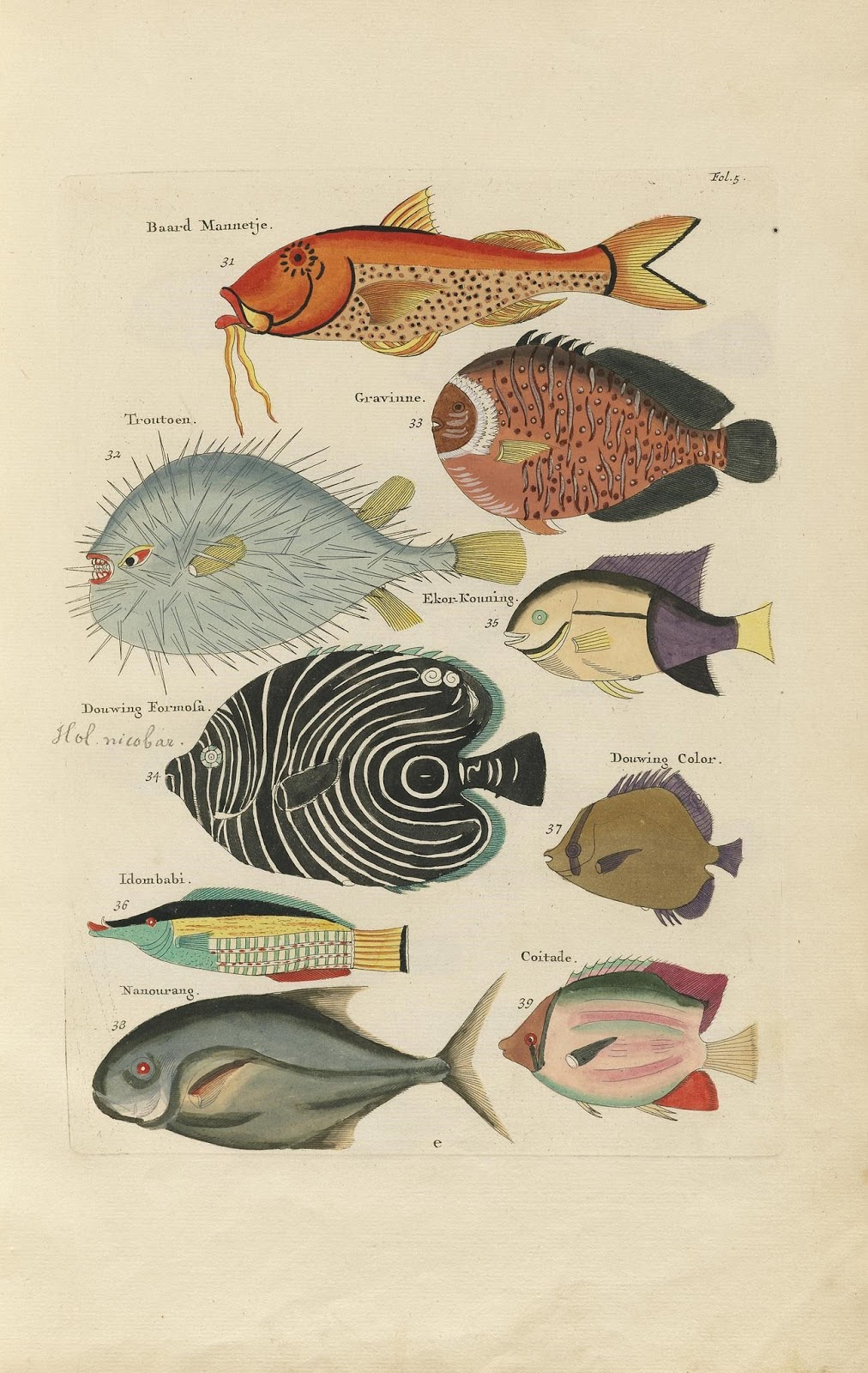
Renard, Louis. Poissons, ecrevisses et crabes. 1754. Digitized by the Ernst Mayr Library, Museum of Comparative Zoology, Harvard University. http://biodiversitylibrary.org/page/50095173.

Dutch artist Samuel Fallours, a soldier stationed in Ambon with the Dutch East India Company, painted a great many of the drawings that Renard copied for this work. During his time in Ambon, Fallours created many drawings of East Indian marine life that later appeared in several eighteenth century publications, including Renard’s.

According to Pietsch, Fallours likely included elements of the fantastical in his drawings in order to attract the European collectors who purchased his works (Barley, 2010). These embellishments ranged from artificially bright and randomly applied colors to total fabrications, including a portrait of a mermaid, which also appeared amongst an arrangement of exotic East Indian biodiversity published in Francois Valentijn’s Oud en Nieuw Oost-Indien (1724−1726).
View Full Size Image
Portrait of a mermaid by Samuel Fallours. Renard, Louis. Poissons, ecrevisses et crabes. 1754. Digitized by the Ernst Mayr Library, Museum of Comparative Zoology, Harvard University. http://biodiversitylibrary.org/page/50095192.

Poissons, ecrevisses et crabes was published in three different editions. Only sixteen copies of the first, published in 1718 or 1719, are known to exist. Thirty-four copies are known of the second edition, published in 1754. The rarest edition, with only six known copies, is the third, published in 1782 but never completed (Reitmeyer, 33).

Thanks to Ernst Mayr Library of the Museum of Comparative Zoology at Harvard University, you can view the second edition of Renard’s work for free in BHL. And if this article hasn’t piqued your curiosity quite enough to click on the link, let’s not forget the “secret agent” aspect mentioned earlier!

In what was likely a marketing ploy to boost sales, the dedication statement within Poissons, ecrevisses et crabes identifies Renard as a “secret agent on behalf of the British Crown.” What’s the story behind this claim? According to Reitmeyer, Renard was employed by George I and George II to search “ships leaving Amsterdam to prevent arms from reaching James Stuart, the Roman Catholic ‘Old Pretender’ to the British throne” (Reitmeyer, 33).

Fantasy, intrigue, and science. What’s not to love about Poissons, ecrevisses et crabes?
View Full Size Image
Renard, Louis. Poissons, ecrevisses et crabes. 1754. Digitized by the Ernst Mayr Library, Museum of Comparative Zoology, Harvard University. http://biodiversitylibrary.org/page/50095181.

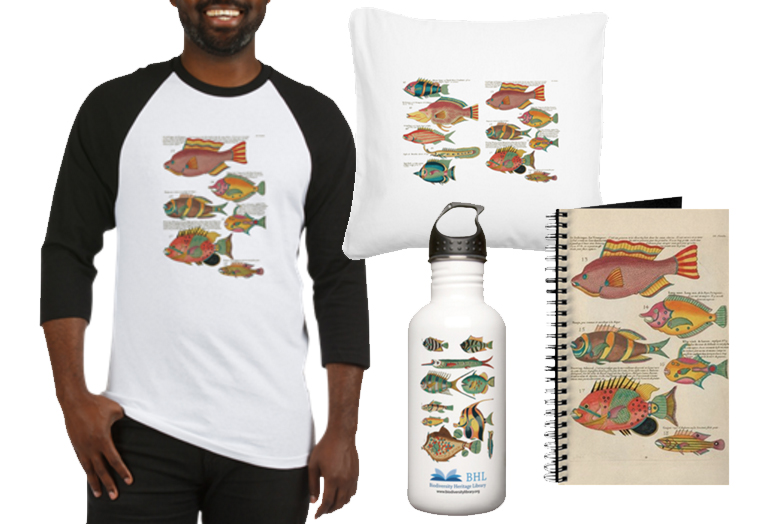
You can view the images from this work in Flickr. You can also find products featuring images from this title in our CafePress store. 100% of the proceeds will be used to digitize more books for BHL. Start shopping today!
View Full Size Image
Selection of products in the BHL CafePress featuring images from Renard’s Poissons, ecrevisses et crabes.  100% of proceeds will be used to digitize more books for BHL.

REFERENCES

  • Reitmeyer, Mai Qaraman (2012). Louis Renard and His Book of Extraordinary Creatures. Natural Histories: Extraordinary Rare Book Selections from the American Museum of Natural History Library (pp. 33-34). New York: Sterling Publishing.
  • Barley, Shanta (2010). Samuel Fallours and His Fantasy Fish. New Scientist: Culture Lab. https://www.newscientist.com/blogs/culturelab/2010/06/samuel-fallours-and-his-fantasy-fish.html. Accessed 29 July 2016.
August 4, 2016by ulib-libraryjobs
Blog Reel, Featured Books

The First Comprehensive Description of Reptiles and Amphibians

View Full Size Image
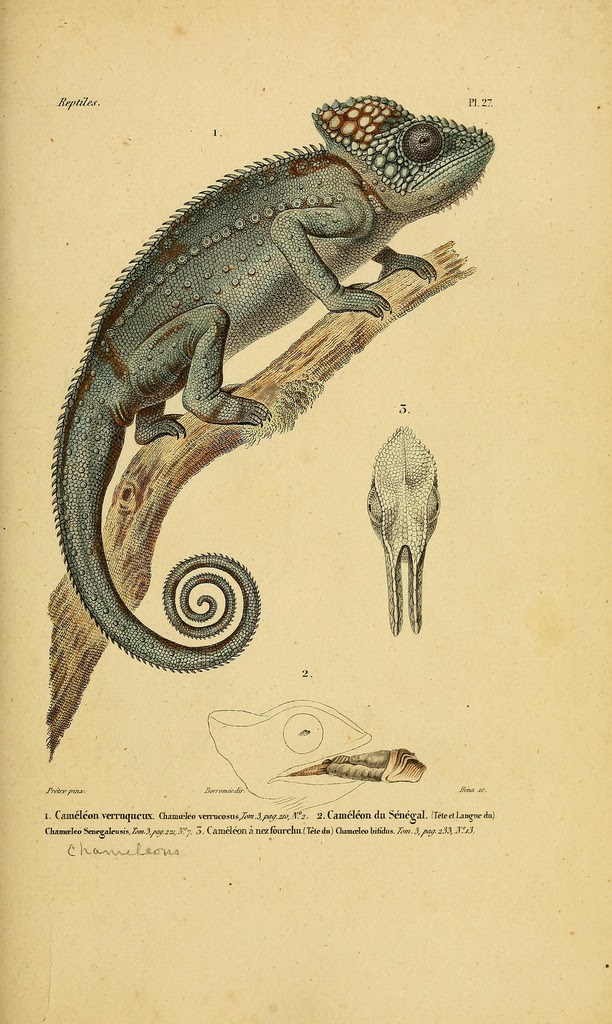
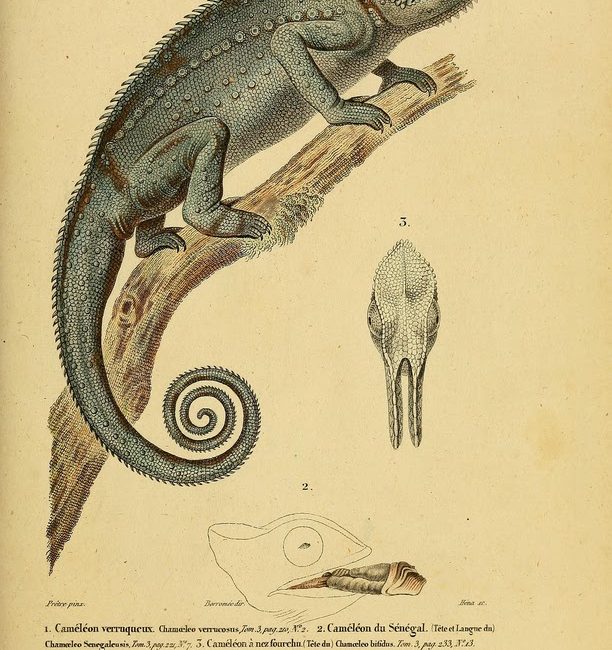
Fig 1: Furcifer verrucosus (Madagascar warty chameleon); Fig 2: Tongue of Chamaeleo senegalensis (Senegal chameleon); Fig 3: dorsal head view of Furcifer bifidus (Two-horned Madagascar chameleon). Duméril, André Marie Constant. Erpétologie générale ou Histoire naturelle complète des reptiles (1834-53). http://biodiversitylibrary.org/page/31895806.

1834 was a landmark year in the field of herpetology – the study of amphibians and reptiles. It was the year that the first volume of André Marie Constant Duméril‘s monumental work Erpétologie générale ou Histoire naturelle complète des reptiles was published. Produced over a twenty year period, between 1834-54, this nine volume set (plus atlas) became the first comprehensive scientific account of the world’s known amphibians and reptiles.

View Full Size Image
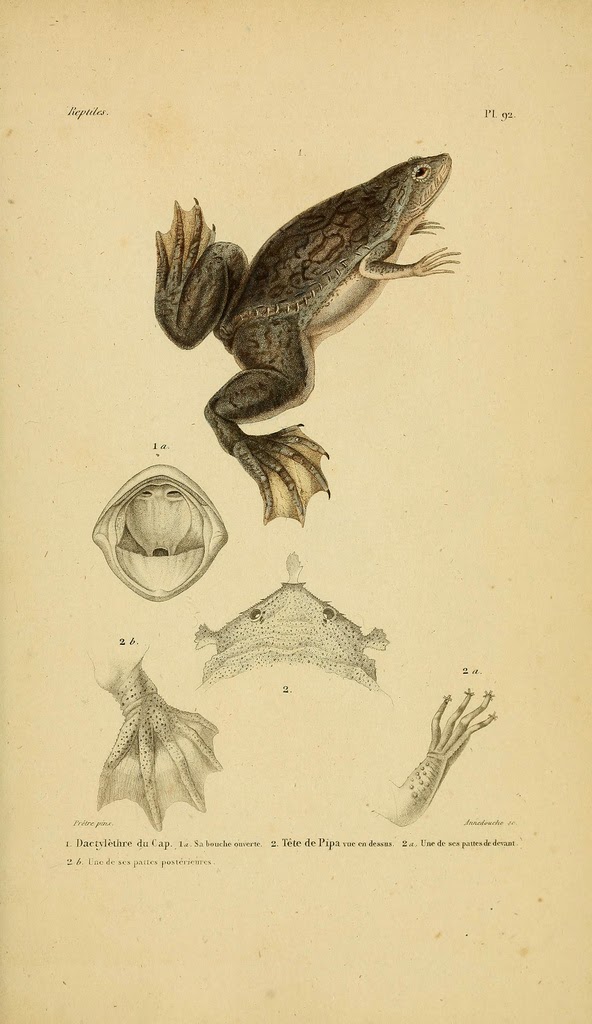
Fig 1 and 1a: Xenopus laevis (African-clawed frog); Fig  2: Pipa pipa (Surinam toad). Duméril, André Marie Constant. Erpétologie générale ou Histoire naturelle complète des reptiles (1834-53). http://biodiversitylibrary.org/page/31895960.

Duméril began his career as a doctor and professor of anatomy, but, at the beginning of the nineteenth century, George Cuvier selected him as the head of ichthyology and herpetology at the Muséum national d’histoire naturelle in Paris, thus making Duméril the curator of the largest and most diverse herpetological collection in the world at the time. Duméril set out to develop a revised higher-level taxonomic organization for amphibians and reptiles and, together with his assistant Gabriel Bibron, examined and described much of the museum’s enormous collection between 1832-48.

View Full Size Image
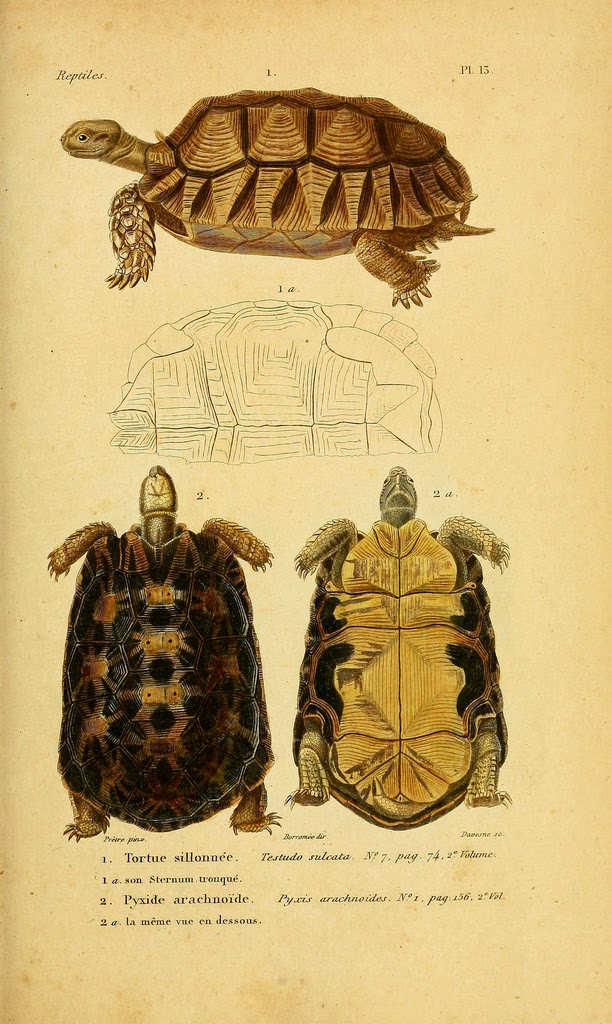
Fig 1: Geochelone sulcata (African spur-thighed tortoise); Fig 2: Pyxis arachnoides (Madagascar spider tortoise).  Duméril, André Marie Constant. Erpétologie générale ou Histoire naturelle complète des reptiles (1834-53). http://biodiversitylibrary.org/page/31895778.

The revised taxonomy and detailed descriptions of the species in the Paris collection were presented within Erpétologie générale, which ultimately related 1,393 species and included 120 plates, many of which were hand-painted.

Bibron, sadly, died of tuberculosis in 1848, before the completion of the series. Duméril’s son, Auguste Henri André Duméril, then assisted his father in the completion of volumes 7, 9, and the atlas.

View Full Size Image
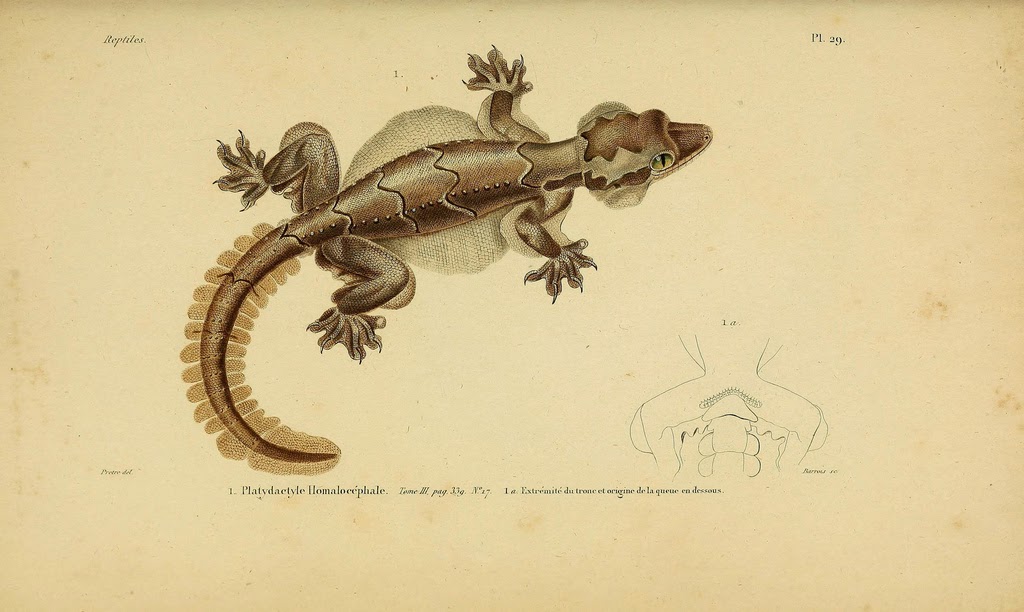
Ptychozoon kuhli (Flying gecko). Duméril, André Marie Constant. Erpétologie générale ou Histoire naturelle complète des reptiles (1834-53).  http://biodiversitylibrary.org/page/31895810.

Erpétologie générale was a ground-breaking work, setting the standard for herpetological reference with copies deposited in major scientific libraries of the nineteenth century. The accurate species descriptions and remarkable plates ensures that this work is still of vital research interest to today’s scientific community, regardless of the fact that the presented taxonomic revision itself is now considered obsolete (Duméril, for instance, considered amphibians as one of four orders within Reptilia, alongside turtles, snakes and lizards, the latter including crocodiles).

Today, Reptilia and Amphibia are two separate classes, and the living subgroups recognized within Reptilia include Crocodilia (crocodiles, gavials, caimans, and alligators), Sphenodontia (tuatara from New Zealand), Squamata (lizards, snakes, and worm lizards), and Testudines (turtles, terrapins and tortoises). All told, over 10,000 species of reptiles and approximately 7,000 species of amphibians are known today.

View Full Size Image
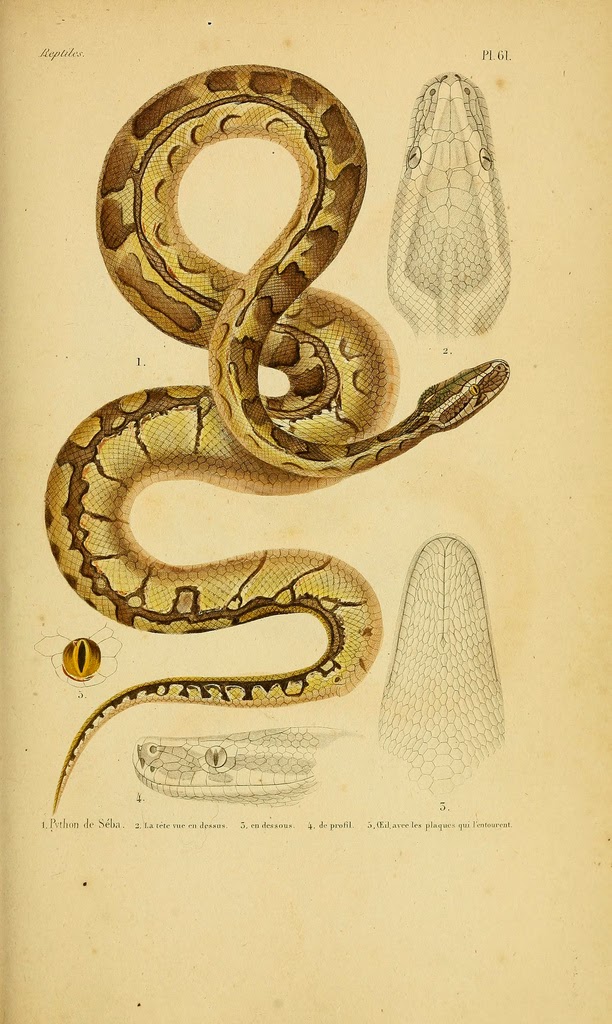
Pytho sebae (African rock python). Duméril, André Marie Constant. Erpétologie générale ou Histoire naturelle complète des reptiles (1834-53). http://biodiversitylibrary.org/page/31895878.

Duméril’s remarkable Erpétologie générale ou Histoire naturelle complète des reptiles is freely available within the Biodiversity Heritage Library, digitized by the Ernst Mayr Library of the Museum of Comparative Zoology at Harvard University and Smithsonian Libraries. Browse the complete work today and enjoy the stunning illustrations in Flickr.

The research for this post was obtained from “The First Comprehensive Description of the Amphibians and Reptiles of the World,” by Christopher J. Raxworthy. This essay can be found within Natural Histories (2012), an excellent resource on a selection of rare books found within the American Museum of Natural History Library, many of which are also freely available within BHL. 

May 7, 2015by ulib-libraryjobs
Blog Reel, User Stories

Improving the Efficiency of Scientific Research

The Biodiversity Heritage Library and the Hymenoptera Anatomy Ontology

View Full Size Image
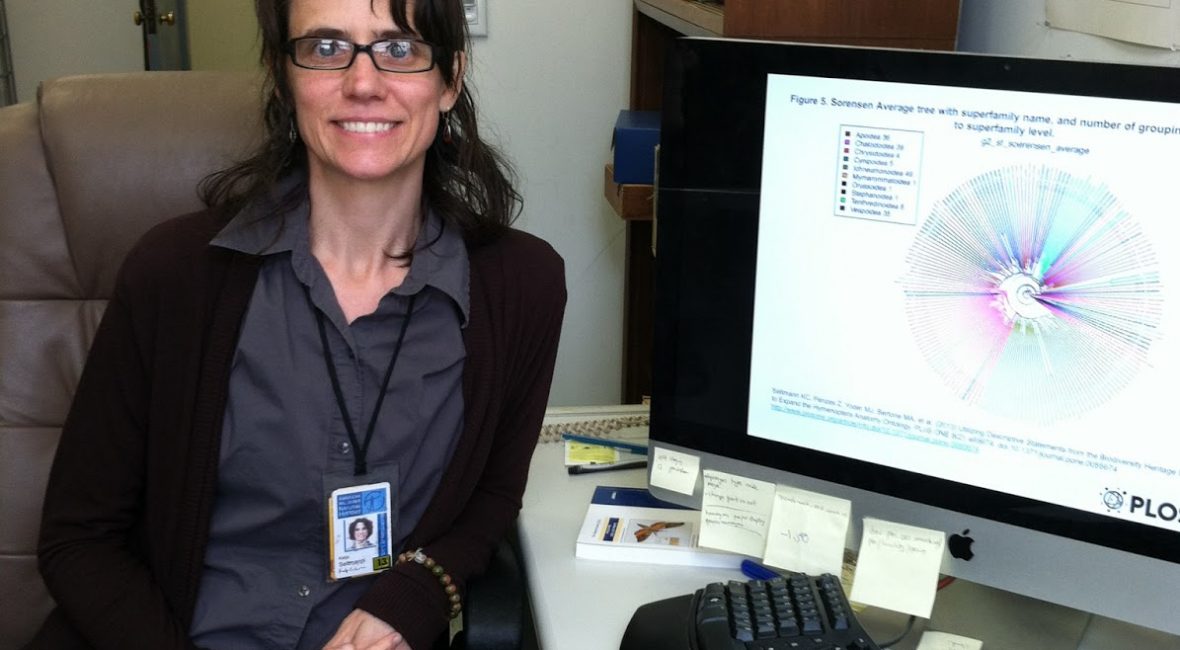
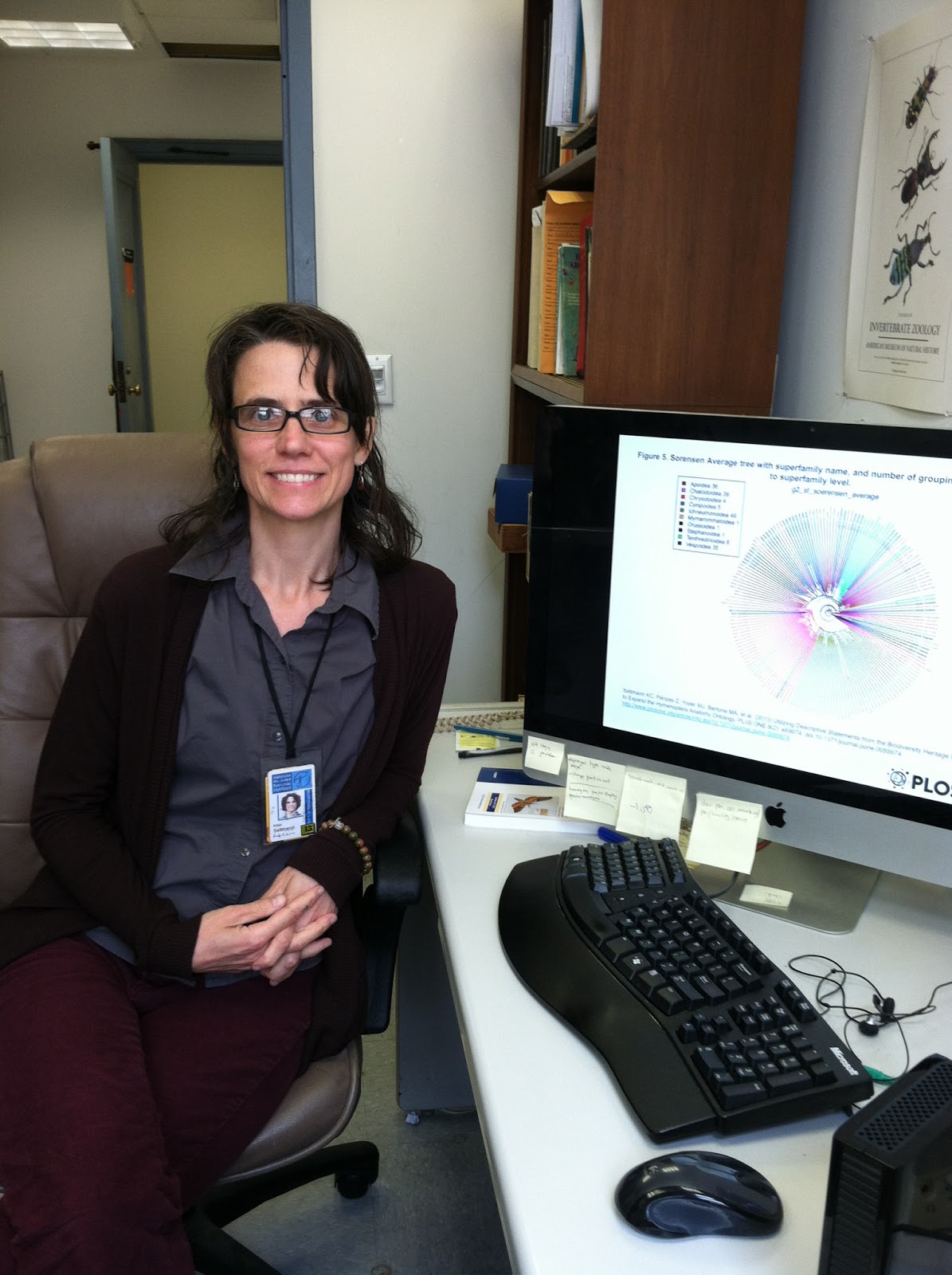
Katja C. Seltmann

The realm of ontology concerns the nature of reality, determining what exists, how it fits within a hierarchy, and how various elements are organized according to similarities and differences. Traditionally a philosophical question within metaphysics, today ontology has a firm application within systems biology as well.

Anatomy ontologies describe the structural and developmental relationships between the various parts of an organism. Defining anatomical ontologies reveals a complete list of distinguishing characteristics for that organism or group of organisms. The act of creating an anatomical ontology requires precise definitions of the terminology used to describe a variety of phenotypes.

Authors that have contributed to the past 250 years of taxonomic literature did not use standardized vocabularies. Katja C. Seltmann (Project Manager for the Tri-Trophic Thematic Collection Network at the American Museum of Natural History) desired to find a way to efficiently analyze this multi-century body of literature to create a single anatomical ontology, specifically for the insect order Hymenoptera. Accomplishing this feat required utilizing the Biodiversity Heritage Library (BHL).

Millions of pages of analog biodiversity literature, spanning the 15th-21st centuries, are digitized and made freely available online by the Biodiversity Heritage Library. Among the over 59,000 titles in the collection is the Journal of Hymenoptera Research (JHR), published by the International Society of Hymenoptera since 1992. Seltmann and a team of four other researchers utilized this publication from BHL to help build the Hymenoptera Anatomy Ontology (HAO).

View Full Size Image
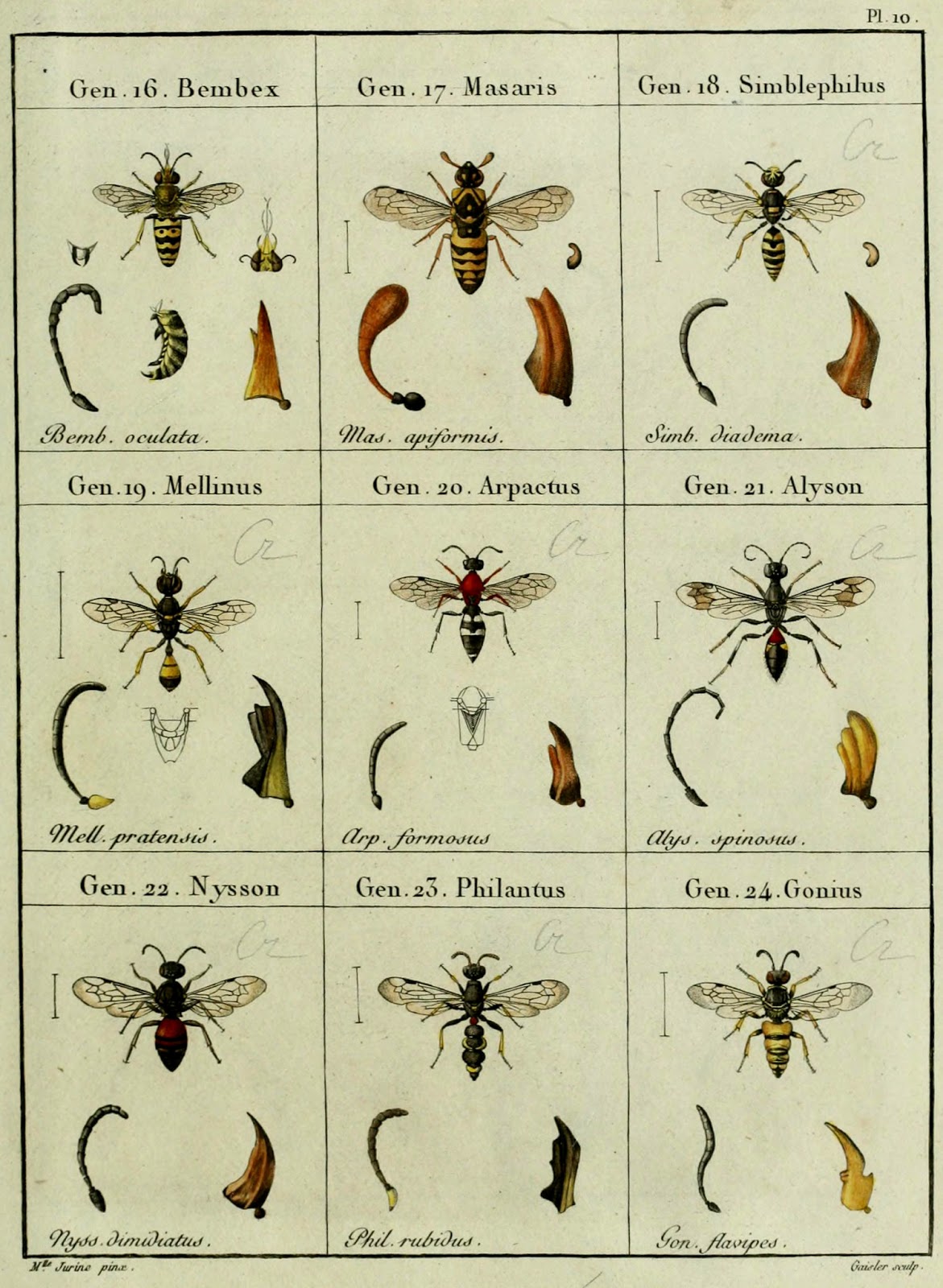
The Order Hymenoptera contains sawflies, wasps, bees and ants. Find this and other 1807 illustrations of the Order in Nouvelle méthode de classer les hyménoptères et les diptères.

The NSF-funded Hymenoptera Anatomy Ontology is based on a language recognition tool (called the “Proofer”), which can be implemented across biodiversity literature in order to discover domain-specific anatomy terms. Employing the tool across the OCR for JHR resulted in the discovery of nearly 1,200 new terms for HAO. Furthermore, the development of the ontology is iterative. As the “Proofer” is applied to new collections of literature, it finds matches to existing terms as well as proposes new terms to add to the ontology. A human is required to review the proposed terms, selecting those to be added to the growing database.

After creation, this ontology can be applied as a filter to the literature in order to reveal trends in term occurrence within species descriptions, ultimately allowing researchers to analyze hundreds of years worth of scientific publications without having to sift page by page through the texts. The tool is thus instrumental in improving the efficiency of scientific research, and the process and impact was detailed in the 2012 PLoS ONE article “Utilizing Descriptive Statements from the Biodiversity Heritage Library to Expand the Hymenoptera Anatomy Ontology” (Seltmann et al.).*

According to Seltmann, the Biodiversity Heritage Library plays a critical role in modern scientific research, including her own work:

“I am very fond of the BHL. It set a precedent for open access to literature that I feel initiated a cascading of change in our expectations. Sharing information, publications and open access is no longer the suspicious topic it used to be only a few years ago. Now, expectation is that publications, data and otherwise will be readily available. BHL, in my opinion, was truly one of the first examples of an open model becoming successful in the biological community, and, because it was useful, it changed attitudes.”

The process used to create the Hymenoptera Anatomy Ontology can be applied to other disciplines in order to build any phonotype-relevant ontology. However, as the PLOS article articulates,

“Natural language processing methods for biological data discovery is only possible through open access publications, and efforts such as the Biodiversity Heritage Library to make legacy literature freely available. This exercise to observe trends in the terminology illustrates how the accessibility to literature facilitates anatomy ontology construction.”

This use case thus provides a clear example of how the BHL is inspiring scientific discovery through free access to biodiversity knowledge.

Interested in telling us about how BHL has helped support your research? Send us feedback or write to [email protected].

* Seltmann KC, Pénzes Z, Yoder MJ, Bertone MA, Deans AR (2013) Utilizing Descriptive Statements from the Biodiversity Heritage Library to Expand the Hymenoptera Anatomy Ontology. PLoS ONE 8(2): e55674. doi:10.1371/journal.pone.0055674

May 21, 2013by michelle.underhill

Help Support BHL

BHL's existence depends on the financial support of its patrons. Help us keep this free resource alive!

search

About BHL

The Biodiversity Heritage Library (BHL) is the world’s largest open access digital library for biodiversity literature and archives. BHL operates as a worldwide consortium of natural history, botanical, research, and national libraries working together to digitize the natural history literature held in their collections and make it freely available for open access as part of a global “biodiversity community.”

Join Our Mailing List

Sign up to receive the latest news, content highlights, and promotions.

Subscribe Now

Subscribe to Blog via Email

Enter your email address to subscribe to this blog and receive notifications of new posts by email.

Join 319 other subscribers

Subscribe to Blog Via RSS

Subscribe to the blog RSS feed to stay up-to-date on all the latest BHL posts.

Access RSS Feed

Inspiring Discovery through Free Access to Biodiversity Knowledge.

The Biodiversity Heritage Library makes it easier than ever for you to access the information you need to study and explore life on Earth…for free, anytime, anywhere.


64+ Million Pages of
Biodiversity Literature Online.

EXPLORE

Tools and Services
to Transform Research.

EXPLORE

300,000+
Illustrations on Flickr.

EXPLORE

ABOUT | HARMFUL CONTENT | PRIVACY | SITE MAP | TERMS OF USE