Biodiversity Heritage Library - Program news and collection highlights from BHL
  • Home
  • News
  • Featured Books
    • All Featured Books
    • Book of the Month Series
    • BHL at 20
  • User Stories
  • Campaigns
    • Fossil Stories
    • Garden Stories
    • Monsters Are Real
    • Page Frights
    • Her Natural History
    • Earth Optimism 2020
  • Tech Blog
  • Visit BHL
Home
News
Featured Books
    All Featured Books
    Book of the Month Series
    BHL at 20
User Stories
Campaigns
    Fossil Stories
    Garden Stories
    Monsters Are Real
    Page Frights
    Her Natural History
    Earth Optimism 2020
Tech Blog
Visit BHL
  • Home
  • News
  • Featured Books
    • All Featured Books
    • Book of the Month Series
    • BHL at 20
  • User Stories
  • Campaigns
    • Fossil Stories
    • Garden Stories
    • Monsters Are Real
    • Page Frights
    • Her Natural History
    • Earth Optimism 2020
  • Tech Blog
  • Visit BHL
Biodiversity Heritage Library - Program news and collection highlights from BHL
Blog Reel, Campaigns, Featured Books, Page Frights

Arachnophobes Beware! The Birth of Spider Nomenclature Just in Time for Halloween!

View Full Size Image
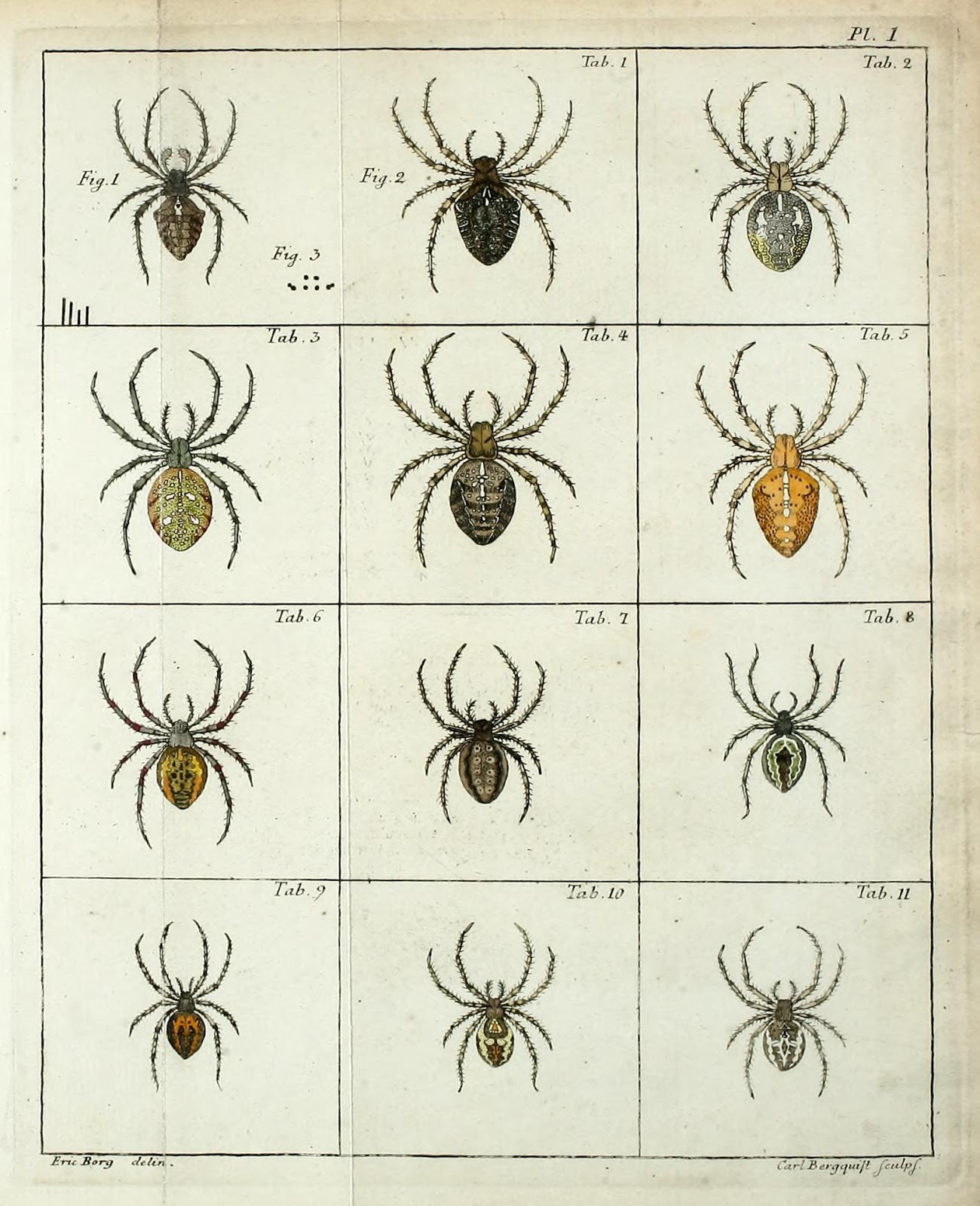
Clerck, Carl. Svenska Spindlar. 1757. Digitized by Smithsonian Libraries. http://www.biodiversitylibrary.org/page/51379398.

Arachnophobia (the fear of spiders and other arachnids) is one of the most prevalent phobias in the world, and some estimates suggest that over 30.5% of people in the United States alone have a fear of arachnids (Health Research Funding 2014).

Given the pervasiveness of this phobia, we thought it only appropriate to spend some time on the subject of spiders as part of our Page Frights celebration. Being the science-focused organization that we are, we decided to look at the topic of arachnids from a taxonomic point of view.
View Full Size Image
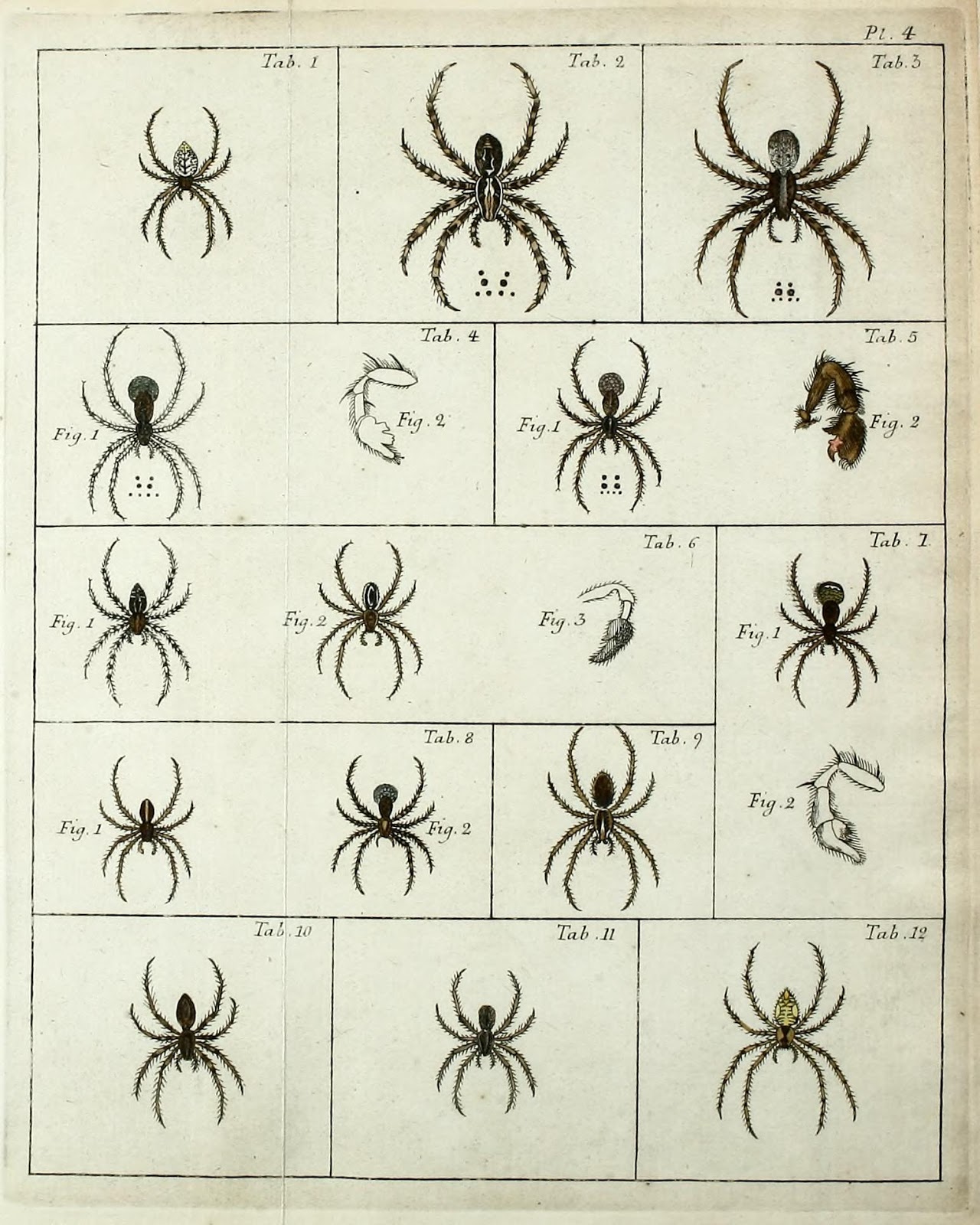
Clerck, Carl. Svenska Spindlar. 1757. Digitized by Smithsonian Libraries.  http://www.biodiversitylibrary.org/page/51379410.

The founding text on spider nomenclature is Svenska Spindlar. It was published in 1757 by Carl Clerck, a member of the Swedish nobility. If you’re familiar with the history of taxonomy, you may notice something interesting about the date of this publication. The International Commission on Zoological Nomenclature considers Carl Linnaeus’ Systema Naturae, published in 1758, to be the starting point of zoological nomenclature. How then could a book published in 1757 be considered the starting point of spider nomenclature?

Leslie Overstreet, Curator of Natural History Rare Books at the Smithsonian Libraries (who recently digitized this title for BHL), helped shed some light on the situation.

Clerck became a friend and correspondent of Linnaeus’ after attending Uppsala University, where Linnaeus had received most of his own higher education and served as a professor beginning in 1741. In 1753, Linnaeus applied his binomial system for botanical names within Species Plantarum. When Clerck went to publish his descriptions of the large number of Swedish spiders that he had collected and studied, he did so following Linnaeus’ binomial system. As Linnaeus would not publish his own foundational text on zoological nomenclature until 1758, Clerck’s spiders became the first animals in modern zoology to receive valid scientific names according to the Linnaean system.
View Full Size Image
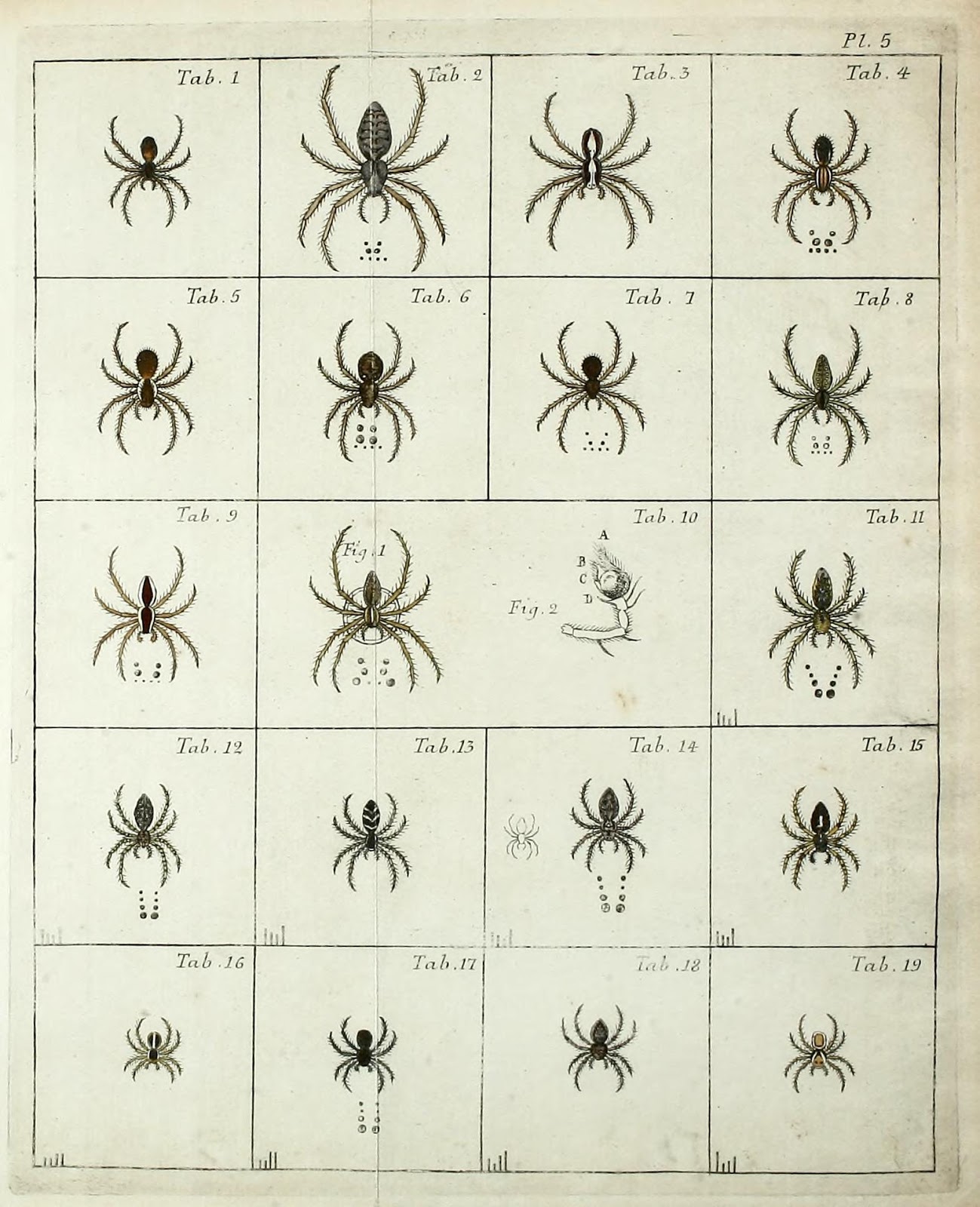
Clerck, Carl. Svenska Spindlar. 1757. Digitized by Smithsonian Libraries.  http://www.biodiversitylibrary.org/page/51379414.

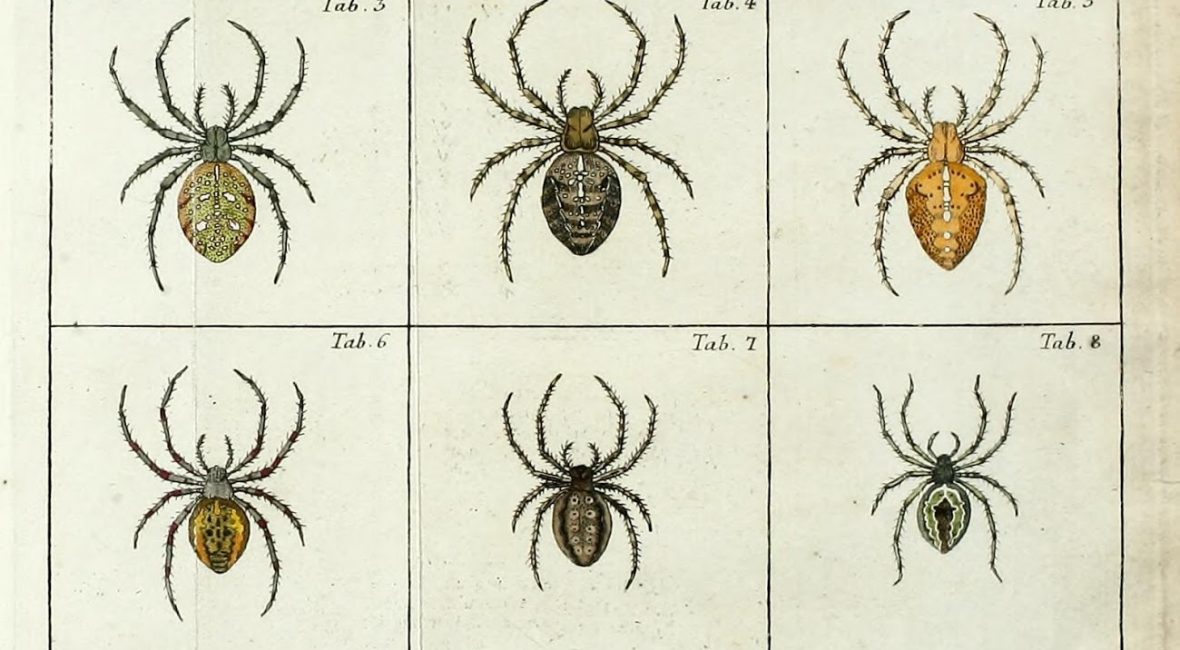
Clerck’s Svenska Spindlar describes and illustrates 70 species and includes 6 hand-colored plates containing 89 figures. Artists for the work include Eric Borg and L. Gottman, and the plates were engraved by Carl Bergquist. The text is printed in both Swedish and Latin, and for each species, Clerck uses the single generic name Araneus followed by a specific, one-word name (constituting the species name).  Clerck then provides detailed information about each species, from the dates that he collected his specimens to descriptions of anatomical features and differences between sexes.

Clerck also restricted his use of the term “spider” to those species possessing eight eyes and separated prosoma and opisthosoma. As such, he, unlike many previous authors, excluded Opiliones (harvestmen) and other arachnids from his treatment of the subject.
View Full Size Image
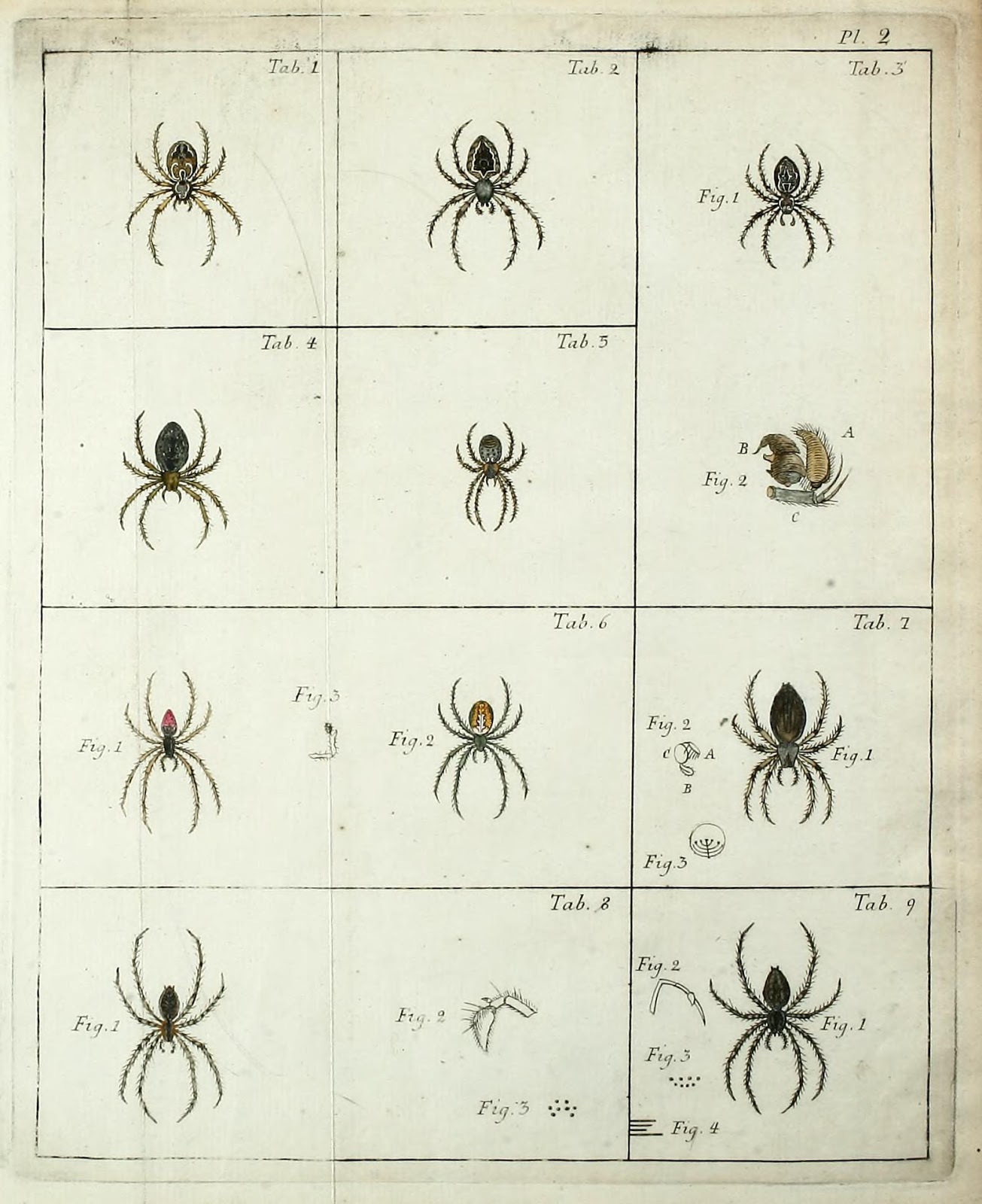
Clerck, Carl. Svenska Spindlar. 1757. Digitized by Smithsonian Libraries. http://www.biodiversitylibrary.org/page/51379402.

The International Commission for Zoological Nomenclature recognizes Clerck’s names as having precedence over any varieties that may have been proposed by Linnaeus, and as such the names in Svenska Spindlar have the unique distinction of being considered valid despite having been published a year before Linnaeus’ Systema Naturae. For example, while Linnaeus used the generic name Aranea, Clerck’s Araneus is considered the valid generic name.

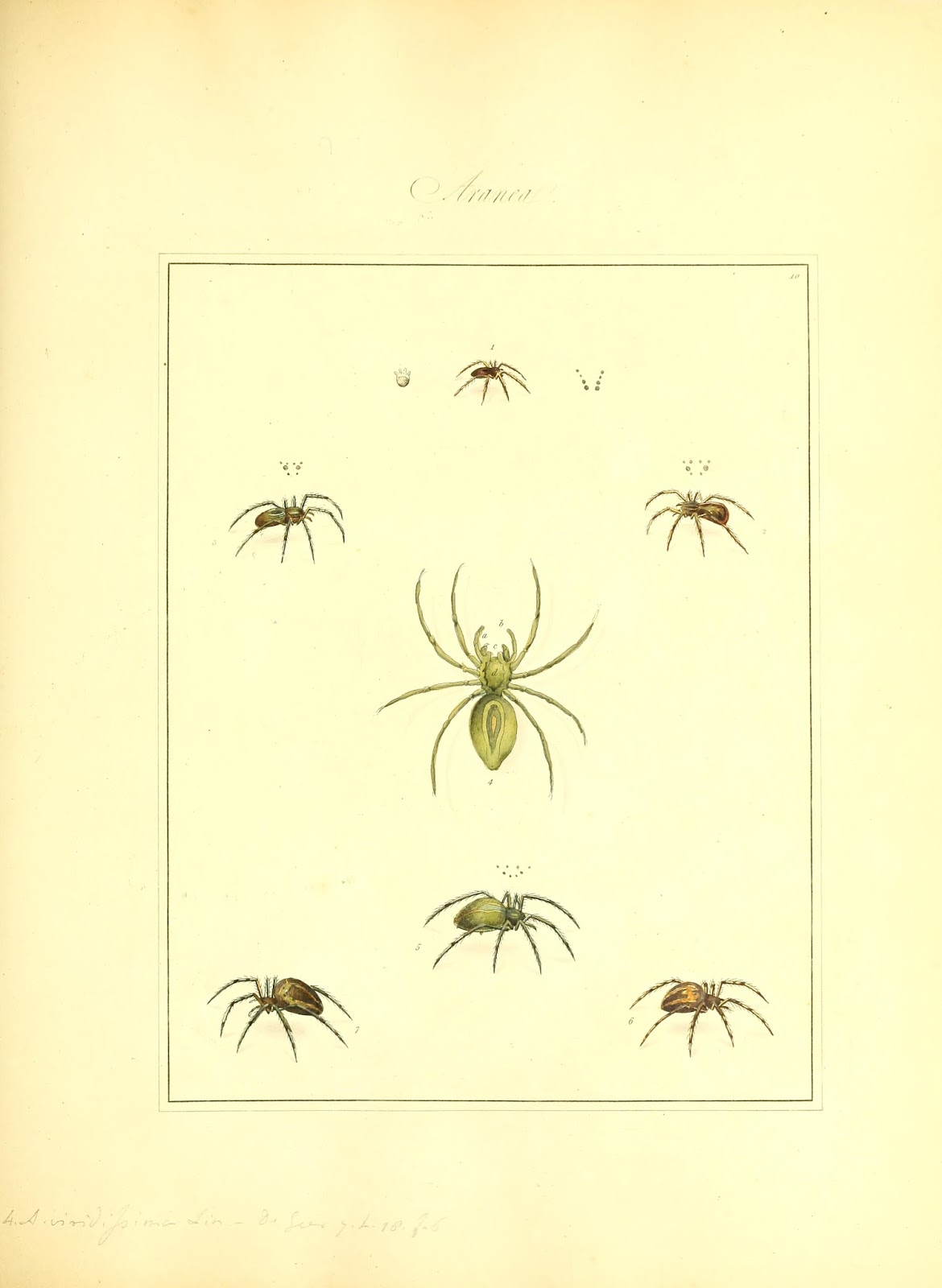
In 1793, the first English translation of Clerck’s Svenska Spindlar appeared under the title Aranei, or, A natural history of spiders, by Thomas Martyn. Martyn supplemented the text with additional illustrations originally published in Eleazar Albin’s Natural history of spiders (1736).
View Full Size Image
Martyn, Thomas. Aranei, or, A natural history of spiders. 1793. Digitized by Smithsonian Libraries. http://www.biodiversitylibrary.org/page/51378856.

So, as you gear up for Halloween this weekend, take a moment to look through the book that started it all when it comes to spider nomenclature. If you’re one of those 30.5% of U.S. people with arachnophobia, you’re sure to consider it a true Page Frights experience!

Special thanks to Leslie Overstreet, Curator of Natural History Rare Books at Smithsonian Libraries, for providing information about this title for this post.

Reference

Health Research Funding. 2014. “7 Uncommon Arachnophobia Statistics.” September 22. Accessed October 25, 2016. http://healthresearchfunding.org/7-arachnophobia-statistics/.

October 27, 2016by michelle.underhill
Blog Reel, User Stories

BHL: Continuing to Inspire a Love of Natural History

In the Northern Hemisphere, the winter season is well underway. Cold temperatures mean that species of all kinds must face many new challenges in order to survive the next few months.

Spiders are no exception.

One might assume that spiders die off once winter hits. While this is true for some species, it is not true for all spiders – many remain active in winter months. How do they manage this? Through a variety of physiological and behavioral adaptations. Behavioral adaptations include moving their homes to “overwintering sites” such as the “subnivean zone,” an area between the snow and the ground, or concealed locations in leaf litter or under bark, where it’s warmer. Spiders also have a physiological adaptation that helps them brave the cold months. They are able to accumulate glycols in their blood (i.e., antifreeze), which allows their tissues to remain unfrozen at temperatures well below freezing. And spiders aren’t the only critters capable of this – many invertebrates also possess this ability.

So, through a combination of ingenious adaptations, spiders are able deal with the cold of winter. The process isn’t perfect, of course. Spiders are not freeze tolerant, and their tissues cannot survive the process of freezing. However, their adaptations still give them much better odds than they would have otherwise.

View Full Size Image
Dr. Christopher Buddle. Associate Professor, McGill University.

Fascinating information like this can be found for a variety of arthropods on Arthropod Ecology. The site is a blog authored by Dr. Christopher Buddle, an Associate Professor at McGill University in Montreal, Canada. Chris has been in his field of study for twenty years, and his interests include, not surprisingly, arthropod ecology, arachnology, and natural history.

Chris discovered BHL some time ago, but recently enjoyed a “rediscovery” when he found us on social media. By following @BioDivLibrary on Twitter and browsing our albums on Flickr, Chris discovered the stunning visual resources that BHL has to offer, and through this exchange, developed a new love for our collections. In fact, Twitter and Flickr have become his favorite BHL features. He checks the Twitter feed daily and our Flickr collections every few weeks. His use of the website itself happens about once a month, particularly when he’s trying to locate a specific publication, which he often subsequently downloads as a PDF for future use.

View Full Size Image
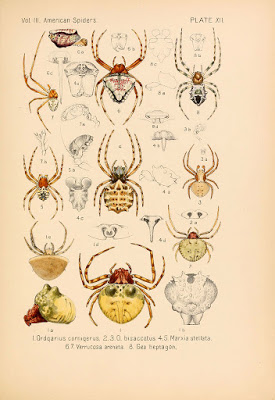
McCook, Henry C. American spiders and their spinningwork. v. 3 (1893). http://biodiversitylibrary.org/page/4492973.

For Chris, BHL’s true impact comes from its ability to spark interest in natural history. As he explained,

“I feel that BHL has helped reignite a love of natural history, both for me at a personal level, but also more broadly in biology. Our current science is built upon those before us, and it’s easy to forget this. We tend to focus on current whiz-bang publications, using new techniques and new analytical approaches. We are in an era of big data, and big science. I applaud many of these new approaches, but we must be reminded that without Wallace, Bates, the Peckhams, or McCook, we wouldn’t be where we are today. Their contributions are still relevant and help inform current science, and these contributions are stored on BHL and accessible because of BHL. That is significant and important and should not be taken for granted.

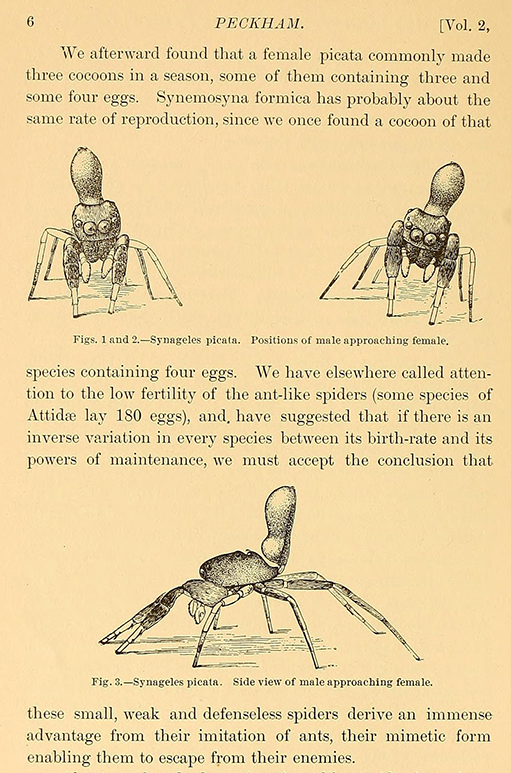
I don’t use BHL directly in my research all that much, but it has happened! As an example, I was working on a paper related to jumping spiders, and as part of that, was collecting ant-mimicking jumping spiders in a local forest. I wanted to learn more about the species, and try to uncover what we know about its life history. An online search revealed a few recent papers on the species, but the really good stuff was written in the late 1800s by the Peckhams. George and Elizabeth Peckham were teachers in Wisconsin, back in the 1800s, and in their spare time watched and wrote about insects and spiders. Their work was quite meticulous. Thankfully, BHL had their paper, and I was able to download the PDF and learn a great deal about the species courtship. Having access to the old literature made this possible.

View Full Size Image
Peckham, George and Elizabeth. Ant-like spiders of the family Attidae. Occasional papers of the Natural History Society of Wisconsin. v. 2 (1892). http://biodiversitylibrary.org/page/31440598.

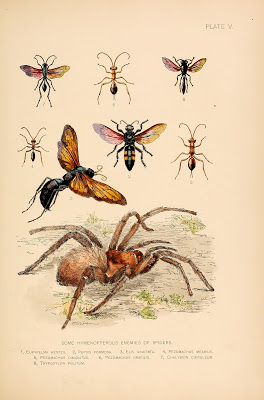
Browsing through BHL, and the images from BHL on the Flickr page (which is probably where I spend the most time!), is truly inspiring. The old sketches, drawings, and paintings are masterpieces. Many of them tell a story: for example, I recall seeing some drawings of “Spiders and their enemies” – these images are more than a depiction of a species. These images tell about ecological interactions.

View Full Size Image
McCook, Henry C. American spiders and their spinningwork. v. 2 (1890). http://biodiversitylibrary.org/page/4489749.

Natural history is seeing a revival, and papers such as Tschinkel & Wilson remind us about how our world makes more sense when we uncover the natural history of species, whether it’s a Pseudoscorpion, woodpecker or epiphyte. Igniting a passion for natural history sometimes takes a catalyst: perhaps a field trip, story, a line from an old paper, or an image. To me, this is among the most valuable contribution that BHL makes to our world. It’s not necessarily a ‘tangible’ outcome; it can’t be easily measured in clicks, research dollars, publications or citations. But the long term benefits may be enormous, whether it’s a researcher like me being reminded about the value of old literature, or whether it’s a high school student being inspired by the BHL Flickr set about orchids. We need passion and engagement about biodiversity across all sectors of society, and BHL certainly facilitates this.”

“Inspiring discovery through free access to biodiversity knowledge.” That’s BHL’s vision statement. Through not only open access to natural history literature, but also through other engagement outlets like Twitter and Facebook, through new presentations of our content, such as Flickr or online exhibitions, and through citizen science initiatives, we’re working hard to realize that vision and are thrilled to see the fruits of our labors through Chris’ testimony.

So, if you’re bundled up for the winter months, take a moment to think about the intrepid spiders in your local ecosystems that are putting millions of years of evolution to good use to brave the cold right along with you. And if we’ve sparked your interest in these amazing animals, do a search in our collection or browse our Flickr images to help fan the flames of discovery. It’s a blaze that just might help keep you warm this winter.

January 14, 2016by michelle.underhill
Blog Reel, Featured Books

Book of the Week: Illustrations in Zoology

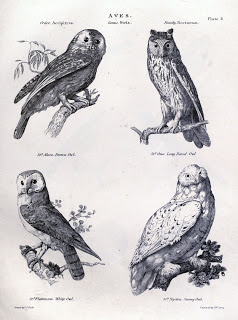
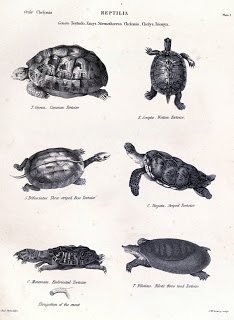
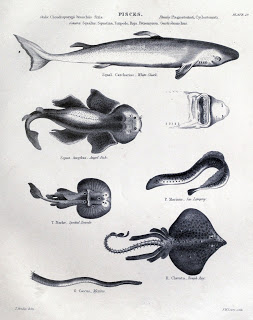
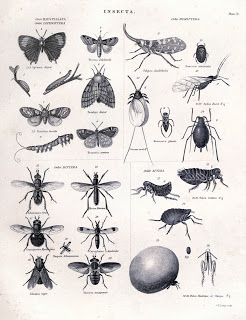
Ever wanted to get a systematic view of the animal kingdom in picture-book style? Well, this week you’re in luck, because we’re featuring Illustrations of Zoology (1851), with engravings by F.W. Lowry and Thomas Landseer, after the original drawings by Sowerby, Varley, Holmes, Bone, Pyne, Lowry and Charles Landseer. It contains no less than 87 illustrations of animals from all walks of life!

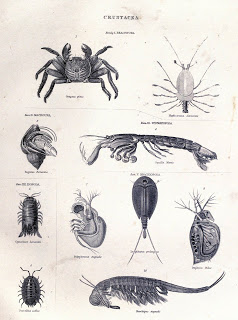
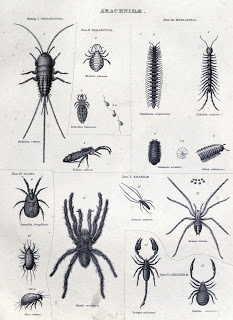
The book is arranged first according to vertebrates and invertebrates, and within each of those divisions, it is further divided into the various classes, i.e. Mammals, Birds, Reptiles, and Fish for vertebrates and Mollusks, Insects, Crustaceans, Arachnids, Myriapods, Echinoderms, Entozoa, Acalepha, Infusoria, and Polyps for invertebrates. The further you delve into the classes, the more the categories are broken down into orders and families. While 156 pages of our book of the week give some fairly detailed text descriptions of the classes, orders and families contained within, the really juicy stuff comes after that, when the dozens of breath-taking engravings begin. For our post, we’ve chosen a few of our favorite engravings, and, for each featured, we’ve chosen our favorite animal on the page and included an interesting fact about it. Enjoy!

View Full Size Image

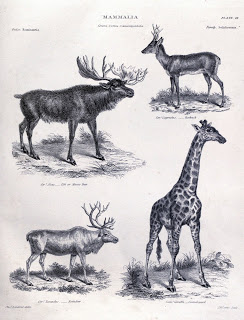
Mammals: Featured animal, the Giraffe. Interesting fact: Giraffes can grow up to 18 feet tall, but they have the same number of vertebrae in their necks as humans do: 7!

View Full Size Image

Birds: Featured Animal, the Snowy Owl. Interesting fact: The Snowy Owl’s diet consists mostly of lemmings, and they can eat up to 1,600 a year each!

View Full Size Image

Reptiles: Featured Animal, the Matamata. Interesting fact: The Matamata has been renamed 14 different times in 2 centuries.

View Full Size Image

Fish: Featured Animal, the Whale Shark. Interesting fact: The Whale Shark is the largest fish in the sea, reaching lengths of 40 feet!

View Full Size Image

Insects: Featured Animal, Lanternfly (shown as Fulgora candellaria). Interesting fact: Though named Lanternflies due to the assertion that the large “snout” of this insect becomes illuminated at night (an assertion that even Linnaeus accepted without question), centuries of observations have failed to support this claim.

View Full Size Image

Crustaceans: Featured Animal, the Mantis Shrimp (shown as Squilla mantis). Interesting fact: This shrimp is of the “spearer” type, having long spiny appendages topped with barbed tips that are used to stab and snag prey.

View Full Size Image

Arachnids: Featured Animal, Argiope lobata (shown as Aranea lobata). Interesting fact: Argiope lobata decorate their webs with intricate crisscross patterns, of which the purpose is still in hot debate. Some believe the patterns serve as camouflage, others that they make the spider appear larger and more threatening, and still others that they make the web more visible and thus less likely to incur accidental damage from large bodies like humans. Still others believe that the patterns more distinctly reflect ultraviolet light, which many insects are attracted to, thus increasing the number of prey that the spider traps.

We hope you’ve enjoyed our brief excursion into the world of zoology, but remember, we’ve only highlighted a few of the many gorgeous plates in this book. Be sure to check out all of the images from Illustrations of Zoology (1851) in our Flickr account!

August 18, 2011by michelle.underhill

Help Support BHL

BHL's existence depends on the financial support of its patrons. Help us keep this free resource alive!

search

About BHL

The Biodiversity Heritage Library (BHL) is the world’s largest open access digital library for biodiversity literature and archives. BHL operates as a worldwide consortium of natural history, botanical, research, and national libraries working together to digitize the natural history literature held in their collections and make it freely available for open access as part of a global “biodiversity community.”

Join Our Mailing List

Sign up to receive the latest news, content highlights, and promotions.

Subscribe Now

Subscribe to Blog via Email

Enter your email address to subscribe to this blog and receive notifications of new posts by email.

Join 319 other subscribers

Subscribe to Blog Via RSS

Subscribe to the blog RSS feed to stay up-to-date on all the latest BHL posts.

Access RSS Feed

Inspiring Discovery through Free Access to Biodiversity Knowledge.

The Biodiversity Heritage Library makes it easier than ever for you to access the information you need to study and explore life on Earth…for free, anytime, anywhere.


64+ Million Pages of
Biodiversity Literature Online.

EXPLORE

Tools and Services
to Transform Research.

EXPLORE

300,000+
Illustrations on Flickr.

EXPLORE

ABOUT | HARMFUL CONTENT | PRIVACY | SITE MAP | TERMS OF USE