

 |
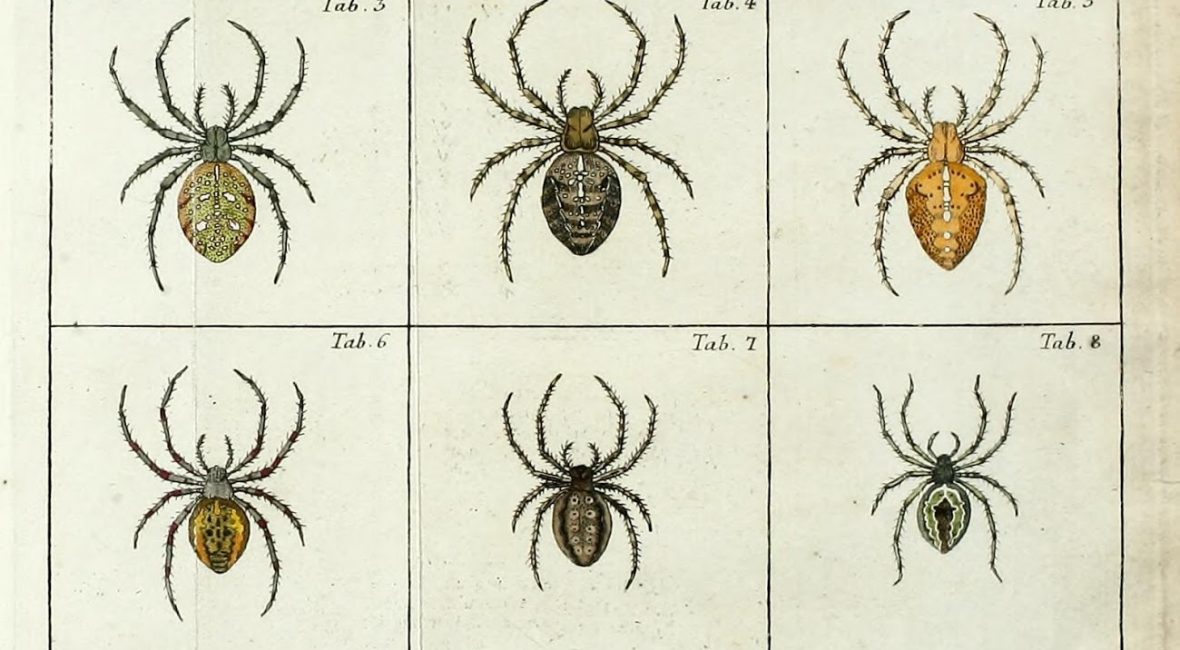
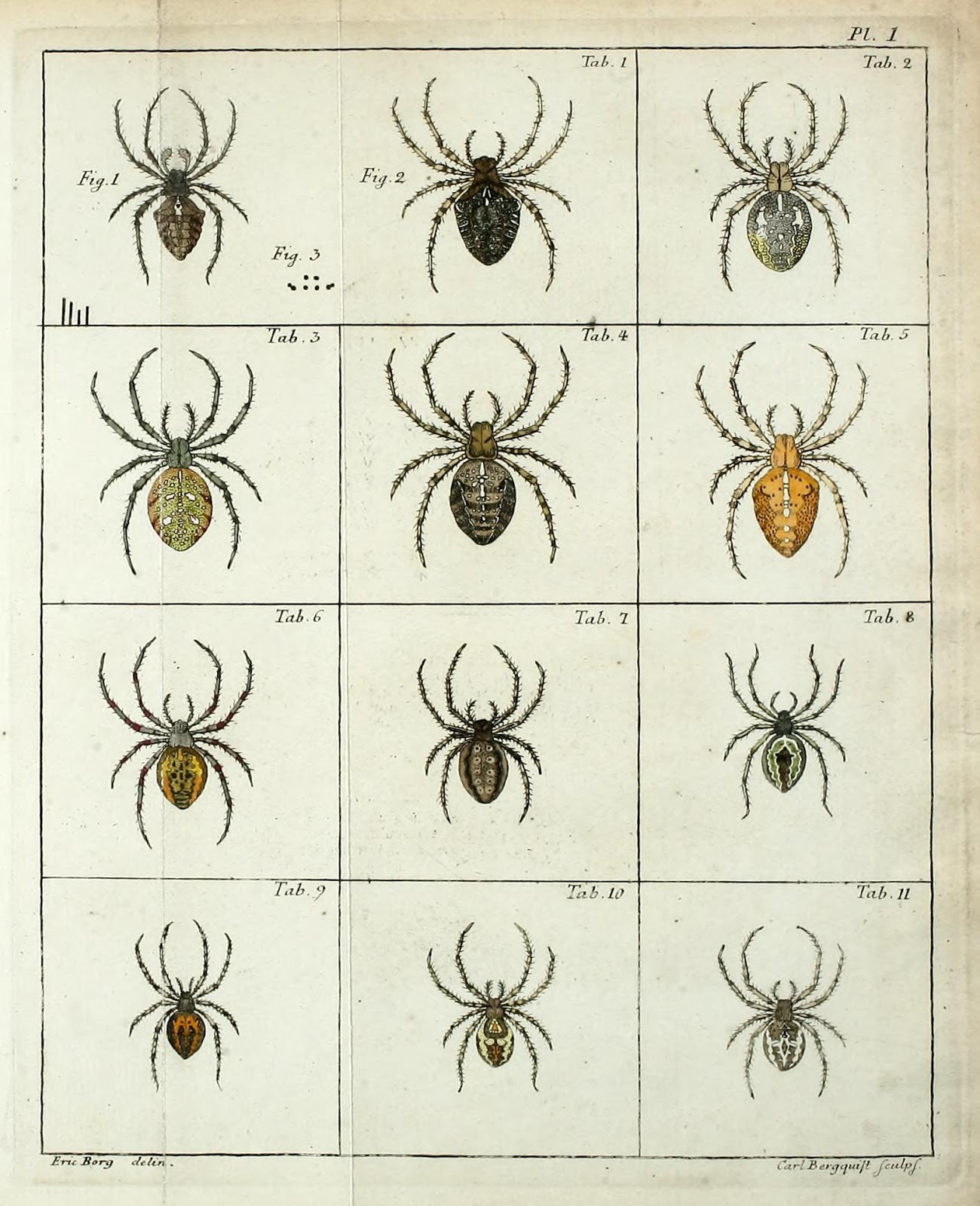
| Clerck, Carl. Svenska Spindlar. 1757. Digitized by Smithsonian Libraries. http://www.biodiversitylibrary.org/page/51379398. |
Arachnophobia (the fear of spiders and other arachnids) is one of the most prevalent phobias in the world, and some estimates suggest that over 30.5% of people in the United States alone have a fear of arachnids (Health Research Funding 2014).
Given the pervasiveness of this phobia, we thought it only appropriate to spend some time on the subject of spiders as part of our Page Frights celebration. Being the science-focused organization that we are, we decided to look at the topic of arachnids from a taxonomic point of view.
 |
| Clerck, Carl. Svenska Spindlar. 1757. Digitized by Smithsonian Libraries. http://www.biodiversitylibrary.org/page/51379410. |
The founding text on spider nomenclature is Svenska Spindlar. It was published in 1757 by Carl Clerck, a member of the Swedish nobility. If you’re familiar with the history of taxonomy, you may notice something interesting about the date of this publication. The International Commission on Zoological Nomenclature considers Carl Linnaeus’ Systema Naturae, published in 1758, to be the starting point of zoological nomenclature. How then could a book published in 1757 be considered the starting point of spider nomenclature?
Leslie Overstreet, Curator of Natural History Rare Books at the Smithsonian Libraries (who recently digitized this title for BHL), helped shed some light on the situation.
Clerck became a friend and correspondent of Linnaeus’ after attending Uppsala University, where Linnaeus had received most of his own higher education and served as a professor beginning in 1741. In 1753, Linnaeus applied his binomial system for botanical names within Species Plantarum. When Clerck went to publish his descriptions of the large number of Swedish spiders that he had collected and studied, he did so following Linnaeus’ binomial system. As Linnaeus would not publish his own foundational text on zoological nomenclature until 1758, Clerck’s spiders became the first animals in modern zoology to receive valid scientific names according to the Linnaean system.
 |
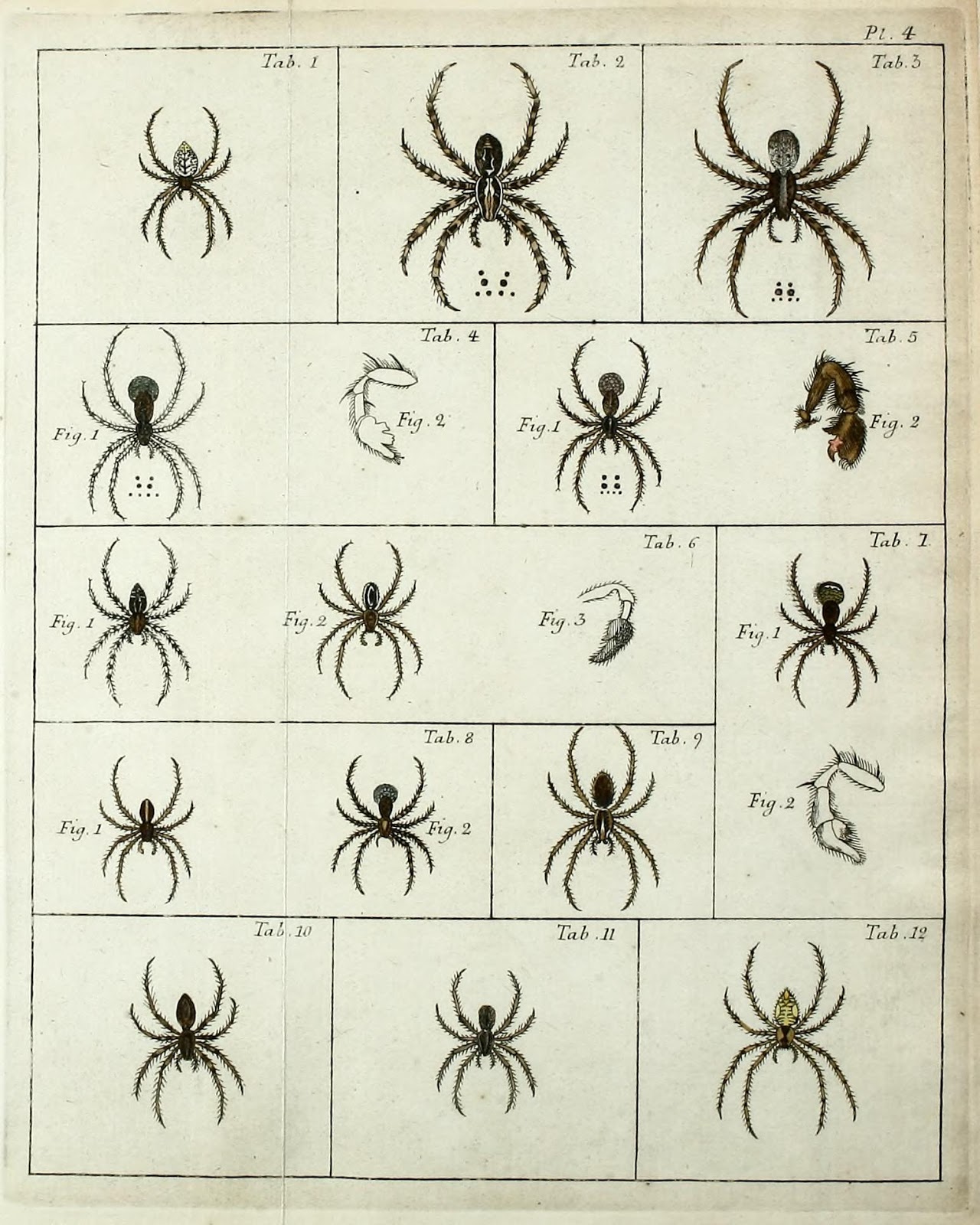
| Clerck, Carl. Svenska Spindlar. 1757. Digitized by Smithsonian Libraries. http://www.biodiversitylibrary.org/page/51379414. |
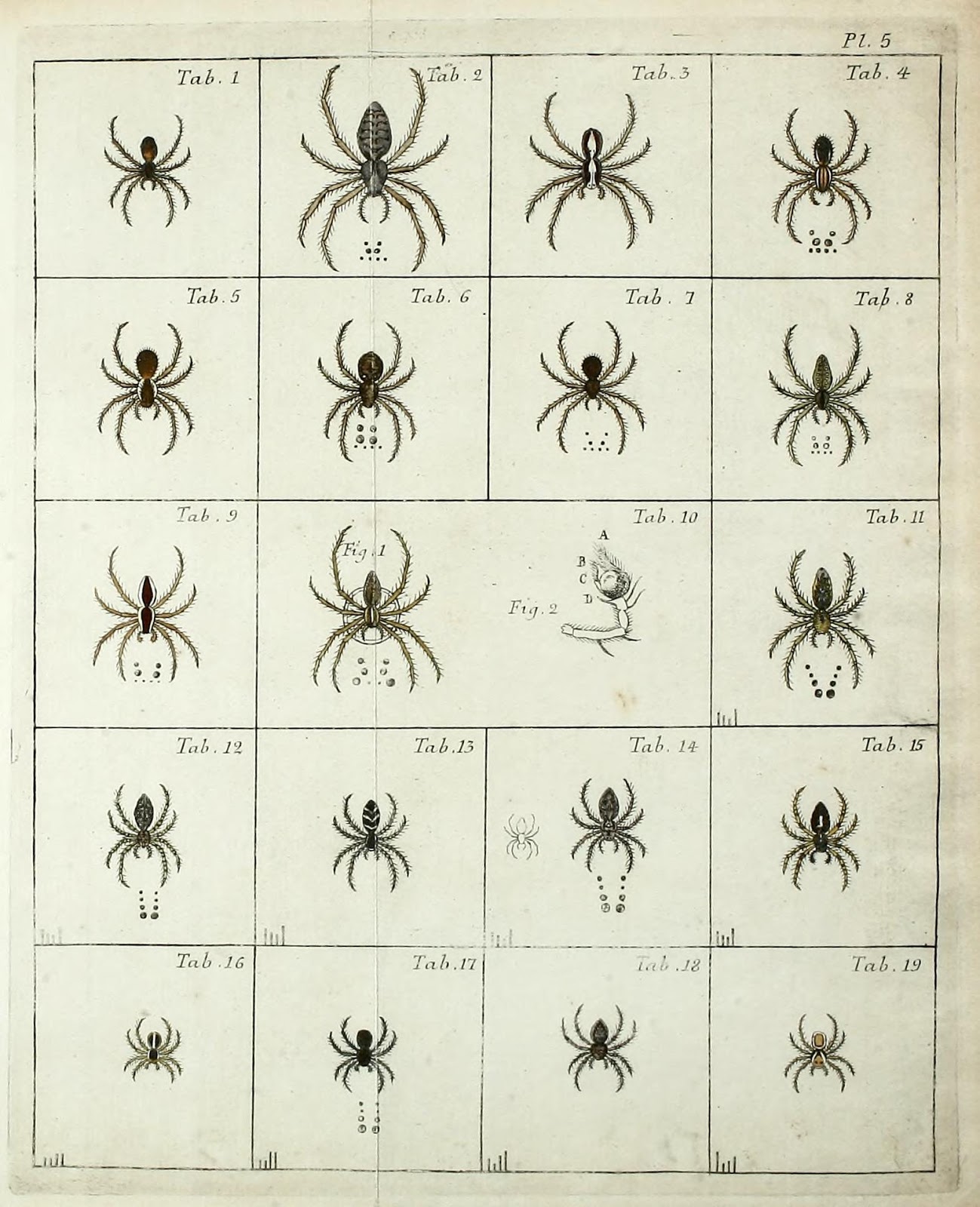
Clerck’s Svenska Spindlar describes and illustrates 70 species and includes 6 hand-colored plates containing 89 figures. Artists for the work include Eric Borg and L. Gottman, and the plates were engraved by Carl Bergquist. The text is printed in both Swedish and Latin, and for each species, Clerck uses the single generic name Araneus followed by a specific, one-word name (constituting the species name). Clerck then provides detailed information about each species, from the dates that he collected his specimens to descriptions of anatomical features and differences between sexes.
Clerck also restricted his use of the term “spider” to those species possessing eight eyes and separated prosoma and opisthosoma. As such, he, unlike many previous authors, excluded Opiliones (harvestmen) and other arachnids from his treatment of the subject.
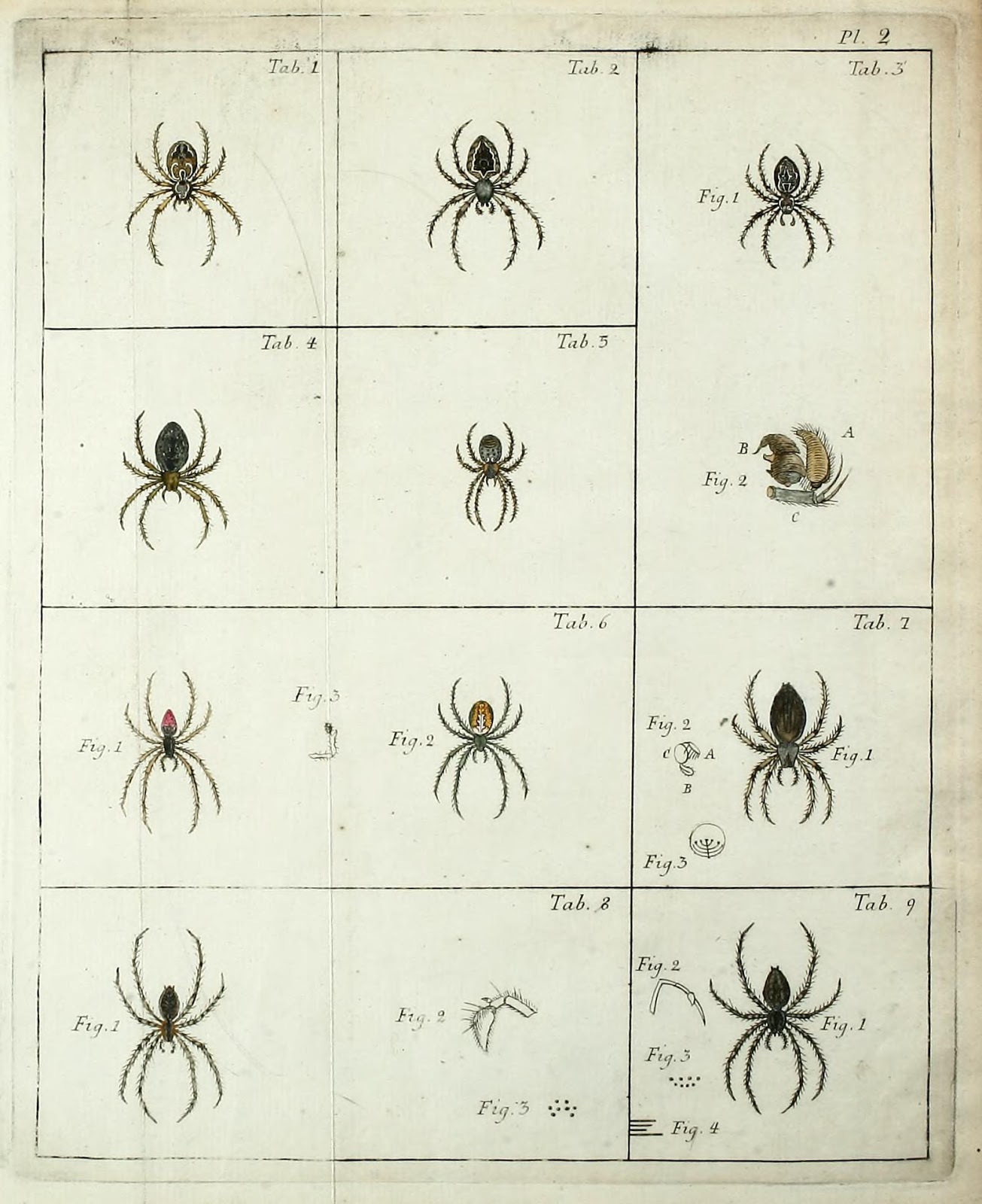 |
| Clerck, Carl. Svenska Spindlar. 1757. Digitized by Smithsonian Libraries. http://www.biodiversitylibrary.org/page/51379402. |
The International Commission for Zoological Nomenclature recognizes Clerck’s names as having precedence over any varieties that may have been proposed by Linnaeus, and as such the names in Svenska Spindlar have the unique distinction of being considered valid despite having been published a year before Linnaeus’ Systema Naturae. For example, while Linnaeus used the generic name Aranea, Clerck’s Araneus is considered the valid generic name.
In 1793, the first English translation of Clerck’s Svenska Spindlar appeared under the title Aranei, or, A natural history of spiders, by Thomas Martyn. Martyn supplemented the text with additional illustrations originally published in Eleazar Albin’s Natural history of spiders (1736).
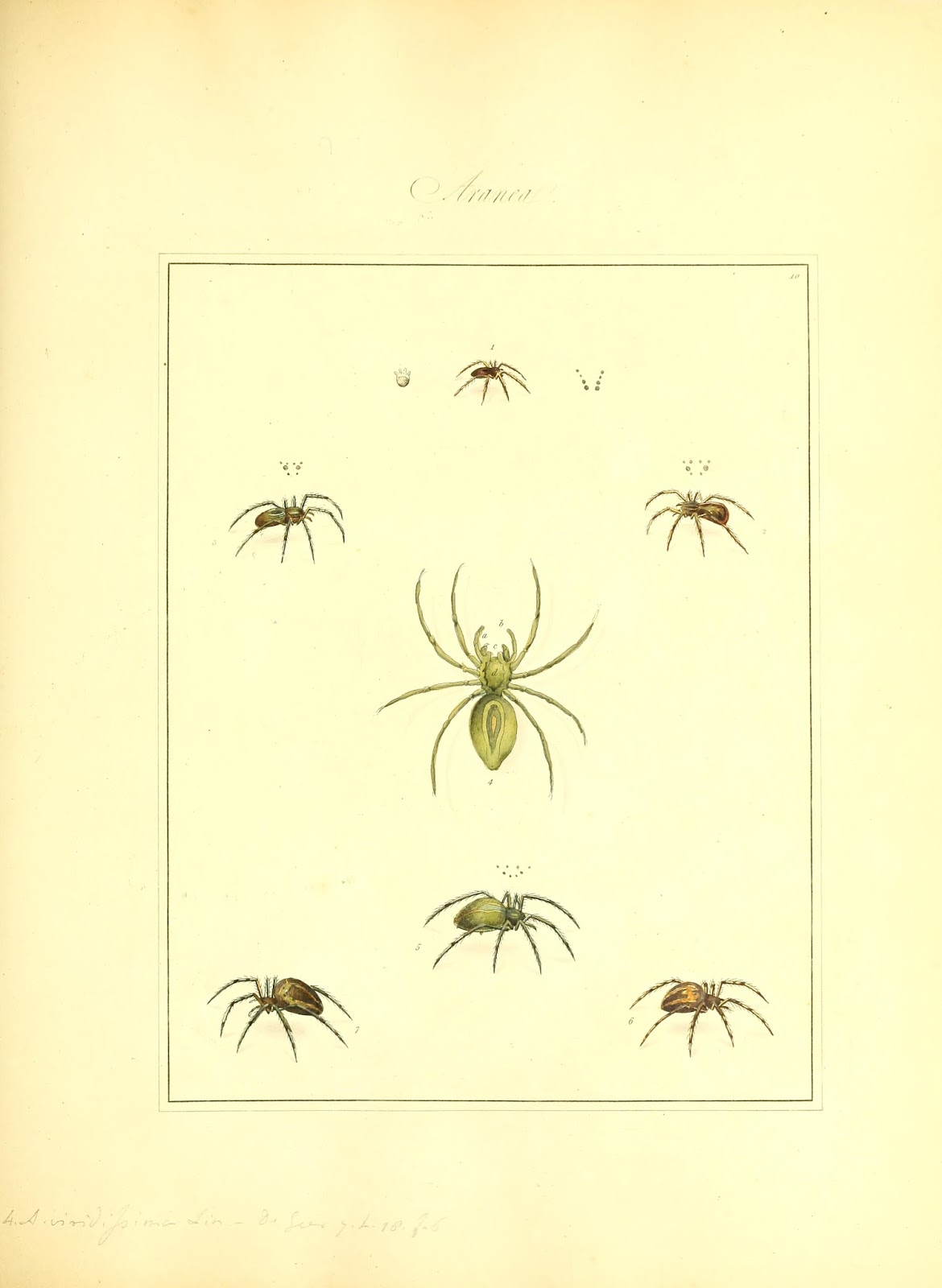 |
| Martyn, Thomas. Aranei, or, A natural history of spiders. 1793. Digitized by Smithsonian Libraries. http://www.biodiversitylibrary.org/page/51378856. |
So, as you gear up for Halloween this weekend, take a moment to look through the book that started it all when it comes to spider nomenclature. If you’re one of those 30.5% of U.S. people with arachnophobia, you’re sure to consider it a true Page Frights experience!
Special thanks to Leslie Overstreet, Curator of Natural History Rare Books at Smithsonian Libraries, for providing information about this title for this post.
Reference
Health Research Funding. 2014. “7 Uncommon Arachnophobia Statistics.” September 22. Accessed October 25, 2016. http://healthresearchfunding.org/7-arachnophobia-statistics/.
