Biodiversity Heritage Library - Program news and collection highlights from BHL
  • Home
  • News
  • Featured Books
    • All Featured Books
    • Book of the Month Series
    • BHL at 20
  • User Stories
  • Campaigns
    • Fossil Stories
    • Garden Stories
    • Monsters Are Real
    • Page Frights
    • Her Natural History
    • Earth Optimism 2020
  • Tech Blog
  • Visit BHL
Home
News
Featured Books
    All Featured Books
    Book of the Month Series
    BHL at 20
User Stories
Campaigns
    Fossil Stories
    Garden Stories
    Monsters Are Real
    Page Frights
    Her Natural History
    Earth Optimism 2020
Tech Blog
Visit BHL
  • Home
  • News
  • Featured Books
    • All Featured Books
    • Book of the Month Series
    • BHL at 20
  • User Stories
  • Campaigns
    • Fossil Stories
    • Garden Stories
    • Monsters Are Real
    • Page Frights
    • Her Natural History
    • Earth Optimism 2020
  • Tech Blog
  • Visit BHL
Biodiversity Heritage Library - Program news and collection highlights from BHL
Blog Reel, Featured Books

“If it Lives, We Want It.” Exploring the Acclimatisation Society of Victoria’s Role in Australia’s Ecological History

The Acclimatisation Society of Victoria played a fascinating, yet devastating, role in Australia’s ecological history. Founded in 1861 and existing as an independent entity until 1872, the Society recorded its objectives and activities in annual reports. These reports have been digitized by Museums Victoria and are now available on the Biodiversity Heritage Library.
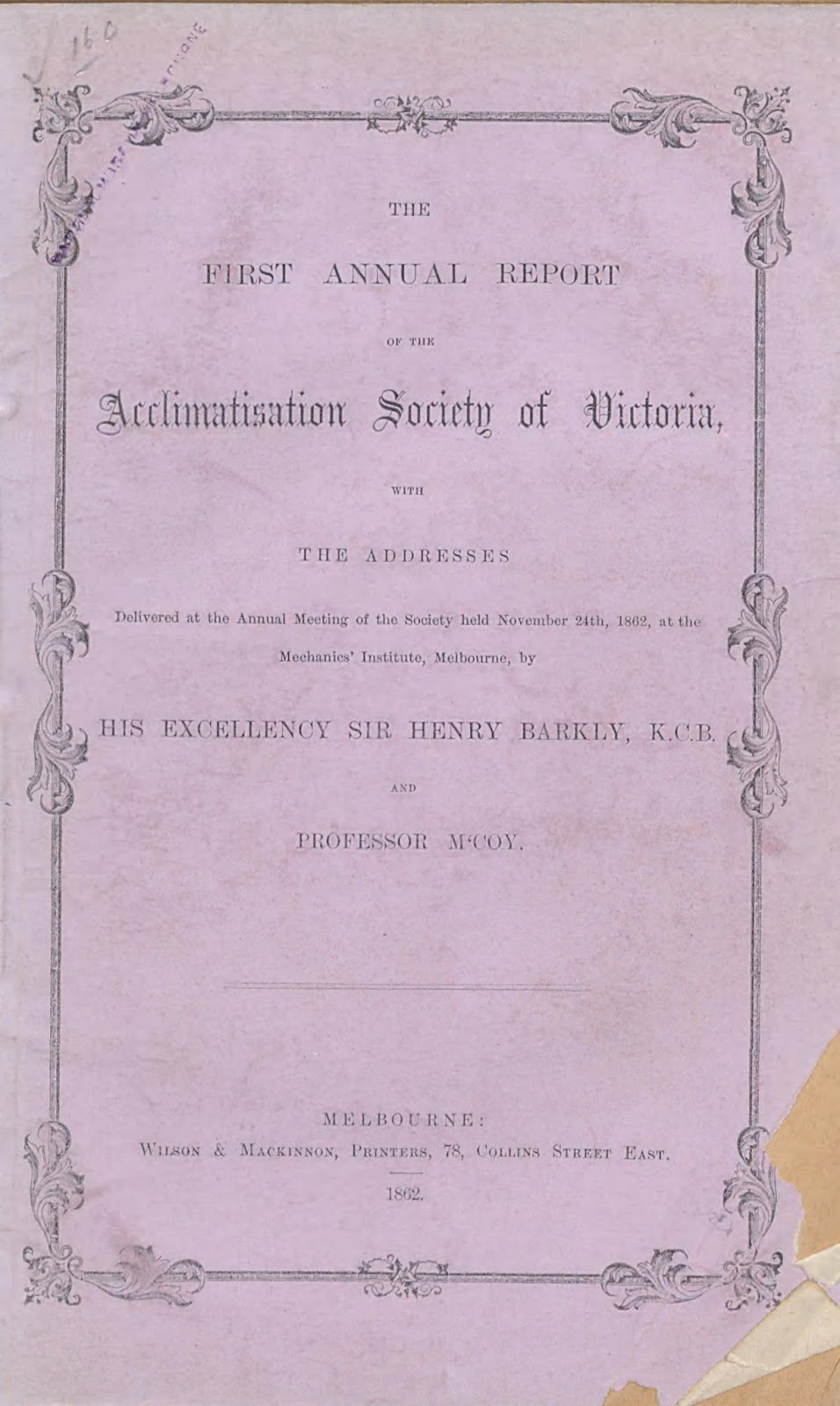
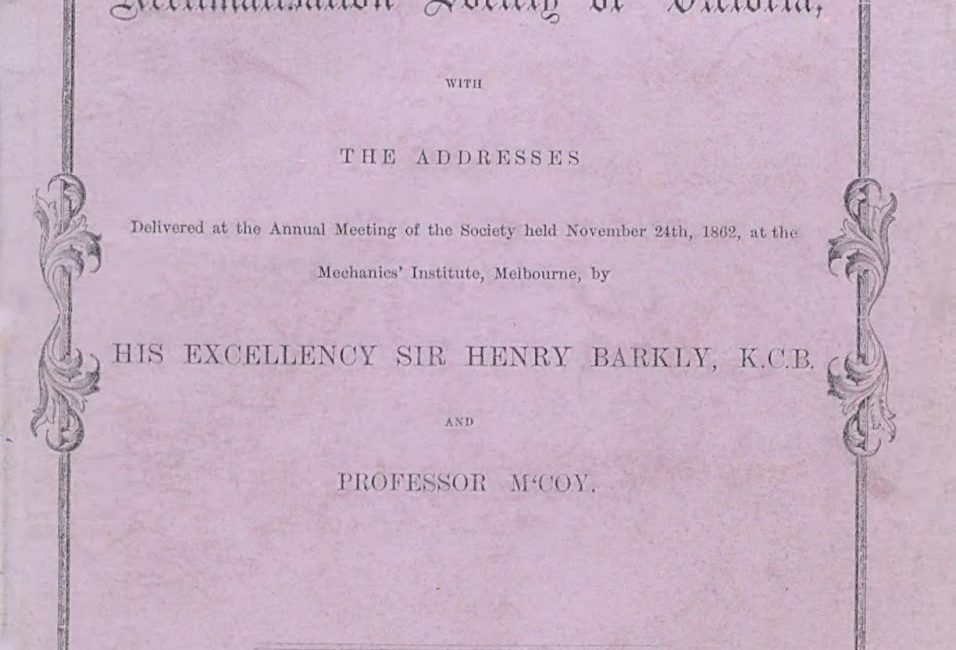
The First Annual report of the Acclimatisation Society of Victoria, 1862. Contributed to BHL by Museums Victoria. http://s.si.edu/2BpCcfK.

The Acclimatisation Society was established in Victoria’s capital of Melbourne at a time when the city was experiencing great economic and population growth. Gold had been discovered in the colony in 1851 and over the next 10 years the population grew from 76,000 to 540,000. The wealthy and educated flocked to Melbourne, and the 1850s saw the establishment of The University of Melbourne, the National Museum of Victoria, the State Library of Victoria and many learned societies.

The Acclimatisation Society was governed by the colony’s most eminent scientists who believed that Australia’s plants and animals were greatly inferior to those in Europe. The Society’s first president Edward Wilson argued that animals indigenous to Australia were practically useless, providing only ‘a little sport and an occasional meal’ (Gillbank, 1984).

At the Society’s inaugural annual meeting, members were roused with talk of “wharves laden with the fleeces of the alpaca…, rivers teeming with all sorts of fish, forests abounding with every variety of game, and our tables groaning with all the delicacies which can be procured in the markets of London and Paris” (Acclimatisation Society of Victoria, 1862b).

There was great nostalgia amongst the colony for the “delightful reminders of [their] early home”. Frederick McCoy, foundation Professor of Natural Science at The University of Melbourne and first director of the National Museum, proclaimed that “English thrushes, blackbirds, larks, starlings, and canaries” when “liberated” would enliven the “savage silence, or worse” with their “varied, touching, joyous, strains of Heaven-taught melody” (McCoy 1862).
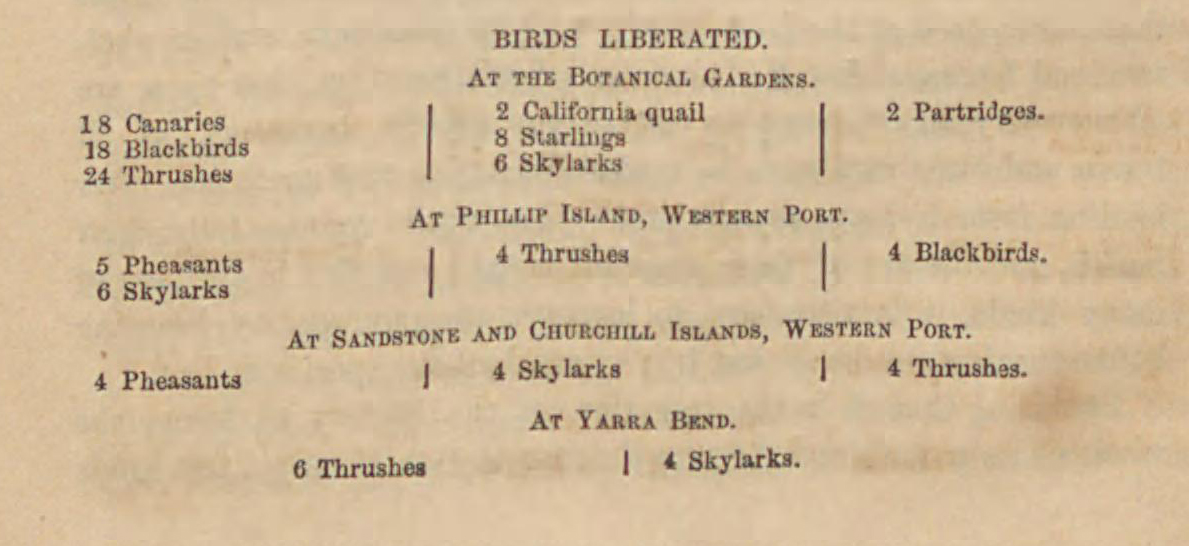
Birds liberated, from The First Annual report of the Acclimatisation Society of Victoria, 1862. Contributed to BHL by Museums Victoria. http://s.si.edu/2DEkbzh.

The Society’s objectives were twofold: to introduce to Victoria and acclimatise “all innoxious animals, birds, fishes, insects, and vegetables, whether useful or ornamental” and to spread indigenous plants and animals from the colony to other parts of the world. President Wilson’s motto was “if it lives, we want it” (Tout-Smith, 2018).

Theirs was an enormous undertaking: “to establish a system of co-operation and exchange, with persons residing at different points in the far quarters of the globe, and to arrange for the reception, multiplication, and distribution of birds and other animals, which must first of all bear a tedious sea voyage, and then receive the vigilant attention necessary to preserve them in a new climate” (Acclimatisation Society of Victoria, 1862a).

The Annual Reports outline some significant successes (not all of which were their own doing): “the hare and rabbit have been introduced, and the latter so thoroughly acclimatised, that it swarms in hundreds in some localities” (Acclimatisation Society of Victoria, 1862c).

The Reports not only provide a timeline of species released in Victoria; they also list the species sent elsewhere: echidnas to London, wombats to Paris, kangaroos to Mauritius and possums to New Zealand (an acclimatisation “success” that New Zealand may never forgive).
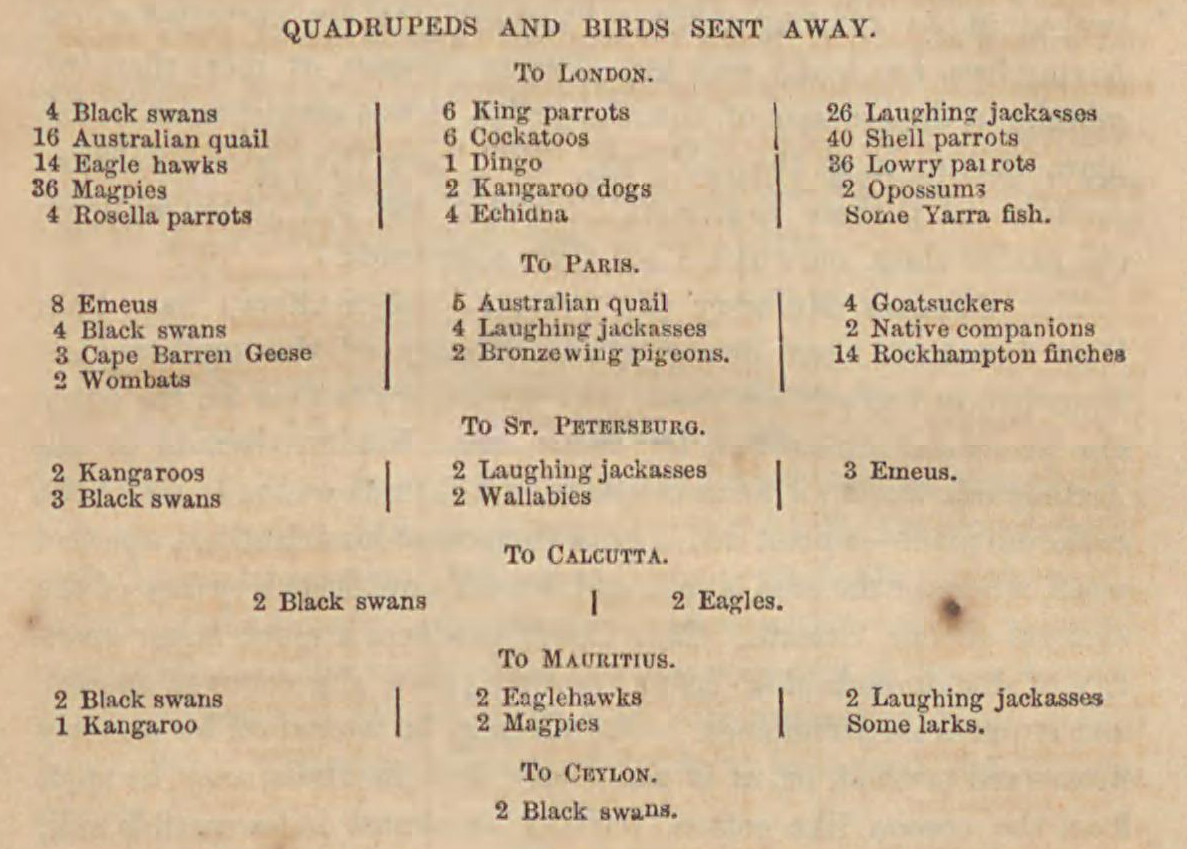
Quadrupeds and birds sent away, from The First Annual report of the Acclimatisation Society of Victoria, 1862. Contributed to BHL by Museums Victoria. http://s.si.edu/2n4u9kb.

However, most of their expensive acclimatisation experiments failed. In the early 1870s, The Acclimatisation Society began to focus on the importation of exotic animals for display purposes and in 1872 it was renamed The Zoological and Acclimatisation Society of Victoria. Their Annual Reports (also available on BHL) provide an equally fascinating history of what would become The Melbourne Zoo, but that’s another story.
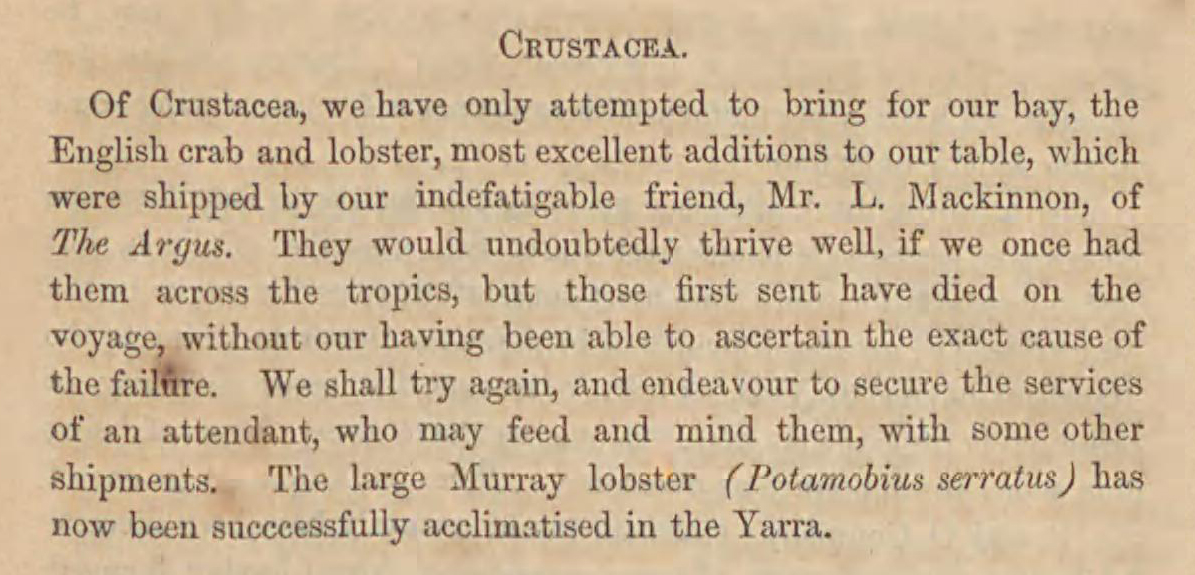
Crustacea, from The First Annual report of the Acclimatisation Society of Victoria, 1862. Contributed to BHL by Museums Victoria. http://s.si.edu/2n90R33.

Today Australia’s introduced species cause immense environmental and economic damage and have caused more extinctions of native Australian animals than any other factor. The Acclimatisation Society of Victoria, however, was certainly not to blame for all this devastation. While their lists of “liberated” animals include many of our most destructive invasives, they are generally only credited with the introduction of starlings, sparrows, sambar deer and European carp (Tout-Smith, 2003).

The legacy they expected to leave behind is very different from the one presented here, as evidenced by McCoy’s statement in his anniversary address delivered at the Society’s first annual meeting:

…the good we do will live after us, and the work of our hands will thrive and prosper to our hearts’ content, and so become a lasting benefit to the millions of men who will in the fullness of time inhabit this land. (McCoy, 1862)

References

  • Acclimatisation Society of Victoria, 1862a. Annual report of the Acclimatisation Society of Victoria. No. 1.
  • Acclimatisation Society of Victoria, 1862b, Proceedings of the Annual General Meeting, 24 November 1862, Annual report of the Acclimatisation Society of Victoria. No. 1.
  • Acclimatisation Society of Victoria, 1862c. Annual report of the Acclimatisation Society of Victoria. No. 1.
  • Gillbank, L. 1984. The Origins of the Acclimatisation Society of Victoria: Practical Science in the Wake of the Gold Rush. Historical Records of Australian Science 6, 359-374. https://doi.org/10.1071/HR9860630359.
  • McCoy, 1862. Anniversary address delivered at the first annual meeting of the Acclimatisation Society of Victoria. In Annual report of the Acclimatisation Society of Victoria. No. 1.
  •  Tout-Smith, D. 2003. Acclimatization Society of Victoria in Museums Victoria Collections. https://collections.museumvictoria.com.au/articles/1803. Accessed 18 January 2018.

January 25, 2018by ulib-libraryjobs
BHL News, Blog Reel

A New Scanner for Digitizing Australia’s Biodiversity Heritage

Portrait version of the Biodiversity Heritage Library logo.
View Full Size Image
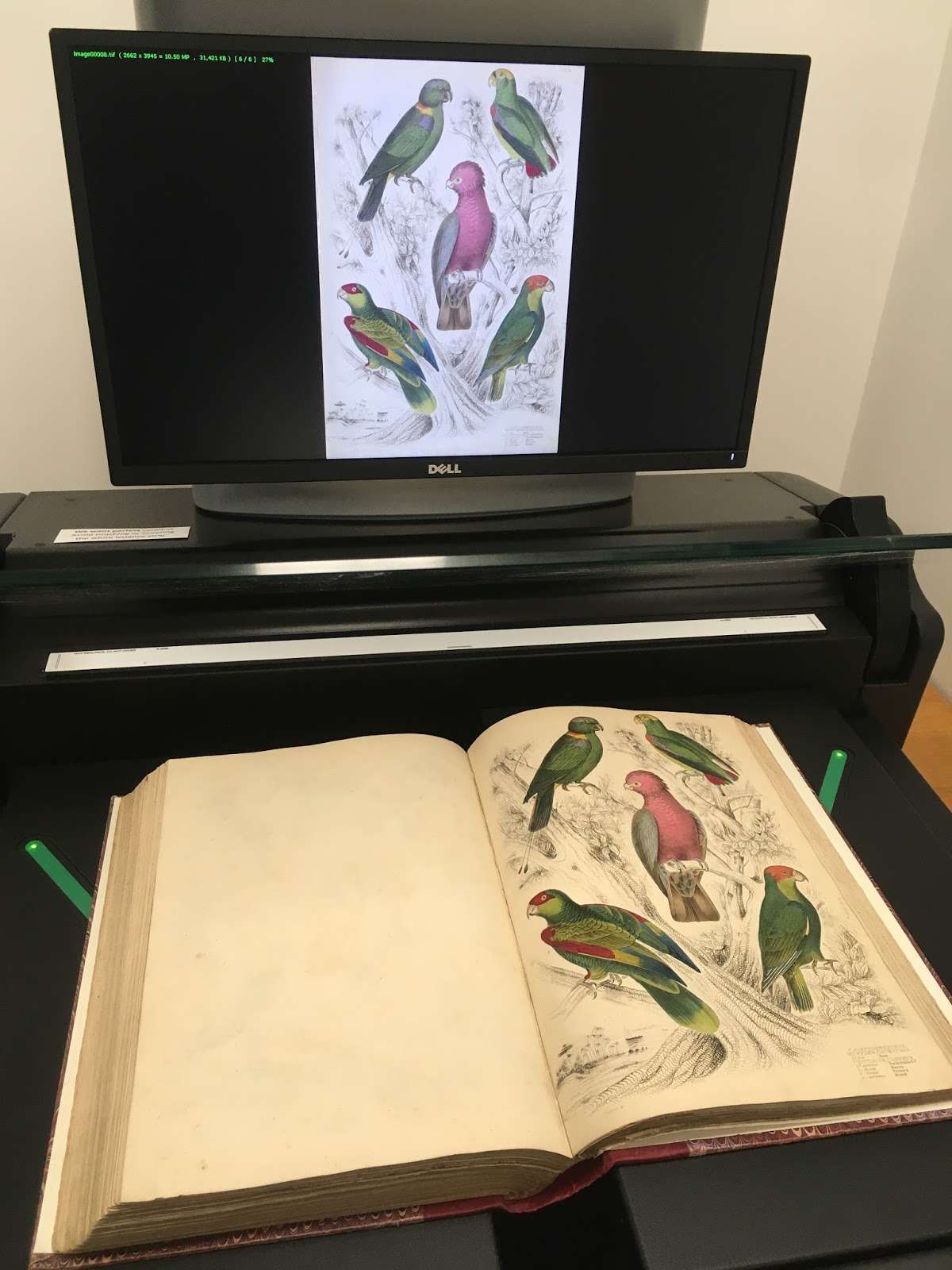
New Zeutschel OS 16000 scanner purchased by BHL Australia. Book being digitized is: The animal kingdom of the Baron Cuvier, enlarged and adapted to the present state of zoological science. 1839. By Baron Georges Cuvier. Photo Credit: Nicole Kearney.

In 2011, Australia joined the Biodiversity Heritage Library and, led by Museums Victoria, began to digitize the rare books, historic journals and archival material related to Australia’s biodiversity, and to make them openly available online.

There are now 15 Australian organizations contributing to BHL and over 300 worldwide. These include museums, herbaria, royal societies, field naturalists clubs and government organizations.

Just this week the number of volumes digitized for BHL by Australian organizations surpassed 1,000, amounting to over 200,000 pages. The great majority of this digitization work was done by the BHL Australia team at Melbourne Museum. We have a fabulous team of volunteers who scan the pages and prepare the digitized books for upload online.

View Full Size Image
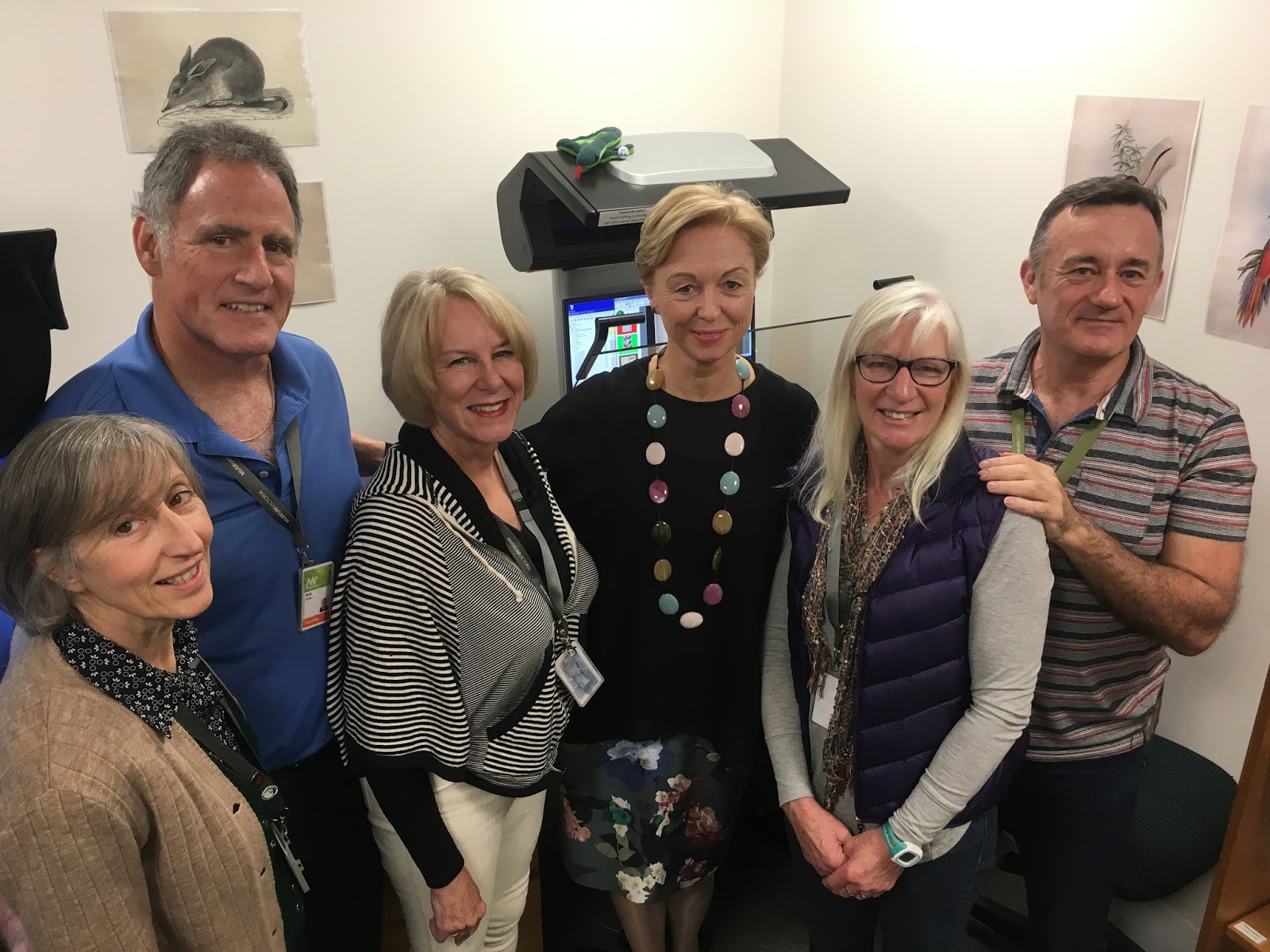
BHL Australia volunteers with Museums Victoria CEO Lynley Marshall (center) in front of the new BHL Australia scanner. Photo Credit: Nicole Kearney.

In the 6 years we have been doing this work, there have been dramatic advances in digitization technology, both in hardware and in software. We are therefore very excited to announce that BHL Australia has just purchased a new scanner.

View Full Size Image
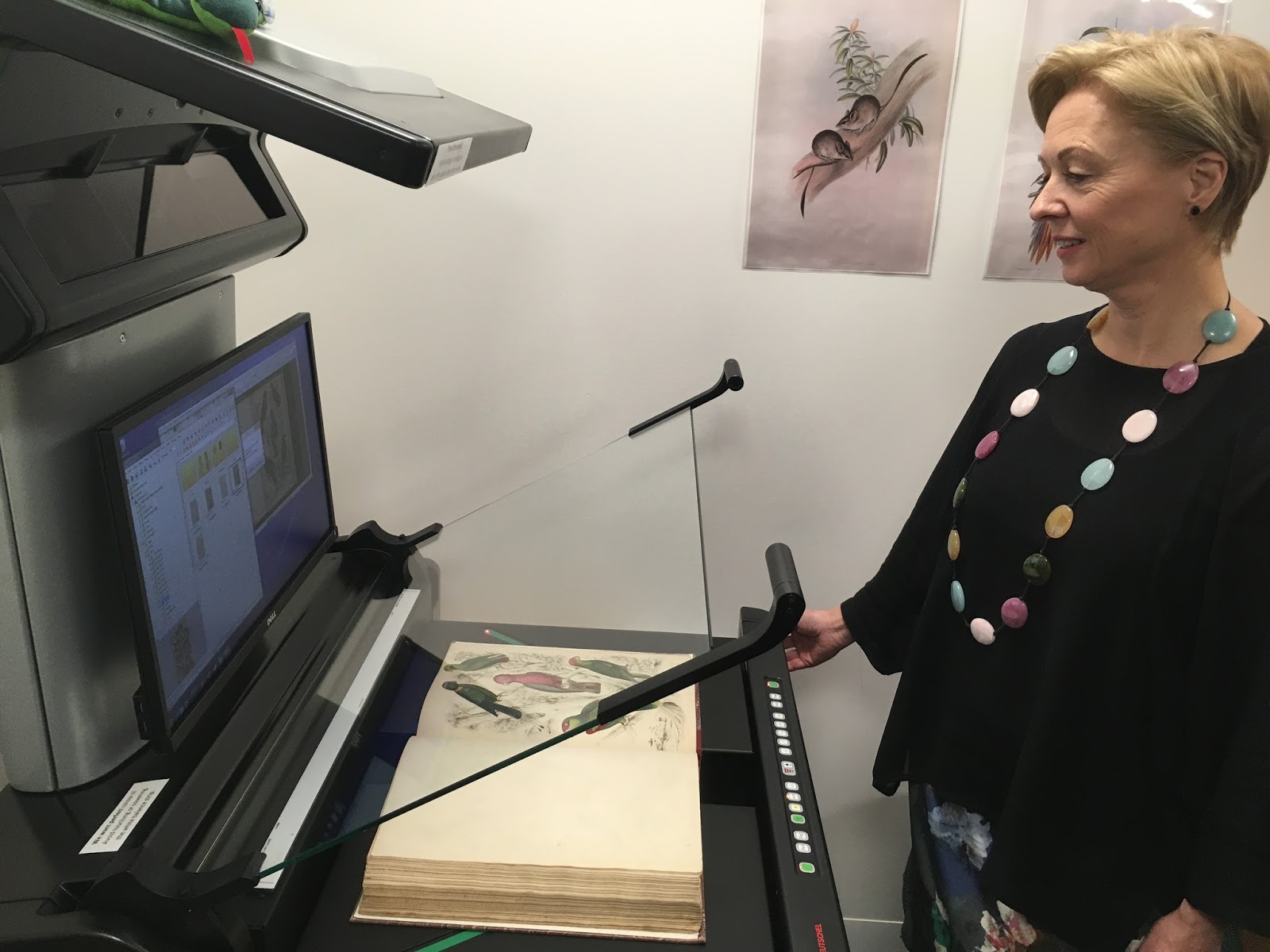
Museums Victoria CEO Lynley Marshall scanning the first page for BHL Australia on the new scanner. Photo Credit: Nicole Kearney.

To celebrate the arrival of the new scanner, the Museums Victoria (MV) library hosted an Open House on 24 May, inviting MV staff to learn more about BHL, see a display of rare books from the MV collection, and see the new scanner.

View Full Size Image
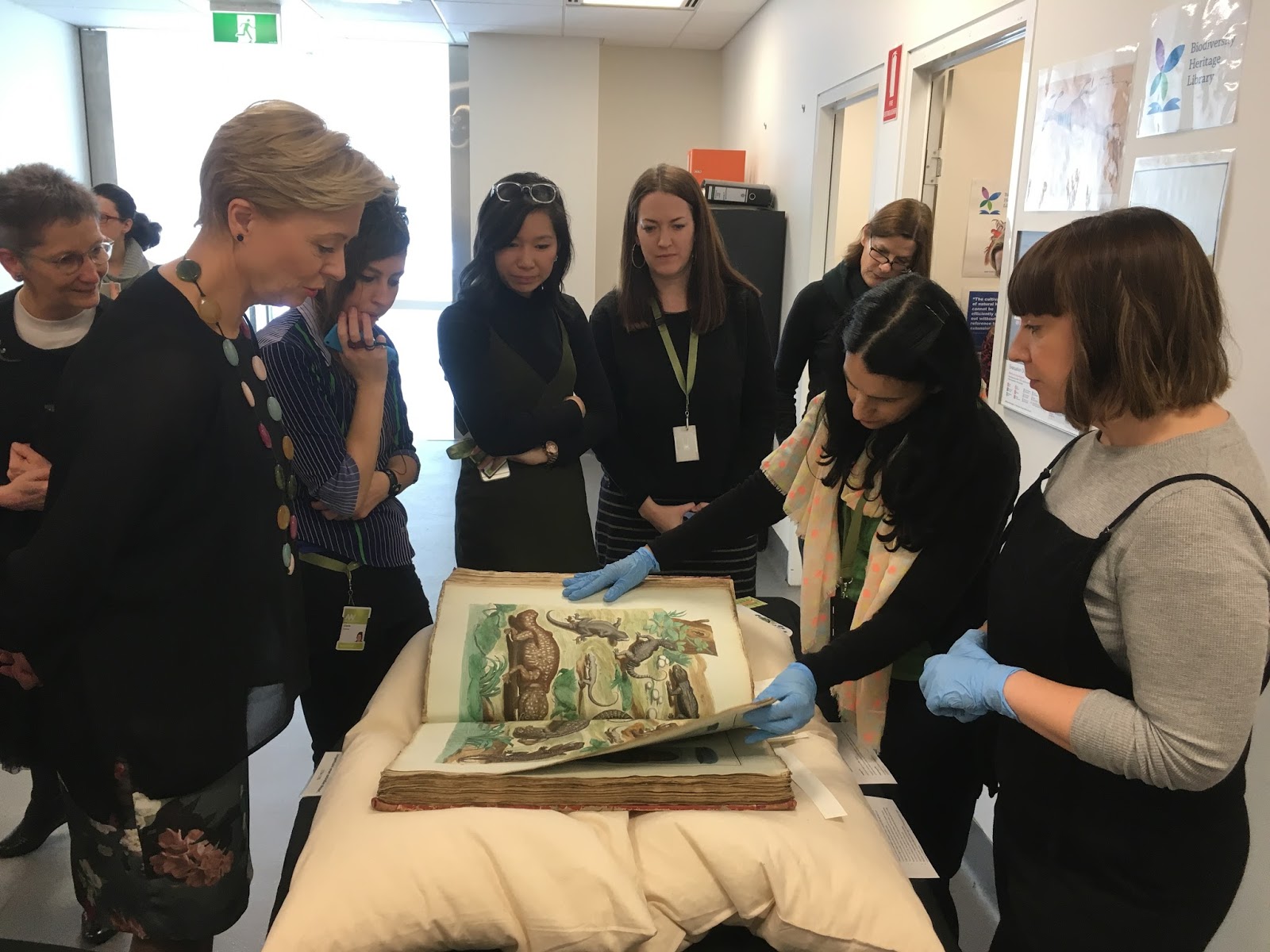
Visitors exploring rare books from the MV collection during the Open House. Book on display is: Thesaurus rerum naturalium. 1734-1765. By Albertus Seba. Photo Credit: Nicole Kearney.

The scanner, a Zeutschel OS 16000, will increase both the quality and quantity of our scanning work, and will automate much of our post processing. This will allow us to further expand our project and to make even more of Australia’s biodiversity heritage literature available online, so stay tuned for the next 200,000 pages!

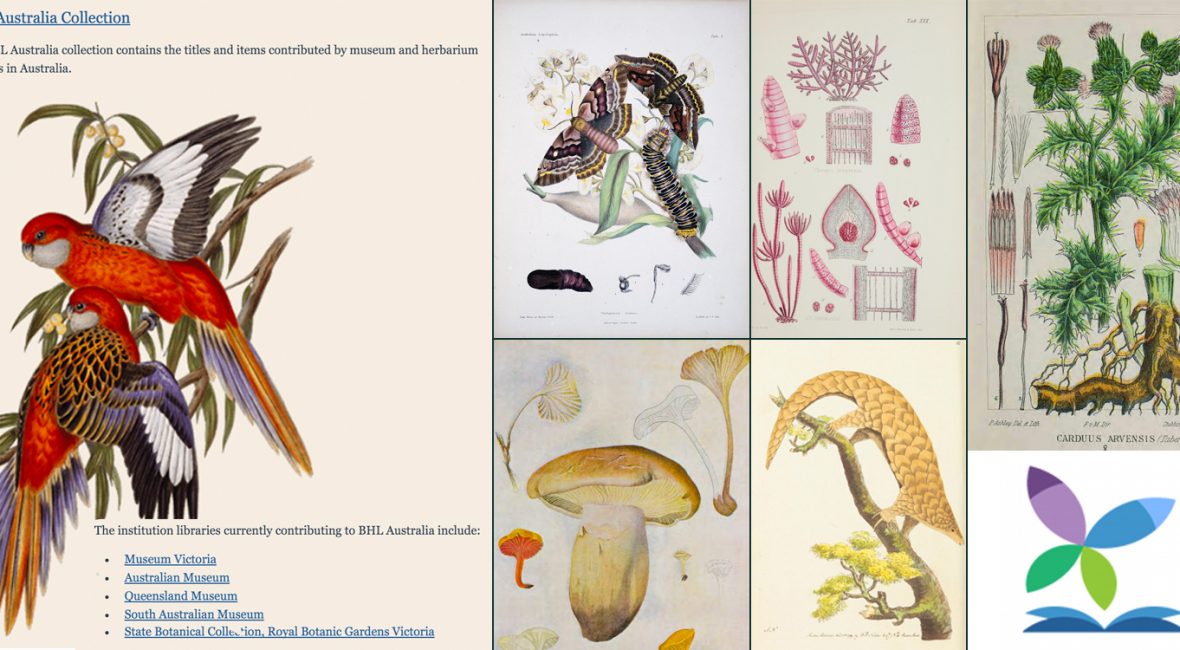
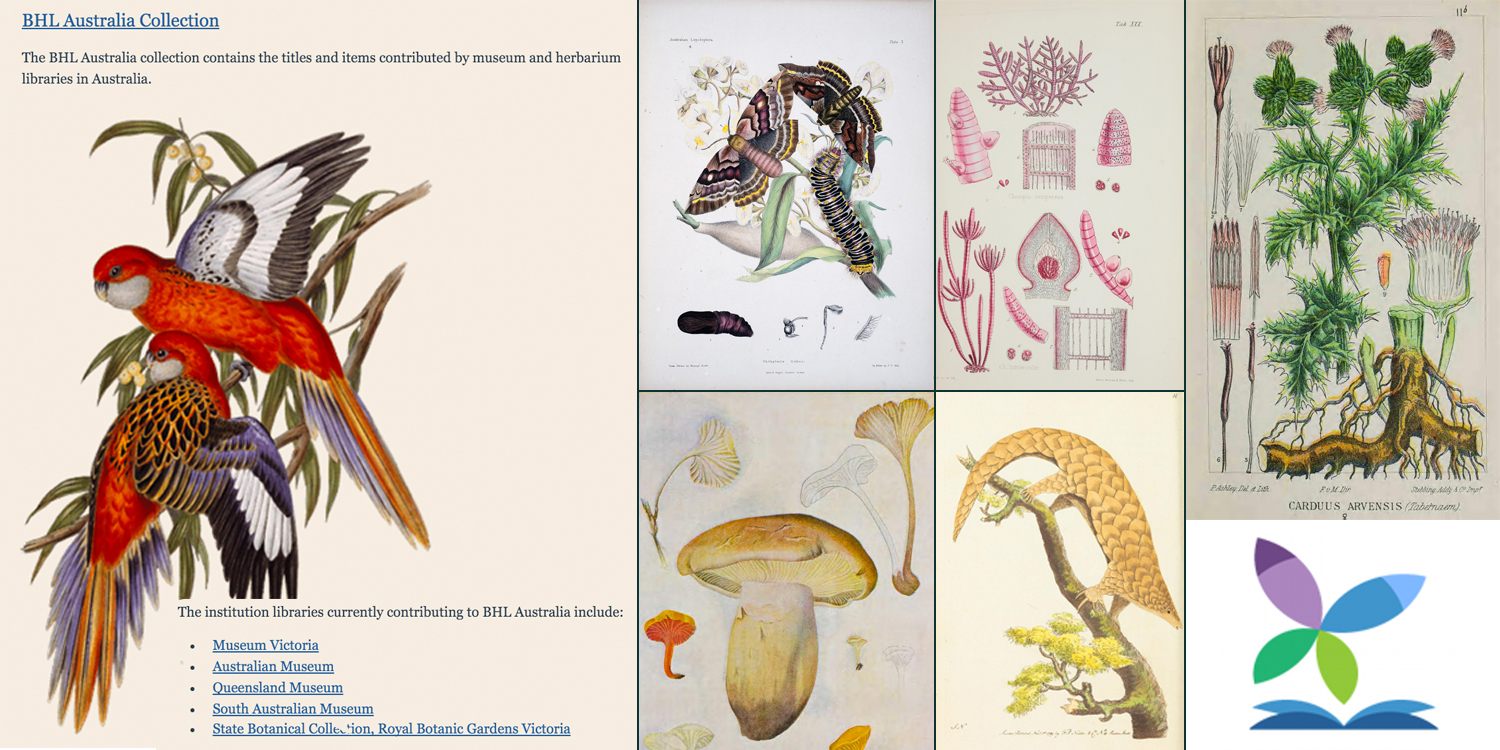
Peruse the BHL Australia collection.

BHL Australia is funded by the Atlas of Living Australia.

May 30, 2017by ulib-libraryjobs
BHL News, Blog Reel

Biodiversity Heritage Library Adds BHL Australia as a New Member

The Biodiversity Heritage Library is pleased to welcome BHL Australia as a new Member. BHL Australia was founded in 2010 by the Atlas of Living Australia with Museum Victoria as the Lead Agency undertaking the daily work of running the project. To date, five institutions participate in the BHL Australia program, including Museum Victoria, Australian Museum, Queensland Museum, South Australian Museum, and Royal Botanic Gardens Victoria. Over the past six years, these institutions have contributed journal titles, rare books, monographs and field notebooks to the BHL collection, amounting to over 156,000 pages. BHL Australia represents BHL’s 16th Member.

View Full Size Image

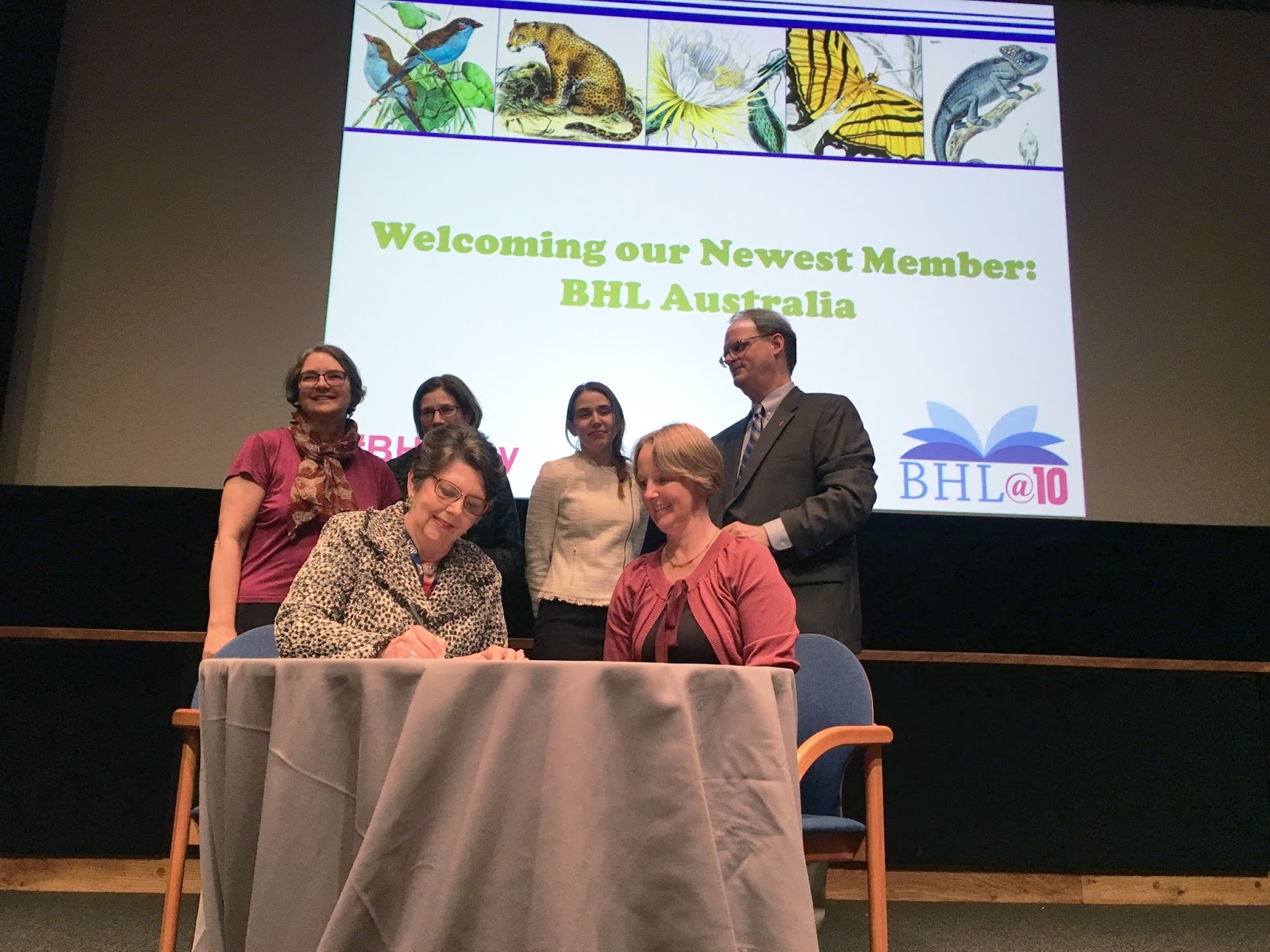
A three-way Memorandum of Understanding has been signed between BHL, the Atlas of Living Australia and Museum Victoria. Dr. Elycia Wallis, Project Lead and Manager of Online Collections at Museum Victoria, will be the official representative to the BHL Members’ Council on behalf of BHL Australia.

View Full Size Image
Dr. Nancy E Gwinn (left), Director of Smithsonian Libraries and Chair of the BHL Members’ Council, and Dr. Elycia Wallis, BHL Australia Project Lead and Manager of Online Collections at Museum Victoria, signing the BHL MOU. Back Row, Left to Right: Constance Rinaldo (Librarian of the Ernst Mayr Library of the Museum of Comparative Zoology, Harvard University | Vice-Chair, BHL Members’ Council); Jane Smith (Head of Library and Archives, Natural History Museum, London | Secretary, BHL Members’ Council); Carolyn Sheffield (Program Manager, BHL); Martin R. Kalfatovic (Associated Director, Digital Programs and Initiatives, Smithsonian Libraries | Program Director, BHL).

As BHL Members, BHL Australia will continue to digitize content from Australian library collections as well as work to establish new partnerships with institutions around the continent. The BHL Australia project team, which includes a Project Coordinator, Digitization Coordinator, Technical Officer, and a group of dedicated digitization volunteers, will continue to provide support, expertise, and guidance to all of the participating institutions as well as the BHL family around the world, ensuring the ongoing growth and success of the BHL program.

“I am personally very excited that BHL Australia has now become a full Member of BHL,” said Project Lead, Dr. Elycia Wallis. “Our Australian project has grown into a great success, and I look forward to the new challenges of actively contributing to the wider governance of the consortium.”

Since 2012, BHL’s consortium has operated within a tiered structure comprised of Members and Affiliates. While Affiliates can contribute content, provide technical services, and participate in select committees, participation at the full Member level allows for greater institutional impact, including the right to vote on strategic directives, help govern the BHL program and use central digitization funds. Those participating at the Member level also commit to an annual fee that helps support BHL’s financial stability.

“BHL Australia has been a key partner in the BHL family for many years and has been integral to the success of our global expansion and technical development,” affirmed Martin R. Kalfatovic, BHL Program Director. “For example, our current website is based on designs developed by the BHL Australia team. We are thrilled to welcome BHL Australia as a Member and look forward to continuing our collaborative efforts to provide free and open access to the world’s biodiversity literature.”

Explore the BHL Australia collection today.

About Atlas of Living Australia 
The Atlas of Living Australia is a free, online resource that aggregates biodiversity data and information from a number of sources including museum and herbarium specimen collections; government and university research departments; and citizen science projects small and large. It currently provides access to over 60 million specimen records. The Atlas of Living Australia is federally funded as a part of Australia’s National Research Infrastructure for Australia (NCRIS).

About Museum Victoria 
Museum Victoria, located in Melbourne in south-eastern Australia, is Australia’s largest public museum organization. It houses a collection of over 17 million objects, documents, photographs and specimens. It has three public museums: Scienceworks; the Immigration Museum; and Melbourne Museum, which also features the Bunjilaka Aboriginal Cultural Centre. The World Heritage-listed Royal Exhibition Building is situated adjacent to Melbourne Museum. Museum Victoria’s library has a collection that dates back to the founding of the institution in 1854 and beyond.

May 4, 2016by ulib-libraryjobs
Blog Reel, Featured Books

Transcribing the Field Notes of William Brewster

View Full Size Image
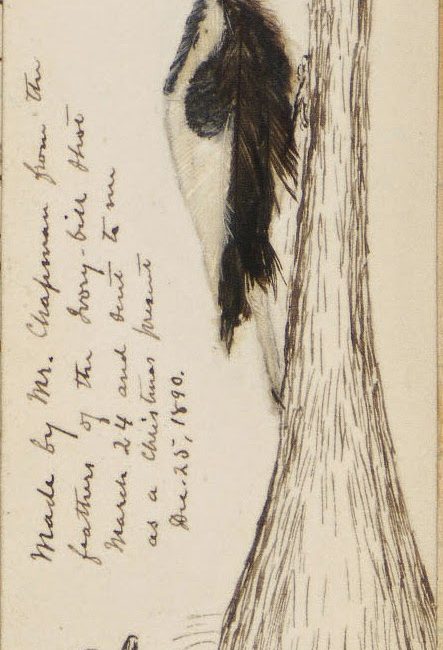
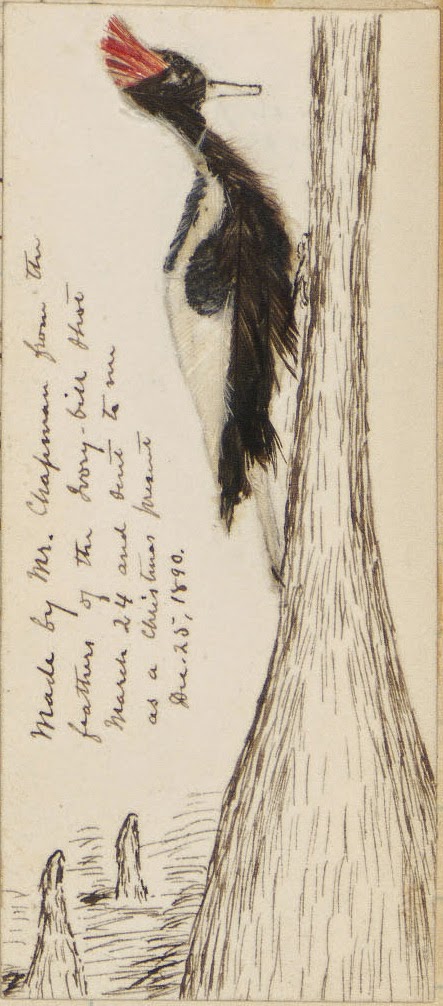
Ivory-billed woodpecker from
Brewster’s journal of 1890

William Brewster (1851-1919) was a renowned American amateur ornithologist, first president of the Massachusetts Audubon Society, and a president of the American Ornithologists’ Union. He was an avid collector of birds and their nests and eggs, and collected over forty thousand specimens from 1861 until his death in 1919. His collection, bequeathed to the Museum of Comparative Zoology at Harvard University, is considered one of the finest private collections of North American birds ever assembled. Though Brewster collected throughout North America, his collection is especially comprehensive in its coverage of the birds of New England. Brewster thoroughly documented his collecting trips. His journals and diaries are a gold mine of scientific observations and a delightful account of years spent exploring the woods, fields, lakes, and rivers of New England.

The Ernst Mary Library of the Museum of Comparative Zoology is in the process of digitizing its collection of Brewster’s field notes and observations, and making these available worldwide via the Biodiversity Heritage Library (BHL). As part of the Purposeful Gaming project led by the Missouri Botanical Garden, and funded by the Institute of Museum and Library Services, we have begun efforts to transcribe Brewster’s voluminous field notes, with the ultimate goal of making the full text of his observations searchable and available for any number of uses.

As an initial trial project, we have placed ten digitized volumes of field notes on two crowdsourcing websites, and we invite anyone interested to help us accomplish our goal of transcribing at least 2000 pages of Brewster’s journals. The crowdsourcing websites chosen for this project are the Biodiversity Volunteer Portal (BVP), a collaboration between the Australian Museum and the Atlas of Living Australia; and a BHL installation of FromThePage, a transcription tool developed by Ben Brumfield.

View Full Size Image
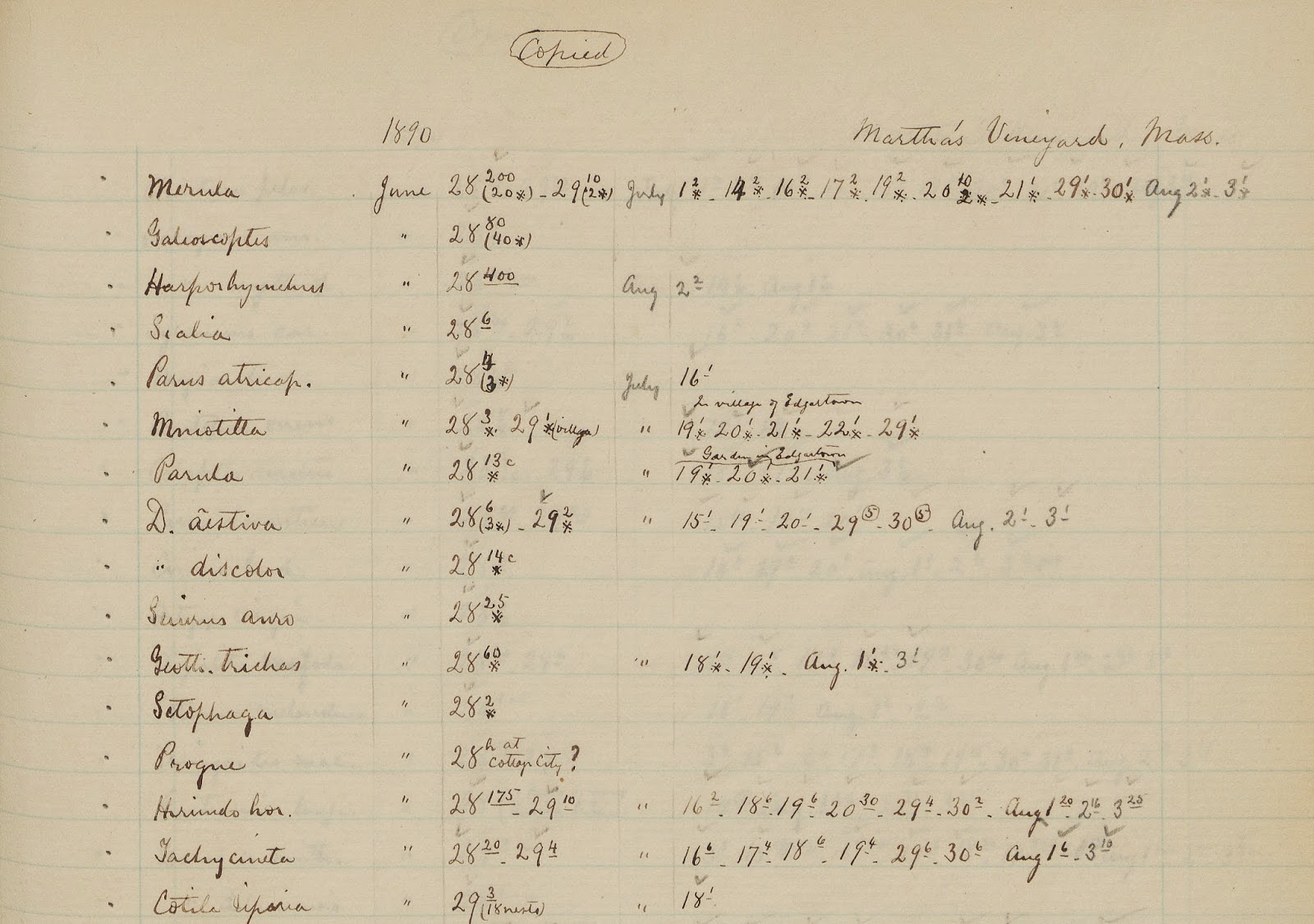
Birds observed by Brewster on Martha’s Vineyard in 1890

Please feel free to visit one or both of these sites, create an account, and enjoy Brewster’s idyllic writing style while helping to unlock his valuable observations for the benefit of all. We also invite you to browse Brewster’s diaries and journals on the BHL portal.

June 5, 2014by eomeara
Blog Reel, User Stories

Basionyms, Synonyms, Authorities: Tracking the Names of Macro- and Micro Algae Through Time

Portrait version of the Biodiversity Heritage Library logo.

As part of our BHL & Our Users series, we recently caught up with Dr. Roberta Cowan, a specialist in Phycology (taxonomy) and information management. Over the last 19 years, Dr. Cowan has been actively involved in nomenclatural work, notably for Australian algal species.  Dr. Cowan was kind enough to provide some background on her work and the role BHL has played in making that work both quicker and easier over the years.

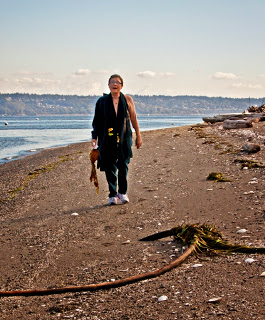
Roberta Cowan, PhD 

View Full Size Image
Dr. Cowan collecting on Whidbey Island,
Washington State 

In the 1980s a number of countries had nomenclatural plant databases. There was the famous Index Kewensis from Royal Botanic Gardens, Kew  and the Gray Cards from the Harvard University Herbaria. In Australia the Australian Plant Name Index (APNI) was being prepared. In the early 1990s proposals were put forward to the Australian Government to create a database for the marine macroalgae (Australian Marine Algal Name Index, AMANI) and the freshwater algae. Later the marine microalgae were included in AMANI. All of this information is now being updated and transferred to the Atlas of Living Australia (ALA).

I began work on AMANI in 1994. At that time, in order to check the accuracy of information regarding binomials cited in literature about Australian algae the original literature had to be sourced via the inter-library loan system. By definition much of the literature was contained in monographs and journal runs that were considered rare by the lending library. This invariably meant that the item was not available for photo-copying. Often the full bibliographic details for original literature was not entirely clear and so a ‘catch 22’ situation occurred in that an item may well be sourced to a particular library but could not be copied until the full bibliographic detail was supplied. The detail could only be supplied by accessing the item. Access to the item therefore had to wait until I could travel to the lending library. This meant waiting until travel to the libraries on the other side of Australia–or the other side of the planet–could be afforded.

In 2007, with the founding of the Biodiversity Heritage Library the problems of access and the problems of confirming bibliographic details became increasingly rare. My work changed from submitting inter-library loan forms and waiting for weeks for a requested item to arrive to searching BHL, selecting the item for download, filling in the information: title, author, keywords and waiting a very short time for the pdf to appear via a link in an email.

I am presently editing the algal data relevant to the nomenclature of all names cited in Australian taxonomic literature and all taxonomic literature citing Australian algal names for the Atlas of Living Australia. BHL is one of my most important tools.

December 17, 2013by sayeedmd
BHL News, Blog Reel

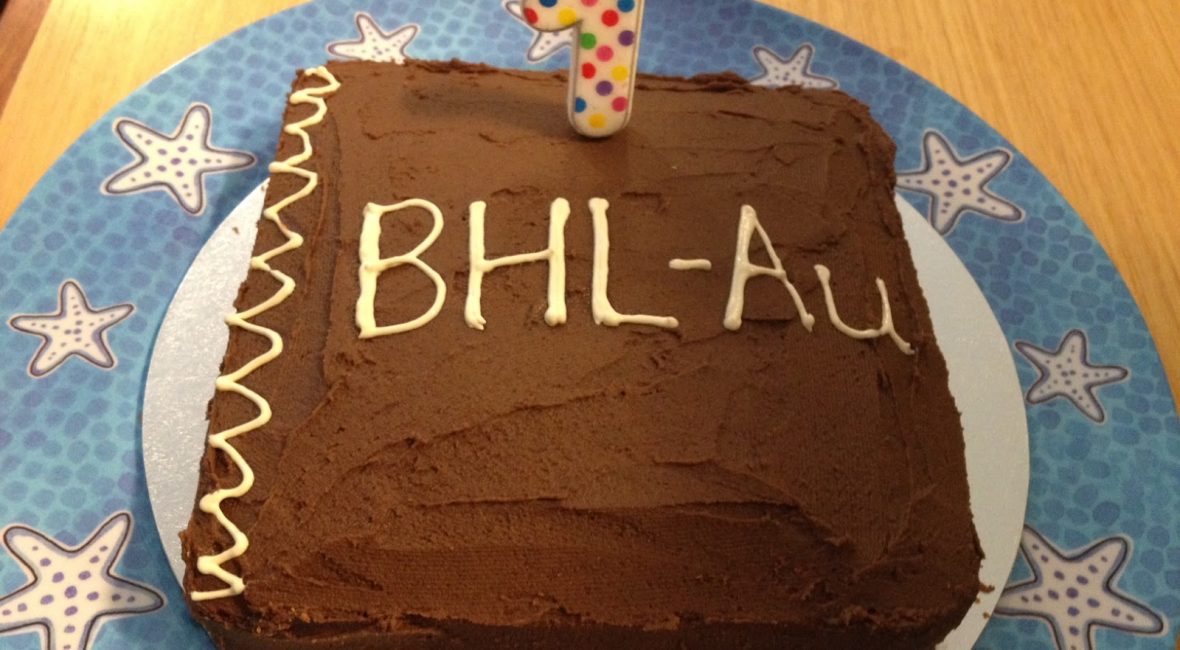
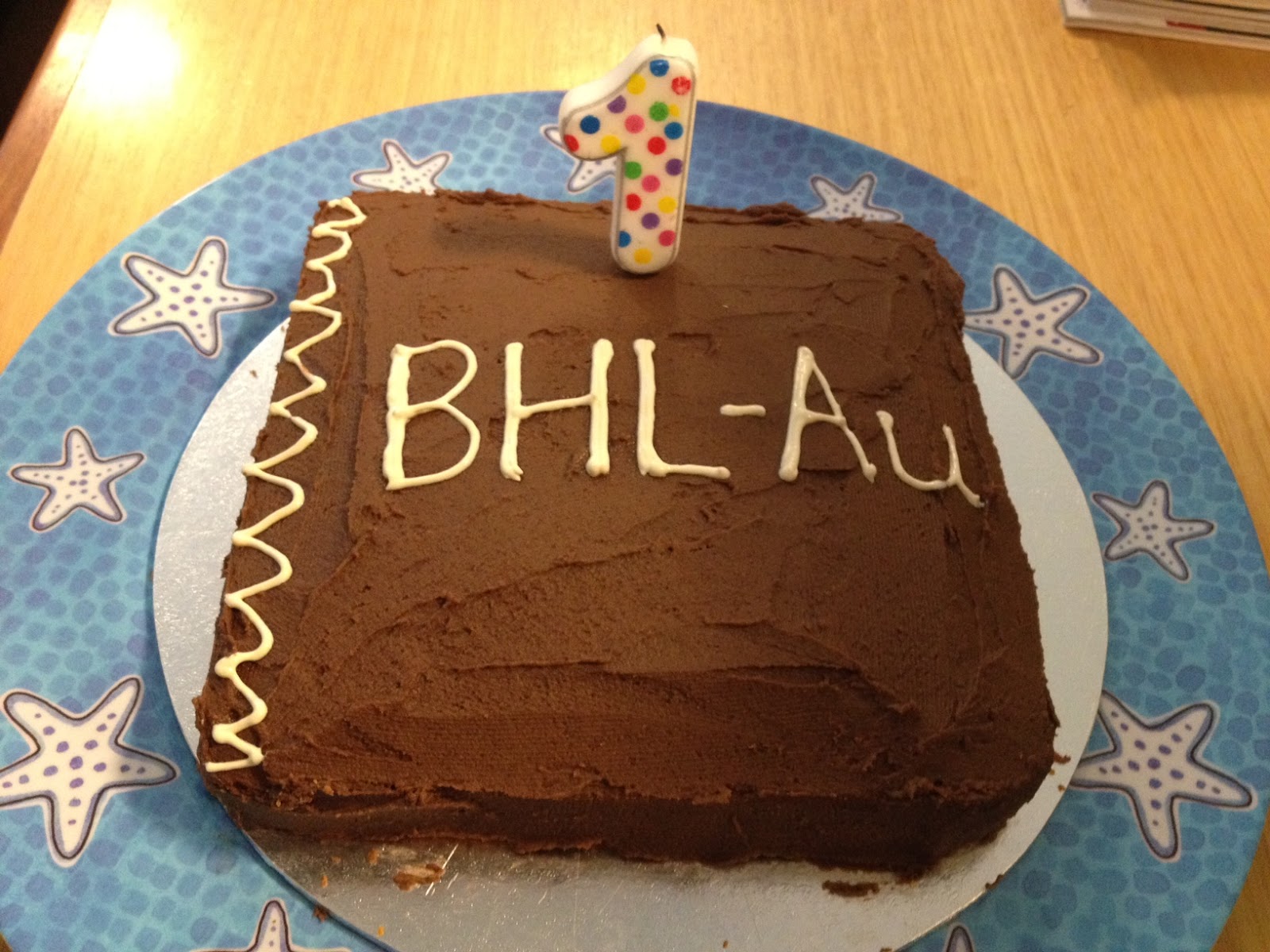
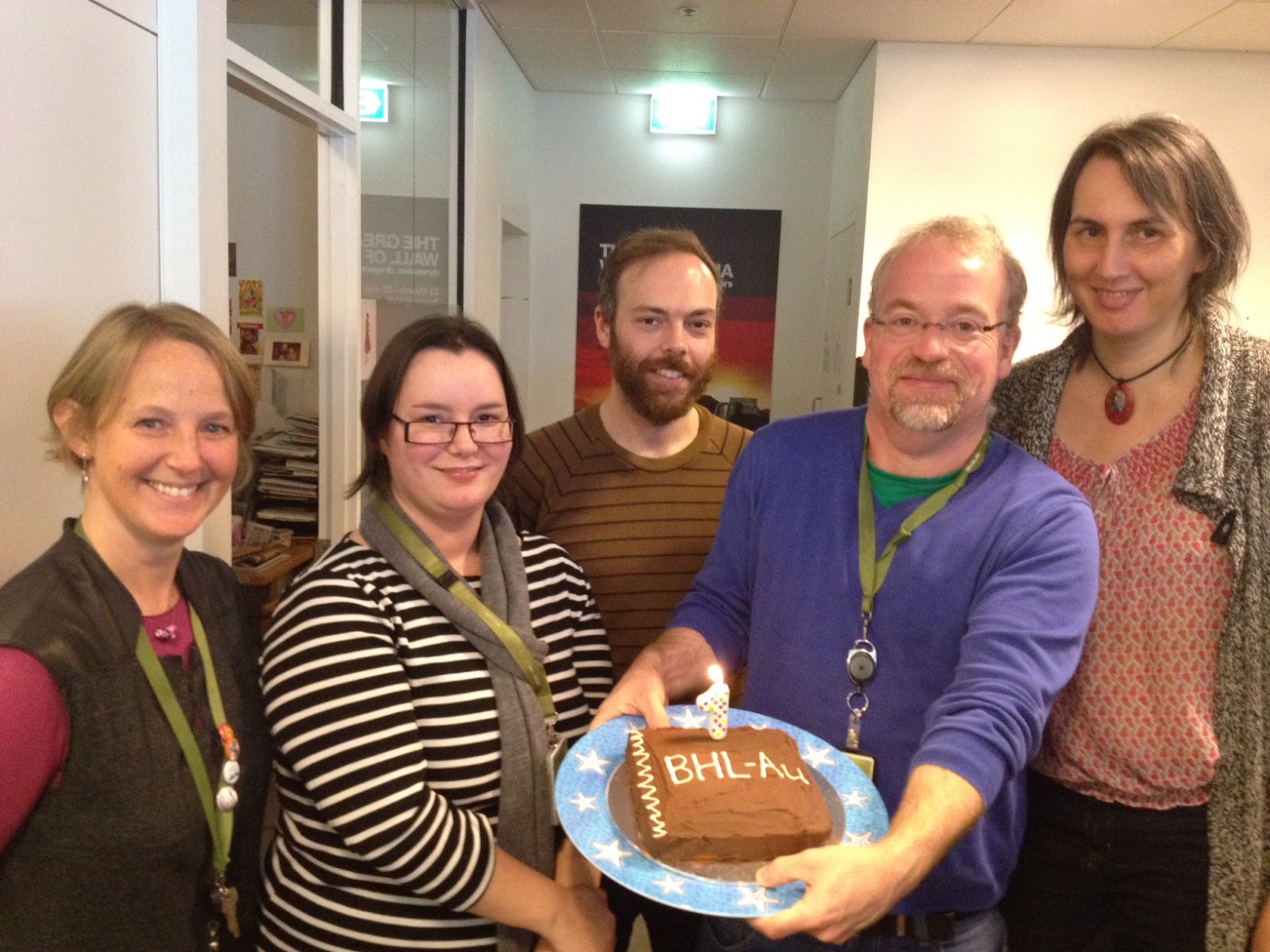
BHL-Australia Celebrates 1st Year

View Full Size Image

Australia’s biodiversity is unlike any other in the world and in the two centuries since European contact with the continent, the documented observation of the flora and fauna has formed an understanding of the uniqueness of the environment. Last week, the Australian branch of the BHL celebrated one year of contributing to the global BHL project.   Beginning with the launch of our distinctly Australian flavoured website (http://bhl.ala.org.au), the Antipodean operation has been contributing digitised publications and technical skills since July 2011.

Based at Museum Victoria in Melbourne,  BHL-Au was set up as a project of the Atlas of Living Australia and has been concentrating on completing holdings of local science journals and digitising publications produced by Australia’s major collecting institutions. The project is overseen by Dr. Elycia Wallis, manager of Online Collections; Simon Sherrin, technical manager; and Joe Coleman, digitisation manager.

View Full Size Image
Left to Right: Ely Wallis, Simone Downey, Michael Mason, Simon Sherrin, Cerise Howard

To date, we have uploaded over 30,000 pages, comprising publications from two major natural history museums, naturalist societies and scientific research organisations. Much of our digitisation has been occurring at Museum Victoria and has been conducted by a team of six volunteers who have graciously given their time to capture and post process the images and enter metadata for each item we upload. Since we started, we have had very positive feedback from our users and contributors  which in turn has sparked interest from several other museums and herbaria who are keen to get their publications online.

Through a close relationship with our contribution partners, we have been able to tap into large amounts of material from around the country that has previously been digitised, saving a whole lot of time and double handling.

In addition to the digitisation effort, we have been developing our website to best suit our users, ensuring that our local database is closely synchronised with the global BHL catalogue. We have built a prioritised scanning list which lets our users nominate titles they would like to see included in the BHL and to cast a vote for the prioritisation of items in the scanning schedule.

One year on, we have made a small but significant step in bringing the wealth of Australian biodiversity literature to the fingertips of the science community. There is still a long way to go but we have put a lot of effort in to building the systems to help make this happen.

So thank you to our contributors, volunteers and staff and we look forward to a continuing contribution of biodiversity literature from Down Under.

July 23, 2012by ulib-libraryjobs

Help Support BHL

BHL's existence depends on the financial support of its patrons. Help us keep this free resource alive!

search

About BHL

The Biodiversity Heritage Library (BHL) is the world’s largest open access digital library for biodiversity literature and archives. BHL operates as a worldwide consortium of natural history, botanical, research, and national libraries working together to digitize the natural history literature held in their collections and make it freely available for open access as part of a global “biodiversity community.”

Join Our Mailing List

Sign up to receive the latest news, content highlights, and promotions.

Subscribe Now

Subscribe to Blog via Email

Enter your email address to subscribe to this blog and receive notifications of new posts by email.

Join 319 other subscribers

Subscribe to Blog Via RSS

Subscribe to the blog RSS feed to stay up-to-date on all the latest BHL posts.

Access RSS Feed

Inspiring Discovery through Free Access to Biodiversity Knowledge.

The Biodiversity Heritage Library makes it easier than ever for you to access the information you need to study and explore life on Earth…for free, anytime, anywhere.


64+ Million Pages of
Biodiversity Literature Online.

EXPLORE

Tools and Services
to Transform Research.

EXPLORE

300,000+
Illustrations on Flickr.

EXPLORE

ABOUT | HARMFUL CONTENT | PRIVACY | SITE MAP | TERMS OF USE