Biodiversity Heritage Library - Program news and collection highlights from BHL
  • Home
  • News
  • Featured Books
    • All Featured Books
    • Book of the Month Series
    • BHL at 20
  • User Stories
  • Campaigns
    • Fossil Stories
    • Garden Stories
    • Monsters Are Real
    • Page Frights
    • Her Natural History
    • Earth Optimism 2020
  • Tech Blog
  • Visit BHL
Home
News
Featured Books
    All Featured Books
    Book of the Month Series
    BHL at 20
User Stories
Campaigns
    Fossil Stories
    Garden Stories
    Monsters Are Real
    Page Frights
    Her Natural History
    Earth Optimism 2020
Tech Blog
Visit BHL
  • Home
  • News
  • Featured Books
    • All Featured Books
    • Book of the Month Series
    • BHL at 20
  • User Stories
  • Campaigns
    • Fossil Stories
    • Garden Stories
    • Monsters Are Real
    • Page Frights
    • Her Natural History
    • Earth Optimism 2020
  • Tech Blog
  • Visit BHL
Biodiversity Heritage Library - Program news and collection highlights from BHL
Blog Reel, User Stories

BHL and Our Users: Dr. Dieter Oschadleus

View Full Size Image
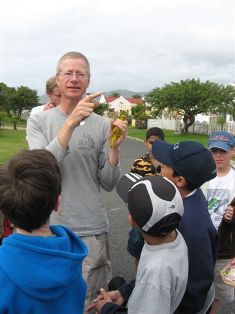
Dr. Oschadleus with a male Cape Weaver

In June, 2012, six BHL-US/UK staff members, representing three BHL member institutions, traveled to Cape Town, South Africa, to attend an organizational meeting for BHL-Africa. In addition to the U.S. participants, the meeting also brought together twenty African colleagues from six countries, all dedicated to participating in our newest global initiative. Many of these colleagues are librarians themselves, and share BHL daily with patrons at their own home libraries.

One such individual, whom we interviewed several months ago, is Margaret Koopman, a librarian at the ornithological department at the University of Cape Town. She suggested that we also interview one of her patrons, a frequent user of BHL: Dr. Dieter Oschadleus. Dr. Oschadleus was gracious enough to agree to the interview, which we are proud to present below.

What is your title, institutional affiliation (or alternative place of employment), and area of interest?

I am a Doctor in the Animal Demography Unit at the University of Cape Town. I am interested in all aspects of the weaver family Ploceidae.

How long have you been in your field of study?

About 2 decades.

When did you first discover BHL?

Several years ago.

What is your opinion of BHL and how has it impacted your research?

Brilliant! It has helped me to obtain many references quickly and easily and for free, particularly those with historical / early references to weavers.

How often do you use BHL?

A lot, but on an irregular basis – sometimes days or weeks may go by without using it, but sometimes I may spend hours searching or downloading references.

How do you usually use BHL (read the titles online/download whole PDFs/Selecting Pages to Download for a custom PDF/Downloading High Resolution Images/Generating Taxonomic Bibliographies/etc.)

Mostly download whole PDFs.

What are your favorite features/services on BHL?

I like the fixed web address for journals, eg www.biodiversitylibrary.org/bibliography/8115 for Ibis; The map function is great (recently discovered)!

If you could change one thing about BHL, what would it be, or what developmental aspect would you like the BHL team to focus on next?

Filling gaps where they sometimes exist in journal series (I realize that few copies may exist in some cases, but all the more reason to get them digitized!)

If you had to choose one title/item in BHL that has most impacted your research, or one item that you prefer above any other in BHL, what would it be and why?

There are many. To give one example: Die Vögel Afrikas, von Ant. Reichenow

As we continue to dedicate efforts to bringing BHL and its resources to all reaches of the globe, we’re excited to hear from our global users about the impact BHL has on their work. We send a sincere thanks to Dr. Oschadleus for his participation in this series. Thanks for tuning in to BHL and Our Users, as we strive to bring you more insight from our international users in the months to come!

View Full Size Image
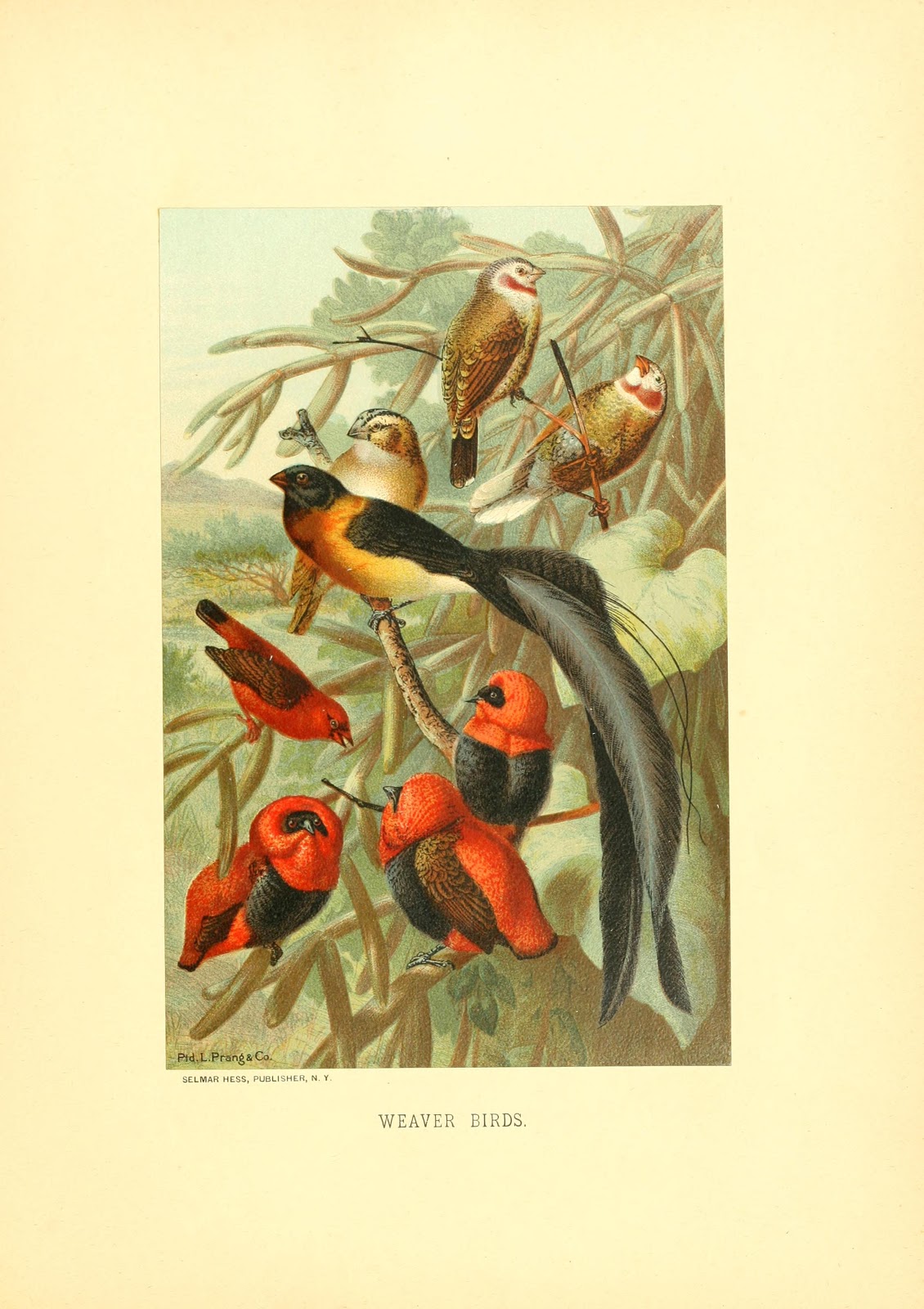
An illustration of weaver birds (Ploceidae), Dr. Oschadleus’ speciality.

If you’re interested in being interviewed on our blog, leave a comment on this post, send us feedback, or email us as [email protected].

* Photo of Dr. Oschadleus by Lynne Roscoe

October 16, 2012by Grace Costantino
Blog Reel

BHL and Our Users: Rebecca Morin, BHL Librarian

View Full Size Image

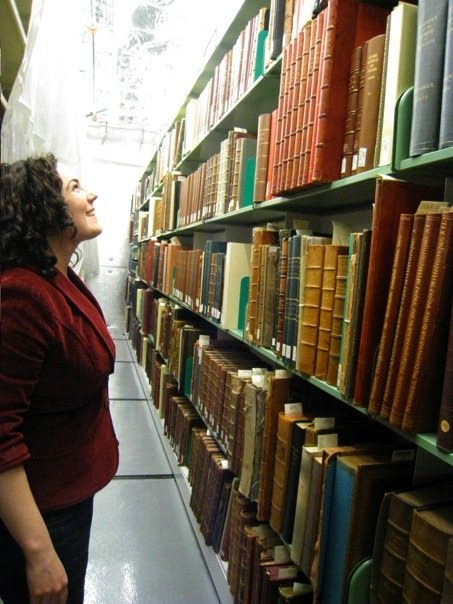
For our regular series “BHL and our Users,” we usually feature scientists who use BHL to conduct their research. However, there are many different kinds of BHL users, not the least of which are librarians that use BHL to help them execute their own work supporting the research needs of their library patrons. For many librarians, BHL means that they can save time answering reference questions, as all content is online; save wear and tear on their physical books by directing people to online versions of the content; and save time and money by avoiding ILL (Inter-Library Loan – sending copies of books held in one library to another that does not own a copy) costs, as again patrons can simply be directed to the item in BHL. Not surprisingly, these benefits extend to BHL staff who that also wear the hat of reference librarian at their respective institutions. This week we feature just such a librarian – Rebecca Morin, the User Services Librarian at the California Academy of Sciences (CAS). She not only serves CAS patrons in her librarian role but is also the driving force behind the digitization of CAS materials for BHL.
 
What is your title and institutional affiliation?
I am the User Services Librarian at the California Academy of Sciences in San Francisco. My main responsibilities are reference, instruction and outreach, acquisitions, and collection development for all areas of the Academy Research Division. I also oversee library systems, interlibrary loans, and the rare book collection.
 
How long have you been working in a library environment?
Almost 14 years. My first library job was working as an undergraduate in the Interlibrary Loan Department at the Margaret Clapp Library at Wellesley College. After graduating with an incredibly useful degree in music, I worked in libraries at UC Berkeley, here at the California Academy of Sciences, and in the Science & Engineering Division of the University of British Columbia Library in Vancouver. I received my MLIS and MAS (Master of Archival Studies) from the UBC School of Library and Information Studies in 2007.
 
When did you first discover BHL?
I have a hard time remembering not using BHL in my current position! It must have been shortly after launch. I used the Missouri Botanical Garden’s Botanicus portal quite a bit, so I think my adoption of BHL just flowed naturally from there. The California Academy of Sciences is not a founding member of BHL, but by the time we joined the consortium in May 2009 I was using BHL regularly as part of my reference and interlibrary loan duties.
 
What is your current level of involvement in BHL?
I spend approximately one day/week working on BHL. I am on the Staff Committee, the Collections Committee, and I was part of the Communications Committee for the Life & Literature Conference in November 2011. I’ve spoken about BHL quite a bit over the last several years, giving presentations at the 2010 meeting of the Society for the Preservation of Natural History Collections, the 2011 IMLS WebWise Conference, and the 2011 Museum Computer Network Conference. I’ve also taught BHL instructional sessions at the Academy and at the National Museum of Natural History. I’m finishing up a scanning project, and I serve as a Principal Investigator on an IMLS National Leadership Grant called Connecting Content: A Collaboration to Link Field Notes to Specimens and Published Literature, which will result in some field note materials being served via the BHL portal (among other outcomes). BHL is a big part of my professional life!
 
What is your opinion of BHL and what impact has it had on your duties as a librarian?
I am extremely proud of this project and so happy that I have the chance to be involved with it! The Library at CAS is separated from the rest of the Research Division by several floors, our graduate students attend schools that are anywhere from five to eighteen miles away, and I work with a large number of off-site research associates and affiliated scholars. It makes a HUGE difference that I can direct researchers to the material they need, instantly, free of charge, from anywhere with an internet connection. BHL is a game-changer.
 
How often do you use BHL?
Without exaggeration, every day. Since reference is my primary responsibility, I find myself using it to verify citations and species descriptions. I send links to articles and bibliographies generated via TaxonFinder to off-site researchers. I download papers that would otherwise require interlibrary loan. I use the BHL Flickr account to help fill the requests I get for beautiful scientific illustrations. BHL is my most-visited external website, ranking just behind Google (according to my browser history).
 
What has been the reaction of your patrons to BHL?
Some research staff were skeptical at first. Several years ago it was not uncommon for me to pull up an item in BHL only to have the patron insist on seeing a paper copy from my collection as well. But now that researchers have grown accustomed to acquiring the latest literature online via ejournal subscriptions, I find they have an increased comfort level in accessing BHL for legacy literature. Students and researchers who don’t live in the Bay Area or visit the Academy often are very enthusiastic about BHL, and patrons are increasingly viewing BHL as a trusted resource and a reliable source of information.
 
What services/features do you like most about BHL and which do you most like to point out to your patrons? Which services/features are your patrons most excited about/use the most often?
My absolutely favorite feature of BHL is that it is free and open. Scientific literature is so expensive, and access to older foundational literature can be so restrictive. I know a lot of visiting scholars and students are just thrilled with what BHL offers, and many are excited to share it with friends and colleagues who may not have easy access to rich library collections. Many of my patrons are big PDF-makers; they use the PDF creator to build their own literature libraries, kind of like an electronic reprint collection.
 
If you could change one thing about BHL, what would it be, or what developmental aspect would you like the BHL team to focus on next?
Full-text searching within items is something that my users really want to see. For students new to research in systematic biology, it can be hard to find one’s way around the text online. Tools for image retrieval would be incredibly helpful as well.
 
Is there a specific item on BHL that is most often requested by your patrons/that you use more than any other to fulfill ILL requests?
The publications of the Academy, such as the Proceedings of the California Academy of Sciences, are always popular. Our reference copies are difficult to photocopy, and Academy staff from the Research Division and beyond regularly consult the Proceedings. The Academy was founded just three years after California became a state, and the Academy is inextricably wrapped up in the history of California. Academy staff, students, collection managers, historians, genealogists, and scholars of all stripes constantly seek information from the Proceedings, and I usually refer them to BHL.
________________________________________________________
 
Thanks, Becky, for sharing your valuable insights, garnered from not only a reference librarian perspective, but a BHL staff member perspective as well. To date, the California Academy of Sciences library has contributed thousands of pages of taxonomic literature to BHL, and we look forward to the continued provision of material from this important academic and historical institution. These contributions are the direct result of work done by Becky and other library staff at CAS, and we are grateful for their commitment to the BHL project!
February 28, 2012by ulib-libraryjobs
Blog Reel, User Stories

BHL and Our Users: Dr. Thomas Carefoot

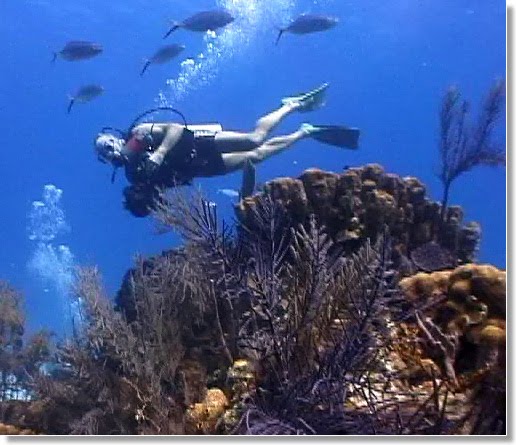
View Full Size ImageAfter a short break during which we featured various posts related to the Life and Literature conference, we again resume our BHL and Our User series, kicking things off again with Dr. Thomas Carefoot, a marine biologist and the author of the delightful educational website on west-coast marine invertebrates, A Snail’s Odyssey.

What is your title, institutional affiliation, and area of interest?

I am retired from a 35-year teaching and research position in marine biology at the University of British Columbia, Canada. My research specialties include the study of a group of marine snails known as sea hares, and I have sought them out in many tropical areas of the world. I am well versed on invertebrate marine life, most notably on the Pacific west coast, but also throughout the Caribbean, Indo- Pacific, and other tropical areas. I enjoy talking and lecturing about marine invertebrates, and a few years before retirement was awarded the University’s prestigious Master Teacher Award. I have written 2 books on marine ecology, authored some 90 research papers, and have recently produced a large educational website on west-coast marine invertebrates called A Snail’s Odyssey. I am currently working on an equally large educational website called the Biology of Caribbean Coral Reefs.

How long have you been in your field of study?

For over 50 years, from commencement of an Honours BSc programme at the University of British Columbia (UBC), leading to an MSc degree at the same institution, and followed by a doctorate at the University of Wales, all in the field of marine biology. My first job was at the Marine Sciences Centre, McGill University, followed by an appointment to the Zoology Department at UBC in 1969. As part of the McGill experience was one year’s appointment as Director of the Bellairs Research Institute in Barbados. In total, I have spent about 3 years in the Caribbean, have visited all but a handful of the major islands, and have SCUBA-dived on most Caribbean reef systems.

When did you first discover BHL?

Several years ago when I first started researching scientific articles on west-coast marine invertebrates for my website A Snails’ Odyssey.

What is your opinion of BHL and how has it impacted your research?

BHL provides an excellent service for studies of marine and other biodiversity. However, as my research interests are not in biodiversity per se, I use the service only for accessing pertinent literature on west-coast and coral-reef marine invertebrates for inclusion in my educational websites.

How often do you use BHL?

About once a week.

How do you usually use BHL (read the titles online/download whole PDFs/Selecting Pages to Download for a custom PDF/etc.)

For downloading articles from journals.

What are your favorite features/services on BHL?

The only one that I have regularly used is the PDF downloading privilege.

If you could change one thing about BHL, what would it be, or what developmental aspect would you like the BHL team to focus on next?

I would streamline the system for downloading PDFs. It is currently time-consuming and “out of synch” with similar accessing systems for other scientific journals. For example, the journal I most access at BHL is the Journal of Shellfish Research (JSR), which is presently most easily “downloadable” as entire volumes. It would be a relatively easy job to split each volume into its component research papers, format these as PDFs, and have an accessing system along the lines of other journal publishers. I realize that JSR is just one of the many journals in the BHL, but it would be a start.

Thank you, Dr. Carefoot, for sharing your experience and resources with us! Be sure to check out A Snails’ Odyssey, which chronicles the whimsical story of an upper intertidal snail who, finding himself mistakenly cast into the deep waters of the ocean, slowly but steadily makes his way back home to shallower waters. Along the way he encounters many different marine species, which offer a plethora of opportunities for discovery for both the snail and the reader. For each species, there is a short cartoon animation meant to give a light-hearted introduction to the animal, and a scientific Learnabout, which offers more in-depth information, including summaries of a multitude of scientific papers written about the invertebrates. It’s a fun, educational site for all ages.
December 6, 2011by ulib-libraryjobs
Blog Reel, User Stories

BHL and Our Users: EOL Rubenstein Fellow, Dr. John Sullivan

Portrait version of the Biodiversity Heritage Library logo.

View Full Size Image

Today, we continue with our mini-series featuring EOL Rubenstein Fellows and their research activities. For this installment, meet Dr. John Sullivan, a passionate ichthyologist dedicated to discovering and describing fish species all over the world, but particularly in Africa.

What are your research interests, where you do the bulk of your work (country), and what is your institutional affiliation?

I am an evolutionary biologist who studies the phylogenetic interrelationships and evolution of freshwater fishes. I focus on two groups in particular: weakly electric fishes (Mormyridae and Gymnotiformes) which are found in Africa and South America, respectively, and catfishes (Siluriformes), which are distributed pretty much all over the world. In addition to using molecular techniques to work out phylogenies for these fishes, I describe species and work on the taxonomy of all three groups. My most recent collecting field trips have been to Ethiopia, the Democratic Republic of Congo, and Gabon. I am affiliated with two institutions, the Academy of Natural Sciences in Philadelphia, where I am a Research Associate, and the Cornell University Museum of Vertebrates in Ithaca, New York, where I am a Curatorial Affiliate. I live with my wife in Ithaca.

In the program, Fellowships are expected to serve as a complementary funding source to existing funding you have that supports your primary research activities. Please describe what you primary research activities are.

I used the Rubenstein Fellowship to supplement a nine-month Fulbright Research Fellowship in the Democratic Republic of the Congo. My Fulbright work was to make an inventory of fish species found in the vicinity of Kisangani, a city on the Congo River at the base of the Upper Congo rapids and to help build capacity at the University of Kisangani in ichthyology. As a Rubenstein Fellow, I made creation of EOL species pages for Congo River freshwater fishes a key activity of my time there. And since my return from Congo, I’ve been continuing to add many of the hundreds of photographs of fish specimens I took as we identify the specimens. We’ve already found several undescribed species from our collections, and I and my colleagues are beginning work on their descriptions.

Please describe how you use EOL to disseminate or support your primary research activities, or what your primary duties related to EOL are.

Eventually, I’d like to see great photos, descriptions and keys available online through EOL for all African freshwater fishes. We still have a lot of work to do to get there, but one can now see that this is the future. It still takes a lot of time to do careful taxonomic work, but now as soon as it’s published, we can get the name into a classification and a picture and description up online. For instance, we got the new mormyrid species Petrocephalus similis into EOL the week it was published in July. Taxonomy is a dynamic discipline: names and classifications frequently change to reflect our improving knowledge of the organisms (a sometime annoyance to end-users of taxonomies, but unavoidable). So static books are in some ways poor repositories of this information. Taxonomy and the Web are really made for each other and in hindsight something like EOL was inevitable.

How has the EOL Fellows program made a difference in your career/research?

The Rubenstein EOL Fellows program gave me an easy way to help make knowledge about African fishes available to everyone, including Africans who often have internet access but nothing in the way of libraries. The more informed my African colleagues are about their own fish fauna, the more effective our collaborations can be. While it doesn’t take the place of getting published in the primary literature, contributing to EOL tells your colleagues that you’re committed to the “broader impacts” of what we taxonomists do and that you’re at the forefront of where the field of taxonomy is headed. I am looking forward to the day when publishing a new species description and publishing content on EOL are one and the same thing. In fact, that future is already here with the journal ZooKeys that automatically exports to EOL. We plan to use that journal for our next mormyrid description.

Who is your Mentor, what is their area of interest (research activities), and how have they supported you throughout your Fellowship?

My mentor is Dr. Melanie Stiassny, curator of fishes at the American Museum of Natural History in New York. Melanie has really reinvigorated the study of fish diversity of the Congo River over the past few years and has made a number of stunning discoveries in the rapids area of the Lower Congo. She was great at providing me the logistical and moral support I needed for my project in Kisangani.

How does BHL support your Fellows activities, as well as those research activities that fall outside of your duties as an EOL Fellow?

I tend to think of BHL as my personal ichthyology library (although I know there’s a bit more archived in it than that). I have retrieved dozens and dozens of species descriptions from it that are now on my personal computer for instant reference and also appended to species pages in one of my two EOL Lifedesks: http://mormyrids.lifedesks.org/ and http://congofishes.lifedesks.org/.

I’ll give you a concrete example of how BHL supports my work. In systematics, the old literature is often just as important as the new. For instance, the systematics of a genus of mormyrid fish we work on was really blocked by our inability to establish the identity of Mormyrus sphekodes (now Paramormyrops sphekodes), described in 1879 by French ichthyologist H.E. Sauvage. The type specimen still exists, but is in bad condition in the Paris Museum collection. If we were to describe new species without knowing what P. sphekodes really was, we risked redescribing it under a different name and creating a synonym.

So this past May I arranged to go back to the type locality mentioned by Sauvage, the “Chutes de Doumé” on the Ogooué River in Gabon to make a new collection of it. I’m happy to report I succeeded! Before going there, I had downloaded Sauvage’s description of this fish from BHL, published in the Bulletin de la Société Philomatique de Paris. It had taken me just a few minutes to locate this paper and customize the pdf. I had it on my Kindle as I stood at the site, a place I don’t think ichthyologists had revisited since the 1870s.

When did you first discover BHL?

Some time before I started my Fellowship, probably in 2008.

What are your favorite features/services on BHL?

I love how it takes me no time at all to find a species description in some old serial like the Annals and Magazine of Natural History and, using the web interface, generate a pdf of just those pages that I want. Even if I lived in a library that had these volumes on the shelf, it would take me longer to locate what I was looking for. I can then take those pdfs BHL generates for me and attach them to the species pages I create on my Lifedesks. Now anybody in the world has instant access to the original species description in a couple of clicks!

If you could change one thing about BHL, or suggest one thing to be the next developmental priority for BHL, what would it be?

It seems like you are doing the right thing: continue to expand and add content. It is great to see a number of biodiversity journals allowing BHL to digitize their back catalog, including material still under copyright, and very encouraging to see BHL go international with BHL-Europe and other initiatives. Now that much of the really old stuff is available, it’s the material from the 1930’s – 1970’s that is notably hard to obtain if you don’t have a world-class library, so I hope more of it finds its way onto BHL in the near future.

Please describe why you think services like EOL and BHL are important for today’s scientific community.

Science is all about disseminating knowledge and building upon what has come before, yet so much of our knowledge of plants and animals has remained inaccessible to those who could make use of it. This has been a big part of the “taxonomic impediment.” BHL is radically changing the status quo and democratizing access to knowledge about biodiversity. Now that access to the works of so many great 18th and 19th Century biologists is an easy affair, I expect we’ll see them cited a lot more in the modern literature. In this way, BHL is contributing to the continuity of biodiversity science.

Do you have a favorite book in BHL, or a book that has most supported your research activities or EOL responsibilities?

My favorite book in BHL would have to be the four volumes of George Albert Boulenger’s Catalogue of the Fresh-Water Fishes of Africa, published from 1909 to 1916. This work remains the single-most important publication on African ichthyology. While many more species have been described in the subsequent century and generic names have undergone changes, it is still a remarkably useful resource for identifying African fishes. Until BHL made pdfs of all four volumes freely available, you had to pay dearly even for a reprinted version. Now all my African colleagues who never had these advantages have the pdfs on their laptops.

Thank you, Dr. Sullivan, for taking the time to give us a glimpse into your world and research, and for articulating how important BHL has been to your endeavors. As we continue to grow our collection, we hope to be able to establish more and more relationships with publishers and provide access to a plethora of in-copyright materials, freeing, as you so eloquently describe, this information from the static written page to the future of dynamic electronic access for the world.

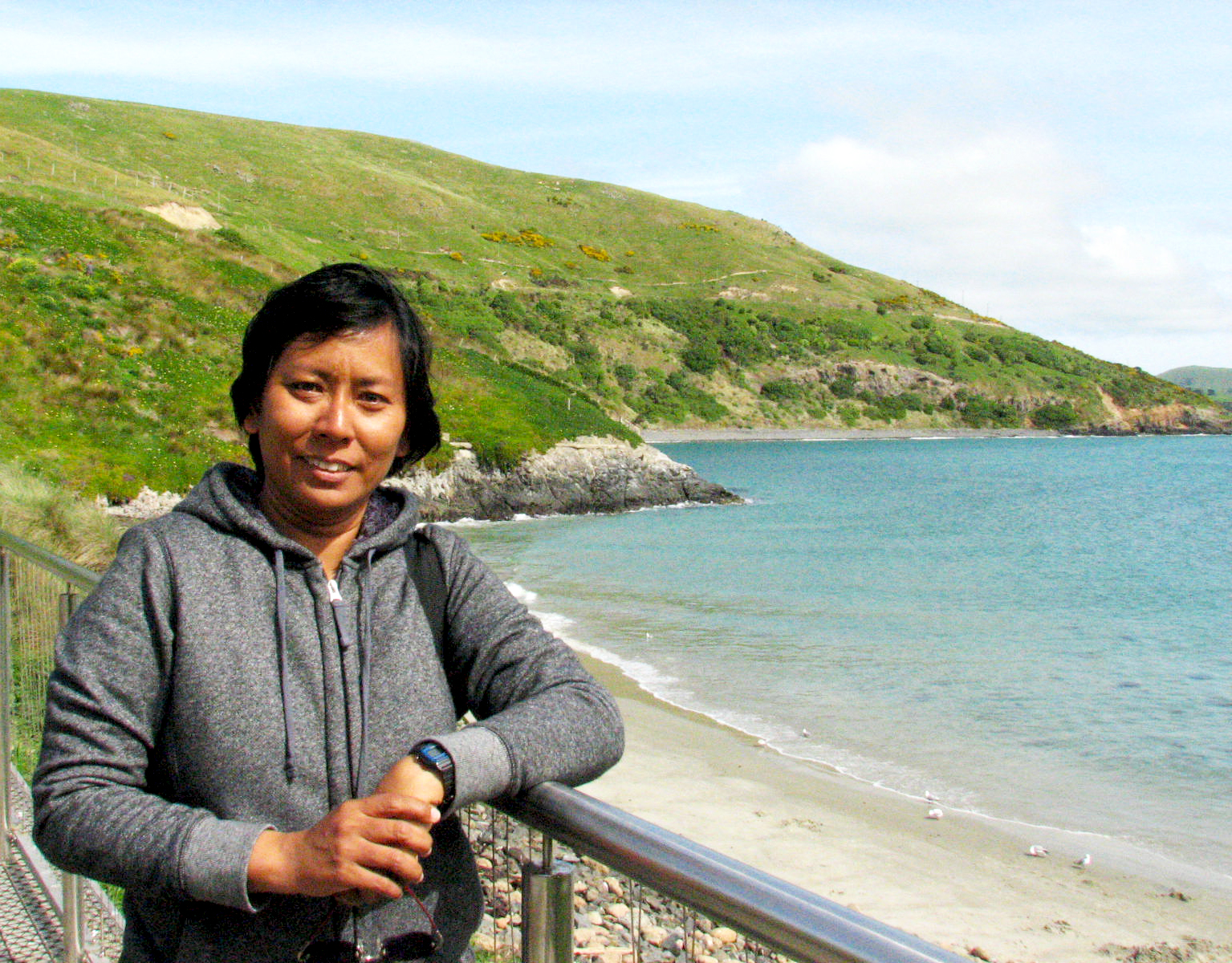
Information on the photo from Dr. Sullivan: “The photo is of me on the Ogooué River in Gabon, Africa in May of this year. The site is a famous one for African ichthyology: it is the “Chutes de Doumé” from which H.-E. Sauvage described the catfish Doumea typica and the mormyrid electric fish Mormyrus sphekodes – now Paramormyrops sphekodes – (among others) in an 1879 publication published in the Bulletin de la Société philomathique de Paris, a pdf of which I downloaded from BHL!”

September 13, 2011by michelle.underhill
Blog Reel, User Stories

BHL and Our Users: EOL Rubenstein Fellow, Dr. Breda Zimkus

View Full Size Image

If you caught our blog post yesterday, then you know that this week we’re starting a mini-series within our larger BHL and Our Users series. This mini-series spotlights a few of the EOL Fellows – scientists who have been awarded a fellowship through the EOL Rubenstein Fellows Competition – and discusses not only their work but also how they use BHL to support it. For this, our first post, we feature Dr. Breda Zimkus, a Post-Doctoral Fellow and Genetics Resources Facility Project Manager at the Museum of Comparative Zoology at Harvard University.

Q: What are your research interests/field(s) of study & where do you do the bulk of your work (country)?

A: I am a biologist interested in phylogenetics, biogeography and conservation of amphibians and reptiles. My research integrates a broad range of techniques, including fieldwork, taxonomy and molecular systematics to interpret patterns of speciation and diversity. I am particularly interested in the phylogenetic diversification of African amphibians and use of molecular tools to define species boundaries. I have worked in many East African countries (Ethiopia, Malawi, Tanzania), and my most recent fieldwork in May/June 2011 was in the Central African country of Gabon where I completed a survey of amphibians of the Batéké Plateau National Park, which borders the Republic of Congo.

Q: In the program, Fellowships are expected to serve as a complimentary funding source to existing funding that supports your primary research activities. Please describe what you primary research activities are.

A: I am currently studying a number of frog groups that are distributed across sub-Saharan Africa, including puddle frogs (Phrynobatrachidae), rocket frogs (Ptychadenidae) and sand frogs (Pyxicephalidae: Tomopterna). I am using molecular systematics to identify cryptic species and investigating the complex diversification patterns of these lineages across the continent. In addition to being an Encyclopedia of Life Rubenstein Fellow this past year, I was also the recipient of a Ethel K. Allen, Sigma Delta Epsilon/Graduate Women In Science Fellowship, which funded my post-doctoral work on rocket frogs.

Q: Please describe how you use EOL to disseminate or support your primary research activities, or what your primary duties related to EOL are.

A: Africa still remains one of the most poorly understood areas for amphibians globally, with species rarely collected and basic data on their ecology and distribution incompletely understood. Consequently, conservation status is only adequately known for some species. This lack of knowledge is particularly worrying as concentrations of species are found in a number of sub-Saharan regions seriously threatened by environmental change. There is also a serious conservation risk to amphibians globally with the emerging prevalence of the fungal disease chytridiomycosis, possibly responsible for the extinction of many species. As an EOL fellow, I developed the African amphibian Lifedesk, so basic taxonomic data could be assembled to facilitate research. The website serves as a gateway for information regarding African amphibian species, where participants will write and edit species pages, upload images, and maintain bibliographic resources. In addition to serving as a stand-alone resource, this LifeDesk feeds content directly into the Encyclopedia of Life (EOL) and AmphibiaWeb.

Q: Who is your Mentor, what is their area of interest (research activities), and how have they supported you throughout your Fellowship?

A: I have two mentors for this project. My post-doctoral research, including my EOL work, is currently being conducted in the laboratory of Dr. James Hanken of Harvard University. The Hanken Lab studies the evolution of morphology, developmental biology, and systematics and serves as a community research facility for NSF’s AmphibiaTree project. Most work focuses on amphibians but otherwise addresses a wide range of topics, taxa and methodologies. I am conducting my EOL Fellowship work in collaboration with Dr. Simon Loader, Director of the Molecular Systematics Laboratory and Post-doctoral Researcher at the Institute of Biogeography, University of Basel. His research is specifically focused on the phylogenetic diversification of African amphibians, using an integrative approach to interpret patterns of diversity in Africa.

Q: How does BHL support your Fellows activities, as well as those research activities that fall outside of your duties as an EOL Fellow?

A: BHL has been integral to both my EOL Fellow work and my primary research on discovering African amphibians species because original species descriptions and taxonomic revisions are essential to those working on species identification. One of the major goals of the African amphibians Lifedesk is to make PDFs of all non-copyrighted material available to herpetologists around the world. Many of the most important African amphibian research was done in the early 20th century, and these manuscripts were published in rare journals. Thankfully, BHL has digitized many of these important works, so I was able to assemble PDFs online using the BHL website and upload them to the African amphibians Lifedesk.

Q: When did you first discover BHL?

A: I first heard about BHL from the librarians at the Ernst Mayr Library of the Museum of Comparative Zoology at Harvard University while conducting my PhD research. At that point I used BHL only if I was unable to find a reference in the Ernst Mayr library. When I began my EOL fellowship, I began to use BHL on a daily basis, compiling PDFs to upload to the African amphibians Lifedesk.

Q: What are your favorite features/services on BHL?

A: I am lucky to be at an institution with an amazing library system, but BHL makes biodiversity literature accessible to everyone with an internet connection. It also allows me to have electronic copies of papers on my computer, so I have them whenever I need them.

Q: If you could change one thing about BHL, or suggest one thing to be the next developmental priority for BHL, what would it be?

A: It does take time to assemble PDFs because you must locate the journal, find the issue, select each individual page of that specific issue and then have the document emailed to you. I would love to see a time when I can search for a title of a specific paper and find the PDF already assembled.

Q: Do you have a favorite book in BHL, or a book that has most supported your research activities or EOL responsibilities?

A: George Albert Boulenger (1858-1937) was a zoologist that described an incredible number of amphibians (556 species), reptiles (872 species) and fish (1,096 species). Many of Boulenger’s African amphibian descriptions were published in the Proceedings of the Zoological Society of London. I found his work published in 1900 entitled “A list of the batrachians and reptiles of the Gaboon (French Congo), with descriptions of new genera and species” to be very useful for my recent trip to Gabon.

Thank you, Dr. Zimkus, for all the valuable research you have conducted on amphibians and reptiles, and for your pioneering efforts on the African amphibians Lifedesk for EOL! We are so thrilled that BHL has been a part of the endeavor, particularly as the library at your home institution is one of the key members of BHL (Ernst Mayr Library, Harvard University)! As to your desire to eventually be able to find already-assembled PDF articles from BHL, we have been in the process of creating Citebank for some time now, with just that objective in mind. Citebank will act as an article repository, indexing and providing PDFs to articles found within larger journals and books in BHL. Though still in the developmental stage, Citebank is live on the web and already indexes and provides PDFs for a great deal of articles from BHL. We hope that this, and our other BHL efforts, will continue to play an important role in your vital research and conservation activities!

August 16, 2011by michelle.underhill
Blog Reel, User Stories

BHL and Our Users: Highlighting EOL Fellows!

Portrait version of the Biodiversity Heritage Library logo.

View Full Size Image
(2010 EOL Rubenstein Fellows. Photo Credit: James Di Loreto)

For quite some time now, we’ve been doing a series on our blog entitled BHL and Our Users, in which we feature one of our users in each post and highlight how their work and BHL intersect. We find the users we feature in a variety of ways, such as targeting those users that send us regular feedback, are top content downloaders on our site, are actively involved on our social media platforms, or are curators or researchers at one of the various BHL institutions. One community that we have not yet explored, but that most certainly deserves to be highlighted, considering in particular BHL’s close relationship with it, is the EOL community.

The EOL is “a sweeping global effort to gather and share the vast wealth of information on every creature – animals, plants, and microorganisms – and make it available as a web-based resource.” The goal is to create a web page for every species on the planet, presenting a plethora of information on each species from a variety of sources, all aggregated into one easily-accessible location. And in case you didn’t know, the BHL is one of the five working groups comprising EOL. If you’ve spent any time on EOL, you may have noticed that each species page includes a tab for literature references from the Biodiversity Heritage Library, including links back to pages in BHL mentioning that species.

One of the aspects of the EOL project that is of particular interest to us for the purposes of this blog series is the EOL Rubenstein Fellows program. An international competition, the program supports the work of scientists interested in taking advantage of online collaboration and outreach possibilities for scientific research and information. Each year, the program awards fellowships to a select number of applicants – primarily early-career scientists – providing them with “partial funding for up to one year to translate biodiversity research, databases, and media into rich, online resources through the Encyclopedia of Life.” EOL Fellows are expected to distribute their research through EOL, performing activities that will “add new content, such as images, maps or descriptions, to EOL pages.” Over the four years of the program, which began in 2010, over 60 Fellows are expected to be named. The fellowships are made possible through a donation by David M. Rubenstein to the Smithsonian Institution’s National Museum of Natural History, and Fellows are selected by the Species Pages Group of EOL.

While it is not required for applicants of the 2012 EOL Rubenstein Fellows competition, for which EOL is now taking applications, former Fellows, as part of their fellowship, were required to have a mentor. These mentors were responsible for supporting the Fellows “throughout their fellowship, supervising and reviewing their work and helping them connect with others in their scientific community.” Fellows were instructed to choose mentors with whom they already had a working relationship and were more experienced scientists than themselves.

We were delighted to find that many of the EOL Fellows spend a great deal of time on BHL, taking advantage of the freely-available literature and our various services to support their own research and contribute to the work they do for EOL. This being the case, we thought it only fitting that these Fellows should be highlighted on our blog. Thus, beginning this week, we’re starting a short “mini-series” on EOL Fellows. We hope you’ve enjoyed this brief introduction to EOL and the Fellowship, and be sure to check in tomorrow for the first of our featured Fellows!

August 15, 2011by michelle.underhill
Blog Reel, User Stories

Expanding Library Impact through Open Access Digitization

View Full Size Image
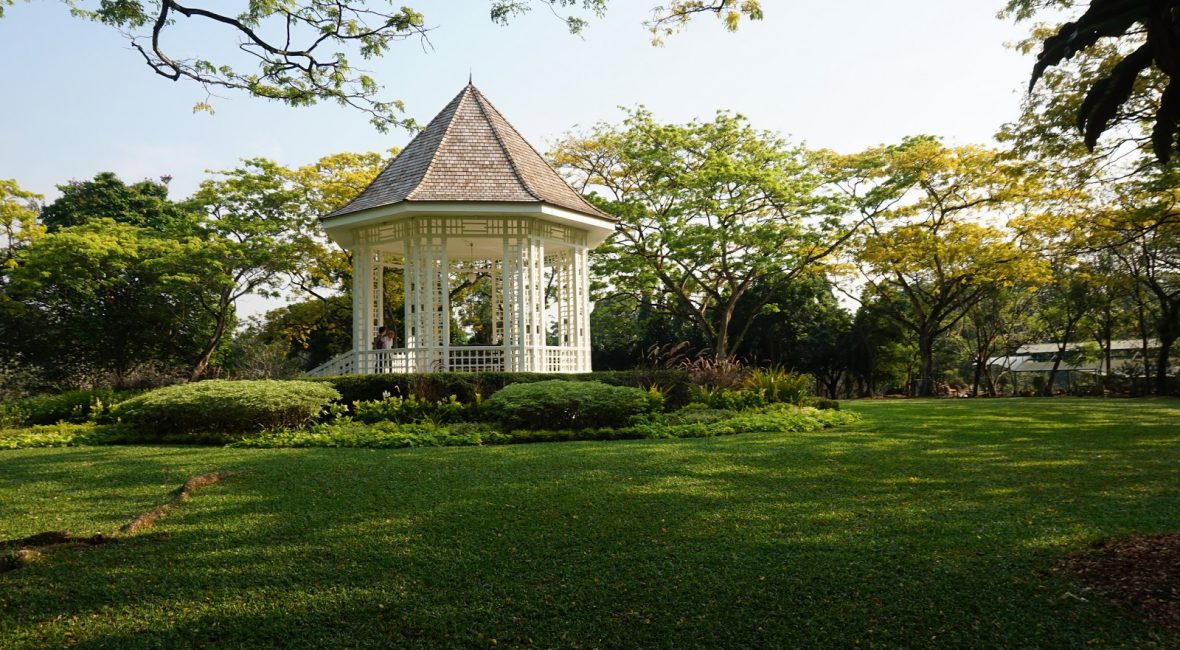
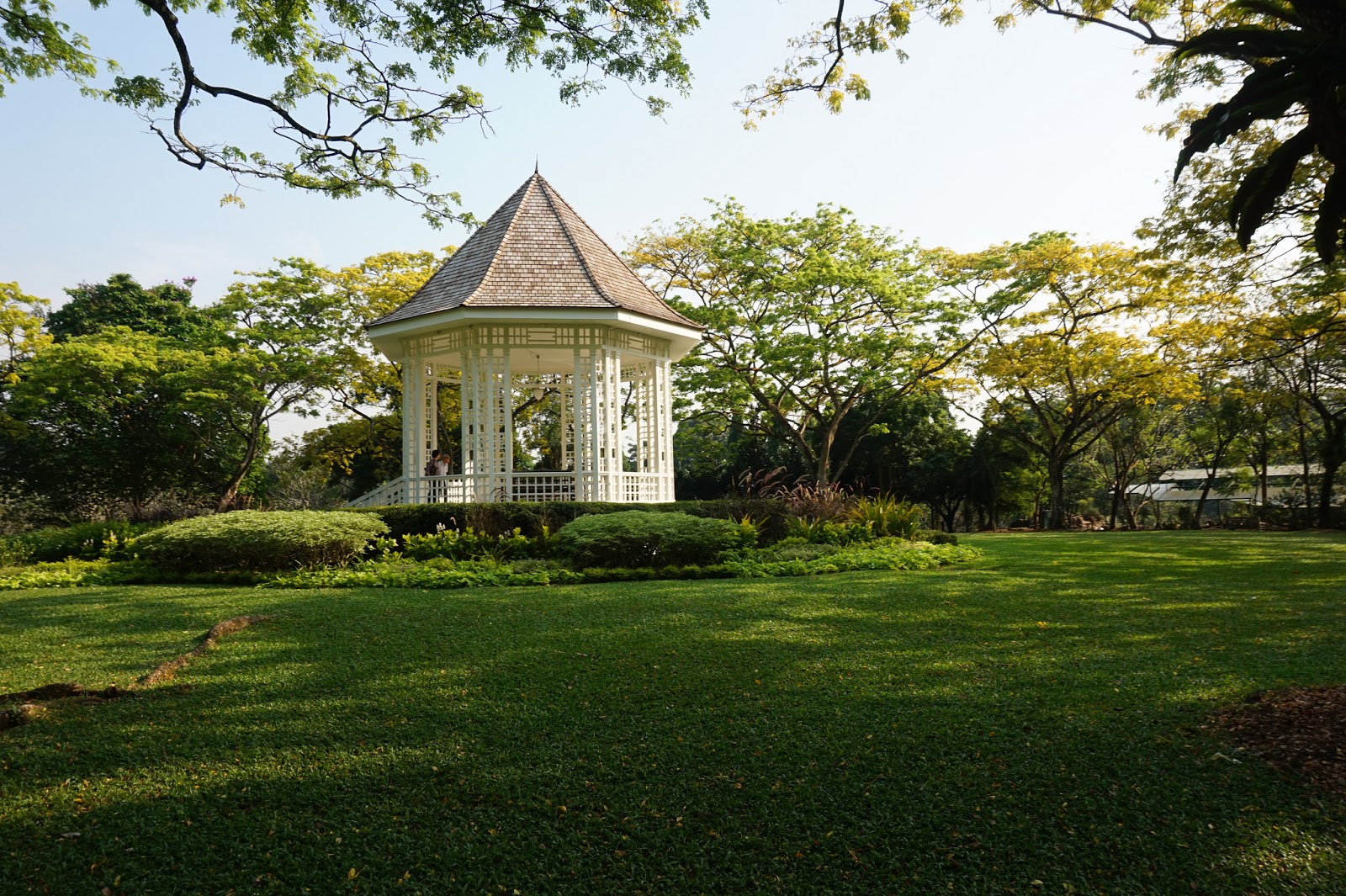
Bandstand at the Singapore Botanic Gardens. Photo by Martin Kalfavotic.

Located in central Singapore, just minutes away from the city’s main shopping district, sits the first and only tropical botanic garden listed as an UNESCO World Heritage Site. Established at its present site in 1859, the Singapore Botanic Gardens (SBG) covers 82 hectares and is home to thousands of plant species.

Since 1875, the SBG Library has supported research at the Gardens. Over the years, the Library has amassed a large collection of rare and scholarly literature and artworks that are housed in climate-controlled spaces. Access to these materials has traditionally been limited to privileged, on-site researchers. Recently, to increase the accessibility and impact of these collections, the SBG Library has embarked on an extensive preservation and digitization program.

View Full Size Image
Dr. Nura Abdul Karim, Deputy Director of Library, Training, and External Relations at Singapore Botanic Gardens.

“A thorough understanding of biodiversity in Singapore and the Southeast Asia region relies both on the study of the plants and animals in the region and also on the accumulated knowledge of researchers who have gone before us,” asserts Dr. Nura Abdul Karim, Deputy Director of Library, Training, and External Relations at SBG. “SBG Library believes that digital access is an important avenue for sharing knowledge and information in this Computer Age.”

To that end, SBG is participating in BHL Singapore, which is led by the National Library Board, Singapore. To date, SBG Library has digitized over 8,000 pages for BHL.

“As custodian of this wealth of biodiversity literature, SBG Library believes that these important legacy works need not only be restored but also preserved and made available through the digital access platform of the Biodiversity Heritage Library,” says Abdul Karim. “BHL will allow far greater access to academics, researchers and students, and possibly even to the global public, than was ever possible before.”

View Full Size Image
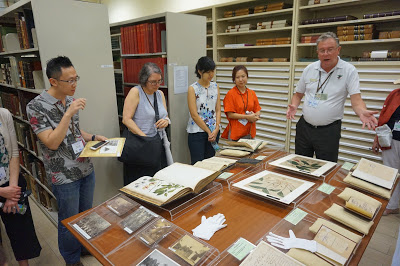
Tour of the Singapore Botanic Gardens Library by Dr. Nigel Taylor. Photo by Martin R. Kalfatovic.

As a participant in BHL Singapore, the SBG Library is not only digitizing its collections for BHL, but the Gardens also hosted the BHL Open Day this past March as part of the 2017 BHL Annual Meeting festivities. During the event, local researchers spoke about the impact that open access to biodiversity literature through BHL has on their research.

“We believe that by sharing important collections in BHL and allowing free digital access to such materials, we will greatly assist researchers in furthering their own research on biodiversity in the Southeast Asian region,” affirms Abdul Karim. “Information inequality between developing and developed world researchers can be narrowed with the availability of open access digital repositories.”

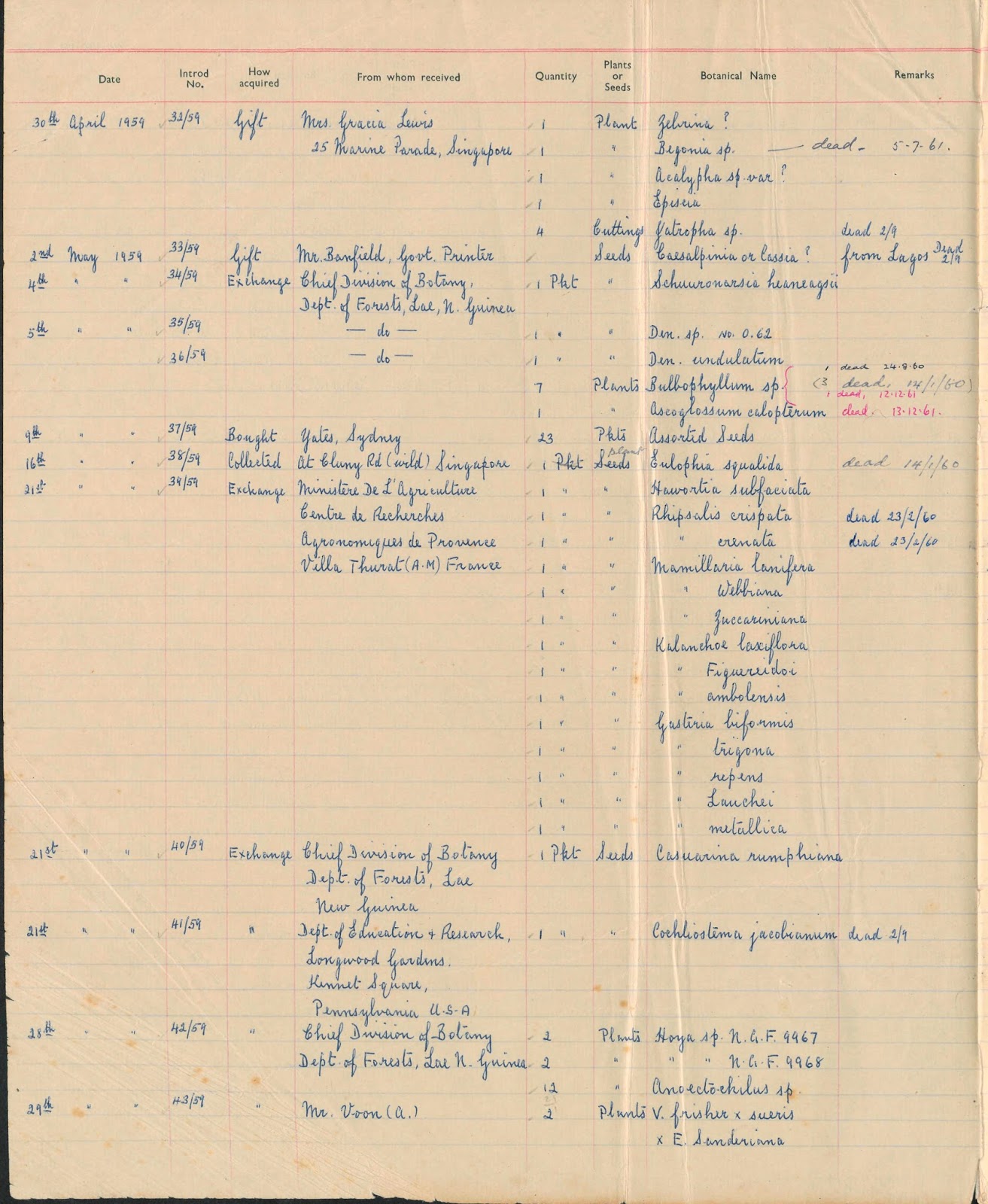
Content digitized by SBG Library to date includes the Gardens’ Bulletin as well as registers of the plants and seeds acquired by the Gardens. In the future, the Library plans to contribute unique field notes from the Gardens’ collections, including those by orchid botanist Cedric Errol Carr, which are currently being transcribed as part of The Citizen Archivist Project at the National Archives of Singapore.

View Full Size Image
Page from Plants and seeds inward register, 2 January 1959-1972. Digitized by Singapore Botanic Gardens, National Parks Board Singapore. http://www.biodiversitylibrary.org/page/50744514.

Dr. Abdul Karim is confident that this digitization will have a significant impact on local and global research.

“Very few libraries in the world have resources that would enable all of the researchers that they serve to be able to conduct their studies unencumbered by lack of vital literature,” says Abdul Karim. “Access to a wider array of literature through BHL can have a profound and positive impact on biodiversity, as research can be more wide ranging, accurate and speedy, and the data vital in many fields of science and conservation can be published in a much shorter timeframe.”

Indeed, user testimonials illustrate how BHL increases the efficiency and effectiveness of research around the world. With the help of partners such as SBG Library, BHL’s growing collections will continue to empower research on a global scale. Dr. Abdul Karim and her Singapore colleagues share this conviction.

“SBG Library believes that BHL, with its rich digital repository of biological information, will continue to play an important role in botanical research and has indirectly also become a platform for long-term preservation of historical and legacy biodiversity literatures.”

______________________________________

This post may contain the personal opinions of BHL users or affiliated staff and does not necessarily represent the official Biodiversity Heritage Library (BHL) position on these matters.

June 8, 2017by ulib-libraryjobs
Page 1 of 212»

Help Support BHL

BHL's existence depends on the financial support of its patrons. Help us keep this free resource alive!

search

About BHL

The Biodiversity Heritage Library (BHL) is the world’s largest open access digital library for biodiversity literature and archives. BHL operates as a worldwide consortium of natural history, botanical, research, and national libraries working together to digitize the natural history literature held in their collections and make it freely available for open access as part of a global “biodiversity community.”

Join Our Mailing List

Sign up to receive the latest news, content highlights, and promotions.

Subscribe Now

Subscribe to Blog via Email

Enter your email address to subscribe to this blog and receive notifications of new posts by email.

Join 319 other subscribers

Subscribe to Blog Via RSS

Subscribe to the blog RSS feed to stay up-to-date on all the latest BHL posts.

Access RSS Feed

Inspiring Discovery through Free Access to Biodiversity Knowledge.

The Biodiversity Heritage Library makes it easier than ever for you to access the information you need to study and explore life on Earth…for free, anytime, anywhere.


64+ Million Pages of
Biodiversity Literature Online.

EXPLORE

Tools and Services
to Transform Research.

EXPLORE

300,000+
Illustrations on Flickr.

EXPLORE

ABOUT | HARMFUL CONTENT | PRIVACY | SITE MAP | TERMS OF USE