Biodiversity Heritage Library - Program news and collection highlights from BHL
  • Home
  • News
  • Featured Books
    • All Featured Books
    • Book of the Month Series
    • BHL at 20
  • User Stories
  • Campaigns
    • Fossil Stories
    • Garden Stories
    • Monsters Are Real
    • Page Frights
    • Her Natural History
    • Earth Optimism 2020
  • Tech Blog
  • Visit BHL
Home
News
Featured Books
    All Featured Books
    Book of the Month Series
    BHL at 20
User Stories
Campaigns
    Fossil Stories
    Garden Stories
    Monsters Are Real
    Page Frights
    Her Natural History
    Earth Optimism 2020
Tech Blog
Visit BHL
  • Home
  • News
  • Featured Books
    • All Featured Books
    • Book of the Month Series
    • BHL at 20
  • User Stories
  • Campaigns
    • Fossil Stories
    • Garden Stories
    • Monsters Are Real
    • Page Frights
    • Her Natural History
    • Earth Optimism 2020
  • Tech Blog
  • Visit BHL
Biodiversity Heritage Library - Program news and collection highlights from BHL
Blog Reel, Featured Books

Researching the American Horseshoe Crab: Connecting 19th and 21st Century Research with the MBLWHOI Library

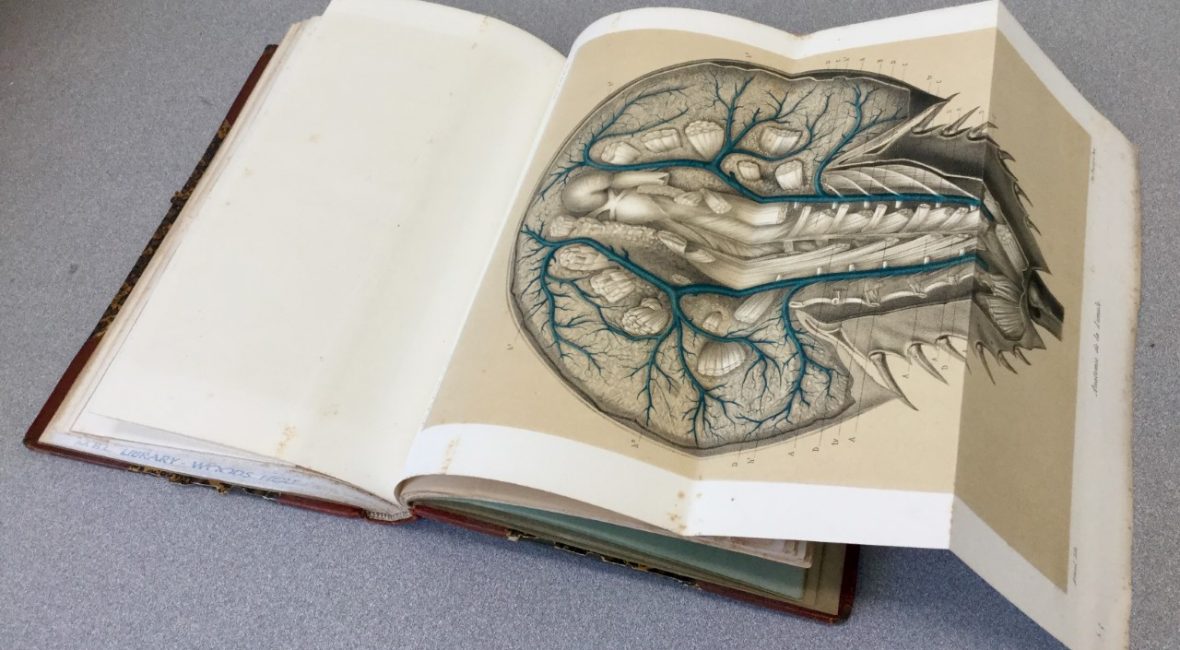
Foldout illustration of a horseshoe crab
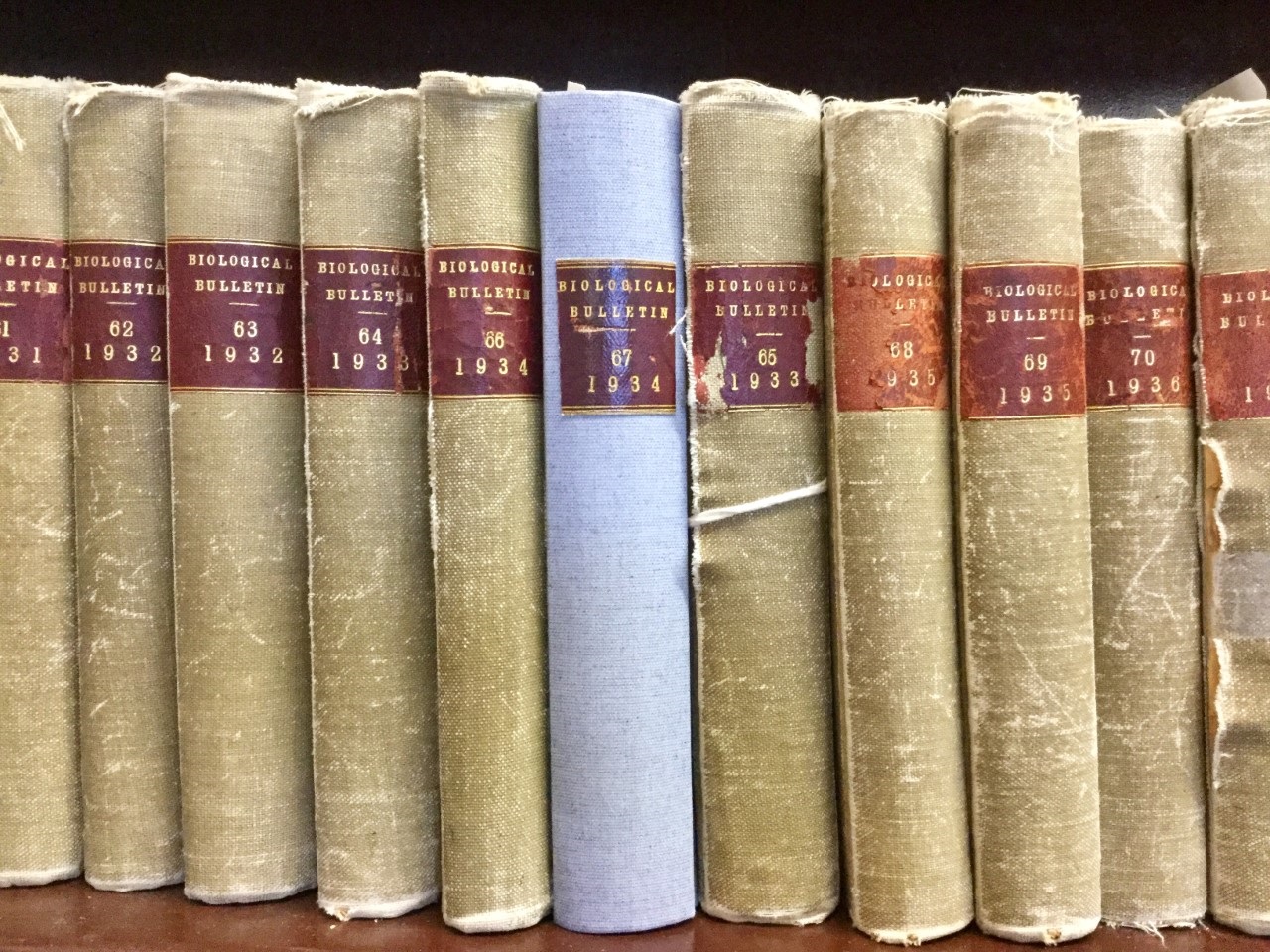
Photo of volumes of the Biological Bulletin on a book shelf.

Volumes of the Biological Bulletin, on the shelf of the MBLWHOI Library. Photo by: Matthew Person.

The venerable science journal the Biological Bulletin has been published in association with the Marine Biological Laboratory of Woods Hole, Massachusetts for over 120 years. Presently, the publisher is the University of Chicago Press, with the editorial office in Woods Hole managed by longtime Editor, Carol Schachinger.

The Marine Biological Laboratory (MBL) was founded in 1888 through the diligent efforts of working scientists and Boston community leaders deeply invested in the marine and associated biological sciences as a tools to conduct research and develop diverse educational opportunities for the study of marine model organisms, through experimental work ultimately leading to an improved understanding of the human condition.
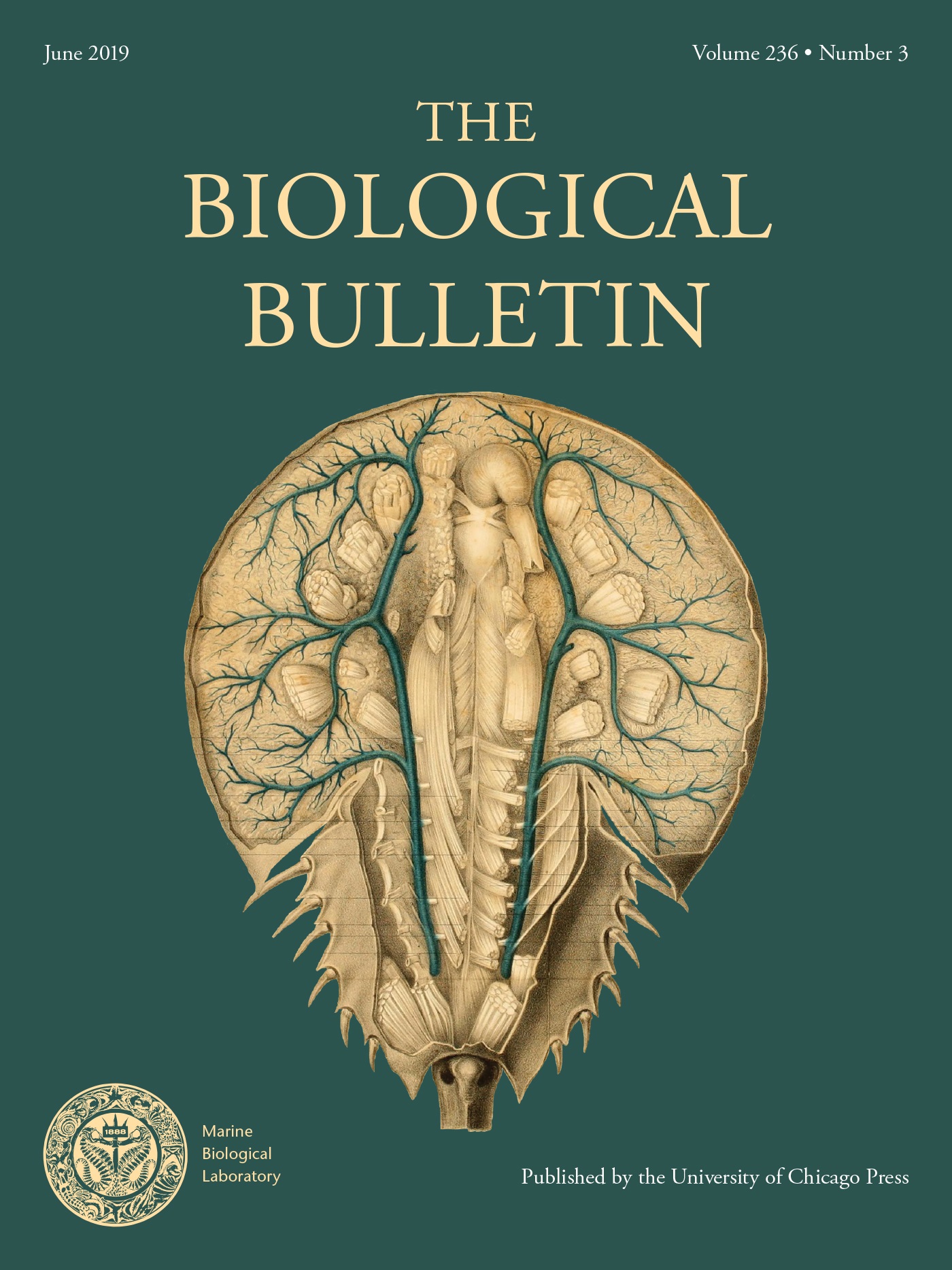
Cover of the Biological Bulletin with a horseshoe crab on it.

Cover. Biological Bulletin (Volume 236, Number 3, June 2019). Image reprinted by permission of the Biological Bulletin.

The June 2019 issue of the Biological Bulletin (Volume 236, Number 3) has an informative and beautiful cover illustration of the venous return half of the circulatory system of the horseshoe crab (Limulus polyphemus), chosen to illustrate an article in the issue: Effects of the Biomedical Bleeding Process on the Behavior of the American Horseshoe Crab, Limulus polyphemus, in Its Natural Habitat. The cover of this issue of the Biological Bulletin was designed from a freely downloaded Biodiversity Heritage Library file, coincidentally from a monograph about the horseshoe crab: Recherches sur l’anatomie des Limules — an 1873 work by Alphonse Milne-Edwards, the French medical doctor, mammologist, ornithologist, and carcinologist (one who studies crustaceans) who was director of the French Museum National d’Histoire Naturelle from 1891-1900.
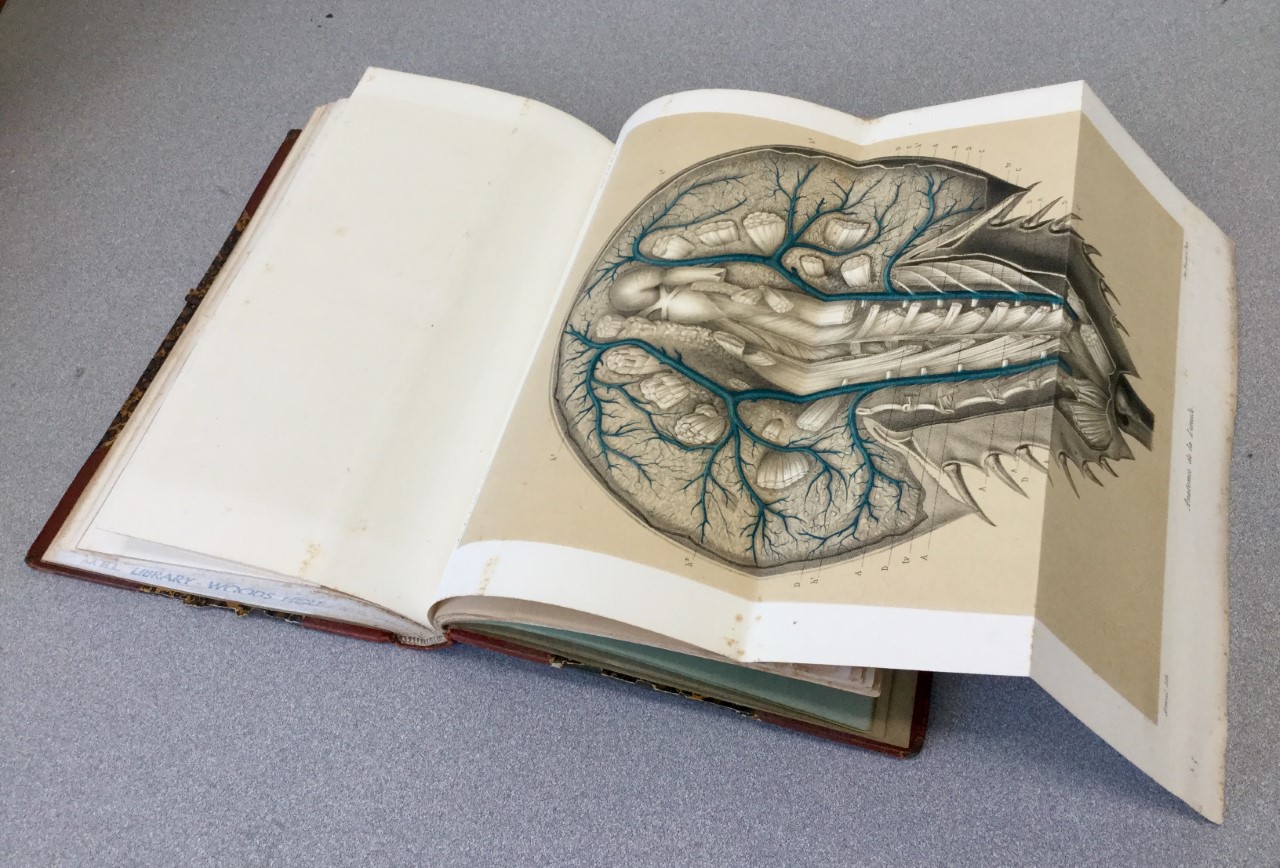
Foldout illustration of a horseshoe crab

Plate of the horseshoe crab (Limulus polyphemus) from “Recherches sur l’anatomie des Limules”, 5th Series, Tome 17, (1873) of the journal, Annales des Sciences Naturelles. Used for the cover of Biological Bulletin (Volume 236, Number 3, June 2019). Contributed in BHL from the MBLWHOI Library.

In the MBLWHOI Library this volume, interestingly, is shelved both in the climate controlled secure Rare Books Room and separately in the freely accessible journal stacks as an article in the 5th Series, Tome 17, (1873) of the journal, Annales des Sciences Naturelles. For important monographic works, multiple shelving locations in the pre-electronic age was common. Much of this content is also available in BHL in the multi-volume work partly edited by Alphonse Milne-Edwards: Mission scientifique au Mexique et dans l’Amérique Centrale : ouvrage publié par ordre de S.M. l’Empereur et par les soins du Ministre de l’instruction publique (1873). The introductory pages of this work speak of the ancient horseshoe crab, living over broadly distributed coastal swaths of the earth, yet the scientific community at that time was stumped as to how this creature was related to other similar species.

Black and white photo of a man with a mustache.

Photo (1883) of Alphonse Milne-Edwards, the author of “Recherches sur l’anatomie des Limules”, from which came the illustration of the horseshoe crab used on the cover of the Biological Bulletin, (Volume 236, Number 3, June 2019). By Th. Truchelut & Valkman, photographers. Upload, stitch and restoration by User:Jebulon – Bibliothèque nationale de France, Public Domain, Wikimedia Commons.

We noticed another aspect of the MBLWHOI Library Rare Books Collection copy of this monograph scanned into BHL. The title page is inscribed by the probable original owner of the volume: “Kingsley”. Looking at the History of the Marine Biological Laboratory’s online database of scientists, we see that biology professor John Sterling Kingsley (1854-1929) — who had appointments during his career at the universities of Indiana, Nebraska, Illinois, and Tufts University, and was editor of books such as The Riverside Natural History series (1885) — spent summers from the late 1880’s to the mid 1910’s doing research at the Marine Biological Laboratory in Woods Hole.

People often wonder how academic research libraries grow and become institutions unto themselves. This example illustrates one method of library growth. With Kinglsey’s name inscribed on page one of Recherches sur l’anatomie des Limules, the book was most probably given to the then-MBL Library by Kingsley or his heirs — one of thousands of volumes over 130+ years which became a part of the Library’s collection in that manner.
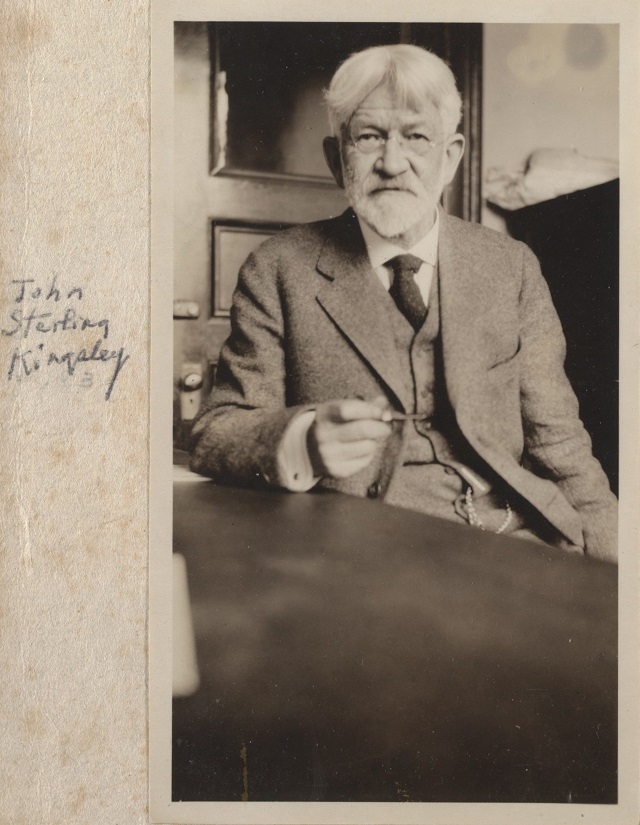
Black and white photo of a man in a suit.

Photo of John Sterling Kingsley, the original owner of the MBLWHOI Library copy of “Recherches sur l’anatomie des Limules”, available in BHL. Source: MBL archives. CC-BY-NC-SA.

We spoke with Biological Bulletin Managing Editor Carol Schachinger about the process of selecting a cover for a journal issue. She told us that out of the body of articles comprising a new issue published every two months, an appropriate cover image to be considered for publication often naturally rises to the top. In the case of V.236, n.3 of the Biological Bulletin, however, this did not initially happen, and even after contacting article authors for possible cover issue suggestions, Schachinger was still without a cover image as the issue headed towards completion.

Schachinger’s alternate plan was to begin making simple online image searches related to issue articles. As the horseshoe crab has been one of the most important studied marine organisms at the Marine Biological Laboratory, it was natural to look for images of this organism, and shortly, the plates from Milne-Edwards’ monograph appeared in simple Google website searches as distinct possibilities for a cover image.

At first, she did not realize the image she ultimately chose was from the holdings of the MBLWHOI Library, nor did she realize the image was from the Biodiversity Heritage Library. Carol was also not aware of the flickr feed of BHL images, which was another access point for this image (and many thousands of images extracted directly from the electronic pages of BHL content). However, when she selected plate 14 of the horseshoe crab circulatory system as the probable cover illustration for the June 2019 issue of the Biological Bulletin, she contacted the librarians at the MBLWHOI Library to ask about proper attribution and the workflow for downloading the out-of-copyright image. They directed her to the FAQ pages of BHL, where all of this information sits.

Thus the v.236, n.3 issue of the Biological Bulletin finally had cover art.

The MBLWHOI Library

In 1888, the sea-side Marine Biological Laboratory heeded the charge of its first Director, Charles Otis Whitman (1842-1910), with reference to the building of a working library to serve its scientists. Woods Hole on Cape Cod was just too far from the Boston research institutions for MBL to rely upon libraries there to provide library services to a small Cape Cod research institution (which would eventually grow into a biological research facility of global renown). Dr. Whitman said: “A library is a necessity in such a laboratory…We must have at a minimum to begin with, all the important journals now printed in the four principal languages.” Jump forward 120 years hence, the MBLWHOI Library (the joint library of the Marine Biological Laboratory and the Woods Hole Oceanographic Institution (WHOI, founded in 1930) was a founding partner of the Biodiversity Heritage Library, providing key technical and library staff support to BHL at its founding in 2006, and continuing to this day.
August 22, 2019by michelle.underhill
Blog Reel, Featured Books

Animal Keepers’ Forum Comes to BHL

animalkeepersfor51978amer_0007.jpg

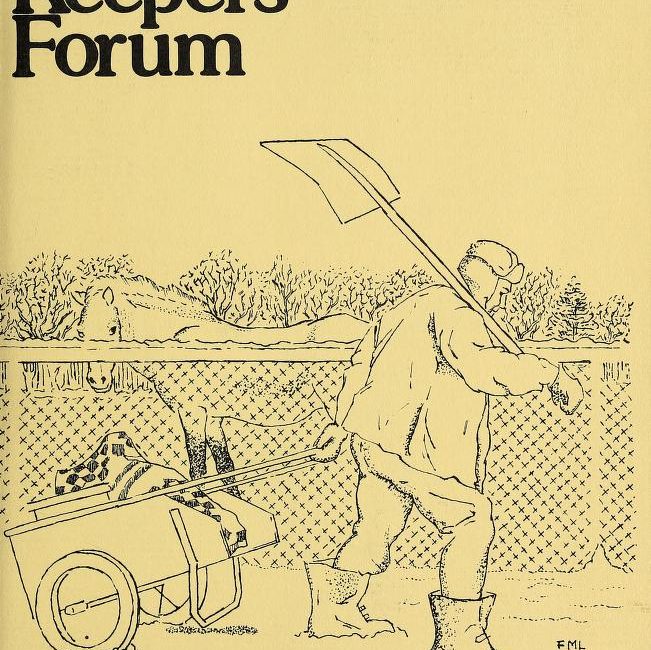
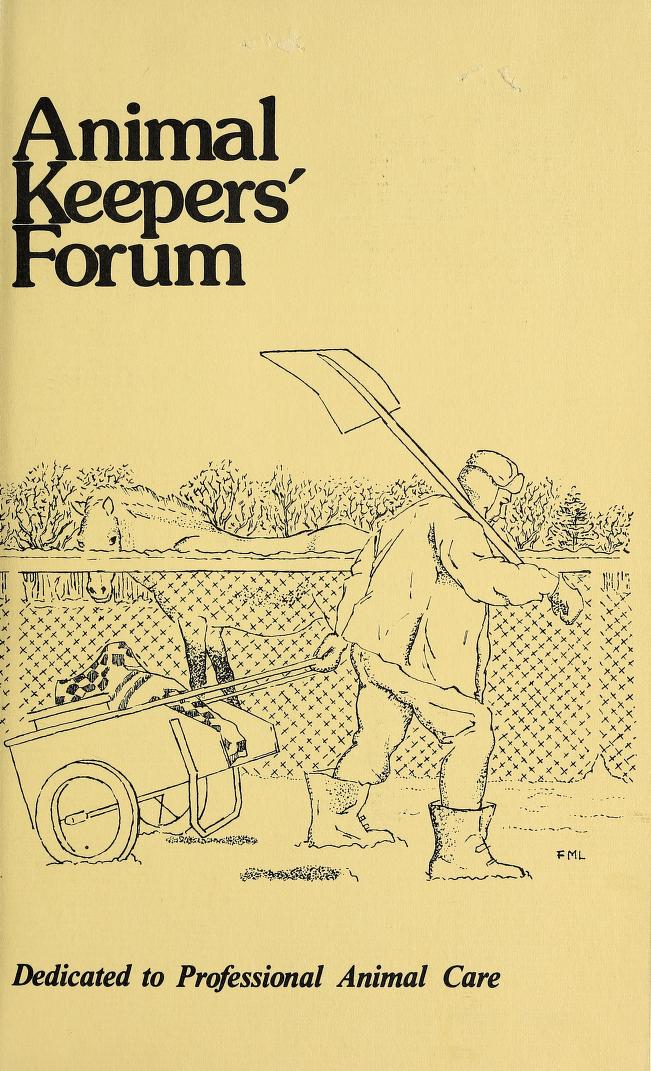
Image of a cover of Animal Keepers’ Forum, featuring a simple line drawing of a person pulling a wheelbarrow and carrying a shovel over one shoulder, in front of an enclosure with a horse. Text reads: “Animal Keepers’ Forum”, “Dedicated to Professional Animal Care.” Animal Keepers’ Forum. 1978. Digitized in BHL by Smithsonian Libraries.

Animal Keepers’ Forum, first published by the American Association of Zookeepers in 1974, set out to solve a problem: animal care and conservation requires specialized knowledge, but institutions were limited in their ability to share experience with each other. Animal Keepers’ Forum has connected animal care professionals for the past 44 years, and serves as both a current resource for husbandry best practices and a historical record of conservation efforts.

Now it’s openly accessible on the Biodiversity Heritage Library as part of the Expanding Access to Biodiversity Literature project, funded by the Institute of Museum and Library Services. Thanks to permission from the American Association of Zookeepers, Smithsonian Libraries has digitized the complete run of volumes from 1974 through the present, with a 2-year embargo period.

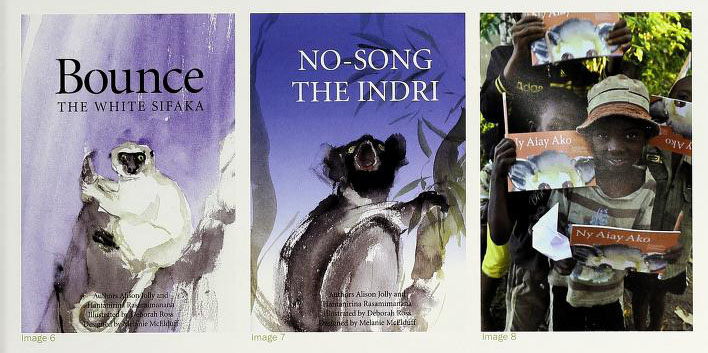
The 2015 special issue on prosimians gives a great sample of the publication’s scope: Duke University’s Lemur Center details their husbandry practices for mouse lemurs, with specifics from housing and diet to breeding and animal biometrics; St. Louis Zoo explains how they sustainably grow and harvest browse for their Coquerel’s Sifakas; and the Lemur Conservation Foundation shares how the AKO Project uses storytelling through picture books helps engage kids in wildlife conservation.

lemur_picturebooks.jpg

An image of two children’s picture-book covers featuring paintings of lemurs, and a photograph of children posing with picture books and smiling. Animal Keepers’ Forum. 2015. Digitized in BHL by Smithsonian Libraries.

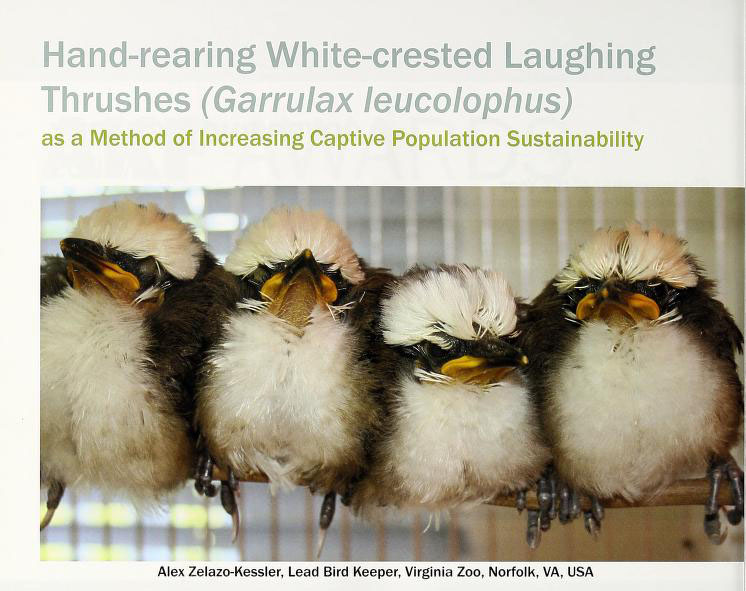
animalkeepers42102015amer_0020.jpg

Photo of four chicks perched in a line. The chicks are black and white with yellow beaks. Article title: ‘Hand-reading White-crested Laughing Thrushes (Garrulax leucolophus) as a Method of Increasing Captive Population Sustainability’. Animal Keepers’ Forum. 2015. Digitized in BHL by Smithsonian Libraries.

The mission of the American Association of Zookeepers (AAZK) is “to advance excellence in the animal keeping profession, foster effective communication beneficial to animal care, support deserving conservation projects, and promote the preservation of our natural resources and animal life,” according to its website. The AAZK was founded in 1967 in San Diego, CA. Its first publication was an unofficial newsletter called The Ruptured Rhino (1968-1969), which is also coming to BHL along with the AAZK Bulletin. Eventually, The Rupture Rhino led to Animal Keepers’ Forum, which became the association’s official publication in 1975.

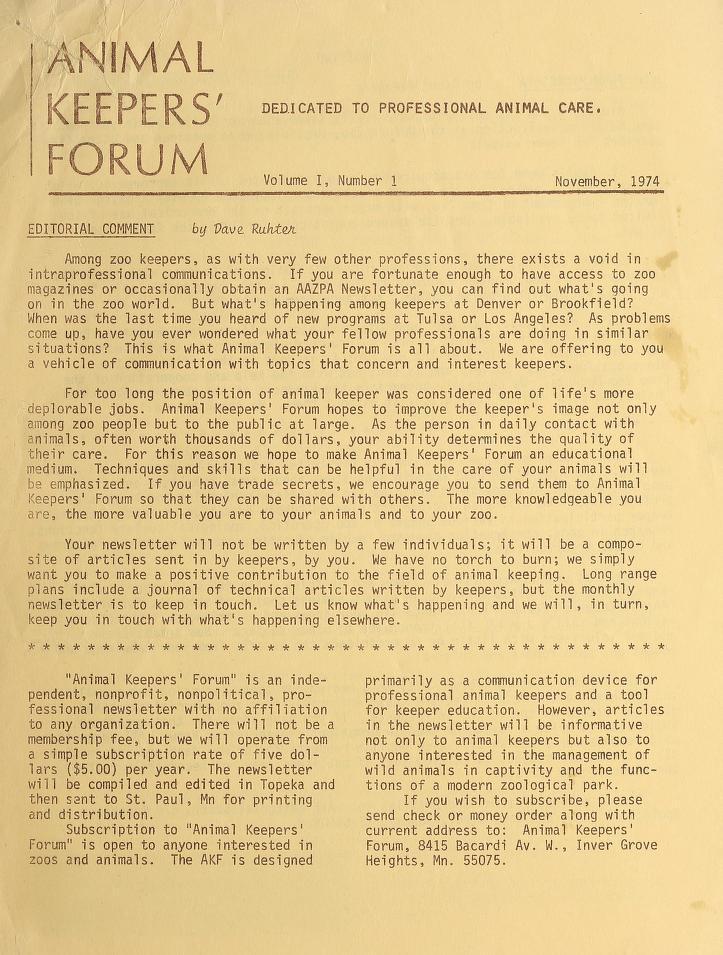
animalkeepersfo111974amer_0001.jpg

Image of the first page of Animal Keepers’ Forum, v. 1 no.1. Transcription from ‘Editorial Comment’ by Dave Ruhter: “Among zoo keepers, as with very few other professions, there exists a void in intraprofessional communications. If you are fortunate enough to have access to zoo magazines or occasionally obtain an AAZPA newsletter, you can find out what’s going on in the zoo world. But what’s happening among keepers at Denver or Brookfield? When was the last time you heard of new programs at Tulsa or Los Angeles? As problems come up, have you ever wondered what your fellow professionals are doing in similar situations? This is what Animal Keepers’ Forum is all about. We are offering to you a vehicle of communication with topics that concern and interest keepers… the more knowledgeable you are, the more valuable you are to your animals and to your zoo.” Animal Keepers’ Forum. 1974. Digitized in BHL by Smithsonian Libraries.

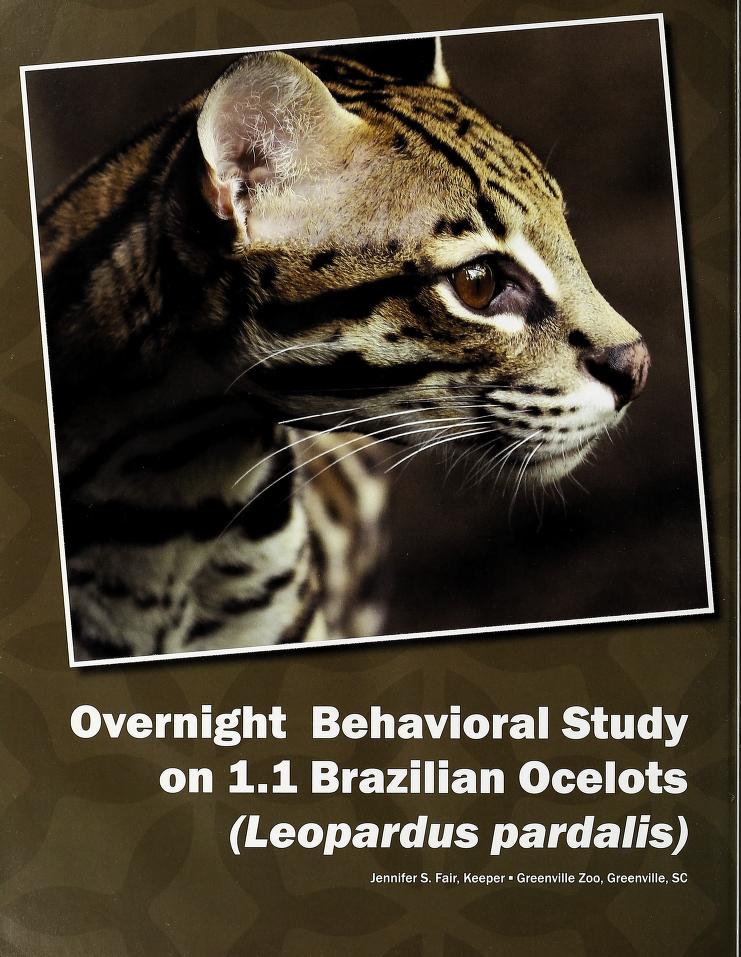
animalkeepersf4212015amer_0016.jpg

Photograph of an ocelot, a small, spotted wild cat, in profile. Article title: Overnight Behavioral Study on 1.1 Brazilian Ocelots (Leopardus pardalis). Animal Keepers’ Forum. 2015. Digitized in BHL by Smithsonian Libraries.

Until its digitization, accessibility to Animal Keepers’ Forum was fairly limited without a subscription. Jacqueline Chapman (Digital Collections Librarian) and Kristen Bullard (former Branch Librarian, National Zoological Park & Conservation Biology Institute and current Science Researcher Services Librarian, Natural & Physical Sciences Department) of Smithsonian Libraries authored a paper and presented at the 2017 AAZK National Conference to address the significance of making this resource available digitally and for free (‘Connecting Keepers to Collective Knowledge: The Digitization of Animal Keepers’ Forum and the Promise of Open Access to Zoological Scholarly Communication’).

They share that a search of the global online library catalogue WorldCat found only 30 libraries with Animal Keepers’ Forum, and that Smithsonian Libraries was the only institution listed as having a complete set of the periodical. As a result, it has been one of the most frequently requested titles from the Smithsonian’s Zoological Park and Conservation Biology Institute library branch through interlibrary loan. (While it is likely available at libraries that don’t participate in WorldCat, the WorldCat search result does indicate that it was relatively difficult to access for those without the resources to subscribe.)

“Some species are so unique that information about their care is hard to find and [Animal Keepers’ Forum] might be one of the only sources for this material,” Chapman and Bullard write. “The knowledge within [Animal Keepers’ Forum] is now available to anyone, allowing the best practices and lessons learned, this collective knowledge of zoo keepers, to be accessed without barrier to anyone. This will hopefully support capacity and knowledge building in institutions that have suffered from limited resources over time.”

animalkeepersf3422007amer_0001.jpg

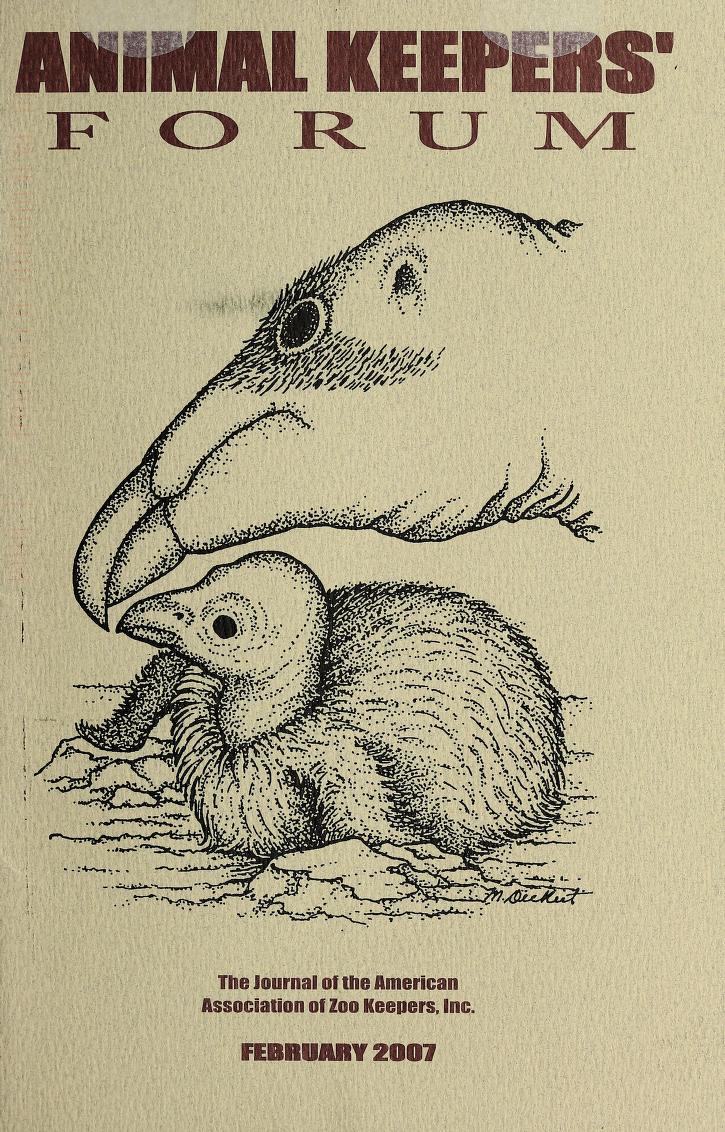
Image of a cover of Animal Keepers’ Forum, featuring a simple black and white illustration of a California Condor chick being fed by a puppet resembling the head of an adult condor. The image is by Mary Deckert, a docent at the Los Angeles Zoo, which participates in a recovery program for this critically endangered species. Animal Keepers’ Forum. 2007. Digitized in BHL by Smithsonian Libraries.

Many thanks to: the American Association of Zookeepers for contributing this resource; the Institute of Museum and Library Services for funding the Expanding Access to Biodiversity Literature project; Smithsonian Libraries for digitization; and Jacqueline Chapman and Kristen Bullard for sharing their insights!

References:

‘About Us’ (aazk.org)
‘Animal Keepers’ Forum’ (aazk.org)
‘Connecting Keepers to Collective Knowledge: The Digitization of Animal Keepers’ Forum and the Promise of Open Access to Zoological Scholarly Communication’ (Chapman & Bullard, 2017)

May 17, 2018by michelle.underhill
Blog Reel, User Stories

Biology Catalog and Joel Hallan

Portrait version of the Biodiversity Heritage Library logo.

BHL and Our Users: Joel Hallan

For BHL and Our Users this week, we’re doing things a little differently. Instead of a questionnaire-style post, Program Manager Grace Costantino interviewed this week’s guest, computer programmer and spider enthusiast Joel Hallan of Texas A&M; University, over the phone. Each question is presented below as a separate video.

We’re trying to be more interactive with our interviews in the future, and we hope this will serve as a first good step in that direction!

What is your name, title, and institutional affiliation?

Can you expand on your special area of interest?

 Where did your interest in spiders come from?

Where did your interest in computer science come from?

 Can you tell us about your online catalog, Biology Catalog?

What compelled you to create Biology Catalog?

What would your perfect vision of Biology Catalog look like?

When did you first discover BHL?

How often and in what ways do you use BHL?

What is your opinion of BHL and how has it supported your work on Biology Catalog?

If you could change one thing about BHL, what would it be?

Thanks for tuning in this week! Check back for more great interviews with our creative, dedicated and enthusiastic users to get more ideas about new ways you can put BHL to use. Be sure to check out Joel’s catalog, Biology Catalog, an ambitious project which will hopefully one day serve as a catalog of all species.

If you’re interested in being interviewed on our blog, leave a comment on this post, send us feedback, or email us as [email protected].


September 18, 2012by ulib-libraryjobs
Blog Reel, User Stories

BHL and Our Users: Megan Raby and the History of Biology

View Full Size ImageTaking a break from our miniseries of the past few months, featuring EOL Rubenstein fellows, this week we feature Megan Raby, who uses BHL to support her research involving the history of biology.

What is your title, institutional affiliation (or alternative place of employment), and area of interest?

I am a dissertator in the History of Science at the University of Wisconsin-Madison. My dissertation focuses on the history of American involvement in tropical biology in the Caribbean in the early twentieth century. I’m interested in the intersection of the history of biology and environmental history, and the role of science in the changing relationships between the US and the rest of the world.

How long have you been in your field of study?

I began to get interested in graduate work in the history of science while finishing my BS in Earth Sciences at Montana State University. That would make it about 7 years.

When did you first discover BHL?

I’m not quite sure when I first stumbled upon the site, but certainly over the past 4 years I have begun to use it more consciously.

What is your opinion of BHL and how has it impacted your research?

It has been incredibly helpful. While we have a wonderful library system here at UW, there are times when I just need a quick look at a relatively obscure volume. Checking it online rather than running over to a library or having to ILL saves me a lot of time. Actually though, I have found it most useful to be able to search within texts, in conjunction with the physical book. For example, I went through many decades of the Annual Reports of the Smithsonian Institution while holed up in the Wisconsin Historical Society stacks, but I searched with BHL alongside. It’s easier and faster to read the physical copy, and flip between text and contents when you are sure the information you are looking for is in there. But searching the text electronically can help you find references that are not expected from the contents or index. I’ll also mention that I found a couple scanning errors while going through the Smithsonian annual reports, and BHL fixed them immediately. It was amazing. One point I want to make is that BHL doesn’t replace the original books­­––but it does make them easier to find and use. I really see physical libraries and BHL as complementary tools.

How often do you use BHL?

Depending on what phase of research I am in, it could be from a few times a month to a few times a day.

How do you usually use BHL (read the titles online/download whole PDFs/Selecting Pages to Download/etc.)

I usually download whole PDFs, because it is easier to search within the whole text, and take notes, this way. If I am looking for a particular piece of information, or just skimming to see if a text might be useful, then I read online. I have sometimes made custom PDFs for articles within larger volumes.

What are your favorite features/services on BHL?

I am just glad that so many of the kinds of texts I need are accessible there, from expedition reports and regional floras, to the bulletins of various botanical gardens and museums. I am happy that they can be downloaded as PDFs which makes reading, searching, and note-taking very easy. I also like the links to BHL from http://plants.jstor.org.

If you could change one thing about BHL, what would it be, or what developmental aspect would you like the BHL team to focus on next?

First, it would be amazing to be able to search in-text across multiple volumes. As it is, I either come to BHL looking for a particular text or else happen upon one through a Google search. Subject terms and titles are useful, but sometimes I am looking for very brief references within the text that would not show up in a subject term. Being able to search across the texts in BHL would help me find surprising and unexpected references. Second, it is currently a bit difficult to find articles within larger volumes unless you already know where they are. You can go through each volume of the Bulletin of the New York Botanical Garden individually and search, but you can’t see or search the titles or authors of articles within volumes using advanced search. Finally, tools similar to Google Ngrams or JSTOR Data For Research would allow you to take advantage of the texts in aggregate. I would love to be able to graph references to tropical organisms, or to terms related to ideas about tropical “biodiversity,” over time using the BHL sources.

If you had to choose one title/item in BHL that has most impacted your research, or one item that you prefer above any other in BHL, what would it be and why?

That’s a tough one. Probably the Smithsonian annual reports have been the most useful, as they helped me get a solid chronology for one part of my dissertation when I was just starting. But I will mention another “neat” source I used in the chapter I just wrote: Living Plants and Their Properties: A Collection of Essays, edited by Joseph Charles Arthur and Daniel T. MacDougal, 1898. In it, I was able to find a reprint of a talk, “Mimosa: A Typical Sensitive Plant,” that MacDougal, an American botanist, gave to a Jamaican natural history society while in the colony looking for a potential site to establish an American tropical research station. I had not known at the time that a copy of that talk was available in print, and it gave me evidence about why MacDougal thought more research needed to be done on living tropical plants in their own environments, as well as how he interacted with scientists in Jamaica. Also, the book includes some articles in which J. C. Arthur muses about whether plants can feel pain­­––but that will have to wait for another research project!

Thanks, Megan, for giving us a glimpse into your work and the role BHL plays in your research! You may be interested in some of the work Roderic Page has been doing graphing the occurrence of names in literature over time using BHL or Ryan Schenk’s work visualizing taxonomic synonyms over time, as you mentioned that you would love to “graph references to tropical organisms, or to terms related to ideas about tropical “biodiversity,” over time using the BHL sources.” Additionally, the Code Challenge for the Life and Literature Conference that BHL is hosting (Nov. 14-15, Chicago, IL), which encourages individuals to submit applications that provide new or interesting ways to use or display BHL data, might yield further innovative, graphical interactions with our information. Until then, we hope that BHL continues to meet your research needs as we also continue to develop and improve our services!

September 27, 2011by Grace Costantino

Help Support BHL

BHL's existence depends on the financial support of its patrons. Help us keep this free resource alive!

search

About BHL

The Biodiversity Heritage Library (BHL) is the world’s largest open access digital library for biodiversity literature and archives. BHL operates as a worldwide consortium of natural history, botanical, research, and national libraries working together to digitize the natural history literature held in their collections and make it freely available for open access as part of a global “biodiversity community.”

Join Our Mailing List

Sign up to receive the latest news, content highlights, and promotions.

Subscribe Now

Subscribe to Blog via Email

Enter your email address to subscribe to this blog and receive notifications of new posts by email.

Join 319 other subscribers

Subscribe to Blog Via RSS

Subscribe to the blog RSS feed to stay up-to-date on all the latest BHL posts.

Access RSS Feed

Inspiring Discovery through Free Access to Biodiversity Knowledge.

The Biodiversity Heritage Library makes it easier than ever for you to access the information you need to study and explore life on Earth…for free, anytime, anywhere.


64+ Million Pages of
Biodiversity Literature Online.

EXPLORE

Tools and Services
to Transform Research.

EXPLORE

300,000+
Illustrations on Flickr.

EXPLORE

ABOUT | HARMFUL CONTENT | PRIVACY | SITE MAP | TERMS OF USE