Biodiversity Heritage Library - Program news and collection highlights from BHL
  • Home
  • News
  • Featured Books
    • All Featured Books
    • Book of the Month Series
    • BHL at 20
  • User Stories
  • Campaigns
    • Fossil Stories
    • Garden Stories
    • Monsters Are Real
    • Page Frights
    • Her Natural History
    • Earth Optimism 2020
  • Tech Blog
  • Visit BHL
Home
News
Featured Books
    All Featured Books
    Book of the Month Series
    BHL at 20
User Stories
Campaigns
    Fossil Stories
    Garden Stories
    Monsters Are Real
    Page Frights
    Her Natural History
    Earth Optimism 2020
Tech Blog
Visit BHL
  • Home
  • News
  • Featured Books
    • All Featured Books
    • Book of the Month Series
    • BHL at 20
  • User Stories
  • Campaigns
    • Fossil Stories
    • Garden Stories
    • Monsters Are Real
    • Page Frights
    • Her Natural History
    • Earth Optimism 2020
  • Tech Blog
  • Visit BHL
Biodiversity Heritage Library - Program news and collection highlights from BHL
Blog Reel, Featured Books

Medicinal Botanicals at the College of Physicians of Philadelphia & Early Women In Science

Medicinal Plants and Illustrated Herbals in Philadelphia

View Full Size Image
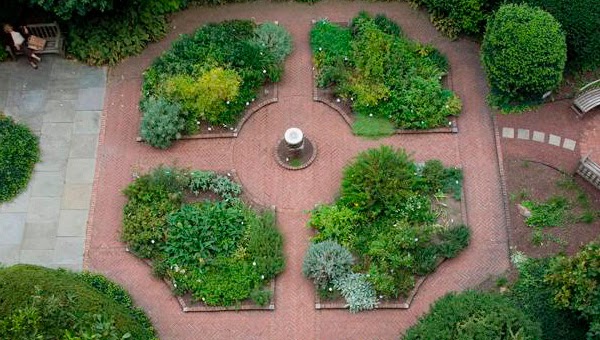
The Benjamin Rush Medicinal Garden at the College of Physicians of Philadelphia

Dr. Benjamin Rush, a founding Fellow of the College of Physicians of Philadelphia, first proposed that the College create a medicinal plant garden in 1787. The garden would not only provide medicinals for use by physicians, but would also be used as a pedagogic resource for the training of medical students.

Rush’s vision did not come to fruition until the College moved to its current site at 22nd and Ludlow Streets in 1909. An adjoining property was acquired in 1911, and a garden was planted in memory of Wharton Sinkler, a vice-president of the College. This garden contained flowers, trees, and shrubs, typical of small city parks.

A medicinal plant garden was cultivated in place of the original garden 150 years after Dr. Rush first proposed its creation. In 1937, as part of its 150th anniversary celebrations, the College converted the garden, which was tended at first by a volunteer committee made up of wives of Fellows of the College.

Today, the garden is designed around four identical parterres, planted with more than 25 different medicinal species that would have been easily identified by Dr. Rush. Each plant is labelled with its usage, the common name, and the botanical name. Therapeutic or poisonous properties have been verified by modern pharmacologists and botanists. Interpretation, including signage and an audio tour, inspires and educates visitors to consider the role of herbals in current medical applications. Information about the medicinal garden can be found here and at “No Bones About It,” a YouTube channel of the Mütter Museum.

The medicinal garden is complemented by a selection of early illustrated herbals that are in the collections of the Historical Medical Library of the College of Physicians. The earliest herbals include two editions of the Herbarius, one of the Gart der Gesundheit, and five editions of the Hortus Sanitatis, including the first edition, printed in 1491, which has been described as the largest herbal ever printed. Search the Library’s catalog to learn more. To view a selection of digitized images from the herbal collection, visit the College’s digital image library.

Early Women in Science

While men such as Dr. Rush and the Fellows of the College have contributed greatly to medical and botanical knowledge, there were trailblazing women contemporaries who engaged in the same endeavors. Many of these women had to fight societal beliefs that women should be confined to the domestic sphere in order to pursue the scientific fields of medicine or botany. In the Biodiversity Heritage Library’s digital exhibit, Early Women In Science (created for the Biodiversity Library Exhibition with support from the Smithsonian Women’s Committee), you will learn about women in scientific fields working prior to the twentieth century, including botanists who explored rough terrain across the United States and other countries in order to contribute to our knowledge of different plants.
View Full Size Image
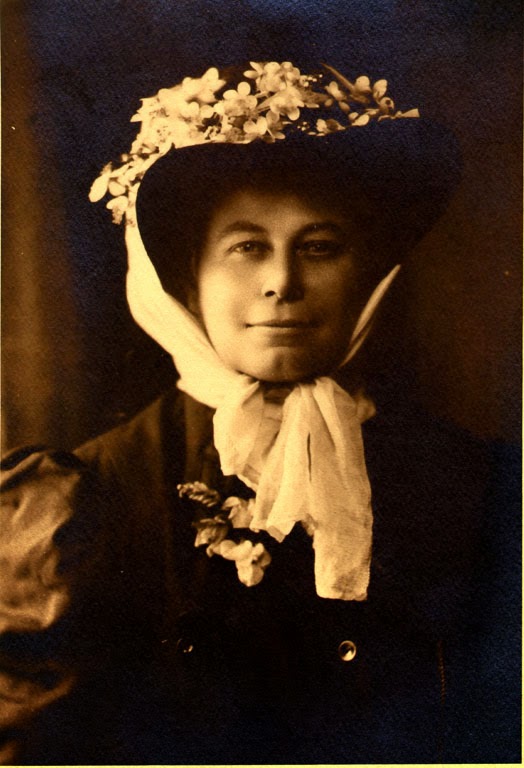
Alice Eastwood, Courtesy of the California Academy of Sciences Archives

Often these women identified many entirely unknown species. For instance, Alice Eastwood (1859-1953) hiked the High Rockies in Colorado collecting plant specimens, and continued collecting and identifying new specimens until her death; she ultimately contributed 340,000 specimens to the California Academy of Sciences Herbarium. Just as intrepid was Katharine Brandegee (1844-1920), who fought against criticism in order to enter the medical field (traditionally a job reserved for men). She obtained her M.D. from the University of California in 1878, and it was her study of medicinal plants while in the medical program that led her to ultimately take up botany as a career instead of medicine. To learn more about Alice, Katharine, and 14 other early women in science—including those who contributed to botanical (and thus medical) knowledge—please visit the digital exhibit, Early Women In Science.

Special thanks to Beth Lander and Robert Hicks, of The College of Physicians of Philadelphia, for contributing information about Dr. Rush, his medicinal garden, the College of Physicians of Philadelphia and their digital holdings, and the Mutter Museum.

January 15, 2015by jjones
Blog Reel, Featured Books

Latino Natural History: Recognizing the contributions of Latino naturalists

While there are plenty of accounts on the natural history of Latin America, many of the best-known stories are from the point of view of outsiders, especially those from the age of extensive European exploration. The new exhibition “Latino Natural History” aims to turn the focus to a few notable naturalists of Latin American origin, and recognizing the work they did to further the study of the world’s flora and fauna.

Some of the featured naturalists, like Puerto Rican American ornithologist and artist Louis Agassiz Fuertes, were greatly celebrated by their peers and beyond. However, many of the remaining naturalists would go unrecognized in their lifetime, or over time their names would be buried under those of more well-known scientists. The reasons for the imbalance in recognition were as varied as the countries these scientists are all from.
View Full Size Image
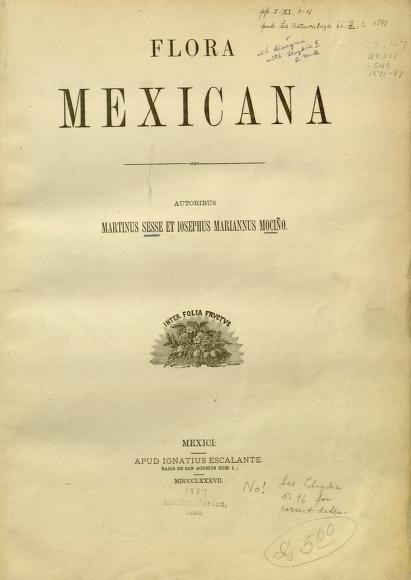
Flora Mexicana wasn’t published until nearly 70 years after Mociño’s death.
For some of these naturalists, political turmoil would keep their work from being published in their lifetime. For example, José Mociño was a Mexican botanist and explorer who joined the Royal Botanical Expedition to New Spain directed by Spain’s Martin de Sessé y Lacasta. Mociño’s work during the expedition was quite extensive; he would eventually be assigned to oversee the remaining tasks of the expedition when Sessé died in 1808. However, his political affiliations during the Napoleonic Wars would result in his exile, and the expedition’s findings would go unpublished until decades after Mociño’s death. Instead, what the scientific community had to rely on were the accounts of Prussian explorer Alexander Humboldt and his travels through Latin America.
View Full Size Image
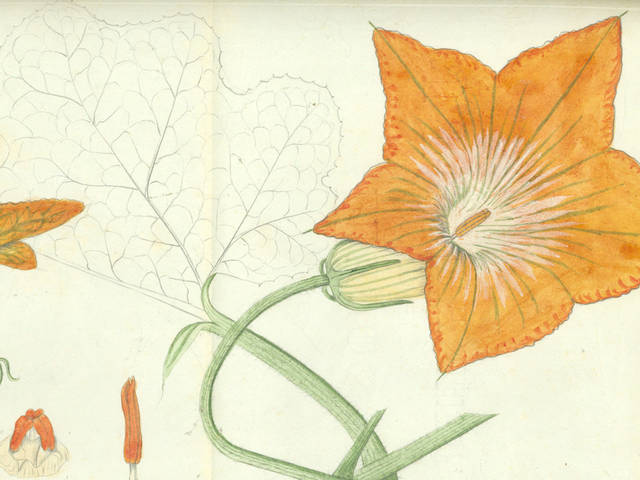
Cucurbita moschata | Stahl Collection, U.S. National Herbarium, National Museum of Natural History, Smithsonian Institution
Others would be hindered by a lack of financial support. Puerto Rican naturalist Agustín Stahl is best known for the time and effort he put into the study of Puerto Rico’s flora. His Studies of the flora of Puerto Rico  was the first detailed work on the subject. However, the watercolors which were meant to be included in the six installments would remain unpublished because Stahl didn’t have the funds to print them. As a result, Studies remains incomplete, but today Stahl is recognized as one of the fathers of Puerto Rican natural science. He is even commonly attributed as the man who introduced the idea of decorating Christmas trees to the island.
View Full Size Image
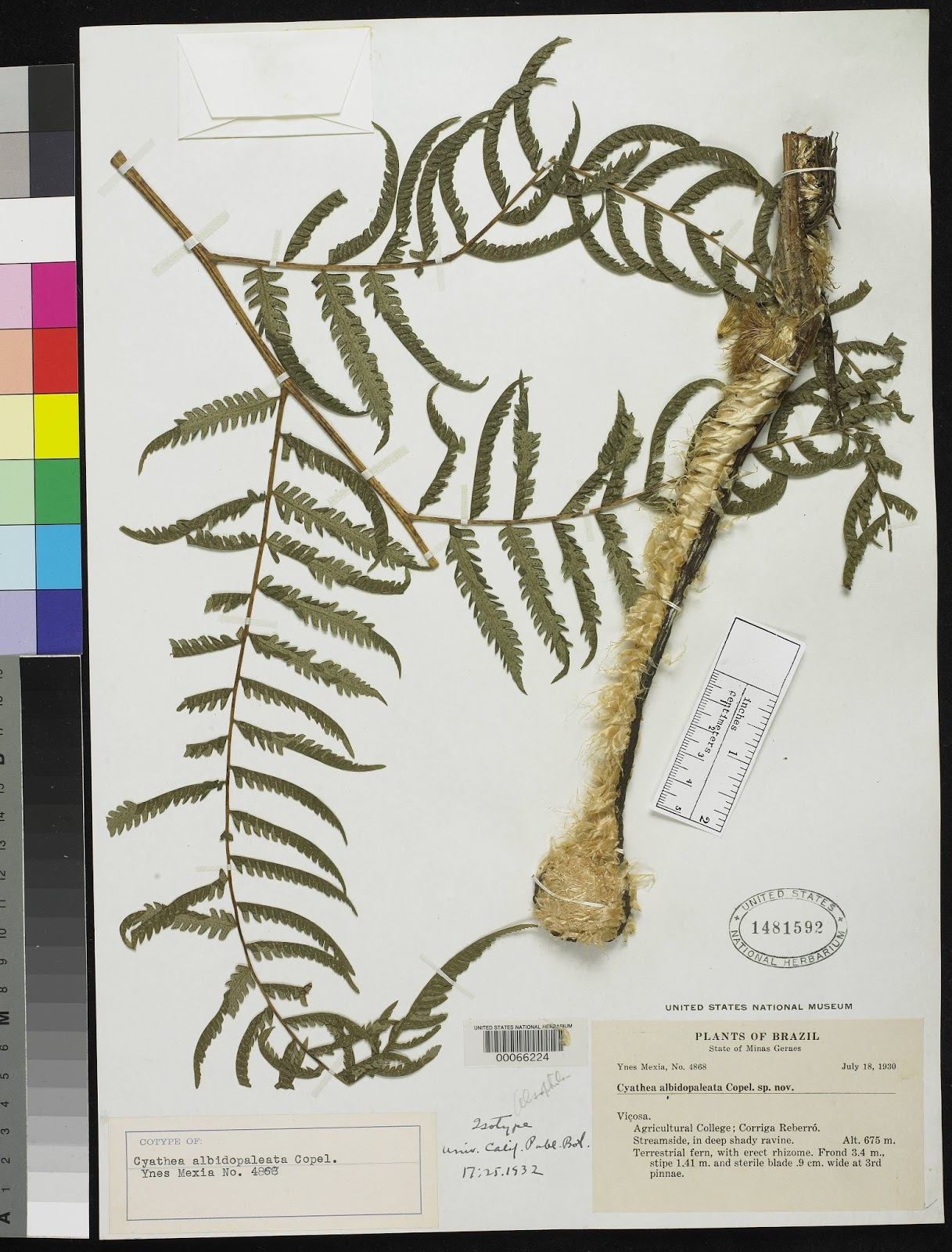
Cyathea albidopaleata. Collector: Ynes Mexia | Smithsonian Institution, National Museum of Natural History, Department of Botany
The exhibition also features Latinos and Latinas who overcame personal obstacles to become successful in their fields. Ynes Mexia, Mexican-American plant collector, didn’t join the scientific community until well into middle age. Mexia’s life would start in Washington, D.C., and would take her to Texas, and Mexico, where she would eventually marry and settle down. Along the way she’d experience personal struggles with anxiety which she wouldn’t overcome until she left Mexico and settled in San Francisco, California. There she’d discover an interest in botany, and her prolific plant collection resulted in the discovery of 500 new species.
 

Although the careers of these Latinos and Latinas were often met with obstacles, it’s not to say it was all doom and gloom. Several of the naturalists in the exhibition were members of the greater scientific community and were well-respected by their contemporaries. Many of the scientists even had new species and museums named after them. Although some of these names may be unfamiliar thanks to the test of time and selective history, their contributions to the world of natural science are undeniable.

The exhibition is by no means comprehensive, but I hope you enjoy discovering all the stories we’ve featured here.

December 16, 2014by lmyrick
Blog Reel, Featured Books

Early Women In Science: Trekking Through Nature, Trailblazing Their Way Through History

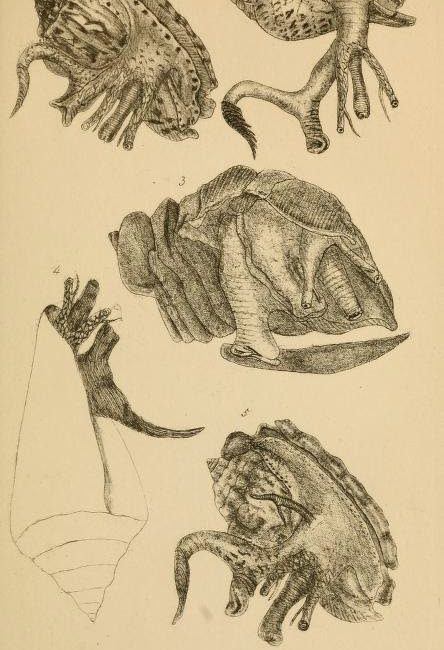
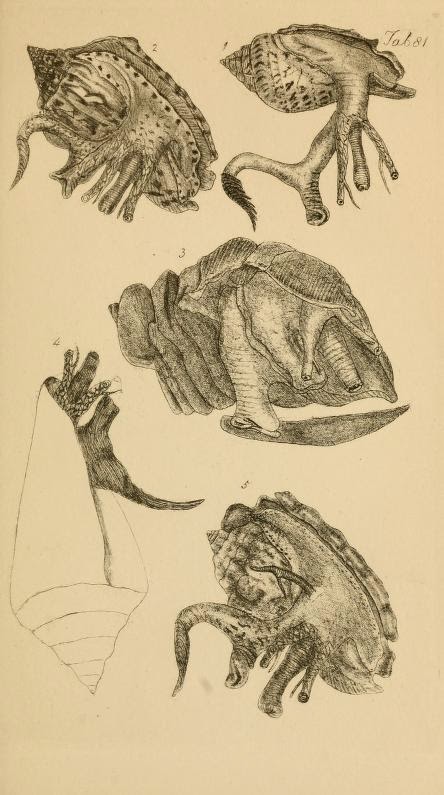
The sixteen women featured in the “Early Women In Science” exhibition are each extraordinary for unique reasons.  One trait they all share is that they were doing work in scientific fields reserved for men. They sometimes had to fight for recognition of their work—or went completely unrecognized for some of their major contributions. For instance, Maria Emma Gray (1787-1876) was a talented natural history illustrator. She not only contributed to the work of her husband, zoologist John Edward Gray, but also saw him through his nervous breakdown, eventually helping him to work again. Despite her contributions to his studies, however, she is not credited in his works.

View Full Size Image
Illustration by Maria Emma Gray, from Figures of Molluscous Animals, Selected from Various Authors. Etched for the Use of Students by Maria Emma Gray, vol. 2, 1859 | Smithsonian Biodiversity Heritage Library

Even when the male scientific community did praise the contributions of their feminine peers, many of the earliest women scientists remained resistant to any form of boasting or taking credit, since that was considered unseemly in women. Not so with bold scientists like Ynes Enriquetta, Julietta Mexia, or Alice Eastwood, who rightfully took credit for their amazing accomplishments.

Alice told her contemporary, Agnes Chase (agrostologist, 1869-1963): “the most proper [honor] is that officially the name of the Herbarium is the Alice Eastwood Herbarium of the California Academy of Sciences” since she built it herself “with no help” from 1912 to 1930.And in truth, Alice did manage this effort with little help. Furthermore, prior to the new herbarium’s construction, Alice risked her life to save the Academy’s collections during the San Francisco Earthquake of 1906. Despite fires in the surrounding buildings and a caved-in stairwell, Alice climbed into the previous herbarium and managed to save the most irreplaceable of the herbarium specimens with a rope and pulley and the help of one other man.

View Full Size Image
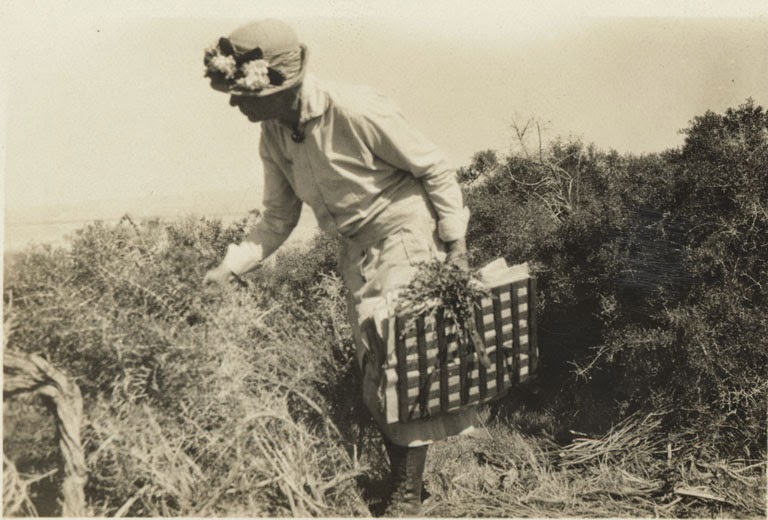
Alice Eastwood collecting Festuca eastwoodae grass, courtesy of the California Academy of Sciences Archives

These women were brave. Not only did they enter their respective fields at a time when women were meant to remain in the domestic sphere, but they often solitarily braved harsh wilderness conditions to explore, observe, and collect flora, fauna and other specimens.  Katherine Brandegee(1844-1920) was a botanist, and in her journeys she survived shipwrecks, seclusion with bears, wolves and coyotes, and encounters with potentially dangerous men in the uninhabited areas she trekked. All the while, collecting and preserving specimens, rather than her own safety, were her primary concerns.

Many of the women in the exhibit shared a courage, a sense of adventure, and a love of nature that allowed them to push through the difficulties—whether physical or mental—of becoming scientists.Some were self-taught, while others were accepted to prestigious schools. Most of them were given honorary degrees and other awards. Some, like Susan Fenimore Cooper (1813-1894), were multi-talented, engaging not only in scientific pursuits, but other artistic endeavors like fiction writing.Furthermore, many of these women demonstrated exceptional foresight, warning that neglect and abuse of our natural environment would result in dire consequences. They were right.

Enjoy the fascinating stories, illustrations and books from and about “Early Women In Science” in our new exhibit here.

December 9, 2014by micahv

Help Support BHL

BHL's existence depends on the financial support of its patrons. Help us keep this free resource alive!

search

About BHL

The Biodiversity Heritage Library (BHL) is the world’s largest open access digital library for biodiversity literature and archives. BHL operates as a worldwide consortium of natural history, botanical, research, and national libraries working together to digitize the natural history literature held in their collections and make it freely available for open access as part of a global “biodiversity community.”

Join Our Mailing List

Sign up to receive the latest news, content highlights, and promotions.

Subscribe Now

Subscribe to Blog via Email

Enter your email address to subscribe to this blog and receive notifications of new posts by email.

Join 319 other subscribers

Subscribe to Blog Via RSS

Subscribe to the blog RSS feed to stay up-to-date on all the latest BHL posts.

Access RSS Feed

Inspiring Discovery through Free Access to Biodiversity Knowledge.

The Biodiversity Heritage Library makes it easier than ever for you to access the information you need to study and explore life on Earth…for free, anytime, anywhere.


64+ Million Pages of
Biodiversity Literature Online.

EXPLORE

Tools and Services
to Transform Research.

EXPLORE

300,000+
Illustrations on Flickr.

EXPLORE

ABOUT | HARMFUL CONTENT | PRIVACY | SITE MAP | TERMS OF USE