Biodiversity Heritage Library - Program news and collection highlights from BHL
  • Home
  • News
  • Featured Books
    • All Featured Books
    • Book of the Month Series
    • BHL at 20
  • User Stories
  • Campaigns
    • Fossil Stories
    • Garden Stories
    • Monsters Are Real
    • Page Frights
    • Her Natural History
    • Earth Optimism 2020
  • Tech Blog
  • Visit BHL
Home
News
Featured Books
    All Featured Books
    Book of the Month Series
    BHL at 20
User Stories
Campaigns
    Fossil Stories
    Garden Stories
    Monsters Are Real
    Page Frights
    Her Natural History
    Earth Optimism 2020
Tech Blog
Visit BHL
  • Home
  • News
  • Featured Books
    • All Featured Books
    • Book of the Month Series
    • BHL at 20
  • User Stories
  • Campaigns
    • Fossil Stories
    • Garden Stories
    • Monsters Are Real
    • Page Frights
    • Her Natural History
    • Earth Optimism 2020
  • Tech Blog
  • Visit BHL
Biodiversity Heritage Library - Program news and collection highlights from BHL
Blog Reel, Campaigns, Featured Books

Once There Were Billions: Carolina Parakeet

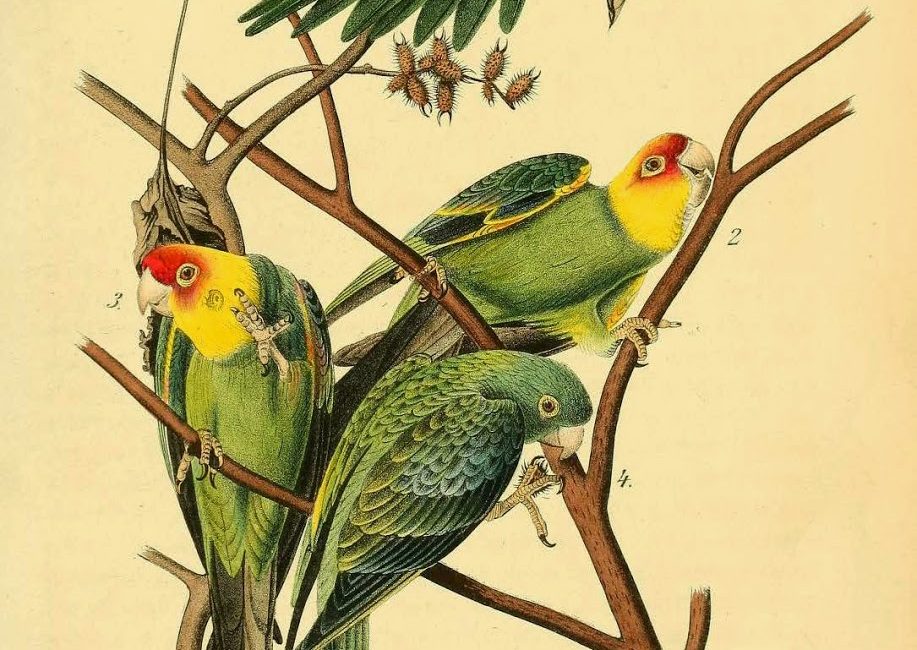
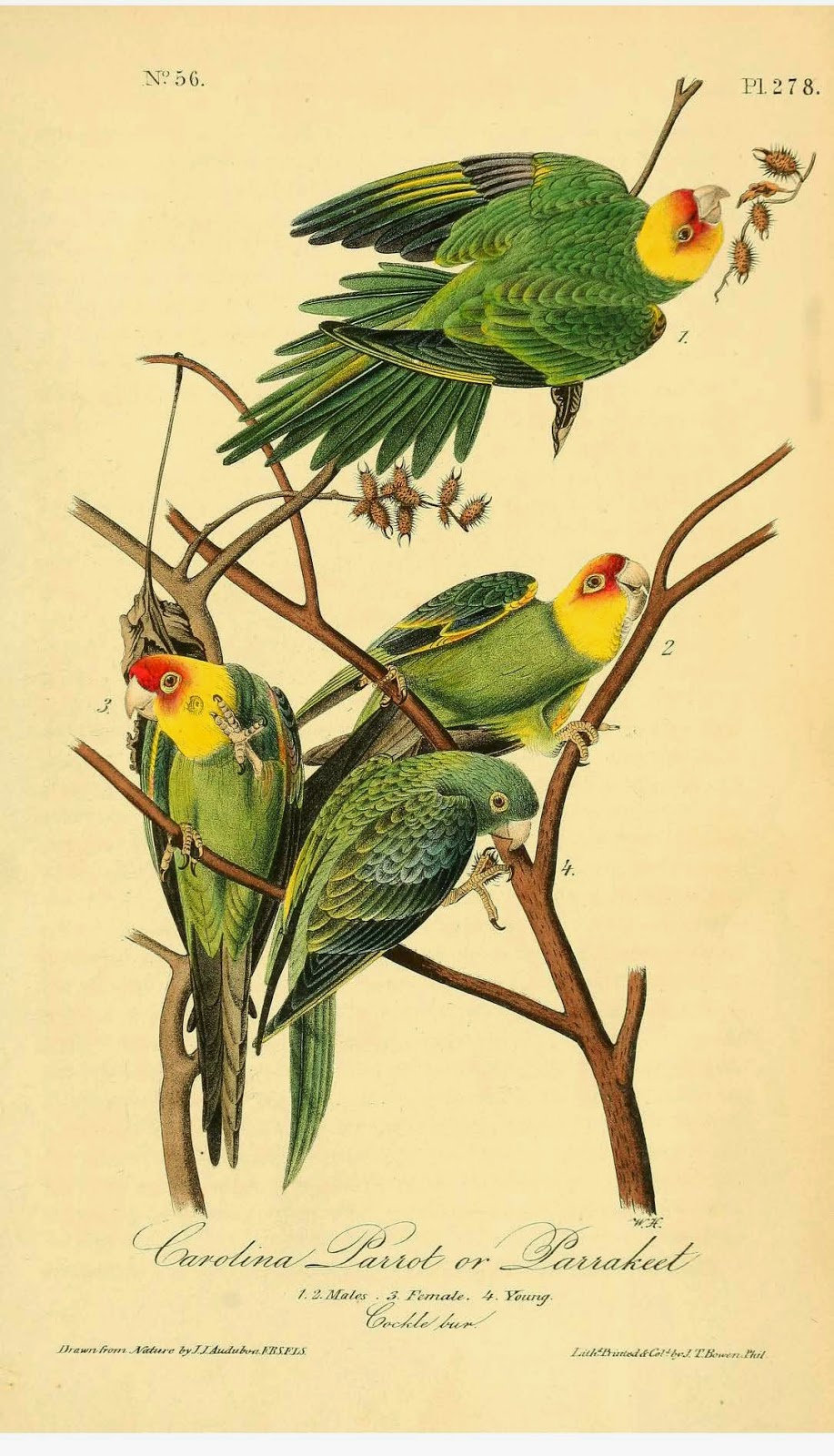
At this time of year, those of us in the U.S. often find our eyes turned skyward to admire a brilliant array of colors lighting up the night sky in celebration of America’s independence.  Up until about a hundred years ago, a colorful display of another kind filled the North American skies, and not just on the fourth of July. Jewel-colored Carolina Parakeets (Conuropsis carolinensis) traveled in huge, noisy flocks from southern New York and Wisconsin to the Gulf of Mexico, favoring old forests along rivers. Although they looked tropical, Carolina Parakeets didn’t migrate south in the winter but weathered the cold.
View Full Size Image
 

The Birds of America: From Drawings Made
in the United States and Their Territories
John James Audubon
New York: J.B. Chevalier, 1840–44

http://biodiversitylibrary.org/item/125069#page/
447/mode/1up

As their forests were cut to make space for farms, the parrots were shot for feeding on crops and orchards. Trappers captured them to sell as pets, and hunters sold them as colorful decorations. Hat makers and clothiers prized the Carolina Parakeet’s brilliant plumage, using feathers or entire birds to decorate ladies’ hair, hats, and gowns. In 1886 alone, the hat trade claimed an estimated 5 million birds of various species—victims of fashion. By 1904, they were gone in the wild. The last Carolina Parakeet died in captivity in 1918.

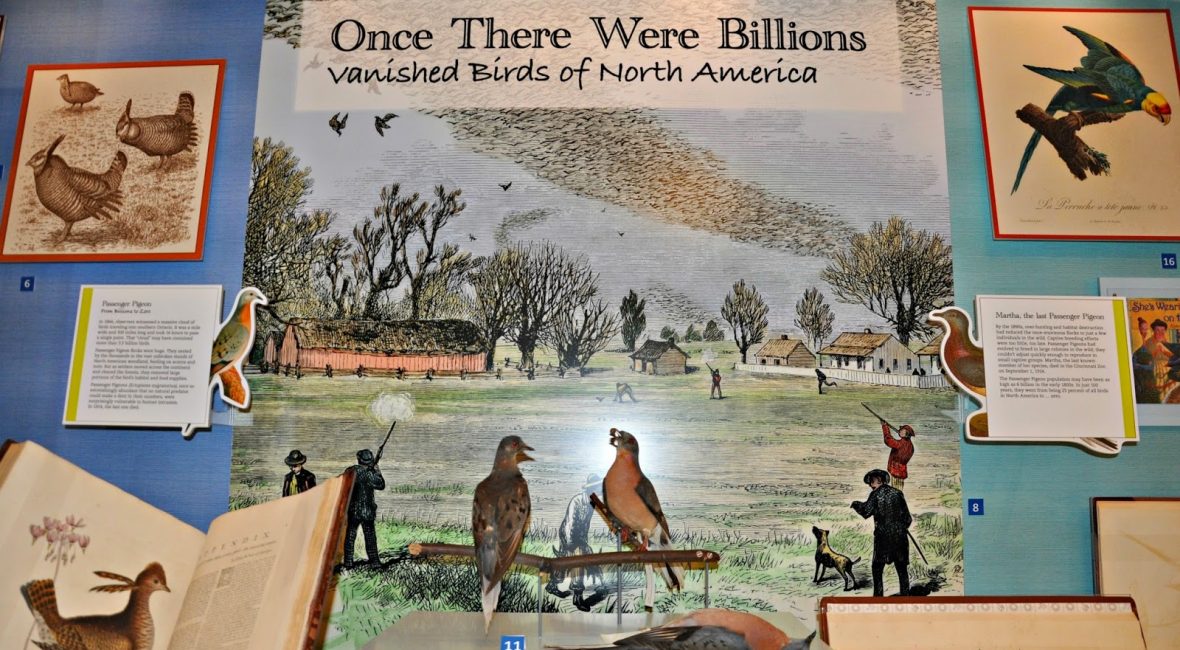
While we can’t bring back the species and subspecies that have gone extinct, we can preserve and share our knowledge of them to help avoid future extinctions. The plight of the Carolina Parakeet is highlighted in Once There Were Billions: Vanished Birds of North America, a new exhibit at the National Museum of Natural History (NMNH).  Co-curated by BHL, Smithsonian Libraries, and NMNH, the exhibit includes illustrations from BHL and specimens from NMNH.  Research on extinct species—and extinction itself—depends on the taxonomic literature and natural history specimen collections to understand the morphology, distribution, and behaviors of lost species. Having access to this information can help scientists understand not only how different factors led to one species’ extinction but also how those same factors may impact other species.

The BHL currently provides access to over 44 million pages and over 91,000 images and is changing the face of research methodology. Scientists around the world are using BHL to identify and classify species, facilitate further scientific research, and support conservation efforts to prevent extinctions.  The ongoing growth of BHL is supported in part by our dedicated patrons whose gifts support the digitization of additional literature, and technical development of the program, and improvement of data curation.  To learn more about how your donation supports the continued growth of BHL, please visit http://archive.constantcontact.com/fs181/1103622715135/archive/1115465985290.html.  We hope you’ll consider making a contribution today!
July 3, 2014by sayeedmd
BHL News, Blog Reel, Campaigns

Breathing Life Into a Museum Exhibit About Extinction

View Full Size Image
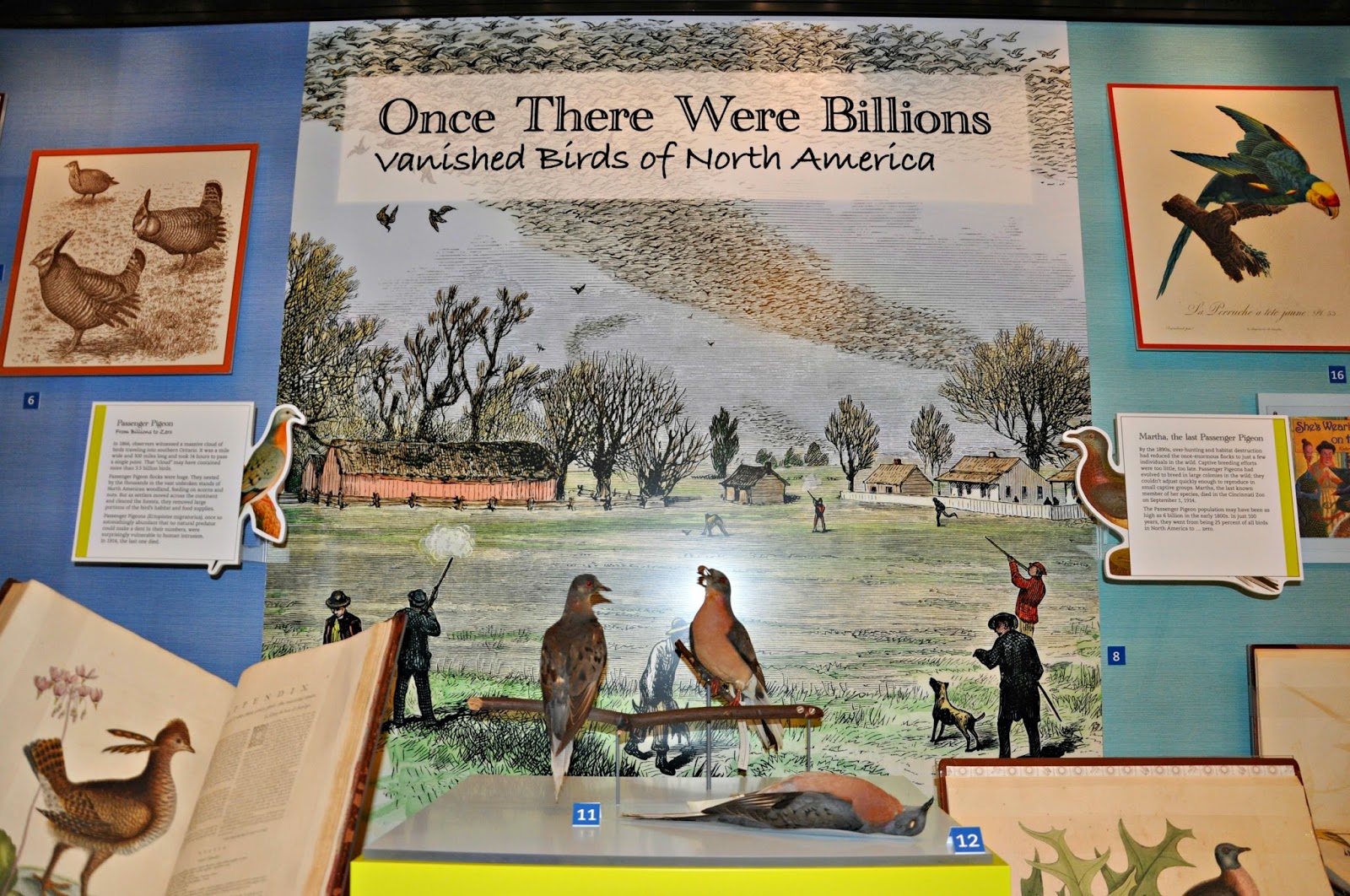
Once There Were Billions, the new Smithsonian Libraries/BHL exhibit at the National Museum of Natural History.  The Passenger Pigeon on the left, with her back to the viewer, is Martha, the last Passenger Pigeon that died 100 years ago in 1914.

You are living in the midst of earth’s sixth great extinction event. You’ve been living in it since you were born. So have your parents, your grandparents, your great-great-great-great-grandparents, and all of your ancestors for about 10,000 years. It dates back to the extinction of the mammoths and has been increasingly accelerating as human actions and climate change reshape the balance of our planet.  Within the next century, 75% of the conservatively estimated 8.75 million species on earth may be extinct.

When many of us think of extinctions, we think of the countless species disappearing in the Amazon rainforest, the ocean’s coral reefs, or the forests of South-east Asia. But the truth is that extinctions happen in every corner of the globe. Some are noticeably notorious, others occur without us even knowing that the species existed in the first place. One of the most infamous North American extinctions is the demise of the Passenger Pigeon.

By the time Europeans first came to the New World, approximately 40% of all land birds in North America were a member of the species Ectopistes migratorius, or the Passenger Pigeon. Their population numbered in the billions, and their abundance spurred intense human hunting in the mid-1800s. Less than a century later, the Passenger Pigeon was extinct.
View Full Size Image
Gilbert Borrego, co-curator of the Once There Were Billions exhibit.

The fate of the Passenger Pigeon, and three other extinct North American bird species (Great Auk, Carolina Parakeet, and Heath Hen), are the focus of the new joint BHL/Smithsonian Libraries‘ exhibit at the National Museum of Natural History: Once There Were Billions.

The exhibit represents the culmination of three years of work for its curators, Gilbert Borrego (former BHL Library Technician for Smithsonian Libraries) and Dr. Helen James (Curator in Charge, Division of Birds, National Museum of Natural History). The histories of these lost species are told through compelling narratives, taxidermied specimens (including Martha, the last Passenger Pigeon), books from the Smithsonian Libraries’ collection (many of which are available digitally in BHL), and images from BHL.

Most people are unaware of how involved and sometimes challenging building an exhibit can be. Several years, countless meetings, copious research, and dozens of individuals are required to bring an exhibit from conception to public launch. Sometimes the most difficult part can be simply honing in on the exact story you want to tell.

View Full Size Image
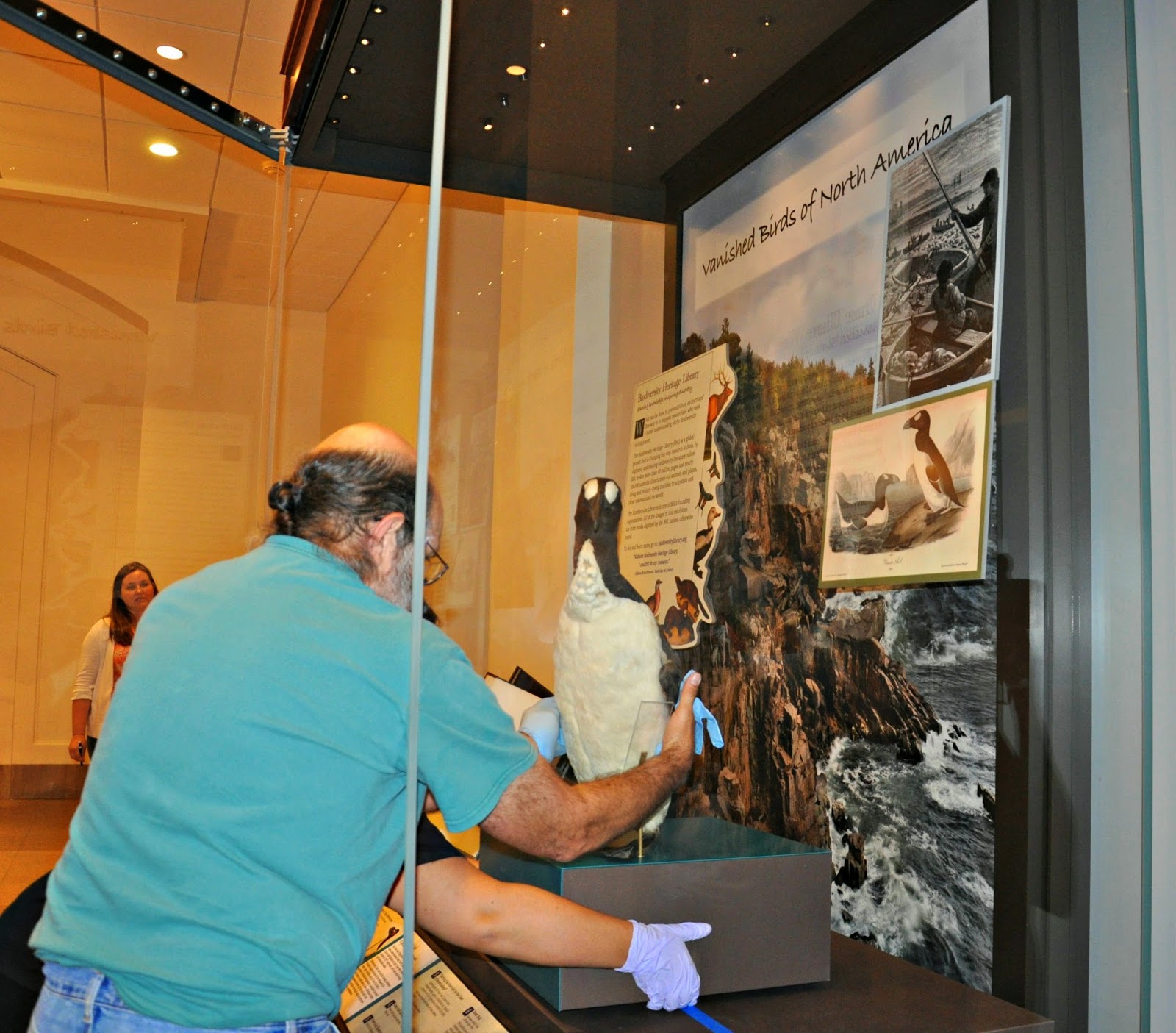
Positioning the Great Auk in the exhibit.

“The most challenging part of the exhibit was narrowing down our source material,” said Borrego. “The topic [of the exhibit] was originally much more general, focusing on extinct species. We knew Martha the Passenger Pigeon was to be included, but we looked at many other types of animals and plants before settling on the plight of birds from North America.”

Borrego first presented the proposal for “Once There Were Billions” in 2011, and since then he, James, and an army of scientists, librarians, and museum support staff defined the scope, drafted a script, selected specimens and images, and fashioned layouts for the physical and supplementary digital exhibits.
Once all the foundational work was complete, it was time to bring the exhibit to life. Plaques fresh off the press, freshly-cleaned bird specimens, and carefully conserved books were artistically arranged within two mammoth exhibit cases in the Evans Gallery on the Ground Floor of the National Museum of Natural History.
View Full Size Image
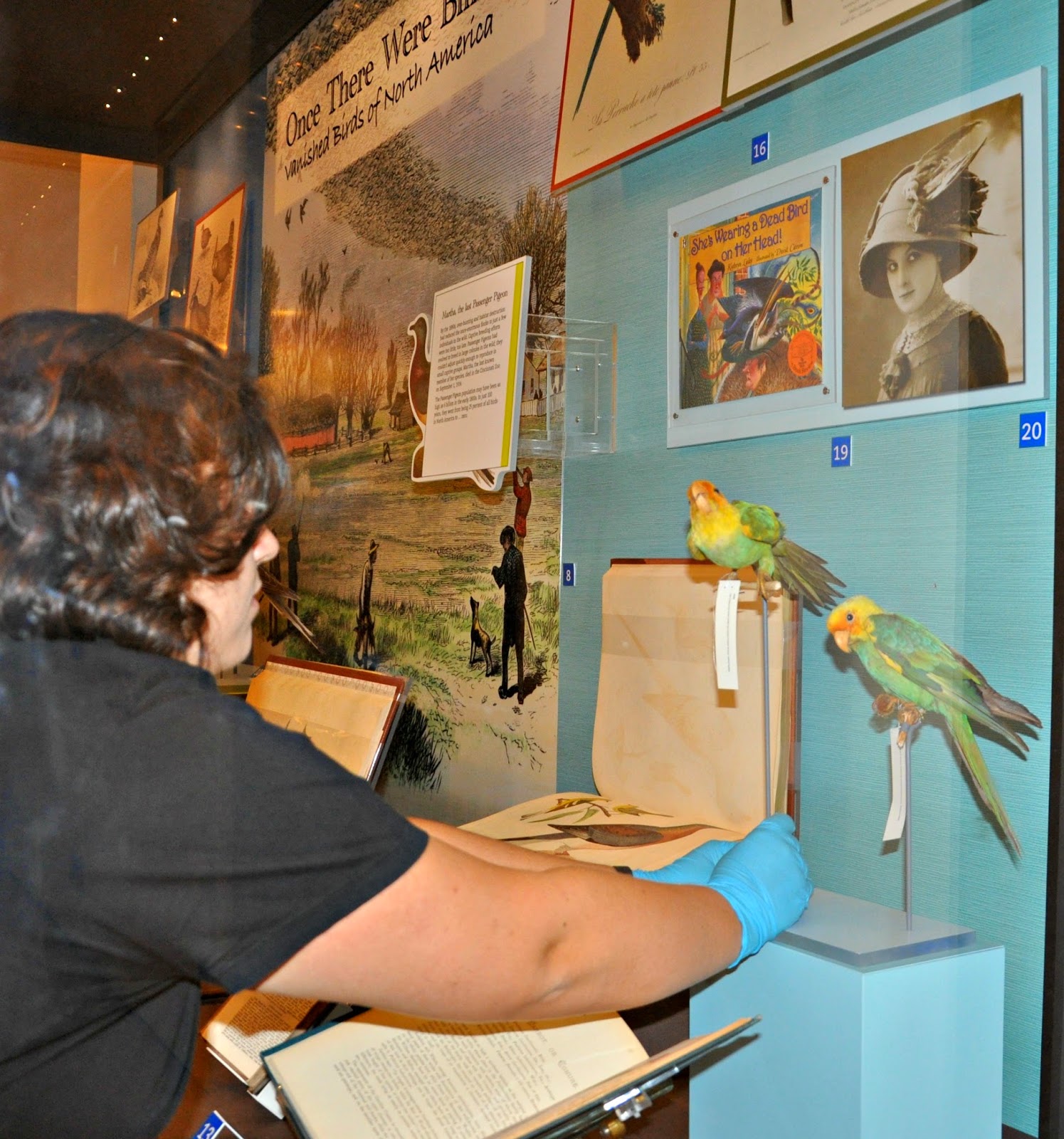
Adjusting the Carolina Parakeet specimens.

And voila! This specialized hub for extinction education opened to the public this past Monday, June 24, 2014, and will remain open until October, 2015.

If you’re visiting D.C., be sure to check out the exhibit. And if you’re an art fan, take some time to see the massive bronze sculptures of the birds crafted by artist Todd McGrain as part of “The Lost Bird Project” and situated around the Smithsonian grounds.
If you’re not in the area, you can still enjoy “Once There Were Billions” via the online exhibit, by browsing digital versions of select exhibit books in BHL, or by downloading free, spectacular illustrations of the featured species.
Educating each and every person about the plight of biodiversity on our planet, and the repercussions of doing nothing, is a critical part of ensuring that today’s species do not become just another extinction statistic. Exhibits like “Once There Were Billions” are just one way we can achieve this global awareness. But while you might not be in a position to build a museum exhibit, there are other ways you can help change the fate of doomed species. Supporting initiatives like BHL, which enable the research of scientists trying to document and conserve species around the world, helps prevent species decline.

Everyone can make a difference. What will you do to help curb the tide of the Sixth Great Extinction Event?

June 27, 2014by michelle.underhill

Help Support BHL

BHL's existence depends on the financial support of its patrons. Help us keep this free resource alive!

search

About BHL

The Biodiversity Heritage Library (BHL) is the world’s largest open access digital library for biodiversity literature and archives. BHL operates as a worldwide consortium of natural history, botanical, research, and national libraries working together to digitize the natural history literature held in their collections and make it freely available for open access as part of a global “biodiversity community.”

Join Our Mailing List

Sign up to receive the latest news, content highlights, and promotions.

Subscribe Now

Subscribe to Blog via Email

Enter your email address to subscribe to this blog and receive notifications of new posts by email.

Join 319 other subscribers

Subscribe to Blog Via RSS

Subscribe to the blog RSS feed to stay up-to-date on all the latest BHL posts.

Access RSS Feed

Inspiring Discovery through Free Access to Biodiversity Knowledge.

The Biodiversity Heritage Library makes it easier than ever for you to access the information you need to study and explore life on Earth…for free, anytime, anywhere.


64+ Million Pages of
Biodiversity Literature Online.

EXPLORE

Tools and Services
to Transform Research.

EXPLORE

300,000+
Illustrations on Flickr.

EXPLORE

ABOUT | HARMFUL CONTENT | PRIVACY | SITE MAP | TERMS OF USE