BHL is delighted to welcome Amanda Boczar and Leora Siegel to two newly created positions on its Executive Committee, bringing new capacity, experience, and perspectives to help guide BHL through its next chapter.
Continue reading
BHL is delighted to welcome Amanda Boczar and Leora Siegel to two newly created positions on its Executive Committee, bringing new capacity, experience, and perspectives to help guide BHL through its next chapter.
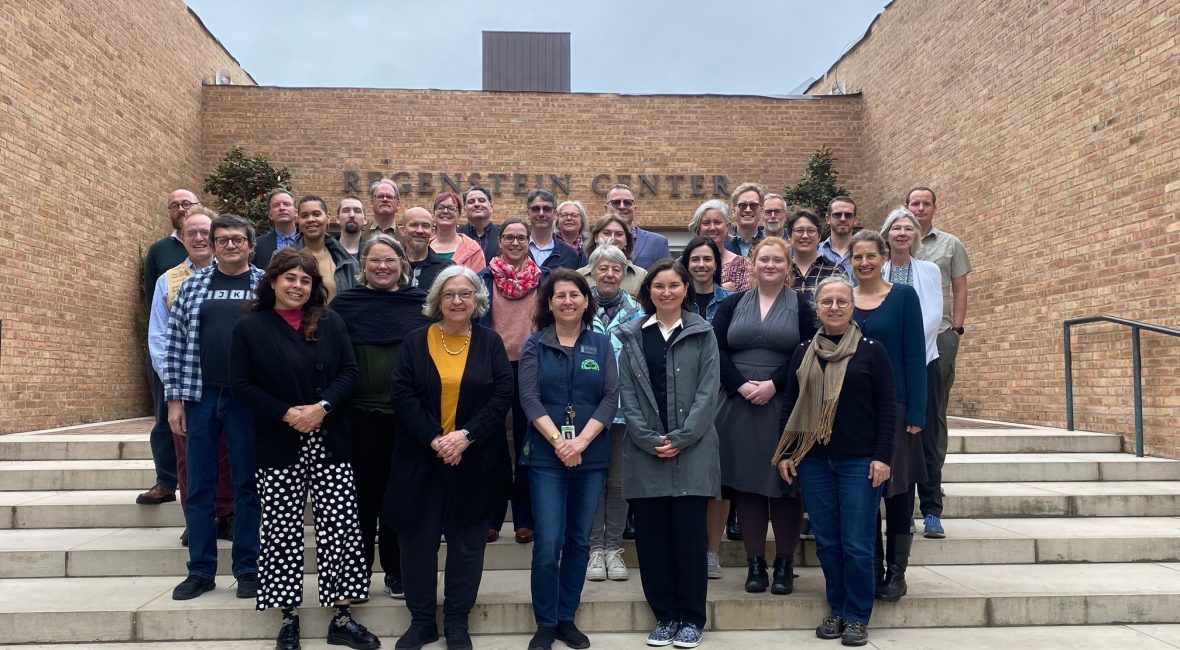
The 2024 Biodiversity Heritage Library Annual Meeting saw BHL partners and interested parties returning to Chicago, Illinois, the location of many BHL gatherings over the years. This year’s meeting was also significant as it coincided with the dual emergence of Brood XIII of Periodical Cicadas (Magicicada) and Brood XIX elsewhere in Illinois and the Midwest.
Attendees were welcomed to Chicago by our co-hosts, The Field Museum of Natural History and the Chicago Botanic Garden. Throughout the week of 13 May to 17 May, attendees were treated to behind-the-scenes tours at both locations. The BHL Day 2024 Symposium, Year of the Cicada: Buzzing with 17 Years of Biodiversity Achievements, took advantage of the emergence of the Magicicada Brood XIII emergence and featured Magicicada expert, Dr. Gene Kritsky, as keynote speaker.
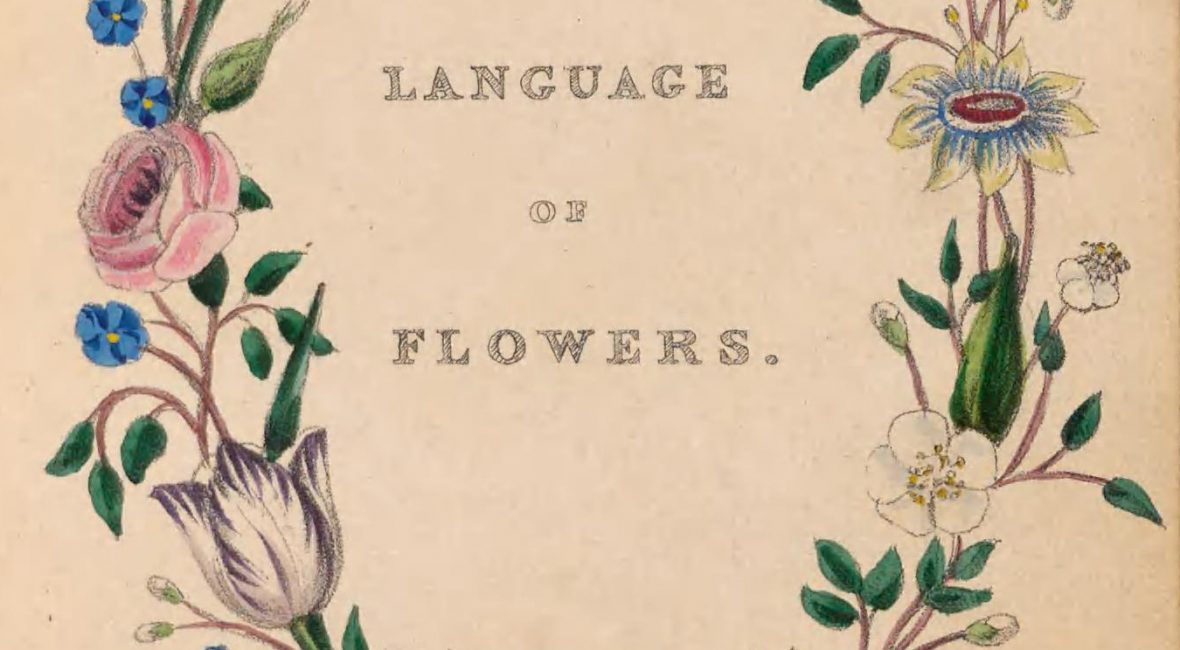
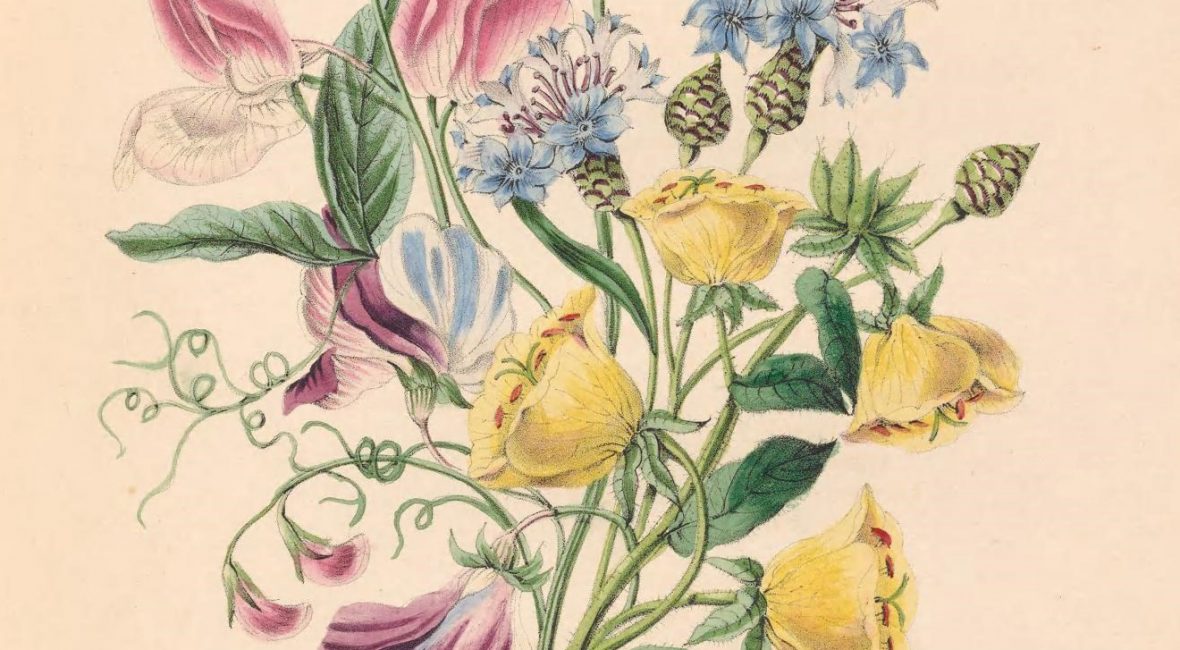
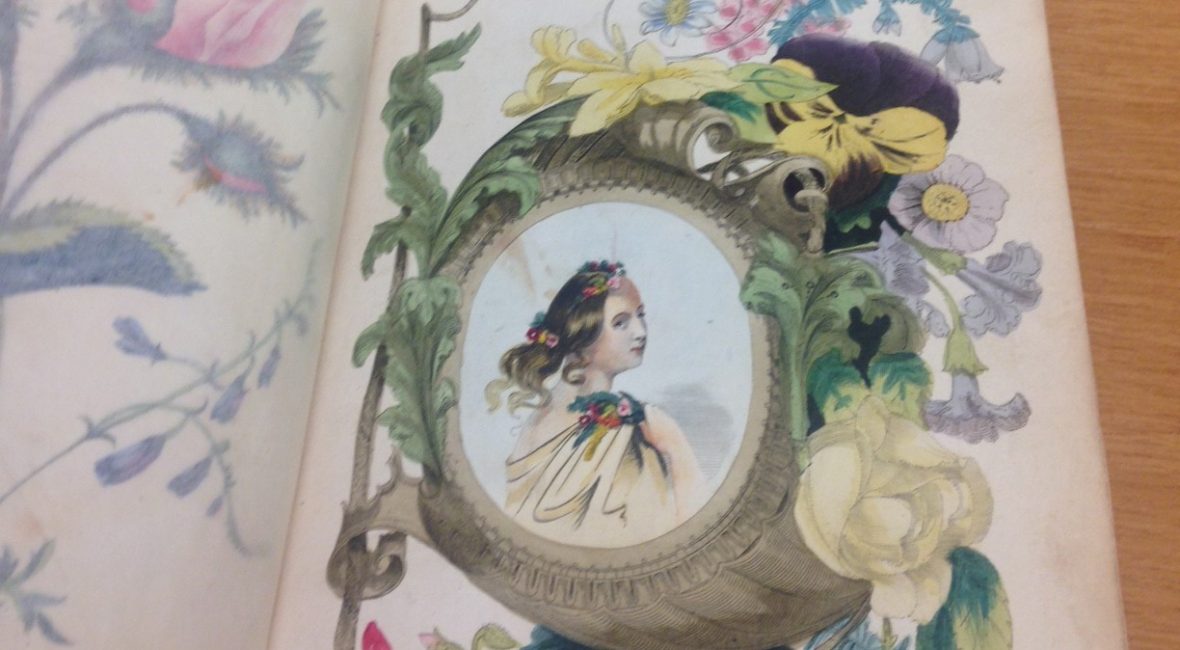
On 30 April 2021, join the Chicago Botanic Garden’s Lenhardt Library and the Caxton Club for a free, virtual symposium celebrating the Language of Flowers—a popular literary trend in the 19th century that presented the world of botany through dictionaries of flowers and associated meanings, floral poetry and prose, offering a sentimental view of natural history.
The Language of Flowers genre is at the intersection of botany, horticulture, natural history, art, poetry, and women’s studies. This popular literary trend in the 19th century, presented the world of botany through dictionaries of flowers and associated meanings, floral poetry and prose, offering a sentimental view of natural history. A properly arranged bouquet was said to convey a “secret message” for the recipient. The “social media” of its day, this Victorian fad, led to many editions of works published, with multiple titles by successful authors.
Frances Sargent Osgood edited two works in this genre, Poetry of Flowers and Flowers of Poetry and The Floral Offering.
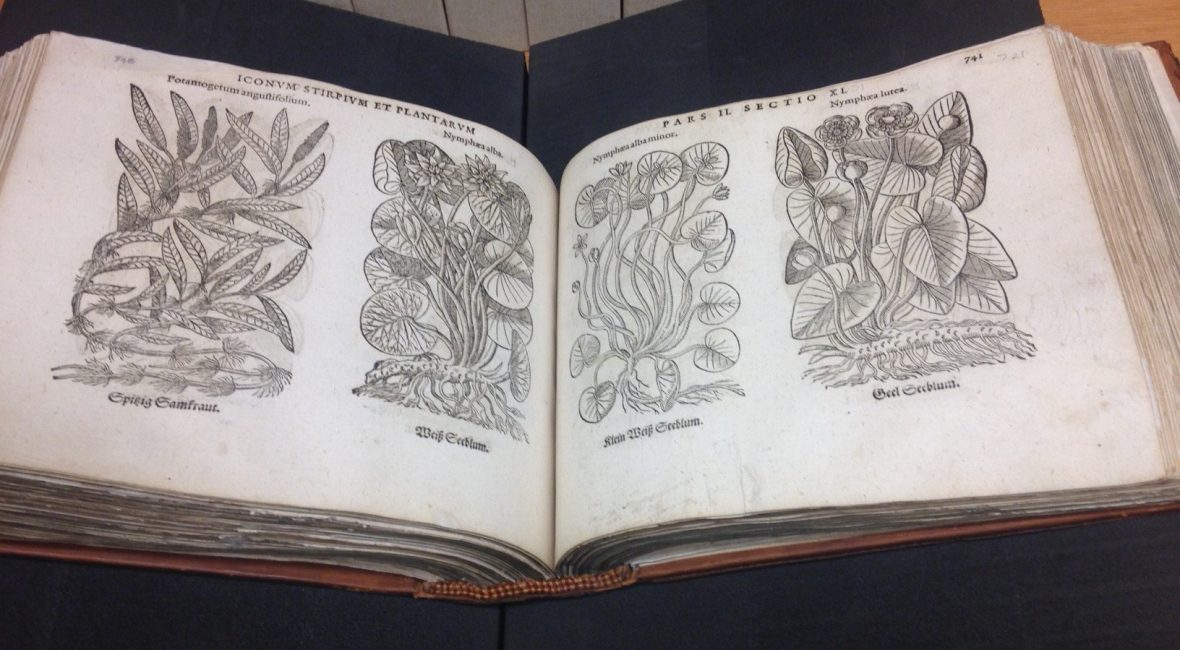
At first glance one notices the unusual oblong-shaped book at 9” x 7” x 3” in a deep brown leather binding.
Peeking inside, there are pages and pages of botanical woodcuts – more than 1,020 – each with at least two woodcuts per leaf. For our purposes, a woodcut is an illustration engraved into a block of wood.
What is this copiously-illustrated work?
Eicones plantarum seu stirpium, arborum nempe, fructicum, herbarum, fructuum, lignorum, radicum, omnis generis : tam inquilinorum, quàm exoticorum : quæ partim Germania sponte producit, partim ab exteris regionibus allata in Germania plantantur : in gratiam medicinæ reiâque herbariæ studiosorum, in tres partes digestæ : adiecto indice gemino locupletissimo [Francofurti ad Moenum: Nicolao Bassaeo, 1590], by Iacobus Theodorus (1522 or 1525 – 1590).
Or, using an abridged, summarized, and modernized translated title, “Pictures of plants, trees, herbs, fruits, and roots that are native to Germany and foreign countries, which are used for medicinal purposes, for apothecary students, and divided into three parts with the addition of a double index”.
The Lenhardt Library of the Chicago Botanic Garden has received over $200,000 from a National Endowment for the Humanities (NEH) grant awarded to the Chicago Horticultural Society for the conservation and digitization of 62 rare and unique “language of flower” books published in the 19th century. The Lenhardt Library has been a BHL Affiliate since 2014.
The Biodiversity Heritage Library (BHL) is the world’s largest open access digital library for biodiversity literature and archives. BHL operates as a worldwide consortium of natural history, botanical, research, and national libraries working together to digitize the natural history literature held in their collections and make it freely available for open access as part of a global “biodiversity community.”
Sign up to receive the latest news, content highlights, and promotions.
Subscribe NowSubscribe to the blog RSS feed to stay up-to-date on all the latest BHL posts.
Access RSS Feed