Biodiversity Heritage Library - Program news and collection highlights from BHL
  • Home
  • News
  • Featured Books
    • All Featured Books
    • Book of the Month Series
    • BHL at 20
  • User Stories
  • Campaigns
    • Fossil Stories
    • Garden Stories
    • Monsters Are Real
    • Page Frights
    • Her Natural History
    • Earth Optimism 2020
  • Tech Blog
  • Visit BHL
Home
News
Featured Books
    All Featured Books
    Book of the Month Series
    BHL at 20
User Stories
Campaigns
    Fossil Stories
    Garden Stories
    Monsters Are Real
    Page Frights
    Her Natural History
    Earth Optimism 2020
Tech Blog
Visit BHL
  • Home
  • News
  • Featured Books
    • All Featured Books
    • Book of the Month Series
    • BHL at 20
  • User Stories
  • Campaigns
    • Fossil Stories
    • Garden Stories
    • Monsters Are Real
    • Page Frights
    • Her Natural History
    • Earth Optimism 2020
  • Tech Blog
  • Visit BHL
Biodiversity Heritage Library - Program news and collection highlights from BHL
BHL News, Blog Reel, Featured Books

Ukrainian Українська Collection

Ukrainian Українська Collection with BHL and USDA National Agricultural Library logos

Through ongoing collaborative collection building and digitization, the United States Department of Agriculture’s National Agricultural Library (NAL) is partnering with the Biodiversity Heritage Library to support biodiversity and scientific research in Ukraine with the release of the Ukrainian Українська Collection. BHL and NAL stand with the people of Ukraine and echo the support of its consortium partner institutions in their condemnation of the Russian Federation’s invasion.

Ukrainian Українська Collection with BHL and USDA National Agricultural Library logosThe threat to Ukraine’s cultural heritage materials remains substantial during the wartime humanitarian crisis. Many libraries and cultural heritage institutions throughout Ukraine have been severely damaged or destroyed, resulting in the permanent loss of culturally and scientifically significant content. Through the digitization of historic materials related to biodiversity research in Ukraine, this project will help support Ukraine’s scientific community by providing access to these important resources.
Significance of the Material

The Ukrainian Українська Collection includes rare and unique titles covering biodiversity research in Ukraine over the past two centuries, including previously uncataloged material. These items have been selected for their cultural and scientific significance to the biodiversity research community, and include an array of topics from wheat production, agricultural economics, soil management, animal breeding, and rural electrification, to arbovirus ecology. Geographically, the material covers a range of areas, including the historic Bukovina and Bessarabia regions.

This collection will contribute to and expand the cumulative digitization and preservation efforts of Ukrainian cultural heritage material across the globe, including the Saving Ukrainian Cultural Heritage Online (SUCHO) initiative, and the Smithsonian Cultural Rescue Initiative (SCRI).

Increasing Discoverability through Collaborative Transcription

In addition to providing enduring access to these valuable items, a major goal of the project is to facilitate increased discoverability through transcription and translation. NAL welcomes volunteers with Ukrainian and Russian language expertise to assist in interpreting these important cultural materials. Join us on FromThePage or reach out to NAL’s Transcription Program Manager, at [email protected] for more information.

Going Forward

BHL will work with its Partners to continue to add to the Ukrainian Українська Collection. Beyond the work of identifying eligible open access materials within their holdings, Partners are encouraged to pursue cataloging, digitization, and transcription projects to support the collection. Particular attention will be paid to Ukrainian Українська Collection materials as part of BHL curation efforts, such as enhancing descriptive metadata and improving access to article information where possible.

In organizing this collection of materials, BHL is adding to the efforts of many cultural and natural heritage organizations to preserve pieces of Ukraine’s invaluable history and culture. Bit by bit, as librarians, technologists, researchers, people, BHL offers its support to the monumental global challenge to save cultural and natural heritage from the destruction of war and humanitarian crises, regardless of borders.

April 4, 2023by bcrowley
BHL News, Blog Reel

New Collection Development Policy

Image of moths behind text announcing new collection development policy

The BHL Collections Committee has completed a comprehensive review and revision of BHL’s collection development policy. The new policy is written to provide recommendations and serve the collection management needs of BHL Partners. As a key objective of BHL’s Strategic Plan 2020-2025, the new policy is a significant revision to the original policy written in 2010. In learning together as a collaborative community of practice since then, our understanding of BHL collection management has been expanded and refined to:

  • clarify collection management priorities;
  • articulate our responsibility to pursue more diverse perspectives;
  • outline BHL Partner expectations;
  • better define our scope;
  • describe BHL-specific curation best practices; and
  • provide transparency by posting the complete policy via BHL’s About Site.

Going forward, the collection development policy will be reviewed on a yearly basis for minor updates.

Visual representation of selected biodiversity relevant subject terms

A snapshot of BHL relevant subject keywords as derived from its collection. September 2022

With over 40 BHL Partners across the globe, the Biodiversity Heritage Library collection is the one place where these disparate materials can come together. BHL’s shared vision, to inspire discovery through free access to biodiversity knowledge, is the basis upon which staff at partner institutions contribute their time and expertise to crafting policies and best practices such as BHL’s collection development policy. It is with special thanks to the BHL Collections Committee, our Partners, and especially the late Connie Rinaldo, that we are proud to announce its release.

November 17, 2022by bcrowley
BHL News, Blog Reel

BHL Resources to Support Distance Learning

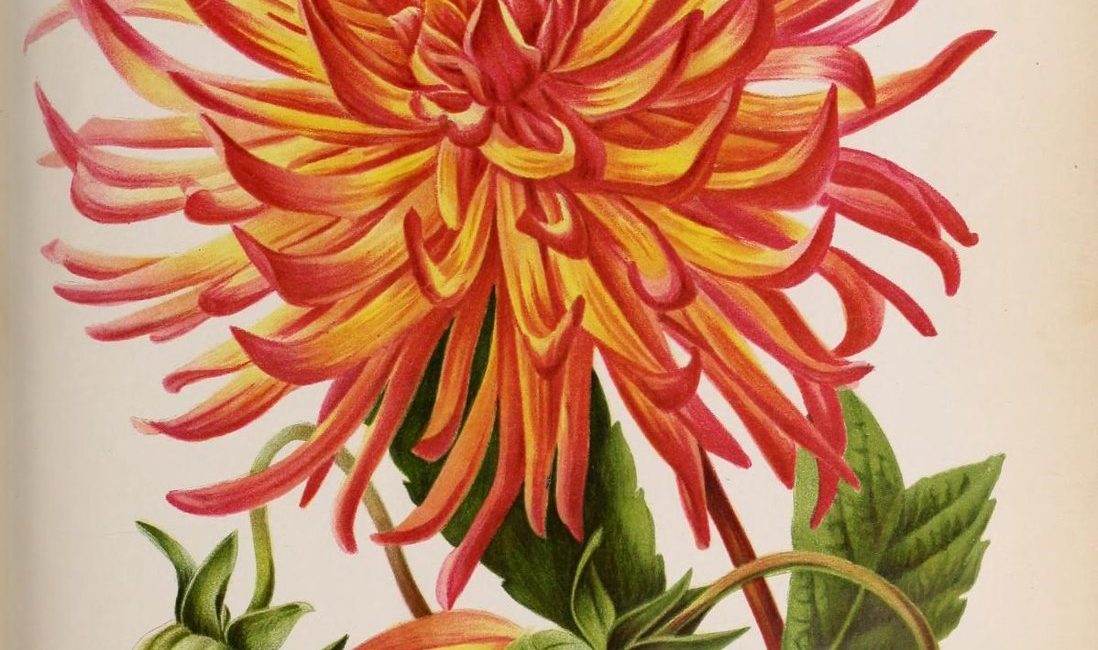
yellow and red flower

Illustration of a Cactus Dahlia from Revue horticole (1908). Contributed in BHL from the New York Botanical Garden, LuEsther T. Mertz Library. This image is one of over 160,000 that are freely available for download and reuse through the BHL Flickr.

BHL’s digital library provides free and open online access to over 250,000 volumes from the 15th-21st centuries on a wide range of biodiversity subjects. These collections offer great resources to support distance learning.

All of our content can be accessed online for free and in full through our digital library portal at biodiversitylibrary.org. No login, account, or membership is required. You can also freely download anything in our library in a variety of formats. Our FAQ provides information on how to search the library and download content.

In addition to our general collections, we’ve identified a selection of materials that may be of particular interest to educators and students. Explore these resources below.

Thematic Collections

Looking for curated content? Our Collections offer a pre-selected set of materials on a variety of subjects, from Antarctic Exploration & Discovery to Seed & Nursery Catalogs and Latino Natural History.

graphic with BHL collections highlighted

Explore over 50 thematic collections on a range of subjects.

Image Resources

If you need image resources for your distance learning activities, we have a rich collection of over 160,000 free nature images in our Flickr. Here’s how to search and download those collections.

Instructions on how to find images in the BHL Flickr

Instructions on how to search for specific subjects and species in the BHL Flickr.

Looking for an educational activity to do online around nature art? Tagging images in the BHL Flickr with species and artist names is a great option. It’s not only a fun way to learn about taxonomy, investigate individual species, and explore artists and artistic practices, but it also makes these images more accessible and discoverable for others to support their research and educational activities.

Learn more about tagging and get started with our instructional guide.

Coloring Books

Looking for more hands-on educational resources? Explore and download our free coloring books created from images in our collection.

cover of the female illustrators in natural history coloring book

Our “Female Illustrators in Natural History” coloring book is one of several freely available from BHL. Explore and download our coloring books.

Women’s History Month Educational Resources

Looking for resources to support educational activities around Women’s History Month? Our #HerNaturalHistory collections offer a range of content related to women’s contributions to natural history. Explore our book and image collections, coloring book, Facebook videos, and blog series.

Her Natural History graphic

Our Her Natural History collections on women in science include book and image collections, a coloring book, Facebook videos, and informative articles.

March 17, 2020by michelle.underhill
BHL News, Blog Reel

Introducing the CETAF E-SCORE Award for Excellence in Research Based on Natural Science Collections

E-SCORE CETAF Award logo

E-SCORE CETAF Award logo

The Consortium of European Taxonomic Facilities (CETAF) is launching a new initiative to reward early-career researchers, within the fields of taxonomy, biodiversity and geodiversity science, who base their research on natural science collections. E-SCORE – Excellence in Scientific Collections-based Research, is a celebration of the new generation of scientists who have shown dedication to the use of collections that help document, describe and understand life on earth, and the processes that have shaped it. The award also celebrates the United Nations endorsed International Day for Biological Diversity, which falls annually on the 22nd of May to commemorate the 1992 adoption of the Convention on Biological Diversity. CETAF will award E-SCORE for the first time in 2020 to mark the end of the UN International Decade of Biodiversity.

The foundations of E-SCORE are the natural-scientific collections that are hosted, preserved and curated in research organisations across the European Community and in associated countries with CETAF member institutions. The research staff of these institutions explore and document diversity in nature. The knowledge they collectively build provides a foundation on which policies and initiatives for nature conservation and the protection of natural resources are based. By awarding E-SCORE, CETAF wishes to highlight the significance of collections-based research in the fight against biodiversity loss and climate change.

FEATURES

The prize will be given annually and consists of three parts:

  • A cash prize of 1,000 €;
  • Financial support (up to 1,000 €) to facilitate a scientific visit of the Award Winner to one of the CETAF institutes;
  • An invitation to the next CETAF Governing Board meeting for a (virtual) presentation of the winning research.

Young researchers from all over the world are eligible; affiliation with a CETAF member is not mandatory. For those without current affiliation, their application shall include a nomination from a member of a CETAF institution.

Applications are due by 31 January 2020. For more information, including eligibility criteria and the application form, go to the CETAF website.

Please spread this great opportunity widely in your networks and encourage all deserving young researchers to participate!

CETAF and BHL have been reciprocal partners since 2018. 

January 7, 2020by michelle.underhill
Blog Reel, User Stories

Cetaceans and Cephalopods: Supporting the Work of Collections Managers One Specimen at a Time

Have you ever been to a museum and wondered about the history of the specimens on display?

If you have, then you’d probably be interested in talking to the museum’s collections managers, as their jobs include not only caring for and improving accessibility to the collections, but also serving as a living knowledge repository for information about the history of the collections.

View Full Size Image
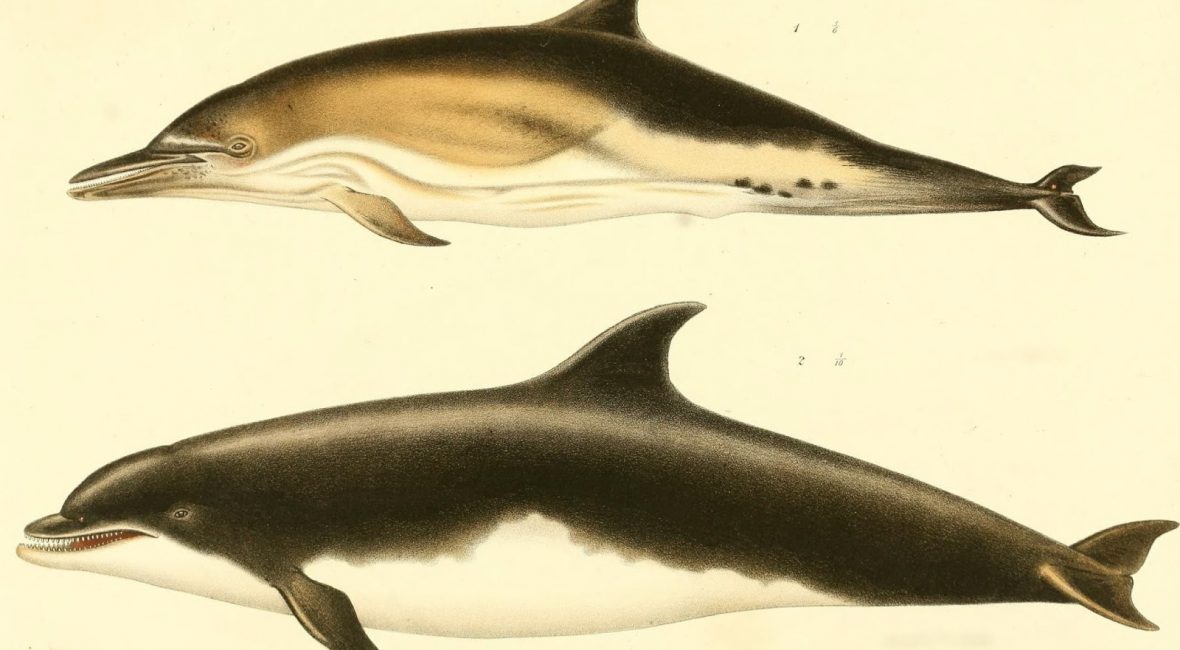
William Flower’s drawing of the bottlenose dolphin (lower). The skeleton from this individual is on display in the Oxford University Museum of Natural History. Flower, W. H. (1880), I. On the External Characters of two Species of British Dolphins (Delphinus delphis, Linn., and Delphinus tursio, Fabr.). The Transactions of the Zoological Society of London, 11: no 1. Digitized by the Natural History Museum, London. http://www.biodiversitylibrary.org/page/28725656.

Take the Oxford University Museum of Natural History, for example. Amongst the many treasures on display in that museum are five whale skeletons suspended from the roof. Where did those specimens come from? Mark Carnall, Collections Manager for the Life Collections at the museum, knows that these specimens are linked to some very prestigious individuals in the world of ‘whaleologists’, including Daniel Frederick Eschricht and William Henry Flower. Curious? Learn more in Mark’s blog post for More than a Dodo.

View Full Size Image
Mark Carnall. Image by John Cardwell courtesy Oxford University Museum of Natural History.

As a collections manager for the Oxford University Museum of Natural History, and during his tenure at other major UK museums, Mark has spent a great deal of time researching the history of the specimens in his care. BHL plays an important role in this research.

“Having worked at some of the older UK natural history museums, including the Grant Museum of Zoology at University College London, the Natural History Museum London and currently the Oxford University Museum of Natural History, I’ve been very fortunate in that some of the early references to the specimens that I curate are ‘THE’ original works when it comes to unravelling the physiology, taxonomy and ecology of major groups of animals, and it is rare that these aren’t already on BHL,” says Mark.


View Full Size Image
British Sea-Anemones, showing many of the species in the Oxford University Museum of Natural History series. Gosse, Philip Henry. Actinologia britannica (1860). Digitized by Smithsonian Libraries. http://biodiversitylibrary.org/page/12042290.

Mark first discovered BHL when looking for references and citations for specimens during his time at University College London. Today, he uses BHL about once a week as part of his research to answer inquiries about the museum’s collections. This research can be very time-intensive, and thus having online access to relevant publications is very important.

“As a collections manager, my role is dictated by priorities in improving accessibility to the collections, so often there isn’t much time for going in to depth with the history of specimens,” explains Mark. “Some specimens could be researched for weeks or months; however, with easy access to biodiversity heritage publications through BHL, it means that I can do some of this research on the fly rather than earmark it to return to later.”

In addition to discovering publications as part of his research process, Mark also discovers additional content of personal interest through BHL’s social media activities.

“One of my favourite features of BHL is the ‘curated content’ such as the blog posts that BHL users and staff write about discoveries or fascinatingly esoteric publications,” says Mark. “I am also a huge fan of the Flickr sets. As a collections manager, I’m always thinking about how people can access our specimens and content. A dry item by item database is fine for people who know what they are specifically looking for, but it doesn’t facilitate browsing such a vast amount of content or expose people to new knowledge or information. I’ve spent more than a few evenings starting by browsing a Flickr album I’ve been directed to by a BHL blog and ending up reading papers completely unrelated because making those fluid connections is so easy. The BHL social media team is also fantastic at raising awareness about the latest content on BHL. Additionally, I really appreciate that it’s clear how to reuse and credit resources, be it from reusing an image on Twitter to a bibliographic reference.”

When it comes to favorite content, Mark has a soft spot for the cephalopod material.

“I’m a huge cephalopod nerd,” admits Mark. “For such an interesting group there’s actually a paucity of published material. Browsing through BHL images, however, I’ve gone from sea monsters to beautifully illustrated plates (see for yourself), which I would have otherwise not stumbled upon or overlooked in the hunt for a taxon description.”


View Full Size Image
The rather sad-looking but earliest bona fide remains of a giant squid. Verrill, A.E. The cephalopods of the north-eastern coast of America. (1879-1881). Digitized by MBLWHOI Library. http://www.biodiversitylibrary.org/page/11826545.

Currently, his favorite item on BHL is the poem Spirula spirula by C. W. Johnson in the Nautilus (1926). According to Mark, “It’s a quirky (but accurate at the time) poem about the ram’s horn squid and formally captures a geekery and whimsy that you just don’t see as much in modern formal science publishing.”

While the historic collections and curated content on BHL are extremely valuable to Mark, he would love to see the amount of content from the mid-twentieth century expanded. This content, especially that from the 1930s-1970s, can be extremely difficult to access but can contain very valuable information for research.

You can help us obtain permission to include this content in BHL! If you or an organization you work with owns the copyright to a biodiversity-related publication, you can help us broker permission to digitize the work. Learn more on our website.

So, the next time you’re at a museum, take a moment to think about the history of the specimens on display and the people who work so hard to care for and preserve knowledge about those pieces. And just maybe, indulge your curiosity by searching for some related publications or browsing related images in BHL. You never know what kind of history you might dig up.

______________________________________

This post may contain the personal opinions of BHL users or affiliated staff and does not necessarily represent the official Biodiversity Heritage Library (BHL) position on these matters.

November 10, 2016by ulib-libraryjobs
Blog Reel, Featured Books

BHL at 10 Notable Books Collection

Portrait version of the Biodiversity Heritage Library logo.

2016 marks the 10th anniversary of the Biodiversity Heritage Library. We kicked off our year-long celebrations with our #BHLat10 campaign in April, highlighting our history, growth, and milestones. As part of that campaign, we also highlighted the Top 10 Viewed and Top 10 Downloaded books in BHL.

We’re continuing the celebrations with the launch of our BHL at 10 Notable Books Collection. For this collection, our Members, Affiliates, and Partners each nominated a favorite or noteworthy title that they have contributed to BHL. These include rare, monumental, and groundbreaking publications that have helped shape the field of natural history and biodiversity research for centuries.

And there are indeed many remarkable titles in the collection. We invite you to dive into the collection by browsing through the books in the slideshow below. Click on the link on each image to explore the entire book, or browse the whole collection here.

We’ll be highlighting all of the books in this collection via social media throughout the rest of 2016. Follow #BHLat10 all year to learn more about the noteworthy contributions from our Members, Affiliates, and Partners, as well as to join our celebration of BHL’s 10th anniversary.

Happy Birthday, BHL!

June 1, 2016by michelle.underhill
Blog Reel, Campaigns, Featured Books

Celebrating our Collections, #BHLat10 Style

2016 marks the 10th anniversary of the Biodiversity Heritage Library. We’re kicking off our year-long celebrations with our #BHLat10 campaign this week, 11-15 April 2016. The campaign celebrates BHL’s impact on the global science community, our history and growth, and our collections. Content is being published on our blog, Twitter, Facebook, Flickr, Pinterest, and BHL. Learn more: http://www.biodiversitylibrary.org/collection/BHLat10

One of our objectives for the #BHLat10 campaign is to celebrate our collections around our 10th anniversary themes and highlight contributions from our Members and Affiliates. So, we pulled together some “Top 10” lists as well as collections of “top” content from our Members and Affiliates. Explore some highlights below and check out our website for the full content.

View Full Size Image
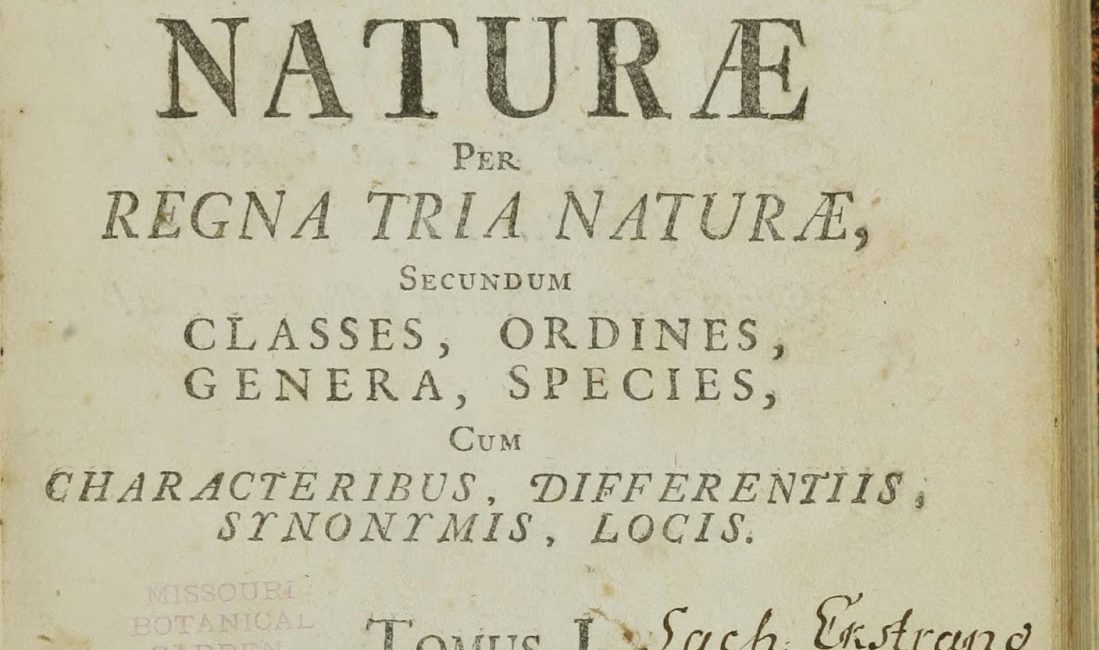
The most-viewed book in BHL. Linné, Carl von. Caroli Linnaei…Systema naturae per regna trip naturae. v. 1 (1758). http://biodiversitylibrary.org/item/10277. Digitized by the Missouri Botanical Garden.

Top 10 Viewed Books in BHL

  • Systema naturae per regna tria naturae, v. 1
  • Annales de l’Institut océanographique, v. 6
  • Dictionnaire d’histoire naturelle, qui concerne les testacées ou les coquillages de mer, de terre & d’eau-douce, t. 2
  • Latreille’s Naturliche Familien des Thierreichs
  • Taxonomic literature, v. 1
  • Caroli Linnaei … Species plantarum, v. 1
  • Das Pflanzenreich :regni vegetablilis conspectus, heft 1
  • Nomenclator botanicus, seu, Synonymia plantarum universalis
  • Caroli Linnaei … Species plantarum, v. 2
  • Bulletin of the British Museum (Natural History), v. 5
View Full Size Image
The most-downloaded book in BHL. Bergey, D. H. (David Hendricks). Bergey’s manual of determinative bacteriology. (1957). http://biodiversitylibrary.org/item/41848. Digitized by the MBLWHOI Library.


Top 10 Downloaded Books in BHL

  • Bergey’s manual of determinative bacteriology
  • America : being the latest, and most accurate description of the New World
  • Insects, their ways and means of living
  • On growth and form
  • Fish hatchery management
  • Plant names, scientific and popular, including in the case of each plant the correct botanical name in accordance with the reformed nomenclature, together with botanical and popular synonyms
  • Poultry diseases, causes, symptoms and treatment, with notes on post-mortem examinations
  • A text-book of entomology, including the anatomy, physiology, embryology and metamorphoses of insects, for use in agricultural and technical schools and colleges as well as by the working entomologist
  • Birds in legend, fable and folklore
  • The art of scientific investigation

Member and Affiliate Contribution Highlights

  • View the top downloaded book from each of our Members and Affiliates
  • Explore our Member and Affiliates’ most viewed albums in Flickr in our BHL at 10 Image Collection (slideshow of the images from these albums below)
  • View selections from our Members and Affiliates’ top-viewed Flickr albums in Pinterest


Get the flash player here: http://www.adobe.com/flashplayer

var so = new SWFObject(“http://www.db798.com/pictobrowser.swf”, “PictoBrowser”, “500”, “500”, “8”, “#EEEEEE”); so.addVariable(“source”, “sets”); so.addVariable(“names”, “BHL at 10 (View All)”); so.addVariable(“userName”, “BioDivLibrary”); so.addVariable(“userId”, “61021753@N02”); so.addVariable(“ids”, “72157666033761310”); so.addVariable(“titles”, “on”); so.addVariable(“displayNotes”, “on”); so.addVariable(“thumbAutoHide”, “off”); so.addVariable(“imageSize”, “medium”); so.addVariable(“vAlign”, “mid”); so.addVariable(“vertOffset”, “0”); so.addVariable(“colorHexVar”, “EEEEEE”); so.addVariable(“initialScale”, “off”); so.addVariable(“bgAlpha”, “90”); so.write(“PictoBrowser160331083942”);

We hope you’ll join us in celebrating our 10th anniversary this week and all year long! Follow #BHLat10 on social media to catch all of our great content and tell us how BHL has impacted your work by posting with the hashtag or leaving a comment on this blog.

View Full Size Image

To help ensure that BHL continues to provide free and open access to biodiversity literature for decades to come, we’ve launched a CafePress store with products celebrating our 10th anniversary and featuring images from our collection. We’ve launched the store with a small selection of images from BHL, but we’ll be expanding this selection in the future as we continue to develop our store. 100% of the proceeds that BHL receives from the sale of these products will be used to digitize more books for BHL. Check out the store today!

And if merchandise isn’t your thing, but you want to help support BHL’s future, consider making a tax-deductible gift to help us continue to support science and research around the world.

Finally, don’t forget to sign our birthday card and tell us what BHL means to you!

Happy Birthday, BHL!

April 15, 2016by ulib-libraryjobs
Page 1 of 212»

Help Support BHL

BHL's existence depends on the financial support of its patrons. Help us keep this free resource alive!

search

About BHL

The Biodiversity Heritage Library (BHL) is the world’s largest open access digital library for biodiversity literature and archives. BHL operates as a worldwide consortium of natural history, botanical, research, and national libraries working together to digitize the natural history literature held in their collections and make it freely available for open access as part of a global “biodiversity community.”

Join Our Mailing List

Sign up to receive the latest news, content highlights, and promotions.

Subscribe Now

Subscribe to Blog via Email

Enter your email address to subscribe to this blog and receive notifications of new posts by email.

Join 319 other subscribers

Subscribe to Blog Via RSS

Subscribe to the blog RSS feed to stay up-to-date on all the latest BHL posts.

Access RSS Feed

Inspiring Discovery through Free Access to Biodiversity Knowledge.

The Biodiversity Heritage Library makes it easier than ever for you to access the information you need to study and explore life on Earth…for free, anytime, anywhere.


64+ Million Pages of
Biodiversity Literature Online.

EXPLORE

Tools and Services
to Transform Research.

EXPLORE

300,000+
Illustrations on Flickr.

EXPLORE

ABOUT | HARMFUL CONTENT | PRIVACY | SITE MAP | TERMS OF USE