Biodiversity Heritage Library - Program news and collection highlights from BHL
  • Home
  • News
  • Featured Books
    • All Featured Books
    • Book of the Month Series
    • BHL at 20
  • User Stories
  • Campaigns
    • Fossil Stories
    • Garden Stories
    • Monsters Are Real
    • Page Frights
    • Her Natural History
    • Earth Optimism 2020
  • Tech Blog
  • Visit BHL
Home
News
Featured Books
    All Featured Books
    Book of the Month Series
    BHL at 20
User Stories
Campaigns
    Fossil Stories
    Garden Stories
    Monsters Are Real
    Page Frights
    Her Natural History
    Earth Optimism 2020
Tech Blog
Visit BHL
  • Home
  • News
  • Featured Books
    • All Featured Books
    • Book of the Month Series
    • BHL at 20
  • User Stories
  • Campaigns
    • Fossil Stories
    • Garden Stories
    • Monsters Are Real
    • Page Frights
    • Her Natural History
    • Earth Optimism 2020
  • Tech Blog
  • Visit BHL
Biodiversity Heritage Library - Program news and collection highlights from BHL
Blog Reel, User Stories

The scientific and historical importance of small, old collections

In 1838, Ferdinand Joseph L’Herminier, a French botanist and zoologist born in Basse-Terre, Guadeloupe, published the first description of the Double-striped Thick-knee (vocifer), today known by the scientific name Burhinus bistriatus vocifer [1]. L’Herminier used six specimens to describe the species, which he originally named Ædicnemus vocifer.

View Full Size Image
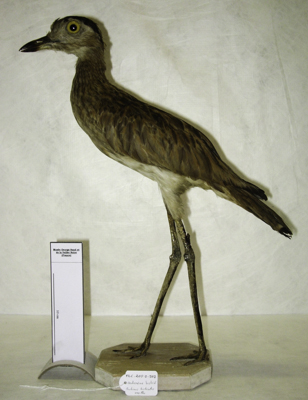
Specimen MLC.2011.0.907 (syntype). Double-striped Thick-knee (Burhinus bistriatus) collected by Dr Beauperthuy and used by L’Herminier to describe his Ædicnemus vocifer in 1838. © Christophe Gouraud, Musée George Sand et de la Vallée Noire, La Châtre, France.

One of the specimens that L’Herminier used for his description is housed in the Baillon Collection at the Musée George Sand et de la Vallée Noire, La Châtre, France. The Baillon’s inscription for the specimen indicates that it was sent by Florent Prévost, assistant naturalist at the Paris Museum, to Louis Antoine François Baillon, whose father started the Baillon Collection. The available information indicated that Prévost received the specimen from L’Herminier himself, but it was unknown who originally provided the specimen to L’Herminier. This question becomes even more intriguing when you consider that the Baillon specimen is the only surviving type specimen of the six originally used by L’Herminier for his 1838 description.

View Full Size Image
Christophe guiding on a Zodiac cruise in Antarctica (February 2015). © Lorraine Turci.

Christophe Gouraud is an expert at solving the mysteries surrounding historic specimens. With a Masters degree in ecology and a specialty in ornithology, Gouraud spends much of his time working as a Polar guide on expedition ships that cruise in Spitsbergen, Greenland, Nunavut, the Russian Arctic, the South Atlantic islands and Antarctica, but before becoming a guide, he took part in many scientific expeditions related with birds in Alaska, Morocco, Kazakhstan, and Peru. Today, he still finds time to pursue his ornithological passion. Between the Arctic and Antarctic seasons, he works with bird collections in France, particularly within the Caire-Chabrand Collection at the Musée de la Vallée, Barcelonnette, France, and the Baillon Collection of La Châtre.
View Full Size Image
Christophe working on the Caire-Chabrand Collection, Musée de la Vallée, Barcelonnette, France. © Claude Gouron, http://www.claude-gouron.fr, https://500px.com/claudegouron/sets.

Discovering information about historic specimens can be a difficult task. Access to historic literature is essential to successful investigations, and thus, Gouraud has found BHL an invaluable ally in his hunt for information.

“BHL is such a great, impressive and useful tool,” lauds Gouraud. “As I am not working in an institution with access to huge libraries, BHL has made possible what I have achieved so far. I don’t know if my work would have been possible without BHL, but for sure it is unbelievable the time that can be saved.”

Gouraud uses BHL to search for the original descriptions of bird species (most of which were described in the 18th and 19th centuries), to locate accounts of early voyages of exploration and discovery (during which many of the specimens he researchers were collected), and to explore references cited by the authors of the publications he consults for his research. When working on the history of a collection, he consults BHL daily, exploring multiple documents during each visit.

“In a few clicks, you can access, read and download (for free!!!) most of the documents you need,” exclaims Gouraud. “All that is needed is a good Internet connection. Through BHL, I can easily access so many old and rare books deposited in just a few institutions worldwide while simply sitting at home drinking a good coffee!”

Gouraud’s favorite BHL feature is the custom PDF download, which allows him to select specific pages of interest for his research and save them for future consultation. His extensive use of the library also revealed some areas where he believes improvements can be made. These include adding a full text search option to BHL, allowing users to search within the contents of a book; improving the OCR, allowing more scientific names to be discovered; and merging the redundant author and title names sometimes displayed throughout BHL.

Full text search is a high priority for future BHL development, with prototypes currently being investigated. BHL crowdsourcing games, Smorball and Beanstalk, are one method we are currently using to improve BHL’s OCR. Multiple instances of the same author or title in BHL result from differences in the library catalogs contributing information to BHL. While we try to automatically de-duplicate entries as they are ingested, not all duplicates can be merged automatically. We rely on feedback from our users to help us identify and allow us to correct duplications that do occur. Use our feedback form to alert us of any errors that should be corrected in the BHL portal.

BHL allowed Gouraud to solve the mystery of the origin of the Double-striped Thick-knee specimen housed in the Baillon Collection. By consulting L’Herminier’s original description in BHL, Gouraud discovered that the specimen was originally collected by Doctor Louis Daniel Beauperthuy, a physician and scientist born in Basse Terre, Guadeloupe, and the discoverer of the transmitting agent of yellow fever. Beauperthuy gave the specimen to L’Herminier, who used it for his description and then sent it on to the Paris Museum.

“I completed the story and linked Dr. Beauperthuy to L’Herminier only because I had access to the original description by L’Herminier,” explains Gouraud. He published his findings in the Bulletin of the British Ornithologists’ Club.
View Full Size Image
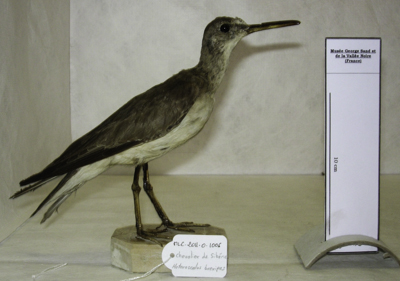
Specimen MLC.2011.0.1006. Grey-tailed Tattler (Heteroscelus brevipes) collected on Mariana Islands during the Freycinet’s circumnavigation that survived the wreckage of L’Uranie in the Falkland Islands in 1820. © Christophe Gouraud, Musée George Sand et de la Vallée Noire, La Châtre, France.

BHL has allowed Gouraud to uncover many fascinating details about the Baillon Collection. As another example, the Baillon Collection contains specimens collected during Louis Claude de Saulces de Freycinet’s three year voyage (1817-20) that cruised about the Pacific, visiting Australia, the Mariana Islands, Hawaiian Islands, other Pacific islands, and South America. One such specimen is a Grey-tailed Tattler (Heteroscelus brevipes), collected at the Mariana Islands. Sadly, the expedition met with tragedy when Freycinet’s ship, L’Uranie, wrecked in the Falkland Islands on 15 February, 1820, resulting in the loss of almost all of the expedition’s natural history collections. By consulting the account of the expedition in BHL, Gouraud discovered that specimens from 313 species survived the wreckage, and 12 specimens are now in the Baillon Collection.

Gouraud’s experiences demonstrate the multi-layered value of BHL’s collections. They are useful not only for providing information about species, ecosystems, habitats, and taxonomies, but also for historical investigations, such as uncovering the origins of museum collections. Gouraud has used BHL to uncover many other fascinating details about the Baillon Collection. You can explore some of these findings in his publications:

  • Gouraud C., 2014: Eighteenth century bird specimens in the Baillon Collection, La Châtre, France. – In: Mlíkovský, J. (Ed.) Proceedings of the 8th Meeting of European Bird Curators, Journal of the National Museum (Prague), Natural History Series. 183: 19-28.
  • Gouraud C., 2014: Extinct and endangered species and subspecies of birds in the Baillon Collection, La Châtre, France. – In: Mlíkovský, J. (Ed.) Proceedings of the 8th Meeting of European Bird Curators, Journal of the National Museum (Prague), Natural History Series. 183: 29-38.
  • Gouraud C., 2014: The authorship of the name Ornismya Parzudaki (Aves: Trochilidae). – Zoological Bibliography 3(4): 63-68. 
  • Mearns R., Gouraud C., and Chevrier L., 2015: The identity of Richard of Richard’s Pipit (Anthus richardi Vieillot, 1818). – Archives of natural history 42(1): 85-90.
  • Gouraud C., 2015: List of the type specimens of birds in the Baillon Collection (La Châtre, France). Part 1. Non-Passerines. – Bulletin of the British Ornithologists’ Club 135(2): 131-153.

Gouraud emphasizes that his research is made possible not only by BHL, but also thanks to Annick Dussault, director of the Musée George Sand et de la Vallée Noire (La Châtre, France) that houses the Baillon Collection, as well as the city of La Châtre, that gave him the opportunity of working with the Baillon Collection.

We would like to extend a special thanks to Gouraud for sharing his incredible work with us and demonstrating how BHL supports that work. Do you use BHL to support your own work? Want to be featured on our blog? Then send us a message to [email protected]!

[1] Dickinson E.C., Overstreet L.K., Dowsett R.J. and Bruce M.D., (Eds.) 2011: Priority! The Dating of Scientific Names in Ornithology: a Directory to the literature and its reviewers. Northampton, U.K., Aves Press.
October 8, 2015by ulib-libraryjobs
BHL News, Blog Reel

BHL’s Latest News!

View Full Size Image
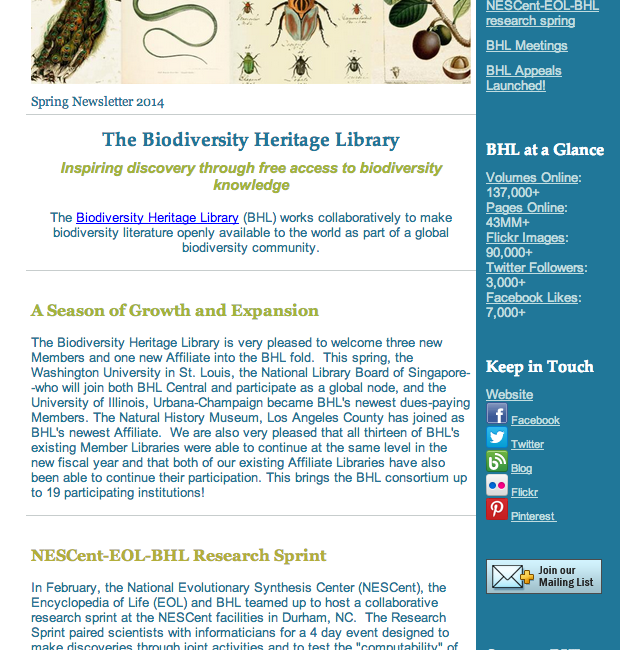
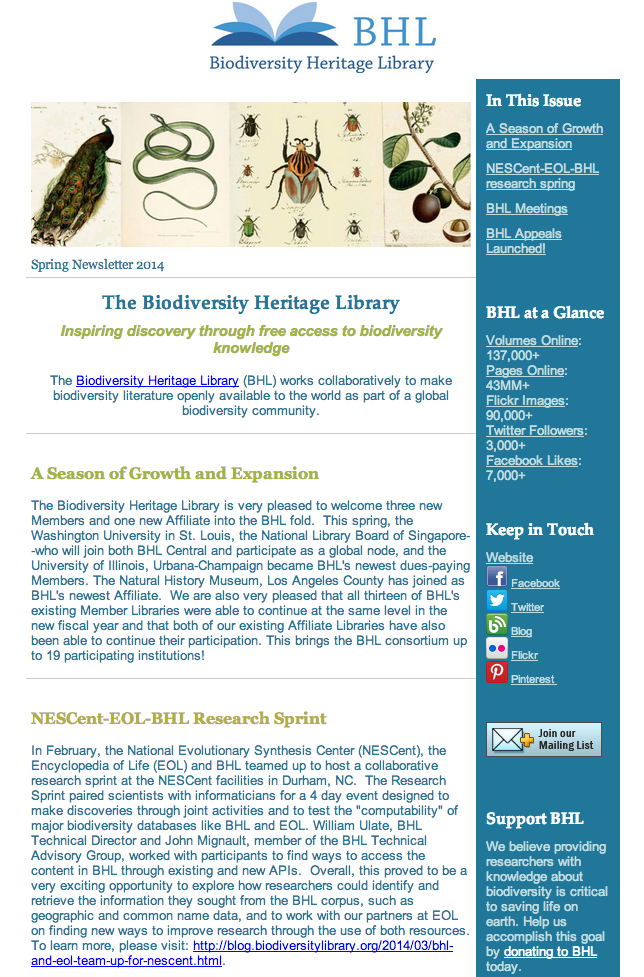
BHL Spring 2014 Newsletter

The last several months have been an intense and exciting period of growth and expansion for BHL. Not only has the steady growth of collections continued but BHL as an organization has been growing as well. In the first two quarters of fiscal year 2014, three new Members and one new Affiliate joined BHL-Central. BHL’s global presence is expanding as well with one of those new Members also participating as a global node.

To learn more about each of the new BHL Members and Affiliate and what BHL has been up to across the globe, check out BHL’s latest newsletter and quarterly report. Covering both Quarter 1 and Quarter 2 of Fiscal Year 2014, the latest report also includes updates on BHL meetings and collaborations as well as collections, usage, and financial updates.

Enjoy!


View Full Size Image
BHL Quarterly Report, Q1 and Q2, FY2014
May 15, 2014by sayeedmd
BHL News, Blog Reel

Making the BHL-Africa a Reality: The BHL-Africa Launch and Workshop

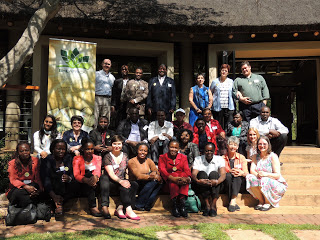
Group photo on the stairs at the South African National Biodiversity Institute.
View Full Size Image
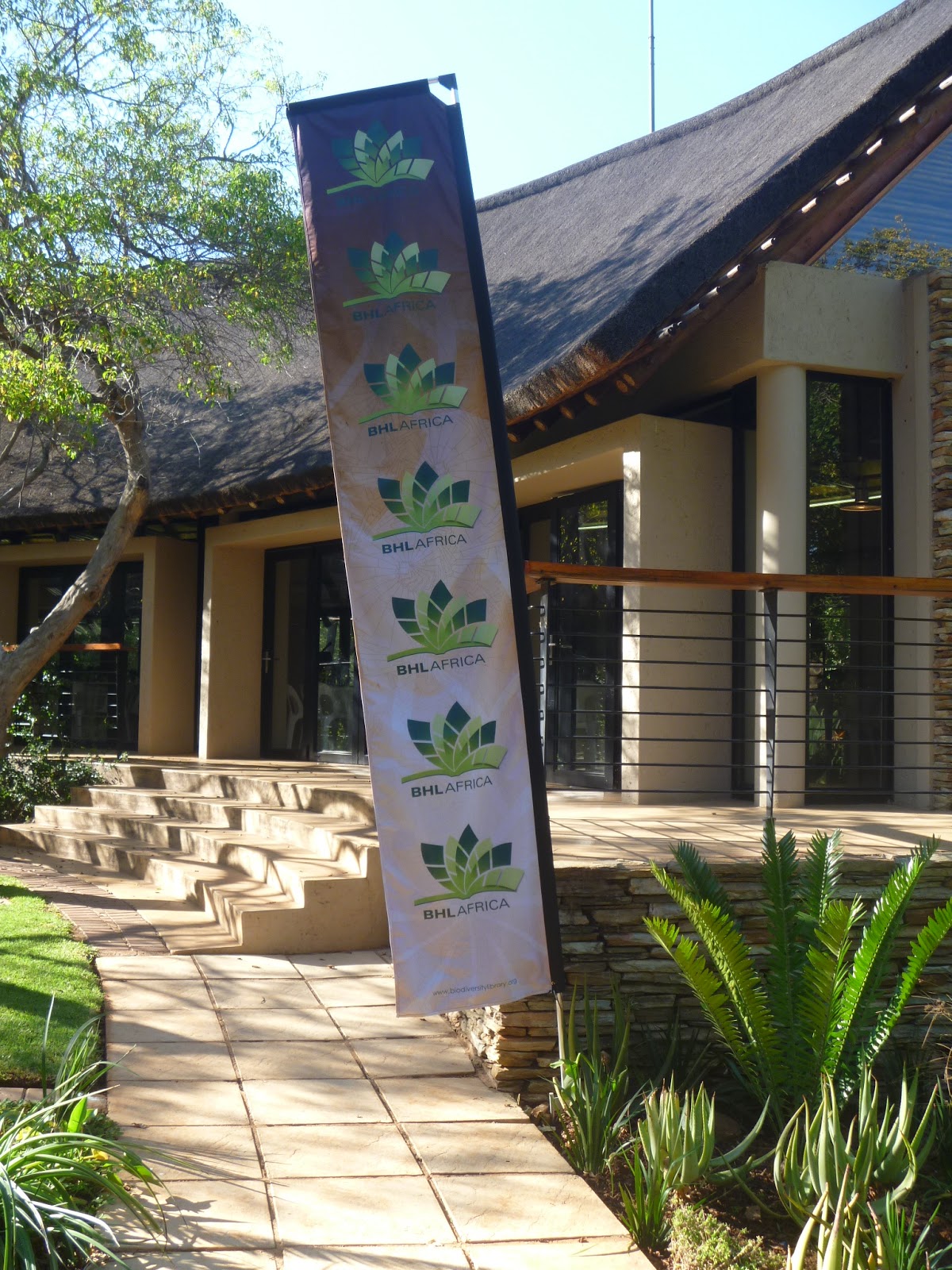
BHL-Africa logo at Pretoria National Botanical Garden

On April 15, 2013, BHL-Africa officially launched. BHL-Africa’s mission is to provide open access to the valuable biodiversity literature found within African libraries and institutions. The African consortium is hard at work identifying partners throughout the continent to sign an MOU and commit to working towards this noble objective.

The three-day BHL-Africa launch and workshop was hosted by the South African National Biodiversity Institute (SANBI) at the Pretoria National Botanical Garden in Pretoria, South Africa, from April 15-17, 2013. The meetings occurred simultaneously with the GBIF meetings also held at the botanical garden last week. Over two dozen representatives from institutions that have either signed or intend to sign the BHL-Africa MOU were present. Additionally, six colleagues from the BHL-US/UK program node were invited to attend: Nancy Gwinn (Director, Smithsonian Libraries, BHL Executive Committee Chair); Constance Rinaldo (Director, MCZ-Harvard Library, BHL Executive Committee Vice-Chair); Doug Holland (Director, Missouri Botanical Garden Library); William Ulate (Missouri Botanical Garden, BHL Technical Director); Bianca Crowley (Smithsonian Libraries, BHL Collections Coordinator); and Grace Costantino (Smithsonian Libraries, BHL Program Manager).

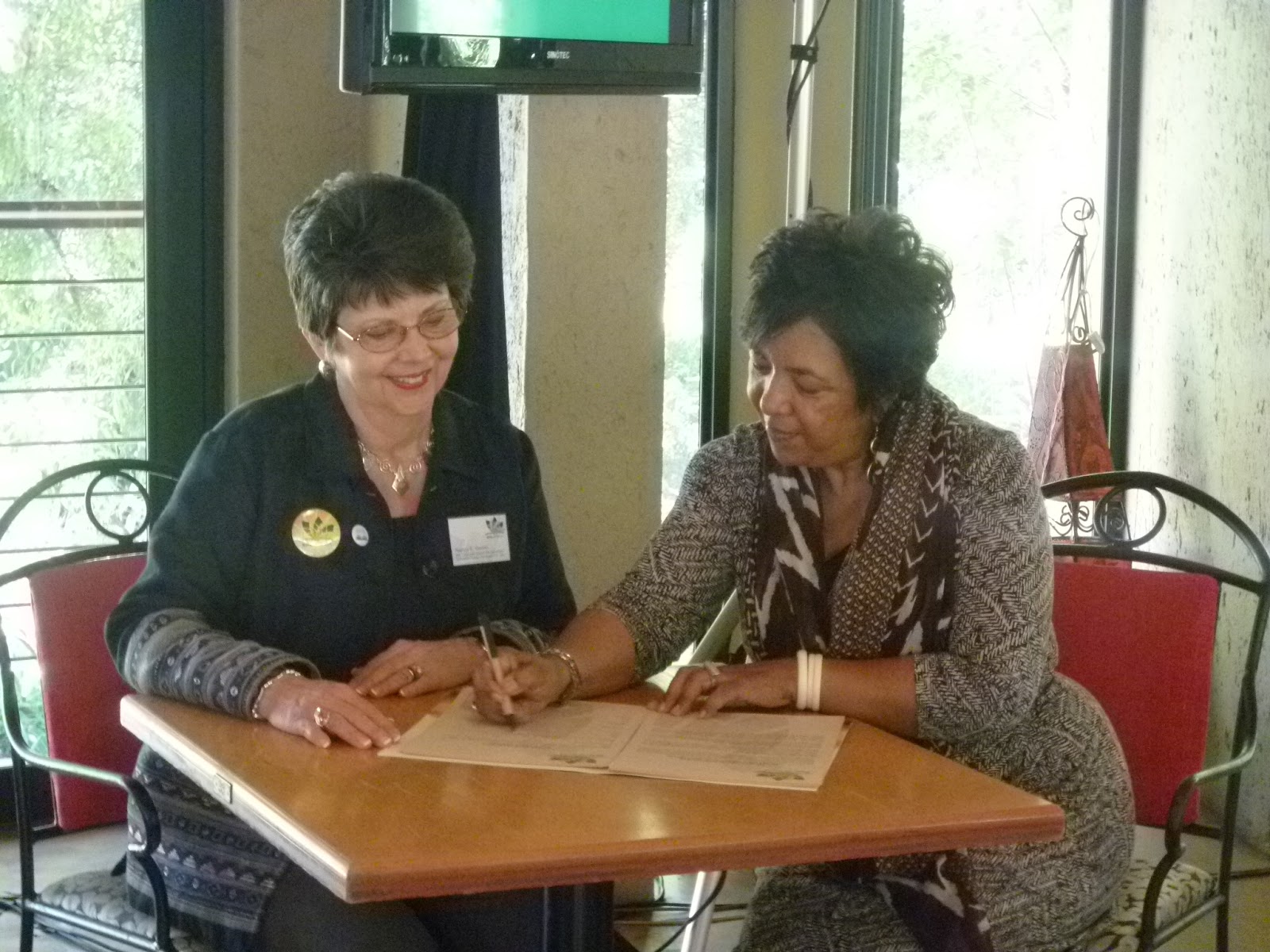
Monday, April 15, began with a launch ceremony, detailed in our blog post last week, during which the BHL MOU with SANBI was signed by Dr. Nancy Gwinn and Dr. Tanya Abrahamse (SANBI CEO). The real work began after the launch, with the start of the BHL-Africa workshop.

View Full Size Image
Dr. Nancy Gwinn and Dr. Tanya Abrahamse sign the BHL-Africa MOU

Day one of the workshop (Monday, April 15, afternoon) was devoted to addressing final MOU questions and outlining participants’ expectations for the meeting. Key expectations and areas in need of discussion included: Clarifying BHL’s open access policy and its implications for African participants; a concise description of the value of BHL for participating institutions in order to secure managerial buy-in; organization of clear fundraising strategies; the need for extensive training; identification of available resources and digitization capacity building; and the best way to collaborate and share resources amongst participating members. Overall meeting expectations were to elect a BHL-Africa Steering Committee and establish an outline for a two-year work plan.

View Full Size Image
The BHL-Africa Group Photo!

Much of day two (Tuesday, April 16) was spent investigating workflow and organizational questions, including collections development, copyright, communication, and infrastructure. The primary reason for the presence of the BHL-US/UK team was to offer our African colleagues the expertise we have gained in these areas over the past six years, as well as to help define global expectations for our new members.

Towards this end, Nancy Gwinn began by identifying four main expectations for BHL-Africa: Content Creation; Audience Building; Content Identification; and Partnership Building. In short, these expectations translate to not only growing the BHL corpus by digitizing African collections, but also helping BHL identify content to scan, both within and outside of Africa. Furthermore, BHL Africa must work to both build the BHL audience by promoting the project throughout the continent, but also expand the BHL consortium by identifying institutions that can contribute to the initiative.

Constance Rinaldo then gave a presentation on copyright, defining public domain, open access, and the Creative Commons licenses employed by BHL-US/UK. She was quick to stress, however, that each BHL node and institution must follow the copyright laws of their own countries, and, as BHL is not a legal entity, it is ultimately each scanning institution that is legally responsible for the content they contribute to the collection.

View Full Size Image
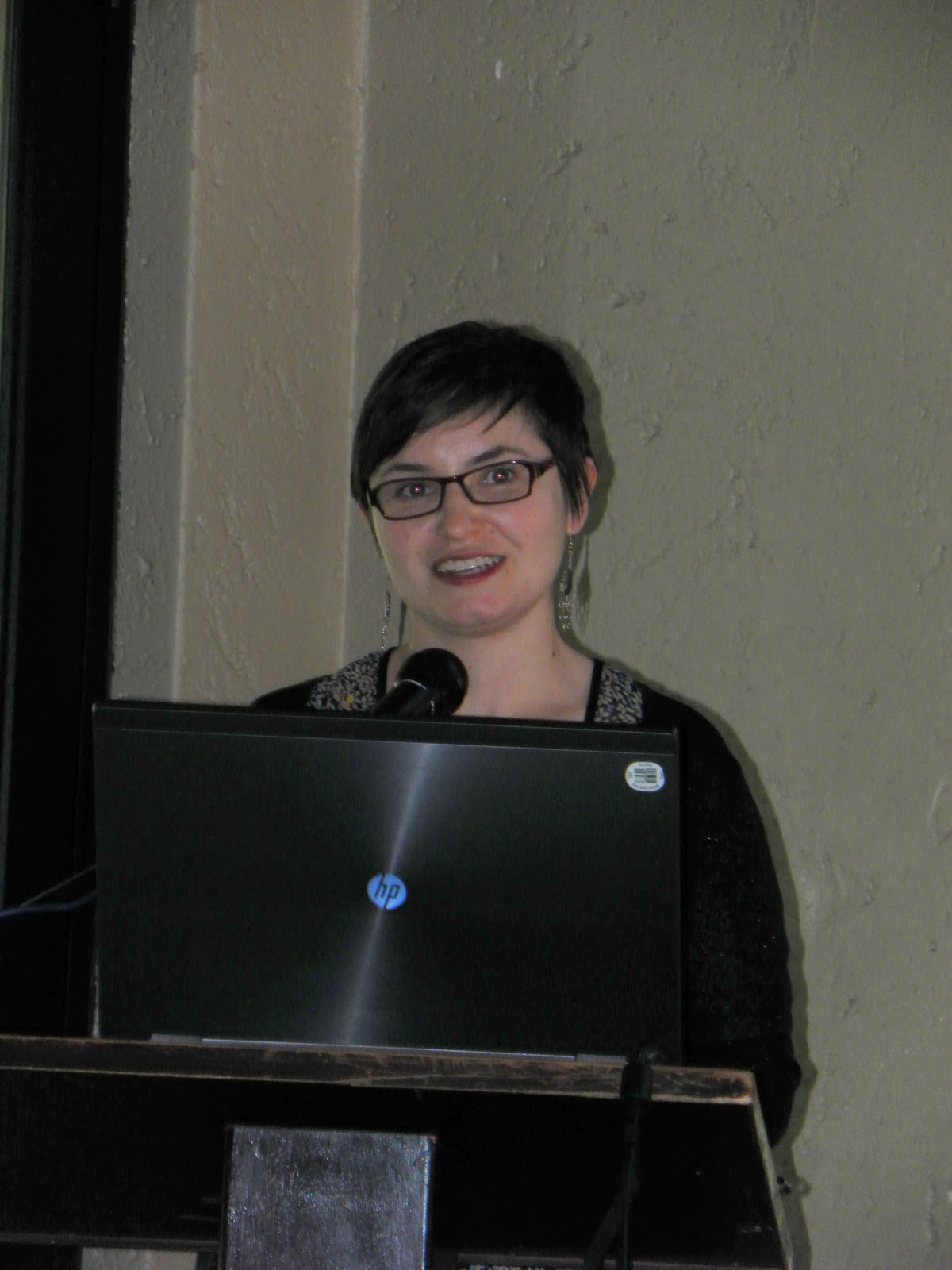
Bianca Crowley on BHL Collections Development

Bianca Crowley then gave our African colleagues some insight into the BHL-US/UK collection development process, outlining our selection and de-duplication process, digitization principles, metadata requirements, and content integration. Communication and collaboration methods were a key point of discussion, as they are critical for successful collections development.

Grace Costantino followed with a presentation on BHL-US/UK’s use of social media, which allows us to communicate project developments, provide context to the books in our collection, reach new audiences on new platforms, and uncover hidden gems in our collection. Following the presentation, an open discussion about each institution’s current use of social media, social media in the context of Africa, and how BHL-Africa might use social media occurred.

Finally, William Ulate detailed the BHL infrastructure, demoing the Macaw tool developed by Joel Richard at the Smithsonian Libraries, which is used to ingest books through Internet Archive into BHL. A remote installation of Macaw is running at the University of Pretoria and can be accessed via the web by any BHL-Africa participant to load digitized content into BHL.

BHL-African participants were also given a chance, on day two, to break out into two working groups, dedicated to Collections Development/Copyright and Outreach/Communication. These sessions allowed participants to apply the information given during the presentations to the realities of the BHL-Africa project.

The final day of the meeting (Wednesday, April 17) was spent identifying preliminary tasks for a two-year BHL-Africa workplan and electing a BHL-Africa Steering Committee. Workplan components include establishing a list of titles that each institution wishes to contribute to BHL; drafting documentation, based largely on existing files from gBHL, for workflow and collaboration guidance; and drafting a preliminary communication and outreach plan, which addresses not only external, but also internal, communication needs.

View Full Size Image
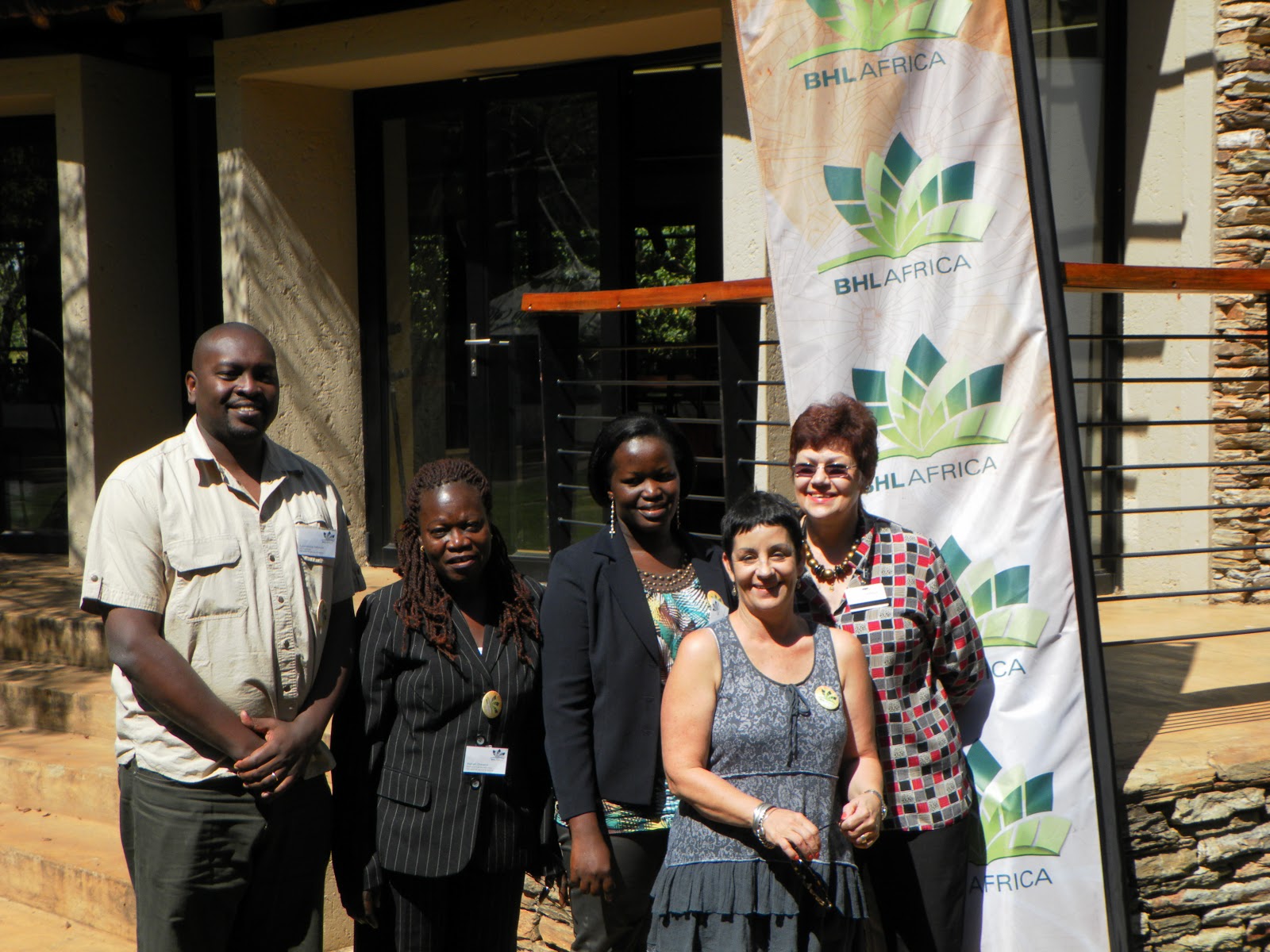
BHL-Africa Steering Committee (Left to Right): Lawrence Monda (Technical Advisor), Ashah Owano, Loi Namugenyi, Anne-Lise Fourie, Ria Groenewald

The BHL-Africa Steering Committee was also elected at the meeting. BHL-Africa has been divided into three regional nodes: North/Central; Eastern; Southern. Each regional node elects two representatives for the Steering Committee. Currently, there is no representation in North/Central Africa within the project, so only four members (two from Southern, two from Eastern) were elected at the meeting. Elected members include: Anne-Lise Fourie (SANBI, Southern); Ria Groenewald (University of Pretoria, Southern); Ashah Owano (National Museums of Kenya, Eastern); and Loi Namugenyi (Uganda National Council for Science and Technology, Eastern). Lawrence Monda (National Museums of Kenya) was elected as the BHL-Africa Technical Representative. Two additional members will be elected as North/Central institutions are added to the BHL fold. The Steering Committee will be responsible for providing strategic guidance, developing fundraising plans and approving budgets, and organizing pan-continental efforts.

The three-day BHL-Africa launch and workshop was an extremely successful event which resulted in the creation of an actionable plan for project development and the identification of notably capable leadership. Meeting attendees left feeling energized, with a clear sense of purpose. Just one and a half years ago, at the Life and Literature conference, the concept of BHL-Africa was born. Today, it is a reality. We congratulate our colleagues on the astounding progress they have made and look forward to seeing great things from BHL-Africa!

April 24, 2013by michelle.underhill
Blog Reel

A Consortium that Scans Together, Bands Together

Portrait version of the Biodiversity Heritage Library logo.

Over the years, the BHL consortium has grown from its initial core of 10 members to now 15 member institutions across the United States and the United Kingdom.

While each institution contributes its own unique set of materials to the BHL collection, many of our collections share similar materials. Thank goodness we do because we rely on each other to help fill in gaps in the BHL corpus. But this is easier said than done. Have you ever tried to amass a complete set of 90+ year old objects into one place?!

The quick and dirty explanation of our digitization process is as follows — BHL consortium libraries:

  1. Work together to select books for scanning
  2. Do our best to make sure we don’t send the same materials for scanning, i.e. “de-duplication”
  3. Send the books from our shelves for scanning to various Internet Archive locations or to our own institutional scanning centers
  4. Send the bibliographic data from our library catalogs
  5. Render derivative files, such as the OCR (optical character recognition) text files
  6. Aggregate the data files and images for every page of every book scanned into our back-end database managed by the Missouri Botanical Garden
  7. Serve it all up via our website: http://biodiversitylibrary.org

And for those of us who prefer visuals:

BHL: Disseminating Content Beyond the Silo from Bianca Crowley and Grace Costantino

Steps 1 and 2 can get complicated. Fast. Which is why we need the tools to help us coordinate who’s scanning what, when. To manage our communications we use an issue tracking system, in our case Countersoft’s Gemini system. Whenever you submit feedback via our website, a new issue, or ticket, is created in our system which we route to the appropriate BHL Staff for follow up. Send us feedback telling us something’s missing from our collection and we’ll try to find the BHL library who can send it for scanning. Sounds easy enough, right?

Wrong. Enter an old journal series which over the course of decades, centuries even, can modify its scope, alter its publication title and alter it again (and again…). Combine this with the changing practices of the printing, bookbinding, and library industries over the course of history and you have quite the task to gather the various pieces of the puzzle and arrange them into the complete picture of a publication.

View Full Size Image
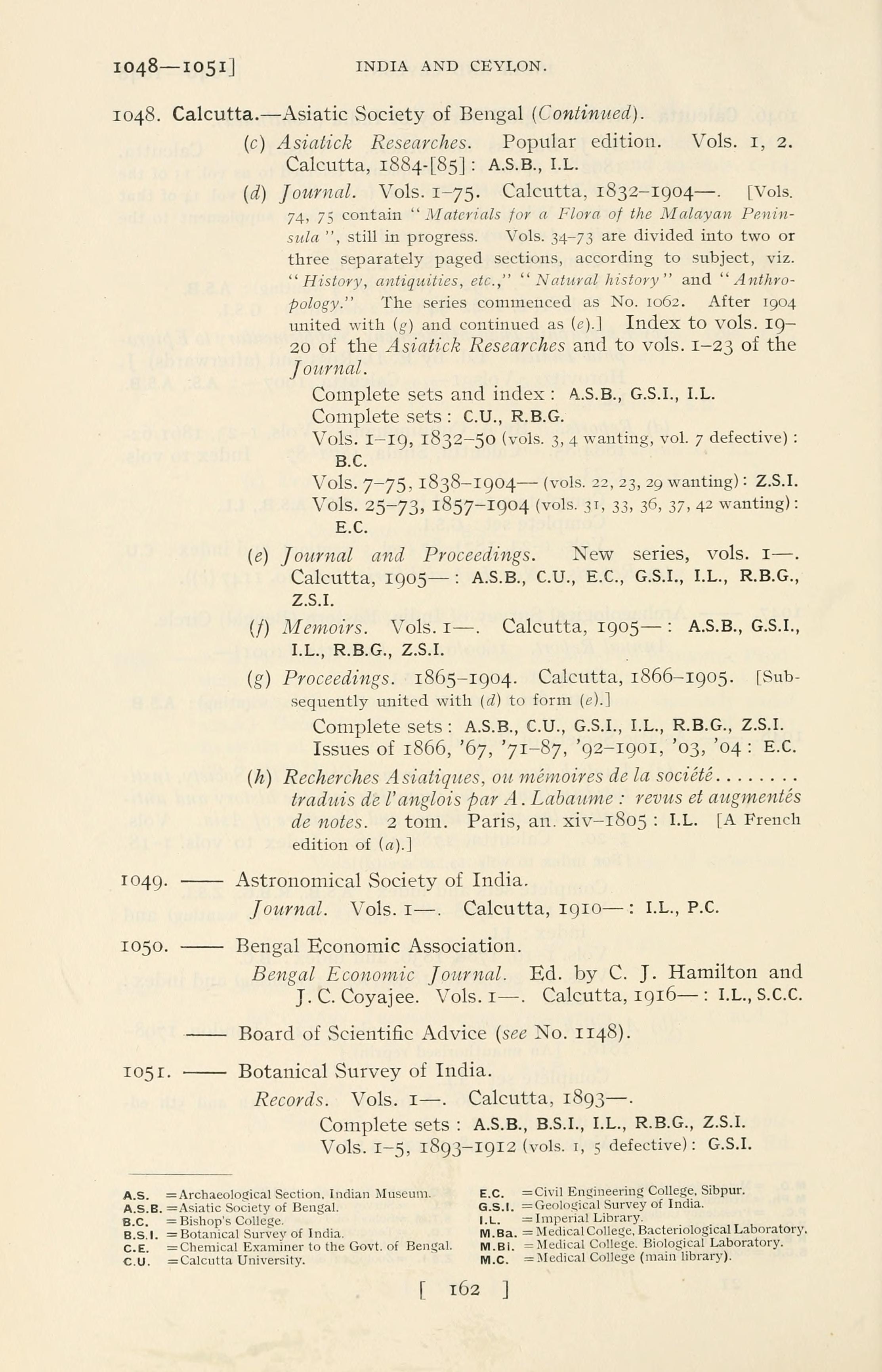
Bibliography of Asiatic Society publications,

The Journal of the Asiatic Society is one of my favorite examples of how the BHL member libraries work together to accomplish this task.  The Journal changed its title various times since the late 18th Century and we have 4 of them in the BHL starting with Asiatick Researches (1788-1849) to the Journal and the Proceedings of the Asiatic Society (1905-1934). Since we started digitizing books for the BHL in 2007, this series has called on 7 different libraries to send various volumes for scanning in an effort to complete the digital set. The work still continues today. With so many libraries involved, it is not uncommon for there to be 3 different ways the titles were cataloged and 5 different ways the volumes were bound, for example, making the work of selection and de-duplication rather tricky.

Without systems that allow us to communicate in detail about who’s scanning precisely what, when, we’d have no way to aggregate 15 different physical library collections into a single BHL collection online. Our issue tracking system is just one of many tools that we use to communicate across various aspects of our digitization workflow. However, the tools would not mean anything if it were not for the hard work and collaborative spirit of the librarians throughout our consortium.

March 15, 2013by [email protected]
BHL News, Blog Reel, Tech Updates

Ingest Criteria Revised

Portrait version of the Biodiversity Heritage Library logo.

In November 2009, the BHL started ingesting biodiversity related content from the Internet Archive. Since then, the BHL collection has grown significantly. Each week, the BHL brings in new content from the Internet Archive based on a criteria of selected Library of Congress Subject Headings and call numbers, with the aim of bringing in content related to the literature of biological diversity.

As described by the Convention on Biodiversity,

Biological diversity – or biodiversity – is the term given to the variety of life on Earth and the natural patterns it forms.…This diversity is often understood in terms of the wide variety of plants, animals and microorganisms.…Biodiversity also includes genetic differences within each species – for example, between varieties of crops and breeds of livestock. Chromosomes, genes, and DNA-the building blocks of life-determine the uniqueness of each individual and each species. Yet another aspect of biodiversity is the variety of ecosystems such as those that occur in deserts, forests, wetlands, mountains, lakes, rivers, and agricultural landscapes. In each ecosystem, living creatures, including humans, form a community, interacting with one another and with the air, water, and soil around them. http://www.cbd.int/convention/guide/

The BHL collection reflects this wide interdisciplinary spectrum. When ingesting content from the Internet Archive, the criteria of LCSH and LC call numbers are used to target as much relevant biodiversity literature as possible, but it is not fool proof.

Recently, the Ingest Criteria was reviewed by the BHL Collections Committee to identify subject terms and call numbers that were missing the mark. We noticed books were being brought in that were clearly not relevant to the BHL mission such as books about human anatomy, taxation, and hockey. The Ingest Criteria have since been revised to better target biodiversity relevant materials and most of the irrelevant content has been removed from our collection. Users should not have to weed through irrelevant materials in the BHL collection when access to this content remains available via other open access digital collections. For example, access to Mary Louise Serafine’s Measure of meter conservation in music based on Piaget’s theory will be via the Internet Archive website rather than through the BHL.

For more information about BHL’s de-accession policy, please see our documentation on our wiki http://biodivlib.wikispaces.com/Deaccession+Policy. Should you feel that any content has been removed from BHL unnecessarily, please feel free to send us your comments to our feedback form.

July 30, 2010by SheilaC7108
Page 2 of 2«12

Help Support BHL

BHL's existence depends on the financial support of its patrons. Help us keep this free resource alive!

search

About BHL

The Biodiversity Heritage Library (BHL) is the world’s largest open access digital library for biodiversity literature and archives. BHL operates as a worldwide consortium of natural history, botanical, research, and national libraries working together to digitize the natural history literature held in their collections and make it freely available for open access as part of a global “biodiversity community.”

Join Our Mailing List

Sign up to receive the latest news, content highlights, and promotions.

Subscribe Now

Subscribe to Blog via Email

Enter your email address to subscribe to this blog and receive notifications of new posts by email.

Join 319 other subscribers

Subscribe to Blog Via RSS

Subscribe to the blog RSS feed to stay up-to-date on all the latest BHL posts.

Access RSS Feed

Inspiring Discovery through Free Access to Biodiversity Knowledge.

The Biodiversity Heritage Library makes it easier than ever for you to access the information you need to study and explore life on Earth…for free, anytime, anywhere.


64+ Million Pages of
Biodiversity Literature Online.

EXPLORE

Tools and Services
to Transform Research.

EXPLORE

300,000+
Illustrations on Flickr.

EXPLORE

ABOUT | HARMFUL CONTENT | PRIVACY | SITE MAP | TERMS OF USE