
Biodiversity Heritage Library - Program news and collection highlights from BHL
  • Home
  • News
  • Featured Books
    • All Featured Books
    • Book of the Month Series
    • BHL at 20
  • User Stories
  • Campaigns
    • Fossil Stories
    • Garden Stories
    • Monsters Are Real
    • Page Frights
    • Her Natural History
    • Earth Optimism 2020
  • Tech Blog
  • Visit BHL
Home
News
Featured Books
    All Featured Books
    Book of the Month Series
    BHL at 20
User Stories
Campaigns
    Fossil Stories
    Garden Stories
    Monsters Are Real
    Page Frights
    Her Natural History
    Earth Optimism 2020
Tech Blog
Visit BHL
  • Home
  • News
  • Featured Books
    • All Featured Books
    • Book of the Month Series
    • BHL at 20
  • User Stories
  • Campaigns
    • Fossil Stories
    • Garden Stories
    • Monsters Are Real
    • Page Frights
    • Her Natural History
    • Earth Optimism 2020
  • Tech Blog
  • Visit BHL
Biodiversity Heritage Library - Program news and collection highlights from BHL
Blog Reel, Campaigns, Featured Books

Coloring Our Collections: The Art of Lithography

View Full Size Image

This year for Color Our Collections, we’ve produced a coloring book with illustrations from books that represent the evolution of the art of printing. This week on our blog, we’ll explore the books featured in the coloring book and the printing techniques used for the illustrations.

You can download our 2017 Color Our Collections coloring book here.

Learn more about Color Our Collections here.

The Art of Lithography

The process of lithography was first discovered by a German actor and playwright, Alois Senefelder, in 1796. It was used to varying degrees in the early 19th century, but became increasingly popular from the mid-19th century onward. By the 1880s, it was used widely for printing magazines and advertising.

In the lithographic process, the image is drawn onto a stone with a grease-based ink or crayon. The stone is then processed using a gum Arabic and nitric acid solution. The solution chemically separates the image and non-image areas, making the non-image areas water-receptive and the image areas water repellent. Once the stone has been processed, it is kept damp and an oil-based ink is applied. The ink is repelled by the damp non-image areas and sticks to the fixed image areas. The ink can then be transferred to a sheet of paper using a printing press.

This video from the Minneapolis Institute of Art demonstrates the lithographic process:

Gould’s Australian Bird Lithographs

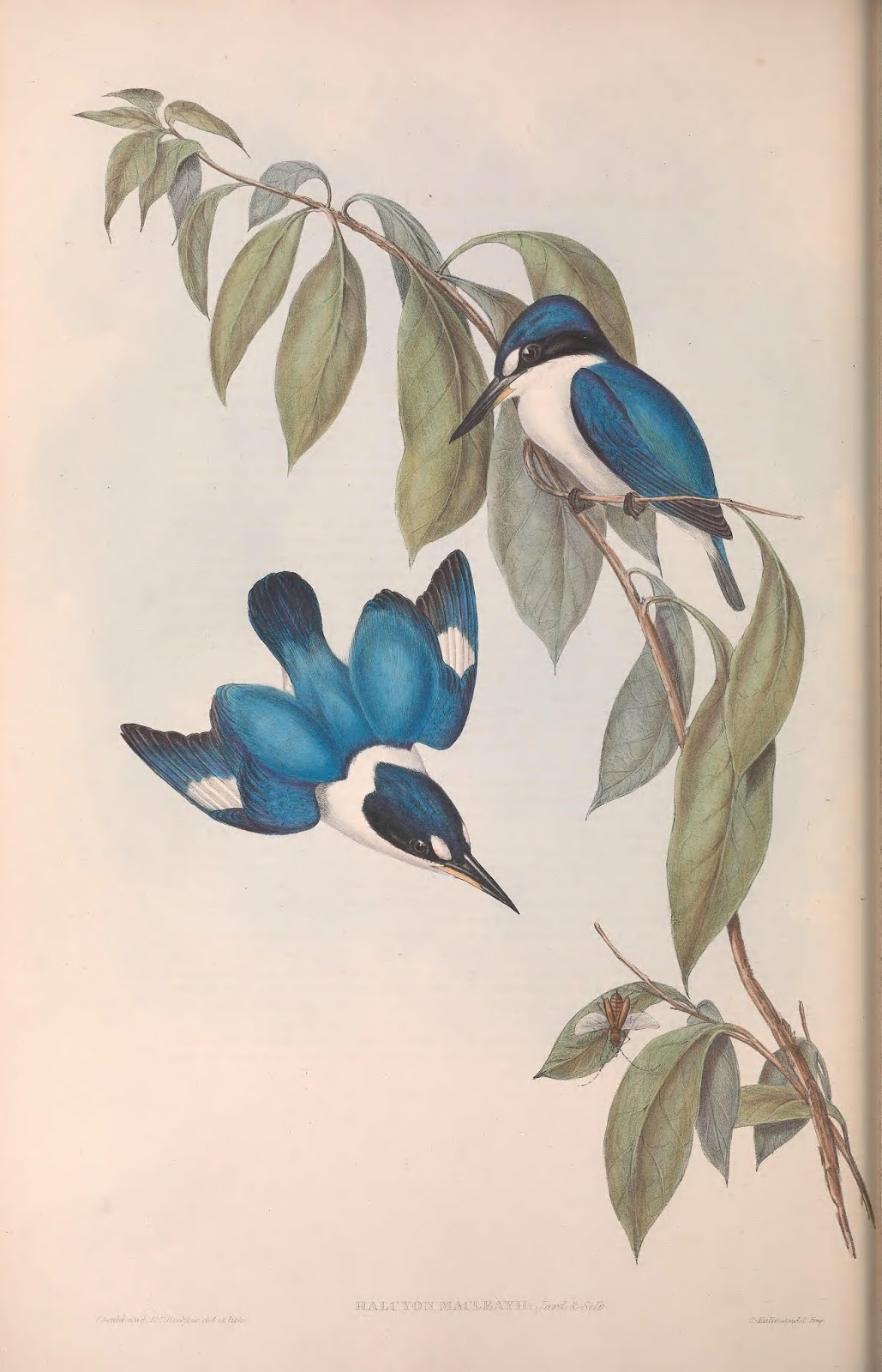
John Gould was an English ornithologist and bird artist who is famous for producing several magnificently-illustrated monographs on birds. One such work is The Birds of Australia, which was originally issued in 36 parts between 1840-48. Taken together, the title consists of 7 folio-sized volumes plus a supplement. It described all of the 681 Australian bird species then known, many of which were scientifically described for the first time. This title was digitized in BHL by Smithsonian Libraries.
View Full Size Image
Illustration by John Gould and H.C. Richter. Gould, John. The Birds of Australia. v. 2 (1848). http://www.biodiversitylibrary.org/page/48200584. Digitized by Smithsonian Libraries.

Gould’s original interest in Australian birds was sparked when his two brothers-in-law, Charles and Stephen Coxen, who had emigrated to Australia, sent him some specimens. Many of these he described in the 1837-38 work A synopsis of the birds of Australia, and the adjacent islands (Digitized in BHL by Museums Victoria).

In 1838, Gould, his wife Elizabeth, their eldest son, their nephew, Gould’s assistant John Gilbert, and two servants set sail for Australia so that Gould could undertake a more extensive work on Australian birds. During the 27 months that they were in Australia, Gould and his assistant collected some 800 bird and 70 quadruped specimens. Some 300 of these at the time were deemed new-to-science, although some of these are now recognized as subspecies.
View Full Size Image
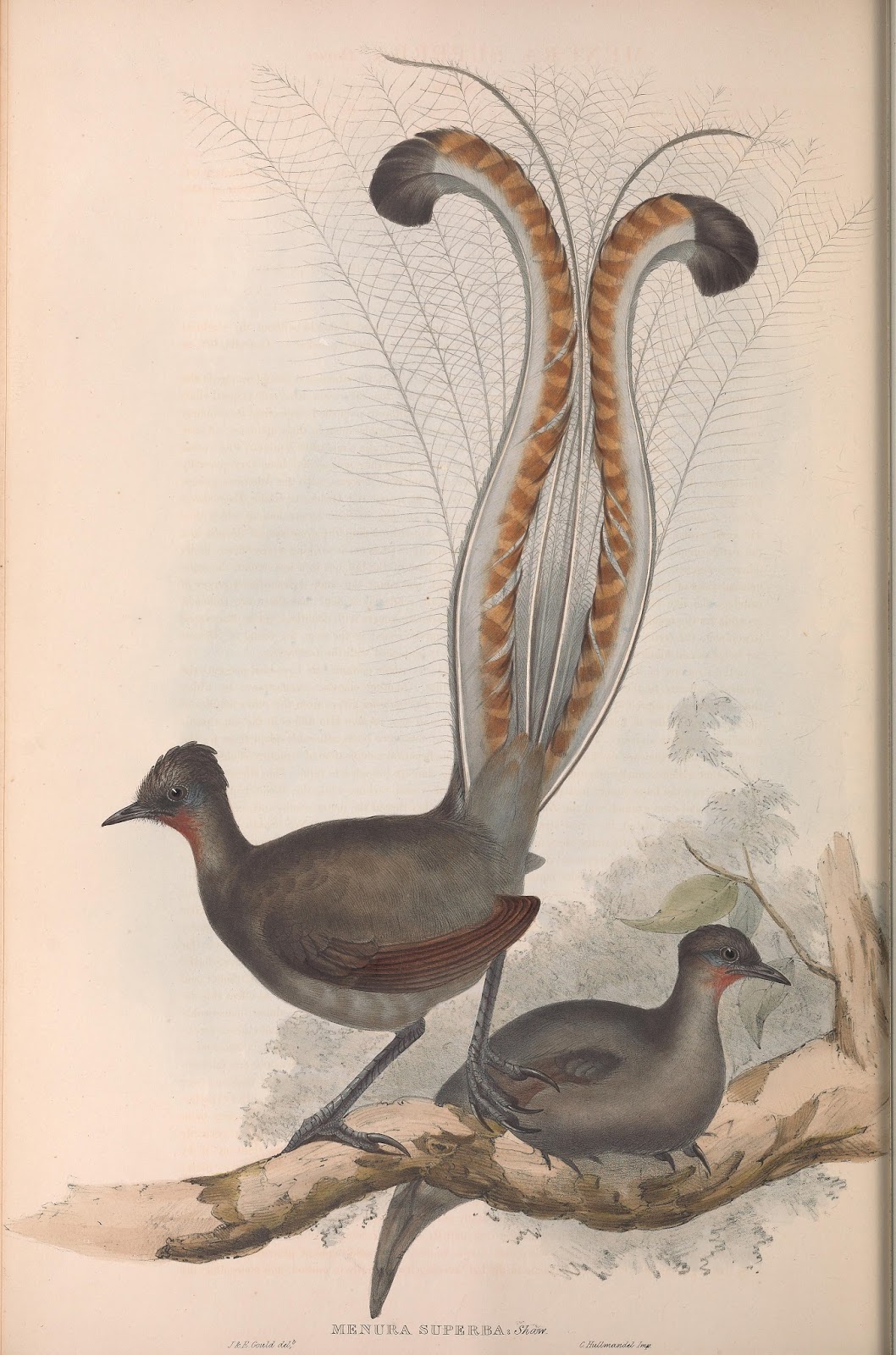
Illustration by John Gould and Elizabeth Gould. Gould, John. The Birds of Australia. v. 3 (1848). http://www.biodiversitylibrary.org/page/48285735. Digitized by Smithsonian Libraries.

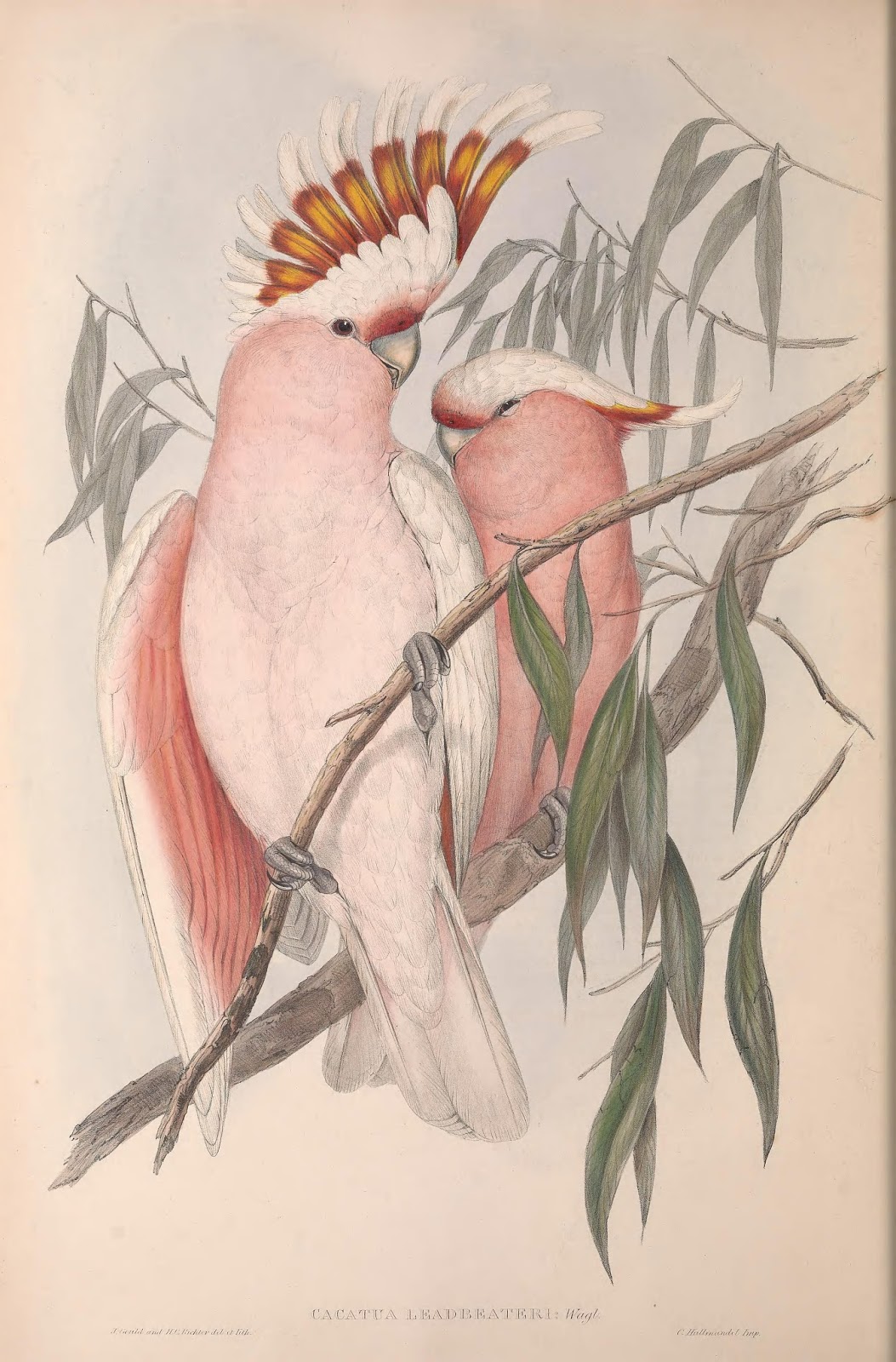
After returning to England, work began on the publication. The title’s crowning achievement is the beautiful lithographic illustrations. These were based on rough sketches by Gould that were worked up into paintings that were then reproduced through the process of lithography. The plates were printed in a single color by the firm of Hullmandel and Walton and then hand colored by a Mr. Bayfield.
View Full Size Image
Illustration by John Gould and H.C. Richter. Gould, John. The Birds of Australia. v. 5 (1848). http://www.biodiversitylibrary.org/page/48400938. Digitized by Smithsonian Libraries.

John’s wife Elizabeth, who produced most of the lithographs for John’s earlier works, executed 84 of the plates in this title. Sadly, she died of puerperal fever a year after returning to England. John enlisted Henry Constantine Richter to produce most of the remaining illustrations, although Edward Lear and Waterhouse Hawkins also contributed an illustration each. The first seven volumes were completed in 1848, but additional parts were later produced to form a supplementary volume to describe additional new species.

References

  • American Printing History Association. History of Printing Timeline. https://printinghistory.org/timeline/.
  • Leicester Print Workshop. A Step-by-Step Guide to Stone Lithography. http://www.leicesterprintworkshop.com/printmaking/step_by_step_guide_to_stone_lithography/.
  • The University of Glasgow. Library Special Collections Department. Book of the Month: The Birds of Australia. http://special.lib.gla.ac.uk/exhibns/month/july2005.html.
February 9, 2017by michelle.underhill
Blog Reel, Campaigns, Featured Books

Color Our Collections: The Art of Intaglio Printing

View Full Size Image

This year for Color Our Collections, we’ve produced a coloring book with illustrations from books that represent the evolution of the art of printing. This week on our blog, we’ll explore the books featured in the coloring book and the printing techniques used for the illustrations.

You can download our 2017 Color Our Collections coloring book here.

Learn more about Color Our Collections here.

The Art of Intaglio Printing

In the Intaglio family of printmaking, an image is incised into a surface, usually a metal plate. Intaglio includes such familiar processes as etching and engraving. In engraving, the image is physically carved into a plate using special tools like burins. In etching, an image is drawn onto the surface of a plate that is covered in wax. The stylus, used to draw the lines in the wax, exposes the metal of the image lines. The plate is then dipped in an acid bath. The acid etches the exposed image lines but does not affect the portions of the plate covered in wax.

Intaglio techniques were used for book illustration by the latter half of the 15th century and became the standard for illustrating books by the late 16th century. Intaglio was used predominantly until around the mid-19th century, when lithography started gaining ground.

This video from the Museum of Art, Rhode Island School of Design demonstrates the copper plate engraving process:

Catesby’s Copper Plate Etchings

In the early eighteenth century, English naturalist Mark Catesby set foot in a New World. After spending the better part of ten years, spread across two separate trips, exploring and documenting North America’s rich biodiversity, he would eventually publish his research and original artworks as the first fully illustrated book on the flora and fauna of North America.

View Full Size Image
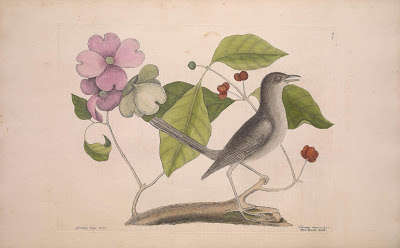
Eastern flowering dogwood (Cornus florida) and northern mockingbird (Mimus polyglottos). Catesby, Mark. The natural history of Carolina, Florida and the Bahama Islands. v. 1, ed. 1. pl. 27. Digitized by Smithsonian Libraries. http://biodiversitylibrary.org/page/40753198.

Published over eighteen years between 1729-1747, The Natural History of Carolina, Florida, and the Bahama Islands contains 220 plates based mostly upon Catesby’s own watercolors, which he worked up based on sketches he made in the field. The final publication was illustrated with copper plate etchings produced by Catesby himself. Catesby also hand-colored (maybe not all) the prints as well.

View Full Size Image
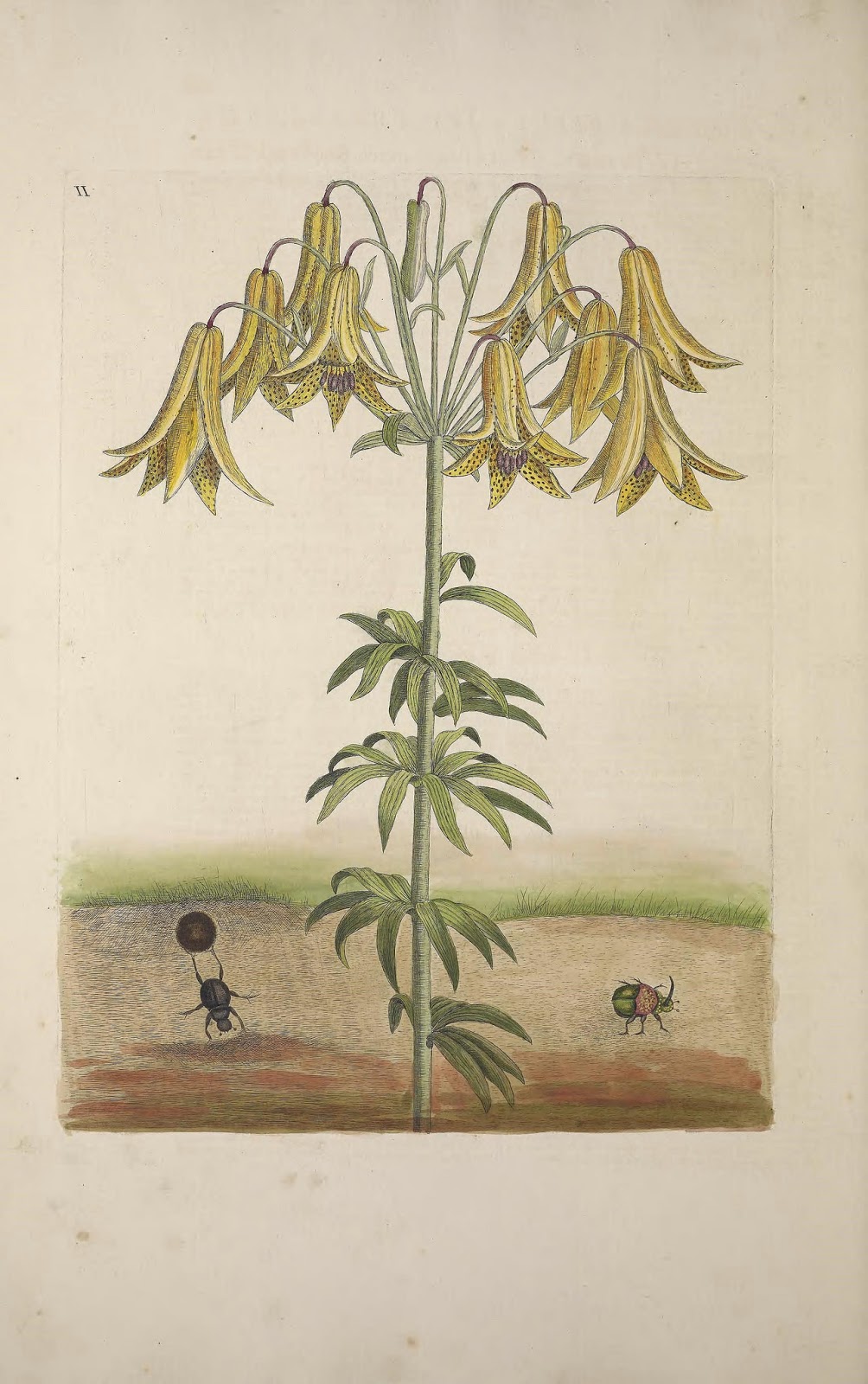
Canada lily (Lilium canadense), dung beetle (Canthon pilularis), and rainbow scarab beetle (Phanaeus vindex). Catesby, Mark.The Natural History of Carolina, Florida, and the Bahama Islands. v. 2, ed. 1. pl. 11. Digitized by Smithsonian Libraries. http://www.biodiversitylibrary.org/page/40680431.

Catesby’s work was also extremely influential to the work of Carl Linnaeus, whose binomial system for naming plants and animals is still in use today. Linnaeus cited Catesby extensively in his Species Plantarum (1753) and Systema Naturae (1758). For many of Linnaeus’ species names, Catesby is his only reference, and thus Catesby’s illustrations in Natural History serve as the type for many of Linnaeus’ species.

View Full Size Image
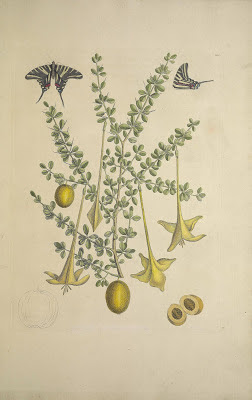
Lily thorn (Catesbaea spinosa). Pictured with zebra swallowtail (Protographium marcellus). Catesby is the only source that Linnaeus cited when naming Catesbaea spinosa in Species Plantarum (1753). This engraving serves as the type for this name. Catesby, Mark. The Natural History of Carolina, Florida, and the Bahama Islands. v. 2, ed. 1. pl. 100. Digitized by Smithsonian Libraries. http://biodiversitylibrary.org/page/40680398.

The first edition of Catesby’s Natural History in BHL, which was used to produce the coloring pages in this year’s coloring book, was digitized from the collections of Smithsonian Libraries. This copy is one of only a few known perfect copies of this first edition and the only one known to contain all three pieces of ephemera relating to the production of the work.

Note: This post was edited on 8 February 2017.

References

  • American Printing History Association. History of Printing Timeline. https://printinghistory.org/timeline/.
  • National Gallery of Art. Colorful Impressions. https://www.nga.gov/exhibitions/clrflimpr-tech.shtm.
  • Nelson, E C, and David J. Elliott. The Curious Mister Catesby: A “truly Ingenious” Naturalist Explores New Worlds. 2015. Print.
February 8, 2017by michelle.underhill
Blog Reel, Campaigns, Featured Books

Color Our Collections: The Art of Woodcuts

View Full Size Image

This year for Color Our Collections, we’ve produced a coloring book with illustrations from books that represent the evolution of the art of printing. This week on our blog, we’ll explore the books featured in the coloring book and the printing techniques used for the illustrations.

You can download our 2017 Color Our Collections coloring book here.

Learn more about Color Our Collections here.

The Art of Woodcuts

In the woodcut printing technique, the image (and sometimes text) is carved into the surface of a wood block. A knife and/or chisel is used to remove the wood surrounding the image, so that only the image lines remain raised or flush with the wood block surface. The block is then inked and pressed against paper to transfer the image. The resulting image is a reverse of that on the wood block.

The earliest known complete and dated printed book, the Diamond Sūtra dated 868 AD, was produced using wood block printing. The work, a Chinese translation of a Buddhist text, can be viewed online thanks to the British Library.

This video from the Victoria and Albert Museum demonstrates the woodcut printing process:

The Woodcuts of Pierre Belon

View Full Size Image
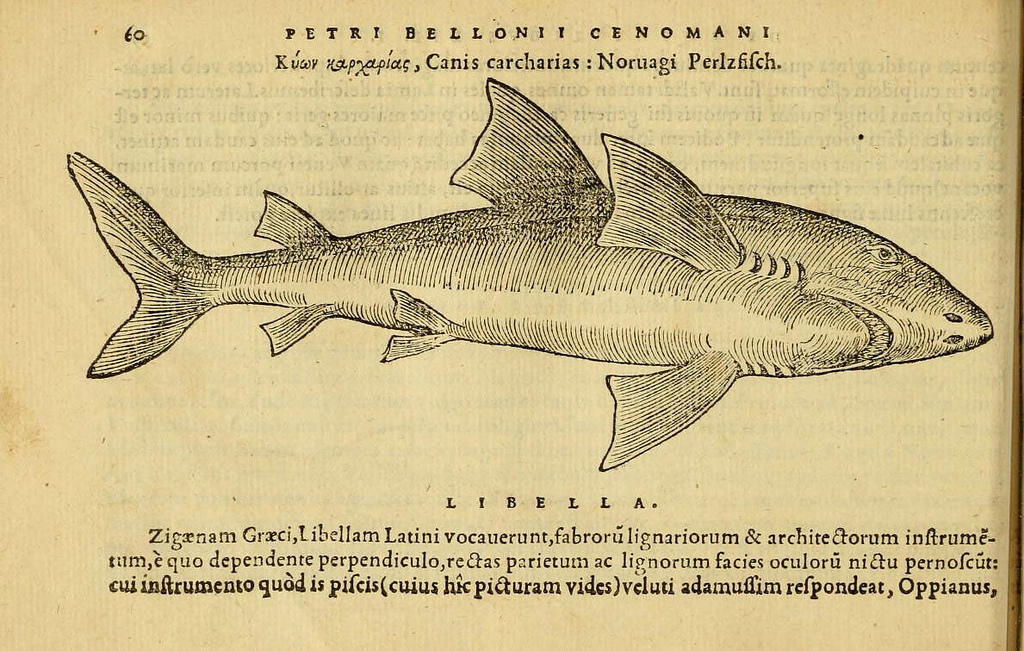
Earliest known published illustration of a great white shark. Illustrated by woodcut. Belon, Pierre. De aquatilibus. 1553. http://biodiversitylibrary.org/page/4770204. Digitized by Harvard University, Ernst Mayr Library, Museum of Comparative Zoology.

Pierre Belon was a French naturalist who started practice as an apothecary, studied medicine, and later undertook many travels that fueled his interest in natural history. In 1553, he published De aquatilibus, describing over 100 fish, sharks, and rays, as well as many marine mammals. The work is illustrated with woodcuts, and some copies are also hand colored.

Belon details the outward characteristics of the species he depicts and classifies his divisions of aquatic animals by size, skeletal structure, mode of propagation, number of limbs, form of the body, and habitat. As such, De aquatilibus is considered by many to be the beginning of modern ichthyology. The work also includes detailed descriptions of dolphins and their embryos and reproductive anatomy, and thus it is also considered the start of modern embryology.

View Full Size Image
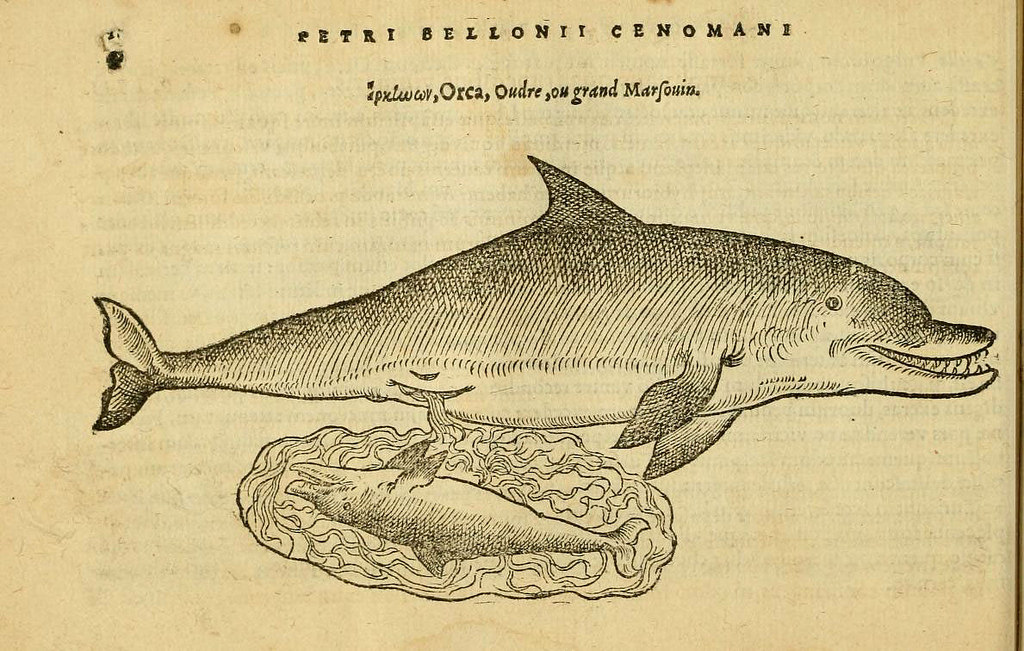
Belon portrayed many dolphins, their embryos, and reproductive anatomy within De aquatilibus, marking the beginning of modern embryology. Illustrated by woodcut. Belon, Pierre. De aquatilibus. 1553. http://www.biodiversitylibrary.org/page/4770162. Digitized by Harvard University, Ernst Mayr Library, Museum of Comparative Zoology.

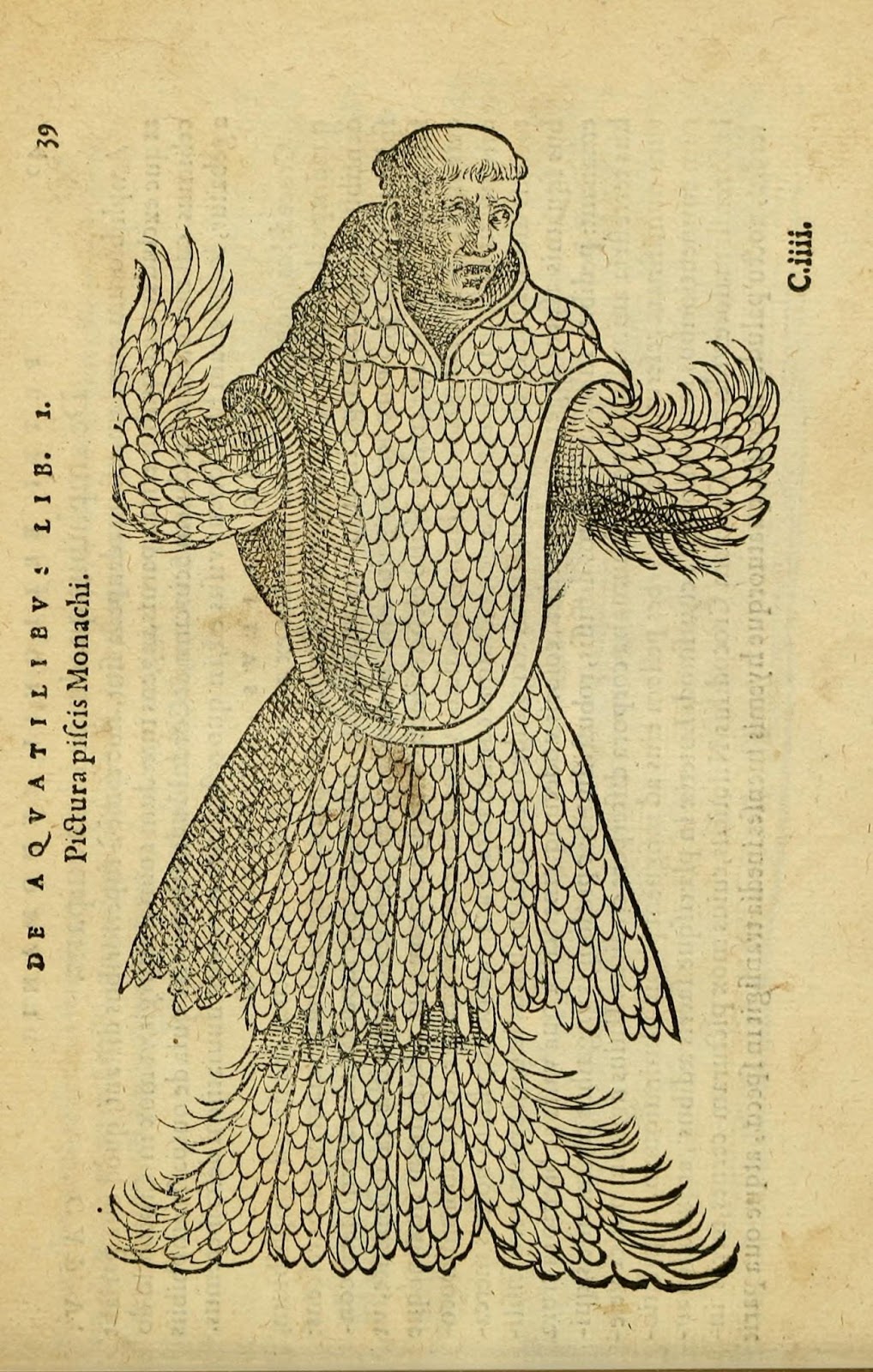
Belon stressed the importance of observation in scientific study and communication, chastising those who simply relied on and proliferated historic accounts stemming from the titans of antiquity. However, despite this charge, Belon does include some fantastical creatures within his book, including the “sea monk” and “web-footed horse of Neptune.”

View Full Size Image
Mythical “sea-monk,” possibly based on a stranded squid. Illustrated by woodcut. Belon, Pierre. De aquatilibus. 1553. http://biodiversitylibrary.org/page/4770183. Digitized by Harvard University, Ernst Mayr Library, Museum of Comparative Zoology.

Sadly, Belon’s life was cut tragically short. He was murdered by unknown assailants in the Bois de Boulogne in 1564 at the age of 47.

De aquatilibus was digitized in BHL by Harvard University, Ernst Mayr Library, Museum of Comparative Zoology.

References

Steins, John. Woodblock Printing. http://www.johnsteins.com/woodblock-printing.html.
Stiassny, Melanie. Natural Histories: Opulent Oceans. New York: Sterling Publishing, 2014. Print.

February 6, 2017by michelle.underhill
Blog Reel, Featured Books

Fashion in the Natural World: Fusing Science with Art

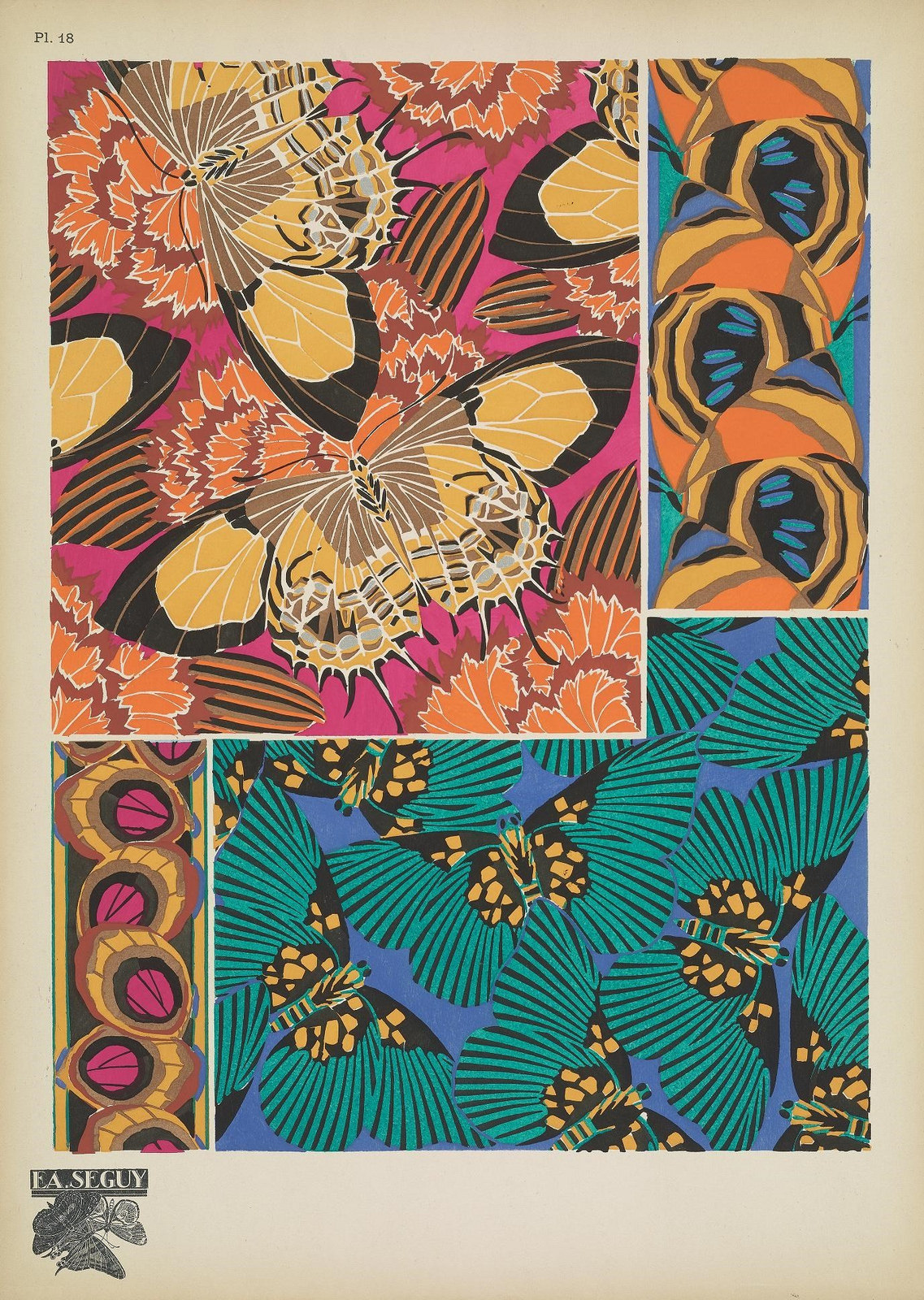
Emile-Allain Séguy was a popular French designer throughout the Art Deco and Art Nouveau movements of the 1920s. Often confused with the French entomologist Eugene Séguy who was active during the same time period, E.A. Séguy designed primarily patterns and textiles and was heavily influenced by the natural world. He was particularly fond of the intricate patterns and beauty of insects (Eugene would have approved), which he saw as “mechanic wonders” that provided abundant inspiration for interior design (Schiff, 157).

View Full Size Image
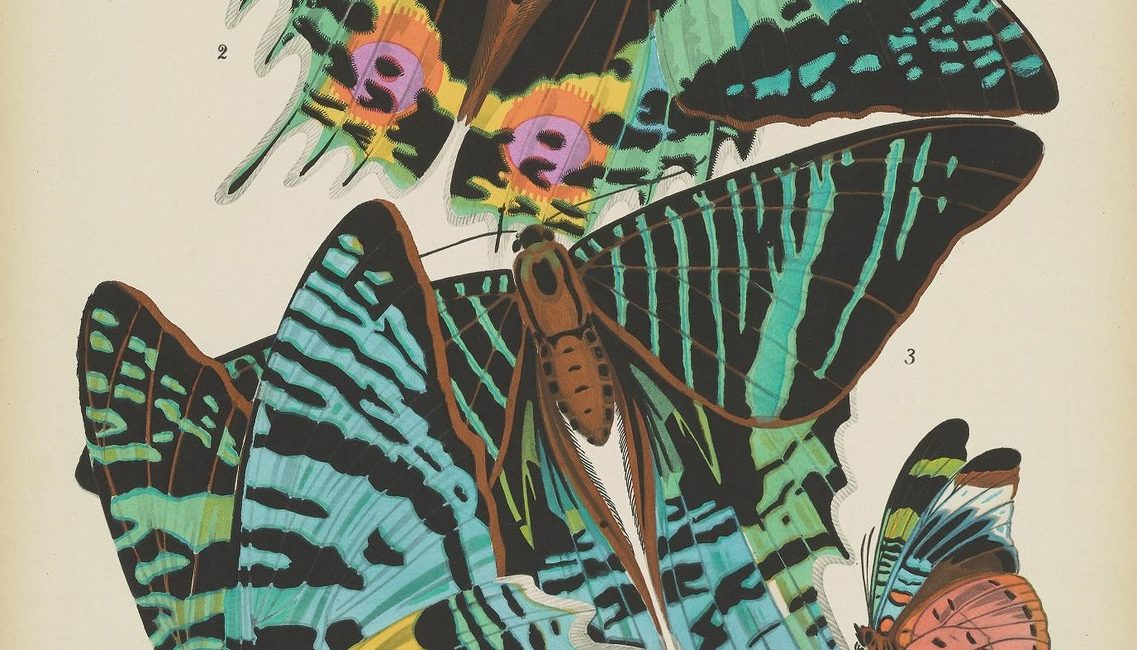
Séguy, Emile-Allain. Papillons. 1925. http://biodiversitylibrary.org/page/48852979. Digitized by Smithsonian Libraries.

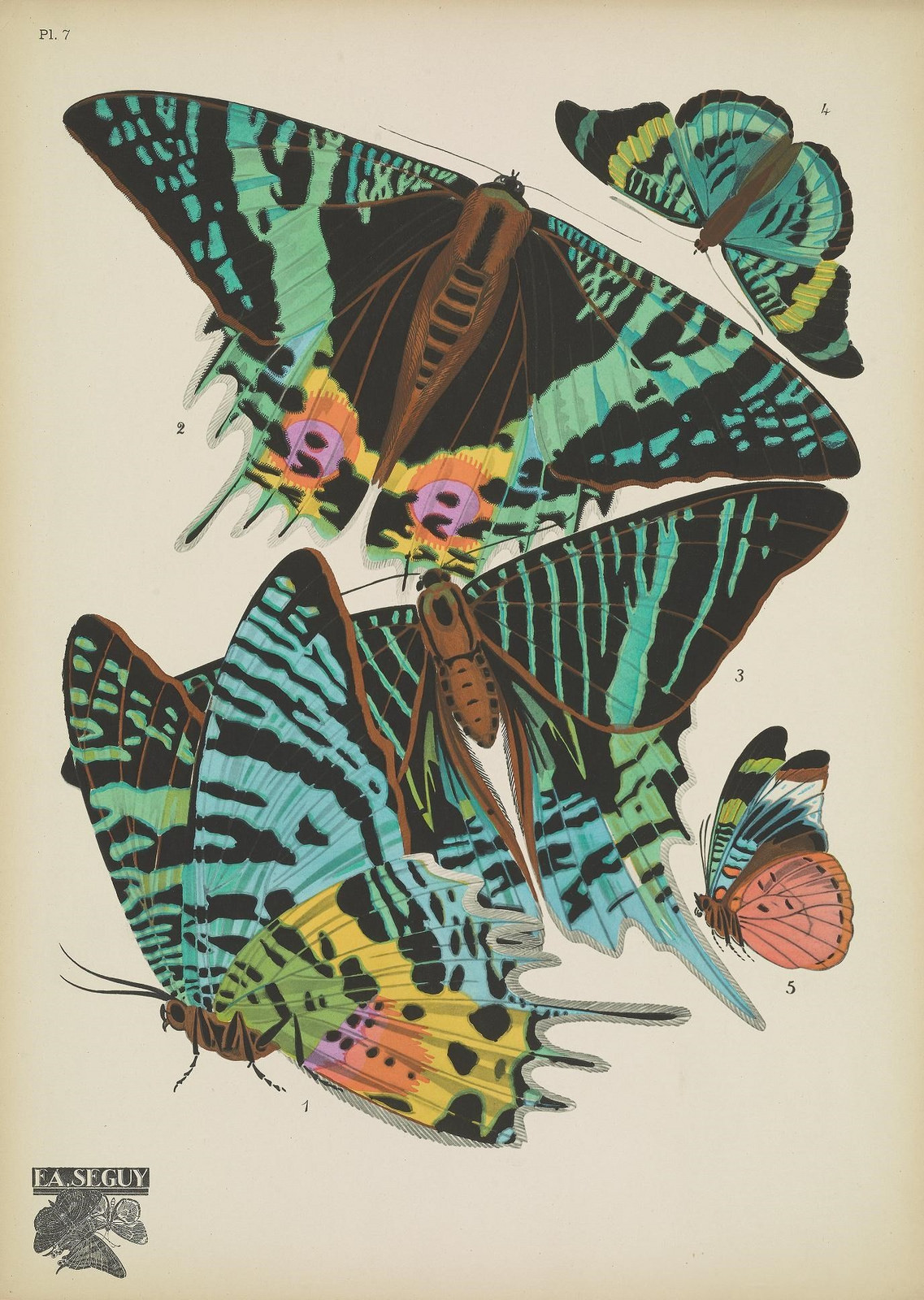
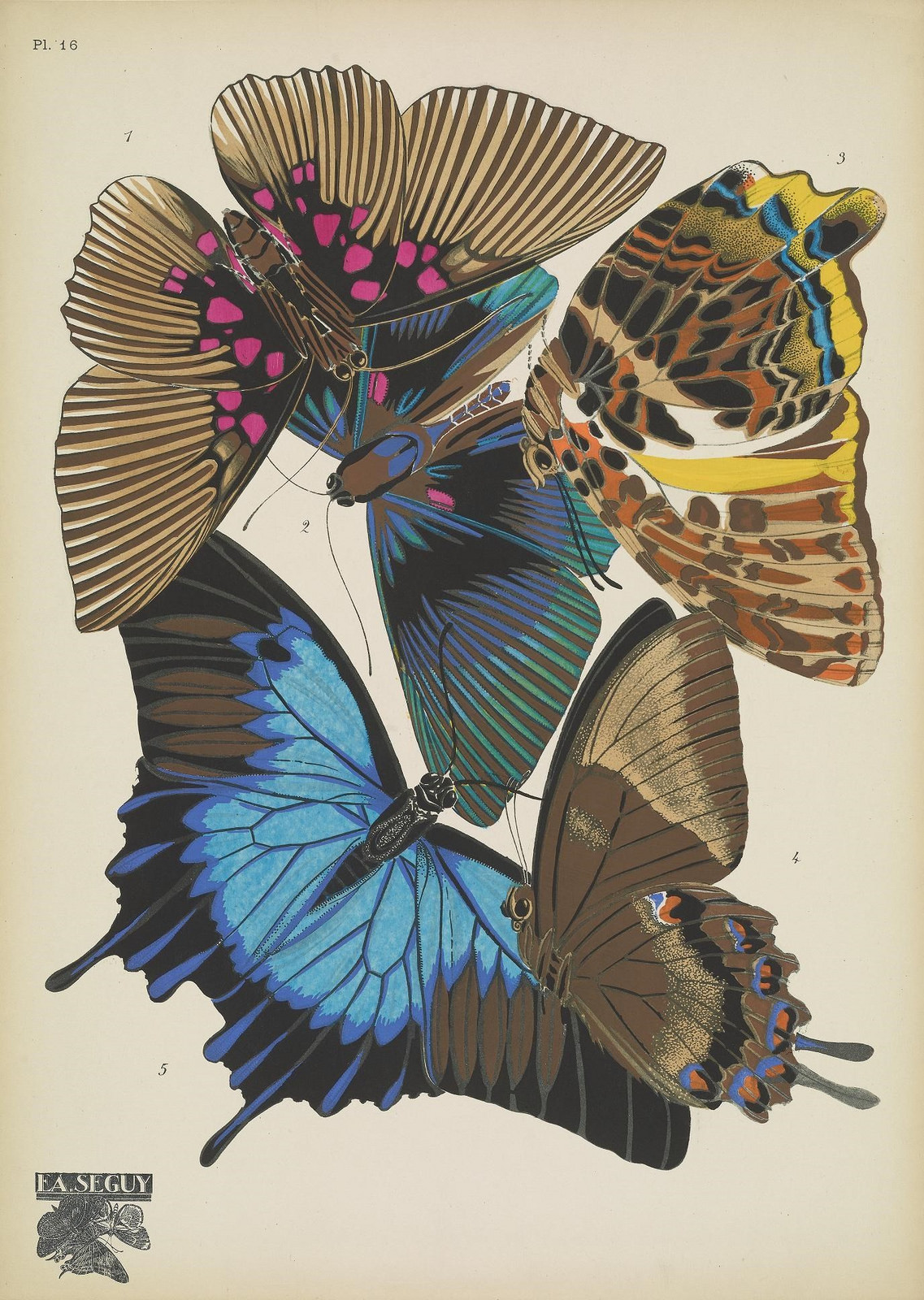
In 1920, the American textile manufacturer F. Schumacher and Co. commissioned the work Papillons, which was to include stunning compositions of butterflies intended for use as wallpaper, textiles, and other interior and fashion design purposes. Referring to scientific illustrations for reference, Séguy reproduced 81 butterflies within 16 compositions, as well as four additional plates of decorative patterns inspired by butterfly wings, using the pochoir technique. The pochoir technique is based on an ancient method that uses stencils for color application. A costly and labor-intensive technique, pochoir was especially popular in Paris in the 1920s. Each color in a design has its own stencil and layers of gouache or other pigments are applied through each stencil by hand with a brush or sponge. The result is an intense and accurate representation of the colors intended for each composition (Schiff, 157).

View Full Size Image
Séguy, Emile-Allain. Papillons. 1925. http://biodiversitylibrary.org/page/48852961. Digitized by Smithsonian Libraries.

Though the butterflies and plates are ultimately meant for design applications, Séguy emphasized his use of scientific illustrations to inspire his art and included a table of scientific names within Papillons identifying the species depicted in each plate and its place of origin. The work includes species from across the globe (Schiff, 158).

View Full Size Image
Séguy, Emile-Allain. Papillons. 1925. http://biodiversitylibrary.org/page/48852957. Digitized by Smithsonian Libraries.

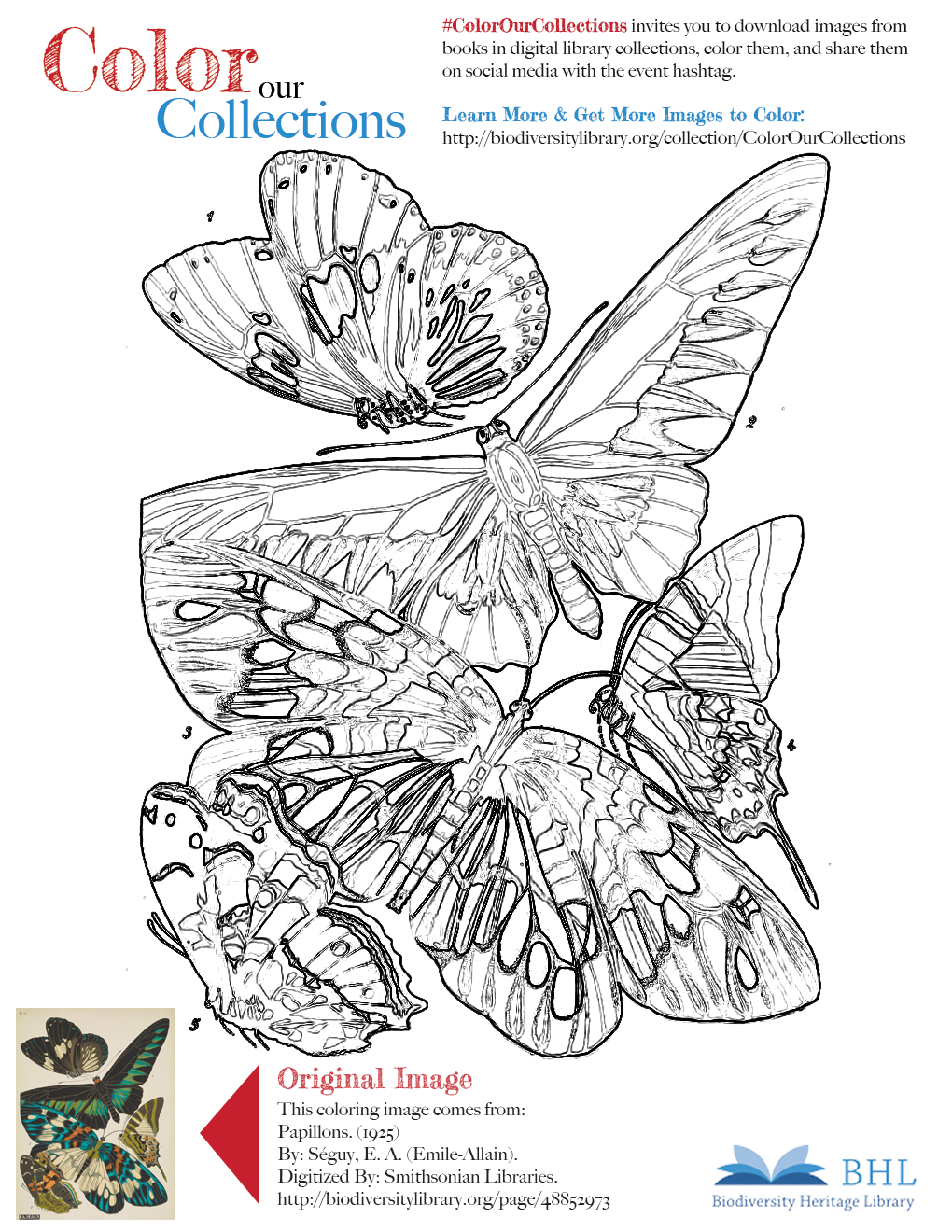
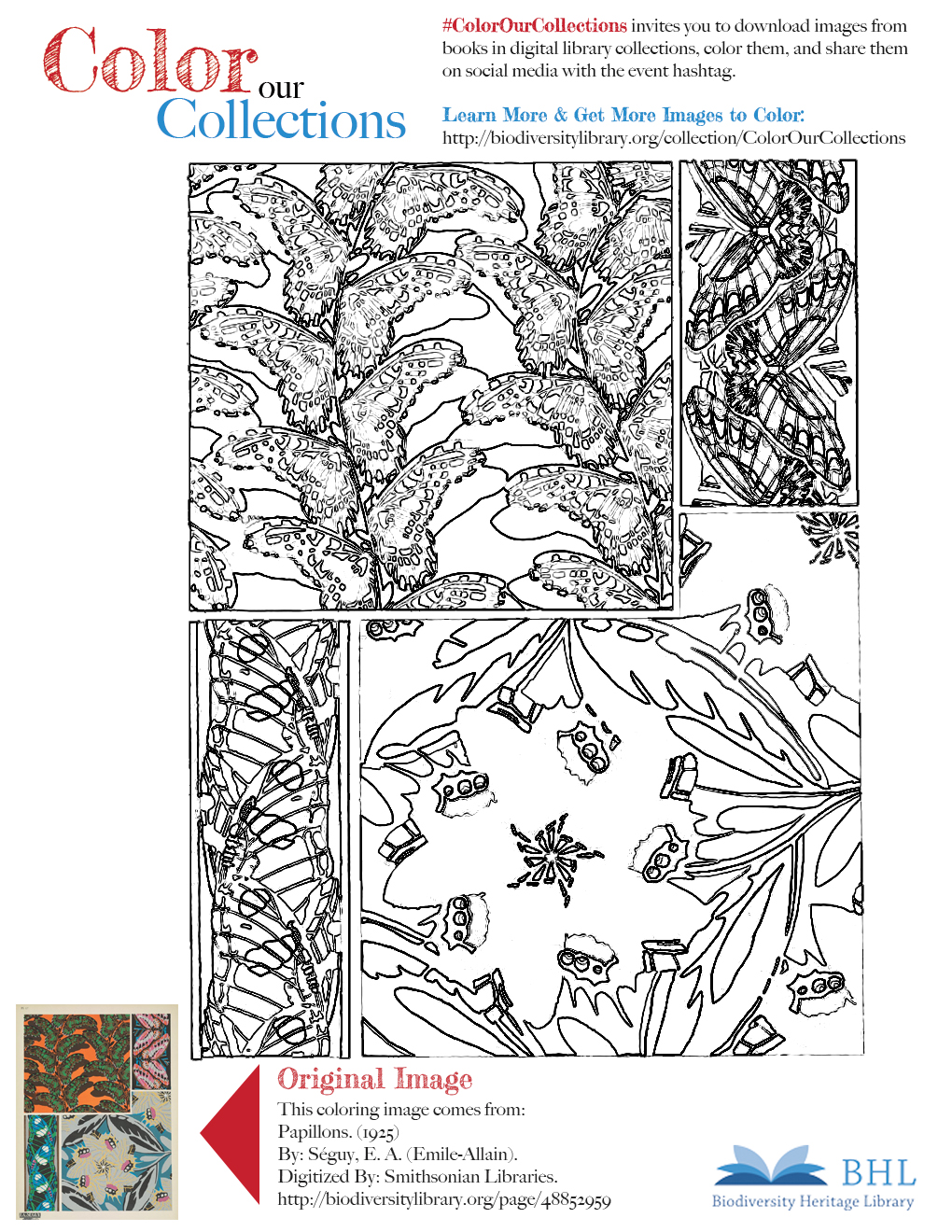
Séguy’s designs were reproduced extensively in textiles, wallpapers, and other decorative applications for nearly a century. You can view all of the plates from this work in Flickr. This week, we put the artwork to another use in the Color Our Collections event. The event invites you to download images from library and cultural institution collections, color them, and share them on social media using the event hashtag #ColorOurCollections. We created a plethora of content for the event, including a Flickr collection containing over 1,000 black and white illustrations from BHL’s collection. We also created a set of coloring pages from colored illustrations in our collection, which are available separately in Pinterest and also as a single PDF.

View Full Size Image
A coloring page made from Séguy’s Papillons. Digitized for BHL by Smithsonian Libraries.

A significant portion of the coloring pages we created are from Séguy’s Papillons, which was digitized for BHL by Smithsonian Libraries. While the colors chosen and so carefully applied by Séguy may reflect the true hues of the natural world, we invite you to design your own butterflies! Download the PDF, choose your own colors for Séguy’s outlines, and share the results on social media by tagging @BioDivLibrary and using the #ColorOurCollections hashtag.

View Full Size Image
A coloring page made from Séguy’s Papillons. Digitized for BHL by Smithsonian Libraries.

The natural world is alive with artistic inspiration. It’s your turn to color your world!

This post is derived from the article:
Schiff, Stacy J. (2012). Fashion in the Natural World. In T. Baione (Ed.), Natural Histories: Extraordinary Rare Book Selections from the American Museum of Natural History Library (pp. 157-159). New York: Sterling Publishing.

February 4, 2016by michelle.underhill
Blog Reel

Color Our Collections

Get your colored pencils ready!

View Full Size Image

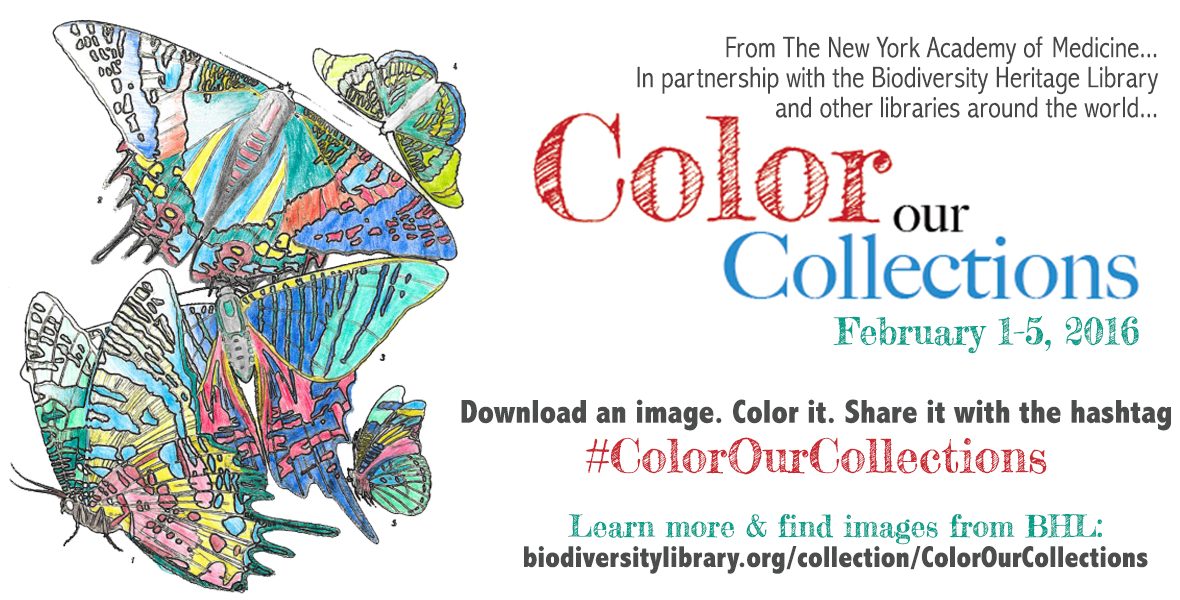
Join us for the Color Our Collections event this week, February 1-5, 2016. Led by The New York Academy of Medicine, the event invites you to download images from library and cultural institution collections, color them, and share them on social media using the event hashtag #ColorOurCollections. With millions of natural history illustrations produced over 500 years in our collection, BHL is thrilled to participate in the event.

 
How to Download Images from BHL for Color Our Collections
 
BHL Flickr

We’ve gathered over 1,000 black and white images from books in the BHL collection into a new Flickr collection. Browse the images, download your favorites, and color away! https://www.flickr.com/photos/biodivlibrary/sets/72157663149641612/

BHL Pinterest

While BHL is full of beautiful black and white images that are just waiting to be colored, there are also thousands of stunning color illustrations in our library that are great candidates for a coloring book. We’ve selected some of our favorites and turned them into coloring pages. They’re available for you to browse, download, and color in Pinterest: https://www.pinterest.com/biodivlibrary/bhl-coloring-pages/

To download one of the images in Pinterest, right click on the pin and choose “save image as” to save the image to your computer. You can then print and color at your leisure!

View Full Size Image

 
BHL Coloring Book

Want to download all of the coloring pages in the BHL Pinterest at once? We’ve prepared a handy PDF, which you can download for free here: 2016 BHL Coloring Book

Source Books in BHL
 

You can browse the books that the images in our Color Our Collections Flickr and Pinterest sets come from in our BHL Collection here: http://biodiversitylibrary.org/browse/collection/ColorOurCollections

Many other institutions will also be participating in the event and sharing images from their own collections for you to download and color. Check out this list to see who else is involved. Be sure to follow the hashtag #ColorOurCollections on social media to learn more, and don’t forget to share your masterpieces with that same hashtag (and tag @BioDivLibrary if it’s from a BHL image). We look forward to seeing your works of art!

February 1, 2016by michelle.underhill

Help Support BHL

BHL's existence depends on the financial support of its patrons. Help us keep this free resource alive!

search

About BHL

The Biodiversity Heritage Library (BHL) is the world’s largest open access digital library for biodiversity literature and archives. BHL operates as a worldwide consortium of natural history, botanical, research, and national libraries working together to digitize the natural history literature held in their collections and make it freely available for open access as part of a global “biodiversity community.”

Join Our Mailing List

Sign up to receive the latest news, content highlights, and promotions.

Subscribe Now

Subscribe to Blog via Email

Enter your email address to subscribe to this blog and receive notifications of new posts by email.

Join 319 other subscribers

Subscribe to Blog Via RSS

Subscribe to the blog RSS feed to stay up-to-date on all the latest BHL posts.

Access RSS Feed

Inspiring Discovery through Free Access to Biodiversity Knowledge.

The Biodiversity Heritage Library makes it easier than ever for you to access the information you need to study and explore life on Earth…for free, anytime, anywhere.


64+ Million Pages of
Biodiversity Literature Online.

EXPLORE

Tools and Services
to Transform Research.

EXPLORE

300,000+
Illustrations on Flickr.

EXPLORE

ABOUT | HARMFUL CONTENT | PRIVACY | SITE MAP | TERMS OF USE