Biodiversity Heritage Library - Program news and collection highlights from BHL
  • Home
  • News
  • Featured Books
    • All Featured Books
    • Book of the Month Series
    • BHL at 20
  • User Stories
  • Campaigns
    • Fossil Stories
    • Garden Stories
    • Monsters Are Real
    • Page Frights
    • Her Natural History
    • Earth Optimism 2020
  • Tech Blog
  • Visit BHL
Home
News
Featured Books
    All Featured Books
    Book of the Month Series
    BHL at 20
User Stories
Campaigns
    Fossil Stories
    Garden Stories
    Monsters Are Real
    Page Frights
    Her Natural History
    Earth Optimism 2020
Tech Blog
Visit BHL
  • Home
  • News
  • Featured Books
    • All Featured Books
    • Book of the Month Series
    • BHL at 20
  • User Stories
  • Campaigns
    • Fossil Stories
    • Garden Stories
    • Monsters Are Real
    • Page Frights
    • Her Natural History
    • Earth Optimism 2020
  • Tech Blog
  • Visit BHL
Biodiversity Heritage Library - Program news and collection highlights from BHL
BHL News, Blog Reel

A Report on the Global Biodiversity Information Facility’s 29th Governing Board Meeting and Associated BHL Meetings in Brussels, October 2022

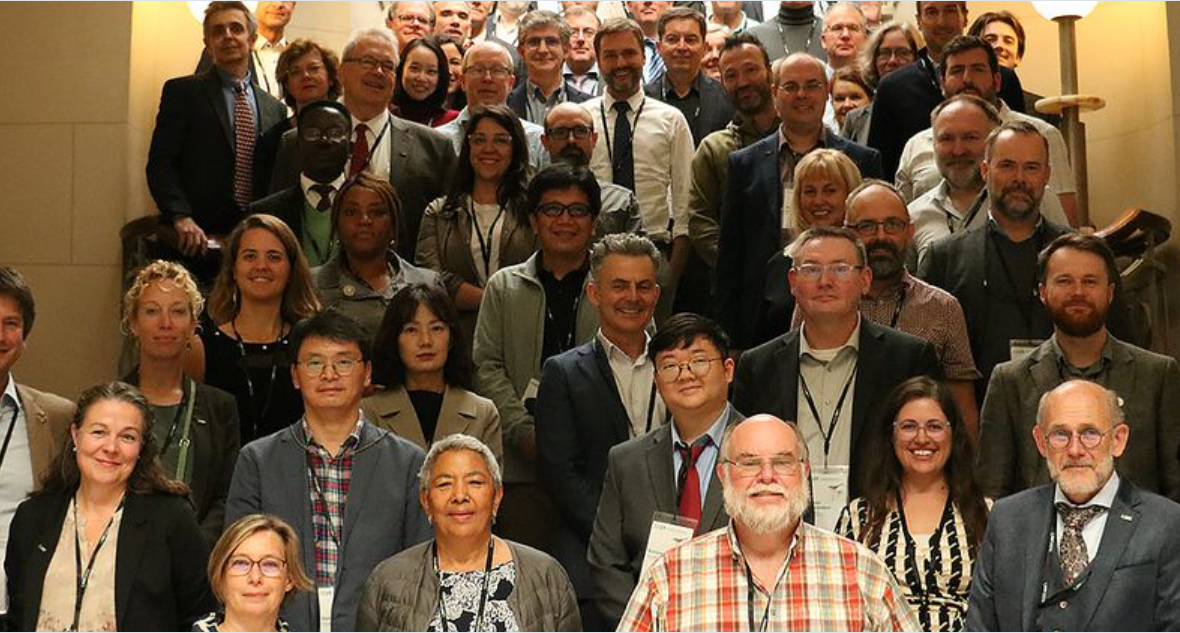
Group photo of meeting attendees assembled on the grand stair case of the Comics Art Museum

Overview

The Global Biodiversity Information Facility (GBIF) convened for the 29th Governing Board meeting (GB29) in a hybrid format in early October 2022. This was the first meeting with in-person attendance since the GB26 held in conjunction with the Biodiversity_Next meeting in Leiden (20-25 October 2019).

Group photo of meeting attendees assembled on the grand stair case of the Comics Art Museum

Group photo of attendees at GB29, Comics Art Museum, Brussels. Photo by Lise Goudeseune / Belgian Biodiversity Platform, licensed under CC BY 2.0.

BHL Program Director Martin R. Kalfatovic attended the meeting in person in his role of BHL Node Manager as well as Alternate Representative for the United States (and Second Vice Chair of the GBIF Budget Committee). BHL Immediate Past Chair, Connie Rinaldo, attended virtually as Acting Head of Delegation, standing in for BHL Chair David Iggulden. Preceding the first day of official meetings was for GBIF committees to meet. During this time, I attended the GBIF Budget Committee meeting. The close of the meeting saw a toast to the outgoing chair, Peter Schalk (Netherlands).

Søren Bundgaard-Jensen, Nils Valland, Martin R. Kalfatovic, Monika Huber, Peter Schalk, Eric Chenin, and Joe Miller pose for a group photo.

GBIF Budget Committee. From left, Søren Bundgaard-Jensen (GBIF), Nils Valland (Norway), Martin R. Kalfatovic (United States), Monika Huber (Germany), Peter Schalk (Netherlands), Eric Chenin (France), Joe Miller (GBIF). Photo by Hilary Goodson (GBIF).

Martin Kalfatovic, Joe Miller, Simon Malcomber, and Abby Benson smile for a group photo

Martin R. Kalfatovic with Joe Miller (GBIF Executive Secretary), Simon Malcomber (Head of Delegation, United States) and Abby Benson (Node Manager, United States). Photo by Tanya Abrahamse.

The main meetings were held in the historic Art Nouveau building, the former Waucquez Warehouse, designed by Victor Horta, and now housing the Comics Art Museum. GBIF delegates were joined by large models of Tintin, Smurfs, and others.

View of the grand stair case in the Comics Art Museum

Interior: Comics Art Museum. Photo by Martin R. Kalfatovic.

Bronze statue of comic character

Interior: Comics Art Museum. Photo by Martin R. Kalfatovic.

Election Results

Voting members of GBIF approved the following actions (see GBIF Press Release for details):

  • Dr. Liam Lysaght, Director of the National Biodiversity Data Centre, Ireland (Chair)
  • Prof. Dr. Birgit Gemeinholzer of the University of Kassel (Chair of the GBIF Science Committee)
  • Dr. Monika Huber of VDI/VDE Innovation + Technik (Chair of the GBIF Budget Committee)
Dr Liam Lysaght of Ireland, chair of the GBIF Governing Board

Dr. Liam Lysaght of Ireland, chair of the GBIF Governing Board. Photo by Maheva Bagard Laursen / GBIF Secretariat, licensed under CC BY 2.0.

Governing Board Meeting

Outgoing GBIF Chair, Tanya Abrahamse (South Africa) gave a summary report of the past year and also reflected on her term as chair, which, as it was extended due to the pandemic, was the longest in GBIF history. Abrahamse noted in her report, “The pandemic years have emphasized that access to accurate information is key to our and the planet’s health.” She closed her remarks with an inspiring, “Go well GBIF!”.

Tanya Abrahamse shares a slide stating "Go Well GBIF! Thank You"

Go Well GBIF! Photo by Martin R. Kalfatovic.

View of Martin's laptop from the audience of the GBIF governing board meeting

GBIF Governing Board Meeting. Photo by Martin R. Kalfatovic.

GBIF Executive Secretary, Joe Miller gave the official annual report and also introduced the GBIF Secretariat staff that were attending the meeting. It was a pleasure to see this many colleagues again in person.

Joe Miller presents slides of the Executive Secretary Report

Joe Miller, GBIF Executive Secretary. Photo by Martin R. Kalfatovic.

Public Session of GBIF Governing Board

During the public session of the GBIF meeting, members of the Secretariat presented on a number of topics. The theme of the session was, “Looking forward: working together to achieve GBIF’s Strategic priorities”.

Hosted Dinner in the Dinosaur Gallery, RBINS

Martin Kalfatovic, Tanya Abrahamse and Donald Hobern smile for a group photo during dinner in the Dinosaur Gallery

Martin R. Kalfatovic with Tanya Abrahamse (GBIF Chair) and Donald Hobern (The International Barcode of Life Consortium). Photo by Kyle Copas (GBIF).

The Royal Belgian Institute for Natural Sciences (RBINS) was the host for the GB29 hosted dinner. There was plenty of time for pre-dinner conversation overlooking the Dinosaur Gallery. Attendees also had the special opportunity to tour the Dinosaur Gallery with one of the RBINS well informed guides. The highlight of the gallery is the “Iguanodon Cage,” an amazing assemblage of nine nearly complete iguanodon (Iguanodon bernissartensis) skeletons discovered in a coal mine in Bernissart, Belgium, at the end of the 19th century. As our guide pointed out, the staging of the skeletons is not accurate by current scientific standards, but provides stunning display.

View of the Iguanodon Cage in the Dinosaur Gallery

View of the Iguanodon Cage in the Dinosaur Gallery. Photo by Martin R. Kalfatovic.

Detailed view of one of the nine iguanodon skeletons

View of the Iguanodon Cage in the Dinosaur Gallery. Photo by Martin R. Kalfatovic.

The museum is the repository of 26 I. bernissartensis skeletons, including the lectotype, (Skeleton Q, catalogue no. IRSNB 1534). BHL has the original description of I. bernissartensis from 1881 by Boulenger in Beneden.

First page of the original description of the species I. bernissartensis

Original description of I. bernissartensis. Page 600. Boulenger, G.A. Bulletins de l’Académie royale des sciences, des lettres et des beaux-arts de Belgique. 3(1), 1881. Contributed in BHL from Missouri Botanical Garden, Peter H. Raven Library.

Illustration of species I. bernissartensis

I. bernissartensis. Plate V. Dollo, M.L. Bulletin du Musée royal d’histoire naturelle de Belgique. 2, 1883. Contributed in BHL from California Academy of Sciences.

A special shoutout to the museum’s Dinosaur Gallery guides who provided specialized knowledge and a keen passion for this long gone species. The dinner, in the shadow of the iguanodons, provided further opportunity for conversations with GBIF delegates and Secretariat staff.

2022 Young Researchers Awards

GBIF was pleased to honor two early career researchers with the GBIF Young Researcher Award.

Armand Rausell-Moreno, who recently completed his Master’s degree in the biodiversity of tropical areas at the Universidad Internacional Menéndez Pelayo (CSIC-UIMP), received the award, as noted in the award citation, “for his research into developing an easy, reproducible and low-cost process for identifying groups and populations whose ecological differences may mask cryptic diversity hiding within currently described species.”

Christopher Schiller, a graduate of the Karlsruhe Institute of Technology (KIT) and now a PhD student at the Freie Universität Berlin. As noted in the award citation, “An expert jury has recognized Schiller for developing a novel demonstration of the potential for combining big data from professional and citizen science with machine-learning models to automate global-scale assessments of plant functional diversity. Nominated by the German delegation to GBIF, Schiller is the first German national to receive the award.”

2022 GBIF Ebbe Nielsen Challenge prize winners

Shared first prize winners were:

  • GridDER: Grid Detection and Evaluation in R
  • bdc: A toolkit for standardizing, integrating and cleaning biodiversity data

More details on the winners and second prize winners can be found at the GBIF Press Release site.

Tour de Table

The annual feature of GBIF’s Tour de Table prompted delegates to provide input on the recently commissioned report on the financial impact of GBIF. Questions posed to delegates were:

  1. How can we best apply the finding of the report in critical national or regional level policy issues?
  2. What kind of partnerships are most important to highlight or pursue based on the finding of the valuation report?
  3. Are there opportunities in partnerships or policy areas where we should consider stronger involvement?

Excursion to the Meise Botanic Garden / Plantentuin Meise

GBIF delegates were able to enjoy an excursion to the nearby Meise Botanic Garden / Plantentuin Meise. Tours of the library, herbarium, and other areas of the Garden were available. Opportunities for additional side and related meetings were also held at the historic Kasteel van Bouchout, also the site of the creation of the Bouchout Declaration on open biodiversity of which BHL is an inaugural signatory.

Entrance to the Plantentuin Meise

Entrance, Plantentuin Meise. Photo by Martin R. Kalfatovic.

Kasteel van Bouchout

Kasteel van Bouchout. Photo by Martin R. Kalfatovic.

Public Symposium

GBIF held a public symposium, “Data beyond borders: collaborating to support biodiversity information needs in Europe and beyond” at the Centre De Conférences Albert Borschette (CCAB). The symposium was open to all GB29 delegates as well as to invited guests (both in person and virtually). Along with GBIF, the symposium was organized by the European Biodiversity Partnership (Biodiversa+).

View of symposium hall at Centre De Conférences Albert Borschette

Centre De Conférences Albert Borschette (CCAB). Photo by Martin R. Kalfatovic.

The overall objective of the session was “to explore and catalyse collaboration across multiple EU institutions, in partnership with Biodiversa+, GBIF Secretariat and nodes, to exploit fully the opportunities for scaling up and harmonising efforts to improve availability of data for implementation of European and global biodiversity objectives.”

The symposium provided an excellent opportunity to learn about the collaborative efforts in biodiversity happening in the European Union.

Additional BHL Meetings

While in Belgium, I had the opportunity to have discussions with Belgian institutions interested in participating in BHL. During the excursion to Meise Botanic Garden / Plantentuin Meise, I met with Nicole Hanquart (Gestionnair scientifque/Chef de service), Bibliotheque, art et archives and Frederik Leliaert (Scientific Director, Herbarium and Library). This meeting was coordinated by Patricia Mergen (Meise Botanic Garden/AfricaMuseum) and Quentin Groom (Meise Botanic Garden). The meeting with Nicole was productive and, hopefully, will lead to the mobilization of content from Meise generated by the BHL Europe project.

A selection of books available in the Plantentuin Meise library

Library spaces. Photo by Martin R. Kalfatovic.

I also had the opportunity to visit the AfricaMuseum/Royal Museum of Central Africa in Tervuren (just outside of Brussels). I’m tempted to write an entire blog post on my visit to the museum (which I last visited during a BHL Europe meeting in 2011). During that visit, the museum was preparing to close for a major renovation/re-envisioning that would turn this epitome of European colonialism to, upon its recent reopening (2018), into a much more inclusive and introspective place.

Interior view of the grand rotunda with two wooden sculptures facing each other

Wooden sculptures, “Skull of Chief Lusinga” and “Nouveau souffle ou le Congo bourgeonnant,” by Congolese artist Aimé Mpane. Photo by Martin R. Kalfatovic.

View from below, looking up at one of the 16 semi-transparent veils hung in front of a golden statue

“RE/STORE” by Aimé Mpane and Jean-Pierre Müller a set of sixteen semi-transparent veils, hung at a slight distance from the existing statues. Photo by Martin R. Kalfatovic.

Due to scheduling conflicts, I was able to meet only with Isabelle Gerrard (Head of Publications Service). Meeting at the less grand, Centre Accueil Personnel Africain (CAVA), across from the museum, we reviewed BHL governance, collections, and also discussed existing BHL Europe content.

Exterior view of the Royal Museum of Central Africa, reflected in a large pool

AfricaMuseum/Royal Museum of Central Africa. Photo by Martin R. Kalfatovic.

Directional signs pointing to the library, shop, reception, and scientific services

Centre Accueil Personnel Africain (CAVA). Photo by Martin R. Kalfatovic.

State of a praying mantis outside Centre Accueil Personnel Africain (CAVA)

Centre Accueil Personnel Africain (CAVA). Photo by Martin R. Kalfatovic.

Special Thanks

Special thanks to André Heughebaert (Head of Delegation, Belgium) and all from the Belgian Biodiversity Platform who did an outstanding job of organizing the hybrid meeting.

November 7, 2022by
BHL News, Blog Reel

2022 BHL Annual Meeting — A Global Hybrid

SPNHC 2022 logo

For the first time, the Biodiversity Heritage Library held its annual meeting in conjunction with a major biodiversity/natural sciences organization. In June 2022, BHL joined with the Society for the Preservation of Natural History Collections (SPNHC) and the Natural Sciences Collections Society (NatSCA) to host our meetings in Edinburgh, Scotland. Recognizing that the global pandemic had forced so many meetings to turn to virtual, we were fortunate to have this 2022 meeting as a hybrid virtual/in-person event.

SPNHC 2022 logo

As part of the joint meeting, BHL organized two symposia that took the place of the usual “BHL Day” events. The first, organized by myself and BHL Chair Constance Rinaldo, “Liberating Natural History Collections Data in Biodiversity Literature” brought together colleagues from across the biodiversity spectrum to show the importance of BHL in the larger sphere of biodiversity. Speakers at the symposium were:

  • Donat Agosti: Nothing in (taxonomic) publishing makes sense except in the light of treatments 
  • Laurence Benichou: All the cool stuff a taxonomic journal can (should?) showcase through semantic enhancement 
  • Lyubomir Penev: Collection and specimen data life cycle completed: The case of Pensoft’s journals and OpenBiodiv Knowledge Graph
  • Gildas Illien: A new romance between taxonomic literature and specimen data? News from Paris 
  • Andrea Toomer: Using specimen citations to show the impact of natural history collections: metrics, machine learning, and manual annotation 
  • Nicky Nicolson: Presenting botanical type citation data from the International Plant Names Index as material citations 
A speaker at a lectern presents to a lecture hall of attendees

Laurence Benichou (Muséum national d’Histoire naturelle) presents on behalf of Gildas Illien at SPNHC 2022. Photo by: Colleen Funkhouser

The second BHL symposium, organized by BHL Vice-Chair David Iggulden and Secretary Kelli Trei, “Reflections on the Biodiversity Heritage Library: Value in Collections and Collaboration”, focused on presentations by BHL staff and discussed projects and programs within BHL. Speakers at the symposium were:

  • Diane Rielinger & Joseph deVeer, Harvard University: The Biodiversity Heritage Library as a platform for connecting natural history materials 
  • Elisa Herrmann, Museum für Naturkunde: Better publications for better research 
  • Nicole Kearney, BHL Australia: Project #RetroPIDs: BHL’s mission to unlock the world’s biodiversity literature 
A speaker at a lectern presents to a lecture hall

David Iggulden (Royal Botanic Gardens, Kew) chairs the BHL Partners symposium at SPNHC 2022. Photo by: Colleen Funkhouser

BHL Business Meeting

To provide the best virtual experience for a globally dispersed audience, the Executive Committee and Secretariat’s business meeting reports were provided via pre-recorded presentations followed by a live question and answer period. In all, 27 representatives and staff from BHL partner institutions joined the business and partner sessions of the meeting.

A group of conference attendees pose for a group photo in front of a projection screen with virtual attendees on screen

BHL representatives at the 2022 BHL Annual Meeting, hosted in conjunction with the SPNHC 2022 conference in Edinburgh, Scotland. Photo by: Martin R. Kalfatovic.

Secretariat Reports

Martin R. Kalfatovic (BHL Program Director and Associate Director, Digital Programs and Initiatives Division at Smithsonian Libraries and Archives) opened the meeting with a report covering BHL’s 2021 program activities and anticipated projects in 2022-23 (Program Director’s Report: The Biodiversity Heritage Library).

BHL Program Manager Colleen Funkhouser attended her first in-person BHL Annual Meeting and provided an overview of BHL operations for the past year. Her Program Manager’s report, (2021: Another Year of Change), provided insight into the BHL’s finances and changes to our outreach activities. Bianca Crowley (BHL Digital Collections Manager) provided a BHL Collection Management update (BHL Collection Management: Knowledge as Water). In her first meeting as a member of the Secretariat, JJ Dearborn (BHL Data Manager) presented a vision for the expansion of BHL as a biodiversity data source (Mobilizing BHL’s Data For Our Planet).

Also presenting was Joel Richard (BHL Technical Coordinator and Head of Web Services & IT at Smithsonian Libraries and Archives), who provided an overview of the BHL Tech Team’s work (Technical Priorities: 2021/2022 Review) and presented the goals of the 2022 BHL Technical Priorities as determined by the BHL Executive Committee. Mike Lichtenberg, BHL’s Developer, also participated in the meeting along with Tech Team members, Susan Lynch (Systems, Digitization & Web Services Librarian, The New York Botanical Garden), Nicole Kearney (Manager, BHL Australia), and Elisa Herrmann (Head of Department Discovery Services and Information Management, Museum für Naturkunde).

Following the Secretariat Reports, Constance Rinaldo (Chair of the Executive Committee of the BHL Members’ Council and former Librarian of the Ernst Mayr Library, Harvard University) set the stage for our upcoming discussions with her presentation on the state of the BHL in 2022 (Looking Forward, Looking Back).

BHL Executive Committee Election

Graphic showing titles, names, institutions, and pictures of the BHL executive committee members.

Members of the 2022-2024 Executive Committee of the BHL Members’ Council. Chair: David Iggulden (Library, Art & Archives at the Royal Botanic Gardens, Kew); Vice-Chair: Kelli Trei (Library, University of Illinois at Urbana-Champaign); Co-Secretaries: Elisa Herrmann (Leibniz-Institut für Evolutions- und Biodiversitätsforschung, Museum für Naturkunde) and Kevin Merriman (Marx Science and Social Science Library, Yale University Library); and Immediate Past Chair: Constance Rinaldo (Retired from the Ernst Mayr Library, Harvard University)

This year was an election year for the BHL Executive Committee. David Iggulden (Library, Art & Archives at the Royal Botanic Gardens, Kew) was elected as Chair. Kelli Trei (Library, University of Illinois at Urbana-Champaign) was elected as Vice-Chair. For the first time, BHL elected Co-Secretaries, Elisa Herrmann (Leibniz-Institut für Evolutions- und Biodiversitätsforschung, Museum für Naturkunde) and Kevin Merriman (Marx Science and Social Science Library, Yale University Library). You can learn more about the Executive Committee members of the BHL Members’ Council for the 2022-2024 term on the BHL About site.

BHL Business Sessions

Working across time zones in a hybrid environment was a challenge. We were not able to get the full participation we normally see at a BHL Annual meeting, however, over the course of two days, BHL partners discussed a number of issues. The major topics were:

Revisions to Collection Development Policy (Led by Bianca Crowley)

Over the past year, BHL’s Collections Committee has been reviewing and revising BHL’s Collection Development Policy. This work is a significant part of Goal 1 (Relevant Content) of BHL’s Strategic Plan. Bianca shared the Committee’s work in progress, reviewing how the sea change in the cultural and social emphasis on diversity and inclusion, as well as the escalation of the climate and biodiversity crises, has impacted the revision of the policy.

What does Strategic Goal 3 (User Engagement) look like going forward? (Led by David Iggulden and Kelli Trei)

With the departure of BHL’s Outreach and Communication Manager in 2021, many of BHL’s outreach activities were placed on hiatus, including a number of tasks associated with Goal 3 (User Engagement) of BHL’s Strategic Plan. David Iggulden and Kelli Trei led BHL partners in a discussion of how we can reimagine user engagement within the new capacity of BHL partners and staff. Feedback from this discussion will help inform a revision of Goal 3.

Replacement of Pan-BHL Scanning Funds (Led by Colleen Funkhouser)

With workflows, staffing, and digitization priorities impacted by the global pandemic over the past several years, BHL took the opportunity to reassess our partners’ priorities for a pan-BHL funding pool that could support small projects across the consortium. This brainstorming session garnered feedback on potential projects that could facilitate increased ingest of priority content into the BHL collection.

Review of Proposed Bylaws Revisions (Led by Kelli Trei)

Over the past year, the BHL Executive Committee and Secretariat worked on a number of changes to the BHL Bylaws. Many of these were procedural or wording changes. A review of these proposals was conducted via video conference earlier in the year and again at the Annual Meeting. A final vote by Members on the proposed changes will occur later in July.

We also had the opportunity to recognize the service to BHL by partner representatives who have retired or moved on to new positions.

Other Meetings

While in Edinburgh, there were a few opportunities for additional side meetings.

Persistent Identifiers Working Group. I joined Nicole Kearney, Connie Rinaldo, and Colleen Funkhouser in a meeting with Rod Page to discuss some of the work of the Persistent Identifiers Working Group (#RetroPIDS) for some interesting discussions about the next steps for the group.

A group of five colleagues pose for a photo in front of a restaurant sign that reads Gourmet Mash Bar Company

From left to right: Martin R. Kalfatovic, Constance Rinaldo, Colleen Funkhouser, Rod Page, and Nicole Kearney. Photo by: Martin R. Kalfatovic

Royal Botanic Garden Edinburgh. David Iggulden and I also had the opportunity to meet with Lorna Mitchell, librarian at the Royal Botanic Garden Edinburgh for a good discussion about library services and the Biodiversity Heritage Library. Lorna also gave us a wonderful tour of the library places and the rare book collection.

Entrance sign for the Royal Botanic Garden Edinburgh, Science Buildings

Royal Botanic Garden Edinburgh, Science Buildings. Photo by: Martin R. Kalfatovic.

Natural History Museum. Returning to London, David Iggulden and I were able to meet with Lisa Cardy, Acting Head of Library and Archives at the Natural History Museum (NHM). It was a great opportunity to catch up with Lisa and learn more about the current activities of the library and archives at NHM. While at the museum, David and I took the chance to see the recently returned Dippy the Diplodocus who long greeted us at BHL meetings at the museum.

Two colleagues pose for a photo in front of an exhibit hall with a Diplodocus on display

Martin R. Kalfatovic and David Iggulden with Dippy the Diplodocus at the Natural History Museum in London. Photo by: Martin R. Kalfatovic.

Royal Botanic Gardens, Kew. Also during my London stay, I was able to again meet with David Iggulden at Royal Botanic Gardens, Kew (RBGK). In addition to David, Fiona Ainsworth (Head of Library & Archives) and Elizabeth Gardner (Deputy Director of Science, Operations) had a wide-ranging discussion about BHL, past, present, and future.

Three colleagues pose for a group photo in front of a water feature outside of the Royal Botanic Gardens, Kew

From left to right: Elizabeth Gardner, Fiona Ainsworth, and David Iggulden at the Royal Botanic Gardens, Kew. Photo by: Martin R. Kalfatovic.

Thanks and the 2023 BHL Annual Meeting

While many BHL partners were able to travel to the 2022 BHL Annual Meeting, conducting a hybrid meeting was important in this transition period. Thank you to all participants, in-person and virtual for their time in making this a successful meeting. Many thanks also to the organizing committee at SPNHC: Robert Cubey, Suzanne Cubey, Nick Fraser, Elspeth Haston, Sankurie Pie, Chanté St Clair Inglis, and Anna Starkey. I also want to thank the BHL Executive Committee and Secretariat staff for their support in making the meeting work.

Looking forward to the 2023 BHL Annual Meeting, we are happy to announce that it is planned to take place in Paris, France, and will be hosted by the Muséum national d’Histoire naturelle (MNHN).

Thanks again to all who participated in our public and business meetings. We look forward to next year’s meeting.

Business Meeting Reports:

  • Chair’s Report (Constance Rinaldo)
  • Program Director’s Report (Martin Kalfatovic)
  • Program Manager’s Report (Colleen Funkhouser)
  • Digital Collections Manager’s Report (Bianca Crowley)
  • Data Manager’s Report (JJ Dearborn)
  • Technical Coordinator’s Report (Joel Richard)
  • Tour of the Room
  • Recognition of Partner Representatives
June 30, 2022by
BHL News, Blog Reel

Supporting the Biodiversity Community: BHL Engages in Global Biodiversity Projects

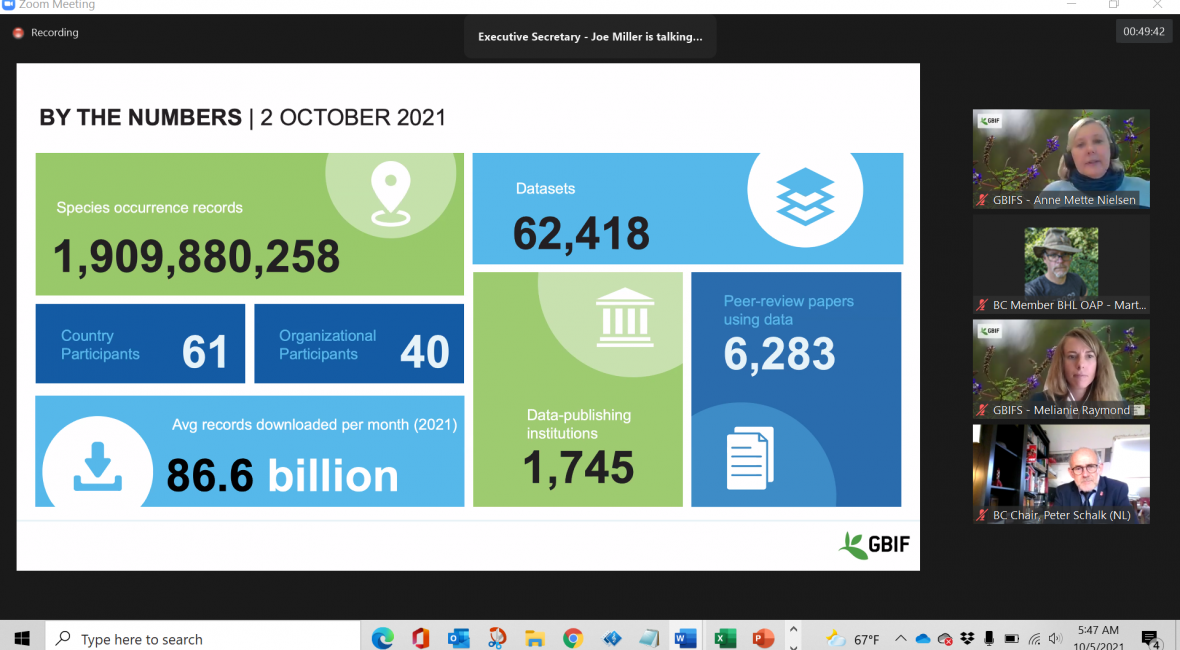
Screenshot of GBIF GB28 meeting with speakers and slides

The Biodiversity Heritage Library thrives on international partnerships and collaborative projects. In the fall of 2021, representatives from BHL participated in a number of planning meetings and conferences in support of global biodiversity projects.

BiCIKL (Biodiversity Community Integrated Knowledge Library)

BiCIKL is a European-funded partnership with 14 partners from 10 countries. The objective is to improve infrastructure to create a Biodiversity Knowledge Hub that provides a full set of linked, open biodiversity data, including names, genetics, occurrence data, natural history, authors and publications. The end result will be access to data at all points in the research cycle. The underpinnings of BiCIKL are Open Science and FAIR (Findable, Accessible, Interoperable and Reusable) data practices.

Within the BiCIKL project, there are 12 work packages. While most of the work packages are of some interest to BHL, BHL Chair Constance Rinaldo is participating most consistently in Work Package 6: “Liberation of data from literature, next-generation semantic publishing and delivery of FAIR data.” The main goals are to rapidly find, extract and link information in published literature during as well as after publication. Plazi and Pensoft are key participants in organizing how literature and snippets of literature (location, taxonomic treatments, occurrence notation, figures and tables for instance) can be integrated into the Global Biodiversity Information Facility (GBIF) and made easily accessible in context.

During the week of 20-24 September, several teams from the BiCIKL technical community attended a hybrid hackathon, hosted virtually and at Meise Botanic Garden in Belgium. Teams worked on small pilot projects to extract data and test linkages among existing infrastructures. Constance Rinaldo and Martin Kalfatovic, BHL Program Director, attended the introductory and final sessions virtually. There were nine projects overall. The pilots that potentially reflect BHL interests included: Linking specimens with material citation and vice versa; Hidden women in science; and Enriching Wikidata with information from OpenBiodiv about type specimens in context from different literature sources. The higher level conclusions were: harmonizing APIs across platforms; the shared cloud facilitates collaboration; wikidata is very useful for connecting different infrastructures; and scalability/granularity will be ongoing issues. A summary of the hackathon was presented by Quentin Groom at the TDWG 2021 conference.

Global Biodiversity Information Facility 2021 Governing Board Meeting (GB28)

The GBIF GB28 was once again held virtually from 5-7 October 2021. GB28 brought together delegates and other representatives from GBIF participating countries and organizations. BHL Chair Constance Rinaldo represented BHL as Head of Delegation (non-voting), and BHL Program Director Martin Kalfatovic is the BHL Node representative.

Tanya Abrahamse, Chair of the GBIF Governing Board, opened the meeting and presented a welcome from Joanne S. Tornow, Assistant Director, National Science Foundation, USA.

Over the course of the meeting, reports from the GBIF Executive Secretary (Joe Miller), the Budget Committee, Science Committee, and Nodes Committee were presented. Updates from the GBIF Secretariat were delivered as well as the GBIF 2022 Work Programme and draft budget.

Screenshot of GBIF GB28 meeting with speakers and slides

GBIF Executive Secretary, Joe Miller, presents GBIF By the Numbers at the annual GBIF Governing Board Meeting (GB28).

A highlight of the Governing Board meeting included the presentation of the winner of the Ebbe Nielsen Challenge. This year, an International team led by Alexander Zizka of iDiv won for creating a web-based tool linking natural science and political science. The tool, Bio-Dem, is an open-source web-app for exploring temporal and spatial relationships between the availability of biodiversity data and the dimensions of democracy.

The Young Researcher Awards this year went to:

  • Michael Belitz, a PhD candidate from the United States, selected for work on linking new analytical approaches aimed at advancing understanding of phenological impacts of climate change; and
  • Julen Torrens Baile, a Master’s student at the University of Navarra, selected for research into improving methods of modelling species distributions for invasive freshwater fish.

In other actions, Belgium was selected as the host for the 2023 Governing Board meeting, and Martin Kalfatovic was elected as 2nd Chair of the Budget Committee.

BHL Symposium at TDWG 2021

Biodiversity Information Standards (TDWG) hosted its virtual annual conference from 18-22 October with a theme of “Connecting the world of biodiversity data: uniting people, processes, and tools.” Hosted by the University of Florida Biodiversity Institute along with the Florida Museum of Natural History and iDigBio, TDWG 2021 brought more than 400 attendees together via the Whova virtual conference platform. The community engaged in online discussions, interactive workshops, in-depth symposia, contributed oral presentations, and a TDWG 2021 Worldwide Bioblitz.

TDWG 2021 conference logo: Connecting the world of biodiversity data: standards uniting people, processes, and tools

TDWG 2021 Virtual Annual Conference. Connecting the world of biodiversity data: standards uniting people, processes, and tools

On 21 October, BHL hosted a symposium titled “SYM11 Building collaborative resiliency through the Biodiversity Heritage Library,” organized by Constance Rinaldo (BHL Chair) and Colleen Funkhouser (BHL Program Manager, Smithsonian Libraries and Archives).

Moderated by Constance Rinaldo, the symposium included six talks from speakers around the world.

  • Cultivating Resilience in the Biodiversity Heritage Library During the Global Pandemic: Improving access to existing content – Colleen Funkhouser (BHL Secretariat, Smithsonian Libraries and Archives)
  • BHL and the Pandemic: An accelerator of digital advances and transformation – Alice Lemaire (Muséum national d’Histoire naturelle, Paris)
  • Algorithms for connecting scientific names with literature in the Biodiversity Heritage Library via the Global Names Project and Catalogue of Life – Geoffrey Ower (University of Illinois)
  • Biodiversity Heritage Library and Global Names: Successes, opportunities and the challenges for the future collaboration – Dmitry Mozzherin (University of Illinois Urbana-Champaign)
  • #RetroPIDs: The missing link to the foundation of biodiversity knowledge – Nicole Kearney (BHL Australia)
  • The BHL-Plazi Partnership: Getting data from the 1800s directly into 21st century, reused digital accessible knowledge – Donat Agosti (Plazi)

Discussions throughout the conference emphasized the need for better ways to extract and connect data from historic literature including the collections within BHL.

You can view a complete list of symposia, workshops, and discussion session descriptions on the TDWG conference website. All conference abstracts are published in the TDWG Proceedings 2021 in Biodiversity Information Science and Standards.

November 10, 2021by
BHL News, Blog Reel

BHL at TDWG 2020

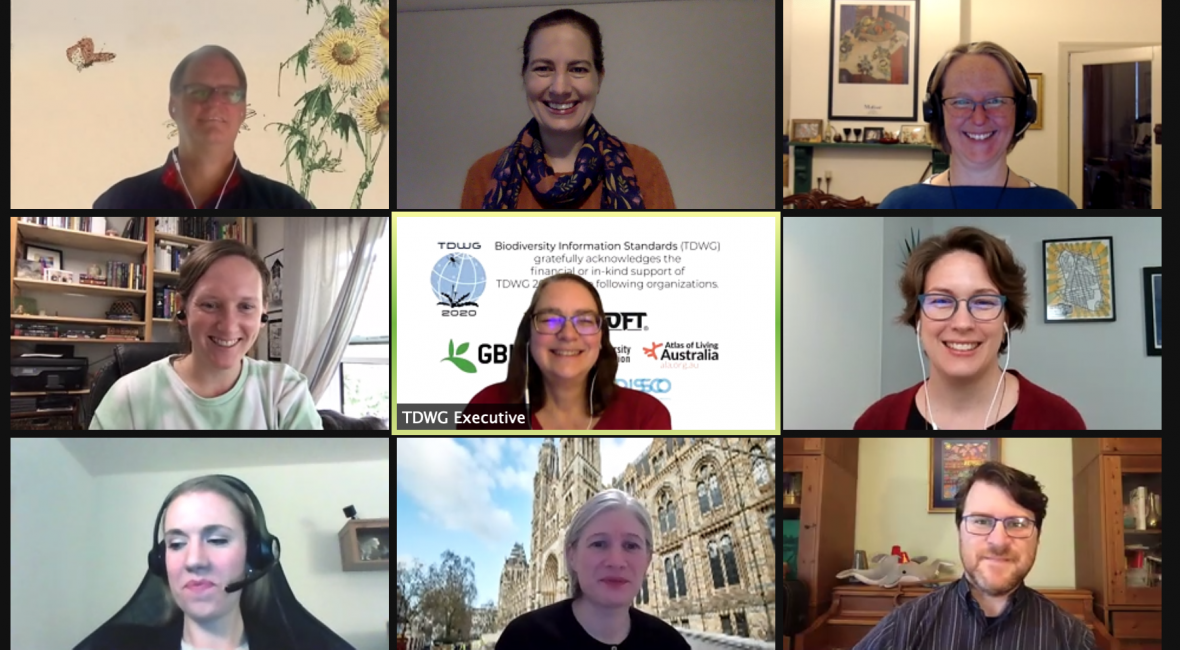
Screenshot of a Zoom call with a collage of various people's faces.

logo for TDWG 2020 conferenceThis year, as organizations around the world have done in response to the global COVID-19 pandemic, Biodiversity Information Standards (TDWG) held its annual conference virtually. With a mix of online working sessions, webinar-style symposia, presentations, panel discussions, and recorded presentations, this year’s conference was held across two separate periods—the first dedicated to working sessions during the week of 21-25 September 2020 and the second to symposia and panel sessions the week of 19-23 October 2020.

As the TDWG 2020 Annual Conference website states, the conference “serve two purposes:

  • to provide a forum for developing, refining, and extending standards in response to new challenges and opportunities;
  • and to provide a showcase for biodiversity informatics – much of which relies on the standards created by TDWG and other organizations.”

You can view the complete list of working session and symposia and discussion session descriptions on the TDWG website. Conference sessions were also recorded and are available for viewing on the TDWG YouTube channel.

BHL Symposium at TDWG 2020

On 20 October 2020 as part of the TDWG 2020 virtual conference, BHL hosted a symposium, “SYM03 Enhancing Connections With the Global Neighbourhood Through Expanding Partnerships”, organized by Constance Rinaldo (Librarian of the Ernst Mayr Library, Harvard and Chair of the BHL Executive Committee) and Colleen Funkhouser (BHL Program Manager, Smithsonian Libraries).

The symposium consisted of four talks, covering topics including building BHL’s technical strategy, digital object identifiers (DOIs), taxonomic name finding services, and BHL’s response to the global COVID-19 pandemic. See more details about the symposium and each talk below.

Screenshot of a Zoom call with a collage of various people's faces.

Organizers, presenters, and facilitators for the BHL Symposium at TDWG 2020. Top, L to R: Martin Kalfatovic, Nicole Kearney, Ely Wallis; Middle, L to R: Holly Little, Constance Rinaldo, Colleen Funkhouser; Bottom, L to R: Elisa Herrmann, Jane Smith, Joel Richard. Image courtesy of Nicole Kearney.

SYM03 Enhancing Connections With the Global Neighbourhood Through Expanding Partnerships
Abstract: The Biodiversity Heritage Library (BHL) is more than a digital library, it is a key resource for data related to biodiversity. Data such as museum specimens, taxonomic names, environmental and geolocation variables is embedded in the published and unpublished literature found in BHL. Over the past year, BHL has developed a five year strategic plan designed to bring more focus on data, technology and partnerships. BHL is already well-established within the global bibliographical knowledge base. The plan for the symposium is to highlight some new directions and identify synergies and connections with current, new and potential partners in the biodiversity knowledge infrastructure.

  • Building the Biodiversity Heritage Library’s Technical Strategy — Elisa Herrmann (Museum für Naturkunde Berlin)
    • Presentation Slides
  • Discovering the Platypus: From Its Scientific Description to Its DOI — Nicole Kearney (BHL Australia, Museums Victoria)
    • Presentation Slides
  • Improving Taxonomic Name Finding in the Biodiversity Heritage Library — Joel Richard (Smithsonian Libraries)
    • Presentation Slides
  • The Biodiversity Heritage Library Response to the Global COVID-19 Pandemic — Delivered by Martin Kalfatovic (BHL Secretariat, Smithsonian Libraries). Co-authors: Constance Rinaldo (Ernst Mayr Library, Harvard); Jane Smith (Library and Archives, Natural History Museum, London); David Iggulden (Library, Art & Archives at the Royal Botanic Gardens, Kew); Colleen Funkhouser (BHL Secretariat, Smithsonian Libraries).
    • Presentation Slides
Screenshot of a slide discussing BHL's objectives for its technical development goal.

Goal 2 of BHL’s 2020-2025 Strategic Plan focuses on developing the Library’s tools and services. During her talk, Building the Biodiversity Heritage Library’s Technical Strategy, Elisa Herrmann (Museum für Naturkunde Berlin) discussed the five objectives of that goal and BHL’s plans to implement those objectives. Image courtesy of Grace Costantino.

Screenshot of a Zoom call showing a slide with the BHL digital library interface on the landing page for the DOI of the platypus.

As Nicole Kearney (BHL Australia, Museums Victoria) shared during her talk, Discovering the Platypus: From Its Scientific Description to Its DOI, the first scientific description of the platypus (Ornithorhynchus anatinus) now has a DOI (https://doi.org/10.5962/p.304567), assigned by BHL. This allows anyone to easily cite this description directly and enables easier tracking of those citations. Image courtesy of Grace Costantino.

Screenshot of a Zoom call with a slide showing benefits of BHL's new name finding algorithm.

During his talk, Improving Taxonomic Name Finding in the Biodiversity Heritage Library, Joel Richard (Smithsonian Libraries) shared some of the benefits of implementing the new Global Names gnfinder tool to support taxonomic name finding in BHL. Image courtesy of Grace Costantino.

Screenshot of a Zoom call with a slide stating quotes from partners about BHL's impact during the COVID-19 pandemic.

During the presentation The Biodiversity Heritage Library Response to the Global COVID-19 Pandemic, Martin Kalfatovic (BHL Secretariat, Smithsonian Libraries) shared statements from partners about BHL’s impact during the pandemic. Image courtesy of Grace Costantino.

The symposium was well-received, with approximately 100 people attending. The talks sparked interesting discussions, with questions around such topics as opportunities for Wikidata integration; supporting annotations as part of a future IIIF integration; strategies for improving optical character recognition (OCR); development of visualizations using BHL data; identification of additional useful data access points, such as collection and specimen codes and locality names; and potential strategies for supporting third-party application development using BHL data, such as through researcher prizes and challenges.

You can view a recording of the symposium on YouTube and all session presentation files in this Google folder.

October 30, 2020by michelle.underhill
BHL News, Blog Reel

BHL at Biodiversity Next

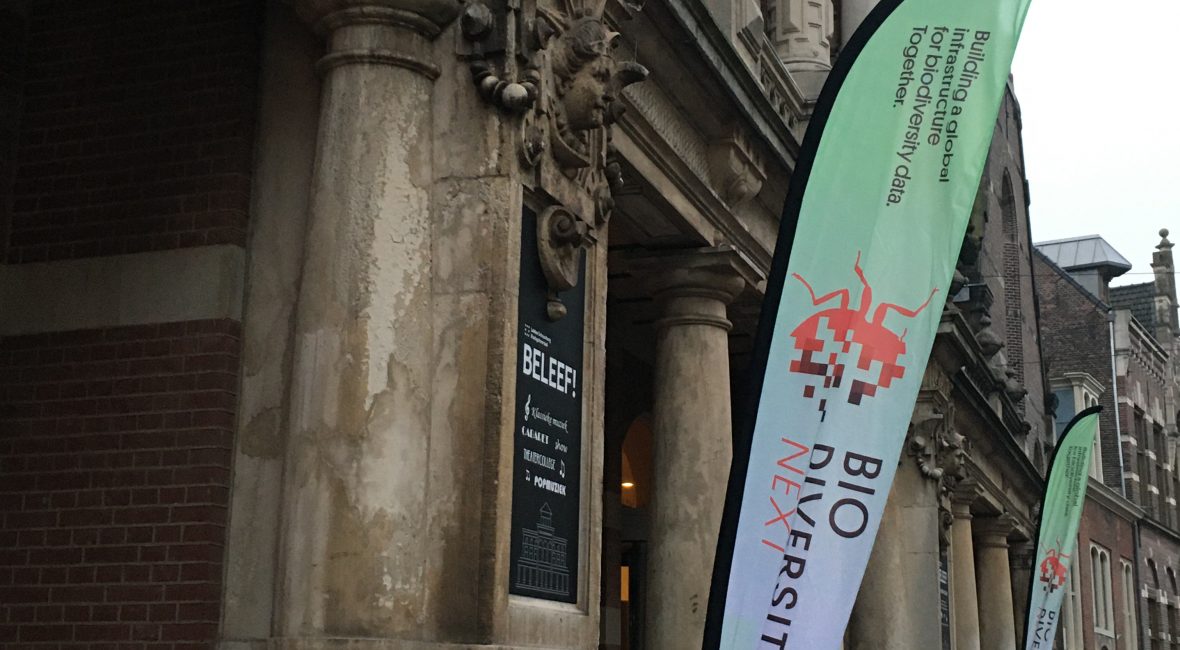
Biodiversity_Next banners

Biodiversity_Next main conference venue, Stadsgehoorzaal, in Leiden, Netherlands. Photo Credit: Grace Costantino.

In October 2019, more than 700 people from over 75 countries gathered in Leiden, the Netherlands for Biodiversity_Next, a joint conference by GBIF, DISSCo, iDigBio, CETAF, TDWG, and LifeWatch Eric. The first conference of its kind to bring together so many major international biodiversity organizations, the conference aimed to promote innovation in biodiversity and geodiversity information management and applications; encourage collaboration across these communities to enhance data standards and management practices; and foster the development of the skill sets necessary to embark on data-intensive scientific research and solutions.

Hosted by the Naturalis Biodiversity Center, a BHL Affiliate, in collaboration with the Netherlands Biodiversity Information Facility, the main conference ran from 22-25 October 2019, with pre-conference workshops occurring 20-21 October, as well as organization-specific meetings for GBIF, CETAF, and TDWG being held in conjunction with the conference.

BHL colleagues from around the world traveled to Leiden for Biodiversity_Next. Eighteen BHL-affiliated representatives from our partner community, representing 13 institutions from nine countries, attended the conference. Dr. Elycia Wallis, Engagement Manager at the Atlas of Living Australia and the BHL Member representative for BHL Australia, served as a key member of the Programme Committee.

Each conference day began with a plenary session featuring diverse speakers ranging from scientists to policy makers and even artists. From the policy perspective, Ana Maria Hernandez Salgar outlined major findings from the recent IPBESGlobal Assessment, while Jorge Soberón described efforts by the Mexican biodiversity agency CONABIO (a BHL Member) to make data useful for politicians and policy makers, and Maxwell Gomera of the UN Environment Program examined the importance of finding solutions that protect both wildlife and people and the value of using storytelling to reach policy makers in profound ways. On the science side, Paul Hebert of the International Barcode of Life Consortium described advances and ambitions in DNA barcoding and global bio-surveillance, while Carrie Seltzer spoke about the diverse and impactful ways that iNaturalist engages people in the biodiversity data system through citizen science.

The plenary sessions also brought in representatives from the world of art and design. Dutch artist Theo Jansen shared his work for the past 30 years creating “beach animals” constructed of PVC pipes that move using wind energy, while Dutch artist Jalila Essaidi described her work to create bio-art, from “bulletproof human skin” created using synthetic spider silk to clothing made from fabric produced from manure.

Beyond the plenary sessions, more than 300 speakers presented over 350 talks as part of over 60 sessions and workshops related to science, policy, standards, and infrastructure. Several major themes emerged across many of the sessions, including the importance of adopting FAIR data principles; the need to link together the many diverse biodiversity data systems; the importance of unique identifiers for data, including DOIs and ORCIDs; and the possibilities of using Wikidata as a source of and way to connect various identifiers.

BHL colleagues were very active in the conference, with 11 BHL-affiliated staff presenting or moderating 16 talks or sessions. See the full list of BHL-affiliated staff presentations at the end of this post. Additionally, members of the BHL Executive Committee (EC), including Constance Rinaldo (EC Chair, Ernst Mayr Library, Harvard University) and Martin Kalfatovic (BHL Program Director, Smithsonian Libraries), as well as colleagues from the Muséum national d’Histoire naturelle, represented BHL at the various organizational meetings, including GBIF, TDWG, and CETAF.

BHL was also highlighted frequently throughout the conference, with many talks discussing the importance of historic literature for science today, the need to integrate BHL data into other biodiversity data services like GBIF and the Catalogue of Life, and the importance of incorporating reciprocal links between BHL and these various data systems. These concepts were distinguished as a high value priority by many of the session presenters.

“Biodiversity_Next was an inspiring and exciting opportunity to hear from more than 700 colleagues representing organizations all over the world,” said Constance Rinaldo, Chair of the BHL Executive Committee. “As a representative to GBIF and TDWG and by leading a symposium, I came away fully understanding the impact of collaboration among biodiversity organizations and data integration: this is the key to the future of biodiversity science.”

BHL Symposium

The Biodiversity Heritage Library organized a Symposium as part of Biodiversity_Next. Entitled Improving Access to Hidden Scientific Data in the Biodiversity Heritage Library, the session featured presentations offering examples of and ideas about how BHL data can be used to empower research and how enhanced data delivery methods can facilitate real-time computing.

Woman standing at a podium

Constance Rinaldo introducing the BHL Symposium at Biodiversity_Next. Photo Credit: Grace Costantino.

The Symposium was moderated by Constance Rinaldo (Chair, BHL Executive Committee) and included the following presentations:

  • “Introduction to the Symposium: Improving Access to Hidden Scientific Data in the Biodiversity Heritage Library” (Presented By: Constance Rinaldo — Ernst Mayr Library, Harvard University). Abstract | Slides
  • “BioStor Next (a.k.a. Text-Mining BHL: Towards New Interfaces to the Biodiversity Literature” (Presented By: Roderic Page — University of Glasgow | BioStor). Abstract | Slides
  • “It’s Not Always FAIR: Choosing the Best Platform for Your Biodiversity Heritage Literature” (Presented By: Nicole Kearney — BHL Australia, Museums Victoria). Abstract | Slides
  • “Finding Scientific Names in Biodiversity Heritage Library, or How to Shrink Big Data” (Presented By: Dmitry Mozzherin — University of Illinois, Champaign). Abstract | Slides
  • “Extracting Data From Legacy Taxonomic Literature: Applications for Planning Field Work” (Presented By: Francisco Andres Rivera-Quiroz — Naturalis Biodiversity Center). Abstract | Slides
  • “BHL and Specimen Collection Data: The Needle in the Festuca Stack” (Presented By: Martin Kalfatovic — Smithsonian Libraries). Abstract | Slides
Woman standing at a podium.

Nicole Kearney presenting during the BHL Symposium at Biodiversity_Next. Photo Credit: Grace Costantino.

Topics covered within the Symposium presentations included exploring the types of data—from scientific names and geographic localities to species treatments and specimen codes—that can be extracted from the literature; methods to extract that data, including recent work to improve the speed and effectiveness of the Global Names algorithm for identifying taxonomic names in the BHL corpus; applications for that data, including helping to inform field work; recent work by BHL to improve access to the content in its collection, including full text search and the utilization of transcriptions for archival materials; the value of linking BHL literature collections with other databases like GBIF; and the importance of and the role BHL can play in the assignment of DOIs for historic literature.

You can explore more details about each of the presentations in this @BioDivLibrary Twitter thread.

Beyond the Conference

Beyond the sessions and workshops, there were several opportunities for networking and tours around the conference.

people gathered in a cafe

BHL colleagues gathered for the informal get-together at a local Leiden venue. Left to Right: David Iggulden (Library, Art & Archive, Royal Botanic Gardens, Kew); Clément Oury (Muséum national d’Histoire naturelle); Jiří Frank (National Museum, Prague); Chloé Besombes (Muséum national d’Histoire naturelle); Jana Hoffmann (Museum für Naturkunde Berlin); Constance Rinaldo (Ernst Mayr Library, Harvard University). Photo Credit: Martin Kalfatovic.

On Monday, 21 October, the day before the start of the main conference, BHL colleagues gathered for an informal get-together at a local Leiden venue. The gathering was an excellent opportunity for colleagues—some of which had never met in person—to connect.

large group of people at a party

Attendees at the Biodiversity_Next reception hosted in the Naturalis Biodiversity Center. Photo Credit: Grace Costantino.

Biodiversity_Next also hosted a reception the evening of the first conference day at the newly-opened Naturalis Biodiversity Center. Hundreds of attendees had a unique opportunity to explore the museum’s exhibits and network with representatives from around the world.

The Library of the Naturalis Biodiversity Center, a BHL Affiliate, also arranged tours of the general and special collections for several BHL colleagues. Godard Tweehuysen, Librarian and Information Specialist at Naturalis, showcased several special and unique items from the collection, including a copy of Les Pigeons (1808) by Coenraad Jacob Temminck (the first director of Rijksmuseum van Natuurlijke Historie—today Naturalis) with the original artwork by Pauline Courcelles and a special proofprint copy of Malacostraca Podophthalmata Brittanniae (1815-1875), which Naturalis has digitized for BHL and featured on the BHL blog.

drawing of a pigeon in a book

Original artwork from Les Pigeons (1808) in the Naturalis Library collection. Photo Credit: Grace Costantino.

drawing of a lobster in a book,

Proofprint copy of Malacostraca Podophthalmata Brittanniae (1815-1875) in the Naturalis Library collection. Photo Credit: Grace Costantino.

Looking ahead, during the Biodiversity_Next closing ceremony, conference organizers made an exciting announcement. A follow-up to the Biodiversity_Next conference will be held in Arlington, Virginia, USA in September 2020. The Biodiversity Summit is a joint meeting organized by iDigBio, GBIF, TDWG, and the Smithsonian’s National Museum of Natural History. Scheduled for 20-25 September 2020, the Summit will be an excellent opportunity to reconnect, continue the momentum fueled by Biodiversity_Next, and further strengthen collaborations to advance biodiversity information science and offer real, innovative, and attainable solutions to tackle today’s climate and environmental challenges.

We were privileged to be a part of such an exciting, constructive, and collaborative opportunity as Biodiversity_Next and look forward to coming together again in 2020 for the Biodiversity Summit! Until then, we’ll continue to work with the biodiversity community to incorporate data from the literature into the broader network of systems and services supporting the work of researchers, policy makers, citizen scientists and beyond.

Presentations and Moderated Sessions by BHL-Affiliated Staff from BHL Consortium Institutions

  • “The European Journal of Taxonomy: Enhancing Taxonomic Publications for Dynamic Data Exchange and Navigation” (Presented By: Laurence Bénichou — Muséum national d’Histoire naturelle). Abstract
  • “People of Collections: Facilitators of Interoperability?” (Presented By: Chloé Besombes — Muséum national d’Histoire naturelle). Abstract
  • “Hazards and Disasters in the Geological and Geomorphological Record: A Key to Understanding Past and Future Hazards and Disasters and Their Impact on Life” (Presented By: Jiří Frank — National Museum, Prague). Abstract
  • BHL Presentation as part of “Biodiversity Informatics 101: Preparing for Biodiversity_Next and Beyond” (Presented By: David Iggulden — Library, Art & Archives, Royal Botanic Gardens, Kew). Abstract
  • “BHL and Specimen Collection Data: The Needle in the Festuca Stack” (Presented By: Martin Kalfatovic — Smithsonian Libraries). Abstract | Slides
  • “It’s Not Always FAIR: Choosing the Best Platform for Your Biodiversity Heritage Literature” (Presented By: Nicole Kearney — BHL Australia, Museums Victoria). Abstract | Slides
  • “If Wikipedia Is the Gateway to Biodiversity Knowledge, How Do We Open the Gate?” (Presented By: Nicole Kearney — BHL Australia, Museums Victoria). Abstract | Slides
  • “Mesoamerica’s Crop Wild Relatives: A New Approach for Conservation Planning” (Presented By: Patricia Koleff — CONABIO). Abstract
  • “Planning Landscape Connectivity in Mexico Under Global Change” (Presented By: Patricia Koleff — CONABIO). Abstract
  • “Biodiversity Data Management: Regional Challenges” (Presented By: Lawrence Monday — National Museums of Kenya). Abstract
  • “Introduction to the Symposium: Improving Access to Hidden Scientific Data in the Biodiversity Heritage Library” (Presented By: Constance Rinaldo — Ernst Mayr Library, Harvard University). Abstract | Slides
  • “Lessons Learned From Managing Millions of Records to Create the World Flora Online” (Presented By: William Ulate — Missouri Botanical Garden). Abstract
  • “Sharing Species Pages in the Atlas of Living Costa Rica Using Plinian Core” (Presented By: William Ulate — Missouri Botanical Garden). Abstract
  • “Building a Global Infrastructure for Biodiversity Data. Together” — Plenary Panel Discussion (Moderated By: Elycia Wallis — BHL Australia, Atlas of Living Australia). Abstract
  • “A Fireside Chat – Reflections on the Conference” — Closing Ceremony Panel Discussion (Moderated By: Elycia Wallis — BHL Australia, Atlas of Living Australia). Abstract
  • “Contributed Papers: Data Extraction, Literature and Collections” (Moderated By: Elycia Wallis — BHL Australia, Atlas of Living Australia). Abstract
November 12, 2019by michelle.underhill
BHL News, Blog Reel

BHL at the 2019 Society for the Preservation of Natural History Collections (SPNHC) and Digital Data in Biodiversity Meetings

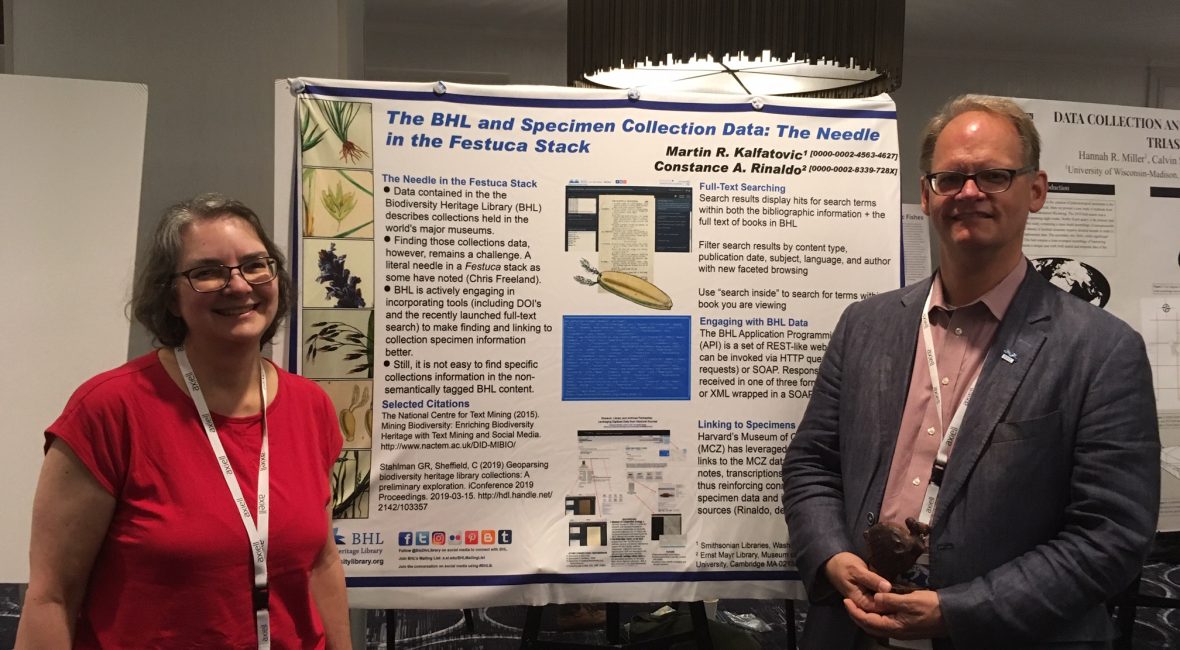
man and woman standing in front of a poster

Martin Kalfatovic (BHL Program Director) and Connie Rinaldo (Chair of the BHL Members’ Council) attended the recent Society for the Preservation of Natural History Collections (SPNHC) meeting held 25-31 May 2019 and hosted by the Field Museum of Natural History in Chicago, Illinois. The theme of the meeting was “Making the Case for Natural History Collections”.

There were opportunities for tours of the Field Museum of Natural History and workshops in addition to the strong array of presentations. One session focused on metrics for measuring impact, time working in the collection and increasing visibility of the behind-the-scenes work with museum specimens. If you are interested, there is a survey to gather data about metrics in collections. There were several talks related to library involvement in museum work such as copyright and metadata contributions and some talks mentioned BHL as a data source..

man and woman standing in front of a poster

Martin Kalfatovic and Connie Rinaldo with their poster at the 2019 Society for the Preservation of Natural History Collections (SPNHC) meeting.

We spoke with people who use the BHL frequently (to great praise) and to representatives of organizations with connections to the BHL such as Biodiversity Information Standards group (TDWG), Global Biodiversity Information Facility (GBIF), New York Botanical Garden, Consortium of European Taxonomic Facilities (CETAF), Field Museum of Natural History and Yale Peabody Museum. Martin and Connie presented a poster: “BHL and Specimen Collection Data: The Needle in the Festuca Stack”. There were a few visitors who did not know about the BHL and were excited to learn more.

Poster: “BHL and Specimen Collection Data: The Needle in the Festuca Stack”

Poster presented by Martin Kalfatovic and Connie Rinaldo 2019 Society for the Preservation of Natural History Collections (SPNHC) meeting.

Connie Rinaldo also attended the Digital Data in Biodiversity Research meeting hosted by the Yale Peabody Museum, 10-12 June 2019. The theme was….data! More specifically, there were 5 themes:

  • Methods and protocols for enhancing discovery with digitized specimen data;
  • Ongoing research projects that utilize digital data;
  • Gaps and deficiencies in currently available digital data that hinder effective use;
  • Pipelines that integrate digitization, data use, and research;
  • Use of digitized biodiversity specimen data within ecological research and practice.
woman standing in front of a poster

Connie Rinaldo with the poster at the Digital Data in Biodiversity Research meeting. Photo by George Lauder.

Connie and Martin presented a poster “Biodiversity Heritage Library (BHL) as a Data Repository and a Literature Repository: Help us Surface More Content”. As we have done at other meetings in the past, our primary interest was to solicit ideas and comments to ensure that BHL meets the needs of biodiversity communities. There was interest expressed in better names and image extraction, annotation, georeferencing and linking to specimens from BHL content (and vice versa) — all further supporting BHL’s plans for BHL 2.0. I had conversations with organizational representatives from TDWG, GBIF, CETAF and Distributed Systems of Scientific Collections (DiSSco). Some of the talks mentioned BHL as a data source.

Poster: “Biodiversity Heritage Library (BHL) as a Data Repository and a Literature Repository: Help us Surface More Content”

Poster presented by Martin Kalfatovic and Connie Rinaldo at the Digital Data in Biodiversity meeting.

I also attended the GBIF North American Node meeting where there was discussion about how to increase funding for all the representative organizations, increasing participation, the Living Atlases community, and mobilizing new data types.

July 18, 2019by michelle.underhill
BHL News, Blog Reel

BHL and WikiCite 2018

WikiCite conference in Berkeley, ca, 27-29 November 2018.

WikiCite conference in Berkeley, ca, 27-29 November 2018. Photo Credit: Diane Shaw. Graphic by Dario Taraborelli (CC-BY 4.0) with photo by Tehani Schroeder.

In November 2018, Diane Shaw, Katie Mika and Siobhan Leachman attended WikiCite 2018 in Berkeley, CA. WikiCite is a Wikimedia initiative that aims to develop a database of open citations and linked bibliographic data. Since sources are the foundation of Wikipedia’s claim to authority, WikiCite is working to build a repository of bibliographic data that is open, structured, and separable. WikiCite also draws from the academic community in which citation data (most often from peer-reviewed articles) is crucial for creating and linking knowledge. At the outset, WikiCite aimed to build this repository specifically for use in Wikipedia and other Wikimedia Foundation projects. Since the first meeting in 2016, this idea has grown into building a universal repository of sources to serve the sum of all human knowledge, leveraging Wikidata as its infrastructure.

Diane Shaw (left) and Siobhan Leachman (right) at WikiCite 2018.

Diane Shaw (left) and Siobhan Leachman (right) at WikiCite 2018. Photo Credit: Siobhan Leachman.

Now in its third iteration, the conference included extended and short presentations, numerous lightning talks, strategy tracks, tutorials, data modelling, and a hack day (renamed a Do-athon Day to be more inclusive of those who aren’t computer science experts). The purpose of the conference, open primarily by invitation to a group of approximately 100 attendees from across the United States and abroad, was to work towards a “vision of creating an open repository of bibliographical data to support the citation and fact-checking needs of Wikimedia projects, and possibly, to serve as an open infrastructure for research, education, and information quality across the web.” Librarians were well-represented among the attendees, as were linked open data advocates, software engineers, data scientists, and active members of the Wikimedian community.

Unlike some of the other very popular Wikimedia Foundation products (Wikipedia in 303 languages; Wikimedia Commons hosting image, audio, and video files; Wikisource for full text transcriptions; and Wikidata for storing structured data, among others), WikiCite has no real online presence itself, but has grown as a community of practice dedicated to the support of a bibliographical metadata commons enabling reliable, verified linked open data connections both among Wikimedia projects and externally with many other online catalogs, databases and reference sources for a variety of libraries, galleries, archives, museums, scientific institutes, and other similar organizations, including OCLC, the Internet Archive and the Biodiversity Heritage Library. We are not exaggerating when we say it was awe-inspiring to be part of this dedicated group harnessing technical knowledge, bibliographical expertise, and lots of creativity and imagination in an effort to bring about a future of linked open data serving all kinds of scholarly information needs.

What WikiCite hopes to make possible goes beyond a simple structure for providing and sharing linked open data: attendees at the conference were also experimenting with new and improved ways to discuss, analyze, curate, vet and annotate sources online.
Dario Taraborelli, Director of Research at the Wikimedia Foundation, gave a terrific overview of WikiCite in his opening talk: Here Be Dragons: Uncharted regions of the bibliographic commons. Other talks and projects that would be of particular interest to libraries include presentations about projects at the National Library of Sweden and the National Library of Wales using structured linked open data for name and subject authority files and to help document the history of national book trade; Linked Data for Production (LD4P), a collaborative pilot project using BIBFRAME for creating structured linked data with connections to Wikidata, the Virtual International Authority File (VIAF) and WorldCat; initiatives to use Wikidata, VIVO and Scholia to generate scholarly profiles; and ways to incorporate Wikidata training into library education, including classes on Library Carpentry.

Katie Mika presenting as part of WikiCite and the Biodiversity Heritage Library at WikiCite 2018.

Katie Mika presenting as part of WikiCite and the Biodiversity Heritage Library at WikiCite 2018. Photo Credit: Diane Shaw.

Katie, a former BHL National Digital Stewardship Resident from Harvard’s Museum of Comparative Zoology, and Siobhan, a citizen scientist and linked open data champion from New Zealand who has been a devoted transcriber of natural history materials in the Smithsonian Transcription Center, gave a talk on WikiCite and the Biodiversity Heritage Library. They described some of the unique challenges for heritage literature and metadata, and demonstrated how open access citations, images, and details gleaned from BHL and other open natural history digital repositories are applied to Wikimedia Foundation projects to support essential documentation of scientists, literature, and rare and endemic species.

Unlike modern scientific literature, much historic literature does not have original digital identifiers (DOI’s) attached. These identifiers enable a particular publication to be identified and provide a persistent link to its location on the Internet.  Without these identifiers it is difficult to ingest historical bibliographic data into Wikidata in bulk. If historic bibliographic data is not able to be ingested or reused, scientists are unable to make use of this important resource. Siobhan expressed her frustration that much of the citation metadata of historic biodiversity literature is not currently found in Wikidata and urged the attendees to help resolve this problem.

Siobhan Leachman presenting as part of WikiCite and the Biodiversity Heritage Library at WikiCite 2018.

Siobhan Leachman presenting as part of WikiCite and the Biodiversity Heritage Library at WikiCite 2018. Photo Credit: Diane Shaw.

Siobhan’s key takeaway from the conference was the various discussions on how to solve the difficulties of getting bibliographic information on historic biodiversity literature into Wikidata. Also of interest were the discussions on how book data is modelled in Wikidata (see https://www.wikidata.org/wiki/Wikidata:WikiProject_Books) and discovering a practical new tool to help disambiguate authors within wikidata: Author Disambiguator. Katie enjoyed the opportunity during the summit day’s events to discuss the potential for a bibliographic commons to support citations and information provenance across the web and in support of Open Science practices. On the Do-a-thon Day, Diane spent time discussing approaches for modelling the properties of holotypes on Wikidata with Siobhan, biophysicist and open scientist Daniel Mietchen, and Terry Catapano of Plazi and UC Berkeley’s Bancroft Library.

The opportunity presented by WikiCite for libraries and public knowledge creation cannot be overstated. As of November 2018, there are over 21 million publication items in Wikidata, which accounts for 40% of the entire database. More than 160 million Wikidata statements use the property “cites” (P2860) to connect items. Wikidata is open to contribute to, edit, reuse, and extend. Not only can we leverage Wikidata for metadata enrichment and linked data connections, but we can build bibliographic applications on top of this open database, track the provenance of citations, and study patterns of information reuse. Wikicite advocates for an open destination to more easily discuss, analyze, curate, annotate, and vet bibliographic resources used in Wikipedia and across the web. As connectors to information, libraries have staff who can offer a tremendous amount of expertise for modeling difficult kinds of data (like books), while ensuring equitable access to information.

The easiest way to get involved is to edit! Explore Wikidata using reasonator and SQID (“squid”). Head over to Youtube to watch talks and tutorials on Wikidata and SPARQL. Match some Wikidata items with their external identifiers using Mix ‘n Match. And join the wikicite-discuss mailing list to join conversations about adding bibliographic data to Wikidata and WikiCite program updates.

January 31, 2019by michelle.underhill
Page 1 of 212»

Help Support BHL

BHL's existence depends on the financial support of its patrons. Help us keep this free resource alive!

search

About BHL

The Biodiversity Heritage Library (BHL) is the world’s largest open access digital library for biodiversity literature and archives. BHL operates as a worldwide consortium of natural history, botanical, research, and national libraries working together to digitize the natural history literature held in their collections and make it freely available for open access as part of a global “biodiversity community.”

Join Our Mailing List

Sign up to receive the latest news, content highlights, and promotions.

Subscribe Now

Subscribe to Blog via Email

Enter your email address to subscribe to this blog and receive notifications of new posts by email.

Join 319 other subscribers

Subscribe to Blog Via RSS

Subscribe to the blog RSS feed to stay up-to-date on all the latest BHL posts.

Access RSS Feed

Inspiring Discovery through Free Access to Biodiversity Knowledge.

The Biodiversity Heritage Library makes it easier than ever for you to access the information you need to study and explore life on Earth…for free, anytime, anywhere.


64+ Million Pages of
Biodiversity Literature Online.

EXPLORE

Tools and Services
to Transform Research.

EXPLORE

300,000+
Illustrations on Flickr.

EXPLORE

ABOUT | HARMFUL CONTENT | PRIVACY | SITE MAP | TERMS OF USE