Biodiversity Heritage Library - Program news and collection highlights from BHL
  • Home
  • News
  • Featured Books
    • All Featured Books
    • Book of the Month Series
    • BHL at 20
  • User Stories
  • Campaigns
    • Fossil Stories
    • Garden Stories
    • Monsters Are Real
    • Page Frights
    • Her Natural History
    • Earth Optimism 2020
  • Tech Blog
  • Visit BHL
Home
News
Featured Books
    All Featured Books
    Book of the Month Series
    BHL at 20
User Stories
Campaigns
    Fossil Stories
    Garden Stories
    Monsters Are Real
    Page Frights
    Her Natural History
    Earth Optimism 2020
Tech Blog
Visit BHL
  • Home
  • News
  • Featured Books
    • All Featured Books
    • Book of the Month Series
    • BHL at 20
  • User Stories
  • Campaigns
    • Fossil Stories
    • Garden Stories
    • Monsters Are Real
    • Page Frights
    • Her Natural History
    • Earth Optimism 2020
  • Tech Blog
  • Visit BHL
Biodiversity Heritage Library - Program news and collection highlights from BHL
Blog Reel, Campaigns, Earth Optimism 2020

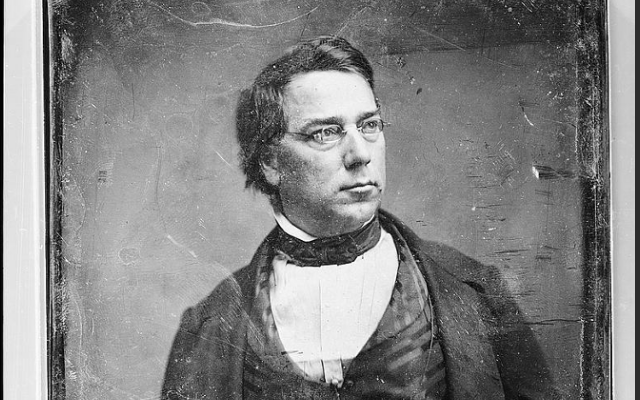
George Perkins Marsh: Man and Nature: Or, Physical Geography as Modified by Human Action

George Perkins Marsh, half-length portrait, head three-quarters to right, with spectacles

April 2020 marks the 50th anniversary of Earth Day. Organizations around the world have commemorated the occasion by participating in the global Earth Optimism movement — an initiative spearheaded by the Smithsonian to “turn the conservation conversation from doom and gloom to optimism and opportunity”.

Throughout 2020, the Biodiversity Heritage Library (BHL) and our partners are joining the movement by sharing conservation success stories from and made possible by the BHL collection. Follow our blog for conservation stories — past and present — and visit our website for more information and to explore our Earth Optimism book collection.

———————
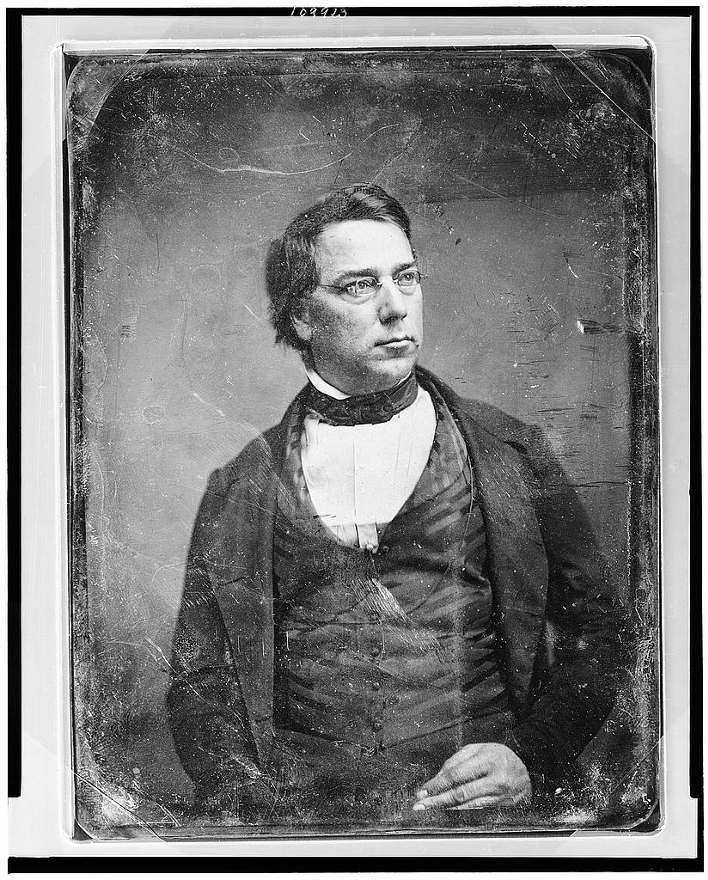
George Perkins Marsh, half-length portrait, head three-quarters to right, with spectacles https://lccn.loc.gov/2004664024

George Perkins Marsh, half-length portrait. ca. 1850. Mathew B. Brady, photographer. Library of Congress, Prints & Photographs Division. https://www.loc.gov/item/2004664024/.

George Perkins Marsh (1801-1882) was a talented linguist, scholar, and diplomat. He served as a member of the U.S. House of Representatives from Vermont’s 3rd district from 1843-1849, and, in 1850, went on to become United States Minister to the Ottoman Empire. In 1861 he was appointed by President Lincoln as the first Ambassador to the Kingdom of Italy, where he served until his death at Vallombrosa in 1882. A Vermonter raised close to the forests of the Adirondack Mountains, Marsh is remembered today chiefly for his role as an early and influential pioneer of the conservation movement in the United States. His book Man and Nature:Or, Physical Geography as Modified by Human Action, published in 1864, is recognized for his early recognition of the interdependency of the natural world, the effects that human actions can have upon it, and the responsibilities that humans bear for those actions.

“The importance of the restoration of disturbed harmonies…” (Preface)

The publication of Marsh’s book followed a celebrated lecture which he gave before the Agricultural Society of Rutland County, Vermont in 1847. This lecture is often pointed to as a remarkably early warning about humankind’s ability to affect the climate of the Earth. What stands out in Marsh’s book is his argument that human activities can have far-reaching effects far beyond what is immediately observable. Felling a forest, far beyond just cutting trees, can disturb an entire ecosystem. In his Preface, Marsh advocates for the “restoration of disturbed harmonies” through a combination of wilderness preservation and enlightened practices for forest management.

“But man is everywhere a disturbing agent. Wherever he plants his foot, the harmonies of nature are turned to discords…” (pg. 36)

Man and Nature looks at various ways man has transformed the environment, affecting both major and minor components of the earth’s overall systems in comprehensive and unforeseen ways. Forests, rivers and waterways, sand dunes and soil are all interconnected in a greater ecological system that supports life on the Earth. Marsh paints a picture of overall interconnection between living things: trees, scrub, sea cows, worms, wild trout and “minute organisms.”

Still, it should be noted that Marsh was not categorically opposed to human actions that produce change. Rather, he was a pioneering advocate for sustainable development and of well-considered improvements based on observation and scientific knowledge. His chapter on Geographical Changes expresses mixed admiration for some engineering feats such as the Suez Canal, but in general his assessments of the long-term effects of human improvements to nature carried out in Europe, and even in the Ancient World, are mixed.

“I have spoken of the needs of agriculture as a principal cause of the destruction of the forest…” (pg. 325)

Marsh also discusses agricultural cattle and the ways in which “the extent of cleared ground required for agriculture use depends very much on the number and kinds of cattle bred.” When heritage cattle, traditionally foragers able to survive in rugged environments, are replaced with less robust hybrids that must be sheltered and fed with cultivated cereal grasses, there is a heavy toll on the environment. In addition, large-scale agricultural operations were already in place in Marsh’s time, with cotton, tobacco and feed grains for cattle taking up large swathes of cleared and tilled land. This monocropping trend continued into the 20th century; by 1950, the number of farms was the smallest ever enumerated by the Census, while the acreage was the largest on record.
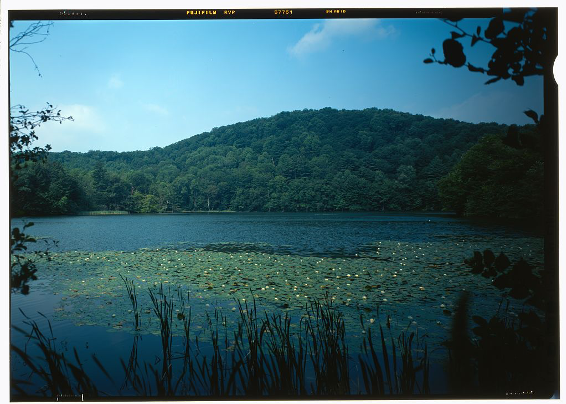
View of the pogue, looking west and illustrating the relation of this mountain pond to the surrounding forest slopes of the Mt. Tom Forest. Marsh-Billings-Rockefeller National Historical Park, boyhood home of George Perkins Marsh. Historic American Landscape Survey, Library of Congress Prints & Photographs Division. image link: https://cdn.loc.gov/service/pnp/habshaer/vt/vt0100/vt0131/color/218497cv.jpg Record link: https://www.loc.gov/item/vt0131/

View of the pogue, looking west and illustrating the relation of this mountain pond to the surrounding forest slopes of the Mt. Tom Forest. Marsh-Billings-Rockefeller National Historical Park, boyhood home of George Perkins Marsh. Historic American Landscape Survey, Library of Congress Prints & Photographs Division. Image link: https://cdn.loc.gov/service/pnp/habshaer/vt/vt0100/vt0131/color/218497cv.jpg. Record link: https://www.loc.gov/item/vt0131/.

“With the disappearance of the forest, all is changed” (pg. 214)

Marsh also looks to the influence of the forest on water systems and the many ways in which forests regulate natural springs and waterways. Cleared land, he writes, especially arable land, is prone to flooding and erosion – events that would naturally be controlled by forest management. Forests control flooding naturally: “the surface of a forest in its natural condition can never pour forth such deluges of water as flow from cultivated soil.” Flooding, soil compaction, aridity, runoff, erosion: all are deleterious effects of deforestation and interference with natural processes.

He also discusses the influence of the forest on temperature; cleared land is warmer than forest and “we must conclude that the forests in Northern America exert a refrigerating influence”. Forests are made up not only of trees, but of mosses and fungi, among other organisms, as well as animals, soil and water, and these all play a role in regulating moisture and temperature.

“It is time for some abatement in the restless love of change which characterizes us, and makes us almost a nomadic rather than a sedentary people. We have now felled forest enough everywhere, in many districts far too much. Let us restore this one element of material life to its normal proportions, and devise means for maintaining the permanence of its relations to the fields, the meadows, and the pastures, to the rain and the dews of heaven, to the springs and rivulets with which it waters the earth.” (pg. 328)

This impassioned plea, central to the chapter titled Instability of American Life, and to the entire book itself, follows a lengthy, sometimes rambling but painstakingly detailed, investigation of the interconnectedness of life on Earth. Marsh’s chief message is his repeated call for humans to accept their responsibilities as stewards of the Earth, and especially as stewards of the forests. He calls for humans to re-examine their relationship with nature and their too-often destructive actions.

Marsh’s advocacy for a new understanding of forestry systems and implementation of human responsibility in forest management practices resulted in Marsh’s work contributing greatly to the conservation movement and the creation of one of the earliest forest preserves in America, Adirondack Park. His book ends with the statement that there is nothing small in nature:

“…in the vocabulary of nature little and great are terms of comparison only; she knows no trifles, and her laws are as inflexible in dealing with an atom as with a continent or planet.” (pg. 548)

George P. Marsh, three-quarter length portrait, standing, facing left, holding hat Brady, Mathew B., approximately 1823-1896, photographer. [George P. Marsh, three-quarter length portrait, standing, facing left, holding hat] [graphic] / Brady, N.Y. [between 1855 and 1865, printed later] https://lccn.loc.gov/96509698

Hon. George Perkins Marsh of Vermont. Between 1855 and 1865. Library of Congress Prints & Photographs Division. https://www.loc.gov/item/2017895581/.

George Perkins Marsh family. Marsh seated beside a table with tablecloth, on the left, his head turned to the right, wearing spectacles, his wife seated on the right, her hand on his, her head slightly to the left, both holding papers; Caroline's sister, Lucy Crane, standing behind and between them, her hands on her brother-in-law's shoulder, her head three-quarters to the right] https://lccn.loc.gov/2004664023

George Perkins Marsh family. Marsh seated on the left, his wife, Caroline (Crane) Marsh, seated on the right; Caroline’s sister, Lucy Crane, standing behind and between them. Between 1844 and 1849. Mathew B. Brady, photographer. Library of Congress Prints & Photographs Division. https://www.loc.gov/item/2004664023/.

More information

George Perkins Marsh correspondence, 1851. LCCN: https://lccn.loc.gov/mm79005905.

William Slade correspondence, 1845-1848, LCCN: https://lccn.loc.gov/mm79001310.

Report made under authority of the legislature of Vermont, on the artificial propagation of fish, by George P. Marsh. LCCN: https://lccn.loc.gov/06012522. BHL: https://www.biodiversitylibrary.org/bibliography/34497.
August 20, 2020by michelle.underhill
Blog Reel, Campaigns, Earth Optimism 2020

A Forest of Knowledge: Richard Evans Schultes and the Rise of Ethnobotany

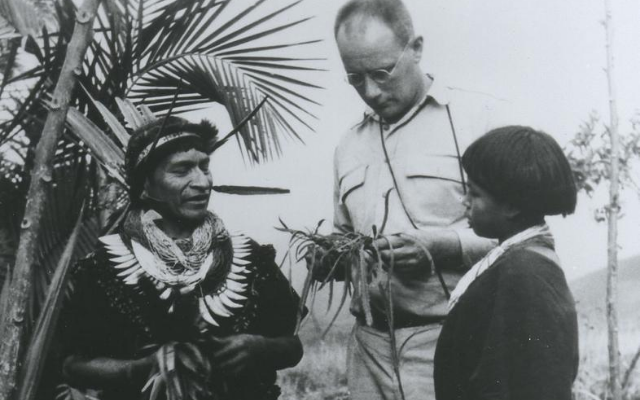
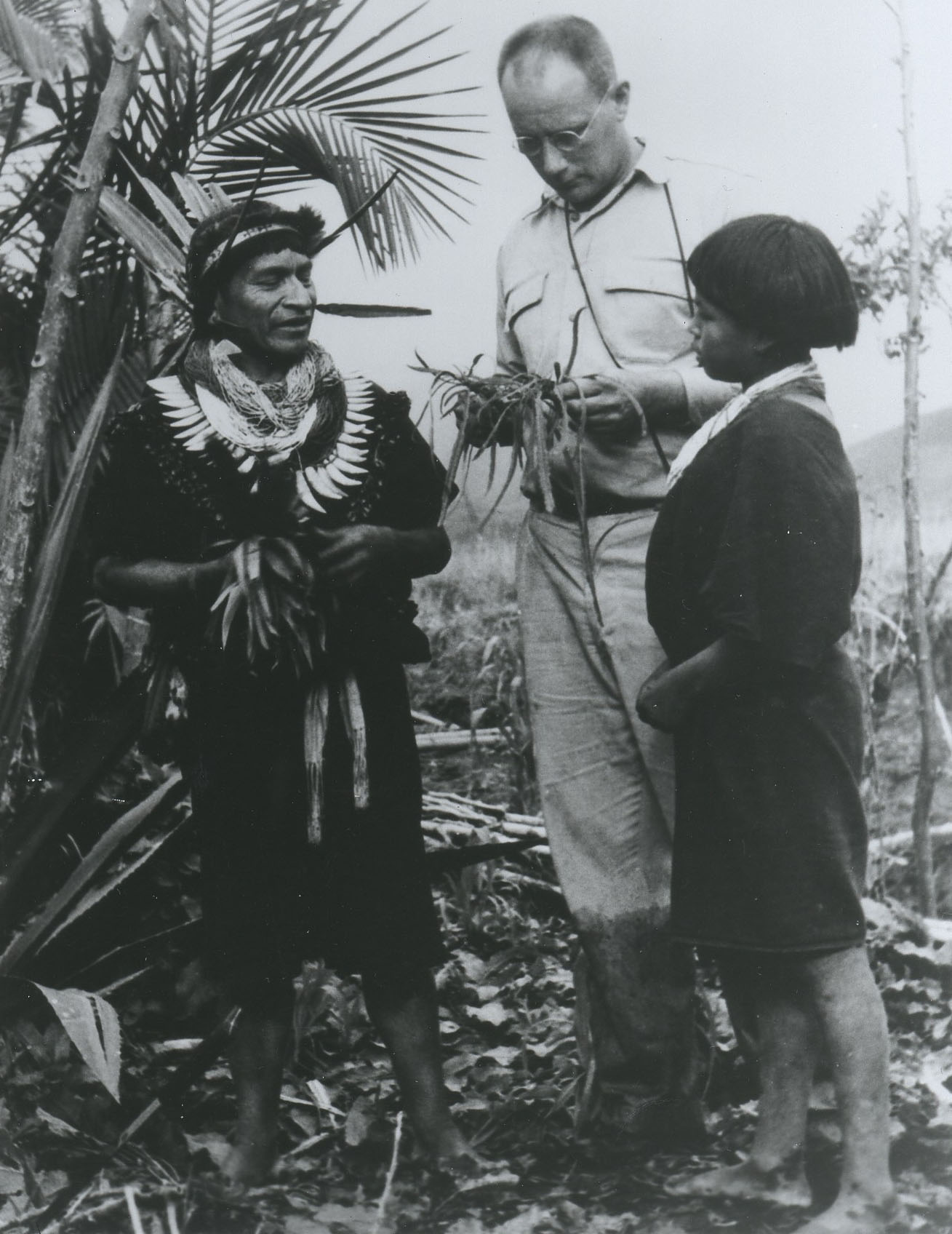
black and white photo of three people standing in a jungle looking at plant specimens

April 2020 marks the 50th anniversary of Earth Day. Organizations around the world have commemorated the occasion by participating in the global Earth Optimism movement — an initiative spearheaded by the Smithsonian to “turn the conservation conversation from doom and gloom to optimism and opportunity”.

Throughout 2020, the Biodiversity Heritage Library (BHL) and our partners are joining the movement by sharing conservation success stories from and made possible by the BHL collection. Follow our blog for conservation stories — past and present — and visit our website for more information and to explore our Earth Optimism book collection.

———————

black and white photo of three people standing in a forest looking at plant specimens

Richard Evans Schultes (center) with Salvador Chindoy (left), a renowned Kamëntsá healer from Sibundoy Valley of Colombia. The identity of the individual on the right is not recorded. The year of the photo is unknown, but is likely in the 1940s based on Schultes’ age. Photo courtesy of the Archives of the Economic Botany Library of Oakes Ames, Harvard University.

The conservation movement today encompasses more than the physical management of habitat to preserve plants and animals. Richard Evans Schultes (1915-2001) epitomized the modern conservationist by coupling his taxonomic work on plants with research on the botanical knowledge and culture of local people. Known as the “father of ethnobotany”, Schultes spent almost fourteen years deep within the rainforests of the Amazon learning from multiple Indigenous tribes about their languages, medicines, and relationships to plants.

“Richard Evans Schultes was an extraordinary ethnobotanist who devoted a large part of his professional life to studying the flora of the Amazon as well as of Asia and Europe,” says Felipe Cárdenas-Arroyo, a Colombian archaeologist researching Schultes. “For him, forests are like great libraries where knowledge is stored and available for those willing to read it. He admired and respected the Amazonian Natives because they know how to read in this library and have been its keepers for centuries. Burning down the Amazon rainforest to make room for cattle is like burning down a library to make room for a parking lot, and Schultes feared that with today’s rate of destruction ‘climax forests will turn into scrub vegetation,’ never to regain their original state” [1].

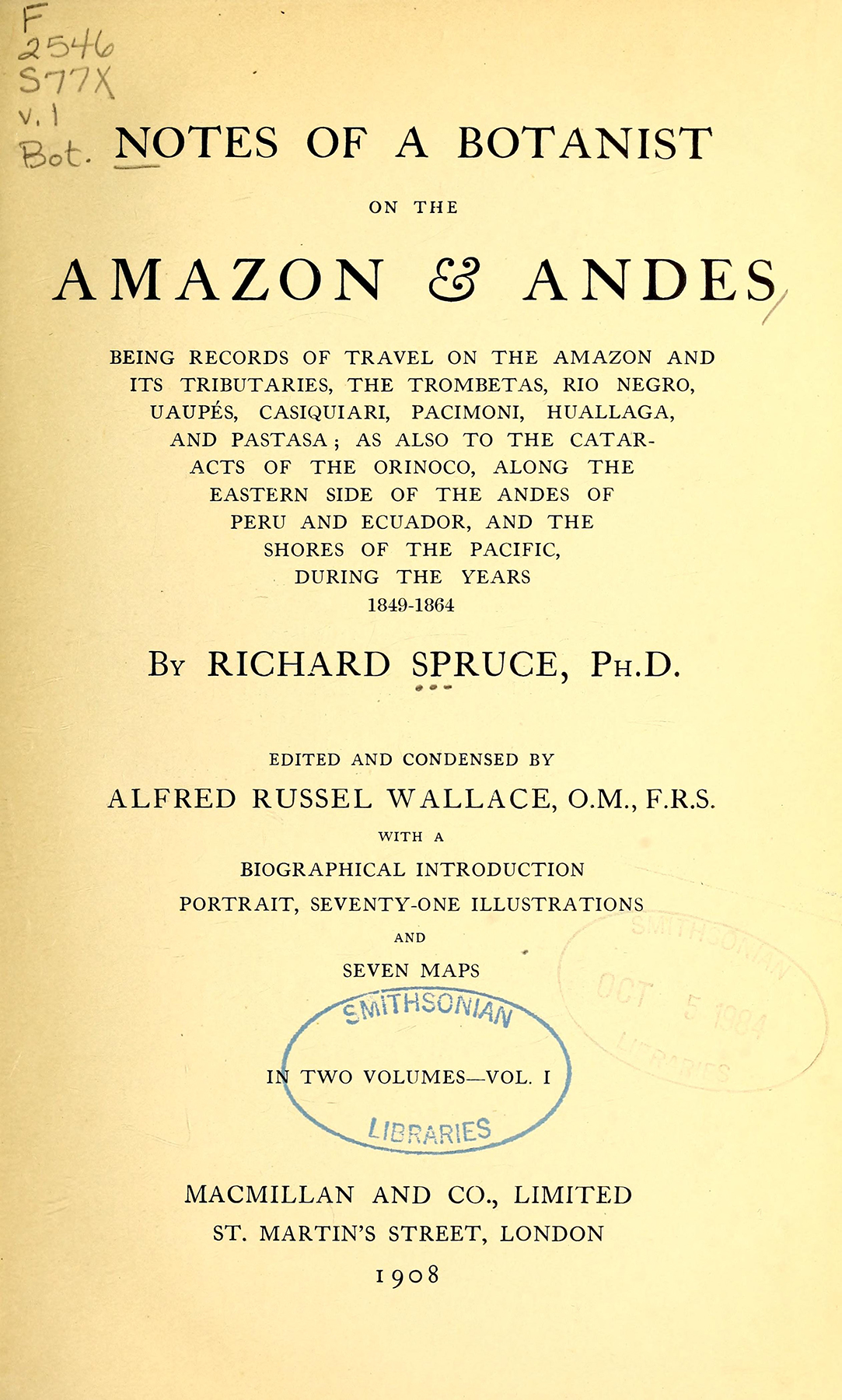
Schultes was inspired as a youth to pursue botanical research in remote areas by the book Notes of a Botanist on the Amazon & Andes by the botanist Richard Spruce.

title page of "notes of a botanist on the amazon & andes"

Title Page. Spruce, Richard. Notes of a botanist on the Amazon & Andes. v. 1 (1908). Contributed in BHL from Smithsonian Libraries.

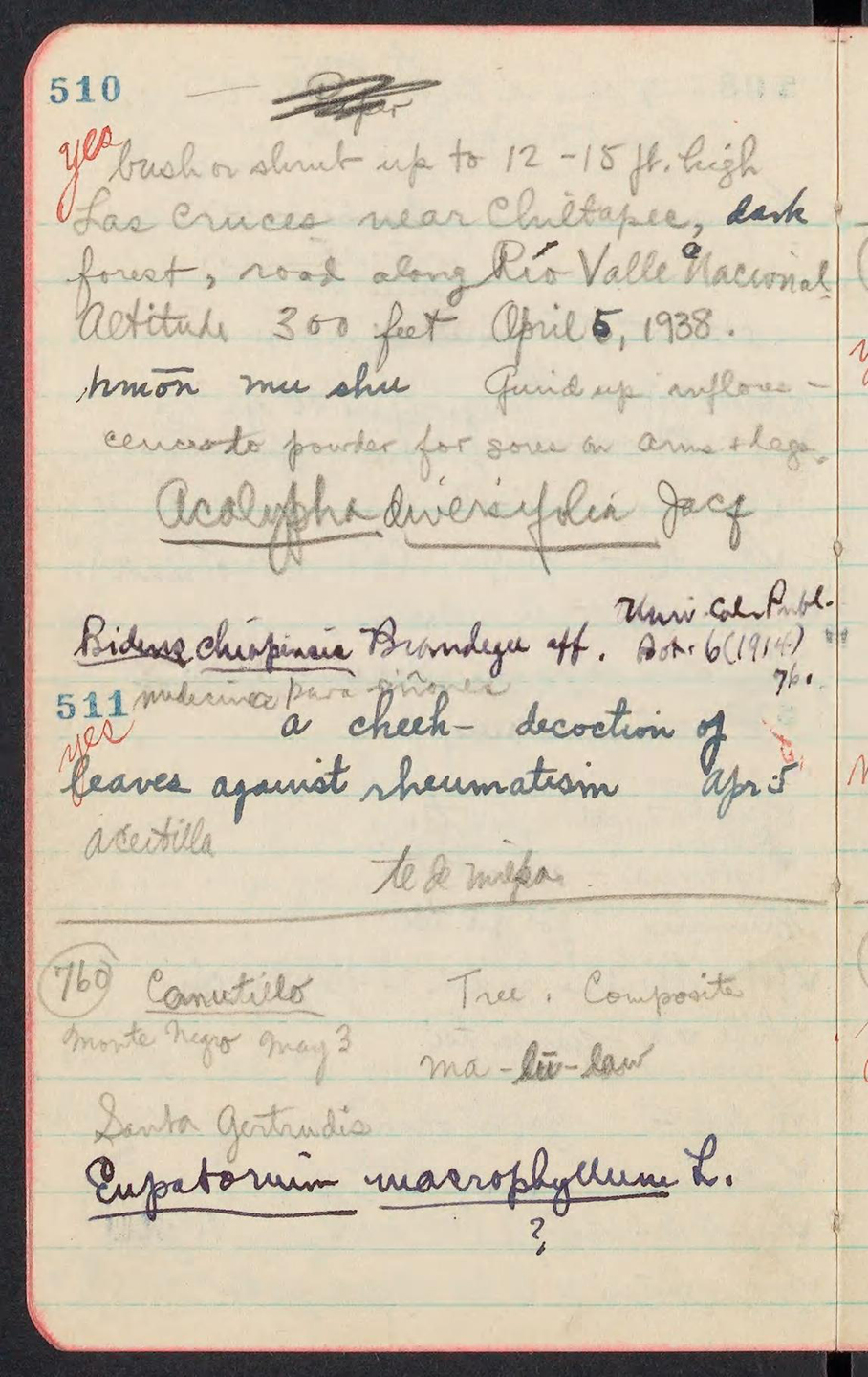
Schultes’s early research focused on peyote in the American Southwest and intoxicating mushrooms in southern Mexico. He collected specimens, identified species, and recorded local knowledge of medicinal uses and experiences.

page from a handwritten notebook

Page 10. Schultes, Richard Evans. Field notebook : Mexico, 1938. Contributed in BHL from Harvard University Botany Libraries.

After receiving his doctorate from Harvard University in 1941, Schultes began research on curare in the Amazon with the help of a 10-month travel grant from the National Research Council. He took the opportunity to collect specimens of many plants and discuss local uses with Indigenous communities.

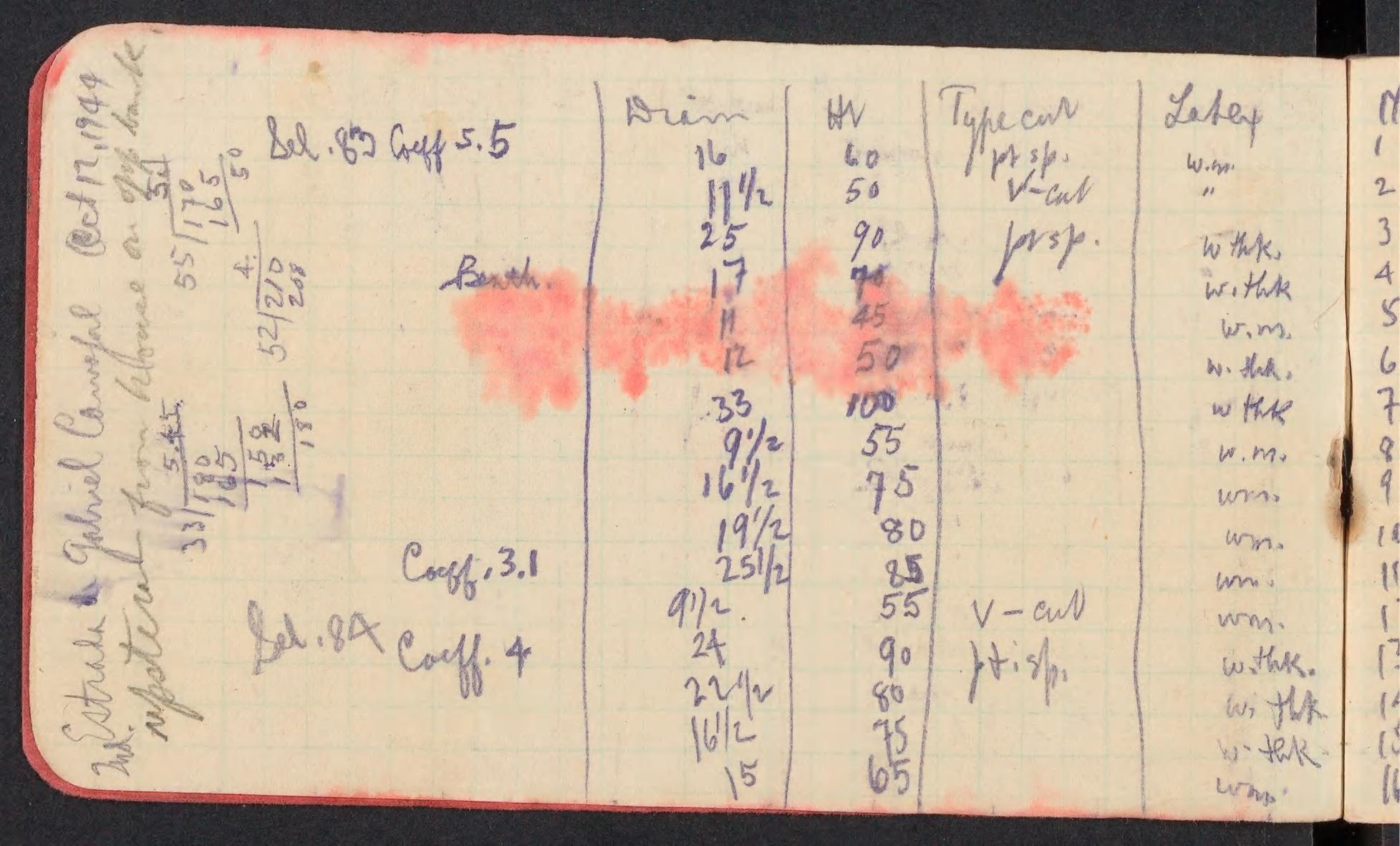
He was in the field when the United States entered World War II and immediately joined the war effort. He was told to remain in the Amazon to try to find sources of much-needed rubber for the Allied Forces. He continued to work for the United States Department of Agriculture for the next twelve years, collecting approximately 3,500 specimens of the Hevea rubber tree. During his career in the Amazon, Schultes would collect over 24,000 botanical specimens.

page from a handwritten notebook

Pages 2-3. Schultes, Richard Evans. Hevea yield notebook : Colombia, 1944. Contributed in BHL from Harvard University Botany Libraries.

Schultes returned to New England in 1953 and became the curator of the Oakes Ames Orchid Herbarium at Harvard University. He continued to travel extensively to the Amazon while holding a number of positions at the Harvard University Botanical Museum and was a Harvard faculty member until his retirement as Professor Emeritus in 1985.

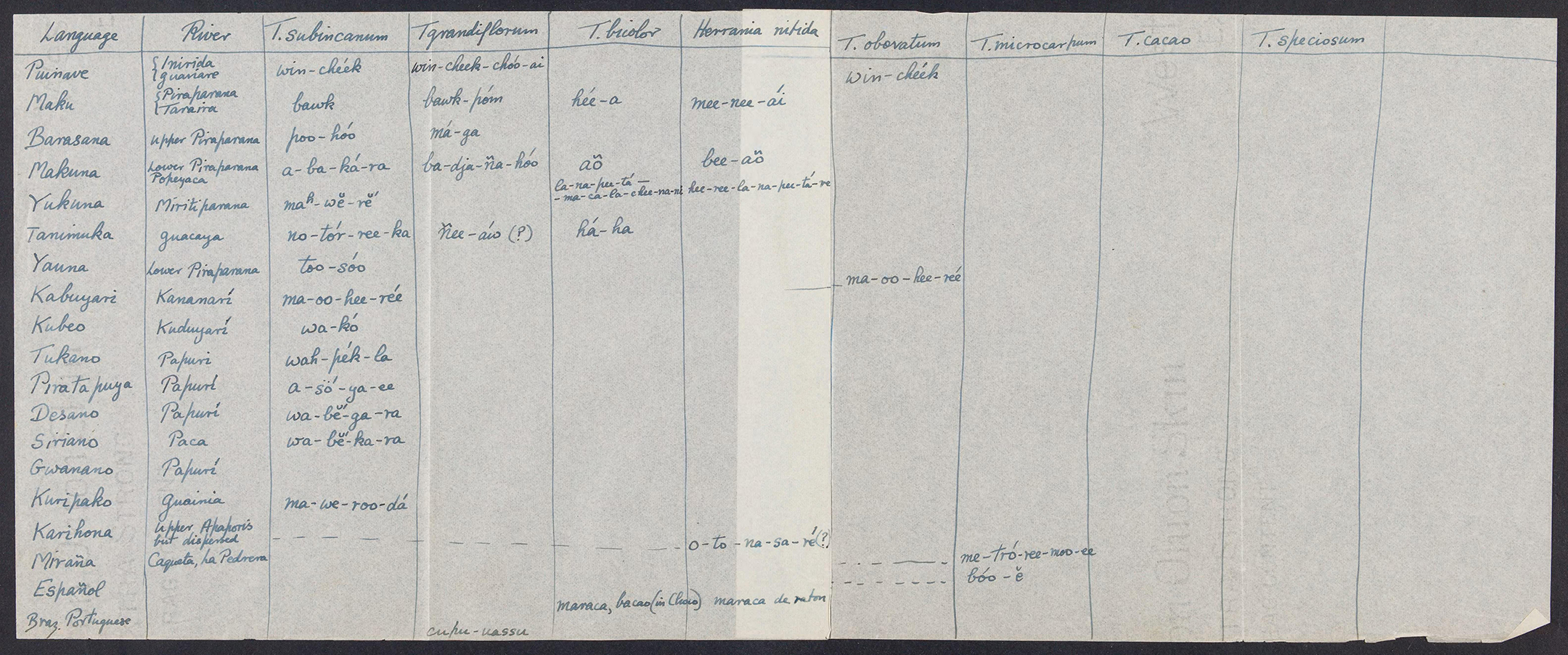
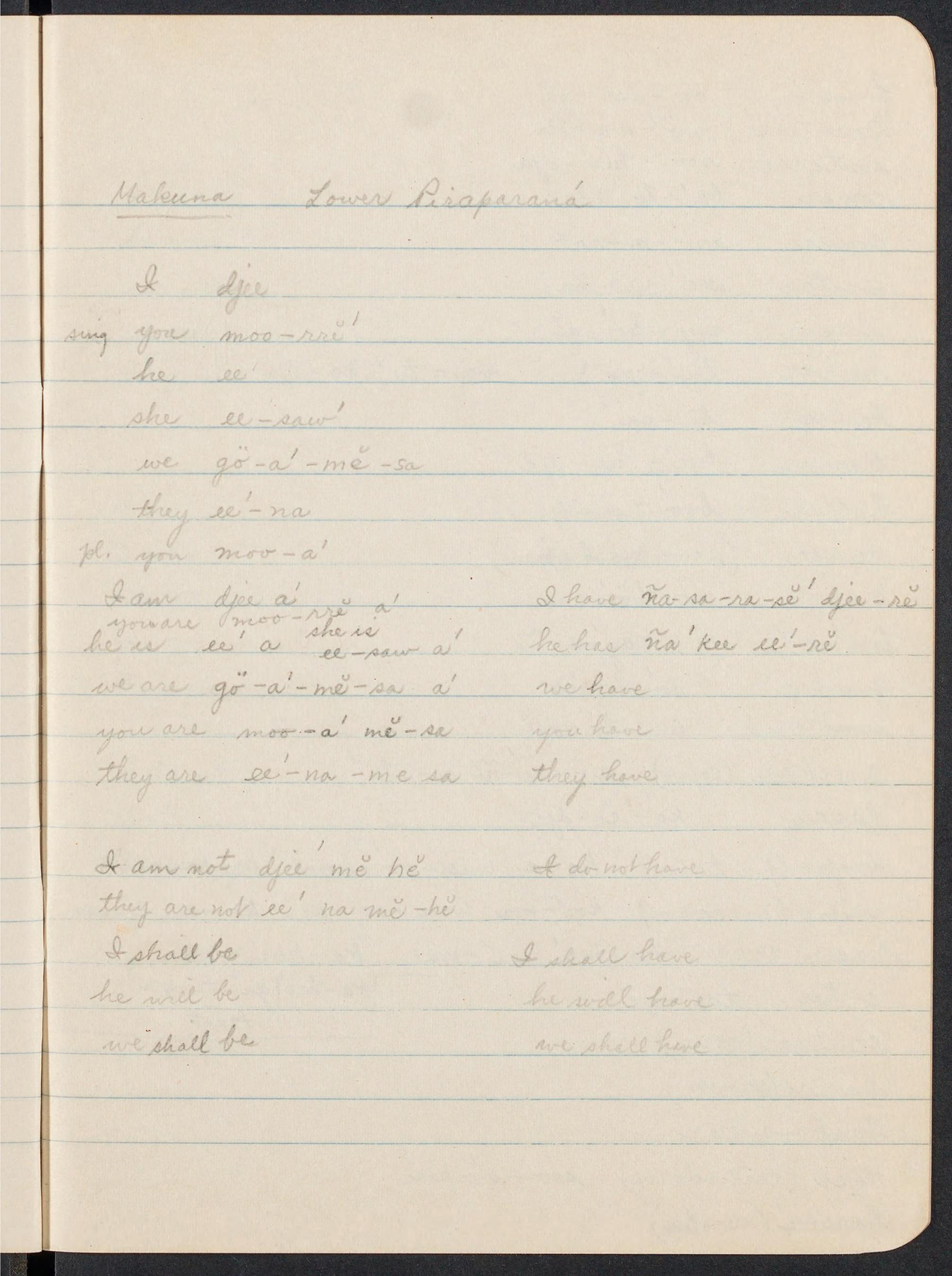
Schultes himself defined ethnobotany as “the complete registration of the uses of and concepts about plant life in primitive societies… comprising aspects of botany, anthropology, archeology, plant chemistry, pharmacology, history, geography, and sundry other tangential fields of the sciences and arts” (Kahn, 1992). His notebooks demonstrate his commitment to documenting knowledge beyond biology. Indigenous languages are captured on the pages, including place names and common words.

page from a handwritten notebook

List of rivers and plants in several local languages. Schultes, Richard Evans. Field notebook : Colombia, 1952. Contributed in BHL from Harvard University Botany Libraries.

page from a handwritten notebook

Common phrases. Schultes, Richard Evans. Field notebook : Colombia, 1952 February-March. Contributed in BHL from Harvard University Botany Libraries.

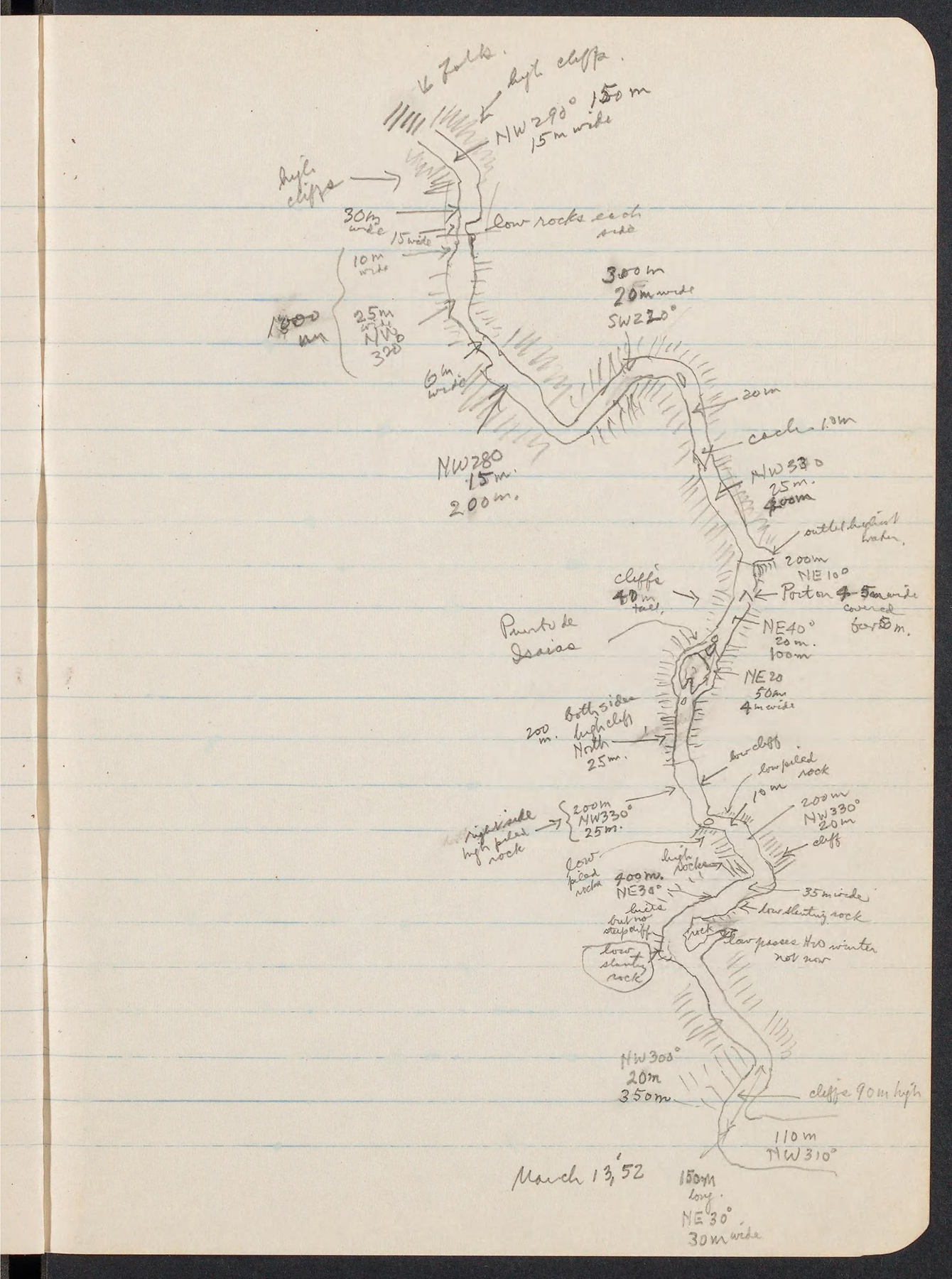
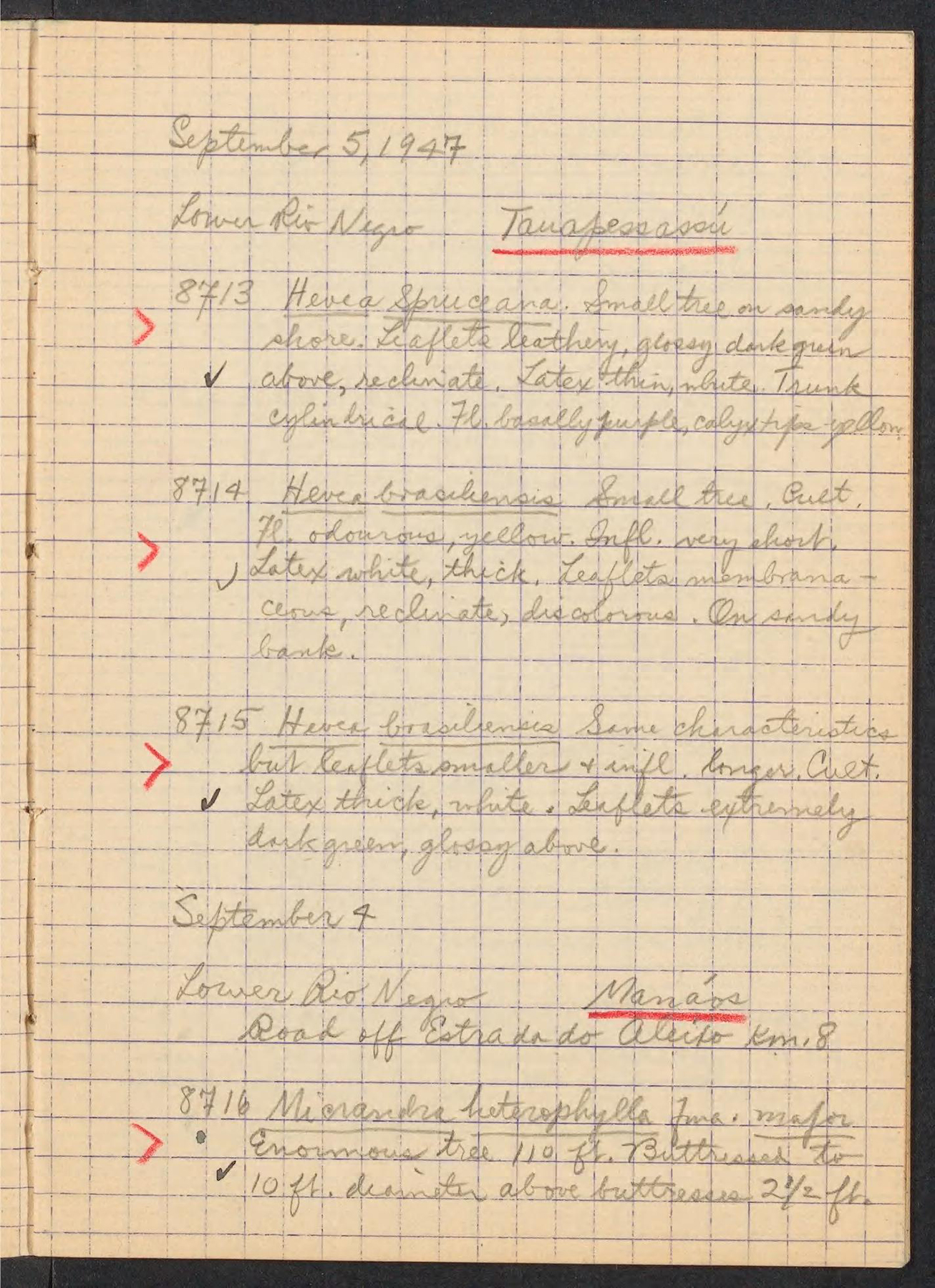
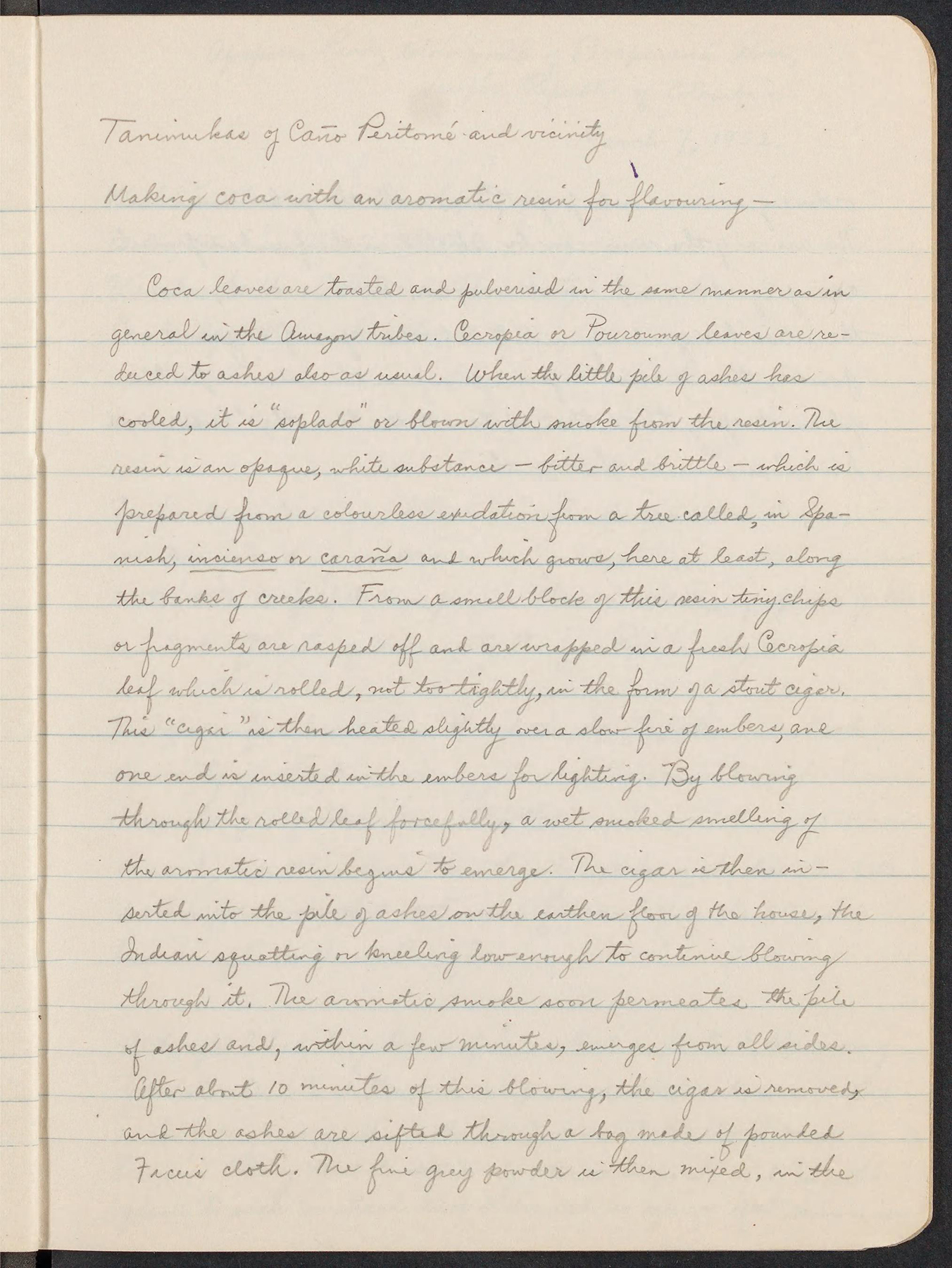
Schultes’s maps, lists, and recipes are a trove of information about difficult to access areas.

page from a handwritten notebook

Detailed river map. Schultes, Richard Evans. Field notebook : Colombia, 1952 February-March. Contributed in BHL from Harvard University Botany Libraries.

page from a handwritten notebook

Plant list. Schultes, Richard Evans. Field notebook : Rio Negro and Rio Vaupés, Amazonas, Brazil, 1947 September-November. Contributed in BHL from Harvard University Botany Libraries.

page from a handwritten notebook

Making coca with an aromatic resin for flavouring. Schultes, Richard Evans. Field notebook : Colombia, 1952 February-March. Contributed in BHL from Harvard University Botany Libraries.

Throughout his travels, Schultes documented the local medicinal uses of hundreds of plants.

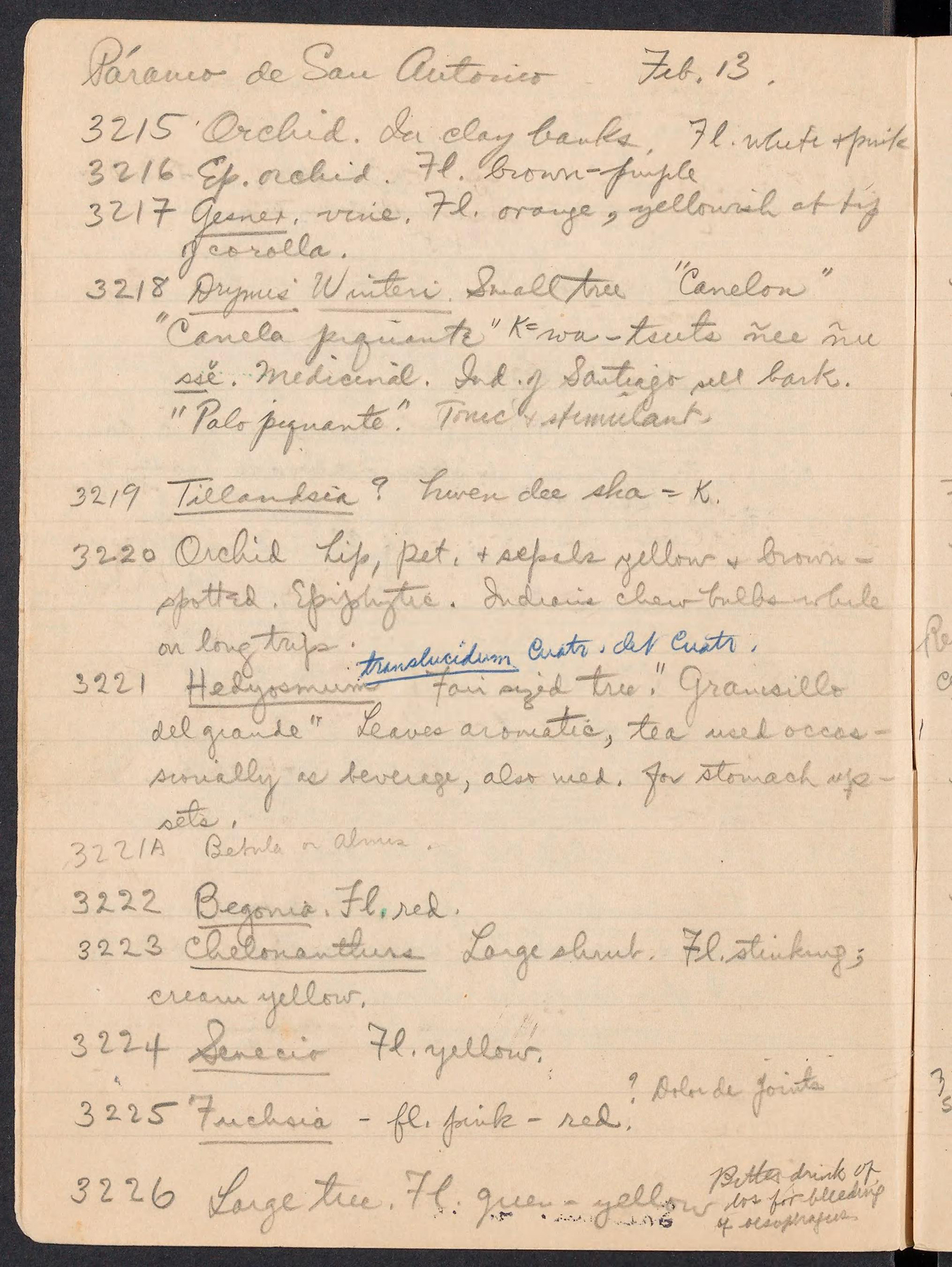
page from a handwritten notebook

Medicinal uses of plants by the Inga and Kamëntsá people of Colombia. Schultes, Richard Evans. Field notebook : Colombia, 1942 February-April. Contributed in BHL from Harvard University Botany Libraries.

Schultes was well known for being respectful of Indigenous communities. He immersed himself in the cultures, eating what was offered and participating in rituals.

“I have tried several of the Indian hallucinogens, in part because the Indians consider them sacred plants and it would have been an unpardonable rudeness to refuse them when the Indians were kind enough to offer them to me during a ceremony” (Schultes, 1994).

Schultes advocated for the conservation of habitat, species, and Indigenous knowledge but he also understood the practical and economic aspects. He encouraged research into the chemistry and uses of plants as pharmaceuticals, recognizing that the vast habitat destruction and cultural loss occurring in the Amazon could delay the development of important medicines. (An overview of the many medicinal uses of plants is central to Schultes’s 1986 paper “The Reason for Ethnobotanical Conservation”.)

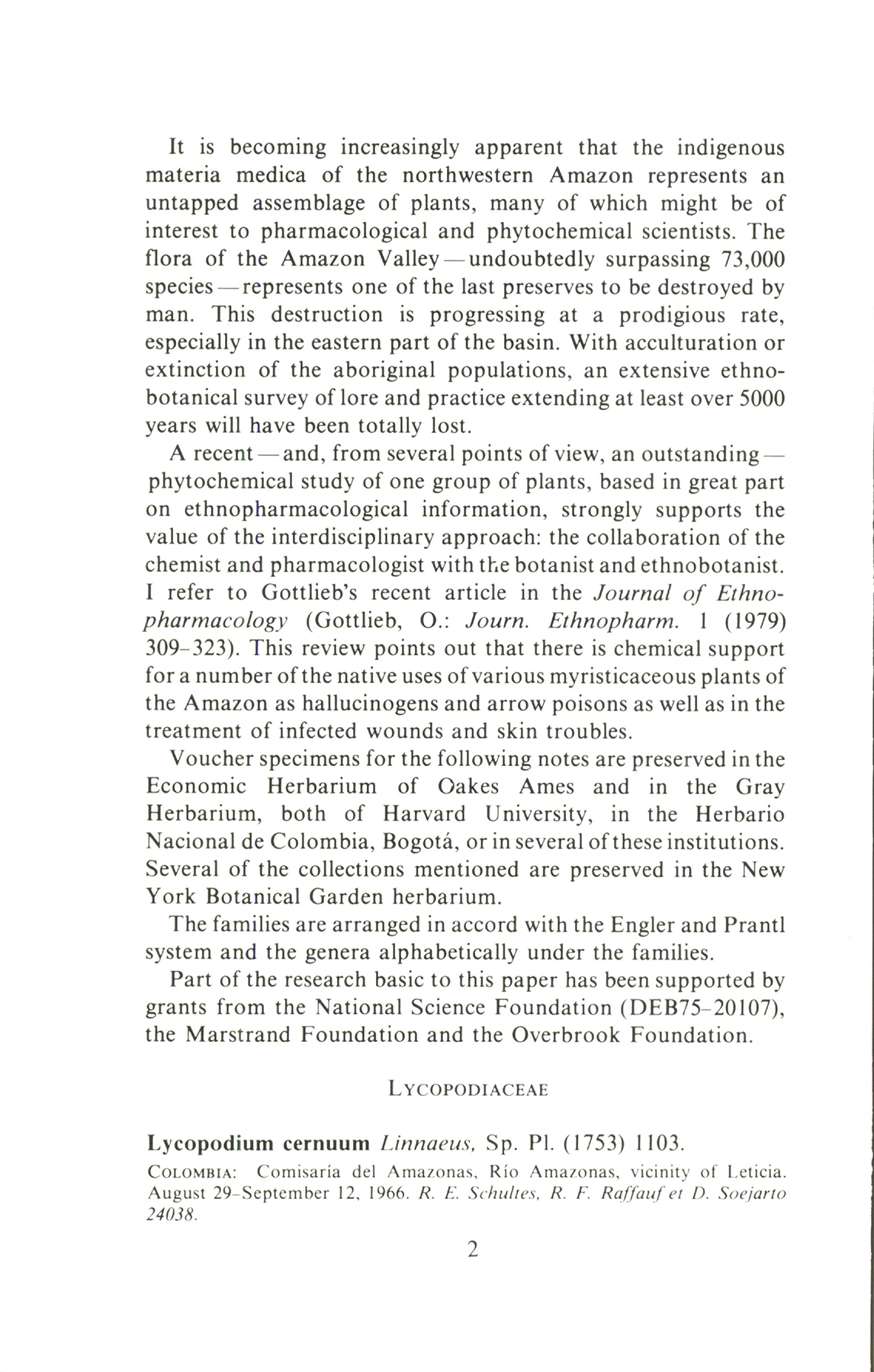
page of printed text

Page 2. Schultes, Richard Evans. “De Plantis Toxicariis E Mundo Novo Tropicale Commentationes XXVI: Ethnopharmacological Notes On The Flora Of Northwestern South America.” Botanical Museum Leaflets, Harvard University. v. 28 (1980), pgs. 1-45. Contributed in BHL from Missouri Botanical Garden with permission from Harvard University Herbaria. CC-BY-NC-SA.

In a 1994 article, he writes:

“…in many regions of the Amazon Basin, native plant and animal species are being destroyed faster than can be recorded, classified and studied…Why not regard the Indians in the Amazon Basin as a kind of phytochemical rapid-assessment team already on the ground, which could help locate the most promising plants for chemical and pharmacological evaluation?…The Indians’ botanical knowledge is disappearing even faster than the plants themselves” (Schultes 1994).

Schultes is regarded as one of the founding fathers of the international conservation movement, having advocated for conservation in developing areas since the 1940s. He mentored many graduate students, infusing them with the same respect and concern for the preservation of natural environments and local knowledge.

Schultes contributed to over 350 publications and served on editorial boards for several scientific periodicals. He also wrote and spoke to lay audiences on many occasions, always emphasizing the need to study and preserve Indigenous botanical knowledge, concluding:

“It is therefore our responsibility – nay, our duty – to put ourselves in the forefront of ethnobotanical conservation. We cannot allow such precious funds of knowledge to become extinct” (Schultes 1988b).

“Unless strong conservation measures are strictly enforced, many species and even some genera may become extinct. It is vitally important to preserve as many sources of germplasm as possible for the benefit of future generations” (Schultes 1990).

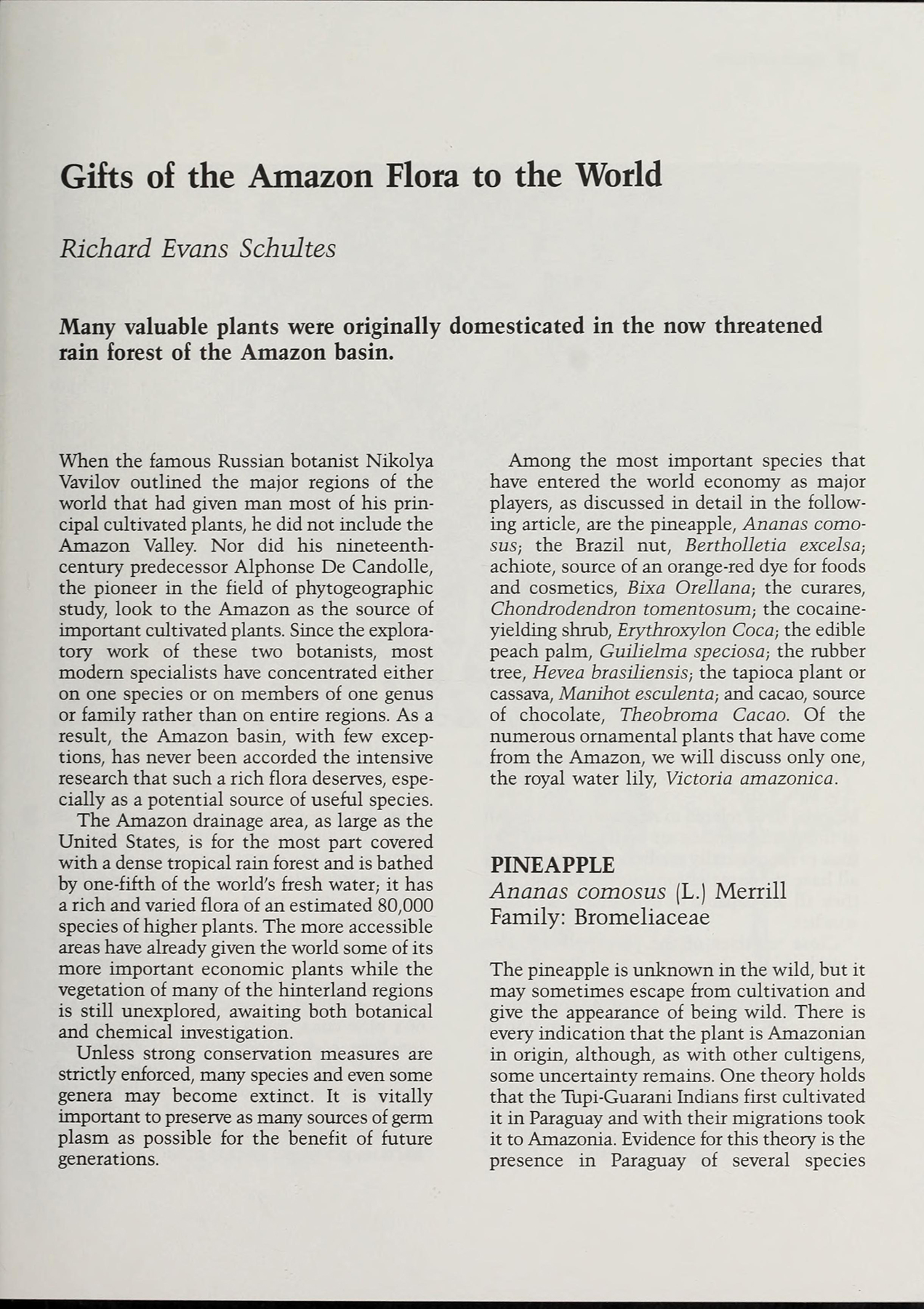
page of printed text

Schultes, Richard Evans. “Gifts of the Amazon Flora to the World.” Arnoldia, v. 50(2), pgs. 21-33. Contributed in BHL from Harvard University Botany Libraries with permission from The Arnold Arboretum of Harvard University. CC-BY-NC-SA.

Schultes was the recipient of the Tyler Prize for Environmental Achievement and the World Wildlife Fund Gold Medal in 1984, and the Harvard Medal and the Linnean Medal in 1992. Three genera and over 120 species bear his name. In 1986, the government of Colombia designated a 2.2 million acre protected area as “Sector Schultes” in his honor.

“Richard Evans Schultes, the great 20th century ethnobotanist, was deeply concerned with the fate of the tropical forests of the Earth,” states Felipe Cárdenas-Arroyo. “His work in search of medicinal plants was an important contribution to humanity. But in order for this work to continue, he knew that forests and the Natives who inhabit them need to be protected. Well aware that conserving both would guarantee a healthy planet for all of us, he voiced his concern for the future of the tropical forests and its people” [1].

Additional Information

The Richard Evans Schultes papers, containing Schultes’s field notes, photographs and botanical records, are held by the Botany Libraries in the Harvard University Herbaria.

Contained within the digitized materials in BHL are published articles and papers, field notebooks, lists of collected and identified plants, maps, and photographic materials. The Harvard University Herbaria contains many of the specimens collected by Schultes from North and South America.

For an interactive geospatial exhibit of Schultes’s work in Mexico and the Amazon, see The Amazonian Travels of Richard Evans Schultes.

References

Amazon Conservation Team. The Amazonian Travels of Richard Evans Schultes. https://www.banrepcultural.org/schultes/

Kahn, E. J. “Jungle Botanist [Richard Evans Schultes]”. The New Yorker. v. 68: pp. 35-58. 1992.

Sequeira, Luis. “Richard Evans Schultes : January 12, 1915-April 10, 2001”. National Academy of Sciences (U.S.). Biographical Memoirs ; v. 88. Washington, D.C.: National Academy Press, 2006.

Schultes, Richard. “Burning the Library of Amazonia.” Sciences 34, no. 2, pp. 24. 1994.

Schultes, Richard Evans. “Ethnopharmacological Conservation: A Key to Progress in Medicine.” Acta Amazonica, vol. 18, no. suppl. 1-2, pp. 393–406. 1988a.

Schultes, Richard Evans. “Gifts of the Amazon Flora to the World”. Arnoldia, vol. 50, no. 2, pp. 21-33. 1990.

Schultes, Richard Evans. “Primitive Plant Lore & Modern Conservation”. Orion Nature Quarterly ; v. 7, No. 3, Summer 1988. New York, NY: Myrin Institute, 1988b.

Schultes, Richard Evans. The Reason for Ethnobotanical Conservation. Bulletin of the Botanical Survey of India, v. 28, no.1-4, 1986, pp. 203-224. Calcutta, India: Director, Botanical Survey of India, 1986.

Tyler Prize for Environmental Achievement. https://tylerprize.org/laureates/past-laureates/1987-tyler-laureates/

[1] Cárdenas-Arroyo, Felipe. January and February 2020. Email exchange with Diane Rielinger.

August 11, 2020by michelle.underhill
Blog Reel, Campaigns, Earth Optimism 2020, Her Natural History

The Conservationism of a Nature Educator: Anna Botsford Comstock

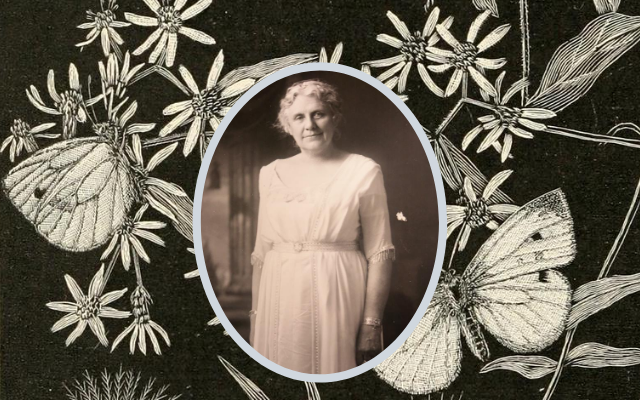
black and white portrait of a woman in a white dress atop a black and white illustration of flowers and butterflies

April 2020 marks the 50th anniversary of Earth Day. Organizations around the world have commemorated the occasion by participating in the global Earth Optimism movement — an initiative spearheaded by the Smithsonian to “turn the conservation conversation from doom and gloom to optimism and opportunity”.

Throughout 2020, the Biodiversity Heritage Library (BHL) and our partners are joining the movement by sharing conservation success stories from and made possible by the BHL collection. Follow our blog for conservation stories — past and present — and visit our website for more information and to explore our Earth Optimism book collection.

———————

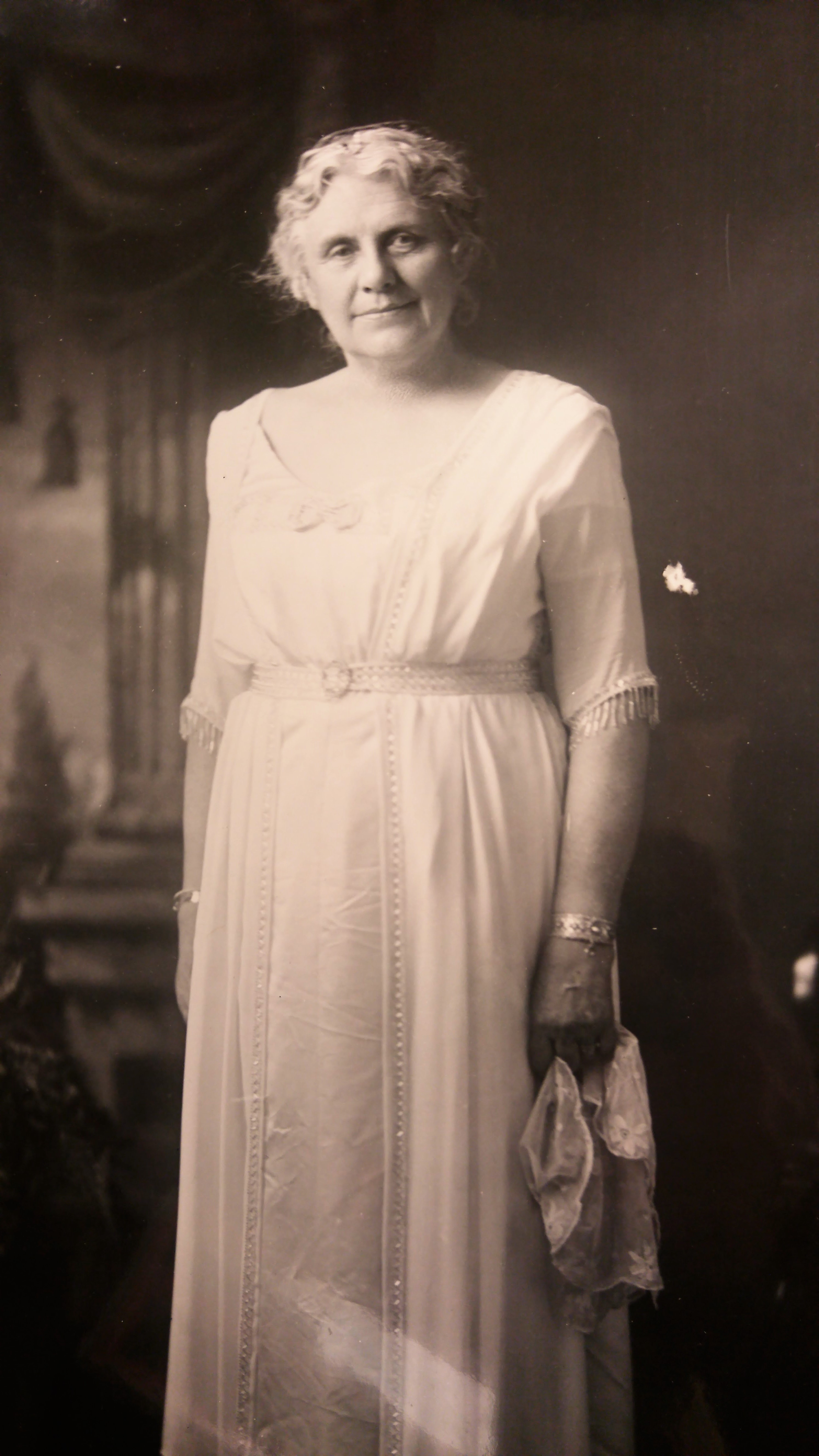
Anna Botsford Comstock c1914 StClair RMC.jpg

Anna Botsford Comstock, a naturalist educator who championed childhood curiosity in nature. The conservationism of Comstock fueled the impetus of her work for children to understand nature and take ownership of their environment. Her’s was to celebrate one’s kinship with the earth by being a positive ecological participant of nature, and not just a spectator. Photo taken by Karen Penders St. Clair at Division of Rare and Manuscript Collections at Cornell University Library.

Anna Botsford Comstock (1854-1930) held a significant role as a proponent of nature education at Cornell University in Ithaca, New York, at the turn of the 20th century. Comstock was born in New York State, the only child to Quaker parents at the edge of the pioneer era. The doctrine of her parents, Marvin and Phoebe Botsford, was one of appreciating a higher creation in all things natural. It is in this philosophy in which a young Comstock was raised, and it was her mother who particularly influenced her child’s curiosity, and knowledge, of the surrounding natural wonders of the world.

Comstock was a voracious reader and was deeply influenced by the romanticism writings popular in her youth. Her own nature writing mirrors the technical and collective philosophical influences of Ralph Waldo Emerson (1803-1882), James Russel Lowell (1819-1891), and William Wordsworth (1770-1850) (she always carried Wordsworth’s Prelude (1850) in her travels). However, it was Comstock’s admiration of the writing of Henry David Thoreau (1817-1862), with his detailed notes, language, and observations, which guided Comstock’s hand in the nature lessons she wrote and the nature literature courses she lectured.

The conservationism of Anna Botsford Comstock lies not in one particular focus of activism to preserve a particular aspect of our natural world.  She shared in inspiring the collective belief of her time that it was crucial our imprint as humans on our wild and natural landscapes be understood. Instilling this love and appreciation of the natural world around us, and to know that we also play a crucial part as participants, is the capstone achievement of Comstock’s work.

Comstock’s “Nature is full of surprises” approach appealed to children directly, as it did with her contemporaries. She believed that “future citizens” should be set on inheriting our Earth by learning of its environments, and of the interactions of the living systems therein. She shared with her peers that earthly care was a moral responsibility to be built upon with each successive generation. Comstock emphasized that children should discover their environment through the use of their five senses and careful observation. Through their own individual investigations, the child could thereby cultivate a sense of connection and responsibility for our Earth. Comstock expressed, “It is a great asset to the conservation of our natural resources to have the children of our land be interested in the wild life in such a chummy and intimate manner.”

Early in her career, Comstock captured the range of plant life with dozens of Cornell Rural School curricula leaflets (in active publication from 1896 to 1956) through The New York State College of Agriculture at Cornell University. The topics in her botanical leaflets included seeds, wildflower study, cultivated and flowerless plants, and trees. Additionally, through her artistic association with the entomological research and writings of her husband, John Henry Comstock (1849-1931), founder of the department of entomology at Cornell University, Comstock broadened her educational base to include insects.

Penning her detailed nature articles and lesson plans, Comstock was systematically inclusive of earthborne, waterborne, and airborne species, emphasizing humanity’s connection to microbes, insects, plants, animals, earth, and sky. Comstock’s work kept to principles of observation and trusting one’s senses. Comstock’s pedagogy encouraged the development of a child’s curiosity by “opening one’s eyes to our natural surroundings.” Her appeal to the parents and teachers of these progeniture was in helping these adults foster their childrens’ awareness of, and interactions with, nature. This was a shared advocacy of many conservationists of Comstock’s time including, but not exclusive to, John Muir (1838-1914), John Burroughs (1839-1921), and Ernest Thompson Seton (1860-1948).

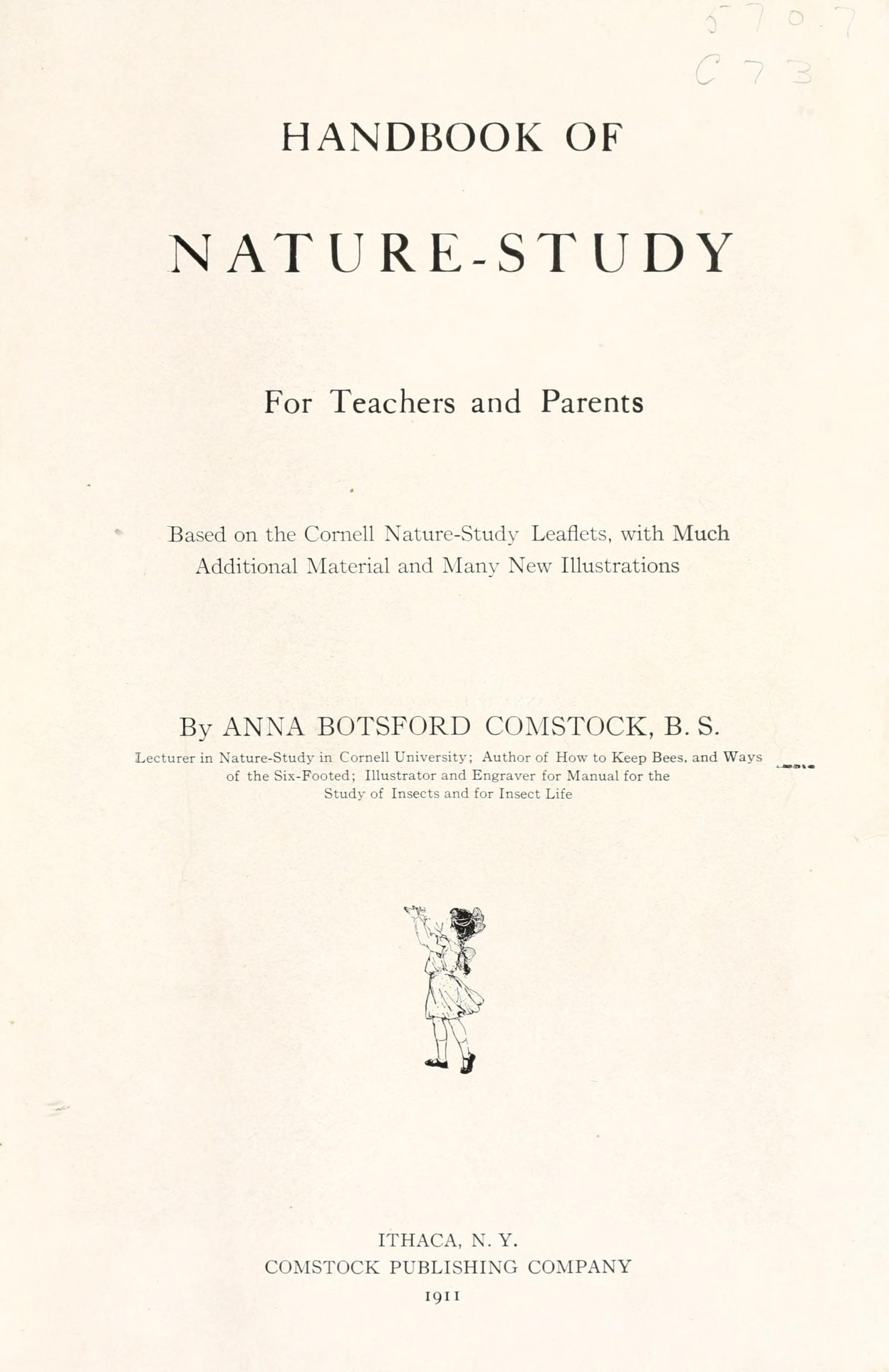
title page for handbook of nature study

Title page. Comstock, Anna Botsford. Handbook of Nature-Study for Teachers and Parents, Based on the Cornell Nature-Study Leaflets, With Much Additional Material and Many New Illustration. 1911. Contributed in BHL from MBLWHOI Library.

To encourage children to become explorers, Comstock worked closely with other nature educators at Cornell University for several years and ultimately compiled her collective work and publications into her inspiring The Handbook of Nature Study (1911). Still in print today and in its 24th edition, this notable book is used throughout the world and has preserved the work of these early nature study initiatives. In this tome of natural life, Comstock wrote about diverse topics of the earth with her modules “Stone and Minerals”, “Soil”, and “Water” (in all its forms). Practical instruction of the sky includes the seasons, weather, and astronomy. Lessons geared towards small mammals, birds and their habitats, invertebrates, and fish are also included within the gigantic book. Her lessons are timeless and poignant still today as The Handbook of Nature Study continues to inspire new generations of nature lovers.

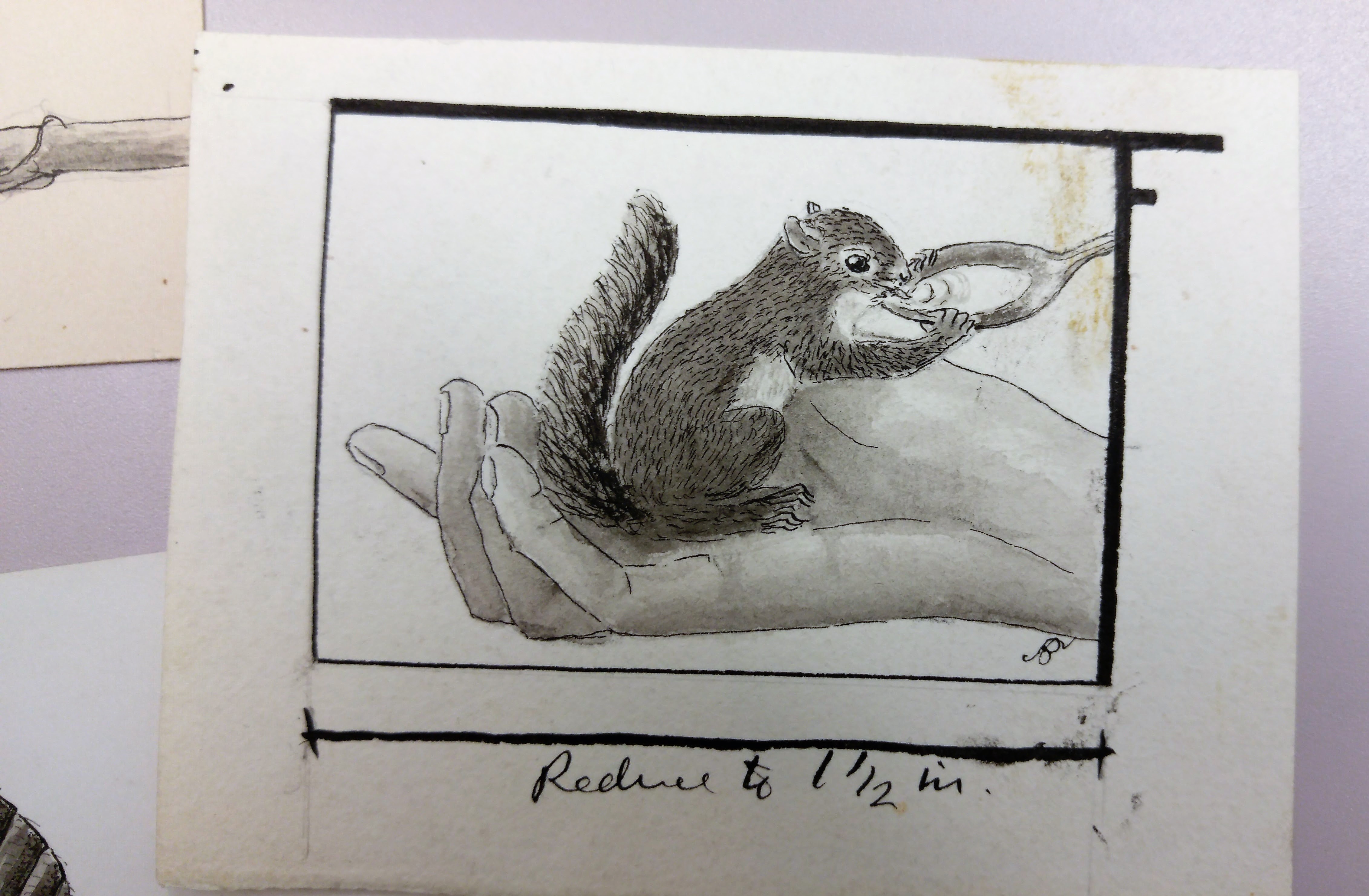
Anna Botsford Comstock Furry c1903 BoysGirls 1903 publication.jpg

“He holds the bowl of the spoon with both front paws while he drinks the milk.” Editor’s proof of an original pen & ink image of Furry, the red-squirrel, first drawn by Anna Botsford Comstock for publication in Boys & Girls (January, 1903), and later used in her Handbook of Nature Study (1911). Photo taken by Karen Penders St. Clair at Division of Rare and Manuscript Collections at Cornell University Library.

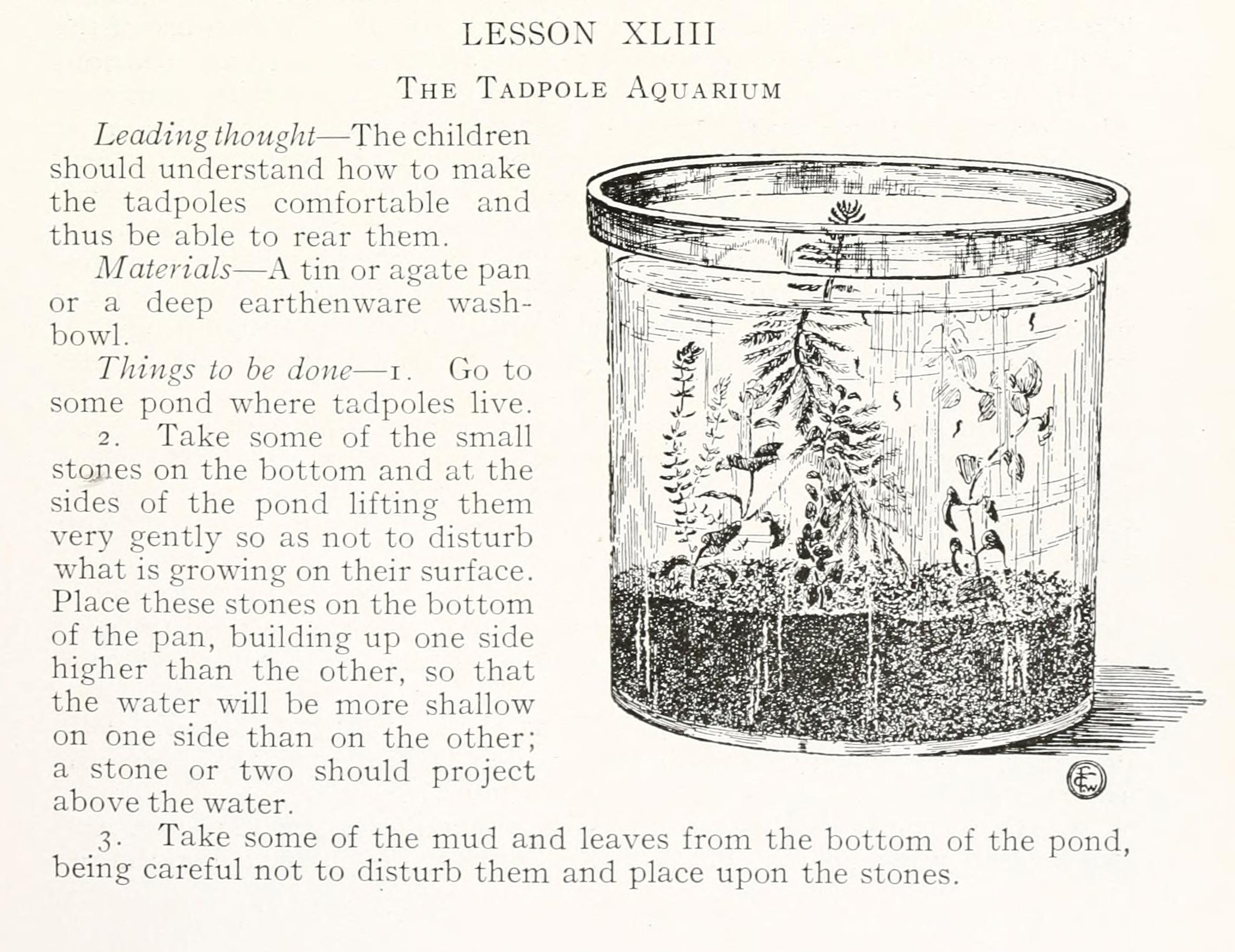
text and illustration for nature lesson on tadpoles

Lesson XLIII: The Tadpole Aquarium. Comstock, Anna Botsford. Handbook of Nature-Study for Teachers and Parents, Based on the Cornell Nature-Study Leaflets, With Much Additional Material and Many New Illustration. 1911. Contributed in BHL from MBLWHOI Library.

The Biodiversity Heritage Library (BHL) has access to several of the earliest issues of The Handbook of Nature Study and other notable works by both Comstock and her husband, John Henry Comstock, whose entomological writings she helped to illustrate. Included in the BHL collections are most of Comstock’s scientific writing, and of particular interest for budding naturalists is her Syllabus of Lecture Series: Nature Study (1900).

Pre-dating her magnum opus, the Lecture Series lessons helped pave the way for Comstock to communicate directly with the educators of her time and listen to what they demanded for their students. This small book lends itself as a great portable field-book for those wanting to take their classes, or their family, out-of-doors. Supplementing the Lecture Series notebook with the larger Handbook of Nature Study as a reference tool combines two wonderful pieces of nature literature that are as timeless and relevant to conservation appreciation today as they were over one hundred years ago.

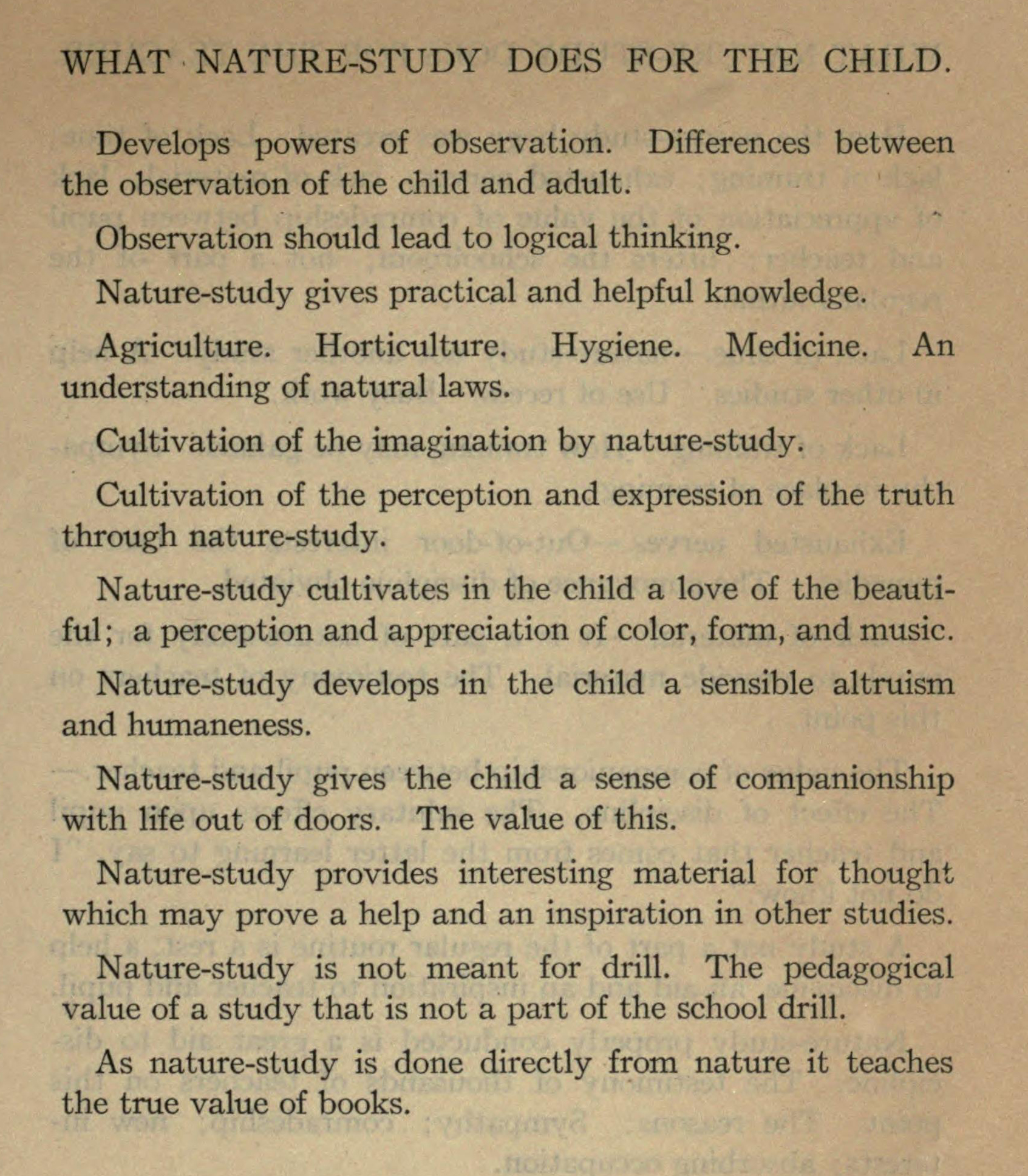
text for "what nature study does for the child"

“What nature-study does for the child.” Comstock, Anna Botsford. Syllabus of Lectures. Nature Study. 1900. Contributed in BHL from University of California Libraries via Internet Archive.

Comstock carries the voices of nature study educators, along with her own, to inspire all generations to learn about and appreciate their immediate natural surroundings. These are the voices that remind us to be mindful of our own conservational impact on the environment, and like Comstock, to think beyond our own sphere of home, fields, or woods towards a collective fellowship and world community. Her’s is a voice that transcends time with her appreciation for our Nature resources and lends towards our conservationist efforts into the 21st century.

To learn more about Anna Botsford Comstock, a woman who was an artist, philosopher, educator, naturalist and conservationist, explore The Handbook of Nature Study  (1911), Syllabus of Lecture Series: Nature Study (1900), and her other notable works, within the auspices of the Biodiversity Heritage Library.

Author’s Note: Dedicated to Dr. Betty Jean McKnight (1928-2020, Cornell ’65) who was a pioneer in her own right. Betty was an educator, naturalist, and conservationist in the best sense of each. Above all, Betty was my friend and mentor who never failed to sparkle with my stories of Mrs. Comstock during my doctoral research. You will be missed.

August 6, 2020by Joel Richard
Blog Reel, Campaigns, Earth Optimism 2020

Sustainable Forestry Science: Wilhelm Philip Daniel Schlich

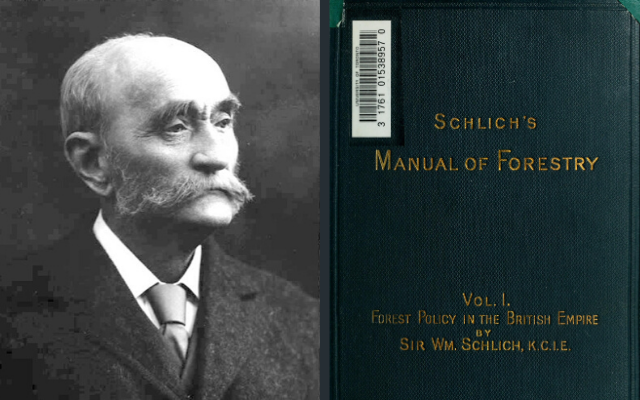
black and white photo of a man in a suit and tie next to cover of a book that reads manual of forestry

April 2020 marks the 50th anniversary of Earth Day. Organizations around the world have commemorated the occasion by participating in the global Earth Optimism movement — an initiative spearheaded by the Smithsonian to “turn the conservation conversation from doom and gloom to optimism and opportunity”.

Throughout 2020, the Biodiversity Heritage Library (BHL) and our partners are joining the movement by sharing conservation success stories from and made possible by the BHL collection. Follow our blog for conservation stories — past and present — and visit our website for more information and to explore our Earth Optimism book collection.

———————

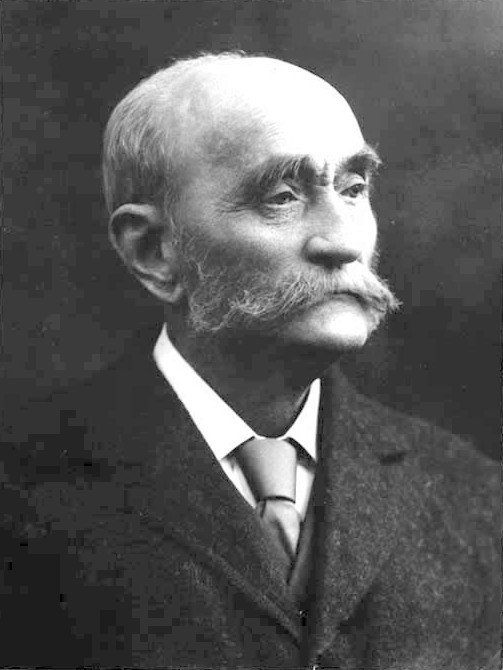
black and white photo of a man in a suit and tie

Wilhelm Schlich. Photo:Public domain Public Domain. Wikimedia Commons.

Wilhelm Philip Daniel Schlich (also known as William Schlich) was born on 28 February 1840 to a German pastor’s family. In 1859, he decided to study forestry, having previously studied mechanical engineering and mathematics. The change may have been inspired by Gustav Heyer, who taught forestry at the University of Giessen and under whom Schlich studied. After graduating in 1862, Schlich joined the Hesse forestry service, but unfortunately in 1866, he lost his employment due to territorial shifts after Prussia’s brief war against Austria.

At the same time, Dr. Dietrich Brandis, Inspector General of Forestry in the central government of British Raj, was looking for foresters to establish a technically competent forest administration service in India. Brandis is today considered the founder of tropical forestry.

India and Sustainable Forestry

Schlich followed Brandis to India, where he was employed at the focal points of the subcontinent’s forestry development: In 1867, he came to Burma as Special Assistant Conservator of Forests (ACF), where he was promoted to Deputy Conservator (DCF) after only six months. Schlich drew up personnel and economic plans and designed the further development possibilities for greater economic efficiency and higher profits. In 1870, he was transferred to the contrasting semi-desert climate of Sindh (Pakistan), where his success depended on the blessings of a regulated forestry industry for the population and the government revenue that the province would continue to receive.

His success led to his promotion in 1872 to the Conservator of Forests of Bengal. There he aroused the interest of the provincial governor Sir Richard Temple, who from then on strongly supported forestry. In 1873, the preparations for the founding of a forestry training centre in India were drafted, which led to the establishment of the Forest Ranger School in Dehradun in 1878—where Schlich himself headed the forestry department.

Schlich was also involved in the revision of the Forest Act of 1878, which divided the Indian forests into three groups: I. reserved forest (completely government controlled and protected), II. protected forest (partly government controlled) and III. village forests (controlled by abutting community). The majority of Indian forests were assigned to the first category and controlled first by the colonial government and then by the Government of India following Indian independence.

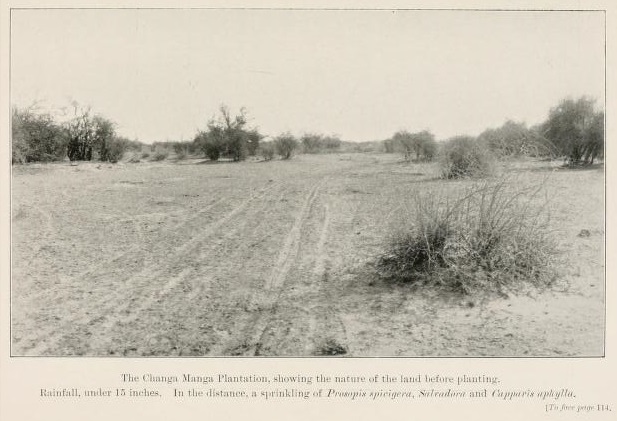
schlichsmanualof00schl_0141.jpg

The Changa Manga Plantation. Before aforrestation. Source: Schlich, Wilhelm. Schlich’s Manual of Forestry v. 1 (1906), ed. 3. Contributed in BHL from NCSU Libraries via Internet Archive.

black and white photo of a forest and stream

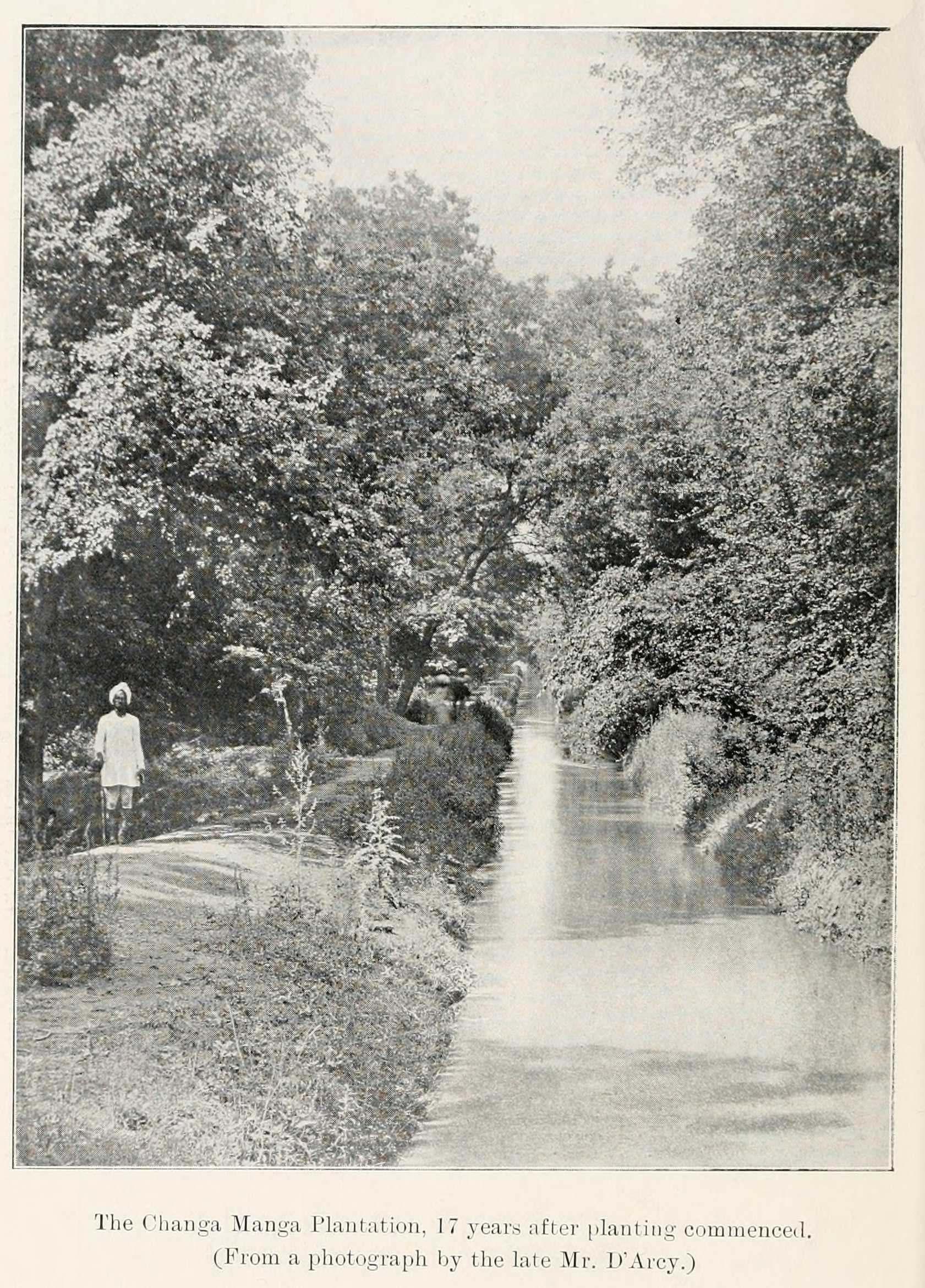
The Changa Manga Plantation. Seventeen years after planting. Source: Schlich, Wilhelm. Schlich’s Manual of Forestry v. 1 (1906), ed. 3. Contributed in BHL from NCSU Libraries via Internet Archive.

During this time, Schlich held landmark lectures at the Indian Forest Conference in Allahabad. He not only referred to the economic aspects of forestry, but also emphasized that forests “… increase the artistic beauty of a country, may, under certain conditions, increase its healthiness, and at any rate have a beneficial effect upon the human mind” (Schlich’s Manual of Forestry, 22).

Another result of this conference was the founding of the first forestry journal in the English-speaking world—the Indian Forester—with Schlich as its editor (until 1879).

In 1880, Schlich was assigned Conservator of Forests of Punjab, and by the end of 1881, he was appointed to the central government as Officiating Inspector General of Forests.

“It is not too much to say that the development of economic forestry in the British Empire generally has come through India. It is that country which has set the example. There can be no doubt that the development of systematic economic forest management in British India is something to be proud of” (Schlich’s Manual of Forestry, 118).

Great Britain & the Acknowledgement of Forestry as a Science

In 1885, Schlich left India for an appointment as Professor of Forestry at the Royal Indian Engineering College at Cooper’s Hill and was thus under the direct influence of the junior staff of the higher forestry service in India. Now he began to pursue his second major goal: The recognition of forestry studies as a scientific discipline at an English university.

In his lessons, Schlich always emphasized the importance of preserving the productive power of the soil as a silvicultural objective and thus created an understanding of sustainable forestry among his approximately 200 students, who passed this on to their later positions in science and administration.

Sir_William_Schlich07.jpg

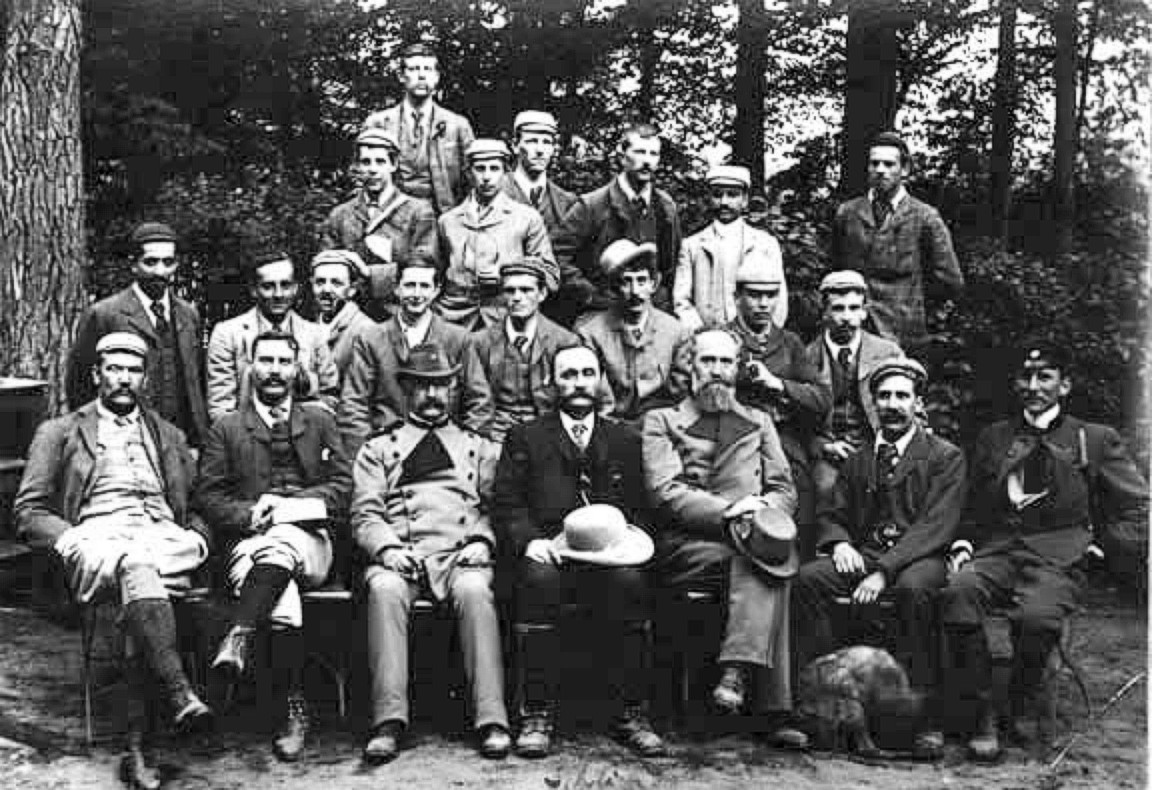
Wilhelm Schlich (center, first row with pale hat on his lap) with Oxford students during a tour to saxony in 1892. Photo: Public domain Public Domain, Wikimedia Commons.

The Manual of Forestry

book cover in green with manual of forestry written on it

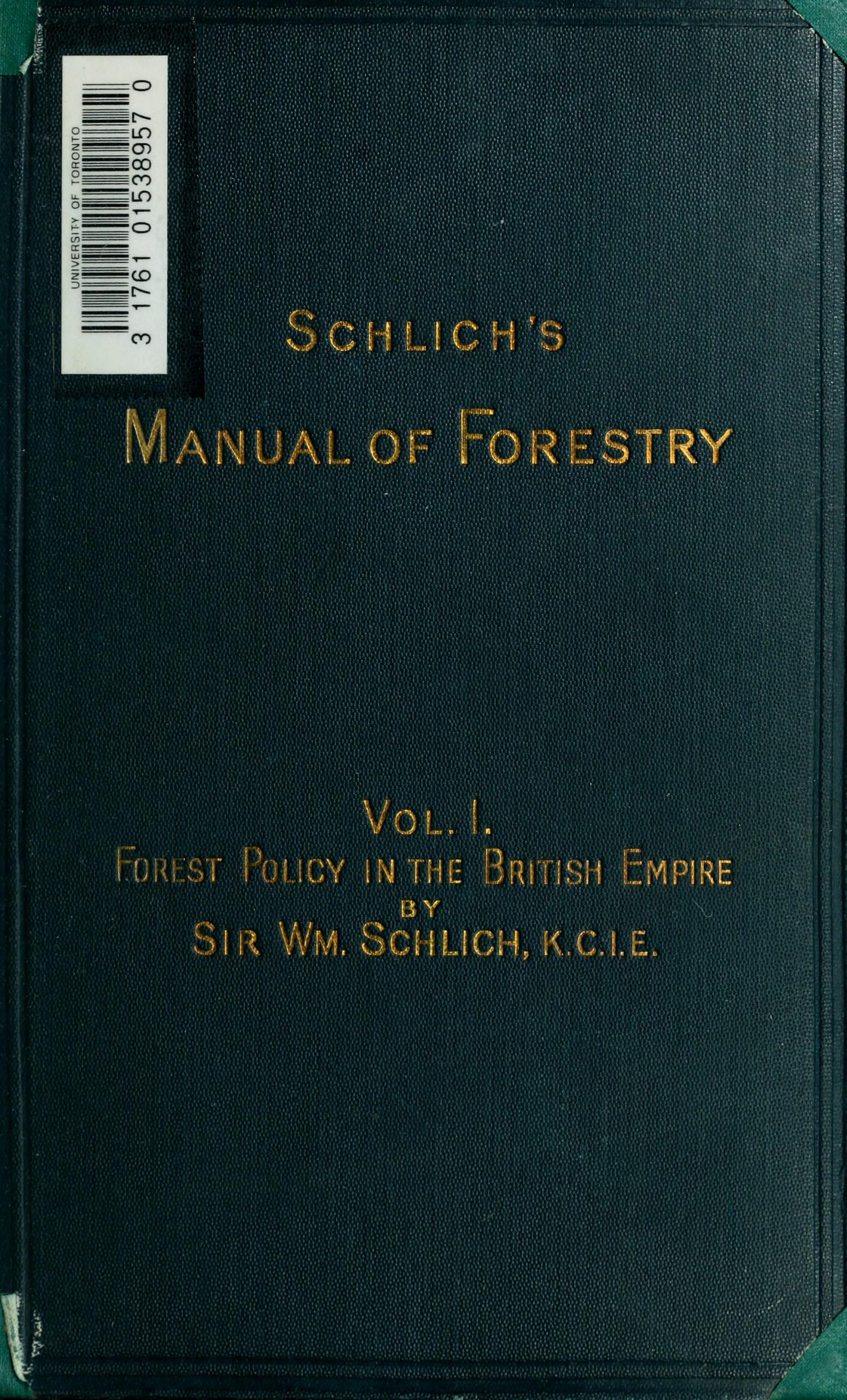
Cover. Schlich, Wilhelm. Schlich’s Manual of Forestry v. 1 (1922), ed. 4. Contributed in BHL from University of Toronto – Robarts Library.

During his teaching activities, Schlich produced the 5-volume Manual of Forestry (first published between 1889–96) in which he concentrated his knowledge and designed it as a textbook for his students.

  1. Forest Policy in the British Empire
  2. Formation and Tending of Woods or Practical Sylviculture
  3. Forest Management
  4. Forest Protection (by W. R. Fisher, BA.) , English Adaption of „Der Forstschutz“ von Richard Heß
  5. Forest Utilization (by W. R. Fisher, BA.) , English Adaption of „Die Forstbenutzung“ von Karl Gayer

In this work, Schlich takes a holistic view of forestry work and addresses the climatological, pedological and plant-physiological factors that have an impact. Schlich’s principles pay attention to the balance of forest treatment without neglecting economic efficiency. The manual introduces the teaching of sustainable forest use in forestry studies and has become a standard textbook in the USA, among other countries.

In 1911, the University of Oxford offered Schlich a lectureship as professor of forestry. However, the lectureship was neither secured by a permanent chair nor by financial means, and forestry studies was by no means considered equal to the other scientific studies at that time. However, Schlich stuck to his goal, and when the lecture halls reopened in 1919 after WWI, students flocked to his lectures. The professorship was established by Oxford University as a permanent chair and financially secured. At the end of the year, Schlich ended his university teaching and ceded the chair to R. S. Troup.

Although retired, Schlich dedicated himself to the conservation of the forests in England and became involved in the Royal English Arboricultural to further develop the newly awakened interest in forestry. He remarked, however, that the societies and commissions talked too much and took too little actions.

Schlich died on 28 September 1925 in Oxford.

In recognition of his life’s work, Schlich became, in some cases posthumously, an honorary member of various forestry interest groups. In his honour, the Society of American Foresters awards the Sir William Schlich Memorial Medal, which was presented among others to Franklin D. Roosevelt, then President of the USA, for his services to forest conservation in the USA by founding and promoting the Civilian Conservation Corps.

Sources and Literature

Titles by Sir Wilhelm Schlich in the Biodiversity Heritage Library: https://www.biodiversitylibrary.org/creator/13760

Knopf, H. E. (1992). Forstliche Leitbilder: Leben und Werk von Philipp Engel von Klipstein, Richard Alexander Hess, Sir William Schlich. Göttingen: Vereinigung d. Freunde d. Fachbereichs Forstwirtschaft. http://www.worldcat.org/oclc/46119866.

July 30, 2020by Joel Richard
Blog Reel, Campaigns, Earth Optimism 2020

Beyond Walden: What Henry David Thoreau Teaches Us About Nature and Connection

April 2020 marks the 50th anniversary of Earth Day. Organizations around the world have commemorated the occasion by participating in the global Earth Optimism movement — an initiative spearheaded by the Smithsonian to “turn the conservation conversation from doom and gloom to optimism and opportunity”.

Throughout 2020, the Biodiversity Heritage Library (BHL) and our partners are joining the movement by sharing conservation success stories from and made possible by the BHL collection. Follow our blog for conservation stories — past and present — and visit our website for more information and to explore our Earth Optimism book collection.

———————

Thoreau the writer.  Thoreau the philosopher.  Thoreau the naturalist.  Thoreau the citizen.

The myriad of Henry David Thoreau’s titles demonstrates the fusion of interests that propelled his path toward becoming one of the key naturalist figures in history. Classic works like Walden and Civil Disobedience brought Thoreau literary renown as he proclaimed the philosophies of Transcendentalism and environmentalism. As a naturalist, his records of field specimens amassed in journals both while living at Walden Pond and long after. Though praised for his place in the American literary canon, he also made significant contributions to the scientific community. His field notes and data are now helping scientists learn more about species’ resilience, the effects of climate change, and the historical landscape of New England.

Thoreau’s identities are interdependent. Without his grace with words, little attention might be devoted to his findings and philosophies. If he had not had a passion for nature and study, he might never have gone to Walden Pond in the first place. Yet, it is not simply living and surviving at Walden Pond that makes Thoreau a great naturalist. His immersion in nature throughout New England and the relationships he formed with members of the Penobscot Nation in Maine sculpted his understanding and passion for the ecosystem.

cove (3).jpg

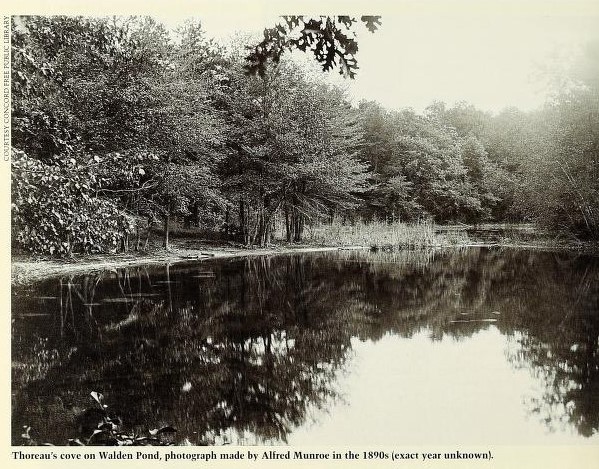
A cove at Walden Pond where Thoreau lived 1845-1847. Miller-Rushing, Abraham J., and Richard B. Primack. “The Impact of Climate Change on the Flora of Thoreau’s Concord.” Arnoldia 66, no. 3. 2009.  Contributed in BHL by Smithsonian Libraries with permission from The Arnold Arboretum of Harvard University. CC-BY-NC-SA.

Blending art and science

Thoreau lived alone at Walden Pond outside the town of Concord, Massachusetts from 1845-1847. He practiced self-reliance by building shelter, farming, fishing and spending long hours in observation of his surroundings. Thoreau proves himself dedicated to his task of environmental study at all times, even during social hours with friends like writer Ralph Waldo Emerson. Thanks to Emerson’s Biographical Sketch of Thoreau, we learn that when the two went walking:

“… [Thoreau] carried an old music-book to press plants; in his pocket, his diary and pencil, a spy-glass for birds, microscope, jack-knife, and twine. He wore a straw hat, stout shoes, strong gray trousers to brave shrub-oaks and smilax, and to climb a tree for a hawk’s or a squirrel’s nest. He waded into the pool for the water-plants, and his strong legs were no insignificant part of his armor.” (Biographical Sketch of Thoreau, 20)

Thoreau’s book Notes on New England Birds goes on to showcase the very data he collected on such walks (maybe even with Emerson in tow!). His trademark lyricism is reflected in his field notes, such as this observation of a red-winged blackbird’s nest:

“What Champollion can translate the hieroglyphics on these eggs? It is always writing of the same character, though much diversified. While the bird picks up the material and lays the egg, who determines the style of the marking? When you approach, away dashes the dark mother, betraying her nest, and then chatters her anxiety from a neighboring bush…” (Notes on New England Birds, 251)

While the text maintains his melodious tone, it actually serves as critical data for the first records of animals in the area. For each of the birds, Thoreau records incremented updates over many years, illustrating changes in behaviors and migration. His notes reveal much more than a studious rigor, illuminating the true joy he experienced as a participant in nature. Thoreau takes an anthropomorphic approach to his notes on the birds, personifying each creature as an individual entity representative of its greater species:

“The loon comes in the fall to sail and bathe in the pond, making the woods ring with its wild laughter in the early morning…” (Notes on New England Birds, 3)

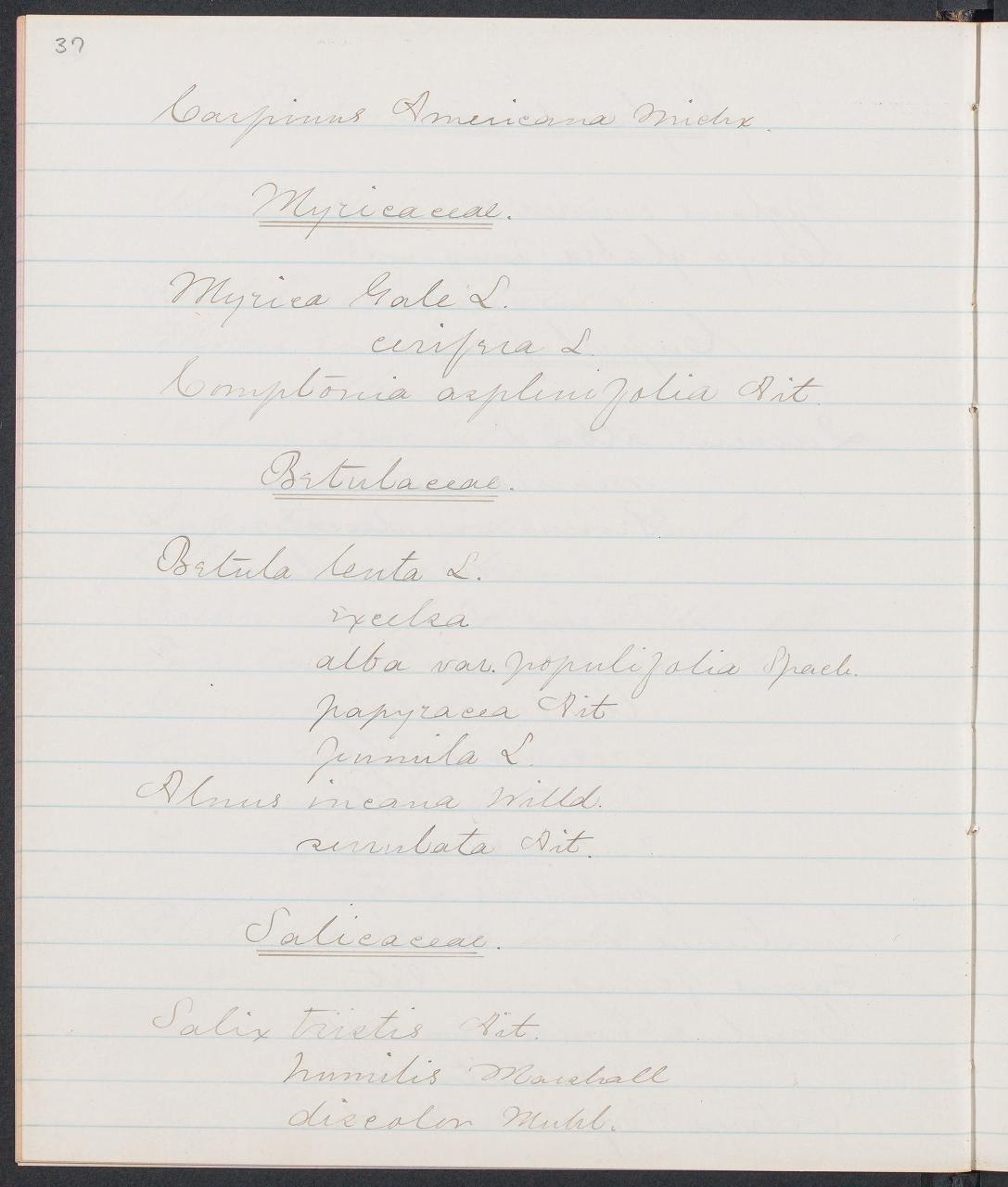
In Catalogue of Herbarium of Henry D. Thoreau, we see a less aesthetic side to his data collection. These handwritten notes on specimens from Thoreau’s herbarium show methodical organization and notes on each plant — Latin names and all. According to the Thoreau Society, he studied botany when he was at the Concord Academy and went on to collect about 900 plant specimens to dry and add to his herbarium. Through these two data sets, we see Thoreau’s scholastic pendulum swing between the art and science, emphasizing the multifaceted nature of his purpose.

Catalogue Herbarium.jpg

A page of Thoreau’s handwritten notes from the catalogue of his herbarium. Thoreau, Henry David. Catalogue of the Herbarium of Henry D. Thoreau, Bequeathed to Boston Society of Natural History. Contributed in BHL by Harvard University Botany Libraries.

Data that lives on

While Thoreau’s herculean efforts set precedents for the fields of biology and botany, his data itself remains relevant to current research. Works by other authors exemplify his contributions to modern science, such as the 1974 publication by Richard Jefferson Eaton entitled A Flora of Concord. This book documents the plants and ferns that grew naturally in Concord from Thoreau’s time to present day. Without Thoreau’s data on flora and animals, scientists would not have access to such an extensive look at species’ respective survivals and declines over time.

The detail of Thoreau’s field journals has provided scientists with evidence that allow them to evaluate changes in animal and plant behavior over a wide span of time. “The Impact of Climate Change on the Flora of Thoreau’s Concord“, by Abraham J. Miller-Rushing and Richard B. Primack, boasts that Concord flora is “one of the best-documented floras in the country,” in thanks to the initial work of Thoreau along with another local, Alfred Hosmer. Since 1830, the floras have been inventoried five times, serving as an immense case study of the effects of a changing habitat, climate, topography, and other factors on native plants.

flora concord.jpg

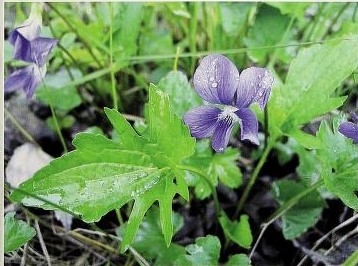
Britton’s violet (Viola brittoniana) is one of many wildflowers native to Concord. Miller-Rushing, Abraham J., and Richard B. Primack. “The Impact of Climate Change on the Flora of Thoreau’s Concord.” Arnoldia 66, no. 3. 2009.  Contributed in BHL by Smithsonian Libraries with permission from The Arnold Arboretum of Harvard University. CC-BY-NC-SA.

The painstaking work that Thoreau endured is emphasized by his commitment to tracking plants even through the brutal New England winters. Miller-Rushing and Primack note: “From 1852 to 1858, he hiked around Concord and made regular observations of the first flowering times of over 500 different species of plants in an effort to create a calendar of the natural events in Concord.” Thoreau and Hosmer documented plant occurrences as well as flowering and fruiting times, which have sensitive biological responses to alterations in climate. Their catalogs are allowing scientists to examine how and why certain species respond differently to changes in environment and compare the findings in Concord with those in other parts of the world. Such evidence provides a case study into the effects of climate change and loss of natural habitat on organisms’ behavior and survival.

The Penobscot Nation and Thoreau

Other books by Thoreau include information on the topography of New England infused with introspective narratives, such as Cape Cod and The Maine Woods. The Maine Woods documents Thoreau’s time spent with people of the Penobscot Nation, now one of Maine’s tribal governments. His time in Maine marks a formative period in his growth not only as a scientist but as a champion of the environment.

According to the Penobscot Nation’s Cultural & Historic Preservation Department, Thoreau did not always have a sincere respect for Native American culture. He was interested in Native Americans, but thought they were on the decline, as did most of society at the time. Starting in 1846, Thoreau made three trips to Maine and became increasingly well-acquainted with the Penobscot Nation. While canoeing with tribe members Joseph Attean (sometimes spelled Aitteon) (1829-1870) and Joseph Polis (1809-1884) as guides, Thoreau came to know Native American people as individuals and teachers, rather than as a fascination he had held since youth.

Attean, the last hereditary and first elected Chief of the Penobscot Nation, guided Thoreau on his second trip through Maine. Attean helped him develop more respect for the significance of Penobscot culture, though Thoreau still held on to lingering prejudices and stereotypes about Native Americans. Polis worked as the guide on his final trip. A Penobscot leader and representative for the tribe in official state and federal business, Polis expanded Thoreau’s worldview while bestowing on him an invaluable education on the land. Thoreau’s appreciation for the Penobscot Nation seemed to solidify thanks to his time with Polis. Thoreau describes a conversation while canoeing with Polis, writing:

“I told him that in this voyage I would tell him all I knew, and he should tell me all he knew, to which he readily agreed.” (The Maine Woods, 172)

We cannot fully embrace Thoreau’s contribution to science without honoring the guidance that Attean and Polis provided both in his scientific and spiritual journey. Thoreau’s maturation is evident in The Maine Woods and integral to our understanding of his impact on environmentalism. Thoreau’s relationships with Attean and Polis advanced his knowledge of Maine’s landscape and his intimacy with nature. He acknowledges their tribe’s expertise and connection to the land, saying:

“Nature must have made a thousand revelations to them which are still secrets to us.” (The Maine Woods, 185)

Penobscot river.jpg

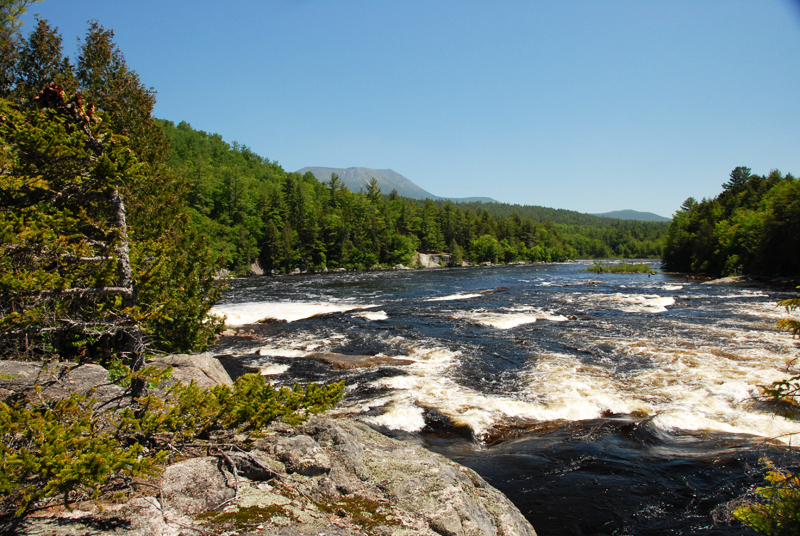
The Penobscot River in Maine. Maine Office of Tourism. “Penobscot River.”

While Walden may be Thoreau’s most famous work, The Maine Woods is the culmination of his identities at their prime. We see Thoreau’s ability to relate not only with nature, but with other people and cultures. For a man who chose to live in the woods for two years, Thoreau seemed to maintain a desire to engage with those around him throughout his life. His relationships with people like Emerson, Attean, and Polis take Thoreau out of the context of his achievements and reveal a person who sought genuine connection with people and the environment.

Thoreau’s scientific contributions and the ways in which they helped him grow in cultural awareness illustrate the importance of environmental research. The more Thoreau learned about his ecosystem, the more he fell in love with it and could show others how to develop a similar appreciation. The environment is still benefiting from Thoreau’s work today, as his data helps to advance research and his reflections motivate people to care for the earth as he did. A literary and scientific reading of Thoreau’s collection allows us to discover not only the effort behind his achievements, but the impetus for his life’s work.

References and Further Reading

Eaton, Richard Jefferson. A Flora of Concord. Series Publication: Museum of Comparative Zoology 4. Cambridge: Museum of Comparative Zoology: Harvard University, 1974.

Kucich, John J. “Lost in the Maine Woods: Henry David Thoreau, Joseph Nicolar, and the Penobscot World.” The Concord Saunterer 19/20 (2011): 22-52. Accessed July 9, 2020. www.jstor.org/stable/23395210.

Miller-Rushing, Abraham J., and Richard B. Primack. “The Impact of Climate Change on the Flora of Thoreau’s Concord.” Arnoldia 66, no. 3 (2009): 2–9.

Penobscot Cultural and Historic Preservation. “Historic Preservation.” Accessed February 8, 2020. http://www.penobscotculture.com/.

Schneider, Richard J. “Life and Legacy: Thoreau’s Life.” The Thoreau Society. Accessed February 8, 2020. http://thoreausociety.org/life-legacy.

Thoreau, Henry David. Catalogue of the Herbarium of Henry D. Thoreau, Bequeathed to Boston Society of Natural History, n.d.

Thoreau, Henry David. Notes on New England Birds. Edited by Francis H. Allen. Boston: Houghton, Mifflin and Company, 1910.

Thoreau, Henry David. The Maine Woods. Edited by Sophia E. Thoreau and William Ellery Channing. Boston: Ticknor and Fields, 1864.

Thoreau, Henry David, and Ralph Waldo Emerson. The Succession of Forest Trees, and Wild Apples, with a Biographical Sketch of Thoreau. The Riverside Literature Series 27. Boston: Houghton, Mifflin and Company, 1887.

July 23, 2020by Joel Richard
Blog Reel, Campaigns, Earth Optimism 2020

Landscape Democracy: The Life and Career of Frederick Law Olmsted (1822-1903)

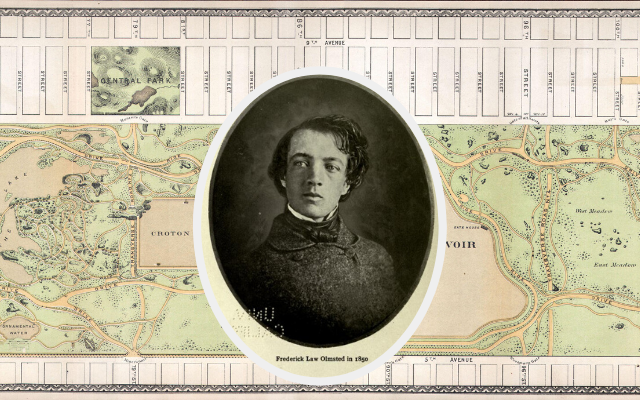
black and white photo of a young man overtop a map of Central Park

April 2020 marks the 50th anniversary of Earth Day. Organizations around the world have commemorated the occasion by participating in the global Earth Optimism movement — an initiative spearheaded by the Smithsonian to “turn the conservation conversation from doom and gloom to optimism and opportunity”.

Throughout 2020, the Biodiversity Heritage Library (BHL) and our partners are joining the movement by sharing conservation success stories from and made possible by the BHL collection. Follow our blog for conservation stories — past and present — and visit our website for more information and to explore our Earth Optimism book collection.

———————

“Nature, nevertheless, is the great teacher to which the artist who would hope to imitate her, however crudely, must ever turn for instruction and for inspiration.”

-Frederick Law Olmsted, Editorial: “Foreign Plants and American Scenery” in Garden and Forest 1 (1888)

Considered the father of American landscape architecture, Frederick Law Olmsted co-designed many of the most well-known urban parks and landscapes in the United States in partnership with Calvert Vaux (Wikipedia). As Adam Gopnik wrote in The New Yorker, “Was there a patch of grass in nineteenth-century America that he didn’t design? Stanford, Prospect Park, and the Biltmore Estate, in North Carolina; the space around the United States Capitol and preservation plans for Niagara Falls and Yosemite.” In addition to his impressive accomplishments in landscape architecture, including seventeen large urban parks across the United States — most notably Central Park, he was also a journalist, abolitionist, gentleman farmer, and conservationist (Ranney, 3).

Olmsted’s genius was perfectly matched to the age in which he lived: “Olmsted lived from 1822 to 1903, a life which spanned the transformation of America from an agricultural nation of ten million people to an industrial one of seventy-five million. At a time when the frontier was closing and Americans were moving to the cities, Olmsted believed that nature had a controlling effect on man’s behavior. So he undertook in the course of a long career to save nature or recreate it for new industrial conditions” (Ranney, 3).

Born in Hartford, Connecticut to a dry goods merchant, Olmsted attended Yale University for one semester before acquiring a farm on Staten Island, which he eventually referred to as Tosomock; the author Witold Rybczynski speculates, “I have been unable to identify the source of Tosomock. Perhaps it is a combination of ‘toss’ and ‘amok,’ which would mean ‘flinging oneself headlong,’ a good characterization of Olmsted’s frame of mind” (Rybczynski, 77).

black and white portrait of a young man with short dark hair

Olmsted, Frederick Law. Forty Years of Landscape Architecture; being the Professional Papers of Frederick Law Olmsted, Senior. 1922-28. Contributed in BHL from the University of California Libraries.

In 1850, at the age of twenty-eight, Olmsted traveled to England and wrote a book about farming methods there entitled Walks and Talks of an American Farmer in England (Gopnik). In a letter to his father asking for permission to accompany his brothers on the trip, which would last months, he is both concerned with appearances — he’d been “accused of irresponsiblity” and instability in the past — as well as leaving the farm untended that long. In a lengthy, impassioned letter “that would be almost comical were it not also touching,” he confesses, “I exceedingly fear my dangerous liability to enthusiasm, and I mean to guard against it with my mind in the future” (Rybczynski, 84).  Ultimately, this tour of England’s parks shaped Olmsted’s vision of landscape design (Foderaro).

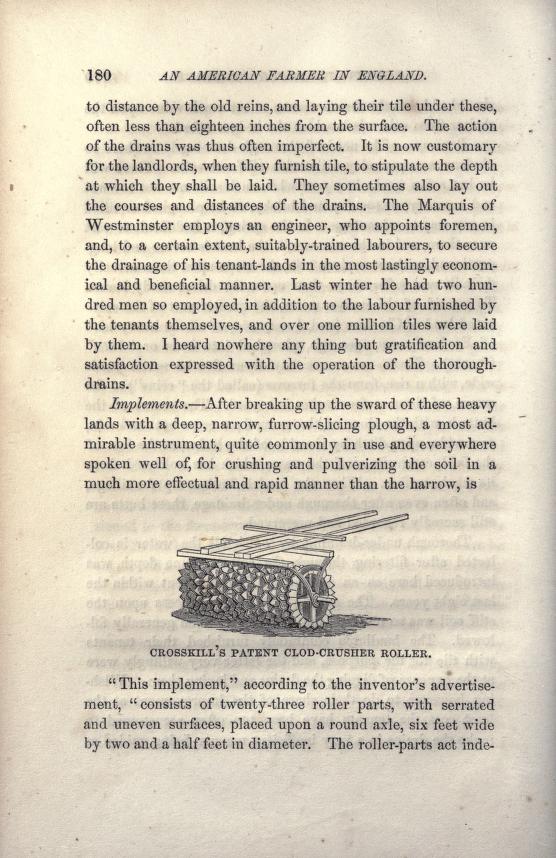
black and white sketch of a farm implement

Farm implement from Frederick Law Olmsted’s Walks and Talks of an American Farmer in England. 1852. Contributed in BHL from the University of California Libraries.

Olmsted’s ideals and principles regarding nature and its benefits for the human condition were similarly applied in his plans for public lands, and he has been called “an early and important activist in the conservation movement” (Wikipedia). By the time he was tasked with creating Yosemite and the Mariposa Grove: A Preliminary Report, 1865 for the U.S. Government, Olmsted, at age 43, had moved through four distinct periods of his professional career, all of which held in common, “His personal quest for fulfillment…characterized by immersion in some endeavor to which he devoted himself completely so long as he deemed it to be in the best interest of the nation” (Fein, 15).

As Victoria Post Ranney writes in the introduction to Olmsted’s report, “Olmsted saw the Yosemite region when it was new to all but Native Americans…and his description of its landscape gives us a standard by which to gauge its health today” (xx). The United States Government granted the State of California the Yosemite Valley and the Mariposa Big Tree Grove on 30 June 1864, stipulating, “’the State shall accept this grant upon the expressed condition that the premises shall be held for public use, resort, and recreation, and shall be inalienable for all time.’ The valley and grove were to be administered by the governor through a group of commissioners appointed by him, and Olmsted acted as first President of the Commission” (Fein, 39).

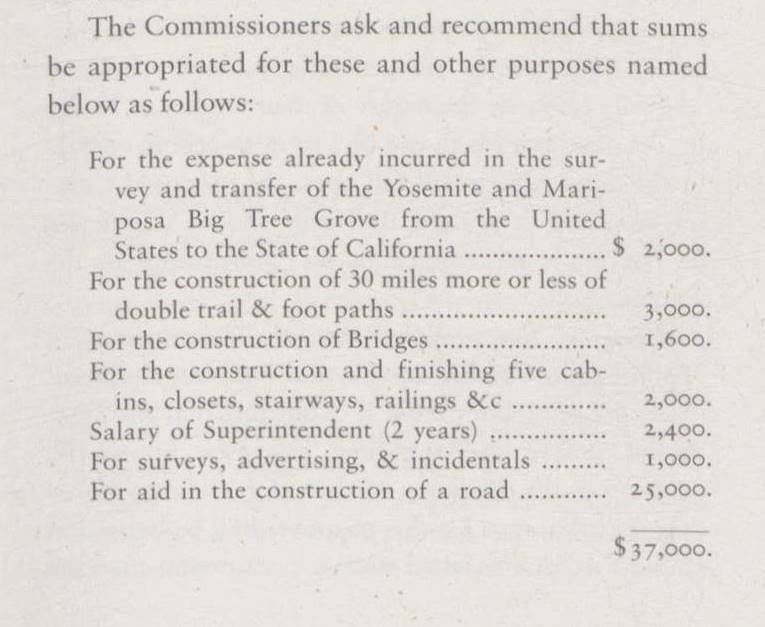
Though his report of 1865 was adopted by the commission, due to costs identified by Olmsted, it wouldn’t be until 1890 that Yosemite became a national park. (Yellowstone National Park, established in 1872, was the very first.) Olmsted’s report was suppressed, never to be submitted to the legislature (Ranney, xix).

text outlining costs for Yosemite Park

Costs to establish Yosemite National Park prepared by Olmsted as part of his preliminary report. “Yosemite and the Mariposa Grove: A Preliminary Report, 1865.”

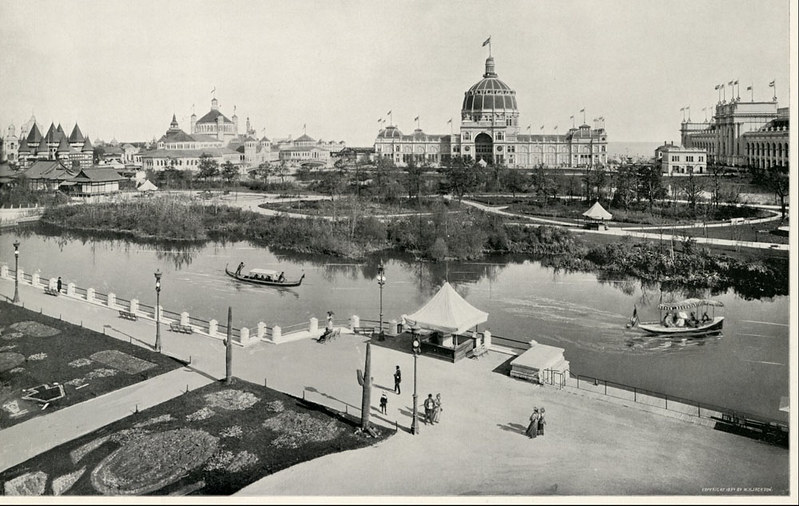
In the intervening years between his report and Yosemite’s official establishment as a national park, Olmsted moved on to many other projects, including his collaboration with Daniel Burnham to adapt his initial design for the South Park Commission site — now known as Jackson Park, Washington Park and the Midway Plaisance — for the 1893 World’s Columbian Exposition in Chicago, Illinois.

black and white photo of a city park

Government Building and Wooded Island. Large photographic print from The White City (As It Was), photographs by William Henry Jackson. World’s Columbian Exposition 1893. Digital Identifier: GN90799d_JWH_019w. World’s Columbian Exposition Collection at The Field Museum.

As the Chicago Architecture Foundation features on its website, “Now, Olmsted’s vision is the talk of the town again, as discussions continue regarding the design and construction of the new Obama Presidential Center in Jackson Park. Michael Van Valkenburgh, who is leading the project’s landscape architecture, says he believes the center will provide an opportunity to bring the park into the 21st century, while restoring some of Olmsted’s plans.”

Whether a national park, city boulevard, or planned community, Frederick Law Olmsted was a visionary whose plans continue to expand, inform, and delight for the enjoyment of one and all.

References

Chicago Architecture Foundation. “Frederick Law Olmsted.” Accessed March 9, 2020. http://www.architecture.org/learn/resources/architecture-dictionary/entry/frederick-law-olmsted/

Fein, Albert. Frederick Law Olmsted and the American Environmental Tradition.

Foderaro, Lisa. “The Parks that Made the Man Who Made Central Park.” New York Times, October 30, 2019. https://www.nytimes.com/2019/10/30/travel/footsteps-frederick-law-olmsted-parks.html

Gopnik, Adam. “The Hero of Central Park.” The New Yorker, March 24, 1997. https://www.newyorker.com/magazine/1997/03/31/olmsteds-trip

Olmsted, Frederick Law. 1888. “Editorial: Foreign Plants and American Scenery” Arnoldia v. 60 (2000): 22-24.

Olmsted, Frederick Law; introduction by Victoria Post Ranney. 1995. “Yosemite and the Mariposa Grove: A Preliminary Report, 1865.” Yosemite National Park, California, Association: Yosemite Association.

Ranney, Victoria Post. 1998. Olmsted in Chicago. Chicago: Field Museum.

Runte, Alfred. 2010. National Parks: The American Experience. Lanham, Maryland : Taylor Trade Publishing.

Rybczynksi, Witold. 2013. A Clearing in the Distance: Frederick Law Olmsted and America in the 19th Century. New York: Scribner.

Wikipedia. 2020. “Frederick Law Olmsted.” Accessed March 9, 2020. https://en.wikipedia.org/wiki/Frederick_Law_Olmsted

July 16, 2020by Joel Richard
Blog Reel, Campaigns, Earth Optimism 2020, User Stories

Looking Back to Move Forward: How Insights From Historic Literature Can Strengthen Conservation Strategies Today

black and white illustration of ships at sea dredging for oysters

April 2020 marks the 50th anniversary of Earth Day. Organizations around the world have commemorated the occasion by participating in the global Earth Optimism movement — an initiative spearheaded by the Smithsonian to “turn the conservation conversation from doom and gloom to optimism and opportunity”.

Throughout 2020, the Biodiversity Heritage Library (BHL) and our partners are joining the movement by sharing conservation success stories from and made possible by the BHL collection. Follow our blog for conservation stories — past and present — and visit our website for more information and to explore our Earth Optimism book collection.

———————

The world is changed.

I feel it in the water.

I feel it in the earth.

I smell it in the air.

Much that once was is lost, for none now live who remember it.

— Galadriel in Peter Jackson’s Fellowship of the Rings


three people standing in the snow with a brick building in the back

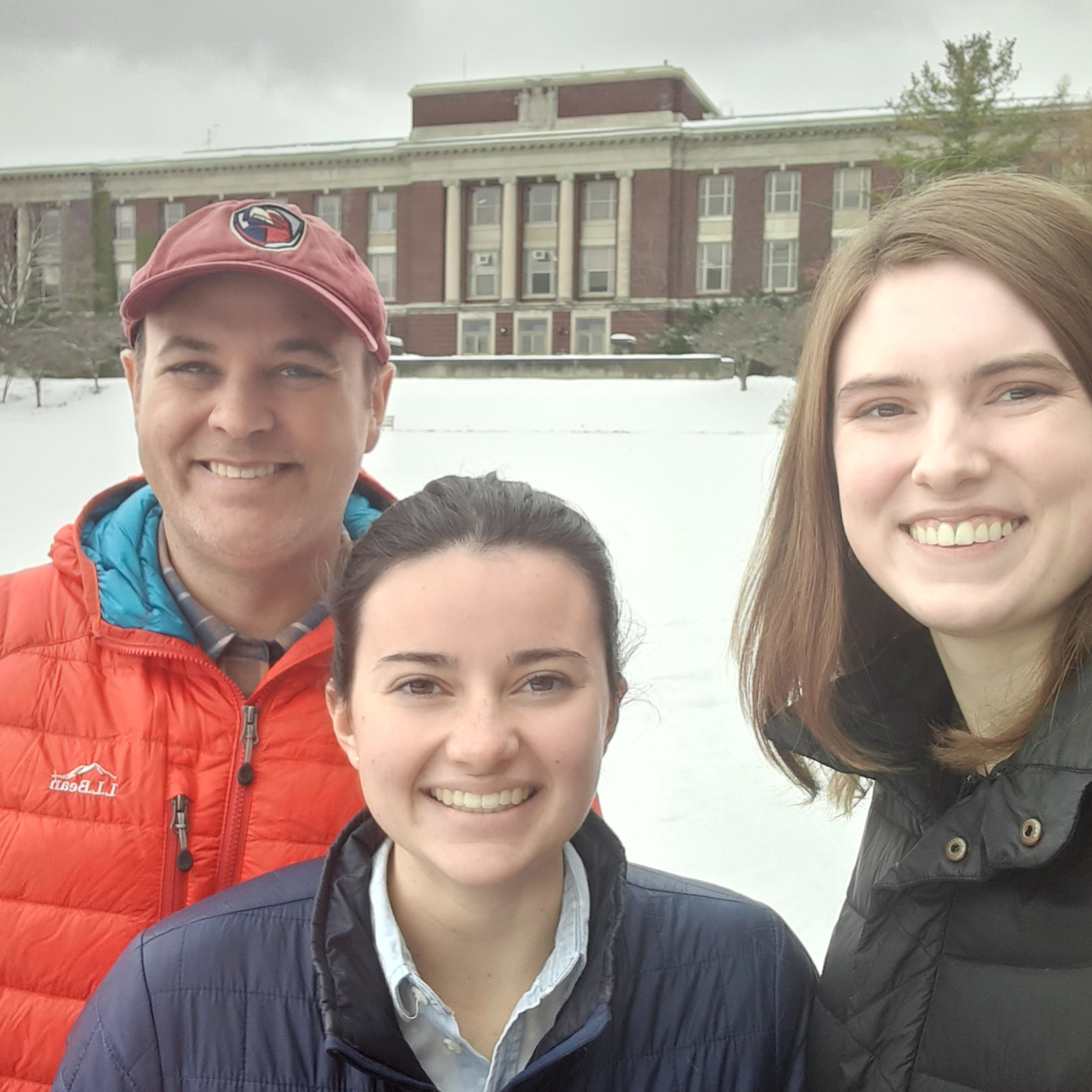
Members of The Drew Lab at the State University of New York College of Environmental Science and Forestry (L to R): Dr. Joshua Drew (assistant professor of vertebrate conservation biology at the State University of New York College of Environmental Science and Forestry) with his students Megan Hazlett and Kate Henderson.

That we live in a changing world should come as no surprise, yet how we measure that change can greatly impact our ability to respond to it. I am a scientist who works in the field of historical ecology — that is the use of non-traditional records to try and understand what ecosystems looked like in the past. My students Kate Henderson and Megan Hazlett and I are based out of the State University of New York College of Environmental Science and Forestry, where we look at how the state’s waters and shores have changed in order to better craft conservation goals. While we work on a variety of ecosystems, they are united by our need to understand where we come from in order to help direct where we are going.

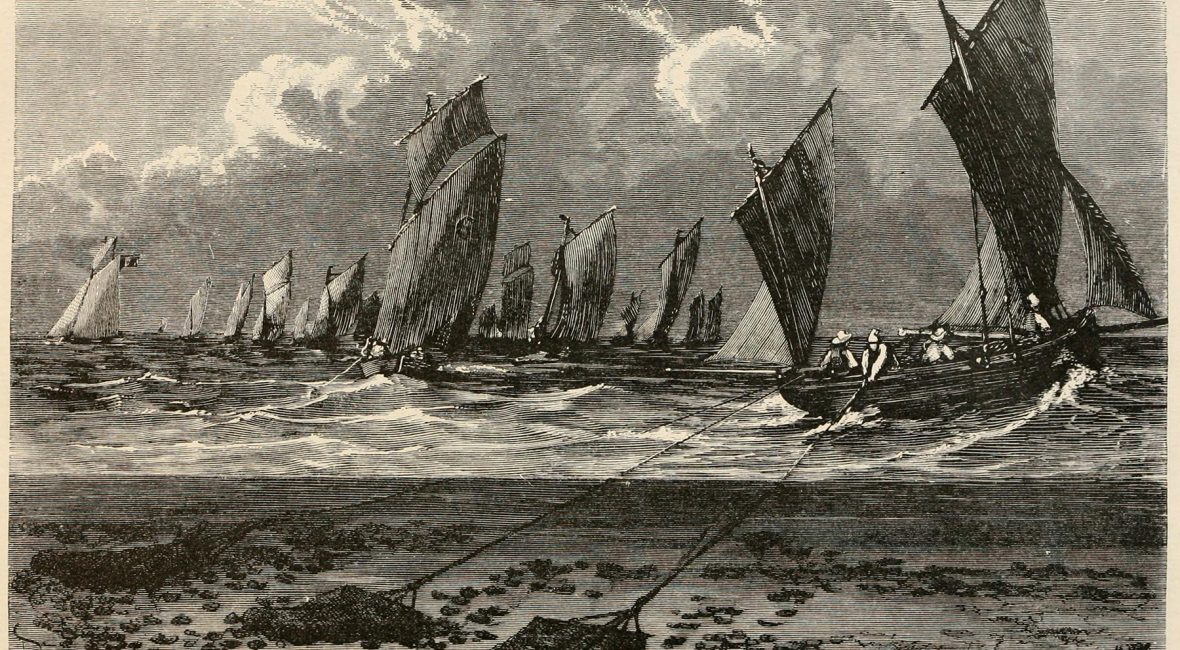
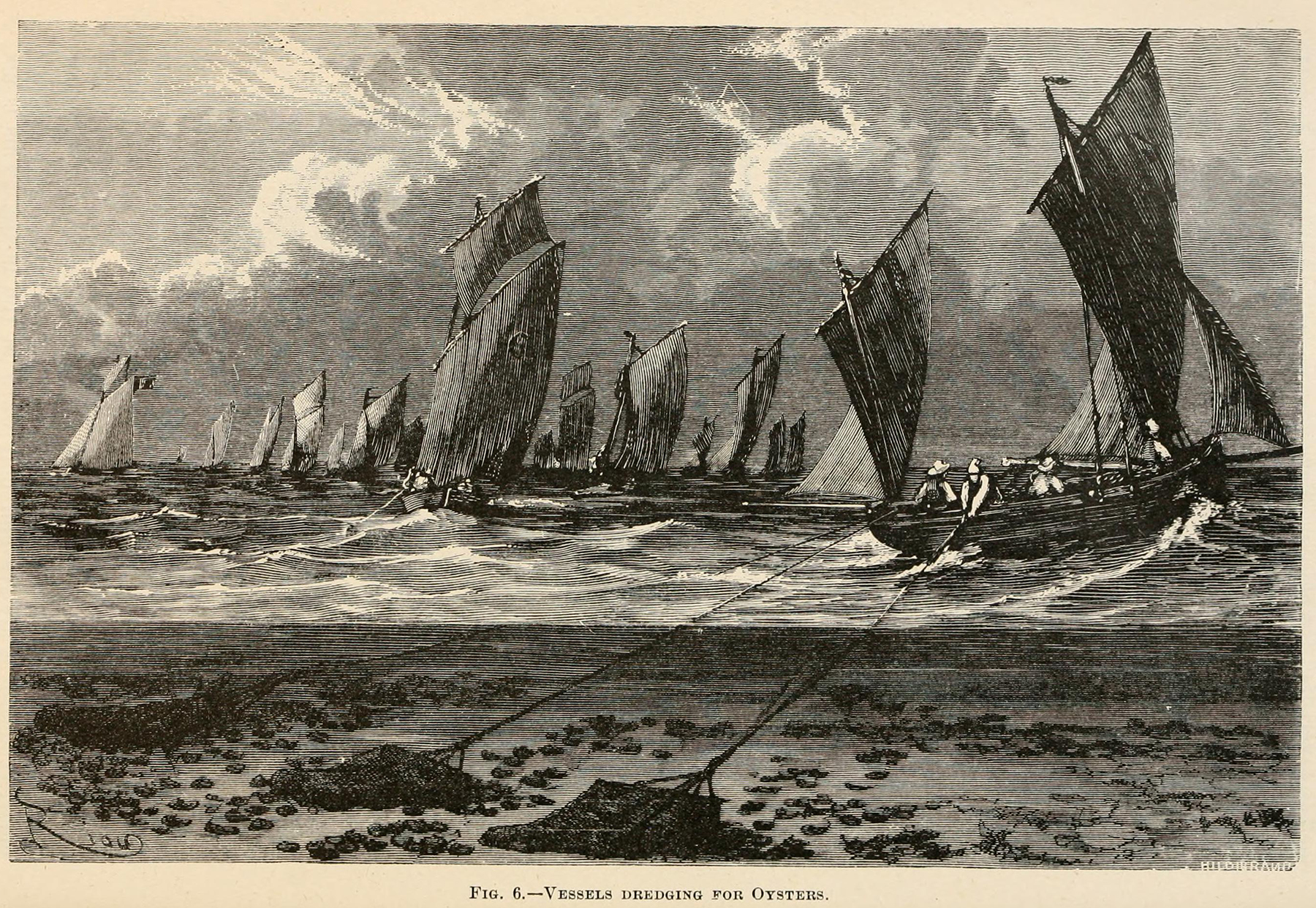
One such example of how the past can influence the future can be found with oysters in New York City. Through accessing resources in BHL like Lockwood’s 1874 “The Natural History of the Oyster“, we get a glimpse into what oyster fishing was like in the twin cities of New York and Brooklyn (then, an independent municipality). Lockwood’s accounts seem inconceivable by today’s standards; he recounts that oysters were common in Great South Bay and even in the East River. His report regales us with how the annual value of oysters sold in New York City would be over 89 million dollars in 2019 dollars, and that the industry employed around 10,000 individuals.

black and white illustration of ships at sea dredging for oysters

“Vessels dredging for oysters”. Lockwood, Samuel. “The Natural History of the Oyster.” The Popular science monthly, v. 6 (1874-1875). Contributed in BHL from MBLWHOI Library.

Oysters were the foundation, literally and figuratively, of New York’s expansion, with the cheap food feeding its expanding population and shells forming the fill upon which lower Manhattan expanded. However, this bounty was not to last forever. In fact, one could argue that the burgeoning population that the oysters fueled helped lead to their downfall. By the 1920s, incidences of Typhoid and other diseases found in oysters growing in polluted water led the city to close its oyster beds — in effect ending a gustatory bounty that had lasted for thousands of years.

Today, many oyster restoration projects in New York focus on reestablishing these oysters beds — not for food (yet), but rather as key components to climate change resiliency. There has been a renaissance in thinking about oysters in New York, largely facilitated by the Billion Oyster Project and others. Their goal, shared by many other New Yorkers, is to bring oysters back to New York City and restore New Yorkers’ connections to this largely forgotten aspect of our heritage. Perhaps by better understanding the extent of the oyster beds and the close connections New Yorkers in the past had with the humble invertebrate, ambitious projects like the Billion Oyster Project will strike a chord with stakeholders, and we can think of these resiliency programs as avenues to restore what was once a key feature of, and a source of pride for, New York City.

A key idea that we can take from our study of historical ecology is that the past can help us to understand the future. Another example of how we can apply this is by combining museum collections, historic field notes and observations, and old records to study how fish populations have changed in Central New York. By understanding how the ecosystems have changed — how fish populations and community compositions have shifted and which factors were responsible for these shifts — we are better able to determine conservation priorities and predict the effects of future changes.

line drawing map of New York State with certain areas highlighted

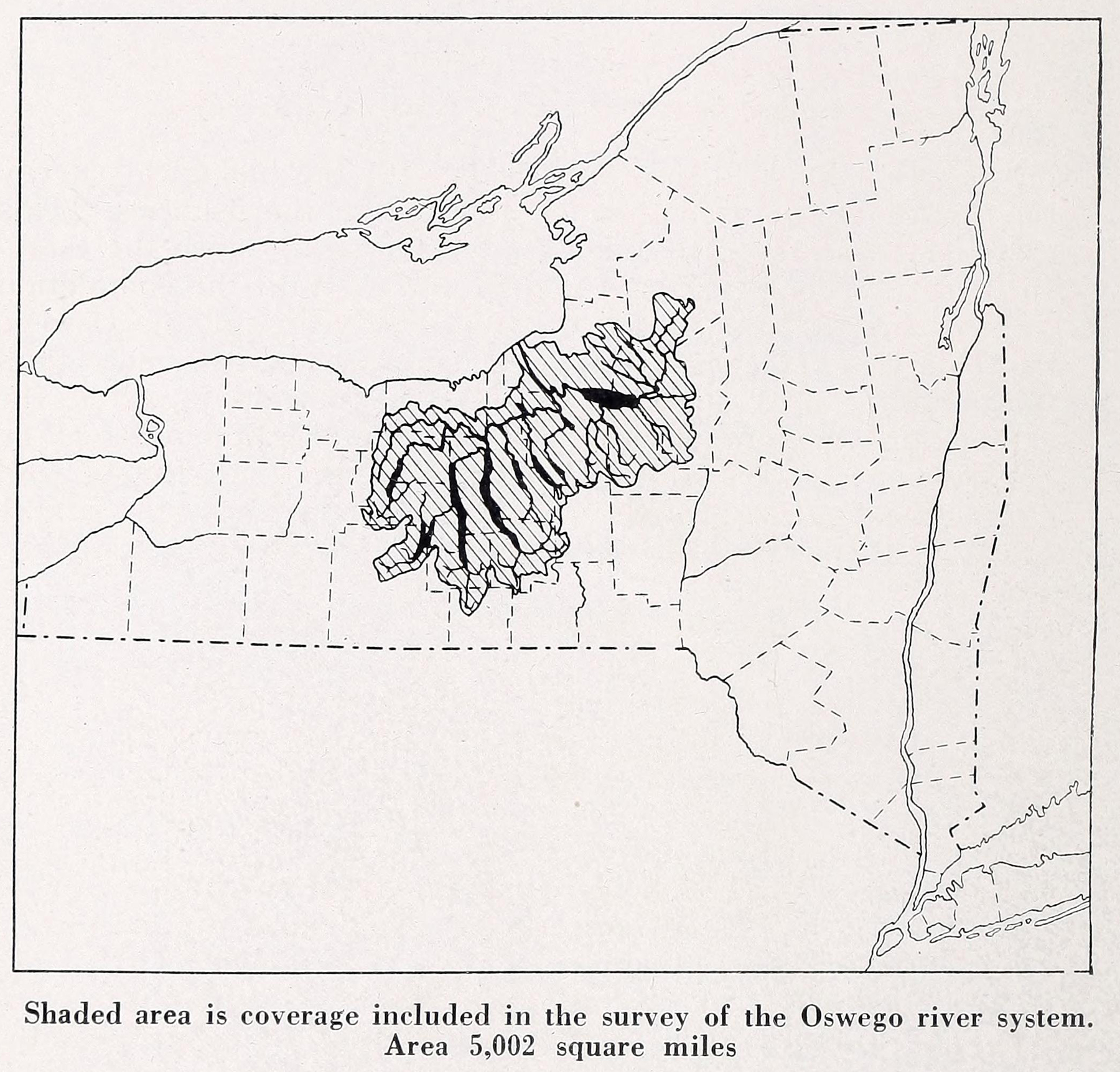
Map showing areas included in surveys of the Oswego river system in New York during the summer of 1927. New York (State) Conservation Department. A biological survey of the Oswego River system. Supplemental to Seventeenth annual report, 1927. (1928). Contributed in BHL from University of Connecticut Libraries.

Within the Oswego River watershed, which encompasses the Fingerlakes region and Oneida Lake, detailed, state-wide surveys have been occurring since the 1920s. Environmental factors such as land use; local, state, and national management decisions and policy initiatives; invasive species; and climate have changed over the century since these surveys began, so by comparing the historic data to modern data we can examine how those changes may have correlated to changes in fish assemblages. This information can give us insight into how to create future adaptive management strategies for conservation and restoration areas in the face of new anthropogenic stressors.

Historic data are important for many studies, but the data are not always easy to find. Physical documents can be lost over time, and issues with cataloging can lead to misplaced data. Even sources of data saved in online repositories can be subject to link rot. In other cases, although data are preserved, they end up split up and spread out over a variety of collections and managers, causing researchers to miss “pieces of the puzzle.” Data repositories managed by organizations such as the Biodiversity Heritage Library, the New York State Museum, and the New York State Department of Environmental Conservation can improve the organization and classification of historic data.

table with various text and numerical data

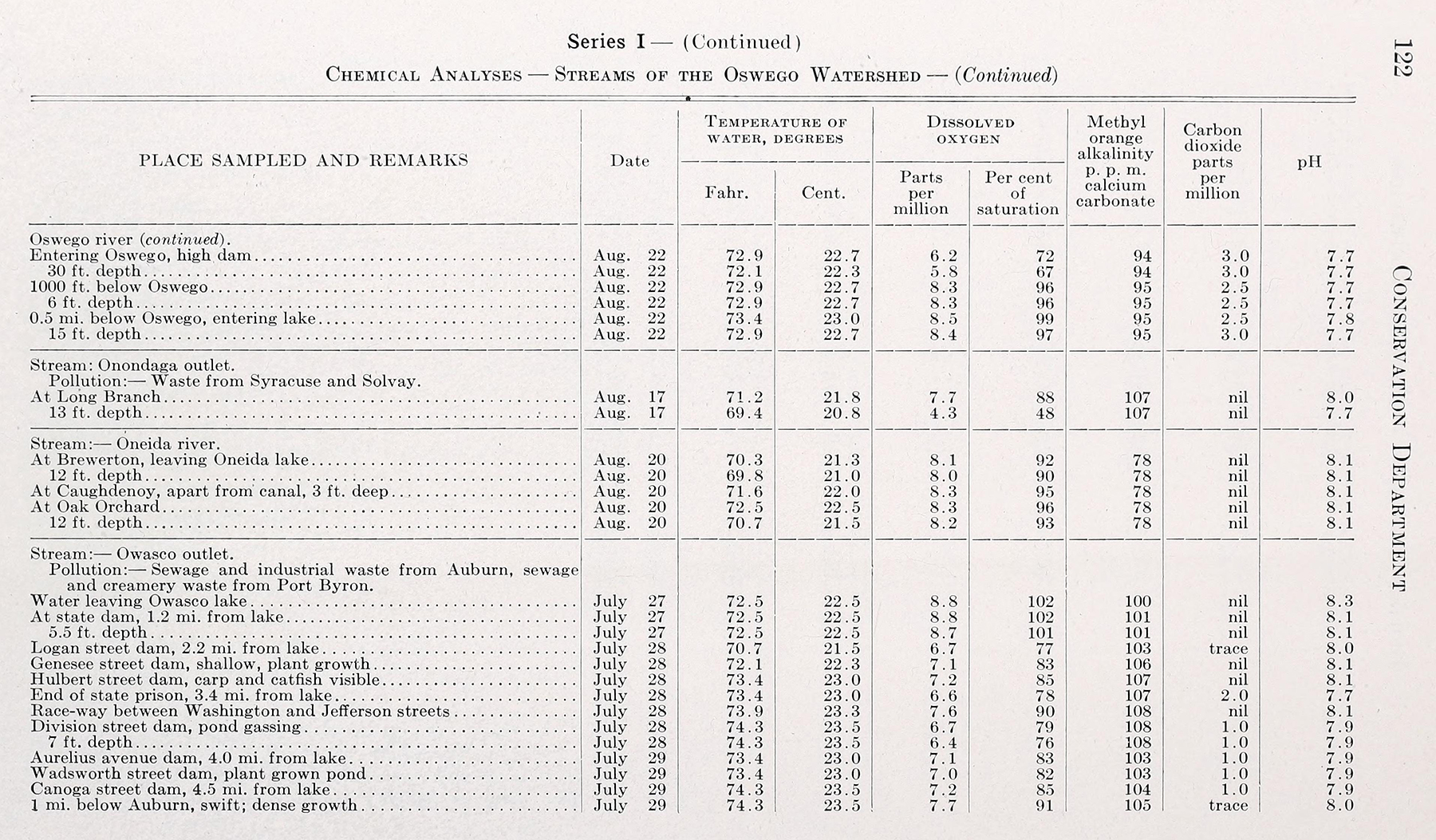
Table showing chemical analyses of various streams of the Oswego watershed from surveys during the summer of 1927. New York (State) Conservation Department. A biological survey of the Oswego River system. Supplemental to Seventeenth annual report, 1927. (1928). Contributed in BHL from University of Connecticut Libraries.

The work in our lab highlights how the past can contribute to a vibrant future and that stable, authoritative and trust-worthy repositories of these documents — such as BHL — can continue to inspire the public, support researchers, and empower communities to think deeply about their past. The real advantage of BHL is keeping our ecological memory intact and not allowing us to collectively forget how beautiful, wild, and diverse ecosystems of the past were. If we succumb to this collective amnesia, we risk setting our conservation bar too low and allowing the dulling of our natural environments to continue without even recognizing our losses.

July 9, 2020by michelle.underhill
Page 2 of 7«1234»...Last »

Help Support BHL

BHL's existence depends on the financial support of its patrons. Help us keep this free resource alive!

search

About BHL

The Biodiversity Heritage Library (BHL) is the world’s largest open access digital library for biodiversity literature and archives. BHL operates as a worldwide consortium of natural history, botanical, research, and national libraries working together to digitize the natural history literature held in their collections and make it freely available for open access as part of a global “biodiversity community.”

Join Our Mailing List

Sign up to receive the latest news, content highlights, and promotions.

Subscribe Now

Subscribe to Blog via Email

Enter your email address to subscribe to this blog and receive notifications of new posts by email.

Join 319 other subscribers

Subscribe to Blog Via RSS

Subscribe to the blog RSS feed to stay up-to-date on all the latest BHL posts.

Access RSS Feed

Inspiring Discovery through Free Access to Biodiversity Knowledge.

The Biodiversity Heritage Library makes it easier than ever for you to access the information you need to study and explore life on Earth…for free, anytime, anywhere.


64+ Million Pages of
Biodiversity Literature Online.

EXPLORE

Tools and Services
to Transform Research.

EXPLORE

300,000+
Illustrations on Flickr.

EXPLORE

ABOUT | HARMFUL CONTENT | PRIVACY | SITE MAP | TERMS OF USE