Biodiversity Heritage Library - Program news and collection highlights from BHL
  • Home
  • News
  • Featured Books
    • All Featured Books
    • Book of the Month Series
    • BHL at 20
  • User Stories
  • Campaigns
    • Fossil Stories
    • Garden Stories
    • Monsters Are Real
    • Page Frights
    • Her Natural History
    • Earth Optimism 2020
  • Tech Blog
  • Visit BHL
Home
News
Featured Books
    All Featured Books
    Book of the Month Series
    BHL at 20
User Stories
Campaigns
    Fossil Stories
    Garden Stories
    Monsters Are Real
    Page Frights
    Her Natural History
    Earth Optimism 2020
Tech Blog
Visit BHL
  • Home
  • News
  • Featured Books
    • All Featured Books
    • Book of the Month Series
    • BHL at 20
  • User Stories
  • Campaigns
    • Fossil Stories
    • Garden Stories
    • Monsters Are Real
    • Page Frights
    • Her Natural History
    • Earth Optimism 2020
  • Tech Blog
  • Visit BHL
Biodiversity Heritage Library - Program news and collection highlights from BHL
Blog Reel, Featured Books

Earth Day 2021: Exploring Earth’s Biodiversity through Books

background of yellow, white and red flowers with text "Happy Earth Day 2021"

Since its inaugural event on 22 April 1970, Earth Day has grown into an international annual celebration of the Earth and a movement to raise awareness about and support for environmental protection. This year’s theme, Restore Our Earth, emphasizes that, “As the world returns to normal, we can’t go back to business-as-usual.” As we face widespread climate change and unprecedented biodiversity declines—with one million species threatened with extinction—immediate, online access to essential literature is ever-more important, allowing scientists to conduct research more quickly and efficiently and improving our ability to respond to these crises. For fifteen years, the Biodiversity Heritage Library (BHL) has worked as a global consortium to provide this vital access, empower research, and make a real difference in our ability to improve the health of our planet for every species that calls it home.

This year, several of our global partners have selected a few titles from the BHL collection to commemorate Earth Day. From exploring Asia’s vast and unique biodiversity to inspiring conservation through a popular publication on birds, providing practical methods for conducting surveys and using the data to support conservation practices, and marveling at the extraordinary biodiversity of past ages, these titles highlight the richness of our planet’s biodiversity and remind us of the importance of protecting the wonderful, wild, and beautiful life on Earth.
Asian Biodiversity: An Essential Contributor to Our Beautiful Earth

By Zheping Xu, Xuejuan Chen, and Tian Jiang (National Science Library, Chinese Academy of Sciences)

Biodiversity is essentially everywhere, ubiquitous on Earth’s surface and in every drop of its bodies of water [1]. Biodiversity conservation makes great contributions to the restoration of the earth.

As a continent with the largest area and the most population, Asia holds vast biodiversity, from the equatorial region to the Arctic area, and from the coast of the western Pacific to the borders of Europe and Africa. Here, we introduce several books that review Asian biodiversity, from mammals and insects to some distinctive species from the continent.

Mammals of Eastern Asia (1947) is the first general work on mammals of eastern Asia [2]. The book’s carefully prepared chapters and fine original pen sketches are interesting, useful and invaluable to the amateur as well as the professional zoologist regarding the habitats, relationships, life histories and idiosyncrasies of the widely diversified faunas.

Map of Eastern Asia and pen sketches of some mammals.

Map of Eastern Asia and pen sketches of some mammals. Source: Tate, G. H. H. (George Henry Hamilton). Mammals of Eastern Asia. 1947. Contributed in BHL from MBLWHOI Library.

Cerambycidae of Northern Asia (1988) describes the morphology, geographic distribution, and biology of cerambycid beetles in Northern Asia of four sub­families (Prioninae, Disteniinae, Lepturinae, and Aseminae), comprising 124 species. Many cerambycid species are invasive pests of environmental concern, causing severe damage to forests and crops. Long-term field investigations were conducted on the composition and biology of cerambycids in different parts of northern Asia. Tens of thousands of larvae, pupae, and adult insects were raised in the laboratory for experiments. Keys to taxa of the family Cerambycidae based on different developmental stages are presented in this work for the first time. This book provides important information for informing broad theoretical principles and in resolving practical problems of pest infestation in forests.

Cerambycidaes: adult insects with their larvas and pupas.

Cerambycidaes: adult insects with their larvas and pupas. Source: Cherepanov, A. I. (Aleksei Ignatevich). Cerambycidae of Northern Asia. 1988. Contributed in BHL from Smithsonian Libraries and Archives. CC-BY-NC-SA.

Asia is home to endemic and highly distinctive focal species. Tracking tigers (Published in 1998) gives a comprehensive overview of the wild status of the Tiger, Asian Elephant, Gaur and Banteng in Indochina. On this basis, it recommends future survey and management needs, and provides background discussion on issues to be addressed by national action plans. The Philippines’ fauna is characterized by large numbers of endemic and highly distinctive species. During the 1980s, the extent of rain-forest habitat destruction became apparent and underscored the need for extensive and detailed documentation of biological diversity to guide development and conservation for the benefit of both wildlife and the human population of the Philippines. The Mammals and birds of Camiguin Island, Philippines, a distinctive center of biodiversity (published in 2006) presents studies of Camiguin Island, a small island province in the Philippines and an ideal natural laboratory in which to investigate many aspects of the evolution and conservation of biological diversity.

photo of a tiger and illustration of green and red birds and brown rodents

Left: The tiger in Indochina. Source: Duckworth, William and S. Hedges. Tracking tigers. 1998. Contributed in BHL from Smithsonian Libraries and Archives. CC-BY-NC. Right: “Two species of mammals and one species of bird live only on Camiguin Island: Apomys sp. ([…] center left), Bullimus gamay ([…] lower right), and Loriculus sp. ([…] upper center). The distinctive volcanic peaks of Camiguin form the background.” Source: Heaney, Lawrence R. The Mammals and birds of Camiguin Island, Philippines, a distinctive center of biodiversity. 2006. Contributed in BHL from University Library, University of Illinois Urbana Champaign. CC-BY-NC-SA.

Biological species in Asia are important components of Earth’s biodiversity. Biodiversity is closely related to human well-being, but human activities caused rapid changes in biodiversity over the past decades. To restore our Earth, we must identify and assess drivers of biodiversity loss, including habitat change, climate change, invasive alien species, overexploitation, and pollution [1].

[1] Duraiappah, A. K., Naeem, S., Agardy, T., Ash, N. J., Cooper, H. D., Diaz, S., Faith, D. P., Mace, G., McNeely, J. A., Mooney, H. A., Oteng-Yeboah, A. A., Pereira, H. M., Polasky, S., Prip, C., Reid, W. V., Samper, C., Schei, P. J., Scholes, R., Schutyser, F., & Van Jaarsveld, A. (2005). Ecosystems and human well-being: biodiversity synthesis; a report of the Millennium Ecosystem Assessment. World Resources Institute. http://www.millenniumassessment.org/documents/document.354.aspx.pdf.

[2] -S., T. Mammals of Eastern Asia. Nature 161, 188 (1948). https://doi.org/10.1038/161188e0.

Our Southern Birds and Emma Bell Miles: Inspiring Appreciation for and Protection of Birds

By Tomoko Y. Steen, Ph.D. and Alison Kelly, MLIS (Science, Technology & Business Division, Library of Congress)

Illustrated book cover featuring two birds and title "Our Southern Birds"

Cover. Miles, Emma Bell. Our Southern Birds. Copyright 1919. Contributed in BHL from Library of Congress.

Emma Bell Miles (1879-1919) was a talented artist, writer and naturalist whose writings reflect her love of the Tennessee mountains where she spent most of her life. In Our Southern Birds, copyrighted in 1919, she recorded her detailed observations and knowledge of the birds of Appalachia, an area that had received little attention in the popular publications on birds until that time. Through this and her other works capturing the essence of natural life in the Southern mountains, Emma Bell Miles drew attention to the importance of preserving biodiversity and habitat.

colored illustration of a bird, fox sparrow, brown with blue head and cream belly sitting on branch with green leaves

Fox sparrow. Miles, Emma Bell. Our Southern Birds. Copyright 1919. Art by Miles. Contributed in BHL from Library of Congress.

In the introduction to this, her last book, she stated:

…while the scientific study of birds is beyond most of us, yet an intimate understanding of them and their ways is within reach of everyone, and may enrich life with a new depth of interest… Go out alone in early morning, keep the sun at your back, be careful to do nothing that will startle these timid creatures, and see what you will see.

Our Southern Birds includes many beautiful illustrations by Miles, who, as a young woman, left her home in the mountains to study art in St. Louis. Plagued by homesickness for the mountains, she returned to Appalachia after two years and married a mountaineer. Their marriage was a difficult one, marked by poverty and illness, and she was often the sole supporter of the family by selling her writings, art and poetry.

Written for all levels of readers, this engaging book will appeal to anyone with an interest in birds. Part of the genius of Emma Bell Miles’ work is that she succeeds in presenting not only a careful description of over 100 birds and their habitats, but captures the individual personalities and demeanor of any given species through words and pictures. Her desire to recruit readers to active birdwatching is shown in the inclusion of blank pages for recording observations.

black and white illustration of a bird, chuckwill's widow, hiding within foliage

Chuckwill’s widow. Miles, Emma Bell. Our Southern Birds. Copyright 1919. Art by Miles. Contributed in BHL from Library of Congress.

“Shadows from the Past,” the final chapter of the book, mentions several species that are extinct or close to extinction. “Let the disappearance of these winged lives from their one-time haunts lead us to set a higher value on those that remain,” she writes. In poetic language she goes on to describe the tragic extinction of the passenger pigeon, concluding with an appeal that we can learn from the past: “…it is not too late to learn from the mistakes of our fathers, and though we have lost some valuable species, we may yet save others that are following these to extinction”.

In celebration of Earth Day we want to shine a light on Emma Bell Miles, whose skills in observing and recording the natural world around her will inspire readers to appreciate and preserve biodiversity in their own special place on Earth.

Environmental Evaluations Using Birds and Their Habitats

By Samantha Lindgren (University Library, University of Illinois Urbana-Champaign)

A blue and white bird sitting on a birdhouse roof with a background of trees.

A female Belted Kingfisher. Courtesy of Tyler Ingram, CC BY-NC-ND.

In their 1976 book, Environmental Evaluations Using Birds and Their Habitats, Jean and Richard Graber offer practical methods for surveying birds in Illinois with the purpose of curating data for environmental impact statements. Published as one of the Illinois Natural History Survey’s Biological Notes, the book details the data they have collected from these methods, including bird populations and habitat acreage. Throughout the book are also tables, graphs, and images supporting their methods and findings. While the book was published 45 years ago, it came at a time when concerns for environmental protection was just beginning to affect change, and it remains relevant in its advocacy for environmental conservation and restoration.

Earth Day 2021’s theme is Restore Our Earth. This theme resounds throughout the book in details of habitat surveying and restoration. As the authors posit, Illinois is a large state with diverse habitats and niches, some of which are difficult to redevelop once they are threatened. The authors discuss seven categories of gross habitats found throughout the state: forest, shrub, marsh, residential, grassland, small-grain fields, and row-crop fields. Some of these habitat types are more specific to regions of Illinois than others—such as natural marshes occurring most frequently in northeastern Illinois—however each mention comes with information on habitat replacement cost (the time required for restoration of a habitat or community), acreage data, and associated flora and fauna. Alongside this information, the authors also describe their experimental surveying methods. Through these factors, the authors garner concern for habitat conservation and restoration.

black and white aerial photo

“Fig. 8 – Aerial photograph showing a portion of the experimental impact area used to test the method presented in this paper.” Graber, Jean W. and Richard R. Environmental evaluations using birds and their habitats. 1976. Contributed in BHL from University Library, University of Illinois Urbana Champaign. CC BY-NC.

The methods discussed for collecting data on bird populations garner this concern as well. As the authors state, “…in the conservation of species we must be concerned for the welfare of all the populations that comprise the species” (11). In the context of this book, this means assigning a fair value to birds when applying an avifaunal index during surveying. However, this sentiment can be applied to Earth Day 2021 as well; in the restoration of our Earth, we must be concerned with the welfare of all aspects of Earth. Moreover, the authors supplement discussions of how and why to collect data on bird populations by speaking in-depth about the derivation of their models, and using them in practice. In this way, the authors are not only advocating for conservation and restoration, they are also providing tangible means to implement conservation and restoration practices.

Environmental Evaluations Using Birds and Their Habitats is a great representation of how to turn concern for Earth’s restoration into meaningful action, and should serve as an example that all levels of skills and fields of interest can be utilized to help Restore Our Earth.

Description of the Skeleton of an Extinct Gigantic Sloth

By Cat O’Carroll (Natural History Museum Library & Archives, London)

Side-view of the skeleton of the Mylodon robustus

Plate One. Side-view of the Mylodon robustus. Owen, Richard. Description of the skeleton of an extinct gigantic Sloth, Mylodon robustus, Owen, with observations on … Megatherioid quadrupeds in general. 1842. Contributed in BHL from the Natural History Museum Library & Archives.

In the year 1841, a discovery by M.Pedro de Angelis in Argentina unearthed the skeletal remains of a long extinct species……

Following on from the theme of Earth Day 2021 to Restore Our Earth, and raising issues of climate change, I’ve reflected on a title which highlighted a once extraordinary species which used to roam the earth, Description of the skeleton of an extinct gigantic Sloth, Mylodon robustus, Owen, with observations on … Megatherioid quadrupeds in general by Richard Owen (1842).

Owen, once curator at the Hunterian Museum, Royal College of Surgeons, was later in his career put in charge of the British Museum (Natural History) collections. As a result, he campaigned that a new building was needed to house the ever-expanding collections, which later built in 1881, became the Natural History Museum (NHM) in London as we know it today.

After exhuming the finds of the Mylodon robustus, it was then purchased by the Royal College of Surgeons and shipped over to London. In November 1841, it arrived in many pieces and fragile, in need of much restoring. Fossils discovered by Charles Darwin indicated several species of large quadrupeds had become extinct in South America. Owen compares descriptions of fossil remains of the Mammalia, which were collected by Charles Darwin during the voyage of the Beagle and accounted in The zoology of the voyage of H.M.S. Beagle … during the years 1832-1836.

Side-view of the skull of the Mylodon robustus, natural size

Plate Two. Side-view of the skull of the Mylodon robustus, natural size. Owen, Richard. Description of the skeleton of an extinct gigantic Sloth, Mylodon robustus, Owen, with observations on … Megatherioid quadrupeds in general. 1842. Contributed in BHL from the Natural History Museum Library & Archives.

Megatherium (so named and described by Cuvier, 1795), discovered in the 18th century, was shipped to the Museo Nacional de Ciencias in Madrid. However, if you happen to walk down Fossil Way at the Natural History Museum today, you cannot miss the full Megatherium skeleton cast which stands on display. In terms of scale, Owen compares some of the bones of the Mylodon to that of Megatherium and a full-sized elephant.

Comparison of certain bone size between Mylodon, Megatherium and an Indian Elephant

Comparison of certain bone size between Mylodon, Megatherium and an Indian Elephant, page 176. Owen, Richard. Description of the skeleton of an extinct gigantic Sloth, Mylodon robustus, Owen, with observations on … Megatherioid quadrupeds in general. 1842. Contributed in BHL from the Natural History Museum Library & Archives.

The Life of Richard Owen (1894), by his Grandson Rev. Richard Owen, summarizes how Owen was puzzled by the habits of these extinct creatures: “Their teeth showed, by their simple structure, that they lived on vegetable food, and probably on the leaves or tender twigs of trees”. It was hard to see how, like sloths today, they could possibly adapt to climbing trees given their sheer size and weight. Owen conjectured that they may have pulled the branches down from the trees instead of climbing them. Mylodon was also furnished with a “long tongue like a giraffe’s, which would help it to reach its leafy food”.

Upper, or anconal surface of the bones of the left fore-foot

Plate Fifteen. Upper, or anconal surface of the bones of the left fore-foot. Owen, Richard. Description of the skeleton of an extinct gigantic Sloth, Mylodon robustus, Owen, with observations on … Megatherioid quadrupeds in general. 1842. Contributed in BHL from the Natural History Museum Library & Archives.

The NHM Library & Archives holds a large collection of natural history drawings and original artworks amongst its collections. In November of 2019, the Images of Nature Gallery saw the installation of George Johann Scharf’s (1786-1860) watercolour drawing of a Megatherium on full display. Completed in 1842, this one drawing comprises of fourteen sheets approximately 2463 x 5745 mm which Scharf completed for Owen. A MEGA task in itself!

George Johann Scharf (1786-1860) Watercolour drawing of a Megatherium. N.p., 1842.

George Johann Scharf (1786-1860). Watercolour drawing of a Megatherium. N.p., 1842. Print. From the Library and Archives, Natural History Museum, London.

April 22, 2021by michelle.underhill
Blog Reel, Campaigns, Earth Optimism 2020, Featured Books

Nature Conservation and William Brewster: Insights From a Lifetime of Scientific Observations

This post is part of a series from the Ernst Mayr Library exploring the digitization and transcription of ornithologist William Brewster’s archival materials and the insights and scholarship made possible thanks to this work.

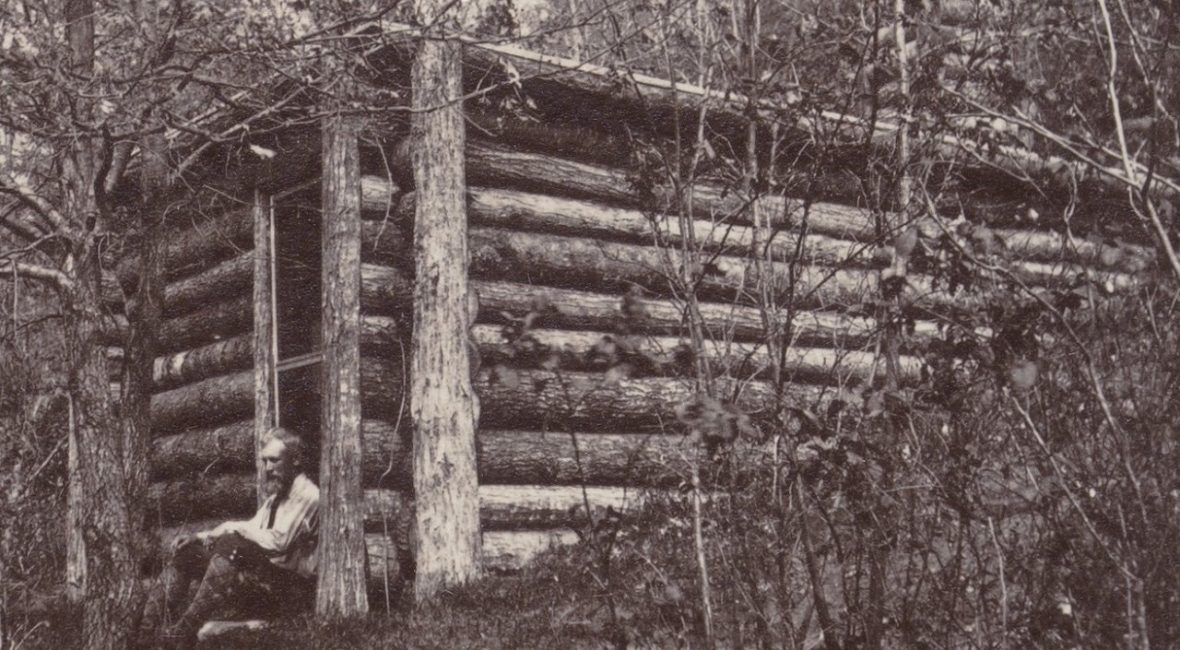
Black and white photo of a man sitting on the doorstep of a log cabin in the woods.

A black and white photograph of William Brewster sitting on the front doorstep of his cabin in Concord, Ma. The small, one-story log cabin is set in a hillside and surrounded by small trees and shrubs. The back of the photograph has the note: “Concord, Mass. May 20, 1892.” (Ernst Mayr Library Special Collections, call no. bBr97.70.7.)

The Ernst Mayr Library and Archives of the Museum of Comparative Zoology (MCZ), Harvard University, holds a unique and extensive collection of photographs, letters, manuscripts and field notes of William Brewster, a prominent ornithologist/naturalist of the late 19th and early 20th centuries. His published work is lauded as providing authoritative and novel additions to ornithology.

Brewster published more than 300 ornithological papers and several books which are widely available in academic and research libraries. He was the first president of the Massachusetts Audubon Society and was a founding member of the Nuttall Ornithological Club, out of which grew the national organization, the American Ornithologists’ Union. Brewster served as President of the American Ornithologists’ Union from 1895 to 1898, and the organization has awarded a medal in Brewster’s name since 1921.

Brewster’s ornithological studies covered the United States, although he worked most extensively in New England. Brewster was a Curator of Ornithology in the Harvard University Museum of Comparative Zoology from 1885 to 1902, continuing to work in the MCZ until his death in 1919. He deposited his bird specimen collection in the MCZ and his associated works such as his journals, diaries, correspondence and some photographic works in the Ernst Mayr Library & MCZ Archives. Brewster’s extensive specimen collection, in combination with his large body of published work, secures his place in ornithological history.

In 2012, the Ernst Mayr Library began digitizing Brewster’s journals, diaries, letters, and photographic prints. Many have been digitized as part of the CLIR-funded BHL Field Notes Project. To date, virtually all of Brewster’s more than 60,000 pages of notes, correspondence and images have been digitized and nearly 10,000 pages of the handwritten notes and diaries have been transcribed. All materials are in the process of being deposited in the Biodiversity Heritage Library, with more than half of the collection, including all of the journals and diaries, now available. The materials have been collated into the William Brewster Papers Collection.

Brewster kept journals and diaries, mostly devoted to his birding activities, for 54 years from the time he was 14 until he died in 1919. These written records afford us a glimpse into the daily inner workings of this scientist’s mind. The Ernst Mayr Library is fortunate to have his full set of journals and diaries, most of his correspondence and some of his photographs and glass negatives. This is indeed a treasure trove of information, now made more accessible as it is digitized and made openly available in BHL. This collection is more than a record of changing landscapes, bird lists, temperature and weather recorded for each day of writing. It shows us how Brewster developed his ideas, how he thought about the world, and how his thinking changed through his life. In his later correspondence with Frank Chapman (a then-young ornithologist that Brewster mentored into a more mature career), they debated about and revised how to do science with less killing of birds.

handwritten page from a field notebook.

Excerpt of a letter from Frank Michler Chapman to William Brewster. 15 June 1890. Contributed in BHL from the Harvard University, Museum of Comparative Zoology, Ernst Mayr Library.

“This miserable collecting. It is the cause of all higher failing, it lowers a true love of nature through a desire for gain. I don’t mean a specimen here and there, but this shooting right and left, this boasting of how many skins have been made in a day or season. We are becoming pot-hunters. We proclaim how little we know of the habits of birds and then kill them at sight. Sometimes I am completely disgusted with our ways and myself in particular… I long for an outing where the gun will be secondary, recorded observations primary, where I shall be entirely alone or with a companion whose object is my object … The question with me is, how am I going to change this?… Will you embark with me on a novel ornithological expedition, whose aim shall be to really observe birds to learn something of them. Where the gun shall be a servant, not a master, where days may pass without a skin being made, where there will be time to speculate and discuss the habits of birds observed, where systematic observation of certain phaenomena may be attempted.” 15 June 1890, Correspondence, Frank Michler Chapman to William Brewster.

Brewster’s detailed, long-term observations and notes are the key to his published contributions to ornithology and are a unique resource. His diaries, journals and correspondence are a gold mine of unpublished observations, journal notes, sketches, weather reports, specimen lists and travel narratives: these records are primary source data at its most raw and unevaluated. Historical collections of field notes may be the only documentation of a scientist’s thought processes, ideas and observations, particularly if only some of the writer’s material was ever published.

Brewster documented local environmental changes and gradual declines in number and presence of bird species over many years. He was concerned about vanishing wildlife, urbanization and landscape changes. He talked about ecological succession before the concept was officially published.

handwritten page from a field notebook.

Excerpt of a page from William Brewster’s 1896 journal, in which he documents the impact of roadwork on local wildlife. Contributed in BHL from the Harvard University, Museum of Comparative Zoology, Ernst Mayr Library.

“Where the road passes through the woods … the roadworkers last May cut away the mountain maples, [cornels] and other shrubs and low trees that made such a beautiful border to the forest clearing in their places a broad belt of bare rocks half covered with the fallen brush wood. This deed of vandalism was performed while I was here and at the time I feared that years must elapse before Nature, with all her diligence, could repair the injury. I underrated her powers for already this thicket of road is, if anything, more beautiful than ever. Fire weed, Eupatorium, Impatiens, Asters, Golden rod and several other tall and rank flowering plants have shot up through and almost perfectly concealed the unsightly brush and stone heaps and I have rarely seen a more brilliant or attractive display of wild flowers.” 15 August 1896, Lake Umbagog, Maine, Journals of William Brewster

Brewster helped develop legislation to discourage excessive hunting and the use of feathers in women’s hats, although at the same time advocating for the continued, but regulated, collection of scientific specimens. His conservation work led him to become the first president of the Massachusetts Audubon Society. The photographs and negatives from the collections chronicle landscape changes through time. Brewster’s growing concerns about the killing of wildlife, even for scientific purposes, can be seen developing in his field notes and correspondence.

handwritten page from a field notebook.

Excerpt of a page from William Brewster’s 1907 journal, which captures his transition from collecting bird specimens with his shotgun to field observation and photography. Contributed in BHL from the Harvard University, Museum of Comparative Zoology, Ernst Mayr Library.

“If he would become really familiar with the wood folk and their ways, let him go among them unarmed and in a spirit of peace and loving kindness towards them all. Then he will learn many things which the bearers of guns do not know and cannot be made to believe.” August 1907, Journals of William Brewster.

The availability of Brewster’s notebooks enhances contemporary studies and makes the entire research cycle of this scientist’s work available for analysis by historians of science, scientists, social scientists and humanists or anyone interested in the process of discovery, by creating a richer and more interactive history of science resource. Brewster’s careful observations enable comparisons of his birding lists with contemporary observations (100 years plus later), helping to document environmental changes that might not be evident otherwise.

References

Emmet, Alan. November-December 2007. William Brewster: Brief life of a bird-lover 1851-1919. Harvard Magazine. https://harvardmagazine.com/2007/11/william-brewster-html

Meyer, Elizabeth. April 5, 2018. From ‘Shotgun Ornithology’ to nature conservation: scientific stories and data from the field notes of William Brewster. https://blog.biodiversitylibrary.org/2018/04/from-shotgun-ornithology-to-nature-conservation-scientific-stories-and-data-from-the-field-notes-of-william-brewster.html

Meyer, Elizabeth. April 6, 2017. Notes from William Brewster: The evolving field of zoology. https://blog.biodiversitylibrary.org/2017/04/notes-from-william-brewster-evolving.html

Meyer, Elizabeth. September 9, 2016. Notes from William Brewster: Ecological change in the Maine woods. https://library.mcz.harvard.edu/blog/notes-william-brewster-ecological-change-maine-woods

Mitchell, John Hanson. 2014 e-book edition. Looking for Mr. Gilbert: The Unlikely Life of the First African American Landscape Photographer. New York, New York : Open Road Distribution.

Mitchell, John Hanson. 2005. Looking for Mr. Gilbert: the Reimagined Life of an African American. Washington, D.C. : Shoemaker & Hoard : Distributed by Publishers Group West

Randall, Patrick. June 5, 2014. Transcribing the field notes of William Brewster. https://blog.biodiversitylibrary.org/2014/06/transcribing-field-notes-of-william.html

Rinaldo, Constance, Linda Ford and Joseph deVeer. 2018. Museum, library and archives partnership: Leveraging digitized data from historical sources. Poster presentation at Society for the Preservation of Natural History Collections, August 2018, Dunedin, New Zealand.

Sears, M. 2020. Celebrating Robert Gilbert. Ernst Mayr Library Blog post: https://library.mcz.harvard.edu/blog/celebrating-robert-gilbert

February 22, 2021by michelle.underhill
Blog Reel, Campaigns, Earth Optimism 2020, User Stories

The Case of the Florida Nutmeg: Empowering Research on Endangered Plants

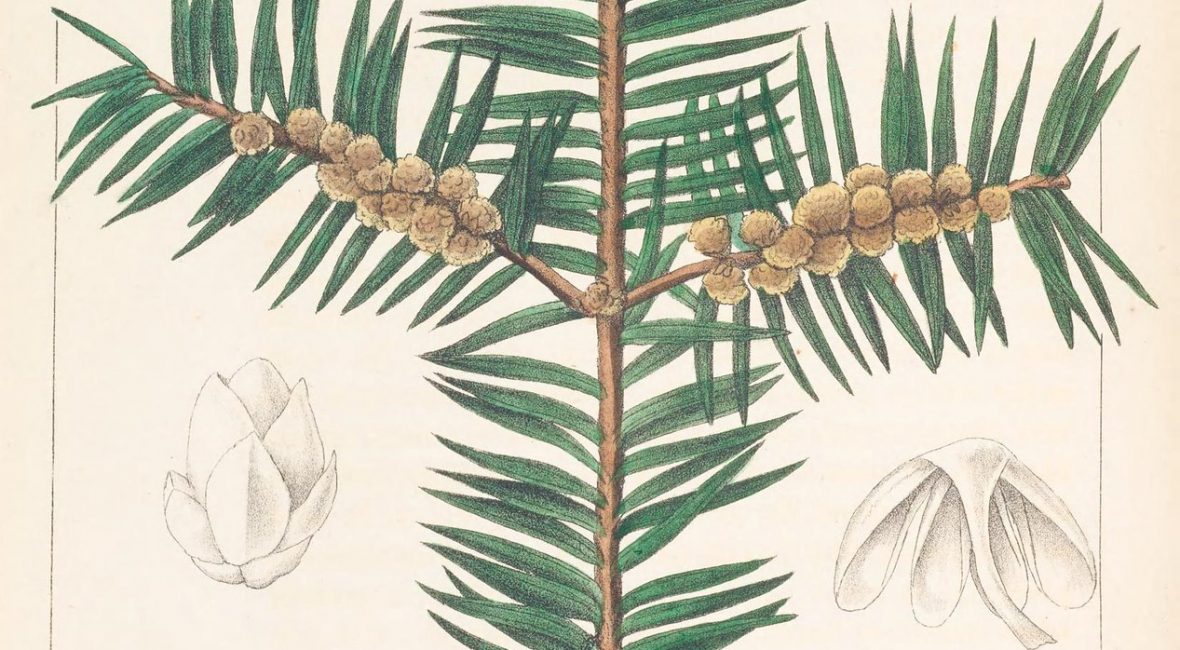
Colored drawing of a conifer tree branch with cones.

April 2020 marks the 50th anniversary of Earth Day. Organizations around the world have commemorated the occasion by participating in the global Earth Optimism movement — an initiative spearheaded by the Smithsonian to “turn the conservation conversation from doom and gloom to optimism and opportunity”.

Throughout 2020, the Biodiversity Heritage Library (BHL) and our partners are joining the movement by sharing conservation success stories from and made possible by the BHL collection. Follow our blog for conservation stories — past and present — and visit our website for more information and to explore our Earth Optimism book collection.

———————

Black and white line drawing of a conifer tree branch with cones.

Florida nutmeg, Torreya taxifolia (male). This illustration, along with that of the female tree, represents the first published illustration of this species. Plate 232. Hooker’s Icones plantarum, vol. 3 (1840). Contributed in BHL from the Missouri Botanical Garden, Peter H. Raven Library.

On 5 June 1834, avid amateur botanist Hardy Bryan Croom wrote a letter to botanist John Torrey describing a gymnosperm tree in northern Florida that he was struggling to identify. In this letter, he postulated—with some degree of confidence—that the tree was Taxus baccata, the common yew, and he hoped to acquire some specimens to send to Torrey for investigation.

Torrey was one of the most important 19th century botanists in America. He corresponded with hundreds of scientists in North America and Europe, many of whom sent him specimens from their various explorations for study and identification. As such a well-respected expert and advisor on botanical science, it comes as no surprise that Croom sought Torrey’s expertise regarding this mysterious Florida tree.

The next year, in a letter dated 18 November 1835, Croom wrote again to Torrey, stating:

“The letter which I wrote last summer has had the effect to procure me some perfect fruit of that remarkable Taxoid tree at Aspalaga. The result surprises me. It is an ovate one celled nut entirely enclosed in fleshy covering! as large as a pigeon’s egg! Calix imbricated; thus agreeing neither with Taxus nor with Podocarpus. Besides, the tree, I think, is dioecious, but of this I am not yet certain. What will you do with it? Will it make a new genus?”

The following year, Croom again wrote to Torrey in a letter dated 18 May 1836 that he had determined that the tree represented a new genus. He proposed the genus name Torreya and provided a description and habitat details for “this fine tree,” for which he remarked:

“It is so abundant about Aspalaga (especially on Flat Creek) as to have been sawed into plank and lumber. It is an elegant tree with dark green foliage.”

With this letter, Croom provided the first recorded description of the habitat and abundance of the Florida nutmeg, Torreya taxifolia.

Sadly, Croom and his family drowned in a shipwreck in the Atlantic Ocean near Cape Hatteras on 8 October 1837. As such, Torrey arranged that the new genus and species were formally named and described by botanist George Arnott Walker-Arnott in 1838.

While Croom characterized Torreya taxifolia as abundant in 1836, today the species is critically endangered. With a distribution restricted to the limestone ravines and bluffs along the Apalachicola River in northern Florida and southern Georgia, fewer than a thousand individual trees persist in their native habitat. The most significant threat to the species is continued reproductive failure resulting from fungal pathogens—a threat which is continuing but not well-understood [1].

Torreya taxifolia is one of the species highlighted in a recent study to be published in the Memoirs of the Torrey Botanical Society. Authors Dr. Brian M. Boom (Curator Emeritus and former Vice President for Conservation Strategy and Bassett Maguire Curator of Botany at The New York Botanical Garden) and Susan Fraser (Recently-retired Thomas J. Hubbard Vice President and Director of the LuEsther T. Mertz Library) review John Torrey’s botanical legacy, drawing heavily on Torrey’s extensive correspondence, most of which, along with drawings, books, and artifacts from Torrey’s collections, can be found in the holdings of the LuEsther T. Mertz Library of The New York Botanical Garden (NYBG) [2].

In 2016, NYBG embarked on a project to digitize and transcribe Torrey’s correspondence and make both freely available through the Biodiversity Heritage Library (BHL). To date, more than 9,500 pages of correspondence—including those from Croom regarding Torreya taxifolia—are available in BHL, and over 7,000 of those pages have been transcribed.

The Torrey correspondence available through BHL was an invaluable resource during Boom and Fraser’s research for their study, which highlights several rare, restricted-range, or threatened plant species for which Torrey was directly involved in the scientific discovery and description phases. This was especially true with regards to Torreya taxifolia.

“BHL was instrumental in researching the circumstances surrounding the discovery and naming of this species, particularly through access to the correspondence of Hardy Bryan Croom and John Torrey between 1834-1837,” asserts Boom.

Caucasian male in a white button up shirt with a green tie. He smiles at the camera and wears glasses.

Dr. Brian M. Boom, Curator Emeritus and former Vice President for Conservation Strategy and Bassett Maguire Curator of Botany at The New York Botanical Garden. Photo Credit: The New York Botanical Garden.

Boom has been studying plant conservation, systematics, and ethnobotany for 40 years. His conservation work focuses on rare, restricted-range and threatened plant species in the American tropics and North Temperate areas, or, alternatively, on invasive species that pose threats to native flora in these regions. An important aspect of his research is aimed at understanding these species from the circumstances surrounding their discovery in the field and description and publication as a new species, through to subsequent documentation of their occurrence in the landscape, and with regards to the threats they are under, in the case of rare plants, or the threats they cause, in the case of invasives.

“Plant species with restricted geographic ranges, or that are rare or threatened, are of conservation concern because it could take relatively little perturbation to cause populations of such species to become further restricted, fragmented, or to become extinct,” states Boom.

Understanding the history of a species’ scientific discovery and subsequent changes in its population and distribution over time require access to historical data. As Boom articulates, BHL’s collections are rich in such data and thus play a vital role in research on threatened species.

“Conservation-related research benefits greatly from BHL in terms of providing access to some of the classic and most iconic images of plant species and to the early texts and archival materials, especially correspondence, pertaining to the focal species,” affirms Boom.

Colored drawing of a conifer tree branch with cones.

Torreya taxifolia. Plate 109. The North American Sylva, vol. 6 (1849). Art drawn by G. West. Contributed in BHL from New York Botanical Garden, LuEsther T. Mertz Library.

Beyond the published literature, correspondence and field notes are especially valuable as they may contain information that is not included in the published literature or on the herbarium labels of the specimens collected. For example, in the case of Torreya taxifolia, the type specimen is in the herbarium of the Royal Botanic Gardens, Kew. While there is no collector indicated on the actual specimen, John Torrey is listed as the collector in the Kew specimen database. However, Boom stresses that he knows of no record of Torrey visiting Florida before he made a five-week trip to the state in 1872, during which he did not observe Torreya taxifolia in its natural habitat, although in March of that year he did collect a cultivated specimen of this species in a garden near Tallahassee that he believed had been planted there by Croom (NY Barcode 9506).

“It seems very likely that the holotype was in fact collected by Hardy Bryan Croom, and that Torrey passed a specimen that Croom had sent to him on to Scottish botanist George Arnott Walker-Arnott, who described the new species in 1838,” explains Boom.

As further evidence for this hypothesis, the holotype specimen (K Barcode K000287662) contains a pencil notation, written in Croom’s handwriting, stating: “New genus of Coniferae allied to Taxus. To be described in the next number of the Lyceum of Natural History.”

Torreya taxifolia is a testament to the important role that BHL’s open access collections play in research on endangered species. The historical conservation and systematics research conducted for this species was made possible by reviewing the John Torrey correspondence that is available in BHL and enhanced with crowdsourced transcriptions generated via From the Page. BHL also provided access to the first known published illustrations of Torreya taxifolia, which appeared in Hooker’s Icones plantarum.

Black and white line drawing of a conifer tree branch with cones.

Florida nutmeg, Torreya taxifolia (female). This illustration, along with that of the male tree, represent the first published illustrations of this species. Plate 233. Hooker’s Icones plantarum, vol. 3 (1840). Contributed in BHL from the Missouri Botanical Garden, Peter H. Raven Library.

By providing open access to essential literature and archives, BHL is empowering the work of conservationists around the world. Easy and immediate online access to these materials allows scientists to conduct their research more quickly and efficiently—which is ever-more important as biodiversity faces unprecedented threats today, with at least one million species threatened with extinction [3].

“The BHL resources are the only or most readily available ones for accessing certain older titles and certainly for images of plants and correspondence of botanists involved with the discovery and description of new species and of their habitat,” asserts Boom. “Such literature is important for conservation work because the historical materials often contain first-hand commentary about the collection and discovery of threatened species, including information about their population size at the place of discovery and of the habitat in which the species occurred at the time.”

By providing conservationists with the information they need to help save biodiversity, the Biodiversity Heritage Library is improving our ability to respond to today’s biodiversity crisis. As such, free and open access to biodiversity knowledge is a reason to be an Earth Optimist.

References

[1] Spector, T., Determann, R. & Gardner, M. 2011. Torreya taxifolia. The IUCN Red List of Threatened Species 2011: e.T30968A9585489. Accessed on 4 February 2020. https://dx.doi.org/10.2305/IUCN.UK.2011-2.RLTS.T30968A9585489.en.

[2] The New York Botanical Garden. 2019. John Torrey: American Botanist. NYBG.org. Accessed on 4 February 2020. https://www.nybg.org/john-torrey-american-botanist/?_ga=2.197485295.1948631947.1568819719-1112387120.1548794658.

[3] Intergovernmental Science-Policy Platform on Biodiversity and Ecosystem Services. (2019). Nature’s Dangerous Decline ‘Unprecedented’; Species Extinction Rates ‘Accelerating’. Available at https://www.ipbes.net/news/Media-Release-Global-Assessment.

November 12, 2020by michelle.underhill
Blog Reel, Campaigns, Earth Optimism 2020

Birds Brought Back from the Brink

Large white bird with a yellow beak standing on a beach looking at the ocean.

April 2020 marks the 50th anniversary of Earth Day. Organizations around the world have commemorated the occasion by participating in the global Earth Optimism movement — an initiative spearheaded by the Smithsonian to “turn the conservation conversation from doom and gloom to optimism and opportunity”.

Throughout 2020, the Biodiversity Heritage Library (BHL) and our partners are joining the movement by sharing conservation success stories from and made possible by the BHL collection. Follow our blog for conservation stories — past and present — and visit our website for more information and to explore our Earth Optimism book collection.

———————

We often think of natural history libraries serving as memorials for lost species—animals like the passenger pigeon and the dodo living on only in books, photos, and illustrations that tell sad cautionary tales of once-abundant populations lost to overhunting or habitat destruction.

However, historic records also tell stories of hope, providing valuable resources for modern scientists working to protect threatened wildlife. Since it was founded in 2006, BHL’s historical documents have supported the work of conservationists devoted to saving everything from Caribbean mammals to rare wetland plants. Not only are accessible records that describe the historic ranges, populations, and other characteristics of a species essential for researchers, but they help remind the public of how vibrant historical ecosystems were—and the importance of protecting what is left.

“The real advantage of BHL is keeping our ecological memory intact, and not allowing us to collectively forget how beautiful, wild, and diverse ecosystems of the past were,” wrote historical ecologist Dr. Joshua Drew in a blog post from BHL’s 2020 Earth Optimism campaign. “If we succumb to this collective amnesia, we risk setting our conservation bar too low and allowing the dulling of our natural environments to continue without even recognizing our losses.”

As part of BHL’s Earth Optimism series, we’re sharing the conservation success stories of four bird species, all prominently featured in the BHL collection, whose impending losses were reversed through the efforts of concerned citizens and researchers.

Bald Eagle (Haliaeetus leucocephalus)

Large bird white a white head and brown body standing over a fish.

Plate [36], the Bald Eagle (Haliaeetus leucocephalus). Wilson, Alexander. American Ornithology, v. 4 (1811). Contributed in BHL from Smithsonian Libraries.

The United States’ emblematic bird was almost lost in the mid-20th century. The eagle officially made the nation’s symbol in 1782 and received special attention in early natural history texts documenting the country’s wildlife. Alexander Wilson (1766-1813), the first naturalist to publish a complete ornithology of North American birds, noted that they were, “as the adopted emblem of our country, entitled to particular notice.”

Overhunting caused the decline of bald eagle populations in the early 1900s. While the hunting of the birds was prohibited in 1940, the widespread use of the pesticide DDT—a chemical that collects in fish, a staple of the eagles’ diet—reduced their numbers to only 417 mating pairs in 1963. As researchers raised awareness of the eagles’ plight, conservationists rallied to save them, and bald eagles became some of the first species protected under the US Endangered Species Act of 1973. Since then, they have made an impressive recovery, thanks to the restriction of DDT use and reintroduction programs.

Wood Stork (Mycteria americana)

A large bird with a black head and feet and a white body standing on a sandy shoreline looking out at a pond. Green grass is behind the bird and in the pond, a branch extends from the water and two other birds sit on it.

Plate 44, the Wood Stork (Mycteria americana). Studer, Jacob Henry. The Birds of North America. 1895. Contributed in BHL from Smithsonian Libraries.

Populations of the wood stork plummeted in the late 20th century, until efforts to protect its delicate wetland habitat raised its numbers. In The Birds of America (1827 -1838), John James Audubon described wood storks (then known as wood ibises) as being “abundant in Florida and lower Louisiana” and wrote that he had seen flocks of thousands. By 1984, the once-populous wood stork was labeled as federally endangered. While the birds had previously nested primarily in Florida, changes to the hydrology in their habitat from the late 60s to early 80s had resulted in a significant decrease in their population, driving them north.

“By the 1970s, almost the entire population of wood storks were dependent on the nesting success that the birds had here,” said conservationist Charles Lane in an interview with the Oak Spring Garden Foundation. Lane is a leader of the ACE Basin Taskforce, which aims to protect the basin around South Carolina’s Ashepoo, Combahee and Edisto rivers—one of the largest undeveloped estuaries on the Atlantic coast.

A three-decade effort from Lane and other concerned landowners to restore and manage the ACE basin wetlands for wildlife caused a marked increase in wood stork populations. The basin now supports the largest concentration of wood stork nesting colonies in the nation, and the bird was removed from the endangered species list in 2014.

American White Pelican (Pelecanus erythrorhynchos)

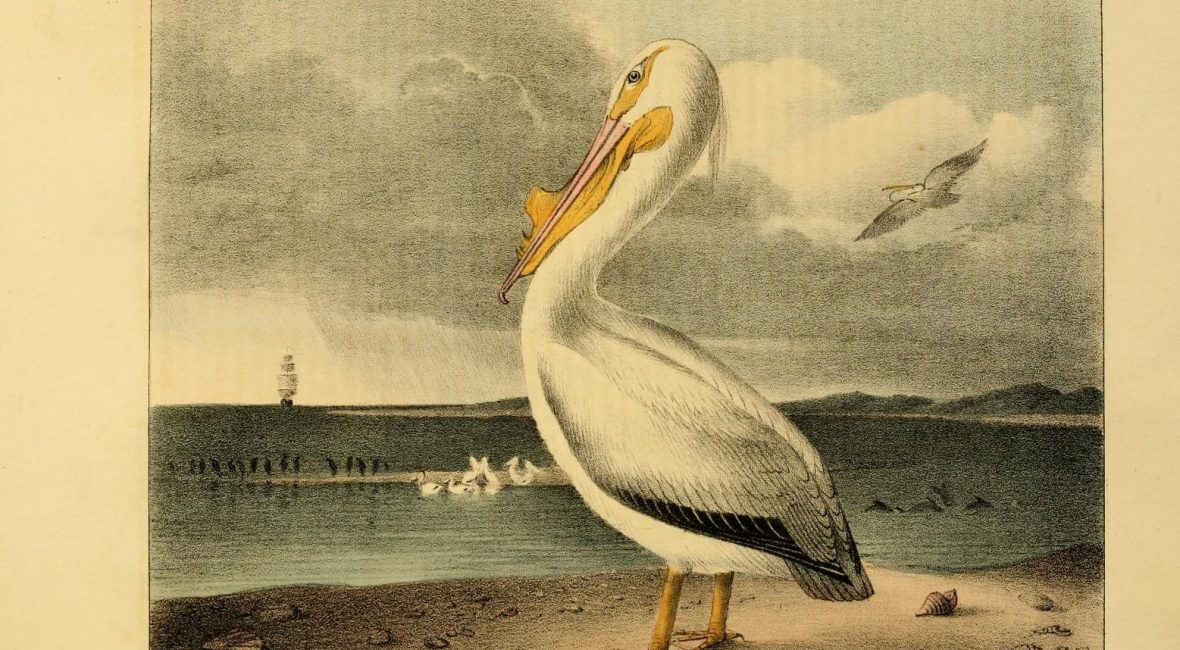
Large white bird with a yellow beak standing on a beach looking at the ocean.

Plate 6, the American White Pelican (Pelecanus erythrorhynchos). The Cabinet of natural history and American rural sports, with illustrations. v.1 (1830). Contributed in BHL from Smithsonian Libraries.

Another wetland bird whose impressive size and curious appearance drew the attention of early naturalists, the white pelican was nearly lost in the mid-20th century, largely due to habitat degradation. The birds primarily breed on isolated islands located in the North American interior, and the use of pesticides, as well as the draining of wetlands, caused breeding populations to nosedive. However, the national ban on DDT in 1972—as well the implementation of more stringent environmental protection laws, including the US Endangered Species Act—resulted in a reversal of fortune for the birds. As of 2014, their population has increased roughly tenfold since the late 1960s, resulting in the species’ conservation status being changed from “endangered” to “threatened” in 2016 in Washington State. Along with the wood stork, they can be seen in South Carolina’s ACE Basin.

Bobolink (Dolichonyx oryzivorus)

two birds, one standing on the ground, another standing on a branch above the bird on the ground. The bird on the branch is brown. The one on the ground has a gold head, white back, and black body.

Plate 14, the Bobolink (Dolichonyx oryzivorus). Catesby, Mark. The natural history of Carolina, Florida and the Bahama Islands, v. 1 (1729-1732). Contributed in BHL from Smithsonian Libraries.

The distinctive characteristics of the bobolink have captured the attention of writers, artists, and scientists for centuries. Early colonists knew them as rice birds due to their annual descent on southern rice fields; in the Natural History of the Carolinas, Florida, and the Bahama Islands (1729-1747), Mark Catesby wrote that the male birds’ black-and-yellow plumage was “so singular and extraordinary . . . I cannot pass it over without notice.”

Long a fixture in hayfields and grasslands throughout the United States, the bobolink has declined by around 65% over the past several decades, largely due to the loss of their easily-developed habitat. However, as grassland bird conservationists work with landowners to change their land management practices, researchers have observed an increase in bobolinks in certain areas over the past few years. One of those regions is Northern Virginia, said Amy Johnson, Program Director at Virginia Working Landscapes.

“…Folks are setting aside that acreage to allow these birds to breed,” Johnson told the Oak Spring Garden Foundation. “I would say anecdotally that we’re seeing an increase in bobolinks in that area, right around Upperville.”

To learn more about how the Oak Spring Garden Foundation is working with other organizations to protect declining bird species, visit the OSGF blog.

October 29, 2020by Joel Richard
Blog Reel, Campaigns, Earth Optimism 2020

No Egrets: The Story of Fashion and Feathers Through Books

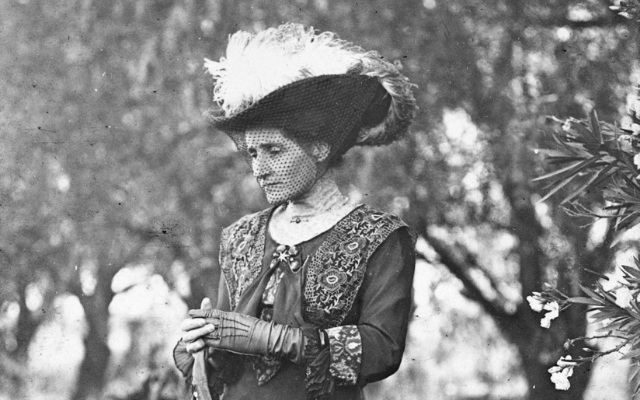
Black and white photo of a woman in a Victorian dress wearing an elaborate adorned with bird feathers. She stands in a forest.

April 2020 marks the 50th anniversary of Earth Day. Organizations around the world have commemorated the occasion by participating in the global Earth Optimism movement — an initiative spearheaded by the Smithsonian to “turn the conservation conversation from doom and gloom to optimism and opportunity”.

Throughout 2020, the Biodiversity Heritage Library (BHL) and our partners are joining the movement by sharing conservation success stories from and made possible by the BHL collection. Follow our blog for conservation stories — past and present — and visit our website for more information and to explore our Earth Optimism book collection.

———————

Feathers have been used in fashion throughout history, but the trend became more widespread from the late 18th century when the Industrial Revolution made luxuries more available to the masses. In the 19th century, new technology improved the speed of production and the millinery industry boomed [1]. Hats with feathers became a status symbol coveted by a new mass market and were produced on an industrial scale.

Birds were hunted around the world to supply plumes to centres of fashion such as London and New York. In 1886, American Museum of Natural History’s ornithologist, Frank Chapman, infamously observed on a walk in New York some 40 native bird species on women’s hats, some with an entire stuffed bird attached [2]. Indeed, women were oft blamed for the trend: in The Ibis in 1887 [3], women were pointed to as “the indirect, but real, instigators of this slaughter”. The author continues: “all that can be hoped for is that the freaks of feminine vanity may take some other and less harmful direction.”

The issue also arises in a letter [4] dated 1865 from ornithologist John Gould to Museum Victoria’s first director, Sir Frederick McCoy, who had previously written to Gould asking him to procure bird specimens for the burgeoning museum’s collections. In the letter, Gould ironically writes:

“The Ladies, the Ladies, have however, so stripped us of birds for their bonnets that but few are now in the market and these of course are high priced.”

Black and white photograph of a woman in Victorian dress with an elaborate hat adorned with bird feathers. She stands in a forest.

Photograph of Flo Tuckfield wearing a hat featuring a large plume of feathers in Merrigum, Victoria, circa 1910s. Credit: Lilian L. Pitts / Source: Museums Victoria, MV000061572.

While women were loudly condemned for their role in consuming feathers, they were also instrumental in the campaigns to raise awareness of the devastating effects of plume hunting on bird populations. For instance, in 1896 the American socialite and amateur naturalist Harriet Hemenway and her cousin Minna Hall led a boycott of feathered hats which attracted 900 participants and led to the formation of the National Audubon Society and passage of the Weeks-McLean Law (aka the Migratory Bird Act), which outlawed market hunting and the interstate transport of birds [5].

As documented by Herbert K. Job in his 1905 book Wild Wings [6], at the turn of the 20th century, an ounce of feathers was worth $32—almost twice as much as an ounce of gold. Job states that during 1902, over 1600 packages of heron plumes were sold at just one London auction house:

“A package is said to average in weight 30 ounces. This makes a total of 48,240 ounces. As it requires about four birds to make an ounce of plumes, these sales meant 192,960 herons killed at their nests, and from two to three times that number of young or eggs destroyed. Is it, then, any wonder that these species are on the verge of extinction?” (p.146)

In Australia, egrets, herons, lyrebirds, bowerbirds and emus were amongst the species targeted by plume hunters.

A brown bird with long, pink tail feathers illustrated on a grassy platform

Illustration of a lyrebird from An account of the English colony in New South Wales by David Collins (1804). Contributed in BHL by Museums Victoria.

Lyrebirds are ancient Australian animals: the Australian Museum in Sydney has fossils of lyrebirds dating back around 15 million years [7]. The Lyrebird reportedly came close to extinction in the early 1900s as it was hunted for its ornate tail feathers. In the 1911 publication, Pros and cons of the plumage bill, bird protectionist James Buckland states that “over 400 lyre-birds were killed in one district in a single season to supply the London plumage market” [8].

In 1901, the Australian Ornithologists’ Union (AOU) was founded to promote the study and conservation of the native bird species of Australia and adjacent regions. One of its members, Tom Tregellas, regularly camped out in a large hollow tree trunk over a period of seventeen years in Sherbrooke Forest, Victoria observing and photographing lyrebirds. Noticing a decrease in the population over time, he crusaded for the protection of lyrebirds and legislation was eventually passed to protect the birds.

The rapid decline of several species whose feathers were used in ladies’ fashion were seen during this period, and some bird species were not as fortunate as the lyrebird. The Huia of New Zealand was declared extinct in 1907, and it is also believed that the use of Great Auk feathers for down partially contributed to its extinction [9].

Periodicals, along with books and public lectures, were one of the key means of circulating information and inspiring action around bird preservation at that time. In volume seven of the journal of the AOU, The Emu, two articles by Australian ornithologist Arthur H. Mattingley are published side-by-side. In the first from November 1906 [10], Mattingley recounts a visit to the Murray River where he photographs egret and heron nests. In the second [11], written only a few weeks later, Mattingley returns to the same area and is horrified to discover that nearly one-third of the birds were killed, with the young left to starve in their nests.

Orphaned baby egrets at nests begging for food.

Photographs accompanying the article “Plundered for their plumes” by A.H. Mattingley, in The Emu, Vol.7 (1907). Contributed in BHL by American Museum of Natural History Library.

The second article, Plundered for their plumes, contains vivid photographs that caused quite a stir internationally. These photos are widely regarded as a tipping point in changing attitudes towards the use of feathers in fashion.

In England, the Royal Society for the Protection of Birds (RSPB) posted the photos on billboards and in shop windows, and in 1911 men carrying enlargements of the story patrolled the West End of London to protest the cruelty of wearing feathers. As a result, the story gained attention throughout the UK, as well as in Paris, Amsterdam, Italy, Spain, Denmark, Australia and the United States [12].

From this point on, the interest of amateur ornithologists changed from bird collection to identification. An Australian Bird Book, by John Albert Leach (1911), and Neville Cayley’s What Bird Is That? (first published in 1931) are two Australian publications that reflect this shift.

Collage of various birds illustrated in color.

Illustration from What bird Is That? by Neville Cayley (1947). Contributed in BHL by Museums Victoria.

Feathered hats did make a reappearance from the 1930s-1960s, but the decades after this saw hats lose popularity as they were no longer a standard item of women’s daywear. Worryingly, feathers have been making a comeback since clothing adorned with marabou and ostrich feathers appeared in a couture runway show in 2017, and PETA have been campaigning against the use of feathers in fashion ever since. The use of down in jackets is also a contentious issue today, and many major international brands have stopped selling down in favour of high-tech synthetics.

While mass market fashion continues to have serious environmental repercussions, this history shows that wide scale attitudinal shifts around such issues are possible. Efforts on this front, however, need to be widespread and sustained.

References

  1. Ehrman, E. (2018) Fashioned from nature, V&A Publishing, London, pp. 97-98.
  2. Callahan, D. (2014) A history of birdwatching in 100 objects, Bloomsbury, London, p.72.
  3. The Ibis (1887) Recently published ornithological works, Ser.5, Vol.5, no.20, p.458, viewed 27 February 2020. https://www.biodiversitylibrary.org/page/8521969.
  4. Letter from John Gould dated 20 December 1865, in Museums Victoria Archives, MV ARCHIVES – NATIONAL MUSEUM OF VICTORIA – Inwards Correspondence – 1863-1876 Gould, J., OLDERSYSTEM~02618.
  5. Souder, W. (2013) How two women ended the deadly feather trade, Smithsonian Magazine, viewed 27 February 2020. https://www.smithsonianmag.com/science-nature/how-two-women-ended-the-deadly-feather-trade-23187277/.
  6. Job, H. (1905) Wild wings; adventures of a camera-hunter among the larger wild birds of North America on sea and land, Houghton, Mifflin & Co, Boston, viewed 27 February 2020. https://www.biodiversitylibrary.org/item/48785.
  7. Boles, W. (2006) ‘The avian fossil record of Australia: an overview’, In: Merrick, J.R. et al. (eds.) Evolution and biogeography of Australasian vertebrates, auscipub, Oatlands, pp.387-411.
  8. Buckland, J. (1911) Pros and cons of the plumage bill, printed by Edmund Evans, p.13, viewed 27 February 2020. https://viewer.slv.vic.gov.au/?entity=IE6076556.
  9. Callahan, D. (2014) A history of birdwatching in 100 objects, Bloomsbury, London, p.72.
  10. Mattingley, A.H. (1907) A visit to heronries, The emu: official organ of the Australasian Ornithologists’ Union, Vol.7, pt.2, pp.[65]-71, viewed 27 February 2020. https://www.biodiversitylibrary.org/page/8517730.
  11. Mattingley, A.H. (1907) Plundered for their plumes, The emu: official organ of the Australasian Ornithologists’ Union, Vol.7, pt.2, pp.71-73, viewed 27 February 2020. https://www.biodiversitylibrary.org/page/8517740.
  12. Cronin, J.K. (2018) Art for animals : visual culture and animal advocacy, 1870-1914, Pennsylvania State University Press, University Park.
October 15, 2020by Joel Richard
Blog Reel, Campaigns, Earth Optimism 2020, User Stories

Empowering Research on Marine Bioinvasions to Support Conservation of Native Species and Ecosystems

April 2020 marks the 50th anniversary of Earth Day. Organizations around the world have commemorated the occasion by participating in the global Earth Optimism movement — an initiative spearheaded by the Smithsonian to “turn the conservation conversation from doom and gloom to optimism and opportunity”.

Throughout 2020, the Biodiversity Heritage Library (BHL) and our partners are joining the movement by sharing conservation success stories from and made possible by the BHL collection. Follow our blog for conservation stories — past and present — and visit our website for more information and to explore our Earth Optimism book collection.

———————

Dissected views of a sea squirt

Ascidiella aspersa. Plate XII. Alder, Joshua and Albany Hancock. The British Tunicata. v. 1 (1905). Contributed in BHL from the MBLWHOI Library.

The solitary sea squirt Ascidiella aspersa is native to the Northeastern Atlantic, from the Mediterranean Sea to Norway. Living in shallow sheltered sites and harbors, this species has a fast growth rate and is able to produce a large number of larvae.

These attributes have helped make it a successful colonizer of non-native environments, such as the Southwestern Atlantic, where it has become an invasive species introduced likely via ships.

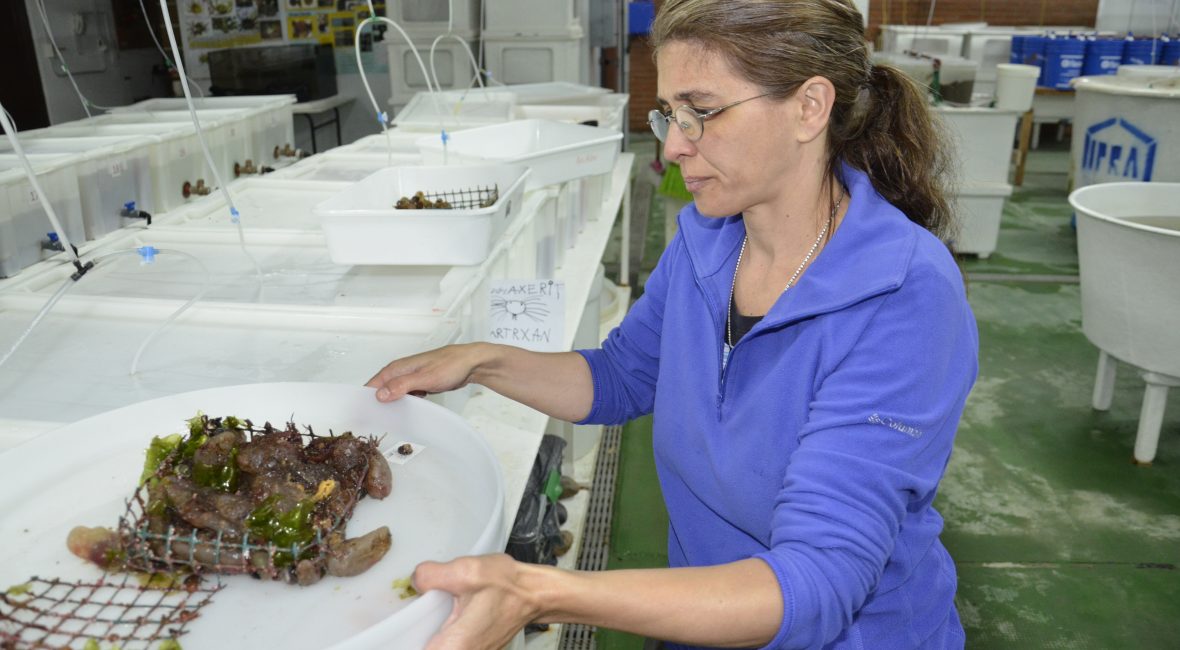
A woman with dark hair in a blue sweatshirt examining fouling communities in a white bucket.

Dr. Evangelina Schwindt, Head of the Grupo de Ecología en Ambientes Costeros from CONICET in Argentina, finishing an experiment with fouling communities. Photo by: Alejandro Bortolus.

Dr. Evangelina Schwindt, Head of the Grupo de Ecología en Ambientes Costeros from CONICET in Argentina, studies Ascidiella aspersa as part of her research as a marine invasive ecologist. Her work involves researching the interactions between invasive and native species, the patterns and processes occurring in biological invasions from the historical and present-day perspectives, the impact caused by invasive species, and the management strategies that can be applied.

Much of her research focuses on fouling communities living in artificial habitats such as ports, harbors, and ships. Species like Ascidiella aspersa are having a major impact on these communities, outcompeting and displacing native species and disrupting the ecological balance of the habitats they invade. As such, the management of invasive species is of vital importance to the successful conservation of native biodiversity and ecosystems.

“Invasive species are one of the five major drivers of biodiversity change, affecting also ecosystem services, food, health and economy,” asserts Schwindt. “The protection of native species and ecosystems in general improves overall quality of life and is an indicator of wellbeing and health.”

A fouling community at Puerto Madryn port in Argentina

A fouling community at Puerto Madryn port in Argentina. Photo by: Evangelina Schwindt.

Research to support the management of invasive species requires an understanding of the species’ taxonomy, genetics, global distribution and the earliest record of introduction in different regions worldwide. Studies on marine invasive species can be particularly challenging, as marine biodiversity is less well-understood compared to species living in terrestrial or freshwater environments.

Not surprisingly, research on invasive species can be time consuming, and tracking down their spatial and temporal patterns and history is labor intensive. Unfortunately, in the face of today’s biodiversity crisis, time is not on our side. To understand the impact of invasives and integrate their management as part of a successful conservation strategy for an ecosystem or threatened species, researchers need tools to help improve the efficiency of their work.

Fortunately, the Biodiversity Heritage Library (BHL) is just such a tool, providing researchers with free and open access to critical data to support conservation work.

“BHL provides free access to literature for researchers around the world that don’t have good libraries in their institutions,” lauds Schwindt. “Research is much faster and better when the bibliography needed to work is freely available.”

Schwindt first discovered BHL over ten years ago while conducting online searches for historic literature. Since then, it has become an invaluable asset for her research.

“My work requires historical literature and records from scientific expeditions in different languages,” explains Schwindt. “BHL is the best place to find the bibliography I need to reconstruct the past and present of marine species.”

Screenshot of a cover of a book with the title "Especies Exóticas Marino-Costeras de Argentina". The cover is black with yellow and blue letters and there is a crab on the cover.

Especies Exóticas Marino-Costeras de Argentina (2018), the first book on exotic marine coastal species of Argentina. Schwindt is the lead author for the book.

For example, BHL was a particularly useful resource for Schwindt and her colleagues during the production of their book Especies Exóticas Marino-Costeras de Argentina (2018), the first book on exotic marine coastal species of Argentina. The book, which has been made freely available in BHL, describes 45 marine-coastal exotic species, with exotic species being defined as “those owing their presence in a given region to various human actions, deliberate or not, that allowed them to overcome biogeographical barriers impossible to cross on their own” (Schwindt et al. 2018).

“The vast archives of BHL were particularly significant for us during the elaboration of this book because it provided us with the historical first records and accounts associated with several exotic species detailed some centuries ago by early explorers, naturalists and scientists traveling along the Southwestern Atlantic,” explains Schwindt.

A woman in a blue shirt and white shorts walking through a tunnel with ankle high water.

Schwindt surveying reefs of the polychaete Ficopomatus enigmaticus colonizing channels in urban areas. Photo by: Alejandro Bortolus.

BHL is also a valuable asset for Schwindt’s work as the coordinating lead author of the Intergovernmental Science-Policy Platform on Biodiversity and Ecosystem Services’ (IPBES) Thematic Assessment of Invasive Alien Species and Their Control, which is intended to “assess the threat that invasive alien species pose to biodiversity, ecosystem services and livelihoods and the global status of and trends in impacts of invasive alien species” (IPBES 2020).

“I found BHL extremely helpful for my work on the IPBES Thematic Assessment,” shares Schwindt. “All literature cited in the assessment should be open access, and the fact that BHL’s archives are extremely complete and open access made it a reliable tool to share and to use.”

A yellow and green crab held in someone's hand.

The exotic green crab Carcinus maenas is one of the invasive species studied by Schwindt. Photo by: Alejandro Bortolus.

BHL also provided important information for Schwindt’s most recent paper on marine bioinvasions—”Past and Future of the Marine Bioinvasions Along the Southwestern Atlantic” (Schwindt et al. 2020). The Library provided the first record of several relevant introduced species.

For example, Agardh’s Species genera et ordines algarum (1876) documents the introduced macroalgae Lomentaria clavellosa, probably native to the NE Atlantic Ocean and recorded in the SW Atlantic around 1876. Similarly, Giambiagi’s Cuatro nuevos isópodos de la Argentina (1922) records the introduced isopod Synidotea laevidorsalis, probably native to Japan and China and found in the SW Atlantic in 1902. Fauvel’s Annélides polychètes des Iles Falkland recueillies par M. Rupert Vallentin Esqre (1902-1910) (1916) likewise documents the cryptogenic polychaete Procerastea halleziana, recorded from the region in 1902.

In total, the paper documents 129 introduced and 72 cryptogenic marine species for the Southwestern Atlantic, with 33 new invasions occurring since 2002—translating to one new invasion every 178 days. Ships were identified as the most likely vector for these introductions. By documenting the historic and persistent introductions in the region, this paper underscores the need to establish long-term assessment programs to generate ongoing baseline data and support efficient environmental management.

This paper also illustrates how legacy literature, like that provided through BHL, is a valuable source of historic baseline data, which researchers can use to assess the patterns and evolution of invasions over time.

As the authors write:

“We cannot make progress in our understanding of the impact of invaders if the scale of invasion diversity remains poorly assessed, and if the abundance and distribution of already established invaders remain uncertain. The most direct consequences of delays in recognizing invasions are delays in early detection of and rapid response to new invasions, and the hampering of the design of strong, effective management strategies to prevent future introductions” (Schwindt et al. 2020, 15).

Clearly, successful conservation strategies require not just an understanding of a specific threatened species, but also of the forces—such as invasive species—that affect their well-being. Researchers like Dr. Schwindt are working to strengthen our understanding of these forces and improve our ability to address them. Open access to the vital literature provided through the Biodiversity Heritage Library helps make this work possible, ensuring that researchers around the globe have the data and tools they need to help save biodiversity—and that is a very good reason to be optimistic as we celebrate Earth Optimism.

References

IPBES. Thematic Assessment of Invasive Alien Species and Their Control. 2020. Work Programme. Accessed on 29 January 2020. https://ipbes.net/invasive-alien-species-assessment.

Schwindt et al. 2018 Especies Exóticas Marino-Costeras de Argentina. Buenos Aires, Argentina: Vazquez Mazzini Editores.

Schwindt et al. 2020. “Past and Future of the Marine Bioinvasions Along the Southwestern Atlantic.” Aquatic Invasions 15.

October 8, 2020by michelle.underhill
Blog Reel, Campaigns, Earth Optimism 2020, User Stories

Meadowfoam and Cluster-Lilies: Empowering Research on Rare Plants Through Open Access to Biodiversity Literature

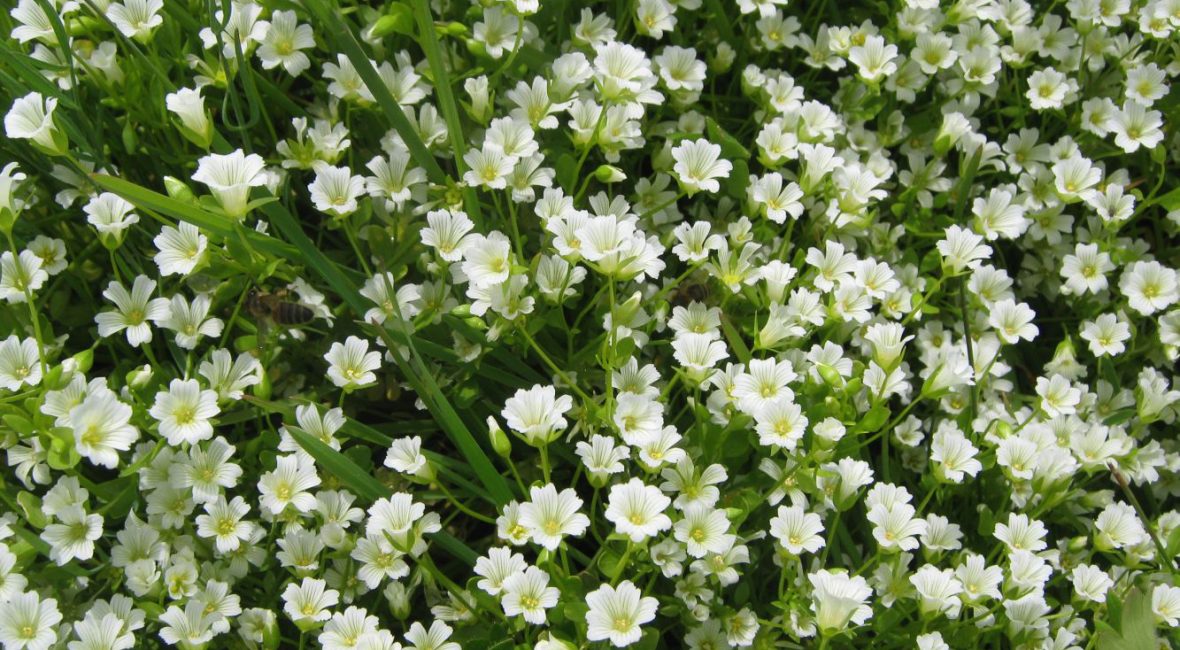
Photo of a field of white flowers

April 2020 marks the 50th anniversary of Earth Day. Organizations around the world have commemorated the occasion by participating in the global Earth Optimism movement — an initiative spearheaded by the Smithsonian to “turn the conservation conversation from doom and gloom to optimism and opportunity”.

Throughout 2020, the Biodiversity Heritage Library (BHL) and our partners are joining the movement by sharing conservation success stories from and made possible by the BHL collection. Follow our blog for conservation stories — past and present — and visit our website for more information and to explore our Earth Optimism book collection.

———————

Photo of a field of white flowers

Baker’s meadowfoam (Limnanthes bakeri), which grows in wet meadow and on the shallow margins of freshwater marsh in Little Lake Valley, Mendocino County, California. Photo credit: Robert Preston.

Little Lake Valley, located in northern California’s Eel River watershed, is home to several thousand acres of wet meadows and riparian woodlands that are habitat for diverse plants and wildlife, including tule elk, many bird species, and gorgeous spring wildflower displays. A landscape formed when sediments from several creeks filled an intermountain valley bounded by faults, the Valley is also home to two rare plants: the North Coast semaphore grass (state-listed as Threatened) and Baker’s meadowfoam (state-listed as Rare).

“The large lowland wetland ecosystem found in the Little Lake Valley, if not unique, is quite rare,” asserts Dr. Robert E. Preston, a Senior Biologist in the Sacramento office of ICF, an international consulting firm. “Most or all of the small interior valleys of California’s North Coast Ranges were long ago converted to agriculture or were hydrologically altered. Moreover, it supports almost half of the known occurrences of Baker’s meadowfoam, including the largest and most extensive population.”

In November 2016, the California Department of Transportation (Caltrans) completed construction of the Willits Bypass Project, a 5.9-mile long bypass of US Highway 101 in Mendocino County. First proposed in 1957, the controversial project, which crosses a corner of Little Lake Valley, raised a variety of environmental concerns due to its impact on endangered species and state and federally regulated resources [1].

Preston served as the lead botanist for the team that prepared the Project’s Mitigation and Monitoring Plan, which was developed and is being implemented by Caltrans to offset the bypass’ impacts on wetlands and rare plants.

“For the past several years, I have spent six to eight weeks each spring collecting data on Baker’s meadowfoam and sampling the vegetation to document progress towards meeting the Project’s habitat restoration and enhancement goals,” explains Preston. “It has been one of my most satisfying projects, because impacts of the Willits Bypass led to the preservation, restoration, and management of large parts of the Little Lake Valley ecosystem.”

man in blue shirt, grey pants and khaki hat in a forest

Rob Preston collecting Brodiaeas growing in serpentine habitat in Northern California. Photo credit: Laurie Preston.

Preston has been an avid student of California flora for nearly 40 years. It has been the focus of his floristic and taxonomic research and career as a consulting botanist. As suggested by his work on the Willits Bypass Project, much of his research focuses on the conservation of rare plants in the state.

“My position as Senior Biologist with ICF provides me with opportunities to travel throughout California to help clients comply with laws and regulations that help conserve rare plants and wetlands,” shares Preston. “This work includes field-oriented studies such as floristic inventories, rare plant surveys, wetlands delineations, and mitigation monitoring. An important aspect of my work is to convey the results of these studies to clients, resource agencies, and the public through many types of environmental documents, including survey reports, Habitat Conservation Plans, Environmental Impact Reports, and other planning documents.”

Preston’s work involves a great deal of taxonomic research, which has led to the discovery and description of several new rare species. For example, he has worked extensively with the genus Brodiaea, commonly known as cluster-lilies, which consists of about 19 species growing mostly in California.

“About half of the species are rare, and several species are state or federally listed as threatened or endangered,” states Preston. “One species I described, Brodiaea matsonii (named for its discoverer, Gary Matson), is known only from two small populations near Redding, California, and is currently being reviewed for state listing as endangered.”

white and purple flower with yellow center

Sulphur Creek brodiaea (Brodiaea matsonii), known from only two small occurrences growing along Sulphur Creek, in Redding, California. Photo credit: Robert Preston.

As Preston explains, taxonomy and conservation go hand-in-hand.

“To preserve biological diversity, species must be identified and named,” asserts Preston. “Since publication of the first edition of The Jepson Manual, the ultimate catalog of the California flora, over six new species per year have been added to the flora, and the rate of new species discovery does not appear to be slowing. Not surprisingly, many of these new species are rare and face various types of threat.”

Taxonomic research, in turn, is dependent on access to historic literature. In order to name, describe, and classify organisms, scientists must understand the scope of biodiversity that has already been described. This is documented within the published record of scientific literature.

Not long ago, however, it was often difficult for scientists to access the literature required for such taxonomic research. Many of the necessary publications were available in only a few libraries globally, requiring expensive and time-consuming trips to holding libraries or weeks to sometimes months of delay waiting on interlibrary loans—if the publication could be shared at all. This was a major impediment to the efficiency of scientific research, greatly hampering progress at a time when the biodiversity and climate crises demand greater speed and efficiency in scientific outputs to inform conservation.

Fortunately, the Biodiversity Heritage Library (BHL) has tackled this challenge head-on and transformed scientific research globally by providing free and open access to this essential literature. Preston has experienced the benefits of BHL’s collections first-hand with his own taxonomic research.

“When I’m conducting a status review for a rare plant, I often find it useful to check the original species description,” shares Preston. “I use BHL primarily to find historic documents with these descriptions.”

Preston first discovered BHL in 2010, while investigating a disagreement over the name of a species that required consultation of the original species description.

“I had been able to find some documents using other sources (Botanicus, Google), but BHL provided a much broader availability of historical resources,” affirms Preston.

Since discovering the Library, Preston has used BHL regularly to support his taxonomic research, including his work on the Brodiaea. For example, in order to determine the correct name for Brodiaea minor, which is endemic to California, Preston needed to confirm the collection location of the type specimen, which had been collected by Theodor Hartweg in 1846. Through BHL, Preston was able to access Hartweg’s account of his collecting trip, published in the Journal of the Horticultural Society of London as “Journal of a Mission to California in Search of Plants.”

“Hartweg recorded the wildflowers, trees, and shrubs associated with his collection, from which I was able to deduce the plant community and pinpoint the collection location to within a few miles,” shares Preston.

While researching the names of other Brodiaea species, Preston discovered that there was confusion over several names arising from a rivalry between two early 19th century English botanists. Materials accessed through BHL helped him unravel this taxonomic mystery.

“In researching the history of this rivalry for my article on ‘How the Brodiaeas Got Their Name,’ published in the journal Fremontia, I found a number of historic sources of information through BHL,” recalls Preston. “Among these was the ‘Monthly Botanical Report,’ a regular feature in the The Monthly Magazine, which chronicled newly described species and horticultural introductions by the botanical community along with snippets of gossip about the botanists themselves.”

Free and open access to biodiversity literature has transformed taxonomic research, which, as Preston’s testimonial demonstrates, is essential to the conservation process.

“‘Species’ and ‘ecosystems’ are constructs that we use to describe and organize the world around us, and taxonomy is how we name and organize those constructs,” asserts Preston. “Names are important, and in fact, a species must be named before it can be legally protected as threatened or endangered.”

scanned page of text from a book

First scientific description of Baker’s meadowfoam (Limnanthes bakeri). J.T. Howell. Leaflets of Western Botany (1943), v. 3(9), pg. 206. Contributed in BHL from the New York Botanical Garden with permission from the California Academy of Sciences.

The identity conveyed in a species name extends well beyond a simple binomial. It also articulates an organisms’ context within its wider ecosystem and its relationship to other species. Understanding this context is vital to the creation of any holistic conservation strategy.

“A species name is also an hypothesis, and our concept of a species can change depending on the data we use to interpret it,” explains Preston. “Because many plant species were described and named in the 18th and 19th centuries, it can be difficult to discern the original author’s concept of the species. We can’t call or email them to find out what they were thinking or how they came to a particular conclusion. The historic literature is the only way we can communicate with our colleagues of the past.”

BHL ensures that anyone, anywhere—from the curator in a major natural history museum to the scientist in a developing country without access to a robust research library or the botanist working from home—has easy access to the information they need to study and conserve life on Earth.

At BHL, we’re Earth Optimists because we know that open access to biodiversity literature empowers scientific research and conservation—and that is a reason to be optimistic.

References

[1] Oakes, Harry and Maureen Doyle. “Willits Bypass Project (US Highway 101) – The Long and Winding Road of Planning, Permitting & Mitigation Implementation and Monitoring.” International Conference on Ecology & Transportation. September 22-26, 2019. Accessed on December 12, 2019. https://icoet.net/program/presentations/60.

August 27, 2020by michelle.underhill
Page 1 of 71234»...Last »

Help Support BHL

BHL's existence depends on the financial support of its patrons. Help us keep this free resource alive!

search

About BHL

The Biodiversity Heritage Library (BHL) is the world’s largest open access digital library for biodiversity literature and archives. BHL operates as a worldwide consortium of natural history, botanical, research, and national libraries working together to digitize the natural history literature held in their collections and make it freely available for open access as part of a global “biodiversity community.”

Join Our Mailing List

Sign up to receive the latest news, content highlights, and promotions.

Subscribe Now

Subscribe to Blog via Email

Enter your email address to subscribe to this blog and receive notifications of new posts by email.

Join 319 other subscribers

Subscribe to Blog Via RSS

Subscribe to the blog RSS feed to stay up-to-date on all the latest BHL posts.

Access RSS Feed

Inspiring Discovery through Free Access to Biodiversity Knowledge.

The Biodiversity Heritage Library makes it easier than ever for you to access the information you need to study and explore life on Earth…for free, anytime, anywhere.


64+ Million Pages of
Biodiversity Literature Online.

EXPLORE

Tools and Services
to Transform Research.

EXPLORE

300,000+
Illustrations on Flickr.

EXPLORE

ABOUT | HARMFUL CONTENT | PRIVACY | SITE MAP | TERMS OF USE