Biodiversity Heritage Library - Program news and collection highlights from BHL
  • Home
  • News
  • Featured Books
    • All Featured Books
    • Book of the Month Series
    • BHL at 20
  • User Stories
  • Campaigns
    • Fossil Stories
    • Garden Stories
    • Monsters Are Real
    • Page Frights
    • Her Natural History
    • Earth Optimism 2020
  • Tech Blog
  • Visit BHL
Home
News
Featured Books
    All Featured Books
    Book of the Month Series
    BHL at 20
User Stories
Campaigns
    Fossil Stories
    Garden Stories
    Monsters Are Real
    Page Frights
    Her Natural History
    Earth Optimism 2020
Tech Blog
Visit BHL
  • Home
  • News
  • Featured Books
    • All Featured Books
    • Book of the Month Series
    • BHL at 20
  • User Stories
  • Campaigns
    • Fossil Stories
    • Garden Stories
    • Monsters Are Real
    • Page Frights
    • Her Natural History
    • Earth Optimism 2020
  • Tech Blog
  • Visit BHL
Biodiversity Heritage Library - Program news and collection highlights from BHL
Blog Reel, User Stories

Backswimmers vs. Mosquitos: BHL Informs Research on Controlling Yellow Fever Mosquito Populations

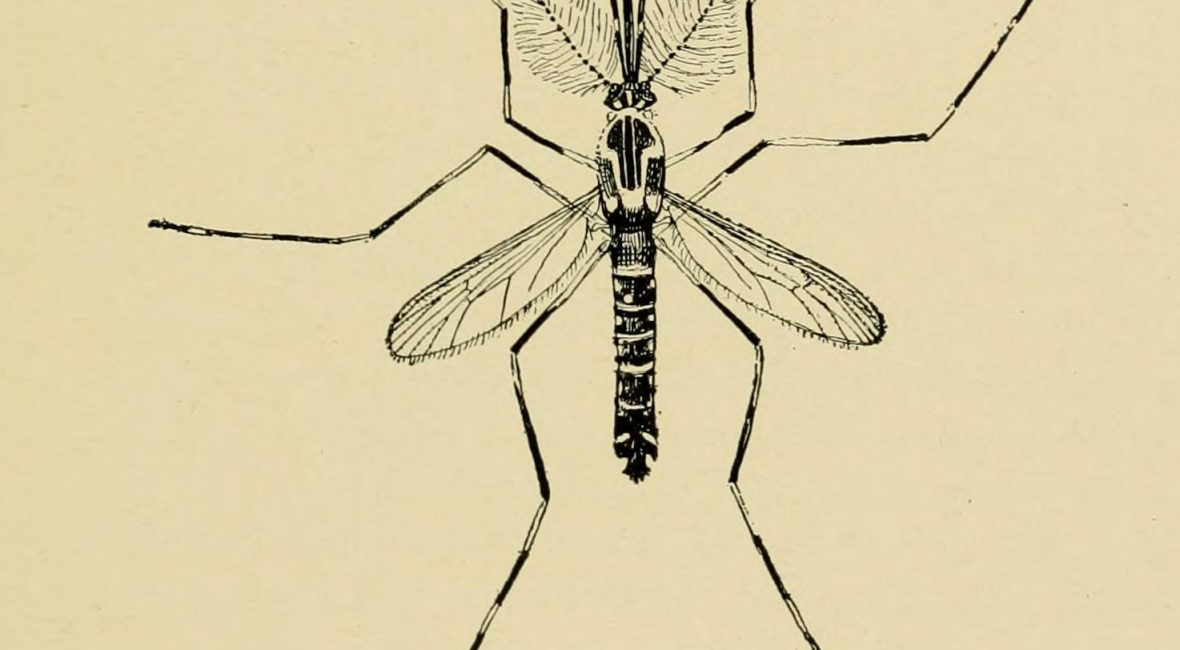
Black and White drawing of a mosquito (yellow fever mosquito (Aedes aegypti))

The yellow fever mosquito (Aedes aegypti), under the synonym Stegomyia fasciata. Source: Howard, L. O. (Leland Ossian). Mosquitoes; how they live; how they carry disease; how they are classified; how they may be destroyed. 1901. Contributed in BHL from Smithsonian Libraries and Archives.

Aedes aegypti, dubbed the yellow fever mosquito, is a globally invasive, pervasive threat to human health. As the common name suggests, the species can carry a range of diseases, including not only yellow fever but also dengue, the Zika virus, and the chikungunya virus. It is responsible for an estimated 400 million infections each year.[1]

Originating in Africa, Aedes aegypti has spread across the globe, initially transported via ships carrying enslaved people to the Americas. Soon after, trade ships bearing goods like sugar from the Americas brought the species to Europe, and from there it eventually made its way to Asia by way of the Suez Canal. Aedes aegypti’s success is secured by its ability to survive in a range of tropical, subtropical and temperate regions and its threat is exacerbated by its ability to breed in clean water supplies and propensity to bite during the day, rendering protective bed nets ineffective. The effects of climate change are expected to increase A. aegypti’s potential range significantly, escalating the urgency of implementing effective species control methods.[1,2]

A blue insect with transparent legs perched on a light brown branch.

Notonecta indica perched on a piece of wood. Photo courtesy of: Gavin Campbell.

The aquatic insect Notonecta indica—a species in the family Notonectidae, commonly called backswimmers because they swim on their backs—preys on Aedes aegypti mosquitoes in the Americas. Gavin Campbell, a PhD candidate at the University of the West Indies in Jamaica, is researching this predator / prey relationship as part of his PhD. Specifically, Campbell hopes to quantify the control of Aedes aegypti by Notonecta indica by determining how many mosquitoes each adult predator can consume daily and throughout their lifetimes.

The Biodiversity Heritage Library (BHL) has been an invaluable resource for this research.

“Thanks to the articles from BHL, I was able to substantiate my data with the foundational data to prove that other researchers have found similar things,” shares Campbell. “Before I found the BHL resources, I was only able to find a single paper from 2020 that was able to offer anything close to my research. I am very grateful for these and other documents I have come across since then.”

Black man in a red shirt and white, gray, and yellow shorts standing in a pond with birds flying in the background.

Gavin Campbell, a PhD candidate at the University of the West Indies in Jamaica, collecting water samples from a pond as egrets fly around. Photo courtesy of Gavin Campbell.

Campbell has been studying the aquatic and terrestrial phases of temporary ponds since 2017, with the life history of Notonecta indica and its impact on mosquito populations being a major component of that research. As Campbell explains on his website, “temporary waters are bodies of water which recurrently dry”, ranging from the minute—”water inside a snail shell”—to the massive—”the sizes of lakes and rivers”. As these bodies may be “freshwater, brackish, saline and even hypersaline (saltier than the sea)”, a wide variety of species are adapted to live in these diverse ecosystems.[3]

Campbell regularly uses BHL to access historic documents related to his research, typically downloading selected pages as PDF files to read offline.

“BHL has been critical in providing me with baseline information for my research as the documents in question were difficult to find,” asserts Campbell.

Various species of illustrated insects (Notonecta species)

A variety of Notonecta species, including Notonecta indica (fig. 2). Source: Hungerford, H. B. The Genus Notonecta of the World. 1933. Contributed in BHL from Harvard University, Museum of Comparative Zoology, Ernst Mayr Library.

Of all of the titles in BHL’s collection, The Genus Notonecta of the World (1933) by H. B. Hungerford has had the greatest impact on Campbell’s research. Published in The University of Kansas Science Bulletin, the work attempted to assemble all available information about the Notonecta genus, noting that more than thirty years had passed since the last comprehensive account of the genus was published. The publication represented twelve years of research, during which Hungerford consulted both the original descriptions and the types in museums throughout North America and Europe in an effort to “account for every named species”. The work was illustrated in color by Kathleen Doering.[4]

The Genus Notonecta of the World helped Campbell perform species identifications and capitalize on various behavioral aspects. For example, Hungerford notes that eggs are deposited on hard surfaces. Campbell applied this knowledge to his own work by placing a mesh within his rearing container, which facilitated easy removal of eggs each day. Hungerford also provides useful details about Notonecta behaviour in natural environments. For example, in a pond which N. indica frequents during the rainy season, a large number of branchiopods are present, which Hungerford notes are a food source for N. indica’s younger stages. This thus serves as a contributing factor in their dispersal and biology.

The illustrations in The Genus Notonecta of the World were also useful for Campbell’s research, helping him identify organs and structures within individuals and distinguish males and females for successful mating and to help determine differences in mosquito consumption between males and females.

“The BHL was key to providing access to the valuable information in this publication, as few papers at present go into such detail on the family,” affirms Campbell. “Without the BHL providing access to this foundational article, I would have been set back and hindered in my research.”

With Aedes aegypti expected to pose continued, significant threats to human health, we are proud to know that BHL is empowering important research that can help scientists better-understand the species and implement effective control methods. As Campbell shares, “With a better understanding of the role of N. indica in mosquito control, I aim to create and support more habitats for these natural predators to suppress mosquito populations, using nature-based solutions to address the extensive effects of climate change.”

As Campbell’s testimonial demonstrates, immediate, online access to biodiversity literature is ever-more important, allowing research to proceed more quickly and efficiently and improving our ability to respond to the many crises facing our planet and our species today. We look forward to continuing to provide researchers like Gavin Campbell with the essential literature they need to empower their work—anytime, anywhere.

Thank you @BioDivLibrary for this and so many other treasures pic.twitter.com/qDkfTH0kSc

— ?️‍?Gavin Campbell ?️‍? (@dragonecology) July 1, 2020

https://platform.twitter.com/widgets.js

References

[1] Sokol, Joshua. “The Worst Animal in the World.” The Atlantic. 20 August 2020. Accessed on 3 June 2021. https://www.theatlantic.com/health/archive/2020/08/how-aedes-aegypti-mosquito-took-over-world/615328/

[2] European Centre for Disease Prevention and Control. “Aedes aegypti – Factsheet for experts.” 20 December 2016. Accessed on 3 June 2021. https://www.ecdc.europa.eu/en/disease-vectors/facts/mosquito-factsheets/aedes-aegypti

[3] Campbell, Gavin. “Ph.D.” Dragon in Flight. Accessed on 3 June 2021. https://www.dragoninflight.com/phd

[4] Hungerford, H. B. “Preface.” The Genus Notonecta of the World. 1933. pp.6-9. https://www.biodiversitylibrary.org/part/38865

July 8, 2021by michelle.underhill
Blog Reel, Featured Books

What You Need to Know about Temple Grandin and Cows

“Nature is cruel, but we don’t have to be.” ~T. Grandin

View Full Size Image
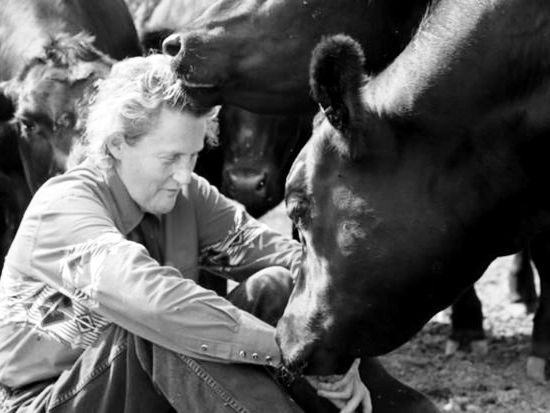
Temple with friends

The relationship between man and cow is ancient. Evidence for domestication of cattle dates back to Mesolithic times (10,000 to 5000 BCE). For thousands of years, humans have made use of cows for labor, leather, milk, butter, cheese, meat and manure – among other things. (see diagram below) It is humbling to know that  our modern society, an urbane environment seemingly so far removed from the life of a shepherd, is built on the foundation of pastoralism and animal husbandry. We are indebted to cows, who in-part have helped transform human subsistence into secure existence.  In return for their contributions to mankind, cows only require that we feed, shelter, and defend them against wild animal attacks and disease. Regrettably, the commercialization of the beef industry has changed our ancient relationship with the cow dramatically for the worse.

Over the past century, humans have been reneging on their end of the bargain to provide for the general welfare of these docile creatures. Common today are news stories like ‘Farmers Feed Cows Candy to Reduce Costs’; ‘The Case of the Cannibal Cows’; which led to ‘Mad Cow Disease Kills Mother and Son’. And there is always your standard run-of-the-mill cow cruelty story — all highly disturbing reads, in varying degrees.

This stream of horror lays bear man’s broken contract with the cow. Isn’t it high time we make good on our end of the bargain? Appearing on the scene in the early 1970’s, one young woman named Temple Grandin seemed to think so.

View Full Size Image
 
Temple Grandin & compassion for cows

View Full Size ImageFor those of you who have yet to see the Emmy award-winning biopic on Ms. Grandin, the story begins with a brilliant young autistic girl whose affinity with cows commits her to an up-hill journey to reform the beef industry and the inhumane treatment of livestock. The rise of the modern meat-packing industry and the commodification of “cow products” have effectively altered the delicate, and in some cultures highly revered relationship, with our kindly bovine friends.

As a rule, mass-production focuses exclusively on economic bottom-lines rather than respect and fair treatment of Life.  Mentioned earlier, a few of these news stories describe humans being cruel for the sake of being cruel but, in most cases these ghastly stories are motivated by systemic greed. Profit, not barbarism, is the root cause of the perversion of our relationship with cows.

In light of this modern dilemma between profitability and animal welfare, Grandin brought us good news: unlike global warming, the damage that we have done is not irrevocable, we can treat cows humanely and it can make good business sense.

View Full Size Image
Designed to reduce stress.

Instead of asking everyone to become a vegan tomorrow, Grandin takes the more pragmatic approach maintaining that humans have always been omnivores, herself included. By working within the realm of possibility, focusing on what people can do rather, than what people should do the famed animal behaviorist revolutionized the beef industry by designing better facilities for cows. Her point-of-view is unique (Temple sees in pictures) and it has helped her understand the needs of cows in a way that you or I cannot.  She has worked tirelessly on policy to train and reform meat-packers, handlers, farm workers, agricultural companies, and big beef purchasers.

The secret to her success is that she rarely uses emotional arguments to win her battles but rather, helps to implement change by working with regulatory bodies that economically punish meat-packing plants that do not pass regular audits. She has also persuaded big beef purchasers like McDonalds and Wendy’s to sever ties with meat-packers that fail these audits. She has proven that economic consequences typically get fast results.

In addition to helping to transform the meat-packing industry, she also worked to change society’s negative perception of autism by showing that her condition is an asset that informs her work. Most laud all of Ms. Grandin’s accomplishments yet, there is some heated rhetoric aimed at Temple for not advocating veganism altogether. In response, Temple cites the laws of nature:

“Unfortunately, most people never observe the natural cycle of birth and death. They do not realize that for one living thing to survive, another living thing must die.”

Added as a corollary to this statement is:

“any animal that has the capacity to suffer when raised for human food deserves to live in an environment that prevents suffering and provides it with a life where it has opportunities to experience positive emotions. Nature cannot be moral or evil because it has no intent.”

Whether you agree with Grandin or not, one thing is for certain, she has worked tirelessly to ease the suffering and preserve the dignity of cows.

Book of the week: The Biggle Cow Book

Since it was Temple’s birthday this past Wednesday, we wanted to gift her with a lovely selection from the BHL. The Biggle Cow Book(1898), has jewels of advice about how to care for our lowing friends:

View Full Size Image
See all the Biggle Cows on Flickr.
  • A low voice makes a quiet cow
  • Old advice but excellent: Speak to a cow as you would to a lady
  • If the stable is cold at calving time blanket the cow after the birth of the calf, and the calf too
  • To scratch a nervous heifer between her forelegs has a wonderfully soothing effect
  • Don’t forget that continued good health requires proper feeding, good air, sunlight and exercise

Agrobiodiversity needs our attention too.

Alongside sound cow care advice, the Biggle Cow Book touches on an important area of biodiversity that gets very little attention: Agrobiodiversity. Conservation of a genetically diverse livestock population is a component of global biodiversity efforts that struggles to get proper exposure. Most conservation efforts are aimed at preserving wildlife biodiversity, a far sexier cause. However, this does not change the fact that the diversity of livestock animals is under threat. Surprised? Did you know that there are over 800 breeds of cattle that have been accounted for, and most of these breeds are at great risk of being wiped out?

The very definition of “domestication” negates the process of natural selection. Instead cattle are bred via artificial human selection of certain high-performing breeds and thus determines which taxa will dominate the livestock landscape. The unfortunate consequence is reduced genetic variation.

The future danger of emphasizing certain genotypes over others is best summarized by author of Livestock Biodiversity, Genetic Resources For the Farming of the Future, Stephen J.G. Hall: “the thousands of breeds that exist were mostly developed in very different circumstances from those of today, but they are not anachronisms, they represent the genetic diversity that will enable the livestock farming of the future to respond to new challenges.”

This is especially true in light of global climate change; who can predict which breed of cow will be better adapted to the environment of tomorrow? Current breeding practice is predictably only concerned with short-term gains like high-milk production or large meat yielding breeds—these are called high-input, high-output breeds (HIHO). Breeding that is driven by profits ignores the long-term viability of cattle and a vulnerable cow population flies in the face of the growing demand for meat: by 2020 global meat demand will increase from 209 tons to 327 tons, milk demand will rise from 422 million to 648 tons. Sound like another sustainability crisis?

Where do we go from here?

As our collective ethical consciousness edges ever closer to a moral crisis, the subjects of livestock conditions, treatment, and breeding practices is often a depressing discourse that most of us would much prefer to avoid. Yet, if you look for the silver-lining you will find it: as with the recent case of the cruelty violations by the Central Valley Meat, California-based fast-food chain supplier to In-N-Out Burger and McDonalds. Both fast-food companies immediately suspended their supplier relationship with Central Valley Meat after a video of brutal treatment by handlers went viral. Grandin’s strategy that stresses the importance of economic consequences as punishment for poor meat-packing practices was at work here.

Additionally, there has recently been more focus on the preservation of cattle breeds. In regards to agrobiodiversity conservation, we can look to the UN’s Food and Agricultural Organization, one of the few organizations whose mission includes promoting research and increasing awareness about livestock biodiversity. They maintain one of the most important resources for researchers, the Domestic Animal Diversity Information System or DADIS database which is a data source for the worlds’ livestock breeds. Additionally, regional efforts in countries like the UK have been leading the way with the established Rare Breeds Survival Trust. The organization has spurred other smaller organizations to form and work to gain funding for agrobiodiversity studies and policy.

One last piece of good news is that the average person can make a difference just by knowing where their meat comes from, voting with their dollar, and exploring diets that reduce their red-meat intake. During the process, if you decide to become a vegetarian, great! Either way, eating less red-meat helps to decrease the global demand for an unsustainable food resource. Adhere to this Chinese proverb: Eating what stands on one leg is better than eating what stands on two legs which is better than eating what stands on four legs.

When and if you eat red-meat, realize that you are eating a once living breathing creature that gave its life so that you may continue to live yours. This sacrifice should be honored and respected. Let’s wish Temple a very happy birthday this week and thank her for helping us to uphold our end of this ancient contract betwixt cow and human.

View Full Size Image
Cows a’ roamin!

Agrobio Resources:

  • BHL: Animal Husbandry Bibliography 
  • Breeds of Livestock
  • Sustainable Food Guide
  • Worldwatch: Is Meat Sustainable?
  • Good Meat: The Complete Guide to Sourcing and Cooking Sustainable Meat
  • Interactive: The Meatrix
  • PBS Program: Holy Cow
  • Breeds of Cattle (2nd ed.)
  • FAO Publication: Livestock Biodiversity
August 31, 2012by [email protected]
Blog Reel, Featured Books

Book of the Week: Halloween, Witches, and Cattle

View Full Size Image

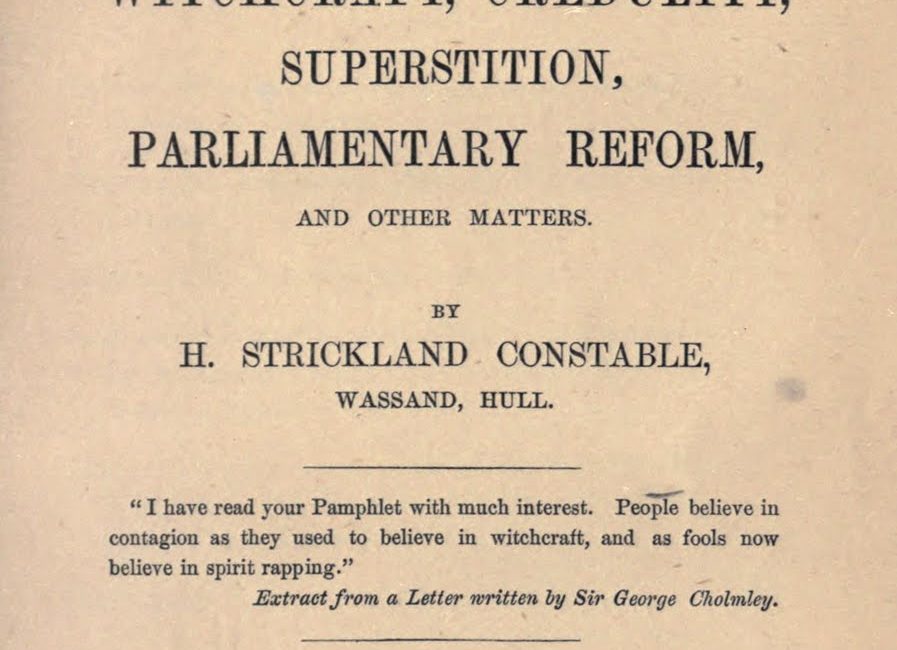
It’s almost Halloween, and to celebrate, we wanted to feature a book that properly connoted the Halloween spirit. What did we find? Observations Suggested by the Cattle Plague, About Witchcraft, Credulity, Superstition, Parliamentary Reform, and Other Matters (1866), by H. Strickland Constable. This book is a delightful, tongue-in-cheek discussion of the unconventional cures for ailments and diseases that were popularly accepted during the time period. You might be asking, why is this kind of a book in BHL? The answer: Cattle! The whole discussion around which the book is based relates to a outbreak of Cattle Plague that was sweeping the globe, and Mr. Constable had quite a few things to say about some of the methods employed by citizens attempting to protect their livestock from such a devastating catastrophe.

For our post, we want to concentrate on the first chapter, entitled “Charms-Witchcraft-International Veterinary Congress.” Mr. Constable starts by observing that, over the past year, there had been many “valuable precautionary measures” utilized by various cattle ranchers and farmers to protect their livestock from the deadly outbreak of the plague (called Rinderpest). These included “hanging camphor bags or strings of onions round the necks of all healthy animals, painting their noses with tar, etc.” Apparently, all such measures had met with “great success!” Mr. Constable points out, however, that he was surprised at the apparent lack of awareness that many people demonstrated regarding similar devices that were used in the past, and this is where things really start to get good.

Since people seemed to be largely unaware of the methods taken over previous centuries to protect against ailment and disease, Mr. Constable makes sure to enlighten us. He facetiously demands, if onions and camphor are already being used, that these alternative methods also “ought at least to have been tried.” For instance, there is the use of the word “Abracadabra,” which, according to Serenus Sammonicus, is “of the very utmost value in all cases of…fever.” And then one must consider the use of precious stones. Camillus Leonardus asserted that emeralds prevent epilepsy and “unmask the delusions of the devil,” serpentine cures dropsy (“because if people stand with it in a very hot sun for three hours, they break out into a profuse perspiration”), red coral “strengthens digestion,” red cornelian cures dysentery, green jasper prevents fever, and chrysolite “held in the hand cures fever.” Mr. Constable asserts that, since Rinderpest is a fever, chrysolite and green jasper should be tied around the cattle’s neck.

And, since we’re talking about unconventional methods, why not bring witchcraft into the mix? Constable states that the 1489 book of witchcraft, Hexenhammer, “teaches witches how to make magic ointment for the destruction of cattle,” which can be applied to cow-house door posts to spread the disease. And, while we’re talking about witches, although it has nothing to do with cattle, Constable thought it fitting to bring up the 1669 incident in Sweden in which 62 witches were executed for bewitching children. It seems that, riding on goats, these witches would abduct children and take them to a rock in the sea called Blokula, after which they, the children, and the devil would “feast on cabbage and oatmeal porridge.” However, only the older witches were allowed to feast. The younger witches “were set to take care of the toads and keep them in order with long, white sticks.” And if that wasn’t enough, for his amusement the devil would “make the witches ride on long poles, and then all at once he would pluck away the poles, when down would tumble the witches, to his very great glee.”

Constable ends the chapter by discussing, with extreme gusto, the Grand International Veterinary Congress, as recounted by Mr. Gamgee in “The Cattle Plague.” It appears that the purpose of this Congress was largely to debate the origin of Rinderpest in German cattle, with some additional mention of scab, pigs, malignant disease in Stallions, and the keeping of dogs. Constable writes, “It is exceedingly entertaining. Such as charming farrago of antiquated ideas about contagion, infection, Government interference, official inspections, police regulations, veterinary supervision, restrictions on traffic, quarantine, inoculation, etc. etc., I could not have believed possible to find extant in any civilized country in this the nineteenth century.” The conclusion of the Congress? Rinderpest comes only from Russian cattle, and that “the Russian cattle will impart the disease in any country, at any distance of time after leaving Russia, and without ever having any disease themselves.”

So, what does our good Mr. Constable conclude after all of this speculation and discussion? He purports that the ridiculous ideas that people come up with to account for the occurrence of diseases like Rinderpest, and the fact that some individuals contract it while others don’t, only occur as a result of people being unwilling to admit that they do not know where the diseases come from or how they work. Men instead prefer to concoct “idle theories” that blame witches and Russian cattle.

There are several more great chapters in this book, including topics such as the origin of Cholera, “erroneous popular notions about disease,” utilitarianism, and metaphysics. As you prepare for your Halloween celebrations, maybe you should consider wearing a nice necklace of onion or camphor to protect yourself against all that rampant Rinderpest! Happy Halloween! (And, for your ghoulish Halloween delight, we thought we’d share this lovely image of a spider ensnaring it’s prey. See more spider images in our Flickr account).

View Full Size Image

October 27, 2011by michelle.underhill

Help Support BHL

BHL's existence depends on the financial support of its patrons. Help us keep this free resource alive!

search

About BHL

The Biodiversity Heritage Library (BHL) is the world’s largest open access digital library for biodiversity literature and archives. BHL operates as a worldwide consortium of natural history, botanical, research, and national libraries working together to digitize the natural history literature held in their collections and make it freely available for open access as part of a global “biodiversity community.”

Join Our Mailing List

Sign up to receive the latest news, content highlights, and promotions.

Subscribe Now

Subscribe to Blog via Email

Enter your email address to subscribe to this blog and receive notifications of new posts by email.

Join 319 other subscribers

Subscribe to Blog Via RSS

Subscribe to the blog RSS feed to stay up-to-date on all the latest BHL posts.

Access RSS Feed

Inspiring Discovery through Free Access to Biodiversity Knowledge.

The Biodiversity Heritage Library makes it easier than ever for you to access the information you need to study and explore life on Earth…for free, anytime, anywhere.


64+ Million Pages of
Biodiversity Literature Online.

EXPLORE

Tools and Services
to Transform Research.

EXPLORE

300,000+
Illustrations on Flickr.

EXPLORE

ABOUT | HARMFUL CONTENT | PRIVACY | SITE MAP | TERMS OF USE