Biodiversity Heritage Library - Program news and collection highlights from BHL
  • Home
  • News
  • Featured Books
    • All Featured Books
    • Book of the Month Series
    • BHL at 20
  • User Stories
  • Campaigns
    • Fossil Stories
    • Garden Stories
    • Monsters Are Real
    • Page Frights
    • Her Natural History
    • Earth Optimism 2020
  • Tech Blog
  • Visit BHL
Home
News
Featured Books
    All Featured Books
    Book of the Month Series
    BHL at 20
User Stories
Campaigns
    Fossil Stories
    Garden Stories
    Monsters Are Real
    Page Frights
    Her Natural History
    Earth Optimism 2020
Tech Blog
Visit BHL
  • Home
  • News
  • Featured Books
    • All Featured Books
    • Book of the Month Series
    • BHL at 20
  • User Stories
  • Campaigns
    • Fossil Stories
    • Garden Stories
    • Monsters Are Real
    • Page Frights
    • Her Natural History
    • Earth Optimism 2020
  • Tech Blog
  • Visit BHL
Biodiversity Heritage Library - Program news and collection highlights from BHL
Blog Reel, Featured Books

Industrial and Technological Museum Economic Botany Illustrations and the Wax Fruit Collection

Illustration of two yellow pears with speckled skins with handwritten notes on a beige background.

This post is part of BHL at 20: Treasures from the Biodiversity Heritage Library, a series contributed by members of the BHL community, highlighting remarkable works from across the collection in celebration of its 20th anniversary.
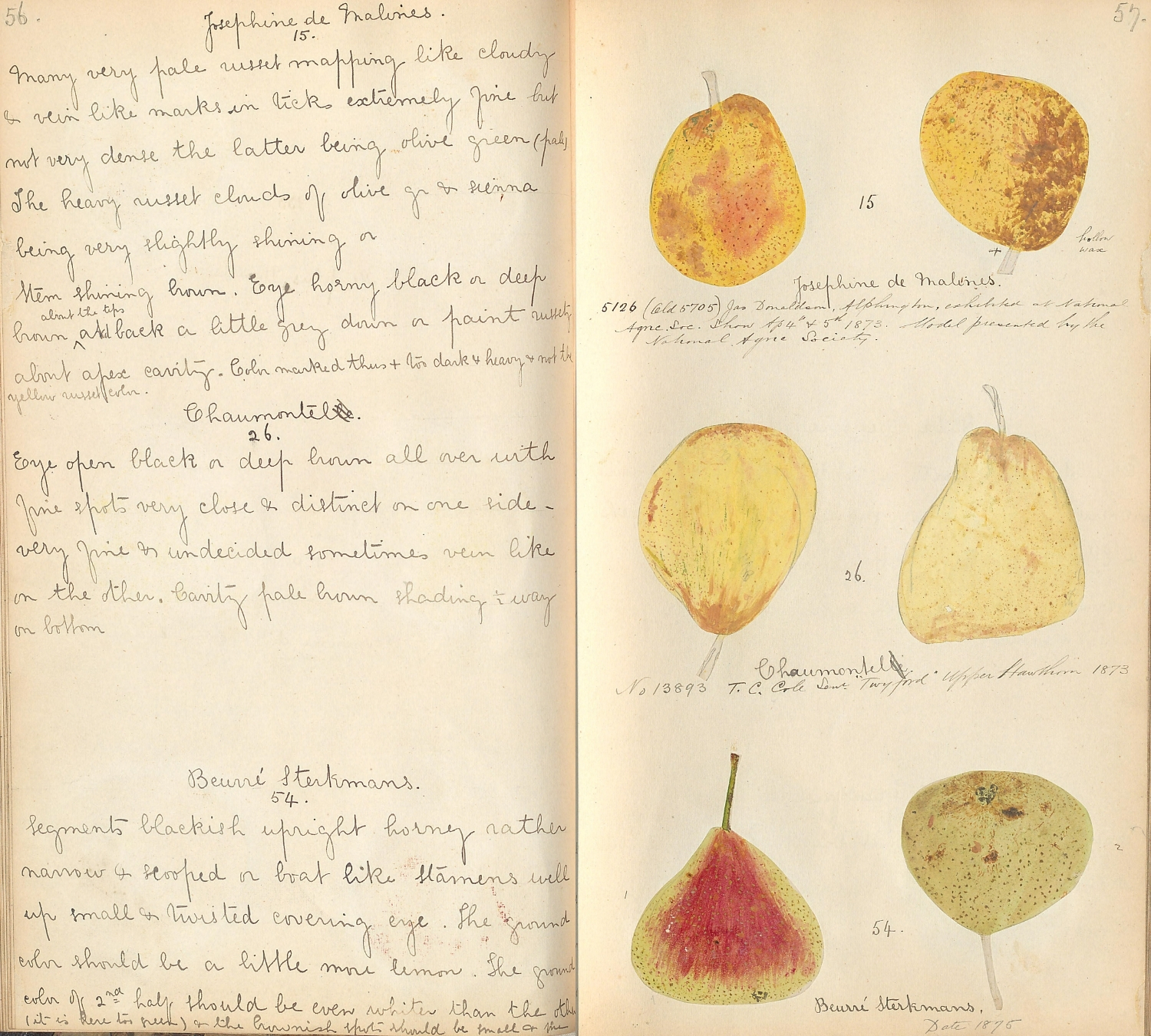
Historical illustration of different pear varieties with handwritten notes.

Pages 56 and 57 of the ITM Register, showing handwritten descriptions and illustrations of the pears Josephine de Malines, Chaumontel, and Beurre Sterkmans. Source: Museums Victoria Archives.

One of the most vibrant and colourful volumes available on BHL from the Museums Victoria Archives is the Economic Botany Fruit and Vegetable Specimen Register (ITM Register) created by Industrial and Technological Museum (ITM) model makers and used as a reference when producing the Wax Fruit Collection. This collection dates from when the ITM (now Museums Victoria) opened to the public in 1870.

The ITM ensured that Victorians had access to the industrial and technological developments taking place overseas through its collections on display and educational programs, such as modelling and model-making. The realistic wax fruit and vegetable models created by museum model makers document almost a century of Victorian agriculture, from the 1870s to 1960s. They were exhibited at the Melbourne International Exhibition of 1880, and remained on display into the 1960s (see image below).
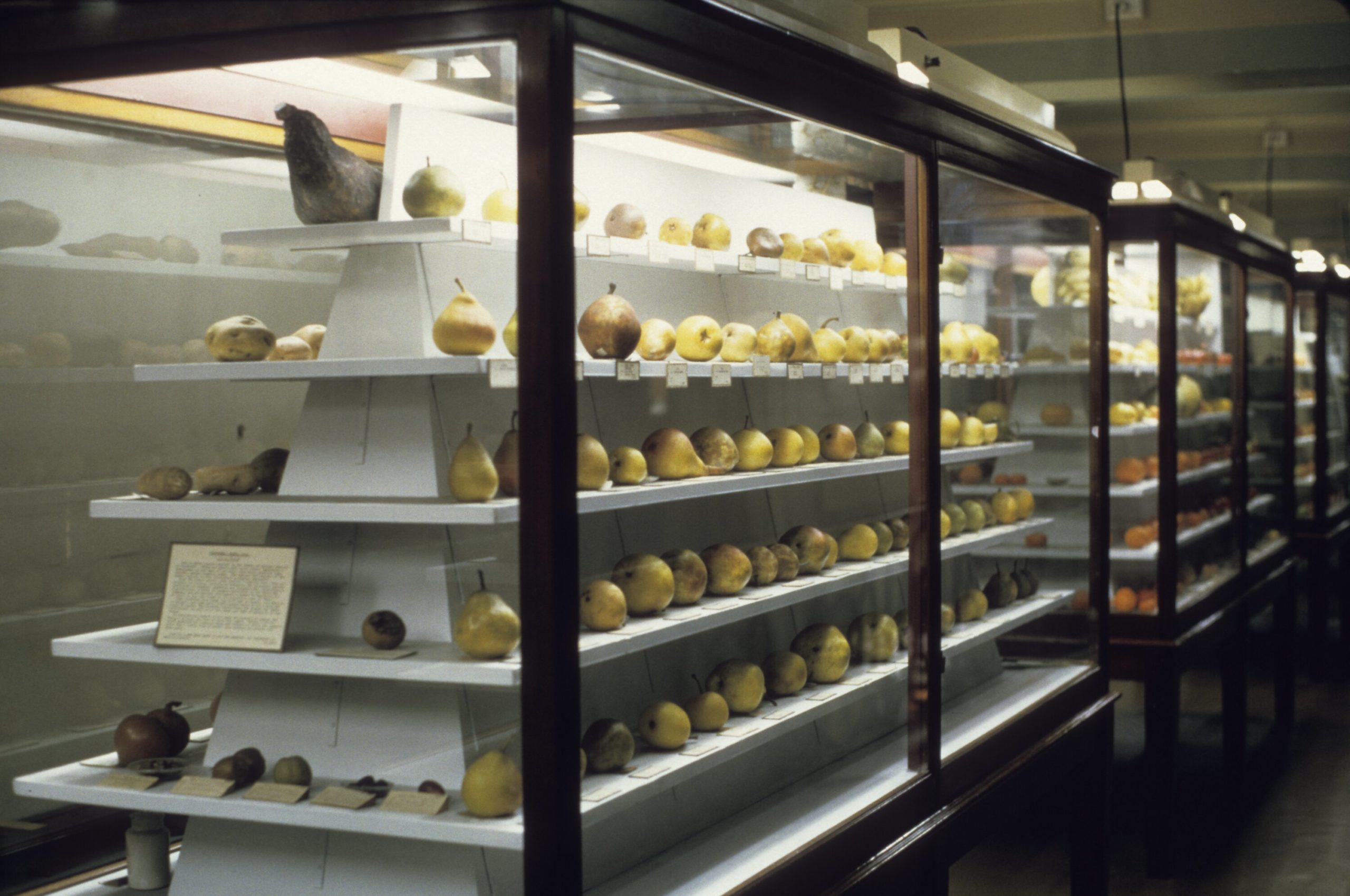
Display case with rows of model pears showing various shapes and colors.

Visitors could view the wax models in display cases such as this, Queen’s Hall Upper, Institute of Applied Science (predecessor of Museums Victoria), 1969. Source: Museums Victoria.

Note that the ITM Register (c.1870-1890) has two related volumes: Album – Wax Fruit Models, Industrial and Technological Museum ST 40030 (1872-1879), and Album – Wax Fruit Models produced by model maker Miss M. J. McMillan, ST 40029 (1904).

The ITM Register held in Museums Victoria Archives includes eighty pages of watercolour botanical illustrations of fruit and vegetables pasted into the volume. Drawn to scale, with bruises and imperfections included, each illustration contains the detailed visual information required to create the wax models. Two sides of each fruit or vegetable are illustrated, depicting the unique colours and markings on either side of the specimen. For example, on page 22 (see below), a Blue Permain (Old No. 16320), an American apple variety, is illustrated green on one side and red on the other.
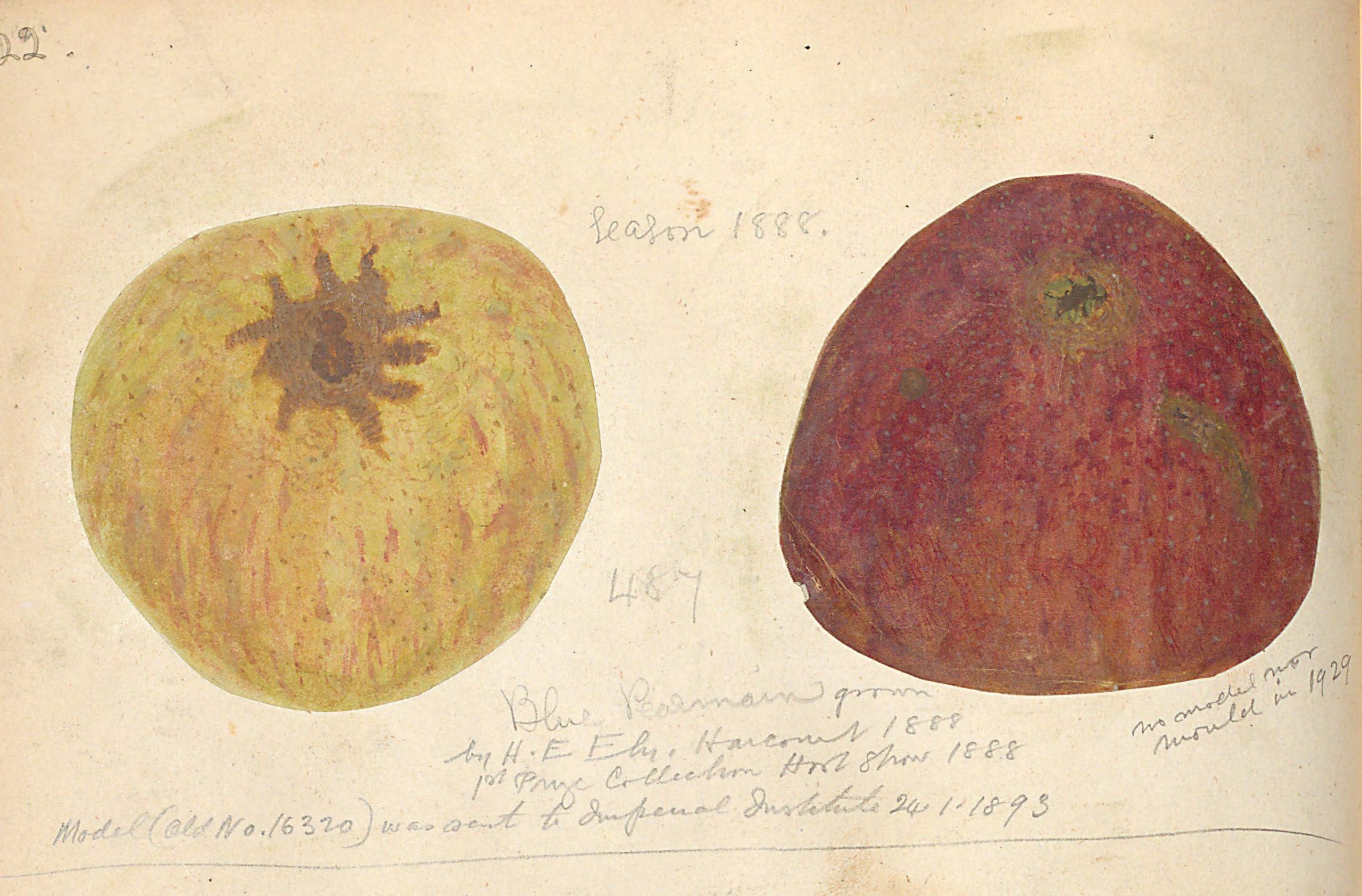
Two illustrated apples labeled "Eason 1888." The left apple is yellow-green with a dark brown spot; the right is red, both set against a beige background.

Cropped image of page 22 of the ITM Register, showing an illustration of a Blue Permain specimen (487). Source: Museums Victoria Archives.

The ITM Register includes handwritten descriptions of varieties of apples, apricots, oranges, peaches, pears, plums, potatoes and a turnip; names of orchardists and farmers; place names across Victoria, both regional and within inner-city Melbourne/Naarm; dates grown; and unique numbers assigned to each illustration. Some of these specimens were moulded and modelled into wax and relate to Museums Victoria’s State Collection registration numbers. Some descriptions include a “new” number. For example “New 4981” (“Old 8420”) refers to the wax model ST 4981 in the State Collection. The drawing is comparable to the photograph of the apple model; however, the drawing has greener hue than the model. If no “old” number is listed with the specimen, the number, typically between four and five digits, may be the new number. This can be verified by searching for the ST State Collection registration number on the Museums Victoria Collections website and comparing the description and illustration with the information in the ITM Register.
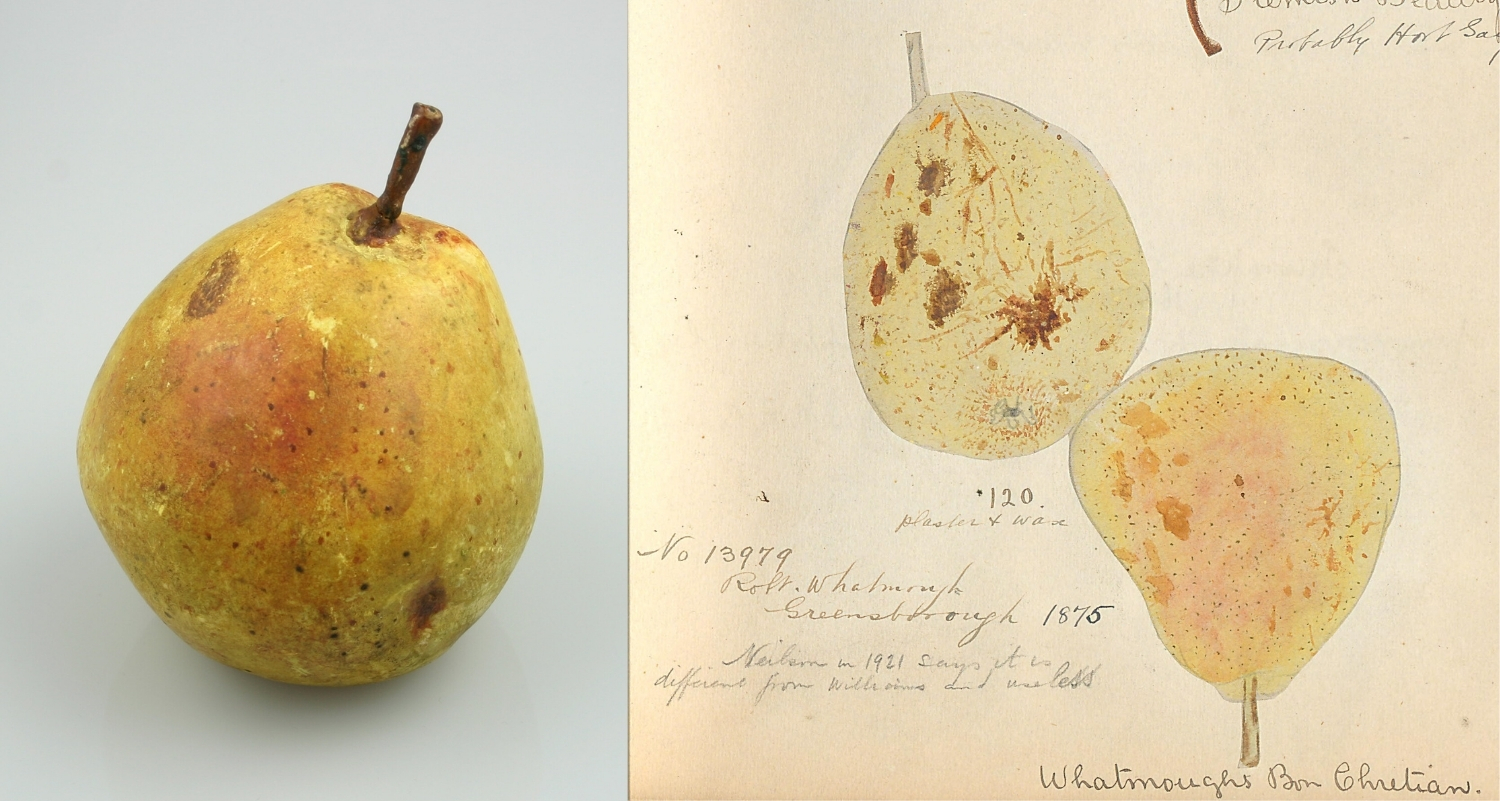
A photo of a yellow pear and a botanical illustration of the same pear.

Whatmough’s Bon Chretian (ST 13979), left: wax model; right: illustration, page 61 of the ITM Register. Source: Museums Victoria.

In the above example, compare the photograph of the wax model on the left with the related botanical illustration on the right. Note the shape of the pear model, the detailed bruising, surface dots, and the orange hue at the centre in comparison to the illustration. Mr Robert Whatmough grew the Bon Chretian at Willis Vale orchard in Greensborough, Victoria, and donated the specimen to the museum in 1875. Thomas McMillan made the wax model for the Philadelphia Centennial Exhibition of 1876.

Museum model maker Thomas McMillan managed the Botanical Collection from 1872 to 1882. He established a workroom for casting and modelling fruit and vegetables and led a fruit modelling class. His daughter, Anna McMillan, held the role of pupil-assistant. Anna McMillan and model-making student Ida Ingamells entered a collection of models in the Juvenile Industrial Exhibition, where both won prizes. After Thomas McMillan retired in 1882, Anna McMillan continued working as a model maker with the collection.

Specimens that were not modelled into wax were noted as such in the descriptions in the ITM Register. Descriptions also record when wax models were sent to the Imperial Institute in 1893, when models were exhibited at the National Agricultural Show and later presented to the Museum, and when prizes were received, such as at the Horticultural Show of 1888.

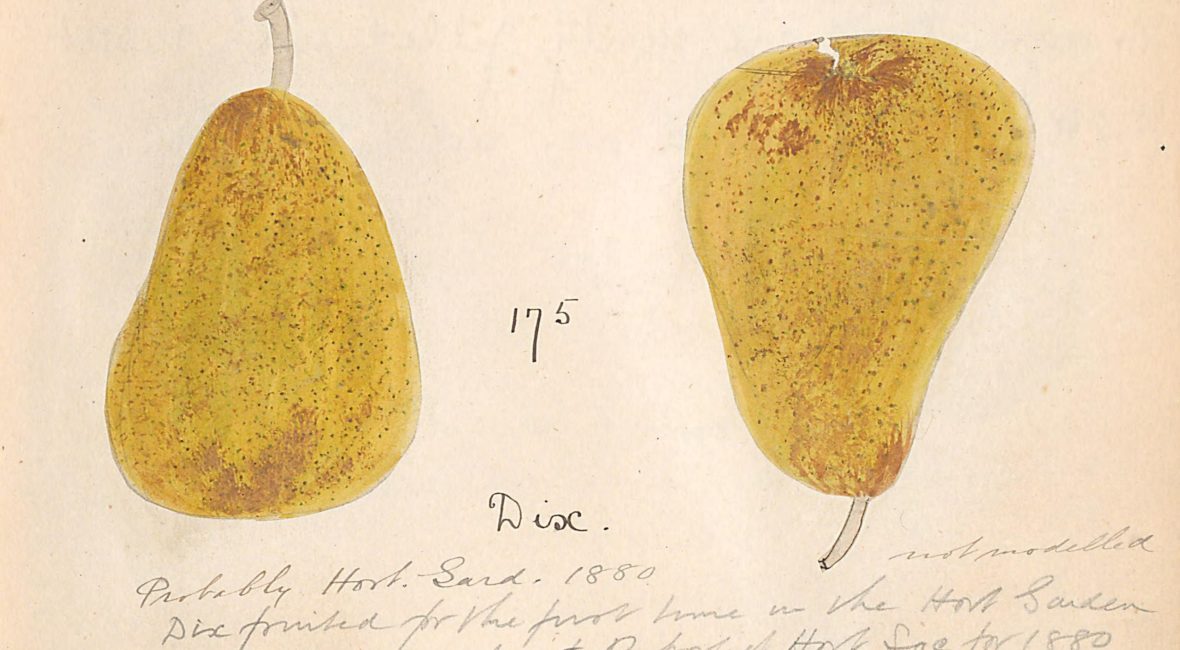
Illustration of two yellow pears with speckled skins with handwritten notes on a beige background.

Cropped image of page 103 of the ITM Register, showing an illustration of Dix (175). Source: Museums Victoria Archives.

Some illustrations include detailed descriptions, such as “Dix 175” on page 102 of the ITM Register: “Colour too bright or golden – more white & not so much body. Spots rather bright & not numerous enough. Eye nearly closed by the leaning forward of the small leathery-like segments. Stem ¾ inch curved greenish sienna & black end.” This detailed illustration of a pear (see image above) does not have a corresponding wax model.

In later years, photography was used to document varieties of fruit, as noted by ITM Curator R. Henry Walcott in the Trustees Report of 1916: “Sections, both longitudinal and transverse, of 123 varieties of pears and apples were photographed by Mr Wilson, and prints of these will be mounted and exhibited in due course. It is only through the study of the internal characters of the fruits of pears and apples that many varieties can safely be distinguished, and our object will be to try and make the collection of models and photographs a standard for reference purposes.”

Providing digital access to the ITM Register in BHL allows researchers to study and compare images of the illustrations and associated data, alongside information about the related Fruit Wax Model Collection available on the Museums Victoria Collections website. The historical and scientific significance of the agrobiodiversity documented in the volume is an important record for contemporary economic botanists studying changes in the region.

Thank you to the BHL Australia team for making this volume available online and for the vital work you do for our region.

From the Biodiversity Heritage Library

If this work matters to you, we invite you to help shape what comes next. With your support, BHL can continue to connect biodiversity knowledge across time, making it freely available to researchers, communities, and future generations worldwide. 

Orange button with a heart icon

May 6, 2026by nkearney
Blog Reel, Featured Books

“Abnormal apples” and “proliferous potatoes” – Uncovering the stories behind Kew’s Museum of Economic Botany Collection.

What is Economic botany?

Economic botany can, in a nutshell (excuse the pun), be described as the use of plants by people. This relationship spans thousands of years and includes both individuals and cultures – making this subject a rich and fascinating link between botany and anthropology. Economic botany collections can essentially be described using the term biocultural.

Kew’s Museum of Economic Botany.

The Economic Botany Collection at the Royal Botanic Gardens, Kew holds around 100,000 objects from around the globe. Established as the Museum of Economic Botany by Kew’s first official Director, Sir William Jackson Hooker, in 1847, it was cited as a public repository for ‘all kinds of useful and curious Vegetable Products, which neither the living plants of the Garden nor the specimens in the Herbarium could exhibit’.

Raw materials are housed in the Collection, alongside objects ranging from jewellery, musical instruments and an array of dyes and medicines. Many of these items were acquired by Kew during the peak of colonial expansion, with the majority dating from around 1847 to 1930. Kew staff are currently working with indigenous cultures and partner institutions to ensure that traditional crafts, such as the use and manufacture of Tapa (Pacific barkcloth), are being kept alive and in some cases revived in the communities where they first originated.

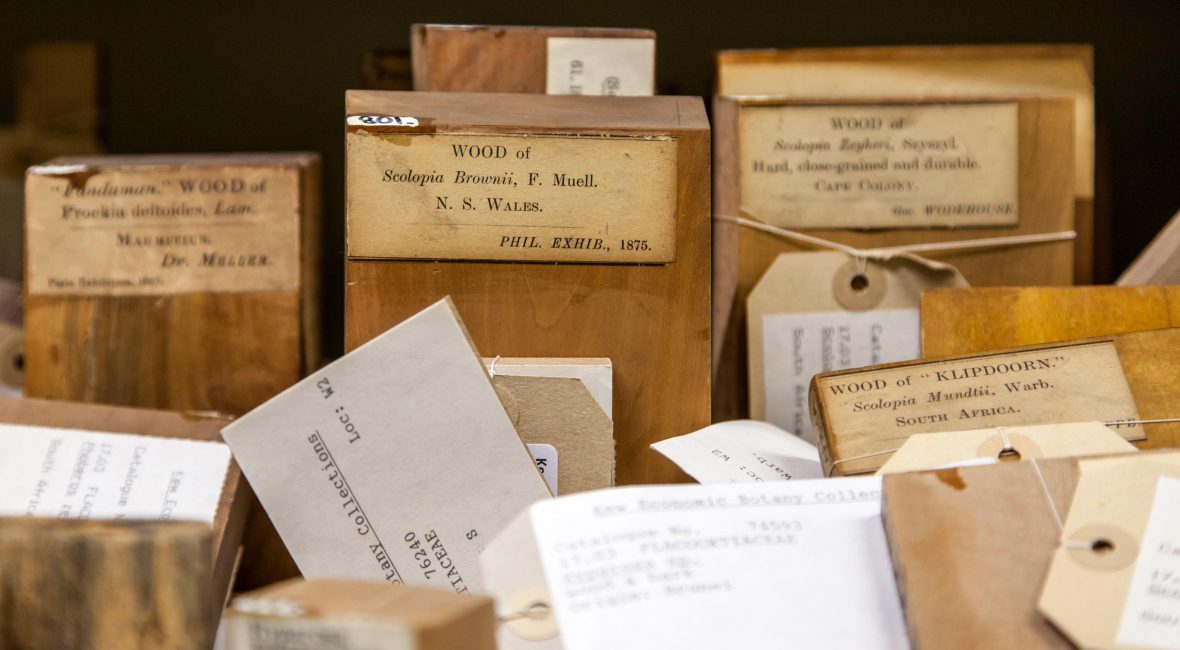
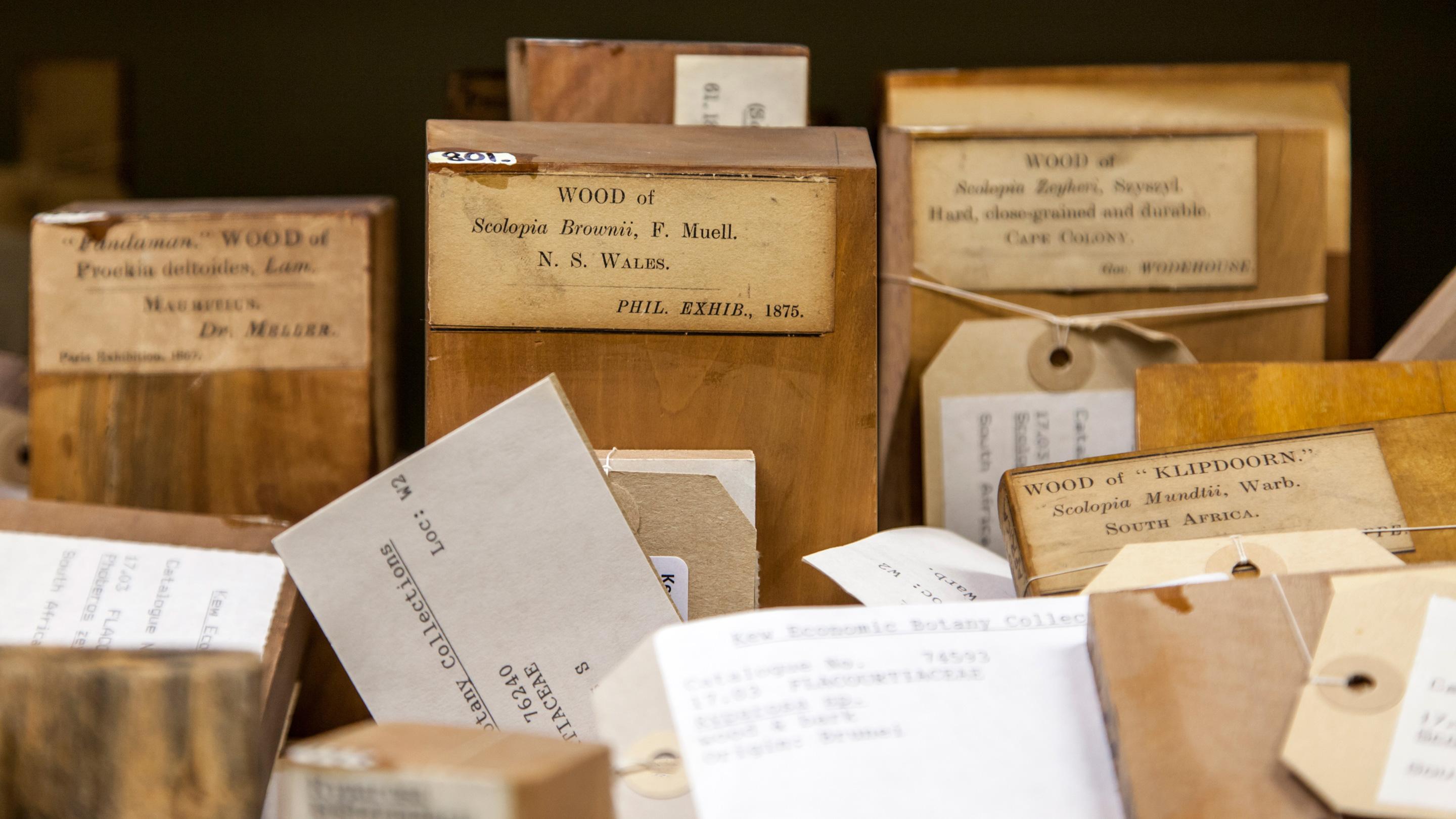
EcBotWoodColln_IMG_5764_hero_web.jpg

Economic botany wood collection samples

The Mobile Museum Project.

In parallel with this research and outreach, Kew’s Museum of Economic Botany has recently embarked on a project called The Mobile Museum: Economic Botany in Circulation. This is, in effect, where the Royal Botanic Gardens Kew, Library, Art & Archives and Biodiversity Heritage Library comes in.

As part of the Mobile Museum project, Kew is digitising and making available online through BHL the Collection’s “Entry and Exit books”. These huge tomes each consist of thousands of entries made by Kew staff over the years, listing every specimen either sent out from or sent in to the Museum of Economic Botany from 1847 right up to the present day. Each book is in the process of being scanned and uploaded to BHL, and the project team, including a number of dedicated volunteers, are working hard to transcribe each page so that there will be both a physical and digital record of these unique and invaluable logbooks. This data transcription is initially being entered into searchable Excel spreadsheets, which will then be transferred into an Access database and raw data files from this will be available to download from the project website.

The existing Kew Economic Botany Database will also be enhanced, with all objects located in other institutions being added. This will mean that interested parties will soon be able to search not just for objects currently in the collection, but also objects that were once at Kew and are now housed elsewhere.

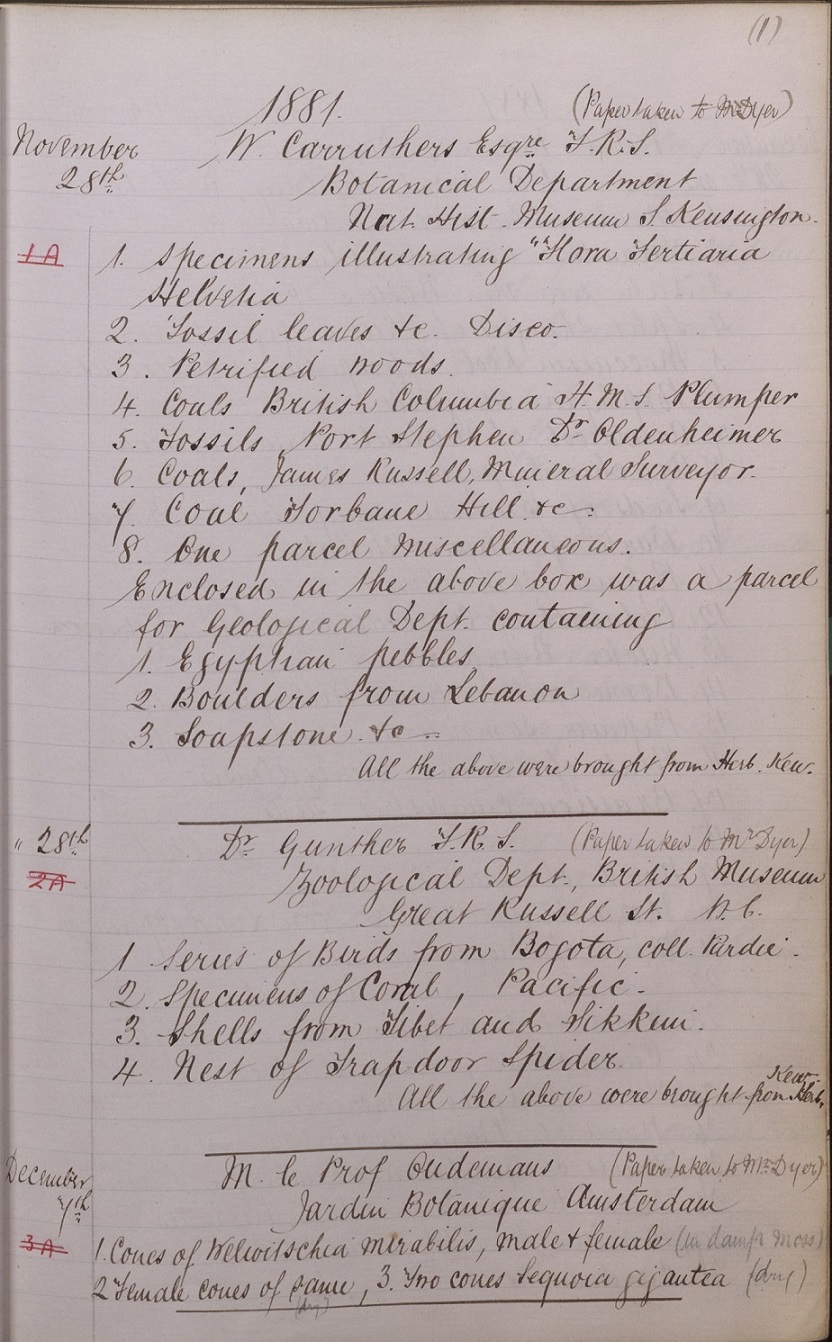
The first of these books, which is now freely available on BHL, is entitled “Specimens Distributed” and spans from 1881 to 1901. It is a fascinating continuous record of specimens, materials and artefacts that were sent from Kew to over 1000 institutions worldwide, including other botanic gardens, schools and universities and local museums.

SpecimensDistributed1881-1901_0057.jpg

The first page of records for Specimens Distributed, which includes entries for “fossil leaves” and “petrified woods”

Specimens distributed.

The first thing that I noticed when researching this blog, as I skimmed through the hundreds of pages of handwritten entries, was just how many plant parts the Museum of Economic Botany held. On first thought, you may think of a few important parts of a plant that could be held in this sort of collection – bark, petals, seeds, stems or similar. But what struck me was the sheer scope of plants and all their various facets that were collected – resins, gums, fibers, bulbs, fruits, roots, pods, pulps, rubbers, even galls (a kind of benign growth on the external tissue of some plants, usually a reaction to parasites or bacteria).

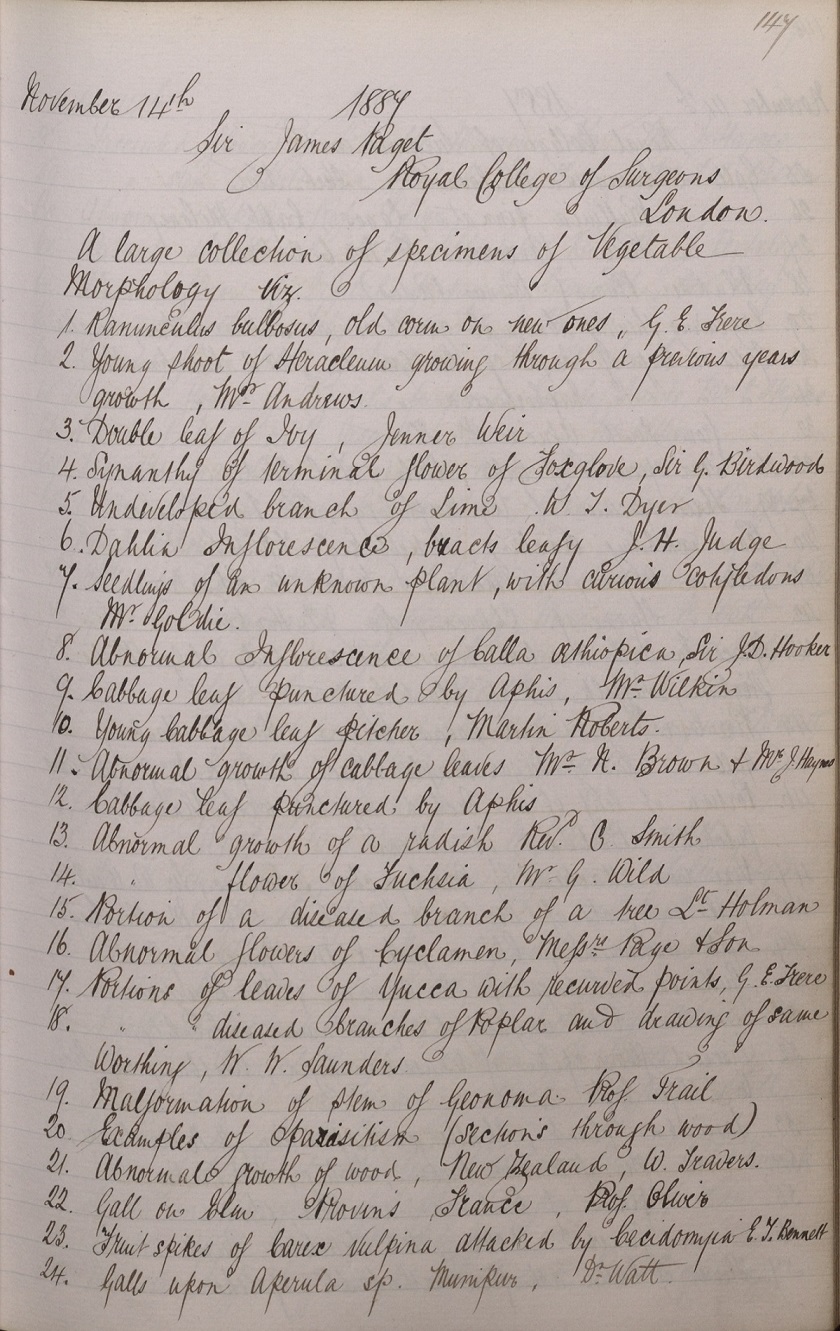
As I browsed the book, I became engrossed in 6 pages in particular entitled November 14th 1887 – Sir James Paget, Royal College of Surgeons – A large collection of specimens of vegetable morphology.

SpecimensDistributed1881-1901_0203.jpg

Page 147 of Specimens Distributed, showing the beginning of the distribution list for Sir James Paget at the Royal College of Surgeons

Sir James Paget.

As I looked over these pages, I noticed that words such as “undeveloped”, “abnormal” and “malformation” were preceding plant names or plant parts. It occurred to me that the plants being described had possibly been collected due to their interesting morphological or biological anomalies – and they were being sent out, maybe for further investigation, to Sir James Paget at the Royal College of Surgeons. This name rang a vague bell, so I did a little research.

Sir James Paget is considered one of the most outstanding medical researchers of the 19th century and is known as the father of British pathology. He described diseases including Paget’s disease of the bone and Paget’s disease of the nipple, and throughout his career he stressed how vital science research was for medical practise.

Interestingly, Paget was a close friend of Charles Darwin, who helped his medical research by sharing thoughts and musings. Darwin also sent Paget books, including a book that he wrote on earthworms, prompting this response from Paget: “It seems to me the best that ever you have written in showing the splendid and great truths that may be found in common things”.

Sir-James-Paget.jpg

Sir James Paget, the father of British pathology (Credit: The Paget’s Association)

The next chapter.

As part of the Mobile Museum Project, Kew are also in the process of digitising the Museum of Economic Botany’s “School Letter Books”. These are logbooks containing hundreds of letters of correspondence between the Museum of Economic Botany and schools across the UK – the first book spanning from 1877 – 1894. These letters are mainly requests from teachers and lecturers who asked Kew for educational objects and samples, either to use as teaching aids or to help establish their own small collections.

The Economic Botany Collection at Kew has a rich and varied history that spans over three centuries. By making these unique books available online through BHL, we hope that more people can make use of the fascinating information held within them that has been so meticulously recorded throughout the years.


April 26, 2018by Joel Richard
Blog Reel, Featured Books

John Forbes Royle: Materia Medica and Economic Botany

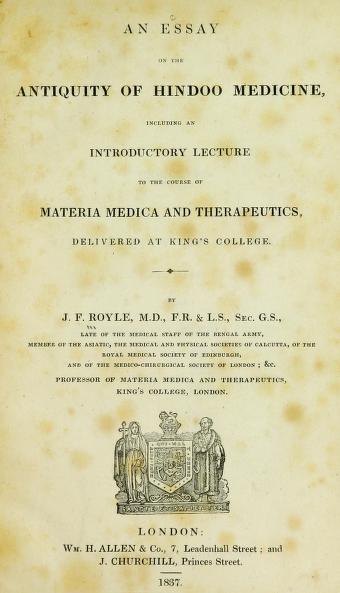
As part of the Expanding Access to Biodiversity Literature project, an interesting title was added to BHL from Yale University’s Harvey Cushing/John Hay Whitney Medical Library and the online Medical Heritage Library: An essay on the antiquity of Hindoo medicine, including an introductory lecture to the course of materia medica and therapeutics, delivered at King’s College, by physician-botanist John Forbes Royle.

Title page of An essay on the antiquity of Hindoo medicine, including an introductory lecture to the course of materia medica and therapeutics, delivered at King’s College, by Royle, J. Forbes (John Forbes), 1799-1858. London, Allen, 1837. Digitized by Yale University via the Medical Heritage Library. http://s.si.edu/2mtstTx.

This work from 1837 documents the materia medica (pharmacology) of India, and explores the historical exchange of medicinal knowledge between cultural groups of India, Arabia, Persia, Greece and China. Including details in botany, ecology, minerology and astronomy, it’s an intriguing interdisciplinary resource that can also be read for insights on its Western author and this period in time.

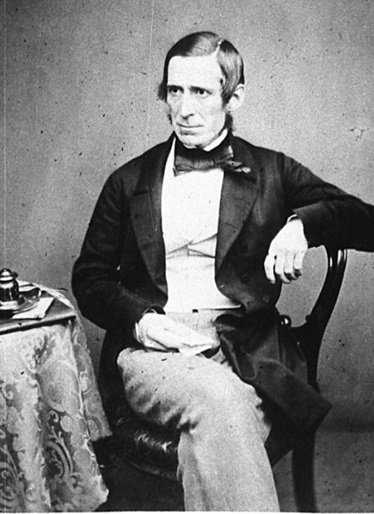
John Forbes Royle (1798-1858) traded his plan to join the British army for an unexpected interest in natural history. He was born at Kanpur, India, and would return to India after attending Edinburgh High School and the East India Company’s military academy at Addiscombe. Inspired by the mentorship of physician Anthony Todd Thomson, Royle chose to pursue medicine as a means to further his study of botany. He became an assistant surgeon with the East India Company, and in the following years worked at several locations across northern India, where he studied medicines from bazaars, employed collectors to amass a collection of economic plants, and became superintendent of the garden at Saharanpur. He earned the titles of MD in 1833 and Professor of Materia Medica at King’s College, London, in 1836.

An excerpt from Essay on the antiquity of Hindoo medicine demonstrates Royle’s interconnected thinking on medicine:

“There are, however, two branches of this extensive science [botany], respecting which I am desirous of making a few observations; one is the connexion between the Structure and Natural affinities of plants, and their Physical and Medical properties; and the other is the Geographical distribution, especially as connected with Climate. Both are important subjects, whether we consider them in a scientific or a practical point of view. The one teaches us the laws which influence the distribution of plants; points out the countries and climates which different families affect; and gives us principles for their cultivation, either as medicines, or as objects of agriculture: the other is no less valuable in affording us innumerable indications in every part of the world, for discovering the properties of new and unknown plants, whether as fitting them for food, for medicine, or for any of the arts of life[.]” [Royle, p. 3]

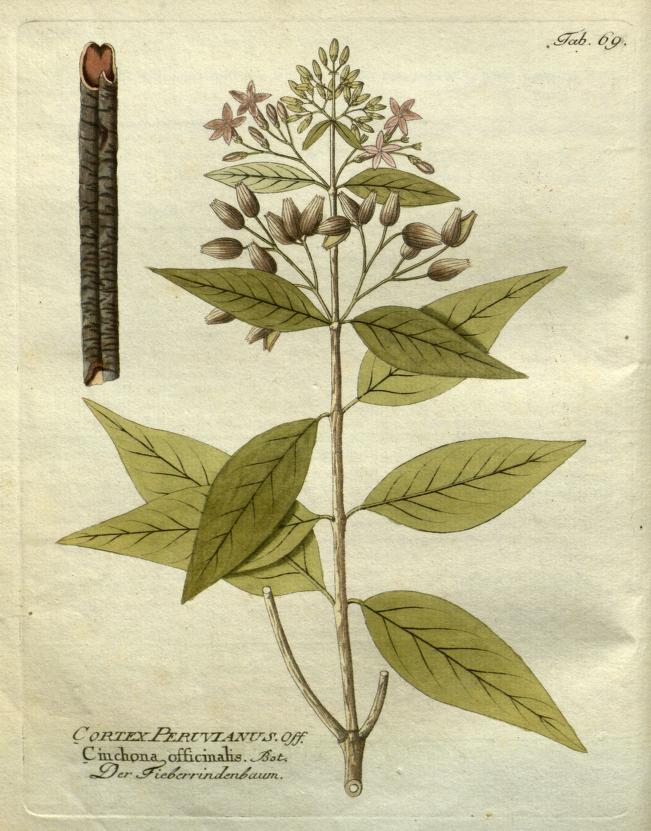
Cinchona, a South American genus. Its bark contains medicinal compounds including quinine, used to treat malaria. Royle recommended that Cinchona be grown in India. Image from BHL book: Icones plantarum medico-oeconomico-technologicarum cum earum fructus ususque descriptione. Wien:herausgegeben von Ignatz Albrecht und verlegt bey Phil. Jos. Schalbaecher, [1800]-1822. Digitized by Missouri Botanical Garden. http://s.si.edu/2iiHgMh.


Cushing/Whitney Medical Library of Yale University

The copy of Royle’s text in BHL belonged to Edward Salisbury, a Yale graduate and professor who encouraged scholarship on West and South Asia. Salisbury donated his “Oriental Library,” a collection of hundreds of rare and early printed books and manuscripts, to the college in 1870. Salisbury’s Oriental Library is foundational to what is now the third-largest collection of Islamic manuscripts in the United States. Last year, Yale celebrated Salisbury’s 175th anniversary as the first professor of Arabic and Sanskrit languages and literature in the Americas.

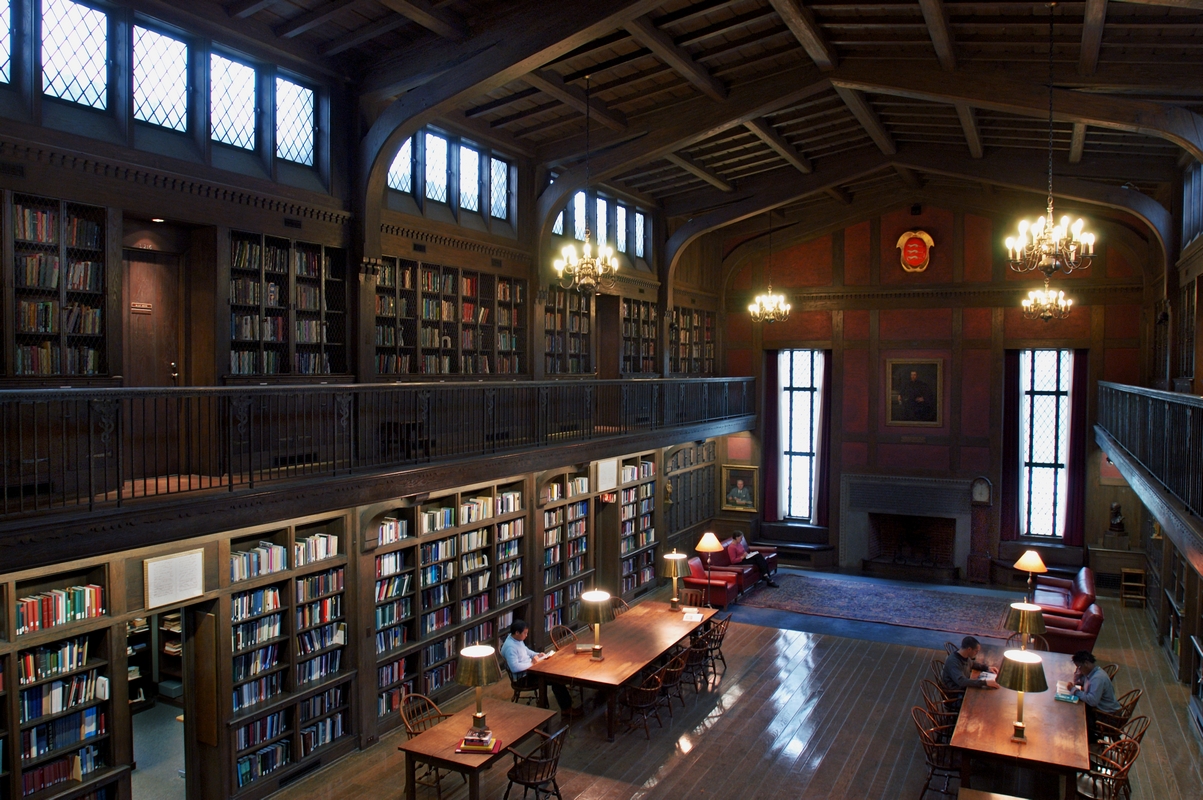
Essay on the antiquity of Hindoo medicine is now held at the Medical Historical Library of the Cushing/Whitney Medical Library. The library was named for Yale graduates Harvey Cushing, known as the father of neurosurgery, and John Hay Whitney, Herald Tribune editor and patron of the arts. In 1935, Cushing and two other physicians, John F. Fulton and Arnold C. Klebs, donated their personal collections of medical texts to the medical library, beginning its Medical Historical Library. Its collections include materials ranging from the 16th to 20th century, with works from Robert Boyle, Galen, William Harvey, Hippocrates, and Andreas Vesalius. Additionally, the Historical Library also holds prints, a collection of weights and measures, and presents rotating exhibits.

The Cushing/Whitney Library is also home to the Cushing Center, a room in the stacks transformed to display the medical specimens of Cushing’s Brain Tumor Registry. Cushing meticulously documented over 2,200 case studies as he pioneered the field of neurosurgery, and his registry includes specimens preserved from human surgeries and autopsies as well as notes, journal excerpts, photos and negatives.

Harvey Cushing/John Hay Whitney Medical Library Historical Library. Frank Poole, 2004.


Medical Heritage Library

The Medical Heritage Library (MHL) is an online collection of materials that are free and openly accessible through the Internet Archive. Royle’s Essay on antiquity of Hindoo medicine came to BHL via the MHL.

Much like BHL, the MHL is a collaborative effort by medical libraries to promote access to resources (such as rare books, pamphlets, journals and films) that are useful across a spectrum of disciplines. The collection includes over 200,000 titles with fascinating variety – skimming the landing page, one can find herbals, medical dictionaries and papers, as well as video clips of 1960s tobacco commercials and Helen Keller’s autobiography.

The Medical Heritage Library was launched in 2010 by founders The Augustus C. Long Health Sciences Library at Columbia University and Columbia University Libraries/Information Services; The College of Physicians of Philadelphia; The Cushing/Whitney Medical Library at Yale University; The Francis A. Countway Library of Medicine at Harvard University; U.S. National Library of Medicine; and Wellcome Library in London, UK. (For more information about its content contributors, funding and support, please see MHL’s ‘About’ page.)

An essay on the antiquity of Hindoo Medicine is a welcome addition to BHL’s collection of works by John Forbes Royle, which include:

  • Illustrations of the botany and other branches of the natural history of the Himalayan Mountains: and of the flora of Cashmere. London: Wm. H. Allen, 1839. (Digitized by Missouri Botanical Garden)
  • On the culture and commerce of cotton in India and elsewhere; with an account of the experiments made by the Hon. East India Company up to the present time. London: Smith, Elder, 1851. (Digitized by the University of British Columbia Library)
  • The fibrous plants of India, fitted for cordage, clothing, and paper. With an account of the cultivation and preparation of flax, hemp, and their substitutes. London, Smith, Elder, and Co.; 1855. (Digitized by Cornell University Library)
  • A manual of materia medica and therapeutics including the preparations of the pharmacopoeias of London, Edinburgh, and Dublin, with other approved medicines. London: John Churchill, MDCCCLVI [1856]. (Digitized by King’s College London, Foyle Special Collections Library)

Thanks to Melissa Grafe, Ph.D, Head of the Medical Historical Library and John R. Bumstead Librarian for Medical History, who shared how this volume came to the Medical Historical Library.

Sources

  • About (n.d.) Retrieved from http://archive.org/details/medicalheritagelibrary&tab;=about.
  • About (n.d.) Retrieved from http://www.medicalheritage.org/about/.
  • About (n.d) Retrieved from https://salisbury175.yale.edu/about.
  • Harvey Cushing and the Cushing Center (n.d.) Retrieved from http://library.medicine.yale.edu/cushingcenter/history.
  • History of the Library (n.d.) Retrieved from http://library.medicine.yale.edu/about/history.
  • Royle, John Forbes (1837). London, Allen. Retrieved from https://www.biodiversitylibrary.org/item/199214.
  • Woodward, B. B. “Royle, John Forbes (1798–1858).” Rev. Mark Harrison. Oxford Dictionary of National Biography. Ed. H. C. G. Matthew and Brian Harrison. Oxford: OUP, 2004. Online ed. Ed. David Cannadine. May 2010. Retrieved from http://www.oxforddnb.com/view/article/24239.
November 16, 2017by ulib-libraryjobs

Help Support BHL

BHL's existence depends on the financial support of its patrons. Help us keep this free resource alive!

search

About BHL

The Biodiversity Heritage Library (BHL) is the world’s largest open access digital library for biodiversity literature and archives. BHL operates as a worldwide consortium of natural history, botanical, research, and national libraries working together to digitize the natural history literature held in their collections and make it freely available for open access as part of a global “biodiversity community.”

Join Our Mailing List

Sign up to receive the latest news, content highlights, and promotions.

Subscribe Now

Subscribe to Blog via Email

Enter your email address to subscribe to this blog and receive notifications of new posts by email.

Join 319 other subscribers

Subscribe to Blog Via RSS

Subscribe to the blog RSS feed to stay up-to-date on all the latest BHL posts.

Access RSS Feed

Inspiring Discovery through Free Access to Biodiversity Knowledge.

The Biodiversity Heritage Library makes it easier than ever for you to access the information you need to study and explore life on Earth…for free, anytime, anywhere.


64+ Million Pages of
Biodiversity Literature Online.

EXPLORE

Tools and Services
to Transform Research.

EXPLORE

300,000+
Illustrations on Flickr.

EXPLORE

ABOUT | HARMFUL CONTENT | PRIVACY | SITE MAP | TERMS OF USE