Biodiversity Heritage Library - Program news and collection highlights from BHL
  • Home
  • News
  • Featured Books
    • All Featured Books
    • Book of the Month Series
    • BHL at 20
  • User Stories
  • Campaigns
    • Fossil Stories
    • Garden Stories
    • Monsters Are Real
    • Page Frights
    • Her Natural History
    • Earth Optimism 2020
  • Tech Blog
  • Visit BHL
Home
News
Featured Books
    All Featured Books
    Book of the Month Series
    BHL at 20
User Stories
Campaigns
    Fossil Stories
    Garden Stories
    Monsters Are Real
    Page Frights
    Her Natural History
    Earth Optimism 2020
Tech Blog
Visit BHL
  • Home
  • News
  • Featured Books
    • All Featured Books
    • Book of the Month Series
    • BHL at 20
  • User Stories
  • Campaigns
    • Fossil Stories
    • Garden Stories
    • Monsters Are Real
    • Page Frights
    • Her Natural History
    • Earth Optimism 2020
  • Tech Blog
  • Visit BHL
Biodiversity Heritage Library - Program news and collection highlights from BHL
Blog Reel, Featured Books

Plant Trade and Medicinal Plants in Asia

Three separate black and white images of medicinal plants found in Pakistan

Plant species worldwide face an increasing barrage of threats to their survival. The deliberate collection of rare plants poses a far greater threat to wild plant species. In Wild Plants in Trade (1992), the reasons and effects of wild collection on plants for cultivation and international trade can be found. The trade of orchids, bulbs, cycads, palms and tree ferns, cacti and other succulent plants, carnivorous plants and air plants were introduced in detail in the second half of this book, as well as the attempts to control the collection of these plants by the Convention on International Trade in Endangered Species of Wild Fauna and Flora (CITES) and governments.
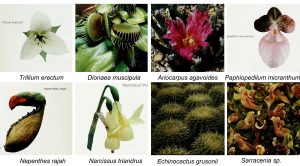
Eight wild plants commonly used in trade

Pictures of some wild plants in trade. Jenkins, M., & Oldfield, S. Wild Plants in Trade. 1992. Contributed in BHL from UNEP-WCMC, Cambridge. Rights Holder: TRAFFIC International

Forests are also an important source for plant trade. The dipterocarp forests of Southeast Asia are today the largest source of hardwoods in international trade, but they are likely to be logged over within a decade or two. India, Burma and Southeast Asia are rich centers of genetic variation in cultivated fruit trees. The scale of exploitation of the forests in the last few decades has led to serious forest degradation. In The Conservation Atlas of Tropical Forests: Asia and the Pacific (1991), tropical timber trade of Asia and the Pacific areas are discussed in detail, along with government policies and land-use planning. The International Tropical Timber Organization (ITTO) created in 1983 is largely concerned with improving market conditions and encouraging the development of national policies aimed at “maintain[ing] the ecological balance in the regions concerned”.
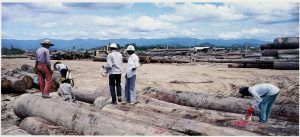
Six men measure and label large logs in a lumber yard

Men scaling or measuring logs in Kimanis, Sabah, Malaysia. Collins, M. N., Sayer, J. A., & Whitmore, T. C. (Eds.). The Conservation Atlas of Tropical Forests: Asia and the Pacific. 1991. Contributed in BHL from UNEP-WCMC, Cambridge. Rights Holder: IUCN

One of the important economic values of plants, especially herbal plants, is in medicine. Approximately 60,000 plant species are harvested mainly for medicinal usage in the world. Today, people in many Asian countries still use medicinal plants for traditional health care treatments. The World Health Organization (WHO) has also acknowledged the importance of traditional medicines.

The ethnobotany of southern Balochistan, Pakistan: with particular reference to medicinal plants (1992) collects two distinct types of ethnobotanical information: (1) plants used by nomads and village dwellers for nutritional, utilitarian, and medicinal purposes; and (2) plants prescribed and/or dispensed by herbalists or herbal doctors residing in population centers. The Latin binomial, relevant synonyms, field collection number, locality collected, local vernacular name(s), use(s), specifics of preparation(s) or treatment(s), and miscellaneous comments are provided for each species.
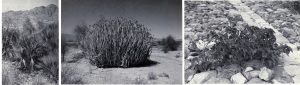
Three separate black and white images of medicinal plants found in Pakistan

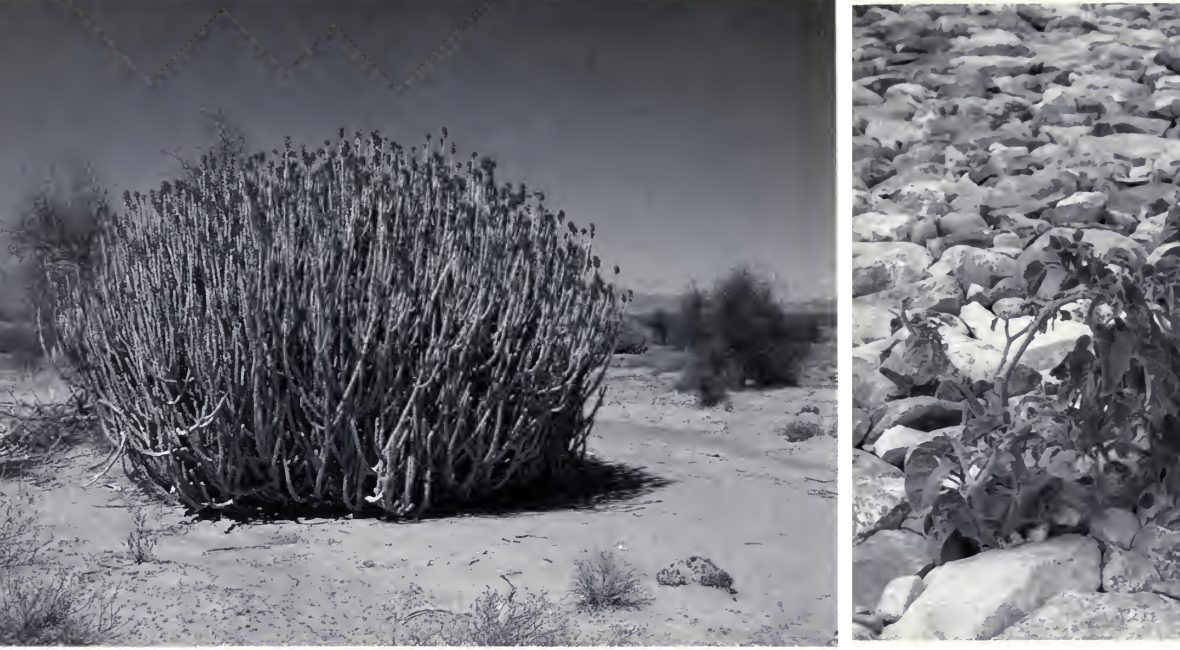
Some of the plants in southern Balochistan, Pakistan (left: Nannorhops ritchiana; middle: Euphorbia caducifolia, right: Datura innoxia). Goodman, S. M., & Ghafoor, A. The ethnobotany of southern Balochistan, Pakistan: with particular reference to medicinal plants. 1992. Contributed in BHL from University Library, University of Illinois Urbana Champaign. CC BY-NC-SA 3.0. Rights Holder: Field Museum of Natural History.

The medicinal plants of the Philippines (1901) describes the Philippines’ Dicotyledonous (including Polypetalous and Gamopetalous) and Monocotyledonous plants which have medicinal properties.

Ethnobotanical Use of Medicinal Plants by Inhabitants of Al-Mafraq, Jordan (2015) records and lists all medicinal plants that have shown therapeutic effects as analgesic/stimulant by the inhabitants of Al-Mafraq in the northern parts of Jordan during March 2011 to May 2013.

Taxonomy and Conservation of Medicinal Plants in Canal-Irrigated Areas of Punjab, Pakistan (2006) presents the taxonomic position of 131 medicinal plants belonging to 112 families and 52 genera from the canal-irrigated areas of Punjab. Some of the important families are Fabaceae (21 medicinal species), Apiaceae, Asteraceae, Lamiaceae, Solanaceae (6 species each), Cucurbitaceae, Malvaceae, and Poaceae (5 species each). The life form, parts used and pharmaceutical uses of these plants are also described.

Food and medicinal plants used for childbirth among Yunnanese Chinese in northern Thailand (2003) describes the folk knowledge of medicinal foods and plants used for childbirth care by Yunnanese Chinese in northern Thailand. More than 40 species of steam bath herbs were collected and identified. This paper also makes an initial ethnobotanical comparison with steam bath herbs among other ethnic groups in northern Thailand.
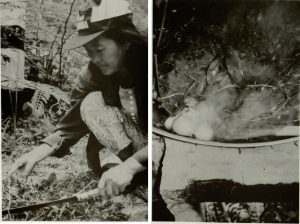
In two separate images, an Asian woman kneels with a large knife to collect medicinal plants; medicinal herbs are steamed with eggs to create a steam bath

Left: Woman collecting medicinal plants along the roadside in Chiang Mai, a Yunnanese village in Fang district. Right: Steam bath herbs being steamed with eggs in a pan. Liulan, W., Nanakorn, W., & Fukui, K. Food and medicinal plants used for childbirth among Yunnanese Chinese in northern Thailand. 2003. Contributed in BHL from Missouri Botanical Garden, Peter H. Raven Library. CC BY-NC-SA 3.0. Rights Holder: Society of Ethnobiology


References

Jenkins, M., & Oldfield, S. (1992). Wild plants in trade. TRAFFIC International. https://doi.org/10.5962/bhl.title.44938

Collins, M. N., Sayer, J. A., & Whitmore, T. C. (Eds.). (1991). The Conservation Atlas of Tropical Forests: Asia and the Pacific. Macmillan Press Ltd. https://doi.org/10.5962/bhl.title.44927

Goodman, S. M., & Ghafoor, A. (1992). The ethnobotany of southern Balochistan, Pakistan: with particular reference to medicinal plants. Field Museum of Natural History. https://doi.org/10.5962/bhl.title.2542

Pardo de Tavera, T. H. (1901). The medicinal plants of the Philippines. (J. B. Thomas, Jr., Trans.). P. Blakiston’s Son & Co. https://doi.org/10.5962/bhl.title.21044

Al-Quran, S. (2014). Ethnobotanical use of medicinal plants by inhabitants of Al-Mafraq, Jordan. Arnaldoa, 21(1), 119-126. https://www.biodiversitylibrary.org/page/46625105

Akbar, K. F., & Athar, M. (2006). Taxonomy and conservation of medicinal plants in canal-irrigated areas of Punjab, Pakistan. SIDA, contributions to botany, 22(1), 593-606. https://www.biodiversitylibrary.org/page/9182015

Liulan, W., Nanakorn, W., & Fukui, K. (2003). Food and medicinal plants used for childbirth among Yunnanese Chinese in northern Thailand. Journal of Ethnobiology, 23(2), 209-226. https://www.biodiversitylibrary.org/page/32740176
July 22, 2021by [email protected]
Blog Reel, Campaigns, Earth Optimism 2020

A Forest of Knowledge: Richard Evans Schultes and the Rise of Ethnobotany

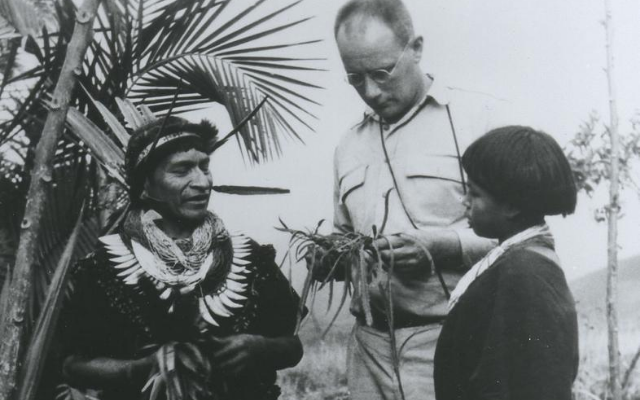
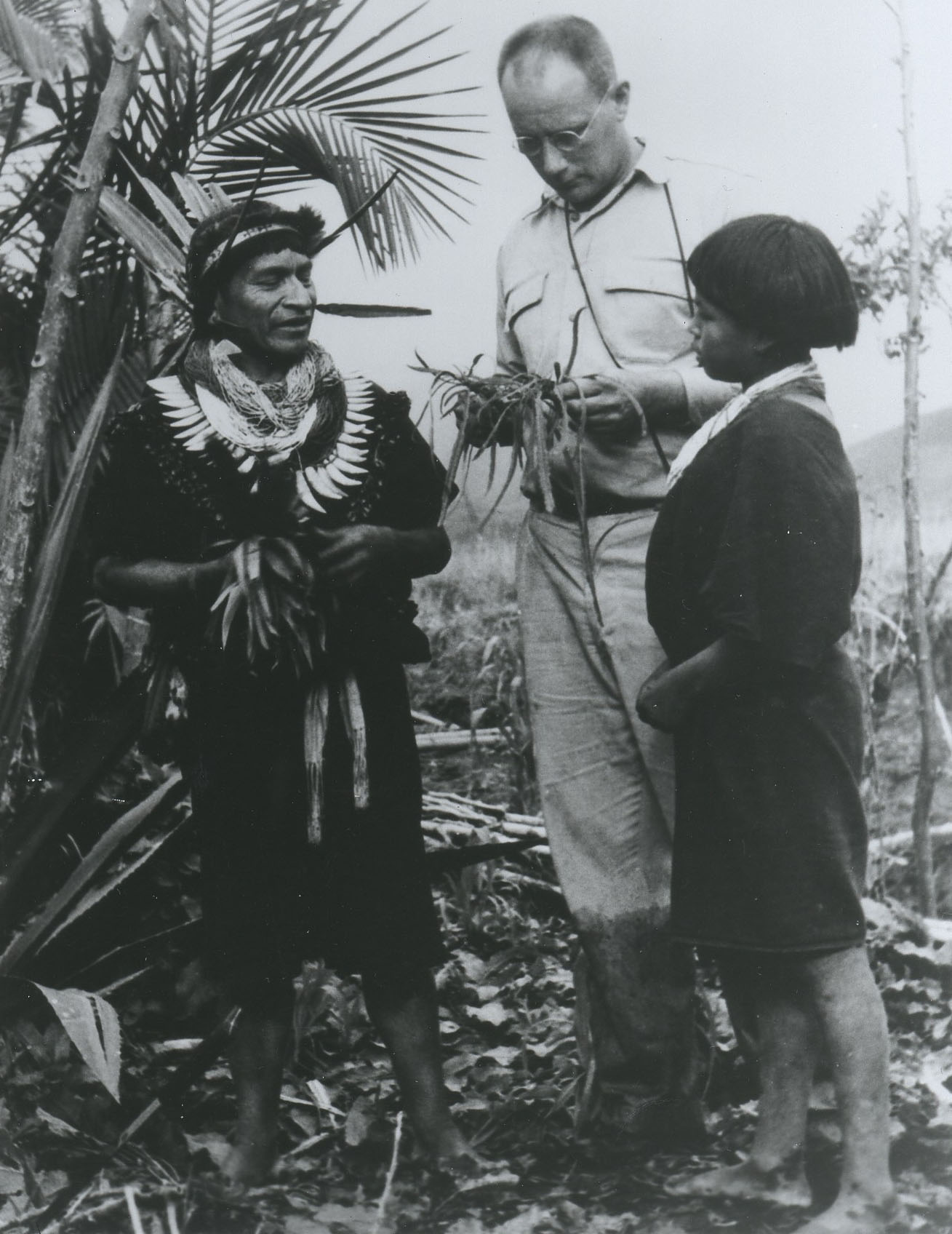
black and white photo of three people standing in a jungle looking at plant specimens

April 2020 marks the 50th anniversary of Earth Day. Organizations around the world have commemorated the occasion by participating in the global Earth Optimism movement — an initiative spearheaded by the Smithsonian to “turn the conservation conversation from doom and gloom to optimism and opportunity”.

Throughout 2020, the Biodiversity Heritage Library (BHL) and our partners are joining the movement by sharing conservation success stories from and made possible by the BHL collection. Follow our blog for conservation stories — past and present — and visit our website for more information and to explore our Earth Optimism book collection.

———————

black and white photo of three people standing in a forest looking at plant specimens

Richard Evans Schultes (center) with Salvador Chindoy (left), a renowned Kamëntsá healer from Sibundoy Valley of Colombia. The identity of the individual on the right is not recorded. The year of the photo is unknown, but is likely in the 1940s based on Schultes’ age. Photo courtesy of the Archives of the Economic Botany Library of Oakes Ames, Harvard University.

The conservation movement today encompasses more than the physical management of habitat to preserve plants and animals. Richard Evans Schultes (1915-2001) epitomized the modern conservationist by coupling his taxonomic work on plants with research on the botanical knowledge and culture of local people. Known as the “father of ethnobotany”, Schultes spent almost fourteen years deep within the rainforests of the Amazon learning from multiple Indigenous tribes about their languages, medicines, and relationships to plants.

“Richard Evans Schultes was an extraordinary ethnobotanist who devoted a large part of his professional life to studying the flora of the Amazon as well as of Asia and Europe,” says Felipe Cárdenas-Arroyo, a Colombian archaeologist researching Schultes. “For him, forests are like great libraries where knowledge is stored and available for those willing to read it. He admired and respected the Amazonian Natives because they know how to read in this library and have been its keepers for centuries. Burning down the Amazon rainforest to make room for cattle is like burning down a library to make room for a parking lot, and Schultes feared that with today’s rate of destruction ‘climax forests will turn into scrub vegetation,’ never to regain their original state” [1].

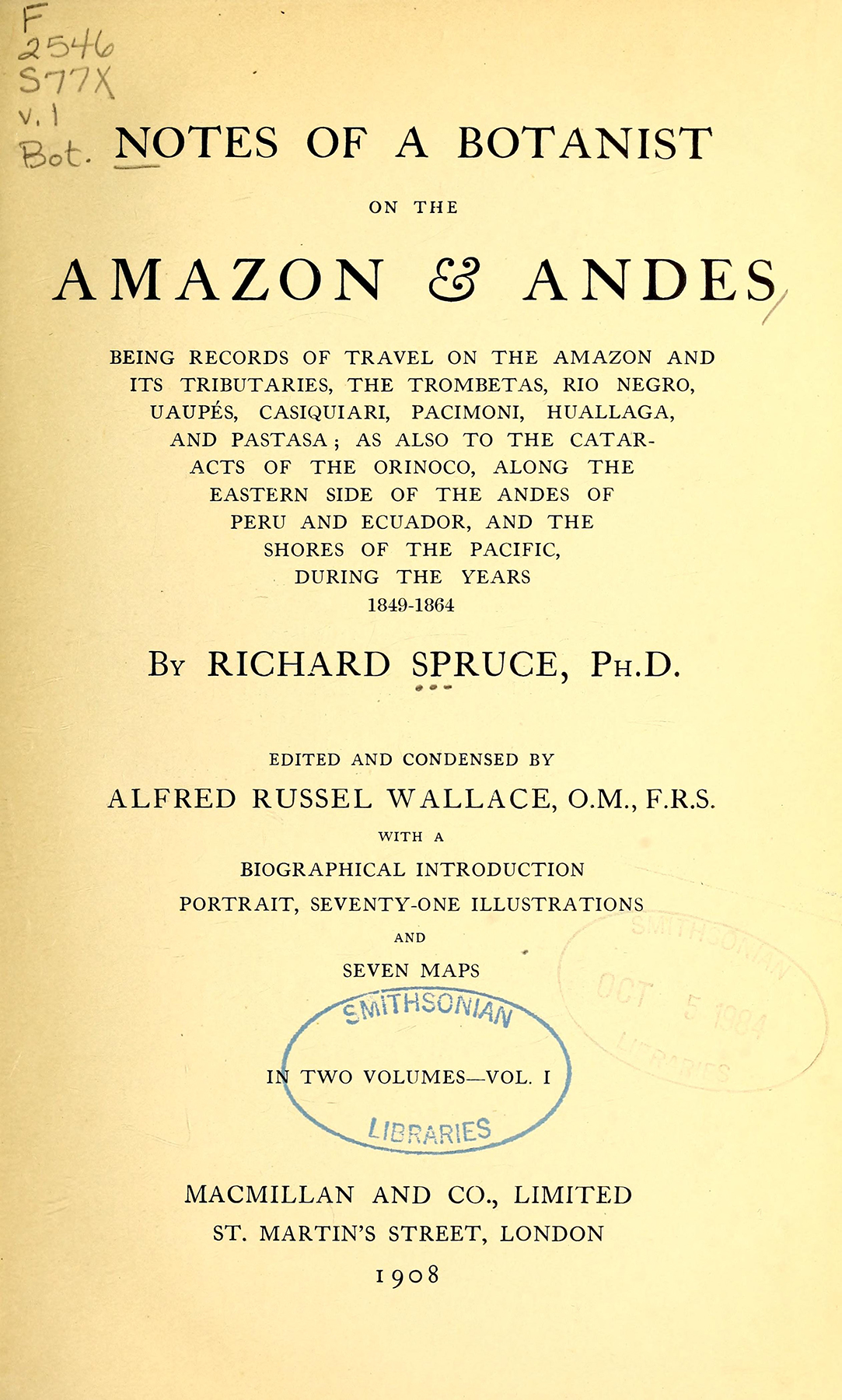
Schultes was inspired as a youth to pursue botanical research in remote areas by the book Notes of a Botanist on the Amazon & Andes by the botanist Richard Spruce.

title page of "notes of a botanist on the amazon & andes"

Title Page. Spruce, Richard. Notes of a botanist on the Amazon & Andes. v. 1 (1908). Contributed in BHL from Smithsonian Libraries.

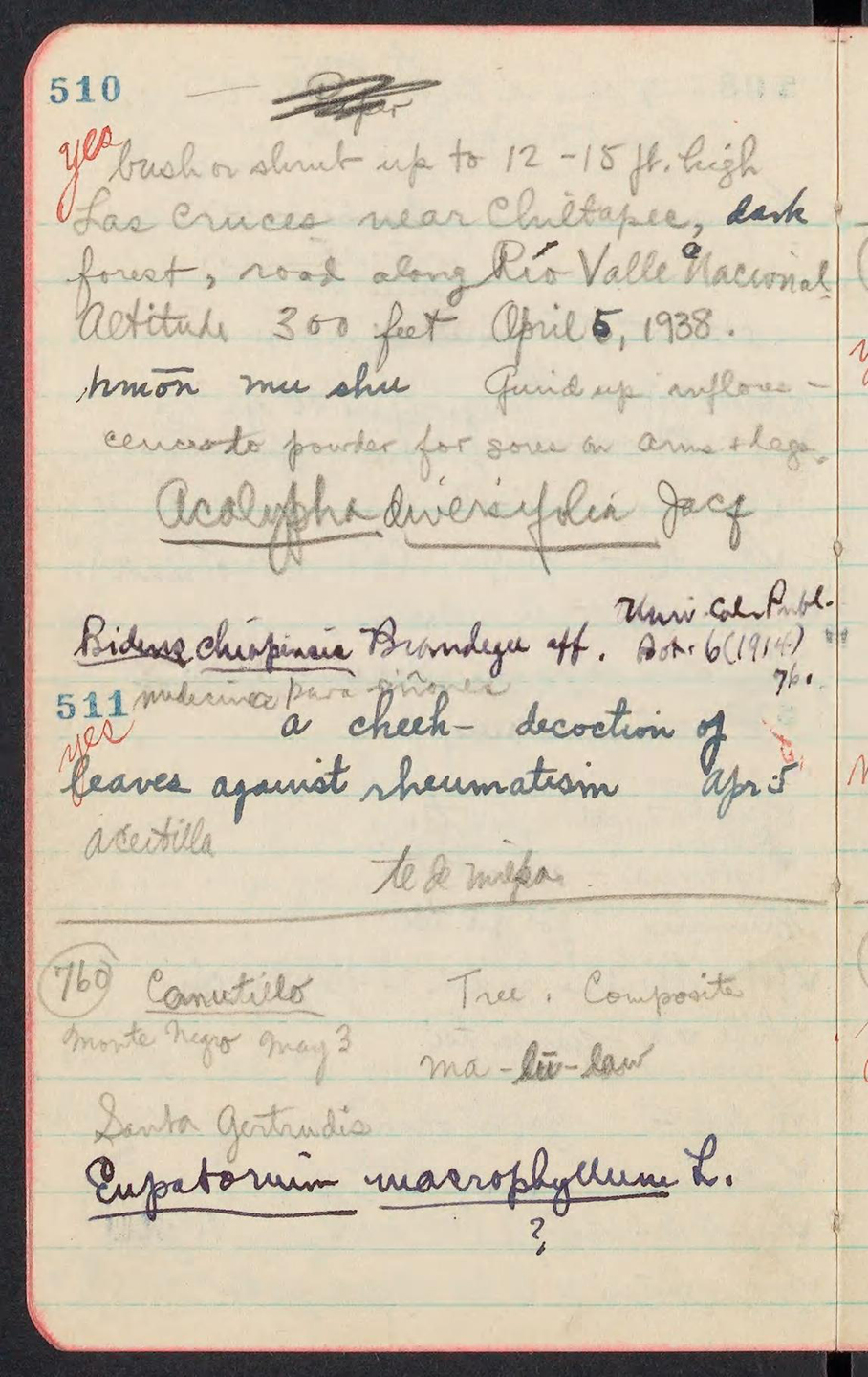
Schultes’s early research focused on peyote in the American Southwest and intoxicating mushrooms in southern Mexico. He collected specimens, identified species, and recorded local knowledge of medicinal uses and experiences.

page from a handwritten notebook

Page 10. Schultes, Richard Evans. Field notebook : Mexico, 1938. Contributed in BHL from Harvard University Botany Libraries.

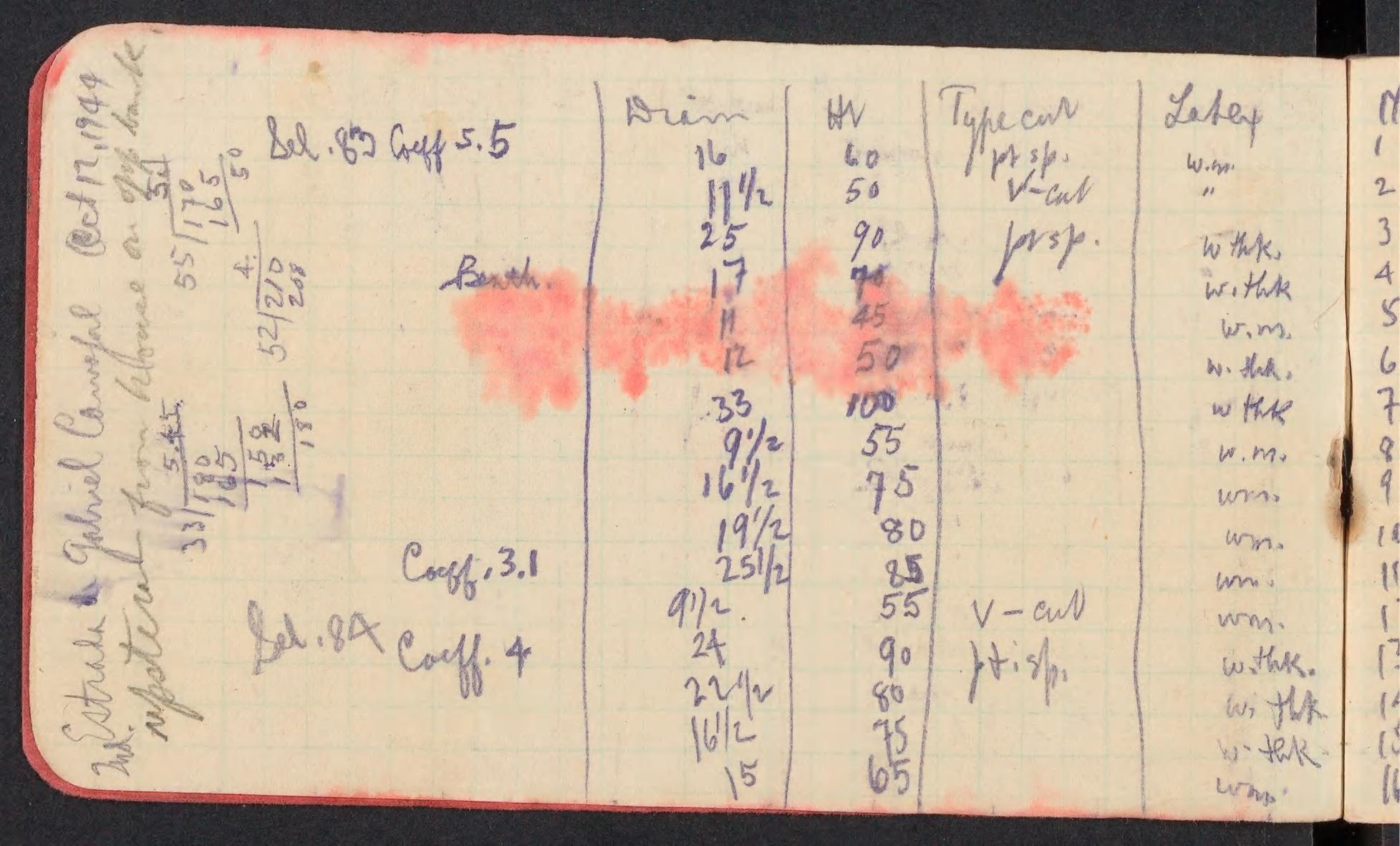
After receiving his doctorate from Harvard University in 1941, Schultes began research on curare in the Amazon with the help of a 10-month travel grant from the National Research Council. He took the opportunity to collect specimens of many plants and discuss local uses with Indigenous communities.

He was in the field when the United States entered World War II and immediately joined the war effort. He was told to remain in the Amazon to try to find sources of much-needed rubber for the Allied Forces. He continued to work for the United States Department of Agriculture for the next twelve years, collecting approximately 3,500 specimens of the Hevea rubber tree. During his career in the Amazon, Schultes would collect over 24,000 botanical specimens.

page from a handwritten notebook

Pages 2-3. Schultes, Richard Evans. Hevea yield notebook : Colombia, 1944. Contributed in BHL from Harvard University Botany Libraries.

Schultes returned to New England in 1953 and became the curator of the Oakes Ames Orchid Herbarium at Harvard University. He continued to travel extensively to the Amazon while holding a number of positions at the Harvard University Botanical Museum and was a Harvard faculty member until his retirement as Professor Emeritus in 1985.

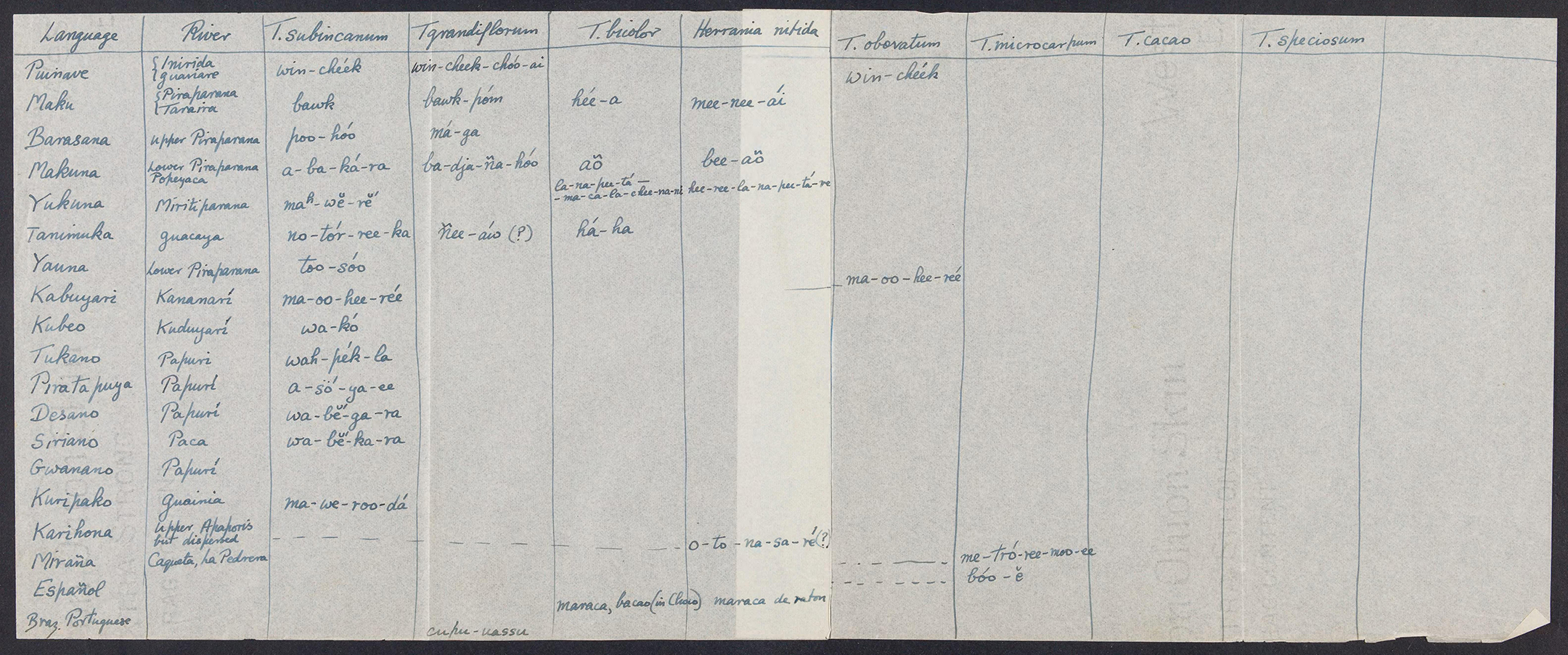
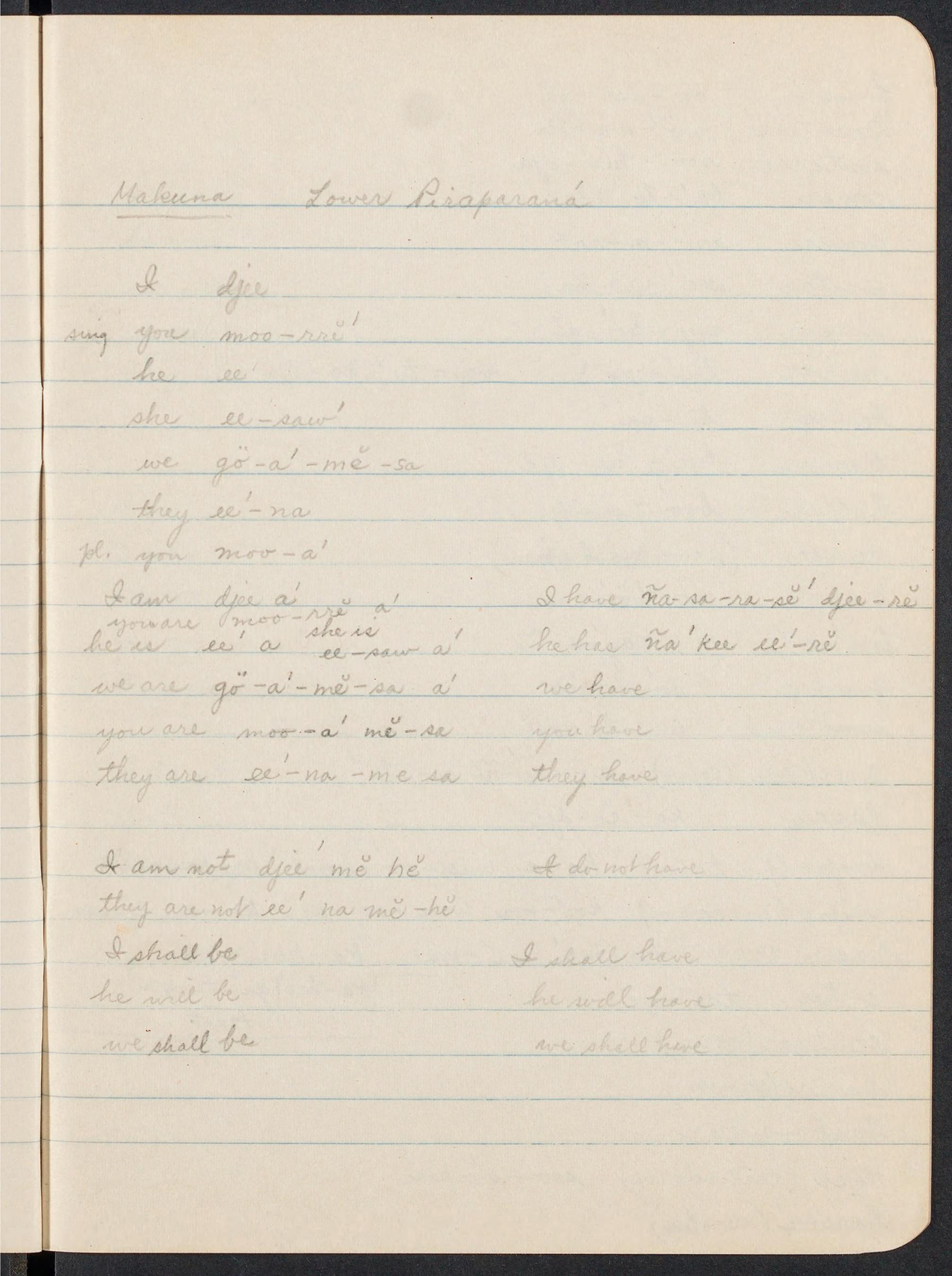
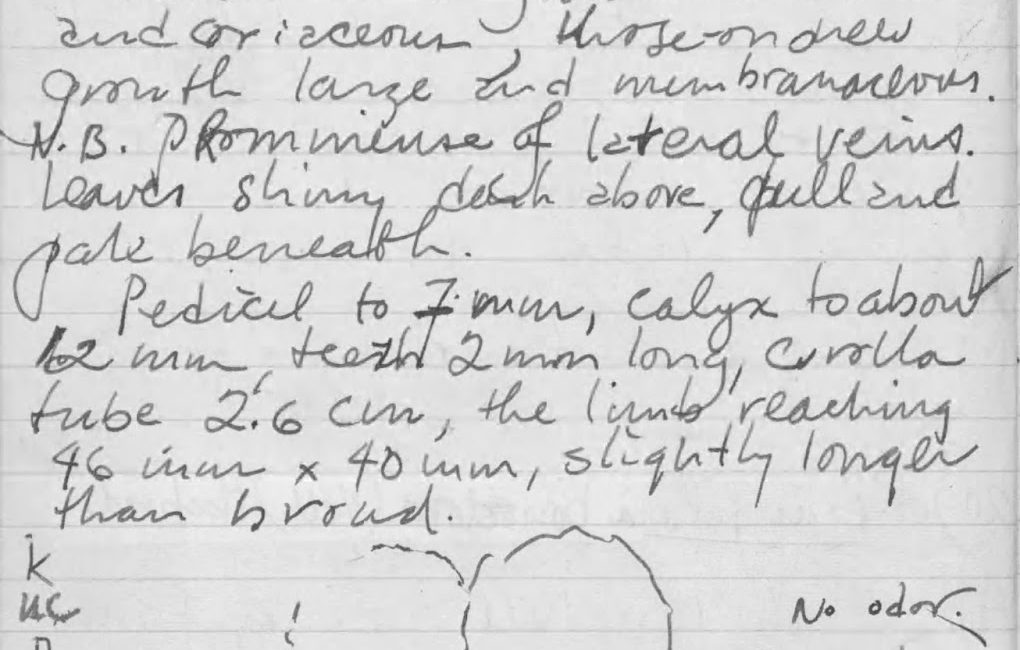
Schultes himself defined ethnobotany as “the complete registration of the uses of and concepts about plant life in primitive societies… comprising aspects of botany, anthropology, archeology, plant chemistry, pharmacology, history, geography, and sundry other tangential fields of the sciences and arts” (Kahn, 1992). His notebooks demonstrate his commitment to documenting knowledge beyond biology. Indigenous languages are captured on the pages, including place names and common words.

page from a handwritten notebook

List of rivers and plants in several local languages. Schultes, Richard Evans. Field notebook : Colombia, 1952. Contributed in BHL from Harvard University Botany Libraries.

page from a handwritten notebook

Common phrases. Schultes, Richard Evans. Field notebook : Colombia, 1952 February-March. Contributed in BHL from Harvard University Botany Libraries.

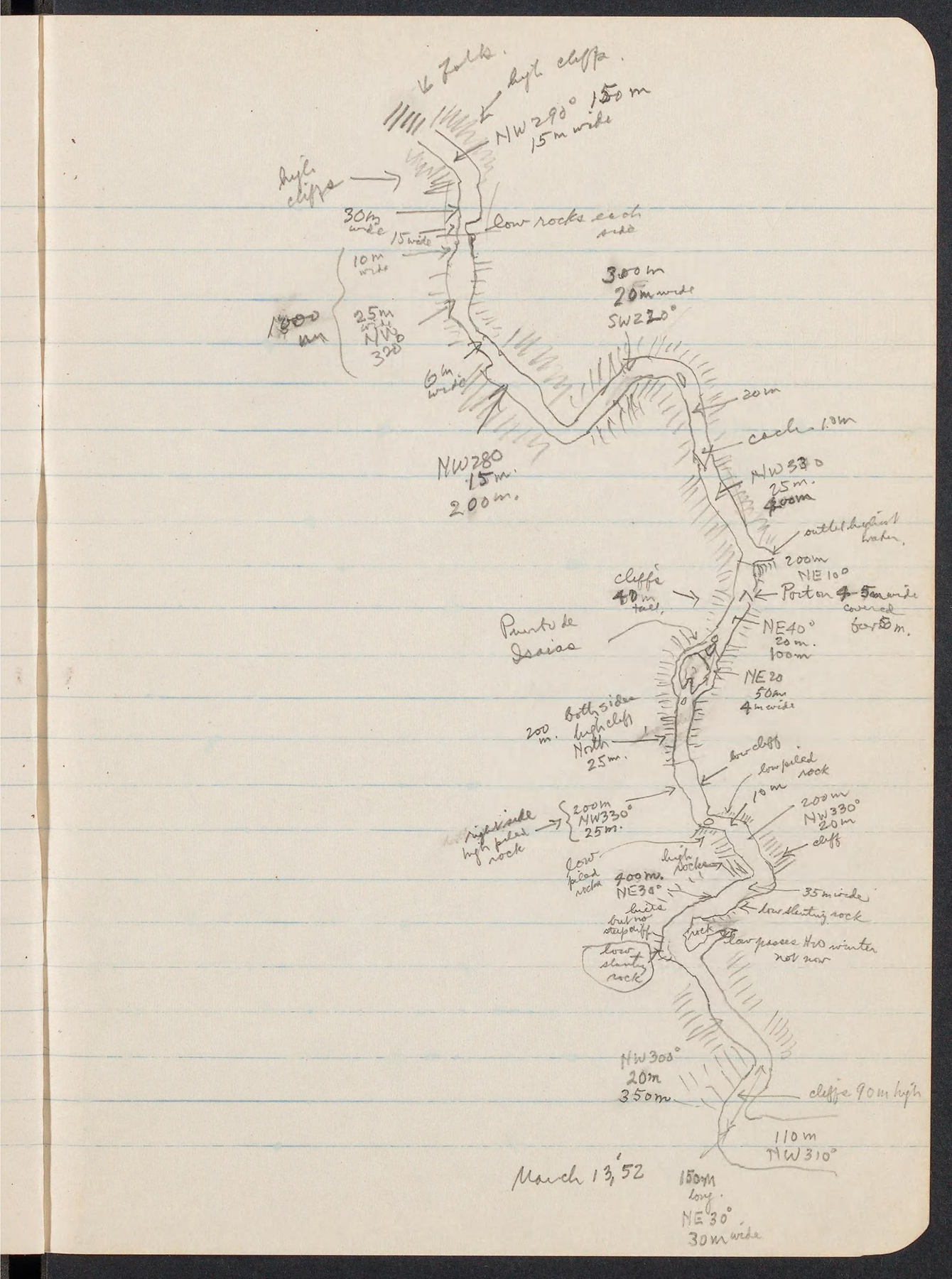
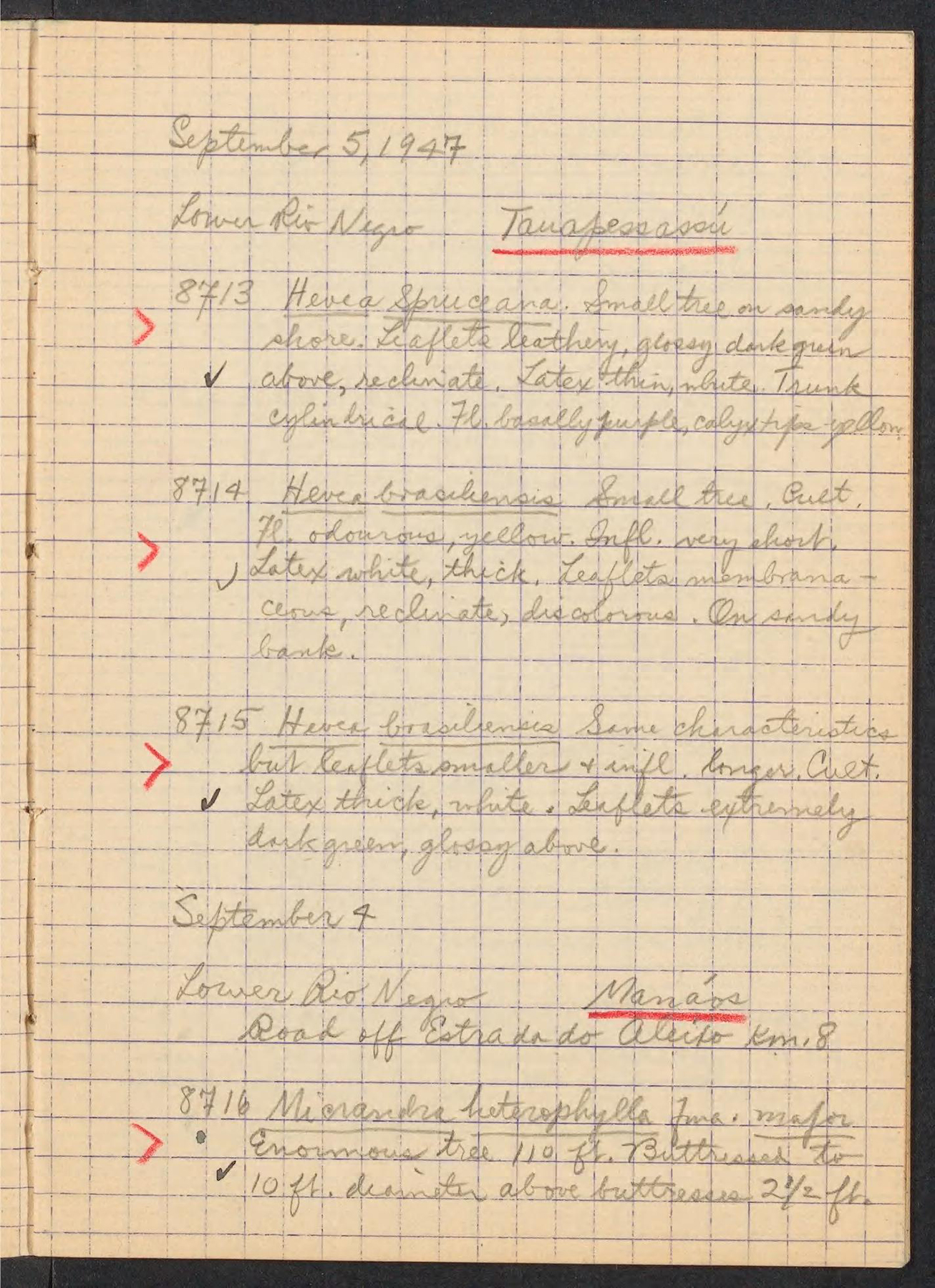
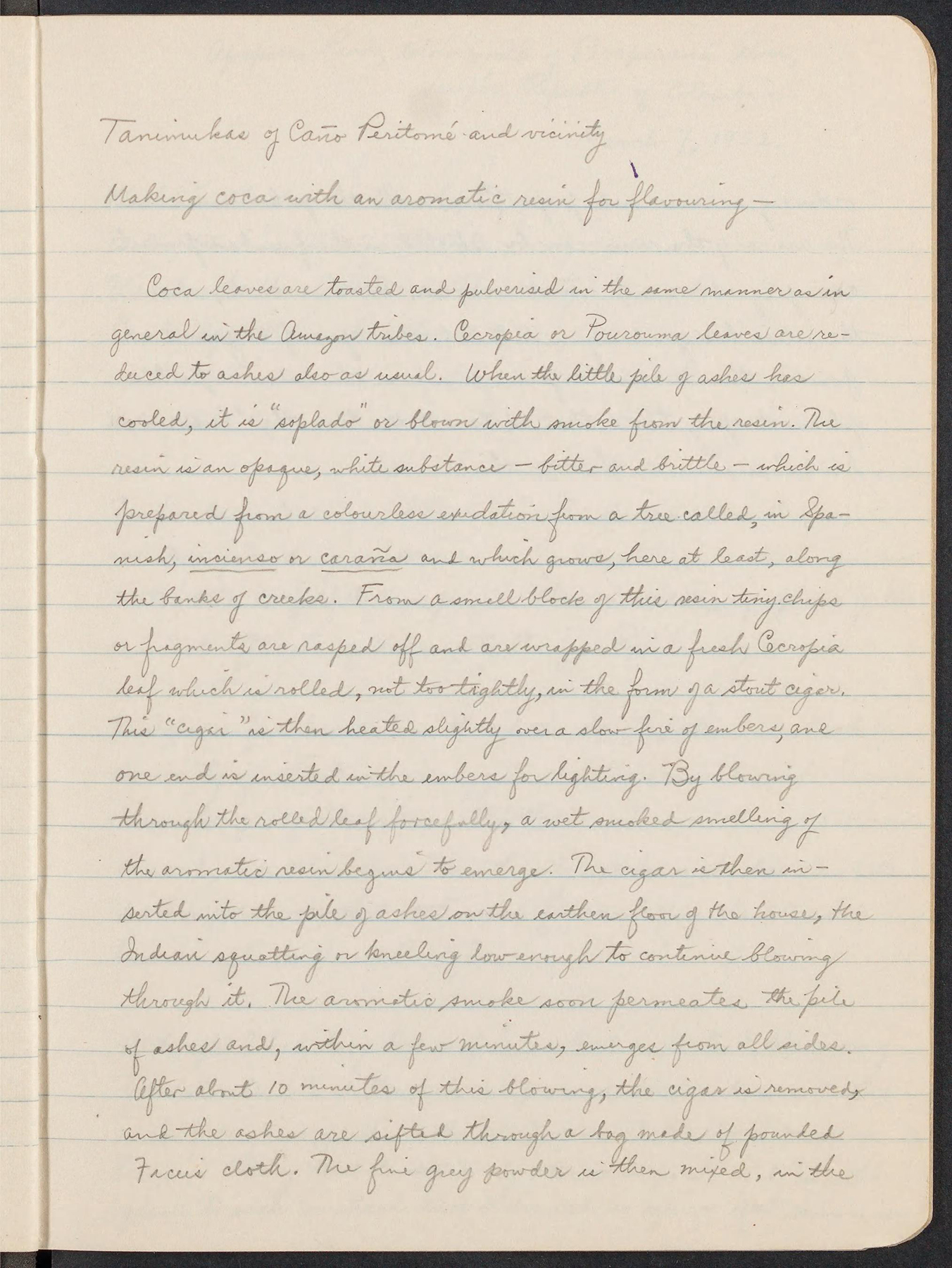
Schultes’s maps, lists, and recipes are a trove of information about difficult to access areas.

page from a handwritten notebook

Detailed river map. Schultes, Richard Evans. Field notebook : Colombia, 1952 February-March. Contributed in BHL from Harvard University Botany Libraries.

page from a handwritten notebook

Plant list. Schultes, Richard Evans. Field notebook : Rio Negro and Rio Vaupés, Amazonas, Brazil, 1947 September-November. Contributed in BHL from Harvard University Botany Libraries.

page from a handwritten notebook

Making coca with an aromatic resin for flavouring. Schultes, Richard Evans. Field notebook : Colombia, 1952 February-March. Contributed in BHL from Harvard University Botany Libraries.

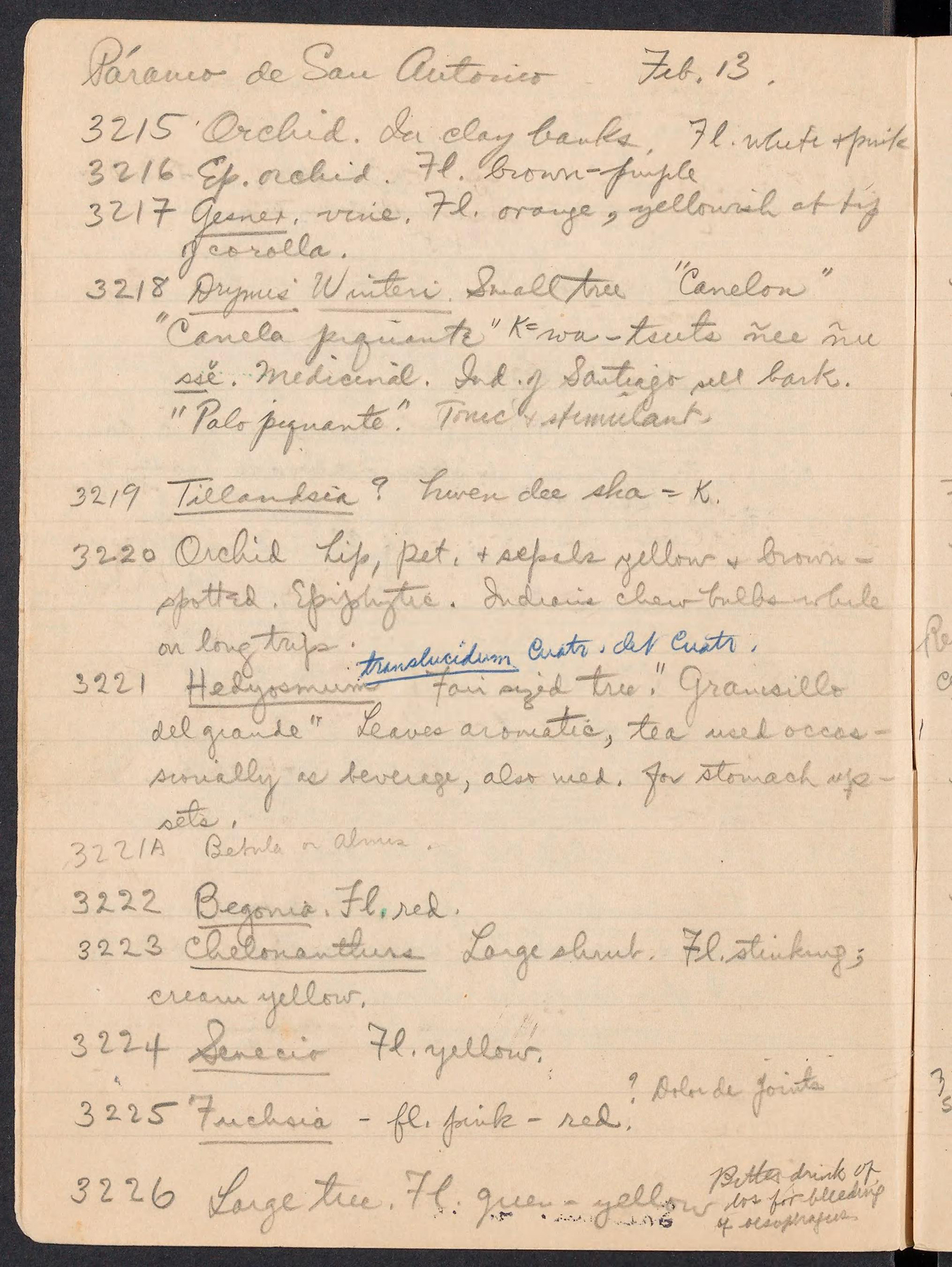
Throughout his travels, Schultes documented the local medicinal uses of hundreds of plants.

page from a handwritten notebook

Medicinal uses of plants by the Inga and Kamëntsá people of Colombia. Schultes, Richard Evans. Field notebook : Colombia, 1942 February-April. Contributed in BHL from Harvard University Botany Libraries.

Schultes was well known for being respectful of Indigenous communities. He immersed himself in the cultures, eating what was offered and participating in rituals.

“I have tried several of the Indian hallucinogens, in part because the Indians consider them sacred plants and it would have been an unpardonable rudeness to refuse them when the Indians were kind enough to offer them to me during a ceremony” (Schultes, 1994).

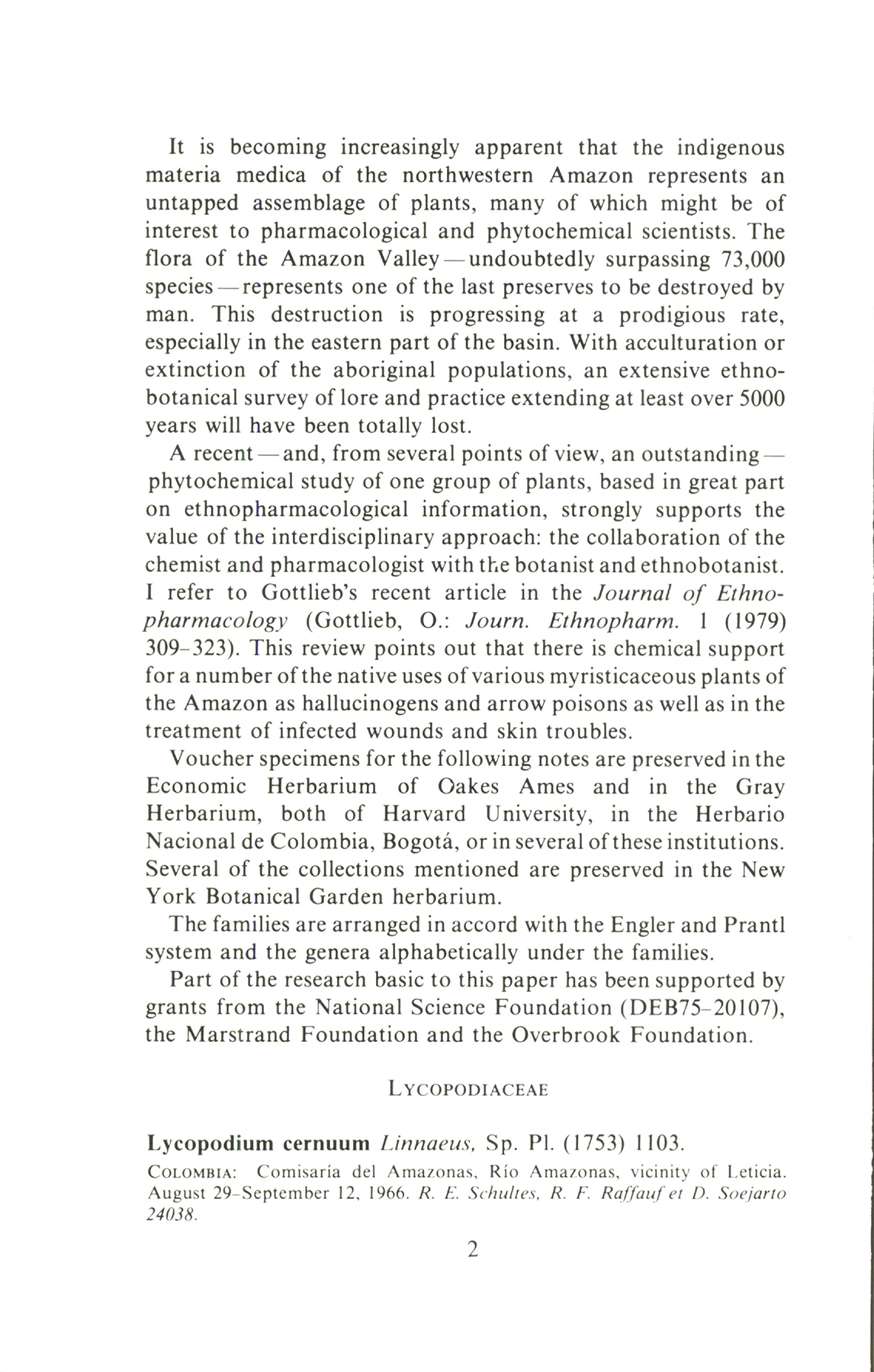
Schultes advocated for the conservation of habitat, species, and Indigenous knowledge but he also understood the practical and economic aspects. He encouraged research into the chemistry and uses of plants as pharmaceuticals, recognizing that the vast habitat destruction and cultural loss occurring in the Amazon could delay the development of important medicines. (An overview of the many medicinal uses of plants is central to Schultes’s 1986 paper “The Reason for Ethnobotanical Conservation”.)

page of printed text

Page 2. Schultes, Richard Evans. “De Plantis Toxicariis E Mundo Novo Tropicale Commentationes XXVI: Ethnopharmacological Notes On The Flora Of Northwestern South America.” Botanical Museum Leaflets, Harvard University. v. 28 (1980), pgs. 1-45. Contributed in BHL from Missouri Botanical Garden with permission from Harvard University Herbaria. CC-BY-NC-SA.

In a 1994 article, he writes:

“…in many regions of the Amazon Basin, native plant and animal species are being destroyed faster than can be recorded, classified and studied…Why not regard the Indians in the Amazon Basin as a kind of phytochemical rapid-assessment team already on the ground, which could help locate the most promising plants for chemical and pharmacological evaluation?…The Indians’ botanical knowledge is disappearing even faster than the plants themselves” (Schultes 1994).

Schultes is regarded as one of the founding fathers of the international conservation movement, having advocated for conservation in developing areas since the 1940s. He mentored many graduate students, infusing them with the same respect and concern for the preservation of natural environments and local knowledge.

Schultes contributed to over 350 publications and served on editorial boards for several scientific periodicals. He also wrote and spoke to lay audiences on many occasions, always emphasizing the need to study and preserve Indigenous botanical knowledge, concluding:

“It is therefore our responsibility – nay, our duty – to put ourselves in the forefront of ethnobotanical conservation. We cannot allow such precious funds of knowledge to become extinct” (Schultes 1988b).

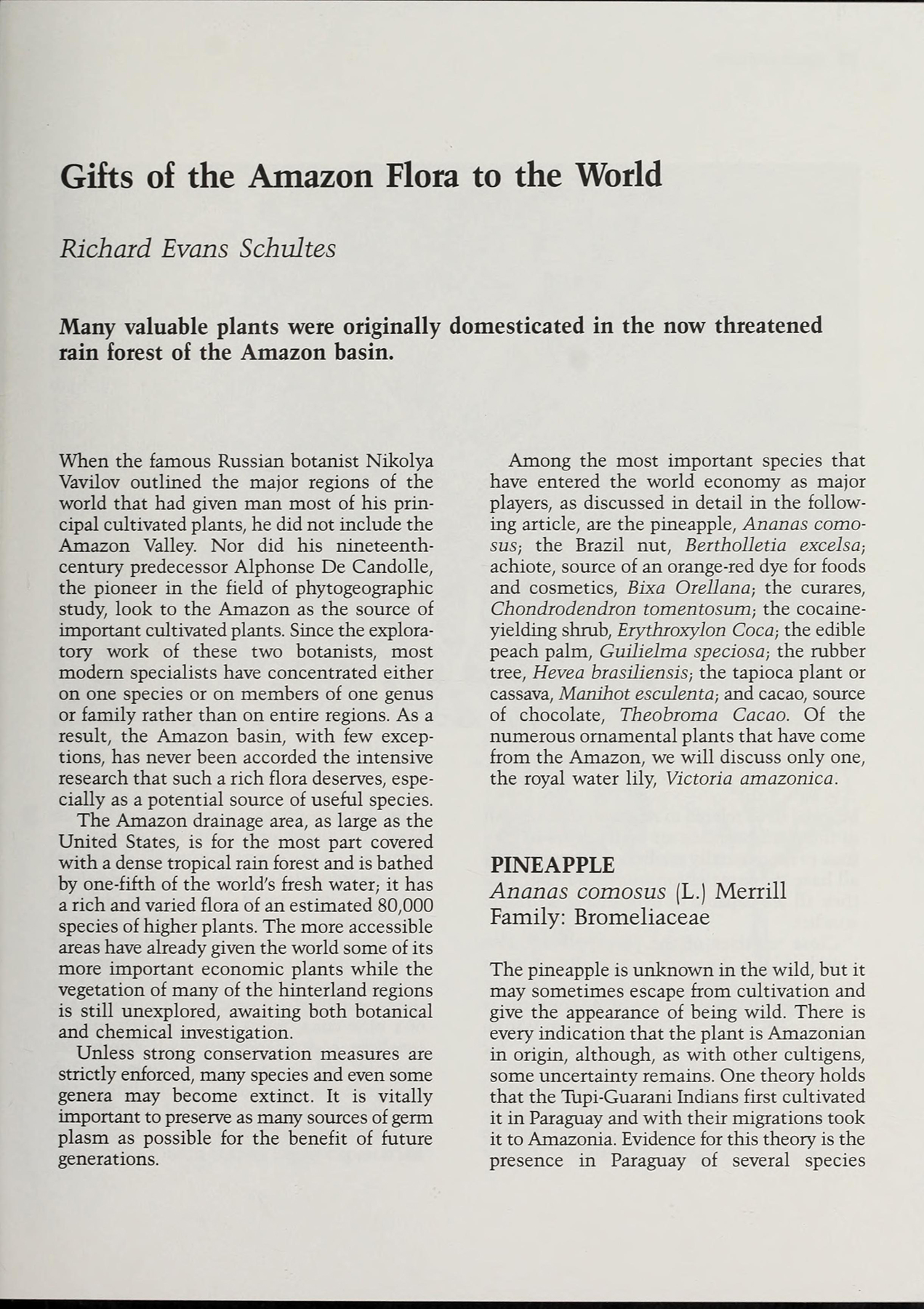
“Unless strong conservation measures are strictly enforced, many species and even some genera may become extinct. It is vitally important to preserve as many sources of germplasm as possible for the benefit of future generations” (Schultes 1990).

page of printed text

Schultes, Richard Evans. “Gifts of the Amazon Flora to the World.” Arnoldia, v. 50(2), pgs. 21-33. Contributed in BHL from Harvard University Botany Libraries with permission from The Arnold Arboretum of Harvard University. CC-BY-NC-SA.

Schultes was the recipient of the Tyler Prize for Environmental Achievement and the World Wildlife Fund Gold Medal in 1984, and the Harvard Medal and the Linnean Medal in 1992. Three genera and over 120 species bear his name. In 1986, the government of Colombia designated a 2.2 million acre protected area as “Sector Schultes” in his honor.

“Richard Evans Schultes, the great 20th century ethnobotanist, was deeply concerned with the fate of the tropical forests of the Earth,” states Felipe Cárdenas-Arroyo. “His work in search of medicinal plants was an important contribution to humanity. But in order for this work to continue, he knew that forests and the Natives who inhabit them need to be protected. Well aware that conserving both would guarantee a healthy planet for all of us, he voiced his concern for the future of the tropical forests and its people” [1].

Additional Information

The Richard Evans Schultes papers, containing Schultes’s field notes, photographs and botanical records, are held by the Botany Libraries in the Harvard University Herbaria.

Contained within the digitized materials in BHL are published articles and papers, field notebooks, lists of collected and identified plants, maps, and photographic materials. The Harvard University Herbaria contains many of the specimens collected by Schultes from North and South America.

For an interactive geospatial exhibit of Schultes’s work in Mexico and the Amazon, see The Amazonian Travels of Richard Evans Schultes.

References

Amazon Conservation Team. The Amazonian Travels of Richard Evans Schultes. https://www.banrepcultural.org/schultes/

Kahn, E. J. “Jungle Botanist [Richard Evans Schultes]”. The New Yorker. v. 68: pp. 35-58. 1992.

Sequeira, Luis. “Richard Evans Schultes : January 12, 1915-April 10, 2001”. National Academy of Sciences (U.S.). Biographical Memoirs ; v. 88. Washington, D.C.: National Academy Press, 2006.

Schultes, Richard. “Burning the Library of Amazonia.” Sciences 34, no. 2, pp. 24. 1994.

Schultes, Richard Evans. “Ethnopharmacological Conservation: A Key to Progress in Medicine.” Acta Amazonica, vol. 18, no. suppl. 1-2, pp. 393–406. 1988a.

Schultes, Richard Evans. “Gifts of the Amazon Flora to the World”. Arnoldia, vol. 50, no. 2, pp. 21-33. 1990.

Schultes, Richard Evans. “Primitive Plant Lore & Modern Conservation”. Orion Nature Quarterly ; v. 7, No. 3, Summer 1988. New York, NY: Myrin Institute, 1988b.

Schultes, Richard Evans. The Reason for Ethnobotanical Conservation. Bulletin of the Botanical Survey of India, v. 28, no.1-4, 1986, pp. 203-224. Calcutta, India: Director, Botanical Survey of India, 1986.

Tyler Prize for Environmental Achievement. https://tylerprize.org/laureates/past-laureates/1987-tyler-laureates/

[1] Cárdenas-Arroyo, Felipe. January and February 2020. Email exchange with Diane Rielinger.

August 11, 2020by michelle.underhill
Blog Reel, Featured Books

A “Botanist’s Botanist” : The Field Books of Timothy Plowman

The Field Museum Library has recently digitized and added to the Biodiversity Heritage Library Timothy Plowman’s entire field book collection, which spans his career from 1969, when he worked for the botanical museum at Harvard, through his years as a curator of botany at the Field Museum from 1976-1987. Timothy Plowman was an ethnobotanist and the world authority on the taxon Erythroxylum (coca). This genus of tropical trees and shrubs is best known for the species Erythroxylum coca L., a sacred leaf of the Andes, and also the source from which commercial cocaine is derived.

In his short lifetime—Plowman died at the age of 45—he collected materials in some of the most remote regions of the Andes and the rain forests of the Amazon, spending more than five years of his life in these harsh landscapes. As a result of Plowman’s work, the Field Museum is the most important repository in the world of research collections and literature pertaining to the classification of Erythroxylum. Plowman collected over 700 specimens of the genus from South America, and the Field Museum collection contains over 5,000 specimens collected worldwide as well as massive data resources. Plowman’s position as world authority on this genus also provided him a platform in which to speak on behalf of the indigenous peoples of the region and their traditional use of coca.

View Full Size Image
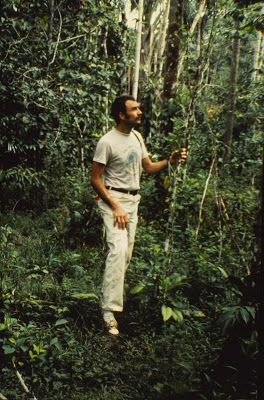
© The Field Museum, GN83861c.
Dr. Timothy Plowman, Botany, collecting coca plant specimens near Leticia, Peru.

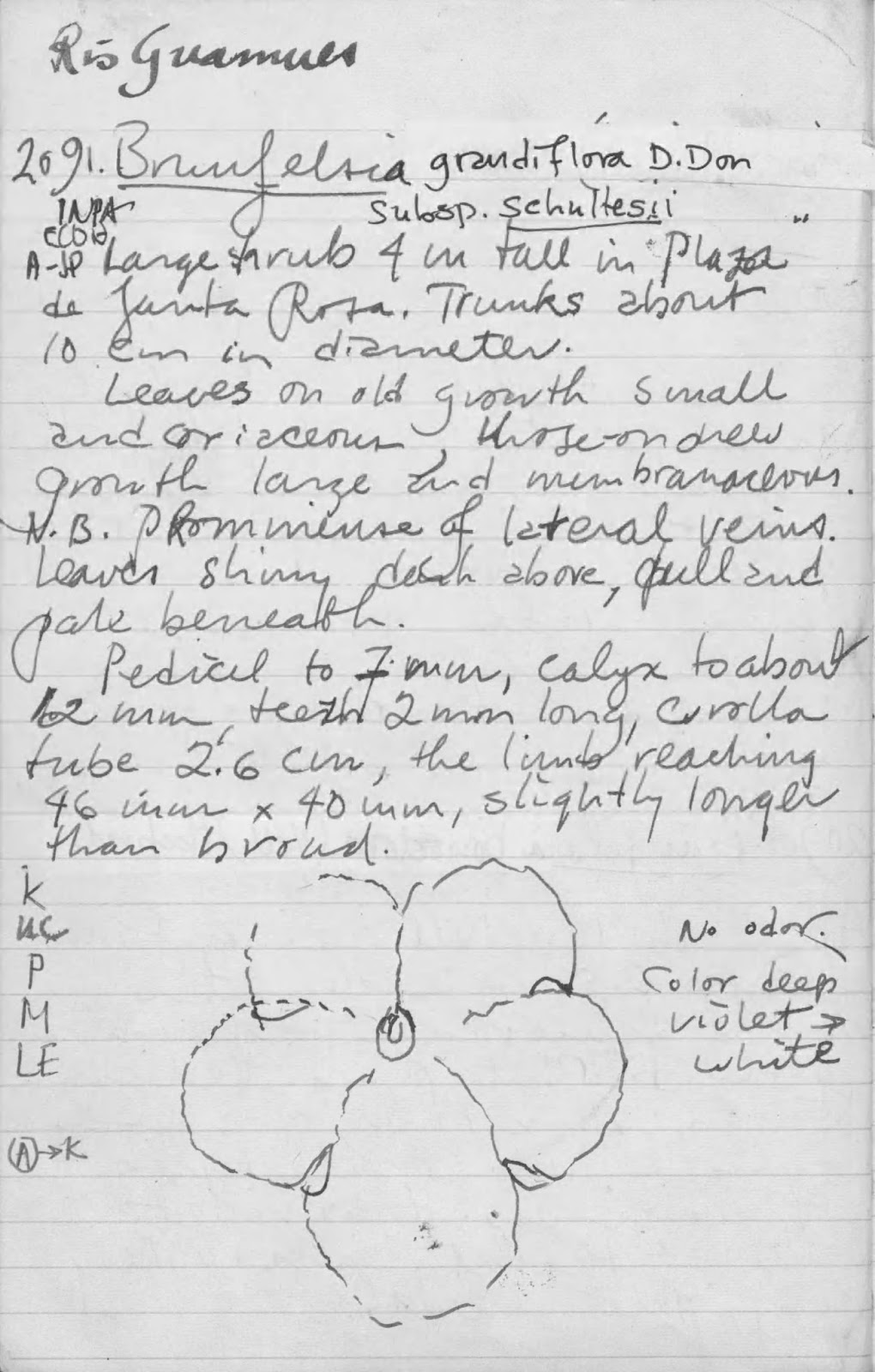
While Plowman’s Ph.D. research at Harvard University mainly concentrated on Erythroxylum, he also had a special interest in Brunfelsia (nightshade family), and a fascinating chapter in Plowman’s research of Brunfelsia is highlighted in his collecting notebook from 1968-1969 in Venezuela and Colombia. After reaching Santa Rosa on the Río Guamués in Colombia, Plowman was introduced to an old shaman who produced the species Brunfelsia grandiflora, which had been discovered and described by Plowman’s mentor, Richard Evan Schultes. The plant was well known for its hallucinogenic properties, and is further described below.

View Full Size Image
Plowman, Timothy. Timothy Plowman Botanical Collecting Notebook: 1900-2286: 1968-1969.  Text and illustration by Timothy Plowman. Digitized by the Field Museum library.  http://s.si.edu/2eNl3aw

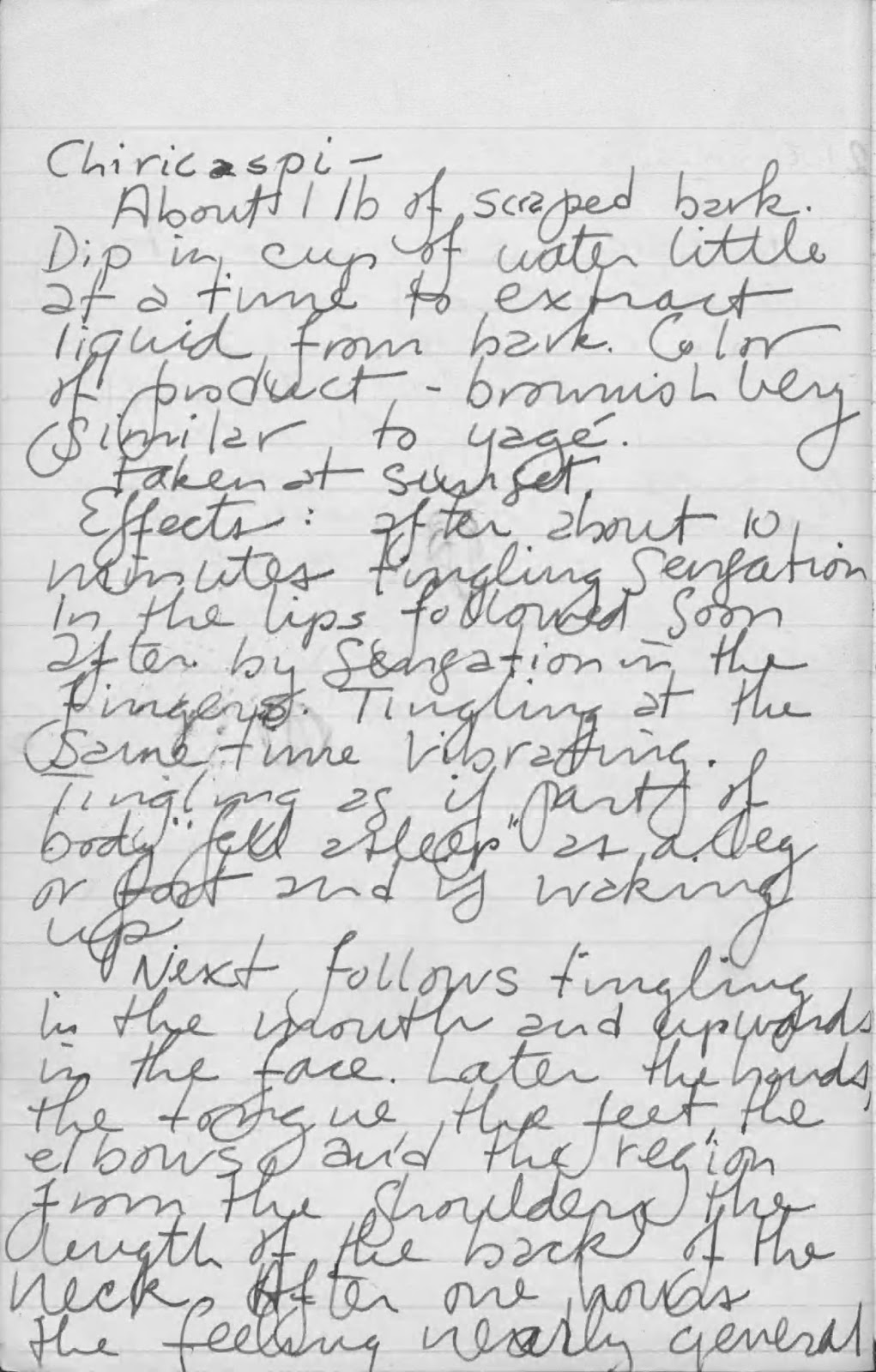
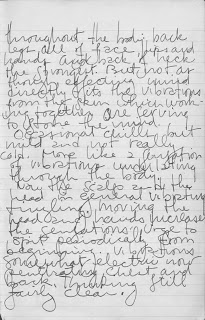
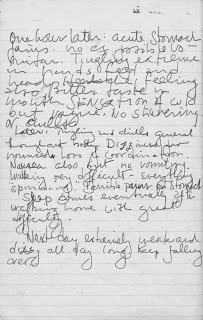
The shaman also brought from the forest a related plant that Plowman immediately identified as a new-to-science species, which he later named Brunfelsia chiricaspi, described on the following page. Wishing to confirm that this new plant also had similar properties as a drug, he asked the shaman to prepare it. At first the shaman refused his request, describing the plant as a “dangerous messenger of the forest,” but eventually relented. Plowman describes his experience from the drug, the effects of which he began to feel within ten minutes, within these pages of his field book.

View Full Size Image
Plowman, Timothy. Timothy Plowman Botanical Collecting Notebook:1900-2286: 1968-1969. Text by Timothy Plowman. Digitized by the Field Museum library. http://s.si.edu/2gJkF9P.

View Full Size Image View Full Size Image

In the foreword to A revision of the South American species of Brunfelsia (Solanaceae), which was published posthumously as part of the Fieldiana Botany series, Plowman was described by colleagues as a man who “approached botanical research with the intensity and rigor of a scientist, the courage of his mentor, and the flair of a poet.” Making Plowman’s field books freely available online for the first time through the Biodiversity Heritage Library furthers the availability of the valuable scientific documentation about specimens, study sites, collecting details, and ecology, that were carried out by Timothy Plowman with such energy, enthusiasm, and grace.

Sources:
http://emuweb.fieldmuseum.org/botany/plowman_bio.html

Plowman, Timothy, Sandra Knapp, and J. R. Press. 1998. A revision of the South American species of Brunfelsia (Solanaceae). [Chicago, Ill.]: Field Museum of Natural History.

The BHL Field Notes Project is funded by the Council on Library and Information Resources (CLIR).

September 7, 2017by lmyrick
Blog Reel, Featured Books

Notes accompanying collection of useful plants made by W. J. Fisher at [Kodiak] in 1899

In honor of Native American Heritage Month, we would like to highlight a field book that documents Native American knowledge of natural resources. The field book was created by William J. Fisher, who lived in southern Alaska from 1879 until his death in 1903.

Fisher’s notebook documents his final years collecting and looks at the relationship between the Alutiiq (Aleut) and their plants by recording medicinal and food uses for 48 specimens. Only a handful of the specimen entries include the taxonomic names of plants; instead, entries focus on recording the Russian and Sugpiat/Alutiiq names of plants, how the plants were used, and plant distribution. Detail varies, as seen below in entries three and forty-seven.

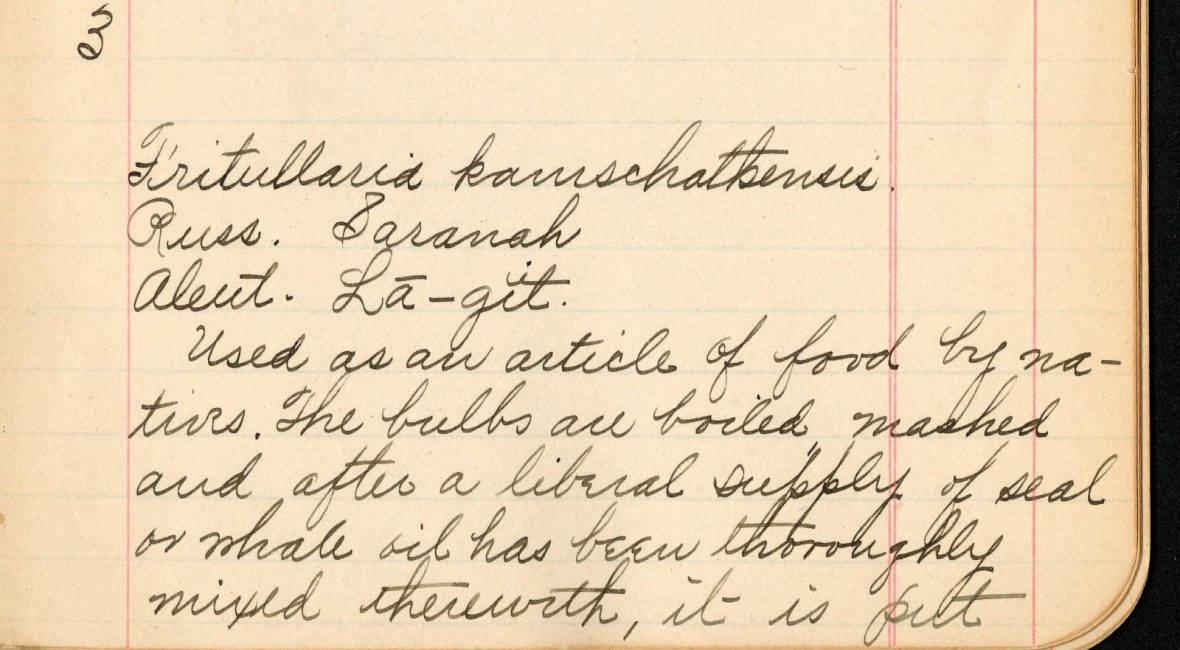
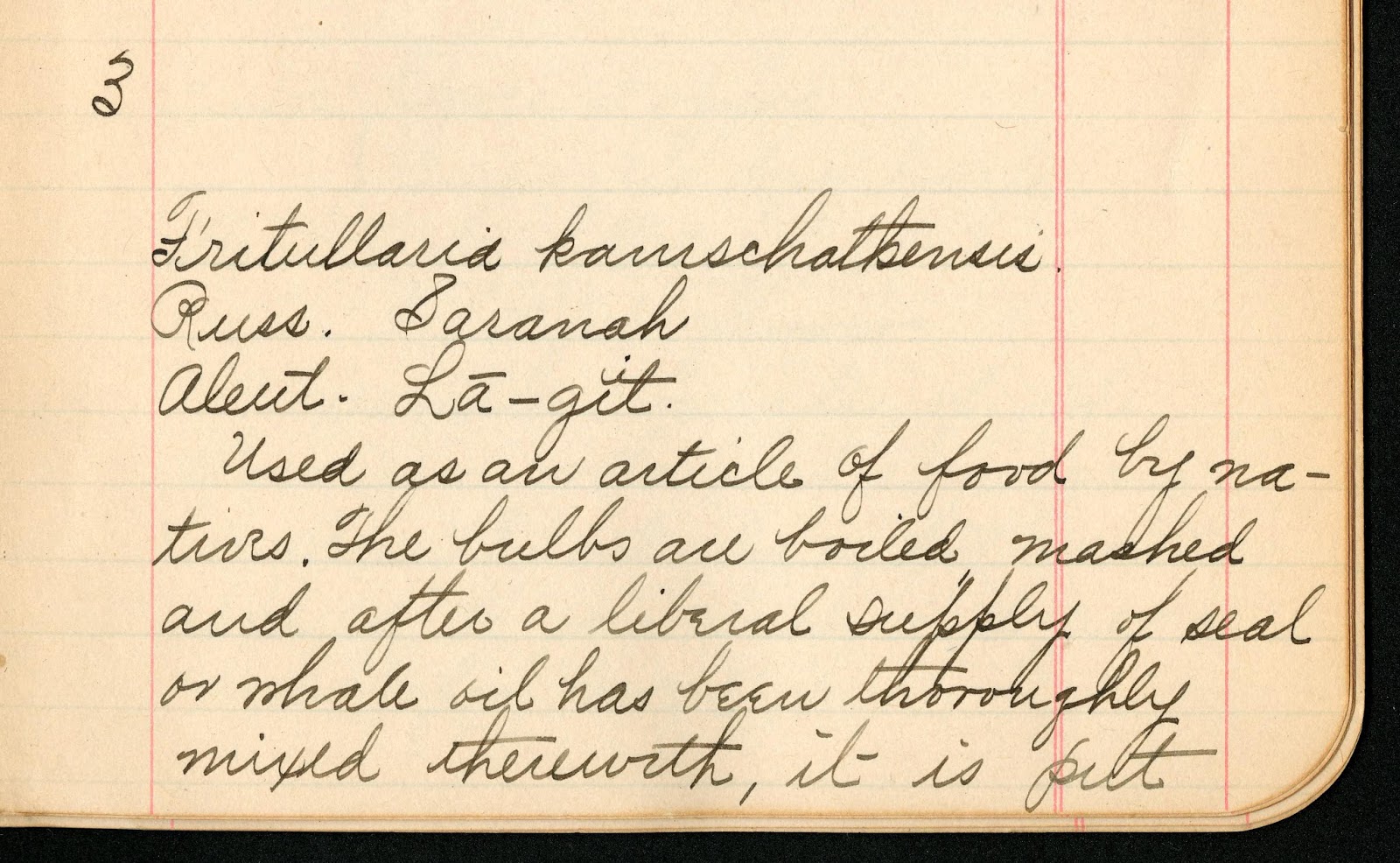
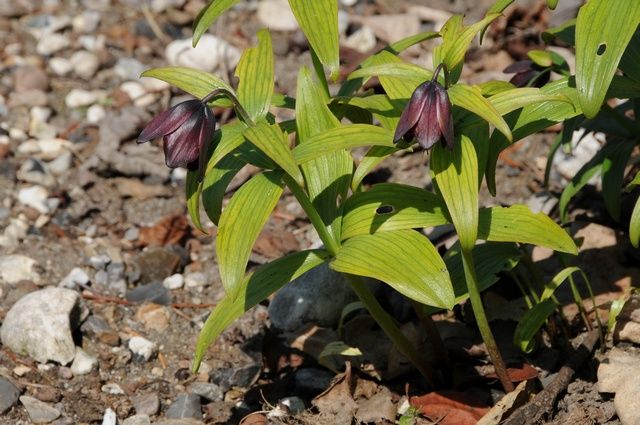
Entry three describes Fritullaria kamschathensis [Fritillaria camschatcensis], also known as the Kamchatka Fritillary, and lists general use and preparation: “Used as an article of food by natives. The bulbs are boiled mashed and after a liberal supply of seal or whale oil has been thoroughly mixed therewith, it is put away for winter’s use.”

View Full Size Image
Specimen entry three from “Notes accompanying collection of useful plants made by W. J. Fisher at [Kodiak] in 1899,” Smithsonian Institution Archives, SIA Acc. 12-038. http://www.biodiversitylibrary.org/page/46428854. Digitized by Smithsonian Institution Archives.
View Full Size Image
Image of Fritillaria camschatcensis from Encyclopedia of Life, provided by Biopix. http://eol.org/data_objects/19162439.

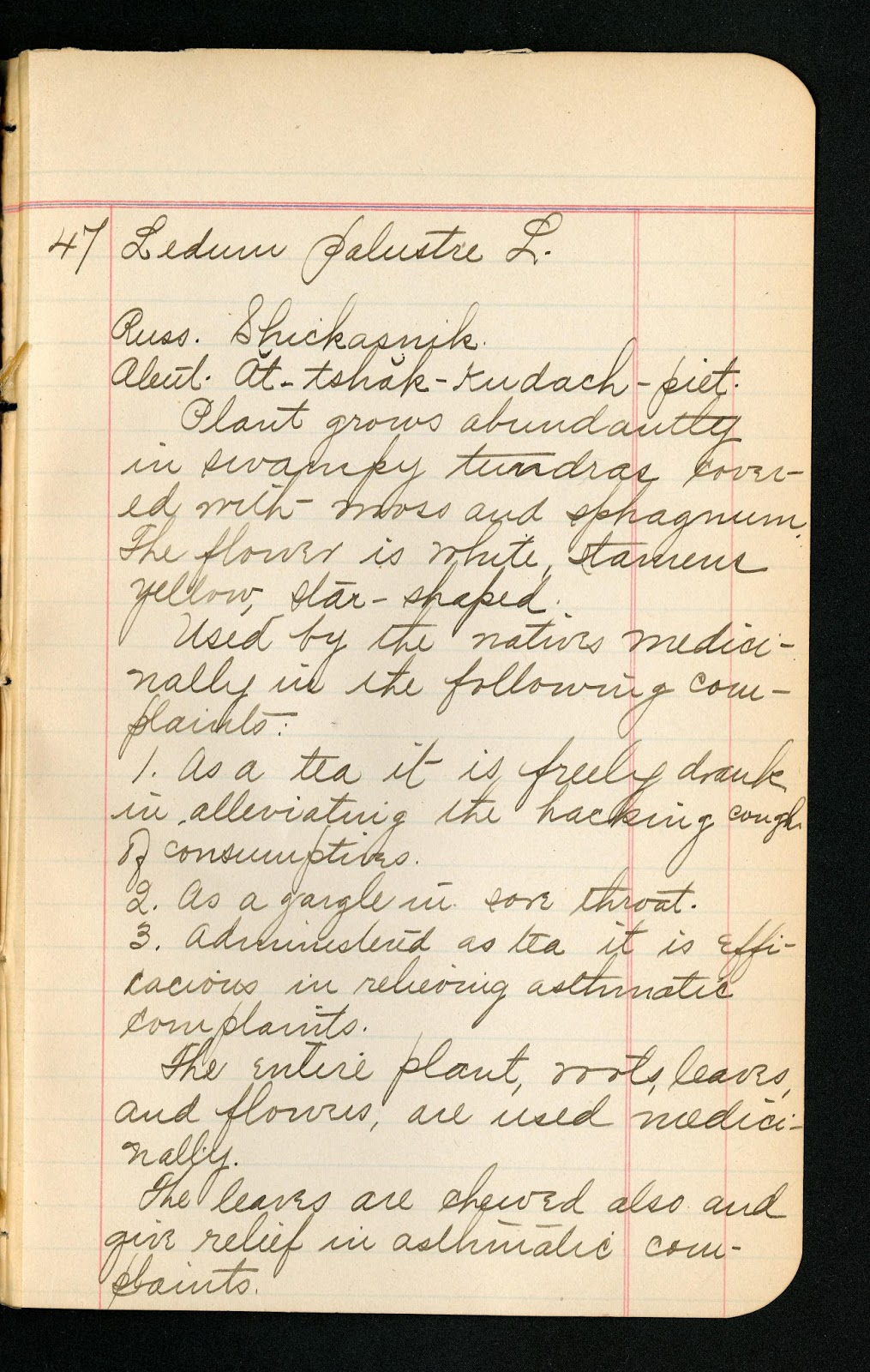
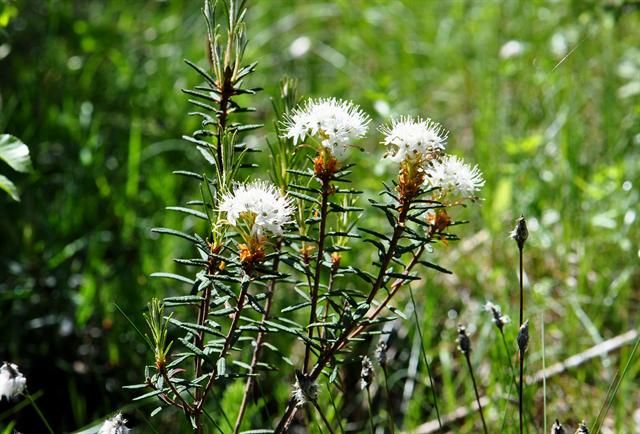
Entry forty-seven for Ledum palustre [Rhododendron tomentosum], also known as Northern Labrador Tea (also pictured below), takes up an entire page describing the plant’s habitat, the appearance of its flowers, and multiple local medicinal applications: “(1) As a tea it is freely drunk in alleviating the hacking cough of consumptives. (2) As a gargle in sore throat. (3) Administered as tea it is efficacious in relieving asthmatic complaints.”

View Full Size Image
Specimen entry forty-seven, from “Notes accompanying collection of useful plants made by W. J. Fisher at [Kodiak] in 1899,” Smithsonian Institution Archives, SIA Acc. 12-038. http://www.biodiversitylibrary.org/page/46428831. Digitized by Smithsonian Institution Archives.
View Full Size Image
Image of Rhododendron tomentosum (Northern Labrador Tea), from Encyclopedia of Life. Image by Biopix. http://eol.org/data_objects/19183248.

Fisher’s ethnographic focus while collecting plants is clear. The field book provides detailed information regarding local names and knowledge, but leaves out basic information often found in botany field books like date and detailed locality information. This lack of information may relate to a note Fisher wrote on the title page: “dried plants with Mr. Kearney, alcoholics in seed collection.” “Mr. Kearney” was Thomas Henry Kearney (1874-1956), a botanist with the Bureau of Plant Industry at the US Department of Agriculture (USDA). Kearney was in Alaska to work with Frederick Coville from April 1898 – August 1899, and along the Northwest Coast from Puget Sound to the Bering Strait in 1899. He then served as a member of the Harriman Alaska Expedition of 1899.

It is unclear how the two men became acquainted. Fisher had a relationship with the Smithsonian Institution; Coville as a USDA employee worked with Smithsonian, and perhaps he introduced the two. Whatever the reason, Kearney’s field notes for his work in Alaska are also available on BHL through the Smithsonian Field Book Project, and they provide a tantalizing overlap in content and geographical coverage.

A field book at the end of a collecting career

Fisher’s field book is also interesting because it document’s his collecting focus and interests as they evolved over a lifetime. Fisher’s initial scientific interest was in marine biology. During the 1870’s he was a curator of conchology at the California Academy of Sciences and served as a marine biologist for the U.S. Fish Commission on several cruises in the Pacific headed by William Healey Dall.

In 1879, Fisher accepted a position as tidal recorder in St. Paul, now known as the city of Kodiak, Alaska. After accepting the position, he wrote to Dall, who was affiliated with the Smithsonian Institution, and offered to collect natural history specimens. The offer was accepted, and Fisher was instructed that the museum was also interested in ethnographic artifacts from the region.

The town of St. Paul where Fisher settled was originally established by the Russians as a center for fur trading. By the time Fisher arrived, it was a town of approximately 500 residents, primarily of Russian and Native Alaskan heritage. According to an article in Arctic Anthropology (no. 1, 1992) the community was still significantly mixed regarding the adoption of European culture in terms of religion, language, and beliefs.

Fisher initially focused on collecting natural history specimens, but as he began to correspond with Smithsonian’s Secretary Spencer Baird, his interest and collecting shifted to ethnography. He even began to commission works by Native Alaskans. Fisher’s main source of income was his position as tidal recorder; Smithsonian was frequently unable to finance his work. This lack of funding apparently did not dim Fisher’s enthusiasm, but it did lead to financial hardship. During an extended collecting trip to Bristol Bay in the summer of 1885, his assistant successfully petitioned for Fisher’s job. Fisher’s collecting came to an end by the 1890’s; the ethnobotany field notes document the end of his work with the Smithsonian Institution.

Interested in learning more? We encourage you to learn about the William J. Fisher collection at the National Museum of Natural History, which was highlighted as part of a book Looking Both Ways: Heritage and Identity of the Alutiiq People, in the online exhibit featuring artifacts created by the Alutiiq people and collected by Fisher during his years in Alaska.

Other resources include:

Aron L. Crowell, 1992, Postcontact Koniag Ceremonialism on Kodiak Island and the Alaska Peninsula: Evidence from the Fisher Collection. Arctic Anthropology 29(1):18-37. Retrieved on November 16, 2016 from https://www.jstor.org/stable/40316240?seq=3#page_scan_tab_contents

Highlights of the William J. Fisher collection at the National Museum of Natural History: http://naturalhistory.si.edu/arctic/features/fisher/collect.html

The field books of William Healey Dall, available on Biodiversity Heritage Library: http://www.biodiversitylibrary.org/search?searchTerm=Dall+%22field+notes%22#/titles

Field Book Project blog post by Sonoe Nakasone: http://nmnh.typepad.com/fieldbooks/2012/02/sharing-culture-through-plants.html

November 22, 2016by ulib-libraryjobs

Help Support BHL

BHL's existence depends on the financial support of its patrons. Help us keep this free resource alive!

search

About BHL

The Biodiversity Heritage Library (BHL) is the world’s largest open access digital library for biodiversity literature and archives. BHL operates as a worldwide consortium of natural history, botanical, research, and national libraries working together to digitize the natural history literature held in their collections and make it freely available for open access as part of a global “biodiversity community.”

Join Our Mailing List

Sign up to receive the latest news, content highlights, and promotions.

Subscribe Now

Subscribe to Blog via Email

Enter your email address to subscribe to this blog and receive notifications of new posts by email.

Join 319 other subscribers

Subscribe to Blog Via RSS

Subscribe to the blog RSS feed to stay up-to-date on all the latest BHL posts.

Access RSS Feed

Inspiring Discovery through Free Access to Biodiversity Knowledge.

The Biodiversity Heritage Library makes it easier than ever for you to access the information you need to study and explore life on Earth…for free, anytime, anywhere.


64+ Million Pages of
Biodiversity Literature Online.

EXPLORE

Tools and Services
to Transform Research.

EXPLORE

300,000+
Illustrations on Flickr.

EXPLORE

ABOUT | HARMFUL CONTENT | PRIVACY | SITE MAP | TERMS OF USE