Biodiversity Heritage Library - Program news and collection highlights from BHL
  • Home
  • News
  • Featured Books
    • All Featured Books
    • Book of the Month Series
    • BHL at 20
  • User Stories
  • Campaigns
    • Fossil Stories
    • Garden Stories
    • Monsters Are Real
    • Page Frights
    • Her Natural History
    • Earth Optimism 2020
  • Tech Blog
  • Visit BHL
Home
News
Featured Books
    All Featured Books
    Book of the Month Series
    BHL at 20
User Stories
Campaigns
    Fossil Stories
    Garden Stories
    Monsters Are Real
    Page Frights
    Her Natural History
    Earth Optimism 2020
Tech Blog
Visit BHL
  • Home
  • News
  • Featured Books
    • All Featured Books
    • Book of the Month Series
    • BHL at 20
  • User Stories
  • Campaigns
    • Fossil Stories
    • Garden Stories
    • Monsters Are Real
    • Page Frights
    • Her Natural History
    • Earth Optimism 2020
  • Tech Blog
  • Visit BHL
Biodiversity Heritage Library - Program news and collection highlights from BHL
BHL News, Blog Reel

Historic Field Diaries from BHL Australia Now in BHL!

This post was originally published on the Museum Victoria Blog. See the original post here.

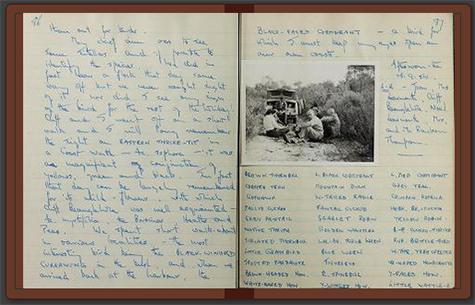
In November 2014, Museum Victoria started a project to digitize and transcribe the field diaries in our collection. These diaries, handwritten by Australia’s early field naturalists long before the days of electronic notetaking, are rich in scientific data and historic detail. They provide insights into past species distribution and abundance, as well as the trials and wonders experienced on historic expeditions.

View Full Size Image
Afternoon tea with Graham Brown (this diary, volume 4, is now viewable on the Biodiversity Heritage Library). Image: Museum Victoria. Source: Museum Victoria.

They are fascinating sources of information and yet very few people have ever read them. As handwritten documents, each was created as a single hard copy. They have been carefully stored in the museum’s archives for decades, protected from dust and light but inaccessible to anyone but the few curators who knew of their existence. Until now.

View Full Size Image
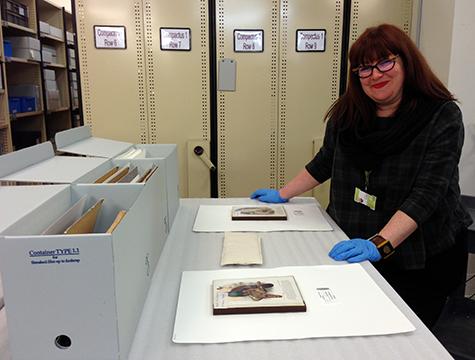
Rebecca Carland, Museum Victoria’s History of Collections Curator, with Graham Brown’s field diaries. Image: Nicole Kearney. Source: Museum Victoria.

Over the past nine months we have digitised 24 historic field diaries from our collection and have been steadily uploading them onto DigiVol, the online volunteer transcription portal developed by the Atlas of Living Australia and the Australian Museum. In DigiVol, the pages can be individually transcribed, with a verification process ensuring the quality of the result.

We are immensely grateful to the volunteers who have contributed their time and attention to transcribing our field diaries. Ten field diaries have been fully transcribed and the volunteers are now working on a diary written by notable ornithologist Frederick Lee Berney between 1898 and 1904.

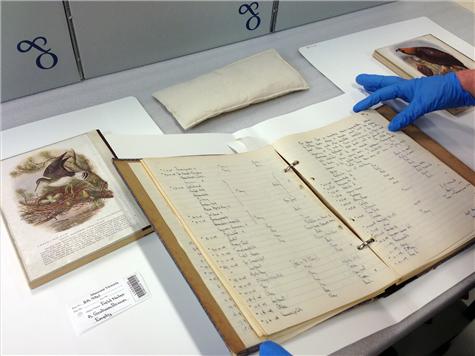
The first collection of five field diaries to be run through the digitisation and transcription process was produced by Graham Brown between 1948 and 1958. Now that they have been transcribed, the contents of the diaries can be searched and the data extracted. When analysed, Brown’s diaries contained 5611 bird sightings, complete with dates and locations. This historic data will now be made available to scientists and can be used to inform climate change studies and species management plans.

View Full Size Image
A small fraction of the 5611 bird observations Graham Brown recorded in his diaries. Image: Nicole Kearney. Source: Museum Victoria.

The next step is to make the images of the field diaries available through a publicly accessible website. We have just uploaded four volumes of the Graham Brown field diaries and their transcriptions onto the Biodiversity Heritage Library, and we will continue to add more over time. Museum Victoria has already contributed over 500 rare books and historic journals to this global repository of historic literature (through a project funded by the Atlas of Living Australia). We are thrilled that our field diaries are now joining these other significant volumes.

Help us unlock the observations in our historic field diaries
If you would like to become a transcription volunteer, sign up on the DigiVol website.

August 18, 2015by ulib-libraryjobs
BHL News, Blog Reel

The Arcadia Fund Awards Grant to Support The Field Book Project

The Smithsonian Libraries received a $511,200 grant from the Arcadia Fund for The Field Book Project to provide free, online access to the Smithsonian’s field books on biodiversity research. Over a two-year period, the grant will support the cataloging of 2,000 field books and the digitization of 2,600 field books, which will be made openly available via multiple platforms, including the Smithsonian’s Collection Search Center and the Biodiversity Heritage Library (BHL).

The Smithsonian holds thousands of field books documenting the flora, fauna and ecosystems of the world. Launched in 2010, The Field Book Project is a collaboration to improve access to these field notes and other primary source documentation of field research related to biodiversity. As primary sources, field books are not only unique as material objects, but many also contain unique information on species and ecosystems – information that may be unpublished and unavailable through other sources.

View Full Size Image
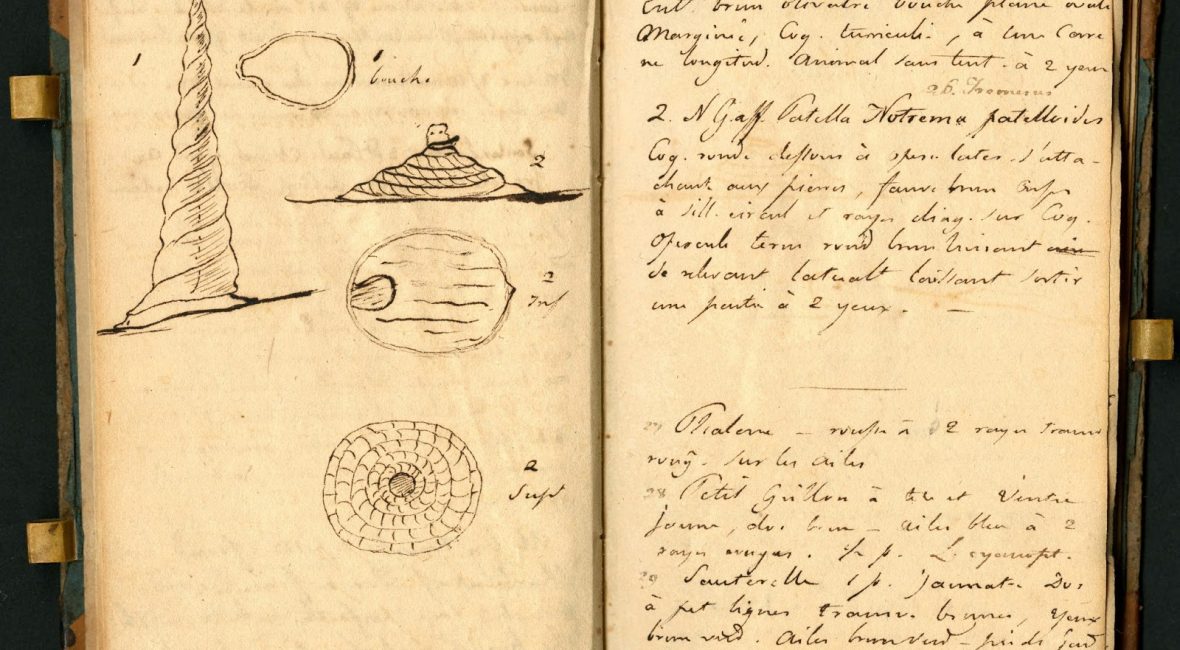
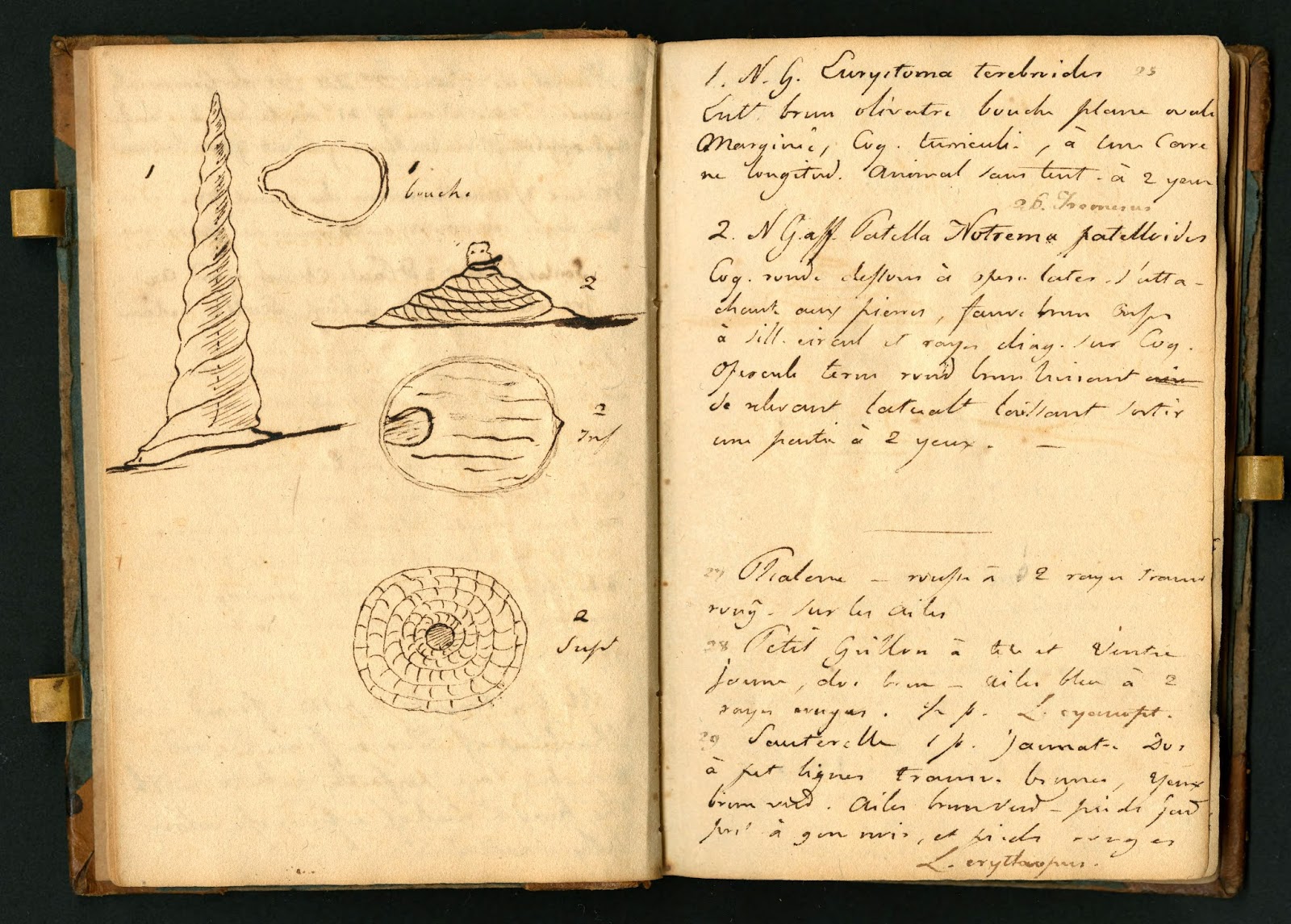
Rafinesque, C. S. (Constantine Samuel). Notebook kept by Rafinesque on a trip from Philadelphia to Kentucky, 1818. http://biodiversitylibrary.org/page/45995997. Made available in BHL as part of The Field Book Project.

The Smithsonian Libraries, the Smithsonian Institution Archives, BHL and the Smithsonian’s National Museum of Natural History will work closely together to conduct conservation reviews, catalog, digitize and provide open access to the natural history field books at the Smithsonian. “Bringing these works together with the published literature means we can begin to fill some of these information gaps to better understand ecosystem changes and the context behind the research. Such knowledge can empower scientists, regional and national leaders, and others to develop strategies for addressing biodiversity loss,” said Martin Kalfatovic, BHL program director.

View Full Size Image
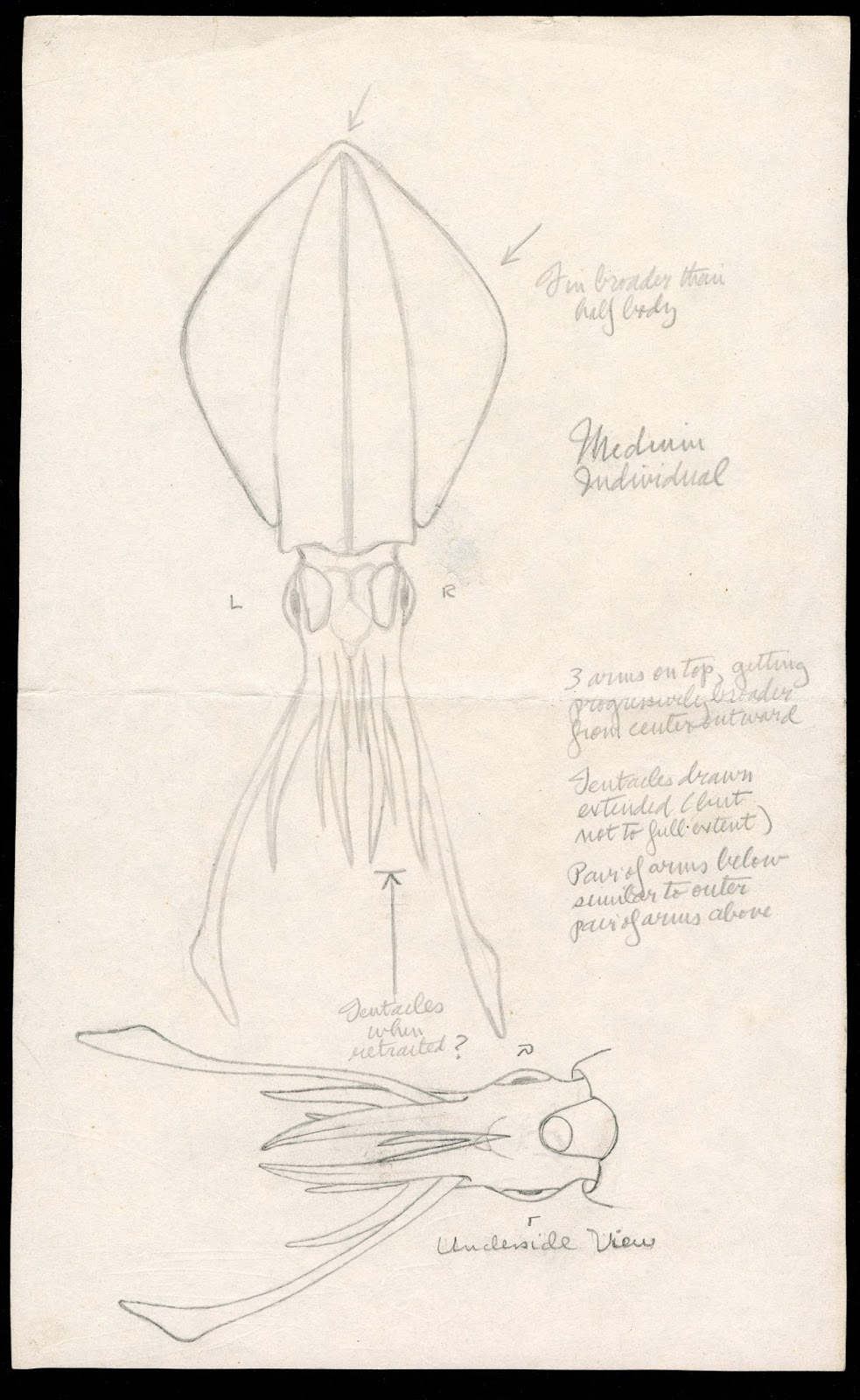
Moynihan, M. Cephalopoda (Squid) 1971-1973, 1975-1979, 1981-1982 (1 of 3). http://biodiversitylibrary.org/page/46283099. Made available in BHL as part of The Field Book Project.

The work of initiatives like The Field Book Project directly relates to the Smithsonian’s grand challenge of broadening access to collections. “Original field notes are often hidden in larger collections of archival material and are difficult to find,” explained Anne Van Camp, director of the Smithsonian Institution Archives. “Information contained in field books tells the stories of exploration, discovery and collecting events that have shaped our understanding of the natural world. The notes also provide deep insight into the personal nature of those individuals that first encountered the vast biodiversity across the Earth. Providing access to this information allows researchers to further understand the history of scientific exploration and to relate that past to the present.”

Browse over 500 field books from The Field Book Project in BHL. Stay tuned to our blog for future updates from The Field Book Project.

August 7, 2015by ulib-libraryjobs
Blog Reel, Featured Books

I spy something fowl…

Connecting Field Book Observations to Scientific Illustrations

Field books are important primary source materials for biodiversity research. Their pages are the first to document the thoughts, observations, musings, and raw data generated or gathered by a scientist while in the field. They are the foundation upon which published natural history literature is based.

The Field Book Project (FBP) is working to improve access to field books in the Smithsonian’s collections. Digitized versions of these field books are made available in the Biodiversity Heritage Library (BHL). There are currently over 500 field books from FBP in BHL.

One of these field books was written by Joshua F. B (Fry Bullitt) Camblos (1916-2012). Camblos was a medical doctor with a keen interest in ornithology, and his field books contain details about the birds, eggs, and nests he spied in the woods of Virginia. His field book available in BHL documents these observations from February-April 1934, including descriptions of nests, condition and appearance of eggs, area vegetation, and bird behavior.

Since there is such a strong correlation between field books and published literature, we thought it would be fun to expand on the theme and connect Camblos’ observations to published illustrations of some of the species he described. We turned our spyglass towards the BHL collection to uncover some of our favorite published illustrations. We then present Camblos’ description of the bird, nest, and eggs he found in Virginia in 1934 together with an illustration and a bit of information about the publication it came from.

We hope you enjoy our fowl-focused game of “I Spy” within the published and unpublished literature on BHL. Explore more field books from The Field Book Project in BHL and learn more about the program in this past post.

House Wren (Troglodytes aedon)

View Full Size Image

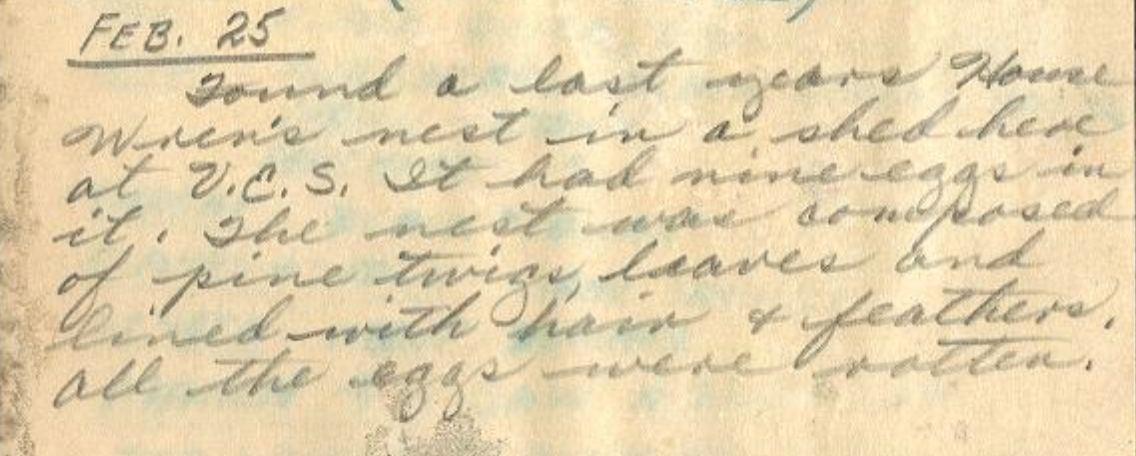
Camblos writes:
“Feb. 25
Found a last years House Wren’s nest in a shed here at V.E.S. It had nine eggs in it. The nest was composed of pine twigs, leaves and lined with hair and feathers. All the eggs were rotten.”

View Full Size Image
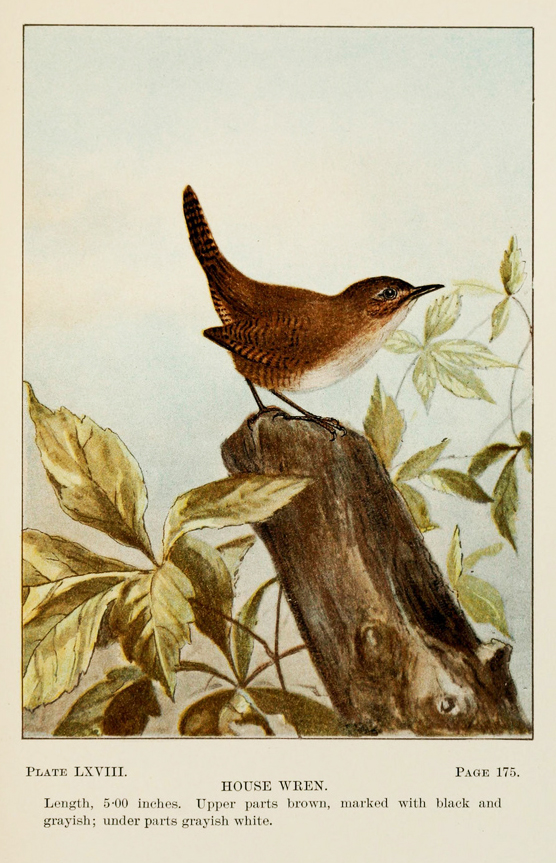
Chapman, Frank M. Bird-life: a guide to the study of our common birds. 1900. http://biodiversitylibrary.org/page/7855990.

Frank M. Chapman was an ornithologist, former Curator of Birds at the American Museum of Natural History, and founder of Bird-Lore, which became Audubon Magazine. In 1900 he proposed the idea of the Christmas Bird Count (CBC), an annual census of birds in the Western Hemisphere performed to this day and administered by the National Audubon Society. He also wrote many field guides, such as Bird-life: a guide to the study of our common birds, which was illustrated by wildlife artist Ernest Thompson Seton, who was also one of the founding pioneers of the Boy Scouts of America (BSA).

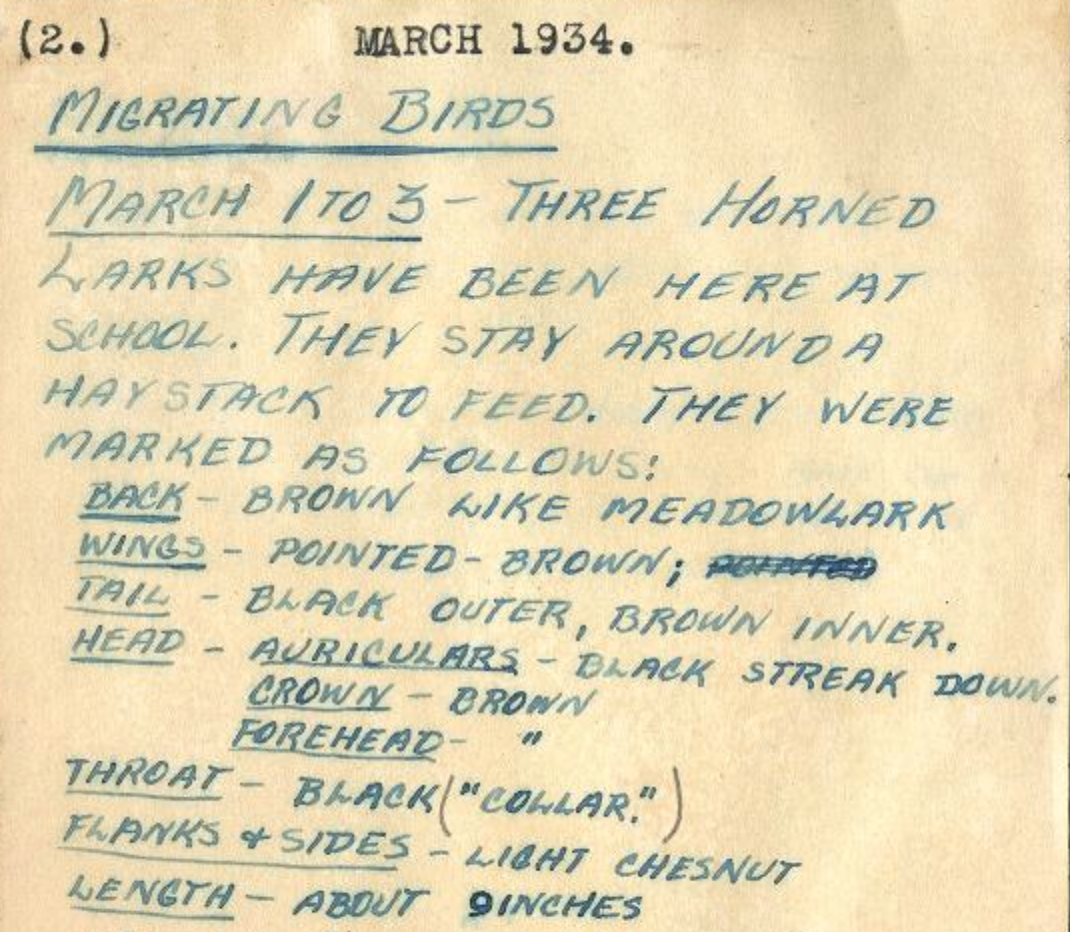
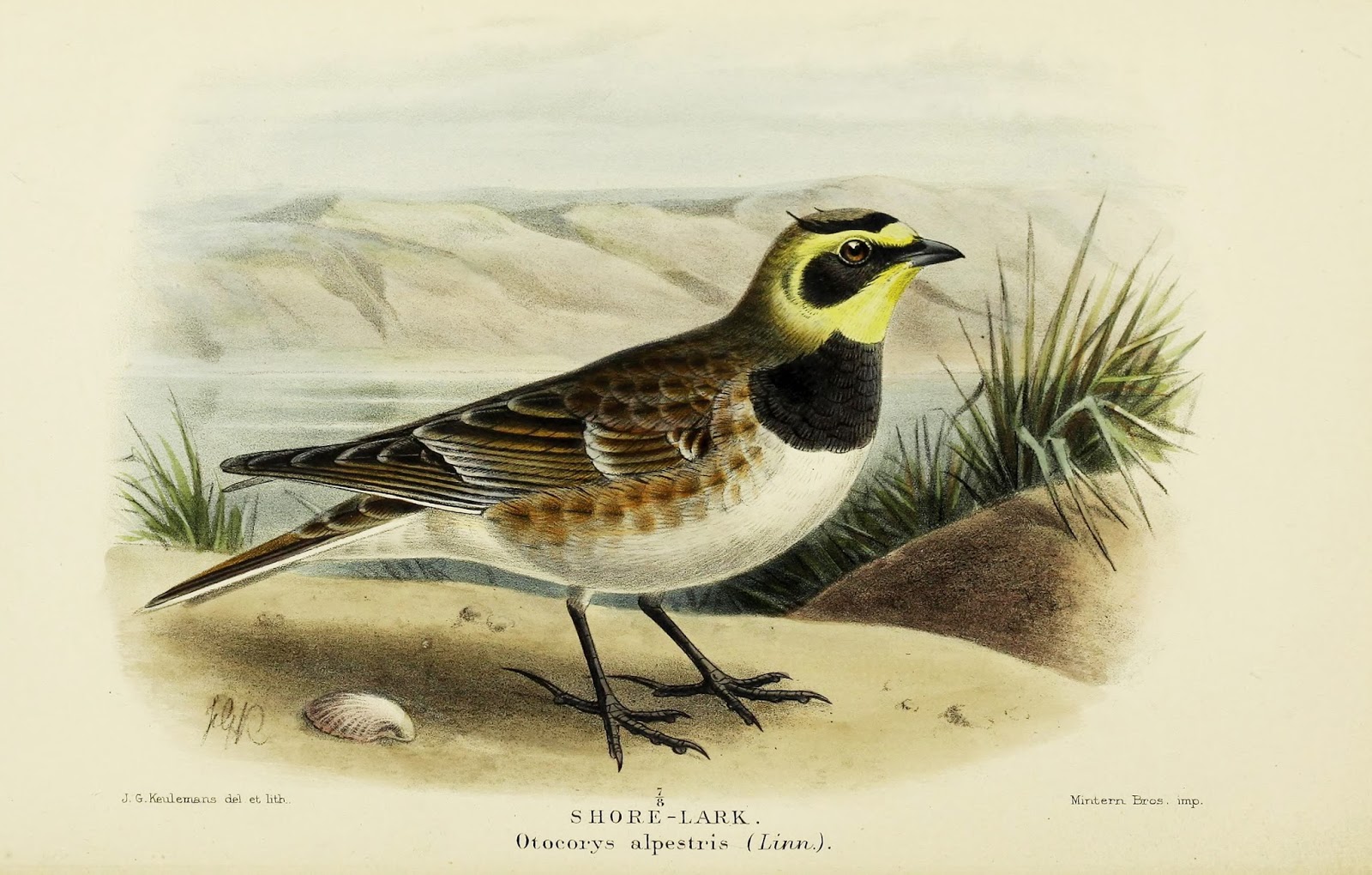
Horned Lark (called shore lark in Europe) (Eremophila alpestris)

View Full Size Image

Camblos writes:
“March 1 to 3 – Three horned larks have been here at school. They stay around a haystack to feed. They were marked as follows:
Back – Brown like meadowlark
Wings – Pointed brown
Tail – Black outer, brown inner
Head – Auriculars – Black streak down.
Crown – Brown
Forehead – ”
Throat – Black (“collar.”)
Flanks and Sides – Light chesnut
Length – About 9 inches.”

View Full Size Image
Lord Lilford. Coloured figures of the birds of the British Islands. v. 4 (1885-97). http://biodiversitylibrary.org/page/43081338.

Thomas Littleton Powys, 4th Baron Lilford, was a British aristocrat and ornithologist. He was one of the eight founders of the British Ornithologists’ Union in 1858 and its President from 1867 until his death. His book Coloured Figures of the Birds of the British Islands, was completed by Osbert Salvin (best known for co-authoring Biologia Centrali-Americana) after his death, and was illustrated by the famous bird artist Johannes Gerardus Keulemans.

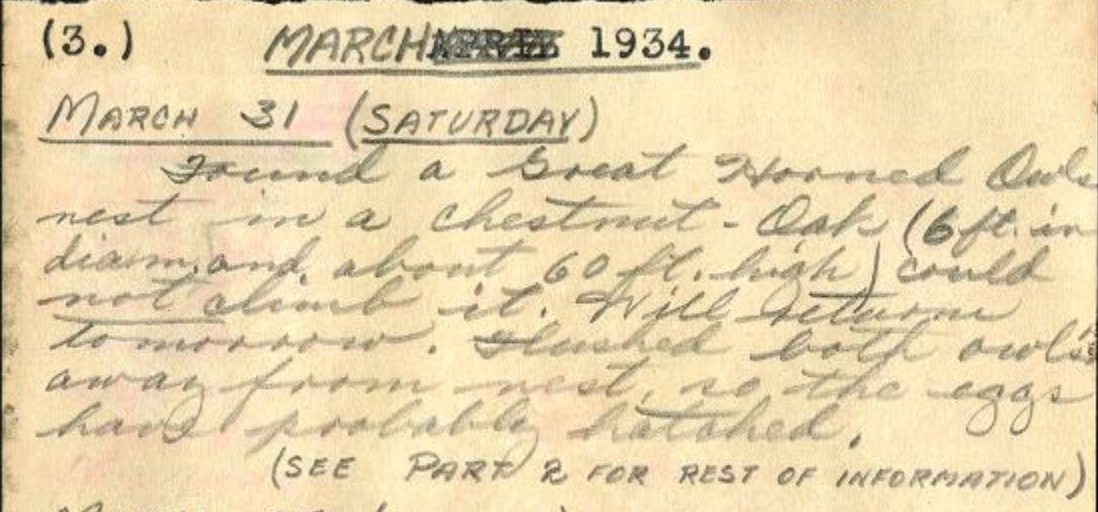
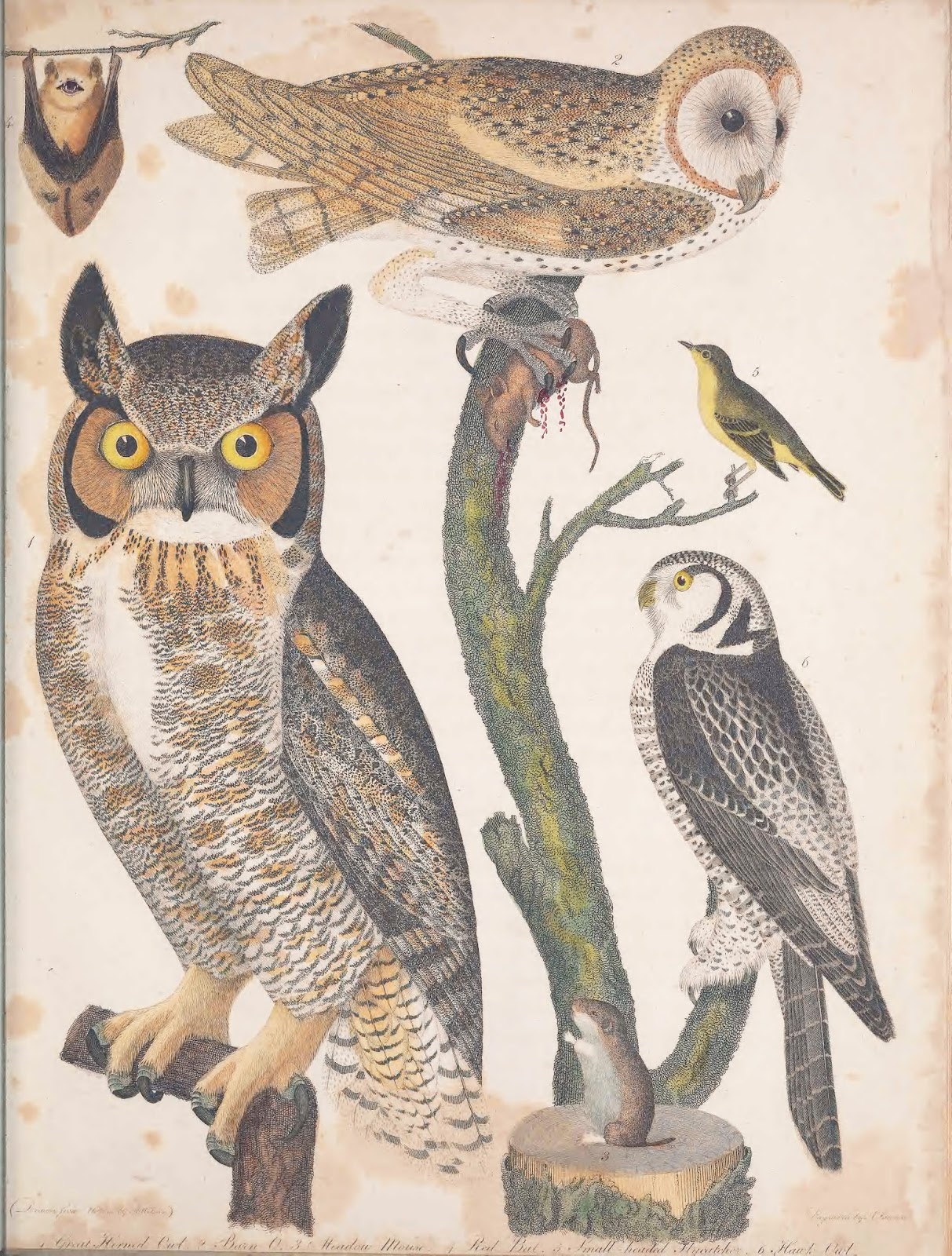
Great Horned Owl (Bubo virginianus)

View Full Size Image

Camblos writes:
“March 31 (Saturday)
Found a Great Horned Owl’s nest in a chestnut-oak (6 ft. in diam. and about 60 ft. high) could not climb it. Will return tomorrow. Flushed both owls away from nest, so the eggs have probably hatched. (See part 2 for rest of information)”

True to his word, Camblos continues the narrative of the great horned owl the following day, with a story that involves chicks and skeletons. Check it out!

View Full Size Image
Wilson, Alexander. American Ornithology. v. 6 (1812). http://biodiversitylibrary.org/page/46331204.


Here we see the great horned owl (lower left) amongst some of his winged friends (ave and mammal alike!). This illustration hails from Alexander Wilson’s American Ornithology. Wilson, called the “Father of American Ornithology” by some, traveled over 10,000 miles across North America observing and collecting birds, which he chronicled and illustrated in American Ornithology. The publication included over 260 species, 48 of which were new to science, and was published in at least 10 editions over 70 years. Sadly, he died at the age of 47 from dysentery and exhaustion. Learn more about Wilson’s incredible travels, and his other love – poetry – in a past blog post.

Eastern Bluebird (Sialia sialis)

View Full Size Image

Camblos writes:
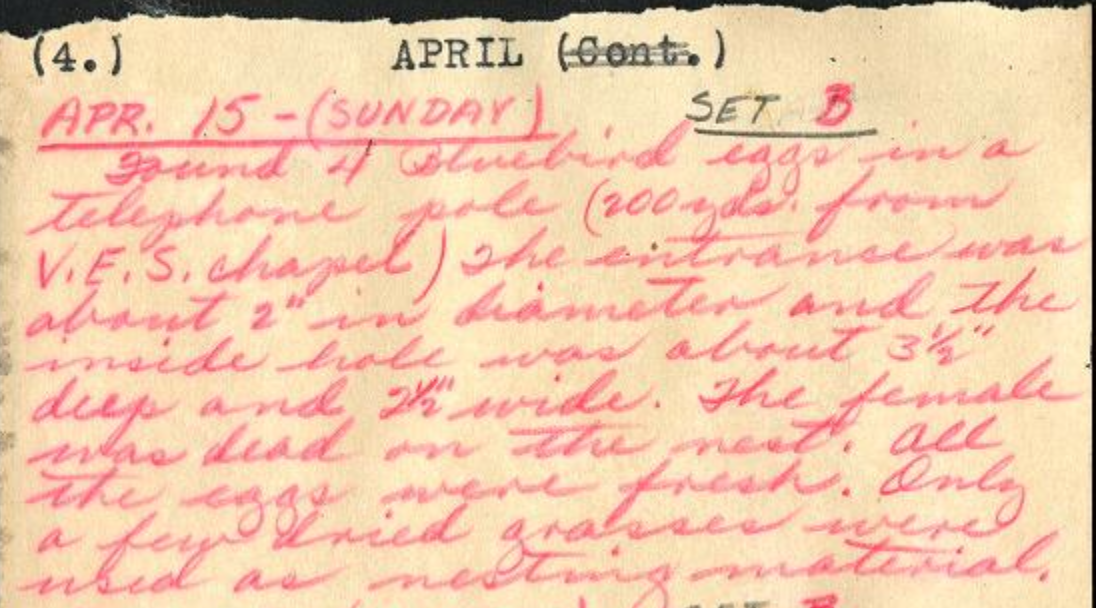
“April 15 – (Sunday)
Found 4 bluebird eggs in a telephone pole (200 yds. from V.E.S. chapel). The entrance was about 2″ in diameter and the inside hole was about 3 1/2″ deep and 2 1/2″ wide. The female was dead on the nest. All the eggs were fresh. Only a few dried grasses were used as nesting material.”

View Full Size Image
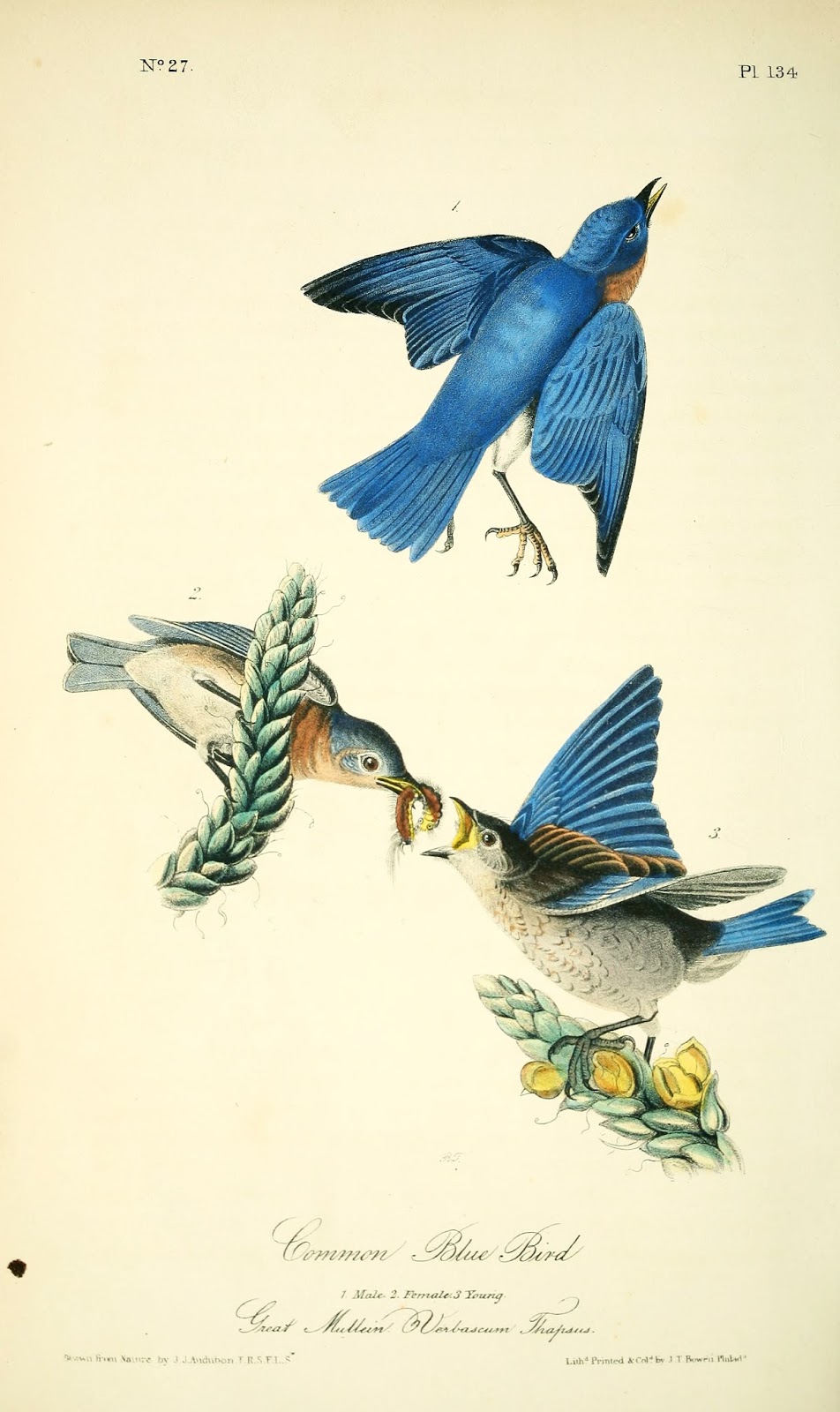
Audubon, John James. Birds of America. v. 2 (1841). http://biodiversitylibrary.org/page/40383680.

John James Audubon is pretty much a house-hold name. This French-American ornithologist, naturalist, and painter, was responsible for one of the most celebrated ornithological books ever published, Birds of America. After immigrating to the United States, Audubon undertook an expedition in 1820 up the Mississippi in an endeavor to paint all the birds of North America for eventual publication. This ambition later became Birds of America. The work represents more than 14 years of field observations and drawings by Audubon and contains 435 hand-colored, life-sized prints of 497 bird species and presents a total of more than 700 North American bird species. Learn more about the work and Audubon in a past blog post.

American Robin (Turdus migratorius)

View Full Size Image

Camblos writes:
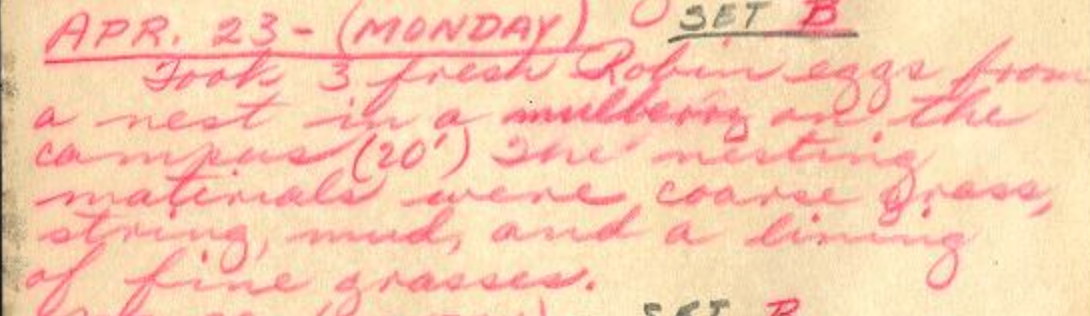
“Apr. 23 – (Monday)
Took 3 fresh Robin eggs from a nest in a mulberry on the campus (20′). The nesting materials were coarse grass, string, mud, and a lining of fine grasses.”

View Full Size Image
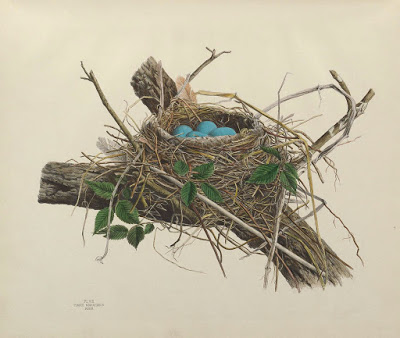
Robin’s nest with eggs. Illustrations of the nests and eggs of birds of Ohio. 1886. http://biodiversitylibrary.org/page/34907621.

In 1877, Genevieve Jones decided to create a series of plates for a publication depicting the nests and eggs of Ohio birds. She enlisted the help of close friend Eliza Schulze, and together the two women, amateur artists with no formal training, embarked on the venture. The first three plates, along with the accompanying text by Howard Jones, were sent to publication in 1879. Unfortunately, on August 17th, 1879, Genevieve Jones died of typhoid fever. Desiring to continue the work, Miss Schulze enlisted the help of Genevieve’s mother, Mrs. N. E. Jones. Eventually, Miss Schulze relinquished all of her interests in the title to Mrs. Jones. Determined to move forward, Mrs. Jones undertook the responsibility for all of the illustrations herself, eventually employing three additional artists, Miss Nellie D. Jacob, Miss Josephine Klippart, and Miss Kate Gephart. The final work, entitled Illustrations of the nests and eggs of birds of Ohio, consists of two volumes and 68 plates. Learn more about the work in this past post.

August 6, 2015by ulib-libraryjobs
BHL News, Blog Reel

We Need Books to Save Biodiversity

This month, we’re publishing a series of blog posts outlining the importance of biodiversity literature, made available for free and open access through the Biodiversity Heritage Library, to today’s scientific research and conservation initiatives. With your help, we can help save biodiversity. 

The Biodiversity Heritage Library (BHL) is revolutionizing the way scientific research is conducted by providing free and open access to biodiversity literature and archives representing over 500 years of scientific exploration, research, and discovery.

What’s so special about Historic Literature and Archives?

Historic literature and archival fieldbooks provide information that is critical to studying biodiversity. These documents are replete with data detailing the morphology, phylogeny and ethology of earth’s species. In many cases, this literature constitutes the only available knowledge for rare, endangered, and extinct species.

View Full Size Image
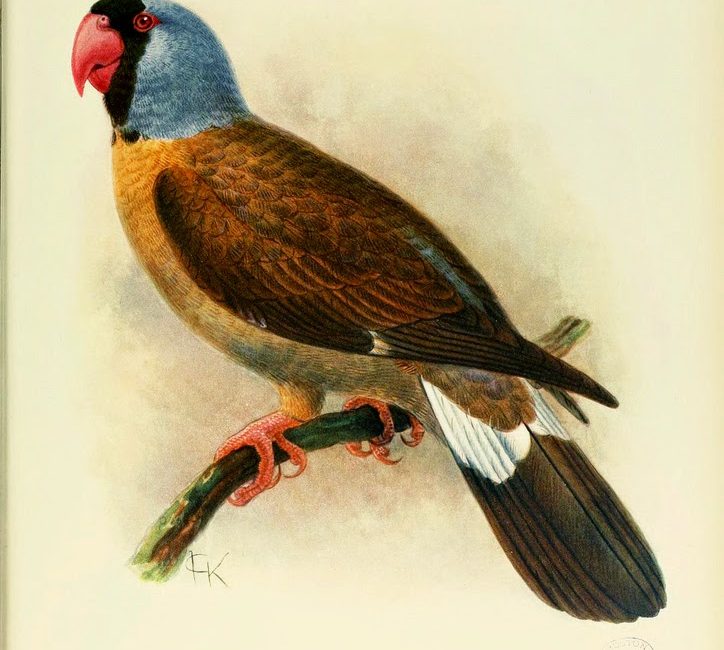
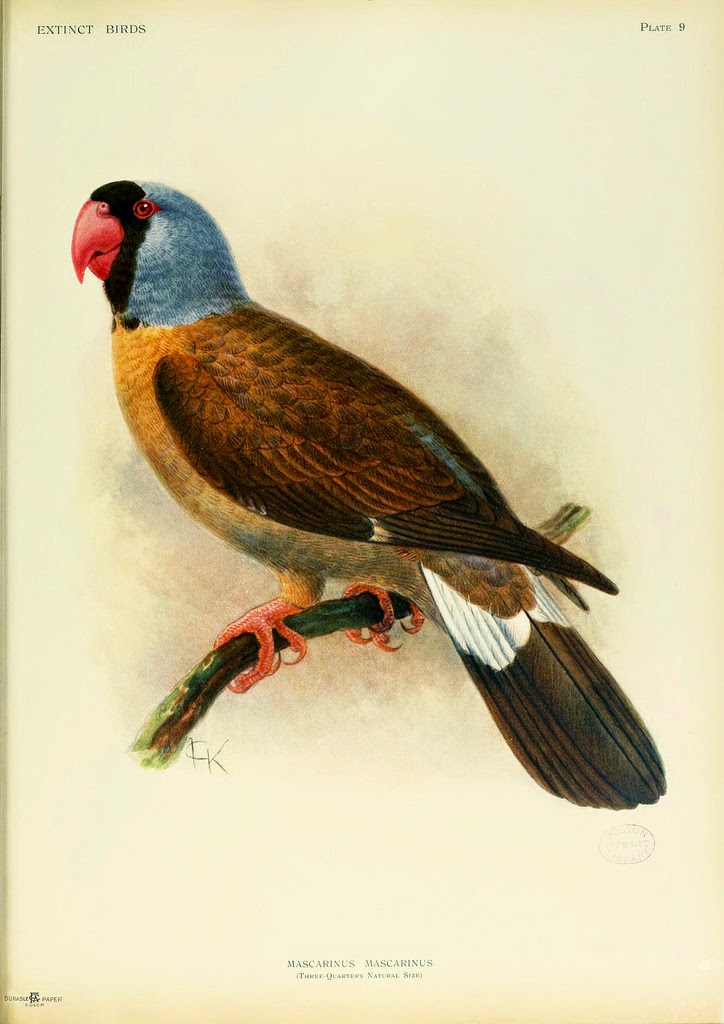
The Mascarene Parrot. Now Extinct. Rothschild, Lionel Walter Rothschild. Extinct Birds (1907). http://biodiversitylibrary.org/page/38665729.

In addition to species data, published books and fieldbooks capture ecosystem profiles, distribution maps, inter-dependency observations, and geological and climatic records. They also provide an historical perspective on species abundance, habitat alteration, and human exploration, culture and discovery.

This information has a multitude of applications in modern-day science. It is used to populate species databases and datasets that inform present-day research. It not only allows scientists to study biodiversity, but also to save it by enabling new species identification and facilitating the development of holistic conservation methods that integrate all of the factors necessary for a species’ wellbeing into its overall protection strategy. Furthermore, the discoveries captured in historic literature provide the foundations upon which contemporary models, theories and disciplines are based.

View Full Size Image
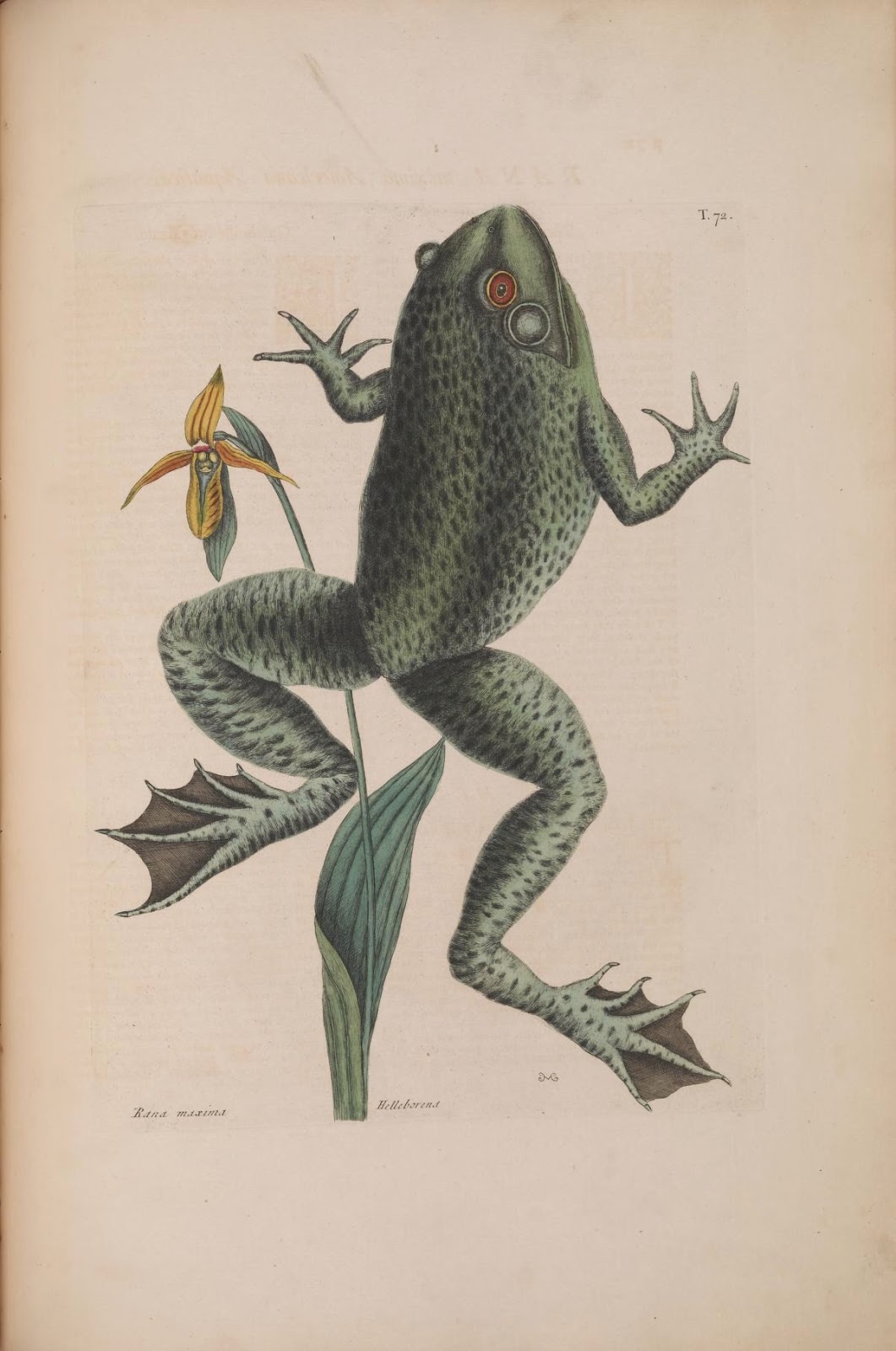
Cane Toad. From the first published account of the flora and fauna of North America: Catesby, Mark. Natural History of Carolina, Florida and the Bahama Islands (1729-47). http://biodiversitylibrary.org/page/38993574.

Sadly, much of these publications and archival content are available in only a few select libraries in the developed world.

“Science is all about disseminating knowledge and building upon what has come before, yet so much of our knowledge of plants and animals has remained inaccessible to those who could make use of it,” laments Dr. John Sullivan, an evolutionary biologist with the Academy of Natural Sciences, Philadelphia and Cornell University. “This has been a big part of the ‘taxonomic impediment.’”

The Biodiversity Heritage Library is Alleviating the Taxonomic Impediment

The Biodiversity Heritage Library boasts a collection of over 45 million pages from over 150,000 volumes and has served more than 3.5 million people in nearly every country since its launch in 2007. Additionally, BHL has made over 93,000 of the illustrations within its collection available in Flickr, which in turn have been viewed over 80 million times. Services such as taxonomic name finding tools, custom PDF downloads, and open APIs allow users to easily locate and reuse these resources.

“BHL is radically changing the status quo and democratizing access to knowledge about biodiversity,” lauds Dr. Sullivan. “Now anybody in the world has instant access to the original species description in a couple of clicks!”

View Full Size Image
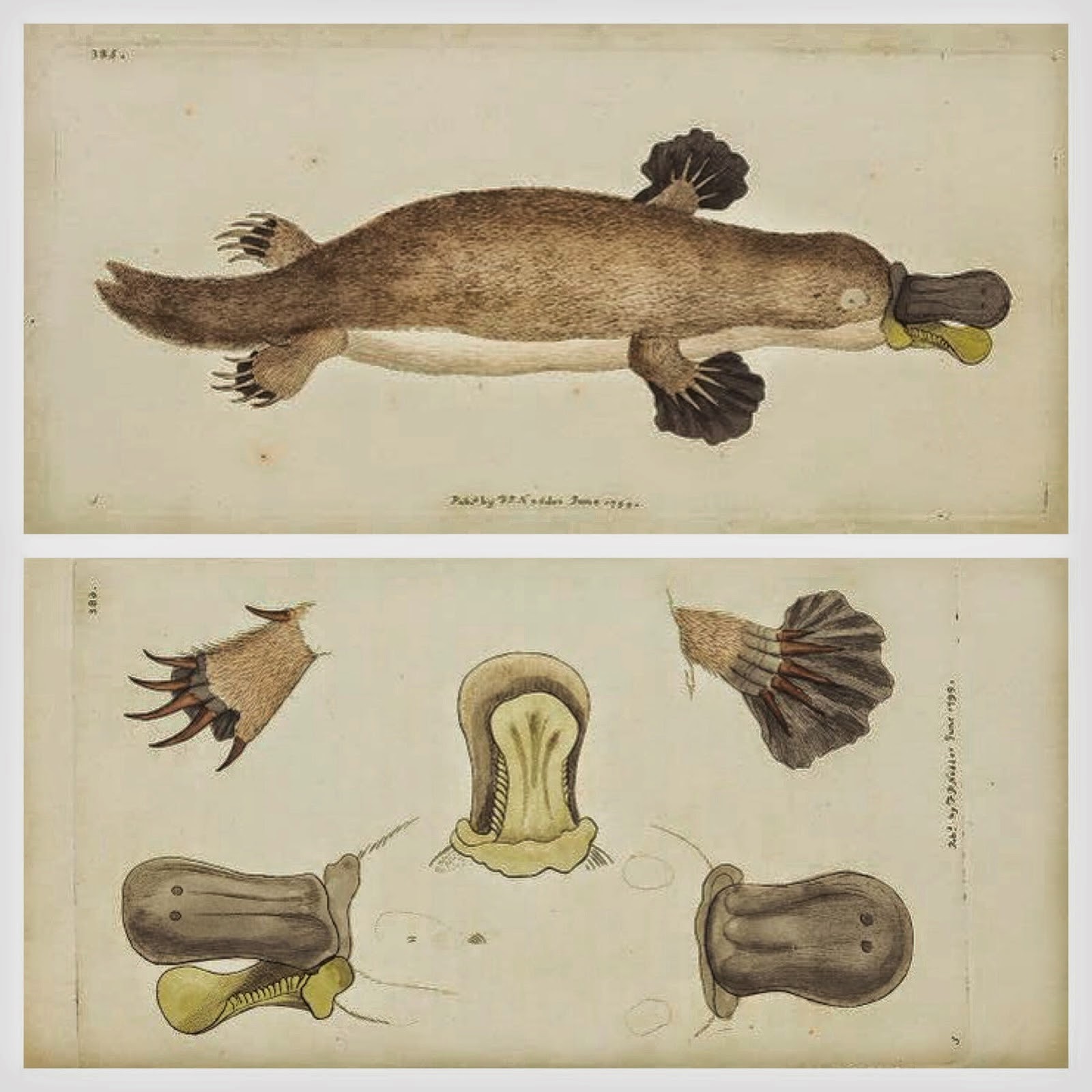
The first published illustration of the Duck-billed Platypus. Shaw, George. The Naturalist’s Miscellany, or Coloured figures of natural objects, Vol. 10 (1799). http://biodiversitylibrary.org/page/40321089.

Of Global Importance

Open access to biodiversity data is beneficial on a global scale, advancing scientific fields more quickly and connecting scientists and their research more efficiently than ever before, especially in developing countries with traditionally limited access to vital resources. “[The Biodiversity Heritage Library] has done an enormous amount to enhance the capacity of developing countries to undertake taxonomic research on their biota,” asserts Dr. Dai Herbert, a malacologist at the KwaZulu-Natal Museum in South Africa.

The repatriation of knowledge can also help countries better assess, monitor, and protect their native biodiversity. Recognizing that “identifying the factors that shape biodiversity locally helps to preserve them better in the future,” the United Nations, through the Convention on Biological Diversity, requires every signatory country to “identify and monitor the biodiversity of the organisms within its borders.” Thanks to BHL, countries now have access to information about and catalogs of the species within their boundaries, which can be used to form the basis of national biodiversity indexes and direct local conservation efforts.

View Full Size Image
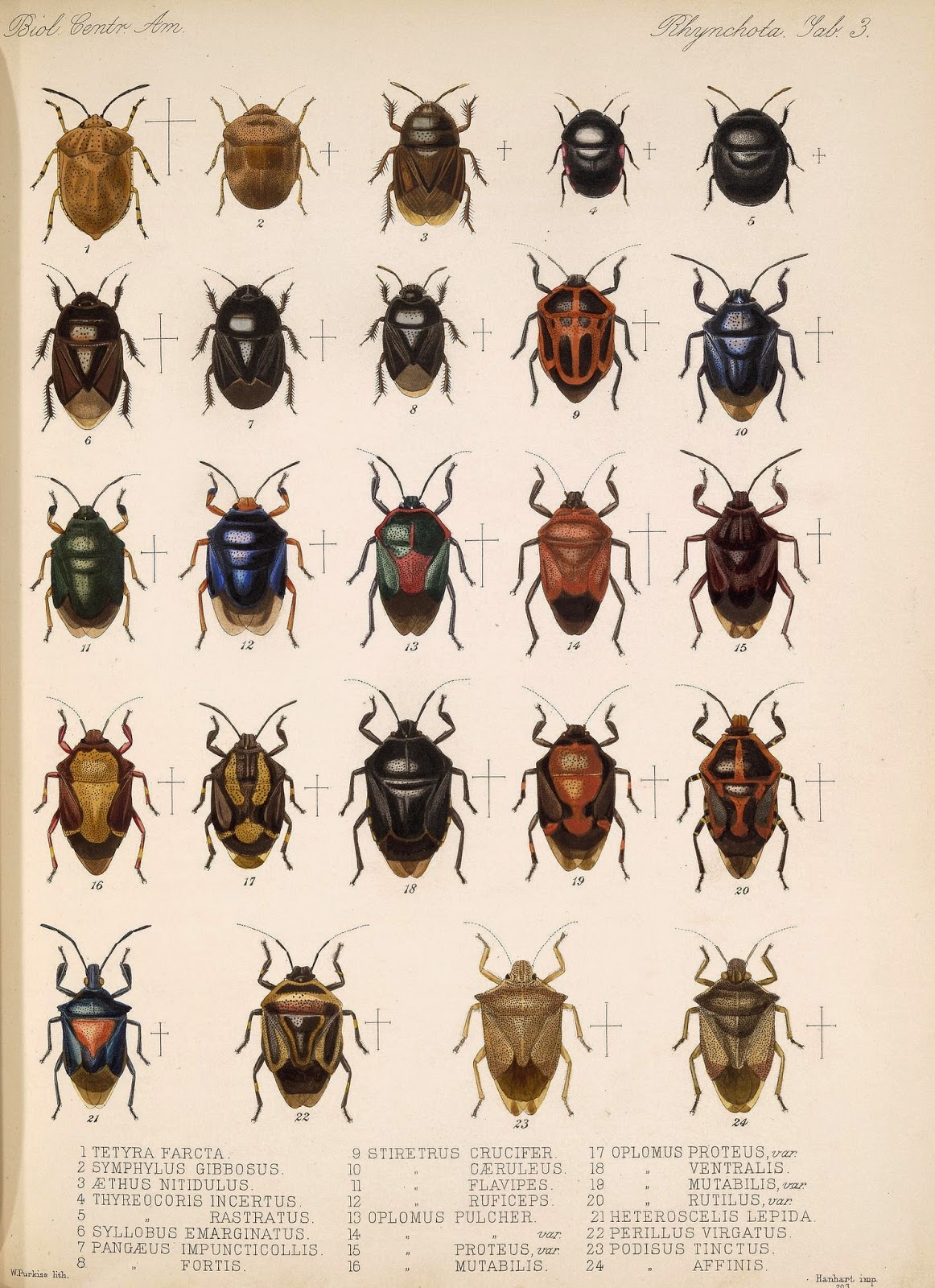
Insects. From Biologia Centrali-Americana. As this work contains all of the known information about the biodiversity of Mexico and Central America at the time of its publication, this title is still fundamental to the study of the biota of this region. http://biodiversitylibrary.org/page/594659.

Help Save Biodiversity

The Biodiversity Heritage Library is helping scientists save biodiversity, which in turn sustains our well-being as humans. “We need biodiversity to satisfy basic needs like food, drinking water, fuel, shelter, and medicine…Ecosystems provide services such as pollination, seed dispersal, climate regulation, water purification, nutrient cycling, control of agricultural pests” (Source: American Museum of Natural History website) and the “regulation and control of infectious diseases” (Convention on Biological Diversity).

View Full Size Image
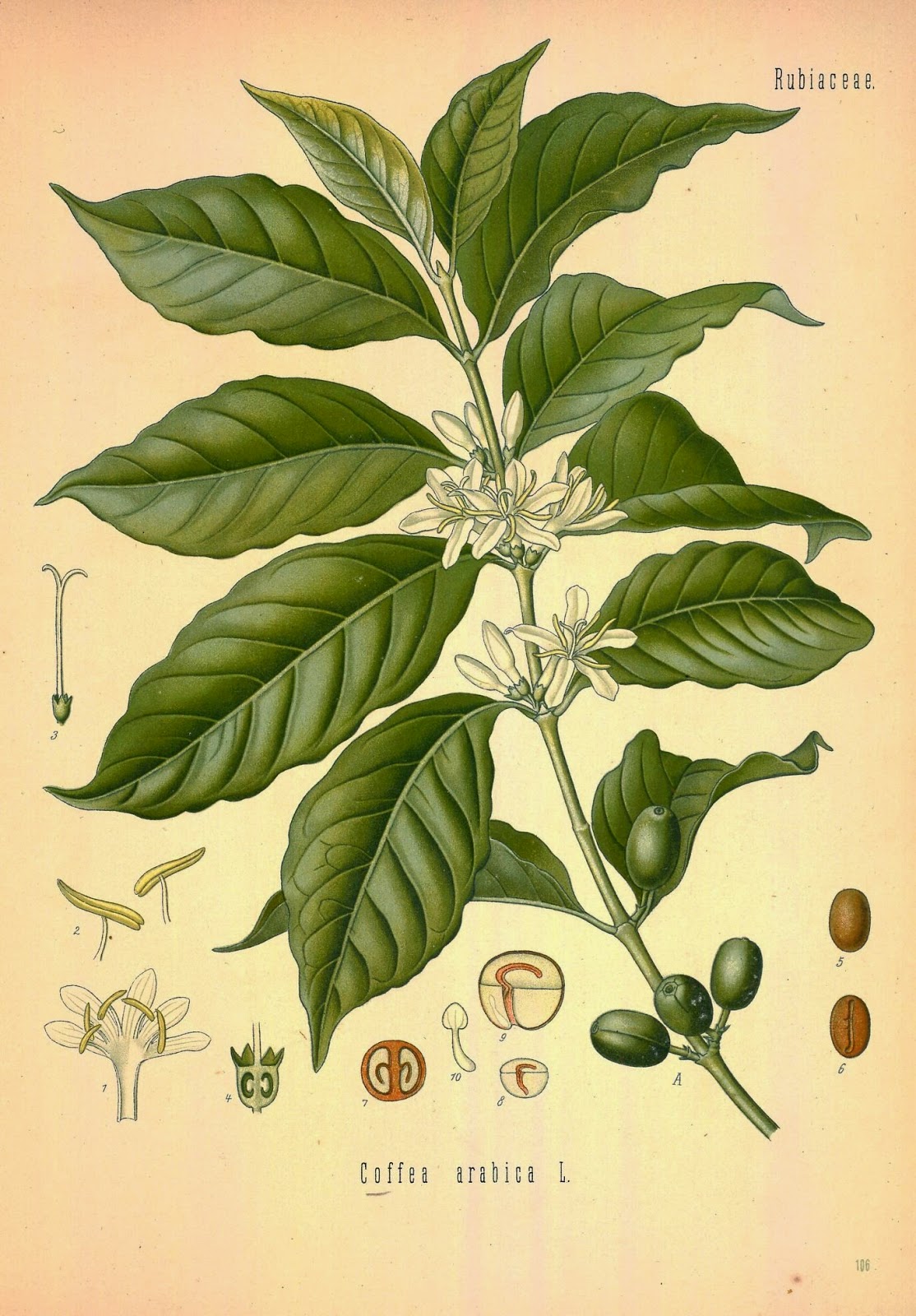
Coffea arabica, which accounts for 75–80 percent of the world’s coffee production. It is also believed to be the first species of coffee to be cultivated. Köhler’s Medizinal-Pflanzen (1883-1914). http://biodiversitylibrary.org/page/303146.

As we face a global biodiversity crisis that threatens the future of many species and habitats, unfettered access to biodiversity information has never been more important.

We rely on donations from users like you to help grow our library and keep it free and open. As you think about your holiday giving, we hope you’ll consider making a tax-deductible donation to help save biodiversity.

Learn more about the critical roles BHL and historic literature play in discovering new species, understanding past extinctions, and saving Earth’s biodiversity.

December 12, 2014by michelle.underhill
BHL News, Blog Reel

Crowdsourcing and BHL: Current Projects that Allow Users to Help Us Improve Our Library!

Recent crowdsourcing initiatives are revolutionizing scientific research, allowing the public to help scientists and researchers document, identify, and better understand biodiversity.

For example, the Atlas of Living Australia’s FieldData program allows anyone to contribute sightings, photos and observational data to help researchers and natural resource management groups collect and manage biodiversity data. Birds Australia is using this data to help record sightings of Carnaby’s Black-Cockatoo to inform conservation initiatives for this endangered species.

As another example, in 2013 a new mammal species, the olinguito (Bassaricyon neblina), was discovered in South America, the first carnivore species to be discovered in the Americas in 35 years. Scientists at the Smithsonian’s National Museum of Natural History are using citizen science-contributed observational data and photos to learn more about the new species.

BHL has taken advantage of crowdsourcing’s potential, implementing several initiatives to improve access to BHL images, support OCR correction and transcription, and generate semantic metadata for the BHL portal.

Art of Life: Improving Access to Images

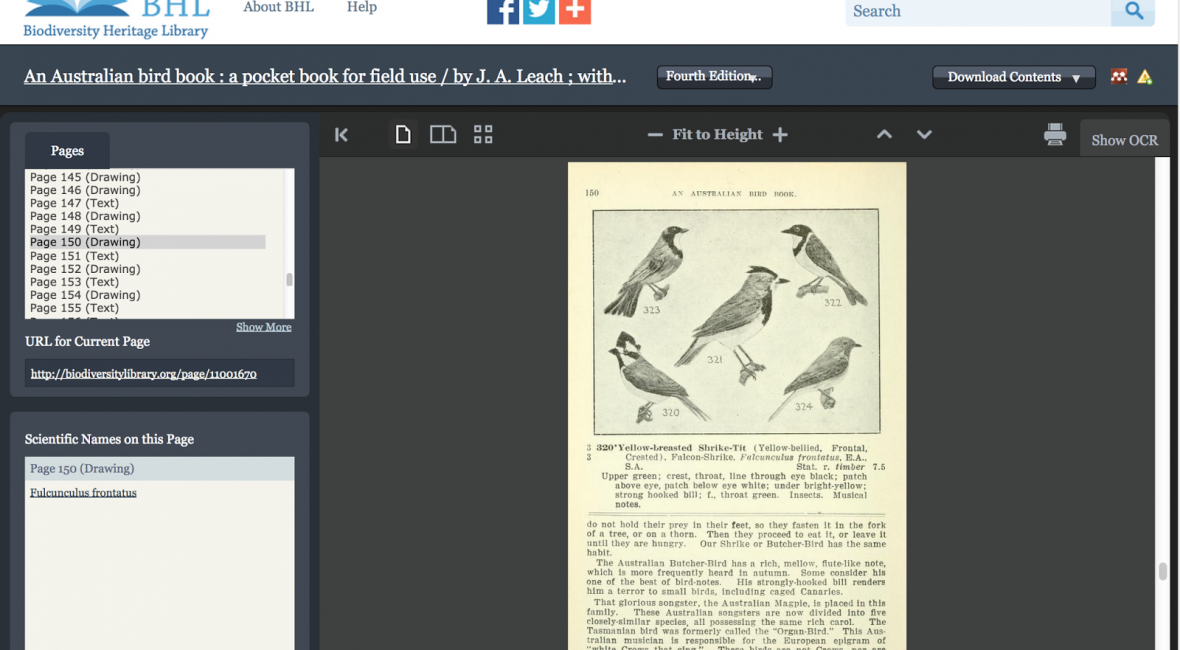
The Art of Life project, funded by NEH and based at the Missouri Botanical Garden, has been making active progress on its objective of improving access to the natural history illustrations within BHL. The image-finding algorithms developed by the Indianapolis Museum of Art Lab have been run across 18 million BHL pages and you’ll now notice a significant increase in the number of pages tagged as having illustrations within the BHL portal. Pages with illustrations are currently being manually classified by volunteers as belonging to one or more image types: drawing, table, photograph, map, and/or bookplate. A few examples in the BHL portal include:
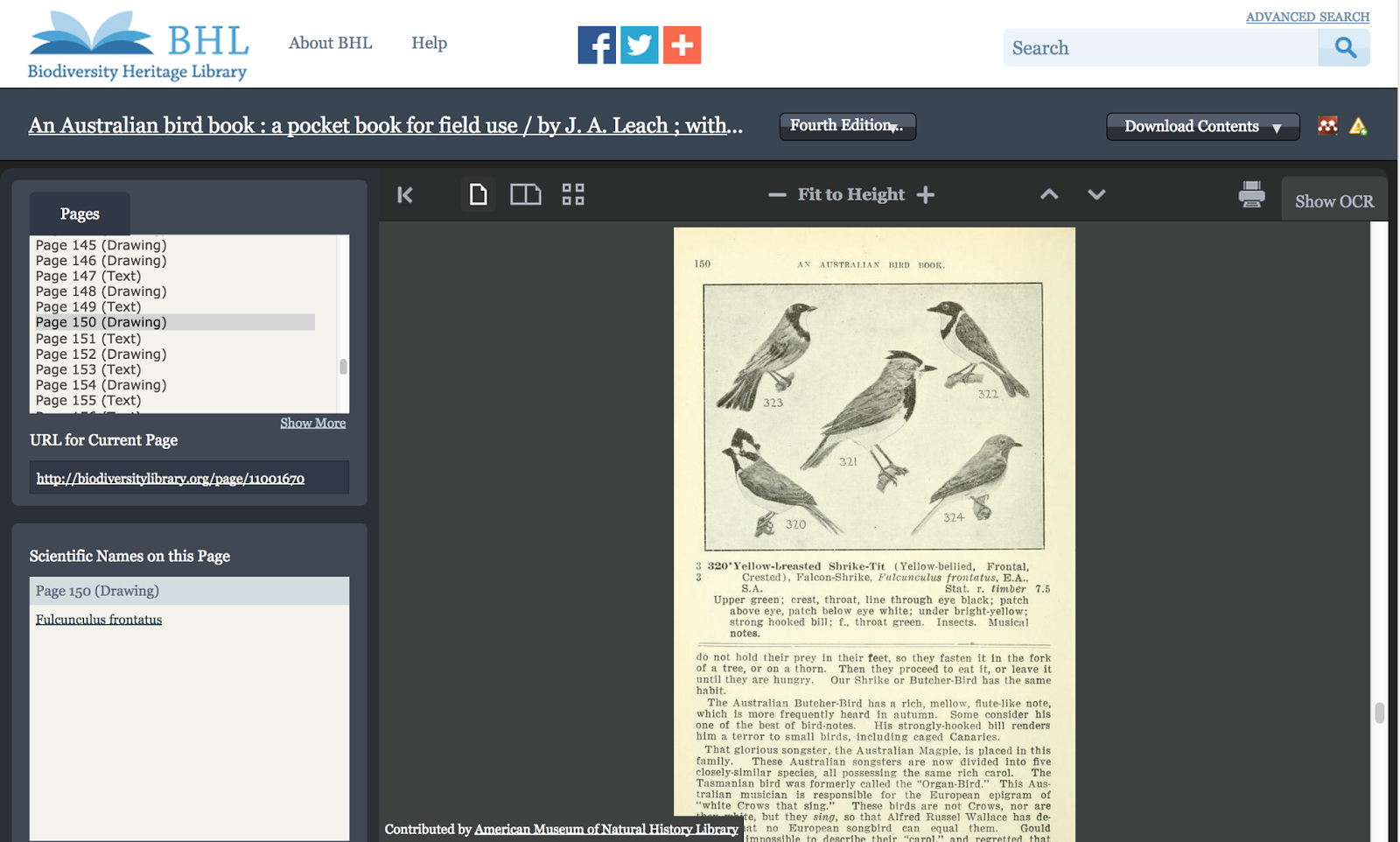
  • http://www.biodiversitylibrary.org/page/11001670
  • http://biodiversitylibrary.org/page/11001551
  • http://www.biodiversitylibrary.org/page/3601565
  • http://biodiversitylibrary.org/page/12284099
View Full Size Image
Example of how metadata now displays descriptive information about the types of images found within BHL pages.

Next steps for the project are to crowdsource descriptions for the image’s content (e.g. subjects, dates, illustrator) through platforms such as Flickr and Wikimedia Commons. Learn more about the Art of Life project, which runs through April of 2015.

Learn how you can help tag BHL’s illustrations in Flickr.

On a related note, we will also be crowdsourcing BHL image descriptions through another platform, Zooniverse, the premier host for citizen science projects. This opportunity came about through a partnership with Constructing Scientific Communities (aka ConSciCom). More details will be forthcoming in a future blog post but expect to see BHL content available in Zooniverse in late spring or early summer of 2015.

Purposeful Gaming and BHL: Playing at OCR Correction and Transcriptions

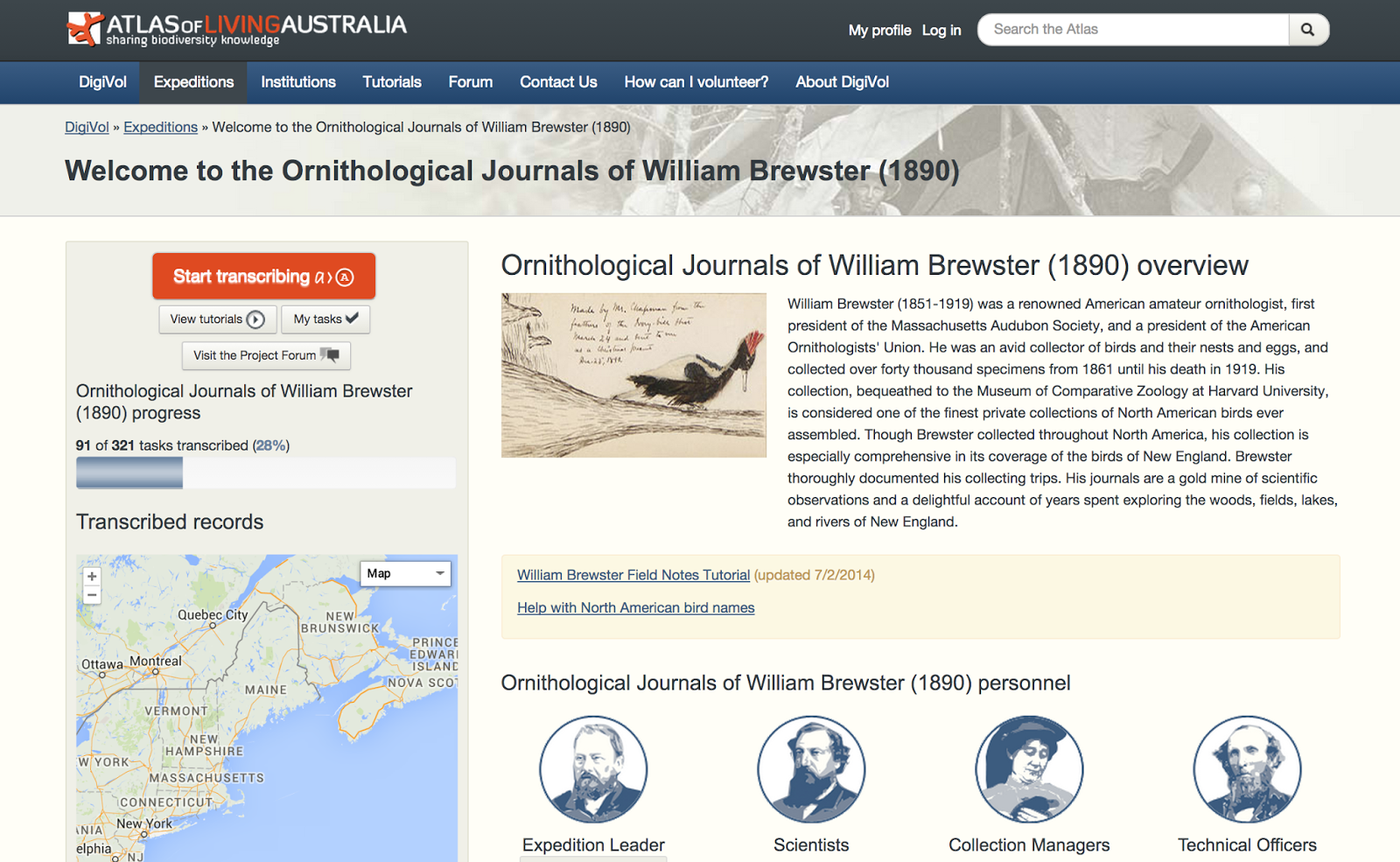
Another crowdsourcing BHL project called Purposeful Gaming and BHL, funded by IMLS and based at the Missouri Botanical Garden, has been making significant strides in its objective to improve access to BHL texts through gamifying the text correction process. Digital outputs of BHL text are created both through automated (OCR of published text) and manual means (transcription of hand-written text from ornithologist William Brewster). Multiple outputs of the same page are then compared and differences incorporated into an online digital game in which the public will help verify the accuracy of individual words. Those corrections will then be incorporated back into the BHL portal for viewing by users and to enable full text searching. The project’s game designer, Tiltfactor, has recently completed and beta-tested 2 initial prototypes for both gaming and non-gaming audiences. The final games are expected to go live in May 2015. Learn more about the Purposeful Gaming project, which runs through November of 2015.
View Full Size Image
William Brewster’s journals available for transcription in the ALA/Australian Museum Biodiversity Volunteer Portal.

Help us transcribe William Brewster’s journals and diaries in the ALA/Australian Museum Biodiversity Volunteer Portal (click on any of the William Brewster projects listed) and FromThePage! Find guidelines for transcribing the documents here.

Mining Biodiversity: Semantics and the Crowd

In the near future, the Mining Biodiversity Project, whose USA partners’ participation is also funded by IMLS, will be crowdsourcing the creation of a gold standard annotated set of pages to train the mining algorithms that will search for named entities (ie. concepts like taxa, places, people, habitat, traits). After that, a bigger group of volunteers will help validating the pre-annotated relations through time (events) automatically discovered from our BHL corpus. Learn more about the Mining Biodiversity Project, which runs through December 2015.

The Field Book Project: Improving Access to Researchers’ Fieldnotes

The Smithsonian Field Book Project has been hard at work discovering and making accessible field book materials through cataloging, digitization, and online publication. Thanks to dedicated staff and volunteers, the Project has made huge strides in that direction. To date, 90 fieldbooks digitized by The Field Book Project have been ingested into BHL.

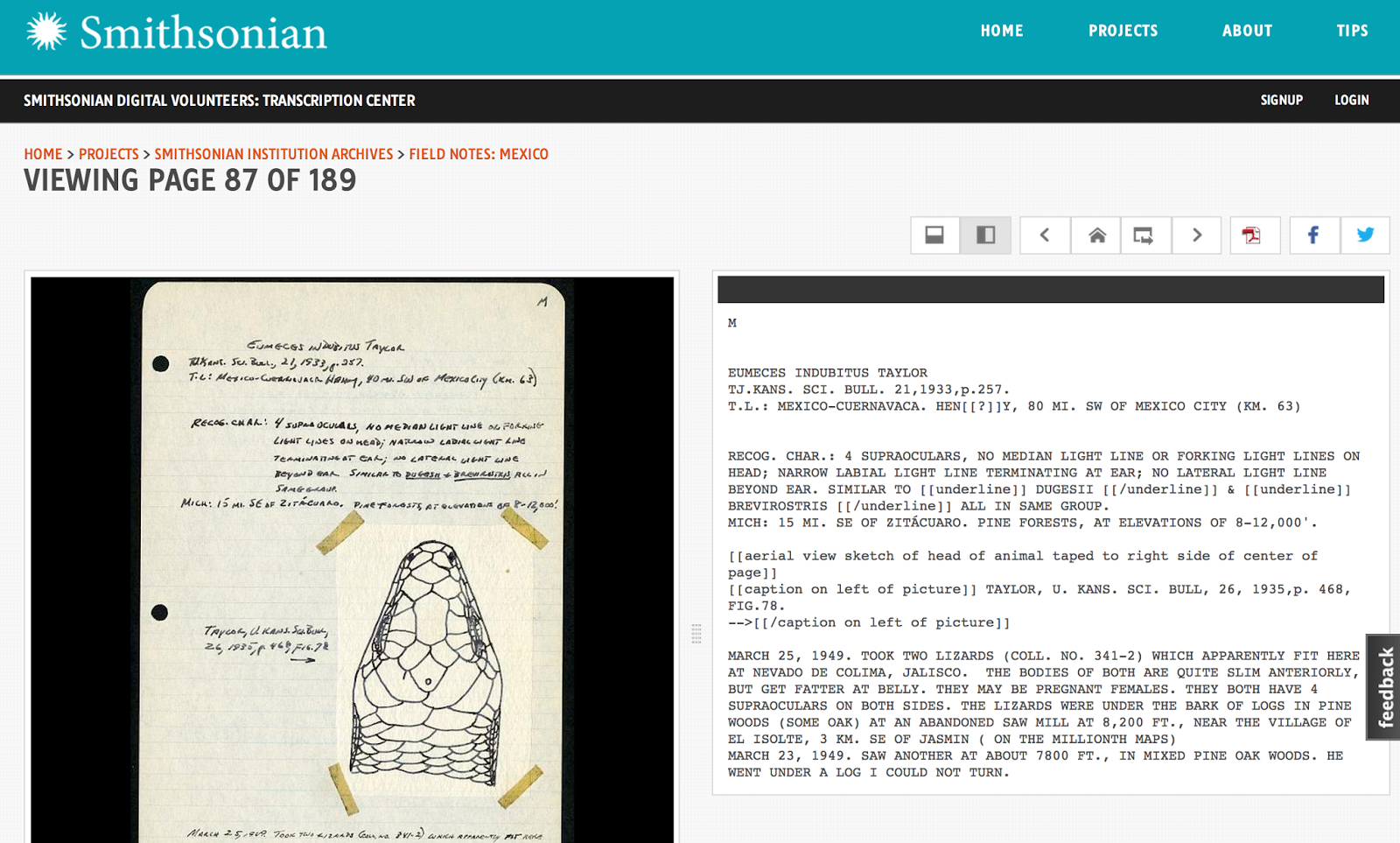
However, no celebration of success would be complete without a mention of the passionate “volunpeers” of the Smithsonian Transcription Center. Field books are often difficult to search and read due to their age and generally hand-written entries; pages may be faded and smudged, handwriting may be cramped or scribbled or stained by exposure to the elements, and the author may have used symbols and index marks that are foreign to modern readers. Unless a researcher knows exactly what they are looking for, they may be discouraged by the time and effort it takes to parse the archival text. Thankfully, the Smithsonian Transcription Center, which opened to the public on August 12th, has included the Field Book Project as one of its partners since the very beginning, allowing us to ask the crowd for assistance in conducting detailed readings and transcribing of field book content.
View Full Size Image
James Peter’s fieldnotes from Mexico (1949-50), transcribed for The Field Book Project in the Smithsonian Transcription Center.

Each item that goes into the Transcription Center must first be transcribed and then reviewed by a volunpeer, who must create an account and can then access both the training documents on the site and also the rich community on the Center and on related social media platforms for questions and answers. Several of the volunpeers have become “super users,” transcribing and reviewing a large volume of material, and also serving as rich information sources for new transcribers on how to document tricky situations such as foreign characters, symbols, marginalia, and in field books in particular, the scientific names for observed flora and fauna.

At last count there were 84 items in the Transcription Center, 69 of which had been fully transcribed, an incredible resource for researchers and reference archivists alike! More fieldbooks are being added continuously and the eventual goal is to place those completed transcriptions into BHL alongside the original field books. The crowd of volunpeers has and is enabling the Field Book Project to offer more and better access to everyone from professional researchers to curious onlookers, and sometimes even leads researchers to information that may never have been discovered without the dedicated assistance of the volunpeers on the Smithsonian Transcription Center.

Become a volunpeer today and help us transcribe field notes to improve access to these valuable primary-source documents!

We Love Our Users!

With over 44 million pages of biodiversity literature, several million images, and a desire to continuously improve access to and discovery of these materials, leveraging the power of the crowd is a match made in heaven for BHL. With contributions from our users, we can ensure that our wealth of biodiversity information can continue to inspire discovery of the natural world. Thank you for your contributions, and if you’d like to know more about how you can contribute, send us feedback.

Trish Rose-Sandler, BHL Data Analyst, Missouri Botanical Garden
Julia Blase, Project Manager, The Field Book Project
Grace Costantino, BHL Outreach and Communication Manager

View Full Size Image

The Art of Life project is funded by the National Endowment for the Humanities (Grant number PW-51041-12).

View Full Size Image

Mining Biodiversity is funded in part by the Institute of Museum and Library Services (Grant number LG-00-14-0032-14).

Purposeful Gaming is funded by the Institute of Museum and Library Services (Grant number LG-05-13-0352-13).

November 6, 2014by Grace Costantino
Blog Reel, Featured Books

Down the rabbit (Lepus curpaeums) hole: Edward A. Chapin

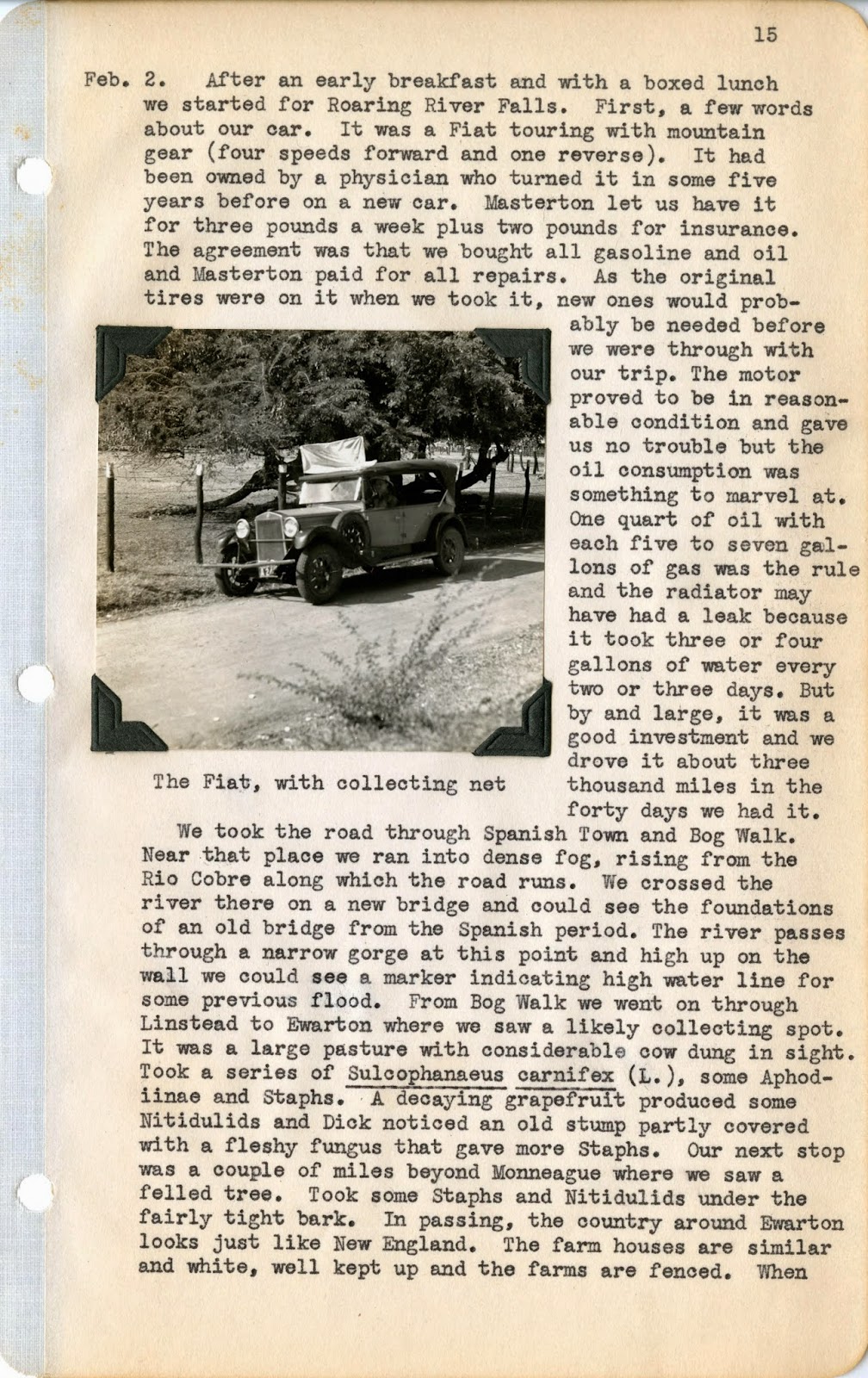
Last week, with the arrival of many more of the field books to the Biodiversity Heritage Library web portal, I had the chance to dive deeply into the field books of Edward Chapin, entomologist and Curator of Insects at the Smithsonian Institution from 1934 to 1954. I spent the most time in his field book covering a set of travels to Cuba and Jamaica, though mostly Jamaica, in 1937 and 1941. It was a fascinating adventure “down the rabbit hole” into another era of history!

The beetles, bad weather, and endless driving

View Full Size Image
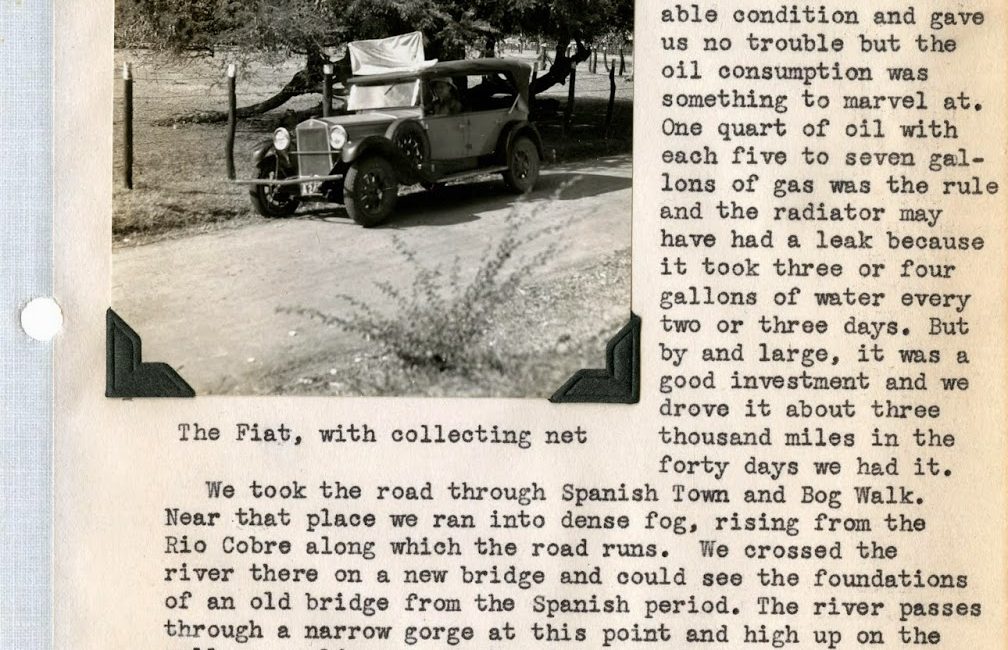
Entry from Edward A. Chapin’s “Field notebook, Cube and Jamaica, 1937, 1941, [1947].” Smithsonian Institution Archives. SIA Acc. 11-085, Box 1, Folder 1.

Several things struck me almost as soon as I began reading, the first of which was how closely Chapin’s descriptions of the insect life of the islands were wrapped with his observations of the weather, travel conditions, car problems, dinner menus, host families and housing arrangements, and even clothing purchases. A set of observations on insect collecting might be as short as a sentence or as long as a page, depending on what caught his attention that day. The second item that struck me was how frustrating these kinds of expeditions could be! Not only Chapin deal with the usual traveler’s woes of lost luggage and poor weather, but he also faced challenges unique to the scientist – the difficulty in finding many types of insects, or one insect in many life stages, or in finding relevant insects at all. It seemed that Chapin sometimes spent days driving from one end of the island to the other, looking for abandoned homes, downed trees, fence posts and post holes, and such beetle- and termite-friendly places to explore, and often finding nothing. However, on other days he was so overwhelmed with his findings that the problem became locating additional jars to hold them all!

Sugar factories, banana plantations, and Panama Disease

I also went further down the field book “rabbit hole” with items that Chapin mentioned seemingly offhand. For instance, in one of his entries, he described his visit to a sugar factory and detailed the process by which cane became sucrose and molasses, which I found fascinating. He followed that entry with one describing the tour of the banana plantations on the island, and how the banana carriers (those who took bunches from the rows of plants to spots along the road where they would be loaded into trucks) received only “three shillings a hundred bunches. The work is hard as it means tramping through mud six or eight inches deep for fifty yards or so with about 150 lbs balanced on the head.” I immediately looked online for a recording of Harry Belafonte’s “Day-O” and began to read about its history as a Jamaican folk song – the song seems so lighthearted, compared to the work it describes. I can hardly imagine the kind of daily labor that the banana carriers endured.

Chapin even made a brief mention of Panama Disease affecting the banana plants on the island – I did a bit of research and discovered that another strain of Panama Disease is the current cause of problems with the Cavendish banana that we all enjoy at our local grocery stores. “Race 1” of the disease was the cause of the epidemic in the 1950’s that wiped out the previously farmed Gros Michel banana. Chapin’s 1941 journal was recording the disease almost 10 years before it became a widespread problem!

New Seville and Christopher Columbus

I fell into more research when Chapin mentioned a visit to Seville, which was

“now a large coconut walk but originally the site of the first Roman Catholic cathedral (1505). The foundations have been cleared and in the center of the floor there is a hole about six feet across and ten feet deep, carefully walled with brick, from which a passage leads away to the west. In this passage we found a dozen pieces of very beautifully carved stone, probably the remains of the altar. One piece has the coat-of-arms of the Bishop of Seville, the others are mostly angels and cherubims.”

I did a quick search for “Seville, Jamaica” and found a UNESCO world heritage website for “New Seville,” which hosted Christopher Columbus in the late 1490s and did indeed feature a Roman Catholic church of “Peter Martyr, the first abbot of Jamaica, having begun in 1525.” Someone’s dates are off…I’m inclined to think that Chapin was misled in thinking the church was from 1505, but who knows? At least I learned more about the history of Columbus’ voyages in the new world, and just in time for Columbus Day (October 13th).

WWII Internment Camps

View Full Size Image
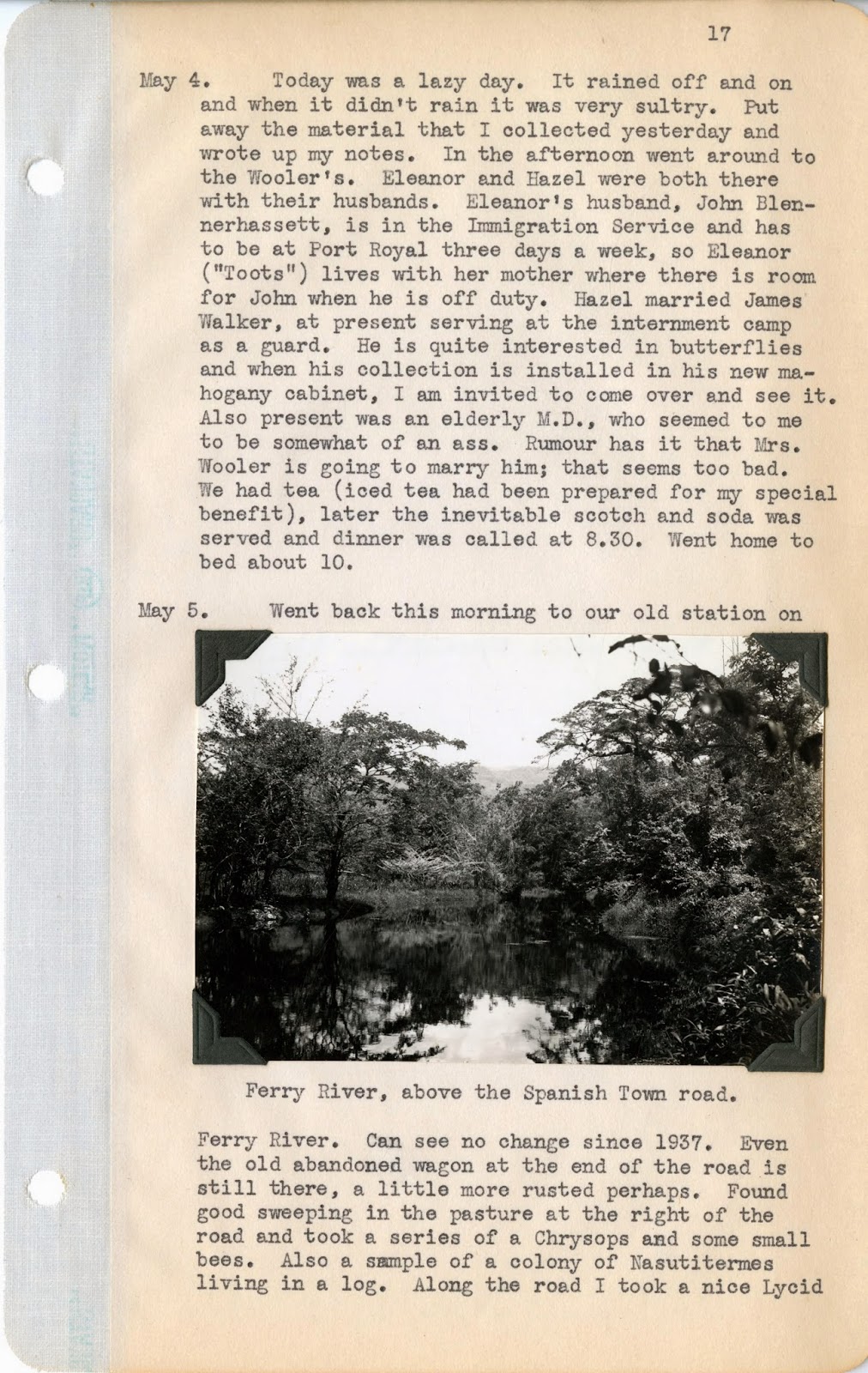
Entry from Edward A. Chapin’s “Field notebook, Cube and Jamaica, 1937, 1941, [1947].” Smithsonian Institution Archives. SIA Acc. 11-085, Box 1, Folder 1.

One more historical mention led me to another fifteen minutes or so of research – Chapin’s off-hand mention that the husband in one of the families he met on the island was “at present serving at the internment camp as a guard.” The history I knew of U.S. internment camps during WWII only covered the Japanese-American internment camps in the West. I had no idea that there were internment camps in Jamaica. Who did they hold? A quick search revealed that not only were there internment camps on the islands, but that they held both plantation owners who were of German descent and thus “possibly” sympathizers, as well as the German POW’s from U-boats taken in the Atlantic (see also the one-sentence mention of the German POW barracks in Up Park Camp on this page).

The mongoose and the dolphins

And finally, there were two mentions of animals that I found fascinating. The first was a mention of the mongoose, an invasive species introduced to the islands to prey on the rats that destroyed large amounts of sugar cane. As in many other places, the non-native species proved far more destructive than imagined and became more of a problem than the rats themselves even in 1941. The mongoose lives on the islands to this day, and has contributed to the possible extinction of at least four native species. And second, a mention by Chapin of his journey home, where he was off the coast of Cape Hatteras and recorded being

“in the midst of the herd of bottlenosed dolphins headed north on their annual migration. As far as one can see, in every direction, there are thousands of dolphins moving steadily northward. On either side of the bow, our boat is convoyed by groups of from three to ten animals…we first sighted them at four in the afternoon and they were still with us at dark.”

Today herds of dolphins are recorded as numbering only in the hundreds during their winter migration – nevertheless, what a lovely image with which to conclude my research adventures in the field notebooks of Edward A. Chapin, entomologist, traveler, and recorder of both scientific and humanist history.

For more information

For more information about Edward Chapin, and to see the full records for his field books held at the Smithsonian Institution, please see his records in the Smithsonian Collections Search Center.

As of this blog post, three field books by Edward Chapin have been fully digitized and are available on the Biodiversity Heritage Library site.

Each of the three field books in BHL has been fully transcribed by volunteers with the Smithsonian Transcription Center. You can find them at the following three links: Cuba and Jamaica, Colombia, Chile.

View Full Size Image
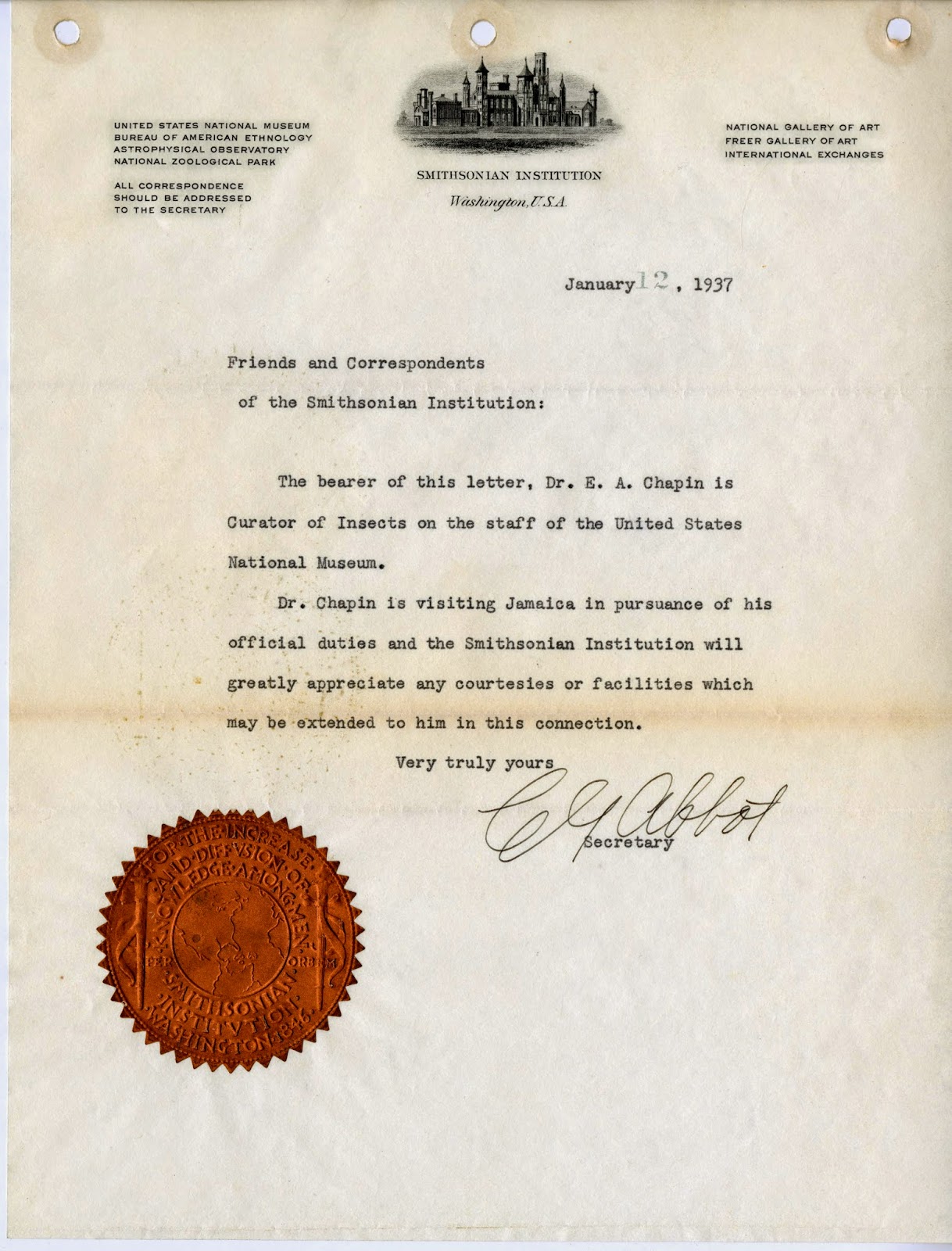
Letter from Edward A. Chapin’s “Field notebook, Cube and Jamaica, 1937, 1941, [1947].” Smithsonian Institution Archives. SIA Acc. 11-085, Box 1, Folder 1.
October 13, 2014by ulib-libraryjobs

Help Support BHL

BHL's existence depends on the financial support of its patrons. Help us keep this free resource alive!

search

About BHL

The Biodiversity Heritage Library (BHL) is the world’s largest open access digital library for biodiversity literature and archives. BHL operates as a worldwide consortium of natural history, botanical, research, and national libraries working together to digitize the natural history literature held in their collections and make it freely available for open access as part of a global “biodiversity community.”

Join Our Mailing List

Sign up to receive the latest news, content highlights, and promotions.

Subscribe Now

Subscribe to Blog via Email

Enter your email address to subscribe to this blog and receive notifications of new posts by email.

Join 319 other subscribers

Subscribe to Blog Via RSS

Subscribe to the blog RSS feed to stay up-to-date on all the latest BHL posts.

Access RSS Feed

Inspiring Discovery through Free Access to Biodiversity Knowledge.

The Biodiversity Heritage Library makes it easier than ever for you to access the information you need to study and explore life on Earth…for free, anytime, anywhere.


64+ Million Pages of
Biodiversity Literature Online.

EXPLORE

Tools and Services
to Transform Research.

EXPLORE

300,000+
Illustrations on Flickr.

EXPLORE

ABOUT | HARMFUL CONTENT | PRIVACY | SITE MAP | TERMS OF USE