
Biodiversity Heritage Library - Program news and collection highlights from BHL
  • Home
  • News
  • Featured Books
    • All Featured Books
    • Book of the Month Series
    • BHL at 20
  • User Stories
  • Campaigns
    • Fossil Stories
    • Garden Stories
    • Monsters Are Real
    • Page Frights
    • Her Natural History
    • Earth Optimism 2020
  • Tech Blog
  • Visit BHL
Home
News
Featured Books
    All Featured Books
    Book of the Month Series
    BHL at 20
User Stories
Campaigns
    Fossil Stories
    Garden Stories
    Monsters Are Real
    Page Frights
    Her Natural History
    Earth Optimism 2020
Tech Blog
Visit BHL
  • Home
  • News
  • Featured Books
    • All Featured Books
    • Book of the Month Series
    • BHL at 20
  • User Stories
  • Campaigns
    • Fossil Stories
    • Garden Stories
    • Monsters Are Real
    • Page Frights
    • Her Natural History
    • Earth Optimism 2020
  • Tech Blog
  • Visit BHL
Biodiversity Heritage Library - Program news and collection highlights from BHL
Blog Reel, Campaigns, Earth Optimism 2020, Featured Books

Nature Conservation and William Brewster: Insights From a Lifetime of Scientific Observations

This post is part of a series from the Ernst Mayr Library exploring the digitization and transcription of ornithologist William Brewster’s archival materials and the insights and scholarship made possible thanks to this work.

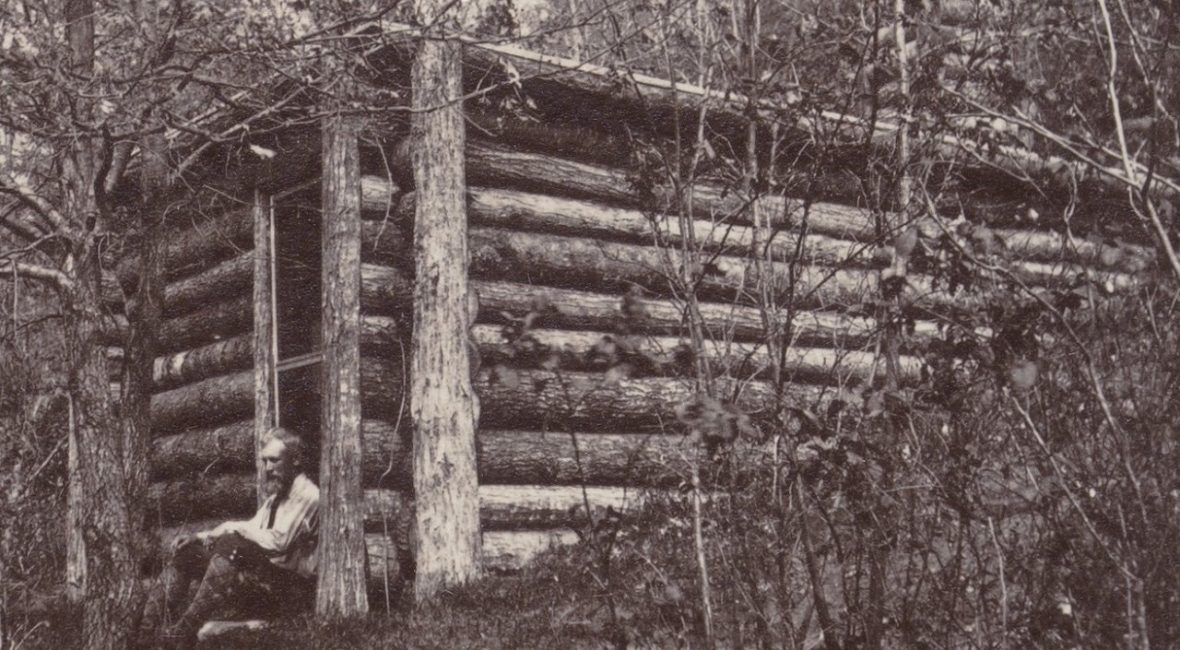
Black and white photo of a man sitting on the doorstep of a log cabin in the woods.

A black and white photograph of William Brewster sitting on the front doorstep of his cabin in Concord, Ma. The small, one-story log cabin is set in a hillside and surrounded by small trees and shrubs. The back of the photograph has the note: “Concord, Mass. May 20, 1892.” (Ernst Mayr Library Special Collections, call no. bBr97.70.7.)

The Ernst Mayr Library and Archives of the Museum of Comparative Zoology (MCZ), Harvard University, holds a unique and extensive collection of photographs, letters, manuscripts and field notes of William Brewster, a prominent ornithologist/naturalist of the late 19th and early 20th centuries. His published work is lauded as providing authoritative and novel additions to ornithology.

Brewster published more than 300 ornithological papers and several books which are widely available in academic and research libraries. He was the first president of the Massachusetts Audubon Society and was a founding member of the Nuttall Ornithological Club, out of which grew the national organization, the American Ornithologists’ Union. Brewster served as President of the American Ornithologists’ Union from 1895 to 1898, and the organization has awarded a medal in Brewster’s name since 1921.

Brewster’s ornithological studies covered the United States, although he worked most extensively in New England. Brewster was a Curator of Ornithology in the Harvard University Museum of Comparative Zoology from 1885 to 1902, continuing to work in the MCZ until his death in 1919. He deposited his bird specimen collection in the MCZ and his associated works such as his journals, diaries, correspondence and some photographic works in the Ernst Mayr Library & MCZ Archives. Brewster’s extensive specimen collection, in combination with his large body of published work, secures his place in ornithological history.
In 2012, the Ernst Mayr Library began digitizing Brewster’s journals, diaries, letters, and photographic prints. Many have been digitized as part of the CLIR-funded BHL Field Notes Project. To date, virtually all of Brewster’s more than 60,000 pages of notes, correspondence and images have been digitized and nearly 10,000 pages of the handwritten notes and diaries have been transcribed. All materials are in the process of being deposited in the Biodiversity Heritage Library, with more than half of the collection, including all of the journals and diaries, now available. The materials have been collated into the William Brewster Papers Collection.

Brewster kept journals and diaries, mostly devoted to his birding activities, for 54 years from the time he was 14 until he died in 1919. These written records afford us a glimpse into the daily inner workings of this scientist’s mind. The Ernst Mayr Library is fortunate to have his full set of journals and diaries, most of his correspondence and some of his photographs and glass negatives. This is indeed a treasure trove of information, now made more accessible as it is digitized and made openly available in BHL. This collection is more than a record of changing landscapes, bird lists, temperature and weather recorded for each day of writing. It shows us how Brewster developed his ideas, how he thought about the world, and how his thinking changed through his life. In his later correspondence with Frank Chapman (a then-young ornithologist that Brewster mentored into a more mature career), they debated about and revised how to do science with less killing of birds.

handwritten page from a field notebook.

Excerpt of a letter from Frank Michler Chapman to William Brewster. 15 June 1890. Contributed in BHL from the Harvard University, Museum of Comparative Zoology, Ernst Mayr Library.

“This miserable collecting. It is the cause of all higher failing, it lowers a true love of nature through a desire for gain. I don’t mean a specimen here and there, but this shooting right and left, this boasting of how many skins have been made in a day or season. We are becoming pot-hunters. We proclaim how little we know of the habits of birds and then kill them at sight. Sometimes I am completely disgusted with our ways and myself in particular… I long for an outing where the gun will be secondary, recorded observations primary, where I shall be entirely alone or with a companion whose object is my object … The question with me is, how am I going to change this?… Will you embark with me on a novel ornithological expedition, whose aim shall be to really observe birds to learn something of them. Where the gun shall be a servant, not a master, where days may pass without a skin being made, where there will be time to speculate and discuss the habits of birds observed, where systematic observation of certain phaenomena may be attempted.” 15 June 1890, Correspondence, Frank Michler Chapman to William Brewster.

Brewster’s detailed, long-term observations and notes are the key to his published contributions to ornithology and are a unique resource. His diaries, journals and correspondence are a gold mine of unpublished observations, journal notes, sketches, weather reports, specimen lists and travel narratives: these records are primary source data at its most raw and unevaluated. Historical collections of field notes may be the only documentation of a scientist’s thought processes, ideas and observations, particularly if only some of the writer’s material was ever published.

Brewster documented local environmental changes and gradual declines in number and presence of bird species over many years. He was concerned about vanishing wildlife, urbanization and landscape changes. He talked about ecological succession before the concept was officially published.

handwritten page from a field notebook.

Excerpt of a page from William Brewster’s 1896 journal, in which he documents the impact of roadwork on local wildlife. Contributed in BHL from the Harvard University, Museum of Comparative Zoology, Ernst Mayr Library.

“Where the road passes through the woods … the roadworkers last May cut away the mountain maples, [cornels] and other shrubs and low trees that made such a beautiful border to the forest clearing in their places a broad belt of bare rocks half covered with the fallen brush wood. This deed of vandalism was performed while I was here and at the time I feared that years must elapse before Nature, with all her diligence, could repair the injury. I underrated her powers for already this thicket of road is, if anything, more beautiful than ever. Fire weed, Eupatorium, Impatiens, Asters, Golden rod and several other tall and rank flowering plants have shot up through and almost perfectly concealed the unsightly brush and stone heaps and I have rarely seen a more brilliant or attractive display of wild flowers.” 15 August 1896, Lake Umbagog, Maine, Journals of William Brewster

Brewster helped develop legislation to discourage excessive hunting and the use of feathers in women’s hats, although at the same time advocating for the continued, but regulated, collection of scientific specimens. His conservation work led him to become the first president of the Massachusetts Audubon Society. The photographs and negatives from the collections chronicle landscape changes through time. Brewster’s growing concerns about the killing of wildlife, even for scientific purposes, can be seen developing in his field notes and correspondence.

handwritten page from a field notebook.

Excerpt of a page from William Brewster’s 1907 journal, which captures his transition from collecting bird specimens with his shotgun to field observation and photography. Contributed in BHL from the Harvard University, Museum of Comparative Zoology, Ernst Mayr Library.

“If he would become really familiar with the wood folk and their ways, let him go among them unarmed and in a spirit of peace and loving kindness towards them all. Then he will learn many things which the bearers of guns do not know and cannot be made to believe.” August 1907, Journals of William Brewster.

The availability of Brewster’s notebooks enhances contemporary studies and makes the entire research cycle of this scientist’s work available for analysis by historians of science, scientists, social scientists and humanists or anyone interested in the process of discovery, by creating a richer and more interactive history of science resource. Brewster’s careful observations enable comparisons of his birding lists with contemporary observations (100 years plus later), helping to document environmental changes that might not be evident otherwise.

References

Emmet, Alan. November-December 2007. William Brewster: Brief life of a bird-lover 1851-1919. Harvard Magazine. https://harvardmagazine.com/2007/11/william-brewster-html

Meyer, Elizabeth. April 5, 2018. From ‘Shotgun Ornithology’ to nature conservation: scientific stories and data from the field notes of William Brewster. https://blog.biodiversitylibrary.org/2018/04/from-shotgun-ornithology-to-nature-conservation-scientific-stories-and-data-from-the-field-notes-of-william-brewster.html

Meyer, Elizabeth. April 6, 2017. Notes from William Brewster: The evolving field of zoology. https://blog.biodiversitylibrary.org/2017/04/notes-from-william-brewster-evolving.html

Meyer, Elizabeth. September 9, 2016. Notes from William Brewster: Ecological change in the Maine woods. https://library.mcz.harvard.edu/blog/notes-william-brewster-ecological-change-maine-woods

Mitchell, John Hanson. 2014 e-book edition. Looking for Mr. Gilbert: The Unlikely Life of the First African American Landscape Photographer. New York, New York : Open Road Distribution.

Mitchell, John Hanson. 2005. Looking for Mr. Gilbert: the Reimagined Life of an African American. Washington, D.C. : Shoemaker & Hoard : Distributed by Publishers Group West

Randall, Patrick. June 5, 2014. Transcribing the field notes of William Brewster. https://blog.biodiversitylibrary.org/2014/06/transcribing-field-notes-of-william.html

Rinaldo, Constance, Linda Ford and Joseph deVeer. 2018. Museum, library and archives partnership: Leveraging digitized data from historical sources. Poster presentation at Society for the Preservation of Natural History Collections, August 2018, Dunedin, New Zealand.

Sears, M. 2020. Celebrating Robert Gilbert. Ernst Mayr Library Blog post: https://library.mcz.harvard.edu/blog/celebrating-robert-gilbert

February 22, 2021by michelle.underhill
Blog Reel, Featured Books

Using the materials at hand: Richard Archbold and the 2nd Archbold Expedition to New Guinea

The American Museum of Natural History selected two unique sets of material to digitize for the CLIR BHL Field Notes Project: field books from the Whitney South Sea Expedition and the Archbold Expeditions. These were two long-running undertakings to systematically explore and collect the flora and fauna of Oceania. Both contributed invaluable specimens to the scientific research and exhibition collections at AMNH. We recently completed digitization of the Whitney South Sea Expedition field notes and are thrilled to have commenced work on the Archbold material. Arguably, the most rewarding aspect of participating in this project is raising awareness of some rather remarkable individuals and expeditions. One example is the 2nd Archbold Expedition to New Guinea. We recently digitized leader Richard Archbold’s journal from that journey, which helps shine a light on this particularly fascinating story.

Archbold Expeditions is a corporation originally founded and led by Richard Archbold. It funded a research collection and staff at the AMNH Department of Mammalogy and sponsored a series of scientific collecting journeys to New Guinea and northern Australia. Heir to a substantial fortune, Archbold was a collector, explorer, ecologist, photographer, mountaineer, and pilot. As a youth he developed a love of nature and technology which carried over into all his future endeavors. He was a Research Associate at AMNH since his participation as photographer and mammalogist in the Mission zoologique franco-anglo-américaine à Madagascar, an experience which would directly inspire him to continue exploration work. He led the first three of the Archbold New Guinea Expeditions himself, and in 1940 founded the Archbold Biological Station in Florida. This research station and Archbold Expeditions were associated with AMNH until the 1980s. The Archbold Biological Station is still vitally active today.

Archbold excelled at organization and planning, recognizing needs and filling them. He regularly made use of and adapted the most current technology and also sought after the best scientists and personnel for his expeditions.

View Full Size Image
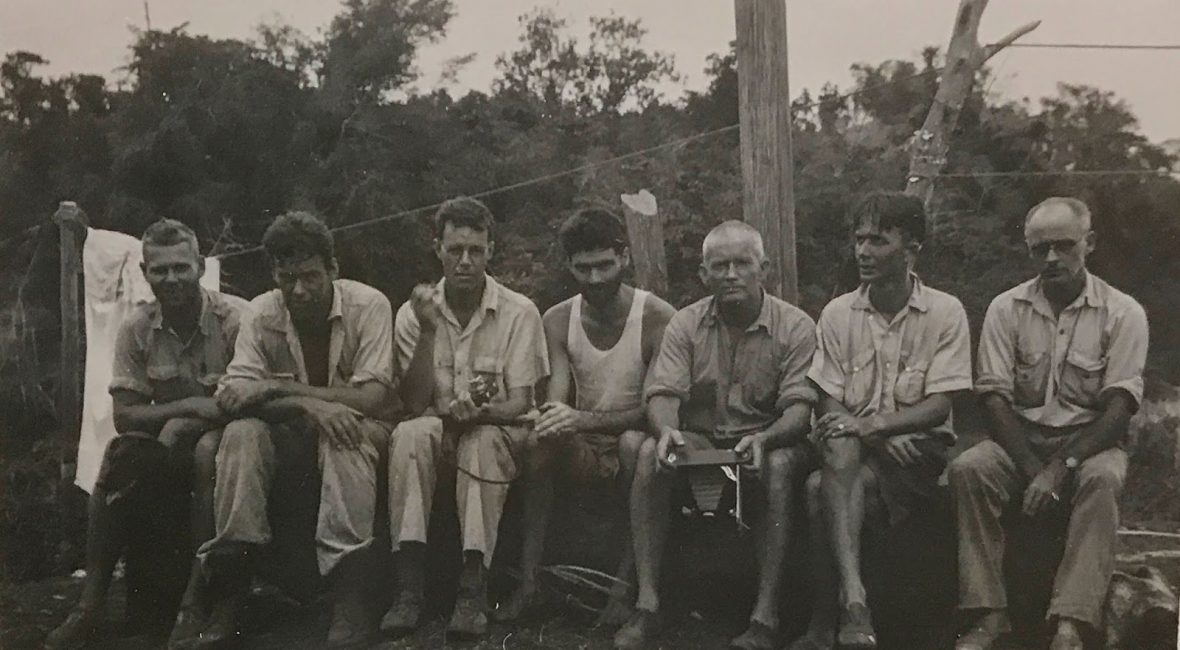
Some of the 2nd Archbold Expedition participants, including scientific party Austin Rand, G. H. H. Tate and Leonard Brass. All three participated in multiple Archbold Expeditions.
“WH2; Papua, Oroville Camp; Juhlstedt, Rand, Tate, Archbold, Burke, Healy, Brass.” Archbold Expeditions Collection, Department of Mammalogy, AMNH.

This ability to recognize needs and adapt is never more evident than in the 2nd Archbold Expedition, which took place between 1936 and 1937. There were seven ‘numbered’ Archbold Expeditions to New Guinea, reaching all areas of the region. The focus for this journey was the largely uncharted area of the Western Province of Papua New Guinea from Daru up the Fly River. After the success of the first expedition to New Guinea between 1933 and 1934, Richard Archbold hoped to continue the systematic exploration of Papua New Guinea, but he recognized that one of the main challenges to exploration in this region was in the effective provision and transportation of supplies overland in this mountainous terrain. Describing it as “the biggest bugbear of former travel in New Guinea,” (1) the lack of local food availability resulted in a need for a continuously moving food relay transport system manned with native assistants.

Demonstrating the above-mentioned practical planning and technological skills, Archbold and crew proposed and designed an innovative system of communication, transportation and delivery using aircraft, radio, and parachutes to utilize in the next trek. In addition to Archbold, the scientific party included ornithologist and assistant leader Austin Rand, botanist Leonard Brass, and mammalogist G. H. H. Tate.

View Full Size Image
Archbold is walking toward the front of the craft. Note the triangular Archbold Expeditions insignia on the plane.
“90-43; Papua, W.D., Daru: Kono on ramp after return from Lake Marguerita.” Archbold Expeditions Collection, Department of Mammalogy, AMNH.

Archbold purchased a Fairchild Amphibian seaplane which he named the Kono, to be used to deliver supplies to the remote areas by parachute. The combination of air transport, along with a system of radio communications proved to be highly successful in practice. The use of the radios allowed the various divisions of the expedition (advance land party, collecting group and plane) to keep in contact and coordinate supply drops and pickups from remote areas, communication on which they were dependent.

View Full Size Image
Besides collecting mammals, Tate acted as a radio operator.
“210-18; Papua, Western Division, Fly River, 528 mi. camp: Willis, Rogers, Tate & Healy” Archbold Expeditions Collection, Department of Mammalogy, AMNH.

Besides transportation, the aircraft was also used for a series of reconnaissance flights to determine mountain camp sites and possible landing areas. In Archbold’s journal we see multiple lists of observations from these flights. They note the time, the participant making the observation, and even where they were seated, an evident effort to fully survey the viewed areas.

View Full Size Image
Reconnaissance flight observations.
Richard Archbold’s journal : Second Archbold Expedition to New Guinea, p. [19]; http://biodiversitylibrary.org/page/53611788

Initial plans called for the group to travel up to high elevations in the mountains but in July of 1936, only a few months into their endeavor, the Kono was tragically capsized in a sudden storm. Although no one was harmed, the devastation of this loss is clearly conveyed in a series of radio messages: “Our plane sunk.” In Tate’s expedition journal, which will soon be digitized for this project, he relates receiving the message, stating “What a calamity for Archbold!”(2)

View Full Size Image
Messages to Tate and Rand announcing the wreck of the Kono.
Richard Archbold’s journal : Second Archbold Expedition to New Guinea, p. [101]; http://biodiversitylibrary.org/page/53611844

Besides the obvious financial setback of this loss, the team was forced to quickly adapt their plans, arranging for alternate means to transport the collections. The scientific staff and the carriers built a flotilla of rafts to move the specimens and supplies down the Fly River. According to Rand, “Tate had his rats on his rafts, Brass his plants on his, and I had my birds on mine.” (3) Not to be deterred, they simply moved forward and continued collecting in the lowlands, a resilience I find enviable. This is not to say that the irony of the situation was lost on the participants. In an article for Natural History magazine, Rand and Archbold noted that during the expedition both the most current and the most primitive methods of transportation were used: planes, ships, homemade rafts, and foot. (4)

View Full Size Image
After having to abandon plans to continue to higher altitudes, the team crafted a series of rafts to float material down the Fly River.
“258-20; Papua, W.D., Fly R., No. 2 base: Rafts being loaded—close up. Photo by Brass” Archbold Expeditions Collection, Department of Mammalogy, AMNH.

It is important to note the very practical advantage and benefit of their radio system at this juncture. It not only allowed easy communication, remote organization and project direction across the region, but also contact with New York. A copy of a radiogram received at AMNH on July 16, 1936 from Archbold at Daru reassures the safety of all parties. “Absolutely no cause for alarm stop Rogers dropped more food advance party in Guinea Airways plane stop in constant radio communication advance party stop they advise absolutely no danger.” (5)

Archbold immediately began planning for the next expedition, even looking to purchase a replacement plane. A copy of a radio message from his mother shows her practical opposition to such an expense so soon. Archbold remained single-minded, however. “Though we had failed to reach the mountains our large collections from the Upper Fly were extremely valuable and our new methods of transport had proved so feasible that we plan to use the same system in collecting at the highest altitudes in the little known Snow Mountains of Dutch New Guinea early next year.” (6) That expedition also used the combination of seaplane delivery and radio with great success, incidentally also managing to set world aeronautic records! Amusingly, Archbold named this next plane the ‘Guba,’ which is the local dialectic term for the type of storm that downed the Kono.

View Full Size Image
A page from Archbold’s journal. Note the message from his mother.
Richard Archbold’s journal : Second Archbold Expedition to New Guinea, p. [113]; 

For context, it is interesting to place these expeditions in the overarching history of biodiversity exploration and collection in the region. In 2015, AMNH scientists participated in a collaborative Explore21 expedition to Papua New Guinea. Department of Ornithology Collections Manager Paul Sweet noted their place in the legacy of exploration in New Guinea, notably with the use of now modern technology: “Papua New Guinea is well known as a biodiversity hotspot, but it’s still not fully explored. The Museum has a long history of making expeditions to the island of New Guinea [the eastern half is part of the nation of Papua New Guinea; the western half is governed by Indonesia], so we were following in the tradition of naturalist explorers like Ernst Mayr, Richard Archbold, and E. Thomas Gilliard. And that’s really the thrust of these Explore21 expeditions. It’s a great way to continue the tradition of scientific collecting expeditions alongside cutting edge 21-century methods like genomics.” (7)

Hmm, cutting-edge technology and expeditions…sound familiar?

References:

(1) Archbold, Richard and Rand, A.L., “With plane and radio in stone age New Guinea,” Natural History 40, no. 3 (1937): 568.
(2) Tate, G. H. H., Field journal : Archbold 1936 New Guinea Exp. February 27, 1936 to July 8, 1937. AMNH Department of Mammalogy Archive.
(3) Morse, Roger A., Richard Archbold and the Archbold Biological Station. (Gainesville, FL: University Press of Florida, 2000), 18.
(4) Archbold, Richard and Rand, A.L., “With plane and radio in stone age New Guinea,” Natural History 40, no. 3 (1937)
(5) Radiogram transcript, 1936, Archbold Expeditions Collection, AMNH Department of Mammalogy Archive.
(6) Archbold and Rand, 576.
(7) AMNH, “SciCafe Goes to Papua New Guinea [blog post], (2/27/15), accessed at http://www.amnh.org/explore/news-blogs/q-as/scicafe-goes-to-papua-new-guinea

The BHL Field Notes Project is funded by the Council on Library and Information Resources (CLIR).

July 6, 2017by lmyrick

Help Support BHL

BHL's existence depends on the financial support of its patrons. Help us keep this free resource alive!

search

About BHL

The Biodiversity Heritage Library (BHL) is the world’s largest open access digital library for biodiversity literature and archives. BHL operates as a worldwide consortium of natural history, botanical, research, and national libraries working together to digitize the natural history literature held in their collections and make it freely available for open access as part of a global “biodiversity community.”

Join Our Mailing List

Sign up to receive the latest news, content highlights, and promotions.

Subscribe Now

Subscribe to Blog via Email

Enter your email address to subscribe to this blog and receive notifications of new posts by email.

Join 319 other subscribers

Subscribe to Blog Via RSS

Subscribe to the blog RSS feed to stay up-to-date on all the latest BHL posts.

Access RSS Feed

Inspiring Discovery through Free Access to Biodiversity Knowledge.

The Biodiversity Heritage Library makes it easier than ever for you to access the information you need to study and explore life on Earth…for free, anytime, anywhere.


64+ Million Pages of
Biodiversity Literature Online.

EXPLORE

Tools and Services
to Transform Research.

EXPLORE

300,000+
Illustrations on Flickr.

EXPLORE

ABOUT | HARMFUL CONTENT | PRIVACY | SITE MAP | TERMS OF USE