Biodiversity Heritage Library - Program news and collection highlights from BHL
  • Home
  • News
  • Featured Books
    • All Featured Books
    • Book of the Month Series
    • BHL at 20
  • User Stories
  • Campaigns
    • Fossil Stories
    • Garden Stories
    • Monsters Are Real
    • Page Frights
    • Her Natural History
    • Earth Optimism 2020
  • Tech Blog
  • Visit BHL
Home
News
Featured Books
    All Featured Books
    Book of the Month Series
    BHL at 20
User Stories
Campaigns
    Fossil Stories
    Garden Stories
    Monsters Are Real
    Page Frights
    Her Natural History
    Earth Optimism 2020
Tech Blog
Visit BHL
  • Home
  • News
  • Featured Books
    • All Featured Books
    • Book of the Month Series
    • BHL at 20
  • User Stories
  • Campaigns
    • Fossil Stories
    • Garden Stories
    • Monsters Are Real
    • Page Frights
    • Her Natural History
    • Earth Optimism 2020
  • Tech Blog
  • Visit BHL
Biodiversity Heritage Library - Program news and collection highlights from BHL
Blog Reel, Campaigns, Fossil Stories

Finishing #FossilFossick with #FossilStories

On October 9, we challenged Smithsonian Transcription volunteers to transcribe the field notes of Ladd, Ward, and G. Arthur Cooper. See the details of the challenge here.

It took exactly three and a half days for volunteers to completely transcribe 9 sets of field notes totaling 252 pages. An average of 14 people contributed to each project. The range? 35 people co-opted our longest Cooper journal, while only 3 tackled his shortest 6 page journal.

Here’s what happened in the numbers:

  • 12 total projects completed in those days, including our 9 #FossilFossick Projects! 
  • 30 New volunteers! 
  • 252 pages completed – and 712 Pages total over the challenge dates! 
  • 3.5 Days from launch to completely transcribe and review the #FossilFossick field notes! 
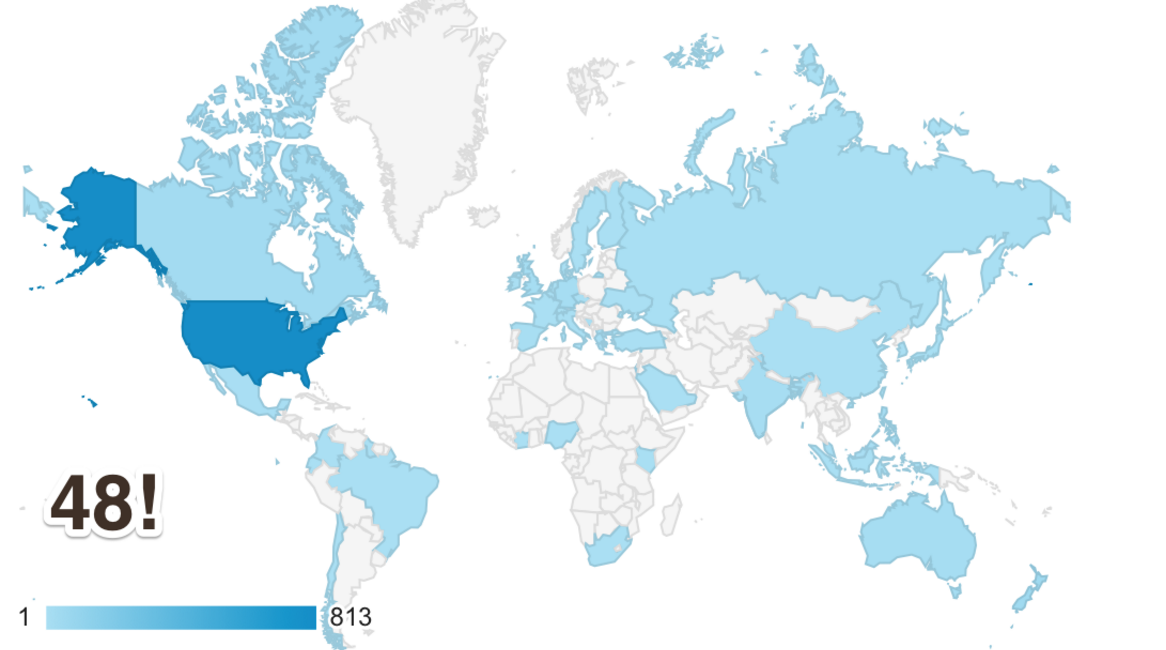
  • Visits from 48 countries including Germany, Ecuador, Turkey, India, and New Zealand 
View Full Size Image

Sharing the Challenge

Through 114 #FossilFossick Tweets and other communication, the #FossilFossick challenge gathered 192.7k impressions. The challenge announcement e-mail was opened by 1,895 people, who in total clicked on links 177 times. The update campaign e-mail sent 3 days later, pushing us through the last 29 pages, was opened by 1,121 people and resulted in 101 link clicks.

Surfacing Connections

We also asked volunteers to help us track correspondents, specimens, and locations. This part of the challenge is on-going! You can still help by reading the completed field notes (perhaps by downloading the PDF) and entering details in this Google Spreadsheet: http://bit.ly/FossilFossick

Finds From #FossilFossick Hunters

What did volunteers find interesting about this challenge? Handwriting to buddies to technology and the real personalities behind scientific field work. First, our volunteers were more than amused by Harry Ladd’s adventures and his playful personality, as well as his colorful pals.

Aeneid allusion alert! Evidently, Willy is Ladd’s Patroclus! @TranscribeSI #FossilFossick https://t.co/6k1wF8S4hu pic.twitter.com/hUjDk5E4nb

— Witchy Meg (@meg_shuler) October 10, 2015

Other volunteers tried to determine whether Ward took a street car, golf cart, or automobile from Alexandria to Mount Vernon.

.@TranscribeSI Ward misses his “electric car” & has 2 walk. Wonder if its an actual car or a trolley https://t.co/1QtyvuViXA #fossilfossick

— Siobhan (@SiobhanLeachman) October 11, 2015

Still others shared information to help one another tackle the challenge – great collaboration even from the start of the event!

To anyone who’s into #FossilFossick project (https://t.co/HL1hUdIhpH), here’s a handy fossil search db http://t.co/byhnFhfuj5 #volunpeers

— Loukritia (@loukritia_sin) October 10, 2015

What’s Next?

A total success deserves a totally fantastic reward: be sure to tune into the behind-the-scenes tour of Smithsonian fossil collections with Dr. Nicholas Pyenson, Curator of Fossil Marine Mammals at the Smithsonian’s National Museum of Natural History, via the BHL Periscope on October 26 as a reward for the successful completion of the challenge. More details to come on Twitter and Facebook.

You can explore the field notes in BHL:

  • Harry S. Ladd
  • Lester F. Ward
  • G. Arthur Cooper

You can also read all of the completed #FossilFossick projects by visiting the project pages with these links and downloading the PDFs:

  • Harry S. Ladd – https://transcription.si.edu/project/7811
  • Harry S. Ladd – https://transcription.si.edu/project/7812
  • Lester F. Ward – https://transcription.si.edu/project/7810
  • G. Arthur Cooper – https://transcription.si.edu/project/7804
  • G. Arthur Cooper – https://transcription.si.edu/project/7805
  • G. Arthur Cooper – https://transcription.si.edu/project/7806
  • G. Arthur Cooper – https://transcription.si.edu/project/7807
  • G. Arthur Cooper – https://transcription.si.edu/project/7808
  • G. Arthur Cooper – https://transcription.si.edu/project/7809
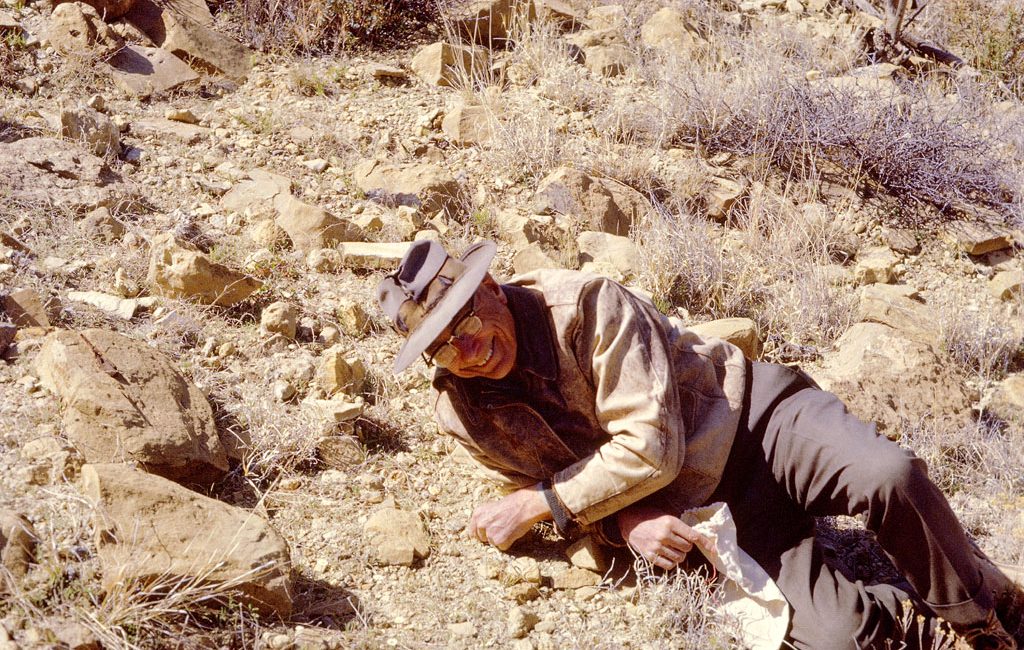
Thanks again to all of our wonderful volunteers who contributed to this challenge! When we collaborate for citizen science, everyone wins!
October 16, 2015by ulib-libraryjobs
Blog Reel, Campaigns, Featured Books, Fossil Stories

Challenge Focus: G. Arthur Cooper

We’re so excited that our #FossilStories Citizen Science Challenge was successfully completed on October 12, with 252 pages from 9 field books fully transcribed and reviewed in just 3.5 days! Be sure to tune into the behind-the-scenes tour of Smithsonian fossil collections with Dr. Nicholas Pyenson, Curator of Fossil Marine Mammals at the Smithsonian’s National Museum of Natural History, via the BHL Periscope on October 26 as a reward for the successful completion of the challenge. More details to come on Twitter and Facebook.

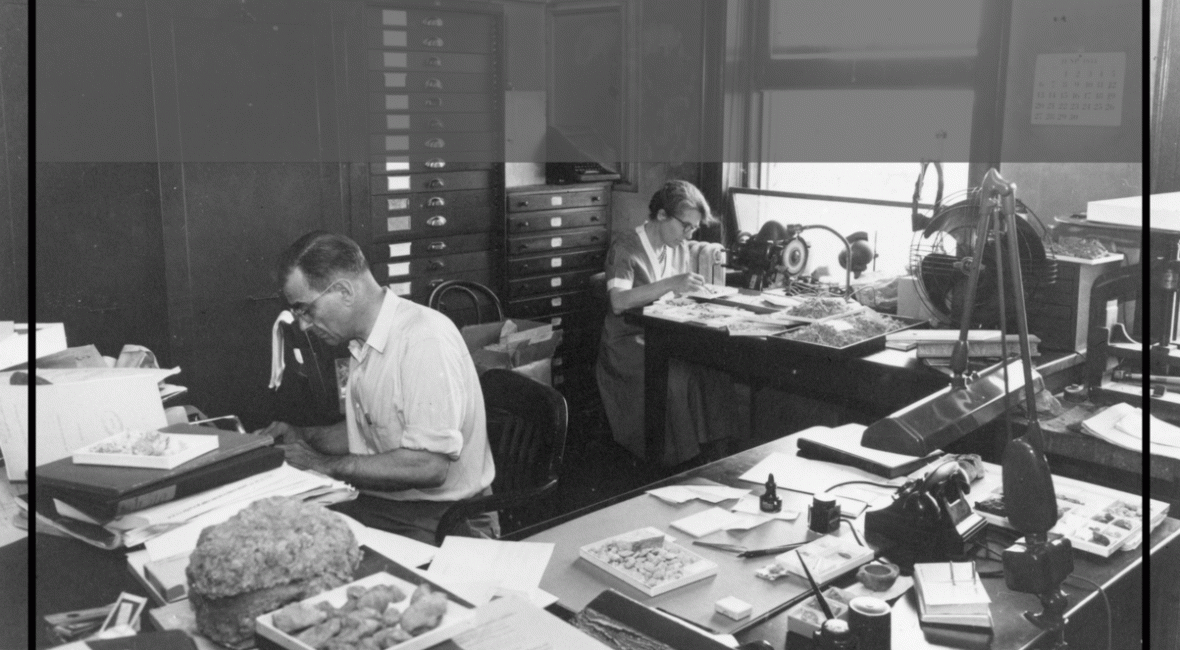
Several of the field books that have been transcribed as part of the challenge are from G. Arthur Cooper. Cooper (1902-2000) was a paleobiologist at the National Museum of Natural History (NMNH) and a recognized authority on the taxonomy and stratigraphy of Paleozoic brachiopods. Cooper worked at the Smithsonian, 1930 – 1974, first as assistant curator in the U.S. National Museum, later progressing through the ranks, becoming chairman of the Department of Paleobiology.  The Field Book Project includes records for 105 field books documenting his extensive field work in the United States, Canada, and Mexico. During his many years with the Museum, he amassed a fossil collection numbering in the thousands, now housed in the Paleobiology department, often part of the stratigraphic, Mollusca, or Bryozoa collections. His digitized field books document his work during the 1950’s and 60’s.

View Full Size Image
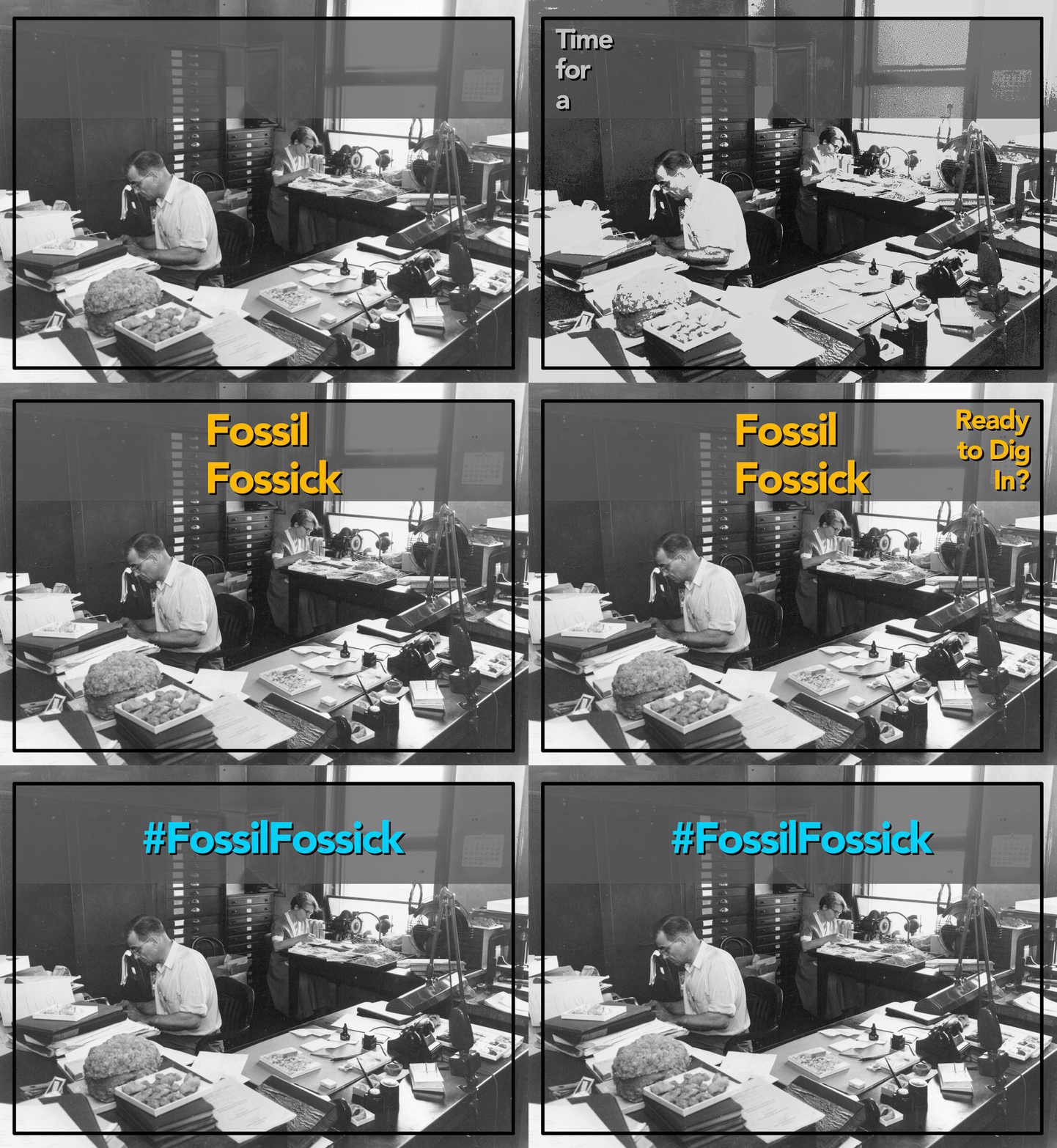
G. Arthur Cooper, c. 1957. Smithsonian Institution Archives, RU009524, Box 1, G. Arthur Cooper Oral History Interviews. Negative number 86-497.

During the #FossilFossick challenge, volunteers found great connections between the work documented in the field book and outside resources. Take, for instance:

.@TranscribeSI @meg_shuler Think THIS article http://t.co/mbpEWcrzOQ relates to collecting Cooper did in fieldbook https://t.co/1YA7vGP1pc

— Siobhan (@SiobhanLeachman) October 9, 2015

Thanks to all of our volunteers for the awesome connections they made as part of this challenge! Stay tuned to our blog tomorrow for more highlights from the challenge!

To learn more, check out his publications and field books in BHL, as well as his field books and images on Smithsonian’s Collections Search Center.

You can also see interviews with Dr. Cooper on the Smithsonian Institution Archives’ YouTube channel! Find out how he prepared and photographed fossil specimens (below) and see how fossil specimens are etched out of a rock.

Be sure to follow #FossilStories on Twitter and Facebook all week for more great fossil fun and more highlights from our #FossilFossick Challenge!

October 15, 2015by ulib-libraryjobs
Blog Reel, Campaigns, Featured Books, Fossil Stories

Challenge Focus: Harry S. Ladd

We’re so excited that our #FossilStories Citizen Science Challenge was successfully completed on October 12, with 252 pages from 9 field books fully transcribed and reviewed in just 3.5 days! Be sure to tune into the behind-the-scenes tour of Smithsonian fossil collections with Dr. Nicholas Pyenson, Curator of Fossil Marine Mammals at the Smithsonian’s National Museum of Natural History, via the BHL Periscope on October 26 as a reward for the successful completion of the challenge. More details to come on Twitter and Facebook.

View Full Size Image
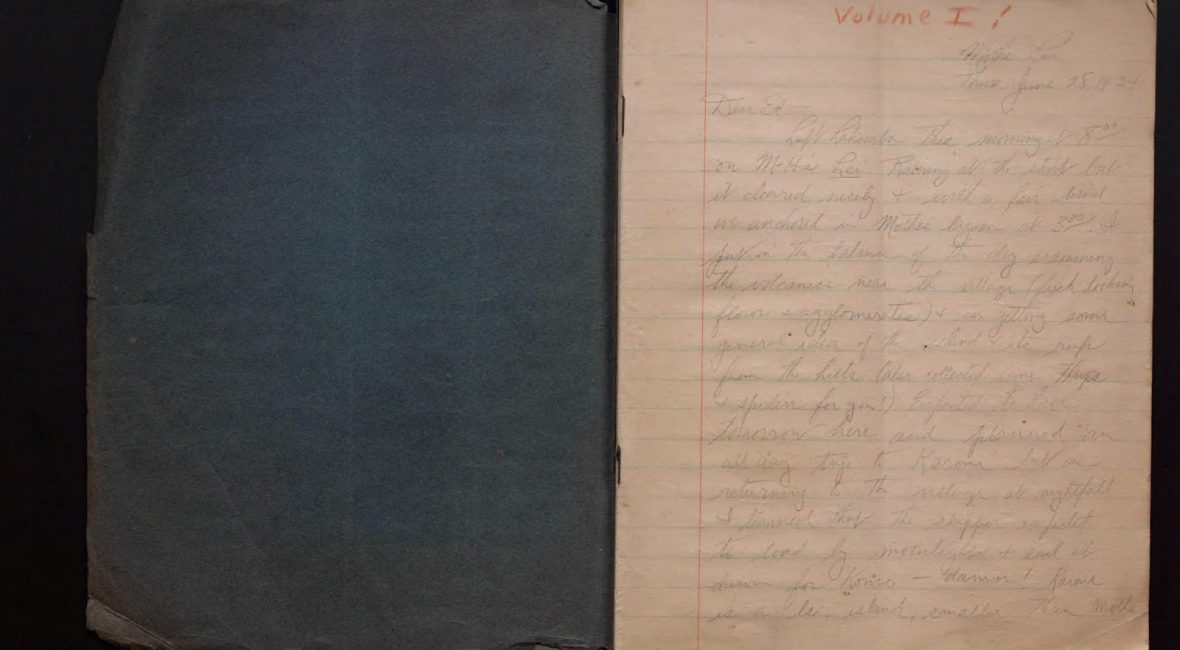
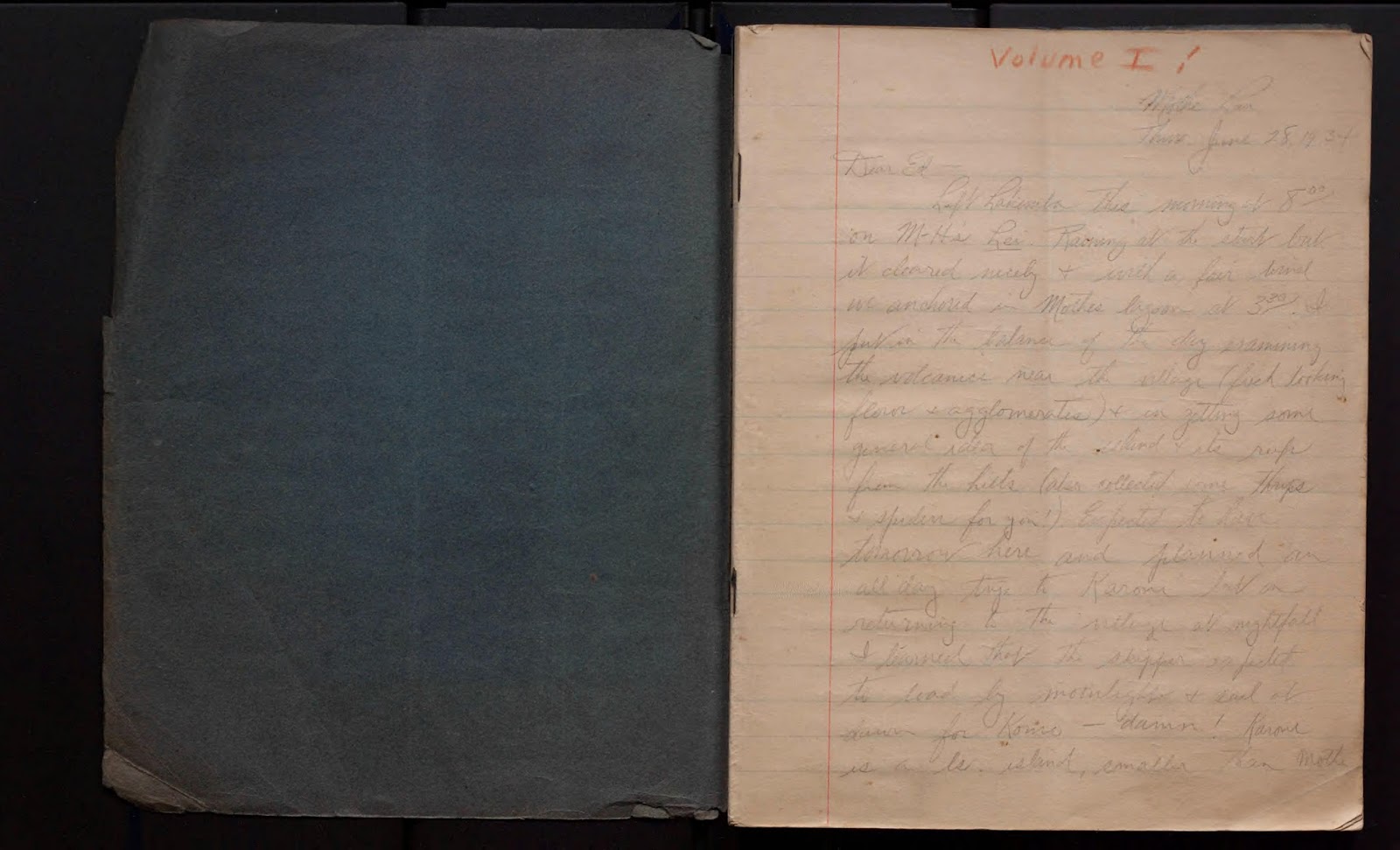
First page of Harry S. Ladd’s first field diary, 1915-72. http://biodiversitylibrary.org/page/48485440. Smithsonian Institution Archives.

One of the journals in the challenge is from Harry Stephen Ladd (1899-1982), a geologist and paleontologist who worked much of his career with the US Geological Survey. Many of his fossil specimens can be found in the Stratigraphic collections and Mollusca Cenozoic Marine Type collection at the Department of Paleobiology, National Museum of Natural History. He began working in the field in the 1920’s and eventually became a leading authority in the geology of the islands in the Pacific Ocean. His two volume diary documents some of his earliest work in the Pacific region. In 1934, he went into the field for the second time with J. Edward Hoffmeister of the University of Rochester to study the coral formations in Fiji (in the 1960s he even used aerial observations made from a helicopter the document the shape and character of Fiji reefs). This work would go on to stimulate the debate about “the coral problem” of how did islands and atolls form. There were two competing theories in the early twentieth century — Darwin’s and Reginald Daly’s.

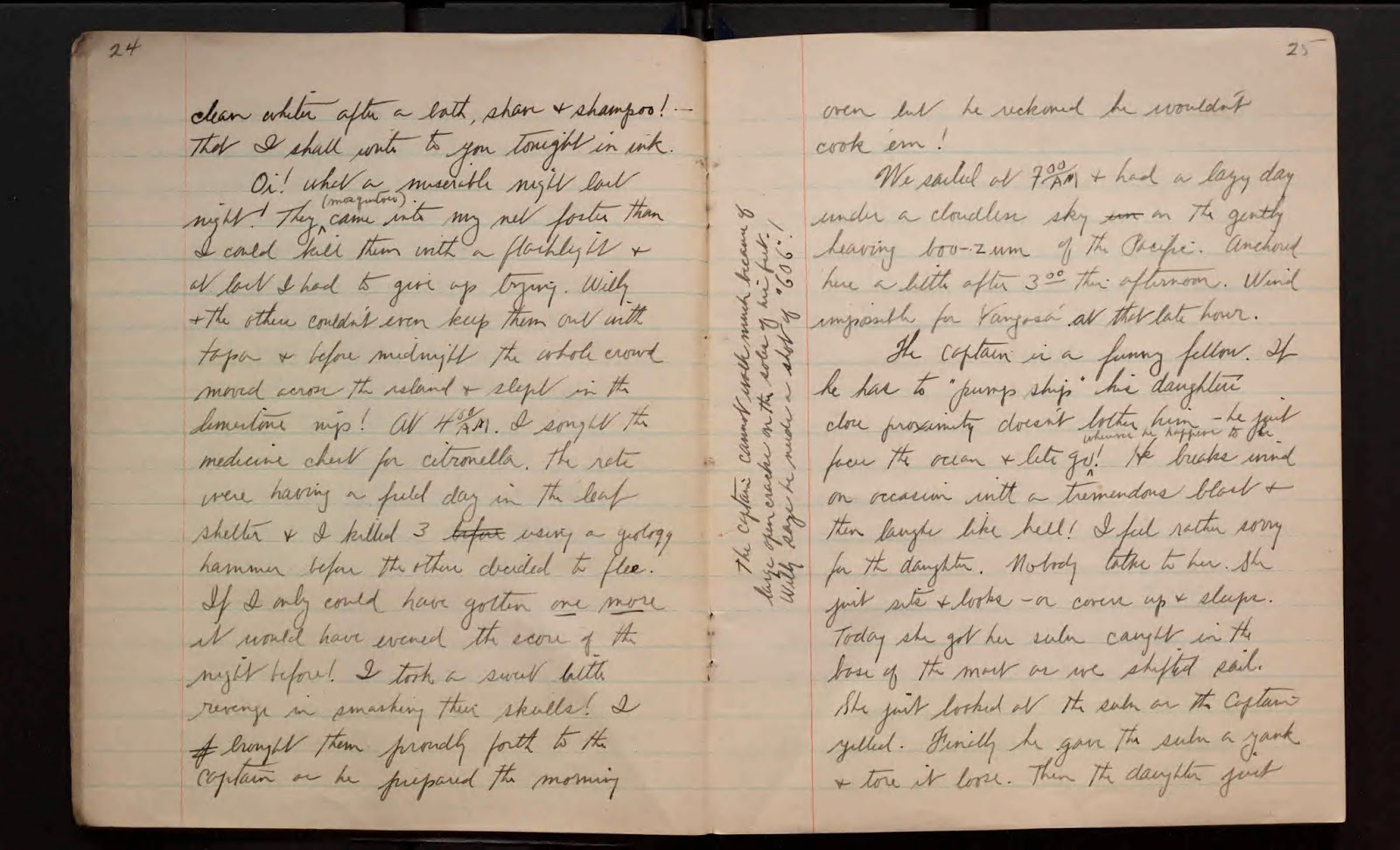
In the midst of this work, Ladd writes about his experiences in the field, with local communities, and getting married. All of this is shared as a series of letters to his colleague “Edward.”

View Full Size Image
Page from Harry S. Ladd’s second field diary, 1915-72. http://biodiversitylibrary.org/page/48485425. Smithsonian Institution Archives.

Volunteers working on the #FossilFossick challenge uncovered some awesome quotes from Ladd within his field book. For instance:

@SiobhanLeachman @TranscribeSI “The things I’ve done for palaeontology!” HA! That’s gotta be Ladd’s motto!

— Witchy Meg (@meg_shuler) October 10, 2015


oh, Harry, you dog! @TranscribeSI #fossilfossick https://t.co/bsdZ7bC1hW pic.twitter.com/yfOMhg7i7F

— Witchy Meg (@meg_shuler) October 11, 2015

Thanks to our awesome volunteers for the incredible information that they pulled out of Ladd’s field books. Stay tuned to our blog on Friday for more highlights from the challenge!

If you would like to know more about Harry Ladd and E. J. Hoffmeister, we encourage you to check out Ladd’s field books and specimen records on Smithsonian’s Collections Search Center, his publications and field books in BHL, and Hoffmeister’s personal papers at UC San Diego.

Be sure to follow #FossilStories on Twitter and Facebook all week for more great fossil fun and more highlights from our #FossilFossick Challenge!

October 14, 2015by ulib-libraryjobs
BHL News, Blog Reel, Campaigns, Fossil Stories

A Fossil-Focused Citizen Science Challenge!

UPDATE: We are proud to announce that after 3.5 days, volunteers successfully transcribed and reviewed all 252 pages of field notes that we uploaded as part of this challenge! Thanks to all of our great volunteers, and tune in all week (Oct. 13-16, 2015) for more great fossil fun and highlights from the challenge!

October 14 is National Fossil Day! What do you think you might learn if we unleashed notes on the mighty and micro fossilized specimens in the Smithsonian Institution’s collections? Let’s time travel together with Smithsonian scientists – to their field sites, their discoveries, and the mysteries they uncover.

We’re celebrating fossils during the BHL Fossil Stories social media event, running October 13-16, 2015. Follow #FossilStories on Twitter and Facebook or read this article to learn more.

As part of Fossil Stories, we’re teaming up with The Field Book Project, the Smithsonian Transcription Center, the Smithsonian Institution Archives, and the National Museum of Natural History to issue a transcription challenge to you!

View Full Size Image

To Fossick is to “rummage or search,” often for gold nuggets or gems, though you’ll be gathering pearls of wisdom this week. And since knowledge is golden, we know we’ll all be enriched by our #FossilFossick challenge!

Here’s how the challenge works:

  1. We’ll launch several paleontology-related field notes on the Smithsonian Transcription Center
  2. You successfully transcribe and review the pages of those field notes with many of your transcribing friends
  3. Follow and share your findings on Twitter with the #FossilFossick hashtag
  4. We connect you with behind-the-scenes access to fossil specimens and scientists who will tell you more about the real ways fossil records make a difference in our world today

The set of field notes we’ve selected for the challenge not only provides a glimpse into the worlds of three paleobiologists (Lester F. Ward, Harry S. Ladd, and G. Arthur Cooper) over nearly a hundred-year period (from 1893 to 1965), but also highlights the fact that paleontology is a discipline that is frequently transformed by technology, whether that is the technology to travel to previously inaccessible places, technology to find and excavate items too hidden or too fragile to unearth before, or technology to inspect, record, and preserve findings in new ways.

As you transcribe the field notes for this challenge, you’ll discover some of these changes in technology, from sailing ships to “electric cars” and airplanes, and from the naked eye to new scanning microscopes and 3-D scanning. You’ll also uncover the names of other scientists, researchers, and collectors that our paleobiologists corresponded with, the specimens that they collected, and the locations they collected in. We hope you’ll share these findings with us by tweeting with the challenge hashtag #FossilFossick and/or adding them to our Google spreadsheet.

View Full Size Image
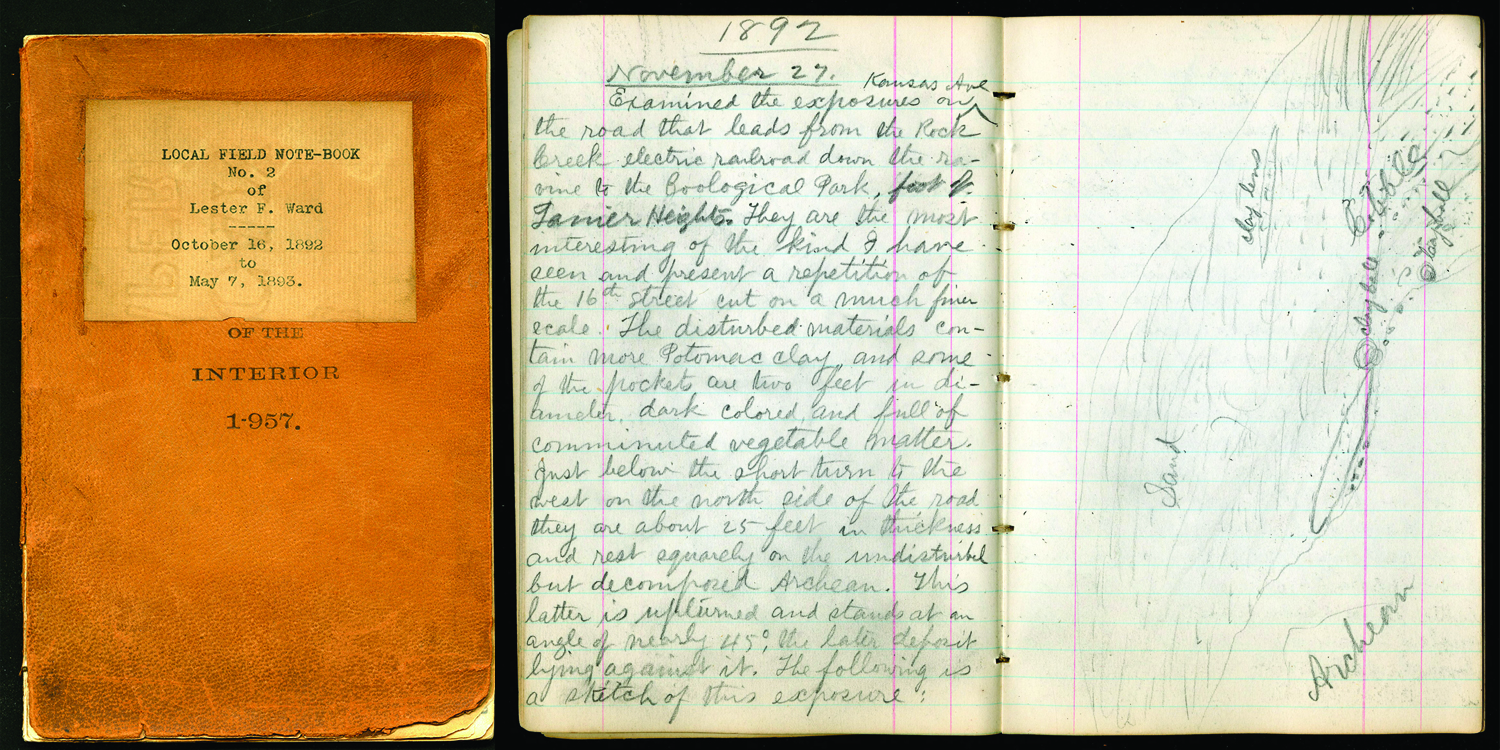
Local field note-book no. 2 of Lester F. Ward, October 16, 1892 to May 7, 1893. http://biodiversitylibrary.org/bibliography/107244. Smithsonian Institution Archives.

If you successfully transcribe all of the field notes in the challenge, we’ll celebrate with a live webcast with Dr. Nicholas D. Pyenson, Curator of Fossil Marine Mammals at the Smithsonian’s National Museum of Natural History, on October 26 via the BHL Periscope account (@BioDivLibrary). He’ll show off some of his favorite specimens in the collection and you’ll have the opportunity to ask him your most pressing fossil questions.

So, do you accept our challenge? If so, dig into the field notes here:


  • Harry S. Ladd: 
    • https://transcription.si.edu/project/7811
    • https://transcription.si.edu/project/7812
  • Lester F. Ward:
    • https://transcription.si.edu/project/7810
  • G. Arthur Cooper:
    • https://transcription.si.edu/project/7804
    • https://transcription.si.edu/project/7805
    • https://transcription.si.edu/project/7806
    • https://transcription.si.edu/project/7807
    • https://transcription.si.edu/project/7808
    • https://transcription.si.edu/project/7809
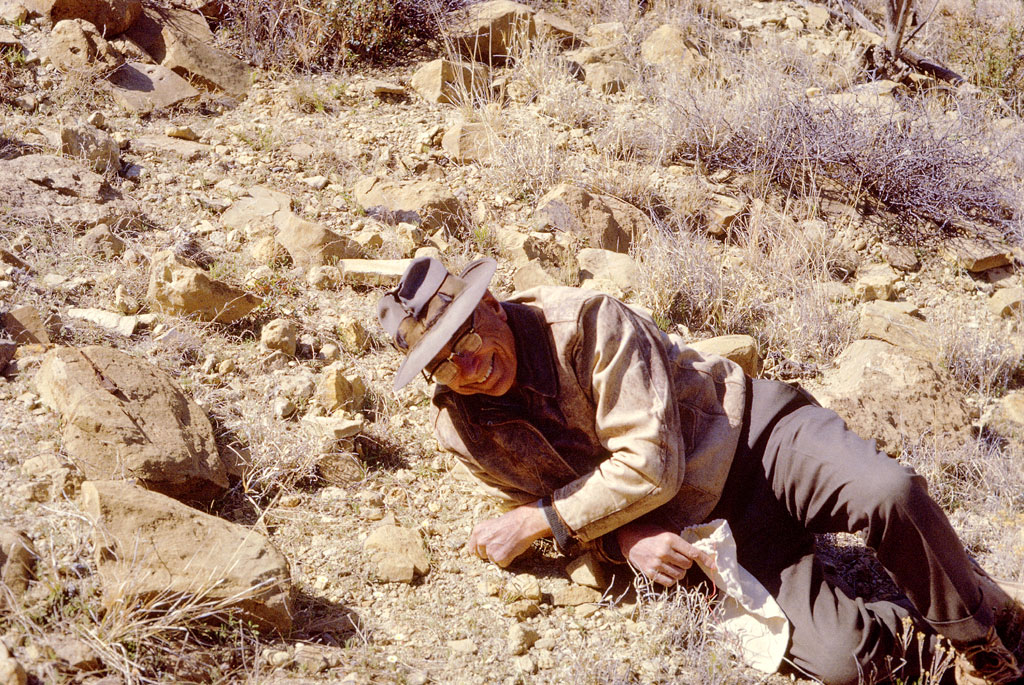
Be sure to share your discoveries using our challenge hashtag, #FossilFossick. Learn more about the collectors who created these field notes and get updates on challenge progress by following #FossilStories all next week.

Welcome to the #FossilFossick Challenge!

October 9, 2015by ulib-libraryjobs

Help Support BHL

BHL's existence depends on the financial support of its patrons. Help us keep this free resource alive!

search

About BHL

The Biodiversity Heritage Library (BHL) is the world’s largest open access digital library for biodiversity literature and archives. BHL operates as a worldwide consortium of natural history, botanical, research, and national libraries working together to digitize the natural history literature held in their collections and make it freely available for open access as part of a global “biodiversity community.”

Join Our Mailing List

Sign up to receive the latest news, content highlights, and promotions.

Subscribe Now

Subscribe to Blog via Email

Enter your email address to subscribe to this blog and receive notifications of new posts by email.

Join 319 other subscribers

Subscribe to Blog Via RSS

Subscribe to the blog RSS feed to stay up-to-date on all the latest BHL posts.

Access RSS Feed

Inspiring Discovery through Free Access to Biodiversity Knowledge.

The Biodiversity Heritage Library makes it easier than ever for you to access the information you need to study and explore life on Earth…for free, anytime, anywhere.


64+ Million Pages of
Biodiversity Literature Online.

EXPLORE

Tools and Services
to Transform Research.

EXPLORE

300,000+
Illustrations on Flickr.

EXPLORE

ABOUT | HARMFUL CONTENT | PRIVACY | SITE MAP | TERMS OF USE