Biodiversity Heritage Library - Program news and collection highlights from BHL
  • Home
  • News
  • Featured Books
    • All Featured Books
    • Book of the Month Series
    • BHL at 20
  • User Stories
  • Campaigns
    • Fossil Stories
    • Garden Stories
    • Monsters Are Real
    • Page Frights
    • Her Natural History
    • Earth Optimism 2020
  • Tech Blog
  • Visit BHL
Home
News
Featured Books
    All Featured Books
    Book of the Month Series
    BHL at 20
User Stories
Campaigns
    Fossil Stories
    Garden Stories
    Monsters Are Real
    Page Frights
    Her Natural History
    Earth Optimism 2020
Tech Blog
Visit BHL
  • Home
  • News
  • Featured Books
    • All Featured Books
    • Book of the Month Series
    • BHL at 20
  • User Stories
  • Campaigns
    • Fossil Stories
    • Garden Stories
    • Monsters Are Real
    • Page Frights
    • Her Natural History
    • Earth Optimism 2020
  • Tech Blog
  • Visit BHL
Biodiversity Heritage Library - Program news and collection highlights from BHL
Blog Reel, Campaigns, Featured Books, Fossil Stories

The Roots of Paleobotany: Brongniart and Fossil Plants

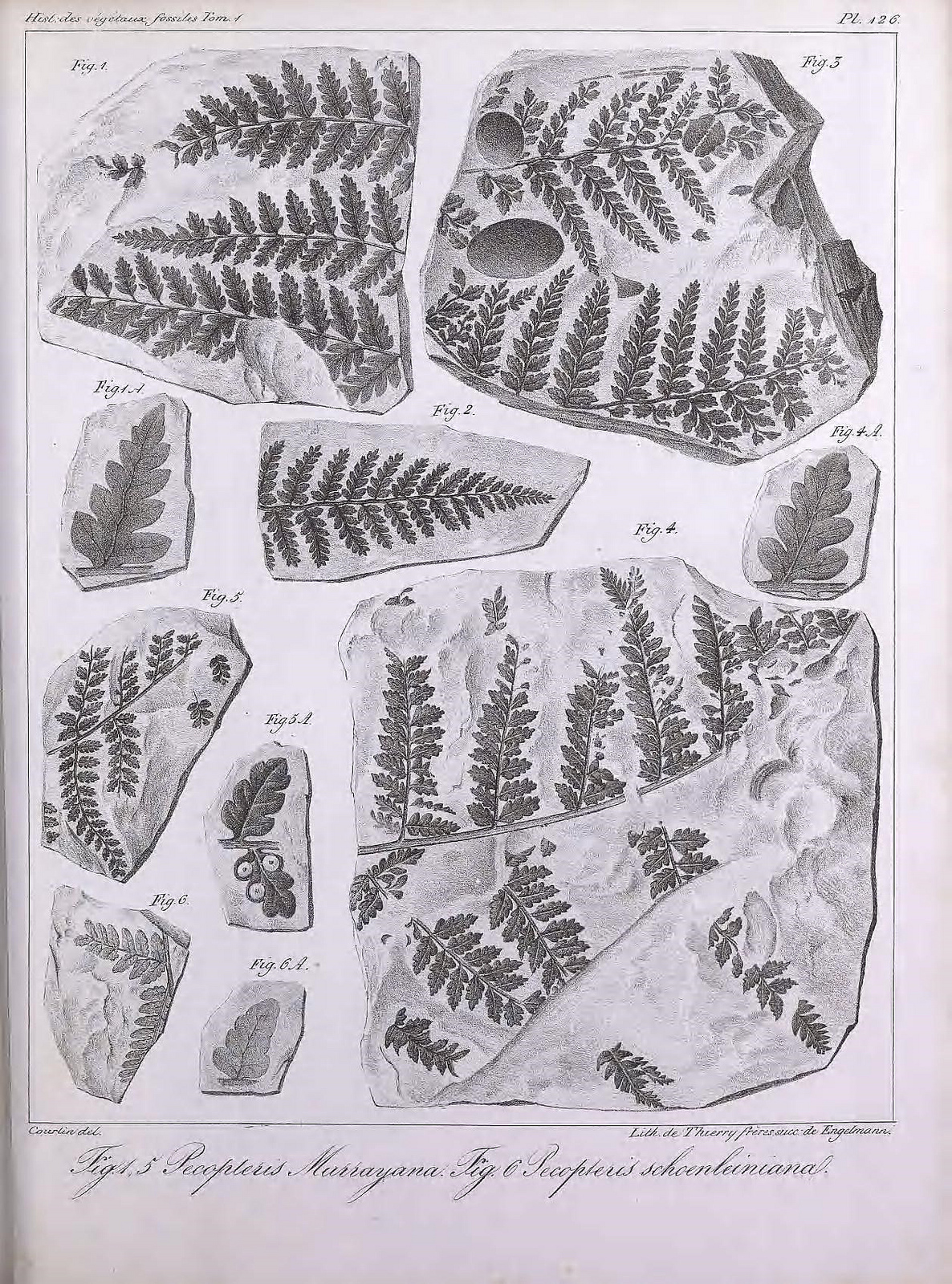
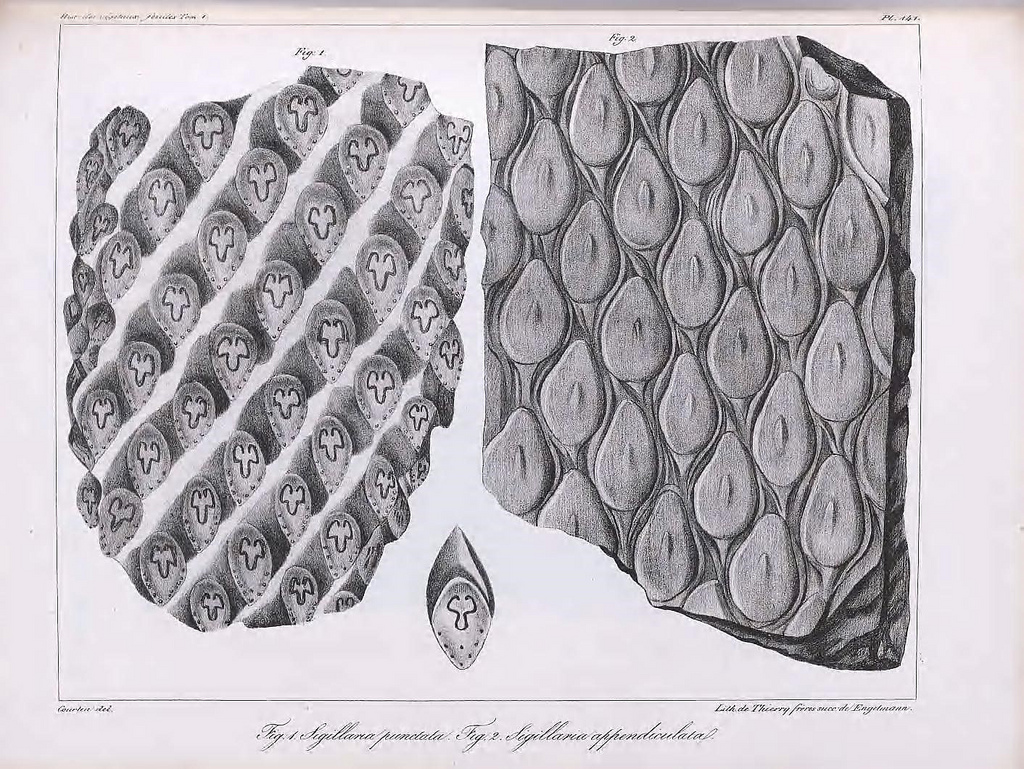
French botanist Adolphe-Théodore Brongniart is known as the Father of Paleobotany. Active in many branches of botany, Brongniart is most-remembered for his pioneering work on the relationship between extinct and living plants. In 1822, he published a paper on the classification and distribution of fossil plants, which he subsequently followed-up with his masterpiece Histoire des vegetaux fossiles (“History of fossil plants”) in 1828. This work was instrumental in the development of the field of paleobotany.

In 1828, Brongniart, son of the geologist Alexandre Brongniart (who worked with Georges Cuvier on geological studies in France), first published an introduction to his history of fossil plants, entitled Prodrome d’une histoire des végétaux fossiles. He then followed the introduction with his two-volume magnum opus, Histoire des végétaux fossiles.
View Full Size Image
Brongniart, Alexandre. Histoire des végétaux fossiles. (1828-37). http://biodiversitylibrary.org/page/40155235. Digitized by: Smithsonian Libraries.

Within Histoire, Brongniart asserted that the history of plants could be divided into four periods. Mirroring findings from the animal kingdom, Brongniart found that, with each successive period, the represented plants became more diverse and complex. The first period was dominated by cryptogams; the first conifers emerged in the second period and then cycads in the third. Finally, in the fourth period, flowering plants made their debut. Though there were sharp floral discontinuities during the transitions between these four periods, during each period there were gradual changes within the characteristic groups.
View Full Size Image
Brongniart, Alexandre. Histoire des végétaux fossiles. (1828-37). http://biodiversitylibrary.org/page/40155265. Digitized by: Smithsonian Libraries.

Brongniart’s work is important not only because of its impact on the field of paleobotany, but also because it further demonstrated the long, progressive history of life on Earth and the emergence of new, increasingly complex forms of life over time. His work also supported the theory that Earth’s climate changed over time, as Brongniart concluded that the fossil record indicated that northern Europe had once had a tropical climate. Furthermore, Brongniart suggested that there was a correlation between the profusion of plants and the emergence of terrestrial vertebrates. As plants increased and diversified, they locked up more and more carbon dioxide from the atmosphere and produced more and more oxygen, thus fueling the environment necessary to support first air-breathing reptiles and later mammals. His theories show striking similarities to modern theories about the evolution of Earth’s atmosphere.

Fossil Stories

Stay tuned all week for more great fossil fun with our #FossilStories campaign, including:

  • Tweets and Facebook Posts
  • Blog Posts highlighting milestones and key publications in the history of fossil research
  • A Flickr Collection with hundreds of historic fossil illustrations
  • A Pinterest Collection featuring a selection of our favorite fossil illustrations
  • A BHL Collection containing seminal publications in the history of paleontology
  • A series of live webcasts at BHL partner institutions
  • A citizen science challenge in collaboration with The Field Book Project, the Smithsonian Transcription Center, and Smithsonian Institution Archives
Follow #FossilStories on Twitter and Facebook to learn more.
October 14, 2015by ulib-libraryjobs
Blog Reel, Campaigns, Featured Books, Fossil Stories

Fact or Fiction? Discovering the Mosasaur

If you’ve seen Jurassic World (or even just the trailers), then you’re familiar with Mosasaurus. In the film, it’s portrayed as a giant aquatic lizard thundering out of the water to devour great white sharks…and other mega prey.

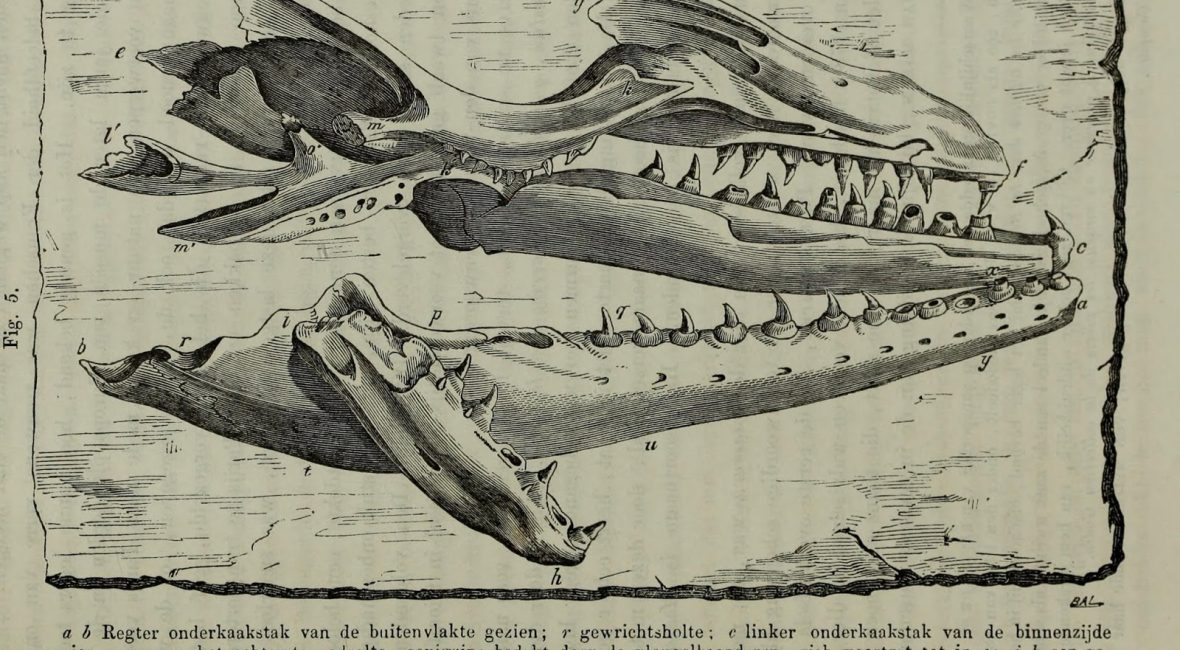
Of course, the Jurassic World version is an exaggeration of the real thing (the film version is portrayed at 60 feet long, while the real animal maxed out at 46-50 feet long and was not capable of the water acrobatics depicted in the movie), but it is nevertheless based on a real, extinct aquatic reptile.

An historic account of an early discovery of mosasaur fossils is also probably more of an exaggeration than reality.

View Full Size Image
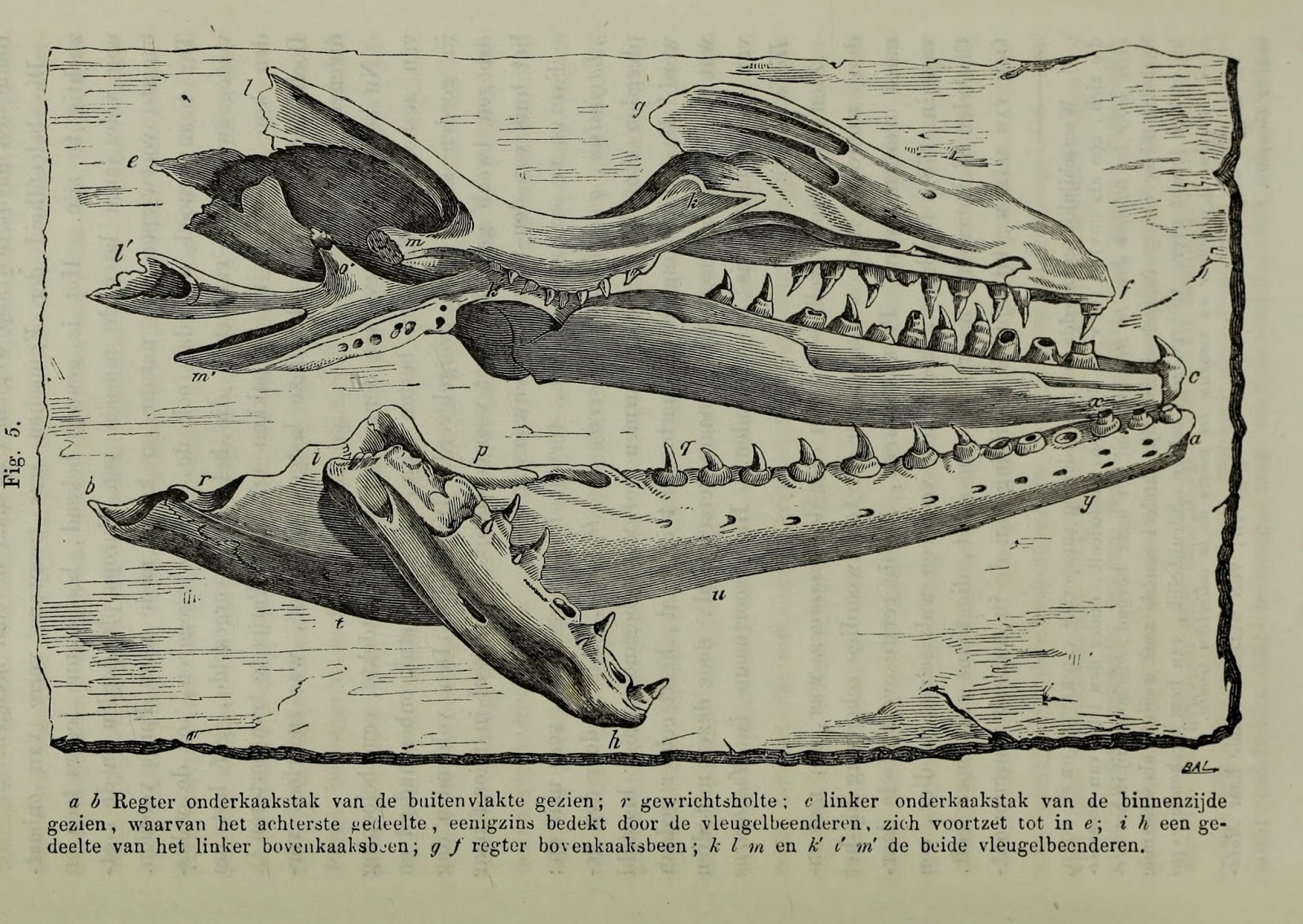
Jaws of the Mosasaur. Harting, Pieter. Album der Natuur. 1866. http://biodiversitylibrary.org/page/35222337. Digitized by Natural History Museum, London.

According to French geologist Barthélemy Faujas de Saint-Fond’s eighteenth century account of the discovery of the second known partial mosasaurus skull, quarrymen at the subterraneous quarries of St. Peter’s Mount, at Maestricht, Netherlands, uncovered the massive skull embedded in the rock sometime between 1770-74. They informed local surgeon, Leonard Hoffmann, who reportedly offered a reward for any fossils discovered in the quarry. Hoffmann took the specimen home, only to have canon Godding of Maestricht, who owned the quarry, demand to have the specimen given to him, claiming rightful ownership since the fossil had been discovered on his land. Godding subsequently filed a lawsuit against Dr. Hoffmann, eventually gaining custody of the piece.

But the story doesn’t end there. In 1795, the French revolutionary army captured Maastricht. De Saint-Fond was the Scientific Commissioner for the army, and he entered Maestricht with the express purpose of securing the “celebrated head” for the French. However, when he arrived at Godding’s mansion, the skull had already been removed from the house. A reward of six hundred bottles of good wine was offered to anyone who could locate the skull and return it to de Saint-Fond. The next morning, twelve grenadiers brought it to the French camp, where it was packaged and sent to the Museum of Natural History in Paris. De Saint-Fond also reportedly offered a substantial renumeration to Godding for the loss of the fossil.

View Full Size Image
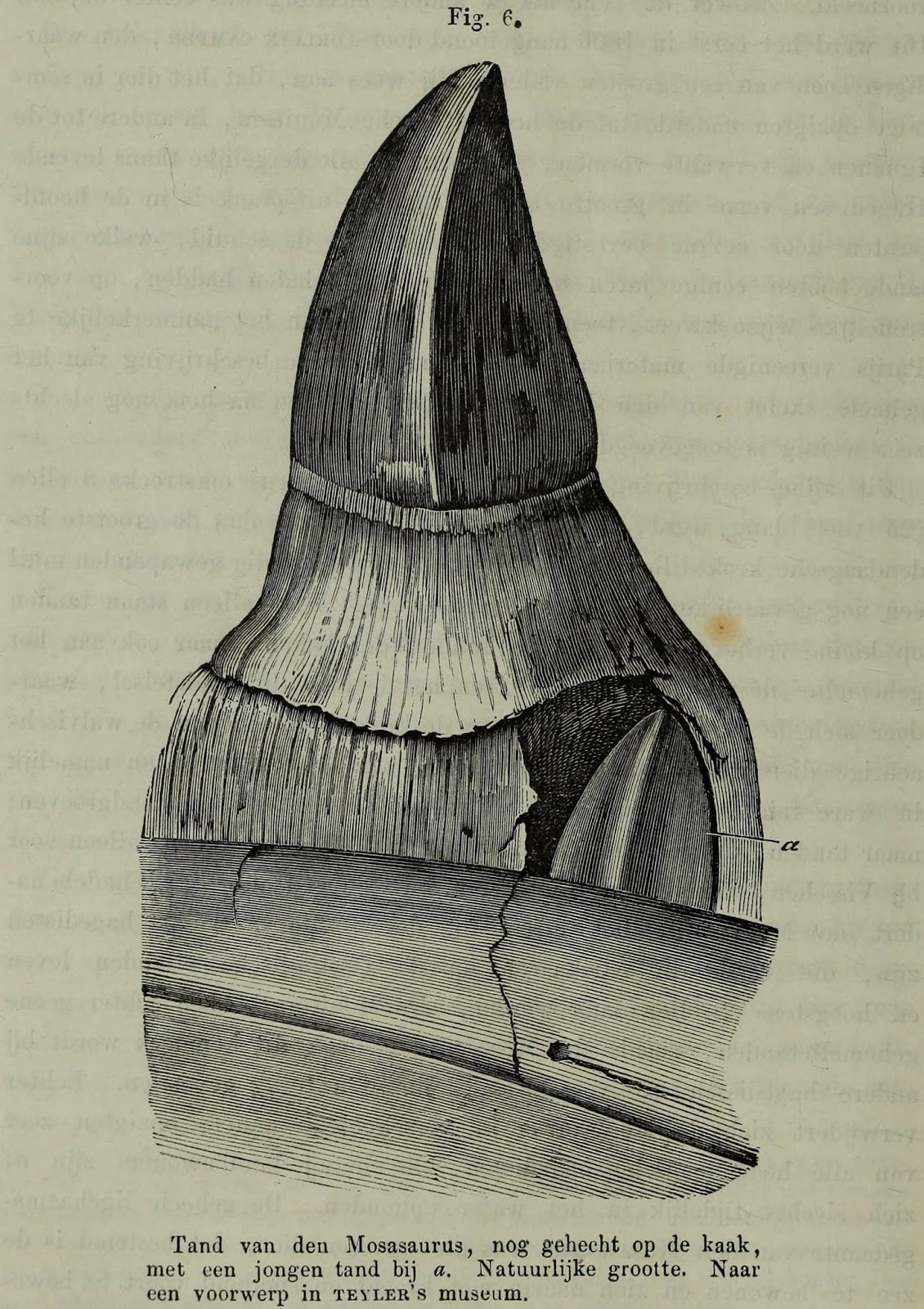
Tooth of Mosasaur. Harting, Pieter. Album der Natuur. 1866.  http://biodiversitylibrary.org/page/35222340. Digitized by Natural History Museum, London.

And so the story goes. Dutch historian Peggy Rompen, however, has found the story to be more fiction than truth. According to her 1995 thesis, Godding was in fact the original owner of the skull. Hoffmann never possessed it, there was never a lawsuit between Godding and Hoffmann, and De Saint-Fond apparently offered no renumeration to Godding for the loss of the fossil. It seems that De Saint-Fond fabricated the story to justify the French seizure of the specimen.

View Full Size Image
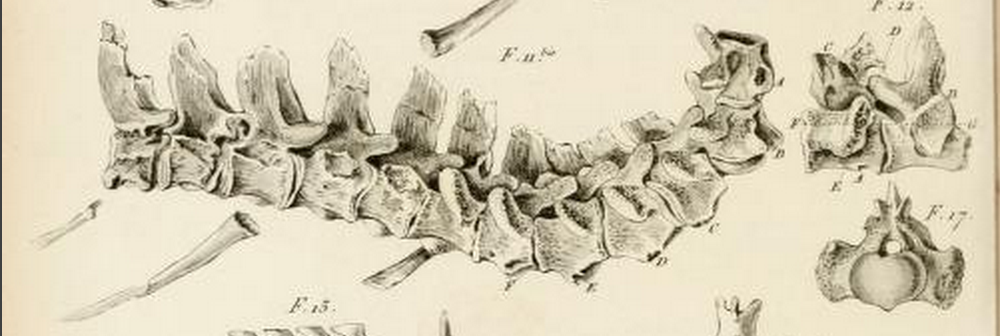
Mosasaur vertebrae. Camper, Adriaan Gilles. Annales du Muséum national d’histoire naturelle. v. 19 (1812). http://biodiversitylibrary.org/page/3499442. Digitized by Natural History Museum, London.

Despite the uncertainty surrounding the truth about early discoveries of mosasaur fossils (and additional evidence that some early fossils may have been tampered with), Leonard Hoffmann did corresponded with Dutch Professor Petrus Camper about the infamous mosasaur skull. Hoffmann believed the skull belonged to a giant crocodile, while Camper insisted it was some unknown toothed whale. In 1798, Petrus’ son, Adriaan Gilles Camper, reexamined his father’s description and decided that the skull must belong to a giant, extinct monitor lizard. He communicated this belief to Georges Cuvier in 1799, and in 1808, Cuvier indicated that, based on comparative anatomy, the specimen did indeed show affinities with lizards. In 1812, Camper published a longer description of several mosasaur fossils from Maastricht. Finally, in 1822, William Daniel Conybeare gave the animal the genus name Mosasaurus, and in 1829, Gideon Mantell supplied the specific epithet hoffmannii.

Fossil Stories

Stay tuned all week for more great fossil fun with our #FossilStories campaign, including:

  • Tweets and Facebook Posts
  • Blog Posts highlighting milestones and key publications in the history of fossil research
  • A Flickr Collection with hundreds of historic fossil illustrations
  • A Pinterest Collection featuring a selection of our favorite fossil illustrations
  • A BHL Collection containing seminal publications in the history of paleontology
  • A series of live webcasts at BHL partner institutions
  • A citizen science challenge in collaboration with The Field Book Project, the Smithsonian Transcription Center, and Smithsonian Institution Archives
Follow #FossilStories on Twitter and Facebook to learn more.
October 14, 2015by michelle.underhill
Blog Reel, Campaigns, Featured Books, Fossil Stories

A Sinner Killed During the Great Flood or a Fossil Reptile? Discovering the Plesiosaur

Most people today are at least somewhat familiar with the order of extinct marine reptiles known as Plesiosauria, thanks to the legend of the Loch Ness monster, which is often described as resembling a plesiosaur. Indeed, some argue that Nessie may in fact be a surviving member of this order. Scientists, however, reject this suggestion, if for no other reason that the Loch Ness lake formed a mere 10,000 years ago, while the fossil record indicates that plesiosaurs went extinct over 66 million years ago. And yet, even if plesiosaurs can’t account for the Loch Ness legend, the story of their discovery is still captivating.

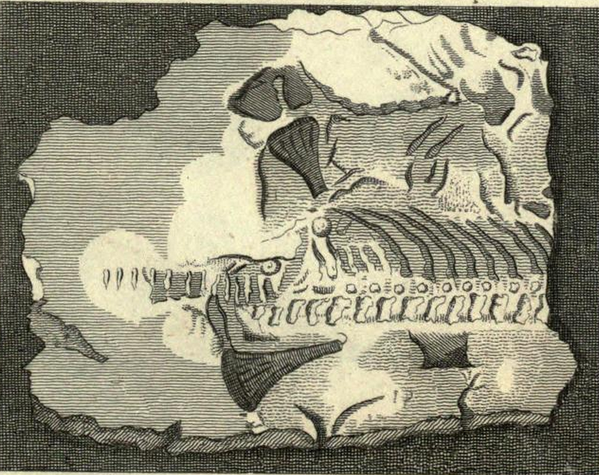
Plesiosaurs are among the first extinct fossil reptiles to be recognized as such. Plesiosaur fossils were described as early as 1605, though in the seventeenth century they were not recognized as extinct reptiles. In 1719, Anglican clergyman William Stukeley, who pioneered archaeological studies at Stonehenge and Avebury, described a partial plesiosaur skeleton that had been brought to his attention by Robert Darwin of Elston, Charles Darwin’s great-grandfather. The skeleton had been found at a quarry at Fulbeck, England. It had been used to reinforce the slope of a watering-hole until the fossils were discovered within it, after which it was displayed in the local vicarage as the remains of a sinner killed during the Biblical flood. Stukeley’s description in “An Account of the Skeleton of a Large Animal Impressed on Stone,” which describes the fossils as belonging to a sea creature such as a crocodile or porpoise, is the first published description of an articulated fossil reptile skeleton.

View Full Size Image
Stukeley’s plesiosaur. Original Publication: Philosophical Transactions of the Royal Society of London. 1719. Reprint, 1809: http://biodiversitylibrary.org/page/23269260. Digitized by University of California Libraries.

Further descriptions of plesiosaurs through the early nineteenth century were still based on incomplete specimens. In 1821, William Conybeare and Henry Thomas De la Beche gave the genus its name, Plesiosaurus, when they described a partial skeleton from the collection of Colonel Thomas James Birch.

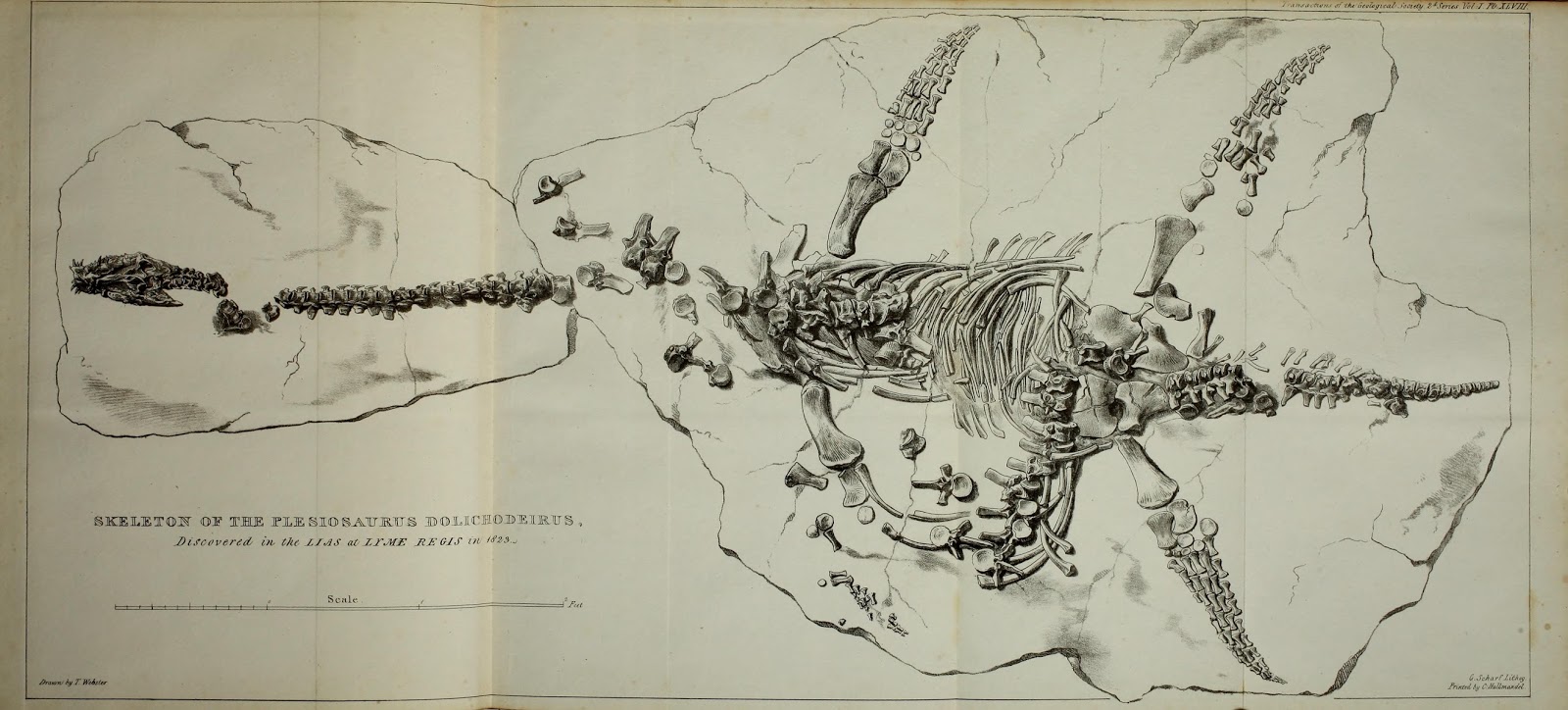
It was 1823 when the next great milestone in the plesiosaur story occurred. Famous “fossil-hunter” Mary Anning discovered a nearly complete skeleton at Lyme Regis in Dorset, England. The fossil was acquired by the Duke of Buckingham, who lent it to geologist William Buckland, who himself made it available to William Conybeare. Conybeare described the find, and asserted the full species name, Plesiosaurus dolichodeirus, during the same lecture at which Megalosaurus, the first dinosaur genus to be validly named, was described.

View Full Size Image
Anning’s plesiosaur. Transactions of the Geological Society. ser. 2, v.1. 1824. http://biodiversitylibrary.org/page/36238986. Digitized by California Academy of Sciences.

Sadly, despite Mary Anning’s significant contribution to the history of plesiosaur discovery, she is not named in Conybeare’s paper.

Fossil Stories

Stay tuned all week for more great fossil fun with our #FossilStories campaign, including:

  • Tweets and Facebook Posts
  • Blog Posts highlighting milestones and key publications in the history of fossil research
  • A Flickr Collection with hundreds of historic fossil illustrations
  • A Pinterest Collection featuring a selection of our favorite fossil illustrations
  • A BHL Collection containing seminal publications in the history of paleontology
  • A series of live webcasts at BHL partner institutions
  • A citizen science challenge in collaboration with The Field Book Project, the Smithsonian Transcription Center, and Smithsonian Institution Archives
Follow #FossilStories on Twitter and Facebook to learn more.
October 14, 2015by michelle.underhill
Blog Reel, Campaigns, Featured Books, Fossil Stories

Challenge Focus: Harry S. Ladd

We’re so excited that our #FossilStories Citizen Science Challenge was successfully completed on October 12, with 252 pages from 9 field books fully transcribed and reviewed in just 3.5 days! Be sure to tune into the behind-the-scenes tour of Smithsonian fossil collections with Dr. Nicholas Pyenson, Curator of Fossil Marine Mammals at the Smithsonian’s National Museum of Natural History, via the BHL Periscope on October 26 as a reward for the successful completion of the challenge. More details to come on Twitter and Facebook.

View Full Size Image
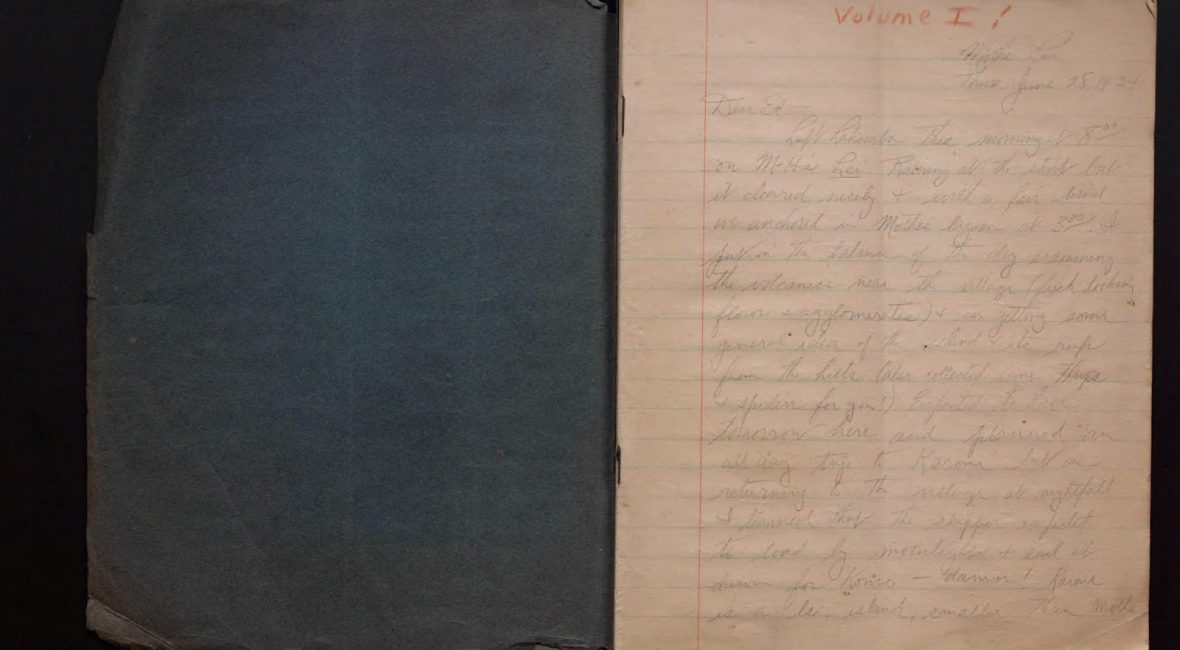
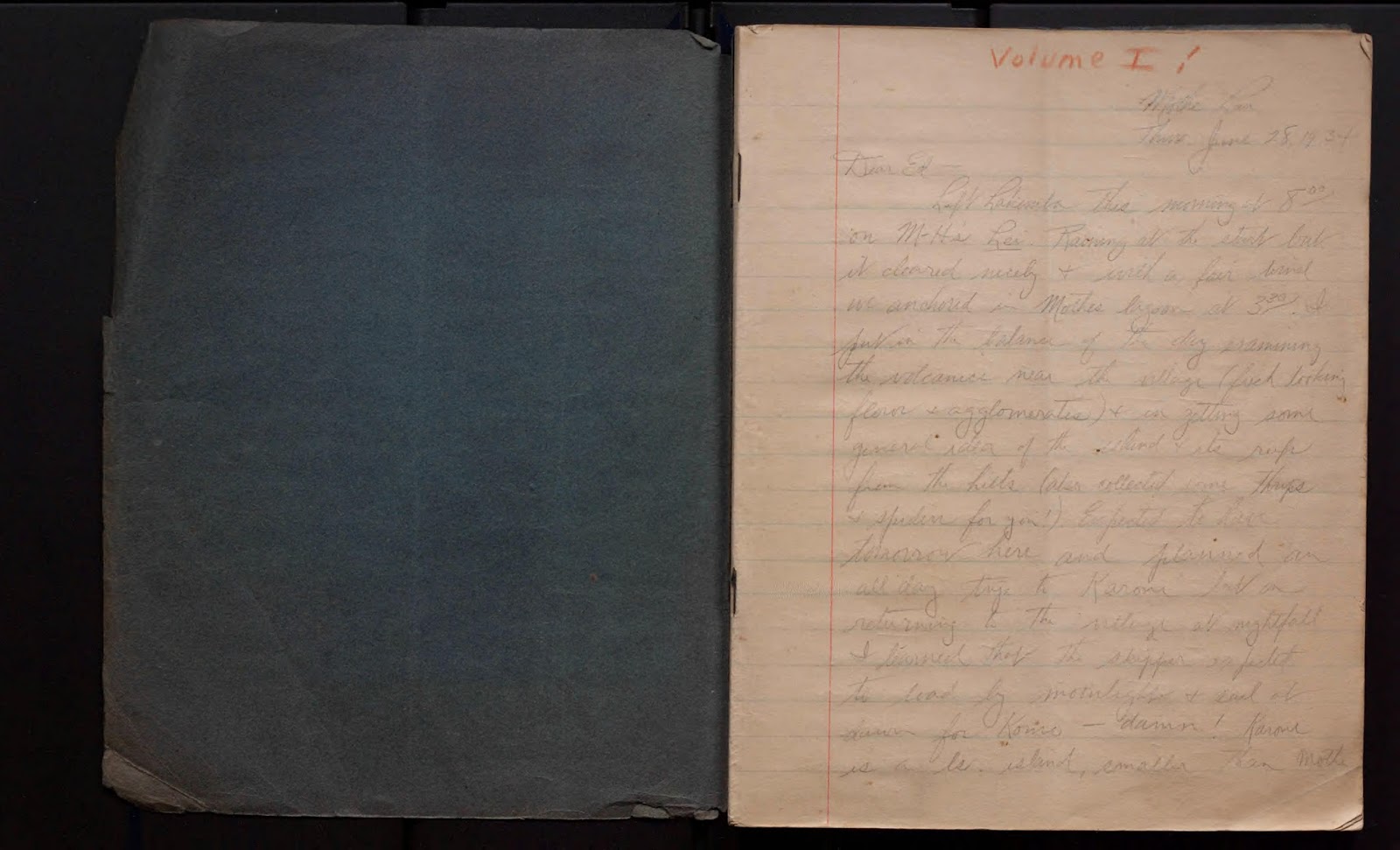
First page of Harry S. Ladd’s first field diary, 1915-72. http://biodiversitylibrary.org/page/48485440. Smithsonian Institution Archives.

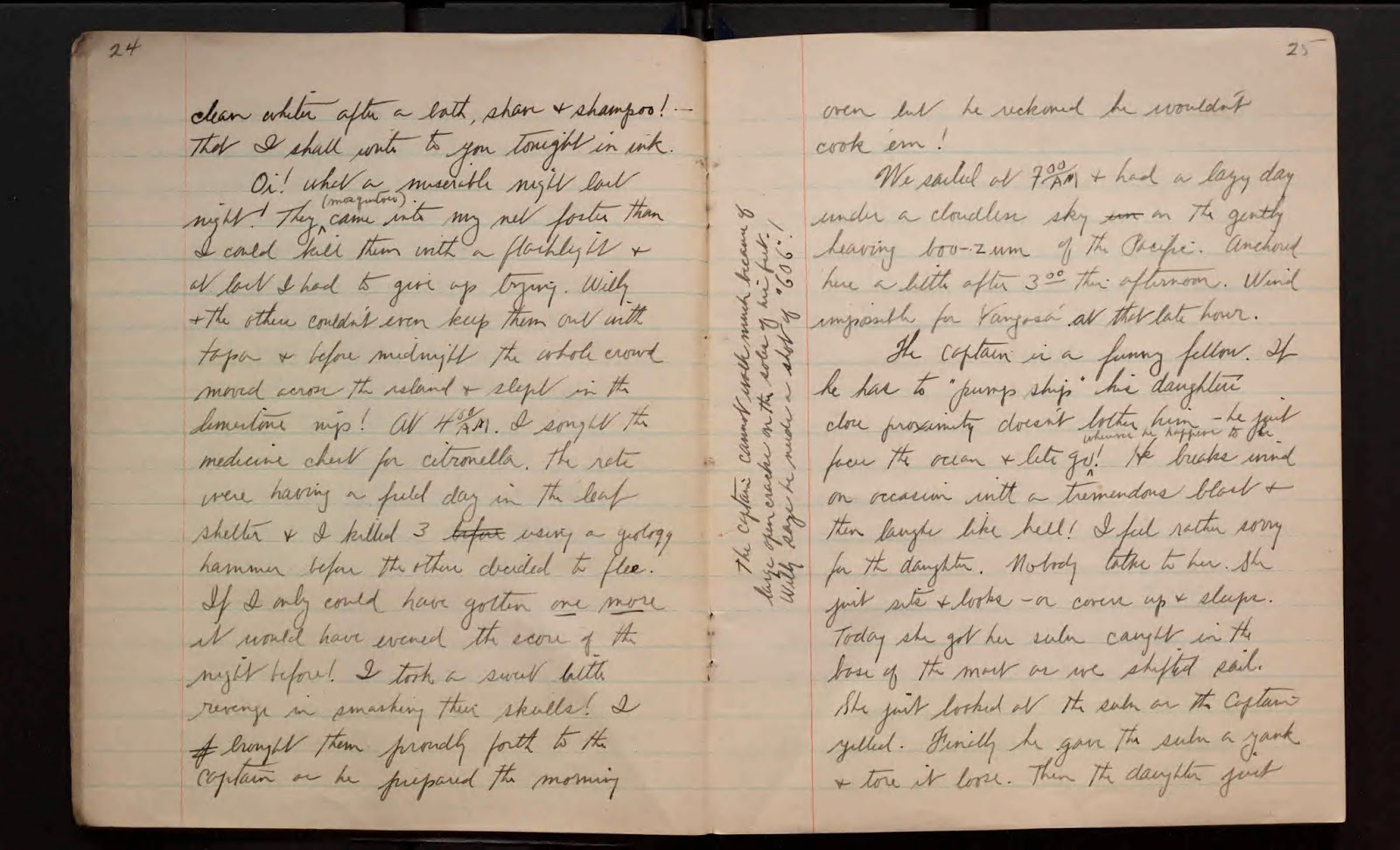
One of the journals in the challenge is from Harry Stephen Ladd (1899-1982), a geologist and paleontologist who worked much of his career with the US Geological Survey. Many of his fossil specimens can be found in the Stratigraphic collections and Mollusca Cenozoic Marine Type collection at the Department of Paleobiology, National Museum of Natural History. He began working in the field in the 1920’s and eventually became a leading authority in the geology of the islands in the Pacific Ocean. His two volume diary documents some of his earliest work in the Pacific region. In 1934, he went into the field for the second time with J. Edward Hoffmeister of the University of Rochester to study the coral formations in Fiji (in the 1960s he even used aerial observations made from a helicopter the document the shape and character of Fiji reefs). This work would go on to stimulate the debate about “the coral problem” of how did islands and atolls form. There were two competing theories in the early twentieth century — Darwin’s and Reginald Daly’s.

In the midst of this work, Ladd writes about his experiences in the field, with local communities, and getting married. All of this is shared as a series of letters to his colleague “Edward.”

View Full Size Image
Page from Harry S. Ladd’s second field diary, 1915-72. http://biodiversitylibrary.org/page/48485425. Smithsonian Institution Archives.

Volunteers working on the #FossilFossick challenge uncovered some awesome quotes from Ladd within his field book. For instance:

@SiobhanLeachman @TranscribeSI “The things I’ve done for palaeontology!” HA! That’s gotta be Ladd’s motto!

— Witchy Meg (@meg_shuler) October 10, 2015


oh, Harry, you dog! @TranscribeSI #fossilfossick https://t.co/bsdZ7bC1hW pic.twitter.com/yfOMhg7i7F

— Witchy Meg (@meg_shuler) October 11, 2015

Thanks to our awesome volunteers for the incredible information that they pulled out of Ladd’s field books. Stay tuned to our blog on Friday for more highlights from the challenge!

If you would like to know more about Harry Ladd and E. J. Hoffmeister, we encourage you to check out Ladd’s field books and specimen records on Smithsonian’s Collections Search Center, his publications and field books in BHL, and Hoffmeister’s personal papers at UC San Diego.

Be sure to follow #FossilStories on Twitter and Facebook all week for more great fossil fun and more highlights from our #FossilFossick Challenge!

October 14, 2015by ulib-libraryjobs
BHL News, Blog Reel, Campaigns, Fossil Stories

Webcast! Exploring the Smithsonian’s FossiLab

The Smithsonian National Museum of Natural History’s FossiLab is a busy place, responsible for preparing newly-collected fossils for Smithsonian’s scientists and maintaining the fossils in the Smithsonian’s collection. Visitors to the museum can actually watch staff and volunteers at work in the FossiLab, which is located within the Last American Dinosaurs Exhibition.

One of the projects in the FossiLab is the conservation and rehousing of specimens from the Museum’s fossil marine mammal collection. The specimens range from individual teeth to skulls, jaws and more-or-less complete skeletons comprised of both intact and fragmentary bones. Some of the most important specimens were described by Smithsonian scientists in articles now available online through the Biodiversity Heritage Library. The BHL collection gives FossiLab staff easy access to early photographs and drawings of these fossils, aiding their conservation work greatly. How is that? Fossils tend to break over time (gravity, vibration, and even the most careful handling may cause old repairs to fail or new fractures to form). Most such breaks are easy to repair, but in a large collection of fragmentary bones it’s not always easy to distinguish breaks that occurred during storage from those that predate a fossil’s discovery. When staff compare the bones to the original illustrations, the distinction becomes clear. Not only can they see if fragments have gone missing, but they also learn the approximate shapes of any missing pieces. If you’ve ever put a jigsaw puzzle together, you know how much easier it is to find a missing piece if you know what it looks like!

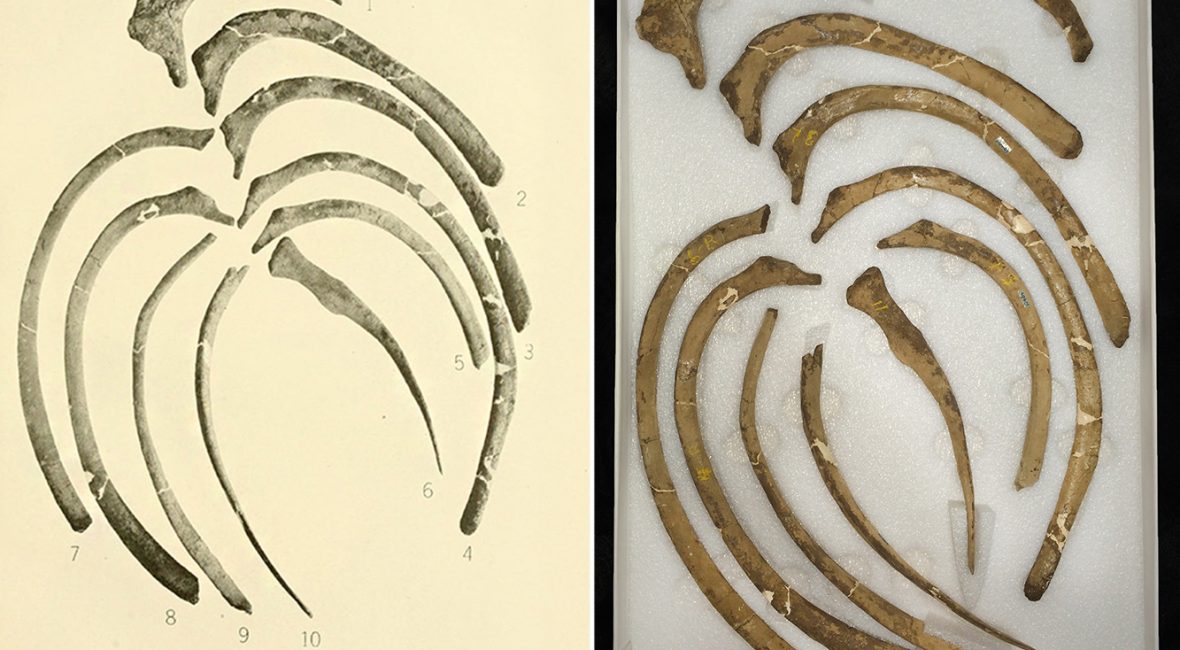
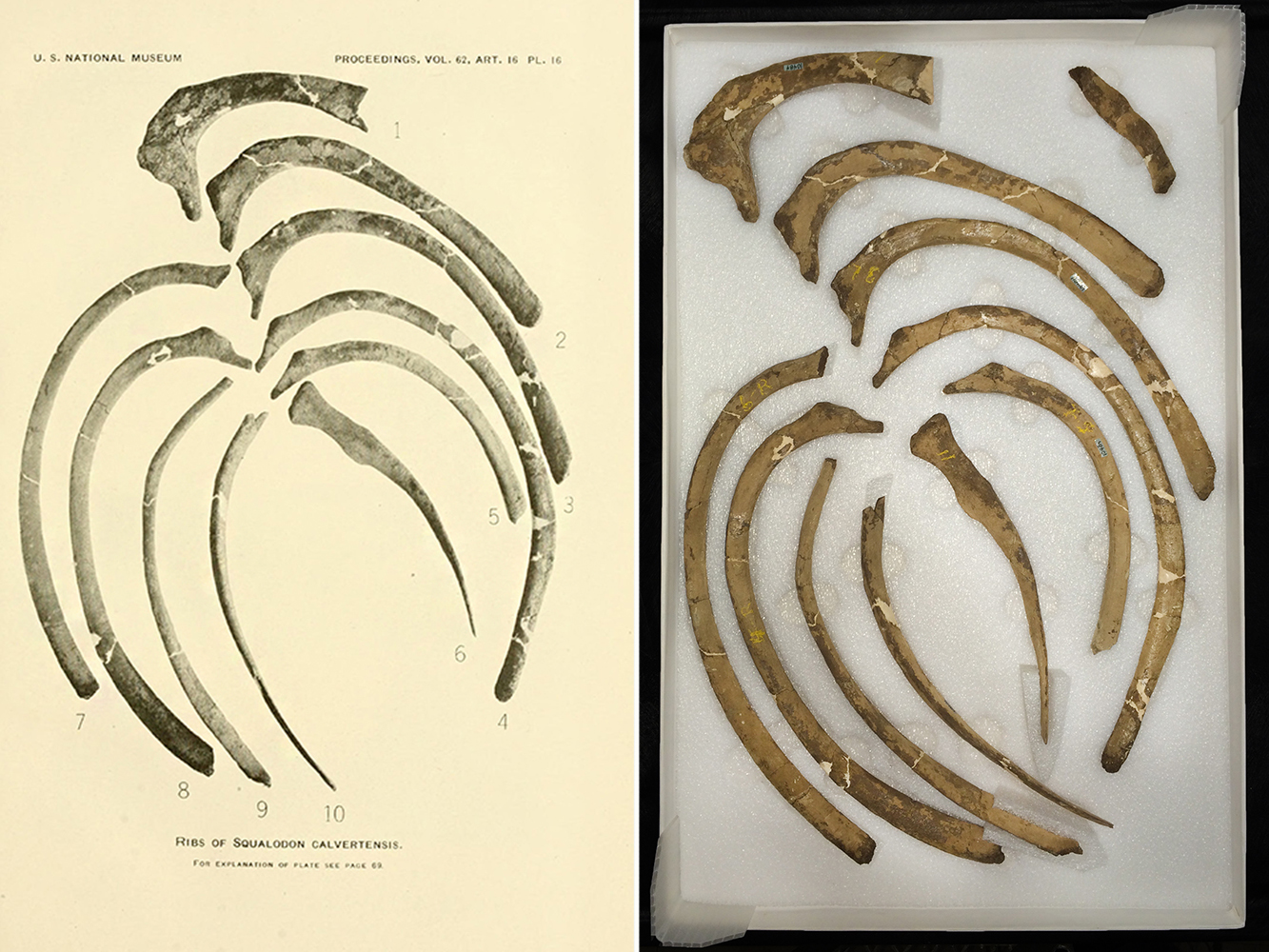
The photos below show an example of the FossiLab’s work. This past summer, the fossil of an extinct shark-toothed dolphin, Squalodon calvertensis (USNM 10484), was brought to FossiLab for rehousing. It had been described in 1923 by Remington Kellogg in the Proceedings of the United States National Museum. When staff compared the ribs with the photo in the publication (left), they realized that some had broken during their 92 years in storage. A careful search among all the bones in the storage drawer turned up the missing pieces. FossiLab staff reattached them using an archival adhesive before rehousing the entire specimen and returning it to storage. The repaired and rehoused ribs are shown in the photo on the right.

View Full Size Image
Ribs from Squalodon calvertensis. Left: Photo from “Description of two squalodonts recently discovered in the Calvert Cliffs, Maryland; and notes on the shark-toothed cetaceans.” Kellogg, Remington. Proceedings of the United States National Museum. 62(2462). pg. 1-69. http://biodiversitylibrary.org/page/16118643. Right: Same ribs, recently rehoused at the Smithsonian’s FossiLab.

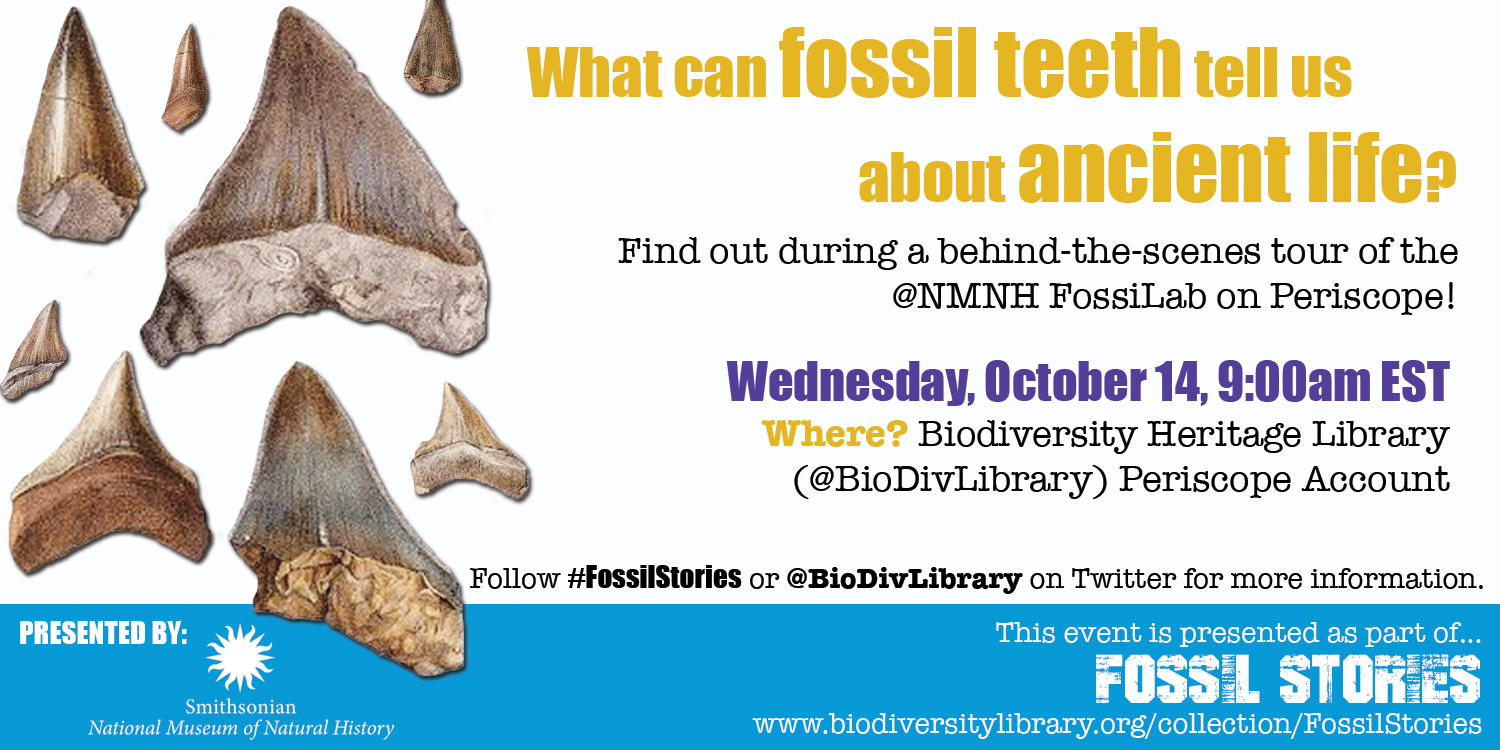
The FossiLab is also very interested in fossil teeth. Why? According to FossiLab volunteer Advait Jukar, a PhD student at George Mason University, these teeth can help us determine, for example, the number and types of dinosaur species in a region.

Curious to know more about the fascinating things that fossil teeth can tell us about ancient life and to further explore the work going on at the Smithsonian’s FossiLab? You’re in luck!

View Full Size Image

Tune in today, October 14, at 9am EST for a live tour of the FossiLab with Advait Jukar! The event will take place on the BHL Periscope account. To participate, simply follow BHL (@BioDivLibrary) on Periscope (you’ll then receive a notification via Periscope once the event is live) or follow @NMNH or @BioDivLibrary on Twitter. We’ll tweet out the link to the Periscope event on those accounts once it’s live.

If you missed the live event, you’re in luck. You can see the recording on YouTube!

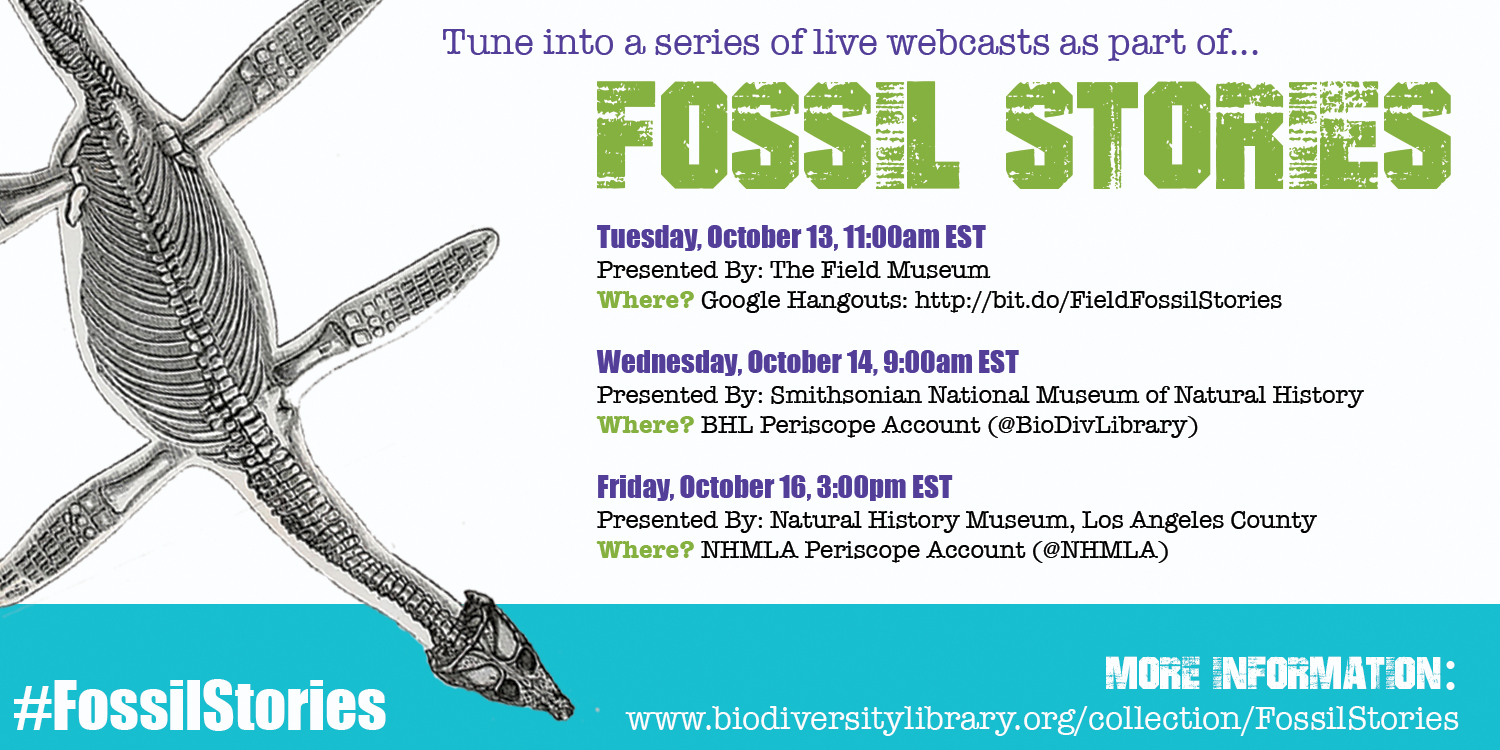
We hope to see you today on Periscope, and remember to follow our blog and #FossilStories on Twitter and Facebook all week for more great fossil fun and live webcasts. Check out the full webcast schedule below:

View Full Size Image
October 14, 2015by michelle.underhill

Help Support BHL

BHL's existence depends on the financial support of its patrons. Help us keep this free resource alive!

search

About BHL

The Biodiversity Heritage Library (BHL) is the world’s largest open access digital library for biodiversity literature and archives. BHL operates as a worldwide consortium of natural history, botanical, research, and national libraries working together to digitize the natural history literature held in their collections and make it freely available for open access as part of a global “biodiversity community.”

Join Our Mailing List

Sign up to receive the latest news, content highlights, and promotions.

Subscribe Now

Subscribe to Blog via Email

Enter your email address to subscribe to this blog and receive notifications of new posts by email.

Join 319 other subscribers

Subscribe to Blog Via RSS

Subscribe to the blog RSS feed to stay up-to-date on all the latest BHL posts.

Access RSS Feed

Inspiring Discovery through Free Access to Biodiversity Knowledge.

The Biodiversity Heritage Library makes it easier than ever for you to access the information you need to study and explore life on Earth…for free, anytime, anywhere.


64+ Million Pages of
Biodiversity Literature Online.

EXPLORE

Tools and Services
to Transform Research.

EXPLORE

300,000+
Illustrations on Flickr.

EXPLORE

ABOUT | HARMFUL CONTENT | PRIVACY | SITE MAP | TERMS OF USE