Biodiversity Heritage Library - Program news and collection highlights from BHL
  • Home
  • News
  • Featured Books
    • All Featured Books
    • Book of the Month Series
    • BHL at 20
  • User Stories
  • Campaigns
    • Fossil Stories
    • Garden Stories
    • Monsters Are Real
    • Page Frights
    • Her Natural History
    • Earth Optimism 2020
  • Tech Blog
  • Visit BHL
Home
News
Featured Books
    All Featured Books
    Book of the Month Series
    BHL at 20
User Stories
Campaigns
    Fossil Stories
    Garden Stories
    Monsters Are Real
    Page Frights
    Her Natural History
    Earth Optimism 2020
Tech Blog
Visit BHL
  • Home
  • News
  • Featured Books
    • All Featured Books
    • Book of the Month Series
    • BHL at 20
  • User Stories
  • Campaigns
    • Fossil Stories
    • Garden Stories
    • Monsters Are Real
    • Page Frights
    • Her Natural History
    • Earth Optimism 2020
  • Tech Blog
  • Visit BHL
Biodiversity Heritage Library - Program news and collection highlights from BHL
Blog Reel, Featured Books

True Detective: Frederick W. True’s lifelong dedication to uncovering the natural history of marine mammals

This post is a guest post by John Ososky and Nick Pyenson, originally published on the Pyenson Lab blog.

The Smithsonian Field Book Project is showcasing Frederick William True in February! This post is follows in a series of blogs and social media content from the Biodiversity Heritage Library, Pyenson Lab, Smithsonian Transcription Center, Smithsonian Archives, and Smithsonian Libraries celebrating #FWTrueLove. Click on these links to the first and second posts; the third one, below, is based on a seminar recently presented by John Ososky (OsteoPrep Lab, Department of Vertebrate Zoology, NMNH) and co-written with N. D. Pyenson.

View Full Size Image
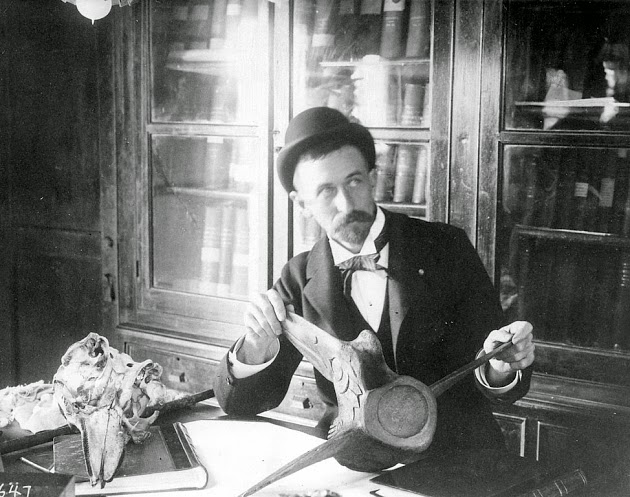
Frederick William True. c. 1880s. Smithsonian Institution Archive. Negative Number 2002-32245.
http://siarchives.si.edu/collections/siris_sic_10688.

In 1858, the inland port of Middletown, Connecticut, was the largest manufacturer of marine hardware in the United States, at a time when the shipping industry shifted from sails to steam. Frederick W. True was born that year, and unsurprisingly developed a lifelong interest in ships and fisheries, especially as he witnessed the decline of the Yankee whaling industry. After earning a Bachelor of Science degree in 1878, he took a job as clerk with the U.S. Fish Commission, which at the time was headed by the Smithsonian’s second Secretary, Spencer Fullerton Baird.
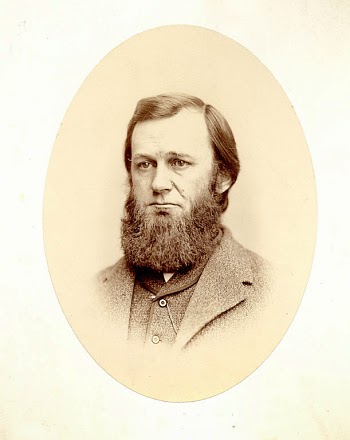
View Full Size Image
Spencer Fullerton Baird. Smithsonian Archives – History Div, 46853/oval or 2004-60740.
http://siarchives.si.edu/history/spencer-fullerton-baird.

While Secretary of the Smithsonian, Baird also decided to serve as the first Commissioner of the U.S. Fish Commission (a precursor to NOAA’s National Marine Fisheries Service). Under Baird’s guidance, the Commission became a robust scientific enterprise, undertaking extensive surveys of fisheries along all U.S. coastlines, censuses of fishery laborers, and also collecting data on target species and fisheries infrastructure. Baird was strategic about his influence, and he used the expansion of the Commission as an opportunity to hire promising young naturalists — such as True — and get their foot in the door at the Smithsonian.

Recruited by Baird, True was initially a special agent for the U.S. Fish Commission, but eventually Baird put him in charge of the joint Smithsonian-U.S. Fish Commission display at the Berlin Fisheries Exhibition of 1880, where many of the specimens collected by special agents for the Commission were put on display. At the time, the Smithsonian lacked an official library (for various historical reasons), and Baird rectified this situation in 1881 by donating his own personal library to form the core of a new research library at the Smithsonian. Baird recognized True’s diligence and acumen as a reseacher, and hired him to lead it. True seized on the opportunity, and improved on the idea immediately, forming divisional libraries to meet the specialized needs of individual curators, which still continue to this day (such as the Kellogg Library of marine mammalogy, named in honor of Remington Kellogg, who never met True but succeeded him as a Smithsonian marine mammalogist).
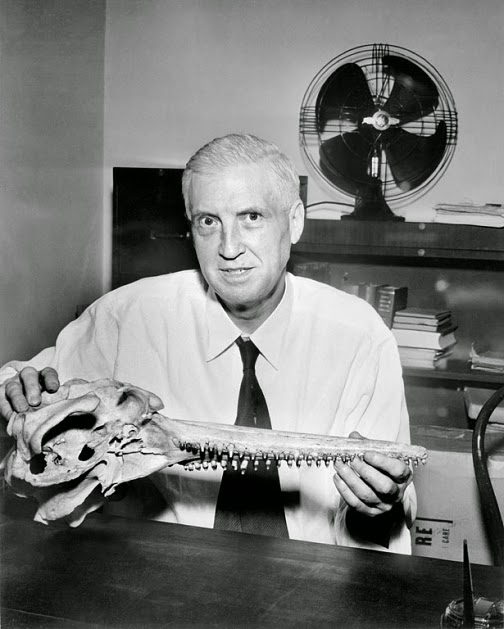
View Full Size Image
Remington Kellogg. Smithsonian Institution Archives. Image Number 78-3701.
http://siarchives.si.edu/collections/siris_sic_11289.

True sometimes diverged from his role as a librarian to fill a void as acting curator of mammals; Baird, who noted True’s ambition and drive, soon appointed him curator of mammals in 1883. While microscopic descriptions were the rage in natural history at the time, True’s poor eyesight made this type of work difficult. True instead recognized the wealth of marine mammals specimens at the Smithsonian that had been generated in part by Baird’s collections from the Commission, as well as collections made by Captain Charles M. Scammon in the North Pacific Ocean in the 1870s and the prolific Edward Drinker Cope, who had been hired by Baird to write a monograph on cetaceans, which only came to partial fruition. Thus, True had the opportunity and motivation to expand his interest in marine fisheries and take on the study of cetaceans.

At the same time, True recognized the need to expand and grow the collections for the U.S. National Museum (USNM, the forerunner of what today is called the National Museum of Natural History, or NMNH). In a shrewd and practical move, True encouraged keepers of lighthouses and life-saving stations along the U.S. coasts to collect stranded specimens and data on marine mammals. True’s 1884 guide on the topic effectively presaged the logic of the modern marine mammal stranding network, which only formally took effect with the U.S. Marine Mammal Act of 1972.
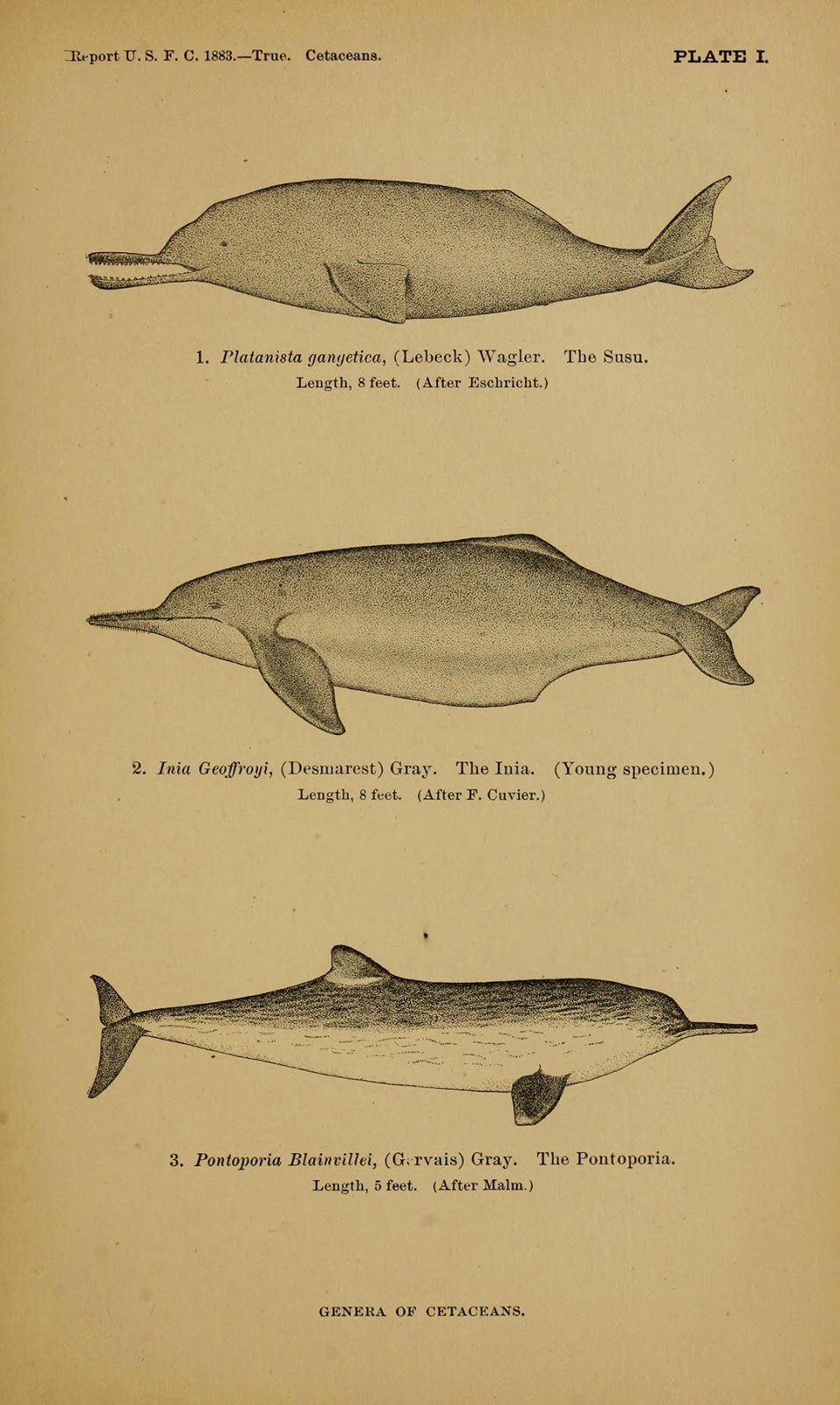
View Full Size Image
Suggestions to the keepers of the U.S. life-saving stations, light-houses, and light-ships; and to other observers, relative to the best means of collecting and preserving specimens of whales and porpoises. True, F.W.  (1884).
http://biodiversitylibrary.org/page/16177227.

True capitalized on Baird’s support by expanding collecting efforts, both opportunistically as part of industries and fisheries, and with more dedicated expeditions with specific curators at USNM. For example, the Smithsonian’s involvement with the Western Union Telegraph Expedition to Alaska in 1865 brought William H. Dall, a paleontologist who later would work for both the U.S. Geological Survey and the Smithsonian, into the collaborative fold. As a tribute to Dall’s impact, True named Dall’s porpoise, Phocaena dalli (now Phocoenoides dalli) in 1885 based on a description, drawings and specimen collected by Dall in Alaska. Unfortunately, this specimen was initially shipped to the Army Medical Museum by mistake, where rats chewed up the postcranial elements. (The skull is now all that is now left of the holotype specimen).
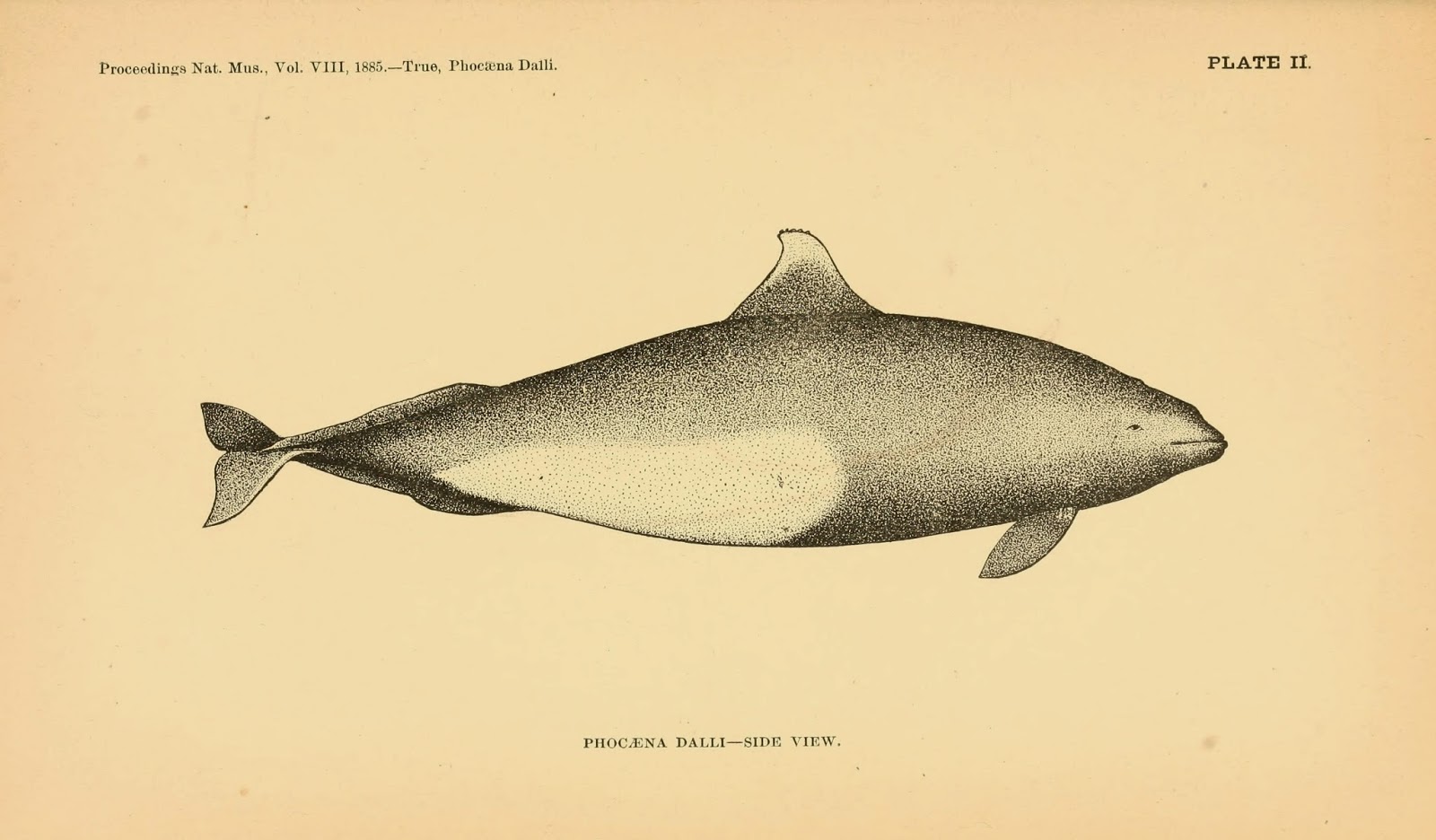
View Full Size Image
Dall’s porpoise (Phocoenoides dalli). Proceedings of the United States National Museum. v. 8 (1885). http://biodiversitylibrary.org/page/15383677.

In 1895, the U.S. Fish Commission called True back into service for a study on the Northern fur seal industry in the Pribilof Islands, off Alaska. The Commission, lacking confidence in the local Russian naturalist’s conclusion about sustainable yield of fur seal skins from the islands’ rookeries, launched their own investigations. True, as he would in other field expeditions, brought along his father-in-law, D. W. Prentiss, as well as one of his chief preparators, William H. Palmer, who collected specimens while there. (Palmer would also later collect Miocene fossil marine mammals for True in Calvert County, Maryland). En route to the Pribilofs, the team dropped off another Smithsonian curator, Leonhard Stejneger, at the Commander Islands, near the Kamchatka Peninsula of modern-day Russia. Stejneger, who slightly preceded True, collected many marine mammals as well, including a beaked whale specimen that True named for him, Mesoplodon stejnegeri. True’s report on their work at the Pribilofs offered novel conservation strategies for the population, although he viewed a ban on pelagic sealing as the only effective strategy.

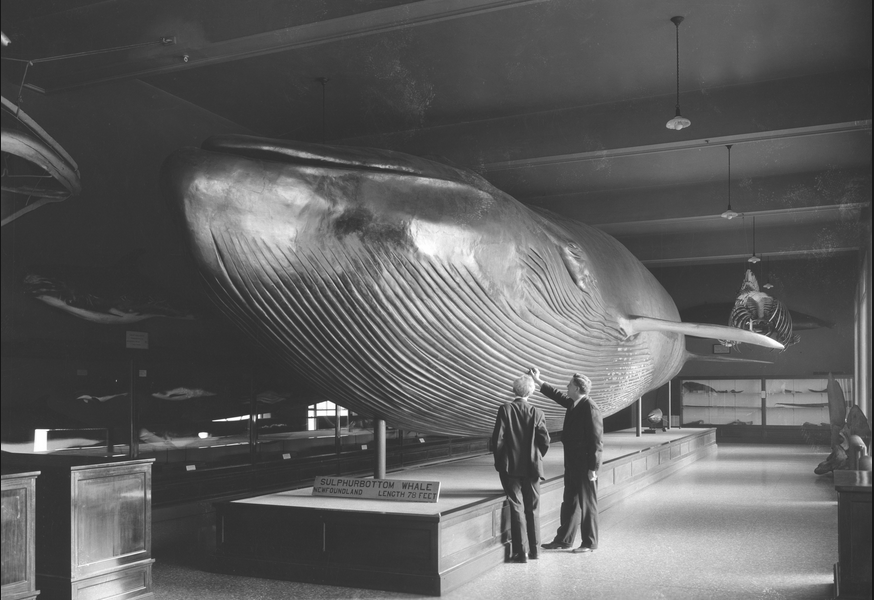
In 1899, True travelled to Newfoundland where a shore based whaling operation had been started by the Cabot Whaling Company at Snooks Arm in Notre Dame Bay. True joined the crew on the steam powered ships as they harpooned and returned to the station fin whales, as well as a smaller number of humpbacks. True observed and photographed the whaling operation, but also participated in crew activities, even including manning the harpoon on a successful fin whale hunt. As whales were flensed and processed, True availed himself of an opportunity to study the whale’s anatomy, especially at a second station that was opened at Balaena Station in Hermitage Bay, Newfoundland, in 1901. There, the primary target species were blue whales, which were too fast and too large for earlier fisheries to tackle. This operation offered an exciting new opportunity to study them, and generated important collections for the USNM, including a full plaster cast of one individual for the St. Louis Exposition of 1903.
View Full Size Image
Remington Kellogg and Leonhard Stejneger with the 1903 blue, or sulphur-bottom, whale, on exhibit in the Natural History Museum, c. 1930s. Image from Smithsonian Institution Archives.

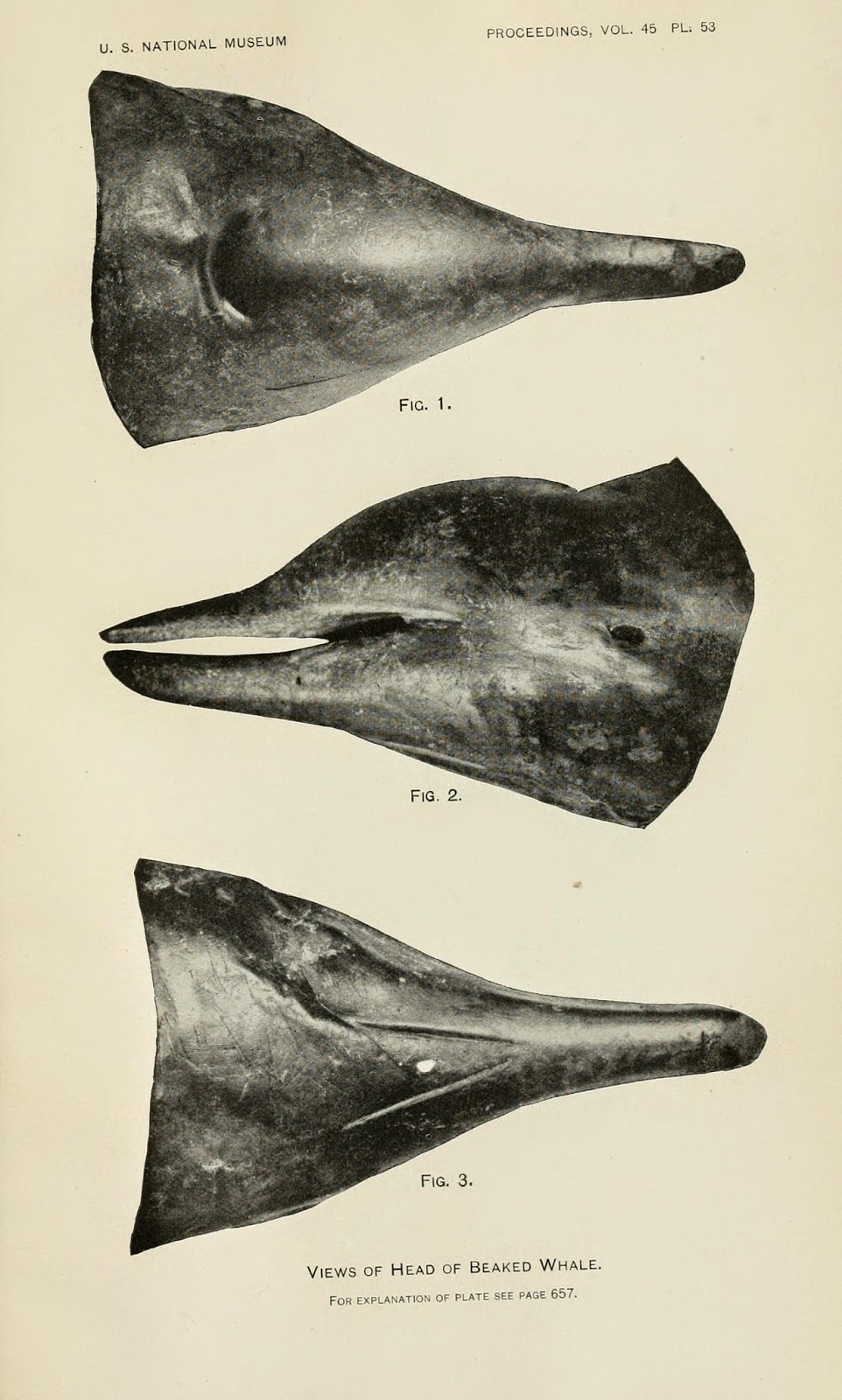
True’s ultimate contributions to marine mammal science were three profound monographs on Cetaceans. Grace Costantino provided a nice summary of his 1899 monograph on oceanic dolphins (A Review of the Family Delphinidae) at BHL’s blog last week. True’s lengthy Whalebone Whales of the Western North Atlantic in 1904 marked the first affirmative answer to whether baleen whales on opposite sides of the Atlantic constituted the same species and populations. To arrive at that conclusion, True provided the first extensive review of the validity of earlier descriptions of American whales by Scammon and Cope, an effort which relied on his own travels to other museum collections, and the rapidly growing one at his home institution (USNM). His 1910 work on beaked whales (An Account of the Beaked Whales of the Family Ziphiidae) similarly cleared up a mess of older taxonomic names for this enigmatic group of toothed whales, which have been a special strength of the Smithsonian since the time of Baird. In the past 100 years, many beaked whale species have been named after Smithsonian curators and other research associates, including: Baird’s beaked whale (Berardius bairdii), Stejneger’s beaked whale (Mesoplodon stejnegeri), True’s beaked whale (Mesoplodon mirus) and Perrin’s beaked whale (Mesoplodon perrini by emeritus curator of marine mammals James G. Mead). For his own contributions, True’s name is bestowed on the common names of two rodent species that he described and published on from Asia.
View Full Size Image
Head of True’s Beaked Whale (Mesoplodon mirus). Proceedings of the United States National Museum. v. 45 (1913). http://biodiversitylibrary.org/page/7307255.

In True’s entry for the Dictionary of American Biography, Alexander Wetmore (an ornithologist, Smithsonian curator, and the sixth Secretary of the Smithsonian) reflected that True was “profound as a student, and exact and punctilious as an administrative officer,” traits that no doubt served him well in his major capacities at USNM. By 1897, True was appointed head curator of the Department of Biology, with broad administrative direction over all biological work at USNM, and served as acting secretary of the entire institution for a short period of time that year. When the natural history collections of USNM moved across the National Mall to the newly built natural history building in 1910 (today, the main museum for NMNH), True became assistant secretary of the Smithsonian in charge of the library and of the international exchange service, a position that he occupied until his death in 1914.

February 13, 2015by ulib-libraryjobs
Blog Reel, Featured Books

Dolphins and True Love: An Ode to Frederick W. True

The Smithsonian Field Book Project is showcasing Frederick William True in February! This post is the first in a series of blogs and social media content from the Biodiversity Heritage Library, Pyenson Lab, Smithsonian Transcription Center, Smithsonian Archives, and Smithsonian Libraries celebrating #FWTrueLove. Learn more.

The Delphinidae: Cetacean Taxonomy’s “Trash Basket”

When you think of oceanic dolphins, chances are you don’t think of trash. But if you’re a taxonomist, you might.

“The family Delphinidae has been called a ‘taxonomic trash basket’, because many small to medium-sized odontocetes of various forms have been lumped together in this group for centuries” (Dr. Edward Vanden Berghe, Flanders Marine Institute. WoRMS. Delphinidae).

View Full Size Image
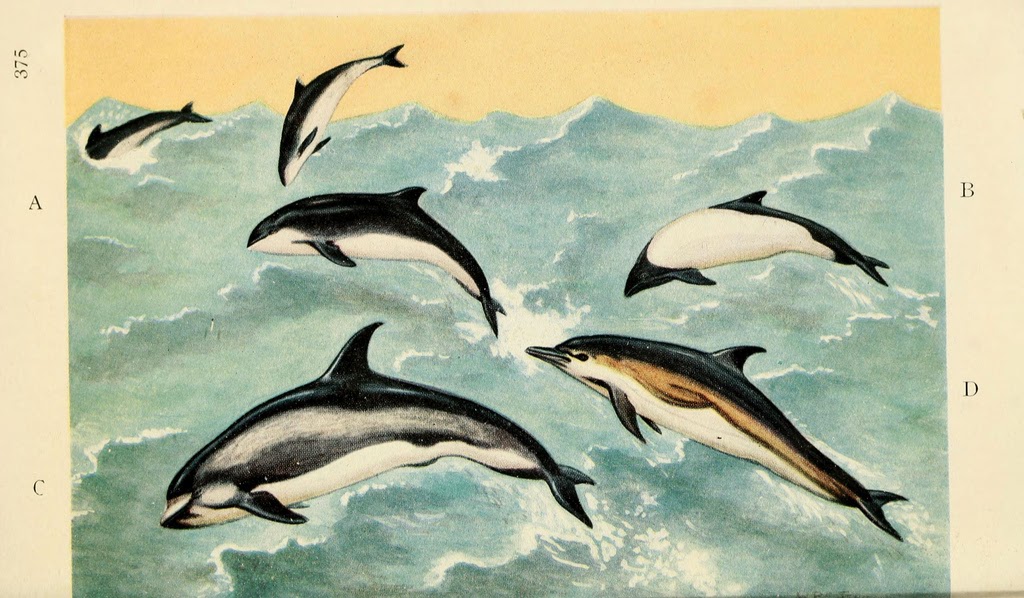
Fig B: Commerson’s dolphin (Cephalorhynchus commersonii); Fig. C: white-beaked dolphin (Lagenorhynchus albirostris); Fig. D: short-beaked common dolphin (Delphinus delphis); with the harbour porpoise (Phocoena phocoena) – Fig. A. (Listed by True as Phocaena communis within Delphinidae. Today named Phocoena phocoena in Phocoenidae family) in BHL. Norman, J.R. Field Book of Giant Fishes (1949). http://biodiversitylibrary.org/page/6279181.

Even today, multiple classifications exist, and depending on the schema used, anywhere from 30-50 species may be attributed to Delphinidae, ranging in size from 1-9.1 meters (see various taxonomies in EOL, WoRMS, Marine Mammal Science, and Animal Diversity Web). The distribution of Delphinidae species across such wide and diverse habitats and the lack of data for many members of the family impede conclusive taxonomic assertions regarding species distinctions and relationships.

Regardless of the questions still remaining, members of the Delphinidae family share many characteristics, including numerous conical teeth, compression and fusion of the neck vertebrae, and sophisticated echolocation ability.

View Full Size Image
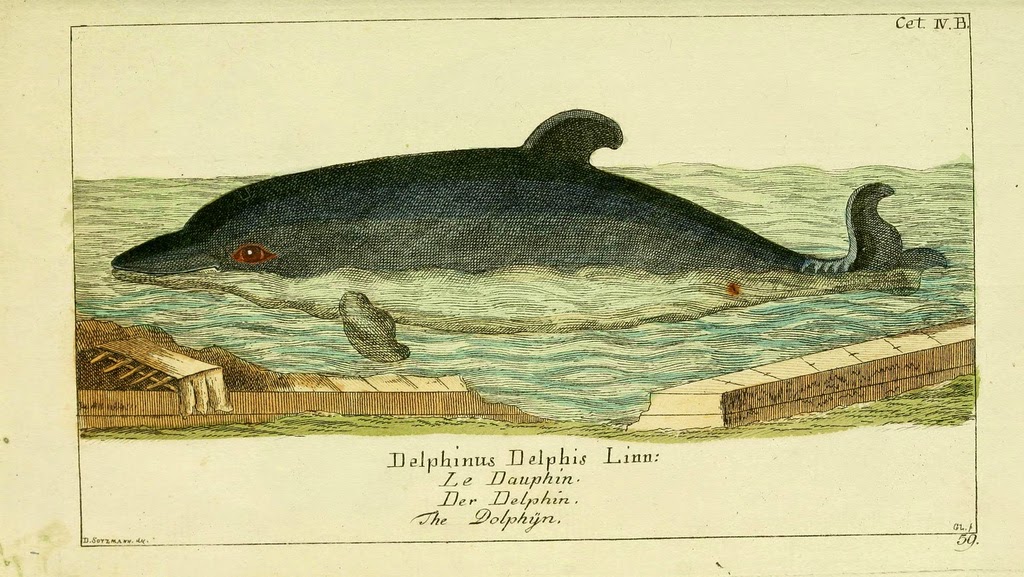
Short-beaked common dolphin (Delphinus delphis). Gemeinnüzzige Naturgeschichte des Thierreichs. Bd. 2 Plates (1780). http://biodiversitylibrary.org/page/28342227.

The quest to understand and organize oceanic dolphins is one that requires patience and the continual acquisition of knowledge and data. This has been the reality since scientists first attempted to classify these marine mammals, and one poignantly felt by one of the world’s foremost cetacean authorities at the turn of the century: Frederick William True.

F.W. True: Pioneering Cetologist

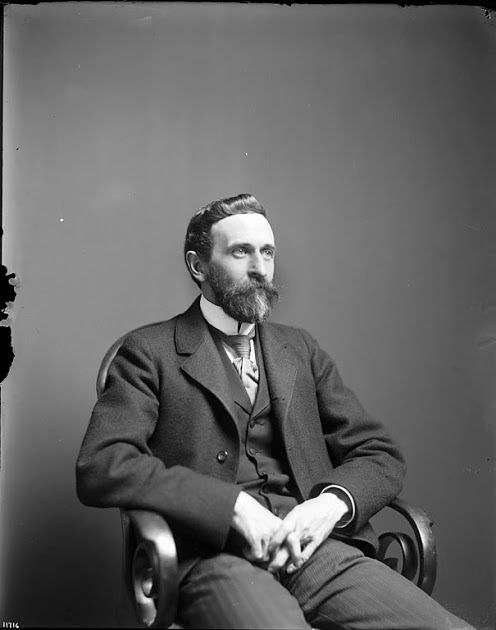
Frederick W. True (1858-1914) began his career as a clerk at the U.S. Fish Commission in 1878. In 1881, he was hired by S.F. Baird as Librarian and Acting Curator of Mammals at the Smithsonian’s National Museum of Natural History, after which he was promoted to Head Curator of Biology in 1897 – a position he held until 1911 when he became the Assistant Secretary of the Smithsonian Institution. With a focus on living and marine fossil mammals, True was the first marine mammals curator at the Smithsonian. Though he is most famous for his work on the mysticetes and beaked whales, True also provided invaluable contributions to the study of the Delphinidae family.

View Full Size Image
Frederick W. True. Image Courtesy the Smithsonian Institution Archives | Image # MAH-11716
http://siarchives.si.edu/collections/siris_sic_10333

At the turn of the century, the status of the Delphinidae family was even more confusing than it is today. The widespread distribution of the family meant that the same species might actually be found off the coasts of every continent (the common bottlenose dolphin (Tursiops truncatus) for example, has a worldwide range). More crucially, the lack of access to the specimens and data of scientists in different parts of the world, led to the tendency of some naturalists (such as Edward Drinker Cope) to base new species descriptions on scant data (often relying on a single, perhaps incomplete, specimen to assert a new species). Consequently, our turn of the 20th century understanding of Delphinidae was saturated with questionable, often synonymous, scientific names.

View Full Size Image
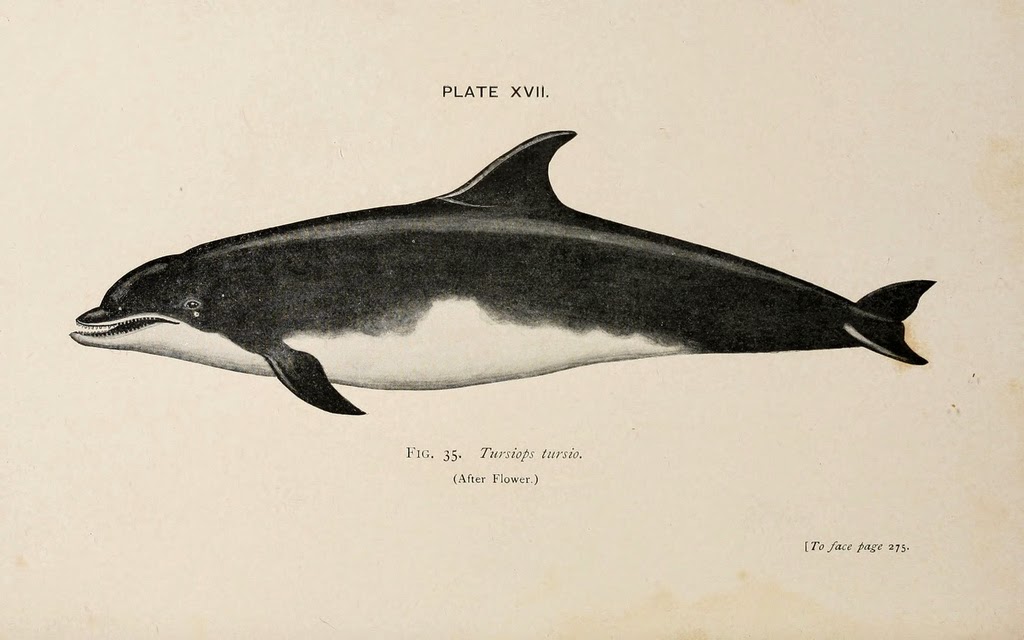
Common bottlenose dolphin (Tursiops truncatus). Beddard, Frank E. A Book of Whales (1900).
http://biodiversitylibrary.org/page/1398413.

True recognized that scientists at the time used non-uniform criteria to describe and classify species. Some based descriptions on external characteristics, while other relied on osteological examinations, resulting in, as True put it, two series of species. Varied criteria employment also resulted in drastically different classification schemes, resulting in a plethora of competing taxonomic trees for both Delphinidae and related families.

The preponderance of oceanic dolphin scientific names and uncertainty of species relationships was a major impediment to the advancement of Delphinidae research. Near the end of the nineteenth century, True set out to bring order to the chaos.

Revising the Delphinidae

True began his endeavor with a focus on the species found off the North American coasts, but the state of affairs compelled him to expand his scope to the entire Delphinidae family. Though his work was largely based on that of Gray, Flower, Stejneger and Baird, True was the first person to attempt to analyze all available data, harmonize the many synonyms, and produce a classified list of truly distinct Delphinidae species.

True quickly realized that “a proper comparison of the species described respectively by European and American naturalists could not be made without an examination of the types.” Thus, in the winter of 1883-84, True spent four months in the museums of England and Europe studying the type specimens of the described Delphinidae species. The result of his labor was the publication Contributions to the natural history of the cetaceans. A review of the family Delphinidae, which presented a revised Delphinidae classification.

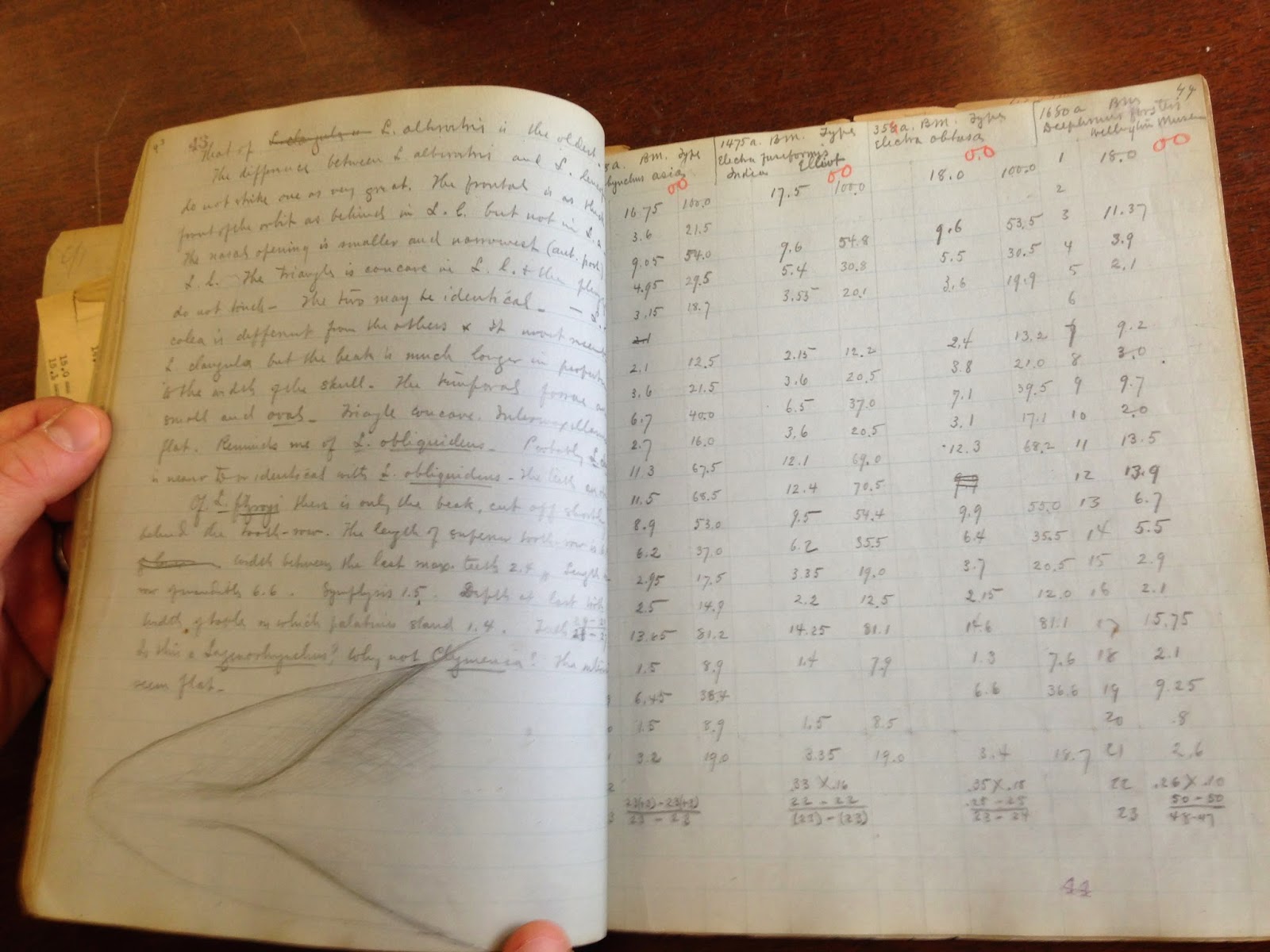
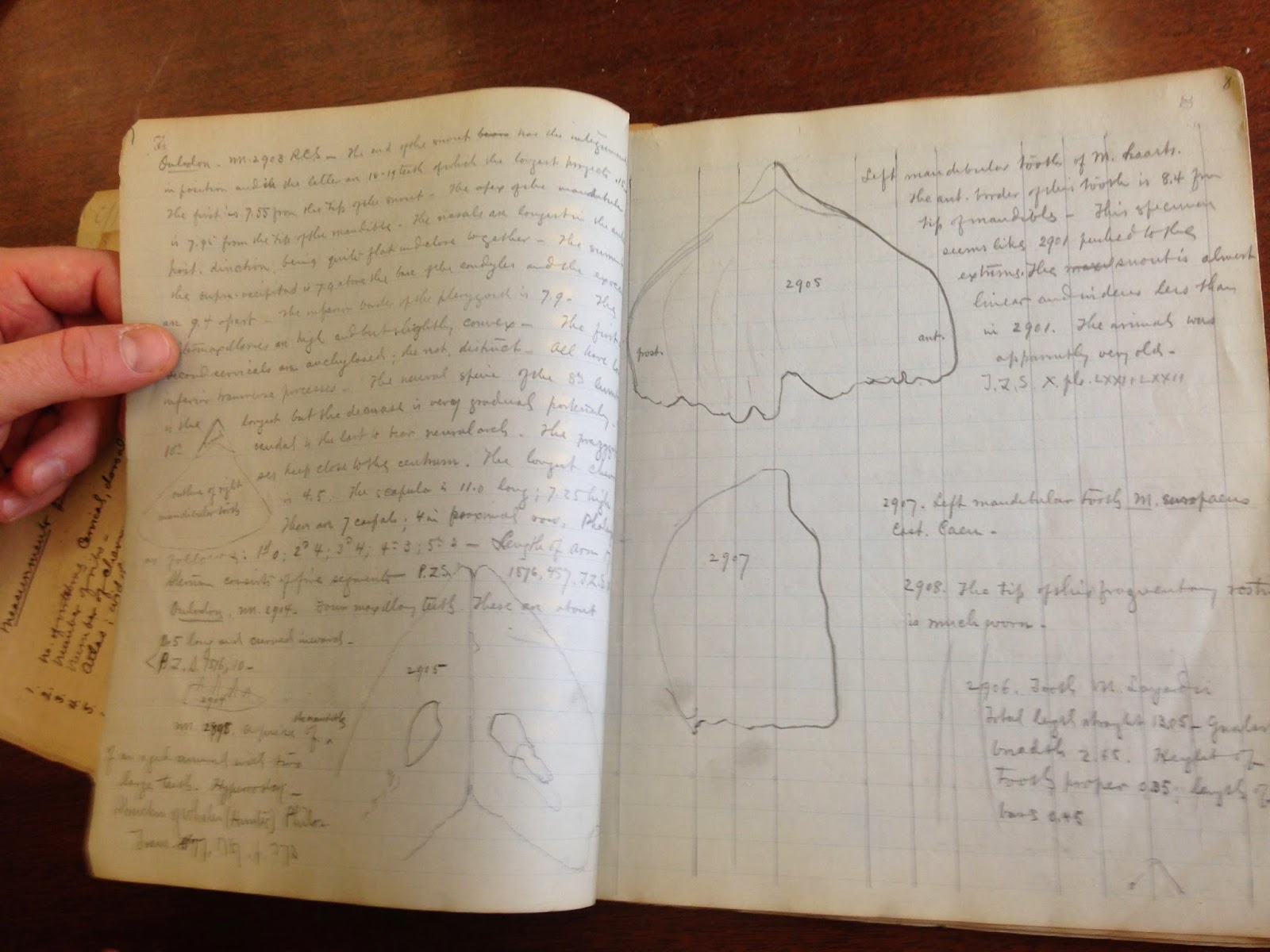
During his time abroad, True kept a journal recording the observations, measurements and data he gathered. These records were used to inform the aforementioned publication. Dr. Nick Pyenson, current Curator of Fossil Marine Mammals at the Smithsonian’s National Museum of Natural History, recently discovered this journal amongst a box of True’s manuscripts and research materials in the Smithsonian’s Remington Kellogg Library of Marine Mammalogy.

View Full Size Image
F.W. True’s Journal (1883-84). Data recorded from specimens at European and English museums. Used to inform True’s Delphinidae publication.

As the journal (1883-84) shows, True carefully examined and measured all of the type specimens he could find, including specimen catalog numbers, locality, sex and age if known, various lengths including total, length of beak, and girth, and other data such as the number of teeth. These kinds of data remain relevant today, where the consistent collection and curation of this irreplaceable data provides the basis for answering many different ecological, evolutionary and conservation research questions.

View Full Size Image
F.W. True’s Journal (1883-84). Data recorded from specimens at European and English museums. Used to inform True’s Delphinidae publication.

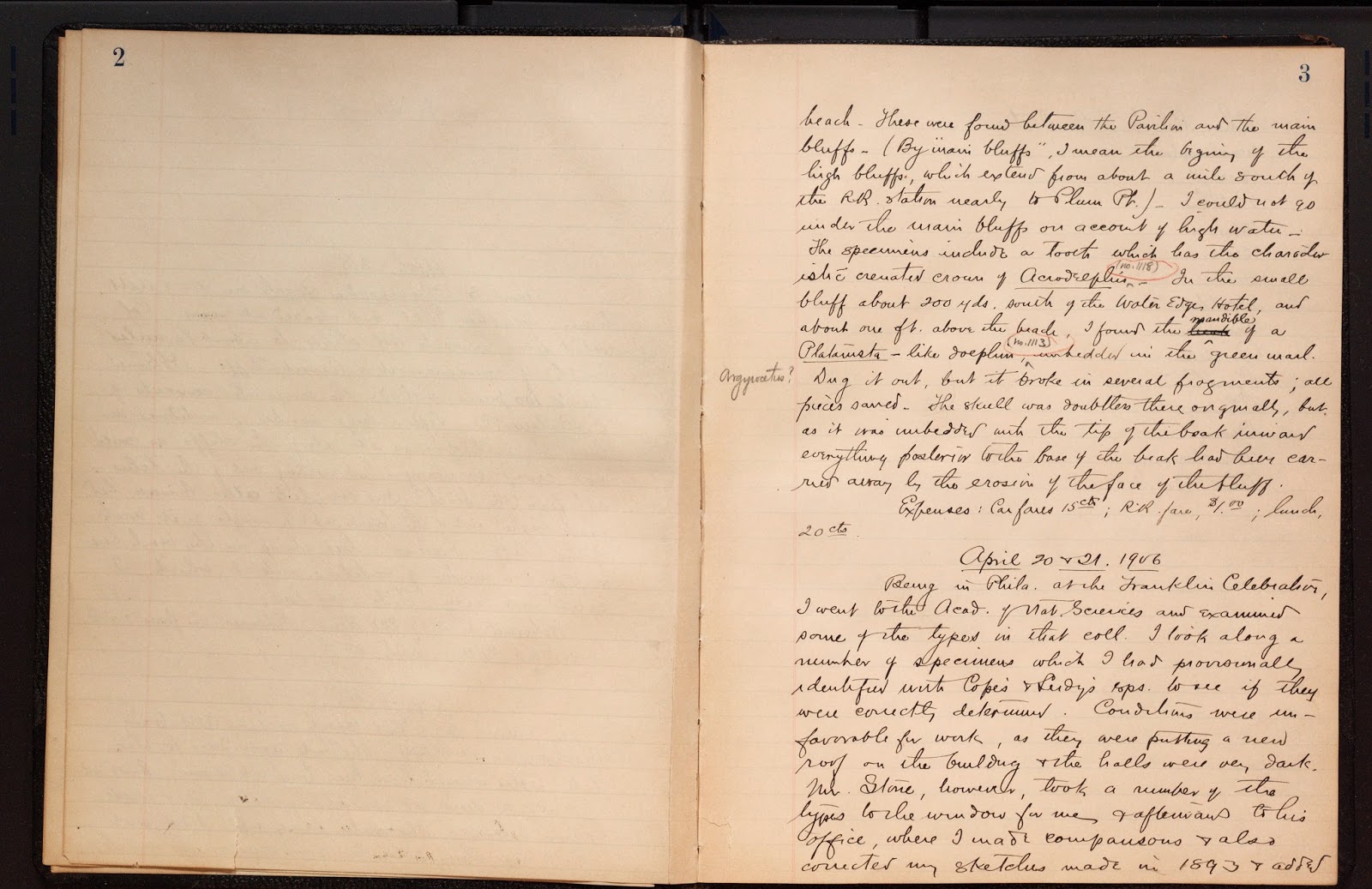
Even more interesting, the logbook is annotated by Remington Kellogg, the aforementioned library’s namesake and himself an authority on cetaceans. Though his time at the Smithsonian’s National Museum of Natural History postdated True’s lifetime, Kellogg took a keen interest in True’s work and annotated many of his manuscripts, including not only this journal but also True’s fieldbook of collecting trips in 1906-08.

View Full Size Image
True. F.W. U. S. National Museum log book of collecting trips for fossil cetaceans (1906-08). Digitized by the Smithsonian Institution Archives for The Field Book Project. http://biodiversitylibrary.org/page/46701241.

The measurements and osteological examinations recorded in True’s 1883-84 journal were used to create limits of specific variation among species and inform a comparative analysis of species relationships to produce a revised taxonomic tree. The result was the harmonization of existing scientific names down to a total of 62, classified within 19 genera and 2 subfamilies within Delphinidae.

Of course, the science of taxonomy is not a static endeavor. Classifications are constantly improving and evolving as we have access to new information and specimens, discover new species, and employ new techniques (such as DNA sequencing) in our quest to better understand the world and the species in it. Indeed, even True himself acknowledged that the accuracy of classifications was dependent on the availability of data and the construction of a full biological picture. In his publication, True asserted,

“The writer is fully aware that the time is not yet ripe for a final review of the family Delphinidae. The work now accomplished must be regarded as provisional and subject to change in the future…Cetologists must be content to wait patiently until the acquisition of new specimens make a complete description possible.”

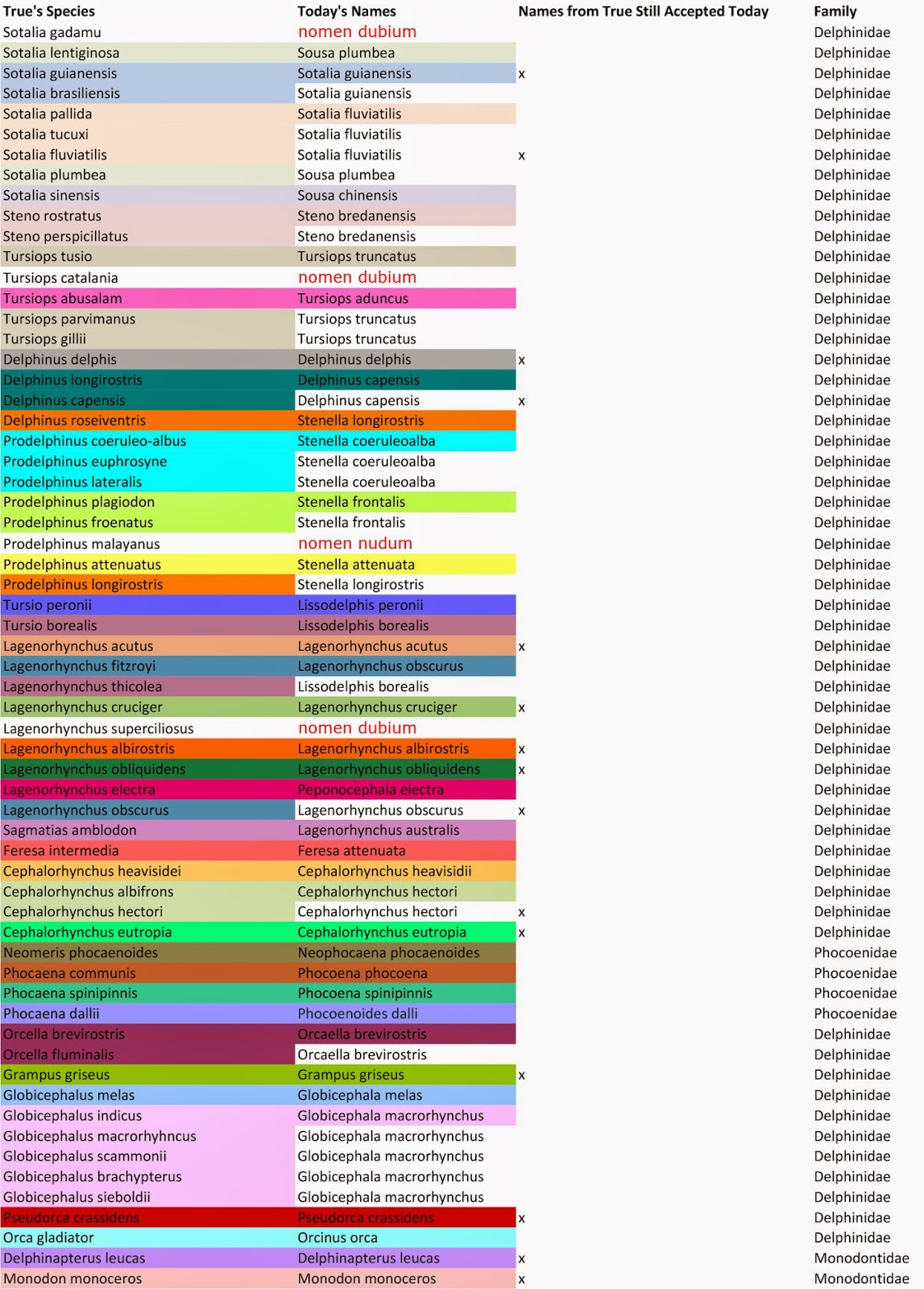
And indeed, new information has come to light since True revised the Delphinidae family over 100 years ago. While the total number of species, genera, and subfamilies differ depending on the classification schema used, of the 62 distinct species that True recognized, 38 are recognized as distinct today (though some under different names), and 32 are still included in the Delphinidae family. Twenty-four of the species True classified as distinct are now considered representatives of other species cataloged in his publication or are not recognized as distinct species today (i.e. nomen dubium). While many of the binomials employed by True are today considered invalid synonyms (though some have changed only slightly in spelling), 15 of the names included by True are still considered valid. (Comparisons made on whole species binomial. Data based on taxon information in WoRMS collected 1/30/2015. Note: some researchers have proposed using Sagmatias for species of Lagenorhynchus today — so Sag. amblodon may get resurrected.)

View Full Size Image
Table Comparing the species names presented by True (“True’s Species”) with the corresponding valid species names recognized today (“Today’s Species). Each unique species listed under “Today’s Species” is highlighted with a distinct color, and all names employed by True in the “True’s Species” column are color coded with the valid name they are recognized to represent today. The “Family” column indicates the taxonomic family to which the species identified by True are today understood to belong to. Comparisons based on taxon information in WoRMS collected on 1/30/2015.

Scientific Research in the Digital Age

The efficiency of scientific research depends on access to raw data, specimens, and previously published information. During True’s lifetime, access to this information was especially difficult, resulting in the proliferation of competing taxonomies. Satisfying information needs often required expensive trips across oceans and countries to consult dispersed institutional collections.

Today, open access digitization initiatives are working to provide global, online access to the information required to study, describe, and classify life. The digitization of museum specimens, scientist’s raw data contained in unpublished fieldbooks, and centuries’ worth of published natural history literature allows researchers to draw connections among all of this information, see the work upon which current systems are based, compare notes across disciplines and time, and more easily harmonize synonyms and create classifications. The Biodiversity Heritage Library and The Field Book Project, through the digitization of natural history fieldbooks and publications, are two programs amidst a growing cadre of initiatives dedicated to facilitating discovery of the natural world. Through continued collaboration and a commitment to open access, we can improve the efficiency of scientific research across the globe.

For more fun, browse historic Delphinidae illustrations from BHL: http://ow.ly/IuYCX

With contributions by: Dr. Nick Pyenson | Curator of Fossil Marine Mammals, NMNH

February 5, 2015by michelle.underhill

Help Support BHL

BHL's existence depends on the financial support of its patrons. Help us keep this free resource alive!

search

About BHL

The Biodiversity Heritage Library (BHL) is the world’s largest open access digital library for biodiversity literature and archives. BHL operates as a worldwide consortium of natural history, botanical, research, and national libraries working together to digitize the natural history literature held in their collections and make it freely available for open access as part of a global “biodiversity community.”

Join Our Mailing List

Sign up to receive the latest news, content highlights, and promotions.

Subscribe Now

Subscribe to Blog via Email

Enter your email address to subscribe to this blog and receive notifications of new posts by email.

Join 319 other subscribers

Subscribe to Blog Via RSS

Subscribe to the blog RSS feed to stay up-to-date on all the latest BHL posts.

Access RSS Feed

Inspiring Discovery through Free Access to Biodiversity Knowledge.

The Biodiversity Heritage Library makes it easier than ever for you to access the information you need to study and explore life on Earth…for free, anytime, anywhere.


64+ Million Pages of
Biodiversity Literature Online.

EXPLORE

Tools and Services
to Transform Research.

EXPLORE

300,000+
Illustrations on Flickr.

EXPLORE

ABOUT | HARMFUL CONTENT | PRIVACY | SITE MAP | TERMS OF USE